

Enjoying Your Holiday at the Bay of Biscay: 7 Considerations to Enjoy the Incredible Bilbao

Feb 20, 2025

Last Updated on: Aug 25, 2025

Travel Blog

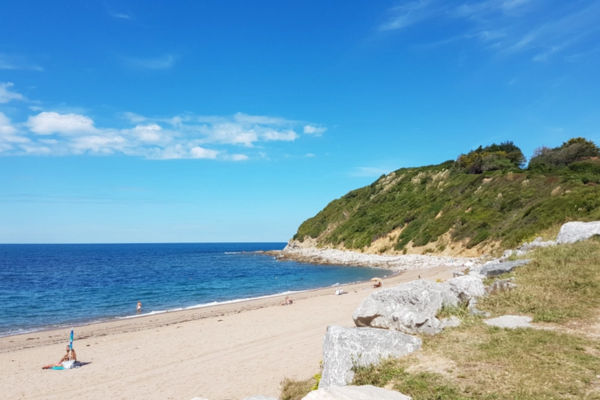
Located on the Biscayan coast, it is ideally situated just 200 meters from the beach, 12 minutes from the vibrant city of Bilbao, and 16 minutes from the airport. 

However, apart from severe weather, this place is a hotspot for marine life like dolphins and Whales. Therefore, your holiday trip to Bilbao is going to be memorable on the coast. Towns in Bilbao, like Getxo, Azpeitia, Ondarroa, Lekeitio, and more, are rich in history, where you get an opportunity to know the unknown. 

However, the Bay of Biscay, with its vibrant culture and stunning coastline, can be an inviting destination for all travel enthusiasts. We know that you are finding a scope to relax while seeking adventure on the same journey.

Normally, we divide the journey between people who love adventure and those who like to relax on holidays. However, Bilbao is going to be your memorable holiday check-in, where you can enjoy the holiday with the thrill and relaxation. 

Essential Considerations to Enjoy in Bilbao

Holiday at the Bay of Biscay

When planning your holiday, we always stay skeptical about the location and what it offers. However, instead of forming illusionary concepts, it is better to check out the place before you even check-in.

Confused? Well, when you have the chance to use the internet, scout for the place and know it properly before you practically visit there!

It will help you to plan your holiday trip seamlessly while avoiding some unexpected errors on the go. Whether you are visiting Bilbao, your family partner, or even friends, make sure you know these things before you reach there. 

1. Immerse Yourself in Local Culture

Bilbao is rich in history and art. Make sure to explore the iconic Guggenheim Museum, which houses contemporary art in an architectural masterpiece. Take a walk through the historic center (Bilbao La Vieja) and visit the charming boutiques and cafés that offer a taste of local life.

2. Savor Basque Cuisine

Basque cuisine is renowned for its exceptional flavors and fresh ingredients. Don’t miss the opportunity to indulge in pintxos (Basque tapas) at local bars.

Also, try the specialties that highlight the region’s culinary heritage. Taste the seafood dishes and traditional Basque pastries. These foods are not available everywhere. So, when you visit Bilbao, be excited with your taste buds. 

3. Discover the Surrounding Natural Beauty

The Bay of Biscay offers breathtaking landscapes that are perfect for outdoor enthusiasts. Consider taking a hike in nearby natural parks, such as the Urdaibai Biosphere Reserve, or enjoy leisurely walks along the stunning coastline. The views are sure to leave you in awe.

4. Attend Local Festivals

Bilbao is known for its lively festivals throughout the year. Check the local calendar to see if your visit coincides with any events. 

  • Aste Nagusia (Big Week) festival
  • Bilbao Night Marathon
  • Azkena Rock Festival
  • Bilbao BBK Live music concert
  • Bilbao food tour

 These are all famous festivals for locals and travelers. Here, you can experience traditional music, dance, incredible fireworks, and more. 

5. Explore Unique Shopping Opportunities

From high-end boutiques to quirky local shops, Bilbao offers a diverse shopping experience. Stroll along Gran Vía and in the Old Town (Casco Viejo) for unique finds and souvenirs. Be sure to pick up some locally crafted goods to remember your trip.

6. Serene Experience at PALACIO ARRILUCE HOTEL (a 5 Star Hotel)

While traveling to a new city, we always forget to check out the best stays. Consequences? We ended up having a bad experience without proper amenities and accommodations.  

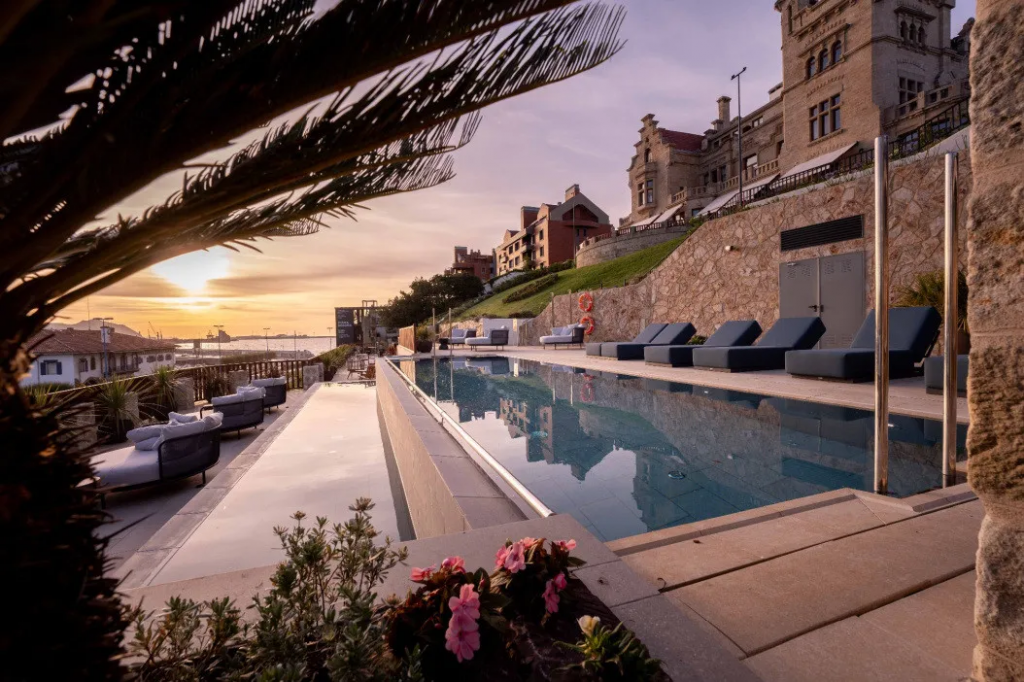
This should not happen in your care, especially while visiting Europe. This is why we have a luxurious option for you- the PALACIO ARRILUCE HOTEL. Consider booking a room in this spain 5 star hotel which is located actually in Getxo, near Bilbao. The best part about Getxo is that you get to stay close to the shore compared to the main town of Bilbao.

Serene Experience at PALACIO ARRILUCE HOTEL

However, this elegant hotel isn’t just a place to rest!

It also offers extraordinary culinary with Spa&Wellness.

It is one of those rare hotels that comes with a comprehensive Delaunay Restaurant, famous for its gastronomy treatment. Don’t you believe that?

Well, award-winning Basque chef Beñat Ormaetxea will be at your service here! Not only that, but the hotel also offers a space for relaxation and care. 

Neguri Spa&Wellness in PALACIO ARRILUCE HOTEL is going to be your state of wellness secret this year. This 5-star hotel perfectly complements your holiday in the Bay of Biscay. 

So, what are you waiting for? Check out their website to know more and understand what you can do while staying there. 

7. Embrace the Spirit of Adventure

After we consider a luxury stay, we forget to address the benefits of adventure. While visiting a new city, never stay in one place all the time. This will completely ruin your holidays. 

Instead, step out of your comfort zone; no one will handcuff you. 

Always try new things. Wondering what you can do at the Bay of Biscay? 

Well, there are a lot of activities you can go on.

  • Try surfing in Sopela
  • Take a scenic boat tour of the bay
  • Give your partner a romantic experience with a few simple arrangements
  • Discover the world’s first underwater winery
  • Go for Eexcursion to Cabárceno Park
  • Ensure a sunrise walk to the Bizkaia bridge

The more you explore, the more you find, and there is no end if you truly want to explore the place.

Research and Travel

Trust us; you will not enjoy your holiday if you do not do your research before you visit the place. It is not just about Bilbao but any other place as well. 

Consider key things in mind regarding accommodation, adventure, and seamless traveling. Your holiday at the Bay of Biscay will create lasting memories this time! 

Whether you’re indulging in fine dining at PALACIO ARRILUCE HOTEL or exploring its cultural treasures, there is something for everyone to cherish in this captivating part of Spain.

Safe travel!

Share on Social Media

Meet Sibashree Bhattacharya, a travel enthusiast who has a decade-long experience in transcending virtual barriers with her words! Her deep love for travel is apparent from her travel escapades to the mountain, often taking her readers on a journey, her words acting as Portkey! Fun fact: Sibashree loves to dive deep into the history of the places she is about to visit, making her travels even more wholesome. If you were wondering how her articles are not short of time travel, this answers it!

Leave a Reply

Your email address will not be published. Required fields are marked *

title-img Related

READ MORE Coastal Cuisine

Navigating Coastal Cuisine: A Traveler’s Guide To Safer Seafood Choices

BY  Sibashree Sep 3, 2025

One of the absolute best things about travel? Hands down, it’s the food. Nothing beats sitting near the water, breeze in your face, and digging into whatever the locals have been making for generations.  Maybe it’s smoky sardines in Portugal or paper-thin slices of tuna sashimi in Japan… Either way, seafood has this way of stealing the show. But here’s the flip side: while we’re chasing flavors, it helps to know what’s actually landing on the plate.  Mercury in seafood’s been popping up in conversations more and more. It’s naturally out there in the environment, sure, but industries add to it too. Some fish pick up more of it than others. Most of the time, you’re fine, but if seafood becomes your go-to meal on a trip? Yeah, worth paying attention. In this Tour and Travel Blog, we will talk about how to try the best coastal cuisine safely.  How To Try The Best Coastal Cuisine Safely? Understanding The Importance Imagine you’ve planned this whole trip around food—coastal markets, little family-run joints, maybe a cooking class or two. Seafood’s everywhere.  But here’s the thing: the big, long-living fish—swordfish, king mackerel, certain tunas—they build up more mercury over time. Smaller guys like sardines, trout, anchovies? Usually safer bets. This isn’t about saying “don’t eat seafood.” Please, no. It’s about eating smart so you don’t have to think twice later. When a menu lists a fish you can’t pronounce, knowing the basics means you can pick something tasty without worrying about it. Why It Matters For Travelers? Eating local food is how you get a place. Paella in Spain, ceviche in Peru, a messy clam bake in New England—they’re experiences as much as meals.  But if you’re traveling and eating seafood meal after meal, that exposure can stack up faster than you think. For most healthy adults, a little extra seafood isn’t a big deal. But pregnant travelers, kids, or folks with certain health issues? They’ve gotta be a bit more cautious. Knowing which fish to enjoy freely and which to maybe skip for the day? That’s just good travel sense. The Role Of Sustainability And yeah, mercury’s one piece of the puzzle. Overfishing’s another. A lot of places now highlight eco-friendly options right on the menu. Asking about it isn’t annoying—it shows you care about the place you’re visiting and the people feeding you. How To Navigate Coastal Cuisine Safely While Traveling? Know The Practical Tips Freshness, simplicity, and a riot of flavors! These are the core reasons why coastal cuisine is so popular. Furthermore, smoking, grilling, and making curries are the most popular methods of cooking these cuisines.  However, you need to be extra careful while navigating these cuisines.  1. Safer Selections Abroad Menus in other languages, mystery dishes… yeah, it can get confusing. But here are a few things that make life easier: Chat with locals. They know what’s eaten all the time versus the “special occasion” stuff. Go smaller when you can. Sardines, smelt, whitefish—lower on the mercury scale. Shellfish’s usually fine. Shrimp, crab, scallops—still best not to overdo it. Throw in some variety. Plant-based meals or land proteins here and there keep things balanced. 2. Culinary Traditions And Conscious Choices  Every region has its classics for a reason. Mediterranean? Grilled sardines with olive oil and lemon—healthy, simple, perfect. Southeast Asia?  Flavorful curries using smaller fish. Then there are places serving bigger predatory fish, like marlin in parts of the Caribbean—amazing flavor, but maybe not for breakfast, lunch, and dinner. The cool part is, you don’t have to give up authenticity. You just get to enjoy it without overthinking. 3. Practical Tips For Travel Planners  If you’re the “map out everything” type, a little prep work helps: Look up local fish before you go. Two minutes online gives you a head start. Learn a few names in the local language. Saves a lot of pointing and guessing. Visit good markets. Tours often highlight safe, sustainable stalls. Spread out the big meals. Try the famous dish… just maybe not twice a day. Having Coastal Cuisine Safely For Long-Term Travel And Health Awareness  Traveling for weeks—or months—near the coast? Yeah, seafood’s going to be everywhere. Switching things up helps keep it fun and balanced.  A little shellfish, some whitefish, a veggie dish now and then—it all adds up to fewer worries later. Being aware of seafood high in mercury ensures that long-term travel remains not only adventurous but also sustainable for personal health. What Are The 5Cs Of Trying Coastal Cuisine Safely?  These are the thumb rules or the basic 5Cs while cooking coastal cuisine.  Cleaning Cooking Chilling Cross-Contamination Prevention Communication  When you are trying seafood or coastal cuisine in a new place, you will have to consider these factors. Otherwise, there are high risks of food contamination and allergies. 1. Cleaning We all wash our hands and sanitize the food preparation and cooking surfaces. At the food preparation stage, we have to deal with raw meat and seafood ingredients.  Furthermore, we have to wash all the ingredients thoroughly using warm and cold water.  So, when you visit an eatery, especially for seafood, you have to ensure that all these practices are being followed thoroughly.  If not, however tempting the place or the dish may look, leave it at once! 2. Cooking Cooking thoroughly is very important, and at the right temperature. It is essential to get rid of the harmful bacteria and disease-causing elements in the raw ingredients.  Furthermore, reheating the refrigerated or stored food before eating is mandatory to avoid throat and stomach infections.  While it is difficult for you to check whether all these are being followed properly in a restaurant kitchen or a seaside shack, you can at least avoid having raw seafood at an unknown place.  3. Chilling Once the food is cooked, eaten, and cooled, you can store it in a refrigerator for safe preservation.  When you need that food again, you can take it out of the refrigerator, warm it, and have it.  This is also something very basic in restaurants. However, there are also risks of restaurants serving food that has been stored in the refrigerator for the longest time.  So, talk with locals and get ideas about a safe place where you can have fresh seafood.  4. Cross-Contamination Prevention Preventing cross-contamination requires the use of separate accessories and tools for raw meat, fish, and fruits and vegetables.  Also, there needs to be separate containers and storage places for all these ingredients. While you will not get a tour of the kitchen and pantry of a restaurant easily, this remains one of the golden rules of cooking seafood safely.  The Pan American Health Organization, or PAHO, also prioritizes cross-contamination prevention as one of the WHO's golden rules.  5. Communication  Well, this is something that happens entirely within the pantry or the cooking space of an eatery. Various verbal and non-verbal cues are used to ensure safe and fast food preparation.  Being A Responsible Food Explorer Travel’s about discovery, right? And food’s a huge part of it. With a bit of knowledge, you can dive into coastal cuisine without a second thought. A sardine in Lisbon, clam soup in Tokyo, a crab boil on the East Coast—those aren’t just meals. They’re memories. This isn’t about saying no to anything. It’s about saying yes in a way that keeps the trip—and you—feeling good. Read Also: What Is Arizona Known For Food | Culinary Tourism Exploring The Desert Delights Boat Trips And Czech Cuisine: A Taste Of Prague’s Culinary Delights Unlocking The Secrets: Key Ingredients In Italian Cuisine

READ MORE things to see on Phuket Island

Three Of The Best Must-See Attractions During Your Time On The Thai Island Of Phuket

BY  Sibashree Jul 17, 2025

Alright, so—Phuket, the Thai Island. Man, where do I even start? I went in with zero expectations. Like, I thought it’d just be a beach-and-smoothie kind of trip.  You know, chill, maybe burn a little under the sun, hit up a night market or two, then call it a win. But wow, did this place surprise me! Seriously, you could spend a whole week there and still feel like you missed stuff. And I don’t mean just tourist traps—I mean real gems, the kind of places that make you stop and go, “Wait... how is this even real?”  But if I had to pick just three, the ones that still pop into my head while I’m spacing out on the subway or standing in line somewhere? It’s these. Trust me, you don’t wanna skip ‘em. Here’s the shortlist of the best things to see on Phuket Island, broken down with the same chaotic energy I had while stumbling across them. What Are The Best Things To See On Phuket Island?  From the natural beauty of Phang Nga Bay to the Big Buddha statue and the unique charm of the Old Phuket Town, the best things to see on Phuket Island are many.  Here goes my journal of what I saw and what I experienced.  Also, you can plan a stay in the best hotel in Patong Beach to make your holiday more enjoyable.  1. Phang Nga Bay Okay, so this one?  Total accident. I wasn’t even planning on going. I was half-asleep at breakfast, eavesdropping on some German backpackers at the hostel talking about this boat tour, and I kinda just nodded along and joined last-minute. Best decision I didn’t even really make. Next thing I know, I’m on this longtail boat, wind blasting my face, trying not to drop my phone overboard. And then—bam—these giant limestone cliffs just rise up out of the water like something straight out of a dream.  It’s wild. Like, you see photos online and assume they’ve been touched up or filtered or something. But nope. That emerald-green water? Totally real. And almost too perfect. Ended up in a kayak somehow. Not sure how that happened—someone handed me a paddle and I just went with it. And let me tell you, drifting through caves and into these hidden lagoons where it suddenly goes dead silent?  Genuinely eerie. In the best way. It was just me, water, and birds doing their thing. No Wi-Fi, no distractions. I didn’t even take a photo in that moment, which says a lot ‘cause I take photos of everything. I just kind of sat there, floating, trying to process how this was real life. Also, I overheard someone mention that those rock formations are millions of years old. Which, I guess, makes sense... but also doesn’t, because that kind of time is hard to wrap your brain around when you’re wearing flip-flops and sunscreen that’s already stopped working. Moral of the story: if someone mentions Phang Nga Bay, just go. Don’t overthink it. 2. Big Buddha Statue: One Of The Iconic Things To See On Phuket Island Alright, so this one is on every “Top 10 Phuket” list, and at first I kinda rolled my eyes like, “Okay yeah, giant Buddha, got it.”  But listen—it’s worth it. Especially if you like places that mess with your sense of scale and give you a weird kind of peace you weren’t expecting. You can spot the statue from, like, miles away. It’s perched way up on this hill and looks kinda unreal when the sun hits it just right.  Getting there involves a bit of a drive (note to self: don’t trust Google Maps when it says 15 minutes), and the road?  Twisty and wild. At one point, I had to dodge a monkey that was just hanging out in the middle of the road like it paid rent there. Once you're at the top though—wow. The breeze, the views, the statue itself... it all just sort of hits you at once.  There were people praying, people meditating, some guy just playing with his shoelaces like he was in his own little world.  I ended up sitting on this shaded bench, not really thinking, just existing. It’s hard to explain, but everything felt... still like time slowed down a little. Even if you’re not spiritual or religious or whatever, there’s something about that spot that feels special. It’s quiet, but not in a lonely way. Just peaceful. Solid recommendation. 3. Phuket Town So, confession time: I almost skipped this entirely. “The Old Town of Phuket”? Sounded kinda boring, honestly. But someone at dinner said the food there was fire, and I was like, “Alright, I’ll go for the noodles.” Ended up staying all day. This part of the island has its own vibe. Totally different from the beachy postcard stuff. It’s loud, colorful, and full of character.  Buildings in faded yellows, pinks, blues—all with peeling paint and crooked shutters that somehow make it even better. It’s got this lived-in charm. Like nothing’s trying too hard, and that makes it cool. I wandered aimlessly for hours. Got lost, found a little bookstore with more cats than books, and accidentally bought a t-shirt I’ll probably never wear.  I ate noodles that made me do the involuntary “eyes wide, nod slowly” thing because they were just that good. Oh—and there was this old guy selling postcards with weird hand-drawn cartoons. I bought five. It’s not glamorous. It’s not curated. But it’s real. And for me, that’s what made it so good. Things To See In Phuket Island: Where Nature And Grandeur Meet So yeah, those three places? Absolute standouts. Not secret spots by any means—plenty of people go. But they’re memorable in that “I can’t believe this is real” kind of way. Nature that humbles you. A statue that quiets your brain. A town that feels like someone’s messy scrapbook of life. And hey, pack light but bring snacks. I got way too hungry way too fast and regretted not having anything on hand but gum. Anyway, that’s it. If you end up in Phuket, don’t miss these. Or do. But you’d be missing out.

READ MORE Chikmagalur's Coffee

Bean to Mug: The Journey of Chikmagalur’s Coffee from the Plantation to Your Cup

BY  Sibashree Mar 22, 2025

Are you aware of Chikmagalur's Coffee? The taste is counted among the richest coffees in the world. You may have tasted the coffee from here. But did you care to visit the most prestigious coffee estate in the country yet?  You’ll be amazed by the hills covered by mist. As you graze past, you will see the lush green plantations.  The contrasts of the green top against the grey rocks will surely amaze you. But the best part is something else. You will come across the rich coffee aroma. It’s always present in the air.  The bottom line is that this characteristic coffee station is a must-visit. There’s a reason why it is called the Distinct Coffee Land of Karnataka.  The Rich Heritage You Can't-Miss The coffee culture started under the British Raj. Now it has flourished beyond leaps. But things were different from the start. The coffee culture was prevalent among the Britishers and a small section of the Indian elites only.  But that has spread now. Subsequently, Chikmagalur's Coffee is now reputed as one of the finest Indian coffee. Meanwhile, the estate has also risen to the helm of fame. When you visit her, you will encounter one of the biggest and finest coffee estates in the country.  Planning a Chikmagalur Tour Plan your Chikmagalur tour today. Begin with a coffee plantation tour. When you come here,, you will meet a plethora of global and domestic tourists who flock here every year. Firstly, you will enjoy the breathtaking scenery around. Next, you will soak yourself in the rich coffee aroma in the surroundings.  From coffee beans to the brewery, you will witness every step with your eyes. At the same time, you will get insights that you make you a coffee pro. So, make your visit to Chikmagalur’s coffee plantations more memorable and insightful! The History of Chikmagalur Coffee Coffee dates back to the 17th century India. Baba Budan, who also goes by the name of  Hazarat Shah Janab Allah Magatabi, paid a Haj visit. He was mesmerized by the strong beverage he had in Yemen. And the stark aroma with a rich taste took a toll on his tastebuds.  Then he decided to take coffee back to his land. That’s how coffee occurred in India.  undertook a pilgrimage to the holy land of Mecca. During his travels, he encountered the rich, aromatic coffee of Yemen and was so impressed by its refreshing qualities that he decided to bring it back to India. The Challenge  Back then, exporting coffee from the Arabian estates was not allowed. But the legend says that he smuggled around 7 beans. He just hid them in his robes.  When he returned in 1670, he paid a visit to the Chikmagalur's Coffee Hills. At first, he didn’t know it would be a coffee plantation paradise. But the rich soil and the soothing weather worked like magic.  Later the surrounding Sufi hills were named Baba Budan Giri, honoring him.  How Did It Spread? Initial coffee’s acceptance was slow. Hence the cultivation was limited too. But coffees started to spread like wildfire when the English came here.  The Europeans were mesmerized. At first, The Dutch made spreading coffee plantations a personal agenda in India. But the real reign of coffee started under the British. Around 1850, coffee plantations became normal in India.  What’s The Status Now? The Chikmagalur's Coffee is now popular across India and abroad too. However there is a sheer economic importance of this beverage as well. At first, the story began with just 7 coffee beans. But it has now grown into a fully fledged industry.  Today, the coffee plantation is a separate tourist attraction. If you ever go by the scenic Chikmagalur's Coffee estate, check out the coffee plantations with awe!  The Art of Coffee-Making Chikmagalur’s coffee plantations are home to two distinct varieties of coffee: Arabica and Robusta. Arabica is known for its delicate flavor and sweet undertones and is in high demand in international markets.  Arabica plants are smaller and thrive at higher altitudes. They require more manual attention and meticulous care. On the other hand, Robusta is more resilient, growing at lower elevations and having a bold, strong taste. Robusta plants are also easier to maintain. While a casual coffee drinker may be unable to distinguish between the two easily, estate owners carefully select their preferred variety based on climate conditions, maintenance needs, and market demand. Both coffee varieties play a crucial role in Chikmagalur’s coffee industry. The journey from coffee cherry to mug is an intricate, labor-intensive process. The steps of coffee-making are as follows: Step 1: Harvesting Skilled coffee pickers handpick only the ripest coffee cherries, ensuring quality and consistency. Step 2: Processing The harvested cherries undergo various processing methods to remove the outer layers and prepare the beans. Step 3: Drying In this stage, the main aim is to dry the coffee. You can use the sun drying method. Most roasteries use it too.  Once there is no moisture in the beans, you can go to the next stage.  Step 4: Roasting Once done, the coffee beans go through the penultimate stage. Each bean goes through careful roasting. But you need to maintain a precise temperature during the process. It helps to infuse the rich gourmet smell and characteristic taste.  This careful process, perfected over generations, is what makes Chikmagalur’s coffee so exceptional. Explore the Coffee Museum For those eager to explore the world of coffee, a visit to the Coffee Museum, also known as the Coffee Yatra Museum in Chikmagalur, is a must. The Coffee Board of India started this museum as a solo initiative. Now this is the main Indian coffee museum that educates visitors about coffee. You can learn about coffee’s journey from scratch here.  Located in Dasarahalli, just a short drive from Chikmagalur’s city center, the museum offers an enriching experience that is ideal for both casual coffee lovers and connoisseurs. Pay A Visit Today! For a truly immersive coffee experience, a stay amid Chikmagalur’s Coffee plantations is ideal. Gateway Chikmagalur provides the perfect luxury stay, offering modern comforts while keeping visitors close to the town’s coffee heritage.  With its proximity to key attractions like the Coffee Museum, it serves as a great base to explore the region’s rich coffee culture, while indulging in a luxurious, nature-infused getaway.