


Top 10 Most Popular Paraguay Food That You Must Try

May 1, 2024

Last Updated on: Mar 12, 2026

Travel Blog

Many of the countries in South America are popular for their exquisite and varied cuisine. However, the practices of Paraguay food are not known to many. The Paraguayan Cuisine has been influenced by the local indigenous tribe’s culinary traditions and practices brought by immigrants from Spain, Italy, and Portugal.

Being a foodie myself, I love traveling around the world to have a taste of every new variety of food that the world has to offer. Visiting remote areas, meeting with new people, and trying out their traditional dishes is what I have always loved!

I was also in your shoes when I first landed in Paraguay, a bit startled and confused. Although, as I began to explore, my first meal at a fancy restaurant in Asuncion changed my entire perception of the state. 

Tid-Bits About Paraguay Food

Classic Paraguay food includes some of the most exclusive dishes that are bound to beat any of the Peruvian or Argentine preparations. Traditional culinary elements in Paraguay food recipes consist of meat, maize, vegetables, manioc, cheese, fish, milk, and even fruits. 

‘Asado’ is a local term used for barbecue, which is referred to as both a cooking practice and a social event. In Paraguay, barbecuing is the most important mode of cooking their traditional Paraguayan food dishes. 

Here in this article, I will elucidate the best dishes and popular foods in Paraguay that you must try in Paraguay this year. The Paraguay famous foods excite your taste buds and have an experience like never before. 

1. Kivevé

You will be stuck in a dilemma whether to count this as a main course or a dessert. Kieve is the most popular and loved Paraguay food. It is a vegetarian dish that is cooked out of andai (a type of juicy pumpkin), cornmeal, Paraguayan cheese, milk, and sugar. Kieve is a typical food in Paraguay.

It has a very creamy and light texture and is orangish in color. This rich-flavored delicacy is served lukewarm and is often consumed as a side dish or even main meal, at breakfasts, and as an evening snack.

2. Chipa

Considered a staple Paraguay food, Chipa is a simple bread roll that was invented by the local indigenous people in the 18th century. It is a bun that is made out of manioc or cassava flour, lard, and anise, and beaten eggs and cheese.

There are different versions of Chipa available, varying over the regional influences. The bread has a very crunchy crust due to the addition of lard. The crumb is soft and has a unique flavor. It is prepared and consumed by every household in the state. 

3. Bori Bori

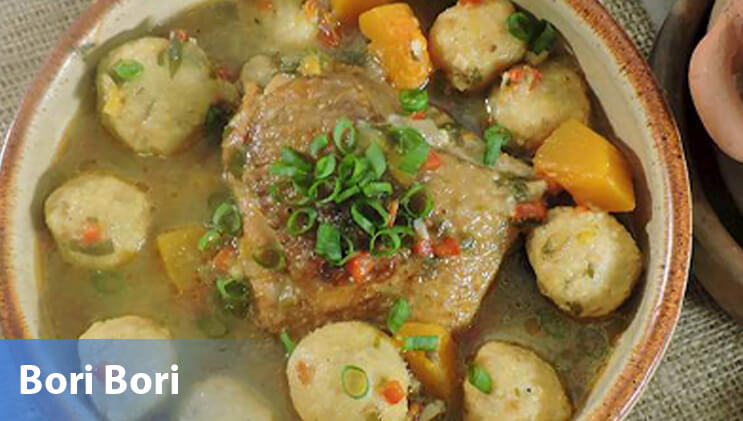
Bori-Bori (Vori-Vori) is a nutritious and flavorful thick soup that is prepared out of vegetables such as carrots, celery, onions. It is filled with meat (chicken or beef) and dumplings of cornmeal plus cheese. The prime flavoring ingredients in this soup are bay leaves, cloves, and parsley.

The addition of saffron to this hearty broth makes it even more flavorful and rich golden in color. It must be served piping hot, garnished with some parsley and Paraguayan cheese on the side. It is especially popular during the winters. 

4. Sopa Paraguaya

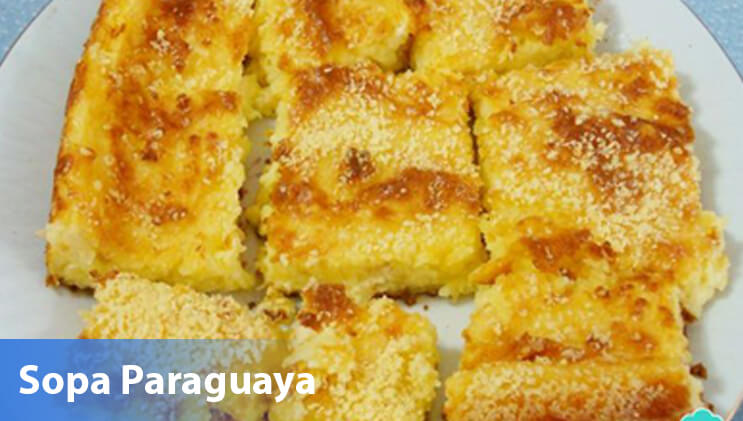
This specialty is not what it sounds like. Even though SOPA translates to soup in the local language, it is not at all in the vicinity of any soupy preparations. It is the national dish of Paraguay, which resembles a cakey thick bread. 

It is crafted out of cornflour, cheese, milk, and eggs. The flavor is inculcated through the use of onions and pork fat. It is usually baked and is often termed solid soup. It has a soft and crumbly texture and is served on special occasions as a side dish. 

5. Mbeju

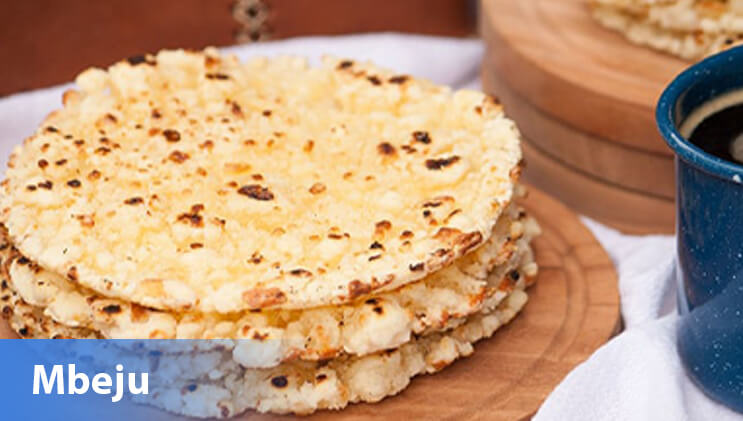
Mbeju, when translated to the local Guarani language, means cake. It is a very simple and staple Paraguay food. It is a kind of starchy pancake that is prepared with cassava flour, salt, oil, milk, eggs, crumbled cheese, and even pork fat.

The dough is kneaded well and rolled out thickly like a pancake. It is then fried in hot oil. It is usually consumed during breakfast, sometimes dinner, alongside a bitter herbal tea or coffee. 

6. Soyo

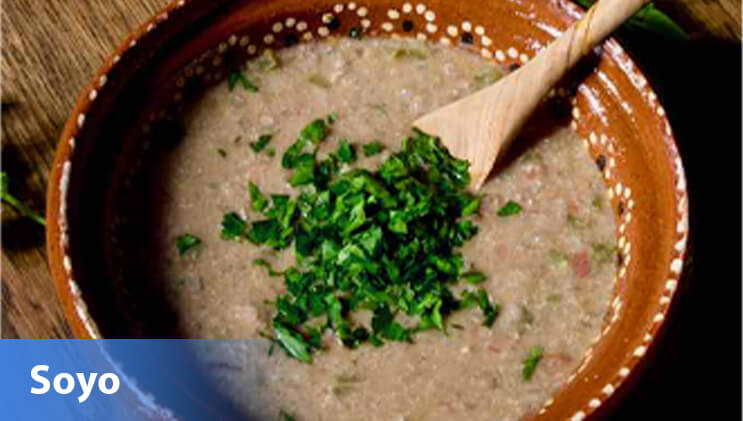
This is another popular Paraguay food, which is a thick unpassed soup. It is made with beef grounded in a mortar, rice, and vegetables, including green peppers, onions, and tomatoes. Soyo is another good example of Paraguay’s famous food.

 The dish is flavored with garlic, parsley, oregano, salt, and pepper. The name is derived from the native Guarani phrase so’o josopy, meaning crushed meat. A whole bowl of soyo can be considered as a complete meal and has a high calorific value.

7. Tereré

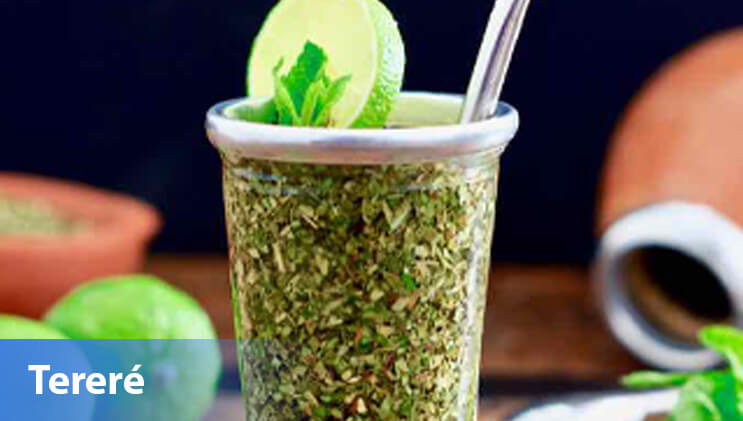
Since the climate in Paraguay tends to grow hotter every summer, Terere acts as a relief to many. It is a cold-brewed herbal tea that is bitter in taste and is commonly known as yerba mate. 

Terere is one of the essential elements of export, and the natives can be seen carrying around a thermos flask, guampa (a spherical mug), and bombilla (a silver straw) everywhere they go. It is a very healthy and refreshing drink and has high caffeine content.

8. Dulce de Mamon

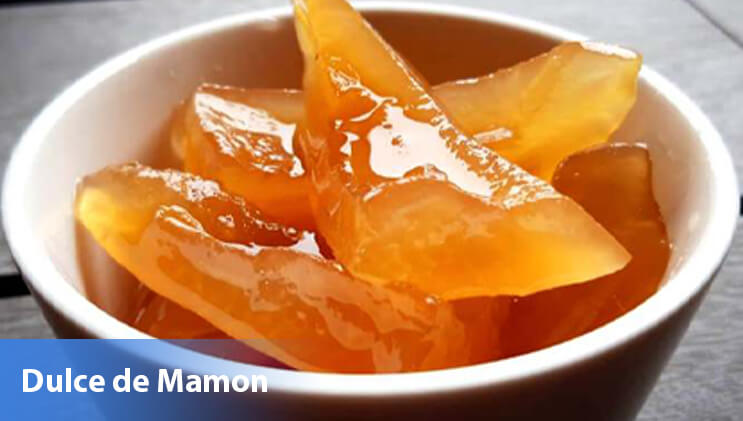
Here comes our most awaited syrupy sweet dessert in the list of top Paraguay food you must try! Dulce de Mamon is one of the oldest and most traditional preparations of Paraguay, which has only two major ingredients.

It is cooked by boiling small cut wedges of papaya in sugar syrup. The mixture is simmered for almost 2 hours in order for the papaya to achieve a soft texture. You can even add some cloves, lemon zest, and a little orange juice to enhance the flavors. 

9. Pira Caldo

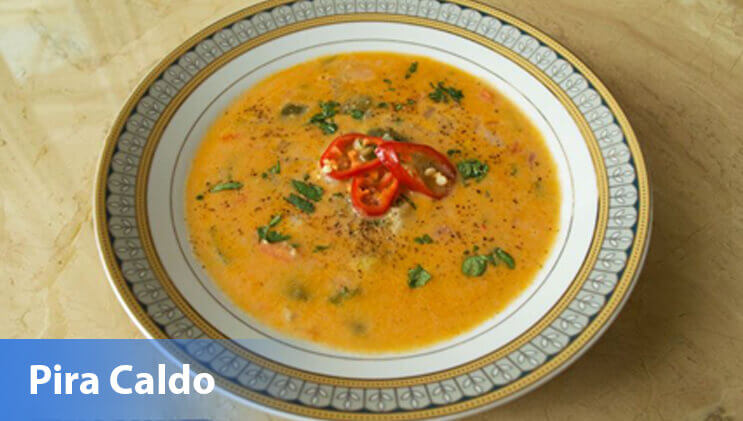
Another most favored Paraguay food includes Pira Caldo. It is basically a light fish stew made with freshwater catches such as surubi, mandi’y, and tare’y. I have never in my life tasted such meaty textured fishes with a tinge of saltiness in them.

Initially, vegetables such as onions, tomatoes, leeks, celery, bell peppers, and carrots are fried in pork or beef fat and are cooked with other spices. It is then combined with milk and soft white cheese to improve the thickness and flavor.

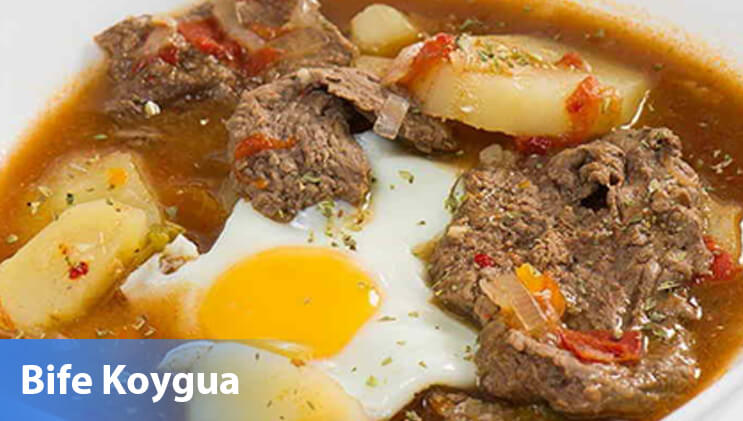
10. Bife Koygua

Bife Koygua, or hidden steak as it is known, is another popular Paraguay food that is a must-try.  It is a heavy preparation in which the beef steaks are covered with onions and tomatoes. Hence the name.

According to the local language, bife means beef, and koygua means shy or hidden. The recipe calls for the steak to be pounded first with spices, then fried with onions and topped with tomatoes. Towards the end, an egg or two is added at the top, and the dish is garnished with parsley.

Puchero Paraguayo Recipe

The Paraguayan version of a traditional meat stew is called Puchero paraguayo. This stew has its origins in Spain and is now prepared in several countries throughout South America and the Philippines. The name of the stew, Puchero, comes from the Spanish word meaning “stewpot”.

Course: Main Course

Cuisine: Latin American, Paraguayan

Servings: 4 people

Author: Nita Ragoonanan

Ingredients

  • 1½ lb beef (skirt or flank steak, cut into pieces)
  • 3 cloves garlic, cut in half
  • 1 onion, chopped
  • 1 green bell pepper, diced
  • 2 carrots
  • 10 oz. pumpkin, cubed
  • 2 potatoes, cubed
  • ½ cup rice
  • 6 tablespoons olive oil
  • Salt
  • Pepper

Equipment

  • Pressure cooker

Instructions

To start, get a large pot and fill it with 10 cups (2.5L) of water. Add in some onions, carrots, and bell peppers, and bring it to a boil. Let it simmer for 15 minutes and season it with salt and pepper to your liking. Set it aside.

Next, heat some olive oil in a pressure cooker and add in some garlic and meat. Saute over high heat while stirring constantly until the meat is browned. Pour in the reserved broth and vegetables and close the pressure cooker. Cook for 45 minutes on medium-low heat.

While waiting, rinse the rice. After 45 minutes, open the pressure cooker and add in the rice, potatoes, and pumpkin. Close the pressure cooker again and continue cooking for 15 minutes.

Frequently Asked Questions!!! (FAQs):

Q1. What Is The Traditional Dessert In Paraguay?

Ans: Mazamorra also known as Kaguyjy is one of the most popular traditional deserts in Paraguay. it is made of corn and sugar, mixed with honey or milk. Ka’i Ladrillo is a candy made of peanuts and molasses.

Q2. What Is Paraguay’s National Dish?

Ans: Sopa Paraguaya is the national dish of Paraguay. it is similar to cornbread and made up of corn flour, pig fat, or butter, with cheese and milk. it is very spongy and is rich in calories and protein.

Q3. What Is The National Drink Of Paraguay?

Ans: Yerba mate tea is prepared with cold water. different variations of terre can be found in Brazil and Argentina. Its birthplace is Paraguay.

Final Thoughts

These are some of the most exotic preparations from Paraguay that made their way into my Top 10 list. Thanks to those Guarani friends that I had over there who guided me through to the best of their culinary traditions.

And if you are hesitating about visiting this place, trust me, the experience is worthwhile. It is not only about their food but also their culture, traditions, and heritage. This beautiful country deserves all the appreciation in the world.

Share on Social Media

Abdul Aziz Mondol is a professional blogger who is having a colossal interest in writing blogs and other jones of calligraphies. In terms of his professional commitments, he loves to share content related to business, finance, technology, and the gaming niche.

Leave a Reply

Your email address will not be published. Required fields are marked *

title-img Related

READ MORE best time to visit fiji

What is the Best Time to Visit Fiji for your Next Vacation? 

BY  Anindita Dey Mar 29, 2025

When planning to go on a trip next, I would say Fiji should be on the top of your list. With unexplored islands, the unique features of these places highlight the natural beauty of the place. Offering one of the most beautiful and secluded locations in the world for vacation.   Did you know that it is in the Fiji Islands, that the movie Cast Away was shot on the mountainsides of Mamanucas? Imagine the place and visit to make memories. Let me share with you the best time to visit Fiji and enjoy the most.   You should carry the best travel credit card so that you can use it if needed. At the end of the day, you must have backup for money if the cash you are carrying finishes.   What is the Best Time to Visit Fiji for your Next Vacation?   If you are wondering when is the best time to visit Fiji, plan your vacation between October to February. Apart from experiencing some of the coolest festivals, you also get to experience adventurous water sports.   Some of the most revered tourist' places in Fiji Island will pull you towards its beautiful natural and spiritual elements. For example, if you want to own natural pearls, you should visit Savusavu with crystal clear water.   Further, you can visit Levu, Mamanucas, Viti Levu and other places to experience natural botanical gardens, untouched island areas, secluded thriving with greenery and lush water. Let me share with you in more details when you should visit Fiji and what you need to do!   Best Time to Visit   If you are wondering about when to visit Fiji, let me share with you the best time to visit. From May to October, you can visit Fiji as it is considered the peak time with warm and dry weather. Just like death valley, visiting Fiji is important when it comes to the right time!   Additionally, the temperature is also moderate ranging from 20 to 30-degree Celsius. Yes, the tourist crowd will be quite heavy with a vibrant atmosphere all around! If you want to avoid the crowd, the time for you to visit Fiji is between the month of November to March.   It is off-season, and you will find it ideal to explore the islands with much fewer people around. However, you might not get to attend cultural events or festivals that are the life of the party during the peak season. You might experience severe temperatures during this time which might make the whole process difficult.   The moderate season to visit Fiji is from the month of April to May. It is ideal for beach activities along with some leisure time that you can spend.   Things to Do   There are several things to do when you visit Fiji especially during the peak time. From exploring untouched islands like Mamanuca to doing several water-based sports activities like diving, snorkeling and exploring other attractions like the Garden of the Sleeping Giant.   Island Hopping   One of the most important things to do in Fiji is island hopping. You can explore different types of experiences such as walking along the pristine beaches and seeing the vibrant coral reefs. Yasava Island is known for its beautiful resorts on its stunning beaches.   You can also experience Fijian culture while hopping Island because everyone is very communal, helping each other in village and family. Eat their food like Lovo while dance and music are an integral part of their tradition.   You can experience “meke”, Fijian dance, and music which ranges from performance, athletic dance, and war dance. Let's not forget to visit Mamamuca Island where you can kayak around thus, exploring lagoons and hidden coves.   Water Activities   You can take boat tours exploring different islands and thus, doing different water sports. Snorkeling is one of the most popular activities to do as water sports when you visit Fiji on vacation. Use a mask when snorkeling and then enjoy underwater scenery and life!   You also wear a wetsuit, fins, and a tube, snorkel allows your face to be covered while you can breathe. Another water sport, surfing, is an activity where you ride a board on the waves breaking it. The sport has its roots in pre-modern Polynesia and Hawaii.   Paddleboarding is another similar water sport like surfing where you stand on a board and use a paddle to propel yourself through the water. It looks very much like an offshoot of surfing enjoying riding the waves. Another water-related activity is recreational diving where you go underwater and then come up for water!   If you are planning to experience a relaxing activity where you have the time to check out the beautiful scenery around you, you should Kayak. On the kayak, you can explore different caves, lush forests on the edge of the waterbody and others.   Hiking with Adventure   If you are an adventurous person but are more into natural beauty compared to sports, you hike! The adventure waits for you as you explore the waterfalls, mountains and forests of Fiji, appreciating the beauty of the exotic places.   Waterfalls   If you love waterfalls, go to Vanibauloa waterfall for a hike and experience the adventurous landscape. You must discover the beauty of the place along with making memories on your Fiji vacation. I feel Fiji is one of the best places to visit in February!   Another significant waterfall that you must visit if you are planning to go on a trek is Tavoro falls, also known as Bouma falls, which is stunning. During peak time, you will find a lot of crowds here as it is a tourist favorite.   Mountains   The highest peak in Fiji, the mount Tomanivi can be hiked as it is moderate level difficult however, you will need a guide. The trek will require about 4 to 5 hours and will need you at the top of your physical and mental fitness. Enjoy the spectacular view when you are on top!   A challenging trek across mount Batilamu offers you a rewarding view however difficult it is. There are diverse landscapes across the trails that you hike upwards so, keep medication with you, drink water, stay hydrated and stay cautious.   Rainforests   Love lush forests? Visit Colo-i-Suva Forest Park which offers opportunities to see giant trees and various kinds of birds. The lush forests offer you breathtaking views across the trails. You also should not miss the Bouma National Heritage Park located in Taveuni, which features beautiful rain forests.   The opportunities are endless, and you can easily camp here. However, you need to be a bit aware during the rain. There will be insects and poisonous animals, so please be cautious before you visit and carry ointments for allergies.   Leisure in Nature   You can soak up the sun at the beautiful beaches in the Fiji Islands with a drink and a book in your hand. Don't forget to apply sunscreen properly every two hours and have your sunglasses and hat to protect you from the sun. one of the most exotic places to travel when you are in love with nature!   Soak up the sun but carefully thus, unwinding properly on your vacation. You can also go for a swim in the ocean or at the resort pool, thus relaxing properly. You will be facilitated with several other activities like having dinner alongside the beach, going for a stroll, spending quality time with your friends or partners with whom you are on vacation!   Wrapping Up!   Now that you know the best time to visit Fiji after you have read the article, what do you think is the necessary things to do. I have shared several fun activities which you can explore and make your trip more memorable.   Comment on what you think is the best time to visit in consecutive with the peak time. Read the blog and understand the things you need to consider before you plan your trip to Fiji.  Also read Top 10 Most Popular Paraguay Food That You Must Try. Top 13+ Famous Wonders Of India That You Must Visit.

READ MORE Summer In Rome

Summer In Rome: Sleep, Do, See

BY  Pijus Maity Jul 17, 2024

Summer in Rome: Every traveller knows Rome is one-of-a-kind; no wonder it is widely recognised as the Eternal City.  Aside from the timeless architecture and history that lives in all of its paths, one cannot get over its ethereal beauty. And can you blame? The city is charmed with an eternity of times you may explore and still discover something new for yourself. You never know what you will find in its most notable landmarks because there’s so much to see and do. Let us now start our guide on things to do, locations to see, and spots you may enjoy during your Roman summer break. Exploring Rome: It All Begins With A Plan… First, we will explore the remains of the Roman Forum and visit the Colosseum. It is the most famous symbol of the city of Rome worldwide.  Both the Pantheon, which is well-known for its dome, and St. Peter's Basilica in Vatican City offer a panoramic view from its dome. These are evergreen destinations that never fail to leave a lasting impression and have a strong and timeless historical aura.  1. The Sistine Chapel The Sistine Chapel, which is housed at the Vatican Museums, is another must-visit ​​location. However, pay attention – reservations are required in advance. Then, take in the views from the Spanish Steps and see the Trevi Fountain. Art lovers might visit the Galleria Borghese, which features paintings by Bernini and Caravaggio, and the Capitoline Museums, which are home to antique Roman artefacts. The National Gallery of Ancient Art is situated at Palazzo Barberini as well.  2. Catacombs of San Callisto For an experience like no other, visit the Catacombs of San Callisto and walk or ride along the Appian Way. The Orange Garden will offer breathtaking sunset views of Rome, and the Baths of Caracalla will provide insight into ancient Roman public baths. Rome also has an outstanding food scene. Crispy and thin Roman pizza and classic pasta dishes like carbonara, cacio e pepe, amatriciana, and gricia are examples of its traditional cuisine. Notable dishes are Carciofi alla Romana, or Roman-style artichokes, and Supplì, fried rice balls filled with cheese.  3. Relish The Roman Delicacies Also, take a chance to savour Saltimbocca alla Romana, which is veal cooked in butter and white wine with prosciutto and sage. Desserts not to be missed are classic tiramisù and maritozzo, a sweet bun filled with cream.  Take a chance to enjoy a meal at classic trattorias like Da Enzo al 29 or Armando al Pantheon, or venture to Michelin-starred restaurants like Il Pagliaccio or La Pergola for a premium experience.  4. Extraordinary Stays Of course, there are plenty of places to stay in Rome. For reasons related to transit, goods, and services, we advise selecting places close to the city centre.  Furthermore, the majority of the most well-known, highly regarded lodging options with top-notch service are found in Rome's historic centre. You may, for instance, consider the wonderful VRetreats hotels.  Rome may be chaotic, so pay attention to this step to ensure that you have the greatest holiday possible with excellent service and the ability to see all the places you want to see in less time. Here’s Your Rome Itinerary… Whether you are in the city for three days, five or a week, you need an itinerary to visit places that deserve priority. If I were to give an honest opinion, three days is fine for a tour of this ethereal destination. Here’s why: 1. Day 1 at the Palatine Hill Are you back from the Colosseum already? If so, it’s time to visit Palatine Hill and, of course, the Roman Forum. Count on me when I say this: Palatine Hill is absolutely unmissable!  Sure thing, everyone loves the Colosseum, and they’re most likely to hit their destination when they reach Rome. But why not go that extra mile to discover a not-so-hidden-gem? If you are dying for some epic views across the forum, this one destination should be on your bucket list. Welcome, home Christmas card photos dwelled with tour images.  2. Day 2 at Pane e Salame It is obvious that you should stop at a food destination with all that extra vacation stress you are carrying. I have found an incredibly amazing lunch spot in Rome, Pane e Salame. It is a paradise for those looking to gulp fresh cheese and delectable meats.  I saved some serious money on their charcuterie tray, which was the wanderer’s reward! It has got so many delicacies that you can share without feeling guilty to your friends. Also, add Aperol Spritz for that extra kick! While Venice and other north Italian cities are quite popular for their finger food-serving styles, this place does something unique. Have an amazing time at Pane e Salame and taste the authentic Italian culture in the form of food.  3. Day 3 is for a Walking Tour I will not immediately name the places, but nothing pays off like an accomplished walking tour of Rome. Art flows through every single vein of the city, and you are never going to be secluded! On this walking tour, you are most likely to cover Piazza Navona, the Spanish Steps, Campo de Fiori, the Trevi Fountain and the Pantheon. This tour shouldn’t take you more than an hour!  Important Consideration: These places are jam-packed with tourists. So, you can book your tickets for months with fewer tourists arriving, say during winter or autumn. Follow these tips, and you’ll be good to go! The Bottom Line So, what’s stopping you from discovering the gem of Italy? There’s literally so much to see and do in the city that boasts of art and culture.  Get ready to see something special and dine in the best places in Rome. Thank you for reading this article till the end!  We really hope we were helpful on your way to planning your vacation. Wishing you the best stay in Italia! Also read Roman Revelations: Unforgettable Things To Do In Rome, The Heart Of Italy! Find Hotels Near Rome’s Top Attractions And What Parts Of The City To Stay In. The Italian Train Group FS Will Launch A New “Night Train Like Hotel”: Rome To Dolomites.

READ MORE

Exploring the Geothermal Wonders of Lassen Volcanic National Park

BY  Sibashree Aug 20, 2024

Lassen Volcanic National Park gets its name from the Lassen Peak, an active volcano in the southernmost Cascade Range. Even today, the Lassen Peak has hot springs and you will find fumaroles coming out of the peak’s mouth. These are also signs of volcanic activities in the volcanic mountains. Further, this national park houses all four types of volcanoes: plug domes, cinder cones, composites, and shields. These volcanoes make this national park a chosen destination for geologists and volcano enthusiasts. The presence of these volcanoes has also added unique hydrothermal features to this park. You will find vibrant hot springs, steam vents making hissing sounds, and mud pots with bubbling water here.  Here, I present a brief overview of the geothermal wonders of the park. I will also talk about the park’s camping provisions.  Geothermal Areas In Lassen Volcanic National Park The Lassen Volcanic National Park had 418,978 visitors in 2023, and we can say that its hydrothermal features are a major factor in crowd-pulling here. Snow falling on the park highlands and rainwater keep feeding the geothermal systems. Under the Lassen Peak, there is a molten or hot rock body. This hot rock body makes the water warm once it reaches underground. When the water becomes hot, you see the water boiling in the geothermal pools and mud pots. As the temperature of the water rises, it gets transformed into fumaroles. Fumaroles exude from various cracks in the earth. In Lassen Volcanic National Park, you will observe fumaroles at Sulphur Works, Devils Kitchen, and Bumpass Hell.  Little Hot Springs Valley You can have a look at the Little Hot Springs Valley from Lassen Peak (the largest plug demo volcano in the world) and other mountains lining it.   Further, various seasonal creeks drain into this valley, feeding the geothermal water. If you overlook the valley from the mountain peaks in the summer, you will see many wildflowers smiling. In particular, grass and the wildflower vegetation across the East Sulphur Creek edge is quite dense, thanks to various hypothermal activities. You can also look at the Little Hot Springs Valley from a pullout, just one mile away on the south. The view from this pullout is scenic, with lush green slopes before your eyes. If you look at the slopes with binoculars, you will find black bears roaming around.  Bumpass Hell https://www.youtube.com/watch?v=7OE_c2SzWNw As you walk 7 miles from the southwest entrance of the park, you will find a parking area on the park highway. Here, you will find the trail to Bumpass Hell. With a 3-mile hiking trail(round trip), Bumpass Hell is the largest geothermal area in the park. You can only hike the Bumpass Hell trail in autumn and summer. It remains closed during spring and winter. The temperature of the geothermal water in the Bumpass Hell area can reach up to 322 degrees.  The elevation of this trail is 8,000 feet. However, because of its moderate difficulty level, you will find many visitors here on weekends. The water in this hydrothermal area is emerald green or blue in color. Further, the minerals in the water stain the rocks and soil in yellow and orange shades.  Sulphur Works It can’t get easier than hiking to Sulphur Works if you want to explore the geothermal wonders of Lassen Volcanic National Park. Here, you can see how volcanic activities have created the most interesting geology with shifting new and ancient grounds.  The landscape here experiences regular updates because of geothermal activities and natural activities like erosion. Also, thanks to the volcanic activities, you will encounter colorful rocks, steam vents, and the most pungent sulphuric smell here. Sulphur Works is important in the Lassen Volcanic National Park history, and it was earlier known as Supan's Sulphur Works. Mathias B. Supan, a pioneer of the American West, used to extract minerals from the ground here in the mid-19th century.  https://www.youtube.com/watch?v=sTvAs6VPfIE The hydrothermal area of Sulphur Works is interesting as it is located at the center of a wide basin. Brokeoff Mountain, Mount Conard, Pilot Pinnacle, and Mount Diller surround this basin. According to geologists, these mountains are eroded formations or remains of Mount Tehama or Brokeoff Volcano. Boiling Springs Lake A trail starting from the Warner Valley trailhead will take you to the Boiling Springs Lake, filled with hot and bubbling water. The temperature of the water in this lake is 125 degrees.  You will also find steam vents and mud pots on the shore. The mud pots on the southeastern shore of the lake demand a special mention.  As you continue on the Boiling Springs Lake trail, you will see colorful wildflowers. The vegetation of Douglas-fir, sugar pine, incense-cedar, white pine, and ponderosa pine will soothe your eyes here. This trail is also a birder’s paradise and one of the best places in the park to observe birds.  Devils Kitchen https://www.youtube.com/watch?v=3Pah0QzBkN0 This hike, starting from the Warner Valley Trailhead, is moderate, and it will take you to an area filled with boiling pools, mud pots, and steam vents. You can call Devils Kitchen a  Cauldron. The piled-up cracked red and yellow stones here give this place a colorful appearance. These colorful stones show deposits of various minerals found in volcanic eruptions. The Cauldron will keep making hissing, belching, and plopping sounds, and the unique odor filling the air creates the perfect ambiance of a natural kitchen. Something is definitely cooking in this kitchen!  Terminal Geyser Start hiking from the Warner Valley Trailhead to reach Terminal Geyser. It is a steam vent showcasing the active volcanic activities in the park.  Unlike a geyser, it does not erupt hot water periodically, and it’s actually a fumarole. Even if you can’t see the steam, you will smell a sulfuric odor, and there will be a billowing cloud.  Cold Boiling Lake You can start trekking from Kings Creek Picnic Area to reach the Cold Boiling Lake. The road to the Cold Boiling Lake is almost flat, and the landscape has further descent to the Crumbaugh Lake.  You can see some small gas bubbles near the shore of the Cold Boiling Lake. So, it is known as a dying geothermal wonder of the park.  The Cold Boiling Lake and its shores look the best if you pay a visit in the morning after a night of snowfall.  Pilot Pinnacle Pilot Pinnacle is a remains of volcanic composites. You will find it along the ridges of Mt. Diller and Brokeoff Mountain. You can look at this area filled with mud pots, pools, and steam vents from Park Road.  Lassen Volcanic National Park Camping Lassen Volcanic National Park has seven campgrounds. However, only four campgrounds are available this year. The Dixie Fire 2021 recovery process will keep the three other campgrounds closed in 2024.  The campgrounds open this year are Butte Lake, Summit Lake, Southwest Campground (Southwest Parking), and Manzanita Lake.  Closed campgrounds are Juniper Lake, Warner Valley, and Southwest Campground (Walk-in campground).  Most campsites in the park are available at this national park on a reservation basis. You can make the reservation between June and September. You can make your reservation at recreation or call the park authority at 1-877-444-6777.  Final Words  The Lassen Volcanic National Park is a hub of scenic beauty, active volcanoes, and various geothermal features. Active volcanism and weather forces, like rain and erosion, have given this park a rich geological landscape that goes back thousands of years. With the magnificent Lassen Peak towering over the park, the hydrothermal areas are surrounded by forests and green meadows. So, various species of animals, birds, and insects reside around these geothermal areas.  So, if you are a volcano enthusiast, a wildlife lover, or a hiker, pack your bags, plan a trip to this national park, and share your experience once you come back.  Lassen Volcanic National Park FAQs  What Lives In Lassen Volcanic National Park? Home to around “300 species of vertebrates,” Lassen Volcanic National Park has many mammals, birds, amphibians, reptiles and fish. The park has three ecological zones where you can encounter rich wildlife.  Mammals: Black bear, Sierra Nevada red fox, mountain lion, America pika, snowshoe hare, Douglas’s squirrel, mule deer Birds: Steller's Jay, Clark's nutcracker, Anna’s hummingbird, woodpeckers, round-legged hawks, etc.  Amphibians: Pacific tree frog, long-toed salamander, western toad Reptiles: Sagebrush lizards, northern lizards, alligator lizards, western terrestrial garter snake, rubber boa, Northern Pacific rattlesnake, etc.  Fish: Rainbow trout, Lahontan Redside, speckled dace, etc. Along with these animals, you will also find the most beautiful  California Tortoiseshell butterflies, spiders, and other insects in the park. The total number of invertebrate species living here is 350.  What Is The Closest Town To The Lassen Volcanic National Park? Chester is the closest town to the Lassen Volcanic National Park. You can take a 40-minute drive from the southwest entrance of the park. You can relax at the eateries at Chester, and you will find some decent lodging options here.  Who Died In Lassen Volcanic National Park?  Tommy Botell, a 9-year-old boy, died in an accident in the Lassen Volcanic National Park on 18th March 2010. His elder sister, Katrina, a 13-year-old girl, was severely injured in the same accident.  The mishap took place at the Lassen Peak Trail.  Also read Why Include Whale Watching In Your LA Itinerary. Traveling On A Budget: Tips For Affordable Adventures. Be Soothed And Meet History At Hot Springs National Park.