

My Morning Among The Roses: My Experience At Haggala Botanical Garden

When I reached the Haggala Flower Garden, the mist was sitting close to the rose beds. 

It is the cool air of Nuwara Eliya that makes the roses bloom and creates a different ambiance than the Central Lowlands. 

I had already spent two days wandering tea estates and colonial-era streets in the town.

However, this garden ended up being the one stop I keep bringing up when people ask what surprised me most about the hill country.

In this article, I will share what I saw and did at Haggala or Hakgala. I have also mentioned the practical details, including fees, timings, routes, and the best season to catch it in bloom. 

A Quick Snapshot About Haggala Botanical Garden


Detail

Information

Official Name

Hakgala Botanical Garden

Location

Hakgala, near Nuwara Eliya, Central Province, Sri Lanka

Established

1861, Under British Colonial Rule

Size

Roughly 28 Hectares (About 70 Acres), Sri Lanka’s Second-Largest Botanical Garden

Elevation

Around 1,700 Metres

Managed by

Department of National Botanic Gardens, Sri Lanka

Known for

Roses, orchids, ferns, and its cool highland climate

Opening Hours

7.30 AM – 6.00 PM

Ticketing Hours 

7.30 AM – 5.00 PM

The Legend And History Behind Haggala Botanical Garden

The Legend And History Behind Haggala Botanical Garden

I knew of Haggala as “the rose garden near Nuwara Eliya.” Once I walked through it, though, I came across many signboards. 

Also, the local guide shared snippets that pointed to a much longer, stranger story than that.

From Cinchona Plantation To Rose Garden

The garden was established in 1861 by the British.

It was originally an experimental station for cinchona, the tree whose bark produces quinine, the anti-malarial drug that was essential to colonial plantation life at the time. 

The focus later shifted to tea before the site was eventually converted into the ornamental botanical garden that draws visitors today. 

Standing among the rose terraces, it is genuinely hard to picture rows of cinchona trees where the flowerbeds now are.

The Ramayana Connection

The other layer to Hakgala’s history is mythological rather than colonial. 

The garden has a special connection to the Ramayana, describing it as part of the pleasure gardens associated with the demon king Ravana.

There is another popular version of the legend.

It is the spot where Hanuman is said to have brought the Sanjeevani herb to revive Lakshmana. 

I have not verified the folklore, but every local guide shares it with conviction. 

What I Found Walking Through The Gardens

What I Found Walking Through The Gardens

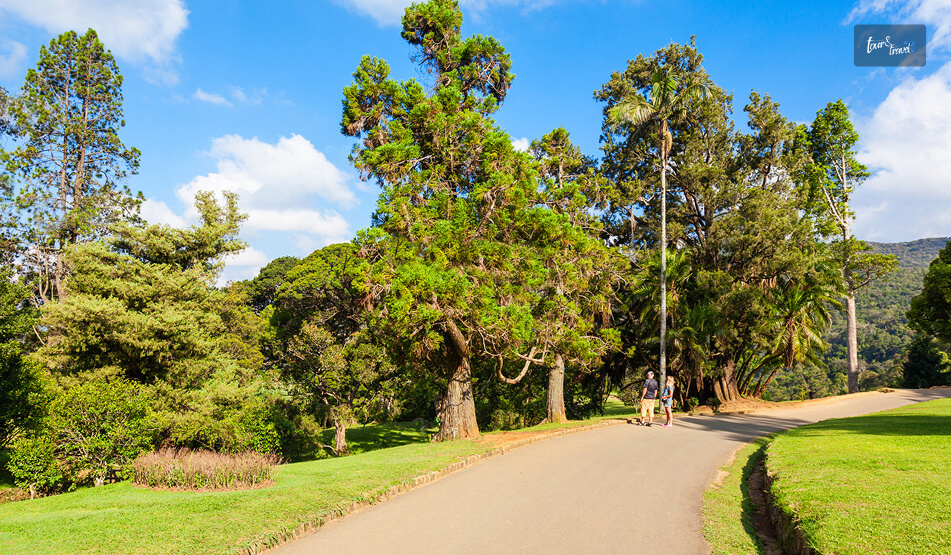
It was the most unhurried two hours in Sri Lanka at the Haggala Botanical Garden. 

These are the highlights of exploring the botanical garden. 

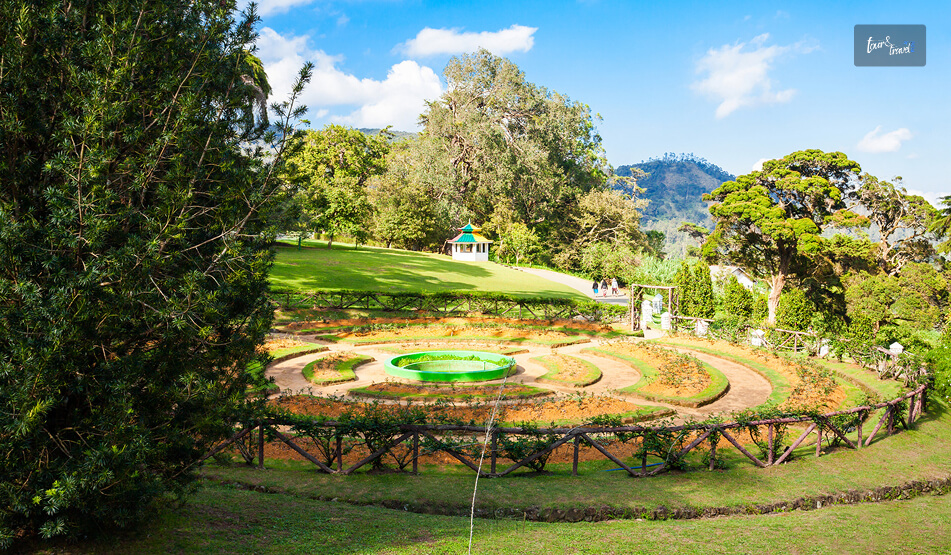
The Rose Garden

This is the section most people come for, and it is the one that stayed with me. 

Terraced rose beds climb a gentle slope, and even on a visit outside peak bloom I found enough color to justify the walk up. 

Locals I spoke to said mid-March through April is when the roses are genuinely at their best.

The Fernery And Orchid House

Past the roses, the path drops into shadier, damper terrain.

It is the fernery, thick with hanging vines and the kind of quiet you only get under a heavy tree canopy. 

The orchid displays nearby were smaller than what I later saw at Peradeniya, but the cooler climate here seems to suit certain varieties that don’t do as well lower down.

Hakgala Rock And The Nature Reserve

The garden sits right at the base of Hakgala Rock, part of the wider Hakgala Nature Reserve. 

I did not have time to explore the reserve itself on this trip.

However, the rock face looming over the garden is a constant, dramatic backdrop while you’re walking around.

It is worth pausing for a photo even if you are not planning to hike further.

Planning Your Visit: Fees, Timings And Getting There

Planning Your Visit Fees Timings And Getting There

Visitor Category

Adults (12+)

Children (5–12)

Foreign Visitors
 LKR 3,540
LKR 1,770

Local Visitors

LKR 200

 LKR 30

How To Reach Hakgala

The garden is about 10 kilometres from Nuwara Eliya town on the road toward Welimada and Badulla.

So, I took a tuk-tuk trip from where I was staying. The tuk-tuk cost around LKR 1500.

If you are combining it with Horton Plains National Park or the Pedro Tea Factory, both popular pairings, it is easy to build a single half-day loop out of Nuwara Eliya covering all three.

Best Time To Visit Haggala Botanical Garden

Elevation makes Haggala noticeably cooler than most of the island. That cool climate is exactly what makes the roses possible. 

Here is how I would break the year down.


Season

What’s blooming

My take

Mid-March to April

Peak rose and orchid bloom.

The single best window I would point a first-time visitor toward.

May to August

Southwest monsoon showers likely

Greener, quieter, and the mist adds its own charm.

September to November

Drier spells, good visibility

A dependable shoulder-season pick.

December to February

Cool, crisp mornings

Chilly at this elevation, and you need to pack a light jacket.

Tips From My Visit To Hakgala Flower Garden

  • Go early. I had the rose terraces nearly to myself before 9 AM. By late morning, tour groups had filled in the main paths.
  • Bring a light jacket even in the middle of the day. Nuwara Eliya’s hill-country chill is real, and Hakgala sits even higher than the town itself.
  • Rain can roll in quickly at this elevation. A few visitor accounts mention exploring in light rain and still finding it worthwhile, which matched my own experience with a brief afternoon shower.
  • Set aside two to three hours if you want to walk the full garden rather than just the rose terraces.

Nearby Places To Combine With Hakgala

Nearby Places To Combine With Hakgala

Hakgala rarely needs to be a standalone trip. 

On the same day, I paired it with a walk through central Nuwara Eliya, and it would slot just as easily into a longer hill-country itinerary.

  • Nuwara Eliya town and its colonial-era buildings
  • Pedro Tea Factory
  • Horton Plains National Park and World’s End.

You can also explore the wider Knuckles or hill-country circuit if you have more days to spare.

Haggala Flower Garden Offers A Slow And Delightful Experience

Haggala is not a dramatic, headline attraction the way Sigiriya or Adam’s Peak is.

It is a slow, cool, quietly beautiful stop and the kind of place that rewards an unhurried morning rather than a checklist visit. 

If you are already spending time in Nuwara Eliya for the tea country scenery, I would treat Hakgala as close to essential.

Share on Social Media

Sibashree is a travel, culture, and leisure writer who has been writing since the age of 12 and professionally since 2014. With more than a decade of travel writing experience and journeys across India and several parts of the world, she brings a deeply personal and thoughtful perspective to her work. A student of English Literature and Mass Communication, Sibashree has always viewed travel as more than movement — for her, it has been a way of understanding people, cultures, and herself. Her passion for spiritual exploration has also led her to many unusual and meaningful destinations over the years. Outside of writing, Sibashree enjoys watching European cinema, reading about global politics, and reflecting on the stories hidden within everyday places.

Leave a Reply

Your email address will not be published. Required fields are marked *

title-img Related

READ MORE Dehiwala Zoo

Dehiwala Zoo In Sri Lanka: A Favorite Spot For Animal Lovers Since 1936 

BY  Sibashree Mar 16, 2026

The National Zoological Gardens of Sri Lanka, or Dehiwala Zoo, is one of the first zoos in Asia.  So, if you have enjoyed the Kaudulla National Park safari, you will also love a visit to the Dehiwala Zoo.  This zoo has an area of 26 acres, and it is home to more than 2000 animals. Furthermore, you will find fountains, orchids, and peaceful lakes here. Moreover, it offers a unique Night Safari experience. On this night safari, you can spot the mysterious nocturnal animals.  In addition, you can join the educational workshops here to learn about wildlife conservation.  So, come and have a thrilling wildlife experience at Dehiwala Zoo. However, before I talk about its location, how to travel, things to do, and the best time to travel, here is a quick look at the essential details.  Dehiwala Zoo In Colombo: Quick Info  Address120 Galvihara Road, Dehiwala-Mount Lavinia, Sri LankaTimings8:30 AM to 6 PMTicket- LKR 100 for Local Adults- LKR 2,500 for ForeignersFacilities- Souvenir Shops- Restaurants- Boat Rides- Icecream Stalls- Zoo Aquarium- Butterfly Garden Pony Rides- Elephant Rides- Flowers- Fountains How To Reach Dehiwala Zoo?  Dehiwala Zoo is well accessible by air, train, bus, taxi, and ride-hailing apps. While the easiest option is to take a taxi or private car, traveling by bus is the cheapest way.  1. By Air Dehiwala Zoo is just 40 km away from the Bandaranaike International Airport.  Furthermore, you will easily get a ride-hailing service or a taxi to reach the Dehiwala Zoo within 45 minutes.  2. By Train The Dehiwala Railway Station is the closest to the zoo. So, if you are traveling from the north, you have to take a train from Colombo Fort Station to Dehiwala Railway Station.  Also, if you are traveling from the south, you can stop at Mount Lavinia Railway Station. The beautiful Mount Lavinia Beach is just 1.4 km away from the railway station.  Tuk-tuks are available from both these railway stations, and the train ticket price will be between 40 and 100 LKR.  3. By Taxis Or Ride-Hailing Apps The easiest way to reach Dehiwala Zoo is to take a ride-hailing service or a taxi. Uber and PickMe are the main ride-hailing services here.  You can book vans, tuk-tuks, or cabs using these apps.  Furthermore, the travel cost in this way is between 1700 and 2400 LKR.  4. By Bus  You will get buses to Dehiwala Zoo throughout the day. You can take bus 176, 100, and 101.  Furthermore, the ticket prices are between 30 and 50 LKR.  What Are The Best Things To Do At Dehiwala Zoo?  From watching the elephant performance to taking a ride in the zoo train, the activities in the zoo are diverse and ideal for tourists of all age groups.  However, for me, the most delightful part was watching the elephants in action. Here is more about the things to do at Dehiwala Zoo.  1. Watching The Animal Shows  Located on the Anagarika Dharmapala Mawatha, Dehiwala Zoo has monkeys, animals, fish, birds, reptiles, and other animals.  The zoo further hosts animal shows.  So, you will love seeing an elephant dancing or a seal playing with a ball.  2. A Walk Through The Zoo The zoological garden has a reptile house, aviary, aquarium, and butterfly garden. So, you can take a walk through the garden.  The zoological garden area also has a dedicated botanical garden.  However, if you don’t want to walk much, you can take a ride on the zoo train.  3. Learn About The Flora And Fauna Present Here  If you want to know about the animals and plants here, you have to take a guided tour. Furthermore, you can learn about the flora and fauna and the rich history of the zoo from the Educational Center.  Moreover, the zoological garden has an animal hospital. You will find veterinary doctors and caregivers at work there.  4. Take A Part In The Night Safari  The zoo has a dedicated Leopard Trail for night safaris. You can watch the nocturnal animals in action during the safari.  Furthermore, you can arrange a picnic or explore the local Dehiwala Market. Furthermore, if you want a spiritual experience, visit the Bellanwila Rajamaha Viharaya.  If you want to explore more Buddhist places of importance in Sri Lanka, you can visit the Ritigala Forest Monastery and Sigiriya Rock.  What is the Best Time to Visit Dehiwala Zoo In Sri Lanka? December to April is the best time to visit Dehiwala Zoo. This is the dry season and hence is ideal for outdoor exploration and wildlife spotting.  However, it is also the peak season. So, plan a visit early in the day and avoid weekends.  Furthermore, May to November is the wet season in the garden, and the zoo looks lush and green. However, the animals can be less active in these months.  Things To Keep In Mind For Visiting The Dehiwala Zoo In Sri Lanka Irrespective of the season of your visit, you have to keep the following things in mind.  You have to wear comfortable footwear with a good grip as you have to walk a lot through the zoo.  Furthermore, you have to be respectful to the animals and follow the rules of the zoo. Is A Trip To Dehiwala Zoo Worth The Experience?  Yes, Dehiwala Zoo is a place worth visiting because you don’t just spot animals here, but learn about their livelihood and nature.  Furthermore, this is one of the oldest zoos in Asia and was built in 1936.  However, the zoo authority must be more focused on the preservation of the zoo, as the last time I visited, certain things drew my attention.  Seeing the animals here, the night safari, and the performances by animals have become more like a curriculum, and they show a lack of infrastructure.  So, you may feel sometimes disappointed if you are planning to visit the zoo to see a performance of the animals.  Still, many people visit this zoo because of its heritage. 

READ MORE hikkaduwa

What Is Special In Hikkaduwa? Uncovering What Is Great, Okay, And Ugly In This Sri Lankan Resort Town 

BY  Sibashree Jul 13, 2026

During my trip to Sri Lanka, Hikkaduwa, the resort town, was surely one of the biggest highlights of the southwestern region.  I took a train journey from Colombo to reach Hikkaduwa, the epicenter of dark tourism in Sri Lanka.  It was the place where the 2004 Boxing Day Tsunami had hit the most! However, while this keeps the mood somber and humbling while visiting Hikkaduwa, the town also offers some delightful experiences.  It is a hotspot for scuba diving and turtle spotting like other southwestern beach destinations, such as Mirissa Beach, Bentota Beach, Unawatuna, and Ahangama and Weligama.  Despite so many attractions, this resort town is now facing a serious dip in its tourism industry due to the US-Iran conflicts.  A report published by The Island Online on 13th May 2026 suggested that there has been a drop of around 80% in tourist arrivals due to this ongoing global tension.  While I wish for the end of the war and the global crisis (including the conditions in Hikkaduwa) soon, here I pen down my experience in Hikkaduwa.  I loved a lot of things about it and also felt some things could have been better. So, here is an honest confession.  The Things I Loved Doing In Hikkaduwa Hikkaduwa is not an idyllic tropical escape. It is an action-packed beach destination for snorkeling, scuba diving, and swimming with the adorable turtles.  Hikkaduwa also has the Tsunami Museum, which is a must-visit to learn about the calamity that changed the course of the human race.  Also, it shows the resilience of the human race in surviving such a rampage.  Nevertheless, here are the best things to do in Hikkaduwa.  1. The Train Journey From Colombo To Hikkaduwa  The journey in a third-class train from Colombo Fort to Hikkaduwa had set the mood right for the delightful experiences ahead.  The distance of 95.14 km by train took around 2 hours to cover. The compartment was windy, and I also got a seat for myself.  However, once the train started running, I stood close to the door, and the views of the Indian Ocean were iconic.  The third-class ticket cost me LKR 200. However, if you are traveling in second-class and first-class compartments, the ticket price will be LKR 400 and LKR 800, respectively.  2. Spotting The Sea Turtles In Hikkaduwa  The adorable sea turtles were the reason behind my visiting Hikkaduwa.  I visited the turtle hatchery first, where I found 3-day-old turtles swimming. Then, I went down the beach to find them on seagrass.  The Sea Turtle Hatchery & Rescue Center in Hikkaduwa remains open from 9 AM to 6 PM. Furthermore, the ticket price was 2000 LKR for foreigners and LKR 500 for locals.  April to July is the best time to spot these turtles as it is their nesting season. Also, if you want to spot them on the beach, be present in front of Hikka Tranz at dawn.  3. Exploring The Coral Reefs At Hikkaduwa  You will find the coral reef of Hikkaduwa just in front of the main hotel strip. So, you can spot them by just walking off the beach.  You can also snorkel to explore the reef. Also, there are delightful provisions for taking a glass boat tour.  These tours cost between LKR 3000 and LKR 6000 based on the duration of 30 minutes to 1 hour.  Furthermore, the Hikkaduwa coral reef is a shallow fringing reef with an average depth of 1 to 5 meters, harboring over 60 species of hard coral and 170 species of reef fish. Moreover, it has the designation of a marine national park, and it is home to green and hawksbill sea turtles and other adorable marine animals. 4. A Visit To The Ambalangoda Mask Workshop And Museum Hikkaduwa was again an eye-opener, showing the cultural richness of Sri Lanka. I have cherished the Tamil Culture in Jaffna, and of course, Kandy was like the textbook.  Hikkaduwa, on the other hand, made me familiar with the popular demons in Sri Lankan folklore. Maha Sona was the most powerful among them, and Reeri Yakseya was the most cruel.  Also, there are other demons associated with various disorders. It is said that these disorders can be cured only by exorcism.  The exorcists wear different masks of demons and dance to the drum beats. They also make offerings to the demons.  They believe that the demons will leave the one they have attacked if they are happy with the offerings.  The Ambalangoda Mask Workshop and Museum has a brilliant display of these masks. It is the cradle of Sri Lankan mask making, and the Wijesuriya family has been in charge of the museum for five generations now.  The museum also has a library and workshop, where seeing the art of mask making was quite an experience.  Moreover, the museum remains open from 8:30 AM to 5:30 PM, and entry is free.  5. Shopping In Hikkaduwa The Hikkaduwa Market was delightful. For me, the best buy was a shell turtle statue.  Furthermore, many shops had colorful masks, and each of them was unique.  During shopping, I also had the chance of meeting the locals in Hikkaduwa. I especially cherished the conversations with an old gemstone shop owner.  He shared how he has been witnessing the changing tourism scenario in this resort town.  6. Scuba Diving Scuba diving is one of the biggest attractions in Hikkaduwa for sure. It is a delightful experience to go deep into the water and spot the marine life.  However, I loved diving to find out the mast and rigging of an old sailing ship.  7. River Tours I traveled around 50 minutes from Hikkaduwa for a boat tour on the Madu Ganga River.  It is in a Ramsar wetland and estuary on the southwest coast of Sri Lanka, located in Balapitiya.  The boat took us through a narrow tunnel with mangroves on both sides. During the journey, we could spot vampire bats, crocodiles, and giant lizards.  Furthermore, the 2-hour boat tour cost me around LKR 6000 to 15000.  While the mangrove tunnels were the first stop, we also visited the Cinnamon Island and enjoyed a fish therapy in an enclosed pool for LKR 900.  Moreover, visiting the Kothduwa Purana Raja Maha Viharaya was a unique cultural experience.  Do not forget to bring binoculars for these boat tours, as there is a lot to see from a distance.  8. Visiting The Hikkaduwa Tsunami Museum The Tsunami on 26th December 2004 was one of the biggest natural disasters in Hikkaduwa and other parts of the eastern and southern coasts of Sri Lanka.  The death toll was 30,196, and the waves engulfed the “Queen of the Sea” holiday train with 1700 passengers inside.  The site now has a giant Buddha Statue as a symbol of peace.  Many locals visit this statue and the Tsunami Honganji Viharaya, a place of worship to remember their loved ones who have lost their lives in the tsunami.  After visiting the Tsunami Honganji Viharaya, I headed toward the museum.  The museum explains the geographical process of how the tsunami happened and how Hikkaduwa survived after that.  Entry to the museum is free, and it remains open from 8 AM to 8 PM.  Hikkaduwa Things That Were Okay (But Could Have Been Better) The first thing that could be better about Hikkaduwa was the roads. It was fun walking on the beach.  However, walking down the streets was a task, and sometimes it felt like passing through a maze.  The buses ran even at night, and because of the road conditions, they made the strangest noise. Also, the tuk-tuks were a menace, making taking each step a task.  Furthermore, despite Hikkaduwa being a popular base and stopover for anyone traveling from Colombo to Galle, in reality, planning trips around it is a task.  You can still make it to the Yala National Park.  However, if local tour operators try to convince you of long-haul trips to Dambulla Royal Cave Temple, Pidurangala Rock, Sigiriya Rock Fortress, or Polonnaruwa, don’t fall prey to them if you don’t have a long travel plan.  What I Did Not Like About Hikkaduwa Hikkaduwa is famous for its moonstone mines, turtle tourism, and Ayurvedic herb gardens. However, all of these disappointed me greatly.  1. The Growing Turtle Tourism  I came to Hikkaduwa for the turtles, joining crowds feeding this local industry.  Enterprising "turtle whisperers" hustle for tips, while numerous hatcheries operate nearby.  I envisioned secluded beaches and wild hatchlings safely reaching the sea. Instead, fishermen sell wild eggs to these hatcheries.  While they successfully incubate eggs and care for injured mutants, the magic is gone.  Hatchlings miss that epic first journey, and the world feels a little duller for it. 2. The Herb Garden Experience  Being from the land of Ayurveda, I was keen to experience how the southern neighbor is adding its own twist to it.  However, the experience was disappointing to put it politely, and the ones demonstrating the qualities and medicinal properties of local herbs, spices, and fruits were not well informed.  Moreover, they were more interested in selling miracle potions to “Foreigners” rather than offering insights or knowledge sharing.  3. The Moon Stone Mines  Watching the men at work at the moon stone mines was a decent experience.  However, I did not like how they dealt with the pricing part as I was checking out some jewelry at the workshop on the mine property.  The charges were bizarre, and I knew it as I had already visited a gemstone shop in the market and bought some souvenirs.  So, I knew the actual pricing, and I did not like the fact that, given a chance, they would extract more money from a first-timer or a novice.  Will I Still Visit Hikkaduwa Again? Of Course!  Despite some “Okayish” and “Not-So-Great” experiences, I would love to visit Hikkaduwa again.  Why? For the mangrove boat rides, the time spent with the turtles, and discovering a different side of human history in the Tsunami Museum.  If not anything else, I will return for the train journey that allows me to enjoy the views of the Indian Ocean to the fullest!

READ MORE things to do in nuwara eliya

What Are The Things To Do In Nuwara Eliya? Know Why It Is Worth Visiting

BY  Sibashree Mar 24, 2026

The train departed the moist jungle and slowly had a rhythmic ascent to the central highlands. The visual completely changed, and there was a complete change in the air.  It went from high humidity tropical to cold, fresh pine scent breezes.  The jungle changed as well, from lush jungle trees to neat rows of green tea bushes. And, finally, I arrived at  Nuwara Eliya, a small city at an altitude of 1,889 meters. It is also called "Little England,” a term left over from the time of the British. It is a surreal combination of red-brick Victorian post offices and Tudor-style homes. Furthermore, it has a setting for the extremes of dramatic waterfalls and successive mountain peaks.  This misty highland getaway should not be left out of your Sri Lanka travels, whether you are into the history of buildings, enjoy areas with natural beauty, or have an appreciation for tea. Overall, there are diverse things to do in Nuwara Eliya. Also, if you are visiting from India, you can opt for the IRCTC package in association with the Sri Lankan Airlines, to visit Nuwara Eliya with Negombo, Kandy, and Colombo.  You can even explore the things to do in Trincomalee on this trip.  Moreover, you can combine your Nuwara Eliya trip with a visit to the Ambuluwawa Tower.  What Are The Things To Do In Nuwara Eliya? A Town Of Two Worlds Nuwara Eliya reminds you of the rich history and diversity of Sri Lanka.  You can relax with a round of golf on one of the golf courses in Asia.  Furthermore, as the Sun sets, you can stand on the top of a cliff and enjoy the views of the mountains.  The lifestyle and culture here are so different from the lower elevation regions.  1. Exploring The Architectural Heritage: Looking Back At Time  Nuwara Eliya's connection to Britain is more than mere embellishment, but rather its essence.  The downtown area of Nuwara Eliya resembles a small village in the Cotswolds, but with tropical vegetation growing nearby. The Nuwara Eliya Post Office The Nuwara Eliya post office is one of the most photographed buildings in Sri Lanka.  Built in 1894, this pink-brick Victorian structure is still in use today and is located at the centre of Nuwara Eliya city.  The post office is traditionally a popular choice for tourists to purchase a postcard (with a scenic image of the misty hills) and send it back home with the Nuwara Eliya postmark on it. The Grand Hotel And Hill Club To get a real feel for how the elite lived during the time when colonialism was at its height, you will want to check out The Grand Hotel.  The Grand Hotel was formerly owned by Sir Edward Barnes, who was the Governor of Ceylon.  The Grand Hotel is noted for its High Tea service.  High Tea is served on the beautifully manicured lawn or in the lavish tea lounge and consists of 2-tiered stands of cucumber sandwiches, scones with clotted cream, and, of course, the best Ceylon tea.  Located next door to The Grand Hotel is The Hill Club, which has a strict jacket-and-tie dress code and is an example of traditional old-world decorum. 2. Enjoying The Tea Experience: From Buds To Cup Aspects like climate and altitude make Nuwara Eliya an ideal place to grow tea and give its tea a unique and delicate floral flavor.  This high-grown tea is referred to as the "Champagne of Ceylon Tea" due to its light golden appearance. Pedro Tea Estate Located a little bit from the city center, this estate has one of the most manual factory tour processes. It is so delicate that the processing has to happen at night, and that is when the air is cooler.  During the tour, you get to see 19th-century machinery that is still used to wither, roll, and dry the leaves.  When you are done with your tour, you get to sit at the outdoor deck of the Lovers Leap Ethical Tea Boutique, sip a fresh brew, and watch the fields from which the leaves were plucked. Damro Labookellie Tea Centre  It is the largest tea Centre in the country and is also one of the oldest.  The journey to the estate is an experience in itself. It features a multitude of hills and tea.  3. Natural Wonders: Parks And Waterfalls  Nuwara Eliya has abundant water and lush greenery.  The combination of high elevation and significant rainfall results in an environment that stands out distinctly from the rest of the island.   Victoria Park   This park, named to commemorate Queen Victoria’s Diamond Jubilee, is arguably the most well-preserved park in South Asia.  It serves as a haven for bird enthusiasts seeking to spot rare species such as the Indian Blue Robin and the Pied Thrush.  During the spring months (March to May), the park bursts forth with vibrant colors as roses and dahlias reach their peak bloom.   Gregory Lake   Initially constructed to produce electricity for the town, Gregory Lake has transformed into the city's main recreational area.  Visitors can rent swan-shaped pedal boats, go jet skiing, or enjoy a pony ride along the shoreline.  The pathway along the lake has small chalets offering street food, making it an ideal location for a late-afternoon walk as the mist gently settles over the water. Lovers Leap Waterfall Accessible via a short hike through the tea estates, Lovers Leap is a 30-meter waterfall with a tragic legend.  Folklore tells of a royal prince and his lover who leapt from the top to remain together forever.  Today, it provides a serene escape and a panoramic view of the town below. 4. Enjoy The High-Altitude Adventure: Horton Plains   No visit to Nuwara Eliya is truly complete without spending a day at Horton Plains National Park.  This UNESCO World Heritage site is a tranquil, windswept plateau situated roughly an hour's drive from the city.   World’s End  The highlight of the 9-kilometer circuit hike within the park is World’s End, where the plateau suddenly drops off, plunging nearly 880 meters straight down.  On a clear day, the breathtaking view stretches all the way to the southern coastline.  Pro Tip: It's essential to reach the park entrance by 6:00 AM. By 9:30 AM, a thick "curtain of mist" typically descends and obscures the scenery.   Baker’s Falls   During the same hiking loop, you'll come across Baker’s Falls, named after the renowned explorer Sir Samuel Baker.  This waterfall has unique ferns and rhododendrons around, providing a refreshing, misty break amid your trek. 5. Local Flavors And Markets   Although the hotels serve sophisticated British cuisine, the heart of Nuwara Eliya’s food culture lies within its markets.   The Bale Bazaar   Locally referred to as the "Winter Market," this spot is ideal for finding quality cold-weather clothing, such as jackets, sweaters, and scarves, at affordable prices.  Given the significantly cooler climate compared to the rest of Sri Lanka, the market is essential for both locals and tourists who may not be prepared for the chill. Adma Agro Strawberry Farm   Nuwara Eliya stands out as the only region in Sri Lanka that successfully cultivates strawberries.  At Adma Agro, visitors can indulge in fresh strawberries with cream, strawberry pancakes, or thick milkshakes while enjoying a view of the greenhouse rows.  This experience is a defining treat of Nuwara Eliya. Is Ella Worth Visiting As A Side Trip From Nuwara Eliya? Given that this guide is titled around the question, it is worth actually answering it. Yes, but only if you have the extra day or two to spare, and only if you go in with the right expectations for what Ella adds versus what it repeats. How Far Is Ella, And How Do You Get There? Ella sits roughly 50 kilometres southeast of Nuwara Eliya as the crow flies, but the road and rail routes wind through hill country. So plan on 2.5 to 3 hours by car or tuk-tuk, or closer to 3 hours by train via Nanu Oya and Haputale.  The train is the better choice if you have the time, since the descent from Nuwara Eliya's cooler elevation into Ella's lower valley passes through some of the most photographed stretches of track in the country.  Seats on the observation carriages sell out days in advance in peak season. So book as early as you can if the scenery is the point of the trip. What Ella Offers That Nuwara Eliya Doesn't Nuwara Eliya is colonial architecture, formal gardens, and high tea. Ella is hiking trails, backpacker cafes, and views over the tea-covered valleys rather than through them.  The Nine Arch Bridge and a sunrise climb up Little Adam's Peak are both genuinely different experiences from anything on offer in Nuwara Eliya. Ella Rock adds a proper half-day hike if you want more of a workout than Horton Plains' relatively flat circuit.  Ella's climate is also noticeably warmer and less misty than Nuwara Eliya, which makes it a nice contrast if you have spent a few days bundled up in a fleece.  That said, if you have already done Horton Plains and World's End, Ella's landscape will feel like a variation on a theme rather than something entirely new. My Verdict I would add Ella if your Sri Lanka itinerary already has room for it, particularly if you are continuing on toward the south coast afterward. Ella sits on the way to Yala National Park and the southern beaches. So, I would not recommend detouring back toward Colombo just to fit it in.  Two nights is enough to cover the Nine Arch Bridge, one sunrise hike, and a slow morning at a cafe overlooking the valley before moving on. Remember These Practical Tips Before Trying The Things To Do In Nuwara Eliya  The ideal time to go is between February and April.  The city is especially vibrant in April as it celebrates the Sinhalese and Tamil New Year.  During this month, the city features horse races, flower exhibitions, and car races. Just be ready for larger crowds and increased prices during this peak season. Furthermore, Nuwara Eliya is the coldest place in Sri Lanka, and the nighttime temperatures can drop to 10°C. So, bring a jacket.  Also, most budget accommodations lack central heating, so having a warm fleece and sturdy walking shoes is crucial for navigating the hills. Moreover, the train trip from Kandy to Nanu Oya (the station for Nuwara Eliya) is one of the most beautiful in the world.  From Nanu Oya, it’s just a quick 15-minute tuk-tuk or bus ride to reach the city center.