
Knuckles Mountain Range Sri Lanka: A Guide To The Wildest Central Highlands Of Sri Lanka

I saw the Knuckles Mountain Range from a distance, and I knew where it got its name from. 

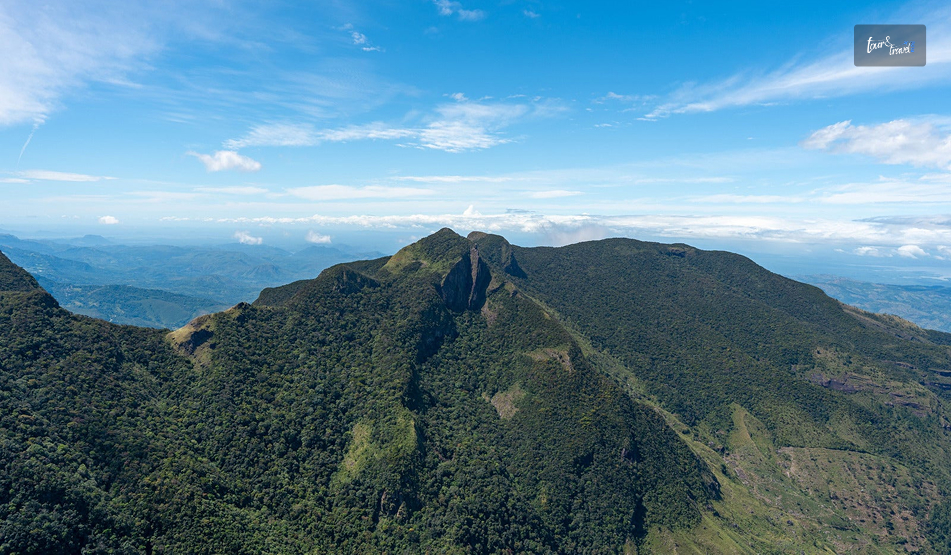
Near Riverston, the ridgeline transformed into a row of rounded peaks with unique folds. The folds further made it look like a clenched fist against the sky.

I was expecting an extension of Nuwara Eliya or the charm of Ella in the Knuckles Mountain Range. 

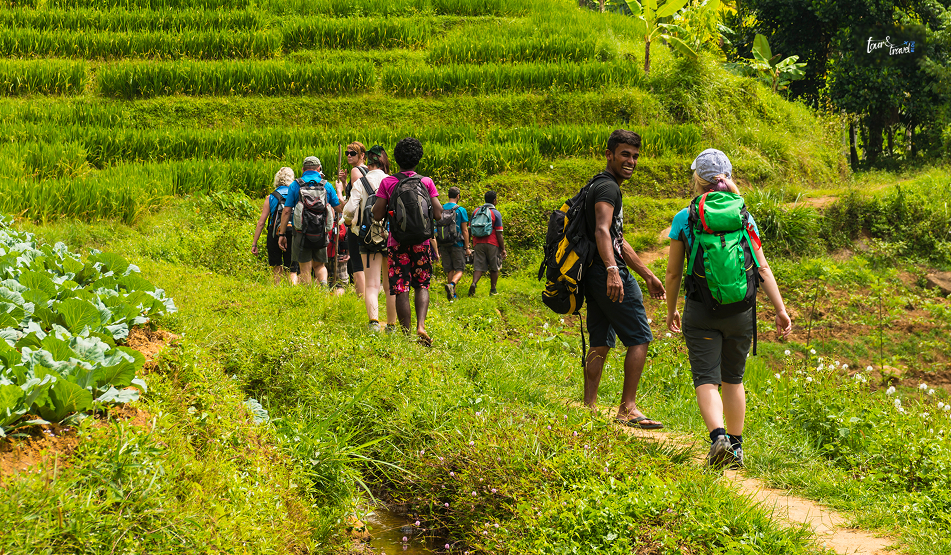
However, instead of the tea estates, I got days of cloud forest, leech socks, village guides, and a silence so complete that I could hear my own footsteps on the trail.

Also, if you have loved Horton Plains National Park, you will definitely cherish the Knuckles Mountain Range, the less-polished and wilder counterpart.

Where The Knuckles Mountain Range Is And The Mystery Behind Its Name

Knuckles Mountain Range Sri Lanka: A Guide To The Wildest Central Highlands Of Sri Lanka

The Knuckles Conservation Forest is in the Central Highlands of Sri Lanka. It is between the Kandy and Matale districts and at a distance of around 30 to 40 kilometers northeast of Kandy Town.

Furthermore, it stands between the Kandy and Matale districts.  

The Mountain Range gets its name from five or six peaks that you can see from certain angles. These peaks, with their folds and unique round shapes, resemble knuckles on a closed fist.

However, the local name for the mountain range is Dumbara Kanduvetiya. The name means the “misty mountain range.” 

Honestly, I could relate to this name more during my visit. On the two days I visited the mountain range, the Sun was not out even when it was 9 AM. 

In 2010, the Knuckles Mountain Range got the designation of a UNESCO World Heritage Site as part of the Sri Lankan Central Highlands listing. 

It got the designation because of how many distinct climate zones and endemic species are packed into a relatively small area.

How To Reach The Knuckles Mountain Range?

Most people base themselves in Kandy or the small village of Meemure, Corbett’s Gap, or Hunnasgiriya before heading in.

I stayed in a homestay near Hunnasgiriya, which cut my morning drive to the trailhead down to about 40 minutes.

FromDistanceApprox. Travel Time
Kandy30–42 km (depending on trailhead)1.5 to 2 hours by tuk-tuk or car
Colombo140 km4 to 4.5 hours by car
Matale25 km1 hour
Dambulla45 km1.5 hours

There is no train access into the range itself.

So, a hired vehicle, tuk-tuk, or your own transport is essentially mandatory. 

Roads narrow into single-lane gravel past Loolwatte, and a couple of the approach roads are only comfortable in a 4WD or trail bike during monsoon months.

What Makes Knuckles Different From Other Highland Parks

Knuckles Mountain Range Sri Lanka: A Guide To The Wildest Central Highlands Of Sri Lanka

If you have already read up on Horton Plains, you will know that the park is essentially a single well-marked loop trail to World’s End. 

Knuckles is the opposite. It is a sprawling, largely unmarked forest reserve with more than 35 identified peaks and a dozen-plus trail combinations, most of which require a local guide.

I hired mine through the Forest Department office near the Wattegama entrance, and I am glad I did.

Without him, I would have missed the point entirely where the trail splits toward Deer Park versus the summit route.

Flora And Fauna

The range spans five distinct climatic zones within a 20-kilometer radius, which is unusual anywhere in the world. 

On my hike, I moved from dry-zone scrub near the base, through a submontane forest thick with orchids, into genuine cloud forest by midday, where the canopy dripped constantly even without rain.

FeatureDetails
Elevation range300 Meters to 1,863 Meters (Knuckles Peak)
Endemic plant speciesOver 160 Recorded
Bird speciesAround 128 Bird Species, including the Endemic Sri Lanka Whistling Thrush
Notable wildlifePurple-faced LangurRusty-Spotted CatKandyan Drongo
Best known peaksKnuckles PeakGombaniyaCorbett’s GapDeer Plateau

I did not spot the rusty-spotted cat, and almost nobody does.

However, I did have a long, unbothered staring match with a purple-faced langur troop near Deer Park, and the birdlife alone was worth the leech bites.

Popular Trails And What To Expect

Knuckles Mountain Range Sri Lanka: A Guide To The Wildest Central Highlands Of Sri Lanka

You can choose the loops and trails in the Knuckles Mountain Range based on the kind of experience you want. 

The Meemure Loop

This is the trail most guides recommend for a first visit.

It is a roughly 10-kilometer loop through the traditional village of Meemure, one of Sri Lanka’s most isolated settlements.

It is still reachable only by a single mountain road. 

I spent a night here in a village home, ate red rice and jackfruit curry cooked over a wood fire, and left with a much better sense of why people describe Knuckles as a living landscape rather than just a park.

Corbett’s Gap And Riverston

If you have limited time, Riverston is the easiest win. 

It is a short drive-up viewpoint rather than a trek, and on a clear morning the “Bible Rock” formation and the valley below are genuinely dramatic. 

I would treat this as a half-day add-on rather than the main event.

Knuckles Peak Summit Trail

This is the demanding one. 

It is approximately a 14-kilometer round trip with a real elevation gain, usually done as a full-day hike starting before dawn. 

Expect grassland patches, patana grass ridgelines, and a scramble near the top. 

I would not recommend it without a guide or without reasonable fitness. Parts of the descent were harder on my knees than the climb up.

TrailDistanceDifficultyTime Needed
Riverston / Corbett’s Gap1–2 Km ViewpointsEasy2–3 Hours
Meemure Loop10 KmModerateFull day / Overnight
Knuckles Peak Summit14 km round tripChallengingFull day (Start Pre-Dawn)
Deer Park Trail6 KmModerateHalf Day

Practical Tips From My Trip

  • Leeches are real and constant in the wetter zones, especially June through September. So, leech socks aren’t optional; I learned this the hard way on day one.
  • Weather flips fast. I packed for cold cloud-forest mornings and sweated through humid valley afternoons on the same day.
  • A guide is genuinely necessary for anything beyond Riverston. Trails are not signposted, and the Forest Department requires registered guides for most routes anyway.
  • The best season is broadly February to April and August to September, avoiding the heaviest southwest monsoon rains.
  • Phone signal disappears past Hunnasgiriya on most networks, so download offline maps beforehand.
  • Entry to the Knuckles Mountain Range is free. However, based on the loop you take, the trekking and permit charges will be between LKR 1000 and LKR 2500. 

Where To Stay Near The Knuckles Mountain Range?

Options are simple by design. This is not a resort destination. 

Homestays in Meemure and Loolwatte give the most authentic experience.

On the other hand, Hunnasgiriya and Corbett’s Gap have a handful of small eco-lodges with better amenities if you want a hot shower after the hike.

Knuckles Mountain Range: The Ultimate Remoteness Of Sri Lanka

Knuckles won’t give you the manicured, easy-access experience of Horton Plains or the tea-country views of Nuwara Eliya. 

What it gives instead is a genuine sense of remoteness.

I found village life largely untouched by tourism, a forest that changes character every few hundred meters of elevation, and trails that still require a bit of local knowledge to navigate. 

If World’s End felt like Sri Lanka’s highlands on display, Knuckles felt like walking into them. 

I am already planning a return trip to attempt the summit trail from the Deanston side, weather permitting.

Share on Social Media

Sibashree is a travel, culture, and leisure writer who has been writing since the age of 12 and professionally since 2014. With more than a decade of travel writing experience and journeys across India and several parts of the world, she brings a deeply personal and thoughtful perspective to her work. A student of English Literature and Mass Communication, Sibashree has always viewed travel as more than movement — for her, it has been a way of understanding people, cultures, and herself. Her passion for spiritual exploration has also led her to many unusual and meaningful destinations over the years. Outside of writing, Sibashree enjoys watching European cinema, reading about global politics, and reflecting on the stories hidden within everyday places.

Leave a Reply

Your email address will not be published. Required fields are marked *

title-img Related

READ MORE Nilaveli Beach

Nilaveli Beach: Four Kilometers Of Sand And Not Much Else

BY  Sibashree Jul 27, 2026

There is a particular kind of quiet that settles over a beach town when you cannot think of a proper definition for it.  Nilaveli Beach has it. Still, it is one of the 13 beaches in Sri Lanka that Lonely Planet has highlighted as the best coastal escapes in January 2026.  This recognition once again solidifies the position of Sri Lanka as an international tropical destination.  Do you want to know more about Nilaveli Beach? Here, I will discuss my first experience in this coastal town, how to reach there, and how I spent my time here.  My First Impression Of Nilaveli Beach  I arrived at Nilaveli Beach in the late afternoon. The beach looked magical with the golden light.  Also, instead of traffic horns or music, the rhythmic slap of fishermen pulling in nets a few hundred meters down the shore was the first sound to reach my ears.  This sound had set the right tone for all the experiences that followed at Nilaveli Beach.  How I Reached Nilaveli Beach? Nilaveli is on the northeastern coast of Sri Lanka. It is also 16 kilometers north of Trincomalee.  Furthermore, the distance between Nilaveli and Colombo is around 264 kilometers. So, it is a journey of approximately 6 hours by road.  However, you can also fly to the small domestic airport of Trincomalee. Tuk-tuks and local buses run the short hop between Trincomalee town and Nilaveli itself without much fuss. Nevertheless, I made the trip overland after finishing up in Kalpitiya on the northwest coast.  I cut across through the interior, and I would recommend that route if you want to enjoy a longer east-coast itinerary.  Taking the route also puts you within easy striking distance of Mannar if you are willing to backtrack a little.  Nilaveli Beach: It Has An Older RĂ©sumĂ© Than You Can Guess Nilaveli is different from many other beaches on the east coast as it has been in the tourism business since the 1970s.  Then, it had a couple of beachfront hotels, and those were quite popular among the tourists making their way to this part of the country.  However, that tourism scene got interrupted by the rampage of the Civil War for two decades.  The Civil War shaped so much of what I saw further north in Kilinochchi and Mullaitivu. However, it emptied the coastline here.  After the war ended in 2009, Nilaveli Beach has been very cautious in its attempt to return to form.  It did not have the resort boom like Pasikudah further south. However, that has been a blessing in disguise as fewer beach clubs have ensured longer silences and more space.  What Is So Magical About Nilaveli?  The Nilaveli Beach itself is the main attraction with pale and soft sand running for kilometers.  Furthermore, the gentle shallow gradient made it safe for swimming, and it offered enough space. So, even after a decent crowd strength, it did not feel crowded.  I walked a good stretch of it one morning before the heat set in and passed maybe a dozen people the entire way. You can just sit offshore and unwind. However, I chose to explore more.  What I Did At Nilaveli? I took a boat ride to the Pigeon Island National Park, one of the few marine national parks in the country.  It has an extensive coral reef, the home to over 100 species of corals, 300 species of fish, turtles, and blacktip reef sharks.   Snorkeling At Nilaveli Beach  I booked a morning snorkeling trip and spent a couple of hours drifting over coral gardens, watching for the blacktip reef sharks the island is known for. They were small and shy! I also spotted some green turtles.  Here, let me share some important details and how we can be responsible in our behavior here.  The reef is not as pristine as it used to be decades ago. After the 2009 tsunami impact and to minimize the traffic impact, the government has capped daily numbers and started rehabilitation work. So, if you have snorkeling plans, especially in the peak seasons from May to October, you need to book your slot in advance. A Trip To Trincomalee, Just Down The Road  I allocated one day for myself away from the sand to explore Trincomalee proper.  Fort Frederick was built by the Portuguese and later expanded by the Dutch and British. It sits on a headland with genuinely dramatic views out over the harbor. The harbor is further one of the finest in the world. Inside the fort grounds, the Koneshwaram Temple was the highlight for me. Furthermore, you can visit the Kanniya hot springs and the Uppuveli Beach too. Nilaveli Beach wins with its honesty, and the reef here is really vibrant.  Pasikudah is Sri Lanka's east coast dressed up for a resort brochure. Nilaveli is a humble coastal hub with its history and marine diversity.

READ MORE things to do in nara

What Are The Things To Do In Nara? How To Plan A Two-Day Trip?

BY  Sibashree Mar 31, 2026

A trip to Nara was long overdue, and as the first permanent capital of the country, it is a must-visit.  Furthermore, this Japanese capital, before 794 AD (then Kyoto became the capital), has many UNESCO World Heritage Sites.  The Todai-ji Temple is the most famous among these 8 UNESCO World Heritage Sites. You will find one of the largest Buddha statues in the country here, and the statue is made of bronze.  Of course, the deer roaming in the city are beautiful, and you feel like getting transported to a bygone era.  It reminded me of one of the most famous literary works in our country, Shakuntalam Abhigyan, an immortal love story between King Dushyanta and Shakuntala, written by Kalidasa in Sanskrit.  Also, this is a place that will ask you to come back, and most people plan a day trip to experience its historical charm and natural beauty.  But, smitten by its beauty, I chose a 2-day trip, and here is the list of things to do in Nara. Also, I will discuss how I can get to Nara.  How To Reach Nara?  Nara is easily accessible from Kyoto, which is also famous for its history and cherry blossom season.  You can also visit Nara from the Osaka prefecture. So, overall, a visit to Nara can fit well into your itinerary of visiting the Kansai region of Japan.   Also, the robust railway system of Japan makes it easy and budget-friendly to visit Nara. A Japan Railway Regional Pass will be the best for traveling across Nara, Kyoto, Osaka, and Kobe, and the entire Kansai Region.  Also, when in Osaka, don’t forget to explore the street food stalls and have the best Osaka food, including Mochis and seafood delicacies.  Here is how you can travel from Kyoto to Nara. 1. Traveling From Kyoto To Nara Through The JR Nara Line You will get an express train or a local train from Kyoto to Nara every hour.  Furthermore, if you opt for the Miyakoji Rapid Service on this line, you will reach Nara within 45 minutes, and the ticket price will be 720 JPY.  Also, the local train services, with the same ticket price, will take about 70 minutes.  Once you reach the JR Nara station, you will get buses to the Nara Park and other top attractions in Nara.  2. Take The Kintetsu Railway To Reach Nara From Kyoto This is the most convenient way to reach Nara from Kintetsu Railway Station.  The train journey is the fastest, and the journey takes about 35 minutes by the express trains, and the ticket price is 1280 JPY.  Also, the regular trains take about 45 minutes to complete the journey. The ticket price is 760 JPY.  What Are The Things To Do In Nara?  From a visit to the Nara Park to exploring Heijo Palace and the temples, there are many things to do in Nara.  Here are the things I did during my 2-day stay.  1. Day 1 In Nara: Exploring The Nara Park  With deer passing by, Nara Park, the home to the main attractions in Nara, is a place you cannot simply miss.  The park is free to enter, and it remains open for 24 hours.  However, many attractions in the park close after 5 PM. So, you have to be early when visiting it.  Also, here are the attractions you will come across in the Nara Park, along with the deer passing by.  • Kasuga Taisha One of the UNESCO World Heritage Sites in Nara, Kasuga Taisha, takes us back to the Nara Period from 710 to 794 AD.  It is the most revered shrine among the Fujiwara clan as the tutelary shrine.  Furthermore, the main attraction of the shrine is the “Hall of Lanterns.” There, I saw many bronze lanterns illuminating the darkness.  During the special festivals, Setsubun Mantoro in February and Chugen Mantoro in August, all these lanterns are lit.  Moreover, you will find a cider tree in the inner shrine, and it is 1000 years old.  • Mt. Wakakusa I took the back road from Kasuga Taisha on the way to the Todai-Ji temple.  I came across many small shrines there. However, the highlight was Mt. Wakakusa.  This hill between the two shrines has a height of 350 meters. Also, on the 4th Saturday of January, it becomes the venue for the Wakakusa Yamayaki celebration.  People burn dead grass on the slopes, and this is a ritual that has been celebrated since the 18th century.  • Todai-Ji Todai-Ji is another UNESCO World Heritage Site, and one of the “Historic Monuments of Ancient Nara.” It was built in 752 AD, and it was the head of all the temples in the province. It even had a strong influence on the royal family.  In fact, with Todai-Ji being the seat of control even in the royal decisions, the emperor decided to move the capital to Nagaoka in 784 AD.  However, the main attraction of the Todai-Ji Temple is the massive Buddha statue, or Daibutsu.   A depiction of Dainichi Nyorai,  it represents the primordial Buddha in the orthodox East Asian Buddhist philosophy.  You will also find two similarly sized Bodhisattva statues here.  However, the temple and statues you see today were burned down, and they were rebuilt during the Edo period (1603–1868).  2. Things To Do In Nara: Day 2 I visited the Heijo Palace and many other temples of Nara on day 2.  • Visiting The Heijo Palace  When Nara was the capital, the Heijo Palace was the seat of power for the chrysanthemum throne.  It had a dimension of 1 kilometer, considering the other palaces and architecture of that time.  However, the remains of this UNESCO World Heritage Site in Nara are now at the Toshodai-ji Temple, nearby.  However, since the 1950s, archaeologists have been studying the remains of the Heijo Palace, and this has evoked further public interest.  That is why you can now see many placards there and read about the history and legacy of the site.  Moreover, the audience hall and two other parts of the palace were rebuilt. The restoration of the largest part, the audience hall, happened in 2010.  It was an ode to the 1300th anniversary of Nara as the capital of Japan.  • Toshodai-Ji As I have mentioned, the Toshodai-ji Temple has the remains of the Heijo Palace.  This temple dates back at least a millennium. Ganji, a Chinese monk, built this temple in 759 AD.  Monk Ganji brought Buddhism to Japan, and the Toshodai-Ji today is a UNESCO World Heritage Site.  • Yakushi-Ji It is a UNESCO World Heritage Site, and people here worship Lord Buddha as Yakushi Nyorai or the Medicine Buddha.  The dual main halls here have unique architecture, and each has a dedicated 3-story pagoda.  • Horyu-ji  Horyu-Ji is older than most temples in the Nara region, and Prince Shotoku founded it in 607.  Furthermore, this UNESCO World Heritage Site stands out with its wooden edifices, which are some of the oldest in Japan. This time, I missed many attractions such as Asuka, Omiwa Shrine, and Mount Yoshino. Some day for sure!  And till then, SayĹŤnara, guys!

READ MORE Hello Kitty Shinkansen

Is Hello Kitty Shinkansen Discontinued? Looking Back At Everything This Iconic Bullet Train Offered

BY  Sibashree Apr 18, 2026

Yes, Hello Kitty Shinkansen is going to get discontinued in Japan. Now, during my last trip to Japan, a ride in this themed bullet train was surely my pookie moment.  It was an experience of a lifetime when I tried the best Osaka food and boarded the Hello Kitty Shinkansen train for a day trip to Kobe, Himeji, Okayama, Kurashiki, and Hiroshima.  However, JR West has decided to stop the operations of the Hello Kitty Shinkansen from 17th May 2026.  Now, it’s sad for everyone who loves Japanese culture. If the Japanese shrines and temples are the telltale of its history, religion, and society, the Hello Kitty Shinkansen has been a poster of the pop culture.  So, in this article, I will discuss how the beautiful 8-year-old journey of the Hello Kitty Shinkansen is going to come to an end, and what you can expect in the few days left until the last date of operation.  Hello Kitty Shinkansen: An Iconic Symbol Of Japanese Railway Branding  Hello Kitty Shinkasen started running on the SanyĹŤ Shinkansen line on 30th June, 2018. It used to run from Shin-Osaka to Hakata (Fukuoka).  Furthermore, during this 8-year run, this themed bullet train has successfully served its purpose of reviving tourism in Japan.  Moreover, the Hello Kitty Shinkasen used 500-series bullet trains and featured the signature white-and-pink colors.  Also, the exterior was adorned with bows, the signature of Hello Kitty.  However, for the train, the bow represented a link between the cities on the route covered.  The Decor Which Made The Hello Kitty Shinkansen So Special Out of eight cars of the Hello Kitty Shinkansen, the decor of the first two cars was based on the theme.  Furthermore, the Hello Plaza in Car 1 was dedicated to exhibitions. It had exhibits dedicated to the cities crossed on the route.  Moreover, you could shop for souvenirs at the Hello Plaza.  Again, the second carriage, “KAWAII! ROOM,” was decorated in the style of Hello Kitty. The chairs, the wall art, and the ceiling were done accordingly.  Moreover, there was a photo area.  The rest of the carriage was like a normal bullet train, with subtle hints of the Hello Kitty theme.  Also, a unique melody was used for the announcement.  How Is The Farewell Event Of Hello Kitty Shinkansen Being Planned?  JR West is going to plan a series of commemorative events to bid farewell to this iconic bullet train.  As a passenger, you can leave a message on the board reserved for sharing memories. Furthermore, you can get stickers and limited edition souvenirs in the memory of the train.  Moreover, you can collect special merchandise from the Kyoto Railway Museum and specific JR West Stores. You will even find them online.  Having said that, there is still a month left for the Hello Kitty Shinkansen to get discontinued. So, let’s have a quick look at the operation days, timetable, and passes.  Hello Kitty Shinkansen Passes And Tickets You can ride the Hello Kitty Shinkansen with the Japan Rail Pass and other tickets. So, check out some of the pass options here.  1. JR-WEST All Area Pass You can buy this single pass to explore Sanyo, Hokuriku, Hakata, and other unexplored parts of western Japan.  Furthermore, it has a validity of 7 days.  Also, the pass price for adults is 26000 Yen, and for children, it is 1300 Yen. Moreover, it is free for children from 1 to 5 years.  This is the most recommended pass for riding the Hello Kitty Shinkansen.  2. Kansai - Hiroshima Area Pass With this Kansai to Hiroshima Pass, you can enjoy unlimited rides between these two locations.  It will also include a ride on the JR West Miyajima Ferry to Miyajima Island.  Moreover, the 5-day pass for Kansai - Hiroshima will cost 17000 Yen for adults and 8500 Yen for children.  3. Hiroshima-Yamaguchi Area Pass With this pass, you can enjoy an unlimited ride between Fukuoka and Yamaguchi. This pass is valid for 5 days, and for adults, it costs 15000 Yen, and for children, it is 7500 Yen.  Moreover, there are the Kansai-Wide Area Pass, Kansai-Hokuriku Area Pass, SANYO-SHINKANSEN One-way Ticket, and Okayama-Hiroshima-Yamaguchi Area Pass.  Hello Kitty Shinkansen Days Of Operation And Timetable  Hello Kitty Shikashen will now run every day. You can book the trains from https://www.klook.com/japan-rail/ or the West Japan Railway Company’s website.  Also, there are two trains, Kodama No. 942 and Kodama No. 949, running from Hakata to Shin-Osaka and Shin-Osaka to Hakata, respectively.  1. Time Table Of Kodama No. 942 (Hakata To Shin-Osaka) StationTiming Hakata7:04 AMKokura 7:22 AMShin-Shimonosheki 7:31 AMAsa7:43 AMShin-Yamaguchi7:53 AMTokuyama8:12 AMShin-Iwakuni8:25 AMHiroshima8:40 AMHigashihiroshima8:53 AMMihara9:12 AMShin-Onomichi9:18 AMFukuyama9:31 AMShin-Kurashiki9:45 AMOkayama10:09 AMAioi10:35 AMHimeji10:48 AMNishi-Akashi11:02 AMShin-Kobe11:12 AMShin-Osaka11:25 AM 2. Time Table Of Kodama No. 948 (Shin-Osaka To Hakata) StationTiming Shin-Osaka11:37 AMShin-Kobe11:50 AMNishi-Akashi12:01 PMHimeji12:15 PMAioi12:27 PMOkayama12:50 PMShin-Kurashiki1:02 PMFukuyama1:16 PMShin-Onomichi1:28 PMMihara1:41 PMHigashihiroshima1:56 PMHiroshima2:08 PMShin-Iwakuni2:29 PMTokuyama2:42 PMShin-Yamaguchi2:58 PMAsa3:11 PMShin-Shimonosheki 3:24 PMKokura 3:34 PMHakata3:51 PM There have always been high demands for the Hello Kitty Shinkansen. So, hurry a little if you want to experience a ride in the days remaining.  Moreover, train timings can change under unusual scenarios. So, always check the timing with local authorities before booking your tickets. What Are The Places To Visit On The Hello Kitty Shinkansen Route?  There are many stations on the Hello Kitty Bullet Train route. However, you cannot miss these places on the route.  1. Kobe I loved the Nunobiki Ropeway, which was very close to the Kobe Shinkansen station. The ropeway took me on a ride over the Nunobiki Waterfall and the beautiful Kobe Herb Garden.  It dropped us at the Observation Park, and as the name suggests, it offers amazing views of the city.  However, you can even take a local train to the city.  2. Himeji The Himeji Castle is one of the twelve original castles in Japan. It was built in 1609.  Also known as the White Heron Castle, it is the largest in Japan and is a UNESCO World Heritage Site.  3. Okayama The Korakeun Garden in Okayama is beautiful. Furthermore, the Kibutsu shrine, a little far away from the town, stands out with its amazing “timber-framed corridor.” Also, don’t forget a visit to the Okayama Castle, the main tower of which was completed in 1597.  4. Kurashiki The Bikan Historical Quarter is the main attraction of Kurashiki. Once you reach Kurashiki on the bullet train, you will get off and take a local train to reach the historical center.  It is also a pretty and quaint town. So, it is ideal for relaxation.  5. Hiroshima Hiroshima is one of the historic places to visit in Japan. The Atomic Bomb Dome and the Peace Museum here remind you of the futility of war.  The Future Of Themed Bullet Trains In Japan  As a tourist or a cultural enthusiast, you may think that the discontinuation of the Hello Kitty Shinkansen has put the future of the themed bullet trains in Japan at stake.  However, that is not the case.  Japan has just got a new theme-based bullet train called Super Mario Shinkansen in 2025. Also, JR Kyushu runs this train in Kyushu.  As the name says, Super Mario Shinkansen has pictures of the main characters, Mario and Luigi. Also, it shows how Japan still believes in using themed trains as powerful tools of regional tourism promotion among children and youngsters.