
What Is Ratnapura Famous For? Know The Best Places To Visit In Ratnapura 

I wanted to begin this article with details about how the air in Ratnapura is different from the air in Colombo. 

However, the recent news about the Ratnapura air quality index (AQI) made me stop for a while. The presence of the main air pollutant PM2.5 in the quantity of 11 µg/m³ in the air is actually 2.5 times higher than the World Health Organization (WHO) standard. 

When I read the news, I could not match it with the heavy air of Ratnapura, constantly laden with the scent of wet earth, crushed tea leaves, and the electric promise of an impending downpour.

Also, when I first stepped off the bus onto the rain-slicked tarmac of this valley town, wrapped tight by the jagged peaks of the Sabaragamuwa Province, I felt an immediate shift in energy.

So, my experience of Ratnapura will always remain soaked in wet soil and very intimate. 

Ratnapura: The Story Behind The Name

Ratnapura gets its name from the Sanskrit words Ratna (Gem) and Pura (Town). So, literally, the name of the town means the “City of Gems.”

It is fascinating how the region has been unearthing unbelievable wealth out of the mud. These gemstones include:

  • Cat’s Eyes
  • Deep Cornflower Blue Ceylon Sapphires
  • Fiery Rubies
  • Alexandrites

Still, the glitz of neon lights has not touched Ratnapura. Everywhere you go, you will notice the rugged humility typical of a working class community. 

Also, as a traveler, getting my boots caked in mud was a way more rewarding experience for me than walking on a pristine resort floor. 

In the next section, I will describe in detail why Ratnapura is so famous and the best places to visit in the City of Gem. 

What Are The Best Places To Visit In Ratnapura? 

Located in the Sabaragamuwa province, Ratnapura is not just the Gem Capital of Sri Lanka. It is a rich depository of the fossils of extinct elephants and rhinoceroses from the prehistoric age. 

Furthermore, it is the gateway to Adam’s Peak, and it is home to the spiritually significant Maha Saman Devalaya. 

It is the shrine of Lord Saman, the presiding deity of the region. 

Moreover, as a high-rainfall wet zone of Sri Lanka, it is also famous for its waterfalls and ecotourism. 

1. Sinharaja Forest Reserve

Sinharaja Forest Reserve

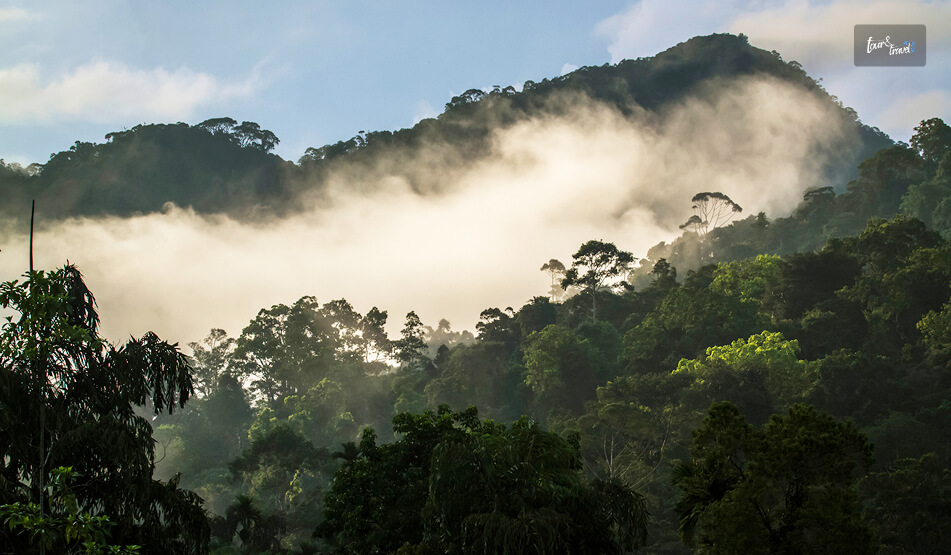
As I entered the forest reserve, for the first 20 minutes, my boots were in the mud. 

It is a UNESCO World Heritage Site and it is special as it is one of the last remaining virgin rainforests on Earth. 

Even in mid-noon, you will experience the thrill of the emerald twilight in the forest reserve as the canopy grows very dense. The canopy swallows the midday Sun. 

Nuwan, a local guide, accompanied me through the forest reserve. 

Within an hour, he silently pointed into the dense brush where a purple-faced langur monkey sat watching us with an expression of mild amusement. 

We spotted giant squirrels leaping across tree crests and listened to the distinct, symphonic calls of over 130 bird species. 

Keep a bottle of saltwater or a stick of soap handy, though, because the forest floor crawls with overzealous leeches who consider trekkers a moving buffet.

2. Udawalawe National Park

Udawalawe National Park

The Udawalawe National Park, with its sweeping grasslands and skeletal trees, offered a lot of drama. 

All these create a stark contrast against the distant highlands. Furthermore, the park is as thrilling as the African savannah for wildlife viewing. 

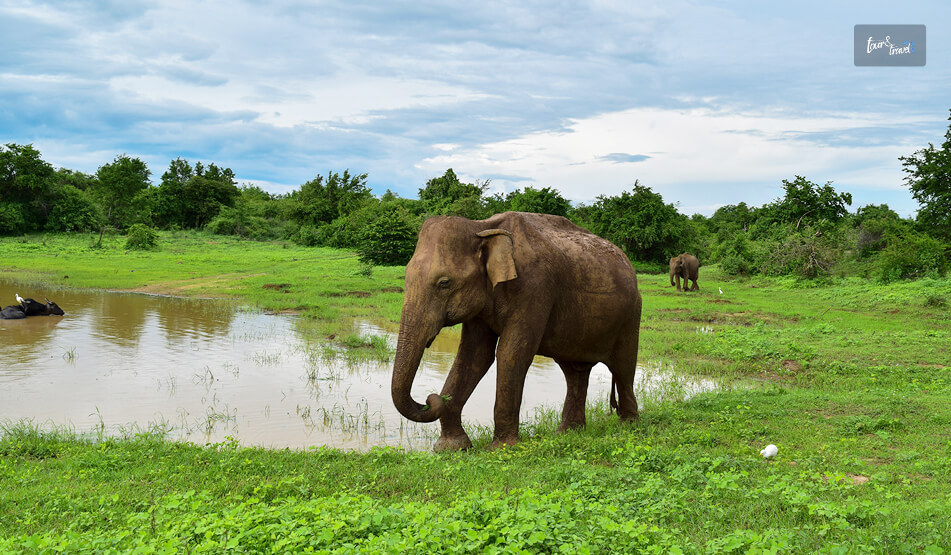
I was on an open-top jeep safari, and our driver had cut the engine near a large watering hole. Then, within minutes, I could spot a large herd of wild Sri Lankan elephants emerging from the scrub. 

Those were moments of absolute silence as three matriarchs gently guided a tiny, clumsy calf into the water, spraying mud to shield its skin from the Sun.

Along with the elephants, I could also see glimpses of water buffaloes tracking us with heavy gazes and water monitor lizards sliding into the reeds.

And the most fascinating part? I could spot a solitary, brief shadow that our driver swore was a Sri Lankan leopard.

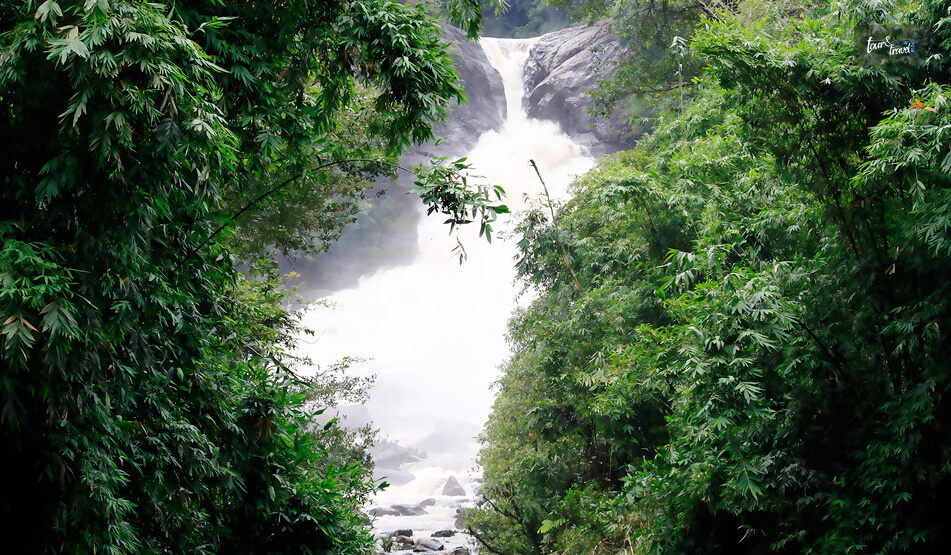
3. Bopath Ella Falls

Bopath Ella Falls

Bopath Ella Falls was a short drive from the city center in Kuruwita. 

The water flows through a narrow gap at the top and cascades down a stepped rock face, widening out into a shape that perfectly mimics the sacred Bo leaf (Ficus religiosa) 

Furthermore, a dense forest surrounds the pool at the bottom. I was a little tired, and I sat on a slick rock and sipped fresh king coconut water bought from a roadside vendor. 

He shared a fascinating local folklore with me. 

The old people say the pool is haunted,” he murmured, looking at the churning white water. “They believe a great ancient treasure trove lies buried underneath, guarded by spirits.”

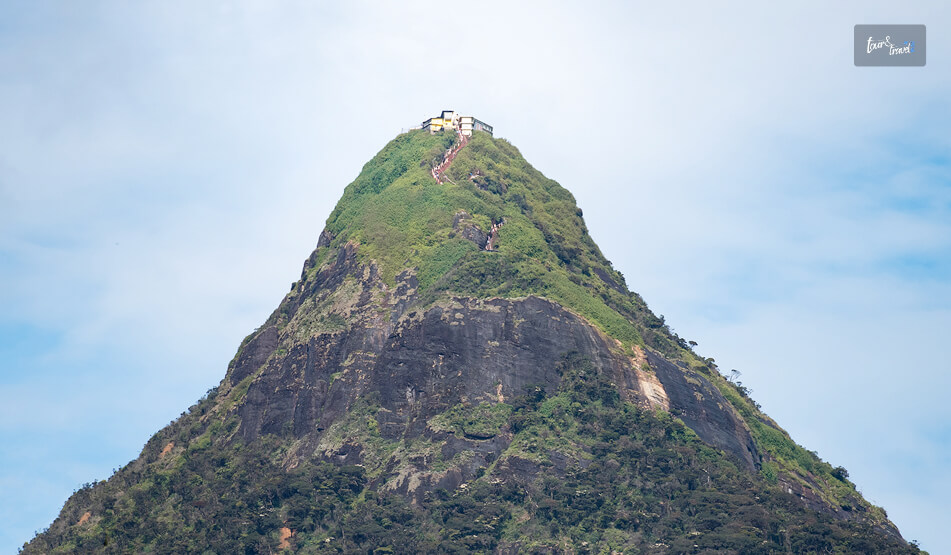
4. Adam’s Peak (Sri Pada)

Adam’s Peak (Sri Pada)

Climbing Adam’s Peak from the Ratnapura Side is a strenuous job, and the path is known as the “King’s Way.” It is an act of sheer endurance. 

The northern route from Nallathanniya is shorter and more popular. However, you cannot deny the allure of this southern trail which climbs over 7,300 feet via thousands of uneven, ancient stone steps.

I started climbing the Adam’s Peak under a blanket of stars, my calves burning instantly.

The closer I got to the top, the trails got steeper. 

Furthermore, as the Sun broke over the horizon, its rays cast a perfect, triangular shadow of the mountain across the misty lowlands below. 

The overall ambiance was deeply spiritual, and from pilgrims to adventure lovers, everyone can experience the shift of energy here. 

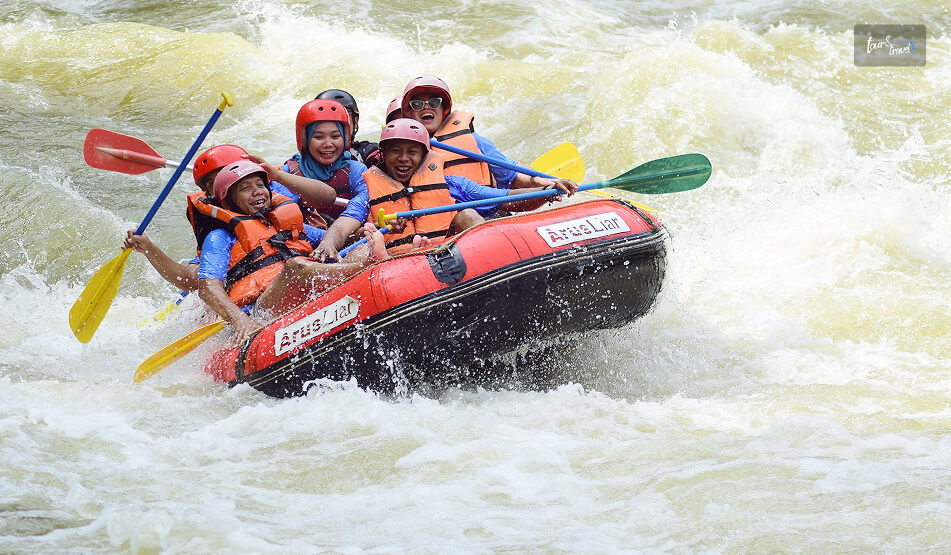
5. Kitulgala 

Kitulgala

If you want to complement the tranquil ambiance of Ratnapura with something more vibrant, you can head to Kitulgala. 

This small tone is home to a wet-zone rainforest that sees two monsoons a year.

It holds fame not only for its raw beauty but also as the filming location for the 1957 classic The Bridge on the River Kwai.

Furthermore, Kitulgala is the adventure capital of the region. I threw myself into white-water rafting down the churning Kelani River, gripping the paddle tightly as our raft slammed through technical, white-capped rapids.

Moreover, if you want to stay in the land, you can enjoy bird-watching, canyoning, and the rides of natural rock slides in the jungle. 

6. Maha Saman Devalaya

Stepping into the tranquil grounds of the Maha Saman Devalaya was a humbling experience. 

It is the spiritual heart of Ratnapura, and Sumana Saman, the presiding deity here, watches over the sacred mountain and the surrounding gem valleys.

Furthermore, according to a legend, a royal court minister built this temple after a successful gemming expedition. 

Though it carries deep historical Hindu influences, it functions today primarily as a serene place of Buddhist worship, framed by beautiful white Kandyan-style arches.

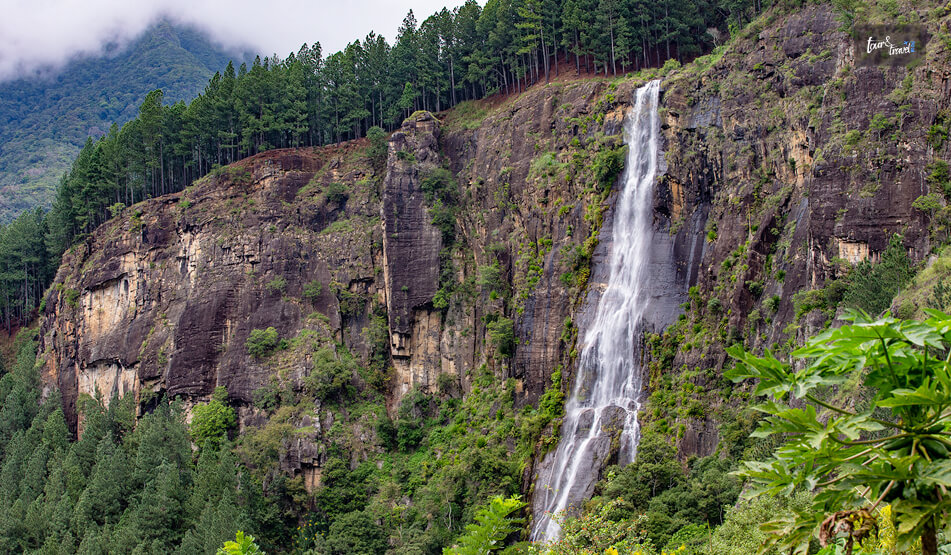
7. Bambarakanda Waterfalls

Bambarakanda Waterfalls

The Bambarakanda Waterfalls stand at an amazing height of 790 feet, and it is the tallest waterfall in Sri Lanka. 

I reached this waterfall after a steep hike through whispering pine forests. So, I did not feel the humidity and heat of the lower valleys here. 

The cliff face is regularly shrouded in thick, rolling mountain mist, giving the entire landscape an ethereal quality. 

Standing at the rocky base of the falls, looking up as the water plummeted from the clouds, I let the cool spray drench my face.

It was the perfect antidote to days of humid trekking.

8. The Gem Mines

The Gem Mines

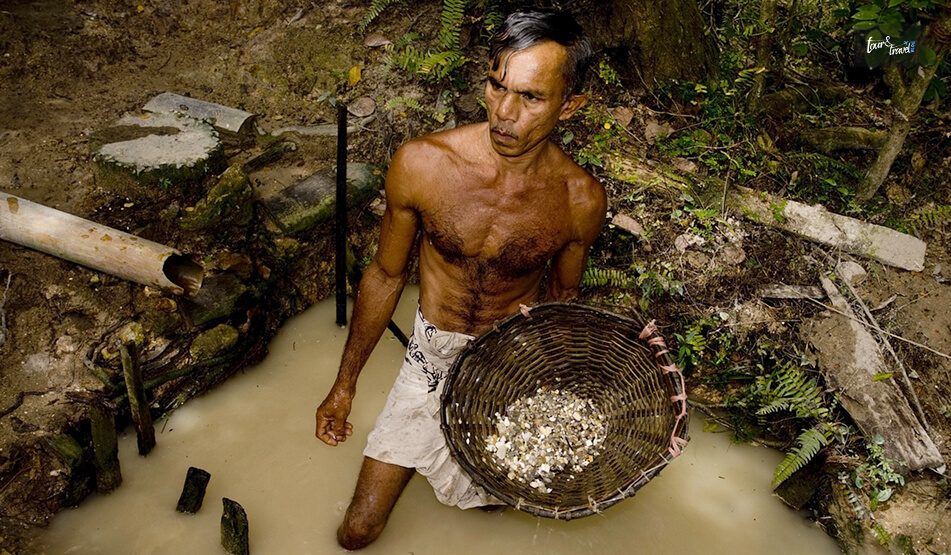
You cannot leave Ratnapura without visiting a gem mine. I bunked the commercial showrooms and walked out into the surrounding paddy fields to see a traditional, artisanal pit mine. 

I saw the miners digging deep, narrow shafts into the mud, reinforcing the walls with logs and fern leaves.

They haul up baskets of illam (gem-bearing gravel) using simple wooden pulleys, then wash the dirt away in nearby streams. 

A seasoned miner let me watch over his shoulder as he swirled a woven basket in the water, revealing a translucent, rough pebble of purple-blue sapphire. 

It was an unfiltered look at the hard, manual labor behind the world’s most glamorous stones.

9. Batadombalena

If you are a history enthusiast, Batadombalena is a must visit for you. 

This ancient rock cave and archeological site, hidden deep within the foothills, contains evidence of the prehistoric Balangoda Man (Homo sapiens balangodensis), dating back over 30,000 years.

I hiked up to the cave, walking through rubber plantations and dense thickets. 

Furthermore, this cave has excavation trenches where stone tools and charred animal bones were uncovered. 

10. National Museum Of Ratnapura

The National Museum of Ratnapura is inside the Ehelepola Walauwa, which is a historic colonial mansion. 

Here, I became familiar with the natural history of the valley. Also, I spent an hour marveling at prehistoric fossils of hippopotamuses, rhinoceroses, and elephants excavated directly from the local gem pits. 

It also holds an incredible collection of traditional weapons, ancient jewelry, and an educational breakdown of the region’s complex geology.

My 3-Day Ratnapura Itinerary

DaysThe Time of the DayActivities/Places to Visit Key Highlights and Tips
Day 1MorningMaha Saman DevalayaStart early to beat the heat, enjoy the crisp air, and listen to peaceful morning chants.
AfternoonBatadombalena Caves and Bopath Ella FallsHike up to explore prehistoric cave history, then enjoy a picnic lunch by the unique heart-shaped waterfall.
EveningCentral Clock Tower Street MarketWander the central streets to watch local merchants rapidly trading rough gemstones right on the pavement.
Day 2MorningSinharaja Forest ReserveEnter via Kudawa or Pitadeniya gates by 7:00 AM for the best chances of spotting active wildlife and rare birds. 
AfternoonUdawalawe National Park SafariHead south and hire a 4×4 jeep for a 3:00 PM safari to see elephants gathering by the water reservoirs.
Day 3MorningActive Gem Mine TourCoordinate with a local guide to visit a working mine; remember to tip the miners generously for their time.
AfternoonNational Museum of RatnapuraHead back into the city to view ancient fossils of extinct animals that once roamed the valley.
EveningLocal Culinary DiningWind down at a local eatery with traditional red rice, jackfruit curry, pol sambol, and sweet kithul jaggery.

Ratnapura: Muddy, Chaotic, And Magical 

Ratnapura is not the place where you will find curated beauty. It can be wet, muddy, and chaotic. 

However, if you don’t mind smelling the coffee, you will experience the magic it offers. 

The magic of the smile of a miner hauling up mud and the primeval silence of Sinharaja! 

Also, it is not the place where you will just pass through for the sapphires. 

Moreover, I would love to come back for the wild, untamed spirit and mist of the waterfalls. 

Read Also:

Share on Social Media

Sibashree is a travel, culture, and leisure writer who has been writing since the age of 12 and professionally since 2014. With more than a decade of travel writing experience and journeys across India and several parts of the world, she brings a deeply personal and thoughtful perspective to her work. A student of English Literature and Mass Communication, Sibashree has always viewed travel as more than movement — for her, it has been a way of understanding people, cultures, and herself. Her passion for spiritual exploration has also led her to many unusual and meaningful destinations over the years. Outside of writing, Sibashree enjoys watching European cinema, reading about global politics, and reflecting on the stories hidden within everyday places.

Leave a Reply

Your email address will not be published. Required fields are marked *

title-img Related

READ MORE Hello Kitty Shinkansen

Is Hello Kitty Shinkansen Discontinued? Looking Back At Everything This Iconic Bullet Train Offered

BY  Sibashree Apr 18, 2026

Yes, Hello Kitty Shinkansen is going to get discontinued in Japan. Now, during my last trip to Japan, a ride in this themed bullet train was surely my pookie moment.  It was an experience of a lifetime when I tried the best Osaka food and boarded the Hello Kitty Shinkansen train for a day trip to Kobe, Himeji, Okayama, Kurashiki, and Hiroshima.  However, JR West has decided to stop the operations of the Hello Kitty Shinkansen from 17th May 2026.  Now, it’s sad for everyone who loves Japanese culture. If the Japanese shrines and temples are the telltale of its history, religion, and society, the Hello Kitty Shinkansen has been a poster of the pop culture.  So, in this article, I will discuss how the beautiful 8-year-old journey of the Hello Kitty Shinkansen is going to come to an end, and what you can expect in the few days left until the last date of operation.  Hello Kitty Shinkansen: An Iconic Symbol Of Japanese Railway Branding  Hello Kitty Shinkasen started running on the Sanyō Shinkansen line on 30th June, 2018. It used to run from Shin-Osaka to Hakata (Fukuoka).  Furthermore, during this 8-year run, this themed bullet train has successfully served its purpose of reviving tourism in Japan.  Moreover, the Hello Kitty Shinkasen used 500-series bullet trains and featured the signature white-and-pink colors.  Also, the exterior was adorned with bows, the signature of Hello Kitty.  However, for the train, the bow represented a link between the cities on the route covered.  The Decor Which Made The Hello Kitty Shinkansen So Special Out of eight cars of the Hello Kitty Shinkansen, the decor of the first two cars was based on the theme.  Furthermore, the Hello Plaza in Car 1 was dedicated to exhibitions. It had exhibits dedicated to the cities crossed on the route.  Moreover, you could shop for souvenirs at the Hello Plaza.  Again, the second carriage, “KAWAII! ROOM,” was decorated in the style of Hello Kitty. The chairs, the wall art, and the ceiling were done accordingly.  Moreover, there was a photo area.  The rest of the carriage was like a normal bullet train, with subtle hints of the Hello Kitty theme.  Also, a unique melody was used for the announcement.  How Is The Farewell Event Of Hello Kitty Shinkansen Being Planned?  JR West is going to plan a series of commemorative events to bid farewell to this iconic bullet train.  As a passenger, you can leave a message on the board reserved for sharing memories. Furthermore, you can get stickers and limited edition souvenirs in the memory of the train.  Moreover, you can collect special merchandise from the Kyoto Railway Museum and specific JR West Stores. You will even find them online.  Having said that, there is still a month left for the Hello Kitty Shinkansen to get discontinued. So, let’s have a quick look at the operation days, timetable, and passes.  Hello Kitty Shinkansen Passes And Tickets You can ride the Hello Kitty Shinkansen with the Japan Rail Pass and other tickets. So, check out some of the pass options here.  1. JR-WEST All Area Pass You can buy this single pass to explore Sanyo, Hokuriku, Hakata, and other unexplored parts of western Japan.  Furthermore, it has a validity of 7 days.  Also, the pass price for adults is 26000 Yen, and for children, it is 1300 Yen. Moreover, it is free for children from 1 to 5 years.  This is the most recommended pass for riding the Hello Kitty Shinkansen.  2. Kansai - Hiroshima Area Pass With this Kansai to Hiroshima Pass, you can enjoy unlimited rides between these two locations.  It will also include a ride on the JR West Miyajima Ferry to Miyajima Island.  Moreover, the 5-day pass for Kansai - Hiroshima will cost 17000 Yen for adults and 8500 Yen for children.  3. Hiroshima-Yamaguchi Area Pass With this pass, you can enjoy an unlimited ride between Fukuoka and Yamaguchi. This pass is valid for 5 days, and for adults, it costs 15000 Yen, and for children, it is 7500 Yen.  Moreover, there are the Kansai-Wide Area Pass, Kansai-Hokuriku Area Pass, SANYO-SHINKANSEN One-way Ticket, and Okayama-Hiroshima-Yamaguchi Area Pass.  Hello Kitty Shinkansen Days Of Operation And Timetable  Hello Kitty Shikashen will now run every day. You can book the trains from https://www.klook.com/japan-rail/ or the West Japan Railway Company’s website.  Also, there are two trains, Kodama No. 942 and Kodama No. 949, running from Hakata to Shin-Osaka and Shin-Osaka to Hakata, respectively.  1. Time Table Of Kodama No. 942 (Hakata To Shin-Osaka) StationTiming Hakata7:04 AMKokura 7:22 AMShin-Shimonosheki 7:31 AMAsa7:43 AMShin-Yamaguchi7:53 AMTokuyama8:12 AMShin-Iwakuni8:25 AMHiroshima8:40 AMHigashihiroshima8:53 AMMihara9:12 AMShin-Onomichi9:18 AMFukuyama9:31 AMShin-Kurashiki9:45 AMOkayama10:09 AMAioi10:35 AMHimeji10:48 AMNishi-Akashi11:02 AMShin-Kobe11:12 AMShin-Osaka11:25 AM 2. Time Table Of Kodama No. 948 (Shin-Osaka To Hakata) StationTiming Shin-Osaka11:37 AMShin-Kobe11:50 AMNishi-Akashi12:01 PMHimeji12:15 PMAioi12:27 PMOkayama12:50 PMShin-Kurashiki1:02 PMFukuyama1:16 PMShin-Onomichi1:28 PMMihara1:41 PMHigashihiroshima1:56 PMHiroshima2:08 PMShin-Iwakuni2:29 PMTokuyama2:42 PMShin-Yamaguchi2:58 PMAsa3:11 PMShin-Shimonosheki 3:24 PMKokura 3:34 PMHakata3:51 PM There have always been high demands for the Hello Kitty Shinkansen. So, hurry a little if you want to experience a ride in the days remaining.  Moreover, train timings can change under unusual scenarios. So, always check the timing with local authorities before booking your tickets. What Are The Places To Visit On The Hello Kitty Shinkansen Route?  There are many stations on the Hello Kitty Bullet Train route. However, you cannot miss these places on the route.  1. Kobe I loved the Nunobiki Ropeway, which was very close to the Kobe Shinkansen station. The ropeway took me on a ride over the Nunobiki Waterfall and the beautiful Kobe Herb Garden.  It dropped us at the Observation Park, and as the name suggests, it offers amazing views of the city.  However, you can even take a local train to the city.  2. Himeji The Himeji Castle is one of the twelve original castles in Japan. It was built in 1609.  Also known as the White Heron Castle, it is the largest in Japan and is a UNESCO World Heritage Site.  3. Okayama The Korakeun Garden in Okayama is beautiful. Furthermore, the Kibutsu shrine, a little far away from the town, stands out with its amazing “timber-framed corridor.” Also, don’t forget a visit to the Okayama Castle, the main tower of which was completed in 1597.  4. Kurashiki The Bikan Historical Quarter is the main attraction of Kurashiki. Once you reach Kurashiki on the bullet train, you will get off and take a local train to reach the historical center.  It is also a pretty and quaint town. So, it is ideal for relaxation.  5. Hiroshima Hiroshima is one of the historic places to visit in Japan. The Atomic Bomb Dome and the Peace Museum here remind you of the futility of war.  The Future Of Themed Bullet Trains In Japan  As a tourist or a cultural enthusiast, you may think that the discontinuation of the Hello Kitty Shinkansen has put the future of the themed bullet trains in Japan at stake.  However, that is not the case.  Japan has just got a new theme-based bullet train called Super Mario Shinkansen in 2025. Also, JR Kyushu runs this train in Kyushu.  As the name says, Super Mario Shinkansen has pictures of the main characters, Mario and Luigi. Also, it shows how Japan still believes in using themed trains as powerful tools of regional tourism promotion among children and youngsters. 

READ MORE Osaka food

Osaka Food: Know What To Eat In The Streets Of Osaka 

BY  Sibashree Mar 27, 2026

Osaka food is slowly and steadily surpassing Tokyo as the poster for Japanese cuisine.  Furthermore, it has been just a few days since La Cime in Osaka became the best restaurant in Japan in the Asia's 50 Best Restaurants list in 2026.   However, the soul of the Osaka food lies in the streets. The Dotonbori neighborhood was especially the best when I visited.  In fact, I was so much in love with the street food here that I chose to cancel the previous booking and chose a hotel in Dotonbori instead.  Also, the Dotonbori Market was the epicenter of my food exploration in Osaka.  Moreover, how can you ever forget what Anthony Bourdain had to say about food in Osaka? He said,  “I’m a big believer in winging it. I’m a big believer that you’re never going to find the perfect city travel experience or the perfect meal without a constant willingness to experience a bad one.  Letting the happy accident happen is what a lot of vacation itineraries miss, I think, and I’m always trying to push people to allow those things to happen rather than stick to some rigid itinerary.” So, let’s explore Osaka food at its best in Dotonbori. What Are The Best Osaka Food You Can Try On The Streets?  Osaka, despite its funky and vibrant appearance, has a history that goes back to the Edo Period in the 17th century.  Furthermore, it was a major trading hub during that period. Also, it was the same time when Osaka earned the nickname “Japan’s Kitchen.”  Moreover, Dotonbori extends across a canal that reaches out to the sea. So, you will always find fresh seafood in the local delicacies.  Ramen Udon Torikara Takoyaki These are some of the delicacies served by the local vendors in Osaka.  However, just mentioning these names does not justify the tangible experience of Osaka food.  I saw a big red octopus getting dressed and served, and the lobsters were irresistible.  Nonetheless, these are the best street foods you can try in Osaka.  1. Mitarashi-Dango Pocket-Pinch: 150 JPY  Mitarashi-Dango is the most comforting street food you will try in Osaka. Furthermore, these are great for budget-friendly travelers and backpackers like me.  These rice balls are sweet and chewy, and have a hint of burnt taste due to the unique browning process that takes place once the rice balls are boiled and cooled.  Furthermore, the glaze of the sweet soy sauce makes it perfect!  2. Okonomiyaki Pocket-Pinch: 400-450 JPY  Do you like frittata? Then, you will love these Japanese savory pancakes even more.  Okonomiyaki has all the flavors. However, you never feel heavy after having them. Furthermore, these pancakes are simple, as cabbage, flour, and eggs are the main ingredients.  However, the local street vendors add seafood and scallions to the dish for more flavor and color.  Also, they serve it with barbecue sauce.  3. Daifuku Mochi Pocket Pinch: 350-400 JPY Mochi, the round rice cake, is a staple Japanese delicacy.  It has the chewiness of Mitarashi-Dango. However, it has filling as the daifuku part of the name suggests.  I loved the ones with strawberry filling, and you can also try them with other fruits.  4. Torikara Pocket-Pinch: 300-400 JPY If the USA has its deep-fried chicken, Japan also has Torikara.  I loved them, and the fried potatoes and the variety of sauces will be the most amazing additions.  5. Takoyaki Pocket Pinch: 700-800 JPY  Takoyaki is probably the most famous street food of Osaka and Japan.  Japanese people love these octopus balls, and that’s why the Takoyaki stalls in Dotonbori are countless.  Furthermore, the scallions and flakes of dried fish sprinkled on top make the dish really amazing.  Moreover, the batter is gooey, and it will melt in your mouth.  6. Taiyaki Pocket Pinch: 300 JPY This is a fish-shaped pastry and my silent favorite among everything I tried in Osaka.  The smell is irresistible, and the main attraction is to see it getting ready in front of your eyes.  You can have this vanilla-flavored pastry with cheese, custard, and hamburger meat. However, the red bean paste is the ideal choice if you want to follow the grammar of East Asian cuisine. 7. Udon Pocket Pinch: 650 JPY The hot broth and noodles! I know that I have kept you waiting for the longest time to find this lethal combination on my list.  The noodles in Udon are thick, and with the right seasoning, their taste grows on you. That’s why you can eat udon every day and not get bored.  Furthermore, there are many variations of udon, such as the curry udon, yaki-udon, nabeyaki udon, and tempura udon.  8. Soba Pocket Pinch: 400 JPY Soba has buckwheat noodles in hot broth. Furthermore, these noodles are darker and thinner.  Furthermore, the simplicity of the dish and flavors make it a perfect palate cleanser.  I loved a bowl of soba with scallions.  9. Ramen Pocket Pinch: 700-800 JPY Ramen, of course, is the quintessential wheat noodles the whole world has been eating for quite some time now.  I tried different variations of ramen in Osaka. However, I loved the one with pork the best.  10. Yakitori Pocket Pinch: 1000-1100 JPY Yakitori is the Japanese take on grilled meat.  Furthermore, you will get many variations in the meat used here. You will get bone meat, chicken skin, seafood, and many other varieties here.  11. Sushi  Pocket Pinch: 1200 JPY If Sushi is an emotion, then it runs in the veins of Osaka.  From sea urchin to tuna, eel, and salmon, Osaka spoils you with choices in sushi.  Furthermore, the art of eating sushi is something that you need to understand. It is just not about gulping down some food.  It’s also about being a part of the Japanese culture.  12. Taiko Manju Pocket Pinch: 100-150 JPY You may think that Taiko Manju and Taiyaki are the same, but the origin and texture are very different.  Despite the use of the same ingredients, Taiko Manju is fluffier. Furthermore, their drum shape is inspired by the taiko drums, which are integral parts of Japanese festivals.  Read Also: What Are The Best Day Trips From Tokyo? Most Popular Ones You Will Love Cherry Blossom Kyoto Japan: 2026 Season And The Top Viewing Spots Is an Mt Fuji Day Trip From Tokyo Worth It? How To Plan It?

READ MORE Diyaluma Waterfall

Diyaluma Waterfall, Sri Lanka: The Eternal Memoir Of Love (Location, Hiking, And More)

BY  Sibashree Mar 16, 2026

After visiting the Nine Arch Bridge and the iconic blue trains, my next stop was the Diyaluma Waterfall, at a distance of around 45 km.  Now, Sri Lanka is full of hidden gems. Along with the Ritigala Forest Monastery, this waterfall has also offered me a slice of offbeat Sri Lanka.  Furthermore, the Diyaluma Waterfall, with a height of 220 meters, is the second-tallest waterfall in Sri Lanka, and it has many natural infinity pools.  If those were not reasons enough, Diyaluma Waterfall is irresistible for the local tragic love story associated with it. Also, it is a place of great ecological importance.  Moreover, the journey from Ella to Poonagala and the trek further offer an equally unforgettable experience.  Here are more details about visiting the Diyaluma Waterfall, its location, transport options, history, hiking experience, and more.  Where Is Diyaluma Waterfall?  The Diyaluma Waterfall is on the Colombo-Badulla highway in the Badulla district of Sri Lanka.  Koslanda, around 6 km west, is the closest town to the Diyaluma Waterfall.  Furthermore, it is located at a distance of around 30 km from Ella. Also, the waterfall is located about 196 km away from Kandy, the cultural hub of central Sri Lanka.  Moreover, the Kirindi Oya River has formed this waterfall. This river starts flowing near Bandarawela and flows across the central part of Sri Lanka.  How To Reach The Diyaluma Falls, Sri Lanka?  Tuk-tuks are easily available from Ella to Poonagala. Further, from the Poonagala village at the top, you have to do a short hike to reach the Diyaluma Falls.  However, you can also hike from Koslanda. This is a bottom-to-top hike and way more difficult than the top-to-bottom hike from Poonagala.  Also, the tuk-tuk to the Poonagala village cost me LKR 4000.  Moreover, remember that you have to inform your tuk-tuk driver that you need to go to the upper Diyaluma Falls and trek down from there. 1. Hiking From Poongala To Diyaluma Falls  Carry an offline map when hiking from Poongala to the Diyaluma Falls as the network is inconsistent here.  Furthermore, you must take your tuk-tuk driver as a guide or a different local guide for the hike.  My trek to the falls started from the Makaldenya Junction, and I walked for around 30 minutes to reach the Upper Diyaluma Waterfall.  The path is even, and that is why you need to wear proper hiking shoes with a good grip. Also, long and dry grasses cover the entire route.  You will find all the infinity pools here, and taking a bath is a must, considering the heat and strain of walking downhill.  Then, I took a walk of around 10 minutes to reach the Lower Diyaluma Fall. From there, you can see water falling into the valley from a height of 220 meters.  Also, this is the moment you realize the meaning of the Diyaluma Waterfalls. The name is a combination of Diya and Haluma.  Moreover, the name means the “liquid light” or a “rapid flow of water.”  2. Hiking From Koslanda To Diyaluma Falls  The hike from Koslanda is difficult. However, it offers an amazing view of the waterfall from the Diyaluma Falls Bridge below.  Furthermore, the hike takes around 20 to 30 minutes, and on this hiking route, you will find many snacks and coconut shops.  What Are The Things To Do At Diyaluma Falls?  To enjoy hiking and other activities at the Diyaluma Falls, you have to arrive a little early. The waterfalls are open from 6 AM to 5 PM.  Then, you can enjoy a bath in the infinity pools, relax on the rocks, or talk to the locals. In fact, I got to know about the history of this waterfall when talking to a local hiker.  1. Swimming In The Natural Infinity Pools Of The Diyaluma Waterfall On the edge of the main Diyaluma Waterfall, you will find the main natural infinity pool. Also, you will find many other natural infinity pools formed by the Upper Diyaluma Waterfall.  However, you must check with the locals and take enough precautions before getting into the water.  2. Relaxing On The Surrounding Rocks It may not sound very appealing to you. However, for me, who always cherishes TheLowDownUnder Travel experiences, it is a great thing to experience.  Sitting on a rock and seeing streaks of water gushing from a height of 220 meters. You don’t get to see these scenes often, right? Also, don’t forget to bring a towel if you want to sit on the rocks and relax.  3. Talking To The Locals  I come from a country where cricket is the religion. Sri Lanka also has a celebrated cricket team and has produced legends such as Sanath Jayasuriya, Kumar Sangakkara, Muttiah Muralitharan, and Arjuna Ranatunga.  So, it was great fun talking about cricket.  Then, a local guy shared the history of the Diyaluma Waterfall and the tragic love story associated with it. The History Of The Diyaluma Waterfall  A king once fell in love with a lady. However, she was from a lower caste, and the societal norms did not allow them to get married. So, they fled. Unfortunately, people against it chased them down, and the lady fell into the waterfall and died.  Safety Norms To Follow While Visiting The Diyaluma Falls  No set rule exists for the visitors to the Diyaluma Falls, and that is probably the most concerning matter.  The tourist inflow here is high, and most of them are adrenaline junkie.  So, stand on the edge and swim in the infinity pools, but with caution. Moreover, avoid visiting the waterfall in the monsoon season, from September to early December.  Even if you hike in these months, do not swim in the waterfall.  Overall, the Diyaluma Waterfall remains the symbol of the grandeur of nature, and the myths associated with it make it more intriguing.  So, if you are in Sri Lanka, don’t miss a hike to this waterfall, which is also at the epicenter of a unique ecosystem.  Moreover, enjoy the serenity and spirituality in the air.