
Demodara Railway Loop: Know The Routes, Train Time, Ticket Price, And More 

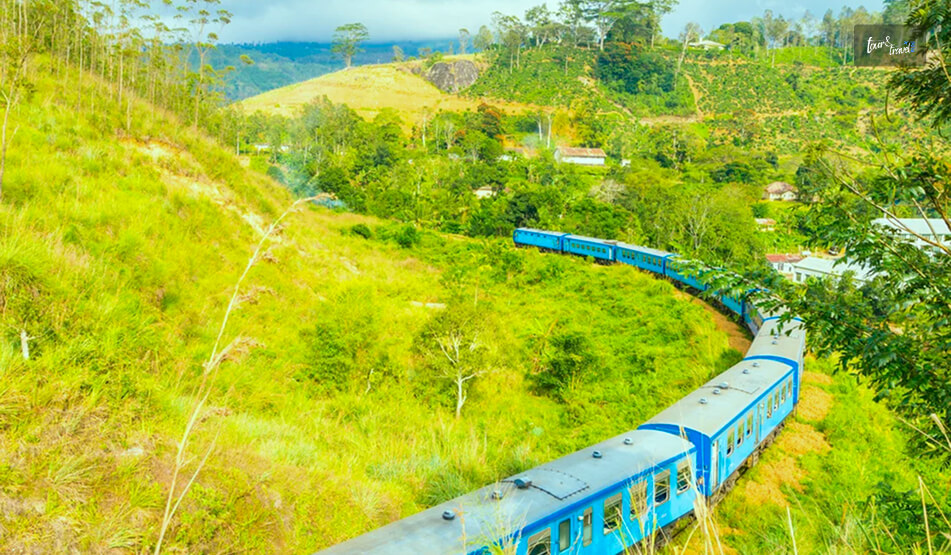
Demodara Railway Loop, nestled in the mountains near Ella, Sri Lanka, is one of the most iconic rail routes in the world. 

Furthermore, you will get the most amazing views of the Nine Arch Bridge and the train plying through it from the Demodara Railway Loop. 

Also, since 2024, this beautiful railway loop has been protected under the New Heritage Management Program. 

Moreover, opening on 21st March, 1921, this railway loop has been celebrating more than 100 years of heritage and history. 

So, here is a brief account of my beautiful train ride in the Demodara railway loop. 

Why Is The Demodara Loop Famous? 

Why Is The Demodara Loop Famous

Between Ella and Uduwara stations, Demodara is a beautiful railway station in the Uva Province of Sri Lanka. 

While extending the railway line to Badulla, the authorities faced a serious challenge due to the steep altitude. 

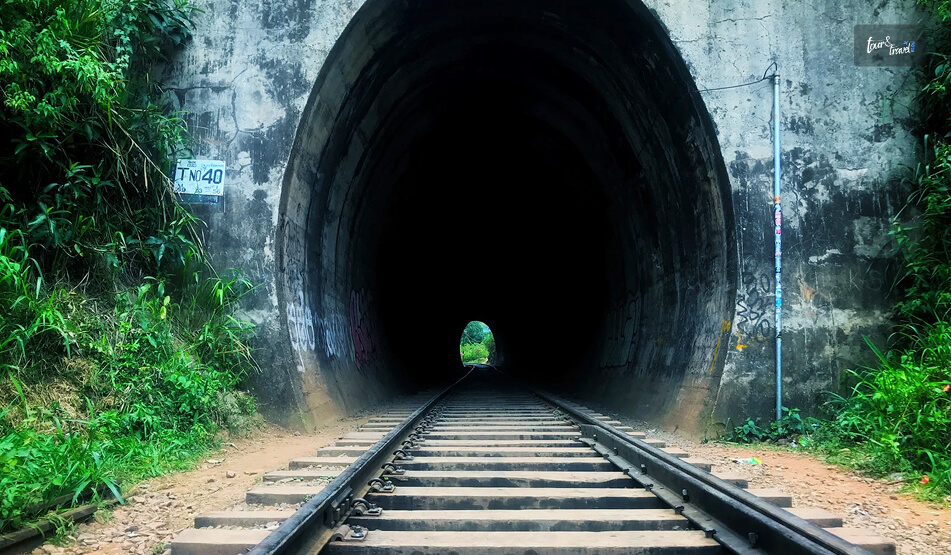
Furthermore, it is famous as the only railway station in the world to be built in a tunnel (Tunnel 42) through which the train passes. 

Moreover, this loop, with a length of 441 feet, passes through a 360-degree loop, offering the most amazing views of the surroundings. 

Also, it is interesting to know that the design of the Demodara Railway Loop was originally inspired by a Kanyan turban. Then, British and Ceylonese engineers put up the structure.

Devapura Jayasena Wimalasurendra was the engineer who conceptualized the idea. 

In addition, if you miss the train from Ella to Demodara, you can also enjoy a 9 km hike. The hike continues through tea estates, and then you will meet the iconic Nine Arch Bridge on the way.  

Then, you can take a train back from Demodara to Ella. However, I fortunately got to board the trains both times. 

A Train Ride In The Demodara Railway Loop 

A Train Ride In The Demodara Railway Loop

Unlike the Kandy-Ella train ride, a train ride in the Demodara Railway Loop was peaceful. 

Also, you could relax even after you saw the train coming out of the tunnel and ascending. It moves very slowly through the loop. 

As the train was almost empty and as Sri Lanka demands everything the Travel LowDownUnder philosophy teaches you, I boarded a 3rd class compartment. 

I was happy as there was nobody to stop me from peeping through the doors on both sides of the train, and soaking in the beauty of the surrounding lush tea estates. 

Also, it was amazing to enjoy a train ride across the iconic Nine Arch Bridge. Moreover, when the train was passing through the Nine Arch Bridge, I could see locals, especially children, standing and waving from the banks of the railway lines. 

Overall, it was a comfortable and delightful experience!

Insider Tip: When you are traveling from Ella to Demodara, stand near the window or gate on the left side in the direction the train is moving. 

From there, you will get amazing views of the Nine Arch Bridge. 

Train Time And Ticket Price On The Demodara Railway Loop 

If you are traveling from Ella, you will get two trains to the Demodara Railway Loop. So, here are the details of the train timings and ticket prices (Source: Sri Lankan Railways). 

Train NameDepartureArrivalTicket Price (LKR)
11005 Special 1005 -Ambewela – Badulla 09:30 – 12:1611:25 AM11:40 AMAC Saloon Car: 2500
– Second Class Reserved Seats: 1700
– Third Class Reserved Seats: 1200
11015 Special 1015 -Ambewela – Badulla 15:00 – 17:464:55 PM5:10 PM– AC Saloon Car: 2500
– Second Class Reserved Seats: 1700
– Third Class Reserved Seats: 1200

Why Is This Iconic Ride In The Demodara Railway Loop Worth It? 

Beyond an engineering marvel, the Demodara Railway Loop is an example of historical railway innovation. 

Furthermore, when riding in a quiet train carriage, you can enjoy the uninterrupted views of the surrounding mountains and valleys. 

Also, this train ride allows you to pass over the Nine Arch Bridge, one of the iconic heritage sites of Sri Lanka. 

Moreover, as I was traveling solo, I experienced the joy, spontaneity, and independence backed by the quiet experience.

If You Want To Walk From Ella To Demodara 

I got to know about the Demodara Railway Loop at the Kadugannawa Railway Museum. It was raining for a few days in Ella, and seriously, I needed to do something to get out of the lull. 

So, I decided to take a train ride from Ella to Demodara through the Demodara Railway Loop. 

I got the train. However, if you miss the train,” go for a 9 km walk through the countryside and tea-covered hills. 

The tea shops, nearby hills, and occasional spotting of peacocks in the bush will keep you entertained. 

Moreover, as you descend from Demodara to Ella, you will get sweeping views of paddy fields.

Share on Social Media

Sibashree is a travel, culture, and leisure writer who has been writing since the age of 12 and professionally since 2014. With more than a decade of travel writing experience and journeys across India and several parts of the world, she brings a deeply personal and thoughtful perspective to her work. A student of English Literature and Mass Communication, Sibashree has always viewed travel as more than movement — for her, it has been a way of understanding people, cultures, and herself. Her passion for spiritual exploration has also led her to many unusual and meaningful destinations over the years. Outside of writing, Sibashree enjoys watching European cinema, reading about global politics, and reflecting on the stories hidden within everyday places.

Leave a Reply

Your email address will not be published. Required fields are marked *

title-img Related

READ MORE things to do in nara

What Are The Things To Do In Nara? How To Plan A Two-Day Trip?

BY  Sibashree Mar 31, 2026

A trip to Nara was long overdue, and as the first permanent capital of the country, it is a must-visit.  Furthermore, this Japanese capital, before 794 AD (then Kyoto became the capital), has many UNESCO World Heritage Sites.  The Todai-ji Temple is the most famous among these 8 UNESCO World Heritage Sites. You will find one of the largest Buddha statues in the country here, and the statue is made of bronze.  Of course, the deer roaming in the city are beautiful, and you feel like getting transported to a bygone era.  It reminded me of one of the most famous literary works in our country, Shakuntalam Abhigyan, an immortal love story between King Dushyanta and Shakuntala, written by Kalidasa in Sanskrit.  Also, this is a place that will ask you to come back, and most people plan a day trip to experience its historical charm and natural beauty.  But, smitten by its beauty, I chose a 2-day trip, and here is the list of things to do in Nara. Also, I will discuss how I can get to Nara.  How To Reach Nara?  Nara is easily accessible from Kyoto, which is also famous for its history and cherry blossom season.  You can also visit Nara from the Osaka prefecture. So, overall, a visit to Nara can fit well into your itinerary of visiting the Kansai region of Japan.   Also, the robust railway system of Japan makes it easy and budget-friendly to visit Nara. A Japan Railway Regional Pass will be the best for traveling across Nara, Kyoto, Osaka, and Kobe, and the entire Kansai Region.  Also, when in Osaka, don’t forget to explore the street food stalls and have the best Osaka food, including Mochis and seafood delicacies.  Here is how you can travel from Kyoto to Nara. 1. Traveling From Kyoto To Nara Through The JR Nara Line You will get an express train or a local train from Kyoto to Nara every hour.  Furthermore, if you opt for the Miyakoji Rapid Service on this line, you will reach Nara within 45 minutes, and the ticket price will be 720 JPY.  Also, the local train services, with the same ticket price, will take about 70 minutes.  Once you reach the JR Nara station, you will get buses to the Nara Park and other top attractions in Nara.  2. Take The Kintetsu Railway To Reach Nara From Kyoto This is the most convenient way to reach Nara from Kintetsu Railway Station.  The train journey is the fastest, and the journey takes about 35 minutes by the express trains, and the ticket price is 1280 JPY.  Also, the regular trains take about 45 minutes to complete the journey. The ticket price is 760 JPY.  What Are The Things To Do In Nara?  From a visit to the Nara Park to exploring Heijo Palace and the temples, there are many things to do in Nara.  Here are the things I did during my 2-day stay.  1. Day 1 In Nara: Exploring The Nara Park  With deer passing by, Nara Park, the home to the main attractions in Nara, is a place you cannot simply miss.  The park is free to enter, and it remains open for 24 hours.  However, many attractions in the park close after 5 PM. So, you have to be early when visiting it.  Also, here are the attractions you will come across in the Nara Park, along with the deer passing by.  • Kasuga Taisha One of the UNESCO World Heritage Sites in Nara, Kasuga Taisha, takes us back to the Nara Period from 710 to 794 AD.  It is the most revered shrine among the Fujiwara clan as the tutelary shrine.  Furthermore, the main attraction of the shrine is the “Hall of Lanterns.” There, I saw many bronze lanterns illuminating the darkness.  During the special festivals, Setsubun Mantoro in February and Chugen Mantoro in August, all these lanterns are lit.  Moreover, you will find a cider tree in the inner shrine, and it is 1000 years old.  • Mt. Wakakusa I took the back road from Kasuga Taisha on the way to the Todai-Ji temple.  I came across many small shrines there. However, the highlight was Mt. Wakakusa.  This hill between the two shrines has a height of 350 meters. Also, on the 4th Saturday of January, it becomes the venue for the Wakakusa Yamayaki celebration.  People burn dead grass on the slopes, and this is a ritual that has been celebrated since the 18th century.  • Todai-Ji Todai-Ji is another UNESCO World Heritage Site, and one of the “Historic Monuments of Ancient Nara.” It was built in 752 AD, and it was the head of all the temples in the province. It even had a strong influence on the royal family.  In fact, with Todai-Ji being the seat of control even in the royal decisions, the emperor decided to move the capital to Nagaoka in 784 AD.  However, the main attraction of the Todai-Ji Temple is the massive Buddha statue, or Daibutsu.   A depiction of Dainichi Nyorai,  it represents the primordial Buddha in the orthodox East Asian Buddhist philosophy.  You will also find two similarly sized Bodhisattva statues here.  However, the temple and statues you see today were burned down, and they were rebuilt during the Edo period (1603–1868).  2. Things To Do In Nara: Day 2 I visited the Heijo Palace and many other temples of Nara on day 2.  • Visiting The Heijo Palace  When Nara was the capital, the Heijo Palace was the seat of power for the chrysanthemum throne.  It had a dimension of 1 kilometer, considering the other palaces and architecture of that time.  However, the remains of this UNESCO World Heritage Site in Nara are now at the Toshodai-ji Temple, nearby.  However, since the 1950s, archaeologists have been studying the remains of the Heijo Palace, and this has evoked further public interest.  That is why you can now see many placards there and read about the history and legacy of the site.  Moreover, the audience hall and two other parts of the palace were rebuilt. The restoration of the largest part, the audience hall, happened in 2010.  It was an ode to the 1300th anniversary of Nara as the capital of Japan.  • Toshodai-Ji As I have mentioned, the Toshodai-ji Temple has the remains of the Heijo Palace.  This temple dates back at least a millennium. Ganji, a Chinese monk, built this temple in 759 AD.  Monk Ganji brought Buddhism to Japan, and the Toshodai-Ji today is a UNESCO World Heritage Site.  • Yakushi-Ji It is a UNESCO World Heritage Site, and people here worship Lord Buddha as Yakushi Nyorai or the Medicine Buddha.  The dual main halls here have unique architecture, and each has a dedicated 3-story pagoda.  • Horyu-ji  Horyu-Ji is older than most temples in the Nara region, and Prince Shotoku founded it in 607.  Furthermore, this UNESCO World Heritage Site stands out with its wooden edifices, which are some of the oldest in Japan. This time, I missed many attractions such as Asuka, Omiwa Shrine, and Mount Yoshino. Some day for sure!  And till then, Sayōnara, guys!

READ MORE ratnapura

What Is Ratnapura Famous For? Know The Best Places To Visit In Ratnapura 

BY  Sibashree Jun 30, 2026

I wanted to begin this article with details about how the air in Ratnapura is different from the air in Colombo.  However, the recent news about the Ratnapura air quality index (AQI) made me stop for a while. The presence of the main air pollutant PM2.5 in the quantity of 11 µg/m³ in the air is actually 2.5 times higher than the World Health Organization (WHO) standard.  When I read the news, I could not match it with the heavy air of Ratnapura, constantly laden with the scent of wet earth, crushed tea leaves, and the electric promise of an impending downpour. Also, when I first stepped off the bus onto the rain-slicked tarmac of this valley town, wrapped tight by the jagged peaks of the Sabaragamuwa Province, I felt an immediate shift in energy. So, my experience of Ratnapura will always remain soaked in wet soil and very intimate.  Ratnapura: The Story Behind The Name Ratnapura gets its name from the Sanskrit words Ratna (Gem) and Pura (Town). So, literally, the name of the town means the “City of Gems.” It is fascinating how the region has been unearthing unbelievable wealth out of the mud. These gemstones include: Cat’s Eyes Deep Cornflower Blue Ceylon Sapphires Fiery Rubies Alexandrites Still, the glitz of neon lights has not touched Ratnapura. Everywhere you go, you will notice the rugged humility typical of a working class community.  Also, as a traveler, getting my boots caked in mud was a way more rewarding experience for me than walking on a pristine resort floor.  In the next section, I will describe in detail why Ratnapura is so famous and the best places to visit in the City of Gem.  What Are The Best Places To Visit In Ratnapura?  Located in the Sabaragamuwa province, Ratnapura is not just the Gem Capital of Sri Lanka. It is a rich depository of the fossils of extinct elephants and rhinoceroses from the prehistoric age.  Furthermore, it is the gateway to Adam’s Peak, and it is home to the spiritually significant Maha Saman Devalaya.  It is the shrine of Lord Saman, the presiding deity of the region.  Moreover, as a high-rainfall wet zone of Sri Lanka, it is also famous for its waterfalls and ecotourism.  1. Sinharaja Forest Reserve As I entered the forest reserve, for the first 20 minutes, my boots were in the mud.  It is a UNESCO World Heritage Site and it is special as it is one of the last remaining virgin rainforests on Earth.  Even in mid-noon, you will experience the thrill of the emerald twilight in the forest reserve as the canopy grows very dense. The canopy swallows the midday Sun.  Nuwan, a local guide, accompanied me through the forest reserve.  Within an hour, he silently pointed into the dense brush where a purple-faced langur monkey sat watching us with an expression of mild amusement.  We spotted giant squirrels leaping across tree crests and listened to the distinct, symphonic calls of over 130 bird species.  Keep a bottle of saltwater or a stick of soap handy, though, because the forest floor crawls with overzealous leeches who consider trekkers a moving buffet. 2. Udawalawe National Park The Udawalawe National Park, with its sweeping grasslands and skeletal trees, offered a lot of drama.  All these create a stark contrast against the distant highlands. Furthermore, the park is as thrilling as the African savannah for wildlife viewing.  I was on an open-top jeep safari, and our driver had cut the engine near a large watering hole. Then, within minutes, I could spot a large herd of wild Sri Lankan elephants emerging from the scrub.  Those were moments of absolute silence as three matriarchs gently guided a tiny, clumsy calf into the water, spraying mud to shield its skin from the Sun. Along with the elephants, I could also see glimpses of water buffaloes tracking us with heavy gazes and water monitor lizards sliding into the reeds. And the most fascinating part? I could spot a solitary, brief shadow that our driver swore was a Sri Lankan leopard. 3. Bopath Ella Falls Bopath Ella Falls was a short drive from the city center in Kuruwita.  The water flows through a narrow gap at the top and cascades down a stepped rock face, widening out into a shape that perfectly mimics the sacred Bo leaf (Ficus religiosa)  Furthermore, a dense forest surrounds the pool at the bottom. I was a little tired, and I sat on a slick rock and sipped fresh king coconut water bought from a roadside vendor.  He shared a fascinating local folklore with me.  “The old people say the pool is haunted," he murmured, looking at the churning white water. "They believe a great ancient treasure trove lies buried underneath, guarded by spirits." 4. Adam’s Peak (Sri Pada) Climbing Adam’s Peak from the Ratnapura Side is a strenuous job, and the path is known as the “King’s Way.” It is an act of sheer endurance.  The northern route from Nallathanniya is shorter and more popular. However, you cannot deny the allure of this southern trail which climbs over 7,300 feet via thousands of uneven, ancient stone steps. I started climbing the Adam’s Peak under a blanket of stars, my calves burning instantly. The closer I got to the top, the trails got steeper.  Furthermore, as the Sun broke over the horizon, its rays cast a perfect, triangular shadow of the mountain across the misty lowlands below.  The overall ambiance was deeply spiritual, and from pilgrims to adventure lovers, everyone can experience the shift of energy here.  5. Kitulgala  If you want to complement the tranquil ambiance of Ratnapura with something more vibrant, you can head to Kitulgala.  This small tone is home to a wet-zone rainforest that sees two monsoons a year. It holds fame not only for its raw beauty but also as the filming location for the 1957 classic The Bridge on the River Kwai. Furthermore, Kitulgala is the adventure capital of the region. I threw myself into white-water rafting down the churning Kelani River, gripping the paddle tightly as our raft slammed through technical, white-capped rapids. Moreover, if you want to stay in the land, you can enjoy bird-watching, canyoning, and the rides of natural rock slides in the jungle.  6. Maha Saman Devalaya Stepping into the tranquil grounds of the Maha Saman Devalaya was a humbling experience.  It is the spiritual heart of Ratnapura, and Sumana Saman, the presiding deity here, watches over the sacred mountain and the surrounding gem valleys. Furthermore, according to a legend, a royal court minister built this temple after a successful gemming expedition.  Though it carries deep historical Hindu influences, it functions today primarily as a serene place of Buddhist worship, framed by beautiful white Kandyan-style arches. 7. Bambarakanda Waterfalls The Bambarakanda Waterfalls stand at an amazing height of 790 feet, and it is the tallest waterfall in Sri Lanka.  I reached this waterfall after a steep hike through whispering pine forests. So, I did not feel the humidity and heat of the lower valleys here.  The cliff face is regularly shrouded in thick, rolling mountain mist, giving the entire landscape an ethereal quality.  Standing at the rocky base of the falls, looking up as the water plummeted from the clouds, I let the cool spray drench my face. It was the perfect antidote to days of humid trekking. 8. The Gem Mines You cannot leave Ratnapura without visiting a gem mine. I bunked the commercial showrooms and walked out into the surrounding paddy fields to see a traditional, artisanal pit mine.  I saw the miners digging deep, narrow shafts into the mud, reinforcing the walls with logs and fern leaves. They haul up baskets of illam (gem-bearing gravel) using simple wooden pulleys, then wash the dirt away in nearby streams.  A seasoned miner let me watch over his shoulder as he swirled a woven basket in the water, revealing a translucent, rough pebble of purple-blue sapphire.  It was an unfiltered look at the hard, manual labor behind the world's most glamorous stones. 9. Batadombalena If you are a history enthusiast, Batadombalena is a must visit for you.  This ancient rock cave and archeological site, hidden deep within the foothills, contains evidence of the prehistoric Balangoda Man (Homo sapiens balangodensis), dating back over 30,000 years. I hiked up to the cave, walking through rubber plantations and dense thickets.  Furthermore, this cave has excavation trenches where stone tools and charred animal bones were uncovered.  10. National Museum Of Ratnapura The National Museum of Ratnapura is inside the Ehelepola Walauwa, which is a historic colonial mansion.  Here, I became familiar with the natural history of the valley. Also, I spent an hour marveling at prehistoric fossils of hippopotamuses, rhinoceroses, and elephants excavated directly from the local gem pits.  It also holds an incredible collection of traditional weapons, ancient jewelry, and an educational breakdown of the region's complex geology. My 3-Day Ratnapura Itinerary DaysThe Time of the DayActivities/Places to Visit Key Highlights and TipsDay 1MorningMaha Saman DevalayaStart early to beat the heat, enjoy the crisp air, and listen to peaceful morning chants.AfternoonBatadombalena Caves and Bopath Ella FallsHike up to explore prehistoric cave history, then enjoy a picnic lunch by the unique heart-shaped waterfall.EveningCentral Clock Tower Street MarketWander the central streets to watch local merchants rapidly trading rough gemstones right on the pavement.Day 2MorningSinharaja Forest ReserveEnter via Kudawa or Pitadeniya gates by 7:00 AM for the best chances of spotting active wildlife and rare birds. AfternoonUdawalawe National Park SafariHead south and hire a 4x4 jeep for a 3:00 PM safari to see elephants gathering by the water reservoirs.Day 3MorningActive Gem Mine TourCoordinate with a local guide to visit a working mine; remember to tip the miners generously for their time.AfternoonNational Museum of RatnapuraHead back into the city to view ancient fossils of extinct animals that once roamed the valley.EveningLocal Culinary DiningWind down at a local eatery with traditional red rice, jackfruit curry, pol sambol, and sweet kithul jaggery. Ratnapura: Muddy, Chaotic, And Magical  Ratnapura is not the place where you will find curated beauty. It can be wet, muddy, and chaotic.  However, if you don’t mind smelling the coffee, you will experience the magic it offers.  The magic of the smile of a miner hauling up mud and the primeval silence of Sinharaja!  Also, it is not the place where you will just pass through for the sapphires.  Moreover, I would love to come back for the wild, untamed spirit and mist of the waterfalls.  Read Also: Why Is Puttalam Sri Lanka Famous? What Are The Things To Do In Puttalam? What Is Batticaloa Famous For? Know The Best Things To Do In This Eastern Town Of Sri Lanka What Is The Yala National Park Safari Price? Why Is It One Of The Top Things To Do In Sri Lanka?

READ MORE things to do in japan

What Are The Things To Do In Japan? Know Why Gen Z Travelers Love Japan The Most  

BY  Sibashree Apr 7, 2026

Japan is now approaching Golden Week, and everyone will have their own list of things to do in Japan.  From 29th April to 6th May, Japan will have the most colorful parades and horse races. This Golden Week celebration is important to hail the rich culture of Japan. And it is this rich culture and a distinct sensory experience that make Japan a favorite among young people, especially Gen Z travelers.  Also, on the Berkshire Hathaway Travel Protection list, Japan has been consecutively securing the 9th position as the safest country in the world for the last 2 years.  Nevertheless, as I was saying, the things to do in Japan that make the country a favorite place to visit are not the same as the run-of-the-mill lists you see on the internet.  So, here, I have tried to keep it honest, based on the places I have visited and tried to decode in respect to those places why Japan is the France of the 21st century.  What Are The Things To Do In Japan?  Japan slowly grows on you. It’s not nuclear power; it has one of the largest domestic energy products (around 40% according to the International Energy Agency).  On the contrary, as Joseph Nye, a political scientist at Harvard, has pointed out, it is the soft power that has helped Japan to emerge as an idea, mode of entertainment, or aesthetics.  Can you call a sushi just Japanese these days? Or, a bowl of ramen? All these are very much present in our daily lives.  So, while exploring authentic local cuisine remains one of the best things to do in Japan, here are more activities you cannot miss.  Also, you can check whether Japan is expensive to visit or not, and the entire cost breakdown. 1. Visiting The Japanese Shrines The Japanese shrines practice the local Shinto religion of Japan. Furthermore, these shrines are places for worshipping Kami, the spirit of nature.  These shrines can be easily identified by the Torii gates. Furthermore, once you enter the Torii gates, you will find the worship hall and the inner sanctum.  Moreover, the most popular Japanese shrines are the Fushimi Inari Shrine in Kyoto, Meiji Shrine in Tokyo, Toshogu Shrine in Nikko, and Itsukushima Shrine in Miyajima.  2. Exploring The Japanese Temples Buddhism and the rise and fall of various sects across centuries have shaped the famous Japanese temples.  Furthermore, these temples are defined by architectural features such as pagodas, lecture halls, bellfries, and cemeteries.  While Todai-ji Temple in Nara remains the most popular temple to visit in Japan, the other temples to visit in Japan are the Senso-Ji Temple in Kyoto, Sanbutsu-Ji Temple in Misasa, Daisho-In Temple in Miyajima, etc.  3. Experiencing Shinjuku Shinjuku was very different from the other parts of Japan I visited. It offered an eclectic fusion of retro vibes and high-tech experiences.  Especially, thanks to the Godzilla Road, exploring Shinjuku is one of the best things to do in Japan if you are traveling with kids.  Along with the roar of Godzilla at the Godzilla Road, the Shinjuku 3D Cat near the Shinjuku Station East Exit is another major attraction for kids here.  Read more about what to do in Shinjuku.  4.  Enjoying The Ultimate Dark Academia Fan Moment At Jimbocho Book Town Uttered with an equal respect as the “Kaifeng and China book towns,” the Jimbocho Book Town is the ultimate place to visit for Dark Academia fans in Japan.  This town started booming when many law schools were established here in the late 19th century and early 20th century.  Today, it has more than 400 book stores, selling vernacular and foreign-language books.  Furthermore, every year, this book town holds the Aozora Kohon Ichiba or the Kanda Used Book Festival from Late October to early November. It is an attraction for book lovers around the globe. 5. Enjoying The Cherry Blossom Season In Kyoto If you want to experience romance in Japan, you have to be present during the cherry blossom season in Kyoto.  The Philosopher’s Walk is the most popular place to experience the cherry blossom scene here. If you are done soaking in the meditative vibe here, you can next head to the Shimbashi Street.  It is the most beautiful street in Asia.  The Kiyomizu-Dera Temple and Maruyama Park are other amazing places to see cherry blossoms in Kyoto.  6. Trying Osaka Food Osaka Food now represents Japanese cuisine worldwide, and it has left Tokyo behind in this regard. Thus, it fully justifies its nickname of “Japan’s Kitchen.”  Furthermore, Dotonbori is the epicenter of the best Osaka food and street stalls.  Takoyaki, Daifuku Mochi, Okonomiyaki, and the staples, Sushi and Ramen, are some of the must-try items here.  7. Visiting Oshino Hakkai Sensory seeking is one of the biggest reasons why young travelers seek Japan, and there has been a 1300% surge in the bookings of young and Gen Z travelers from 2019, according to a report by American Express.  Furthermore, the Instagrammable places in Japan, such as Oshino Hakkai, have played a major role in satisfying this sensory quest.  Now, as I have mentioned in my Oshino Hakkai guide, it is a place I got to know about from Instagram.  You can see the snow-capped peaks of Mount Fuji from Oshino Hakkai, and the eight sacred ponds here were the highlights of my Tokyo to Mount Fuji day trip.  Furthermore, the Wakuike Pond is one of these eight ponds, and its water was carried to space in the Space Shuttle Challenger in 1983 to conduct an experiment on snowmaking in space.  8. Planning A Two-Day Trip To Nara Do you know why Japan attracts anxious young travelers? It kind of strikes a balance. How?  When places in Japan feel like the future, think of Tokyo or the speed of the bullet trains. Some parts of the country bring back the order of the past.  One such place is Nara, the first permanent capital of Japan and home to 8 UNESCO World Heritage Sites. The Todai-ji Temple is the most famous among them.  Before Kyoto became the country’s capital in 794 AD, it served as the seat of power.  Along with the Todai-Ji Temple, you must also visit Kasuga Taisha, Mt. Wakakusa, and the Heijo Palace in Nara.  Read my complete guide on things to do in Nara to understand why you cannot miss a 2-day trip here.  9. Visiting Hokkaido Beach And Sapporo The Hokkaido Beach is in Western Japan, and it looks straight out from the works of Hakura Murakami.  It’s surreal to see the coexistence of the snow-capped peaks and dunes, and it’s only possible in Hokkaido.  Along with the Hokkaido Beach, Sapporo, the capital of Hokkaido, also stands out with its green parks and shrines like the Sapporo Suitengu Shrine.  So, when you are next in Japan, plan a Tokyo to Hokkaido trip.  10. Visiting Hakone  The things to do in Hakone are all about soaking in the quiet moments that are most powerful.  I am glad that I did not follow the usual loop, including the train, cable car, and ship circuit.  If the Open Air Art Museum with 100 sculptures is the highlight of my Hakone visit, the Choan-ji Shrine, with small stone statues of monks, is what will stay with me forever.  Also, another fun part here was washing my money at the Fukazawa Zeniaria Benzaiten Shrine.  I have not got a bigger return yet, but there is no harm in believing in a custom that locals have been following for so many years.  Moreover, if you are in Hakone, don’t forget to take a bath in the Onsen or hot springs. Furthermore, you can relive history by taking a ride on the Hakone Tozan Railway here. So, it is no wonder that visiting Hakone is one of the best day trips from Tokyo you can plan.