

How Far Is Orlando From Miami? How To Travel By Road, Train And Air? 

Mar 23, 2026

Last Updated on: May 29, 2026

Travel Guides

Are you planning a Florida trip to see all the beaches in Miami? 

Florida definitely has the best beaches in the world and the best cuisine. Furthermore, with year-long sunshine, it boasts a vibrant culture, happening nightlife, and endless outdoor activities. 

Orlando, on the other hand, has Disney World, and it is the theme park capital. 

However, this time, I will not ask you to choose between the beach holidays and theme park adventures

You can easily travel from Miami to Orlando and experience the best of both worlds. 

So, in today’s blog, I will talk about how far is Orlando from Miami and how to travel the distance. 

Also, if you are planning a trip from Tampa to Orlando, you can read my guide. 

How Far Is Orlando From Miami?

How Far Is Orlando From Miami

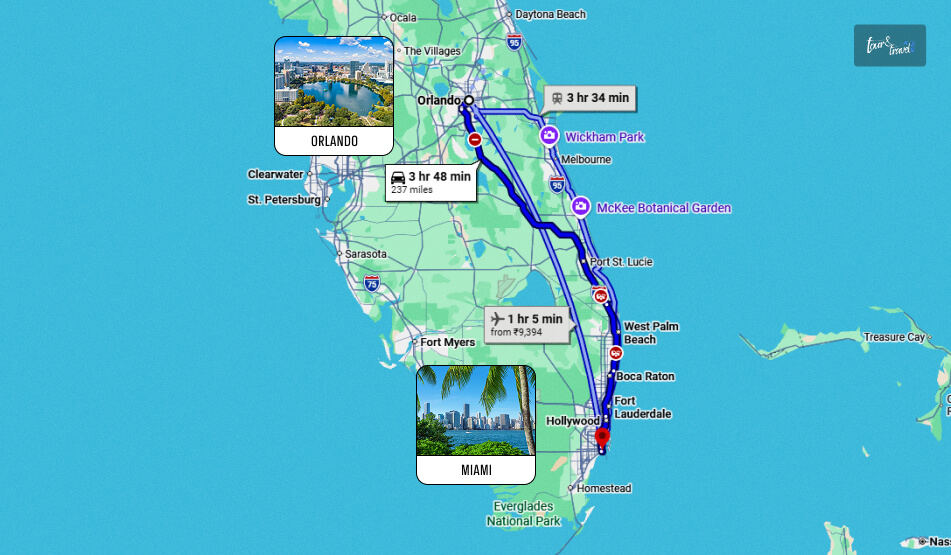
The distance between Orlando and Miami is around 236 miles or 380 kms. Furthermore, the travel time between Orlando and Miami is between 3.5 and 4.5 hours. 

However, the travel time will depend on the mode of transport you choose. So, here is a quick summary. 

Different Modes of Transport From Orlando to MiamiTravel Time
By Car3.5 to 4.5 Hours
By Train3 Hours and 30 Minutes to 7+ Hours
By BusAround 4 to 6 Hours
By Air About 1 Hour

Furthermore, Miami is served by the Miami International Airport, which is around 10 miles away from Miami. 

Moreover, the Orlando International Airport is at a distance of 12 miles. 

So, consider the travel time to and from the airports, which is around 1 hour, including both sides.

Once you arrive, booking vacation rentals in Miami ahead of time will ensure you secure the best beachside or downtown accommodations for your trip.

How To Travel To Orlando From Miami? 

How To Travel To Orlando From Miami

The fastest way to travel from Orlando to Miami is by taking a flight. However, you can also travel by train, bus, and car. 

Here are the details. 

1. How Far Is Orlando From Miami By Train?

The travel time between Orlando and Miami by train will depend on the service you take. 

For example, if you take the Brightline Train service, you will travel the distance in about 3 hours and 30 minutes. 

Furthermore, the ticket price will range between $79 and $300 for a one-way ticket. You can also take the shuttle service offered by Brightline to explore the Miami Area. 

Take The Amtrak Trains For The Most Budget-Friendly Travel 

The ticket price for Amtrak Trains is about $35 to $102. Also, private room services are available at $288. 

Check out the departure and arrival timings of the Amtrak train. 

DepartureArrival
7:05 AM12:22 PM
11:05 AM6:34 PM

2. How To Travel From Miami To Orlando By Bus?

RedCoach USA is the main bus service between Miami and Orlando. The travel time between these places is between 3 hours and 40 minutes and 4 hours and 5 minutes. 

Furthermore, the ticket price for this bus ride depends on the day of the week you are traveling. Ticket prices are higher on weekends. 

Moreover, the ticket price ranges between $39.99 and $107.99. 

3. How To Travel From Miami To Orlando By Car?

The car rental price for a one-way journey from Orlando to Miami is between $60 and $110. Furthermore, the leading car rental services on this route are Sixt and Alamo. 

Furthermore, you can take an Uber from Miami to Orlando. The rental cost starts from $317. 

4. Traveling From Miami To Orlando By Air

As I have mentioned, the Miami International Airport, at a distance of around 10 miles, and the Orlando International Airport, 12 miles away, are the two gateways. 

Moreover, American Airlines, Delta, and JetBlue are the main airline services on this route. 

Furthermore, the travel time by flight is around 1 hour, and the ticket price is about $250 to $300. 

How Far Is Orlando From Miami? Frequently Asked Questions (FAQs)

Here are the frequently asked questions and answers about the Orlando to Miami distance. 

1. Is It Better To Drive Or Fly From Orlando To Miami?

The choice of a drive or a flight from Orlando to Miami depends on the kind of experience you want. 
For example, if you are traveling with family and want to keep the itinerary flexible, you can go for a drive. It is also way cheaper than a flight. 
On the other hand, if you want to travel very fast, take a flight, which completes the journey within 1 hour. 

2. What Is The Cheapest Way To Get From Miami To Orlando?

Amtrak train and RedCoach USA buses are the cheapest modes of transportation between Miami and Orlando. 
In both these services, the ticket price starts from around $34-$35.

3. How Much Is Uber From Orlando To Miami?

The price for an Uber ride from Orlando to Miami depends on the type of service you are opting for.
For example, the UberX service costs $317, the Uber Black service costs $671, and the UberXL services are available at $571. 

4. How Far is Orlando To Miami By Plane? 

The Orlando to Miami distance by plane is about an hour. So, if you want to travel quickly, you can take a flight from the Miami International Airport to the Orlando International Airport. 
Furthermore, American Airlines, Delta, and JetBlue offer services on this route, and the ticket price will be about $250. 

5. What Is The Best Time To Travel From Orlando To Miami? 

December to March or the winter season, and March to May or the spring season are the best seasons for a trip from Orlando to Miami. 
Furthermore, 8 AM to 10 AM or 3 PM to 6 PM are the peak hours on this route. So, travel outside these hours. 
Also, mid-week and weekends are the ideal times for a Miami to Orlando journey. 
Moreover, June to November is the Hurricane season. Especially mid-August to mid-September is the most difficult time for a drive from Miami to Orlando. 
In addition, car rental prices are higher on weekends and during peak seasons. So, if you want to save on car rental, choose the mid-week days. 

Share on Social Media

Sibashree is a travel, culture, and leisure writer who has been writing since the age of 12 and professionally since 2014. With more than a decade of travel writing experience and journeys across India and several parts of the world, she brings a deeply personal and thoughtful perspective to her work. A student of English Literature and Mass Communication, Sibashree has always viewed travel as more than movement — for her, it has been a way of understanding people, cultures, and herself. Her passion for spiritual exploration has also led her to many unusual and meaningful destinations over the years. Outside of writing, Sibashree enjoys watching European cinema, reading about global politics, and reflecting on the stories hidden within everyday places.

Leave a Reply

Your email address will not be published. Required fields are marked *

title-img Related

READ MORE Kotor Montenegro budget travel

How To Plan A Kotor Montenegro Budget Travel? Cheap Ways To Travel To Kotor Montenegro For Backpackers 

BY  Sibashree Oct 22, 2025

“The cats protect the city from mice, and in return, the people feed them.” The local shopkeeper told me as I was walking toward a dozen cats sitting on the stone steps at a locality near the Old Town. On a backpacking trip to Kotor, Montenegro, I found cats on the ancient walls, in cafes, and everywhere! Stretching their bodies in the Sun and with their purrs, they indeed looked like the guardians of the city. And it is them who made me feel at home. However, it’s not just the cats that make Kotor in Montenegro an ideal budget travel destination for backpackers. It now features in the second spot as one of the most underrated budget backpacker destinations by Bamba Travel. Its medieval streets, historic architecture, hiking routes, and seafood offer the most affordable travel options for backpackers. Also, it is a less-crowded place than most hotspots in Western Europe. Is there more to a Kotor Montenegro budget travel experience? We will figure out the answer in this blog. We will also talk about how to reach Kotor, Montenegro, the modes of transportation for moving around and more. Let’s plan a trip to this UNESCO World Heritage Site. The Natural Beauty Of Kotor, Montenegro Speaks: Understanding Its Location  Another vivid memory I have of Kotor is how I started my hike to the Kotor Fortress before sunrise. I was halfway up, and nature was getting ready to be bathed with the first rays of the Sun. The chirpings of birds and that smell, a mix of the scent of an oven after a cake is freshly baked, and the dew-drenched leaves created an ambiance that was inexplicable. Nevertheless, a local shepherd offered some cheese and rakija (homemade brandy), and we talked about life. Then, the Sun illuminated the entire Kotor Bay. Now, if not this, what is magic for a backpacker or traveler? Now, thanks to the unique natural location of Kotor, Montenegro, you can encounter many such magical experiences. Located in the Bay of Kotor, Kotor is a coastal town of Montenegro, and it is a part of the Kotor Municipality. It sits between the Adriatic Sea and the Dinaric Alps and has a mountainous terrain. How To Reach Kotor, Montenegro? How Tourists From Different Parts Of the World Can Visit Kotor?  The easiest way to reach Kotor is to travel to the Tivat Airport. Located at a distance of around 7 km, it is the closest to Kotor. You have to travel the remaining route by local transport. Podgorica Airport (40 km) and Dubrovnik Airport (44km, Croatia) are the two other airports near Montenegro. You will get flights from major European cities to these airports, and buses also run from neighboring countries such as Croatia, Serbia, Bosnia and Herzegovina to Podgorica and Kotor. Furthermore, you can travel from Belgrade in Serbia to Podgorica in Montenegro and from Belgrade in Serbia to Bar in Montenegro. In addition, if you are traveling from Italy, you can take a ferry from Ancona on Italy’s eastern coast and take a ferry to Bar in Montenegro. You will have to make a journey of around 13 hours to reach your destination. Flights, Trains, Buses, And Other Modes of Transportation  For a backpacker, it’s a must to explore the Bay of Kotor in a boat. This boat takes you to many nearby towns and villages. However, for me, the trip to Perast was the highlight of these boat trips. The village has fewer than 300 people, and the quaint village offers some of the grandest views. Furthermore, if you want to move around and explore Kotor and its nearby localities by road, you will get car rentals, taxis, and shuttles. Why Is Kotor Montenegro, Budget Travel So Popular Among Backpackers?  While Greece and Croatia get all the attention on big tourism platforms, Montenegro in the Balkans is emerging as a favorite of the budget backpack travelers, thanks to the steady numbers. According to a report published by the International Trade Administration on 20th May 2024, tourism contributes 30% to Montenegro's GDP. Furthermore, the country is planning to boost its tourism prospects with a great focus on the following areas. Ecotourism  Cultural Tourism  Rural Tourism  Furthermore, another report published in ReportLinger suggests that the number of tourists to Montenegro is likely to reach 3.4 million by 2028. This is again a 2.8% rise from the number of 2.9 million tourists in 2023. Also, the tourism revenue is expected to reach $95 million by 2028. Now, in this scenario, Kotor is emerging as a sustainable tourism gem after a successful sustainability assessment by the Global Sustainable Tourism Council (GSTC). The Port of Kotor in Montenegro, Cruise Lines International Association (CLIA), and the Municipality of Kotor have done a successful assessment of the city. Vladimir Jokić, Mayor of Kotor, has commented, “As the Mayor of Kotor, I am pleased to say that Kotor is one of the few cities in the region that has undergone an important sustainability assessment process as a tourist destination. Together with the Global Sustainable Tourism Council (GSTC) and CLIA, we brought together various stakeholders from public life to gather their input. All participants from public life, city government bodies, state authorities, universities, the civil sector, the economy, and entrepreneurs took part in this process. The assessment results provided us with a clear insight into the impact of tourism on our city, which will help us develop effective strategies for sustainable tourism – that is, how we should move forward regarding tourism.”  So, Kotor today is a benchmark in sustainable tourism in the European region, and it is a budget-friendly travel destination among tourists for the following reasons. 1. Affordable Accommodation Options, Including Hostels And Guesthouses  Kotor has plenty of budget stays, from cozy guesthouses run by local families to hostels right inside the Old Town. Many include free Wi-Fi, breakfast, and kitchen access. Prices start at around €10–€15 per night during the off-season, and you’ll often meet other travelers sharing tips over morning coffee.  2. Stunning Natural Beauty With Mountains And The Adriatic Sea  Kotor sits where the rugged Dinaric Alps meet the calm Adriatic Sea. Whether you’re hiking up to the fortress or just wandering the waterfront, every corner feels like a postcard. The Bay of Kotor, often called Europe’s southernmost fjord, is perfect for swimming, kayaking, or just soaking in the sunset.  3. Rich Cultural And Historical Heritage In The Old Town  The Old Town is a maze of medieval lanes, Venetian palaces, and stone churches dating back to the 12th century. Walking here feels like stepping back in time and the best part is that exploring them is absolutely free! You can easily spend hours admiring its architecture and lively squares without spending a cent.  4. Numerous Free And Low-Cost Attractions  Many Kotor Montenegro activities are budget-friendly and free. Strolling along the Marina is the most relaxing experience I had at Kotor, Montenegro. Furthermore, the entrance fees to the museums and cathedrals here are very few. You need to just pay a few dollars. Overall, the magic of Kotor lies in exploring the city on foot or by boat the Kotor Bay. 5. Easy Access To Hiking Trails Like The Ladder Of Kotor  1350 Steps! Yes, you have to climb 1350 steps to complete the Ladder of Kotor hike. However, climbing up so many steps is a rewarding experience as the panoramic views of the city and the surroundings are breathtaking. 6. Budget-friendly Local Cuisine And Street Food  Kotor Montenegro food is comforting and simple, an extension of the simplicity of the city. I fell in love with sell burek or the savory pastries here. The filling in these pastries will remind you of your mother or grandmother who can create the biggest magic on the plate with the simplest ingredients. Furthermore, the family-run taverns or konobas here served the best grilled meat and seafood at the most affordable price.  7. Proximity To Other Balkan Destinations  You can easily include visiting places such as gems like Budva, Podgorica, or Dubrovnik in your Kotor Montenegro itinerary. Regional and international buses are available during the daytime and nighttime to explore these places on a budget. 8. Friendly Locals And A Welcoming Atmosphere  Montenegrins are hospitable, and language is never a barrier here. Many people here speak English. Especially the younger ones are well-versed in the language. So, it does not matter whether you are visiting Kotor for the first time or the last time. You will connect easily. 9. Vibrant Backpacker Community And Social Hostels  Kotor Montenegro hostels are beyond budget-friendly accommodations. These turn out to be the local social hub for solo travelers. Many of these hostels focus on activities such as:  Hiking Trips  Group Dinners  Local Events  Pub Crawling  So, you make new friends and earn new experiences with the locals guiding you. 10. Opportunities For Volunteering And Work Exchanges  Are you a digital nomad? Or, are you staying longer in Kotor? Many cafes, hostels and eco-projects in the city offer work-exchange programs or volunteer services. Explore platforms such as Worldpackers and Workaway to explore the listed job opportunities. Furthermore, there are many hostels and cafes where you can work for a few hours and get free accommodation and food in return. I have found several such listings on Worldpackers. You will have to work for 20 to 24 hours a week and have to shoulder working at receptions, administration, cleaning and housekeeping. You will get a shared dormitory and one meal in exchange for these services.  How To Plan The Kotor Montenegro Budget Travel For A Week? A week in Kotor can cost as little as $300–€400. Here is a quick breakdown. Montenegro Budget Travel Expenses Cost Breakdown Accommodation in Hostels $15–$25 per night Meals $5–$10 per meal at local eateries Kotor Montenegro Transport $10–$20 for buses and local travel Tours and Entrance Fees $5–$15 Total Average Daily Cost $35-60  Top Budget-Friendly Hostels In Kotor, Montenegro  Have a look at the table below for the list of budget-friendly hostels in Kotor, Montenegro. Staying in a hostel is one of the cheap ways to travel to Kotor Montenegro for backpackers.  Hostel Name Address Highlights Montenegro Hostel 4U Bokeljskih brigada bb, Kotor• 30 Seconds from the beach• Great social vibe• Rooftop terraceHostel Pupa Njegoseva 254, Suranj, Kotor• Near the bus terminal and Old Town• Cozy common area Old Town Youth Hostel Stari Grad 284, Kotor• Inside Old Town• Party-friendly• Great for solo travelersHostel Centrum Stari Grad, Kotor• 2-minute walk from Old Town gate• Communal kitchenMontenegro Backpackers Home Old Town, Kotor• Great location• Excursions available• Well-equipped kitchenGuesthouse STEP Near Old Town, Kotor• Terrace Hiking • Access Budget-Friendly Kotor Nest Coliving Kotor, Old Town• Ideal for digital nomads• Modern amenities Is Visiting Kotor Montenegro, Worth It?  I was walking through Old Town and stumbled upon a group of elderly men playing traditional Montenegrin music on guitars and accordions. Locals stopped, clapped, and danced spontaneously. They even invited me to join in. I learnt the local dances right there on the cobblestones. Now, this is the spirit of Montenegro, it’s about living life to the fullest and understanding the magic of minimalism. Furthermore, the main attractions such as the St. Tryphon Cathedral, the town of Perast, the Blue Cave, the Bay of Kotor, and the City Walls allow you to soak in its cultural heritage, history, and scenic beauty on a budget. Is Kotor, Montenegro, Struggling With Overtourism? Yes, like Venice, Barcelona, and many other major European cities, Kotor, the “Unsung” coastal beauty, is also struggling with the perils of overtourism. The rising number of cruises to the city is leading to this problem. As a result, the locals are now advocating for higher entrance fees. So, discussions are going on about raising the entrance fee, which is 1 Euro. This is justified because housing costs are rising due to the increase in tourism, and there are also environmental concerns. And it is not just homeowners who are worried about these growing numbers. The local shopkeepers and NGOs who work for community development and environmental issues are also concerned by the sudden boost in tourism. During my trip, I had the opportunity to meet Ms. Mandic, an environmental activist in the city. She said, “Hundreds of tourists are visiting the city every day. They are writing the city’s future, which will be irreversible.”  The Municipality of Kotor and the local tourism authorities will monitor the numbers to maintain the pristine charm of the coastal town. Montenegro Budget Travel: Frequently Asked Questions (FAQs)  Here are the frequently asked questions and answers about the Montenegro budget travel. 1. Are 4 Days Enough For Kotor, Montenegro?  Yes, 4 to 5 days are enough to explore the city of Kotor in Montenegro. You can walk through the Old Town, enjoy a boating tour in the Bay of Kotor, visit the nearby towns, and explore local life by having food at the family-run taverns in Kotor. 2. Is Kotor Or Budva Better?  Kotor and Budva both places are beautiful. However, Kotor is less touristy with its quaint cafes and the medieval Old Town, which stands as the eternal witness. Furthermore, Kotor is more suitable for budget-travelers as walking, hiking, cycling and biking are the best modes of knowing this city of Montenegro.  3. Which Language Is Spoken In Montenegro?  Montenegrin is the language of the people of Montenegro. However, Montenegrin is a part of the Serbo-Croatian language variety. So, it is similar to other languages such as Serbian, Croatian, and Bosnian.Furthermore, many people here, especially the younger ones speak in English.  4. Can You Drink Tap Water In Montenegro?  Yes, you can drink tap water in Montenegro. Furthermore, you will find fresh water springs around Lake Skadar and in the mountains. Furthermore, food in Montenegro is also checked in labs to ensure complete safety. 5. What Are The Common Crimes In Kotor? Burglary and theft are the most common crimes in Kotor, Montenegro. Along with pickpocketing and snatching of purses, these crimes also include theft at ATMs. Furthermore, these crimes increase in number during the peak tourist season or the summer months.Also, organized crimes, especially the ones related to drug smuggling, are quite common in Kotor. In fact, according to the United Nations Office on Drugs and Crime report “Montenegro-UNODC Strategic Partnership Framework (2024-2029),” “..., organized crime in Montenegro is mostly related to drugs smuggling. Montenegro is part of the ‘traditional’ opiate route from Afghanistan to Europe, or so called ‘Balkan Route’. In terms of trafficking routes, heroin is thought to come via road to Montenegro from Albania, Kosovo or Serbia and travel further towards Croatia and other European countries. 6. What Is The Best Time To Visit Kotor, Montenegro?  The summer months of July and August are the peak months for visiting Kotor in Montenegro. However, for budget friendly travelers, November to February is the ideal time for a visit to Kotor. Despite rainfall being a factor, these are the months for skiing and watersports in nearby mountains. Also, with the number of tourists being fewer in these months, the accommodation charges are lower than in the peak season.On average, your daily expenses in these months will be around $5 less than the peak summer months.
READ MORE Great Barrier Island travel tips

What Are The Best Great Barrier Island Travel Tips? Exploring New Zealand Sustainably 

BY  Sibashree Oct 22, 2025

“Let’s go somewhere quiet,” he said! And being so elated that he was finally making a travel plan, I couldn't realize that he meant off-the-grid, solar-powered, rainwater-shower kind of quiet. Or he had somewhere remote in New Zealand in mind.  It was the Great Barrier Island, and it turned out to be the breather spot for me, where you just relax and connect.  On Great Barrier Island, everything is green, solar-powered, and local people consider themselves guardians of the land. Thus, the Great Barrier Island in New Zealand shows why sustainability is more than a buzzword.  Furthermore, the conservation law governs 2/3rd of the Great Barrier Island. So, it is saved from development and commercialization. The result? In 2017, it became one of the 13 remote areas and the first island in the world to be recognized as a Dark Sky Sanctuary.  Known as Te Motu o Aotea in the Māori language, it has also attracted people who want to experience a slow and meaningful way of living/traveling. Moreover, you won’t believe that it’s just a 30 to 40-minute flight from Auckland. You can even take the daily ferry to the island.  So, getting there is easy, and you can move around easily thanks to the e-bikes, cars, taxis, and shuttles available. However, remaining respectful of the traditions and rich Māori heritage on the island is a challenge.  Here, I will discuss sustainable travel tips for Great Barrier Island. I will also provide a brief overview of the island, highlight the best activities, explain how to get there, and more. Where Is The Great Barrier Island, New Zealand?  The Great Barrier Island is located in the Hauraki Gulf, around 100 kilometers northeast of Auckland. You can get flights and ferries from Auckland.  Furthermore, if you are traveling from Wellington or Christchurch, you will first reach Auckland and then take a flight to the Great Barrier Island. An Overview Of Aotea, Great Barrier Island, New Zealand The Great Barrier Island is a pristine part of New Zealand, with Māori tribes as the original inhabitants. Also, the Māori tribes gave it the name of Aotea, meaning “White Clouds.”  Today, it is a pristine paradise located off the northeastern coast of New Zealand. Furthermore, it is known for its rugged landscapes, rich biodiversity, and deep cultural heritage. Moreover, it has diverse geological features such as mountains, beaches, and forests.  So, no wonder it is rich in biodiversity. With an area of 285 square kilometers, this island is home to dense native bush, manuka and kanuka trees, and coastal flora that thrive in its subtropical climate. Also, you will spot pāteke (brown teal), kākā (parrot), and the endangered black petrel here.  And how can I forget the thundering flapping of kererū wings over our tents?  Lesser-Known Facts About Great Barrier Island: Off-The-Grid Living  Sustainable living is a choice on the Great Barrier Island. So, from the Aotea Arts & History Village to being run on solar power, there are a lot of things that make the Great Barrier Island stand out.  Rare Facts and Sustainable PracticesDetailsOperated off the national power grid• Reliance on solar power• Rainwater harvesting• Composting toilets Minimalism and community reliance• No banks• No ATMs• No large supermarkets• Barter systems• Small general storesFirst Island in the world to become a Dark Sky Sanctuary• Least light-polluted• Clearest sky ideal for stargazingNo public rubbish bins• Pack in and pack out waste policy.• Banning of single-use cups• Mug libraries in cafes for takeaway drinksAncient Māori settlement sites• Archaeological sites such as pā fortifications, middens, and stone working areas, dating back 700-800 years. • Strong Māori connectionHome to the rare Chevron Skink• The only known habitat of the Chevron SkinkChevron Skink is one of the rarest and largest lizards of New Zealand. • Only found on the Great Barrier and Little Barrier IslandsForgotten Wharf at Blind Bay• A hidden historical site that once served as a key point for shipping kauri logs and suppliesShoal Bay Pottery’s Trust-Based Payment System• Buy handmade potteries and mugs, and just drop the money in a box.• This practice celebrates the community spirit of the island. Dual Coastline Personality• The East Coast has wild surf beaches like Awana and Medlands.• The West Coast is dotted with calm, sheltered coves ideal for diving and kayaking.Aotea Arts & History Village• Colonial cottages transformed into galleries and museums. • Explore historical artefacts, crafts, and more at the museums and galleries.  Great Barrier Island Travel Tips: How To Reach There? There are four ways to travel to the Great Barrier Island. You can take a flight, a ferry, or opt for a flight+boat experience. Also, you can opt for chartered flight services.  1. How To Reach The Great Barrier Island By Flight? From Auckland: You can take a flight from Auckland to the Great Barrier Island. Barrier Air operates three to four flights daily. Also, the flight departs from the Auckland Domestic Terminal and flies to the Claris Airport near the center of the island. For adults, a return ticket costs $396, and for a one-way trip, it is $208. However, for children aged 2 to 12 years, a return ticket will cost $383, and a one-way ticket is priced at $198.  From Northshore: The ticket price for adults for a Northshore to the Great Barrier Island flight costs $406 (round trip) and $213 (one-way trip). However, for children, the ticket price for a round trip is $388, and a one-way ticket is $205.  From Whitianga And Tauranga: Sunair Aviation operates these flights to the Great Barrier Island. For adults, the one-way ticket is $290, and the ticket price for a round trip is $580.  For children aged 2 to 11 years, it is $210 for a one-way trip and $420 for a return.  2. How To Reach The Great Barrier Island By Ferry? You will get a Sealink ferry from Auckland's Wynyard Wharf to Tryphena, the southernmost part of the Great Barrier Island. Also, the ferries run daily in the summer and three times a week in the winter.  This 4.5-hour journey is stunning, with dolphins, orcas, and whales making their appearances. Moreover, the ticket prices range between $75.50 and $169 based on the age or category of the traveler and the season.  Also, these ferries carry freight to the island, charging between $459 and $1028. 3. Traveling To The Great Barrier Island By Flight And Ferry It is the best travel combination to travel to and from the Great Barrier Island. So, take a flight one way and return from the island by ferry.  How To Move Around The Great Barrier Island?  Car rentals, rooftop tent cars, e-bikes, taxis, and shuttles are the transportation modes to move around the Great Barrier Island. Mode of TransportPrice Details Car Rentals• $60-110 Per DayRoof Top Tent Car Rentals• $185/Night (Minimum booking for 2 Days)E-Bikes• $20/Hours• $75 for a Full Day• Contact: +64 (0) 22 344 0645Taxis and Shuttles • Wagon Taxis• 12 or 20 Seater Vans• Charges: $35 to $145 Moreover, like us, you can also book a shuttle or taxi service to Good Heavens Dark Sky in Medlands Beach. Also, we reached Medlands Beach just before sunset, and we camped near the dunes.  We padded down the beach barefoot, and the sun, going down the hills, spread the last rays of light on the water. Then, it vanished like the most treasured secret.  Moreover, with silence prevailing, it felt like sheer magic, and we waited with bated breath for the stargazing moments.  How To Explore Aotea Great Barrier Island New Zealand Sustainably: Know The Best Activities  From hiking to stargazing, the activities on the Great Barrier Island are diverse. So, here is a brief overview.  1. Hiking The Aotea Track It is the most challenging activity on the Great Barrier Island. The trekking route passes through the historic Kauri dam sites, amazing views, and forests.  Moreover, the route takes you to the highest peak of Mount Hobson, Hirakimata. Also, you will get a panoramic view of the surroundings after reaching the highest point.  2. Exploring Kaitoke Hot Springs Hiking to the Kaitoke Hot Springs was fun. We reached the hot springs after a short walk through the native bush.  Also, the pools beside the Kaitoke Stream are ideal for swimming and relaxing.  3. Stargazing With Good Heavens I have already mentioned that the Great Barrier Island is an international Dark Sky Sanctuary. We loved the guided tour with Good Heavens as they provided us with laser pointers and telescopes.  Also, it was great fun exploring the Southern celestial sphere and listening to the Māori and Greek stellar mythology. 4. Visiting Glenfern Sanctuary This sanctuary in Port FitzRoy is famous as the home for native species in a predator-free environment. Also, I loved spotting rare native birds like the Kākā and Pateke (Brown Teal). 5. Kayaking In Whangaparapara Harbour The untouched coastline looked beautiful as we went kayaking in the Whangaparapara Harbour. Further, we visited the historic old Whaling Station.  And the highlight of the trip? Spotting dolphins.  6. Snorkeling At Medlands Beach Medlands is more ideal for surfing. However, when the water and weather are calm, it becomes a haven for snorkeling enthusiasts.  Also, the underwater life here is rich in subtropical marine species.  7. Surfing At Awana Bay Surrounded by a long and golden sand beach, Awana on the eastern coast of the Great Barrier Island is a popular surfing spot.  Also, the consistent breaks here make it ideal for surfers of all expertise levels.  8. Birdwatching Native Species Rich in biodiversity, the Great Barrier Island is home to many rare and native birds of New Zealand.  So, in the forests, wetlands, and coastal areas, you can spot Kākā, Black Petrel, and Pateke (Brown Teal).  9. Camping At Harataonga Bay Harataonga Bay offers one of the most fulfilling camping experiences in the Great Barrier Island. Also, it is on the northeastern coast of the island.  The Harataonga coastal walkway is beautiful, and you can use it as the base for swimming, relaxing, and other water activities.  10. Fishing In Tryphena Harbour It’s a Snapper! Tryphena Harbour is a popular hub for recreational fishing. Also, the Hauraki Gulf waters, especially, are rich in marine life.  So, you can catch fish from a rock or a wharf. Also, you can book a fishing charter boat.  11. Mountain Biking Trails Palmers Track Lookout is a popular biking trail on the Great Barrier Island. We loved the drive to Windy Canyon on the first day. Also, on the second day, we went for a short walk to the Palmers Track Lookout. However, this route to the Palmers Track Lookout is quite challenging for bikers, as the rock faces are very steep.  12. Visiting Local Art Galleries The Aotea Community Gallery was an eye-opener for us, showing the rich heritage and art scene of the island. In fact, the entire Aotea Arts & History Village is a delight for art enthusiasts.  The gallery hosts regular exhibitions and workshops, showcasing and teaching arts and crafts, which are important for the lifestyle of the island. You can even collect souvenirs from the local gift shops.  This art village is another example of how the people on the Great Barrier Island are sincere about preserving their local heritage. Also, the Aotea Arts and History Village gained its current status and name in 2023. However, the journey began way back in 2001 when it was first registered as the Aotea Community Artz Charitable Trust in October.  So, in October 2026, it will complete its 25th year.  13. Enjoying Local Cuisine Mānuka honey was yum, and we also enjoyed the gin and craft beer here. Also, whatever we ordered, we did not give the signature fish and chips a miss during even a single meal.  14. Attending Cultural Events The local festivals and cultural events of the Great Barrier Island are a great way to get to know people here. Moreover, the Wharf2Wharf sporting challenge and the FitzRoy Mussel Fest are some of the most popular cultural events here.  15. Relaxing At Secluded Beaches The Blind Bay beach at Okupu, North of Tryphena, is a beautiful beach on the west coast of the island. The vibe is pretty relaxed here, and I found the locals picnicking.  Furthermore, the ancient pohutukawa trees were the main attractions for me.  Gooseberry is another beach where we enjoyed a relaxing vibe. Moreover, it is in the heart of the Tryphena Harbour. The purple caves between the Gooseberry Flat and the Pa Beach are a surreal sight to behold.  Great Barrier Island Travel Tips To Choose The Most Eco-Friendly Accommodation Options: Camping And Ecopods Lodges, cabins, beach houses, tree houses, cottages, and more! There are diverse accommodation options on Great Barrier Island. However, as backpackers, we chose camping.  Moreover, Medlands Beach campsite by the Medlands Stream was our base for the Great Barrier Island trip. It is a well-sheltered campsite. However, booking needs to be done in advance.  Moreover, here are some other popular camping grounds. Akapoua Bay campsite near the Port Fitzroy waterside Awana Beach campsite near the Awana Surf Beach Harataonga campsite Whangapoua campsite. Also, Whangaparapara has Island Ecopods near the Whangaparapara Wharf and the edge of the Department of Conservation Forest Estate. These eco-pods can accommodate one to four guests, and for each extra guest, you will have to pay $25 extra.  The one sleeping pod for two guests costs $200 per night, and the two sleeping pods for four guests cost $400 per night.  Go Great Barrier Island Tourism Package With How Other Tour And Travel Companies Offering Sustainable Experiences The Great Barrier Island Tourism offers many packages for every kind of travel experience. So, you can choose a dedicated sun and surfing package, a hiker’s package, or something suitable for adventure lovers.  There are even packages for romantic getaways, such as Alice’s Seaside Cottages, Heaven’s Above, and Medland Magic.  Furthermore, they have curated their top 10 travel packages in their Top 10 section so that you can quickly find their all-inclusive packages.  Also, the travel packages are well within $1000 per person. You can build your own package. So, select the number of people in your group, your accommodation, and transport options. You can even choose other special experiences like the Dark Sky experience, fishing charter, etc.  Moreover, reputable tour companies such as Good Heavens, Motu Trails, and Aotea Eco Tours offer curated experiences on the island.  These companies provide guided tours, accommodation packages, and sustainable travel options. Also, they are highly rated for their knowledgeable guides, eco-friendly practices, and personalized itineraries.  So, booking through these companies ensures a hassle-free and enriching travel experience. Great Barrier Island Travel Tips For Your Next Trip The Great Barrier Island is a lot of fun. However, you have to keep this checklist and things to avoid in mind for the most seamless experience. Things to Keep in MindThings to Avoid • Book flights or a ferry in advance• Reserve accommodations early• Arrange local transportation• Pack eco-friendly travel gear• Confirm tour bookings• Carry health essentials• Download offline maps• Inform emergency contacts• Check weather forecasts• Respect local customs and environment.• Carry insect repellent, sunscreen, and sufficient drinking water• Not booking transportation early• Ignoring weather conditions• Overpacking non-essential items• Disregarding local regulations• Not preparing for limited connectivity• Forgetting to carry cash• Underestimating travel time• Not researching activities• Skipping travel insurance• Neglecting sustainable travel practices Is The Great Barrier Island Travel Worth It?  Yes, a trip to the Great Barrier Island is absolutely worth it. Sustainability, romance, heritage, and scenic appeal go hand in hand in this beautiful, remote location in New Zealand.  Furthermore, the dark sky experience here is matchless. Also, authorities such as Discovery Travel talk about its Dark Sky Sanctuary status and stargazing potential. Nat Geo, on the other hand, is all praise for the conservation efforts on the island and how it practices sustainability.  So, whether you’re a nature enthusiast, a cultural explorer, or a sustainability advocate, the island promises unforgettable experiences. 5-Day In Great Barrier Island: This Is How Our Itinerary Was… Our five days on the Great Barrier Island were about digital detox. The limited network connectivity was a blessing. Also, we watched the stars every night, and we got enough time for journaling.  Nevertheless, this is how we spent our five days on the Great Barrier Island.  DaysActivities Day 1• Reaching Great Barrier Island• Lunch at My Fat Puku Café• Drive to Medlands Beach and sunset walk.• Stargazing• Tipi & Bob's Waterfront Lodge RestaurantDay 2• Breakfast• Bush walk to Kaitoke Hot Springs• Visit to Awana Beach• Lunch at Wild Rose Café• A short walk to Palmers Track LookoutRomantic private dinnerDay 3• Kayaking or paddleboarding in Tryphena• Lunch at Currach Irish Pub• Relaxing at Gooseberry Flat Beach• Drive to Windy Canyon• Sunset viewing and stargazingDay 4• Couple spa treatment• Light brunch• A visit to the Aotea Community Gallery• Exploring Port FitzRoyDay 5• Watching sunrise at Medlands or Awana Beach• Having breakfast and taking a stroll• Dip at Kaitoke Hot Springs• Swimming at Okupu Beach• Flight to Auckland Great Barrier Island Travel Tips: Frequently Asked Questions (FAQs) Here are the frequently asked questions and answers about the Great Barrier Island travel tips.  1. Why Is It Called The Great Barrier Island? Captain James Cook started an expedition from 1768 to 1771 to see how Venus transits across the Sun. On his way, he reached the New Zealand Coast and mapped the Great Barrier Island. In 1769, he mapped and named this part of the New Zealand Coast as the Great Barrier Island, as it offered protection and shelter to the Hauraki Gulf.  2. What To Pack For The Great Barrier Island? The Great Barrier Island is an off-the-grid space. So, you will not find streetlights here. You will have to pack a torch. Furthermore, warm clothes, a car charger for your phone, and towels are the things you need to pack for a trip to the Great Barrier Island.  3. What Is The Great Barrier Island Population? The population of the Great Barrier Island in 2023 is the latest information I have. The Census Report of 2023 says that the island had 1251 permanent residents in 2023. In 2018, the population of the island was 936. So, the journey from 936 to 1251 was a sharp 34% increase.  4. Is Driving In The Great Barrier Island Safe? Driving on the roads of the Great Barrier Island needs skill and patience. The winding roadways are often unsealed and without any central line. Furthermore, there will be horses, bikes, and pedestrians on the road. So, you will have to keep to the left while driving.  5. What Are The Emergency And Safety Contact For The Great Barrier Island? Keep these phone numbers handy if you are traveling to the Great Barrier Island. • Department of Conservation: 0800 ASK DOC (0800 275 362)• Claris Medical Centre: 09 429 0356• Auckland City Service Centre: 09 429 0258• Police, Fire or Emergencies: 111 or 429 0343However, cellphone coverage remains a concern here, especially on the eastern coast of the island.  Read Also: Interesting Facts about Australia that will surprise you! Easiest Countries To Get Citizenship In 2025: Let’s Know The Names Australia’s Best-Kept Secret: Tailored Travel Experiences In The High Country

READ MORE Luang Prabang travel guide

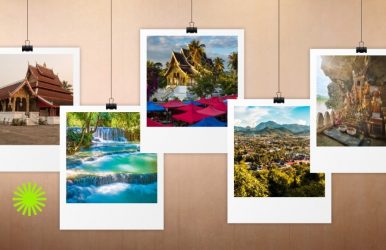
Luang Prabang Travel Guide: Why I Loved It? (Activities, Attractions, History, Itinerary, And More)

BY  Sibashree Oct 21, 2025

2022 had taken me to the less frequented Luang Prabang in Northern Laos. Now, thanks to the place I call home, I have heard many stories about the Mekong River, and it has always been on my bucket list.  So, a trip to Luang Prabang was a dream-come-true moment for me.  Three years passed by, and today, before writing this Luang Prabang travel guide, I was researching updates about this UNESCO World Heritage Site. I found out that in the Smart Travel Asia Best in Travel Poll 2025, it has been voted as one of the best vacation destinations in Asia.  Furthermore, it has won third place in the Destination Management category of the 2025 Green Destinations Top 100 Story Awards at ITB Berlin. It is a recognition of how Luang Prabang follows a sustainable tourism practice.  So, the Tour and Travel World data looks very convincing about the arrival of 3,061,928 international tourists to Luang Prabang in the first eight months of 2025, recording a 15 percent clear growth YoY.  Nevertheless, beyond the numbers and accolades, Luang Prabang remains in my heart as a beautiful story that I will share in this Tour and Travel Blog.  Luang Prabang Location And Geography: An Overview  Luang Prabang is on a peninsula at the confluence of the Mekong and Nam Khan rivers. It is designated as a UNESCO World Heritage Site for being an “outstanding example of the fusion of traditional architecture and Lao urban structures with those built by the European colonial authorities in the 19th and 20th centuries.” Here are the important geographical data and statistics about Luang Prabang.  Rivers• Nam Khan and MekongPopulation• 47378 (Source: World Population Review)Primary Ethnic Group• The Kmhmu or KhmuMountains• Phou Nang, Phou ThaoForests• Luang Prabang Montane Rain Forests EcoregionDry Season• November to AprilWet Season • May to OctoberAverage Annual Rainfall • 1,600 MM (Source: North-Vietnam.com)Average Humidity• 70% (Source: North-Vietnam.com)Waterfalls• Kuang Si, Phu Fa WaterfallNatural Vulnerabilities• Landslides• Floods• DraughtsSpecial Geographical Feature• Mount Phousi, a Central High Hill with an Altitude of 150 MetersArea• 16,875 Square KilometersNatural Vegetation• Oak• Beech• Dipterocarpus• Bamboo• Laurel How To Reach Luang Prabang? I took a flight to the Luang Prabang International Airport (LPQ) via Bangkok. You can also take a connecting flight from Singapore. As the main gateway to the town, LPQ gets flights from the Suvarnabhumi and Don Mueang airports in Bangkok, Siem Reap, Hanoi, and Chiang Mai. After reaching the airport, I took a tuk-tuk to reach the town center. It cost me around $5 per person.  What Is The History Of Luang Prabang?  The legends and stories about Luang Prabang never end, and I can attest to that. Every time I visited a Vietnamese coffee shop or talked to my homestay owner, a new story came up.  Here are the key facts about the history of Luang Prabang.  The archaeological evidences suggest that the history of inhabitation in Luang Prabang goes back to 8000 B.C.  The city was initially known as Muang Sua, and by 1357, it was renamed as Maung Xieng.  Further, in the 14th century, Luang Prabang was home to the first Lao Kingdom, Lane Xang, built by King Fa Ngum.  After the city got a new name, it received a Phra Bang, or a golden image of Lord Buddha, from the Khmer monarchy. Thus, it got its current name, Luang Prabang.  Luang Prabang served as the ancient capital of Lane Xang till 1560. After that, King Setthathirath shifted the capital to Vientiane. During the rule of King Surigna Vongsa (late 17th century), Luang Prabang had its first interactions with the Western emissaries.  In 1694, after the demise of King Surigna Vongsa, Lane Xang was divided into three parts: Luang Prabang, Champasak, and Vientiane.  In the 19th century, the city witnessed much destruction by the black flag pundits.  Major restoration work by King Sisavang Vong took place during the span of 1904 and 1959.  It is said that Lord Buddha used to rest here on his pilgrimage route, smiling to indicate the future prosperity of the city.  Major Attractions in Luang Prabang, Laos In the recent annual Lighted Boat Festival, Luang Prabang grabbed all the limelight with its beautifully crafted boat and lighting, celebrating the 30th anniversary of its designation as a UNESCO World Heritage Site.  Along with the Old Town, these are other major attractions in Luang Prabang.  1. Kuang Si Falls I reached the Kuang Si Falls after visiting the Tat Kuang Si Bear Rescue Centre. The layered pools are the most amazing features of Kuang Si Falls.  After swimming in the pools, I took a walk along the bridge for stunning photos. The entry fee to Kuang Si Falls is around 60,000 KIP.  2. Mount Phousi Trekking to Mount Phousi was not as difficult as I thought. I wanted to take it a little slow and reach the top of Mount Phousi in less than an hour. The steps were not that steep.  The entry fee was 20,000 KIP, and it was almost sunset when I reached the Golden Stupa at the top of Mount Phousi. The red lights falling on the Golden Stupa looked magical, and the panoramic view was beautiful.  3. Royal Palace Museum Timing: 8 AM -11:30 AM and 1:30 PM to 4 PM The Royal Palace Museum stands as a testament to the opulence and royal grandeur of Laos in the pre-Communist era. Among the artefacts, the Phra Bang Buddha statue is the main attraction.  The former royal residence also stands out because of its fusion of Laotian and French architecture.  4. Wat Xieng Thong Hours Open: 8 AM to 5 PM Entry Fee: 30.000 Kip/Person Built in 1560, Wat Xieng Thong is one of the most revered temples in Laos. Setthatirath built this temple, and I loved the glass murals here.  5. Pak Ou Caves To explore more Luang Prabang temples, I reached Pak Ou Village. The tuk-tuk ride to the caves costs around 400000 KIP, and I reached the caves after a long boat ride. The journey was beautiful. The temples and Pak Ou caves with statues of Lord Buddha are the highlights of my Luang Prabang trip. The entry fee was 20000 KIP.  6. Luang Prabang Night Market Hours: 5 PM to 10 PM The Luang Prabang Night Market was a real surprise. Honestly, I did not expect this much fun. Hundreds of vendors were selling clothes, handicrafts, ornaments, ceramics, tea, and coffee.  I bought some textiles, bags, and ceramics. One thing - you have to be at the A game of your negotiation. Some vendors are really pushy.  7. Tad Sae Waterfall Hours: 8 AM to 7 PM Tickets: 15000 Kip for Locals and 30000 KIP for Foreigners (Free for Children below 8 Years) While Kuang Si is a more popular choice, it is bigger. However, I loved the Tad Sae Waterfall more. It is more relaxing, and for me, the nearby elephant park was an added attraction.  One of the best Luang Prabang waterfalls, Tad Sae Waterfall, is layered with crisscrossing decks. 8. Traditional Arts and Ethnology Centre Hours: 8 AM to 5 PM (Monday Closed) Entry Fee: Fee for Locals, 25000 KIP for Foreigners  View this post on Instagram A post shared by TAEC Museum | Shop | Cafe (@taeclaos) The board on the wall of the Traditional Arts and Ethnology Center sums up what experience you can expect here. You can combine your Mount Phousi trek with this Ethnology Centre visit.  It was a brilliant curation of more than 600 artefacts from over 20 ethnic groups in Laos.  9. Wat Mai Suwannaphumaham Hours Open: 8 AM to 5 PM Tickets: 10.000 Kip/Person Wat Mai Suwannaphumaham is one of the closest temples to the city center. It was built in 1796, and a major restoration work took place in 1821 under the leadership of King Manthathourath.  The temple has beautiful murals and sculptures on the wall, along with the golden statue of Lord Buddha.  10. Alms Giving Ceremony Some activities in Luang Prabang are free but priceless in terms of experience and learning. Giving alms to monks is a part of the social and religious practice of the place I belong to. Furthermore, giving alms to monks is like sharing your resources with the community.  I reached near the Joma Bakery Cafe on the Sakkalaine Road to take part in this ceremony.  The monks were happy with whatever they received. However, due to cultural differences, many tourists do not understand the significance or the courtesy of giving alms. 11. Ock Pop Tok Living Crafts Centre View this post on Instagram A post shared by Ock Pop Tok (@ockpoptok) Just around 2 km from the Night Market, Ock Pop Tok Living Crafts Centre is a place to learn about traditional Laoian textiles and craftsmanship. I took the free tuk-tuk ride from the Night Market to this crafts center.  Tuk-tuk services are available from 8 AM to 8 PM. 12. Phosi Market Hours: 7 AM to 5 PM View this post on Instagram A post shared by Mas El Mundo (@the_slowtraveller) Phosi Market is the biggest market in Luang Prabang, and the air here is heavy with the whiff of fresh produce and spices.  I talked to the local vegetable gardeners here and bought some local spices. Honestly, exploring the local markets is one of the best things to do in Luang Prabang Laos for solo travelers.  13. UXO Lao Visitor Center Hours Open: Monday to Friday - 8 AM to 11:30 PM and 1 PM to 7 PM Entry: Free View this post on Instagram A post shared by Raja Ray (@raja.ray) I took a 15-minute walk from the City Center to reach the UXO Lao Visitor Center. The center tells you that Laos has been the most heavily bombed nation, according to a per capita calculation.  Some of the bombs have not exploded, and they remain on the earth. They continue to create human casualties.  The documentary I saw here was heart-wrenching, and the survivor stories gave me goosebumps.  14. Whisky Village View this post on Instagram A post shared by LUCA CURTI GIALDINO (@lukectfd) I reached Whisky village in search of the authentic Lao rice whisky. The settlement of Whisky Village or Ban Xang Hai is quaint. Almost every bottle has an encapsulated reptile.  I finally could not muster the courage to buy a bottle. Instead, I collected some silk textiles with intricate weavework.  Is Luang Prabang For Every Traveler? Who Will Love It The Most? Luang Prabang is more suitable for solo travelers and couples.  Having immersive cultural and spiritual experiences with museum and temple visits is one of the best things to do in Luang Prabang Laos for solo travelers. I thoroughly enjoyed it as a solo traveler, be it a visit to Wat Xieng Thong or exploring the markets.  Furthermore, Luang Prabang celebrates romance like quiet luxury. A sunset cruise on the mighty Mekong River or a bath in the turquoise pools of Kuang Si Falls are some of the most romantic things to do in Luang Prabang, Laos.  However, Luang Prabang is versatile in terms of the types of travelers it caters to. Most importantly, it teaches the art of slow and meaningful tourism in which you build connections and garner experiences that last a lifetime.  Here is a quick breakdown of different places in Luang Prabang catering to different types of travelers.  Types of TravelersPlaces to Visit in Luang PrabangHistory Buffs• Wat Xieng Thong• Old Quarter• Wat Mai Suwannaphumaham• Wat Visounnarath• Pak Ou CavesNature Lover• Mount Phousi• The Mekong River• The Forest AreaWildlife Enthusiast• Luang Prabang Wildlife Sanctuary• Elephant Village Sanctuary• MandaLao Elephant Conservation:• Manifa Elephant CampBackpackers and Budget Travelers• Tad Sae Waterfalls• Kuang Si FallsCulture and Local Life Experience• Luang Prabang Old Quarter• Luang Prabang Night Market However, beyond everything, Luang Prabang continues to be the spiritual heart of Laos.  Luang Prabang And A Unique Spiritual Experience  A BBC report suggests that Luang Prabang has the highest per capita monk population of anywhere else in the world. However, the Buddhist heritage of the city is impacted by the rapid surge of tourists after the opening of the Laos-China Railway in 2021.  The significant customs, such as alms giving, have now become more commercialized, losing their community and spiritual experience.  To combat this commercialization, Anat Khamphew and many other former monks are setting up tour guiding companies such as Spirit of Laos and Orange Robe Tours.  These companies will help establish an authentic experience where significant spots and devotional symbols are not turned into backdrops for selfies and Instagram photos, and where monks do not receive leftovers and junk food as alms. It’s all about traveling the monk’s way. Budget And Expenses For The Luang Prabang Trip I was traveling solo, and the expense was around $30–$50 or 6,52,832.40 to 10,88,054.00 Laotian Kip per day. The entry fees are a little higher, considering the local currency.  My daily expenses included: Hostel Charge: $20 Per Night (Mid-range hotels available at around $50-80 per day) Food: $5-10 Travel: $5 Entry Fee: $5 What Is The Best Time To Visit Luang Prabang?  November to February is the best season to visit Luang Prabang. Just after the October rainfall ends, the city enjoys clear weather conditions with mild temperatures. So, it is the ideal time to explore the outdoor things to do in Luang Prabang, Laos.  Luang Prabang experiences heavy rainfall from June to October, and March to June is stuffy and hot.  Here is a breakdown of temperatures in Luang Prabang by month. (Source: National Oceanic and Atmospheric Administration, NOAA).  MonthsHighest Temperature (Degree Celsius)Lowest Temperature(Degree Celsius)January2814February3216March3419April3522May3524June3424July3324August3224September3323October3221November3018Decemeber2815 Luang Prabang Food And Customs I Loved Furthermore, food in Luang Prabang is fresh and wholesome, just as the city is. I fell in love with \(Mok\) \(Pa\), which is fish steamed and cooked in banana leaves. I also tried \(Laap\), a national Laotian dish, and I chose the version with minced meat.  Furthermore, I lost count of the coconut cakes I had in Luang Prabang. It was subtle, sweet, and hearty.  The markets are the best place to explore the local specialties of Luang Prabang. However, the food scene of the city came alive after sunset.  Also, I was quite happy with the experience of the places I ate, such as the Tamarind Restaurant and Bouang Asian Eatery.  Luang Prabang’s culture is deeply rooted in Theravada Buddhism. The daily alms-giving ceremony at dawn is a sacred tradition.  Locals wear traditional Lao sinh and celebrate festivals like Pi Mai (Lao New Year) and the Festival of Lights. You have to dress modestly, remove shoes before entering temples, and respect local customs. Luang Prabang Travel Guide: The Dos And Don’ts Here is a detailed checklist of the things to do and things to avoid in Luang Prabang. Have a look at the table below.  Checklist for Traveling to Luang Prabang, LaosMistakes to Avoid When Traveling to Luang Prabang, Laos• You will need a valid passport and a Laos visa (eVisa or visa on arrival).• Get your money converted to local currency (Lao Kip) or USD.• Have travel insurance and keep the documents handy.• Dress modestly for temple visits. Use a reusable water bottle. • Wear sunscreen and insect repellent.• Choose comfortable walking shoes.• Carry a rain poncho or umbrella (especially in the wet season).• Buy a local SIM card and have an offline map when exploring the city and beyond. • Be respectful toward local customs such as alms giving. • Check the license of the driver for scooter rentals, as incidents of scooter accidents are common. • Negotiate and agree upon the fare before the tuk-tuk ride starts. • Visiting during the burning season (March–April) due to poor air quality• Arriving without USD for visa fees• Overestimating travel time between attractions• Not booking transport in advance during holidays.• Visiting over-crowded areas, petty thefts are common.  My 5-Day Travel Itinerary In Luang Prabang I stayed in Luang Prabang for 5 days. The best thing about Luang Prabang is that it will not push you to rush. So, my five-day stay here was one of the most relaxed experiences I had. Here is what I did on those five days.  DaysItineraryDay 1: Arrival and Cultural Experience• Reaching the Luang Prabang International Airport• Checking into my hostel• Evening walk in the city center• Having authentic Laotian food at Tamarind Restaurant• Exploring the Night Market Day 2: Temple Visits and Spiritual Immersion• Alms Giving ceremony at sunrise• Breakfast Saffron Coffee• Visiting Wat Xieng Thong, Wat Mai Suwannaphumaham, and the Royal Palace Museum• Lunch at Bouang Asian Eatery• Climbing Mount Phousi for sunset viewsDay 3: Nature and Adventure• Day trip to Kuang Si Falls, visiting the Bear Rescue Center, and swimming in the turquoise pools. • Lunch at Kuang Si Butterfly Park Café• Back to the town and enjoying a sunset cruise on the Mekong River. • Dinner at Utopia BarI chose Utopia Bar as it is great for solo travelers. The live music and yoga sessions were the highlight. Day 4: Exploring Culture and Craft• Visiting the Traditional Arts and Ethnology Centre• Visiting the Ock Pop Tok Living Crafts Centre and taking a weaving class• Lunch at Coconut Garden• Afternoon visit to Phosi Market• Cooking class at Tamarind Cooking School in the eveningDay 5: Offbeat Exploration and Departure• Half-day boat trip to Pak Ou Caves• Whisky Village en route• Lunch on the boat• Last-minute shopping at Night Market• Departure from Luang Prabang International Airport Tips For A Seamless Travel Experience In Luang Prabang  Stay near the night market for easy access to food and shopping. Join a walking tour to meet fellow travelers and learn local history. Rent a scooter or join a shared tuk-tuk to Kuang Si Falls. Cultural workshops are great for solo bonding and learning. Book an airport transfer in advance to avoid last-minute stress. Is Luang Prabang Worth A Visit?  Luang Prabang is definitely worth a visit, and its charm as a spiritual hub is matchless. It’s like that quiet afternoon of an autumn when you see the golden light of the Sun caressing your windows and floors.  Furthemore, it is a blend of natural attractions, wildlife, religious centers, cultural heritage, markets, and a vibrant food scene. The UNESCO World Heritage site is also a friendly and affordable place to be for solo travelers.  There is a reason why National Geographic praises its spiritual ambiance and well-preserved heritage, or Discovery Travel emphasizes its cultural richness, eco-tours, and artisan tours.  Moreover, it epitomizes the tourism slogan of Laos, “Simply Beautiful!” It is the place where you have to experience and not just travel.  Luang Prabang Travel Guide: Frequently Asked Questions (FAQs)  Here are the frequently asked questions and answers about the Luang Prabang travel guide.  1. What Cultural Events Or Festivals Happen In Luang Prabang? Boun Pi Mai Lao, or the Lao New Year, is the biggest festival in Luang Prabang. It takes place around mid-April. Boun Suang Huea, or the Boat Racing Festival, in September, and Boun Lai Heua Fai, or the Festival of Lights in October, are also celebrated with great pomp. Furthermore, November is the month of the That Luang Festival at the That Luang Stupa. It is celebrated with a trade fair and religious ceremonies.  2. Is 2 Days Enough In Luang Prabang? While you can cover some important landmarks of Luang Prabang in two days, I think that you will need at least 2-3 days more to immerse yourself in the local cultural and spiritual experience.However, if you are in Luang Prabang for two days, you can explore the City Center, the National Museum, the Royal Palace, and the temples near the City Center on day 1. On day 2, you can plan a trip to the Pak Ou Caves and Kuang Si Falls.  3. When To Avoid Luang Prabang? Late February to April is the time to avoid visiting Luang Prabang. Extreme heat and stuffy weather make the days uncomfortable for outdoor exploration. June to October is another season to avoid due to heavy rainfalls and calamities such as landslides. Read Also: A Comprehensive Guide To The Main Types Of Asian Food That You Can Find In Singapore Sunrise Spots in Vietnam: Top Places to Catch the Best Morning Views 5 Must-Visit Places In Thailand: Should I Go To Phuket Or Krabi?