


Nightlife in Miami: The Ultimate Guide

Jan 30, 2025

Last Updated on: Nov 24, 2025

Travel Blog

Miami is a beacon of Caribbean and Latin American culture and one of the hottest (not temperature-wise) places to be! The nightlife in Miami is one of the most famous things people talk about when they visit the city. 

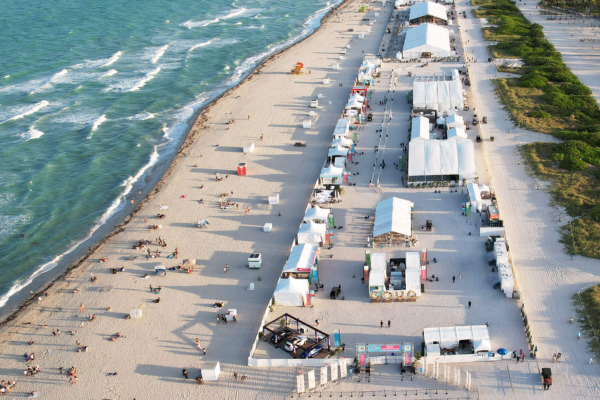
Apart from boasting stunning beaches and Cuban influence, there’s a lot you should keep on your list—the vibrant nightlife, for example! With its clear blue waters and white sand beaches you can explore during the daytime, the city comes alive during the night. 

The following article will explore the different ways you can explore the nightlife of this beautiful city! With its trendy rooftop bars, world-class nightclubs, and beachside lounges, you can expect an amazing time in the city, even if you’re here for a night! 

If you get the timing right, you may even catch the famous South Beach Wine & Food Festival! 

Why Choose Miami for a Night Out? 

Well, Vegas has its own charms. While New York and Manhattan have more of a daytime adventure vibe, Miami will always be the poster child of a happening nightlife—the one city that comes alive during the night! 

Far from being pretentious, the nightlife in Miami is the Eastern counterpart of Vegas, so if you enjoyed Vegas, you will enjoy the nightlife in Miami! The experience is mostly what you make of it – from enjoying pool parties to getting into clubs, it’s your game. 

The nightlife in Miami is all about bars, club-hopping along the Ocean drive and soaking in the vibes of this immaculate place! 

You can even find 24 hours-open clubs from Thursday through Sunday here! 

Did you know Miami is one of the most expensive cities in the world? 

3 Perfect Ingredients For A Nightlife In Miami 

South Beach Wine & Food Festival

Now that you’re convinced to visit the most happening city in the country, here are different essential elements of a night out in Miami, from having the best food to club hopping and enjoying the beachside club vibes. 

Do it all here!

Best Nightclubs in Miami That Come Alive At Night!

Home to some of the most famous nightclubs in the world, the nightlife in Miami attracts top DJs and celebrities. Here’s a look at the best nightclubs for your night out:

  • LIV Miami—One of the most happening nightclubs in Miami is inside the Fontainebleau Hotel. LIV is one of the most iconic nightclubs in Miami, known for its high-energy atmosphere and exclusive VIP experience.
  • E11EVEN is one of the 24/7 ultra clubs that combines live performances, top-tier DJs, and aerial dancers. You are sure to have a unique nightlife experience. This is truly an entertainment venue like no other! 
  • Mynt Lounge – Be sure to follow their dress code, which is smart and elegant, and book a table in advance for a smooth night out! A hotspot for celebrities and VIPs, Mynt Miami offers an upscale and intimate clubbing experience.
  • Story Nightclub—The same team behind LIV brings you Story Nightclub. This place boasts a massive dance floor and an impressive lineup of world-renowned DJs.
  • Space Miami – One of the legendary venues for electronic music lovers, Space Miami will give you an unforgettable clubbing experience. It will last well into the morning. Simply book a Space Miami VIP Table and ensure premium service and the best views of the DJ booth.

Trendy Bars and Lounges in Miami

For those who prefer a more laid-back nightlife in Miami, here are a few options that offer a variety of stylish bars and lounges:

  • Sugar – One of Brickell’s most trendy rooftop bars, Sugar offers breathtaking views of the city skyline. You can also enjoy expertly crafted cocktails here. 
  • The Broken Shaker—A must-visit for cocktail enthusiasts, this award-winning bar at Freehand Miami serves unique and flavorful drinks in a relaxed, bohemian setting.
  • Komodo Lounge—This chic upscale lounge is perfect for those who enjoy a sophisticated ambiance. As the name suggests, it offers Asian-inspired cocktails, so you can get that oriental taste here.

Miami Beach Clubs and Pool Parties

Miami’s nightlife is more than just bars and clubs, it has beautiful beachside parties and clubs. It also brings with it legendary poolside parties. 

Let’s have a look at all the top spots you can have a chill time in: 

  • Brunch-worthy Nikki beach that brings the best of daytime fun and a happening nightlife to you. You can enjoy the sunday-brunch at the beach clubs or have a chill night out at the poolside with a stylish crowd. It’s up to you! 
  • Party at the luxurious Hyde beach that brings the best of luxury and premium bottle service. This location is at the lavish SLS Hotel that brings a poolside party with the top DJs. 
  • The lively Baoli Miami brings fine dining and nightlife together for its visitors to bring the night alive as it passes. 

The nightlife scene at Miami is ever-evolving and dynamic, catering to every party-goer! No matter if you’re out there dancing till the sunrises or sipping cocktails on a rooftop for the majestic views. 

You can enjoy every bit of the city easily with these locations – even spending your time at the beach club can bring unforgettable nights to you.

South Beach Wine & Food Festival!

South Beach Wine & Food Festival

If you’re interested in visiting the city and soaking in its culture, here’s one way to do so with great food and alcohol! The famous South Beach Wine and Food Festival will be held between February 20th and 23rd, 2025! 

With over 105+ events spread out over the four days, you can meet experts and taste their concoctions while contributing to a noble cause. Each year, the SOBEWFF raises nearly $40 million for FIU’s Chaplin School of Hospitality and Tourism Management. 

From Miami Beach to Kendall and around, you can get a taste of each South Florida corner! When debating between the better nightlife and the one in Miami, it can be said that the one in Miami is far more happening than in LA or Vegas. 

Whenever I can, I make it a point to visit the festival to support a great cause. You can easily see how the students run a festival of this scale. They come up with entrepreneurial ventures and test new concepts, too. 

If you can, visit Miami in the coming weeks to experience the best of both worlds!  

Keep Groovin’!

Now that you know about all the hottest spots to live the dream nightlife in Miami, we hope you’ll dance the night away and drink responsibly! From spending your day at the beautiful beaches to soaking at the clubs at night. You can do it all here! 

The nightlife in Miami is one of the most coveted across the country, and you dare not miss it! You will spot someone famous while partying out, from popular NBA stars to favorite celebrities! You can also enjoy the most famous festivals in the coming weeks, so plan your trip accordingly!

The article informs you about the different elements of enjoying the nightlife in Miami. From happening clubs to beach clubs and trendy bars, there’s a lot you can explore!

Also read

Share on Social Media

Meet Sibashree Bhattacharya, a travel enthusiast who has a decade-long experience in transcending virtual barriers with her words! Her deep love for travel is apparent from her travel escapades to the mountain, often taking her readers on a journey, her words acting as Portkey! Fun fact: Sibashree loves to dive deep into the history of the places she is about to visit, making her travels even more wholesome. If you were wondering how her articles are not short of time travel, this answers it!

Leave a Reply

Your email address will not be published. Required fields are marked *

title-img Related

READ MORE Travel Blog With A Headless CMS

How To Start A Travel Blog With A Headless CMS? Smart Tips

BY  Sibashree Aug 14, 2025

❌ Generic Templates ❌  Limited Flexibility across Channels These are the first two things you must leave behind if you are planning to start a travel blog these days. Also, it is now just about building a travel blog site, but the idea is to start a travel blog with a headless CMS and ensure optimized conversions.  Digital content endeavors to convert all the time, but it's not enough to generate persuasive copy and aesthetically pleasing designs and leave it at that.  The ability to adjust, pivot quickly based on real-time metrics and a strategic push at the appropriate time during the buyer's journey is essential.  Unfortunately, many CMS options fail to provide such access and flexibility. Yet a headless CMS allows for an in-depth design and the structure needed to create, experiment, and execute content intended for conversion across any channel.  With content modeling, an API-first approach, and componentized efforts, teams can design conversion-ready, optimized digital experiences along the way. Here’s more on how we can have absolute control over content presentation and structure with the help of a headless CMS.  Why Conversion Is Limited In Legacy Content Systems? Legacy content management systems (CMS) keep content tied to pages and templates. When a marketer wants to change the components or layouts, the messaging, or the targeting, it's usually an impossibility.  Furthermore, content displays differently on mobile than on desktop, and unless developers are on board to change visibility across devices or channels, brands suffer from amateur impressions.  In addition, when small changes need to be made, it requires dev time, which prevents even the simplest, most timely turnaround pieces.  Thus, when marketers have access to A/B performance, they're not always set up to make real-time changes.  Storyblok Labs product experiments showcase innovative ways to solve these limitations with faster, more flexible testing and deployment.  This is why conversion-centric content should be done as quickly and easily as possible. A headless CMS removes the content from the delivery, which allows for a more responsive experience. Why Do I Need To Start A Travel Blog With A Headless CMS? Creating content that converts doesn't just rely on what you say. It relies upon how quickly and efficiently you say it, test, and iterate at every stage of the funnel.  When people can change their minds with the click of a button and attention spans are shorter by the second, the ability to create and implement content with flexibility has never been more paramount.  You can no longer just create a landing page and wait to see what happens; in modern marketing, everything must be iterated, personalized, and perfected in real time based upon performance feedback. 1. A Headless CMS Offers Flexibility And Helps Find A Brand Voice A headless CMS provides the flexibility, framework, and agility necessary to produce content that advocates for high conversion rates with the ability to pivot just as quickly as your audience.  Because a headless CMS separates content from the front-end experience, both developers and marketers can create content modules that are highly reusable, each module attributable to a unique conversion goal.  You can test them with rapid A/B measurement campaigns. Moreover, you can easily assemble and deploy across all channels and touchpoints without upsetting the entire campaign plan.  The production time is cut down dramatically. Content silos are avoided. Compliance with best practices for brand voice and user experience becomes easier to control. 2. Ensures Better Assessment And Lesser Time For Content Production With personalization opportunities driven by behavioral data, along with the flexibility of integration with A/B testing tools, analytics platforms, and CRM/log-in pathways, every piece of content becomes interactive, trackable, and meaningful.  Marketing teams can assess specific measurements for particular audience segments, remove underperforming pieces mid-campaign, and apply successful formulas across global regions and departments, all from the same source of management. The possibilities for immediacy are especially valuable when it comes to major product debuts, last-minute holiday campaigns, or intense customer acquisition strategies.  Here, time is of the essence, and success depends on a failsafe launch at a selected moment. Being able to iterate while content goes live makes all the difference.  Within a headless CMS, your content machine is reactive to your business needs instead of responding to the consumer, continually changing, substantiating findings, and improving conversion attempts at every step. Start A Travel Blog With A Headless CMS For Future Convenience And Use (Understanding The Technicalities) A headless CMS supports the notion of creating content as fragments that can be used anywhere down the line.  For example, rather than creating hero banners and testimonial boxes, these "components" can instead be tagged as hero banners, testimonials, recommended features, CTAs, or pricing tables.  In addition, you can tag them with metadata for conversion. Mention who it's for, what part of the funnel it serves, and what campaign it connects to.  So, it is like a content marketing workshop. You can assemble the essentials to meet the campaign goal by selecting the existing high-performing blocks of content.  It creates a greater quality assurance requirement and allows those approving the messaging to not deviate from branding and past successful communications. The Benefits Of Using A Headless CMS For Travel Blogs When you start a travel blog with a headless CMS, the blogs become your brand with personalized storytelling and picking the right sub-niche for your travel blog.  Thus, you build stronger connections with a specific reader base and establish authority quickly.  1. Personalization Drives Conversion Rates Up By Using A Headless CMS For A Travel Blog Personalization drives conversion rates. Several different content pieces can be served based on segmentation data; thus, the same API connection can read geographic location or read CRM segmentation and serve a different headline, picture, or limited-time offer.  Thus, a new user can get one offer and a CTA. Furthemore, returning users can have a different CTA with various testimonials of their previous experience and industry.  A headless CMS makes it easier to let technology help people at scale with personalization that quickly drives them down the conversion path. 2. Iterating Quickly And Testing With Single Changes There is no final design for conversion; it requires ongoing updates based on what works and what doesn't. A headless CMS encourages rapid, modular designing that enables A/B testing or multivariate testing at the element level.  Marketers can test one element, a CTA, for example, or a product highlight against another product highlight to see which does better, and they can monitor the effectiveness in real time.  Because these elements are modular and exist apart from the overall design, they can be changed and adjusted without redoing an entire page or complicated experience. This allows marketers to pivot quickly and often for stronger conversions. 3. Minimizing Redundant Channel-Specific Content Paths to conversion don't just exist on websites; they exist in email, mobile apps, landing pages, digital ads, and more.  A headless CMS allows for omnichannel delivery from one content source, meaning that the message can be the same.  But because the content does not align with the design, you can update copy, style, and tone for each channel.  This decreases redundancy, increases content operations efficiency, and ensures that channel-specific experiences are as effective as possible to drive conversion. 4. Using An Integration With Analytics Sites To Drive Decisions About Content Elements No effort to optimize large content pieces can be realized without performance data. A headless CMS integrates with analytics sites, A/B testing sites, and customer data platforms (CDP) to give teams the power to see how well certain pieces of content work on what channels and for what demographic segmentation.  Marketers can discover which elements of an ad drive clicks, what subheadings have reduced bounce rates, and which CTAs have the highest conversion rates.  These results go back to the elements in question. Thus, it allows you to make quick changes and more intelligent repurposing of popular content pieces. Over time, this creates a scalable library of assets that have all been assessed for conversion. 5. Easing Inter-Departmental Collaboration Content that converts doesn't just involve the marketing team. It requires insight from design, content, development, and analytics teams as well.  A headless CMS makes this process seamless by offering a content repository, in different formats, that allows everyone to contribute.  The marketers can make their piece of the puzzle for the larger campaign using out-of-the-box components. The designers can ensure a universal, consistent design across teams. Moreover, the developers can build a connected and responsive front end, no matter the content.  Distributing these efforts allows for faster flows, greater accuracy, and increased experimental, data-backed content conversion opportunities. 6. Enabling Scaling Efforts Without Quality Decrease As brands grow, so do their campaigns and content needs for varied audiences. A headless CMS is intrinsically scalable, as it allows teams to replicate and pivot effective tactics from product to product and market to market.  Campaigns following templates and modules known to convert can easily be used for similar campaigns. Thus, the production time will go down.  Scaling is integral to maintaining conversion successes as it requires more resources over time. 7. Forming Credibility Through Speed And Consistency Speedy and effortless digital experiences create conversions. If a webpage takes too long to load or has a disjointed layout riddled with out-of-date resources, potential converters become frustrated and return to search for better resources elsewhere.  With a headless CMS, developers have complete control over the front end to create fast-loading and mobile-responsive efforts that increase usability.  Moreover, with a modular approach, updates can occur in seconds, without concern for disconnected segments because of out-of-date information.  This speed and consistent access create credibility, one of the most important factors for turning interested parties into buyers. 8. Conversion-Focused Funnels By Modular Assembly Of Content Perhaps the greatest advantage of a headless CMS is the unlimited ability to create hyper-targeted, conversion-based funnels based on specific buyer personas or short-term campaign needs.  When using a standard CMS, the content will be in silos based on general form templates.  Be it lead acquisition or collateral acquisition, email nurturing and lists, product nurturing or reactivation.  If creating a funnel exists within the marketer's realm, they can specify how the content flow should happen to generate the desired response.  For example, if a product funnel is for converting cold traffic, you will use short-form copy, images, or overview videos to create the awareness phase.  The interest phase can be a compilation of FAQ blocks, testimonials, or lists of advantages.  The action phase can use product comparisons, expiring discounts, or friction-free lead gen forms, all pulled from pre-vetted and modular content blocks. With a headless CMS, teams can be thoughtful and experimental about the funnels available to them.  One funnel does not have to serve all journeys. Instead, thoughtful, conversion-oriented experiences can be the way out based on user reaction and intent indicators. These are like live customizations, not just one-time executions.  With a headless CMS, content is a powerful tool for business growth and not an afterthought. 9. Decreased Time To Launch For Conversion-Focused Efforts One of the best ways to convert audiences is to get to them while the getting is good. When interests are hot, campaigns need to be ready, or else audiences will lose their interest or even worse convert to a competitor.  With a headless CMS, the time to launch dramatically goes down. Instead of creating something brand new and untested, teams can utilize a library of components.  There's no need to reinvent the wheel every single time, and efforts can launch in minutes as long as the used assets come from pre-existing libraries. 10. Ability To Change Without Starting Over When Consumer Actions Change Consumer action changes what works today might not work tomorrow. Thus, one of the greatest benefits of utilizing a headless CMS is the ability to change without starting over.  Marketers can relaunch certain components that didn't perform well. They can even try something similar with different layouts without having to start brand new.  Components can be: Geo-targeted Segmented Dependent upon what occurs without disrupting other campaigns in process.  This means conversion efforts are fluid and malleable, able to change without compromising the overall experience of the brand. Start A Travel Blog With A Headless CMS And See How Conversion Starts With Flexible Infrastructure Do you have a brand wanting to boost performance, grow fast, and provide the best omnichannel experience? The degree of flexibility that comes with a headless CMS is not only a technical advantage; it's a strategic necessity.  It allows teams to operate faster, test more effectively, convert more easily, and build a content operation. The overall process is reflective of the dynamic, data-driven nature of our digital world. When conversion reigns supreme, this is how to create effective digital experiences.

READ MORE How to Choose Luxury Hotel in Singapore

How To Choose The Right Luxury Hotel In Singapore: A Traveller’s Guide

BY  Sibashree Aug 1, 2025

Singapore is a place you won't forget because it has a mix of modernity, rich culture, and a famous skyline. Okay, so—Singapore. If you’ve been there, you probably get it. And if not, just trust me—it’s one of those places that stays with you.  It’s shiny and modern, but at the same time, you turn a corner and there’s a temple that looks like it’s from another century. The food? Ridiculous. The views? Even more so. But here's the thing nobody tells you upfront: your hotel? It's not just somewhere to crash. It's a huge part of the whole vibe, especially if you're going all-in on the luxury experience. But, how to choose luxury hotel in Singapore? That can feel... kinda overwhelming. Let me walk you through how I usually figure it out. How To Choose Luxury Hotel In Singapore? Choosing the place where you are going to stay for your vacation is always exciting. But how to choose luxury hotel in Singapore? You have to consider a lot of things while choosing it. 1. Pick The Best Place For You So first off, you gotta ask yourself, “Why am I even here?” I mean, what are you really in Singapore for? Want to shop? Go somewhere close to Orchard Road—it’s like shopping overload in the best way. More into history and temples and that sort of thing? You’ll probably want Chinatown or Kampong Glam. Travelling with kids or just want some beachy downtime? Sentosa's the move. And if you’re in town for work stuff, or want those crazy Marina Bay views? Then yeah—stay near Marina Bay. Also, and I can’t say this enough, be near an MRT stop. It’s cheap, clean, and insanely efficient. You’ll save yourself so much walking and taxi money. 2. Make Sure The Amenities Fit Your Lifestyle Okay, here’s where it gets personal. Like—what does “luxury” mean to you? Is it a spa that melts your stress away in five minutes flat? Or a rooftop bar where they remember your name and your drink after one night? Or maybe you just need solid Wi-Fi and a quiet room so you can finish that Zoom call and then go disappear into the pool. Some places go really extra with the service—private butlers, curated city tours, chefs who’ll adjust the menu to your dietary thing... all that. But don’t just fall for the photos. Look at what actually matters to you, not what sounds fancy in a brochure. 3. Think About Different Themes And Designs Okay, not everyone cares about this. But I do. I mean, you could stay in some super clean, all-white, glass-everywhere kind of hotel, and that’s fine. Or you could stay in a place that feels like Singapore, like it actually tells you a story. There are hotels with old-school colonial architecture and crazy modern interiors. Or ones where you walk in and it's just this mix of bold colours, funky shapes, and stuff that kinda feels like an art exhibit.  There’s something cool about being in a place that doesn’t feel cookie-cutter, y’know? 4. Get Ideas From Real Guest Reviews Alright. Quick tip: don’t trust only the perfect pics and big influencer posts. Some of those are basically paid ads with filters. Instead, scroll through the messy, ranty, or surprisingly detailed reviews. If ten people say the breakfast is amazing? It probably is. If three folks mention mould in the bathroom, even if everything else looks nice? Yeah, that’s a red flag. I always try to find reviews from someone who travelled the way I am—like solo, or with a partner, or for work. You’ll get a much better read on what your own stay might feel like. 5. Think About How Private And Exclusive It Is Okay, this one’s kinda underrated. Some hotels—especially the bigger chain types—are just... crowded. Even if they’re five-star, it can feel like a luxury version of a mall. But the smaller boutique hotels? Totally different energy. Quieter, slower, more personal. You might not get the giant buffet breakfast, but you will get a front desk person who actually remembers your room number and maybe even your name. If you’re on a honeymoon, anniversary trip, or just don’t wanna deal with tour groups and loud lobby music, go small and classy. Trust me. 6. Look At The Loyalty Benefits And Packages Side By Side Quick money-saving trick: don’t ignore those loyalty programs. Even if you’re only gonna use it once a year, the perks can be solid, like surprise upgrades or free late checkout (a lifesaver if your flight’s in the evening). Also, check if the hotel’s running any random packages. Sometimes it’s stuff like airport transfers, spa credits, or a private dinner for two. It doesn’t always save you cash, but it can make your stay feel a lot more... taken care of. 7. Put Safety And Cleanliness First Yeah, I know. Not the fun part. But since the whole pandemic thing, this matters more than it used to. Most top-tier hotels say they’re clean, but still, dig a little deeper. There are various luxury boutique hotels in Singapore to choose from.  Look for stuff like contactless check-in, solid air filtration (it’s a thing now), and what guests actually say about how well-kept everything is. If the place is sparkling and the staff is on top of things? It’s one less thing to stress about. How To Choose Luxury Hotel In Singapore: Think Of Ypur Priority If you are wondering how to choose luxury hotel in Singapore, you need to think about what matters most to you, like the design, location, privacy, and amenities. At the end of the day, there’s no “best” hotel—just the one that hits all your buttons. It might be the place with the jaw-dropping skyline views. Or the one with a bathtub bigger than your entire apartment. Or maybe just somewhere that’s quiet, clean, and has ridiculously good room service. Whatever it is, when you find that spot that just gets it right, it becomes more than a hotel. It becomes part of the trip. Read Also: What to Expect When Hiring an Meeting Space in Singapore Dark Tourism In Singapore | 5+ Must Visits In The Lion City

READ MORE things to see on Phuket Island

Three Of The Best Must-See Attractions During Your Time On The Thai Island Of Phuket

BY  Sibashree Jul 17, 2025

Alright, so—Phuket, the Thai Island. Man, where do I even start? I went in with zero expectations. Like, I thought it’d just be a beach-and-smoothie kind of trip.  You know, chill, maybe burn a little under the sun, hit up a night market or two, then call it a win. But wow, did this place surprise me! Seriously, you could spend a whole week there and still feel like you missed stuff. And I don’t mean just tourist traps—I mean real gems, the kind of places that make you stop and go, “Wait... how is this even real?”  But if I had to pick just three, the ones that still pop into my head while I’m spacing out on the subway or standing in line somewhere? It’s these. Trust me, you don’t wanna skip ‘em. Here’s the shortlist of the best things to see on Phuket Island, broken down with the same chaotic energy I had while stumbling across them. What Are The Best Things To See On Phuket Island?  From the natural beauty of Phang Nga Bay to the Big Buddha statue and the unique charm of the Old Phuket Town, the best things to see on Phuket Island are many.  Here goes my journal of what I saw and what I experienced.  Also, you can plan a stay in the best hotel in Patong Beach to make your holiday more enjoyable.  1. Phang Nga Bay Okay, so this one?  Total accident. I wasn’t even planning on going. I was half-asleep at breakfast, eavesdropping on some German backpackers at the hostel talking about this boat tour, and I kinda just nodded along and joined last-minute. Best decision I didn’t even really make. Next thing I know, I’m on this longtail boat, wind blasting my face, trying not to drop my phone overboard. And then—bam—these giant limestone cliffs just rise up out of the water like something straight out of a dream.  It’s wild. Like, you see photos online and assume they’ve been touched up or filtered or something. But nope. That emerald-green water? Totally real. And almost too perfect. Ended up in a kayak somehow. Not sure how that happened—someone handed me a paddle and I just went with it. And let me tell you, drifting through caves and into these hidden lagoons where it suddenly goes dead silent?  Genuinely eerie. In the best way. It was just me, water, and birds doing their thing. No Wi-Fi, no distractions. I didn’t even take a photo in that moment, which says a lot ‘cause I take photos of everything. I just kind of sat there, floating, trying to process how this was real life. Also, I overheard someone mention that those rock formations are millions of years old. Which, I guess, makes sense... but also doesn’t, because that kind of time is hard to wrap your brain around when you’re wearing flip-flops and sunscreen that’s already stopped working. Moral of the story: if someone mentions Phang Nga Bay, just go. Don’t overthink it. 2. Big Buddha Statue: One Of The Iconic Things To See On Phuket Island Alright, so this one is on every “Top 10 Phuket” list, and at first I kinda rolled my eyes like, “Okay yeah, giant Buddha, got it.”  But listen—it’s worth it. Especially if you like places that mess with your sense of scale and give you a weird kind of peace you weren’t expecting. You can spot the statue from, like, miles away. It’s perched way up on this hill and looks kinda unreal when the sun hits it just right.  Getting there involves a bit of a drive (note to self: don’t trust Google Maps when it says 15 minutes), and the road?  Twisty and wild. At one point, I had to dodge a monkey that was just hanging out in the middle of the road like it paid rent there. Once you're at the top though—wow. The breeze, the views, the statue itself... it all just sort of hits you at once.  There were people praying, people meditating, some guy just playing with his shoelaces like he was in his own little world.  I ended up sitting on this shaded bench, not really thinking, just existing. It’s hard to explain, but everything felt... still like time slowed down a little. Even if you’re not spiritual or religious or whatever, there’s something about that spot that feels special. It’s quiet, but not in a lonely way. Just peaceful. Solid recommendation. 3. Phuket Town So, confession time: I almost skipped this entirely. “The Old Town of Phuket”? Sounded kinda boring, honestly. But someone at dinner said the food there was fire, and I was like, “Alright, I’ll go for the noodles.” Ended up staying all day. This part of the island has its own vibe. Totally different from the beachy postcard stuff. It’s loud, colorful, and full of character.  Buildings in faded yellows, pinks, blues—all with peeling paint and crooked shutters that somehow make it even better. It’s got this lived-in charm. Like nothing’s trying too hard, and that makes it cool. I wandered aimlessly for hours. Got lost, found a little bookstore with more cats than books, and accidentally bought a t-shirt I’ll probably never wear.  I ate noodles that made me do the involuntary “eyes wide, nod slowly” thing because they were just that good. Oh—and there was this old guy selling postcards with weird hand-drawn cartoons. I bought five. It’s not glamorous. It’s not curated. But it’s real. And for me, that’s what made it so good. Things To See In Phuket Island: Where Nature And Grandeur Meet So yeah, those three places? Absolute standouts. Not secret spots by any means—plenty of people go. But they’re memorable in that “I can’t believe this is real” kind of way. Nature that humbles you. A statue that quiets your brain. A town that feels like someone’s messy scrapbook of life. And hey, pack light but bring snacks. I got way too hungry way too fast and regretted not having anything on hand but gum. Anyway, that’s it. If you end up in Phuket, don’t miss these. Or do. But you’d be missing out.