While coming back, my guide handed me a plastic bottle.
I asked him, “What to do with it?”
He said, “Fill the bottle and take the water home. It carries blessings.”
Then, as I came down, I suddenly smelled the aroma of lemongrass and grilled chicken.
I insisted. So, my guide had to take me to the local stalls.
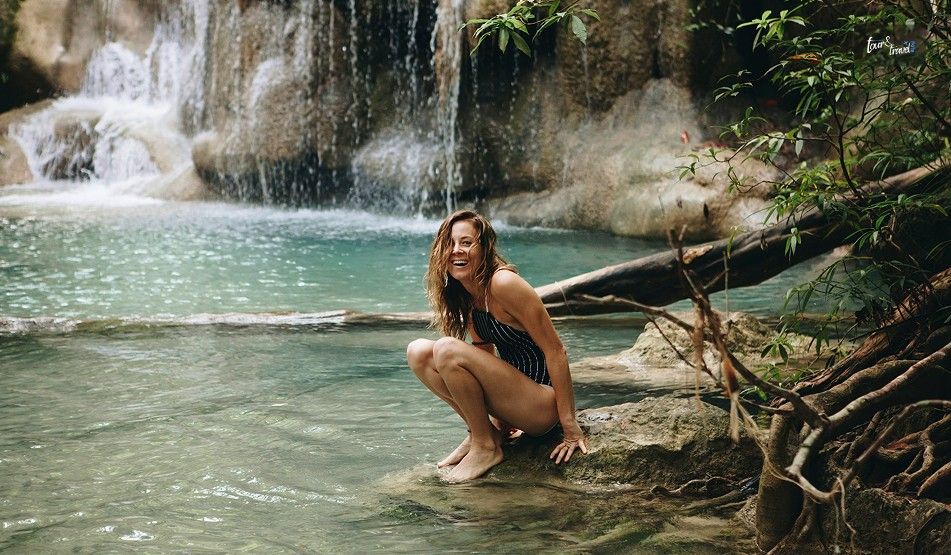
I had the best skewers there, and they tasted even better as I was hungry after hiking to the waterfall and having a bath.
The skewers were a little black on the edges, and that burnt flavor did the trick for me.
Further, the aunty selling the skewers asked me to try the chili dip she had made.
It was fire, and tears rolled down my face.
She was so embarrassed! She gave me coconut pancakes to eat.
My visit to the waterfalls in Luang Prabang is filled with such amazing stories.
What Are The Best Waterfalls In Luang Prabang?
Recently, Travel + Leisure has picked the Kuang Si waterfall as one of the 21 most beautiful waterfalls in the world in 2025.
This recognition further enhances Laos’s international tourism profile.
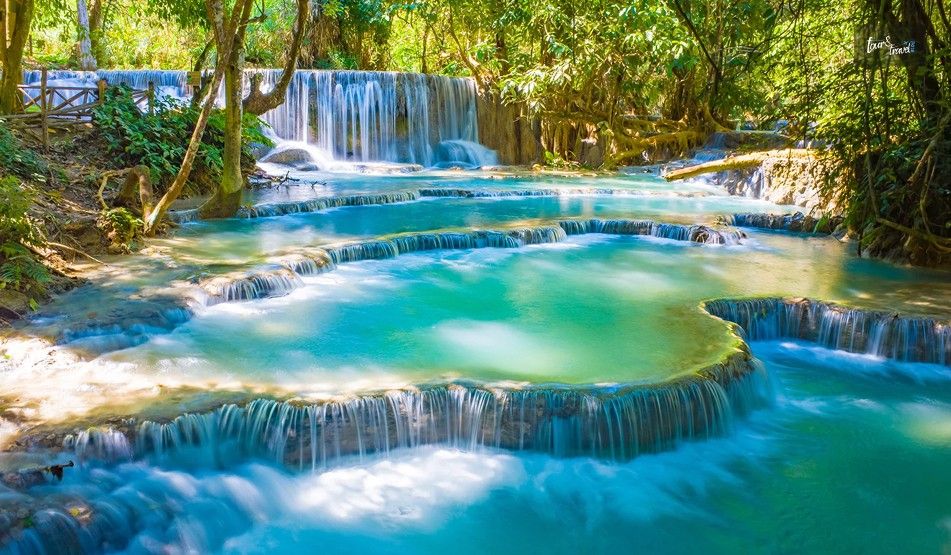
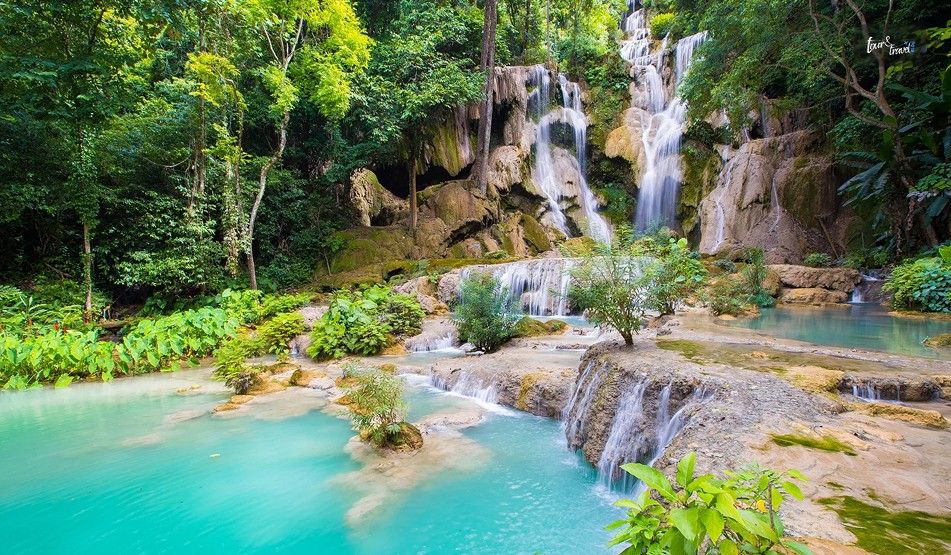
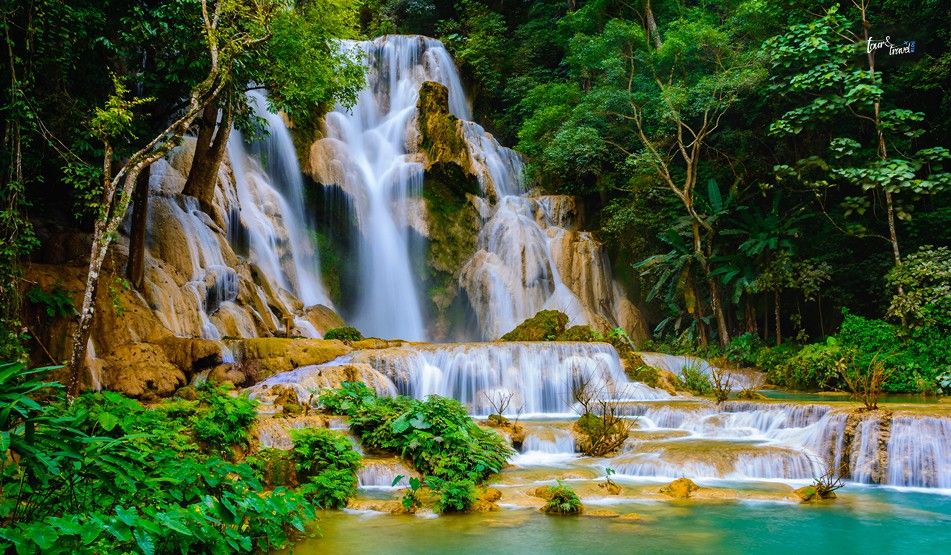
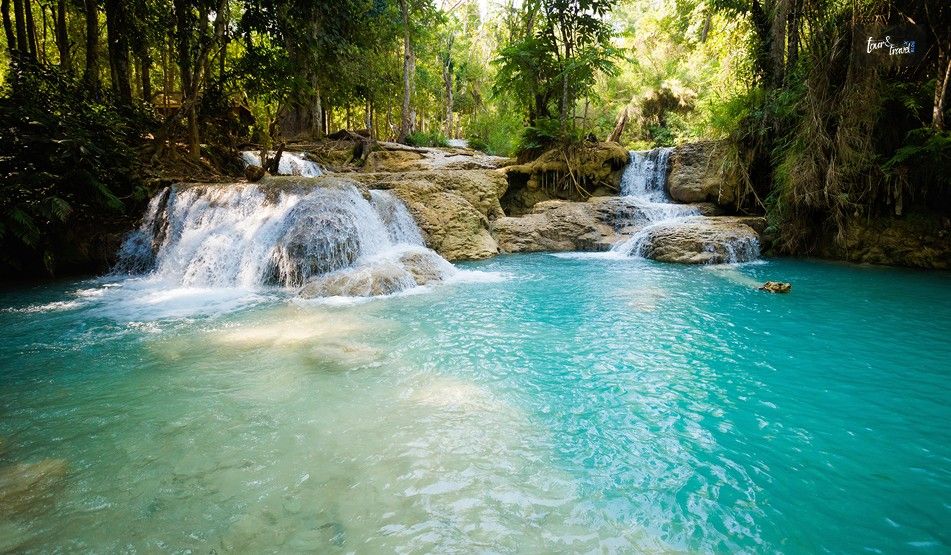
It is just an hour’s drive from Luang Prabang, and its stunning blue waters and turquoise pools formed with it, create the most dramatic landscape.
However, Kuang Si is not the only waterfall you will find in Luang Prabang.
You must also explore the Tad Sae Waterfall, Tad Thong Waterfall, Hoi Khua Waterfall, and Dheva Waterfall.
1. Kuang Si Waterfall
When I reached Kuang Si Waterfall, I heard the monks’ chants from the nearby Buddhist temple.
Within an hour, the scene changed completely, and the roar was so loud that I could not hear my own voice.
Also, on my way back, my tuk-tuk driver was saying,
“The old Kuang Si was way wilder, Ma’am. Its water has blessings.”
How To Visit Kuang Si Waterfalls In Luang Prabang?
Taking a tuk-tuk or a bike is the best way to reach Kuang Si Waterfalls from Luang Prabang.
It is located 30 km south of Luang Prabang. The journey takes around 45 minutes.
Here are the estimated costs of transport options and the expenses.
Mode of Transport
Estimated Cost
Tuk-tuk
Around 60000 KIP
Minivan Tour
250.000 KIP/ Per Group
Motorbike Rental
100,000 KIP/day
Private Car
250,000–300,000 KIP
What Is The Entry Fee And Hours Of Kuang Si Waterfall?
The waterfall remains accessible from 8 AM to 5:30 PM.
For locals, the ticket price is Laotian 20,000k/person.
The ticket is free for visitors below 12 years of age.
Furthermore, for foreigners, the ticket price is 60,000k/person.
What Is The Best Time To Visit The Kuang Si Waterfall?
The dry season from November to May is the best time to visit Kuang Si Waterfall.
These months are ideal for swimming in the clear turquoise water of the pools.
You can also go hiking and explore the nearby bear rescue center and butterfly park in these months.
Furthermore, these months are ideal for photo opportunities.
However, if you want a quieter experience, June to October is the ideal season.
Fewer tourists visit the waterfall during these months. However, the water becomes muddy due to heavy rainfall.
Local people believe that this water carries power.
What To Expect At Kuang Si Waterfall?
Swimming pools
Bear Rescue Centre
Jungle trails
Picnic areas
You cannot walk around the pools or waterfall with your shirts off or in bikinis.
It is considered crude and does not go well with the local culture.
2. Tad Sae Waterfall
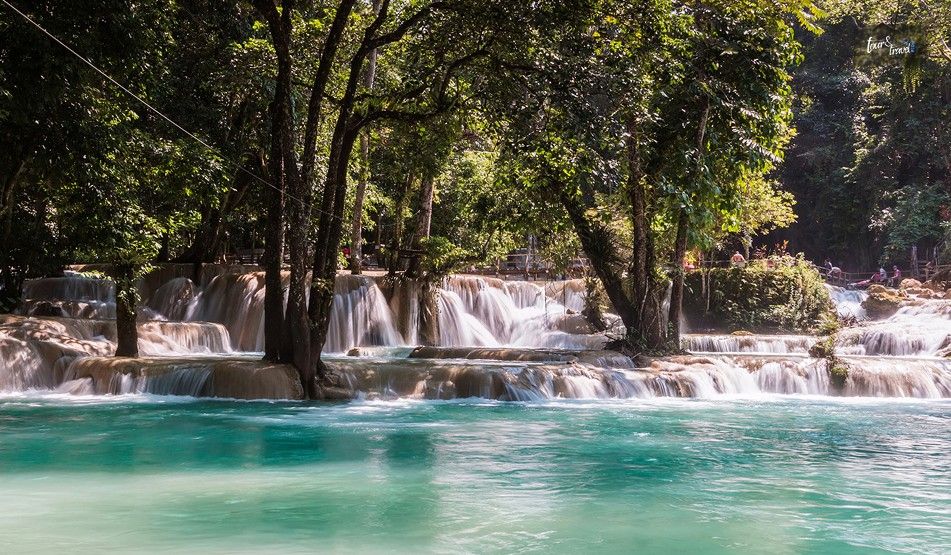
With an elephant park nearby, Tad Sae Waterfall is a quieter alternative to the Kuang Si Waterfall.
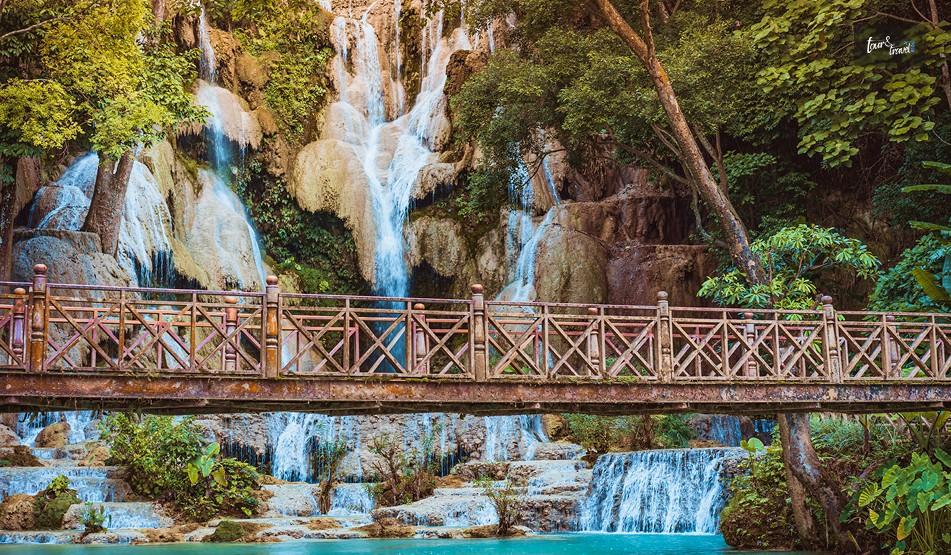
The decks crisscrossing the water make the visual all the more dramatic.
How To Visit Tad Sae Waterfall In Luang Prabang?
To visit the Tad Sae Waterfall, you have to take a short trip out of town.
Then, you need to take a trip down the river in a traditional long boat.
It is a 14 km trip from the town to the long boat launch area.
Then, the boat ride is 8 minutes long. The cost of the tuk-tuk ride is around 150.000 kip.
Furthermore, the boat ride will cost around 25,000-35,000.
What Is The Entry Fee And Hours Of Tad Sae Waterfall?
The ticket price for Tad Sael waterfall is 15,000 KIP for locals.
Tickets are free for children under 8 years old. For foreigners, the ticket price is 30000 KIP.
The waterfall remains open from 8 AM to 5 PM.
What Is The Best Time To Visit The Tad Sae Waterfall?
August to October is the best time to visit the Tad Sae waterfall.
From February to July, the waterfall remains almost dry.
What To Expect At Tad Sae Waterfall?
The boat ride across the Nam Khan River felt like time travel for me.
The Nam Khan River cuts through fog and jungle that smells like lemongrass and diesel.
I also saw kids paddling in plastic tubs, laughing at me while my longtail boat sputtered by.
Another fun thing I noticed is the monkeys near the top pools.
Locals believe that these monkeys were the spirits who guarded the waterfall.
Also, I saw some local visitors leaving a few grains of sticky rice on the rocks for good luck.
Tad Sae Waterfall is great for family picnics and boat rides.
3. Tad Thong Waterfall
The spring-fed Tad Thong waterfall emerged before my eyes after a 45-minute jungle walk.
The walk starts from a point around 6 km outside Luang Prabang.
Today, it stands in an almost abandoned condition, and the hiking trails and bridges are nonexistent in several places.
How To Visit Tad Thong Waterfall In Luang Prabang?
You can easily reach the hiking starting point by tuk-tuk, car, or bike.
The tuk-tuk price will be around 800,000 KIP.
What Is The Entry Fee And Hours Of Tad Thong Waterfall?
The Tad Thong Waterfall remains open from 8 AM to 5 PM.
The entry fee is around 20000 KIP per person.
What Is The Best Time To Visit The Tad Thong Waterfall?
From July to January, or the rainy season, is the best time to visit the Tad Thong Waterfall.
The waterfall remains full and active in these months, and you can photograph the most dramatic visuals.
What To Expect At Tad Thong Waterfall?
Tad Thong is not as massive as Tad Se, nor does it have the grandeur of the Kuang Si Waterfall.
However, visiting Tad Thong felt like finding a precious old book under a heap of dust.
Throughout the jungle walk, butterflies kept fluttering around, and the silence echoed through the rocks, making me feel a little cold after some time.
Lesser-Known Waterfalls: The Hidden Gems Of Luang Prabang
Located near the Green Jungle Park, Hoi Khua Waterfall is a powerful waterfall with a height of 100 meters.
Along with swimming in the crystal-clear pool formed by the waterfall, you can also relax inside the open-air huts at the Green Jungle Park.
Hoi Khua Waterfall also has an interesting lore associated with it.
It is said that locals once took shelter behind this waterfall to protect themselves from the approaching soldiers.
However, what happened to them is a mystery to date.
Are The Waterfalls In Luang Prabang Accessible? Summarizing The Accessibility Rating Of The Waterfalls
Have a look at the table below to see which waterfalls are accessible and which are not.
Waterfall
Wheelchair Access
Stairs
Suitable for Kids
Kuang Si
✅
Moderate
✅
Tad Sae
❌ (boat only)
Few
✅
Tad Thong
✅
Minimal
✅
Hoi Khua
✅
Flat terrain
✅
What Is The Cultural And Spiritual Significance Of The Waterfalls In Luang Prabang?
The waterfalls in Luang Prabang have many fascinating stories and secrets.
I am sharing a few as I heard from my local guide and a Kuang Si waterfall ranger.
1. The Golden Deer Legend Of Kuang Si Waterfalls
Kuang Si in the local language means (Kuang) Deer and Si (Dig).
Stories have it that a wise man chose this spot and started digging into the earth to summon water.
A golden deer made its home beneath the rock where the waterfalls flow now.
The story suggests a harmonious bond between humans and animals.
Furthermore, the golden deer is a common character in Southeast Asian spiritual and religious stories.
It has a vital role to play in the Ramayana, and we get the mention of the golden deer many times in the stories about the previous lives of Lord Buddha.
In addition, the story has given the waterfall a distinct cultural identity cherished by the locals.
So, today, the Kuang Si Waterfall is more than a waterfall with a grand physical beauty.
Mr. Boun, a Kuang Si Park Ranger, told me, “We protect the forest and teach kids about the golden deer legend. Kuang Si is sacred to us.”
2. Waterfalls In General Have A Connection With Buddhism
Waterfalls in Luang Prabang are mostly located near the temples.
The water from these falls is also used in cleansing rituals conducted by temples and monks.
Furthermore, offerings are made to these waterfalls during Pi Mai Lao or the Lao New Year.
It is an important center for the implementation and education of local conservation efforts.
The center also raises awareness about illegal wildlife trade.
Furthermore, many locals consider black bears sacred.
4. Butterfly Park Near Kuang Si
You cannot miss the Butterfly Park located within walking distance of the Kuang Si waterfall.
This park is peaceful, with colorful butterflies fluttering around.
Butterflies have deep symbolism in Buddhism.
These lively creatures teach us the art of letting go and how we can evolve and transform.
5. Caves Behind The Falls
The hidden caves behind the upper tier of the Kuang Si Waterfalls are a telltale sign of the rich geological history of the region.
These caves are missed by most visitors.
So, these are ideal for a short meditation period or spending some moments of introspection.
Cultural Etiquette Tips For Foreigners Visiting Luang Prabang Waterfalls
Some areas and pools near the waterfalls are considered sacred, and they are reserved for religious and spiritual activities.
Condé Nast Traveller says, “Luang Prabang’s waterfalls offer a spiritual escape into nature.”
So, swimming or access to those areas is not allowed.
So, you have to adhere to these norms.
There are many other dos and don’ts you need to follow while exploring the waterfalls of Luang Prabang.
Dos ✅
Don’ts ❌
• Dress Modestly.
• Wear a sarong or a towel over your swimsuit when walking around.
• Seek permission from the locals before photographing them.
• If a sign says “No Swimming” or “Do Not Enter,” respect it. These rules often protect sacred zones, wildlife, or fragile ecosystems.
• Locals value quiet and respectful behavior, especially around sacred sites.
• Ensure children don’t climb on statues, splash excessively, or disturb wildlife.
• If invited to join a blessing or offering ceremony, observe first, follow others’ lead, and avoid interrupting or asking too many questions during the ritual.
• Do not use shampoos or soaps while bathing in the natural pools.
• Touching the monks or offering them money directly.
• Playing loud music or expecting a party vibe at the waterfalls.
• Waterfalls are often used for meditation, rituals, and family gatherings.
• Littering is deeply frowned upon.
• Waterfalls are natural and spiritual spaces, and locals expect visitors to treat them with reverence.
Secrets And Lesser-Known Facts You Did Not Know About Luang Prabang Waterfalls
The turquoise color of Kuang Si’s pools comes from the calcium carbonate particles of the limestone rocks.
These particles reflect sunlight. Thus, create the iconic blue shade.
This turquoise blue color looks the most beautiful during the dry season.
Also, locals often bring picnic baskets and spend entire afternoons at waterfalls.
Vendors near Kuang Si sell grilled chicken, sticky rice, and jaew bong for this purpose.
It is a cultural experience, and the locals are welcoming enough to often ask the tourists to join them.
Food And Dining Near The Waterfalls In Luang Prabang
You can visit the following areas for food and dining near the waterfall areas.
Sibashree is a travel, culture, and leisure writer who has been writing since the age of 12 and professionally since 2014. With more than a decade of travel writing experience and journeys across India and several parts of the world, she brings a deeply personal and thoughtful perspective to her work. A student of English Literature and Mass Communication, Sibashree has always viewed travel as more than movement — for her, it has been a way of understanding people, cultures, and herself. Her passion for spiritual exploration has also led her to many unusual and meaningful destinations over the years. Outside of writing, Sibashree enjoys watching European cinema, reading about global politics, and reflecting on the stories hidden within everyday places.
Traveling long-term or moving abroad is an exciting adventure. But if your journey involves applying for visas, immigration permits, or residency, you’ll quickly discover that documentation is one of the biggest hurdles. Among the most common requirements are visa translation services and certified translations of official documents.
Whether you are applying for a student visa, a work permit, or reuniting with family overseas, presenting correctly translated documents can make or break your application. Authorities want clear, accurate, and verifiable translations, and failure to meet those standards often leads to delays or even rejections.
This guide explains everything you need to know about visa and immigration translations, including why certified translations are required, what documents usually need them, and how to avoid common pitfalls.
Why Visa Translations Are Crucial
When immigration officers review applications, they must be able to fully understand the documents submitted. If your birth certificate, marriage certificate, or bank statement is in another language, it must be translated into the official language of the country you are applying to.
Here’s why translations are necessary:
Legal clarity: Immigration authorities cannot legally assess documents they don’t understand.
Consistency: Translations ensure names, dates, and details match across multiple documents.
Compliance: Many countries require certified translations to confirm that translations are accurate and complete.
What Are Certified Translations?
Not all translations are equal. For immigration, you need certified translations.
A certified translation includes:
A complete and accurate translation of the original document.
A signed statement (certificate of accuracy) by the translator or translation company confirming the translation’s authenticity.
Contact details of the translation provider for verification if needed.
This certificate is essential because it gives immigration officers confidence that the document is trustworthy and complies with their standards.
Common Documents That Require Certified Translations
When applying for visas or residency, the following documents are often requested in translated form:
Birth certificates
Marriage or divorce certificates
Death certificates (in cases of dependent claims)
Passports and ID cards
Academic transcripts and diplomas
Criminal record checks
Medical records or vaccination certificates
Bank statements and tax returns
Employment contracts or pay slips
Before submitting your application, carefully check the requirements of the immigration authority you are applying to, as these can vary from country to country.
How to Handle Certified Translations for Visa Applications
If you are preparing for long-term travel or immigration, here’s how to approach the translation process:
Identify which documents need translationReview the checklist from the immigration authority. Don’t assume that only personal records need translation—financial and academic documents are often required too.
Choose a reliable certified translation providerLook for services that are recognized by immigration authorities. For example, Certling offers certified translations accepted by USCIS in the U.S., UKVI in the U.K., and IRCC in Canada.
Submit clear scans or photos of your documentsHigh-quality images prevent errors and ensure no details are missed in the translation.
Check turnaround timesVisa applications often have strict deadlines. Many providers offer standard and express delivery options—use express services if you’re short on time.
Verify acceptance guaranteesEnsure the translation provider guarantees compliance with immigration authorities. This gives peace of mind if your documents are ever questioned.
Innovation in Visa Translations
The translation industry has modernized significantly. Companies like Certling use AI and machine vision to analyze documents, count words instantly, and provide transparent per-word pricing. This innovation eliminates overcharging based on per-page pricing models and saves applicants money.
Other key advancements include:
Selective translation tools: Applicants can exclude unnecessary sections of documents, such as logos or stamps, lowering costs.
Secure file handling: Professional providers use encrypted systems and delete documents after delivery to protect your data.
Instant online quotes: You can now upload documents and get pricing within seconds, reducing guesswork.
FAQs on Visa & Certified Translations
Do I always need certified translations for visa applications? Yes, in most cases. Immigration authorities typically require certified translations of any foreign-language documents. Can I translate the documents myself? No. Self-translations are not accepted. Certified translations must come from a qualified translator or company. How long does the process take? This depends on the provider. Standard services may take a few days, while express options can deliver certified translations within 24 hours. What happens if immigration rejects my translation? Reputable companies often provide corrections or revisions free of charge if authorities raise issues. Certling, for example, includes this as part of their service. Are digital copies of certified translations acceptable? Yes, many immigration authorities now accept certified translations in PDF form. However, some may request physical copies, so confirm with your local authority.
The Role of Certified Translation Services in Your Journey
Securing a visa or residency isn’t just about submitting the right forms. It’s about presenting complete, clear, and compliant documentation. Certified translation is a critical part of this process.
Providers like Certling specialize in certified translations for immigration and visa applications. They offer word-based pricing, fast turnaround, and acceptance guarantees for major authorities across the U.S., U.K., Ireland, and Canada. While your focus may be on the exciting parts of long-term travel, taking care of certified translations early ensures your journey won’t be delayed by paperwork.
Final Thoughts
Navigating the visa application process can be overwhelming, especially when traveling long-term or moving abroad. Certified translations are not just a formality—they are a legal requirement that can significantly affect your success. By understanding what certified translations are, why they matter, and how to get them done correctly, you’ll be better prepared to handle the complexities of immigration paperwork..
The food scenario in New Orleans is vibrant and from Paris to Congo, the influence on New Orleans food is eclectic.
Further, New Orleans offers the best southern hospitality. Moreover, Louisiana's tourism and economy depend majorly on the hotel and hospitality industry.
So, the city has many luxurious hotels and accommodations for the tourists.
Here, I have curated the most popular hotels which are ideal for family vacations.
Top Luxury New Orleans Family Hotels | A Brief Guide
The hospitality industry of New Orleans had some of the biggest highlights in 2024. Moreover, it hosted the Pastry World Cup and Bocuse d’Or for the first time in New Orleans in 2024.
Moreover, the New Orleans & Company hosted the continental selections of North and South America.
So, this time, you visit New Orleans, make it a point to stay at any of these New Orleans family hotels and indulge in the most luxurious experience. The names enlisted are approved by Yelp rating and recommendations of the local experts.
1. The Celestine
Address: 727 Toulouse St, New Orleans, LA 70130, United States
Contact No: +1 504-332-2200
You ask me about the New Orleans family hotels and I recommend The Celestine. It has been hailed as one of "The Best New Hotels in the World" in Condé Nast Travelers' 2024 Hot List.
Today, The Celestine has ten European-style luxury rooms, and with eclectic influences, the overall interior of the hotel will take you back to the 1950s.
2. Hyatt Centric French Quarter
https://www.instagram.com/p/C7XEkakMwUb/?img_index=3
Address: 800 Iberville St, New Orleans, LA 70112
Contact No: +1 504-586-0800
As one of the topmost New orleans family hotels, Hyatt Centric French Quarter offers you the ultimate luxury and the chance to soak in the vibrancy of French Quarters.
The hotel has classic architecture and its location is convenient for exploring the city hotspots like Art District, Garden District, jazz clubs, and historical monuments.
3. Hotel Saint Vincent
https://www.instagram.com/p/DAT2GTVJY9b/?img_index=4
Address: 1507 Magazine St, New Orleans, LA 70130
Contact Number: +1 504-350-2450
Hotel Saint Vincent, as its name suggests, stands with historic architecture. However, it has all the modern amenities and luxurious experiences like the multiple dining venues and the heated pool.
Further, you can enjoy your favorite drink at San Lorenzo and Paradise Lounge of Hotel Saint Vincent. So, you can have the best Italian cuisine with a New Orleans twist at the San Lorenzo Restaurant.
4. The Roosevelt
https://www.instagram.com/p/Cx8WU9LLRVc/
Address: 130 Roosevelt Way, New Orleans, LA 70112
Contact No: (504) 648-1200
If you want to soak in the vibrance of Jackson Square in New Orleans, you must plan a stay at The Roosevelt. Moreover, it is just 15 minutes away from Jackson Square, and it epitomizes timeless elegance.
In addition, it is close to the Louisiana Superdome, the French Quarter, and the Mississippi River Cruises.
5. Hotel Peter & Paul
https://www.instagram.com/p/C6EPtzgOSRX/?img_index=3
Address: 2317 Burgundy St, New Orleans, LA 70117
Contact No: +1 504-356-5200
Hotel Peter & Paul, near the French Market and the Historic Voodoo Museum, is a luxury family hotel with 71 guest rooms.
If you are especially planning a trip with your pets, Hotel Peter & Paul will be your go-to destination. Here, the pet fee is $25 per accommodation per stay. However, the fees for service animals are exempted.
6. Drury Plaza Hotel New Orleans
https://www.instagram.com/p/DBM1MobN-KE/?hl=en&img_index=3
Address: 820 Poydras St, New Orleans, LA 70112
Contact Number: (504) 529-7800
The Cumberland Phone Building was transformed into the Drury Plaza Hotel, and today, it is one of the best luxury New Orleans family hotels. Moreover, all the rooms in the hotel have amenities like a microwave, free Wi-Fi, a hair dryer, an ironing board, etc.
Further, you cannot miss the free 5:30 Kickback® and breakfast at Drury Plaza Hotel New Orleans.
7. Inn At The Old Jail
https://www.instagram.com/p/Ckdy0OCrPUm/?hl=en
Address: 2552 St Philip St, New Orleans, LA
Contact No: (504) 301-5743
So, are you looking for New Orleans family hotels with a touch of history? You must plan a stay at the Inn At The Old Jail.
This luxury hotel was formerly the NOPD police jail & patrol station. Then, it became a library and community center after Hurricane Katrina turned it into ruins.
Finally, it was restored and transformed into a historic boutique hotel in New Orleans.
8. Grenoble House
Address: 323 Dauphine St New Orleans, LA
Contact Number: (504) 325-2271
“The Charm of the Past with the conveniences of today.” This is what defines Grenoble House in New Orleans. Moreover, this luxury accommodation gets its name from the French City where the Dauphine family lived.
Furthermore, this hotel exudes quintessential New Orleans charm in its architecture.
9. Pelham Hotel
https://www.instagram.com/p/DBPAqwdvzsK/
Address: 444 Common St, New Orleans, LA
Contact: (504) 522-4444
A stone’s throw away from the French Quarter district and Harrah’s Casino, Pelham Hotel exudes quintessential European charm in its architecture.
Further, the Ruby Slipper restaurant of the hotel offers you the best breakfast and dining experiences in a casual ambiance.
10. The Haunted Hotel
Address: 623 Ursulines Avenue, New Orleans
Contact: (504) 373-9319
Unless you have toddlers with you, and if you are a family that loves to watch spooky movies together, The Haunted Hotel will be your go-to place.
So, the chances of eerie encounters at this hotel are high, and it has been associated with high-profile murder cases for centuries. After your booking confirmation at the Haunted Hotel, you will also receive the details of Ghost City Tour tickets via email.
11. Four Seasons Hotel New Orleans
Address: 2 Canal Street, New Orleans, LA
Contact: (504) 434-5100
World-class luxury meets quintessential southern hospitality at Four Seasons Hotel New Orleans. Further, located on Canal Street, Four Seasons Hotel New Orleans allows you to experience the palpable energy of the city life of New Orleans.
Further, the Heritage Icon Hotel looks over the Mississippi River. So, you can enjoy the best views of the river. Moreover, you can indulge in experiences like snorkeling at Audubon Aquarium and attending a Preservation Hall Jazz Band concert.
13. Lamothe House Hotel
Address: 621 Esplanade Ave New Orleans, LA
Contact: (504) 947-1161
Lamothe House Hotel infuses luxury with intimate experiences in the beautiful Faubourg Neighborhood. Moreover, the fact that it’s a boutique hotel ensures a more personalized experience here.
The luxurious antique suites in the hotel will cost you between $150-180. You can also opt for the luxury deluxe rooms at reasonable rates.
Overall, it is the opposite experience to the luxury hotel experiences at French Quarters.
Also read
Top 10 Most Popular Paraguay Food That You Must Try.
Top 13+ Famous Wonders Of India That You Must Visit.
Top Tips For Motorbike Rental In Phuket – A Guide To Exploring The Island On Two Wheels.
Along with the cultural richness of Tucumán, what hooked me was the community bonding and development.
For the longest time, grape growing has been a part of local life. Now, in 2016, the Bodega Los Amaichas built the Amaicha del Valle community to take the local tradition and use it for the benefit of local people.
It is the first indigenous community-owned winery in South America.
Furthermore, Mendoza may get all the spotlight as the home of world-class Malbecs. But for travelers like me, who want a more rugged and authentic experience, Tucuman is the ultimate destination in Northern Argentina.
Also, the wine tour in Tucuman is almost like a time capsule. The viticulture here is defined by family legacies, indigenous roots, and vineyards that touch the clouds.
In this Tucumán wine tour guide, I will talk about why Tucumán is an alternative to Mendoza, the route, the top wineries, and the specialty of local wines.
For more on this beautiful province in Northern Argentina, you can check out my Tucumán Argentina itinerary.
Why Is Tucumán The "Untouched" Alternative To Mendoza?
The flat plains of Mendoza are ideal for massive production. However, the vineyards of Tucumán are in the narrow folds of the Calchaquí Valley.
So, the experience in Tucumán is more like a boutique.
Furthermore, there are very few crowds in Tucumán, and the terroir is not just about the soil. Here, people celebrate a 10,000-year-old connection to the land.
As Visit Argentina says, “The dry climate, the wide temperature range, the gentle winds, and sunshine 350 days a year create the characteristics of Tucumán wine: intense colors, simple and spicy aromas, and ripe, sweet, and fruity flavors.”
The Concept: "Vinos De Altura"
Wine is a high-altitude sport in Tucumán. Grapes are grown under extreme conditions at an altitude of 2000 to 3000 meters.
Also, the struggle is here with intense UV radiation and a dramatic jump in temperature between sun-scorched days and freezing nights.
As a result, the grapes here have thicker skins to protect themselves. The thicker skin further leads to intense tannins and deeper colors. In addition, the aromatic profile here is more concentrated than in the lowlands.
The Route: From Jungle To Vineyards (Route 307)
The drive to the wine country of Tucumán is one of the most spectacular road trips in South America.
The journey from San Miguel to Amaicha del Valle starts in the subtropical and humid rainforest of the Yungas.
Then, you will climb Route 307 to witness a radical transformation of the landscape. Your eyes will settle down with the lush ferns and moss-covered trees of the Quebrada de Los Sosa.
Wait for 2 hours, and the Calchaquí Valley will appear with an arid landscape and cactus.
Then, you will cross the Abra del Infiernillo at an elevation of 3000 meters before you descend to the Amaicha del Valle wineries.
Visit Argentina promotes the "Ruta del Vino" as a cultural corridor, linking the wine not just to gastronomy, but to the Pachamama (Mother Earth) festivities in February.
Map Of The Ruta Del Vino Tucumán (Ruta 40 Connection)
Technically, Tafí del Valle is the beginning point of the Tucumán Wine Route. Then, it continues to the Amaicha del Valle and Colalao del Valle.
Finally, there is a link with Ruta 40, and then it advances to the ruins of Quilmes and the border of Salta.
What Are The Top Wineries To Visit In Tucumán?
The top wineries of Tucumán offer a diverse experience. While Bodega Comunitaria Los Amaichas offers an authentic local experience, Finca Albarossa is more about a boutique feel.
1. The Indigenous Icon: Bodega Comunitaria Los Amaichas
This is the only winery in Argentina and one of the few in the world that is owned and operated by an indigenous community.
This winery has a cactus wood and stone architecture. The Amaicha del Valle community governs it, and every custom here respects the Mother Earth or Pachamama.
I have seen people offering wine to Mother Earth before drinking.
Furthermore, the Sumak Kawsay Malbec, meaning the good living, is the best wine to taste here. It offers the most authentic wine experience. The wine gere is robust, unfiltered, and has a deep, earthy taste.
2. The Heritage Player: Bodega Chico Zossi
This winery is family-run and located in Colalao del Valle, and it has been operating since 1900.
As you walk through Chico Zossi, you will feel like you are at a family home. The production level is small and artisanal.
Furthermore, the wine-making technique here has been passed down through four generations of the Zossi family.
3. The Modern Estate: Las Arcas De Tolombón
Las Arcas De Tolombón is the most awarded winery in the province. It has a Siete Vacas or Seven Cows label.
There is a local legend behind the name. It is about the seven cows that would appear in the desert in prosperous times.
The wine you will get here is a standout. You will love the floral and crisp flavor of it, along with the sweet perfume.
4. The Boutique Stop: Finca Albarossa
Finca Albarossa exudes sheer Italian elegance with a touch of Andean ruggedness. It is a boutique winery and hotel. So, it is an excellent experience to enjoy a glass of Malbec while watching the sunrise.
Thus, it completely justifies its name, Finca Albarossa, where Albarossa means the “Red Dawn.”
Understanding Tucumán Wines: What To Drink?
Amanda Barnes of the South America Wine Guide often highlights that the Calchaquí Valley doesn't stop at the Salta border.
She praises Tucumán for its "extreme terroir" and the preservation of the Criolla grape varieties.
Tucumán Wines are different with a diverse flavor. From the signature purple to white wines, here are the varieties you can try.
1. Torrontés
If you want the quintessential wine experience of the north, you can try Torrontés. I would rather call it the flagship white of the North.
It stands out with a refreshing aroma of peach and jasmine. However, the palette of this wine is dry and refreshing.
Tim Atkin, the British Master of Wines, regularly scores Northern Argentine wines highly, noting that the Torrontés from this region is the most aromatic white wine in the world.
Even if you are a red wine drinker, you must try the Torrontés here. It is the only grape variety native to Argentina, and the Tucumán expression is floral and unique.
2. High-Altitude Malbec
I was looking for an alternative to the jammy Mendoza Malbecs. The high-altitude malbec, standing on the opposite spectrum of the flavor profile, comes with a spicy and structured flavor.
This wine comes from the grapes with Soun-toughened skins. So, these have a signature dark purple hue.
3. Vino Patero
Vino Patero is an experience. It has an intense, sweet, and fruity flavor.
This boutique wine was made traditionally by pressing the grapes by foot. The “Patero” part in Vino Patero comes from " pata " or foot.
This wine is artisanal, and it is unfiltered. Vino Patero is a frequently served beverage at the local festivals, and you will have it along with empanadas.
Things To Remember For Planning Your Tucumán Wine Tour
Best Time to Visit • February/March - Harvest Season, and for the Vendimia Festivities• August - Pachamama Festival Mode of Transport• Rental Car
Vendimia festivities are a celebration of the grape harvest. The Pachamama Festival, on the other hand, is a sacred week-long celebration to sink into the local culture.
You will not get any Uber services here. Buses are available, but they do not take you to the remote areas.
Where To Stay On The Wine Route In Tucumán?
Do you want to sleep in a vineyard? Estancia Río de Arena on Ruta 40 is the perfect place, exuding a rustic "hacienda" feel.
Get out of our room, and within a minute, you will walk into the tasting room.
If you need a budget option, look for Hospedajes in Amaicha del Valle. These locally run facilities are clean and authentic, and they will even guide you on which Vino Patero is the best in town.
Expert Tips On The Best Tucumán Wine Tour Guide
The Sacred City of Quilmes is just 15 minutes away from the wineries. Also, the early mornings are the ideal time to explore the ruins.
Do you want more such insights about exploring the wineries of Tucumán? Check out the following points.
1. Respect The Siesta
Amaicha and Colalao del Valle turn into ghost towns between 1 PM and 5 PM. Most wineries shut their door during these hours.
So, schedule your trip at 10 AM or after 5:30 PM.
2. Designated Driver Is Essential, And Check The Fuel
Route 40 has narrow roads and even gravel. The route also often has goats/llamas and other stray animals. So, professional expertise and familiarity with local road conditions are important.
Fill your tank in Tafí del Valle. There are long stretches on Route 40 without reliable gas stations between Amaicha and Cafayate.
3. Book "Los Amaichas" In Advance
The local people run "Los Amaichas. These people also work in the field. So, you must keep them informed about your arrival via WhatsApp so that a guide is available to open the cellar for you.
4. Cash Is King
Smaller wineries rarely accept credit cards, and if you want to buy bottles from them, you will need to pay them in cash.
Also, the ATMs in Amaicha often run out of cash. So, you have to bring a stack of Pesos from the city.
5. Try The Mistela
Along with the signature Tucuman wine, you can also try Mistela. It is a fortified wine with a very sweet taste.
It is a cultural staple. So, you have to sip it slowly and savor its strong taste.
6. Get Enough Sun Protection
The wineries are at a height of more than 2000 meters. So, the UV index is high, and within 10-15 minutes, you can get sunburned.
So, wear a hat and sunscreen if you are doing the wine tasting outdoors.
7. Ask For The "Reserva"
In small boutique wineries like Chico Zossi, the "Reserva" bottles are often only $2-$3 more than the table wine but are aged significantly better.
Tucumán Wine Tour Guide: Frequently Asked Questions (FAQs)
Here are the frequently asked questions and answers about the Tucumán wine tour guide.
1. Can I Visit Wineries Without A Tour? Yes, you can go on a self-drive tour on Route 40 and explore the wineries. However, you will have to book an appointment via WhatsApp. Booking is crucial as these wineries are small, family-run operations. 2. What Is The Best Winery For Lunch? Bodega Río de Arena near the Quilmes Ruins is the best winery for lunch. It has a hotel and restaurant on-site. You can have excellent llama meat and empanadas there. 3. How Far Is The Wine Region From Tucumán City? The wineries are around a 3.5 to 4-hour drive from the city.On the route from the city to the wineries, you have to cross a mountain range. So, it is not your usual day trip in Argentina. It is best to plan an overnight stay in Amaicha or Tafí del Valle. 4. Is It Safe To Drive Route 307? Route 307 is a paved and scenic route. However, it is a mountain road and has many curves. Furthermore, the road is often misty. So, you must avoid driving at night. 5. Are The Wine Tours In English? Yes, you can attend wine tours in English in larger wineries like Las Arcas de Tolombón. However, if you want a tour of the smaller family wineries or the community wineries, the tours will be mostly in Spanish. 6. Can I Bring Kids For The Wine Tours In Tucuman? Yes, you can bring kids for the wine tours in Tucuman. This is where the wineries of Tucuman are different from the wine estates in Mendoza. The Tucumán wineries are more like farms, and they are very family-friendly. In fact, Río de Arena even has a petting zoo with llamas. 7. When Is The Harvest Season In Tucuman? Late February to March is the harvest season in Tucuman. However, it is the busiest time in the Tucuman wineries. So, you will have to book the facilities in advance.On the other hand, August is the month of the sacred Pachamama Festival. 8. Why Is The Community Winery Famous? Bodega Los Amaichas is the first winery in Argentina and the third winery in the world owned entirely by an indigenous community. The Bodega Los Amaichas tour reflects the Diaguita worldview of "Sumak Kawsay" (Good Living).
Read Also:
The Best Places To See Northern Lights In The USA: When And Where To Watch Aurora Borealis
Jaffna Travel Itinerary For 5 Days: What Are The Places To Visit And Local Transport
What Are The Best Places To Visit In December In The USA? Vote For Your Favorite





 Related