


Top Amenities at a Wellness Retreat

Feels like life’s stuck on fast-forward lately, right? Always rushing, constant pings, and that grind culture whispering, “do more, do more.” 

No wonder so many of us end up with gut issues, burnout, or that weird foggy feeling you can’t shake. And vacations? Ha. Half the time, you feel guilty even thinking about it. 

A Sunday nap becomes your big reset.

That’s why wellness retreats are blowing up. Honestly, they’re not just some fancy getaway anymore—they’re kind of survival mode for adults. 

These spots blend old-school healing tricks with real science, helping you slow down and feel human again. So, what do you actually get there? Let’s talk.

In this blog, I am going to delve into the different aspects of the wellness amenities found in destination retreats by exploring their benefits and the top ones. So, keep reading to know more!

What Is A Wellness Retreat?

After a rigorous working week, you feel stressed and need some time off to rejuvenate your energy before going back to work. That’s where wellness retreats and resorts come to play.

Unlike the regular destinations, wellness resorts provide certain facilities and amenities to help improve your health and mood. So, choosing a good wellness retreat can give you a space to enjoy your vacation fully.

Moreover, these places offer various kinds of health sanctuaries– spa, therapy, yoga, and more. So, you get to take care of your mental and spiritual wellness while travelling to a scenic place.

Why Should You Choose A Wellness Retreat?

Unlike the simple trips, going to a wellness retreat can actually be quite beneficial. Some of its benefits include:

  1. Improving Personal Health: Firstly, these retreats provide the perfect sanctuary to recover your health. So, by offering various healthy activities and healing processes, they improve your personal health, allowing you to revive your strength.
  2. Connecting To Nature: Moreover, the retreats are located in scenically beautiful places. So, you get to connect with nature.

Additionally, these retreats are designed with eco-friendly architecture and create spaces for outdoor activities. So, you get to be surrounded by nature, which helps in healing your emotional and mental stress.

  1. Exceptional Spa Treatments: In addition to this, these retreats come with many kinds of Spa treatments that address different needs of your personal health. So, you can choose from the wide variety and get the treatment to feel rejuvenated.
  2. Providing Healthy Meals: Moreover, the meals offered at these wellness retreats are made with health considerations. So, you get healthy and nutritious meal options, helping you to get a tailored menu for a healthy lifestyle.
  3. Enabling Reset And Refreshing: Along with this, the wellness amenities offered in these destination retreats help in refreshing and resetting your overall health. So, naturally, they become the all-in-one solution for stressful health issues.

What Are The Top Wellness Amenities Found In Destination Retreats?

Given that wellness retreats provide the best space to enjoy your vacation, along with improving your health, they are becoming quite popular. Moreover, most of these destination retreats offer countless wellness amenities like:

1. Nutritious Meals That Actually Taste Good

Here’s a truth you can’t escape—your gut runs the whole show. Mood, focus, energy, all of it ties back to what’s happening inside. And fixing that? Starts with food. Not packets and takeout. Actual food.

If you land at a gut health retreat in Thailand, you’re in for a treat. Think fresh, local stuff—meals that heal and taste insane at the same time. 

Anti-inflammatory dishes, organic produce, and menus built just for you. And the best part? Some spots even teach you how to cook this stuff, so you don’t end up back home eating toast for dinner.

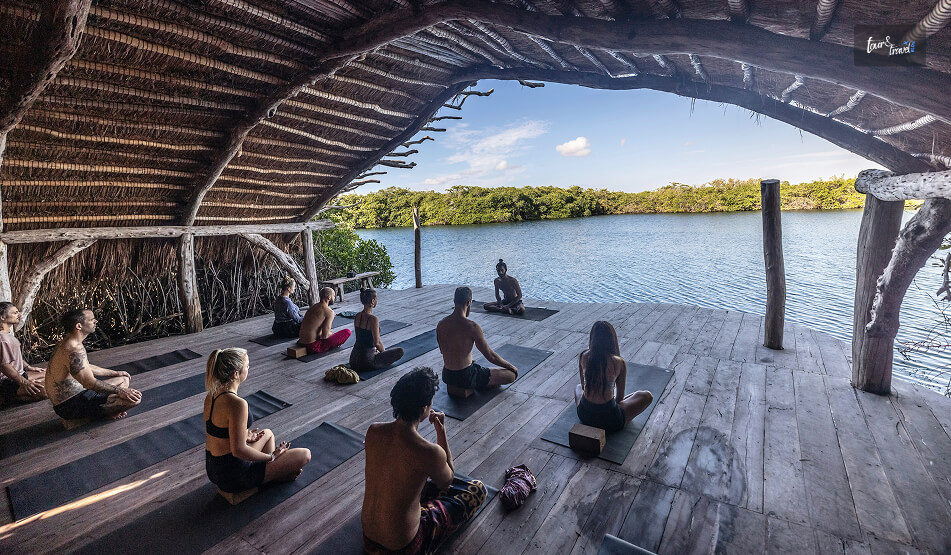
2. Yoga and Movement To Keep Things Flowing

Food helps, but stress? That’s the other beast. Emotions, tension—they wreck your system. So these retreats sneak in daily movement that feels… gentle. Not like punishment at the gym.

You’ll see slow yoga flows, deep breathing sessions, maybe a meditative walk where you can actually hear your own thoughts (wild, I know). 

Sometimes it’s just stretching under the trees. It’s all about calming that buzzing nervous system and, bonus, boosting blood flow. Your body will thank you later.

3. Spa And Relaxation (Because Who Doesn’t Need That?)

Look, sometimes you just want to be spoiled. And retreats nail that part. The spa vibes? Unreal.

We’re talking massages that melt you into the table, saunas that sweat out all the stress, and quiet corners where no one’s asking you for anything

Add soft lighting, comfy rooms, and zero notifications, it’s peace you didn’t know you needed.

4. Herbal Therapies And Supplements

Herbs have been doing their thing for centuries, and retreats still swear by them. Why? Because they work.

You’ll probably sip teas packed with turmeric or ginger for digestion, maybe Ayurvedic blends to keep things… moving smoothly. Marshmallow root shows up too, it’s like a hug for your gut lining. 

Some places hand you supplements as part of the plan, and yep, they’ve got little shops so you can stock up before you head out.

5. Educational Workshops To Take Home With You

The retreat ends but your life doesn’t, right? That’s why the good ones make sure you leave with actual skills.

Cooking classes that don’t feel like a lecture. Nutrition basics you can use without Googling. Stress hacks that work when you’re losing it on a Monday morning. 

And group chats because sometimes hearing “me too” is half the therapy.

Wellness Amenities In Retreats: A Serene Environment That Heals By Itself

And honestly? Half the magic is just the setting. When’s the last time you woke up without traffic in the background or notifications buzzing at 6 a.m.?

Moreover, these wellness amenities found in the destination retreats help in rejuvenating your energy and improving your health. So, whenever you feel drained, just pack your bags and enjoy spending a day in these retreats.

Here, mornings start with birds. Maybe a warm breeze sneaks in while you sip tea. Nights? Nothing but nature humming in the background. Your nervous system will practically send you a thank-you note.

READ MORE:

Share on Social Media

Sibashree is a travel, culture, and leisure writer who has been writing since the age of 12 and professionally since 2014. With more than a decade of travel writing experience and journeys across India and several parts of the world, she brings a deeply personal and thoughtful perspective to her work. A student of English Literature and Mass Communication, Sibashree has always viewed travel as more than movement — for her, it has been a way of understanding people, cultures, and herself. Her passion for spiritual exploration has also led her to many unusual and meaningful destinations over the years. Outside of writing, Sibashree enjoys watching European cinema, reading about global politics, and reflecting on the stories hidden within everyday places.

Leave a Reply

Your email address will not be published. Required fields are marked *

title-img Related

READ MORE Screen-Printed T-Shirts

Why Screen-Printed T-Shirts For Travel Are Style Souvenirs?

BY  Sibashree Jul 31, 2025

I truly believe that there's something holy about travel. Something beyond sightseeing and geotags.  Have you wondered what it can be? Well, it's the stories. Additionally, it's also the sensations, the little moments that sear themselves into memory.  Each trip leaves footprints on dusty roads or sandy beaches. However, travelers are ever more seeking ways to take these moments with them beyond postcards and selfies. Therefore, the screen-printed t-shirts for travel are one such way. Moreover, it's a very fun way to remind ourselves what a particular trip resembled.  Travel Is Temporary, But Screen-Printed T-shirts For Travel Is A Souvenir As we think about souvenirs, we tend to think about magnets, key rings, or wooden dolls bought at jam-packed street stalls.  They're meaningful, maybe—but they don't do anything. On the other hand, a well-screen-printed t-shirt, designed with the thought of a trip in mind, lasts.  It's a conversation piece, a garment worn with the memory of where you've been, and sometimes even where you're going. Think about it: your Pacific Coast Highway road trip. The winding cliffs, sun-baked vistas, the salt on your lips.  Now imagine that etched onto cloth—splashed waves crashing beneath harsh lettering of "PCH '24 – Road Born & Shore Bound." It's no longer just a shirt. It's an heirloom. The Transition From Branded To Belonging In the past, travel shirts were all about commerce—"I ❤️ NY" or "Been There, Done That" in Comic Sans. Nowadays, traveler craves more reflective design.  They're seeking shirts that convey personal experience over mass production. Screen-printed t-shirts give them that perfect balance, where creativity and originality meet. Small tour groups, travel writers, and even lone backpackers are now collaborating with neighborhood screen printers or bespoke online websites to create limited edition travel tees.  A team that summited Kilimanjaro as a team might get shirts printed, along with basic drawings of the summit route.  A pair that asked each other to marry under the Northern Lights might capture that moment—auroras swirling above silhouettes—on cloth. These shirts don't merely remember. They bond. They proclaim: "I was there, with these folks, experiencing something unforgettable." Why Are Screen-printed T-shirts For Travel  Gaining Hype? Well, travelling is fun. But you know what’s more fun? Something that reminds you of the good times.  The Screen-printed t-shirts for travel are gaining hype for this one, and many more reasons. Let’s look at what makes them so special: 1. Group Travel's Secret Weapon: Custom Tees Structured vacations—student trips, yoga retreats, or volunteer expeditions—are discovering that custom Screen-printed t-shirts for travel foster instant esprit de corps. Before one suitcase is opened or a plane touches down, distributing coordinating tees with a common logo or joke creates a tribe vibe.  Moreover, it's team-building in cotton form. And while traveling, they behave like cushy, visual beacons—you see your people readily at airports, festivals, and busy bazaars. After the trip's done, you don’t banish those shirts to the back of a drawer. They're worn on lazy Sunday afternoons, gym days, and coffee stops—initiating spontaneous conversations and wistfulness wherever they appear. 2. Printing Stories, Not Just Graphics It is what makes screen printing magical: intentionality. The manufacturers don't produce these t-shirts in large quantities.  Rather, they make them with care, each color layer a piece of the journey.  You choose the shade that reflected the desert at sunset. The font that embodies the gritty, strong spirit of Berlin. The words of a local guide who said something wise that stuck with you. And there's the fun of community collaboration. The majority of travelers today seek out screen print shops in destinations they visit. Therefore, this is creating wearable memorabilia there, on location. Imagine visiting a co-op in Guatemala or an art district in Lisbon, and creating your shirt with local artists. It's sustainable, it's creative, and it's for the local economy—a far cry from plastic Eiffel Tower souvenir shops. 3. The Conscious Travel Movement & Ethical Fashion Another reason screen-printed tees are picking up with seasoned travelers? They neatly slot into the rules of conscious travel. Light packing, capsule wardrobe, ethical fashion design—all the way to purposeful shirts that do the jpb.  The screen-printed t-shirts for travel, made from the spirit of a journey, are not only a fashion—it's function, story, identity, and even activism. Want to raise the issue of deforestation after visiting the Amazon? Design a tee that ties that story together.  Want to celebrate the kindness of strangers in Hanoi? Depict it. The t-shirt is a means to reflection and storytelling well beyond the moment when you toss the boarding pass away.  From Solo Wanderers To Travel Brands: Everyone's Printing Meaning Even larger travel businesses and celebrities are jumping on the bandwagon. They're releasing merch based on places—capsule collections that visually reflect a city's vibe.  Hand-drawn ramen bowls on a Tokyo tee, or split color gradations of Iceland's fire and ice duality. For solo travelers, Screen-printed tees can be an expression and social connection. Wearing a tee that hints at your most recent trek or unorthodox destination invites questions and conversation.  It's a way of saying hello to fellow travelers en route, so to speak, without saying: "I travel deeply. I collect moments." With Screen-printed T-shirts For Travel, Travel Isn't Just Seen—It's Worn I think all the travellers will agree with me, travelling changes us as people. At the heart of travel is the desire to have an experience intensely and remember it vividly.  In a time of digital photographs and ephemeral Instagram posts, Screen-printed t-shirts for travel offer something solid, lasting, and emotionally resonant. They're not what you wear on your holiday—they are the holiday. Each stain, each wrinkle, each worn-out print tells a story.  And the best part? You don't have to hang it on the wall or store it in the cloud. You wear it on your back, across borders, across generations.So the next time you travel, leave space for something unexpected: an experience you've not yet had. You are still waiting to read it, wear it, and remember it.

READ MORE

Death Valley National Park: A Hiking Paradise For Beginners And Seasoned Trekkers

BY  Sibashree Aug 20, 2024

The Death Valley National Park has geological bounties that will make you feel more than alive. The “hottest, driest, and lowest” national park enjoys the juxtaposition of Badwater, the lowest elevation in North America, Eureka Dunes, the highest sand dunes in North America, and snow-capped Telescope Peak.  You can easily call the landscape of the national park dramatic, or an explorer can find it to be the most amazing outdoor playground with volcanic rocks, mountains, deep canyons, the highest sand dunes, and old rivers.  From the humming songs of the sand dunes to the soothing sound of the flowing stream, this place is music to the ears of the visitors.  No wonder that despite its extreme weather conditions, the park had an impressive 1,099,632 visitors in 2023. (Source) Death Valley Hiking Trails (Easy, Moderate, And Difficult) That Should Be On Your Bucket List  The hiking trails here come with varying difficulty levels. Here, I have discussed some of the most popular and interesting hiking trails with easy, moderate, and strenuous difficulty levels in three different sections.  Best Hiking Trails In Death Valley National Park For Beginners (Easy) Death Valley is not probably the first place you will think of as someone new to trekking or hiking. However, this national park has some trails suitable for beginners. Mesquite Flat Sand Dunes The Mesquite flat sand dunes, with a 2.3-mile distance, are the best creations of sand and wind. The enclosure of mountains works as a barrier to protect the sand from getting blown away.  The sand here creates ripples and dunes, and the area gets its name from mesquite trees found in abundance here. The Timbisha Shoshone tribe here makes flour from the mesquite tree bean pods. This variety of flour is sold in many specialty stores these days.  Mesquite Flat Sand Dunes is also home to nocturnal kangaroo rats and rattlesnakes. Badwater Salt Flat A vast salt flat covering around 200 square miles, it is the most surreal place in Death Valley. The lowest elevation point in North America, Badwater Salt Flat, was a large inland Lake Manly in ancient times.  The landscape looks interesting with geometric salt polygons. You can take an easy walk through the stretch and have a look at the imposing Black Mountains and Telescope Peak.  Moderate Death Valley Hiking Trails  Most hiking trails in Death Valley are moderate in their difficulty level. Here, I will give a brief overview of the most talked-about ones in the park.  Darwin Falls Hike Darwin Falls got its name from Erasmus Darwin French, an army physician. It is one of the very few perennial waterfalls in this national park.  The waterfall runs into a shallow pool with green vegetation around it. So, as you hike through this 2-mile trail, you will find many ferns, trees, aquatic plants, and amphibians.  Ubehebe Crater Rim Hike  View this post on Instagram A post shared by Grant Brittain (@jgrantbrittain) This hiking trail is around 1 and a half miles long. The trail looks easy. However, you experience difficulty when you try to get back to the Caldera Rim. Further, from the very beginning of this hike, you will experience unevenness in the elevation.  As you take the black trail surrounded by dark hills, don’t forget to catch a glimpse of the green vegetation, which is very rare in the national park. Here, you will also love the view of streaks of dark orange in the formations, along with loose white sand.  You can even hike deep down the crater filled with pyroclastic deposits.  Fall Canyon Death Valley This 3.5-hour hiking route comes with moderate to strenuous difficulty levels. Occasional flash floods form the narrow gorge and steep sides here.  The cave-like twisted passageways here look most amazing, and a touch of blue on the smooth granite walls adds a mystic charm to the place. The Badlands/Zabriskie Point Loop View this post on Instagram A post shared by Death Valley National Park (@deathvalleynps) The Badlands, the lowest elevation point in North America, is nature’s display at its best. Hiking to the Badlands includes hiking to Zabriskie Point, the most picturesque location in the park. It is also a favorite sunset and sunrise point, and you will love clicking photographs here.  After watching the Sunrise at Zabriskie Point, you can continue hiking through the Badlands loop, which is made of sediments. Walk for 2.7 miles to reach one of the most important geological terrains of North America. The terrain, with a rugged beauty, used to be part of an ancient lakebed.  Difficult Death Valley Hiking Trails  This national park has many challenging hiking trails, and exploring some of them demands technical skills. Here are the top three most difficult hiking trails to conquer in this park.  Telescope Peak Telescope Peak, with an elevation gain of 3,000 ft, is a round trip of around 7-8 hours. You can start trekking this route from the “Mahogany Flat Campground at the end of Upper Wildrose.”  This snow-capped mountain is a hikers’ paradise in summer. As you hike through the slopes and the forested areas and reach the peak, you will have the laurel of climbing the highest peak in the national park.  Further, the “ancient bristlecone pines,” wildflowers, and the panoramic vista of the valley from the top will take all your fatigue away.  Panamint Dunes Hiking to Panamint Dunes will be a delightful experience if you want to explore the remote parts of the park. The most immersive experience you can have here is camping in the soft sand, watching the night sky in its full glory. The hike (round-trip) will take around 5 hours, and the elevation will go up gradually. The sandy, uneven, and sometimes rocky landscape makes hiking to the top of four different dunes quite difficult.  Little Bridge Canyon With an elevation gain of 590 m, Little Bridge Canyon is a round-trip hiking route of around 5 hours. The Little Bridge Canyon has a red mouth, and as you reach there, crossing many minor washes, you will be surprised to find a rainbow of colors. Along with white stretches of Eureka Quartzite, you will also find red and bright yellow veins on the rocks. These colorful veins are formed by deposited iron oxide. Also, you will cherish the view of the sand dunes from Little Bridge Canyon.  Visit Eureka Dunes In Death Valley Eureka Dunes, the largest dune field in North America, is a must-visit place in Death Valley National Park. It rises more than 680 feet above the neighboring dry lakebed at the western base.  Things To Explore  You can camp at the Eureka Dunes Dry Camp, which is at the base of the sand dunes. This place is great for seeing the sunrise and sunset and experiencing the changing colors of the sand dunes with the rays of the sun.  A hike to Eureka Dunes is arduous due to loose sands frequently stalling your movements. However, once you reach the top, you will see the magnificent Last Chance Mountains with their limestone walls. Also, don’t forget to listen to the songs of the sand dunes. The experience is other-worldly, for sure. Further, it is hard to believe that a place like Eureka Dunes can have so much life and colors. You will love the Evening Primrose in a pristine white shade. You will also meet shining milkvetch (awaiting designation as an endangered species) and dune grass here.  Stay Safe Extreme heat is a major concern in Eureka Dunes or throughout the national park. So, choose your gear, sunscreen, hydrating solutions, and other essentials while exploring the Eureka Dunes. Further, October to April is the best time to be at Eureka Dunes as the temperature then remains bearable.  Stargazing At Eureka Dunes  View this post on Instagram A post shared by Death Valley National Park (@deathvalleynps) Moreover, Eureka Dunes is considered one of the favorite places for astrophotographers and skywatching enthusiasts. When you are at the Eureka Dunes at night, and you stare at the sky, you will feel like you are sinking in the world of stars and meteor showers.  Final Words  October to April is the best hiking season in the Death Valley National Park. Hiking during summer and spring, especially in the lower elevations of the park, can be very difficult.  Even during the months of winter, the weather conditions here remain dry. So, always carry treated drinking water and hydrating solutions with you while hiking in this national park, the quintessence of desert beauty.  Hiking in the park will allow you to visit the lowest elevation points of North America and the highest dunes. You can also conquer the snow-capped mountain peaks and the most vibrant trails made of colorful volcanic deposits. So, are you planning to visit this dramatic land anytime soon? Don’t forget to share your ideas with us!  Death Valley National Park FAQs  Which Trail Is The Most Scenic Drive In Death Valley National Park?  Artists Palette is the most scenic drive in Death Valley National Park. As the name suggests, through the 0.5 km trail, you can see rocks showcasing various colors. The splashes of green, pink, yellow, orange, red, and blue colors in these rocks come from iron oxides, chlorite, and other compounds present in the local volcanic deposits. So, this scenic drive truly tales the “volcanic past” of the park. While exploring this driving route, you can also catch a glimpse of the Black Mountains and serpentine white salt flats.  For the best experience, you can visit the Artists Palette during the Sunset or Sunrise.  What Is Special In Death Valley? Despite its extreme desert conditions (Death Valley recorded the highest temperature in the world in July 1936, and the temperature was 134 degrees.), Death Valley is a wonderful place to explore from autumn to spring.  Hiking through the vibrant canyons can be the most amazing outdoor pursuit in Death Valley. Hike to Dante’s View in the Black Mountains and enjoy the diverse landscape of Death Valley. Go for a trek along the 1.5-mile trail that follows the Ubehebe Crater rim. Have a look into the abyss, which is 600 feet deep.  Further, you can enjoy the best Sunrise and Sunset moments and a panoramic view of the adjacent area from Zabriskie Point.  You can even take a ride through the lowest elevation in North America, Badwater, with its salt flats and pools.  Moreover, when you are in this national park, you must have an encounter with the Mesquite Flat Dunes wildlife and wildflowers, which are in full bloom in the spring.  Where Is The Most Photographed Place In Death Valley?  Diverse weather conditions and intriguing geology make Death Valley a favorite of photography enthusiasts. You must have seen Zabriskie Point as the background for many posts on socials. This place is named after Christian Zabriskie, a noted figure of the Pacific Coast Borax Company. Zabriskie Point, close to Furnace Creek, has a vantage point that offers an amazing view of the park and the surrounding area. You will enjoy the view of the badlands with brown and yellow hills. Further, don’t forget to behold the salt flats covering the Death Valley floors. Zabriskie Point is also a great place to cherish the golden and red hues of the Sunrise and Sunset. When you especially look at the Manly Beacon from Zabriskie Point during the Sunrise or Sunset, you get an unforgettable view. Mesquite Flat Sand Dunes is another great place to click photographs if you are looking for a classic desert landscape. Also read Why Include Whale Watching In Your LA Itinerary. Traveling On A Budget: Tips For Affordable Adventures. Be Soothed And Meet History At Hot Springs National Park.

READ MORE

Welcome To Biscayne National Park: Enjoy Kayaking and Canoeing At This Watery Wonder

BY  Sibashree Jul 10, 2024

If you are in Florida and want to give it all for your active pursuits, your path must lead to the Biscayne National Park. With the third longest coral reef, the watery wonderland is a beautiful coexistence of wildlife, water trails, hiking spots, and life under the water.   Also, did you know that as you visited Florida’s Biscayne National Park, you made a little contribution to the local and national economy? The National Park Service says,   “The South Florida national parks, comprised of Big Cypress National Preserve, Biscayne National Park, Dry Tortugas National Park, and Everglades National Park, were collectively visited by 2.9 million people who spent $242.5 million and supported over 3,250 jobs in South Florida. The cumulative benefit to the South Florida economy was over $352 million.”   So, is the allure palpable enough? Are you already invested in the wildlife, islands, water sports, and the urge to do a little good for the local community? Pack your bags and set in! Meanwhile, let me do all the legwork and make all the plans to join you at the park.   Things To Know About Biscayne National Park  Before I share the details about the kayaking and canoeing fun at the Biscayne National Park, I want to present a brief overview of the park.   A visit to this park is truly a one-of-a-kind experience, and it’s like a microcosm of the universe with the falling together of land and water ecosystems.   It’s time to know the park at a glance before you plan a visit.   Biscayne National Park (Things To Know)  Best Time to Visit  Late November to April  Address 9700 SW 328th Street, Sir Lancelot Jones Way, Homestead, FL 33033  Operating Hours  7:00 AM–5:30 PM, 7 days a week (except holidays) Size 172,971 acres Coral Reef Length  72,000 acres of the northernmost range of the Florida Reef Number of Visitors (in 2023) 571,242  Entrance Fee None Phone 305 230-1144 Alerts & Conditions  Updated regularly  Safety Concerns Mosquitoes and occasional storms Nearby Accommodation Facilities You can stay in tents and make the most of your camping experience. The camping spot is available on a first-come, first-served basis.  Otherwise, you can drive west for half an hour and find hotel chains in Homestead.  I know you can’t wait to have a slice of the national park ripe with outdoor adventure. So, let’s delve deeper into the water and have some kayaking fun and more!   Kayaking, Canoeing, And More! Exploring The Watery Wonderland Of The Biscayne National Park   95% of the Biscayne National Park has water. So, water activities and exploring the water ecosystem are the most amazing things about the place.   You can go canoeing on the open water across the coastal line and reach the stretches of mangroves. Further, you can explore the artificial islands by canoeing and kayaking.   However, to have the most amazing canoeing experience and paddle with the current, you must get a tide table for the visitor center first.   So, let’s start paddling and kayaking!  Jones Lagoon Eco-Adventure Clear Water Paddling  Fee: $109  Age Limit: 12+ for Shared Trips  Duration: 3.5 Hours  Get surrounded by the most amazing marine life during this clear water paddling trip. You will meet the sea turtles, Roseate Spoonbills, and baby sharks on your trip.   Kayakers also love the Jones Family Historic District and Lagoon because of its historic importance. It features on the National Register of Historic Places.  The Jones Family Historic District consists of Porgy Key and Totten Key. The Jones family stayed there during the 1800s and started growing limes and pineapples.   Also, in the early 20th century, they sold their property stretching over a whopping 277 acres and became millionaires. It was a rare incident then in this part of the world for an African American to have this fortune.   Debris Cleanups with Guided Jones Lagoon Paddle  Fee: $50  Age Limit: 12+  Duration: 6 Hours  How about enjoying the beauty and diversity of Biscayne National Park and contributing to its conservation simultaneously?   This debris cleanup and Jones Lagoon paddle trip involves cleaning the debris across the mangrove coastal line and enjoying a relaxing paddle through Jones Lagoon.  At the end of the trip, you will return to the Dante Fascell Visitor Center and unload the debris.   Kayak the Mangroves  Fee: $39  Age Limit: 6+ for Shared Trips  Duration: 1.5 Hours  The mangrove stretch at Biscayne National Park is home to many animals. It is also one of the longest bordering mangrove stretches on the left of the eastern shoreline of the United States.   So, it’s time to meet the tree crabs, fish, animals, and snakes residing in the mangroves. The best part of this tour is that it is partially guided.   The naturalist will guide you for the first half an hour, and from there, you can paddle on your own and take charge of how you want to enjoy the trip.   Sail, Paddle, And Snorkel At Biscayne National Park  Fee: $209  Age Limit: 8+ for Shared Trips  Duration: 6 Hours  This trip involves exploring through the mangrove forest, kayaking, and snorkeling. The trip starts from the Dante Fascell Visitor Center in Homestead.   Snorkel and Paddle  Fee: $209  Age Limit: 12+ for Shared Trips  Duration: 6 Hours  This snorkel and paddle trip at Biscayne National Park is the best to experience aquatic diversity. The rays, dolphins, and sea turtles  await to welcome you to their lives. Further, an encounter with the coral reef is going to be the best experience you can think of.   Also, if you are a birder, you cannot just miss the Roseate Spoonbills while padding. The mangrove forests stretching through the route once again speak of the biodiversity present in the park.  Your guide on the Captain of the National Park will explain the nature of the inhabitants, how they coexist, and the history of the place. It’s the best chef’s kiss you can expect on a trip.   Kayaking Through The Seagrasses of Stiltsville  Fee: $109  Age Limit: 12+  Duration: 3 Hours  Must-Have: Prior Kayaking Experience  As you paddle through the water, the Stiltsville houses on the seagrass banks will be your roadmap to history. This ride is also about the most delightful encounter with the wildlife at Biscayne National Park.   You will even learn why these seagrass banks are important for the ecosystem of the national park. Do you have this thing for everything quaint? The sunken barge on this route stands as a remarkable piece of eulogy.   For the trip, you will start from Coconut Grove and  kayak to the bay to start paddling.   You Can’t Miss The Third Longest Coral Reef At The Biscayne National Park Biscayne National Park promises you a kaleidoscopic experience with the third-longest coral reef in the world. The living coral reef, with its rhythmic movements and embrace of the pork fish and nurse sharks, presents an unforgettable visual experience. The soft corals in the reef dance to the current and create movements.   It’s mesmerizing to know how the polyps make the most beautiful structures by collecting calcium from seawater. In some parts, the coral reef looks like the most vivacious flowers, and in other parts, it will appear like elk antlers or mountains.   On and around the reef, you will also come across the following creatures:  Sea fans  Sea whips  Bright sponges  Christmas tree worms  Fish, shrimps, crabs (They visit to eat the algae gathered on the coral reef.)  Overall, it’s a rainbow of colors with red, purple, orange, and green dominating the spectrum.   How To Visit Biscayne National Park?  You can visit the Dante Fascell Visitor Center of the Biscayne National Park from the US Highway 1 (from north and south) or the Florida Turnpike (from north).   Reaching The Biscayne National Park From North  From Florida Turnpike  First, choose exit 6.  Then, reach the exit ramp and take a left turn to continue moving south to SW 328th Street.   Now, take a left turn on the 328th Street.  Further, drive for four miles to reach the end of the road.  Find the park entrance on your left.  From The US Highway 1  You have to drive south toward Homestead, take SW 137th Avenue, and turn left. You will reach SW 328th Street after a five-mile drive. From here, you will have to take a left turn and drive for four miles. Once you get to the end of the road, you will find the park entrance on your left.   Reaching The Biscayne National Park From South  You can reach the Biscayne National Park from US Highway 1 while traveling from the south.   Then, drive north and reach Homestead. There, you take a right turn on SW 344th Street. Further, continue for four miles until the road near the Homestead Speedway takes a northern turn.   Next, reach the SW 328th Street and head east. Now, you will have to drive for four miles to reach the end of the road. The entrance of the Biscayne National Park will be on your left.   Fun Facts About The Biscayne National Park   The series of sandy, low-lying, and small islands here are known as keys.  Eliott Key is the largest key or island in the Biscayne National Park.  Boca Chita Key is the most popular island here. Also, it is known for its 65-foot lighthouse constructed in the 1930s.   See You There!  Biscayne National Park is a destination that will spoil you with choices. The kayaking and canoeing activities are there, and you can also take a deep dive to have a one-on-one with the fascinating marine life.   If you want more outdoor pursuits in the water, you can try swimming and fishing.   Further, the park does not disappoint wildlife lovers and tourists who love exploring history. The Jones Family Historic District at the park features on the National Register of Historic Places.   Also, the dolphins, birds, turtles, and fish are there to offer you the most amazing wildlife experience.   And the list is endless! The things to do and see at the Biscayne National Park! So, let’s quickly wrap up my guide and plan a visit to the park. See you there soon!   Biscayne National Park FAQ  What Is Biscayne National Park?  Biscayne National Park in Florida is one of the most visited National Parks in America. It is known for its diverse ecosystem and historical importance. Further, it has the third-largest coral reef in the world.   How Do I Access Biscayne National Park?  You can reach Biscayne National Park through US Highway 1 or the Florida Turnpike if you are driving from the north. If you are traveling from the south, you will have to take US Highway 1.  What Activities Can I Do at Biscayne National Park?  At Biscayne National Park, your outdoor pursuits are going to be endless. You can enjoy the following activities.  Snorkeling  Diving   Kayaking  Paddling   Exploring the mangroves  Visiting coral reefs  The park also offers opportunities to experience the best marine life by observing manatees, sea turtles, and various marine creatures.  What Landmarks Can Be Found In Biscayne National Park?  Biscayne National Park has the following landmarks.  Maritime Heritage Trail  Stiltsville  Living Coral exhibit at the Dante Fascell Visitor Center  Is There Scuba Diving At Biscayne National Park?  Yes, you can do scuba diving in clear waters at Biscayne National Park. You will  encounter coral reefs, vibrant marine life, and shipwrecks while scuba diving.   When Did Biscayne National Park Become A National Park?  In 1968, Biscayne National Park was established as a national monument. Years later, in 1980, it got the designation of a National Park.   Also read Enjoy The Best Amusement Park In Cancun. The 4 Best Parks In Cancun You Have To Visit. From Hiking To Stargazing: The Top 10 National Parks In Utah!