







Prince Tea House NYC – Menu, Price, Location, And Reviews

Apr 14, 2023

Last Updated on: Sep 19, 2024

Travel Blog

Welcome to the Tour And Travel Blog’s take on the most popular restaurant chains in the United States. Yesterday we discussed the Blue Sushi Sake Grill and all the information you needed before visiting the popular sushi chain. But today, we are back with a new chain brand – yep, we have Prince Tea House under the spotlight today.

The restaurant started with its first stop in 2014 at Flushing, and since then, there has been no turning back for this brand! You will not just find an exclusive selection of teas here – you will also find delicious desserts and a wide selection of snacks, appetizers, and salads. If you haven’t been here yet, then this is the sign you need.

Stay tuned to find out more about Prince Tea House.

Exploring Prince Tea House: What A Rewarding Experience!

Prince Tea House NYC is a popular tea spot serving Asian-European fusion food, dessert, afternoon teas, and brunch. The brand promises to deliver friendly service, exquisite desserts, comfort, and teas.

Are you wondering where their teas are sourced from? It’s sourced from France, and its confections are all made in-house with the help of refined techniques and unique recipes. Most of their locations are usually occupied by large groups and families since they host events like baby showers, corporate events, birthday pirates, and bridal showers.

But the best part? You can enjoy takeout, indoor dining, as well as outdoor dining! So without wasting more time, let’s find out more about Prince Tea House!

Menu:

The Prince Tea House menu is ideal for an afternoon tea accompanied by a few sweet appetizers with your friends is honestly all you need on Saturday. Or maybe some intimate time with the bae after work on Monday? Prince Tea House was perfect, and the specialty items on the menu? Even better!

Here’s a glimpse of all the specialty items on the menu – you will find these items at all locations.

1. Tea:

Because we believe that tea is a source of inspiration, we at Prince Tea House aspired to design our exquisite tea in a French-Asian fashion that awakens your senses.” – Prince Tea House.

  • Green Tea: Viva Le The! Green Tea, The Des Sources Green Tea, and Grand Jasmine Chung Feng Green Tea.
  • Black Tea: The Des Amants Black Tea, Darjeeling Margaret’s Hope Black Tea, and Mango Black Tea.
  • White Tea: The Des Songes White Tea.
  • Pu Erh Tea
  • Oolong Tea: Lavender Oolong Tea, Tropical Oolong Tea, and Earl Grey Oolong Tea.
  • Infusion Herbal Tea: Jardin Tropical, Water Garden, and Scandinavian Organic Detox Tea.
  • Hot Milk Tea: Earl Grey Milk Tea, Rose Lover Milk Tea, and Matcha Green Milk Tea.
  • Hot Fruity Tea: Prince Citrus Blend Jasmine, Prince Fruit Paradise (Caffeine-free), and Prince Passion Fruit Tea.
  • Iced Milk Tea: Iced Assam Milk Tea, Iced Rose Green Milk Tea, and Iced Earl Grey Milk Tea.
  • Iced Fresh Tea: Iced Jasmine Green Tea, Iced Peach Black Tea, and Iced Mango Black Tea.
  • Iced Potted Plant Foam: Potted Plant Milk Tea, Potted Plant Passion Fruit Green Tea, and Potted Plant Jasmine Green Milk Tea.
  • Iced Signature Milk Foam: Signature Rose Green Tea, Signature Milk Tea, and Signature Caramel Milk Tea.
  • Slush: PassionFruit, Mango, and Peach.

2. Appetizers:

The appetizer selection at Prince Tea House includes,

  • Octopus Takoyaki,
  • Twister Fries,
  • Santa Fe Chicken Roll,
  • Fried Shrimp Lollipops,
  • Cods And Chips,
  • Fried Squid Tails,
  • Buffalo Wings,
  • Cod-Shrimps And Chips,
  • Salted Crispy Chicken, and
  • Twister Fries.

3. Sandwiches:

The sandwich selection at Prince Tea House includes,

  • Beef Sukiyaki Sandwich,
  • Katsu Chicken Brioche,
  • Fried Cod Burger,
  • Smoked Salmon Sandwich,
  • California Sandwich, and
  • Turkey Club.

4. Desserts:

All our desserts are handmade daily. We are committed to bringing the freshest and the finest to our dear customers.” – Prince Tea House.

  • Green Tea Mille Crêpes Cake,
  • Brow Sugar Boba Mille Crêpes Cake,
  • Strawberry Shortcake Parfait,
  • Molten Lava Cake,
  • Tiramisu,
  • Tofu Cheesecake,
  • Pate A Choux,
  • Custard Pudding,
  • Purple Yam Soufflé, and
  • Coconut Panna Cotta.

5. Waffle:

Our freshly made-to-order waffle comes out crispy and fluffy. It comes with one dressing and one fruit of your choice. Additional options available.” – Prince Tea House.

Please Note: Waffles are served with a choice of one fruit and one dressing. You can further customize your waffles with other toppings – these will get billed as add-ons.

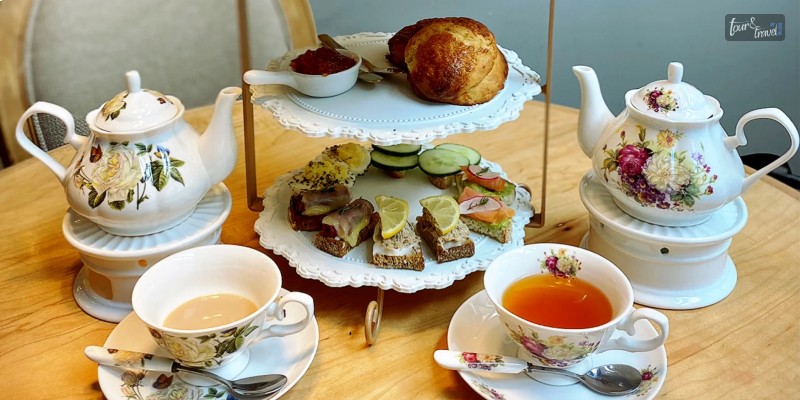
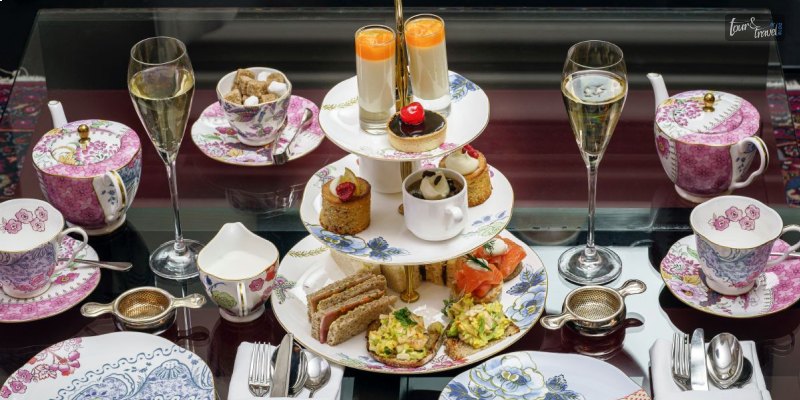
6. Afternoon Tea (Served Daily: 12 pm – 6 pm):

The afternoon tea at Prince Tea House includes,

  • Finger Sandwiches,
  • Scones,
  • Assorted Desserts, and
  • Tea with unlimited refill (for two hours)

7. Salads:

The salad selection at Prince Tea House includes,

Locations:

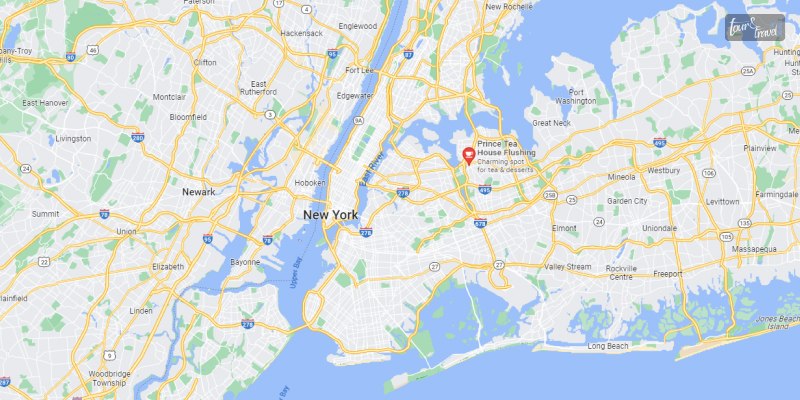
While checking out the various locations, we were a little confused – a majority of the stores are located in New York, like Prince Tea House East Village, Flushing, or Chinatown. But then, on closer inspection, we realized there’s also Prince Tea House Philadelphia and even Prince Tea House New Jersey.

Without wasting time, scroll down to check out the top Prince Tea House locations,

1. Flushing (New York):

Address: 36-39 Prince St., Flushing, NY 11354

Contact: 917-285-2523

2. 7th Avenue (New York):

Address: 6122 7th Ave. Brooklyn, NY 11220

Contact: 929-337-7150

3. 21st Avenue (New York):

Address: 8510 21st Ave. Brooklyn, NY 11214

Contact: 718-975-5077

4. Astoria (New York):

Address: 31-47 Steinway St., Astoria, NY 11103

Contact: 929-208-0072

5. Forest Hills (New York):

Address: 15-17 Station Square, Forest Hill, NY 11375

Contact: 718-971-1088

6. China Town (New York):

Address: 134 Bowery St., New York, NY 10013

Contact: 646-892-3160

7. East Village (New York):

Address: 204 East 10th St., New York, NY 10003

Contact: 917-388-2778

8. Staten Island (New York):

Address: 324B New Dorp Lane, Staten Island, NY 10306

Contact: 929-365-4625

9. Philadelphia (Pennsylvania):

Address: 203 North 9th St., Philadelphia, PA 19107

Contact: 215-560-8912

10. Princeton (New Jersey):

Address: 4437 Route 27 Princeton, NJ 08540

Contact: 609-921-2868

11. Edison (New Jersey):

Address: 518 Old Post Rd Suite 6, Edison, NJ 08817

Contact: 732-243-9366

12. Marlton (New Jersey):

Address: 746A West Route 70, Marlton, NJ 08053

Contact: 856-239-0800

13. Virginia Beach (Virginia):

Address: 3244 Holland Road Suite 110, Virginia Beach, VA 23453

Contact: 757-301-8829

Things You Did Not Know About Tea Houses

The history of tea houses first started in China with the Tang dynasty’s Kaiyuan era. it encouraged the people to introduce the concept of tea house along with poets, singers, storytellers, opera singers, actors and jugglers.

  • The form of entertainment that was provided in the tea house was later taken to an established level of high noon tea and entertainment section.
  • The concept has started in Asia and it has currently turned into a hotel fashion. This fashion does not entertain at least 20 to 30 types of tea.
  • You can also find small bite-size food items such as sandwiches, beef sukiyaki, house buffalo wings, and other appetizers along with tea further encouraging the customers to spend more!

Bon Appétit!

And that’s a wrap n the Prince Tea House – what do you guys think? Have you ever visited this popular tea spot while roaming around the streets of New York City or any of its other locations? If you have, feel free to share your experiences with the Prince Tea House brand in the comments below!

Read Also:

Share on Social Media

Barsha Bhattacharya is a senior content writing executive. As a marketing enthusiast and professional for the past 4 years, writing is new to Barsha. And she is loving every bit of it. Her niches are marketing, lifestyle, wellness, travel and entertainment. Apart from writing, Barsha loves to travel, binge-watch, research conspiracy theories, Instagram and overthink.

Leave a Reply

Your email address will not be published. Required fields are marked *

title-img Related

READ MORE Rio de Janeiro Travel Guide

Rio de Janeiro Travel Guide: What Your Brazilian Real Gets You

BY  Sibashree Sep 20, 2025

Rio de Janeiro sweeps you up the moment you arrive. Golden beaches stretch for miles, samba rhythms spill from bars in Lapa, and cable cars glide up Sugarloaf Mountain for some of the best views on Earth.  Life here is colorful and fast-moving, and part of slipping into that rhythm is knowing how far your Brazilian real will take you - from a chair on Ipanema beach to a plate of feijoada in a neighborhood café. Before we go on, here is a quick Rio de Janeiro travel guide. Just a quick note: exchange rates and prices don’t stay still. At the moment, 1 US dollar equals about 5.4 Brazilian reais, but it’s best to check the latest rates and costs before you travel. Rio de Janeiro Travel Guide: What To Expect? Rio de Janeiro is one of the best cities you can explore. It is one of those few places that has a care-free energy and will make you feel alive. The beaches, food, and major attractions will draw you to it without even trying too hard. Here is a simple Rio de Janeiro travel guide. Beaches - Rio’s Living Rooms The beaches of Copacabana and Ipanema are more than postcards - they’re part of daily life. Locals jog along the promenade in the morning, families gather for a swim, and groups of friends set up for impromptu games of beach volleyball or footvolley. Tourists blend right in, renting chairs and umbrellas from vendors for around R$10-15 per piece. Snacks come to you. Vendors walk the sand offering everything from ice-cold coconuts (R$8-10) to grilled queijo coalho (cheese skewers) for about R$12. You can even try a caipirinha mixed fresh on the spot, usually for R$15-20. These are usually cash-only transactions, and the small notes feel like part of the ritual - bargaining isn’t common, but handing over a few reais feels easy and authentic. Spend an afternoon at Arpoador, the rocky point between Copacabana and Ipanema, and you’ll see why locals gather here at sunset. It doesn’t cost more than a bus ride (R$5) to get there, and yet it’s one of the richest experiences you’ll take home. Food: From Street Bites to Sit-Down Meals Rio has a huge range of food. Starting from some humble bakeries to some fancy rooftop restaurants, Rio has it all. Start with breakfast like a local: pão de queijo (cheese bread) and strong coffee, often no more than R$10-15.  Step into a juice bar and you’ll find tropical flavors like passion fruit, guava, or the ever-popular açaí bowl, usually under R$20 for a generous portion. At lunchtime, the prato feito is king. This “set plate” of rice, beans, salad, and a protein such as beef, chicken, or fish costs R$25-35 and will keep you full all day.  You will get various self-service buffets that charge by weight. You will get roasted meats, vegetables, and farofa, and you will have to pay around R$30-40. For dinner, you can choose what you prefer. You can try something casual or something fancy. If you prefer a mid-range seafood meal along with drinks, it will cost somewhere around R$80-100 per person.  However, a proper night out in Ipanema at a fancy fine-dining spot might cost around R$200-250.  You can even visit Churrascarias, which is a Brazilian steakhouse. It is an event in itself. They have endless skewers of grilled meats, side dishes, and salad bars. You can expect to pay somewhere around R$120-180 per person. However, this does not include drinks. All these places accept cards, but it is better to keep some cash handy for bakeries and street food. Attractions: Big Names And Hidden Gems There are various major icons in Rio, and those are actually worth it. You can take the Sugarloaf Mountain cable car for around R$150, and the ride itself is a major part of the thrill. The glass walls will give you a 360-degree view of the way from above the city. You can visit Christ the Redeemer, resting on Corcovado Mountain, for R$100. The moment you stand at its feet and see the city from there, you get an amazing view. You can carry cards as both attractions accept payment in cards. However, it is better to carry some cash for small vendors, tacos, or snacks. Rio is also filled with a lot of gems that you can see for free or for a low cost.  The Selarón Steps, covered in colorful tiles from around the world, cost nothing to climb. A stroll through Santa Teresa’s narrow streets will take you past murals, studios, and cafés where you can pause for a R$12 espresso. At night, head to Lapa to experience samba at its source. Entry to some clubs is around R$30-50, and drinks inside range from R$15-25. Smaller bars may only accept cash, especially if you’re outside the main tourist drag. Getting Around Rio is quite a big city, but it is not difficult once you understand the system. You can take the metro, it's quite safe and clean, and a single ride costs around R$5.  Moreover, if you have a rechargeable RioCard, it will save you a lot of time and work. You will be able to use it for different types of transport, including trains and buses.  You can take a bus, which goes almost to the city, and the fare is quite similar to the metro. Here, you can get taxis for around R$6, and cross-town trips generally range around R$40-60. Also, Uber and other apps like these are popular, and often offer rides at a cheaper rate than a taxi. If you want, you can pay in-app with the card, and that way, you will not have to use cash for payment.  For day-trips outside the city, you will get intercity buses. This will help you explore the outskirts within a budget. If you are planning to visit the historic mountain town, Petropolis, you can explore it for around R$40-50. Moreover, if you are planning to take a longer ride to Búzios, the beach town, you will be able to visit it for around R$70-80. You can get the bus tickets online or from the bus station as well.  How Much To Budget You need to prepare a budget for a trip. However, the budget depends on the kind of trip you want to have. Budget travel: It will cost you around R$200-250 for a day, including hostels, street food, public transport, and free attractions. Mid-range: It will cost you around R$600. You will get comfortable hotels, visit some of the major landmarks, and have some casual as well as sit-down meals. High comfort: This will cost you around R$1000 and above. You will get four-star hotels, fine dining, and guided tours at this range.  However, the prices in Rio rise during any carnival or New Year’s, and this also varies depending on the neighborhood.  Ipanema and Copacabana are some of the premium places that tourists visit, but there are some block islands that will offer the same charm but at a lower price range. Spend Smart In Rio Start your trip with at least a little Brazilian real in your wallet. It will cover your first taxi or ride-share, snacks, or that first fresh coconut without delay. From there, cards will carry most of your expenses, but having R$100-200 in cash each day is wise for small payments. Stick to ATMs inside banks or malls when you need to withdraw. They’re safer and usually give fair rates. Avoid exchanging money at the airport - the rates are often poor, and the fees stack up quickly. Think about how you balance cash and cards. Use your card for hotels, restaurants, and tours, and keep your reais for buses, bakeries, street snacks, and tips. It’s a system that works well in Rio and lets you move through the city without stress. Enjoy Your Journey Landing in Rio with a Rio de Janeiro travel guide and Brazilian real already in hand saves you time and makes the city easier to navigate. You’ll breeze through those first transactions - a cab, a snack, a metro ride - and step right into the energy of the city. Rio rewards travelers who embrace both the big icons and the small everyday moments. The real you spend on a chair at the beach, a cup of coffee, or a bus ride across town is more than just money - it’s your ticket into the rhythm of the city.  As mentioned before, exchange rates and prices may change, but the value of those moments never does.

READ MORE museums in savannah

Time Travelers’ Haven: Savannah’s Top Museums and your Itinerary for 2024!

BY  Ankita Mar 22, 2024

Savannah, Georgia, is a city that has something for everyone. Whether you are a history buff, an art lover, a nature enthusiast, or a foodie, you will find plenty of attractions and activities to enjoy in this charming Southern destination. But if you are looking for a unique way to experience Savannah, why not visit some of its amazing museums? Museums in Savannah are not just boring buildings filled with dusty artifacts. They are vibrant and interactive spaces that showcase the rich and diverse culture, history, and creativity of the city and its people. From colonial times to the present day, from fine art to folk art, from military history to maritime history, you will find museums in Savannah that cater to your interests and curiosity. Top Museums in Savannah That You Must Visit in 2024! There is something magical about museums. It is a testament to the fact that humanity has lived and thrived. Most importantly, it is a celebration of all the struggles that have made us who we are. It is a place where time stops for a little. Or we are sent back in time. I love going to museums, and that is why I feel glad to be able to list some of the best museums that I went to during my stay in Savannah. In this article, I will introduce you to the 15 best museums in Savannah that you should not miss on your next trip. I am also going to give you some tips on planning your itinerary and making the most of your time in this beautiful city. So, get ready to travel back in time and explore Savannah's top museums! Here are the best museums in Savannah that you MUST visit while you are in the city: 1. Savannah History Museum If you want to learn about the history of Savannah from its founding in 1733 to the present day, the Savannah History Museum is the place to go. Located in the historic Central of Georgia Railway passenger station, the museum features exhibits that cover various aspects of Savannah's past, such as the American Revolution, the Civil War, the cotton industry, the railroad, and the movie industry. You can also see artifacts and memorabilia from famous Savannahians, such as singer Johnny Mercer, writer Flannery O'Connor, and Girl Scouts founder Juliette Gordon Low. Don't forget to check out the bench from the movie Forrest Gump, which was filmed in Savannah. 2. Jepson Center for the Arts The Jepson Center for the Arts is a stunning modern building that houses the contemporary art collection of the Telfair Museums, the oldest public art museum in the South. The Jepson Center showcases works by local, regional, national, and international artists, ranging from paintings and sculptures to photography and video. You can also enjoy rotating exhibitions, lectures, workshops, and educational programs at the center. If you have kids, they will love the ArtZeum, an interactive gallery that encourages creativity and exploration. 3. Savannah Museum of Art The Savannah Museum of Art is another branch of the Telfair Museums, located in the historic Telfair Academy, a former mansion built in 1819. The museum displays a collection of American and European art from the 19th and 20th centuries, including works by impressionists, realists, and abstract artists. You can also admire the elegant architecture and furnishings of the building, which was designed by William Jay, one of the first professionally trained architects in America.  4. Georgia State Railroad Museum If you are a fan of trains, you will love the Georgia State Railroad Museum, which is located in the former Central of Georgia Railway Savannah Shops and Terminal Facilities. The museum is a National Historic Landmark and features the largest collection of historic railroad structures in the country. You can see and climb aboard various locomotives, cars, and rolling stock, some of which date back to the 1850s. You can also take a guided tour of the site, watch demonstrations of steam and diesel engines, and even ride a train on a short loop track. 5. Ships of the Sea Maritime Museum The Ships of the Sea Maritime Museum is dedicated to the maritime history of Savannah and the Atlantic coast. The museum is housed in the William Scarbrough House, a neoclassical mansion built in 1819 for one of the principal owners of the Savannah, the first steamship to cross the Atlantic Ocean. The museum displays models, paintings, and artifacts of various ships, from sailing vessels to steamships, that played a role in Savannah's trade, commerce, and defense. You can also enjoy the beautiful garden behind the house, which features native plants and fountains. 6. Pin Point Heritage Museum The Pin Point Heritage Museum is a hidden gem that celebrates the history and culture of the Gullah/Geechee people, who are descendants of enslaved Africans that settled along the coastal regions of Georgia and South Carolina. The museum is located in the former A.S. Varn & Son Oyster and Crab Factory, which was the main employer of the Pin Point community for over 60 years. The museum tells the story of the people, the place, and the industry that shaped their lives, through exhibits, oral histories, and demonstrations. You can also sample some of the delicious seafood that the community is known for. 7. SCAD Museum of Art The SCAD Museum of Art is a contemporary art museum that showcases the work of students, faculty, and alumni of the Savannah College of Art and Design, as well as renowned artists from around the world. The museum is located in a former railroad depot that was renovated and expanded with a striking glass facade. The museum features permanent and temporary exhibitions of various media, such as painting, sculpture, photography, fashion, and film. You can also attend lectures, screenings, and performances at the museum. 8. Savannah Children's Museum The Savannah Children's Museum is a fun and educational place for kids of all ages. The museum is located in the old Central of Georgia Railway Carpentry Shop, which was transformed into an outdoor playground with over a dozen exhibits and activities. Kids can explore, create, and learn through interactive stations, such as the sensory garden, the maze, the climbing wall, the water pump, and the giant Lego blocks. The museum also offers programs and events for families, such as storytime, crafts, and festivals. 9. Ralph Mark Gilbert Civil Rights Museum The Ralph Mark Gilbert Civil Rights Museum is a museum that honors the legacy of the civil rights movement in Savannah and beyond. The museum is named after Dr. Ralph Mark Gilbert, who was the leader of the NAACP in Savannah and a key figure in the desegregation of the city. The museum features exhibits that chronicle the history of the struggle for racial equality and social justice, from slavery to the present day. You can see photographs, documents, artifacts, and videos that depict the events and people that shaped the movement, such as the sit-ins, the marches, the boycotts, and the leaders. 10. Webb Military Museum The Webb Military Museum is a museum that displays a private collection of military memorabilia from the American Civil War to the present day. The museum is owned and operated by Gary Webb, a retired military officer and avid collector. The museum features uniforms, medals, weapons, flags, helmets, and other items that belonged to soldiers, sailors, airmen, and marines from various wars and conflicts. You can also see personal stories and letters from the men and women who served their country. 11. American Prohibition Museum The American Prohibition Museum is a museum that takes you back to the era of the 18th Amendment, which banned the production, sale, and consumption of alcohol in the United States from 1920 to 1933. The museum features interactive exhibits, wax figures, and artifacts that tell the story of the prohibition, from the temperance movement to the speakeasies, from the bootleggers to the gangsters, from the flappers to the lawmen. You can also visit the speakeasy bar, where you can enjoy a drink and listen to live music. 12. Savannah African Art Museum The Savannah African Art Museum is a museum that showcases a collection of over 1,000 pieces of African art, representing 22 countries and over 130 cultures. The museum is located in a former Catholic convent and school, which was renovated and decorated with African motifs. The museum displays sculptures, masks, textiles, jewelry, and other objects that reflect the diversity and beauty of African art and culture. You can also learn about the history, meaning, and symbolism of each piece from the knowledgeable docents. 13. Massie Heritage Center The Massie Heritage Center is a museum and educational center that preserves and interprets the history and architecture of Savannah. The center is located in the former Massie School, which was built in 1856 and is the oldest public-school building in Georgia. The center features exhibits and programs that explore various aspects of Savannah's heritage, such as the colonial era, the Victorian era, the civil rights era, and the urban renewal era. You can also see models and maps of the city, as well as a restored classroom from the 19th century. 14. Mighty Eighth Air Force Museum The Mighty Eighth Air Force Museum is a museum that honors the men and women of the Eighth Air Force, which was one of the largest and most powerful air forces in history. The museum is located near the Savannah/Hilton Head International Airport, where the Eighth Air Force was activated in 1942. The museum features exhibits, artifacts, and aircraft that tell the story of the brave and heroic missions of the Eighth Air Force during World War II, the Cold War, and beyond. You can also see the B-17 Flying Fortress, the B-24 Liberator, the P-51 Mustang, and other planes that flew in the skies of Europe and Asia. 15. Wormsloe Historic Site The Wormsloe Historic Site is a museum and park that preserves the estate of Noble Jones, one of the original settlers of Georgia and a close associate of James Oglethorpe, the founder of Savannah. The site features the ruins of Jones' tabby house, which is the oldest standing structure in Savannah, as well as a colonial life area, a museum, and a nature trail. You can also see the iconic avenue of live oaks, one of the city's most photographed scenes.  How to Plan Your Itinerary for the Museums in Savannah? Now that you know the best museums in Savannah, you might be wondering how to fit them all in your schedule. Here are some tips on how to plan your itinerary and make the most of your time in this beautiful city: Day 1 Start with the Savannah History Museum, which will give you an overview of the city's past and present. From there, you can walk to the nearby Georgia State Railroad Museum, the Savannah Children's Museum, and the SCAD Museum of Art, which are all located in the same complex. Next, head to the Telfair Museums, which consist of the Jepson Center for the Arts and the Savannah Museum of Art. You can also visit the Owens-Thomas House and Slave Quarters, which is another branch of the Telfair Museums and a historic landmark that showcases the life of the wealthy and the enslaved in the 19th century. After that, you can explore the historic district of Savannah, which is full of charming squares, parks, monuments, and buildings. You can also hop on a trolley or a carriage tour, which will take you to some of the most popular attractions and landmarks in the city, such as the Cathedral of St. John the Baptist, Forsyth Park, the Mercer Williams House, and the Bonaventure Cemetery. Day 2 For the next day, you can venture outside the downtown area and visit some of the museums that are located in the outskirts of the city, such as the Wormsloe Historic Site, the Pin Point Heritage Museum, the Ralph Mark Gilbert Civil Rights Museum, the Webb Military Museum, and the American Prohibition Museum. You can also take a short drive to the nearby Tybee Island, where you can enjoy the beach, the lighthouse, and the Fort Pulaski National Monument. Day 3 On the last day, you can visit the Mighty Eighth Air Force Museum, located near the airport and a must-see for aviation and military enthusiasts. You can also stop by the Ships of the Sea Maritime Museum and the Savannah African Art Museum, both located in the historic district and worth visiting. Why You Should Visit Savannah in 2024? Savannah is a city that is always worth visiting, but especially in 2024, when it will celebrate its 300th anniversary. The city will host a series of events and festivities throughout the year, such as parades, concerts, fireworks, exhibitions, and more. You can also expect to see some new and improved attractions and facilities, such as the Savannah Riverwalk, the Savannah Arena, and the Savannah Convention Center. Savannah will also host some major events and conferences, such as the G20 Summit, the World Economic Forum, and the Savannah Film Festival. Wrapping It Up! Savannah is a city that is rich in history, culture, and creativity. It is also a city that has some of the best museums in the country, which will take you on a journey through time and space. Whether you are interested in art, history, nature, or anything in between, you will find museums in Savannah that will satisfy your curiosity and inspire your imagination. If you wanted to know about eth best museums in Savannah, I hope that this blog has been of help to you. If there are any other queries related to the same, please feel free to let me know. All that you need to do is scroll down till you reach the bottom of the page. Then leave your comments and queries in the box below. And I will be there to answer them all for you! Read Also: Atlanta To Savannah: A Scenic Road Trip Adventure That You Can’t Miss! From Museums To Parks: The Top Attractions In St George Utah Explore The Top 15 Free Museums In DC! Must Visit Museums Understand More About The Vatican’s Museums

READ MORE Gladiators in Rome

Gladiators In Ancient Rome: Blood, Glory, And The Legacy You Can Still Feel Today

BY  Barsha May 27, 2025

Few Roman emblems are more recognizable and evocative than that of the gladiator.  These violent men—half athlete, half captive, half myth—held Roman crowds for centuries in bloody battles that were spectacle as much as they were a matter of conquest.  But who were the gladiators in Rome, in reality? What motivated thousands of onlookers to celebrate their fate in the arena? And where can you still sense the beat of their legacy today?  Further, Rome, the capital of Italy, is about to host the 2025 World Travel & Tourism Council’s (WTTC) summit. Also, the historical places to visit in Rome play a vital role in maintaining Italy’s position as the number one travel destination in the world.  If you are not in the know, Italy has just won the laurel of the top luxury tourism destination for 2025 at the International Luxury Travel Market (ILTM) Latin America.  So, in this Tour and Travel Guide, we will find out the gladiators of Rome and how they can be the highlight for your next vacation to Rome.  At the same time, we will talk about the historical places of Rome and why they make the city the most preferred destination in the world.  From Funerary Rites To Public Spectacle: The Gladiators Of Rome And Their Timeless Appeal The origin of the gladiators in Rome is very much intertwined with sacrifice and ritual in the natural world.  Ancient accounts indicate that gladiatorial fighting was once performed in remembrance of the dead, particularly renowned figures from society.  These events later became popular for entertaining or intimidating the masses.  By the Roman Republic, games of gladiators already were a political weapon: a show of grandeur and munificence employed to win the favor of the masses.  The Colosseum: Heart Of The Arena The Colosseum, or Flavian Amphitheater, was the spectacular arena for the events. Finished in 80 AD by Emperor Titus, it could accommodate as many as 50,000 spectators and saw colossal games which lasted for 100 successive days at times.  Gladiators drew swords here, man-eating animals from Africa and Asia were brought out, and emperors gained or lost the people's favor in the arena of blood.  So, the Colosseum, an icon of ancient Roman civilization, is more than just an architectural marvel. The use of concrete and innovative techniques in the Colosseum was unique.  However, the more unique aspect of the place is how it witnessed and has carried the history of the gladiators of Rome and a particular way of Roman living over the years.  In other words, the next time you visit the Colosseum, one of the best things to do in Rome, you will have a new perspective as a traveler.  And yet, glorious as the Colosseum stands, its actual history truly comes alive only when viewed in context—through the unseen narratives of the Ludus Magnus (the main gladiator school), the pre-fight rituals, and the political maneuvering behind each bout.  Want to Experience The Legacy Of Gladiators In Rome Like Never Before?  If you're planning a visit to Rome, seeing the Colosseum is a must, but walking around its outer walls is just scratching the surface.  For a deeper, more immersive journey into the world of ancient warriors, book a Colosseum-focused city tour with Golf Cart Tours.  Their small-group, open-air tours are led by expert guides who blend storytelling, history, and modern comfort.  No exhausting uphill hikes or crowded buses. Just an engaging, up-close experience that brings Rome’s gladiatorial past to life.  Your guide will take you beyond the arena to the key sites tied to the games, including Janiculum Hill, Capitoline Hill, and the Forum, sharing insights you won’t find in guidebooks. The best part? The Golf Cart Tours team knows how to make history unforgettable—even for kids and families. You’ll leave not just with photos, but with stories. Life, Death, And The Role Of The Gladiators In Rome  Most of the gladiators, though, were captive males, captives of war, or convicted criminals to be killed in the arena. Yet, not all. Free men also came into the profession of their own free will, attracted by the prospect of fame, wealth, or even salvation.  These volunteers, known as Auctorati, were typically contracted for several years, with service agreements that would make them both legendary and infamous.  In the schools of training (Ludi), gladiators became the machines to kill. They were divided into specialized classes according to combat style and weaponry: Retiarii (net and trident) Murmillones (sword and buckler) Secutores Thraeces, and others.  Despite their cruelty, gladiators were popular. They had girlfriends, they had fans, and they even had political power.  Gladiators' faces were found in mosaics, in graffiti, and even on coins. Some, such as Spartacus or Flamma, even became legends.  The Historical Places In Rome Are Much Beyond The Arena The gladiators themselves are no more, but their legend still towers over the Eternal City.  Each cobblestone street and crumbling ruin holds a tale, and some of the biggest are the ones where the gladiators fought, breathed, and died under the bellow of 50,000 Roman throats.  However, the historical attractions in Rome are beyond the arena. Here are the other crown jewels.  1. Sistine Chapel: The House Of The Last Judgment  The Sistine Chapel in Rome features "The Last Judgment," a famous artwork by Michelangelo. Furthermore, it has breathtaking frescoes.  2. St. Peter's Basilica: The Most Revered Catholic Church In The World Though located in the Vatican City, St. Peter's Basilica is one of the iconic religious and historical landmarks in Rome.  Furthermore, it is the most important Catholic church, and it is the burial site of Saint Peter. He was one of the apostles of Jesus Christ, and he was the first pope.  Moreover, the Renaissance and Baroque architecture of the church makes it a place of awe and wonder.  3. Piazza Navona You cannot miss a visit to Piazza Navona, which is a public square in Rome. It has palatial buildings and baroque fountains.  So, there is always a lively atmosphere around the square.