
What Is The Closest Beach To Nashville? 

Dec 8, 2022

Last Updated on: Sep 18, 2025

Travel Guides

I love beaches. But, also, I really love Nashville. So, you can guess the sad part here. The last time I went to Nashville, I had to come back dry and without an tan. 

But, the, I thought, there must be some beaches which are close to nashville, right? 

Also, why stick to the same beaches in the Nashville area, or even in and around? Have you thought about venturing out to beaches a little farther away? 

Additionally, you can also check out the closest beach to Nashville or even some of the closest beaches near Nashville.

Additionally, Nashville is a popular tourist attraction on prestigious lists like the New York Times’ 52 Places to Go.

Also, I must say that it has a colorful history, great heritage, and architectural excellence.

However, if you want some coastal fun and some sultry sunbathing seasons, the beaches around Nashville will be your ultimate call! 

Closest Beach To Nashville – Top 10 Beaches You Can Visit 

Closest Beach To Nashville

So here you are, searching for the closest beach to Nashville, TN! And here we are with a curated list featuring the best beaches near Nashville.

Also, “The Music City” is the door to cool sand and water pursuits. Let’s check out the names. 

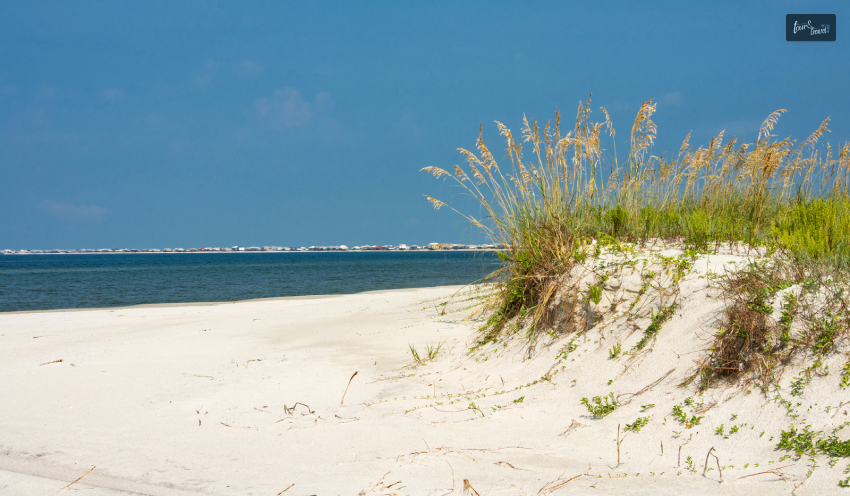
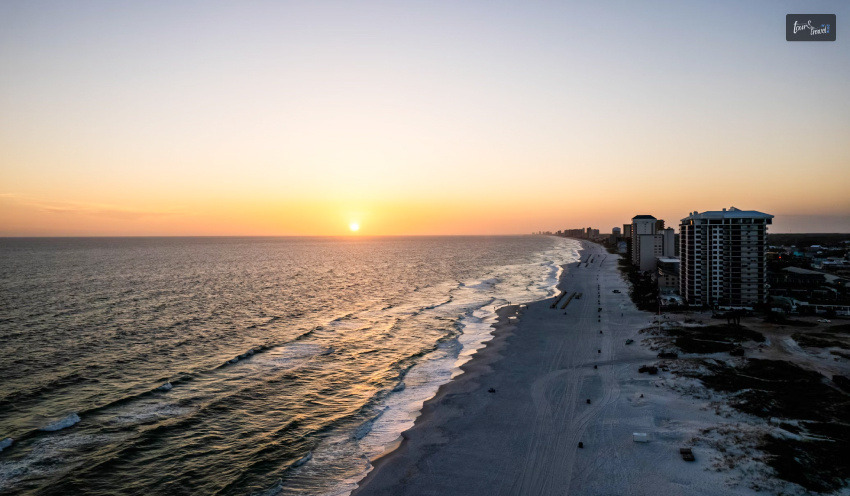
1. Dauphin Island, Alabama: 

Dauphin Island Alabama

Dauphin Island in Alabama is fairly close to Nashville, and it will take you about 7 hours to drive to Mobile since the island is located in the southern part of Mobile. You can also fly to Mobile.

Spend time playing with the waves and collecting seashells, or take a ferry and visit the beautiful Fort Morgan to check out some dolphins.

Also, you must not miss out on other prime tourist spots nearby, like, 

  • Fort Gaines, 
  • Bird Sanctuary, and 
  • The Estuarium. 

So, it is quite idyllic and a family-friendly island with beautiful attractions such as the Alabama Aquarium, Mobile Bay Ferry, and others. 

Additionally, excitement, wildlife, and southern culture are quite apparent in and around Dauphin Island, which has white sand and blue water. 

Best Time To Visit Estimated Cost Driving/flying hours from Nashville 
Spring (March-May), Fall (October-November) $350 to $1,000 560 miles 

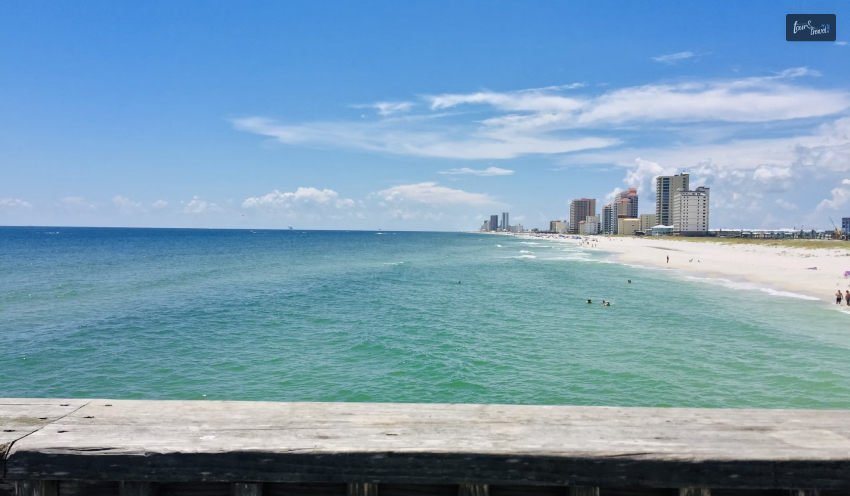
2. Gulf Shores, Alabama: 

Gulf Shores Alabama

While looking for beaches near Nashville, TN, there’s no way you can forget about the Gulf Shores in Alabama.

It’s pretty popular among tourists, especially Tennessee residents. Located only a seven-hour drive away from Nashville, the area boasts several lodging options, activities, and fresh seafood.

The area has amusement parks, entertainment zones, shopping opportunities, and more.

Plus, if you love educational activities and history, there’s much to do in this area. So just pack your bags already – because the beach awaits you! 

With its warm and soothing water, Gulf Shores also has bright white beaches. You can perform daytime activities such as dolphin-watching, hiking, and scenic cruises. 

There is an Alabama Gulf Coast Zoo and a recreation center with bumper boats called The Track, where you can visit with your family. 

Best Time To Visit Estimated Cost Driving/flying hours from Nashville 
Fall (September to November) and spring (March to May) $210 7-8 hours 

Gulf Shores is about to get a Goodwill Center. The 50,000-square-foot facility in Foley will offer job and employment training to the local people.

With time, it will likely be developed as a community development center. The center is likely to open its doors in the fall of 2025. Then, it will be an added attraction to the places of interest.

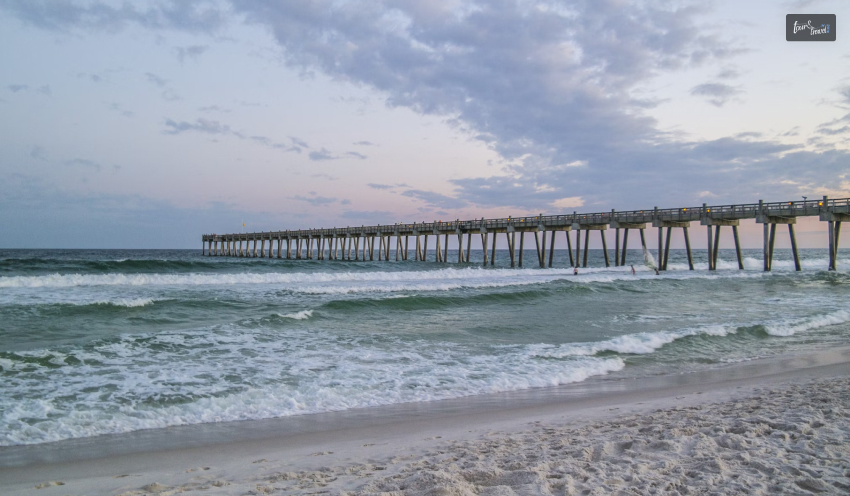
3. Pensacola, Florida: 

Pensacola Florida

There are several beaches close to Nashville but Pensacola, located in Florida, stands out because it will take you less than seven hours to drive from Nashville! Popular for its charming historic culture and exquisite natural beauty, Pensacola is a must-visit. Spanning over eight acres, the historic village of Pensacola is timeless.

From golfing and go-karting to other fun activities, there’s so much to do when you are bored of the beach. Pensacola is also known as ‘the city of five flags’ since it was passed around in History – you will spot British, French, Confederate, American, and even Spanish flags all over this charming city. 

The beach is at the panhandle of Florida surrounded by coastline across 50 plus miles. There is crystal clear bay areas and emerald-green Gulf of Mexico waters; thus, when you visit the beach, you can find a vibe that mixes a bustling metropolitan center and a relaxing beach town! 

Best Time To Visit Estimated Cost Driving/flying hours from Nashville 
Spring (March-May) and Fall (September-November) $340 6 hours 39 minutes 

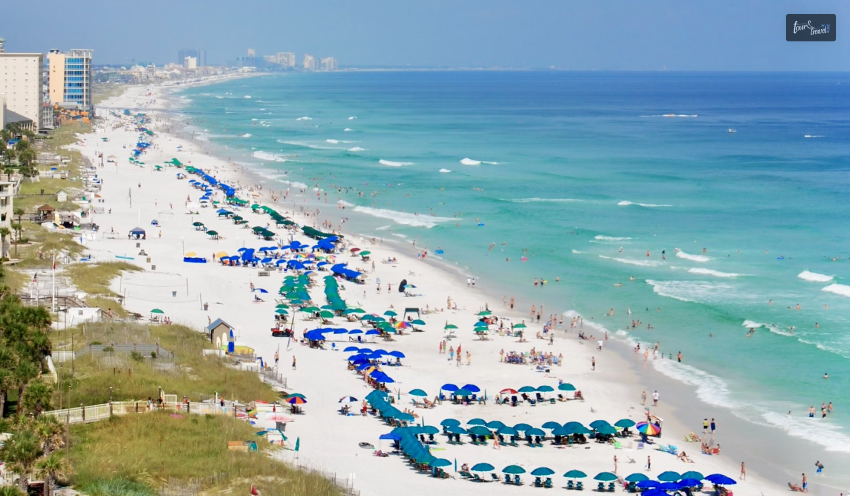
4. Destin, Florida: 

Destin Florida

Why aren’t you considering Destin, located in Florida? Driving to Destin from Nashville will take only around seven hours!

Destin has been a prime vacation spot for families! There are several places to eat – you could check out the popular chain dining, Whataburger! 

Then there are so many outlet stores for you to visit if you love shopping. If you are traveling with kids, then you have to check out the following places, 

  • The Gulfarium Marine Adventure Park, 
  • Local Zoo, and
  • Big Kahuna Water Park (only if you travel to Destin during Summer!) 

Located in northwest Florida, the area of Destin Beach is called Panhandle! There are natural trails through the dunes of Henderson Beach State Park. There are beautiful oak trees and pine trees where they provide wildlife shelter. 

Also, there are waterfalls, pools, tall slides, and Big Kahuna’s water park, so you can explore all these places. The emerald-green waters of the beach are breathtaking, and the geology is unique! 

Best Time To Visit Estimated Cost Driving/flying hours from Nashville 
Spring (April-May) and Fall (September-November) $105 7 hours 

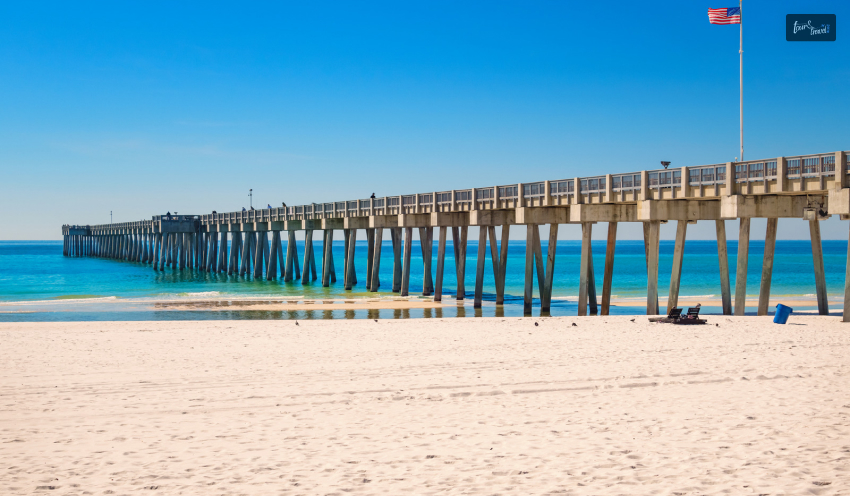
5. Panama City, Florida: 

Panama City Florida

It’s not like there are no beaches in Tennessee. Of course, Tennessee has beaches, but sometimes, venturing a little away from home feels so much better!

And how can you ignore Panama City, located in Florida? Famed as a destination for Spring Break, it will take you about 7.5 hours to drive to Panama City from Nashville. You can also opt for direct flights. 

The beaches span 27 miles, and Panama City farther boats about a hundred public accesses. While you are in Panama City, you must visit Pier Park – you will spot several restaurants, playing areas, bungee jumping opportunities, bumper boats, sky wheels, passenger trains, and plenty of places to shop.

Best Time To Visit Estimated Cost Driving/flying hours from Nashville 
Fall (September-November) and Spring (March-May) $106 7.5 to 8 hours 

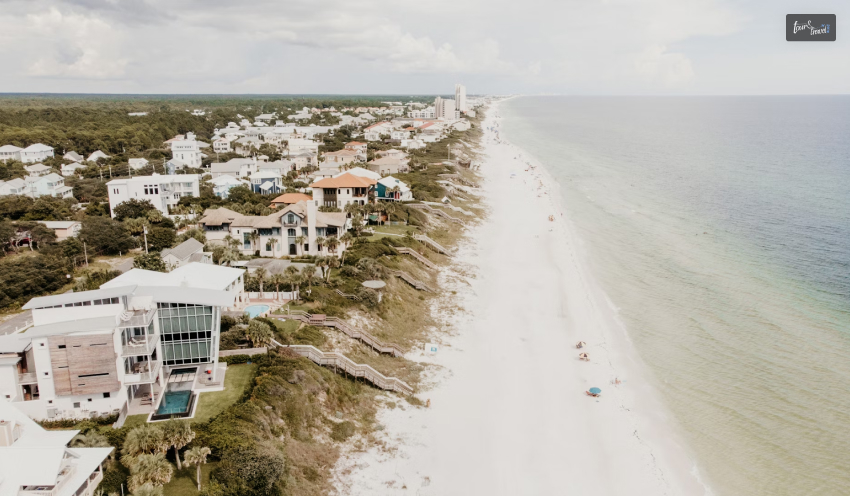
6. 30A, Florida: 

30A Florida

People in the Middle Tennessee area either have or know others with bumper stickers with 30A on them. This is because 30A has now become perhaps one of the most well-known getaway spots for most residents of Nashville! And that too throughout the whole year.

30A is not your regular Nashville beach! Instead, it’s a pretty coastal highway with solid touristy spots, like, 

  • Miramar Beach, 
  • Rosemary Beach, 
  • Santa Rosa Beach, and 
  • Blue Mountain Beach.
Best Time To Visit Estimated Cost Driving/flying hours from Nashville 
Spring (March-May), Fall (October-November) $105 7 hours 25 minutes 

7. Tybee Island, Georgia: 

Tybee Island Georgia

Tybee Island might not be the closest beach to Nashville, but that doesn’t mean it’s that far away – you can either drive to Tybee Island in the Savannah region or even directly fly to Savannah.

If you drive, it will take you more than eight hours; if you take a flight, it will take a little less than two hours.

An Atlantic getaway that’s historical – this is exactly what Savannah stands for! Steeped deeply in culture and history, there’s so much to see and do.

Explore the local restaurants and shopping outlets at the lighthouse near Tybee Island to make the most of your stay here. 

Best Time To Visit Estimated Cost Driving/flying hours from Nashville 
Spring and summer $210 8 hours 6 mins 

8. Gulfport, Mississippi: 

While looking up the closest ocean beach to Nashville, TN, it’s impossible not to stumble upon Gulfport, located in Mississippi. The entire Mississippi coastline is unforgettable. It takes about seven hours to drive from Nashville, or you could also do something adventurous and fly to New Orleans – it will be worth the trip! 

The area boasts miles of beaches known for their beautiful sand, fun attractions, and exciting water activities. Once you are done spending time on the beach, don’t forget to check out,

  • The Gulfport children’s museum, 
  • INFINITY Science Center, a space facility by NASA, 
  • A famous aquarium, 
  • Drag racing, 
  • Waterparks, and 
  • The railroad museum. 
Best Time To Visit Estimated Cost Driving/flying hours from Nashville 
March through May $200 1 hour 21 minutes 

9. Charleston, South Carolina: 

Charleston South Carolina

Move any beach in Tennessee over, because it’s time for Charleston to shine! Yes, it will take you more than 8 hours to drive to Charleston, located in South Carolina, or a flight of 1.5 hours, but who cares? It will be worth the journey. Another coast town in the Atlantic steeped deeply in history, this place is perfect for visiting with your family, especially kids.

If you love visiting historical spots, you have to visit Fort Sumter. And that’s not all! Pamper yourself with some spa time and some golfing while your kids can enjoy the children’s museum and the aquarium. You will also get to see some world-class restaurants, sandy beaches, and cobblestone paths. 

The easiest way to enjoy South Carolina is to dip your toes in the white sand and enjoy the beautiful weather. It is perfect for frolicking as you can walk across the sand and visit the lighthouses. The beaches are wild hence, you gotta have a towel and a sturdy shoes to enjoy your best! 

Best Time To Visit Estimated Cost Driving/flying hours from Nashville 
spring (March-May) and fall (October) $124.58 9-10 hours 

10. Myrtle Beach, South Carolina: 

Myrtle Beach South Carolina

It is not the closest beach to Nashville if you have a packed itinerary. It will take you about nine hours to drive to Myrtle Beach, but it’s so worth the drive.

We say keep at least three to four days in hand while going to Myrtle Beach in South Carolina!

From cheering the baseball team and Pelicans, riding the gigantic Ferris wheel, visiting New South Brewing MicroBrewery, or even having a night out at some local dinner theater, there’s so much to do here. 

Myrtle Beach has a subtropical climate, with 86 golf courses and 1800 restaurants to visit. The Myrtle Beach Area Fact Sheet states that around 17 million people visit Myrtle Beach annually. If you plan to visit the beach, you can take your family to the Kingdom amusement park. 

If you love adventure, the SkyWheel is the way to go, considering it is one of the tallest Ferris Wheels in the world. 

Best Time To Visit Estimated Cost Driving/flying hours from Nashville 
June through August $129 9 hrs 26 min 

In 2024, Myrtle Beach was the top trending destination for the Memorial Day weekend in the USA, according to Booking.com reports.

Tripadvisor also featured it as the second-most coveted destination for the Memorial Day weekend 2024.

11. Anderson Beach, Tennessee 

At just 17 miles from Nashville, Anderson Beach is a popular picnic spot in Tennessee. You will enjoy amenities like picnic grills, tables, and cheap parking sites at this closest beach to Nashville.

You must pay $5 to park your vehicle for the entire day. Also, restrooms and a shelter make your time at the beach more comfortable.

Further, on Percy Priest Lake, Anderson Beach is great for canoeing and kayaking. You can even swim in the lake water for a rejuvenating experience. The water here is tranquil, with allocated swimming areas.

You can relax in the wooded area if you are not in for adventurous outdoor pursuits.

Frequently Asked Questions!!! (FAQs): 

Check out the most frequently asked questions related to the closest beach to Nashville, mentioned below.

1. What Is The Closest Ocean Beach To Nashville? 

Ans: Although Nashville itself doesn’t have any sea beaches, the closest beaches to Nashville are as follows,
Pensacola, 
Panama City Beach, 
Tybee Island, 
Hilton Head Beach, and 
Gulf Shores. 

2. What Is The Best Beach In Tennessee? 

Ans: The best beaches in Tennessee are as follows,
Big Ridge Lake, 
Cheatham Lake, 
Cherokee Lake, 
Chickamauga Lake, and 
Center Hill Lake. 

3. What Is There To See Between Nashville And Gulf Shores? 

Ans: The top tourist spots between Nashville and Gulf Shores are as follows,
Lotz House Museum,
Stones River National Battlefield, 
Carnton, 
Vulcan Park & Museum, 
U.S. Space & Rocket Center, and 
Jack Daniel’s Distillery Visitor Center. 

4. What Is The Most Beautiful Town In Tennessee? 

Ans: The most beautiful towns in Tennessee are as follows,
Gatlinburg, 
Townsend, 
Bell Buckle, 
Rogersville, and 
Jonesborough. 

And It’s A Wrap! 

Finding the closest beach to Nashville proved to be an adventure, considering we made sure that you are aware of all your options!

So now what? What are you still doing here? Pack your bags and get this trip started! All you have to do is plan a kickass trip and make some memories to treasure forever. 

In the meantime, don’t forget to share your thoughts and if you have any related past experiences in the comments below. 

Share on Social Media

Meet Sibashree Bhattacharya, a travel enthusiast who has a decade-long experience in transcending virtual barriers with her words! Her deep love for travel is apparent from her travel escapades to the mountain, often taking her readers on a journey, her words acting as Portkey! Fun fact: Sibashree loves to dive deep into the history of the places she is about to visit, making her travels even more wholesome. If you were wondering how her articles are not short of time travel, this answers it!

Leave a Reply

Your email address will not be published. Required fields are marked *

title-img Related

READ MORE

Joy Cho Death At Grand Teton National Park: How To Remain Safe While Hiking In This Beautiful Yet Dangerous Land

BY  Sibashree Sep 5, 2024

August 12, 2023, and the news of Joy Cho death at Grand Teton National Park was the most shocking thing one could hear. It was hard to believe how the most pristine national park with scenic vistas and rich wildlife could be the last resting ground for a woman. Nevertheless, on 12th August, the mountains, which stand for human connections, saw the fall of human life.   The death of Joy Cho at the Grand Teton National Park has once again proved why hiking in this national park needs to be a careful outdoor pursuit. It is “dangerous” to go for a solo hike in this national park. However, finding a hiking buddy is not always easy.   So, here, I will discuss the safety concerns at Grand Teton National Park and how you can overcome those. However, before that, let’s discuss a little more about Joy Cho Death at Grand Teton National Park.  Joy Cho Death At Grand Teton National Park: What Happened To The California Hiker?    Joy Cho, 47, lost her life at the Grand Teton National Park in the Death Grand Teton National Park where she was hiking with seven other group members. A deeply spiritual soul, she was also very much drawn to nature.   According to reports, the rangers found that she “had succumbed to significant injuries during the fall and was pronounced dead at the scene,” and her body was turned over to the coroner’s office, according to the release.” Tim Hopkins, one of Cho’s friends, further mentioned that the malfunctioning of her ledger caused the fall of Joy Cho.   Joy Cho was on her attempt to climb Teewinot, a part of the Teton Range, and the elevation reached here was around 12,325 feet above sea level. After her death, many people have started talking about the steep and exposed sections while hiking to Teewinot.   So, are there really some serious safety concerns while hiking in Grand Teton National Park? It’s time to know the concerns and safety measures to avoid accidents and unfortunate incidents.   What Are The Safety Concerns At Grand Teton National Park?   Joy Cho death at Grand Teton National Park has made us examine safety concerns. From altitude sickness to unpredictable wildlife, many elements in the park need your attention. You  must be respectful, and your gear, shoes, and clothes should be on point. Even if you cross a stream with ankle-deep water, you must not be complacent or careless about protection.   Having said that, here are the major safety concerns at Teton National Park.  Altitude Sickness  With the highest altitude reaching 4199 m, you can experience altitude sickness in Grand Teton National Park. Muscle pain, lack of appetite, fatigue, and headaches are common symptoms of altitude sickness.   Weather Conditions  Teton National Park is home to Mount Moran, Buck Mountain, Grand Teton, Middle Teton, South Teton, and many other mountains that reach a height of more than 3000 m. Rainfall and snowfall are common at such high altitudes, causing the blockage of the hiking trails and hypothermia.   However, the Grand Teton also receives moderate rainfall and snowfall every year. Hiking there can also be a challenge. Further, Lightning and mid-afternoon storms in summer are other weather challenges in this park.   So, if you are hiking in the park in the summer, try hitting the high Alpine terrains. Thus, by the late afternoon, you are already back into lower altitudes.   April to June have moderate days and cold nights filled with snowfall and rain. Snowfalls and rain are also frequent at night from September to November. In addition, you will encounter the coolest nights between December to April.   Moreover, July and August are the most tumultuous in the national park due to thunderstorms in the afternoon. Have a clear idea about the weather conditions if you do not want something like Joy Cho death at Grand Teton National Park to happen.   Wildlife   Wildlife at Grand Teton National Park is extensive. However, grizzly bears and mountain lions (not always seen) are the biggest challenges for hikers and trekkers. Moose and elk are other animals that you will find in this national park. The park also has wolves, and they are not the friendliest of animals you will come across.   Looking for fresh feces, signs, and fresh tracks is the only way to know if an animal is around.   Moreover, you can occasionally find rattlesnakes in the Grand Teton National Park, especially near Montana and Gardiner. Ticks, spiders, and mosquitoes are the insects you will encounter the most here. So, don’t forget to carry repellent creams and other measures as instructed by your trekking guide.   Terrain   The habitats of Teton National Park are the most versatile. However, for a hiker, the change of habitats every 4-5 miles is a major problem. Suppose you just passed a rock wall going up vertically, and the next moment, you are at a cliff that drops dramatically.   Even the woods in the park are quite tricky to walk through. The trails are filled with small and gigantic trees. You can easily cross the smaller trees. However, a hiker can easily get hurt when they have to jump over a huge trunk or climb a tree.  Further, boulder fields in the park do not look like a threat usually. However, accidents and injuries can happen at the most unexpected times. The boulders can roll down, block tracks, and cause casualties. So, always be aware of your ability and skill before you attempt hiking the 250 miles of trails the park has to offer.   Moreover, the talus slopes and the snow-clad mountains are perilous if you are not prepared with your gear. These areas have high sliding risks and the chances of false stepping. The smartest way here is to look for a level ground trail that takes you to the accessible parts of the park.  How To Remain Safe At Grand Teton National Park?  The National Park Service has detailed guidelines to ensure safety in the Grand Teton National Park. Before you start exploring this park, you must get all the instructions right at a visitor center. In addition, you can ask questions to get clarification from the rangers before you access various parts of the park.  The table below shows how you need to maintain safety during various outdoor activities or just while exploring the national park.  Concerns How To Remain Safe Climbing Mountains and Hiking Solo hiking is risky in Grand Teton National Park.  Further, you must hike on the established trails. Otherwise, you may have to face soil erosion.  Be particular about your hiking boots, axes, crampons, and other accessories.   Learn about route conditions and weather from a climbing ranger at the Jenny Lake Ranger Station.  Backcountry Safety Maintain good physical endurance. Be sure to use proper equipment and gear.  Prevention Of Human-Caused Fire  Fireworks and pyrotechnic devices are not allowed in the park.  You must be responsible for properly extinguishing and disposing of your cigarettes or pipes.  In addition, you are only allowed to light a campfire at a designated site. You must tend to the fire and make sure that it is extinguished as you leave.  Bacteria And Other Microorganism Transmission You must boil water collected from a stream or lake for at least 3-5 minutes, or you can use treatment tablets to avoid transmission of microorganisms.   Campylobacter and Giardia are common bacteria found in untreated water in the park.  Hantavirus Pulmonary Syndrome (Lesser Risks) Stay away from deer mice and their feces.  Driving Wear seatbelt.  Understand road conditions.  Be watchful of animals.   Maintain the speed limit of 45 mph on the highway at night and other speed limits throughout the day.  Exploring Wildlife Maintain a minimum of 300 feet distance from wolves and bears.   Further, the distance between you and any wild animal should be at least 75 feet.  Also, you must not try to feed any wild animal.  Moreover, make sure that you are not in between the mother and her cubs.  Boating You must wear a life jacket all the time.  Further, check out the bulletin boards before you start boating for the day.  You must carry a patch kit, air pump, and bucket for bailing if you are riding in an inflatable boat.   Moreover, boaters in the Snake River must be extra careful.  Biking You must not bike on trails. Roadways and pathways are suitable for biking.  In a single file, stick to the right side of the road.  Further, wear helmets and communicate with other drivers through hand gestures.  Lightning  Avoid exploring the park during afternoon storms in the summer.  Further, try to reach the shore quickly when it starts raining, or the wind is rough.  Also, know the basics of the National Oceanic and Atmospheric Administration (NOAA) guidelines.   In addition, the National Park Service has a separate guideline regarding bear safety. The first step begins with the identification of the beer. Also, if you notice a beer at any site in the national park, you must immediately inform the ranger station or the visitor center.   Final Words   We surely don’t want something similar to the Joy Cho death at Grand Teton National Park to repeat. Along with being respectful to your wildlife and following the safety guidelines, you will also have to be smart enough to know your boundaries. The tempting landscape of the park and the magnificent Grand Teton Mountain will inspire you. However, you must check your experience and expertise first.  Climbing high and steep terrains needs skills such as route-finding and rock climbing, along with excellent physical and mental endurance. Again, acclimatization and finding a knowledgeable trekking partner (for beginners) are crucial.  So, follow the safety guidelines and enjoy a delightful tour of the national park. Don’t forget to carry the trekking poles or walking sticks, by the way!   Also read Top 10 Most Popular Paraguay Food That You Must Try. Where To Stay Near Lassen Volcanic National Park? – Explore The Best Options.

READ MORE Great Barrier Island stargazing guide

Great Barrier Island Stargazing Guide: Watching The Galaxy On The Great Barrier Island, NZ 

BY  Sibashree Nov 20, 2025

We were lying in the Medlands Beach with the Milky Way arching overhead. No city lights! Only the sound of the waves kept us connected to this physical world. For me, it was not just the sky full of stars and constellations. These stars were the roadmap for our ancestors, irrespective of the culture and country we belong to. They watched the stars to keep time and decide the time of the year ideal for agriculture, harvesting, fishing, and hunting. In the Maori culture, Tohunga kōkōrangi, or specialist priests, had this deep astronomical knowledge, and they shared the knowledge with others. Also, there are myths and ancient stories about the stars, like the one with the Matariki cluster. This cluster is associated with the anger of Tāwhirimātea, the God of wine and storms. Being furious, he tore his eyes and threw them into heaven. There, his eyes became the Matariki stars. Overall, for the Maori tribes, the stars and constellations have been beyond celestial bodies for observation. They were a mix of spirituality, science, stories, and a way of living life. So, when the Great Barrier Island, New Zealand, became a Dark Sky Sanctuary in 2017, it celebrated ancestral connections and the role of the sky as a roadmap. And I visited Great Barrier Island in 2022. So, nature had its own reboot during and post the COVID-19 era. So, we could see the clearest sky. In this Great Barrier Island stargazing guide, I will talk about the best stargazing spots, stargazing tips, conservation etiquette, and more. Let’s explore the magic of the Aotea Dark Sky Sanctuary. A Deep Dive Into Māori Astronomy (Tātai Aroraki) And Legends: A Combination Of Science, Spirituality, And Culture When on the Great Barrier Island, it is important to see the stars and celestial bodies through a Maori lens. Also, during our Maori-guided stargazing tour, our guide chanted waiata, and he even used carvings (whakairo) and told stories to make the experience more interactive. He made us familiar with the key celestial figures and their Maori names. Furthermore, he explained how Maori people perceive different celestial phenomena. Major Celestial Figures And Their Significance In Maori Tradition  It is fascinating to see how Maori people connect the stars and celestial bodies with their traditional beliefs and stories.  1. Te Kahui O Kahu  The Te Kahui O Kahu constellation is the guardian of the sea and land. The stories of this constellation are important for teaching us the importance of being respectful to nature and protecting natural resources. 2. Matariki Or Pleiades Star Cluster  Matarikin is the most celebrated Māori constellation. When Matariki gets visible in the sky at dawn, it announces the arrival of the Māori New Year. It is time to gather, share stories, and plan for the year ahead for this local tribe. Also, according to traditional beliefs, the brighter the Matariki constellation shines, the better the year for harvesting and fishing.  3. Tautoru Or Orion Constellation  Tautoru symbolizes protection and power. It was significant for hunters and warriors. 4. Ngā Rā  The Milky Way or Ngā Rā is believed to be the pathway of ancestors in the Maori tradition. The ancestors use this pathway to travel between the worlds. Furthermore, in many interpretations, this is the pathway through which the spirits guide the departed souls to the afterlife. 5. Tāwhirimātea Or The Southern Cross  Tāwhirimātea is worshipped as the protector of the sea. In ancient times, the Maori sailors depended on this constellation to guide them across the Pacific Ocean. 6. Auroras Maori people worship auroras as the spirit of their loved ones or ancestors. They even think that auroras bear significant messages from the spiritual realm.  7. Bright Planets (Venus And Jupiter)  The appearance of these bright planets was associated with the everyday life of Maori people. The appearance of these planets is predictable, and that is why they are associated with timing ceremonies and navigation. Why Great Barrier Island Is A Stargazer’s Paradise?  With exciting hiking trails, pristine beaches, and an eco-conscious and off-grid lifestyle, the Great Barrier Island, New Zealand, is an ideal stargazing destination. With no ATMs, footpaths, or banks, the island has maintained a quiet existence. Furthermore, with low air and light pollution, the stars, the Milky Way, and other celestial bodies shine bright in the sky once the Sun goes down. In addition, around 60% of the island is protected by the Department of Conservation (DoC). So, it is home to many endemic plants, animals, and birds. So, it is also a bucket-list destination for nature and wildlife lovers. Moreover, each islander thinks of themselves as a kaitiaki or caretaker. Thus, it has successfully emerged as a zero-waste island, and biosecurity measures with designated spots for camping, hiking, and cleaning have made this island a sanctorium of sustainable practices and natural preservation. What Makes Aotea A Dark Sky Sanctuary?  The International Dark-Sky Association (IDA) has scientifically measured the darkness of the sky of the Great Barrier Island. The IDA further offers principles to protect the night sky through awareness and restricted lighting. "To be a Dark Sky Sanctuary, you need an mpsas [magnitude per square arc second] of 21.5, and we had an average of 21.79. Every step on that scale is twice as dark; Auckland is 18, so you can see 10 times more stars here than you can in Auckland.”  Hilde Hoven, from Good Heavens Dark Sky Experiences.  Furthermore, the darkness of the night sky of the Great Barrier Island is measured every year, and the report is sent to the International Dark Sky Association. In addition, the local people choose low-intensity lighting indoors and outdoors to adhere to the light pollution standards of the dark sky sanctuary. In addition, there are no street lights, and the entire island practices off-the-grid living to preserve it as a Dark Sky Sanctuary.  What Are The Best Stargazing Spots On Great Barrier Island, New Zealand?  The Great Barrier Island is one of the best stargazing spots in NZ. I had the most beautiful stargazing experience at Medlands Beach. However, Awana Beach and the Mount Hobson Summit are two other prominent locations for stargazing. 1. Medlands Beach  I was fortunate enough to be a part of the Good Heavens group stargazing experience on the sand dunes above Medlands Beach. We all had access to an 8-inch telescope to get up close and personal with the stars and planets. Furthermore, each of us had binoculars, and our guide used a laser light to point at the stars and planets and share their stories with us. Far from urban areas, Medlands Beach offers the best views of the night sky, and the gentle waves reflect the stars and planets. Here is a dark Sky photography guide for you if you are at Medlands Beach. You can use the contrast between the dunes and the vast sky to create a perfect composition for your picture. 2. Awana Beach  Awana Beach, one of the best beaches in Great Barrier Island, New Zealand, is a natural planetarium. The shoreline here is secluded, making it even more suitable for stargazing. Offering a clear view of the southern sky, Awana Beach is the best place to see the Milky Way on the Great Barrier Island. Furthermore, Awana Beach is the meeting ground of amateurs and professional astronomers. The beach gets more visitors during the following celestial and planetary activities. Planetary Alignments  Occasional Auroras  Lunar Eclipses  In addition, the tranquility of the place is ideal for experiencing stargazing as something beyond a visual spectacle. 3. Mount Hobson Summit  A hike to the Mount Hobson Summit ensures a brilliant stargazing experience. The summit is at a height of 627 meters, and thanks to the height, it is free of the atmospheric interference at the sea level or lower altitudes. Also, once you reach the summit after a walk of 2-3 hours, you will get a 360-degree view of the night sky and the Great Barrier Island. Furthermore, the height allows you to observe the Orion Nebula and other deep-sky objects with binoculars. 4. Kaitoke Hot Springs Kaitoke Hot Springs fuses relaxation with a fascinating stargazing experience. Imagine you are soaking in warm sulfur water pools, and the stars are shining the brightest over your head. It is a multisensory experience, with the crisp air caressing you, the warm water offering comfort, and the night sky presenting the ultimate cosmic display. Just a small tip. You must bring a waterproof laser light to see the stars without ruining the clarity or the darkness measure. 5. Windy Canyon  Windy Canyon already has that drama on the verge of being surreal, thanks to its unique geological formation. So, stargazing here feels magical, with the canyon itself functioning as a natural observatory. The clarity of the sky is so high here that even the faintest celestial bodies become visible. In addition, the Windy Canyon is accessible for all types of visitors as the walk is short and easy. What Are The Top Stargazing Tours & Experiences?  The Good Heavens stargazing tours and experiences are the best on the Great Barrier Island. It offers the following stargazing tours on the Great Barrier Island. 1. Heavens Above - Private Dark Sky Experience  This private dark sky experience is organized at your accommodation with a telescope, hot chocolate, and bean bags arranged by Good Heavens. They can also take you to the nearby beach. The charge is $1560 for a group of 2 to 12 people, and beyond that, the price will be on request. 2. Moon Walk - Group Star Gazing Experience  Moon Walks happen for a week every month. During this time, the Moon looks the biggest in the sky, and the Milky Way is less visible. The tour charge is $130 for adults and $65 for children below 13 years. 3. Look Up And Get Lost - Group Dark Sky Experience  This is a deep sky experience, and the tour continues for 1.5 hours. The charge for this tour is $130 for adults and $65 for children under 13. How To Enjoy Dark Sky Sanctuary On Great Barrier Island Without A Tour?  Are you on an independent stargazing tour on the Great Barrier Island? Consider the following Aotea stargazing tips. 1. Checking Weather Conditions  Clear Moonless nights are the best for a stargazing experience on the Great Barrier Island. However, if you want to go for a Moonwalk, expect lesser visibility of the Milky Way and the stars. 2. Finding A Dark Sky Spot  The beaches of the Great Barrier Island, New Zealand, are ideal for the ultimate stargazing experience. Know the dark sky spots and drive away from urban life to see the best cosmic display. 3. Bringing The Right Gear  On guided stargazing tours, the tour operators provide binoculars, telescopes, and red laser lights. If you are on a DIY tour, you will have to carry these essentials. 4. Using Stargazing Apps And Tools  You must use stargazing tools and apps for the best stargazing experience. The best is the free NASA app, and Astrospheric is another app known for brilliant forecasting. Furthermore, you can bring a star chart to locate and identify the stars and constellations. Astrophotography Tips For Beginners  The Medlands Beach and Awana Beach are two of the best beaches for reflection shots on the Great Barrier Island. Furthermore, here are some ideas about the essential equipment and camera modes for astrophotography on the Great Barrier Island, New Zealand.  Camera Mode Manual Aperture \(f/2.8\) or \(f/4\) ISO 3200 or 6400 Shutter Speed 15-25 Seconds Or, Divide 500 by the Focal Length of Your Lens File Format RAW or RAW + JPEG to Retain Better Color Data for Editing White Balance Manually Setting The White Balance to 4000 Kelvin Tripod Carry a Sturdy Tripod for Image Stabilization.Focus Keep Your Lens Focus to Infinity.Trigger You Can Use a Remote Trigger or Set the 2-10 Seconds Self-Timer of the Camera to Avoid Jerking while Pressing the Shutter Button.Lens Wide Lens (At least 24mm) for Full-Frame Cameras 18mm or Wider for APS-C Cameras  Seasonal Stargazing Calendar: What To See & When  Know when to watch meteor showers, the Milky Way, and Aurora Australis in the Great Barrier Island, New Zealand.  Season / Months Meteor Showers (Peak Dates) Milky Way Core Visibility Aurora Australis Chances Summer (December–February)• Geminids – Dec 13–14 (best annual shower) • Ursids – December 22• Quadrantids – January 3–4 (short, intense) • Early Morning Visibility• Low on Horizon before Dawn The chances of Aurora Australis visibility are low as geomagnetic activity is subdued; occasional events only during strong solar storms.Autumn (March to May) • Lyrids – April 22–23 • Eta Aquariids – May 5–6• Core Visibility from 2 AM to 5 AM There are moderate chances of seeing the Aurora Australis. As the nights grow longer, the chances become higher, and equinox-related geomagnetic boosts the visibility chances.Winter (June to August) • Bootids – June 27 (variable)• Southern Delta Aquariids – July 28–30• It is the Best Season for Milky Way Photography.• You Can See the Core for Most of the Night. These months offer high chances of seeing the Aurora Australis due to high solar wind and longer nights. The chances of seeing the Aurora increase after the Equinox.Spring (September to November) • Draconids – October 8th • Orionids – October 21–22 • Leonids – November 17th–18th• The Core Visibility Becomes Less in this Season.The September equinox gives strong geomagnetic activity. So, this season offers moderate to high chances for Aurora visibility. Stargazing-Friendly Accommodation & Camping  Camping on the Great Barrier Island, New Zealand, is the best option for stargazing. There are Department of Conservation (DoC) campsites such as Medlands Beach, Akapoua Bay, Harataonga, Awana Beach, The Green, and Whangapoua. In addition, Stay High Island Camping Co. and the Great Barrier Island Campground are two privately-owned campgrounds on the Great Barrier Island. Furthermore, stargazing tour providers, such as Good Heavens, can offer all-inclusive packages, including eco-friendly accommodations such as XSPOT Cliff House.  Beach Etiquette & Conservation For Night Sky Lovers  When you listen to the Maori stories about stars and celestial bodies, you have to respect their tradition. Be sensible, as the stories are a part of their value system and spiritual beliefs carried through generations. Our guide asked us to remain quiet during storytelling and participate in some cultural traditions. The more respectful you are toward their culture, the more enriching your experience will be. In addition, you have to abide by the light pollution rules and wildlife protection norms. 1. Light Pollution Rules  Great Barrier Island, New Zealand, is a designated Dark Sky Sanctuary. So, the protection of the dark sky is very important. So, you have to avoid using bright lights, and even if you need to use light for safety, keep the intensity low. Furthermore, you need to allow your eyes to adapt to the darkness of the sky. Slowly, you will also discover the faint stars. You can use a red laser light and binoculars to enhance the stargazing experience on the Great Barrier Island, New Zealand. 2. Wildlife Protection  Stargazing goes hand in hand with the wildlife tours on the Great Barrier Island. The sound of black petrels kept us alert during our entire stargazing experience on Medlands Beach. To protect the wildlife on and around your stargazing location, you must avoid feeding the animals and birds. Maintain a safe distance and remain on the marked routes to avoid disturbing their habitats and soil transfer. Furthermore, do not trespass on any private property, and you must not leave any litter behind. Adventure Add-Ons: Glowworms, Hot Springs & Night Kayaking  You can combine the stargazing experience on the Great Barrier Island with night kayaking at the Hauraki Gulf Marine Park. As you kayak, you will notice the water of the Great Barrier Island transforming into a surreal landscape. Furthermore, if you are on the Great Barrier Island around February-March, you will see bioluminescence in the water on warm and calmer days. In addition, taking a bath in the Kaitoke Hot Springs after sunset is an experience that you will remeber for the rest of your life. Final Tips For Your Aotea Stargazing Adventure  You need to have some knowledge about the moon phase if you want to enjoy stargazing on Great Barrier Island, New Zealand. The New Moon or the Crescent Moon is the ideal day for observing the night sky. Also, even in the summer months, the temperature drops drastically after sundown. So, you will have to wear layered clothes.  Moreover, keep flashlights dimmed or the brightness of your phone screen low to avoid light pollution.

READ MORE most dangerous country in the world

Navigating The Unseen: Exploring The Most Dangerous Country in The World

BY  Abdul Aziz Dec 26, 2023

One of life's greatest pleasures is always traveling. In addition to looking for and visiting the safest places, it's critical to understand the risks and dangers that exist in different parts of the world. This article will talk about the most dangerous country in the world, emphasizing elements like political unrest, crime, and conflict. Travelers can use this information to make well-informed decisions about their foreign experiences. Most Dangerous Country In The World Some countries are known for their beauty. Some are known for their infrastructure and standards of living. And then there are some countries that are notorious for something that scares people away. Curious? If you want to know about the most dangerous country in the world, here they are: Syria Syria is one of the most violent countries in the world because of the devastation caused by the ongoing conflict. With multiple armed groups fighting for control of territory and resources, the nation has become a hotspot for violence and instability since the civil war broke out in 2011. The most recent devastating incident was the earthquake that struck Turkey and Syria in February 2023. Sadly, the earthquake killed over 50,000 people, leaving a terrible death toll. Significant damage affected 116 medical facilities because of the disaster, depriving a large number of people of access to essential medical care. Consequently, estimates suggest that 18 million people require immediate humanitarian aid. The World Food Programme (WFP) revealed that a startling 90% of Syrians were living below the poverty line and that at least 12 million of the country's remaining 16 million people were facing food insecurity. Yemen Yemen, which is one of the world's most dangerous travel destinations, stands on the southernmost point of the Arabian Peninsula. The nation is in a state of civil war since 2015, with different groups fighting for control of the government. As a result, it led to extensive violence, mass migration, and a humanitarian crisis that has left millions of people in need of immediate assistance. The danger facing tourists is increased by the rise in criminal activity in Yemen, which includes armed robberies and kidnappings. At 68.93%, its crime rate is also the highest in the world when compared to other nations. Major Yemeni tribes are involved in criminal activities like kidnapping and looting. They are highly armed and enjoy independence within their sphere of influence. Unfortunately, visitors run the risk of being abducted and abused by these tribes, and they might have to pay a large ransom to get them back. Traveling here is now risky and challenging due to the heavy rains and flooding that impacted most of the cities. Floods have damaged roads and bridges, making land travel hazardous and difficult. It is now impossible to drive in some areas due to completely washed-out roads and collapsed bridges. Over 11 million children in this country need humanitarian aid, with millions experiencing food insecurity and a lack of basic services, according to UNICEF. There are currently more than 540,000 under-five children suffering from severe acute malnutrition. Remarkably, one child dies from avoidable causes every ten minutes. Travelers to Yemen run a significant risk of becoming targets of extremist organizations. People frequently get caught in the crossfire of the protracted conflict. Afghanistan Afghanistan is the most dangerous country in the world, as per the Global Peace Index. This dubious distinction is a result of the nation's turbulent past, ongoing conflict, and high levels of violence. The country's high concentration of extremist groups is the most concerning factor. For more than twenty years, the Taliban, for instance, have been waging a bloody insurgency against the Afghan government. Many deaths of soldiers and civilians are attributed to them. The presence of other organizations like Al Qaeda and ISIS in the nation has exacerbated instability. Airports and places of worship are frequently the target of terrorist attacks, especially during holy seasons like Ramadan. Somalia Somalia has established a reputation as one of the world's most dangerous nations due to decades of anarchy and lawlessness. Devastated by hunger, piracy, and civil war, it is a place where anarchy is the norm. An offshoot of the infamous Al-Qaeda, the militant organization Al-Shabaab continues to terrorize the country by carrying out deadly attacks on both government forces and civilians. The situation has become worse, with rival clans and factions fighting for control in the absence of a stable government. The standard of living for the typical Somalian citizen is sub-par.  There is widespread corruption and a dearth of essential infrastructure. Enter this dangerous area with extreme caution. Iraq Iraq is a very dangerous country to visit and has experienced many difficulties over the years as a result of war and conflict. Despite their fall, the remnants of ISIS still represent a serious threat to Iraqi forces and civilians. In many regions of the nation, sectarian violence, assassinations, and suicide bombings continue to be commonplace. Both locals and visitors always feel like they're in danger. Complexity is increased due to the conflict between the autonomous Kurdish region and the central government. It has escalated hostilities and led to violence, further destabilizing the situation. Iraq's infrastructure has suffered greatly as a result of years of hostilities. With many businesses finding it difficult to survive, the economy is hit brutally. Read More: Is Costa Rica Safe For Visit For Travelling? Libya Numerous factors have contributed to the conflict, including the competition for control of the nation's enormous oil reserves. Since Gaddafi's downfall, a number of armed organizations and militias have seized control of various parts of the nation. The unpredictability and danger in Libya have increased due to the presence of extremist groups like ISIS. These organizations committed targeted murders and acts of terrorism. They are further destabilizing the nation and posing a challenge to the authority of any government. Naturally, the population of Libya has suffered greatly as a result of the ongoing violence. Many Libyans are struggling to make ends meet as a result of displacement, violence, and limited access to basic services. Numerous schools, hospitals, and other vital services are in poor condition. While progress was necessary, the United Nations and other international organizations have attempted to mediate a peace agreement between the opposing factions. Read More: Is Cabo San Lucas Safe? – Let’s Find Out! Sudan Following a January referendum, South Sudan gained independence on July 9, 2011. Even with the initial exuberance and expectations of a prosperous future, the nation has had difficulty preserving stability. Political power struggles and ethnic tensions have made matters worse since then. Since South Sudan's independence, President Salva Kiir and his former vice president, Riek Machar, have not gotten along. Their conflict over dominance turned into a civil war in December 2013, which displaced millions of people and killed thousands. Rape, murder, and the enlistment of children as soldiers are just a few of the horrific crimes that have occurred during the conflict on both sides. As a result, it ranks first on a list of the world's most dangerous nations. Famine and disease are widespread throughout South Sudan, making the country's humanitarian situation terrible. Over 7 million people in the nation require humanitarian aid as the UN has declared a famine in some areas. Journalists and relief workers have also been the targets of armed groups. Despite having an abundance of natural resources, such as gold, oil, and fertile land, South Sudan has not yet experienced prosperity from these resources. Instead, as various groups compete to control these resources, they have fueled even more conflict and corruption. There have been allegations against the government for mishandling these resources, with minimal advantages for the populace. Wrapping Up You can be sure that there are lots of welcoming and safe places to call home. Even though there is a chance of crime, terrorism, and natural disasters, a lot of daring travelers visit some of the world's most dangerous nations for the temptation of it. Intrepid people are always ready to take the risk, whether it's for employment, adventure, or giving back to their communities. Don't be afraid to see the world, but remember to stay prepared and cautious. If you have thoughts to share or questions to ask about the most dangerous country in the world, please leave a comment below. We would love to hear from you! Read Also: Heatwaves And Adventure: Traveling To The World’s Hottest Destination Crime And Caution: Navigating The Dark Side Of California’s Cities Hidden Gems: Unearthing The Best Things To Do In Nottingham