




Unique Things To Do In Venice Beach: Is Venice Beach LA Worth It? 

May 28, 2024

Last Updated on: Nov 13, 2025

Travel Guides

Picture yourself walking along the beach boardwalk, and suddenly, you bump into the likes of Leonardo DiCaprio, Scarlett Johansson, Robert Downey Jr, Julia Roberts, and Gwyneth Paltrow!

This is Venice Beach in Los Angeles, your ultimate destination for “stargazing by the sea.” 

Now, with the boardwalk in Connecticut featuring in the list of the “USA TODAY 10 BEST Readers’ Choice Awards,” many publications are claiming it to be a better alternative to Venice Beach. 

However, it is hard to replicate the charm of Venice Beach and its beautiful boardwalk, which are the icons of the culture and free spirit of California

Furthermore, with the fusion of food, creativity, and diversity, the beach and its boardwalk exude the most vibrant energy. 

However, they also allow you to relax with a sprinkle of quintessential Southern Californian good life. 

In this Tour and Travel Guide, we will mainly discuss why the boardwalk of Venice Beach is a must-see during a weekend getaway. However, we will also touch upon delightful electric bike rides in Santa Monica and the ultimate restaurant tour on Venice Beach. 

However, before everything else, let’s discuss the ideal time to plan a visit to Venice Beach.

What Is The Best Time To Visit Venice Beach? Plan Your Trip Right

What Is The Best Time To Visit Venice Beach Plan Your Trip Right

Venice Beach in Los Angeles has a Mediterranean climate. The winters are mild and wet here, while summer is hot and humid. 

The shoulder seasons, fall and spring, are the ideal time for planning a coastal vacation to Venice Beach. Therefore, April to June and September to October are the best months to visit Venice Beach. 

Do you want to know more about the weather conditions in Venice Beach? Have a look at the table below.

MonthHighest TemperatureLowest TemperatureDays of Rainfall
January1995
February20106
March21125
April24152
May2516N/A
June2618N/A
July3019N/A
August3020N/A
September2919N/A
October26171
November24132
December2194

Unique Things To Do In Venice Beach: Fun At The Boardwalk, Food And More 

Unique Things To Do In Venice Beach Fun At The Boardwalk, Food And More

California, despite bearing the brunt of the trade war between Canada and the USA, is leaving no stone unturned to welcome more Canadian tourists for beach vacations. 

And, of course, Venice Beach will be a prominent attraction for a facelift of beach tourism in Los Angeles and overall California. 

So, let’s find out what the Venice Beach Boardwalk offers, the food scene, and other outdoor attractions. 

1. Venice Beach Boardwalk

Venice Beach Boardwalk

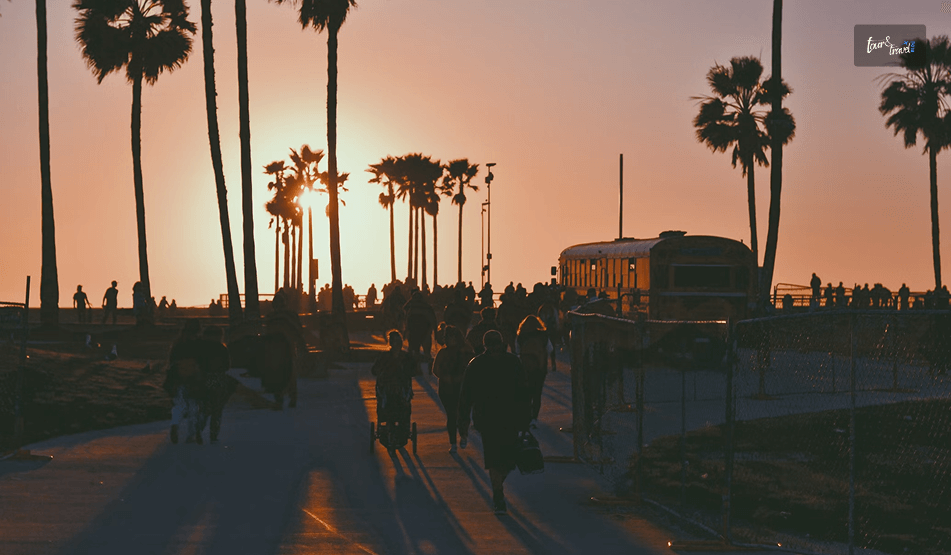
There is art everywhere on the Venice Beach Boardwalk! The Graffiti, murals, and, of course, the street performers make the place a living art gallery. 

Furthermore, painters are showing their genius, and acoustic guitar players are filling the air with their tunes. 

Also, suddenly, you are at Muscle Beach, which is known as the iconic backdrop of photoshoots for almost all the famous bodybuilders in the world. And you never know!

You can even meet the athletes like Dustin Johnson, Ronda Rousey, and Serena Williams here. 

However, that’s not all! The Venice Beach Boardwalk shows the open-mindedness of California and its vibrant spirit. 

So, when you are in Venice Beach, soak in the atmosphere and…

• Explore The Best Food Spots And Shops On Venice Beach

Do you want to feel the soul of Venice in Los Angeles? Explore the shops on the Venice Beach boardwalk and grab the most adorable artistic creations, tie-dye t-shirts, leather items, and whatnot!

Further, if you feel hungry while exploring the shops, you can enjoy a bite of the most delicious tacos, pizza, and fried churros. 

You can even walk to Abbot Kinney Boulevard, filled with new and trendy eating places. You will find vegan delicacies and gourmet dishes there.

• Enjoy Surfing And Skateboarding: Unique Things To Do In Venice Beach

If you are an adventurous soul, you cannot miss a visit to the Venice Skatepark. Surfing and skateboarding have been integral to California’s culture. 

In fact, the Venice Skatepark has been a prominent ground for the “global skateboarding phenomenon” in a global landscape. 

Moreover, there are many surfing schools here, helping you to ride the waves and enjoy the serenity of the Pacific Ocean. 

• Indulge In The Beauty Of The Pacific Ocean

How can you forget the beach itself when you are at Venice Beach? The wide and sandy beach is ideal for relaxing and soaking up the Sun. 

Furthermore, you can play volleyball on the beach, which looks magical when the Sun goes down. 

Also, the shades of pink and orange bathe the palm trees and the waves of the sea and make the entire place look like a postcard. 

Additionally, there are Venice canals near the boardwalk, and they will surely transport you to Italy. 

• Experience The Place As A Meeting Ground Of Different People And Different Perspectives

The boardwalk of Venice Beach is like a giant fair. Here, you will find visitors, local people, musicians, painters, and everyone else meeting one another. 

Everyone here seems to enjoy a free spirit, regardless of where they come from. 

Do you want to know what holds for you in the future? You can ask fortune tellers and tarot card readers here. 

Overall, get ready for the quirkiest and most unique experience at Venice Beach. 

2. Try The Best Food At These Restaurants In Venice Beach: Unique Things To Do In Venice Beach

Try The Best Food At These Restaurants In Venice Beach Unique Things To Do In Venice Beach

Did you think that Venice Beach was only about the Sun, beach, and skating? You were wrong!

Felix Trattoria is the best restaurant on Venice Beach if you want to try authentic Italian cuisine. It serves the best pasta on the West Coast. 

It is located at 1023 Abbot Kinney Blvd, Venice, CA. Also, it remains open from 5-9 PM from Monday to Thursday and on Sunday. Moreover, from Friday to Saturday, it remains open between 5 and 9 PM. 

Gjelina is another great destination along Abbot Kinney for trying the best Cal-Italian delicacies. You must find a seat on the back patio for the ultimate delightful experience. 

It is located at 1429 Abbot Kinney Blvd, Venice, CA. It remains open from 8 AM to 10:30 PM. 

Other popular restaurants on Venice Beach are:

RestaurantsAddressHours OpenSpecialty
American Beauty425 Rose Avenue, Venice, CAMonday: 5:30–9 PM
Tuesday–Thursday: 5:30–10 PM
Friday-Saturday: 5:30–11 PM
Sunday: 5:30–9 PM
Woodfire steaks
Companion1700 Lincoln Boulevard, Venice, CAMonday-Tuesday: 7 AM –3 PM
Wednesday–Sunday: 7 AM–3 PM, 5–9 PM
PizzasPastriesSandwiches
Si! Mon60 N Venice Blvd, Venice, CAMonday–Thursday: 5–10 PM
Friday and Saturday: 5 PM–Midnight
Sunday: 5–9 PM
Gluten-free fried chicken
Crab Gaucho

3. Take An Electric Bike Tour Of Venice Beach And Santa Monica

An electric bike tour with your core group in the morning or afternoon is one of the most unique things to do in Venice Beach. 

Be a part of a guided tour and learn about the history, especially of the place, from the commentary of local guides.

Share on Social Media

Meet Sibashree Bhattacharya, a travel enthusiast who has a decade-long experience in transcending virtual barriers with her words! Her deep love for travel is apparent from her travel escapades to the mountain, often taking her readers on a journey, her words acting as Portkey! Fun fact: Sibashree loves to dive deep into the history of the places she is about to visit, making her travels even more wholesome. If you were wondering how her articles are not short of time travel, this answers it!

Leave a Reply

Your email address will not be published. Required fields are marked *

title-img Related

READ MORE Which Is Colder Minus 40°C or Minus 40°F

Minus 40°C Or Minus 40°F: What To Know Before Planning Your Next Mountain Escapade?

BY  Barsha Feb 3, 2026

Which is colder: Minus 40°C or Minus 40°F? The question appears simple, at least at a glance. But if you think about it, it does open an interesting window into the dynamic world of temperature, rather, how we tend to measure temperature.  Moreover, it also gives insight into why different people use different measurement systems across the globe.  The most fascinating part? How do these systems even relate to extreme temperatures?  The answer might actually surprise you. -40°C and -40°F are exactly equal. Yep! That’s right - it is the point of meeting for the two temperature scales.  On that note, let’s dissect and unpack why this even happens.  More importantly, what else do you need to know about the two temperature scales before you can plan your next mountain escapade.  Celsius Vs Fahrenheit: What’s The Difference? To make things super easy for you to understand, I have laid out the difference between Celsius and Fahrenheit in simple terms below: AspectsCelsiusFahrenheitOriginAnders Celsius, a Swedish astronomer, developed the Celsius scale in 1742. Daniel Gabriel Fahrenheit, a German physicist, developed the Fahrenheit scale in 1724.Definition“of or using a scale of temperature in which water freezes at 0° and boils at 100°.” (Oxford Dictionary)“of or using a scale of temperature in which water freezes at 32° and boils at 212°.” (Oxford Dictionary)Used InMost places in the world, including Europe, Australia, Africa, Asia, and most scientific work. Primarily in the United States of America and some Caribbean countries.Conversion Formula°F = (°C × 9/5) + 32°C = (°F − 32) × 5/9 So, Which Is Colder: Minus 40°C or Minus 40°F? I already answered this question in the very beginning - both are the same! It is the point at which the two scales meet.  So, if you use the conversation formula I have listed above, then: -40°C × 9/5 + 32 = -40°F Also, this is the only point where Fahrenheit and Celsius readings match.  Then, why does it confuse all of us? It is mainly because of three primary reasons, as per my understanding:  Most individuals don’t really encounter extreme weather conditions. So, they do not really come across this overlap point.  Secondly, in most countries, the education system teaches only one scale. As a result, there is little or no intuitive comparison.  Finally, Fahrenheit readings are usually larger for both outdoor and room temperatures. For example, 50°F is equivalent to 10°C. This automatically makes most individuals assume that the two scales don’t match.  Where Does It Hit -40 On Earth? Places like Greenland, Northern Canada, Siberia, and some regions of Scandinavia go down to -40 regularly during the winter months.  For example: In February 2021, temperatures dipped to -43°C in Sweden.  Siberia, Canada, and Yukon also experience these levels regularly.  In these regions, both Fahrenheit and Celsius are the same - you will shiver equally.  In this context, I have a fun fact about the coldest temperatures recorded on Earth: In 1983, Vostok Station, located in Antarctica, recorded −128.6°F (-89.2°C) (Source: Britannica)  That is literally double what you will feel at -40°. More importantly, it is a real-world reminder that extreme weather conditions and environments exist on Earth.  How Cold Does It Feel At -40°? The truth is that whether it is -40°F or -40°C, you will feel the same. And trust me, I’m not kidding - you will literally shiver!  In February 2021, I experienced -40°C in Yukon. My thermometer read -40°F, and I experienced frostbite risk within minutes. Whether it’s -40°C or -40°F, the result is the same: Your skin will freeze within minutes without the right protection.  Vehicles might not even start. Metal will stick to the skin.  Your eyelashes might freeze.  At -40°, it is dangerously cold regardless of what scale you are using.  Also, the wind is so chilly that you will shiver and can fall sick or even die without the right gear and equipment.  How -40° Feels On The Human Body? So, I can’t just keep telling you guys that it is going to be dangerously cold.  Instead, it is much better to give you all the real picture of how the human body is bound to react at sub-zero temperatures:  Temp (°F/°C)Impact On The Human Body-76°F/-60°CIt is painful to even breathe. Also, exposed body parts, including eyes, will freeze.-40°F/-40°CSkin will freeze in two minutes. Also, metal will stick to the skin. -22°F/-30°CExposed and unprotected skin, including eyelashes, will freeze in ten minutes. -4°F/-20°CNumbness begins to set in, with an increasing risk of frostbite. 14°F/-10°CThe skin begins to sting, with a risk of frostnip if exposed. 32°F/0°CBreathing becomes visibly tough. Also, fingers stiffen in a few minutes.  Even without any chilly winds, subzero temperatures are hazardous, especially if you are not prepared.  At -40°, both Fahrenheit and Celsius, there is only one brutal truth: without protection and preparation, it is dangerous and life-threatening.  Winter Hiking Hazards You Should Know About: Winter can alter any landscape radically, striking a balance between mesmerizing beauty and quirky dangers.  And while it is impossible to talk about all hazards in detail, I’ve compiled all the possible winter hiking hazards and their mitigation strategies below: Winter Hiking HazardMitigation StrategyFrostbite & HypothermiaCheck the weather, pack extra clothes, and layer well.Slip & FallUse microspikes or crampons and trekking poles.Getting LostUse a compass, maps, and a GPS. Also, try mapping your route.Fatigue & DehydrationEat frequently, stay hydrated, and pack extra food (and water).Falling Into Ice or WaterAlways test the ice and be careful while crossing icy terrains. CornicesAvoid walking under or on the edges of ridges. Equipment FailureKeep electronics warm. Also, carry gear repairs and physical maps. Tree WellsIn deep snow, avoid the base of trees. AvalanchesCheck forecasts for avalanches. Also, avoid steep terrains. Short Daylight HoursStart early, carry spare batteries, and definitely wear a headlamp. In addition, I’ve touched upon the common (but very dangerous) hiking hazards that you can come across at sub-zero temperatures in the mountains in detail: 1. Ice: Of course, you need to worry about ice! In the winter months, melt-freeze cycles turn hiking trails into slippery ice. Similarly, this can also happen on popular tourist routes where snow is compressed over a long period of time.  If you slip on these icy trails, it will lead to bruises and bumps. Moreover, a bad slip and fall can lead to serious wrist, ankle, or back injuries.  As a result, it is best to carry metal-tipped trekking poles and traction for additional stability in such conditions.  2. Avalanches: In the United States, avalanches (as per avalanche.org) kill between 25 and 30 people every winter. Moreover, the injury rates are much higher.  Most victims are ice climbers, snowmobilers, snowboarders, and backcountry skiers. However, oblivious hikers do get caught in avalanches occasionally.  The worst part? Nearly 95% of avalanches begin on slopes that are between 30 and 45 degrees in steepness.  However, the snow ends up traveling down to the flat terrain - and it even appears to be safe to an untrained eye.  As a result, it is vital to consult topo maps, check trip reports, and talk with local experts before you set out. That is your best shot at safety in the face of an avalanche.  3. Glaciers: Many of the iconic summits in the United States are guarded by glaciers.  While there are several snowfields across the western part of the United States - mostly misnamed as glaciers - you will find true glaciers mostly in the Pacific Northwest and in the far north.  Moreover, these are active glaciers that moves around, forming cracks with time. As a result, these fissures, A.K.A crevasses, lie under the snow, hidden from the human eye. Naturally, fatal falls - and unexpected ones - become a major possibility.  So, it’s best not to step out on glaciated terrain unless you have some experience in both glacier navigation and snow travel. This also includes improving your fissure-rescue skills.  4. Steep Snow: The challenge and adventure of climbing snow-covered, steep slopes is certainly thrilling.  Recently, I had the opportunity to try out snow climbing, and while it was thrilling, I can’t overstate the importance of safety and experience.  It’s so much more technical than it appears visually - if you slip even once, you can slide down the steep slope. Also, you have to know: How can you assess the snow conditions around you? Use crampons.  Take a fall with the help of an ice axe.  Additionally, it is best to be familiar with avalanches and safety first. Because a majority of snow climbs will require you to cross terrain prone to avalanches.  What To Know Before Planning Your Next Mountain Escapade? 9 Tips That Can Keep You Safe! Safety in weather extremes, especially in the mountains, requires careful preparation, specialized equipment, and a constant awareness of your body’s condition.  Moreover, the combination of high winds, rapid changes in weather, and freezing temperatures leads to life-threatening conditions. And that too in minutes.  This includes the risk of both frostbite and hypothermia. Moreover, preparing for freezing temperatures is incomplete without strict layering, high-calorie nutrition, and waterproof gear. And still it’s not enough - surprised? Well, don’t be! Instead, scroll down for the internet’s most comprehensive list to prepare for survival in freezing temperatures in the mountains. 1. Stay Hydrated: Problem: Dehydration is very common in freezing temperatures, much like hotter regions with arid weather conditions.  How? The cold weather conditions can easily suppress thirst. But the dry air in the mountains and high levels of physical activity will make your body dehydrated - and this will happen faster than you can possibly imagine.  Moreover, dehydration can lead to dizziness, fatigue, and headaches.  Solution: As a result, you should try carrying a thermos with herbal teas (like chamomile, tulsi, or ginger) or just warm water with lemon and honey. These can hydrate you, keep you warm from the inside, and boost immunity.  Also, on this note, avoid caffeine or any caffeinated drinks since they will dehydrate you faster.   2. Nourish Yourself: Problem: Your body will burn a lot of calories to stay warm in freezing temperatures.  As a result, even if you think that a bowl of hot Maggi seems like an appealing meal for the mountains, it is crucial to balance comfort and nutrition.  Solution: So, you should focus on energy-dense and high-calorie food items like seeds, whole grains, and roasted nuts to ensure high energy levels in the body.  Moreover, you can consider adding warming ingredients to your food. Ingredients like turmeric, garlic, and ginger can fight cold and improve digestion.  Also, if you do end up eating a steaming bowl, then add boiled eggs or vegetables for a healthy, protein-packed version.  On that note, here’s a list of things you can eat: Beef jerky.  Trail mix. Nuts. Milk chocolate. Pretzels or chips. Cheese and deli meat. Tortillas or crackers. Pizza slices. Pumpkin or banana bread. Peanut butter sandwiches. 3. Protect Your Lips And Skin From Dryness: Problem: Cold and dry air is not good for the skin - it strips the skin of moisture. And this in turn leads to dry hands, irritated skin, and cracked lips.  This is highly uncomfortable and causes skin damage if you don’t address it within minutes.  Solution: As a result, always use a moisturizer that is thick and nourishing before stepping out. Moreover, while doing so, focus on different areas like your face, neck, and hands, which are prone to getting exposed.  Also, do not forget to apply lip balm on your lips - and ensure the lip balm comes with SPF for protection against the UV rays of the sun and the cold, both of which are strong at high altitudes.  In addition, eat food items that have a high percentage of omega-3s. This includes flaxseeds and walnuts, both of which are perfect for hydrating your skin from within.  4. Stay Active For Proper Blood Circulation: Problem: When you are absolutely stationary in freezing temperatures, your blood circulation will slow down. This, in turn, makes you feel colder.  Solution: The only solution here is not to sit in the same spot for too long.  So, try out light activities such as walking, stretching, or even a few squats to ensure proper blood circulation. Also, it feels good to do light physical activities after a long day of trekking.  5. Take Care Of Your Altitude Sickness: Problem: At high altitudes, you can expect oxygen levels to fluctuate and drop. This, in turn, can cause fatigue, nausea, or dizziness.  Solution: You should give enough time to your body - that way, your body will be able to adjust. As a result, it is best to take it easy on day 1.  Moreover, drink lots of water and eat food items that are rich in antioxidants. This includes berries, nuts, and fresh fruits. That way, your body will be able to fight the stress and pressure of altitude.  If you are feeling unwell at any point, don’t push too hard. Rest is very important.  6. Support Your Body’s Immune System: Problem: The blend of altitude and cold weather can easily weaken your body’s immune system. This, in turn, will make you prone to illnesses.  Solution: Incorporate food items that are rich in Vitamin C, like amla or oranges, in your daily diet in the mountains to boost your body’s immune system.  Moreover, warm soups are also great - but ensure these have vegetables, lentils, or even chicken stock. Why? Because it offers warmth, hydration, and nourishment together.  Also, ensure you can sleep well - a good sleep cycle will recharge your body.  7. Look After Your Feet: Problem: Remember that cold or wet can lead to chilblains, frostbite, and lots of discomfort. Solution: Invest in insulated and waterproof boots. Moreover, you can consider wearing thick woollen socks to ensure your feet are dry and warm.  Also, don’t forget to carry an additional pair of dry socks - that way you can change socks if your feet feel too damp. In addition, you can try massaging your feet with a nice, warm balm. Why? It will prevent dryness and improve circulation.  8. Breathe Smartly For Avoiding Cold-Air Effects: Problem: If you directly breathe in icy, cold air, then it will irritate your lungs.  Trust me on this one! It has happened to me. And then you will start coughing. Some people also feel a tightness in their chests.  Solution: When you start feeling chilly, try to breathe through your nose and avoid doing it through your mouth. This will keep you warm, moisturizing the air even before it can reach your lungs. Also, this will help you to keep respiratory problems at bay.  9. Prioritize Mental Wellness: Problem: The beautiful solitude of the mountains can be very peaceful. However, at times it can get very overwhelming. As a result, staying healthy mentally is just as crucial as looking after yourself physically.  Solution: Take some time for yourself so that you can practice mindfulness - and while doing so, don’t forget to appreciate the beauty around you.  Moreover, you can consider carrying a journal for jotting down your reflections and thoughts.  Also, it is healthy to count on your group to stay connected. Why? Sharing experiences together can motivate everyone and lift spirits. 

READ MORE Places to Visit Near Delhi

Unexplored Places To Visit Near Delhi – Explore The Unexplored Delhi

BY  Abdul Aziz Oct 6, 2021

When we talk of exploring Delhi or looking for places to visit near Delhi, we find the same regular answers. Delhi, being the capital of India, has received enough love over the years; hence, we call Delhites “Dilwala.” Dilwala means someone who has a big heart.  Exploring Delhi includes the Red Fort, Jama Masjid, Taj Mahal Lodhi Gardens, etc. But is that enough to see in Delhi? Nothing beats the beauty of the off-beat places in Delhi.  Here, we will talk about the lesser-known places in Delhi that are worth noting. Unexplored Places To Visit Near Delhi Here we will list the not too famous places in Delhi that you will definitely love, You must visit them at least once in your life. Many people who visited Delhi are also unaware of these places. Do not miss this opportunity. Visit the places near that have not been explored ever before are here. Here are the places to visit near Delhi,  Delhi is one of the world’s top travel destinations and is frequently a stopover point for people looking to visit the wonders of Rajasthan and the famous Taj Mahal in Agra. However, if you want to just be in the capital city of India, and undertake Delhi tours, you can take help from the below-mentioned unexplored places. From great food to inspiring culture, Delhi has something to offer to every traveler.  1. Hauz Khas Village Exact Location – Hauz Khas Village, South DelhiNearest Metro – Hauz Khas This is an amazingly beautifully crafted medieval age city of the new age party culture. The name of this place is Hauz Khas Village, but without mention, this place is surprising. This place has a unique combination of tradition and trends. Leaving aside the sculptural beauty this place also has some new and trendy pubs, clubs, and cafes. The youth of Delhi enjoys this place day and night.  Many might not be aware that the place where Hauz Khas Village has been built was a place named Siri in the past. Since this place is situated in south Delhi, it faces a lot of crowds there. This tourist destination is securing its first place in the list of the best tourist places near Delhi. 2. Majnu ka Tila Exact Location – GT Road Nearest Metro – Vidhan Sabha metro station is near the Majnu Ka Tilla. This is the Tibetan colony which is also known as “the little Tibet”. This place gives shelter to 1000s of Tibetan refugees who had followed their religious leader Dalai lama. Now the entire area is for the Tibetan people who have made up their lifestyle comfortably in Majnu ka Tilla.  This place is located in North Delhi and represents the vivid Tibetan culture and tradition with clothes, accessories, and food of Tibet. Anyway, you could enjoy food in Delhi, but the food that the menu ka Tilla has is incomparable. The places near Delhi all are a little bit different, impression-wise. Anyway, you could enjoy food in Delhi, but the food that the Majnu ka Tilla has is incomparable. The places near Delhi are all a little bit different, impression-wise. 3. Mirza Ghalib ki Haveli Exact Location – New Delhi, Qasim Jan Street, Shahajanabad. Nearest Metro – Chawri Bazar Metro is the Nearest Metro station. This is the Haveli or the palace made in the memory of the world-recognized Urdu poet, Mirza Asadullah Baig Khan who is also known as Mirza Ghalib. He is said to have produced the most famous of his creations when he was in this home. Hence this place stands of importance to everyone.  This place is in Chandni Chowk which is the heart of the city, and it has been transformed into a museum now because it is maintained by the Government. Chadinchwak is a popular marketplace. Many tourists are visiting Chandni Chowk as a popular marketplace. But do you ever searching the “places to visit near me” when you are already in the Chadnichwak market? Try these tricks and let us know what the different types of tourist destinations you are getting. 4. Best Places To Visit Near Delhi – Sanjayvan Exact Location – Vasant Kunj, New DelhiNearest Metro – The nearest metro stations are the Chhattarpur metro station and the Qutub Minar metro station.  No one would have ever thought that there could be a forest in the heart of the city? But there is, the Sanjayvan is right in the middle of South Delhi. It is very close to the Qutub Minar there. It is a lush green forest, and this green forest spreads over 780km straight from all directions. This is one of the best-hidden places to visit near Delhi. This Sanvayvan is near or between Mehrauli and Vasant Kunj in the southern part of Delhi.  5. Best Places To Visit Near Delhi – Ghazipur Phool Mandi Exact Location – Ghazipur Village Nearest Metro Station – Anand Bihar ISBT is close to this place. You can either take an auto or walk down. As soon as you enter this place, you will get the fragrance of different kinds of flowers. Different types of flowers are there in this market, right from marigolds, roses, orchids, tulips, carnations, lilies of different types are available here. When you are searching the places to see around Delhi, you are getting the options from the surrounding areas, which are mostly human-made or artificial, but this small village is delivering the beauty of nature. This is an astonishing magical place known for its beautiful collection of flowers in the market. This place has all sorts of flowers at unimaginable low prices. You must take a visit to this place if you are visiting Delhi. This flowery village is one of the best places to visit near Delhi. 6. Neemrana, Rajasthan Neemrana has been recently in the news with the rising air pollution level in the NCR region. So, the Graded Response Action Plan (GRAP-4) has started in Neemrana, which borders Rajasthan.  Just around 116 kms away from Delhi, is Neemrana in Rajasthan. It is the ultimate destination if you are a history buff.  Once the power seat of Rajput Chauhans was taken over, Neemrana has now become a heritage destination.  Neemrana Fort is the center of attraction here and it was built by the Chauhans. However, unfortunately, the fort became an abandoned place in 1947.  Further, in 1991, there was some revival work to transform the Fort into a heritage hotel.  Also, Neemrana is famous as the zipline site in India. So, you can go for a zipline tour here for some adrenaline rush.  You can even visit the Neemrana Baori here and learn how this underwater conservation project has been crucial in the social and economic evolution of Neemrana.  Moreover, you cannot miss enjoying a camel ride when in Neemrana. It is the best way to understand the traditional way of living in Rajasthan.  7. Nuh, Haryana Just around 2 hours drive from Delhi, Nua is one of the less-explored places to visit near Delhi. Its distance from the New Delhi Airport is around 63 kms.  If you are a history buff and have an interest in Sufism, you must visit the Sheikh Musa Mosque. This mosque has an association with the Chisti Order.  Further, if you love watching birds, you must spend some time at Hari-Ke-Pattan Bird Sanctuary. There is no entry fee to visit the sanctuary and it remains open between 9 AM to 5 PM. The Hari-Ke-Pattan wetland is a manmade wetland spanning across 4100 acres. It is the largest in North India and is home to almost 375 species of birds.  You will find here great crested grebe, Indian Skimmer, Black-Necked Stork, etc. You may even spot jackals and wild boars here.  Moreover, if you are interested in automobiles, you can visit the Heritage Transport Museum in Nuh.  Frequently Asked Questions  Where should I go for a one day trip to delhi? You can visit these following places Murthal Damdama lake  Mathura and Vrindavan Noor Mahal Karnal  The Taj Mahal, Agra Where can couples go for privacy in delhi? Garden to five senses Qutub Minar Lodhi garden Millennium Indraprastha Park Hauz khas Village. What are the lesser known sights in Delhi to visit? Haveli Of Mirza Ghalib  Agrasen ki Baoli Majnu ka Tilla Sanjay Van  Kumhar Colony Where can I sit and study in delhi? Triveni Terrace Cafe Ivvy and Bean  Bent Chair Cafe Tea Trails Cafe Conclusion Delhi is the capital city. The rich history and the perfect combination of modern attire and historical background are making this place a perfect tourist spot. The city’s culture is very devised, and this diversity is making Delhi a different kind of tourist place. When you want to feel the true vibes of Delhi, visit these unexpected surrounding tourist places along with the main city. When you want to feel the true vibes of the city, include the unexplored places to visit near Delhi in your itinerary. Along with the places mentioned, you can also visit Nizamuddin Dargah, Agrasen ki Baoli, and Meharauli Archaeological Park.  Further, Delhi is about exploring the local culture. From enjoying the whiff of spices at the biggest wholesale spice market in Asia (Khari Baoli Road) to taking a stroll around the painted houses in Naughara, you have a lot to do in Delhi. If you liked our post, please comment below, and do not forget to share your experience with us. You May Also Like:  Luxurious Wedding Venues – Make Your Destination Wedding Glamorous Tattoo Bali – Tips Before Getting A Tattoo Best Places For River Rafting In India

READ MORE Fishing

Catch The Day With The Ultimate Fishing Guide For Travelers

BY  Nabamita Nov 29, 2023

Fishing transcends mere recreation; it's a doorway to nature's beauty and cultural immersion. Picture yourself amidst stunning landscapes, casting your line into shimmering waters as you feel the gentle tug of a potential catch. Whether you're an angling aficionado or a novice eager for adventure, this comprehensive guide is your compass to curating an unforgettable fishing trip during your travels. Choosing the Ideal Fishing Destination Selecting the right fishing spot lays the foundation for a memorable journey. Beyond merely seeking a productive location, consider destinations that offer a complete experience. For instance, Key West fishing charters present a picturesque setting blending abundant fish varieties with the vibrant local culture. Whether you prefer freshwater lakes, coastal bays, or deep-sea adventures, understanding the nuances of each location ensures a fulfilling experience. Preparing for the Adventure Packing for a fishing expedition demands meticulous planning. Aside from the essential fishing gear—rods, reels, lines, and tackle boxes—ensure you're equipped with suitable attire, sunscreen, and ample hydration. Equally crucial is familiarizing yourself with local regulations and guidelines governing fishing activities. Acquiring the necessary permits or licenses and understanding catch limits prevent any unwanted setbacks during your trip. Techniques for Successful Fishing Mastering fishing techniques is a blend of art and science. Beginners might start with fundamental casting methods and basic bait presentation. As proficiency grows, exploring advanced techniques like fly fishing or trolling allows anglers to target specific species more effectively. Understanding the nuances of each method significantly enhances the likelihood of a successful catch, adding to the thrill of the experience. Immersing in the Experience Beyond the thrill of reeling in a catch lies a deeper connection with the environment and local culture. Engaging with the surroundings, appreciating nature's serenity, and immersing yourself in the local fishing traditions enriches the experience. Embracing sustainable fishing practices, such as catch-and-release, not only preserves the ecosystem but also fosters a profound respect for marine life and its conservation. Capturing the Moment Preserving the essence of your fishing journey extends beyond the memories. Through photography, storytelling, or journaling, you immortalize these moments. Share your adventures on social media platforms, compile them into a personalized travelogue, or simply cherish them as a testament to the enriching experience. Reflecting on these memories heightens the impact of the journey, fostering a deeper appreciation for the adventure you've embarked upon. Conclusion In summary, embarking on a fishing expedition while traveling transcends the act of catching fish; it's about embracing a holistic experience. From meticulously selecting an ideal destination like Key West fishing charters to meticulous preparation, mastering fishing techniques, immersing in nature and culture, and capturing indelible memories, each facet intertwines to create an unforgettable journey. So, pack your gear, set sail, and let the waters guide you towards an adventure that's more than just a fishing trip—it's a soul-enriching escapade. Read Also: Six Important Factors To Consider Before Planning Alaska Fishing Trip 10 Best Fishing Charters In Florida To Visit In 2022 – Tour And Travel Guide Unforgettable Island Adventures: Things To Do In Tenerife