






10 Things To Do In Bogota – You Must Know Before Going

Jan 12, 2021

Last Updated on: Aug 26, 2025

Travel Blog

Whenever we are taking the name of Bogota in Colombia, what comes first into your mind? A beautiful dreamlike country with full of colors and the magnificent tropical landscape or beautiful Spanish-speaking people, I think almost everything. You will amaze to see all these things just within a single City. If we are telling you that more astonishing things to do in Bogota are the most desired outcome of visiting the place. The city is full of vibrant colors and small scattered towns. If you want to taste the real flavor of Colombia, then there are no other options than Bogota.

Bogota is a well-balanced city in Colombia, where you can see 400 hundred years old historical churches, along with modern high rise buildings. Bogota is the combination of these best two. For these reasons, the capital of Colombia just scores 10 out of 10, and it has become every traveler’s most desired destination. 

You will see the old and new two different flavors but mixed up and serve you the best traveling experiences. The stunning colorful pebbled path and the colorful houses with the painted walls always give you the thrill of the old and historical flavor. The century-old plazas and the new boutiques are the great combinations of old and the new.

As Bogota is famous among history-loving travelers and excavators, Colombia provides us with the clearest, natural, and a beautiful tropical environment full of modern pubs and cafeterias.

 So here is the list of the most popular destinations among all age travelers to get the perfect flavor of Colombia and Bogota. And you will get the full idea about things to do in Bogota Colombia.

1. Bolivar Square

Bolivar Square image

Bolivar Square has a rich pre-Columbian history. This is the Oldest and the ancient square of Bogota. Bolivar Square is the all-time attention point of Bogota. As the oldest cathedral is in here and the Christmas and the other celebrations and the festivals are always taking place here. Previously it was used as the bull market and for the public circus, but now almost every program occurs here.

This is the main downtown in the whole city. If you are traveling at Christmas, you will see how the full square is just flowing with thousand lights. This feeling will be heavenly when you can see the beautiful candlelights under the approx 400 years old building structures. 

Bolivar Square is surrounded by some very important buildings like the Sacred Museum, Archbishop’s Palace, Caracas Cathedral, City Hall, Chapel of Santa Rosa de Lima, the Yellow House and the Main Theater, and the building of the Government of the Capital District. The most important structure in the Bolivar square is Simón Bolívar,  which is in the center of the square. This statue was first inaugurated in 1874. Apart from Square, more things to do in Bogota are just mentioned below.

2. Museo Botero

Museo Botero image

The Borato Musume or Museo Botero is one of the popular destinations among tourists. This museum is one of the oldest and the most important art that affects the Museum of Latin American history. This museum is the best collection of art effects as almost 1,000 people are visiting here. One month 2000 art students are visiting here to gain knowledge about the place and the art effects.

This museum is very near to the popular Gold Museum of Bogotá and the Luis Ángel Arango Library. This museum is the full treasure island for any art enthusiast and the art students. They provide almost 208 types of artworks, a safe house of collections. Among them, 123 artworks are of Fernando Botero. You can see other famous artist artworks like  Salvador Dali, Joan Miró, Balthus, Georges Braque, Marc Chagall, and Pablo Picasso.

3. Gold Museum

Gold Museum image

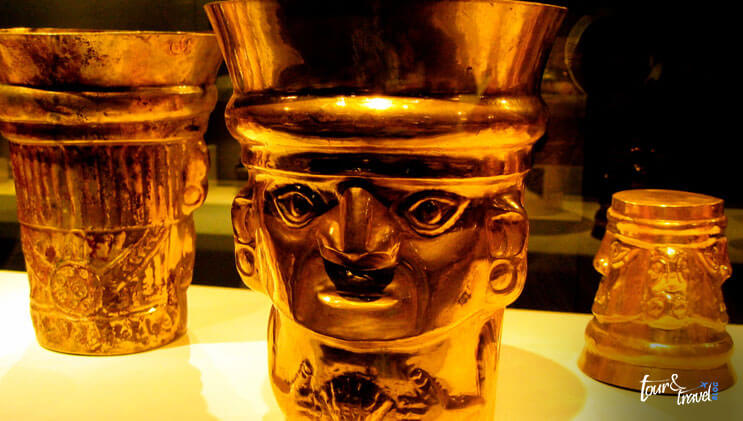
Are you not fond of the yellow Noble metal, the shiny, glittery gold? Bogota’s Gold Museum is one of the world’s largest collections of pre-Colombian gold pieces. This museum has almost 55,000 pieces of archeologically excavated gold. Among them, 6,000 are on public display. Without visiting the gold Museum things to do in Bogota is quite an incomplete list.

The first floor of the museum consists of one entrance and restaurants. The real gold collections are starting on the second floor. You can see the different cultural gold, which is dated almost pre Spanish colonies arrival. If you want to feel the real Old Colombia, this museum is the best option for you. The Gold Museum is the most visited museum in Bogota; almost every 500,000 tourists are visiting here.

4. Monserrate

Monserrate image

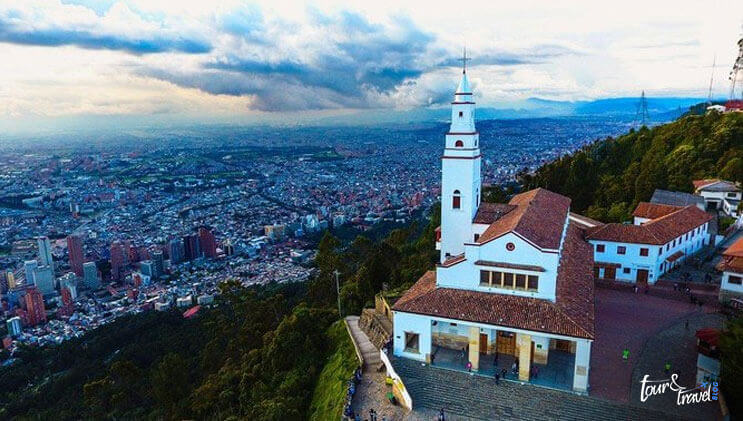
Monserrate is the 10,000 feet high mountain that dominates the whole of Bogota city. Beside the hill, there is one oldest 17th Century church named El Señor Caído, which is almost 10,341 ft above sea level. This mountain was always counted as the secret place for the people from the pre-Colombian time, but after the Spanish colonial arrival, these are just becoming the home of all God’s heaven on earth. Hiking, cycling, and climbing are the two main things to do in Bogota.

There are two ways to climb the peaks of these hills one is by hiking routes another one consists of cable car roots. The hiking path is not very long, only 2.5 Km. The travelers and the pilgrims are always taking the walking trails. This mountain is just behind Bolivar Square. You can see the sunrise and the setting from Bolivar Square.

5. Salt Cathedral of Zipaquirá

Salt Cathedral of Zipaquirá image

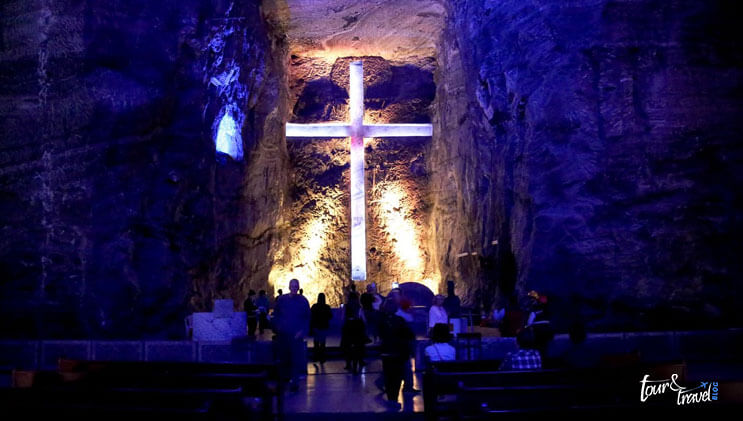
The salt cathedral of Zipaquirá is built under the Roman Catholic Church. It was a 200miter salt mine and almost 600 miter underground from the halite mountain. Now it has become a very well-known tourist destination. The cathedral is the most notable Colombian structure of history. 

The halite rocks are fully curved with Jesus’s birth, life, and death. This cathedral is also weighted for its archaeological value. If we are telling you the salt mine age, you may be amused by the date. This halite mine was exploited at the time before Colombian history, and the Zipaquirá has one of the oldest human civilizations. This Cathedral is just 49 km far from Bogota’s main city.

6. Laguna de Guatavita

Laguna de Guatavita image

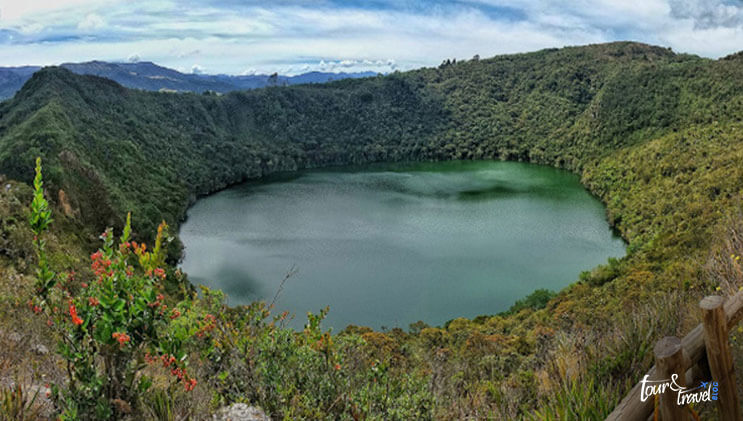
The lake Guatavita is just a perfect spot for chilling down beside the natural tropical lake. This lake is surrounded by small green hills and beautiful trees. The circular lake is almost 19.8 hectares and only 57 km from the Bogota main city. There is a hot water spring near the lake. These lakes also have a very old archeological value as the lake is the secreted ground among the local Muisca people.

The gold is everywhere in Bogota; few gold items are found from the bottom of the lake. The gold museum to Lake Guatavita, everywhere you will get to see the beauty of the old and the new. The pre-Columbian cultural people are involved in the sacred cultural duties, which are gold disposal rituals. Maybe you can find gold from the bottom of the lake, but the bright golden color sun rays reflect on the lakes’ clearwater, just giving you the gold achieving feelings.

7. Tejo

Tejo image

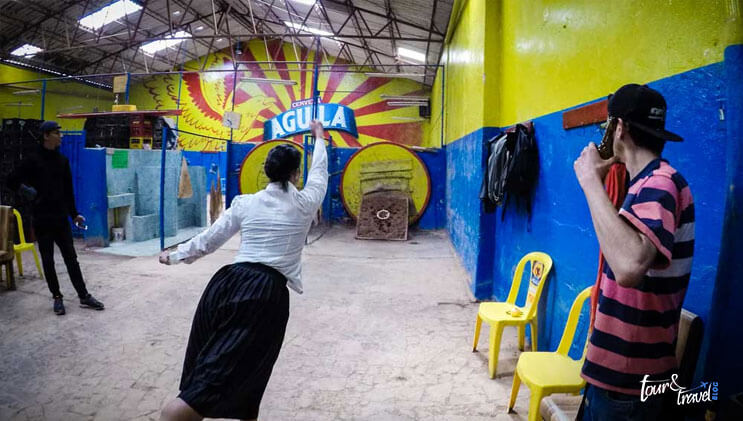
If you are in Colombia but do not have the time to play Tejo. Then your Colombia tour is just incomplete without playing these traditional throwing games. Without Tejo, things to do in Bogota are quite colorless. Many scientists and the archaeologist say these new forms of playing Tejos are the ancestors of the century-old pre-Colombian throwing games. 

At the present time, the target is designed with gunpowder; whenever any participant shoots the target at that time, the gunpowder explosion just alarms the crowd who are watching the game. 

8. Zona G

zona g image

Are you a Gourmet food lover? So there is the best choice of things to do in Bogota but with the delicious food, the list is incomplete. Zona G is the best destination for you to take the authentic Colombian Gourmet food taste. This is the best dining destination for all travelers and the locals. The whole area is crowded with multiple types of food serving restaurants.

The Chinese, French, Italian are the main cushion restaurants which are just offering their service here. The whole area is the biggest food plaza, which consists of multiple dining options. 

9. Museo Nacional de Colombia

Museo Nacional de Colombia image

If you are asking about the most archeologically valued Museum, then Colombia’s National Museum is the best things to do in Bogota. It has 20,000 pieces of art effects. This is the oldest Museum in Colombia, built-in 1823. The 10,000 art effects are from the Afro Colombian period.

The museum fortress itself has very high archaeological value. The structure is just built with stone walls, and this was the old fortress. This huge building serves as the prison till 1946. After 1975 this building was adopted as the national Musume. Not only art effects but also you will enjoy the historical paintings. 

Also Read: Top 11 Unique Things To Do In Flagstaff

10. Bicycle Tour

Bogoto Bicycle Tour

Bogota is a perfect place for bicycle tours. The small walking trails and the bicycle path are just covering the whole of Bogota city. If you want to feel the thrill, then just book for the bicycle riding tours. So this is one of the best things to do in Bogota. The local plazas and the local areas are just best for taking the ride.

Bogota has a wide range of bicycle trails, and they offer such a good traveling plan for bicycle renters. While riding the bicycle, you can enjoy the beautiful small villages and each house’s painted walls, and the colorful cobbled path is the best view you will get to enjoy.

Conclusion

If you want to explore the whole city entirely, then you must travel to the city by bicycle or on foot. The hill’s narrow roads are just perfect for bicycle riding or walking tours. The flavor of the small city is just so attractive. If you once go to Bogota, you will feel the warmth and the hospitality of the locals.

If you can not find the proper walking way, then communicate with local people and they will guide you towards your destinations. Visit Bogota and feel the real heritage of Colombia. You can also visit Medellin which is just 260 miles away from Bogota. And enjoy the best amazing things to do in Medellin Colombia in the same way. 

You May Also Like: 

Share on Social Media

Subham Saha started his career as a professional web content writer. He has more than 4 years of experience in digital marketing. He also has a great knowledge in SEO, SMO, Website development, etc. He completed his graduation in Electrical Engineering. He is very passionate about building his career in the Digital marketing industry. Subham has a great interest in reading books about Business, Economics, Psychology, Technology, and History.

Leave a Reply

Your email address will not be published. Required fields are marked *

title-img Related

READ MORE Hot Springs National Park

Be Soothed And Meet History At Hot Springs National Park

BY  Sibashree Aug 20, 2024

The Arkansas Hot Springs National Park is a place where stories and histories are intertwined with natural abundance and unique geological features.  Home to 47 hot springs, this national park has been a place of healing and relaxation. These springs offer the ultimate spa treatment after you complete arduous hiking through the trails.    Are you ready to indulge in a therapeutic experience at this national park known as the American Spa? Let’s take a deep dive.  Also, I have grabbed this opportunity to talk about the rich history of the park.  Know The Hot Springs National Park History And Culture  The 5,500-acre landscape of the Hot Springs National Park tells us many tales from the trails and springs. This park has seen novaculite extraction by American Indians for thousands of years, as well as The Great Fire of 1878.  Even before the park’s designation as a Hot Springs Reservation in 1832, historic events like the Dunbar-Hunter Expedition took place here. Many historic places in the park, including the Hot Springs Mountain Tower, Arlington Lawn, and Stonebridge Area, have been narrating the stories of this park for centuries.  Hot Springs Mountain Tower Built in 1983, Hot Springs Mountain Tower is a great place for visitors to enjoy the panoramic view of the park and the surrounding area from a 1,256 ft height.  Don’t miss to catch a glimpse of the Ouachita Mountains from the open-air upper deck of the tower. The air-conditioned lower observation deck offers you the opportunity to explore exhibits related to the history of the locality and the park. Also, if you want to collect souvenirs, you can visit the gift shop at the base of the Hot Springs Mountain Tower. This tower was first built as a wooden structure in 1877 by Enoch Woolman. Further, in 1906, a new steel tower was built, and it was known as Rix Tower after Charles N. Rix, the then-president of Arkansas National Bank. However, the Rix Tower was taken down in 1971.  Bathhouse Row The Bathhouse Row is probably the most iconic and visited place in the Hot Springs National Park. It has 8 bathhouse buildings, all of them built between 1892 and 1923, adding to the historic and architectural value of the park. These eight bathhouses are: Lamar Bathhouse Buckstaff Bathhouse Ozark Bathhouse Quapaw Bathhouse Fordyce Bathhouse Maurice Bathhouse Hale Bathhouse Superior Bathhouse In 1987, Bathhouse Row with Grand Promenade became a National Historic Landmark District. Arlington Lawn The Arlington Lawn gets its name from the presence of the first two luxurious versions of the Arlington Hotel present here.  The first version of the hotel was built in 1875, and a second or grander version replaced it in 1893. The second version had a glorious run until 1923 when a fire broke it down. In 1925, the third Arlington Hotel (which you can see now) came up an unbelievable 500-room accommodation.  Whittington Park  Whittington Park got its name from Hiram Abiff Whittington, an early resident of Hot Springs. The greenway stretches along Whittington Creek, which stands between Sugarloaf Mountain and West Mountain.  Constructed in the late 1890s, Whittington Park was initially called Whittington Lake Reserve. You can enjoy a relaxing walk through this tree-shaded greenway.  Stonebridge Area  The Stonebridge Area is the best spot in the National Park to watch turtles. You will also see a waterfall area carving through step-like structures in the rocks.  Further, Lake Lillian, now known as Ricks Pond, is here with its tranquil beauty and turtles floating in the water.  What Is Hot Springs National Park Famous For?  Known as the American Spa, Hot Springs National Park has 47 natural hot springs. Since the early 1800s, people have been visiting this park to soak in the hot and cold springs here. Further, thanks to the healing geothermal waters here, bathhouses and a full-fledged bathing industry were built here. The average temperature of the bath springs water here is 143° Fahrenheit. You can soak in the springs in the Buckstaff and Quapaw bathhouses, as there are no opportunities for soaking in the water outdoors. You can even drink the water from these springs, and the geothermal water of the springs has healing properties.  Hot Springs In The National Park  Here are some of the hot springs in the national park. You will find hot springs In front of the Libbey Memorial Physical Medicine Center and the National Park Service Administration Building on Reserve St. Visit the Bathhouse Row and find the hot springs between the Hale and Maurice Bathhouses.  You will find the Noble Fountain at the Grand Promenade south entrance on Reserve St. If you want to touch the geothermal water of the springs, you can visit the shallow pool where the Display Spring falls.  Cold Water Spring Fountains  Happy Hollow and Whittington Spring are two cold water spring fountains in the national park. The origin of the Whittington Spring is the West Mountain, and the Hollow Spring comes from the North Mountain. Hiking And Camping In Hot Springs National Park Camping and hiking are two of the most fascinating things to do in Hot Springs National Park, Arkansas.  Hiking In Hot Springs National Park  Hot Springs and North Mountain Trails and West Mountain Trails are the two most popular destinations in the park for trekking. However, there is also a Sunset Trail, which is longer and passes through the remote areas of the park. Hot Springs And North Mountain Trails Along with the most amazing scenic view, these trails have highlight points such as Stephen’s Balustrade or the Grand Staircase, Gulpha Gorge Campground, Hot Springs Mountain Drive, and Fordyce Bathhouse.  West Mountain Trails If you want to explore the vivid wildlife of the Hot Springs, you will have to take the West Mountain Trails. Find the trails through the Canyon Trailhead and Whittington Park.  Sunset Trail The longest in the Hot Springs, the Sunset Trail, is a straight 10-mile hike. Also, if you want to complete the loop, you will have to cover 15-17 miles.  The best thing about this trail is that it takes you to places less trodden by in the park. Further, hiking in the long trail will be broken into three sections: West Mountain, Sugarloaf Mountain, and Stonebridge Road.  Camping In The Gulpha Gorge Campground This campground is most suitable for tents and RVs or recreational vehicles. Basic amenities like water, electricity, and sewage are available at the campground.  Further, there are facilities like pedestal grills and picnic tables.  You can stay for a maximum of 14 days at a stretch in the camp. In addition, the park authority does not allow camping for more than 30 days in a calendar year.  Final Words  The Hot Springs National Park has been consistently getting more than 2 million visitors for the last few years. In 2023, 2,502,967 people paid a visit to this park to indulge in the therapeutic experience of the hot springs, explore wildlife, and enjoy hiking. (Source) Further, you can never forget how significant this park is from the perspective of history and culture. Exploring the Stonebridge Area and spending some time in Whittington Park or other historic places in the park will help you learn how American Indians extracted novaculite from this park and made their tools and accessories.  In addition, prominent names in American history, such as Dr. Timothy L. Bottoms, Samuel Wesley Fordyce, and Robert Radcliff Stevens, are associated with this popular national park. So, you must visit this national park to enjoy nature at its best and see some pages of history unfurling before your eyes. What do you think of the other national parks in America, like the Biscayne National Park or the Everglades National Park? Don’t forget to share your ideas with us!  Hot Springs National Park FAQs  How Is Hot Springs National Park Wildlife? The Hot Springs is a crucial sanctuary for vivid animals. The “novaculite outcrops” and “lush creek valleys” make this national park a safe harbor for animals and birds.  Overall, this park has more than 50 species of mammals, over 100 bird species, 50+ fish species, and more than 70 species of reptiles and amphibians. The Copperhead snake is the most venomous reptile here, along with other venomous snakes. The park is also replete with lizards, frogs, salamanders, and turtles.  Bluegill and banded darter are some common fish in this national park. Further, this park is home to mammals like groundhogs, white-tailed deer, and squirrels. Moreover, pigeons, doves, falcons, herons, vultures, owls, and many other birds make this park delightful.  Also, watch out for the colorful butterflies and fireflies in the park. By the way, did you know that Arkansas has more than 5,000 species of moths and butterflies? What Are The Best Hot Springs National Park Activities? The most amazing thing to do at Hot Springs National Park is to soak in the hot springs and indulge in a therapeutic experience. The Buckstaff Bathhouse and The Quapaw Bathhouse offer you the most relaxing time.  Further, you can explore 26 miles of hiking trails in the park and enjoy biking to the North and West Mountains. You can take these rides on bicycles or e-scooters.  Also, if you are a birder, you will get to see great blue herons, vultures, falcons, and many other birds in the national park.  Shopping and exploring the Mid America Science Museum are some other activities to do when you are at the Hot Springs.  What Is The Hot Springs National Park Size? The Hot Springs National Park stretches across 5550 acres. As one of the oldest national parks in the USA, this national park was designated in 1921.  You will find many hiking trails and as many as 47 natural hot springs in the national park. The campground, visitor center, and gift shop further make it a place of versatile encounters with nature and history. Hot Springs and North Mountain Trails, and the West Mountain Trails are the most concentrated trekking zones in the park. However, if you want to explore more remote parts of the park, you can surely take the longer Sunset trail. Also read Why Include Whale Watching In Your LA Itinerary. Traveling On A Budget: Tips For Affordable Adventures. From Cocktails To Kickflips: Must-Try Activities In San Diego.

READ MORE what to see in Lassen Volcanic National Park

What To See In Lassen Volcanic National Park: Into The Darkness Of Subway Cave After A Fire Breakout

BY  Sibashree Oct 15, 2024

Lassen Volcanic National Park was in the news recently as the fourth-largest wildfire in California exploded out of proportion. The park's officials evacuated staff from the Mineral community near the park headquarters.  120 people were there in the community, and the evacuation started as the fire started moving east to the park on the evening of 26th July 2024.  However, the park fire reached near containment in August, and on 17th August 2024, the park was partially reopened. You may wonder what to see in Lassen Volcanic National Park after the fire breakout and if there is any significant destruction in the places of interest in the park.  Let me assure you. The park officials stated that the fire had never entered the park. However, there are still risks in the southern part of the park and Mill Creek and Mineral communities.  Nevertheless, the reopened parts of the park are out of danger despite some lingering smoke. So, Subway Cave, located around 15 miles north of Lassen Volcanic National Park, is one of the safest sites to explore after the fire incident. Make a rush, as it remains open from late April to November.  What To See In Lassen Volcanic National Park After The Fire Breakout (Exploring The Underground World Of A Lava Tube) Yes, you got me right! I am talking about the Subway Cave. The self-guided trail inside the cave is ⅓ miles long and 30 feet wide, and complete darkness is inside. So, many call it the journey into darkness. The USDA Forest Service maintains the cave, which remains open from dawn to dusk.  Before I get into more stories and facts about the cave, I want to present the basics you need to know briefly.  Important Facts About Subway Cave, Lassen National Volcanic Park Location in the ParkA 2-minute walk from the parking lot near the junction of “Highway 89” and “Highway 44” in Old StationAmenitiesPicnic TablesDrinking WaterParkingToiletsInterpretive SiteFeesFree (You can make donations)Pet-FriendlyNoParking FacilitiesMany Parking Facilities, Buses and RVsOutdoor ActivitiesInterpretative Sessions, Caving, PicnicTemperature Inside the Cave46 Degree Farrenheit Nearby AttractionShasta County (Mountainous landscape and multiple picnic locations)Nearby Trails*Cinder Crone TrailSpattercone Nature TrailButte Lake to Widow Lake, etc.  *Many hiking trails in the park, such as the Lassen Peak, Bumpass Hell, and Mill Creek Falls, are closed as the park has partially reopened after the recent wildfire explosion. So, check with the park authorities before you plan a hike on the park trails.  This Is How The Subway Cave Was Formed  If you are a keen learner of geology and want to know what to see in Lassen Volcanic National Park, you cannot avoid the lure of Subway Cave. I have already shared an account on the geothermal wonders of the park. This cave is an example of how lava flowed around 20000 years ago and created some magic.  A major lava explosion happened all across the Hat Creek area around 20000 years ago. The top layer of the lava flow became cold and hard in contact with air. Thus, a hard cap was formed. However, there was a continuous flow of molten lava below this cap.  The molten lava drained out Over time, but a hollow tube structure remained there. As you hike this trail, you will find traces of the more recent lava flows.  Route To The Subway Cave Is Bumpass Hell on your list of what to see in Lassen Volcanic National Park? Are you planning a trip to the park soon? Then, you will be disappointed as the Bumpass Hell trek route is closed after the park has reopened following the recent fire breakout.  Further, as Bumpass Hell is closed, you must take the Warner Valley Area route to  Devils Kitchen, which is the cave's opening. Devils Kitchen is a 4.4-mile hike from the Warner Valley Area (camping here is closed for 2024).   Accessing The Subway Cave  You have to climb down metal stairs as you access the Subway Cave. You will get down into a wide opening in the ground. The ground surface has a leveled floor. However, you must be careful as you get off the stair flight.  Further, you must wear sturdy footwear to avoid injuries and difficulties where the floor gets rough.  Fortunately, the ceiling and walls are quite smooth, minimizing the hiking difficulty level while hiking. Also, there is complete darkness inside the cave. So, you will need a flashlight to make it to the end.  The weather inside is a little cold, even in summer. So you will need a light jacket. Moreover, don’t forget to read and follow the interpretative signs through the trail to better understand the place.  The best thing about this park is that it’s 30 feet wide. So, even with complete darkness inside, you never feel suffocated.  What To See In Lassen Volcanic National Park Subway Cave It is not a long walk inside the Subway Cave. However, this short walk is enough to make it feature on the list of what to see in Lassen Volcanic Park.  Lucifer’s Cul-de-sac (An Attraction Very Few Knows About) Have you listened to Satan’s Cul-de-sac from Gangland Buries Its Own? The first thing that may amaze you inside the cave is Lucifer’s Cul-de-sac. There is a split as you enter the cave, and you are to turn to the right if you want to continue the trail. However, you will notice a big room if you are adventurous enough to turn left, when I tell you about Lucifer’s Cul-de-sac, The ceiling height starts from 6 feet and gets higher up to 15 feet. The most amazing thing about this room inside the cave is the rock formation on the ceiling and walls. It’s gothic and justified its name.  https://open.spotify.com/track/6cq37W4OXjEdQRLh2IVQOF As The Hike Advances  The ceiling height will vary as you continue the trek, and there are small boulder-like rock formations in many places. So, be careful with your steps and do not stumble upon them. Also, because of these rock formations, you must not wear an open-toe shoe while walking through the cave.  Nevertheless, the ceiling formation is fascinating, and in one section, it looks like stoned rainfall or water ripples. The section is called the Lavacicle Lane. Molten lava dripped off through the cracks in the ceiling cave, and there were formations of “drip pendants” or “lavacicles.”  Further, as you plan to take the exit, you notice all the colors in the lava rock formation, including green, blue, white, and brown lines.  Getting Out Of The Subway Cave As you approach the end of the cave, you will find a metal stair flight similar to the one at the entrance. From the top of the exit staircase, you can hike through an on-ground trail to the west or north to find the parking lot.  However, I prefer to take another walk through the cave and get back to the entrance. It will be so much fun to explore this unique geological formation again.  Things To Remember Before Getting Into The Darkness Of The Subway Cave  Subway Cave is a hidden gem if you consider what to see in Lassen Volcanic National Park. However, once you take the hike and read the interpretative signs, you will learn why it is geologically unique.  Nevertheless, you must be careful about certain things to ensure complete safety throughout the hike.  You will find rattlesnakes in the trail, and you have to be respectful to these reptiles. You must not make any move to catch or hurt them. Moreover, you cannot go off trails or litter inside the cave.  No food, water, or firelighting is allowed inside the cave. There are picnic areas nearby for you to catch refreshments. Wish you a safe, easy, and fun-filled experience inside the Subway Cave!  Also read Why Include Whale Watching In Your LA Itinerary. Traveling On A Budget: Tips For Affordable Adventures. From Cocktails To Kickflips: Must-Try Activities In San Diego.

READ MORE Cabo beaches

Cabo Beaches: A Practical Guide To The Coastlines Of Los Cabos

BY  Sibashree Dec 16, 2025

Located at the southern tip of the Baja California Peninsula of Mexico is the famous region of “Los Cabos.”   This is recognized by the diverse coastline that separates the Pacific Ocean from the Sea of Cortez because of the two different towns that exist there: Cabo San Lucas and San José del Cabo that are joined by a corridor with many beaches and bays.  The Cabo beaches have water characteristics, accessibility, and activities that differ from one another.   There are those with calm water suitable for swimming, while others have strong currents ideal for walking, taking photos, or surfing. This is important for travelers visiting the area and have plans for activities at the beaches of Los Cabos. Geography Of Cabo Beaches The coast of Los Cabos is influenced by two bodies of water:  Pacific Ocean (West-Facing beaches)  Generally rougher water, bigger waves, and rip currents.  Sea of Cortez (east-facing beaches)  "More tranquil conditions, clearer water, and improved protection in bays."  This is why swimming and snorkeling are recommended to be undertaken in particular spots.  Beach Safety And Water Conditions Not all beaches in Cabo offer safe swimming. There are strong undertows and steep drops in many areas, most notably on the Pacific side.  Beach Flag System The majority of the popular beaches have a flag system that indicates the conditions of the water:  Green flag – Calm conditions  Yellow flag – Moderate currents, caution advised  Red flag – Hazardous conditions; do not swim  Black flag – Beach closed  Visitors should make sure to check flags and signs before entering the water.  Beaches In Cabo San Lucas The different beaches of Cabo San Lucas. 1. Medano Beach Medano Beach can be found in the nearby marina area of Cabo San Lucas and represents one of the more developed spots along the coastline.  The beach has relatively calm waters, unlike other Pacific-side beaches, and is thus often employed for swimming and aquatic sports. There are eating establishments and hotels along this coastline.  2. Lover’s Beach (Playa del Amor) Because it can only be reached by water, the Lover’s Beach is located close to the iconic rock formations at the famous “Land’s End.”  One side of the beach is calm since it meets the Sea of Cortez, while the other lies adjacent to “Divorce Beach,” which meets the Pacific Ocean and has dramatic waves.  3. Divorce Beach (Playa del Divorcio) This is a beach that is parallel to Lover’s Beach on the Pacific side. The waves are not ideal for swimming, and there are rip currents.  Beaches In San José del Cabo The different beaches of San Jose del Cabo. 1. Palmilla Beach Palmilla Beach is famous for its protected bay and quiet waters. It is among the beaches that have relatively stable swimming conditions, depending on the weather and the tide.  2. Costa Azul Beach Costa Azul has a number of breaks and is famous mainly for surfing. It has varying water conditions, making it not very suitable for swimming.  3. Hotel Zone Beaches In the hotel zone at San José del Cabo are long stretches of sandy beaches. While these are attractive, there are areas that have high currents and are not recommended for the inexperienced visitor. Swimmable Beaches In Los Cabos Swimming in Cabo should be restricted to beaches recognized for their calm conditions. These beaches are:  Chileno Beach  Santa Maria Beach  Palmilla Beach  Medano Beach (conditions vary)  Even in such places, circumstances change on a daily basis due to tides, wind, and seasonal changes in weather.  Snorkeling And Marine Life There are a few bays on the Sea of Cortez that offer snorkeling opportunities due to their protected location and clearer water.  Common Snorkeling Areas Chileno Bay – Gradual entry, reef visible  Santa Maria Bay - Horseshoe-shaped bay, calmer waters  The kinds of marine life that might be found there include tropical fish, rays, and others that migrate during certain seasons. The best time for snorkeling is usually early in the morning  Surfing Beaches Surfing in Cabo takes place mostly along open beaches, mainly around the area of San José del Cabo. Known Surf Areas Zippers  Acapulquito  Costa Azul  Surf conditions are dominated by swell directions, varying according to season, and larger swells usually occur from late summer to winter. Beaches For Walking And Scenic Viewing The Mexico’s beaches are more suitable for walking, photographing, and enjoying the sunset.  Pacific facing beaches around Cabo San Lucas  Playa Las Viudas  East Cape remote beaches  Usually, these regions experience intense wave action and shoreline formations. . Family Considerations Families staying in Cabo and wanting to visit beaches should consider  A calm water environment  Easy access  Availability of restrooms  Lifeguards on duty when available  Chileno, Santa Maria, and Palmilla are some varieties commonly used for these purposes. It is advisable that the conditions be checked, however.  Seasonal Considerations Winter (Dec–Feb): Cooler water, Whale migration offshore  Spring (Mar-May): Weather is stable; water conditions  Summer (Jun-Sep): Stable weather, moderate water conditions  Fall (October-November): Transitional weather, fewer crowds  Ocean conditions can change rapidly, no matter what season it is.  Public Access And Beach Use In Mexican law, every beach is public property even if it’s in front of a resort chain’s property. The access points to the beach might be an exposed pathway to the shore, but once you reach the shore, this is public property.  Amenities vary widely  Restrooms and parking are available at certain beach destinations  There are others which are undeveloped  The enforcement and laws concerning alcohol consumption and distribution might differ from one municipality to another.   Planning A Beach Visit In Cabo When visiting beaches in Cabo, it is advisable to.  Check water conditions every day  Safety signs that are posted  Don’t forget the sunscreen and water  Do not swim at unattended Pacific beaches  Compliance with local regulations and natural environments  Many wellness retreat villas in Cabo region are carefully placed in or just off the more quiet areas of the coastline.   Being in the beach environment affects the rhythm of life in the wellness retreats, ranging from the morning walks in the quiet bays to the practices conducted in the outdoors that make use of the beach breezes.   The beach environment is often simply incorporated as a passive element of the wellness activities that provide seclusion or insulate the participants from the busy beach environment. To Sum Up! The beaches in Cabo have various conditions that result from the influence of geography and development.  Knowledge on the suitability of various beaches for swimming, snorkeling, surfing, or sightseeing goes a long way in ensuring that one takes advantage of the experience while staying in Cabo. All one needs is the correct information.