What Are The Best Family Vacation Spots In The World? Here Are Our Favorites
BY
Sibashree
Jan 21, 2026
It’s a lot of fun when we let our kids decide the destination and details about the best family holiday destinations.
Now, at 13 and 10, my daughter and son have already travelled more than their peers. You can blame it on their parents, us, who are the ultimate bohemians.
Nevertheless, this time, we told them to list the best family holiday destinations, irrespective of the experience they want.
They could choose a backpacking trip, beach holidays, adventures, or even anything purely relaxing.
Last time, we played a similar game when they picked the best family road trip destinations for us!
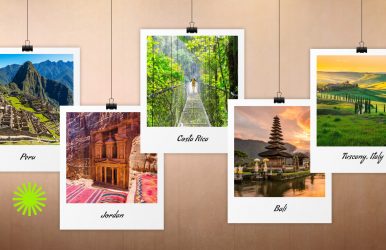
So, let’s check out what they have chosen as the best holiday destinations for families.
What Are The Best Family Vacations Spots? (With Kids And Seniors)
I was impressed with how my kids kept the list of the best family vacation spots eclectic.
They may have done a lot of research, as the same list has Portugal and Italy, both places standing on opposite ends of the spectrum as travel destinations.
Here are the places they have picked.
Here are the places they have picked.
I will share a comparison table first and then get into the details.
A Quick Comparison Table
Destination Best For Best Time to Visit Ideal Trip Length Portugal Multi-Generational Travelers History Lovers September 8–10 Days Jordan First Desert Adventure March to May or September to November 6–8 Days Amsterdam Toddlers Mid-April for Tulips 4–5 Days London Teens and Harry Potter fans Late spring 5–7 Days Tuscany, Italy Multi-generational Travelers Slow Travel September 7–9 Days Costa Rica Beach Lovers Eco-Adventure Lovers December–April 7–10 Days Peru Older Kids Teens Cultural Enthusiasts May–September 8–10 Days Dubai Teens Thrill-Seekers November–March 5–7 Days Florida Toddlers and Teens Theme Park Lovers Early spring 5–7 Days Kenya Older Kids Wildlife Safari Enthusiasts Shoulder season (June/November) 7–9 Days Bali Teens Travelers with Mixed Interests April–October 7–10 Days Portland Travelers of All Age Groups June–August 3–4 Days
1. Portugal
From the beautiful beaches in Portugal to the intoxicating land of Madeira, Portugal, and enjoying a vintage tram ride in Porto, this country is a winning destination for family vacations.
And my daughter was particular that she wanted to stay at the Martinhal Sagres in the Algarve region. She wanted to see the fishing port and the beaches.
In fact, the Lisbon to Algarve road trip and staying at Martinhal Sagres would be a great combination.
For me, the coastal route works better as the route will pass through beautiful beaches, cliffs, and small fishing villages.
There is even an inland route, passing through plains, mountains, and different towns.
Moreover, though a little far away (more than 3 hours from the Algarve), I would love to add the Dino Park Lourinhã to the itinerary.
It is the largest open-air museum in the country, and the models of dinosaurs and other creatures here are scientifically proven.
2. Jordan
With Petra as the epicenter, Jordan offers diverse family-friendly attractions, including the red-sand deserts and the Dead Sea. Jordan also has beautiful beaches.
Furthermore, this Arabian country in the Middle East offers unique cultural experiences. Also, the food here is tantalizing.
However, this time, if we visit Jordan, we would love to stay in glamping pods. These offer wonderful experiences to stay in nature and have the best stargazing experience.
I know it would not be as great as stargazing at the Great Barrier Island that I had on my solo trip.
Still, it will be a great start for the kids.
The kids would also love Wadi Rum for the camel rides and Bedouin camps.
The best time to visit Jordan is during spring (March to May) or fall (September to November), when the desert heat is manageable enough for the kids to actually enjoy Wadi Rum instead of hiding from the sun.
3. Amsterdam
“The clog bikes are so cool, mumma!” Yes, exploring a city like Amsterdam on a clog bike is so much fun. This is the best way to cover the windmills.
Furthermore, the canal tours with audio guides are entertaining and educational for the curious kids.
Also, if you want a more classical experience, the museums and tulip fields will never disappoint you.
The NEMO Science Museum, the Van Gogh Museum, and Madame Tussauds Amsterdam are some interesting places to visit for kids. Also, it has the Anne Frank House.
Moreover, Amsterdam is one of the most pet-friendly destinations in the world. So, we can even take Bruno with us.
If you want the tulip fields in full bloom, plan the trip for mid-April. If you are visiting it any earlier, you will mostly get green stalks and disappointed kids.
4. London
London is a classic! It offers endless opportunities as one of the best family holiday locations for kids and seniors.
If you just consider the museums in the city, it will be a busy trip for the kids.
Also, London has Buckingham Palace, one of the most iconic European landmarks.
Furthermore, the Thames River Cruise, the London Eye experience, and visiting the Tower of London will be great experiences for your kids in London.
Moreover, we are all Potterheads. So, when in London, visit Platform 9 ¾ and various filming locations of the Harry Potter movies.
London works well almost any time of year.
However, I find the time toward late spring most delightful. It is before the summer crowds hit the Tower of London and the Harry Potter studio tour lines double.
5. Tuscany, Italy
Tuscany is a unique choice when it comes to good family holiday destinations.
My daughter is growing up really fast, I must say. I did not expect her to be so mature with her choices.
My daughter also had her suggestions regarding the accommodation.
She wanted to stay at the Paradu Eco Resort, Tuscany, which is close to the Leaning Tower of Pisa.
Also, she wants us to explore Tuscany, its beautiful countryside, and the beaches on cycles. For us (the adults), hitting the vineyards on the way will be a lot of fun.
I am surely going to grab some wines home and make the evenings more happening.
Furthermore, I am going to take them to the Leonardo Museum in Florence and Pinocchio Park in Collodi for sure.
Want to learn how to have the best Tuscany experience? Read our guide on unique things to do in Tuscany.
September is our pick for Tuscany. The grape harvest is on, the summer heat has broken, and the cycling routes through the vineyards are far less crowded.
6. Costa Rica
Costa Rica is perfect for a relaxed beach vacation. It is a year-round destination with white sand beaches and long stretches of palm trees.
Furthermore, the waves here are just perfect for surfing and swimming. I think Santa Theresa will be the ideal place for the kind of vacation experience we want as a family.
Also, Costa Rica has independent and boutique hotels and services, offering you tailored experiences.
On the other hand, the healthy cafes here serve food that nourishes, and they are even conscious about eco-sustainability.
It is still pristine and does not have a large commercial presence or establishments.
Also, Costa Rica has independent and boutique hotels and services, offering you tailored experiences.
On the other hand, the healthy cafes here are serving food that nourishes, and they are even conscious about eco-sustainability.
Moreover, you will find many zipline areas and beautiful waterfalls near the beaches. Thus, enjoy a vacation filled with adventures, fun, and relaxation.
I know covering all 30 national parks will not be possible. I am at least going to take them to the Arenal Volcano so that they can explore the trails and spot the famous monkeys and sloth bears here.
Manuel Antonio will be another great choice for visiting the Damas Island Mangrove Estuary, enjoying the beach vibe, and walking through the national park.
Costa Rica's dry season, December to April, is the safer bet for a beach-and-adventure trip.
The green season brings dramatic afternoon downpours that can wash out a day of ziplining.
September is our pick for Tuscany. The grape harvest is on, the summer heat has broken, and the cycling routes through the vineyards are far less crowded.
7. Peru
Machu Picchu is reason enough to choose Peru as one of the best family vacation spots in the world. Furthermore, we have plans to visit Cusco on the way to visiting Machu Picchu.
I have plans to learn how to make chocolates and do some textile shopping there. Also, Cusco is in the heartland of the Incas.
As the capital of the Incas and a sacred valley functioning as the gateway to Machu Picchu, it is also designated as a UNESCO World Heritage Site.
Furthermore, the Peruvian cities stand out with their unique charm. For example, Lima is a gastronomic hotspot, Iquitos is the Amazon Gateway, and Arequipa has a distinct colonial charm.
Moreover, Nazca is the place where you will experience the mystery of the desert.
Machu Picchu is best visited May through September, during the dry season. In this season, the trails hold up better, and the views aren't swallowed by cloud cover.
8. Dubai
I think most kids these days have Dubai on their priority list. My son is not an exception. It is the country where culture and glamor, or history and futuristic developments, meet.
Dubai is also the number one destination on our list of best places to travel with kids.
The Dubai Aquarium and Underwater Zoo, with 33000 marine animals, is the main attraction for kids interested in marine life.
Furthermore, they can experience adventure and thrill in a safe environment at the Jungle Bay Waterpark, Aquaventure World, IMG Worlds of Adventure, and KidZania.
Moreover, Dubai has the heritage neighborhood of Al Fahidi (Bastakiya), and a boat ride across the Dubai Creek to the Spice and Gold Souks will be an ideal cultural experience for kids in Dubai.
Skip Dubai's brutal summer entirely. November through March is when outdoor attractions like the Aquaventure Waterpark are actually bearable for kids.
9. Florida
Are you planning an early spring break? Florida is surely one of the best family vacation spots in the world.
I mean, every kid, even we, wants to visit Disney World. However, Orlando just does not have Walt Disney World.
It is the “Theme Park Capital of the World.” It has Universal Studios and SeaWorld.
Furthermore, Florida is beyond the theme parks and curated entertainment of Orlando. It has the Everglades National Park.
Your kids will love spotting dolphins, turtles, and alligators here. It is a UNESCO World Heritage Site.
Also, Florida has the Kennedy Space Center at Merritt Island, the Florida Museum of Natural History at Gainesville, and the Norton Museum of Art at West Palm Beach.
Moreover, with Little Havana in Miami, the history of Cuban immigration after the 1959 revolution, and the San Carlos Institute in Key West, Florida, brings a slice of Cuba to the USA.
Early spring, before the crowds and the peak heat, really is the sweet spot for Florida. It is part of why it made our spring break shortlist in the first place.
Early spring, before the crowds and the peak heat, really is the sweet spot for Florida. It is part of why it made our spring break shortlist in the first place.
10. Kenya
Now, Kenya is the country that my son has picked as one of the best family vacation spots in the world. His focus, however, is the Masai Mara.
He, of course, wants to meet the Masai tribe and have an immersive wildlife experience. “We will stay in camps or the safari lodges.
These are eco-friendly accommodations with all the modern amenities.
However, you can consider them as an extension of the wild nature of the Masai Mara. You never know when an elephant or a lion will be dancing at your doorstep.
The best time for a Masai Mara safari is during the Great Migration, from July to October.
However, we're leaning toward the shoulder season instead, for smaller crowds and better rates.
11. Bali
I feel happy when I see that my daughter has picked certain traits for me. She loves places that have stories and history, and where the shift of energy is palpable.
With the Canggu rice terraces, beaches, and different historical landmarks, Bali caters to every type of traveler. I know it’s a cliché, but it is the truth!
However, my son was more eager to visit the Waterbom Bali, the topmost waterpark in Southeast Asia.
Children will also love the Bali Bird Park, Ubud Monkey Forest, Bali Zoo, and the Bali Treetop Adventure Park.
Also, my daughter especially wants to visit the Ulun Danu Beratan Water Temple at Munduk Bali, the Tirta Gangga Water Palace in Amed Bali, and the Uluwatu Beach.
Bali's dry season, April to October, is the one to aim for. In these months, the rice terraces are still green, and you won't lose beach days to sudden rain.
12. Portland
Portland in Oregon is ideal as a fun family travel destination. You can explore the large city on a cycle. Furthermore, the high-energy city has breweries and museums.
Also, the spirit of the city is quite spontaneous, aligning with its slogan on the Portland walls and the bumper stickers.
Furthermore, the Oregon Zoo and the Portland Japanese Garden are two major attractions in the city.
Summer, from June to August, is when Portland really shows off. The breweries have patio season going, and the Japanese Garden is at its most photogenic.
How Much Should You Budget For These Trips?
Before you fall in love with any one destination on this list, it helps to know roughly what you're signing up for.
Costs swing hard depending on whether you're staying domestic or crossing an ocean, and on how much comfort your family actually needs to enjoy the trip.
For 2026, a mid-range domestic family vacation for four runs about $3,000–$5,000 for a week.
On the other hand, a mid-range international trip lands closer to $6,000–$10,000 for the same length of stay, according to family travel cost data from NerdWallet and SpendMeNot (endlesstravelplans.com, 2026).
Flights typically make up 30–40% of that total.
So where you are flying from matters as much as where you are flying to.
On our list, Portugal, Amsterdam, and Portland sit closer to the affordable end with shorter flights from most of the US and Europe.
Also, lower daily costs than a place like Dubai or the Maasai Mara.
Costa Rica and Bali can also be run on a mid-range budget if you skip the resort chains.
Peru, Kenya, and Dubai tend to land at the pricier end of the spectrum, mostly because of long-haul flights and the guided experiences (safaris, trekking permits) that make those trips worthwhile in the first place.
A simple rule of thumb for these 12 destinations:
Budget Tier Domestic (7 days, family of 4) International (7 days, family of 4) Budget $2,400 – $3,600 $4,000 – $6,000 Mid-Range $4,500 – $6,500 $6,000 – $10,000 Luxury $8,000+ $11,000 – $15,000+
Quick Questions Parents Ask For A Family Trip With Kids
If you are a parent and you are traveling with toddlers or teenagers, here are some quick answers to help you plan the trip better.
1. What Is The Best Country For A Family Vacation With Young Kids?
Amsterdam and Costa Rica are the easiest for planning a family vacation with kids.
Short travel times between the key attractions make these countries very stroller- and toddler-friendly.
2. What Is The Best Family Destination For Teenagers?
Dubai and Bali are the best countries for a family trip with teenagers.
These countries offer enough adventure activities. So, teenagers get the independence to explore without feeling the restrictions of tagging along on a parent's trip.
3. What Are The Ideal Destinations Good For Multi-Generational Trips, With Grandparents Along?
Tuscany and Portugal are the best destinations for multi-generational trips.
These countries offer a slower pace, shorter drives between stops, and plenty of quiet corners to rest between excursions.
4. How Far In Advance Should We Book A Family Trip Like These?
The time needed for planning the trip in advance will depend on the destination you choose.
For example, for countries such as Peru, Kenya, and Dubai, you will have to book at least 4-6 months in advance.
Flights and the decent eco-lodges fill up fast in these locations, especially in the peak seasons.
However, Portugal and Amsterdam are more forgiving; 6-8 weeks is usually fine.
Choosing The Best Family Vacation Spots: It’s A Wrap
Looking at this list now, I can see so much of my kids in it.
My daughter's pull toward history and quiet, beautiful places, and my son's love for adventure and a little bit of chaos!
That is the thing about letting your children pick the destination. You stop traveling for them and start traveling with them.
Next up, we're debating whether to let them pick the budget too. Wish us luck!






 Related