
7 Best National Parks In Ohio You Should Know Before Going

Dec 27, 2021

Last Updated on: Sep 1, 2025

Travel Blog

Are you a nature lover? Then, Ohio is the best place for the travel enthusiast. Ohio has hundreds of natural cliffs, hiking trails, and camping parks. Further, all the federal parks in Ohio are irresistibly beautiful and are full of natural beauty. 

When you look at the map of Ohio, you will acquire knowledge about how many national parks are there in Ohio. The number of national parks in Ohio is eight.

Further, the national parks in Ohio are the best tourist spots for national and international travelers. They are also the most popular camping spots.

So, at Tour and Travel, we have decided to give you a brief idea about all the Ohio national parks. These places are great as budget-friendly tourist destinations and explore the nature and culture of Ohio at its best.

List Of All 8 National Parks In Ohio

If you are living nearby Ohio and still do not have ideas of camping in federal parks in Ohio. You have missed the beautiful view of nature. All the national parks in Ohio are becoming the best hanging-out spot for every adventure sports-loving person.

Here are the names of the seven most popular Ohio national and state parks.

1. Cuyahoga Valley National Park

Address: Ohio, USA

Hours Open: 24 Hours

Contact Number:  +1 440-717-3890

Fees: Free

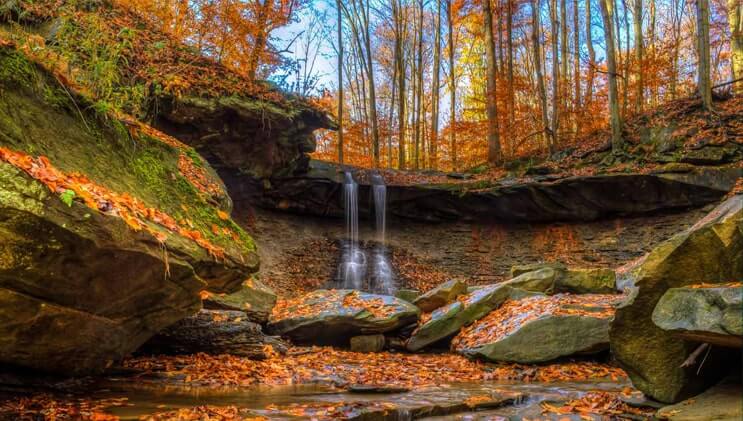
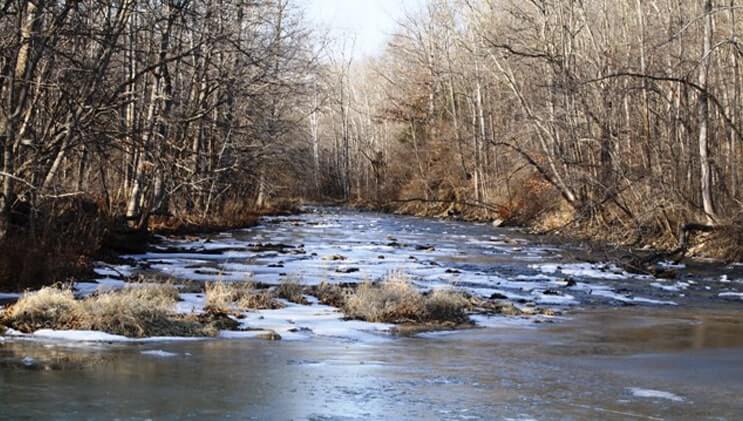
Cuyahoga Valley National Park image

Cuyahoga Valley National park is one of the best national parks in Ohio. This national park lies between Cleveland and Akron. And it is situated along the Cuyahoga River. With the natural preserving beauty of the national park, the rich history of the place makes the park a unique tourist place.

This national park is carrying the history of 19th-century waterway Canal exploration. On the north side of the park, a canal exploration center is present to deliver historical impressions to the visitors. 

The Cuyahoga Valley railroad runs through the park, making the place more unique. This wildlife park is the home of amazing native wildlife and plants.

Where to get a national parks access pass in Ohio? You only have to Buy the American annual pass and enjoy the park. The annual pass system has a special discount for military professionals and children.

2. John Bryan State Park

Address: 3790 OH-370, Yellow Springs, OH 45387

Hours Open: One and a half hours before Sunrise to half an hour after Sunset

Contact Number:  +1 937-767-1274

Fees: Free

John Bryan State Park

John Bryan state park is an extensive 752-acre state national park in Ohio. You hear about the Miami River, and This large green park is just right below the yellow spring and the Clifton. This park is a prevalent clamp ground among the local people.

Apart from the beautiful scenic beauty, the long industrial history of the United States is adding more points. In the 19th century, industrial activity increased; therefore, water is no longer the economic source of water.

For this reason, many of the factories are getting abandoned. And no longer in use. But the Clifton mill, which was built in 1802. This mill is now becoming a popular visiting place among tourists.

3. Nelson-Kennedy Ledges State Park

Address: 12440 OH-282, Garrettsville, OH 44231

Hours Open: 7 AM to 7 PM

Contact Number:  +1 330-235-0030

Fees: Free

Nelson-Kennedy Ledges State Park image

This park is a 167-acre public recreation park. When you are near Nelson township, this place is the best hiking spot for you. The Ledge park is full of hiking trails and camping spots.

Beautiful waterfalls and native green plants are making this park look like heaven. This park is one of the best hiking spots for travelers as well as the national parks in Ohio. Nelson Kennedy ledges state park has a 3 miles long hiking trail. 

As the park is situated on the natural landscape. Many dangerous paths are present in the park, but the marked hiking trails are guiding the right path of hiking.

4. Mohican-Memorial State Forest

Address: 975 O D N R Mohican Road 51, Perrysville, OH 44864

Hours Open: 24 Hours

Contact Number: +1 419-938-6222

Fees:  Free

Mohican Memorial State Forest

Have you seen the movie The Last of The Mohican”? The natural beauty of the shooting spot is still getting most of the viewer’s attention. This state forest is situated in Ashland country, Ohio. This forest is quite popular among forest researchers.

This large 4525 area of forest area is carefully looked over by the Ohio Division Of Natural Resources. This is the third most popular tourist destination in the United States. The Clear Fork River and Pine’s major streams are the two major rivers of the park. 

The park’s best feature is 32 miles hiking, 22 miles bridle, 8 miles snowmobile, and 24-mile mountain biking trails.

5. Hueston Woods State Park

Address: 6301 Park Office Rd, College Corner, OH 45003

Hours Open: 24 Hours

Contact Number: +1 513-523-6347 

Fees: Free

Hueston Woods State Park image

This park lies in oxford city Ohio. The park belongs in the Butler and Pable country of Ohio city. It covers nearly 3000 acres of area and has 625 acres of a human-made lake.

The state was bought in 1941. Initially, it was a prison camp, and after 1957 the park was open to regular visitors. And now, this is one of the best national parks in Ohio.

This park has 12-mile long hiking trail and 19 miles of bridle trails along with 20 miles of mountain biking trails. The place’s camping facility is very organized, along with the hiking trails, golf course, and lodging facility.

Also Read: Best National Parks In Hawaii

6. Hocking Hills State Park

Address: Logan, OH 43138

Contact Number: +1 740-385-6842

Hours Open: 10 AM to 5 PM

Entry Fee: Free

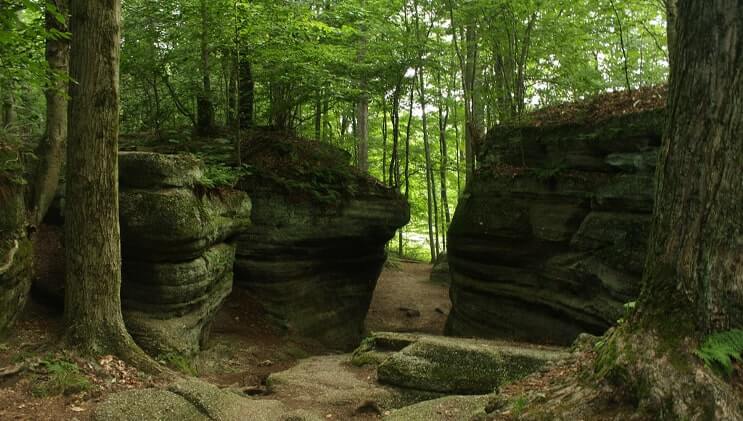
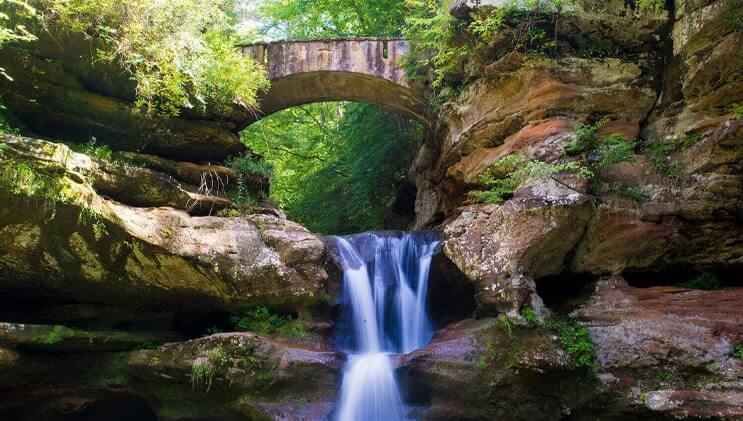
Hocking Hills State Park image

Are you searching for any national parks near Columbus, Ohio? Hocking Hills State Park is a good choice for you. This park belongs in the hocking hills region. A big part of Hocking state forest belongs in the hocking hills state park.

This park has seven separate types of hiking areas, including different hiking trails. Cantwell Cliffs, Ash Cave, Conkle’s Hollow, Old Man’s Cave, Rock House, Cedar Falls, and a popular hiking route Hemlock Bridge Trail to Whispering Cave

Also Read: Best National Parks In Missouri

7. Charles Young Buffalo Soldiers

Address: 120 US-42, Wilberforce, OH 45384

Hours Open: 9 AM to 4:30 PM (Monday Closed)

Contact Number:  +1 937-352-6757

Fees: Entry Free

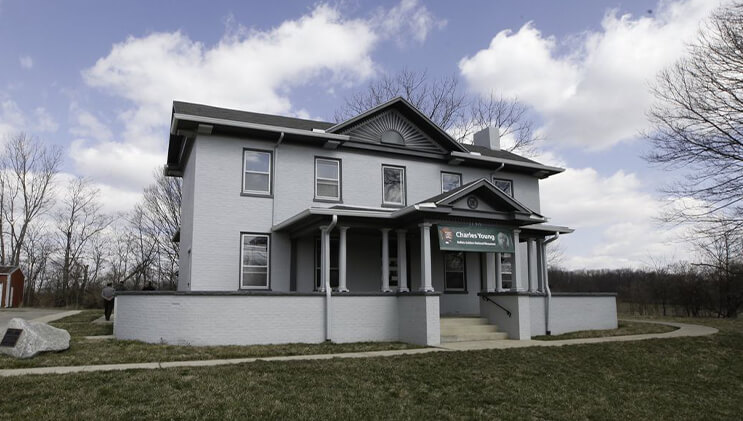
Charles Young Buffalo Soldiers image

Do you want to see a national monument in Ohio? Visit this park, and you can see monuments along with enjoying the beautiful natural view. Charles Young Buffalo is one of the historical figures in his first days of life. He was an escaped slave.

He was the first afro American soldier in the United States army. The house of the Buffalo soldier is one of the famous historical destinations among travelers.

This is one of the most popular iconic monuments in Wilberforce, Ohio. When you plan to visit the Ohio parks, do not forget to visit this monument because the American civil war history was attached to this monument.

8. Dayton Aviation Heritage National Historical Park

Address: 16 S Williams St, Dayton, OH 45402

Contact Number: +1 937-225-7705

Hours Open: 9 AM to 4 PM (Monday Closed)

Entry Fee: Free

For all the literary enthusiasts and dark academia fans, Dayton Aviation Heritage National Historical Park in Ohio is one of the best places to visit. It remembers Paul Laurence Dunbar, an eminent poet and author. 

The park also honors the aviation pioneers Orville and Wilbur Wright. A tour of this park will be a fulfilling and educational experience. Throughout the park, you will come across the following important spots:

  • Carillion Historical Park
  • Wright Cycle Shop
  • Huffman Prairie Flying Field
  • Paul Laurence Dunbar House
  • Wright-Dunbar Interpretive Center
  • Huffman Prairie Interpretive Center

You can even opt for a ranger-guided tour of this best national park in Ohio. The only disadvantage of the park is that it does not have a camping ground. So, you cannot stay here. 

However, you can always put up your tent in the private and public campgrounds near the park. So, check out the website of the Greene County Convention & Visitors Bureau to locate and reserve the campgrounds. 

Frequently Asked Questions On National Parks In Ohio (FAQs)

Q1: What is the newest state park in Ohio?

A: Jesse Owens state park is the newest state park in Ohio. it is named after a world-famous athlete. It was created in the year 2018 out of a coal mining land that was owned by American Electric Power. 

Q2: Which is the smallest state park in Ohio?

A: Oak Point state park is known to be the smallest one in Ohio. Measures at 1.5 acres, despite being the smallest state park, it still offers a wide range of facilities for boaters, sightseers, and picnickers. 

Q3: Are state parks free in Ohio?

A: Ohio is one of the few states in the country that do not charge general admission and parking fee at its 74 state parks. 

Wrapping It Up:

All the Ohio state parks camping is the most favorite for the fitness enthusiast. The collection of these places are the most popular tourist destination among local and international travelers. National parks in Ohio list quite a long list. But these seven parks and sites are the best places where you can enjoy the hiking trails and camping. 

If you are planning to visit Ohio parks for adventurous hiking, do not skip these popular parks. So what is your plan to visit? Do not forget to comment back to us.

You May Also Like: 

Share on Social Media

Abdul Aziz Mondol is a professional blogger who is having a colossal interest in writing blogs and other jones of calligraphies. In terms of his professional commitments, he loves to share content related to business, finance, technology, and the gaming niche.

Leave a Reply

Your email address will not be published. Required fields are marked *

title-img Related

READ MORE Chilean wine country

A Journey Through Chile’s Wine Country: From The Andes To The Pacific

BY  Sibashree Aug 20, 2025

Okay, so, picture this: Chile laid out like a long ribbon—kind of wild, right? Mountains stacked on one side, waves crashing on the other, and somewhere in between, these sun-kissed vineyards doing their own thing. And not just recently, either. Some of these spots have been growing grapes longer than most countries have existed. When folks talk about wine in Chile, it’s no stuffy affair—honestly, it feels more like jumping headfirst into the whole shebang: the scents, the crazy landscapes, locals chatting about soil like it’s family gossip...and the wine isn’t just a drink. It’s, I dunno, almost like reading a diary of the land and weather and the winemaker’s mood last summer. Believe me, if you find yourself wandering around Central Valley’s endless stretches, or just chilling with a glass of something zippy and white right off the coast, the whole experience flips whatever you thought you knew about wine on its head. Here’s a rundown of how to, well, do it up right—and why Chilean wine country is totally underrated for anyone who actually cares what’s in their glass. Why Chile Belongs On Your Wine Travel List Let's be real. Chile’s geography, if you look at a map, is ridiculous. It's absurdly long and skinny—on one side, you’ve got the Andes looking dramatic, on the other, the Pacific just doing its endless thing.  That combo means you get all kinds of grapes—each with its wild backstory.  Sometimes, you’ll even wonder if the wine tastes different because of the wind or the fog, and honestly, maybe it does. Way back, some old Spanish guys brought over vines during the 1500s (imagine lugging grape plants on a boat…). Fast-forward: these days, Chile fires off everything from bold Cabernet to its famous Carmenère (which was basically lost everywhere else until they stumbled on it growing here), and while tradition is huge, they’re also not afraid to play around—mixing, blending, inventing. But don’t let the obsession with the grape fool you—traveling here, you’re in for high-energy Santiago, mind-blowing seafood in Valparaíso, classic farmhouses, and some wineries that look like spaceships landed in the vines. The Essential Wine Regions Of Chilean Wine Country Can’t see it all? Yeah, same. So here are the spots you wanna hit if you thrive on the good life: 1. Maipo VALLEY – The Bordeaux Of South America Jump in a car from Santiago and you’re basically in wine heaven before you’ve finished your podcast.  Maipo’s like Bordeaux if Bordeaux were dragged down to South America and given a tan. Their Cabs are everything—sun, altitude, crazy temperature swings. Here, you bounce between proper castles and tight-knit family farms. Pro tip: Say yes to barrel tastings, even if you don’t know what’s going on. Also, picnic in the vines? Yes, please. 2. Colchagua Valley – Bold Reds And Boutique Luxury Prefer your wine big and loud? Colchagua’s where it’s at. You get Carmenère, Malbec, and Syrah, all hedged in by mountains and dusty hills.  Out here, you can sleep in some bougie lodge, eat with a chef who got bored with Santiago, or hop on a horse and clop around feeling very, very far from home—or work. 3. Casablanca Valley – Cool-Climate Elegance Suddenly need something crisp? Casablanca’s like dipping your toes in the ocean, but with wine. The vibe? Super chill (temperature-wise too), close to Valparaíso, and heavy on Sauvignon Blanc and Chardonnay that somehow taste like the smell of fresh rain. And, weirdly, the buildings at some of these wineries—glass walls, clean lines—make you feel like you’re drinking inside a modern art painting. Not bad, right? 4. Aconcagua Valley – Tradition Meets Innovation Nose around north of Santiago, and you hit Aconcagua. This place is a mashup: grandad techniques next to bright-eyed winemakers pouring orange wine and talking about fermentation like it’s the new rock ’n’ roll.  Reds, whites, and all kinds of stuff in between. More Than Just Wine: Immersive Chilean Wine Country Experiences Let’s be honest for a second: even if wine’s great, no one wants just wine, all the time. Some add-ons you can’t miss: Gourmet Food: Loads of wineries double down with restaurants that’ll ruin you for regular meals—seafood, lamb, veggies, all paired so well you’ll start rating salad at home. Art and Architecture: Sometimes you come for the wine, and end up taking fifty photos of the cool ceilings or a painting hung next to barrels. Nature and Adventure: Think: hiking near volcanoes, pedaling past vines, even floating in a hot air balloon. Wild? Yes. Culture Stuff: Pick grapes with strangers, learn a dance and laugh at yourself, or poke around for cheese, olive oil, or crafts that weigh down your suitcase. When To Visit Chilean Wine Country Best part—Chile’s long enough that there’s always somewhere worth going. If you want the inside scoop: Harvest (March to May): Grapes everywhere, everyone’s busy, and there’s a good chance you’ll get roped into a festival—or grape-stomping contest. Spring (September to November): The Weather’s sweet, gardens and vines exploding, and not a tour bus in sight. Summer (December to February): Big sunshine, big crowds, big everything. Good if you want max hustle and bustle. Traveling In Style: Curated Luxury Wine Tours Hate planning logistics? Me too. Just get a fancy tour company and let them sweat the details—private tastings, cool places to crash, cars to get you from A to B, and guides who know when to hang back and when to start telling crazy stories about wine politics. Check out Into the Vineyard or anyone who actually answers their emails. They make sure you’re doing what you want, not what the last ten tourists did. One of the best ways to experience the breadth of Chile’s wine regions is with a specialized travel company like Into the Vineyard. A Sample Luxury Chile Wine Tour Itinerary Let’s imagine how a week goes down (give or take, you know?): Day 1 – Land in Santiago. Someone grabs your bags; you’re at a boutique hotel with a welcome drink before you even check Wi-Fi. Day 2 – Maipo Valley. Taste, eat, repeat. If the schedule says “vineyard lunch,” you’re in for at least three wines before dessert. Day 3-4 –  Colchagua Valley. Sleep in a posh lodge. Visit small-batch wineries. Maybe fall off a horse (hopefully not). Day 5 – Casablanca Valley. White wine and seafood until you need a nap. Then, go to Valparaíso for a night out. Graffiti, music, food, the works. Day 6 –  Aconcagua Valley. Get nerdy with organic wine folks. Learn that “biodynamic” isn’t just a buzzword. Day 7 –  Back to Santiago. Last gifts, one more meal, then gone. Insider Tips for the Perfect Chilean Wine Country Tour Here are some of the tips for travel. The travellers should follow these tips for a more immersive experience while visiting the place. Honestly, don’t drive yourself. Local drivers know where to go (and where to stop for the best empanadas). Try the funky grapes—País, Carignan, even that Riesling with the label you can’t pronounce. Book the good stuff early—boutique tours disappear quickly. Look for places with a pool or a hot tub. Thank me later. The Last Few Things To Keep In Mind Before Visiting Chile Chile’s not just another check on your wine passport. You’re standing with snow-capped Andes in the background, sipping a glass that could’ve been impossible anywhere else, and finishing your last meal by the ocean.  Mix in a little culture, art, and memories you can’t fit in a suitcase, and well, that’s what makes Chile a story you can drink. Read Also: With Popular Wineries, Learn the Things to Do in Mudgee! 5 Ideas For Wine Tours In Barcelona- Make It Happen Wineries You Should Visit In Winter

READ MORE free museums in dc

Explore The Top 15 Free Museums In DC! Must Visit Museums In 2024!

BY  Ankita Jun 7, 2023

What are the best free museums in DC that you and your family can visit while you are in the state? Well, if this is something that you have been searching for, then I have the best thing for you! Washington, D.C., is home to so many amazing museums. The best thing, though? A lot of them provide free admission. You can research history, science, culture, and the arts for free. And if you want a list of them, then you will find this article to be of help! Keep reading this blog till the end to learn more… Which City Has The Highest Number Of Museums? With 85.4 museums per 100,000 people, Washington, D.C. is the US city with the highest number of museums per capita, according to a 2019 report by the American Alliance of Museums. There are numerous explanations for Washington, D.C.'s abundance of museums. First of all, being the nation's capital and the seat of government, it is home to numerous national institutions and museums, including the Library of Congress, the National Archives, and the Smithsonian Institution, which is composed of 19 museums and galleries. Moreover, museums are a big draw for tourists to Washington, D.C., another well-liked vacation spot. The city's museums are accessible to all, offering a broad range of topics from science and technology to art and history, and many of them are free to the general public. Ultimately, a great deal of Washington, D.C.'s museums are dedicated to preserving and presenting the city's rich cultural legacy. For instance, the National Museum of the American Indian focuses on the history and culture of Native Americans, while the National Museum of African American History and Culture, which opened in 2016, is devoted to telling the story of the African American experience in the United States. 15 Best Free Museums In DC That You Need To Check Out! Every day, scholars, researchers, visitors, and locals are drawn to our nation's capital. The diversity and caliber of free museums here attract the crowd. However, with so many choices, selecting an itinerary might be difficult. That is the reason why I have come to your rescue. In this article, I have planned and listed the top 15 free museums in DC that you can visit! So, without further ado, let us get started! Here are the best free museums in Washington DC that you need to visit: 1. National Gallery Of Art This renowned art gallery spans two significant buildings joined by an illuminated tunnel. It also has an indoor waterfall and a six-acre (2.4 ha) sculpture garden. It features both traveling exhibitions and a changing exhibition of works from the permanent collection. The permanent collection offers a marvelously thorough selection of the best artwork. It spans from ancient to modern times, including masterpieces like da Vinci, Degas, and Calder. The National Gallery of Art is a fantastic family outing. It offers free public programming like art history films, classical performances, and kid-friendly hands-on activities. Check out the ice skating rink in the sculpture garden if you're here in the winter. Every day from 10 am to 5 pm, the National Gallery of Art is open at 6th Constitution Avenue North West, Washington, DC, 20565. 2. United States Holocaust Memorial Museum One of the biggest disasters in human history, the Holocaust of World War II, teaches us some of history's most difficult lessons. Except for the children's-oriented Daniel's Story exhibit, it is intended for visitors 11 and older due to the nature of the issues covered in this museum's exhibitions. The Holocaust is a permanent exhibition that offers an insightful look at this historical tragedy through a wealth of artifacts, videos, and human accounts. James Ingo purposefully evoked architectural characteristics of various historical Holocaust places in the Freed building. He does so in an abstract, open-ended manner without making direct parallels to any of these locations. Four commissioned works of art are also on display within the museum: Consequence, a wall drawing by Sol LeWitt; Gravity, a monolithic sculpture by Richard Serra; Loss and Regeneration, a sculpture by Joel Shapiro; and Memorial, a grouping of four white wall sculptures by Ellsworth Kelly. Due to COVID, timed-entry tickets are required, and they can only be purchased in groups of six or fewer. Additionally, there is a $1 processing fee for online ticket purchases. This museum deserves a place on the list of the best free museums in DC. Everyday from 10 a.m. to 5:30 p.m., the museum is open. In Washington, DC, 20024, at 100 Raoul Wallenberg Place South West, is the location of the United States Holocaust Memorial Museum. 3. National Museum Of Natural History There are 147 million specimens and artifacts on display at the Natural History Museum with the highest visitors in the world. Some of them are The Hope Diamond, meteorites, ancient Egyptian mummies, and live insects, including butterflies. The focus of traveling exhibits on natural history issues is on plant and animal biodiversity as well as human history. To further improve your experience, they also offer do-it-yourself, free, printable exhibitions. Because the museum is so big, it's a good idea to take a break and unwind in one of their two cafes or the Garden Lounge, which has live plants. Open every day from 10 a.m. to 5 p.m. In Washington, DC 20560, at 1000 Madison Drive North West, is where you may find the National Museum of Natural History. 4. National Museum Of American History Explore the over 1.7 million objects that span over 300,000 square feet (27,870 square meters) and tell the narrative of America with the four million visitors who flock here each year. The "Star-Spangled Banner"'s inspiration, the Greensboro lunch counter from the Civil Rights demonstrations, Julia Child's kitchen, the ruby slippers from The Wizard of Oz, and Lincoln's stovepipe hat are just a few of the most well-known and well-liked exhibitions. In addition to exceptional events like guest lecturers and performances, the museum offers regular programming as part of some exhibits like Spark! Lab and Wonderplace. The National Museum of American History is located at 1300 Constitution Avenue North West, Washington, DC, 20560, and is open daily from 10 am to 5.30 pm. 5. Hirshhorn Museum And Sculpture Garden Next on the list of the must-visit free museums in DC, we have Hirshhorn Museum and Sculpture Garden. This museum is a must-visit for art enthusiasts because of its enormous collection of contemporary and modern art from throughout the world. Featured and well-known artists include Yayoi Kusama, Henry Moore, and Pablo Picasso. Over 30 sculptures are on display at the sculpture park, including Yoko Ono's well-known Wish Tree. One of the most well-known American modern art museums, the Hirshorn has been open for 50 years and provides a platform for contemporary art and culture on a national scale. For special exhibits, timed passes can be necessary. The museum offers exciting educational opportunities like storytimes, guest speakers, their mobile Art Cart, and film festivals in addition to its permanent and special exhibits. The on-site cafe, Dolcezza, offers pastries, gelato, specialty coffee and tea in a beautifully decorated space. The Hirshhorn Museum and Sculpture Garden is located at Independence Avenue South West & 7th Street South West, Washington, DC, 20560, and is open daily from 10 am to 5.30 pm. 6. National Museum Of The American Indian In this relatively recent addition to the National Mall, explore the richness of culture, language, history, tradition, and futures of indigenous peoples of the Americas. Visit the engaging, fun-filled imaginative Activity Centre (Tuesday–Sunday) for children ages 10 and under to learn the traditional cultural and scientific knowledge of many indigenous peoples. The National Native American Veterans Memorial, a stainless steel circle balanced on a carved stone drum with intricate symbolic carving, was inaugurated at the museum in November 2020 to honor and remember the Native American military veterans. Take a mouthful of some traditional food at the Mitsitam Native Foods Cafe, which offers Native American foods at five themed food stations. The museum offers a number of special events and programs, including performances, special guest lecturers, film festivals, and concerts, to share indigenous traditions with people of all ages in addition to permanent and temporary exhibitions. The National Museum of the American Indian is located at 4th Street South West, Washington, DC, 20560, and is open daily from 10 am to 5.30 pm. 7. National Museum Of African American History And Culture Visit the one and only national museum that was established in the autumn of 2016 and is dedicated to preserving and promoting African American life, art, history, and culture. With an exhibition area of 85,000 square feet (7,897 square km), it will take at least two hours to see everything. Discover African American cuisine at the Sweet Home Cafe with its four themed stations and occasionally offered "Chef's Tables" special meals, such as those for Black History Month. You need a free-timed admission pass. The National Museum of African American History and Culture is located at 1400 Constitution Avenue North West, Washington, DC, 20560, and is open daily from 10 a.m. to 5:30 p.m. 8. National Museum Of Asian Art Visit the Freer Gallery to learn more about Asian art. The Sackler Gallery is home to ornamental and religious items. The Freer Gallery was the first Smithsonian institution designed purely to keep art. They collectively house about 45,000 items with a 6,000-year history. It includes some American artworks in the Freer Gallery. For example, the greatest collection of James McNeill Whistler's paintings in the world. Recent substantial improvements to the galleries have given the museum new energy and technology. Additionally, the museum presents a number of special events and programs, including workshops, performances, films, and guest lecturers. In Washington, DC, 20560, at 1050 Independence Avenue South West, lies the National Museum of Asian Art. 9. National Museum Of African Art Next on the list of free museums in DC is the National Museum of African Art. It was initially founded in 1964 and was bought by the Smithsonian in 1979. It collects and exhibits traditional as well as modern and contemporary art from Africa. A variety of media and issues are covered in the exhibitions, such as photography, portraiture, sculptures, film, and more on tradition, history, slavery in America, politics, and African cinema. They offer a variety of performances as well as notable speakers as part of their special programming. In Washington, DC, 20560, at 950 Independence Avenue South West, lies the National Museum of African Art. 10. National Archives Museum The three most significant historical documents in American history are kept there. There is also the museum and the National Archives and Records Administration. Discover more important documents that affected American history at the Rotunda's interactive Public Vaults permanent exhibit. It features the Declaration of Independence, the Constitution, and the Bill of Rights. The David M. Rubenstein Gallery houses one of the four remaining original copies of the 1297 Magna Carta. It is the ongoing exhibition of the Record of Rights. There is also a 17-foot (nearly 5-m) touch screen on the national discussions surrounding subjects like citizenship and free speech. Additionally, the museum hosts a variety of passing exhibits. It includes a featured document display and the Boeing Learning Centre. Here visitors can check out white gloves and a magnifying glass to examine replica documents like an actual archivist. The National Archives Museum is located at 701 Constitution Avenue North West, Washington, DC, 20408. It is open daily from 10 am to 5.30 pm. 11. National Air And Space Museum Visit the National Air and Space Museum in Washington, DC, for a fun-filled free museum. Visit the renowned National Air and Space Museum to learn more about the power of flying and how it propelled humans off the planet. The Air and Space Museum, like many other museums, is undergoing renovations that will last until 2025, although eight new exhibits are already open. The Wright Brothers & the Invention of the Aerial Age explores the history and force of flight with a special emphasis on its creators. Discover how we reached the moon in 1969 and why and how we are returning in the new blockbuster-level exhibit Destination Moon. You must have a free timed admission pass, otherwise you can skip the queue. The Steven F. Udvar-Hazy Centre, their secondary location, is located in Chantilly, Virginia, about 40 minutes from Washington, D.C. Here, you may learn about human spaceflight and World War II aviation while also seeing planes and a space shuttle. The National Air and Space Museum is located at 600 Independence Avenue, Washington, DC, 20560, and is open daily from 10 am to 5.30 pm. 12. National Zoo Bears, lions, and tigers, and so much more! Discover a variety of animal species from all over the world, as well as daily animal demonstrations and habitat displays. There are entrance passes that must be purchased in addition to paid parking passes in advance (if you decide to drive and park there). A few same-day passes will be available on-site, although it is advised to make a reservation in advance. Visit the Kids' Farm, the unusual Me and the Bee playground, and the seasonally open Squirt Zone if you're traveling with children. Kids will enjoy the Speedwell Conservation Carousel, but keep in mind that each ride costs $4. Two to three hours are suggested or anticipated for a trip to the zoo; be sure to wear shoes that are suitable for walking around in. You can bring your own food and non-alcoholic drinks (no glass bottles), though they do have some food options on-site. The National Zoo is located at 3001 Connecticut Avenue North West, Washington, DC 20008, and is open daily from 8 am to 4 pm. 13. National Portrait Gallery Discover portraits of some of America's most prominent people in the visual, performing, and new media arts, including artists, politicians, scientists, innovators, activists, as well as entertainers. The museum is home to the only comprehensive collection of presidential portraits outside of the White House, which includes works by renowned artist Gilbert Stuart. For a customized visit with your group, schedule a tour five weeks in advance for ten or more people, or try your luck with the walk-up tours on Saturdays as well as Sundays at 12 and 2.30. The National Portrait Gallery is located at 8th Street North West & G Street North West, Washington, DC, 20001, and is open daily from 11.30 am to 7 pm. 14. American Art Museum Discover the country's first collection of American art. It is one of the most significant and comprehensive collections of American art in the world. It is also a unique world-class chronicle of the American experience. The museum has taken the lead in seeking out, gathering, and displaying exceptional as well as outstanding representations of American visual art culture. In addition to the conventional, expected kinds of art in a museum, there is photography, current folk and self-taught work. There are also frequently unsung cultural arts, such as African American and Latino, and even computer games. The museum has two locations. However, they are only a 25-minute walk apart. The Smithsonian American Art Museum (SAAM) is in the downtown cultural center. The Renwick Gallery, which specializes in craft and decorative art, is close to the White House. Check out the Experience America exhibition, which captures American culture in a variety of artistic mediums. There is also Janet Echelman's 1.8 Renwick, a commissioned colorful fiber and lighting piece dangling from the ceiling. Moreover, it highlights the relationships between people and the natural world across time. The SAAM site is open from 11:30 am to 7 pm, as well as the Renwick Gallery is open from 10 am to 5.30 pm. Both locations are open every day. While the Renwick Gallery is located at 1661 Pennsylvania Avenue North West #1 in Washington, DC, the SAAM is housed in the same building as the National Portrait Gallery at G Street North West & 8th Street North West. Read More: Understand More About The Vatican’s Museums 15. National Postal Museum Last but not least, on this list of the free museums in DC that you must visit is the National Postal Museum. Who knew using the mail could be so much fun? Learn about the practicalities of how your letter gets from your mailbox to its destination as well as what it's like to work for the postal service. You can also learn about the transportation used by the postal system. In this amazing stamp collection, you may engage with stamps in ways you never thought possible. Along with regular special programming including story times, art programmes, reading groups, talks, and even multilingual options like Hello, Museo for kids, daily tours are also offered. The National Postal Museum is located at 2 Massachusetts Avenue North East, Washington, DC 20002, and is open daily from 10 am to 5.30 pm. Bonus: Phillip's Musuem Nestled amidst the exquisite row houses of Dupont Circle, this modern art museum was founded in 1921 within a Georgian Revival mansion that had previously served as Duncan Phillips' family home. The location is a favorite among Washingtonians because it is both sophisticated and intimate. Impressionist and modern art are the main foci of the modern art museum, and it excels in both areas. Renoir's well-known "Luncheon of the Boating Party" and pieces by Georgia O'Keefe, Pablo Picasso, Vincent van Gogh, and Richard Diebenkorn are among the highlights of the permanent collection. A single bench is surrounded by four of the abstract expressionist artist's paintings in a small but cozy Rothko Room. In celebration of the centennial of The Phillips Collection, visual artist Daniel Canogar created a digital piece that melds 550 pieces from the museum's collection into a captivating, swirling projection using an algorithm. Wrapping It Up! I hope that this guide has been of help to you in finding the best free museums in DC. Is there more that you want to know? Feel free to scroll down and leave your queries at the bottom of the page. And I will be there to answer them all for you! Read Also: Top 10 National Parks In Oregon That You Need To Explore Tips To Make Your Vacation In Gatlinburg More Enjoyable 6 Things To Know Before You Visit St. George

READ MORE

Discover Joshua Tree National Park: Unique Fun Facts Revealed

BY  Sibashree Oct 28, 2024

With mountains, faults, monoliths, deserts, and unique geological formations, Joshua Tree National Park has emerged as an important ecological hub of California. Further, as the name goes, the park has the most amazing Joshua Tree, a Yucca palm species that became famous with the Joshua Tree album by U2.  Spanning 800,000 acres and situated at 5000 feet above sea level, this national park is like a natural tapestry. Further, 85% of this national park is still pristine wilderness. So, there is no wonder that a place like this harbors the best secrets and fun facts that are yet to be explored.  Here, I will share some amazing info about the park’s history, fossils, cryptobiotic crusts, and more. Joshua Tree National Park is about to complete 30 years of its designation as a national park on 31st October 2024. President Franklin Delano Roosevelt designated it as a national monument in 1936. Things No One Talks About Joshua Tree National Park  The basics are boring! There is no fun in visiting a place that does not have stories to tell. However, this national park, designated in 1994, has mountains and ecological units that echo the tales of history, changes, and humanity.  Let’s get into the stories, but before that, let me give you a brief account about when and how to visit the park. September to November is the best time to explore the park due to pleasant weather conditions.  Further, the Annual Night Sky Festival occurs in the park in October. It’s a delightful experience for people of all age groups. Thomas Crochetiere writes many fascinating stories about Joshua Tree National Park in his “The History of Joshua Tree National Park: A historical, informational, and educational timeline of Joshua Tree National Park.” If you are interested in the park’s history, you can grab a Kindle edition of the book.  1. Fascinating Historical Tales About Joshua Tree National Park  Human history in Joshua Tree National Park is as old as 15000 years. Two archaeologists, William Campbell and Elizabeth Campbell, further discovered the existence of Pinto culture in this park. Pinto Culture In The Park  People belonging to this Pinto Culture used to stay in cool grassland environments here, and they were primarily hunters. Pinto culture in the national park was discovered by archaeologists thanks to the triangular-shaped spears, scraping and cutting tools, and seed-processing tools.  All the implements that established a Pinto connection to the place indicate that the Pinto people led a bohemian lifestyle. Along with hunting, they also practiced seasonal harvesting.  Native Americans Occupying Joshua Tree National Park  Europeans came to Joshua Tree National Park in the late 18th century. However, the park had three groups of Native Americans. They followed the Pinto culture, thriving locally in the park. These three tribes were: Cahuilla Serrano Chemehuevi The Chemehuevi tribe was the latest to occupy the national park, and they came to this park from the Great Basin of Nevada in 1500.  All these tribes adopted the tools of the Pinto people, and they improved and diversified them.  Cattlemen First Occupied The Joshua Tree National Park  Joshua Tree National Park has every element of a Western movie. The western side of the park had higher elevations during the 1870s. These areas also received a higher rainfall and had different species of native grasses.  As a result, many cattle owners used to flock to these parts of the park for cattle grazing.  William “Bill” McHaney was the earliest cattleman in this park. He was a legendary figure, and he took his Texas Longhorns to these higher valleys. He will be known for living in the national park and exploring the area for around 60 years. Further, his brother, Jim, built a gang to steal cattle from Mexico and Arizona.  Discovery Of Gold In Joshua Tree National Park  The 19th century was the biggest highlight in the Joshua Tree National Park. Miners flocked to this park in great numbers for the discovery of gold. Twentynine Palms was the first area to have mining expeditions in the park in the late 1860s.  The presence of water in the Oasis of Mara was the main reason behind extensive mining expeditions at Twentynine Palms. Gold was collected from dirt using dry washing. The process was fun, and it involved throwing dirt mixed with dust into the air. The dirt was caught as it came down in the air, and this process continued until the mix only had gold dust.  Desert Queen Mine was a more successful gold mining venture in the park. It was Frank L. James, an employee of the Lost Horse Mine, who discovered the vein of gold in the Northern Queen Valley. Unfortunately, he had to lose his life at the hands of  Charles Martin. Martin was a part of the notorious cattle-rustler gang of Jim McHaney. Jim McHaney was the brother of William “Bill” McHaney, a legendary figure in the park.  Joshua Tree National Park Had An Important Role To Play During World War I  The dry, desert climate of Joshua Tree National Park was beneficial for the war veterans suffering from the effects of the mustard gas. This gas was so lethal that it had to be banned after World War I. Did You Know?The Geneva Gas Protocol Treaty, signed in 1925 by most countries, banned the use of biological and chemical weapons in war.  Germans introduced mustard gas in 1917, and any contact with the gas used to cause skin burns, blisters, and respiratory problems. Patients hit by this gas needed to get hospitalized for the treatment of chemical burns and respiratory issues.  Moreover, the survivors of the mustard gas attacks had greater risks of developing cancer.  2. Fossils Of Joshua Tree National Park  https://www.instagram.com/p/ClHXsRDS2Xq/?img_index=1 The fossils in the Joshua Tree National Park tell us about the geological evolutions, extreme natural events, and biodiversity. So, what were the animals that roamed here when the earth was a cooler and greener space? Let’s have a look at the list below.  Columbian mammoths Dire wolves Camels Horses Llamas Giant ground sloths Saber-toothed cats  Bison American Pronghorn Did Dinosaurs Live At Joshua Tree National Park? Scientists believe that Joshua Tree National Park had dinosaurs. Some of the oldest rocks in the park are from the dinosaur era. However, being metamorphic and igneous, these rocks could not preserve the skeleton of the dinosaurs. So, there is no “black and white” evidence regarding the existence of dinosaurs in the park yet.  The oldest fossil found in the park is the tooth of a pocket gopher. It was found in a 7.8 million years old sediment. The park has many other microfossils that are even older.  Moreover, the midden of the pack rats has been a gold mine for finding plant and insect species. At least 12 species of plants were found in the midden, and the oldest was around 30,000 years old. In addition, the darkling beetle fossils in the midden come from various ages. The oldest dates back to  34,000 years ago, and the latest is as old as 1000 years old.  Above all, the human artifacts and bones collected in this midden speak of human history and the evolution of their lifestyle.  3. Cryptobiotic Crusts Of Joshua Tree National Park  What are cryptobiotic crusts? They are hidden biotic organisms present on the surface of the park soil. Blue-green algae or cyanobacteria are the leading cryptobiotic crusts at Joshua Tree National Park. The other forms of cryptobiotic crusts present in the park soil are: Mosses Lichens Microfungi Bacteria Green algae Now, these cryptobiotic crusts are important to bind the sand and soil particles of the park together. In other words, they prevent soil erosion caused by wind and water.    4. Spiritual Stories And Symbolism Around Joshua Tree National Park “The Joshua Tree” album by Irish band U2 brought the spiritual connection or symbolism around the Joshua trees in the park under the spotlight. The album explores the gap between the promised land and the real land of America. The desert also stood for the desolation of the soul, while the Joshua trees, surviving in extreme weather conditions, became the symbol of hope and prayer. However, you must go back around 180 years to trace how Joshua trees have always been associated with symbolism and Biblical stories. In the 1850s, the Mormon pioneers crossed the Mojave Desert and saw these trees.  The upraised branches of the trees reminded them of Joshua, who stretched his arms to the sky for prayer and led the “Israelites into the Promised Land.” So, this is how these Yucca Palm trees got their new name.  5. Joshua Tree National Park Is The Best For Stargazing  As International Dark Night Sky, Joshua Tree National Park is one of the best places in California for stargazing. The following parking lot areas are best for Joshua Tree National Park stargazing. Hidden Valley Ryan Mountain Quail Springs Cap Rock Along with these places, you can also choose Pinto Basin for an amazing stargazing experience.  How To Reach Joshua Tree National Park? Joshua Tree National Park has three entrances. The table below details these entrances and will help you pick the right one based on the location you are traveling from. Park Entrance GateLocation Ideal For Tourists FromWest EntranceAt Park Blvd Off Highway 62Los AngelesPalm SpringsSan DiegoNorth Entrance29 Palms, Off Highway 62Las VegasSouth EntranceCottonwood Spring, Off Highway 10Salton Sea area The West Entrance is the main entrance to Joshua Tree National Park. You must drive through California Highway 62 or Interstate 10 road to reach here.  Further, if you are traveling by air, you must reach Palm Springs Airport, and from there, you can rent a car. The Los Angeles International Airport is also 150 miles away from this park.   Also read Why Include Whale Watching In Your LA Itinerary. Traveling On A Budget: Tips For Affordable Adventures. From Cocktails To Kickflips: Must-Try Activities In San Diego.