

Monopoli, Italy: How Is It Offering The Ultimate Santorini Feel With A Quieter Ambiance? 

Jun 23, 2025

Last Updated on: Aug 25, 2025

Italy

Italy, like many other European countries, is fighting overtourism with increased taxes, visa rejections, and squirt guns.  

While Rome, Florence, and Venice continue to battle with this problem, off-beat locations such as Monopoli, Italy, can be a boost to Italian tourism, which contributed a whopping €223.1 billion to the economy of the country.  

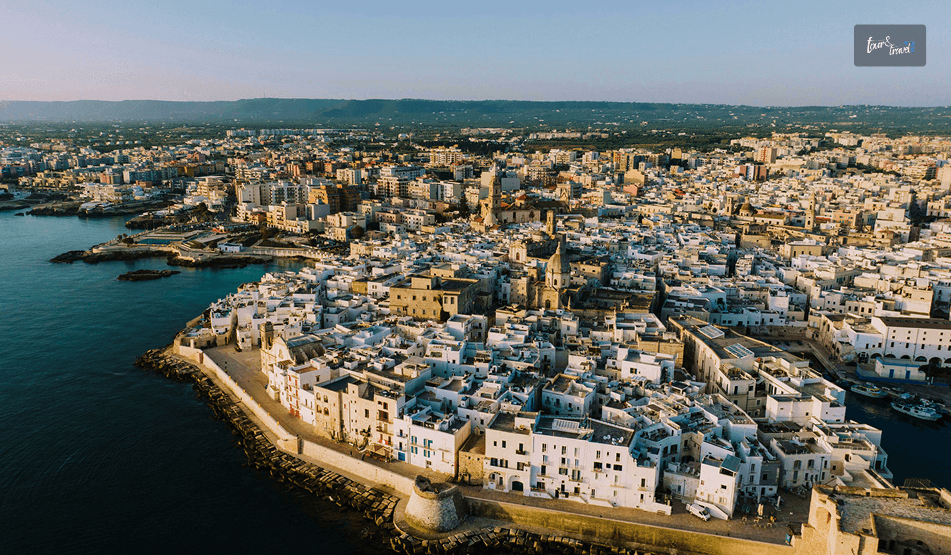
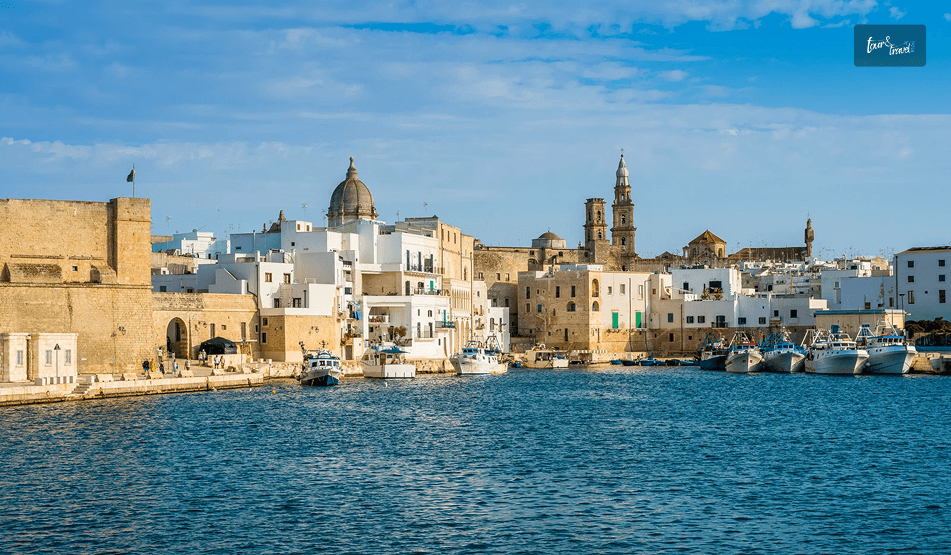
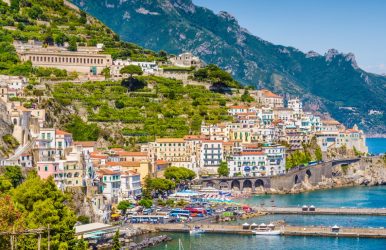
Furthermore, thanks to the latest online buzz, Monopoli, Italy, or the #HEARTHOFPUGLIA, is now emerging as the “New Santorini.” With a much calmer vibe, of course! 

Also, along the Adriatic City, this Southern Italian city is a wonderful blend of natural beauty, culture, and history.  

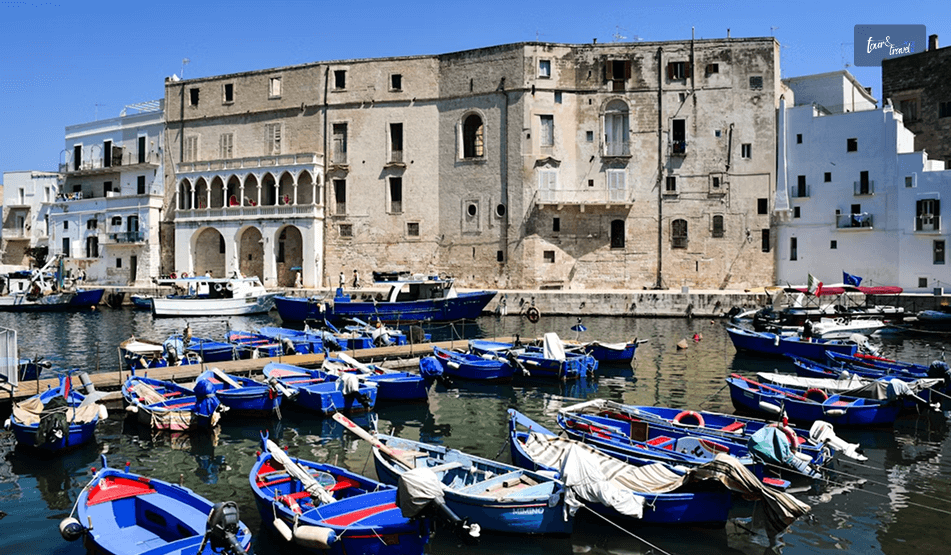
In addition, this quaint borough of fishermen boasts noble palaces that will take you back to the 18th century.  

Moreover, it offers the ultimate Italian experience with relaxation.  

So, are you ready for a trip to this beautiful coastal town? This Tour and Travel Guide has everything you need to know.

Where Is Monopoli, Italy?

Where Is Monopoli, Italy_

Monopoli is in the Bari Province of the Puglia region in Italy. Also, it is on the Adriatic Sea, and it has the most beautiful coastal landscape with a pleasant Mediterranean climate.  

Furthermore, Monopoli is well connected to all the nearby cities through boats, trains, buses, and cars.  

Also, you can use Monopoli as the base for exploring nearby attractions such as Ostuni, Alberobello, and Matera.  

What Is The Best Time To Visit Monopoli, Italy? 

May, June, and September are the best months for a visit to Monopoli, Italy. These months bless you with pleasant weather conditions. Also, these months are ideal for bypassing the extreme crowd in July and August, which are the peak months.  

So, do you want to know about the weather conditions of Monopoli in detail? Have a look at the table below.  

Months Highest Temperature Lowest Temperature 
January 13 
February 14 
March 16 
April 20 10 
May 25 13 
June 31 19 
July  34 20 
August 33 20 
September 28 16 
October 23 14 
November 18 10 
December 15 

How Did Monopoli, Italy, Get Its Name? A Glimpse Of The History

How Did Monopoli, Italy, Get Its Name_ A Glimpse Of The History

Monopoli’s Greek connection is not limited to being dubbed as the new Santorini. It has got its name from Monos Polos, which in Greek meant a single harbor.  

Further, inhabited for thousands of years now, Monopoli, Italy, has a history dating back to the Roman and Greek periods. Also, it always has been strategically important as a port town since antiquity.  

However, the Romans called this town “Apulia,” and it grew as a critical trading post thanks to its closeness to the Mediterranean Sea.  

Also, being a port city and a part of Southern Italy, Monopoli had an encounter with various cultures, such as: 

  • Byzantines 
  • Normans 
  • Spanish 

So, each civilization left a deep mark on the city and contributed to developing its cultural and architectural richness.  

Even in the Middle Ages, especially, Monopoli, Italy, was a part of the Kingdom of Sicily. Also, many noble families used to govern the town, and they built many places, churches, and buildings.  

Again, the remnants of these architectural marvels are one of the best things to see in Monopoli, Italy.  

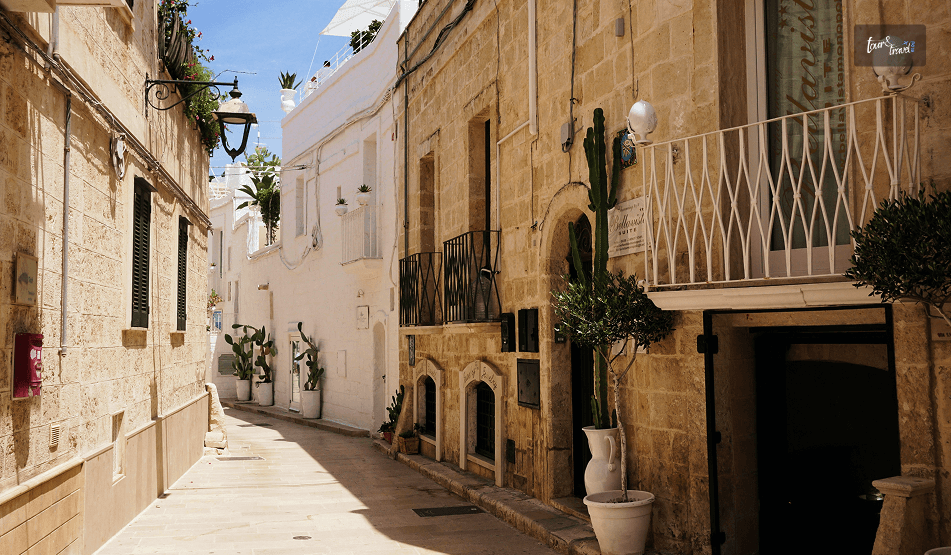
Moreover, as you take a walk along the narrow cobbled street of the Old Town of Monopoli, the ancient stone buildings stand as a telltale of the town’s past.  

Exploring the history of the town brings us to the best things to explore in Monopoli, Italy. Let’s take you on a tour of the Old Town and beaches. Also, it’s a delight to share the vibrant gastronomic and cultural scene of the town with you.  

Monopoli, Italy: Why We Love It And How It Has Become The New Santorini 

The beautiful beaches and the unique charm of the Old Town make the place exude the quintessential Santorini charm. 

1. Take A Walk Around The Old Town: Time For Some Time Travel

Take A Walk Around The Old Town_ Time For Some Time Travel
  • Beautiful squares! 
  • Ancient stone buildings! 
  • Charming and cobbled maze of alleys!  

These are the elements that make up the historical center of Monopoli, Italy. You must especially visit the “Centro Storico,” or the Old Town, as it is one of the most well-preserved historic towns in Puglia.  

Also, as you take a walk through the alleys, you will meet many churches, fortifications, plazas, and other iconic landmarks of the city. Let’s discuss briefly about them! 

Cattedrale Di Santa Maria Della Madia (Cathedral Of Santa Maria Della Madia) 

Do you want to know about the most beautiful Romanesque architecture of Monopoli? You must visit Cattedrale di Santa Maria della Madia (Cathedral of Santa Maria della Madia).  

This 12th-century church is an enviable hub of religious art collection and artwork of the local artists.  

Furthermore, the elegant interior of the church complements the grand facade, and the frescos and altars will win over you.  

Castello Carlo V: A Spanish Defense Against Invaders  

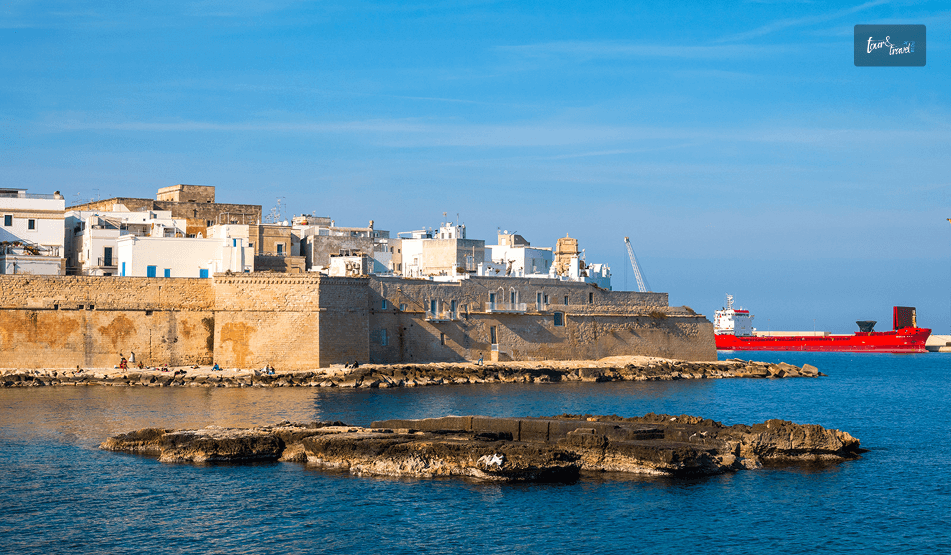
Castello Carlo V dates back to the 16th-century. This fortress defended the city and its people from the invaders and pirates.  

Further, this Spanish fortress houses a museum that shows you the rich military history of the town. Also, the monumental towers and big walls of the fort show why it was strategically important during the Renaissance.  

Chiesa Di San Salvatore: A Modest Yet Beautiful Church 

Chiesa Di San Salvatore, a small church in the Monopoli Old Town, goes back to the 15th century.  

Further, the Old Town has many such beautiful churches that add to the historical significance and charm of Monopoli.  

2. Beaches And Natural Beauty: Making Monopoli The Ultimate Coastal Gateaway In Italy

Beaches And Natural Beauty_ Making Monopoli The Ultimate Coastal Gateaway In Italy

Soft sandy shores along the Adriatic Coast and turquoise water make Monopoli the ideal beach destination in Italy.  

Furthermore, the beaches here are ideal for sunbathing, swimming, or indulging in the serenity of the surroundings.  

Have a look at the table below to learn about the best beaches here. 

Best Beaches In Monopoli Why We Love Them 
Lido Santo Stefano A fusion of private and public beach areas Beach bars and restaurants  
Cala Porta Vecchia Close to the Town Center Crystal clear waters Surrounded by dramatic cliffs Crystal clear water The ideal condition for swimming 
Spiaggia di Cala Paradiso A hidden gem Peaceful ambiance Natural beauty of the Adriatic Coast 

Moreover, the Monopoli coastline has many natural caves which you can explore by boat. For example, The Grotte di Monopoli is a series of cliff caves.  

These caves are ideal for knowing about the local geological history.

3. Take A Taste of Puglia At Monopoli, Italy

Take A Taste of Puglia At Monopoli, Italy

If you want to taste the quintessential taste of the Puglia region, you have to be in Monopoli. Traditional dishes of the Puglia region are full of flavors, and also they are made with local and fresh ingredients.  

Furthermore, you will see the abundant use of seafood, freshly baked bread, tomatoes, and olive oil.  

Do you love seafood? You have to be in Monopoli, Italy, to try shellfish and fresh fish. Also, don’t forget to try frittura di pesce, a friend’s seafood platter here with squid, anchovies, and shrimp.  

The light batter and the zing of the lemon do the magic here.  

Another signature element in the local dishes here is a variety of olive oils. You will find the use of the finest extra virgin olive oils and even fresh olives from the famous farms of Puglia.  

Are you a wine connoisseur? You will love Negroamaro and Primitivo, two famous red wine varieties in Monopoli, Italy.

4. Soak In The Cultural Vibe Of Monopoli: Cultural Tourism In Monopoli

Take A Taste of Puglia At Monopoli, Italy

You were wrong if you thought that Monopoli is just about seafood and beaches. This beach town houses various festivals throughout the year, and the Feast of Santa Maria della Madia is probably the most popular among them.  

This festival in December celebrates the patron saint of the town, and is celebrated with great pomp with processions, grand fireworks, and mass.

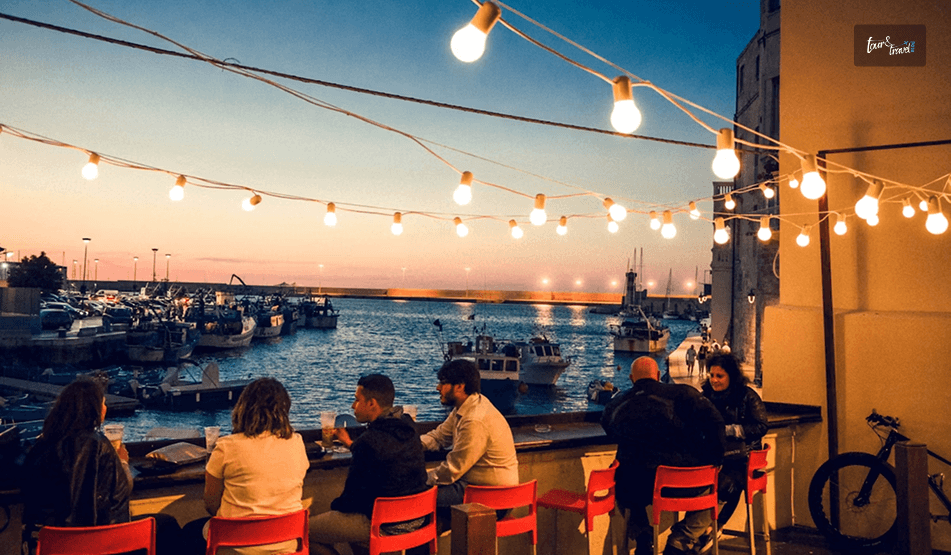
Furthermore, Monopoli has many open-air theaters and plazas where various performances and concerts are held during the summer season.  

So, enjoy food, history, beach, and culture at Monopoli, Italy.  

However, do you want to explore more of Monopoli? Then, visit the Byzantine churches and structures in the Old Town and plan a trip to the countryside.  

Furthermore, the Monopoli countryside has Trullis or stone made cylindrical houses with a conical roof.  

Moreover, the rural community in the countryside is very lively, making your time in the coastal town unforgettable.  

Share on Social Media

Sibashree is a travel, culture, and leisure writer who has been writing since the age of 12 and professionally since 2014. With more than a decade of travel writing experience and journeys across India and several parts of the world, she brings a deeply personal and thoughtful perspective to her work. A student of English Literature and Mass Communication, Sibashree has always viewed travel as more than movement — for her, it has been a way of understanding people, cultures, and herself. Her passion for spiritual exploration has also led her to many unusual and meaningful destinations over the years. Outside of writing, Sibashree enjoys watching European cinema, reading about global politics, and reflecting on the stories hidden within everyday places.

Leave a Reply

Your email address will not be published. Required fields are marked *

title-img Related

READ MORE card-img

Exploring The Allure Of Holiday Getaways In Italy

BY  Barsha Aug 11, 2023

When it comes to planning a holiday getaway, few destinations rival the charm and allure of Italy. With its rich history, breathtaking landscapes, mouthwatering cuisine, and romantic ambiance, Italy has captured the hearts of travelers worldwide. This article delves into why spending your holidays in Italy is an unforgettable experience, particularly when you rely on specialized agencies such as Italia Sweet Italia, that will take you to the most beautiful places and sample all the culinary delights. There are a lot of tourism agencies established in Italy through a shelf company or as a new entity that can offer a wide range of services. Italy has long captured the hearts of globetrotters, offering a perfect blend of history, art, and stunning landscapes. Among its many charming regions, Abruzzo and Puglia emerge as hidden gems, each with its distinct allure. Abruzzo: Where Nature and History Converge Exploring Abruzzo's Majestic Mountains Nestled in the Apennine Mountains, Abruzzo boasts breathtaking natural beauty. From the Gran Sasso peaks to the rugged beauty of the Majella National Park, this region offers a haven for hikers, nature enthusiasts, and adventure seekers. Tracing History through Medieval Villages Abruzzo's history comes to life in its medieval villages. Villages like Santo Stefano di Sessanio and Scanno transport visitors back in time with their cobblestone streets and ancient architecture. Exploring these villages offers a glimpse into the region's rich past. Savoring Abruzzo's Gastronomic Treasures No visit to Abruzzo is complete without indulging in its culinary treasures. Delight your taste buds with dishes like "arrosticini" - succulent skewers of lamb - and "maccheroni alla chitarra," a pasta specialty unique to the region. Puglia: A Coastal Gem Basking in Puglia's Stunning Beaches Puglia, on the other hand, lures travelers with its stunning coastline. Crystal-clear waters and golden sands await at beaches like Baia dei Turchi and Porto Selvaggio. Relaxing by the sea and soaking in the Mediterranean sun is a must-do here. Immersing in the Trulli Mystique Puglia's iconic Trulli houses in Alberobello are a sight to behold. These cone-shaped dwellings are not only charming but also carry historical significance. Exploring the narrow streets and staying in a Trullo provides a unique and immersive experience. Indulging in Puglia's Authentic Cuisine Puglia's cuisine is a celebration of fresh ingredients and traditional recipes. From the famous "orecchiette" pasta to the exquisite olive oil, the flavors of Puglia are deeply rooted in its agricultural heritage. Comparing Abruzzo and Puglia As you consider these two regions for your Italian getaway, let's compare their distinct features: Landscape Diversity: Mountains vs. Coastline Abruzzo captivates with its mountainous terrain, perfect for adventurers and nature lovers. In contrast, Puglia's allure lies in its expansive coastline, inviting travelers to relax by the sea. Architectural Marvels: Medieval Villages vs. Trulli Houses Abruzzo's medieval villages showcase architectural heritage, while Puglia's Trulli houses offer a unique glimpse into the past, making both regions historically intriguing. Culinary Delights: Gastronomic Contrasts Abruzzo's hearty dishes reflect its mountainous landscape, while Puglia's cuisine highlights its coastal bounty. Both promise an unforgettable culinary journey. Choosing Your Ideal Italian Getaway When deciding between Abruzzo and Puglia, consider your interests. Are you drawn to history, mountain vistas, and medieval charm? Abruzzo might be your match. If sandy beaches, turquoise waters, and unique architecture captivate you, Puglia could be your dream destination. Conclusion Abruzzo and Puglia await your exploration in the heart of Italy's enchanting landscapes. Whether you seek the rugged beauty of mountains or the soothing embrace of the Mediterranean coastline, these regions promise a holiday of captivating experiences, rich history, and unforgettable flavors. Read Also: Common Pitfalls Of Destination Wedding In Italy And How To Avoid Them How Much Time To Spend In Italy Best Places To Visit In Italy
READ MORE Italian cuisine

Unlocking The Secrets: Key Ingredients In Italian Cuisine 

BY  Ankita Feb 21, 2024

Italian cuisine is a hit in the United States; if you don't believe me, take a walk in Bensonhurst and Bay Ridge in Brooklyn, where you'll get more than a taste of the food, but experience the culture as well. Short of trekking through Italy, there are limited ways in which you can experience the magic of the country. One of those ways is through food. You could trawl through all the Italian restaurants and bistros in your neighborhood, or you could just cook some traditional dishes at home. Read on to learn more about Italian cuisine and some of its key ingredients. Popular Italian Dishes There are foods we have embraced and enjoy so much that we forget they originated from Italy. Here are a few examples of some that have become staple dishes. Pizza Pizza is the most famous Italian food, and it has won the world over; I mean, who doesn't love pizza? You can top your pizza with almost anything, but did you know the earliest pizzas were topped with garlic, lard, and salt? Lasagne Lasagne was initially reserved for special occasions during the Middle Ages; nowadays, we enjoy it as a filling meal with a salad or bread. Tiramisu This iconic Italian dessert means "pick me up" or “cheer me up” in Italian, understandably so. The sweet, fluffy, and light dessert that melts in your mouth will definitely lift your spirits. Cooking The Italian Way At the core of Italian cooking is the emphasis on fresh ingredients; most people buy packaged pasta and use canned tomatoes and condiments. Authentic Italian cooking requires fresh ingredients. While some may see Italian dishes as unhealthy because of their high-carb content, the opposite is true. Let's look at the key ingredients used in Italian cooking Pasta There are more than 350 different shapes of pasta; it also comes in various forms, such as dried, fresh, or dumpling pasta. Each kind is suitable for a different dish, such as Penne for Penne Arrabbiata and lasagne sheets for lasagne. It's easy to see why pasta is a multi-million dollar business in Italy. It's versatile and works with meat, vegetables, and even dessert (vermicelli) dishes. It doesn't need a lot of flavoring either; you just need to add a sauce and some cheese, and you are good to go. Pasta is an excellent source of carbohydrates; it's filling and affordable. If you are watching calories, you may opt for the whole-grain variety. Read Also: Exploring The Allure Of Holiday Getaways In Italy Olive Oil Olive trees are grown across Italy, with some of the best coming from Liguria and Tuscany, so it's no surprise that most Italian dishes call for olive oil. The oil is high in monounsaturated fatty acids, which can help lower your cholesterol levels. It also has excellent antioxidant and anti-inflammatory properties. So, what's the difference between virgin olive oil and extra virgin oil? Simply put, extra virgin oil goes through less processing and thus retains more of its natural antioxidants and vitamins. Virgin olive oil also has a higher free acidity rating (0.8 - 2.0) than extra virgin olive oil ( less than 0.8). For authentic Italian olive oils, check out Dolceterra (visit website). Tomatoes Even though tomatoes are not native to Italy, they are firmly at the center of Italian cooking. There are different uses for different kinds of tomatoes; cherry tomatoes are great for salads or stuffing, like in a Caprese stuffed mozzarella, while plum tomatoes make the best sauces. Using tomatoes is not just one of the easiest ways to flavor food; think of spaghetti bolognese. Tomatoes are also known to ease inflammation and boost your immune system; they taste great, too. It's also an excellent preservative. Tuscan cooking is based on limiting food wastage; in historical times, leftover meats were cooked with tomato to preserve them and give them more flavor. And, what is a pizza without a tomato sauce base? We can see why tomatoes have become so central to Italian cuisine. Basil Basil is a flavorful African and Asian herb that comes in different varieties. It is very popular in pasta sauces; hence, we associate it with Italian cooking. Most tomato sauce recipes call for fresh basil, and it is also used in pesto. Basil oil can be used as part of a bread dip or to flavor vegetables. Basil vinegar is excellent in salads as well. Fresh basil is the most flavorful, so it's better to use it. Basil works well with other herbs, such as rosemary, oregano, and dill; this is also applicable in planting. You can plant basil alongside dill, cilantro, and chives. The great thing about basil is that it's easy to grow and doesn't need much space. Cheese Due to new research and eating trends, dairy products have been getting a bad reputation recently. Despite this, we still love our cheese, and what would a pizza be without mozzarella cheese? Cheese is an integral part of Italian cooking, with several famous cheeses made in the country. Mascarpone for tiramisu, fontina for a fondue and Parmigiano Reggiano for pasta. Cheese adds flavor to the pasta's starchiness and helps bind ingredients together in sauces. It also contributes to the texture of the sauce. You can also serve cheese on its own on a cheese board paired with great wine; while this is not authentically Italian, it does show how versatile cheese is. Most cheeses are an excellent source of calcium, and they also have protein. Wine Wine is fundamental to Italian cuisine and not just for drinking; think of Cioppino, which needs it as a key ingredient. Here are a few tips when pairing wine: Chianti is very compatible with tomato-based sauces. So, it goes well with pizza and creamy tomato pasta. A cabernet-sauvignon elevates the flavor of aged cheeses. Pair a provincial dish with a regional wine. Lastly Italian cuisine is not complicated, and we love it; you can make the most straightforward meal, which will be delicious. Most meals are made with fresh ingredients, which makes them healthier and tastier. You can integrate Italian meals into most eating plans without feeling guilty. Read Also: Common Pitfalls Of Destination Wedding In Italy And How To Avoid Them How Much Time To Spend In Italy Best Places To Visit In Italy

READ MORE milan to lake como

An Unforgettable Journey From Milan To Lake Como: How To Travel The Distance?  

BY  Sibashree Jun 26, 2025

This time, our journey takes us to Lake Como, situated in the foothills of the Swiss Alps. The beautiful lake has been in the news recently for being the “Muse” for Chanel’s cruise 25/26 show.   Nevertheless, the pristine waters of the lake, quaint towns, and stunning villas here teach us the art of slow traveling. You can just sit by the water, relax, and soak in the moment by doing nothing.     Furthermore, the journey from Milan to Lake Como is an experience in itself. You will love the scenic views, cultural exploration, and more during the trip.  Which Month Is Best In Milan? Learn The Best Time From A Milan To Lake Como Journey  April to May and September to October are the best months for a Milan to Lake Como trip. June to August is very hot and humid in Milan, with temperatures peaking at over 30 degrees Celsius in July.   Furthermore, the winter months in Milan are damp and chilly. However, the opera season at La Scala runs from November to December, and Christmas and New Year celebrations continue through December and January.   So, you can plan a visit in these months to soak in the festive fervor of Northern Italy.   Do you want to know more about the weather conditions in Milan? Have a look at the table below.   Months Highest Temperature (°C) Lowest Temperature (°C) Days of Rainfall January 8 2 6 February 11 4 4 March 16 8 5 April 18 10 8 May 25 15 8 June 28 17 7 July 31 20 5 August 30 21 6 September 25 17 6 October 17 13 7 November 12 7 6 December 8 2 6  What Is The Milan To Lake Como Distance? How Do I Get To Lake Di Como From Milan?  The distance between Milan and Lake Como is approximately 50 kilometers (31 miles). You can complete the journey within an hour.   Also, the journey offers you a seamless transition from the bustling city of Milan to the tranquil beauty of Lake Como.   1. Milan To Lake Como Train  A train ride from Milan to Lake Como is convenient, and the journey offers stunning scenic views as the train passes through small villages and lush greenery.   You can take the regional train running from Milano Centrale or Milano Porta Garibaldi to Como San Giovanni, the primary station in the city of Como.   The train ride takes approximately 40 minutes.  However, you can also take a EuroCity Milan to Lake Como high-speed train from Milano Centrale to Como San Giovanni Station. These trains take close to 36 minutes (some trains may take longer).  What Is The Milan To Lake Como Train Time?  Have a look at the table below to learn about the train timings.  Slow Trains Faster Trains Departure from Milano Centrale Arrival at Como San Giovanni Departure from Milano Centrale Arrival at Como San Giovanni 06:43 AM 07:22 AM 7:10 AM 7:52 AM 06:55 AM 07:44 AM 8:10 AM 8:47 AM 07:43 AM 08:22 AM 9:10 AM 9:47 AM 08:43 AM 09:22 AM 10:10 AM 10:56 AM 09:43 AM 10:22 AM 11:10 AM 11:47 AM 10:43 AM 11:22 AM 1:10 PM 1:47 PM 11:43 AM 12:22 PM 3:10 AM 3:47 PM 11:55 AM 01:18 PM 4:10 PM 4:47 PM 12:43 AM 1:22 PM 5:10 PM 5:47 PM 12:55 PM 2:18 PM 6:10 PM 6:47 PM 1:43 PM 2:22 PM 7:10 PM 7:47 PM 1:55 PM 3:18 PM  2:43 PM 3:22 PM 2:55 PM 4:18 PM 3:43 PM 4:22 PM 3:55 PM 5:18 PM 4:43 PM 5:22 PM 4:55 PM 6:18 PM 5:43 PM 6:22 PM 5:55 PM 7:18 PM 6:43 PM 7:22 PM 6:55 PM 8:18 PM 7:43 PM 8:22 PM 8:43 PM 9:22 PM 9:43 PM 10:22 PM 10:43 PM 11:22 PM  How Much Is A Train Ticket From Milan To Lake Como?  The Milan to Lake train ticket price starts from $7 (2nd Class/Standard), and for the first class tickets, you will need to pay $10.   After reaching the Como San Giovanni station, you can take public transport or explore the city on foot.   You will love the towns by the shore of Lake Como, including Bellagio, Varenna, and Tremezzo.  2. Milan To Lake Como Day Trip By Car  A Milan to Lake Como drive is the best option if you want to enjoy the journey at your own pace.   Traffic conditions keep differing. However, the journey by road typically takes around 1 hour and 15 minutes on average.   Furthermore, as you advance following the A9 motorway, you will find the mesmerizing views of the Alps on one side and the appeal of Lake Como on the other side.   However, the roads around the lake can be winding and narrow sometimes. So, be careful with the navigation.   Also, don’t forget a stopover at Manza and Pavia. Manza has Autodromo Nazionale Monza, a popular Formula 1 race track.   Pavia, on the other hand, is home to the Certosa di Pavia. It is a noted Carthusian monastery, popular for its artistic and historic heritage.   3. Milan To Lake Como By Bus  You can take a bus from Milan to Lake Como. It is the cheapest way to reach Lake Como from Milan.   However, the journey takes around 2 hours, and the buses depart from the Lampugnano station, running to Como and various lakeside towns.   4. Milan To Lake Como By Boat  If you want to make your journey from Milan to Lake Como more meaningful, you can take a train to Varenna and take a ferry from there to Como.   You can also take a ferry ride to Bellagio.   The boat ride is beautiful, and you will love gliding through the turquoise waters.   Is Lake Como Worth Visiting? Know What To Do In Lake Como  Once you reach Lake Como, you can also visit the following places and enjoy several water activities.   1. Visit The Como City  The largest city on the lake, Como, has a stunning lakeside promenade, historic architecture, and vibrant atmosphere.   Furthermore, it is home to the Como Cathedral. The cathedral stands out thanks to its Renaissance and Gothic architecture.   Also, you will love the cafes, restaurants, and shops throughout the historic center.   Moreover, don’t miss a funicular railway ride to the hilltop town of Brunate. You will love the panoramic views of Lake Como and the surrounding mountains from there.   Additionally, for a taste of local culture, visit the Tempio Voltiano, a museum dedicated to the life and work of Alessandro Volta, the inventor of the electric battery, who was born in Como.  2. Explore Bellagio  Historic villas  Cobblestone streets  Scenic beauty  All these make Bellagio the “Pearl of Lake Como.” Also, it is located at the juncture of the two arms of Lake Como.   So, you will enjoy a stroll along the narrow and winding alleys of Bellagio, piazzas, and lush gardens.   Moreover, for an idyllic experience, you must visit the surrounding gardens of Villa Melzi.   Also, you can explore the gelato stands, cafes, and boutique shops. You can even cycle the surrounding hills, go hiking, and take part in water sports.   3. A Trip To Varenna  Varenna is one of the best towns to visit in Lake Como. This town on the eastern shore of Lake Como exudes the quintessential romantic charm and a laid-back vibe.   Also, it is an ideal destination for Instagrammable tours in Italy. It has a beautiful waterfront and colorful buildings.   Moreover, Villa Monastero, with its beautiful gardens, and Castello di Vezio, a medieval fortress overlooking the town, are some iconic landmarks here.   4. Water Activities  Do you want some serious adventure at Lake Como? Try the following activities.   Sailing  Kayaking  Paddleboarding  5. Dining On Lake Como  It’s a sin not to try fresh lake fish, such as perch and trout, when you are at Lake Como. You will love these delicacies after a Milan to Lake Como journey, and these dishes served with polenta do the real magic.   You will also love risottos here and look for the best Italian wines.   Do you want a more luxurious experience? You can try fine dining at any of the Michelin-starred restaurants in the nearby towns. Enjoy the delicacy while enjoying the amazing views of the lake.   Milan To Lake Como: Frequently Asked Questions (FAQs)  Here are the frequently asked questions and answers about the Milan to Lake Como journey.   1. Is 1 Day Enough For Lake Como?  Yes, one day is enough if you want to explore the nearby towns and try out the water activities. However, if you want to know about the local culture, you can stay longer.   2. What Is The Best Way To Travel From Lake Como To Milan?  Taking a superfast train from Milan to Lake Como is the best way to travel. The travel time is less than 40 minutes, and the ticket prices start from $7.   3. Is Lake Como Expensive To Visit?  Yes, Lake Como is considered one of the best places for high-end tourism in Italy. However, you can plan a stay in areas such as Lecco and visit the lake during the shoulder seasons to avoid the extra cost.   4. How Many Days Do You Need In Lake Como?  You can go for a day trip from Milan to Lake Como. However, if you have hiking plans and if you want to visit even the smaller villages, you will need at least three to five days.   5. What To Visit In Milan In 2 Days?  The places to visit in Milan in 2 days are Duomo, Galleria Vittorio Emanuele II, the Navigli district, and Sforza Castle.   6. How Many Days In Milan Is Enough?  You need at least two to three days to visit the major attractions in Milan.   7. What Is Special In Milan?  Milan stands proud as the global epicenter of luxury fashion. Names such as Versace, Prada, Valentino, and Armani call Milan their home.   8. Is It Worth Going To Lake Como From Milan?  Yes, the Milan to Lake Como journey is easy, and it offers a welcome relief from the hustle and bustle of Milan. Also, you will love the scenic views along the journey.