
Gal Oya National Park, Sri Lanka: A Place Where I Saw Elephants From Boats

I visited the Gal Oya National Park in 2022, and after a few months of being back in my country, I got a call from my friend in Sri Lanka

It was December, and he shared the news published on the Daily Mirror Online, which mentioned the threats of illegal mining to the flora and fauna of the national park. 

I felt numb, as this was not the Gal Oya National Park I visited. Even if Sri Lanka has icons such as the Yala National Park, for me Gal Oya offered the most remarkable encounters with elephants. 

For the first time, I did a safari from a boat, drifting quietly across open water while a herd of elephants waded between islands ahead of us.

There was no engine noise to spook them, no queue of vehicles, just the reservoir, the herd, and the sound of water.

It felt more like a secret that Sri Lanka preserves so dearly, not a national park. 

Gal Oya National Park At A Glance

DetailInformation
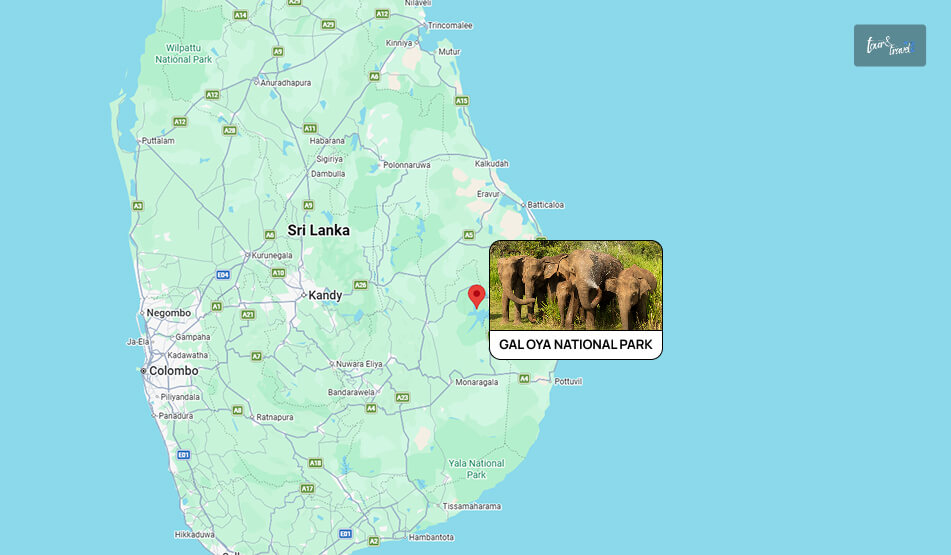
LocationAmpara District, Eastern Province, Sri Lanka
Established1954
AreaApproximately 25,900 Hectares
CentrepieceSenanayake Samudraya, the Largest Reservoir in Sri Lanka
Known forBoat Safaris and Elephants Swimming between Islands
Wildlife32 Recorded Mammal Species, including Elephants, Leopards, and Sloth Bears150+ Bird Species
Best time to visitDry Season, Roughly May to September
Distance from ColomboAround 300 KM,  Roughly 6 Hours by Road

A Reservoir-Built Park With A History Tied To Irrigation

The history of the Gal Oya National Park goes back to 1954. It was built to protect the Senanayake Samudraya.

This newly constructed reservoir, the largest in Sri Lanka, was part of a major post-independence irrigation scheme in the dry zone of Sri Lanka. 

The scale of the reservoir made my boat ride in the park all the more fascinating. It is just open water with forests around. 

So, the jeeps on the dusty tracks are replaced by the boats on the serene water. 

The landscape around the reservoir was more varied than I expected from a dry-zone park.

Forested Hills!

Savannah Grassland!

Also, there were rocky outcrops that locals call turtleback formations. 

Moreover, low grasslands all sit within the park’s boundaries, alongside historical sites like the Digha Vapi Dagoba and the Henebedde cave.

Wildlife And The Swimming Elephants

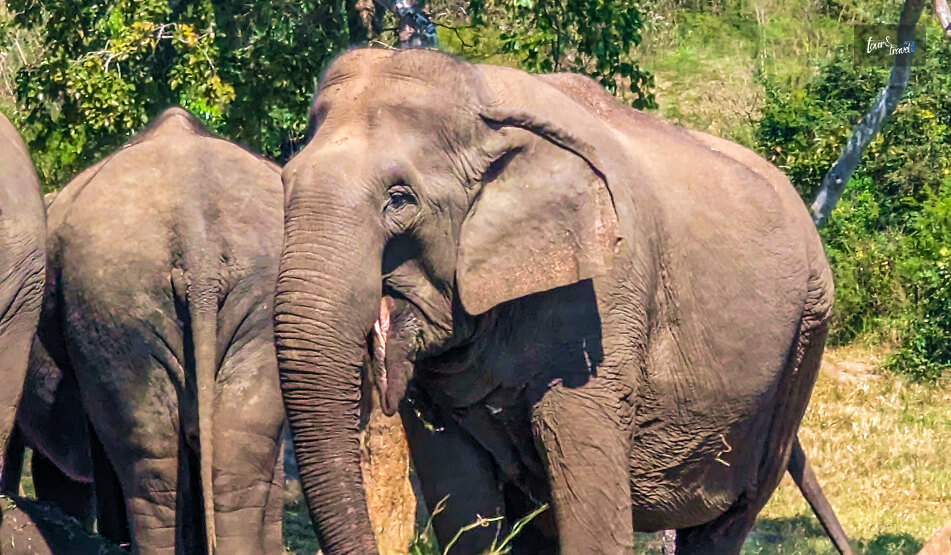
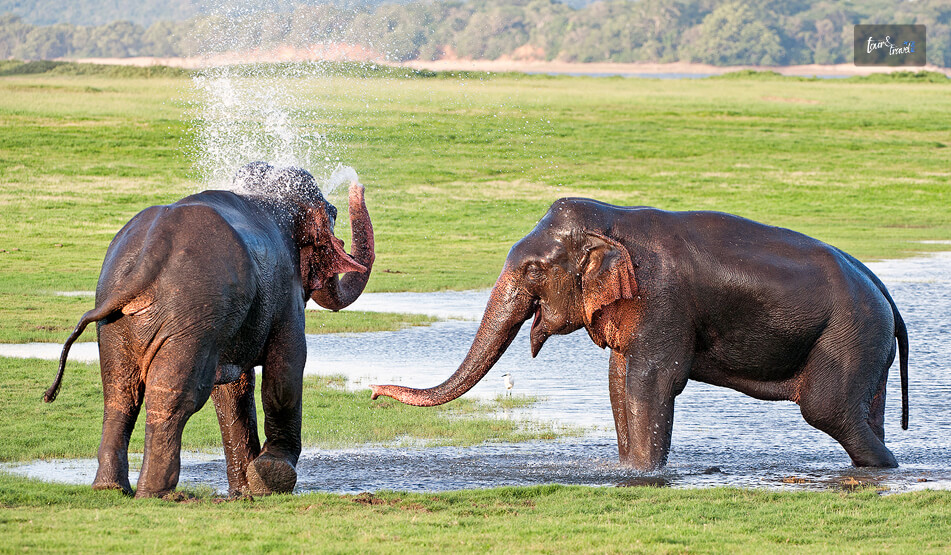
The most fascinating experience in Gal Oya was watching wild elephants swimming between the reservoir’s islands. 

They were moving in search of fresh grazing as water levels dropped in the dry season. 

Beyond elephants, the park has around 32 mammal species, including:

  • Leopards
  • Sloth Bears
  • Grey Langurs
  • Endemic Toque Macaque.

Also, the park, though not as fascinating as Bundala, has more than 150 species of birds. I could spot the following ones.

  • Painted Storks
  • Ospreys
  • Endemics like the red-faced Malkoha and Sri Lanka spurfowl.

I could also spot crocodiles and water monitors along the reservoir’s edges.

How To Reach Gal Oya National Park?

How To Reach Gal Oya National Park

You can take a drive from Colombo to reach Gal Oya National Park via Ampara. The distance is around 300 km, and the journey takes around 6 hours by road. 

However, staying in Ampara Town as the base or finding a lodge close to the park’s boat safari jetty is a more reasonable move. 

Also, Gal Oya National Park is a natural inland detour from the east-coast surf town, Arugam Bay, roughly 2 to 2.5 hours away.

Again, if you are traveling from Kandy, it is 4-5 hours by road via Mahiyangana. So, Gal Oya is a workable stop on a route heading toward the east coast.

Gal Oya Entrance And Boat Safari Costs (2026)

Gal Oya Entrance And Boat Safari Costs

On top of the park entrance fee, the boat safari itself is typically arranged and priced separately, usually through your lodge or a licensed operator.

Remember that access to the reservoir’s boats isn’t managed the same way jeep permits are at other parks.

Also, the boat safari costs around LKR 6000 to LKR 8000. 


Category

Approximate Cost (2026)

Foreign Adult (12+)

USD 12

Foreign Child (6–12 Years)

USD 6

Foreign Children under 6 Years 

Free

SAARC Nationals

USD 10 for AdultsUSD 5 for Children between 6 and 12 YearsFree for Children below 6 Years

Locals 

Adults: LKR 60Children from 6 to 12 Years: LKR 30Children below 6 Years: FreeStudents: LKR 20

Boat Safari

LKR 6000-8000

A One-Day Gal Oya Itinerary

A One-Day Gal Oya Itinerary

A day at Gal Oya has a different rhythm from most Sri Lankan national parks because here the safari is on a boat and not a jeep. 

Here is a structure that works well if you’re based near Ampara or the park’s eastern lodges.

TimeActivity
5:30 – 6:30 AMEarly transfer to the boat jetty on Senanayake Samudraya
6:30 – 9:30 AMMorning boat safari.
It is the best window for elephant sightings near the shoreline. 
9:30 – 10:30 AMReturn to lodge for breakfast.
10:30 AM – 12:30 PMOptional short trek or visit to the Henebedde cave/Digha Vapi Dagoba area.
12:30 – 2:30 PMLunch and rest during the hottest part of the day.
4:00 – 6:30 PMEvening boat safari for a second wildlife window and sunset over the reservoir.

What Are The Practical Tips For Visiting The Gal Oya National Park? 

  • Boats and slots are more limited than jeep availability at bigger parks.
  • Bring a hat, sunscreen, and a light waterproof layer.
  • Pack a zoom lens or good binoculars as elephant sightings are often across open water rather than at close range on a jeep track.
  • Stay two nights if you can, so you get both a morning and an evening boat safari rather than just one.
  • Combine with Arugam Bay or Ampara for a fuller east-coast itinerary.

What Is The Best Time To Visit Gal Oya National Park?

May to September, or the dry season, is the best time to visit Gal Oya National Park. 

In the dry season, the water level of the reservoir drops. So, all the animals, especially the elephants, concentrate near the remaining islands and water. 

Thus, the sight of swimming elephants is more common in this national park than anywhere else in Sri Lanka. 

This season is also ideal for birdwatching in Sri Lanka, as migratory and resident species settle around the shrinking waterline.

Share on Social Media

Sibashree is a travel, culture, and leisure writer who has been writing since the age of 12 and professionally since 2014. With more than a decade of travel writing experience and journeys across India and several parts of the world, she brings a deeply personal and thoughtful perspective to her work. A student of English Literature and Mass Communication, Sibashree has always viewed travel as more than movement — for her, it has been a way of understanding people, cultures, and herself. Her passion for spiritual exploration has also led her to many unusual and meaningful destinations over the years. Outside of writing, Sibashree enjoys watching European cinema, reading about global politics, and reflecting on the stories hidden within everyday places.

Leave a Reply

Your email address will not be published. Required fields are marked *

title-img Related

READ MORE Japanese shrines to visit

What Are The Best Japanese Shrines To Visit? Celebrating Nature Spirits And Inherent Spirituality

BY  Sibashree Mar 31, 2026

The scent of that first Japanese temple I visited, full of damp cedar, ancient dust, and high-quality incense, immediately slowed my pulse.   The architecture felt magnetic, heavy with history that seemed to settle into your bones.   Furthermore, these temples aren't just buildings.  They've stood for centuries,  and are a part of Japan's cultural fabric.   Moreover, the connection between nature and devotion isn't just symbolic here, and it's real.   Also, every temple holds stories passed down through generations.   A single stone path or carved gate can carry centuries of meaning. You don't just walk past them. You feel their presence.  How Buddhism Shaped The Island And Each Japanese Temple   Buddhism started in India, the land I come from.  Then it moved through China and Korea before reaching Japan in the 6th century.   Now, the first official step came when King Seong of Baekje sent Sutras and a Buddha image to Emperor Kinmei.   1. The Rise Of Sects   Over time, new sects poured in from China, changing how Buddhism looked here.   Saicho brought the Tendai sect in 805.   Kukai, later called Kobo Daishi, founded the Shingon sect in 806.   Then, Zen arrived in 1191, and it shifted Japanese art, tea traditions, and samurai life.   Now, Buddhism shares space with Shinto, the local religion.   So, the two coexist side by side without conflict.   Though it's not perfect, that's how things work now.  The Architectural Layout Of A Japanese Temple   Once you enter a Japanese temple, you will find the main hall or Hondo. Furthermore, the table below explains the other key features of a Japanese temple.  Features of a Japanese Temple Details  Pagodas These have three to five stories.   Furthermore, these are the repositories of the sacred relics.  Lecture Halls Monks study and teach here.  Belfries These house massive bronze bells that are rung during the New Year. Cemeteries Often located on the grounds, these emphasize the Buddhist focus on the afterlife and ancestors.   What Is The Best Japanese Temple?   I cannot pick a favorite when it comes to choosing the best Japanese temple. However, these are the ones I loved visiting.   1. Kinkaku-ji (The Golden Pavilion), Kyoto  Kyoto is not just famous for its cherry blossom season. It also has the Golden Pavilion.   This is the "poster child" of Kyoto, and for good reason.   Two levels of this Zen temple have a covering of gold leaf.   Seeing its glittering reflection in the "Mirror Pond" is one of those travel moments that actually lives up to the hype.   It was originally built as a retirement villa for a Shogun, which is why it has a slightly "king-of-the-hill" air.  2. Todai-ji Temple, Nara  A visit to the Todai-Ji Temple is one of the best things to do in Nara.   Standing in front of the great Buddha Hall (Daibutsuden) makes you feel incredibly small.   The structure was once the largest wooden building ever built, and even now, at two-thirds its original size, it still stands with quiet power.   Inside, a 16-meter-tall bronze Buddha dominates the space, and it was cast in 752.  3. Senso-Ji Temple, Tokyo   As Tokyo's oldest temple, Senso-ji pulses with color and movement.   Daytime visits pull you into a sea of people.   After dark, though, the scene shifts entirely.   Vermilion walls glow warmly under lanterns, the air settles, and the five-story pagoda rises softly against the sky. That night view became my favorite moment in four days in Japan.  4. Sanbutsu-Ji Temple, Misasa  Here is a temple for the daring ones.   To get a glimpse of the inner hall, Nageiredo, I had to do a really challenging hike up Mount Mitoku.   The hall can be seen right on the cliff's face, supported on stilts over a dangerous drop.   Whenever I looked at it, I kept asking myself how 8th-century monks could have built it without falling off the mountain.  Besides, this "National Treasure" might even have to stand the comparison to a scene in an Indiana Jones movie.   5. Tenry-Ji Temple, Kyoto   This temple is right in the heart of the Arashiyama district and is also famous for its garden.   The landscaped grounds of the 14th century surround the central pond walkways.   It was cherry blossom season when I dropped by, and the view of the weeping cherry trees against the forested mountain is a picture I still take out whenever I am stressed.  6. Kongobu-Ji Temple, Koyasan  For a deeply immersive experience, head to Mount Koya.   Kongobu-ji, the main temple of Shingon Buddhism, houses the largest rock garden in Japan.   The granite rocks have been carefully arranged to depict dragons arising from a sea of clouds. It's an excellent venue for peaceful meditation.  7. To-Ji Temple, Kyoto  While there are other things to see in To-ji, its five-story pagoda is the main draw.   At 57 meters high, it is not only the tallest in Japan but also a city landmark.   Plus, when it is lit up at night in spring, it appears like a golden light rising from amidst the cherry trees.  What Are The Best Offbeat Japanese Temples?   Aside from the well-known "Golden" and "Great Buddha" temples, there are also sites that allow you to connect more closely with nature and pilgrimage traditions.   It is at these places that I experienced the most "human" contacts, observing pilgrims dressed in white robes or witnessing monks conducting their daily rituals.  1. Daisho-In Temple, Miyajima  While most tourists to Miyajima are attracted by the floating torii gate, Daisho-in, situated at the base of Mount Misen, is the island's true spirit.   The most memorable feature? The 500 Rakan figures. Each one has an entirely different face. So, some are laughing, some are grumpy, and some look like they're whispering a secret.  2. Seiganto-Ji Temple, Nachisan  There is probably no other place on the Kumano Kodo pilgrimage that has been as pictured as this one.   You have a vivid red pagoda in the front, and Nachi Falls is the highest waterfall in Japan, thundering down in the background.   It is a wonderful site where the noise of the water and the quietness of the temple together form an ideal spiritual harmony.  3. Zenko-Ji Temple, Nagano  The temple sits in Nagano, a town that grew around it.   This is where Japan first received a Buddhist statue.   Though the statue itself isn't visible, you can walk into a pitch-black tunnel under the altar.   The goal? Try to touch the "Key to paradise. " It's creepy, but there's something real about it. A genuine cultural moment.  4. Horyu-Ji Temple, Nara  Located just outside Nara, this site holds the oldest wooden buildings still standing.   These structures date back to 607. Standing in them feels like stepping into Japan's earliest days. History lives in the wood and silence of the halls.  How To Visit A Japanese Temple Like A Local?   Visiting A Japanese temple is not just about seeing but also experiencing it.   One way to do this is through politeness, talking softly, and following a few simple etiquettes.   You will find a large incense burner (Jokoro) at the temple entrance.   A common practice is to fan yourself with the smoke, as it is said to have medicinal effects.  1. Getting In And Praying  You'll most likely have to take off your shoes before going into a building (make sure you have stylish socks! ).   Once inside, you can go up to the altar, put a small coin in the donation box, and silently make a respectful gesture.   In contrast to a Shinto shrine, at a Buddhist temple, you shouldn't clap.   Only a silent bow with hands in the prayer position is the right way to show reverence.   2. Taking Photos In A Japanese Temple   Generally, temples are okay with you taking photos in the outdoor areas.   However, you cannot take photos inside the main worship halls where the statues are.   Also, personally, I feel that when I put my camera away and spend five minutes just sitting on the tatami mats in silence, what I get is a more vivid "picture" than any photo could ever represent.  3. The Water Purification Ritual (Temizuya)  Before you pray, take a moment to cleanse your mind and body at the Temizuya or the stone water pavilion near the entrance.   Watching a local glide through this ritual can look intimidating, but it follows a simple, beautiful sequence using a single scoop of water.  Purify your left hand: Pick up the wooden ladle with your right hand, scoop up water, and pour a small amount over your left hand.  Purify your right hand: Switch the ladle to your left hand and wash your right hand.   Rinse your mouth: Switch the ladle back to your right hand. Pour a little water into your cupped left hand.  Then, use it to rinse your mouth softly, and spit out the water into the drainage trough beside the fountain.  Next, never back into the main pool. Do not drink directly from the ladle.   Clean the ladle: Tilt the ladle vertically so the remaining water runs down the handle, washing it clean for the next visitor. Place it face down.  4. The Temple Stamp (Goshuin) Tradition  If you want a physical memory of your journey that goes deeper than a digital photograph, look for the temple’s stamp office (Goshuinjo).   Before you start your trip, purchase a Goshuincho.  It is a specialized accordion-style book designed specifically for collecting sacred temple stamps.  For a small offering (usually 300 to 500 JPY), a monk or temple calligrapher will hand-ink a stunning, highly detailed page just for you.   They stamp the page in bright vermilion ink and write the temple’s name, the date of your visit, and a sacred Buddhist phrase in elegant, sweeping calligraphy.   It is a deeply respected tradition, transforming your travel itinerary into an authentic, personalized pilgrimage logbook.  Visiting Hours And Entry Fees At These Temples  With seven temples covered across three cities, it helps to have the practical details side by side rather than scattered through each write-up, especially since hours and fees vary more than you'd expect between them.  Temple City Typical Hours Entry Fee  Kinkaku-ji  Kyoto  9:00 AM - 5:00 PM 500 JPY  Todai-ji  Nara  7:30 AM - 5:30 PM (seasonal)  800 JPY (Daibutsuden) Senso-ji Tokyo Grounds open 24 hours  The main hall is open from 6:00 AM - 5:00 PM.   Free Tenryu-ji Kyoto  8:30 AM - 5:00 PM  500 JPY (garden) and 300 JPY for buildings   Kongobu-ji  Koyasan 8:30 AM - 5:00 PM 1,000 JPY  To-ji   Kyoto  9:00 AM - 4:30 PM (grounds later)  500-800 JPY (varies by season, pagoda access)  Fees and hours shift seasonally.  Also, several of these temples charge extra for special exhibitions or evening illuminations during cherry blossom and autumn foliage season.  So it is worth checking the specific week you're traveling rather than relying on a fixed number.   Senso-ji is the one genuine exception on this list.  It is free and open around the clock, which is part of why its night-time atmosphere, mentioned above, is worth planning for specifically. Read Also: Haneda Vs Narita: Which Tokyo Airport Should You Choose For Your Next Trip? Are You Planning A Trip To Osaka? This Is Your Quintessential Guide Is an Mt Fuji Day Trip From Tokyo Worth It? How To Plan It?

READ MORE Anuradhapura

What Are The Best Places To See In The Sacred City Of Anuradhapura, Sri Lanka? 

BY  Sibashree Apr 21, 2026

Anuradhapura is a part of the Golden Triangle of Sri Lanka along with the Dambulla Royal Cave Enclave, Polonnaruwa, and Sigiriya Rock Fortress.  Furthermore, the Sacred City of Anuradhapura, a UNESCO World Heritage Site, was built from the “cutting of a Bodhi Tree” or the “Tree of Enlightenment.”  Before 993, when it was abandoned due to an invasion, it was the political and religious capital of Ceylon, the previous name for Sri Lanka.  Also, if Jaffna attracted me with its Tamil Culture and Hindu Temples, Anuradhapura was a great calling because it was the first place to adopt Buddhism outside India, the country I belong to.  Moreover, Jetavanaramaya, the early 4th-century BCE Stupa, was once the “third-largest man-made building in the world,” with an original height of 122 meters.  However, while the Jetavanaramaya Stupa continues to evoke awe with its grandeur and mystery, the other ruins and remains of Anuradhapura also wait to tell you the history and cultural richness of the region.  So, here is a brief discussion on the places I visited in Anuradhapura.  What Are The Places To Visit In Anuradhapura?  I was staying in a guest house near the Sacred City of Anuradhapura. I rented a bicycle from my guest house for LKR 500, and I took the back route as the staff in the guesthouse guided me.  Off the main road, the cycling experience was beautiful, and I loved spotting the roaming peacocks and little children waving at me.  Beyond the charming views and ambiance, I noticed one more thing. In Anuradhapura, the past and the present walk side by side.  There have been no evictions of the locals in the name of preserving or promoting the ancient ruins and remains in a UNESCO World Heritage Site.  Nevertheless, after talking to the local children for a while, I reached the entrance of the Anuradhapura Sacred City. The entry fee was around 9500 LKR or INR 2800.  However, remember that the ticket includes archaeological sites such as Jetavanaramaya, Abhayagiriya, Ruwanwelisaya, and Thuparamaya. So, if you want to explore other sites such as the Isurumuniya Viharaya, you will need to pay separate fees.  Nevertheless, these are the places I visited in Anuradhapura.  “This sacred city was established around a cutting from the 'tree of enlightenment', the Buddha's fig tree, brought there in the 3rd century B.C. by Sanghamitta, the founder of an order of Buddhist nuns.  Anuradhapura, a Ceylonese political and religious capital that flourished for 1,300 years, was abandoned after an invasion in 993.  Hidden away in dense jungle for many years, the splendid site, with its palaces, monasteries, and monuments, is now accessible once again.” - UNESCO World Heritage Convention.  1. Abhayagiri Vihara Stupa Complex The Abhayagiri Vihara Gargantuan Stupa is magnificent, and the brick stupa creates a contrast against the bright blue sky and the lush greenery of Anuradhapura.  King Vattagamani Abhaya or Valagamba founded this Stupa in the first century BCE. This prominent center of Mahayana Buddhism remains an active place of worship.  Also known as the Northern Monastery or Uttara Vihara, it changed the course of Buddhism in Sri Lanka by deviating from the monolithic tradition of Theravada Buddhism.  Moreover, the Abhayagiri Vihara Stupa is the first Stupa in Sri Lanka to house the tooth relic of Buddha.  Also, the Abhayagiri Dagoba or Stupa at the epicenter of the Abhayagiri Vihara Complex is one of the largest stupas in Sri Lanka.  The Structure And Architecture Of The Abhayagiri Vihara Apart from the Stupa or Dagoba, most parts of the Abhayagiri Vihara are in ruins. There were living houses for the monks and students, libraries, dinner halls, and meeting halls surrounding the Stupa.  Here is a detailed overview of the structures as I saw them. However, the heat will be scorching, and you will find langur monkeys roaming around.  So, try to be there by 6 AM, when the gates open, or after 4 PM. The Sacred City remains open till 8 PM. However, it will take you around an entire day if you want to explore the major ruins of the Anuradhapura Sacred City. The Dagoba Or The Stupa  The Stupa or Dagoba in the Abhayagiri Vihara is in a well-preserved condition. The massive bell-shaped structure of the stupa has a height of around 120 meters, and at its widest, the circumference is close to 350 meters.  The dome, made of brick and lime mortar, has four entrances, and you will find a Devatakotuva or a cylindrical spire and Hataraskotuva or a square-shaped structure as the crowns of the Stupa.  Image Houses, Refectories, And Sub Shrines  I saw the remains of various refectories, image houses, living complexes, and sub-shrines around the stupa.  Among the smaller stupas, the Indikatu Seya and Silasobbhakandaka Cetiya are the most common.  Meeting Halls The remains of the meeting halls or Uposathagharas have been found in the complex.  These Uposathagharas were multi-storied, and Ratnaprasadaya or the jewel mansion was most prominent among them.  Congregation Hall The Sannipatasala, or the congregation hall near the southern entrance of the stupa, is the largest hall in the complex.  The image of Nagaraja, or the king of snakes, or Virupaksha, the protector of the Western Direction, was found in this congregation hall, which is now in ruins.  You can see this image at the Abhayagiri Museum.  Abhisheka Mandapa Or Anointing Pavilion The Abhisheka Mandapa had a stepped entrance, and people believe it to be the place where the statues of Lord Buddha and other Bodhisattvas were consecrated.  Some even consider this the bathing house or Snanghara.  Stone Slabs  Many stone slabs with inscriptions in Nagari Script have been found in this site.  Again, there are two moon stones in Anuradhapura, and one was found at the Queen’s Pavilion and the other at Mahasena’s Palace.  These moon stones are significant features of Buddhist stupas or shrines, as these semi-circular stone structures depict the Buddhist Samasara.  The Dining Room The dining room or hall of the Abhayagiri Vihara has a stone-clad trough, and it is ideal for storing or serving rice that could feed 5000 monks.  Furthermore, there was a dining area, hearths, underground channels, grinding stones, and a sundial in the site Faxian or Fa-Hien described as the dining hall.  The dining hall also has two courtyards.  The Bodhi Tree Shrine The Bodhi Tree Shrine, or the Bodhighara is a subsidiary shrine of the Abhayagiri Stupa. As a token of Buddha’s enlightenment, Sanghamitta, a Buddhist nun from India, brought saplings of the Bodhi Tree.  She planted the saplings in Abhayagiri, and many patrons built small aediculae-like shrines around these trees.  These sub-shrines had images of Lord Buddha in a meditative or Samadhi posture and his footprints.  Moreover, excavation of Buddha statues took place in the Bodhighara sites, and one of them is from the 3rd century BCE, and these resemble the sculptures of the great Gupta dynasty in India.  You can visit the Anuradhapura Archaeological Museum if you want to see these Buddha statues. The Ponds  The tanks and reservoirs near the living quarters were the main sources of water for the complex.  However, water in these reservoirs or tanks came from the Kuttam Pokana or Twin Ponds to the far east of the Stupa.  Moreover, these rectangular ponds were built by Aggabodhi I in the 6th or 7th century CE, and they have shallow ridges, and the inner walls are made of polished stone.  However, for me, the most fascinating thing was the stone slab with the motif of a hooded cobra.  Also, this hooded cobra or Naga establishes a deep connection with India, as Nagas and water have deep connections in Indian mythology.  As I walked further, I came across the Elephant Pond or Eth Pokuna. It is the largest artificial tank in Sri Lanka, and it is the main water supply for all the tanks and reservoirs in the Vihara Complex.  Here also, I noticed a depiction of a hooded cobra on a stone slab.  At the end of exploring the Abhayagiri Vihara Stupa Complex, I must tell you that you must read a little about the place before a visit.  Otherwise, it will be difficult for you to catch up when the guide shares the details.  2. Jethawanaramaya Stupa You will also find the Jetavanaramaya Stupa in the Sacred City of Anuradhapura. It was one of the largest man-made structures in the world, and it ranked only after the Great Pyramids of Giza.  The original height of this structure was 122 meters, and after restoration, the height is now 71 meters.  The stupa, built by King Mahasena in the 3rd Century AD, is a part of a large Jetavana Vihara complex that used to house around 200 monks. Also, like the Abhayagiri Vihara, it has a brick architecture.  This once again indicates how ancient Anuradhapura was a hub of brick production. In fact, Ruwanwelisaya, the most sacred stupa of the country inside the Anuradhapura Sacred City Complex, also had a brick architecture.  However, for the recent restoration, they used cement in the outer layer of the stupa.  Moreover, massive excavation works have taken place in the Sacred City of Anuradhapura, and the gold panels showing the imagery of the Bodhisattva and the partial inscriptions of the Prajñāpāramitā Sutra.  Now, Prajñāpāramitā Sutra is the foundational text of Mahayana Buddhism. This shows how the Jethawanaramaya Stupa was the hub of different Buddhist thoughts and schools. However, you can see these gold panels now at the Colombo Museum.  Also, I came to know about another fascinating thing from a monk here, that the stupa used to have a diamond in the crown. It used to turn aside lightning during the monsoon season.  3. The Gleaming White Ruwanwelisaya Stupa  The Ruwanwelisaya Stupa is most famous among the locals and followers of Buddhism.  Now, unlike the Ritigala Forest Monastery, the Ruwanwelisaya Stupa or the other stupas in the complex are live hubs of Buddhist practices.  Also, the Ruwanwelisaya Stupa is especially famous for housing the remains of Lord Buddha.  Originally, the Ruwanwelisaya Stupa was much smaller than the Jethawanaramaya Stupa. However, thanks to continuous maintenance, it now stands at a height of 100 meters.  Now, this was my experience in the ancient ruins of Anuradhapura. If you want to explore more, you can visit the Kaudulla National Park, at a distance of less than 2 hours, and the Hurulu Eco Park, at a distance of 1 hour and 50 minutes.   Location And How To Reach Anuradhapura?  Anuradhapura City is located on the banks of the Malwathu Oya. It is the capital of the central-west region of Sri Lanka and the district of Anuradhapura.  Anuradhapura is a 4-hour journey from Colombo and Kandy.  Once I explored the top attractions in Kandy, I took a minivan, which cost me LKR 1600. Now, you will also get private and public buses.  However, I had luggage and wanted to keep the schedule flexible. So, I chose the minivan.  Things To Remember For A Trip To Anuradhapura The Sun is merciless in Anuradhapura, even if you visit the Sacred City in winter. It becomes unbearable past 11 AM.  So, you have to really start early.  Also, carry water and wear full-sleeve clothes to maintain the dignity of the place and protect your skin from the Sun.  Moreover, as I have mentioned, visiting a place like Anuradhapura demands preparation. So, study well and have basic ideas about these stupas beforehand. 

READ MORE what to do in Weligama

What To Do In Weligama In 2026? Beach, Nightlife, Water Sports, And More

BY  Sibashree May 27, 2026

From the beaches of Jaffna to Weligama, Sri Lanka has so many places that can teach you the art of slow traveling and the TravelDownUnder philosophy.  The southern coast of Sri Lanka, especially, has a distinct magic. Furthermore, the Hiriketiya Beach and Mirissa Beach often steal the social media limelight.  However, Weligama is an exception even in this age of Instagram craze. The region has a legendary surf culture and a salty heart.  So, surfing is the most popular answer when you ask what to do in Weligama.  It has a massive, shallow crescent bay that transforms everyday ocean swells into beautifully consistent, beginner-friendly rollers. However, surfing is not the only activity you will love in Weligama. Even if you never plan on waxing a surfboard, the laid-back beach town pulls you in with an infectious, slow-paced lifestyle.  Moreover, here you will spend the mornings in flat whites, hide from the tropical Sun in shaded pools in the afternoon, and enjoy the distinct nightlife.  So, as I was on a backpacking trip to Sri Lanka, I enjoyed every bit of this remote coastal area.  I have penned my experience, the best things to do in Weligama, what to eat, and more in this article.  What To Do In Weligama? Indulging In The Quintessential Coastal Experience In Sri Lanka According to a recent report of the World Economic Forum regarding the Jobs and the Future of Work, 25% of the workforce in the world will be fully digital.  With this shift in the workforce, there will also be a paradigm shift in the way young people and professionals travel.  The digital nomads especially look for budget-friendly and beautiful locations that offer them the ease and amenities of working.  In this regard, Weligama in Sri Lanka remains a prominent choice, and even according to a survey of the Hotel With Tub website, Weligama has secured the 43rd place among the 100 best destinations for digital nomads in the world.  It is affordable, and you must try the following attractions here.  1. Enjoying The Quintessential Weligama Surf Experience  Surfing is the very fabric of Weligama. Decades ago, some eager travelers chased the rumor of finding the perfect breaks in this sleepy fishing hub.  Today, it is one of the premier learning grounds for surfers in Asia.  The gentle sandy floor of the slope reaches across hundreds of meters in the water. Thus, the incoming waves lose their chaotic bite and turn into rolling whitewash,  With the waves getting predictable, even if you are stepping onto a board for the first time, you can walk down the main beach strip to find dozens of local wooden shacks offering board rentals and affordable one-on-one coaching. However, that does not mean that Weligama will disappoint the advanced surfers. For example, Kima Surf Camp is a high-end hub for premier surfers.  Housed within a meticulously restored colonial mansion, it pairs intensive, expert-led coaching with a vibrant communal lifestyle, yoga classes, and poolside recovery sessions.  2. Attending A Rooftop Yoga Session At Hangtime Hostel  The neighboring Ahangama is a more popular place for the niche Yoga subculture. However, the Yoga studios in Weligama stand out because of their amazing views.  The Hangtime Hostel is the place I visited, and the open-air rooftop platform grounded me as soon as I stepped in.  Also, it offers a quick relief from the street noise, and on one side, it offers the most amazing view of the expansive Indian Ocean.  On the other hand, the dense, emerald canopy of the Sri Lankan jungle sways in the breeze.  Like every day, the classes began at 9 AM, and I was a little early to reach as I wanted to secure a good spot.  Furthermore, the session was on Power Vinyasa, and it cost around LKR 2500.  3. Chasing Horizons In The Golden Hour  Along the southern coast of Sri Lanka, Sunset is more than a natural occurrence that takes place daily.  It is like a social ritual and a magic of nature that brings people together. It is an amazing experience to see the Sun dipping into the water.  However, only the locals know the right time to start a short scooter ride to reach The Cliff and see the most vibrant sunset.  It is over rugged coastal rocks, and this open-air tiered place ensures that every single table is positioned for panoramic ocean views.  Overall, it is a complete fusion of the upscale "sunset lounge" aesthetic and the unpretentious warmth that defines Sri Lanka.  Furthermore, to attend this perfect fusion, The Cliff has leaned on tropical flavors without the use of artificial sugar.  Also, I had the most amazing grilled octopus here with pillowy flatbread.  4. Exceptional Brunching Experience At Nomad Cafe Weligama has a booming cafe culture, and Nomad Cafe is surely the crown jewel. It began its journey as a modest, five-table passion project, and now it is an experience in its own right.  Foodies frequently travel from nearby towns to experience the great food and ambiance here. You must not miss the Flat White here.  Moreover, the menu of Nomad Vafe deftly bridges European brunch staples with vibrant, fresh flavor profiles. The undeniable star of the show is the rösti eggs Benedict. I loved its texture play with perfectly poached eggs and rich, velvety hollandaise balanced precariously on a shatteringly crispy potato hash brown. Moreover, if you are looking for something with a kick, don’t miss their smoky and perfectly spiced shakshuka.  5. Coworking At Plan B For Community And Connection  As I have already mentioned, Weligama is a prime location for digital nomads. Plan B is one of the prime destinations for digital nomads here.  Furthermore, if you need to answer emails, crunch numbers, or take a Zoom call without sacrificing your tropical state of mind, Plan B is the place to be.  It is an excellent fusion of a cozy garden cafe, coworking hub, and coliving space. Furthermore, there is a shaded courtyard at the epicenter of the cafe.  The space hums with gentle productivity; you will find professionals from across the globe typing away over iced lattes while jazz music filters through the trees.  Moreover, the beauty of Plan B is inclusivity. You will not need a formal workspace pass to enjoy the grounds.  Their smoothie bowls are amazing, and so are the traditional Sri Lankan hoppers and decadent eggs Florentine. You will also find many delightful vegan options here. 6. Enjoying Seafood By The Shore: A Culinary Feast At Maru Weligama is not just about cafes and local rice-and-curry spots when it comes to food. Maru, for example, is a place that elevates the beachfront dining experience.  It is right against the ocean’s edge, and the restaurant celebrates the bounty brought in daily by Weligama’s fishing fleets.  Furthermore, the menu here focuses heavily on bright, clean, and coastal flavors.  For example, the shrimp ceviche is a masterclass with fresh flavors and the right acidic balance. It is perfect for a hot midday meal.  Moreover, if you are looking for something hearty and healthy, try their assorted teriyaki and fresh fish poke bowls with crisp veggies, seasoned sushi rice, and premium cuts of fish.  In addition, Maru offers the most delightful perk in the form of the on-site swimming pool. I took a dip there before and after the meal.  So, it is an amazing base camp to escape the intense midday Sun, work, enjoy the ocean breeze, and indulge in a leisurely lunch.  7. Unwinding At Zephyr Zephyr becomes the go-to place after the surfboard rental shacks close their doors. It offers meticulously crafted cocktail, and the nightlife here is not pretentious.  Instead, you will find a highly sophisticated, relaxed beachside aesthetic here.  Moreover, the bar staff here is well aware of the finer details of classic cocktails.  Their espresso martini is properly frothy and bitter, while their classic mojito relies on freshly plucked mint and perfectly balanced lime juice.  While primarily celebrated for its drinks, Zephyr surprises many with its highly curated food menu.  Instead of heavy entrees, they specialize in elevated small plates designed to complement the spirits.  The seared tuna plate, crusted in local spices and perfectly rare at the center, is an absolute must-try. Like Maru, Zephyr features a pool that adds to its luxury-resort feel.  Essential Day Trips Beyond Weligama Bay You can extend the list of what to do in Weligama thanks to its unique geographic location.  It is a delightful epicenter for exploring the culture, wildlife, and history of southern Sri Lanka. 1. Galle Fort You can take a tuk-tuk ride for 45 minutes to reach Galle Fort.  It is a A gorgeous UNESCO Heritage site filled with 16th-century Portuguese and Dutch colonial architecture, high-end boutiques, jewelry galleries, and a striking seaside lighthouse. 2. Handunugoda Tea Estate The tea estate is a 45-minute scooter ride from Weligama.  It is a lush lowland plantation producing legendary "Virgin White Tea," completely untouched by human skin during harvesting. Here, you will enjoy fascinating machinery tours and extensive tea tastings. 3. Yala National Park  You can take a car ride of 3 hours to reach the Yala National Park.  The Yala National Park is an intense, bucket-list wildlife safari. Leave in the pre-dawn hours to spot wild Asian elephants, crocodiles, leopards, and diverse birdlife in their natural habitats.