The Baja California Sur region of Mexico is gaining massive foreign investments. Los Cabos is the most prominent name in this development, fetching a foreign investment of $783.3 million from January to September 2024.
No wonder this dramatic region in Mexico, welcoming 3 million visitors annually and recording a 16% growth in tourism, is setting the benchmark for cities and municipalities that want to thrive on luxury tourism.
In the Quintana Roo state, Cancun, a Mayan refuge, is another popular destination in Mexico, attracting millions of visitors every year. The total number of air passenger movements in Cancun from January to April 2025 was 10,759,514.
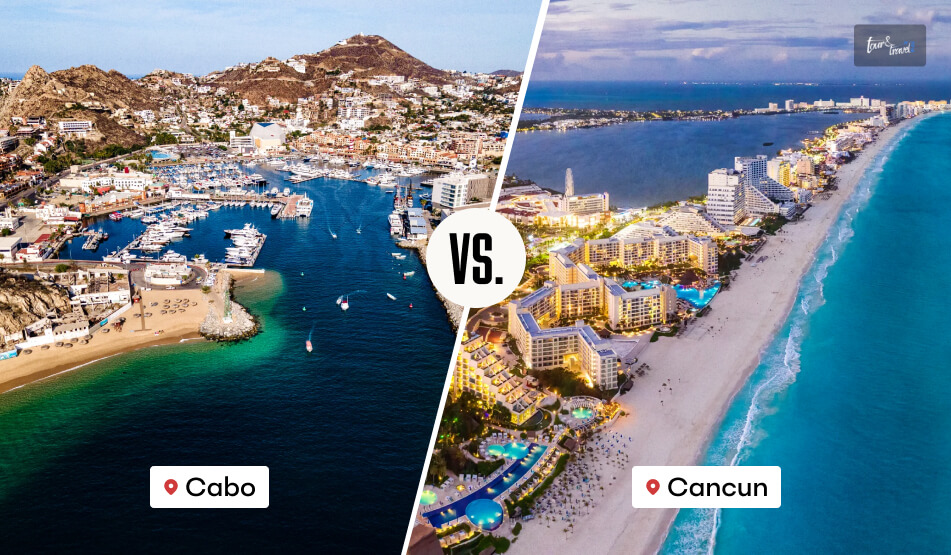
So, it seems Cancun and Cabo are favorites when it comes to planning a Mexican getaway. However, which one is better for a vacation?
We will find the answer in this Cabo vs Cancun comparison.
Cabo Vs Cancun: Know The Basics
Cabo is located in Western Mexico. Further, Cabo San Lucas is located at the tip of Mexico’s Baja California peninsula.
San Jose del Cabo International Airport is the main airport in Cabo. The city experiences a tropical desert climate with a maximum annual rainfall of 10 inches.
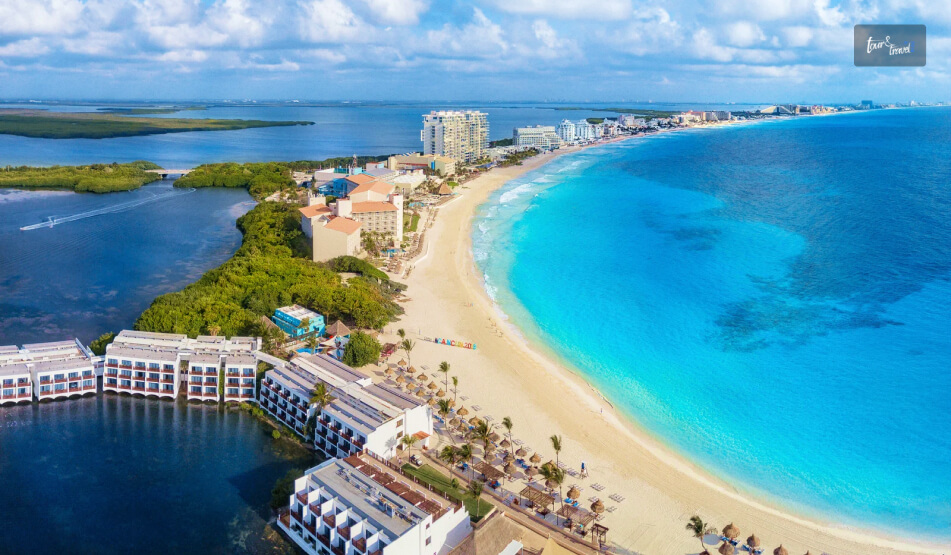
On the other hand, Cancun is on the eastern coast of Mexico. It has a tropical climate and receives around 52 inches of rainfall annually.
Cabo Vs Cancun: Getting There
The Los Cabos International Airport (SJD) serves Cabo, and it is a 40-minute drive from Cabo San Lucas.
It is also just 15 minutes away from San José del Cabo.
On the other hand, the Cancun International Airport (CUN) serves the Cancun area. It is the second-busiest airport in Mexico.
The distance between Downtown Cancun and the Cancun International Airport is just 25 minutes.
While both airports pull heavy direct traffic from the US, Cancun is a winner in terms of the raw flight volume and price.
It has more budget carriers and shorter flight times from East Coast hubs like Miami, New York, and Charlotte.
Cabo pulls stronger direct service from West Coast cities like Los Angeles, San Francisco, and Dallas, though fares tend to run higher given the longer overwater routes.
If you’re island-hopping between the two, direct flights connect CUN and SJD in under five hours, with one-way fares starting around $50–$90 depending on season.
Best Time To Visit: Cabo Vs Cancun
Timing your trip, especially when you are traveling to a different country, is more important than picking a destination.
So, here is a side-by-side comparison of Cabo vs Cancun by season.
Cabo
The dry season in Cabo runs from November through May. It gets around 340–350 days of sunshine yearly and almost no rain.
Furthermore, if you are interested in whale watching in Cabo, December to April will be the ideal season.
Again, water temperatures are the warmest from September to October, shooting up to 31°C.
April is the month with the coolest water temperature.
Cancun
Cancun has the Hurricane season from June to November.
Furthermore, it is the peak rainfall season for the region, hitting an annual average of 52 inches.
Also, the driest, most crowded months in Cancun are December through April.
Moreover, the whale shark window in Cancun is just the opposite of Cabo, running from June to October.
What Is Cabo Famous For? Why Does Everyone Go To Cabo?
Los Cabos is a crown jewel in Mexico’s Baja California Peninsula. Just below the Tropic of Cancer, Los Cabos has 340-350 days of sunshine yearly.
Further, its luxury resorts, stunning beaches, and the most happening nightlife, with places such as El Squid Roe and Cabo Wabo Cantina, make Cabo famous.
Los Cabos is also easily accessible, especially through direct flights from major U.S. cities such as Dallas, San Francisco, and Los Angeles. Additionally, US Dollars are easily accepted here.
Moreover, Los Cabos is the second home to Hollywood biggies such as Cindy Crawford, George Clooney, Nick Jonas, and Jennifer Aniston. The Kardashians and Will Smith also frequently visit Cabo.
In addition, Cabo is the best place for spotting humpback whales from December to April.
What Is Cancun Famous For?
With its name originating from the Mayan language, Cancun, or the “Nest of Serpents,” is an unmatched location for anyone interested in the Mayan culture.
It is no wonder that Chichen Itza is the top attraction in Cancun. Located in the Yucatán, it is also a UNESCO World Heritage Site.
Further, Cancun has the Great Maya Barrier Reef, the second-largest in the world. So, it is a paradise for the scuba divers who want a slice of marine life.
Again, Isla Mujeres is an idyllic island in Cancun for snorkeling, swimming, and spotting whale sharks.
Moreover, the Ecological Reserve is the biggest natural ecosystem in Mexico. Also, the Riviera Maya has some of the largest underwater cave systems in the world. Those are:
Ox Bel Ha: 146.7 Kilometers
Nohock Na Choch: 61 Kilometers
Dos Ojos: 57.7 Kilometers
Overall, the diverse tourism attractions in Cancun have made the Cancun International Airport the second busiest in the country.
Cabo Vs Cancun Safety: Which One Is Safer?
Winner: Cabo 🏆
Like the question of “Is Monterrey Mexico Safe?”, traveler safety in Cancun and Cabo remains a concern.
Cancun Traveler Safety
The U.S. Government has issued a travel advisory for Cancun in 2025. Quintana Roo, the state where Cancun is located, has a Level 2 caution for tourists.
With robbery being the most frequent crime in Cancun, reaching a whopping 25% of the total crimes in 2024, Cancun has also been struggling with issues such as street scams and violent crimes.
However, increased police presence, surveillance systems, coordination with the hotels, and public awareness campaigns have been the measures to keep the crime rates in this region in check.
Cabo Traveler Safety
Is Cabo San Lucas safe? What about the crime scenarios in other parts of Los Cabos? Let’s find out the data.
Cabo is safer than Cancun, with a USA Travel Advisory of “Exercise Increased Caution” in the Baja California Sur area. This caution is similar to that of many European destinations.
However, the murder of a law enforcement officer on 22nd April and the burning of three buses on 24th April, 2025, have created some unrest in the area.
Still, Los Cabos has a lower crime rate than many other areas of Mexico, such as Acapulco and Tijuana.
In addition, there are dedicated tourist police in areas such as Medano Beach and the Marina District.
Moreover, the types of crime here include petty scams and theft. Violent crimes against tourists are rare here.
Cabo Vs Cancun Beaches: Which One Is Better As A Tropical Getaway?
Winner: It’s a Tie 🤝
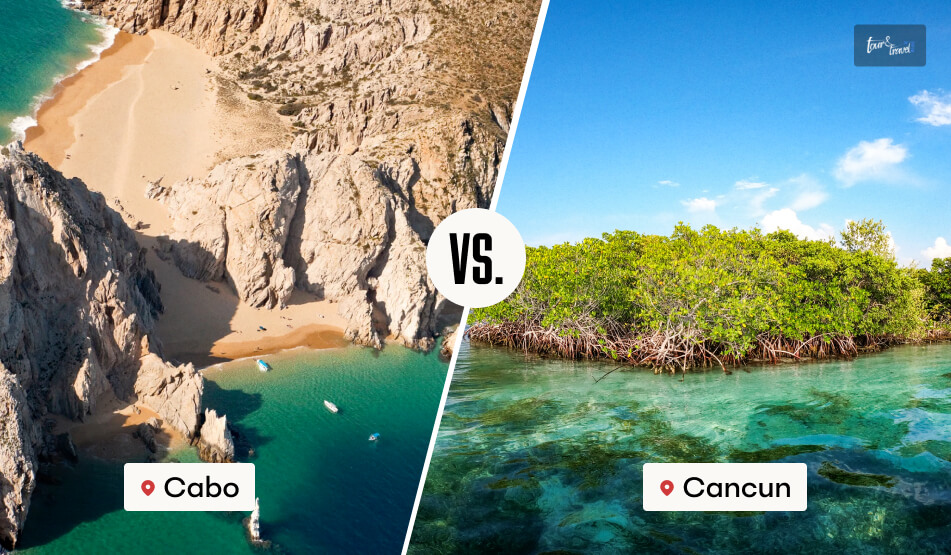
It’s hard to pick a favorite among the beautiful beaches in Cabo and Cancun. Cabo in the Pacific Ocean and Cancun in the Caribbean Sea have very different waters and beaches.
Beaches In Cabo
The beaches in Cabo exude the quintessential charm of the Pacific Ocean coast. Further, Cabo sees the Pacific Ocean meeting the Sea of Cortez.
The most beautiful beaches for swimming in Cabo are:
Medano Beach and Lover’s Beach, along the Sea of Cortez
Cabo Pulmo Marine Park
Playa Acapulquito and Chileno Beach in the Tourist Corridor
The waters here are electric blue, and the coastline is dotted with cacti. Furthermore, from January to April, Cabo is the best place to spot whales and go deepwater fishing.
In addition, you can do scuba diving in Cabo Pulmo, a nearby national marine park. Here, you can meet eels, big-eyed jacks, sea turtles, porkfish, snappers, etc.
Beaches In Cancun
Beaches in Cancun show the charm of the Caribbean Sea. Playa Delfines, Playa Langosta, and Playa Tortugas are the most popular among them.
Playa Delfines is a known destination for Jet skiing or parasailing. Also, you can do scuba diving, fishing, and kayaking.
Moreover, you can spot whales if you visit Cancun from June to October.
Cabo Vs Cancun For Partying: Which One Is More Fun?
Winner: Cancun🏆
Cancun is the Spring Break destination in the world. You can dance it out at Mandala Nightclub and enjoy the best cocktails at the JW Lobby Bar.
Los Cabos also has a vibrant nightlife. However, the vibe here is much laid-back. El Squid Roe and Cabo Wabo Cantina are some of the best places to experience the party scene and nightlife of Los Cabos.
Cabo Vs Cancun For Families: Know The Top Attractions
Winner: Cabo 🏆
Cancun’s natural and cultural attractions are more varied and vivid than those in Los Cabos. However, Los Cabos is a more family-friendly destination because most activities and attractions here are beach-centric, accommodating people of all ages.
Also, the luxury hotels and accommodations in Los Cabos offer a “Next-Level Experience” to visitors.
Moreover, Los Cabos is safer than Cancun in terms of crime rate.
Top Attractions in Los Cabos
Top Attractions in Cancun
Family-Friendly Things to Do in Los Cabos
Family-Friendly Things to Do in Cancun
‣ Medano Beach ‣ Santa Maria Beach ‣ Playa el Chileno ‣ Lovers Beach ‣ Cerritos Beach ‣ El Arco ‣ Cabo Pulmo National Park ‣ Sierra de la Laguna ‣ Todos Santos ‣ San José del Cabo
‣ Chichén Itzá – UNESCO World Heritage Site ‣ Isla Mujeres ‣ Selvatica Eco Park ‣ Mayan Museum of Cancun ‣ Zona Arqueologica El Rey ‣ Playa Tortugas ‣ Xcaret Park ‣ Ventura Park
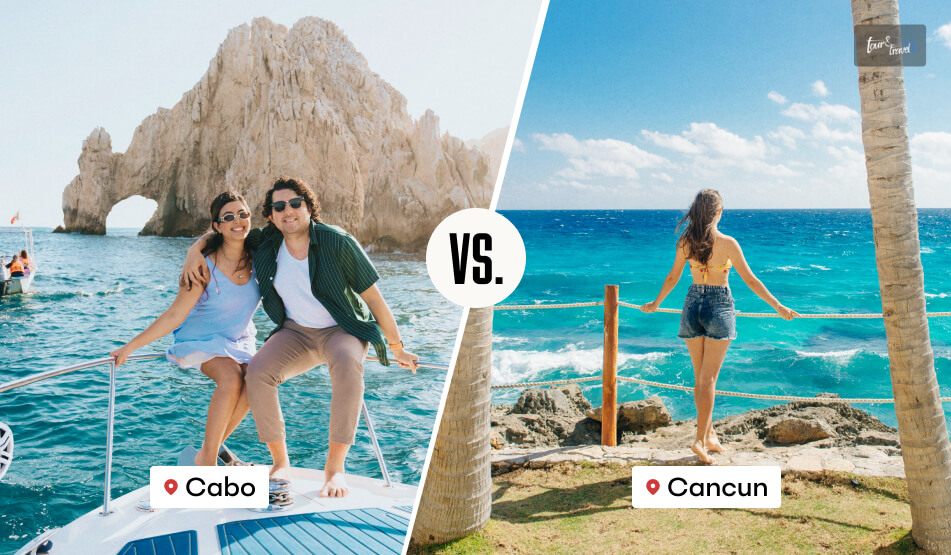
‣ Swimming and building sand castles at Medano Beach. ‣ Boat tours to visit the Arch of Cabo San Lucas. ‣ Snorkeling in Cabo Pulmo ‣ Horseback riding in Baja Outback ‣ Whale watching and dolphin encounters.
‣ Ferry ride to Isla Mujeres ‣ ATV tours and zipline in Selvatica ‣ Swimming in Playa Tortugas ‣ Visiting Chichen Itza
Cabo Vs Cancun For Couples: What Are The Best Things To Do?
Winner: It’s a Tie 🤝
If you are traveling as a couple, your favorite destination between Cancun and Los Cabos will depend on your preference.
For example, Cancun is more energetic, while Los Cabos has a laid-back vibe. Cancun further stands out thanks to its Mayan connection.
Also, Cancun has more swimmable beaches than Los Cabos.
The beaches in Los Cabos offer more adventurous experiences to couples. You can swim, surf, dive, and snorkel there. On the other hand, despite having scuba diving facilities, the beaches in Cancun are more resort-centric.
Again, the nightlife in Cancun is more vibrant in Cancun, whereas Los Cabos is a better choice for a gastronomic delight.
4. Cabo Vs Cancun For Solo Travelers
Winner: Cancun 🏆
The hotel zone of Cancun is most suitable for solo travelers. It is so because Cancun is walkable and easy to navigate without a car.
Also, Cabo has many hostels and mid-range hotels.
Again, the nightlife scene of Cancun is ideal for socializing and meeting other travelers. You can even easily book day trips to Isla Mujeres or Chichén Itzá through group tours.
On the other hand, Cabo is more spread out, and many of the top experiences, such as deep-sea fishing, fine dining, and fishing ae built around groups and couples.
So, the cost of traveling per person will be higher for solo travelers.
That said, Cabo’s tourist police presence and lower violent crime rate make it a reassuring solo pick for travelers prioritizing safety over the social scene.
Cabo Vs Cancun Food Scene: Local Flavors And Delicacies
Winner: Cabo 🏆
Los Cabos promises a diverse food experience. You can have the best tacos at a beachside shack and indulge in the best haute dining.
You must also try the best handmade tortillas and wines from the North Baja wineries.
Nevertheless, if you want a gourmet experience, visit Cocina de Autor (a Michelin Star restaurant), CarbónCabron, and Lumbre.
Again, San José del Cabo is the best place in Mexico to celebrate the country’s “Farm-to-Table” tradition.
Food in Cancun, however, is an ode to the Mayan culture. You will fall in love with the fish cooked in banana leaves and slow-cooked pork here.
Kiosk Verde (a Michelin-mentioned restaurant), El Pocito, and Rosa Negra are some of the most famous eating places in Cancun.
Cabo Vs Cancun: Cost Comparison
Winner: Cancun 🏆
Cancun is a more budget-friendly destination than Cabo.
It is a more affordable location due to its high flight volume, wider mix of budget and luxury resorts, and lower average nightly rates, making it easier to stretch a vacation budget.
Also, Cancun has many all-inclusive resorts. Thus, budgeting for accommodation, food, and drinks is easier in Cancun.
Cabo, by contrast, leans upscale.
Higher import costs make the essentials more expensive here, and the real estate is pricier.
Moreover, the concentration of luxury resorts and Michelin-recognized restaurants pushes average trip costs up
Even flights tend to run higher, given fewer budget-carrier routes from the East Coast.
That said, Cabo is not uber expensive.
You can find mid-range hotels and beachside taco shacks alongside the five-star resorts.
It simply skews luxury at the top end more than Cancun does.
What Is Better Cancun Or Cabo? And The Winner Is…
Let’s explore a different side before declaring the winner of this Cabo vs Cancun comparison.
Mexico, these days, earns a lot of foreign investment in tourism. Cancun and Los Cabos are not exceptions in this.
Los Cabos, especially, is located in the Baja California Sur, which is the top destination for attracting foreign investments.
However, foreign investments and the developments here are now harming the local habitat and ecosystem.
The breach of environmental regulations and intrusion into the traditional way of living in these places are posing challenges to local heritage and conservation efforts.
Parameter
Los Cabos
Cancun
Safety
Winner
Runner-Up
Beaches
Winner
Winner
As a Family Destination
Winner
Runner-Up
Nightlife
Runner-Up
Winner
As a Couple Destination
Winner
Winner
Solo Destination
Runner-Up
Winner
Food
Winner
Runner-Up
Cost
Runner-Up
Winner
Overall Winner Score
5
5
So, the winner depends on the budget of your trip and the kind of experience you want.
Is Cabo Or Cancun Water Warmer?
The water in Cancun is warmer than in Cabo because of their geographical locations. Cancun is located in the Caribbean Sea, while Cabo is nestled in the Pacific Ocean.
However, the maximum water temperature in Cabo reaches 31 degrees Celsius, which is higher than the maximum water temperature in Cancun, 30.5 degrees Celsius.
January is the coldest month in Cancun, and August is the warmest. In Cabo, April is the coldest month in terms of water temperature, and the water temperature reaches its maximum in September.
Here is a detailed month-wise comparison of Cabo vs Cancun water temperature based on the National Oceanic and Atmospheric Administration (NOAA) data.
Month
Maximum Water Temperature in Cabo (°C)
Maximum Water Temperature in Cancun (°C)
Minimum Water Temperature in Cabo (°C)
Minimum Water Temperature in Cancun (°C)
January
24.7
26.5
20.2
24
February
22.7
26.4
20.3
24.1
March
22.6
26.4
20.2
24.2
April
23.4
27.1
19.6
25.8
May
25.6
28.3
21.4
26.4
June
26.1
29
20.1
27.5
July
28.8
29.8
22.7
27.1
August
30.2
30.5
26.7
28.1
September
31
30.1
27.9
28.1
October
30.7
29.8
27.2
26.7
November
29.1
28
24.5
25.8
December
26.4
26.8
21.8
25.1
Is Cabo A Luxury Destination?
Yes, Cabo is a luxury destination. It has Michelin Key hotels, such as:
Chileno Bay Resort & Residences, Auberge Resorts Collection (2 Keys)
Esperanza, Auberge Resorts Collection (2 Keys)
Montage Los Cabos (2 Keys)
Waldorf Astoria Los Cabos Pedregal (2 Keys)
Nobu Hotel Los Cabos (1 Key)
The Cape, a Thompson Hotel (1 Key)
These names, featured in the Michelin Guide announcement made on 12th September 2024, continue to provide visitors with their “next-level” of service. Cabo is also home to Cocina de Autor, a Michelin Star restaurant in the Grand Velas Hotel.
However, Cabo’s “luxury” quotient is not just limited to Michelin-Key hotels and Michelin-Star restaurant experiences.
From ATVing to snorkeling, scuba diving, whale-watching, and horseback riding, Cabo’s outdoor and wellness activities are endless.
Further, the beaches and the beautiful coastlines along the Pacific Ocean and the Sea of Cortez make Cabo one of the most picturesque locations in Mexico, with a laid-back vibe.
In addition, the desert landscape, hot springs, and waterfalls make Cabo vivid and unique.
Why Is It So Expensive To Go To Cabo?
Los Cabos, one of the safest areas in Mexico, is expensive because of the luxury experience, geographical location, and the growing popularity among tourists.
Further, international flights to Cabo are expensive, and there are high immigration and customs charges. However, these are not the only reasons Cabo is an expensive travel destination.
The rise in the number of visitors to Cabo has led to rapid development in the area, which is great. However, it has also made doing business or living here more expensive.
On the other hand, the decreasing national unemployment rate in Mexico1, high inflation, “doubling of wages since 2018) and shortage of laborers have made things worse for the tourism and hospitality businesses in the region.
In other words, businesses also have to maintain their financial health, and operational costs will increase due to increased labor costs and higher dependency on imports for various goods.
So, these facilities, such as accommodations and restaurants, charge travelers more money.
Nevertheless, with Cabo being an expensive location, businesses face challenges in offering customer satisfaction or a value-for-money experience. Starbucks has been one of the most prominent names to flag this issue.
Having said that, strategic investment in the use of technology in these facilities and a lesser dependency on human labor can keep the cost of living or traveling to tourism within limits.
Cancun Vs Cabo Frequently Asked Questions (FAQs)
Here are frequently asked questions and answers related to the Cancun vs Cabo comparison.
Why Is Cabo Mexico So Popular?
Cabo, connected to various US cities through the Los Cabos Airport, is a popular tourist attraction due to its diverse attractions. It has calm and beautiful beaches like Medano, and in the winter, it offers whale-watching activities and adventures such as scuba diving, snorkeling, and big-game fishing. In fact, Cabo San Lucas in the Los Cabos region, known as the “Marlin Capital of the World,” is experiencing significant growth in its sports-fishing industry. Moreover, the desert mountains and unique geological formations such as El Arco add drama to the local landscape. Additionally, you can enjoy luxurious dining and resort experiences here. Want to explore the surroundings? Cabo and its surrounding areas are well accessible by car.
Why Can’t We Swim In Cabo?
Cabo has many swimming-friendly beaches, such as Medano Beach and Lover’s Beach, along the Sea of Cortez, Cabo Pulmo Marine Park, and Playa Acapulquito and Chileno Beach in the Tourist Corridor. Having said that, many beaches in Cabo, especially along the Pacific Ocean, are unsuitable for swimming. Playa Solmar, Divorce Beach, and Pedregal are beaches where you cannot swim. Strong currents, waves, and rip tides make these beaches unsafe for swimming. Also, the steep drop-offs on many beaches make it difficult to gauge the depth of the water.
What Money Is Used In Cabo?
The Mexican Peso, the country’s currency, is used in Cabo. Cabo also accepts US dollars. Many ATMs dispense US dollars, or resorts convert US dollars to Pesos. However, be careful about the current exchange rate. As of today, 1 USD = 19.44 Mexican Pesos. Also, many local merchants offer you less than the exchange rate while buying goods from them. So, it is best to pay with Mexican Pesos.
Sibashree is a travel, culture, and leisure writer who has been writing since the age of 12 and professionally since 2014. With more than a decade of travel writing experience and journeys across India and several parts of the world, she brings a deeply personal and thoughtful perspective to her work. A student of English Literature and Mass Communication, Sibashree has always viewed travel as more than movement — for her, it has been a way of understanding people, cultures, and herself. Her passion for spiritual exploration has also led her to many unusual and meaningful destinations over the years. Outside of writing, Sibashree enjoys watching European cinema, reading about global politics, and reflecting on the stories hidden within everyday places.
Cancun is a dream destination for many because you only need a few pictures to understand its magic. This is best experienced in person. And the parks in Cancun make the experience even 10 times better.
However, before you go, itis best to know a little more about what it has to offer. It's not limited to magnificent beaches and vibrant nightlife. Cancun also offers a variety of parks that guarantee fun and adventure for the whole family.
Are you planning your next trip to this Mexican tourist destination? Here are the best parks in Cancun to visit.
Why Go To A Park In Cancun?
You can do many activities in Cancun. So, if you go for several days, it's best to spend as much time as possible in one of Cancun's parks. Your experience heavily depends on the following factors:
Fun Guaranteed
Cancun's parks offer a wide range of thrilling attractions, from high-speed slides and wave pools to nature activities. This ensures entertainment for all ages.
For example: for adrenaline seekers, you can fly on 2 massive zip-line circuits totaling 3.8 kilometers (2.4 miles) at Xplor Park, which features the tallest zip-line in the Riviera Maya standing 45 meters (147 feet) high.
Refreshing Getaway
In a warm climate like Cancun’s, nothing compares to the sensation of diving into cool waters or riding along paths, feeling the breeze while enjoying the tropical sun, and having fun in the different attractions of your choice.
A Unique Experience
Many parks in Cancun combine the thrill of the water with the natural beauty of the surroundings, giving you a unique experience where you can swim among coral reefs or explore underwater caverns, as well as walk in its blessed natural environment, among others.
It’s Part Of Getting To Know
Getting to know Cancun isn't only about visiting the most popular places; it is also about visiting others that may not be as well known, but as you'll find, they are wonderful.
So don't miss the parks on this side of Mexico, as they are unique and special.
Best Parks In Cancun: Which Water Park To Go To
Probably, if you look for parks in Cancun on the internet, you will find a great diversity of alternatives, being that when you have little time or simply do not want to waste it, it is more appropriate to know which are exactly the best ones, such as the ones we will indicate:
Garrafon
Garrafon is designed in a way that is going to present you with a unique experience. It offers various facilities, and you can enjoy zip lines, snorkeling, adventure vehicles, and many other activities.
Not just that, the view of the Caribbean Sea from the park is amazing. Palapas and hammocks are spread across the area, so you can relax.
Moreover, the coral reefs let you explore the region's colorful marine life.
Ventura Park
This is one of the largest parks in the area and no doubt an excellent one. It offers tourists various activities, including wave pools and high-speed slides, as well as other play areas.
It also offers different land activities. Activities include climbing walls, zip lines, and crossing a hanging bridge, making it an ideal place to spend a day full of adventure.
Chankanaab
Situated on Cozumel Island, this park is just a ferry ride away from Cancun. This theme park offers amazing adventure sports activities, along with the beauty of the Caribbean coast.
You can try snorkeling, swim with the dolphins relax on the picturesque white sand beaches and go swimming with the dolphins.
Xcaret Park
One of the most emblematic parks in the Riviera Maya and a must-see from Cancun, Xcaret Park combines the cultural richness of Mexico with the natural beauty of the region.
It offers a wide range of activities, from snorkeling in subway rivers to swimming with sharks and rays, as well as folkloric shows that showcase
Mexico’s history and traditions. In addition, Xcaret has protected natural areas where you can observe the local flora and fauna, as well as enjoy quiet beaches and rest areas.
Some Tips To Enjoy In The Best Parks In Cancun
Sometimes, when going sightseeing, people forget certain aspects that are important when performing certain activities, in this case, in the parks in Cancun.
And so that you don’t have any inconvenience, we will point out some tips that we know will be useful for you:
Sun Protection At All Times
Of course, it’s nice to come back from vacation looking tanned, but it’s not good for your health.
Don’t forget to apply sunscreen before entering the park, and reapply it every few hours to avoid sunburn; even if you look good, you will feel terrible.
Wear Appropriate Clothing
As for swimsuits, wear those that are comfortable as well as easy to spot in the water, in bright colors rather than blue ones.
Also, wear a light T-shirt and a hat or cap to protect yourself from the relentless sun when you’re outside.
Hydrate Frequently
Keep yourself and your loved ones hydrated by drinking water regularly, especially in hot climates like Cancun. Dehydration can complicate things, so avoid it.
Respect Safety Rules
Follow the park staff’s instructions and the safety rules on all attractions to ensure a fun, safe experience for everyone.
Book Early
The crowd at the park depends on which time of year you are visiting.
So, it is better to plan ahead, as that will save you a lot of trouble, like the hassle of standing in line to get tickets to enter the park. Another perk is booking online beforehand.
It can also save you money with some of their offers.
Plan Your Day Well
Check the park map and schedule your activities to make the most of your time and avoid long lines at the most popular attractions and those that catch your attention.
Wrapping up!
Adventure parks are something that should not be missed on your itinerary when you are visiting Cancun.
After a few days of relaxing and lounging at the beach, it is always a good idea to change the vibe. For that, the best option is to visit an adventure park in Cancun.
When people think of Cancun, they usually picture serene beaches, tranquil water, and great entertainment.
But they often forget about the adventure parks in the area. So visit the parks, have a great time, and don't forget to try them again on your next trip.
Recommended Reading...
Top 10 Things To Do When You Visit El Salvador
Here Are The 10 Best Things To Do In Baltimore!
The Best Things To Do In Moab Utah For Outdoor Enthusiasts
We need to get the notion out of our heads that tropical island holidays are only for the rich and famous.
These are destinations that are available to everyone. It doesn’t have to cost an arm and a leg to get there. It is true to say that these are islands out in the ocean.
So, we need a particular form of transport to get to them. I suppose it's fair to say the rich and famous charter speedboats. They even own them to get where they want to go.
However, this doesn’t restrict the rest of us from enjoying the Tropical Island Vacation experience.
Getting Started With Your Tropical Paradise Vacation
We can always take advantage of the Koh Samui to Koh Phangan ferry. In other words, it will take us and our family members, and our vehicles as well.
This means we save significant amounts of money when we want to travel around the islands. Therefore, we have our very own transport.
If you’ve never really considered a tropical island vacation before now. If this has piqued your interest, here are some of the reasons. Due to this, you need to choose such a destination this year and every year.
10 most common tropical islands you must definitely consider visiting in 2024 are:
Rottnest Island, Australia
Trobriand Islands, Papua New Guinea
Australia’s Normanby Island
Savaii Island in Samoa
Fitzroy Island in Australia
Australia’s Bruny Island
Philipines’ Boracay Island
Maui in Hawaii
Solomon Islands
Okinawa in Japan
Tropical Island Vacation: The Beaches Are Amazing
The downside of going to a standard beach is that it is usually full of people and there isn’t any space to sit down and relax.
The wonderful thing about beaches on a tropical island is that they are incredibly secluded.
So, you'll find lovely pristine beach on which to put down your towel and let go of any stress and anxiety you're carrying.
From enjoying the mesmerizing beach view to experiencing a nomadic lifestyle, there’s so much more to enjoy on this vacation. So, make the most of it!
The Weather Is Great
One of the main selling points of a vacation in Thailand is that the climate is generally good year-round. Even in the rainy season, the heat is fantastic, so even if you get wet, you will be dry in moments.
We all know sunshine is good for the immune system, so your body gets what it needs to stay fit and healthy. Between 20 and 40℃ (70 to 105℉), the weather is pretty much perfect.
You can bask in the sun all day without worrying about getting a sunburn. July to October are the best months to travel on these islands.
There Are Many Different Activities To Enjoy
Because the island is surrounded by water, many of the activities involve the ocean itself, so you can learn to scuba dive or just go snorkelling to see the beautiful coral reefs and fish below the surface.
You'll find plenty of activities to choose from, so you won't get bored.
From wildlife patrols on a mini safari to archery at the campsite, there are endless fun activities to do here. Don't forget to rent a bicycle and explore every nook and cranny.
Tropical Islands You Must Visit Once In Your Lifetime
Remember how I talked about 10 tropical islands that deserve a trip in 2024? Well, adding to that, here’s a comprehensive list to give you a much better idea for Tropical Island Vacation:
1. Trobriand Islands
Located in Papua New Guinea, the Trobriand Islands are every traveler’s paradise. Dive deep into a tribal life where subsistence farming is the way of life.
Best time to visit: Mid-May to October.
Estimated expenses: $6,224 approx. for each person.
2. Rottnest Island, Australia
There’s no reason not to visit this hidden gem in Australia. From cute quokkas roaming the island to pleasant weather year-round, Rottnest Island is loved by all.
The best time to visit is June to August.
Estimated expenses: Trips start from $5,000/ person.
3. Egadi Island, Italy’s Camouflaged Jewel
Egadi Island is the epitome of Italy’s culture and traditions. It is a collection of three islands spreading across Sicily’s western coast. From snorkelling to sunbathing, there’s so much more to do in this strategic location.
Best time to visit: May-September.
Estimated expenses: Egadi is actually cheaper than its other counterparts.
4. Bohol, Philippines
Unlike other commonly visited Philippine islands, Bohol is not frequently visited. Firstly, because it is not very easily accessible. Secondly, it is a bit deserted.
But it can be one of your choices if you prioritize serenity over everything else.
The best time to visit is November to April.
Estimated expenses: Php 5,000.00 – 6,000.00.
5. Anami Oshima Islands
Wanna see Japan from a different angle? Anami Oshima’s tropical retreat is calling! Unless you visit it, you can never discover what it’s like to sit in the lap of nature- 1000 kms away from the hustle-bustle.
Best time to visit: Spring (March to April), Autumn (October to November)
Estimated expenses: 30,070 yen · 34,840 yen
Now you have reasons to book a tropical island holiday for you and your family this year and every year. You only get one family vacation every single year, so make the most of it and be sure to visit the beautiful Koh Samui and Koh Phangan and see what many don’t.
Concluding Words
Now you have reasons to book a tropical island holiday for you and your family this year and every year. You only get one family vacation every single year, so make the most of it.
Be sure to visit the beautiful Koh Samui and Koh Phangan and see what many don’t. So, what’s stopping you from booking your flight and travelling to an unknown land?
This comprehensive guide has all the details you will need. So save it, read it later, and start planning your trip now! Thank you for reading.
Read Also:
Check Out These Beaches That Are Closest To Tennessee’s Knoxville!
7 Best National Parks In Ohio You Should Know Before Going
Closest Beach To Nashville – Top 10 Beaches You Can Visit
Are you and your family looking for different kinds of fun? If so, Ventura Amusement Park may be the best choice. This amusement park in Cancun offers a unique experience with activities for all ages.
You can experience a variety of adventures here. From ziplines to thrilling slides to high altitudes, everything is present here.
You can spend some memorable days of your life once you visit this place. Additionally, just make sure you don't make things too complicated on your end.
Are you and your family looking for different kinds of fun? If so, Ventura Amusement Park may be the best choice. This amusement park Cancun in Mexico offers a unique experience with activities for all ages.
Top 5 Amusement Park Cancun In Mexico
There are several Amusement parks in Cancun, Mexico, but among them, you have to select the best amusement park that can meet your needs.
Some of the popular Amusement parks in Cancun are as follows:-
1. Xcaret Theme Park
The Xcaret theme park is one of the best amusement parks that you must visit once in your life to relieve your boredom.
This amusement park is located in Playa del Carmen. There are certain features of this amusement park that make it the best place to visit here:-
It comprises underground rivers.
You will find a beach area and lagoon to roam.
Enjoying the coral reef Aquarium can make this place the perfect place for a hotspot.
You will also have the privilege to enjoy the dance shows.
Caves & cultural entertainment are among the best things about this place.
The best time to visit is Monday to Sunday, between 8:30 am and 10:00 pm.
2. Xelha Water Park
Xelha Water Park is one of the best Amusement parks in Cancun, Mexico, and can make your holiday memorable.
Riviera Maya is the place where Xelha Water Park is located. This water park offers several features that let visitors enjoy the park. Some of its core features are as follows:-
Scenic lighthouse.
Cliff of Courage.
River tour Xela.
Enjoy the natural beauty of Mexico with fun-filled activities.
The opening hours of this amusement park are between 9:00 am and 6 pm, Monday to Sunday.
3. Xplor Adventure Park
The Xplor Adventure Park is one of the best amusement parks that you can explore in Cancun.
Make sure you follow the correct process on your end to reach your travel goals.
Some of the key features of this amusement park are as follows:-
It forms a part of Xcaret.
You can witness the highest Zip lines of river Maya.
Explore the Zipline circuits.
Enjoy the Hammock ride.
Spend some time on amphibious vehicles.
Witness spectacular jungle views.
The opening hours of this amusement park are between 9:00 am to 5:00 pm, Monday to Sunday, and 5:30 pm to 12:00 am.
4. Xenotes Fun Park
Xenotes Fun Park is one of the best Amusement parks in Cancun, Mexico, that can make your holiday memorable.
Several factors make this park worth visiting year-round.
Features of this park are as follows:-
It is located in the Yucatan Peninsula.
Kayaking is one of the best activities you can enjoy here.
Rappelling into cenotes is another of the best options you can enjoy here.
Adventure and tranquillity are combined here.
The opening hours of this adventure amusement park are between 9 am and 6 pm.
5. Xoximilco Party Park
Xoximilco Party Park is one of the best amusement parks, and it can boost your adventure all day long.
Some of the key places and features of this amusement park that you must not miss at your end are as follows:-
Traditional and lively Mexican fiesta.
You can enjoy the cultural experience of this place, like music, dance, and food.
Opening hours vary from time to time. So, you have to check the opening hours on your end.
Ventura Park Main Attractions
Every corner of this amusement park in Cancun is full of adventure.
It has numerous attractions for visitors. You should visit once to experience its best attractions.
Explore the main attractions and get ready for an unforgettable day full of laughter, adrenaline, and special moments.
Wet'n Wild
This water park is an oasis of fun under the Cancun sun. It offers a variety of water slides that guarantee exciting adventures for all ages.
Wet'n Wild is the ideal place to cool off and experience moments of pure adrenaline.
This is because it has fast descents and also gentler rides for the little ones,
Aaah! Ventura
For the adventurous at heart, this amusement park in Cancun features Aaah! Ventura.
Most of the time, this Zipline offers an exciting zipline circuit. It lets you fly over the park.
The suspension bridge will help you to challenge your fear of heights. You just have to experience the thrill of this place.
Fun World
Specially designed for little ones, Fun World offers a children's roller coaster, perfect for a first experience with this type of attraction.
In addition, they can enjoy a classic carousel, mechanical games, and play areas that will provide them with hours of safe entertainment adapted to their size.
Grand Prix
Step on the gas at the Grand Prix go-kart track, where you can compete against family and friends in a thrilling race.
With double go-kart options, even the little ones can join in the fun, always safely alongside an adult.
This attraction at Cancun Amusement Park is an excellent way to instill a spirit of healthy competition in a controlled, safe environment.
These attractions make Ventura Park a fun-filled, adventurous destination for the whole family, ensuring everyone from the youngest to the oldest finds something exciting to do.
Amusement Park Cancun In Mexico: Unique Experiences In Ventura Park
Do you want to live unique experiences in this amusement park in Cancun? We tell you what options you have:
Underworld: If you like technology, you can enter the world of Underworld, where virtual reality transforms the way you play and explore. Go on immersive adventures with the Star Wars Battle Pod experience or navigate the challenges of a laser maze. This area of the park is ideal for those looking for a cutting-edge, interactive experience.
Hurricane: For adrenaline seekers, Hurricane offers a roller coaster with thrilling climbs and dizzying descents. The tight curves and intense speed make it a thrilling place to test your courage. It is a perfect choice for those who want to experience vertigo and excitement in a safe and controlled environment.
The unique experiences at this Cancun amusement park offer exciting opportunities for those looking for more than traditional attractions.
Promotions And Special Passes
In this amusement park in Cancun, you will find several types of passes:
Fun Pass: This gives you access to multiple attractions, including Wet'n Wild, where you can enjoy water slides and pools, and Fun World, perfect for the little ones with its children's roller coaster and carousel. Ideal for a day of family fun.
Platinum Pass: In addition to all the advantages of the Fun Pass, the Platinum Pass includes access to Aaah! Ventura, with its thrilling zip lines and aerial adventures, and additional benefits such as unlimited soft serve ice cream and access to the buffet and national open bar. It's perfect for those looking for a full day of adventure and unlimited convenience.
VIP Pass: The most exclusive level of access, which includes all the features of the Platinum Pass plus premium experiences such as Swim with Dolphins and access to virtual reality in Underworld. This pass is the ultimate option for those who want the most complete and luxurious experience in Ventura Park.
On the other hand, this amusement park in Cancun in Mexico offers significant discounts for buying online.
This allows you to save on your passes by planning ahead.
Plan Your Visit To Ventura Park
When planning your visit to Ventura Park, consider a few things to keep your day as pleasant and smooth as possible.
What To bring?
To make sure you have the ultimate stress-free day of adventure, double-check your bags for these essential items before you head out:
Swimsuit: don't forget your swimsuit to enjoy Wet'n Wild's aquatic attractions.
Sunscreen: essential to protect you from the sun while enjoying outdoor activities.
Towel: although the park offers towel rentals, you can bring your own for convenience.
Waterproof camera: to capture the fun moments without worrying about water.
Comfortable shoes: ideal for walking around the park and participating in attractions such as Aaah! Ventura.
How To Get To The Park
Ventura Park is located on Blvd. Kukulcan Km. 25, Hotel Zone, Cancun, Mexico. It is conveniently located near other tourist attractions.
You can use your favourite map app to get precise directions to the park.
You can park your car here. Moreover, you can drive directly to the park. You cannot select options in grey.
Final Takeaway
Planning ahead will help you maximize your time and make the most of your visit to this Cancun amusement park.
I think you will enjoy reading this article, and if you want to experience the best of this park, you must visit.
Share your views and opinions with us. This will help us to know your take on this matter. Enjoy your holiday by visiting the best amusement park in Cancun, Mexico.
Read Also:
Best Group Friendly Restaurants In Las Vegas
Tips For Planning The Most Amazing Texas Trip Ever!
Top 7 Ethiopian Restaurants In Los Angeles – Complete Guide






 Related