

7 Best National Parks In Ohio You Should Know Before Going

Dec 27, 2021

Last Updated on: Apr 21, 2026

Travel Blog

Are you a nature lover? Then, Ohio is the best place for the travel enthusiast. Ohio has hundreds of natural cliffs, hiking trails, and camping parks. Further, all the federal parks in Ohio are irresistibly beautiful and are full of natural beauty. 

When you look at the map of Ohio, you will acquire knowledge about how many national parks are there in Ohio. The number of national parks in Ohio is eight.

Further, the national parks in Ohio are the best tourist spots for national and international travelers. They are also the most popular camping spots.

So, at Tour and Travel, we have decided to give you a brief idea about all the Ohio national parks. These places are great as budget-friendly tourist destinations and explore the nature and culture of Ohio at its best.

List Of All 8 National Parks In Ohio

If you are living nearby Ohio and still do not have ideas of camping in federal parks in Ohio. You have missed the beautiful view of nature. All the national parks in Ohio are becoming the best hanging-out spot for every adventure sports-loving person.

Here are the names of the seven most popular Ohio national and state parks.

1. Cuyahoga Valley National Park

Address: Ohio, USA

Hours Open: 24 Hours

Contact Number:  +1 440-717-3890

Fees: Free

Cuyahoga Valley National Park image

Cuyahoga Valley National park is one of the best national parks in Ohio. This national park lies between Cleveland and Akron. And it is situated along the Cuyahoga River. With the natural preserving beauty of the national park, the rich history of the place makes the park a unique tourist place.

This national park is carrying the history of 19th-century waterway Canal exploration. On the north side of the park, a canal exploration center is present to deliver historical impressions to the visitors. 

The Cuyahoga Valley railroad runs through the park, making the place more unique. This wildlife park is the home of amazing native wildlife and plants.

Where to get a national parks access pass in Ohio? You only have to Buy the American annual pass and enjoy the park. The annual pass system has a special discount for military professionals and children.

2. John Bryan State Park

Address: 3790 OH-370, Yellow Springs, OH 45387

Hours Open: One and a half hours before Sunrise to half an hour after Sunset

Contact Number:  +1 937-767-1274

Fees: Free

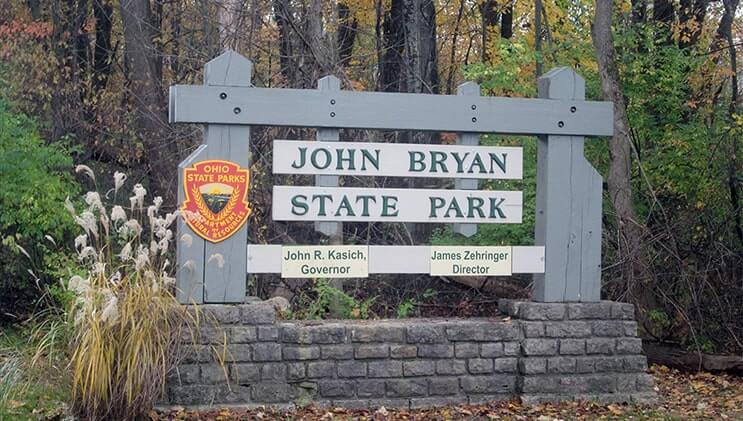
John Bryan State Park

John Bryan state park is an extensive 752-acre state national park in Ohio. You hear about the Miami River, and This large green park is just right below the yellow spring and the Clifton. This park is a prevalent clamp ground among the local people.

Apart from the beautiful scenic beauty, the long industrial history of the United States is adding more points. In the 19th century, industrial activity increased; therefore, water is no longer the economic source of water.

For this reason, many of the factories are getting abandoned. And no longer in use. But the Clifton mill, which was built in 1802. This mill is now becoming a popular visiting place among tourists.

3. Nelson-Kennedy Ledges State Park

Address: 12440 OH-282, Garrettsville, OH 44231

Hours Open: 7 AM to 7 PM

Contact Number:  +1 330-235-0030

Fees: Free

Nelson-Kennedy Ledges State Park image

This park is a 167-acre public recreation park. When you are near Nelson township, this place is the best hiking spot for you. The Ledge park is full of hiking trails and camping spots.

Beautiful waterfalls and native green plants are making this park look like heaven. This park is one of the best hiking spots for travelers as well as the national parks in Ohio. Nelson Kennedy ledges state park has a 3 miles long hiking trail. 

As the park is situated on the natural landscape. Many dangerous paths are present in the park, but the marked hiking trails are guiding the right path of hiking.

4. Mohican-Memorial State Forest

Address: 975 O D N R Mohican Road 51, Perrysville, OH 44864

Hours Open: 24 Hours

Contact Number: +1 419-938-6222

Fees:  Free

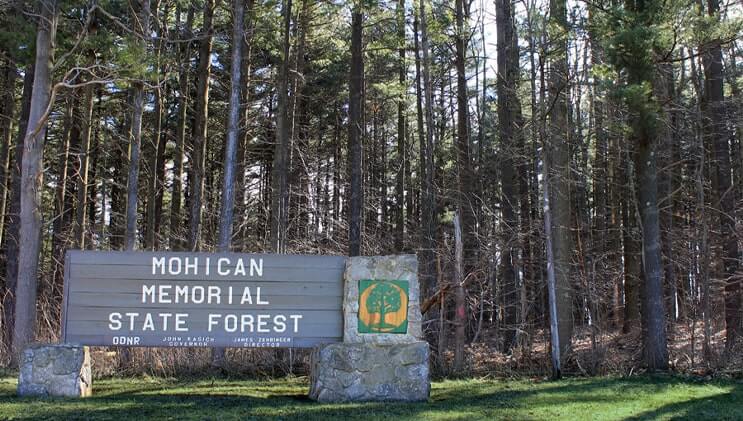
Mohican Memorial State Forest

Have you seen the movie The Last of The Mohican”? The natural beauty of the shooting spot is still getting most of the viewer’s attention. This state forest is situated in Ashland country, Ohio. This forest is quite popular among forest researchers.

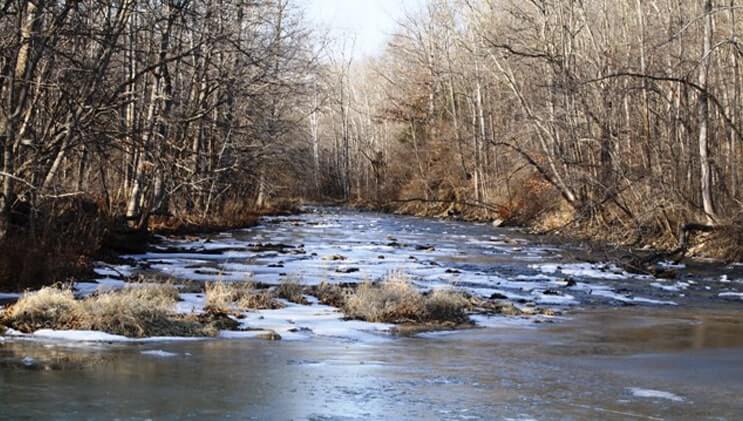
This large 4525 area of forest area is carefully looked over by the Ohio Division Of Natural Resources. This is the third most popular tourist destination in the United States. The Clear Fork River and Pine’s major streams are the two major rivers of the park. 

The park’s best feature is 32 miles hiking, 22 miles bridle, 8 miles snowmobile, and 24-mile mountain biking trails.

5. Hueston Woods State Park

Address: 6301 Park Office Rd, College Corner, OH 45003

Hours Open: 24 Hours

Contact Number: +1 513-523-6347 

Fees: Free

Hueston Woods State Park image

This park lies in oxford city Ohio. The park belongs in the Butler and Pable country of Ohio city. It covers nearly 3000 acres of area and has 625 acres of a human-made lake.

The state was bought in 1941. Initially, it was a prison camp, and after 1957 the park was open to regular visitors. And now, this is one of the best national parks in Ohio.

This park has 12-mile long hiking trail and 19 miles of bridle trails along with 20 miles of mountain biking trails. The place’s camping facility is very organized, along with the hiking trails, golf course, and lodging facility.

6. Hocking Hills State Park

Address: Logan, OH 43138

Contact Number: +1 740-385-6842

Hours Open: 10 AM to 5 PM

Entry Fee: Free

Hocking Hills State Park image

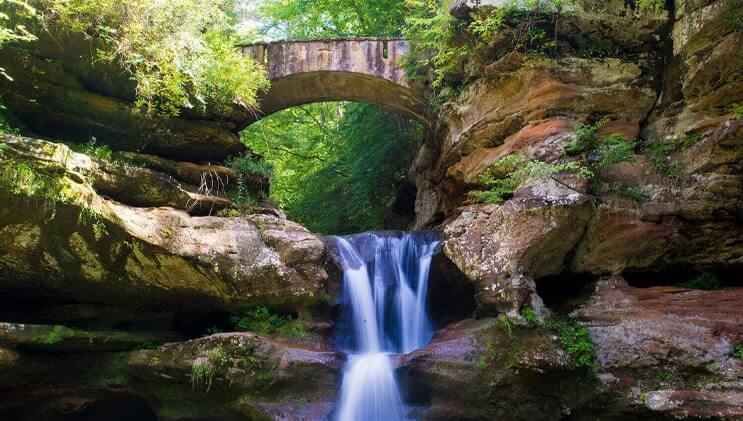
Are you searching for any national parks near Columbus, Ohio? Hocking Hills State Park is a good choice for you. This park belongs in the hocking hills region. A big part of Hocking state forest belongs in the hocking hills state park.

This park has seven separate types of hiking areas, including different hiking trails. Cantwell Cliffs, Ash Cave, Conkle’s Hollow, Old Man’s Cave, Rock House, Cedar Falls, and a popular hiking route Hemlock Bridge Trail to Whispering Cave

7. Charles Young Buffalo Soldiers

Address: 120 US-42, Wilberforce, OH 45384

Hours Open: 9 AM to 4:30 PM (Monday Closed)

Contact Number:  +1 937-352-6757

Fees: Entry Free

Charles Young Buffalo Soldiers image

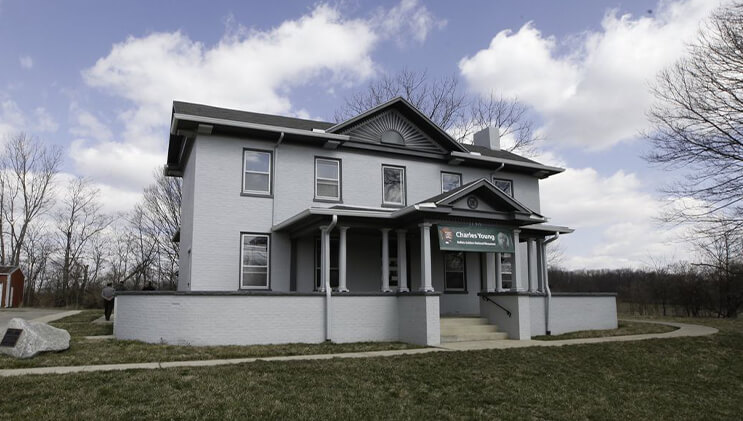
Do you want to see a national monument in Ohio? Visit this park, and you can see monuments along with enjoying the beautiful natural view. Charles Young Buffalo is one of the historical figures in his first days of life. He was an escaped slave.

He was the first afro American soldier in the United States army. The house of the Buffalo soldier is one of the famous historical destinations among travelers.

This is one of the most popular iconic monuments in Wilberforce, Ohio. When you plan to visit the Ohio parks, do not forget to visit this monument because the American civil war history was attached to this monument.

8. Dayton Aviation Heritage National Historical Park

Address: 16 S Williams St, Dayton, OH 45402

Contact Number: +1 937-225-7705

Hours Open: 9 AM to 4 PM (Monday Closed)

Entry Fee: Free

For all the literary enthusiasts and dark academia fans, Dayton Aviation Heritage National Historical Park in Ohio is one of the best places to visit. It remembers Paul Laurence Dunbar, an eminent poet and author. 

The park also honors the aviation pioneers Orville and Wilbur Wright. A tour of this park will be a fulfilling and educational experience. Throughout the park, you will come across the following important spots:

  • Carillion Historical Park
  • Wright Cycle Shop
  • Huffman Prairie Flying Field
  • Paul Laurence Dunbar House
  • Wright-Dunbar Interpretive Center
  • Huffman Prairie Interpretive Center

You can even opt for a ranger-guided tour of this best national park in Ohio. The only disadvantage of the park is that it does not have a camping ground. So, you cannot stay here. 

However, you can always put up your tent in the private and public campgrounds near the park. So, check out the website of the Greene County Convention & Visitors Bureau to locate and reserve the campgrounds. 

Frequently Asked Questions On National Parks In Ohio (FAQs)

Q1: What is the newest state park in Ohio?

A: Jesse Owens state park is the newest state park in Ohio. it is named after a world-famous athlete. It was created in the year 2018 out of a coal mining land that was owned by American Electric Power. 

Q2: Which is the smallest state park in Ohio?

A: Oak Point state park is known to be the smallest one in Ohio. Measures at 1.5 acres, despite being the smallest state park, it still offers a wide range of facilities for boaters, sightseers, and picnickers. 

Q3: Are state parks free in Ohio?

A: Ohio is one of the few states in the country that do not charge general admission and parking fee at its 74 state parks. 

Wrapping It Up:

All the Ohio state parks camping is the most favorite for the fitness enthusiast. The collection of these places are the most popular tourist destination among local and international travelers. National parks in Ohio list quite a long list. But these seven parks and sites are the best places where you can enjoy the hiking trails and camping. 

If you are planning to visit Ohio parks for adventurous hiking, do not skip these popular parks. So what is your plan to visit? Do not forget to comment back to us.

Share on Social Media

Abdul Aziz Mondol is a professional blogger who is having a colossal interest in writing blogs and other jones of calligraphies. In terms of his professional commitments, he loves to share content related to business, finance, technology, and the gaming niche.

Leave a Reply

Your email address will not be published. Required fields are marked *

title-img Related

READ MORE mountains in washington

The Best Mountain Getaways in Washington: Where to Stay, What to Do, and How to Relax

BY  Abdul Aziz Feb 17, 2024

Washington State's mountains are renowned for their splendor. Washington has some of the tallest mountains in the lower 48 states and some of the most breathtaking. The Cascade Mountains are the most well-known mountain range in Washington. The Cascade Mountains include Mount Rainier, Washington's tallest and most famous mountain. Because some of the Washington mountains are so high up, hiking and climbing them is not always simple. However, the vistas from the snow-covered peaks are just breathtaking. Tallest Mountains in Washington If you are looking for the tallest climbs around Washington, the state will not disappoint. The vantage points, as well as the natural grandeur of the mountains in Washington, are simply mesmerizing. Here are all the mountains in Washington that you must check out. Mount Rainier Glacier Peak Mount Adams Bonanza Peak Mount Stuart Mount Fernow Goode Mountain Mount Shuksan Buckner Mountain Mount Baker Mountains In Washington Several of the tallest mountains in Washington map are in the Cascade Mountain Range. You may have heard of them before. The others will be instantly recognizable from pictures you may have seen in books or on the internet. Despite your familiarity with their name or their looks, a trip to these inclines will give you something to remember for a lifetime. Here are the top mountains in Washington. Mount Rainier Among the most well-known mountains in the US is Mount Rainier. Standing at one of the most breathtaking locations in the nation, this active volcano dominates the surrounding landscape. Situated at the center of Mount Rainier State Park, the park offers year-round outdoor activities such as hiking, trail running, and camping that are truly amazing. There are many hiking trails but few paved roads because the park was not intended to be visited by large numbers of people. Nonetheless, there is something for everyone, as many of the trails are suitable for beginning hikers. Climbing to the peak of Mount Rainier presents a distinct experience. Mount Rainier is the highest peak in Washington and has the steepest incline of all the mountains. Those who wish to try to reach the summit will have to hike more than ten miles, with a significant portion of that distance being nearly vertical ascent. Hikers must be in excellent physical shape. They will also require rock climbing abilities as well as an understanding of glacial rope safety. Before attempting to hike to the summit of Mount Rainier, it is a good idea to get some experience at lower elevations. Mount St. Helens Another active volcano is Mount St. Helens. In 1980, Mount St. Helens erupted with a massive explosion that resulted in the largest landslide in American history, making it the most famous eruption of all time. Although experts warn that such a massive and deadly eruption could occur, it has never happened before. The United States' most active volcano is still Mount St. Helens. At Mount St. Helens, a sizable Visitor's Center serves as the entrance to the mountain itself. There is a ton of information about the volcano at the Visitor's Center. Moreover, children adore viewing the interactive exhibits about the volcano's eruption. Convenience stores, trail maps, as well as camping and hiking supplies are available on the premises. Any licenses or permits required for activities like hiking, fishing, camping, as well as other pursuits are also available. Numerous trails wind around the mountain, beginning at the Visitor's Center. There is something for everyone on these trails, which range in difficulty from beginner to expert. However, hiking to the summit should only be attempted by the most skilled hikers. Mount Adams While part of Mount Adams is on the Yakima Indian Reservation, the majority of the mountain is located in the Gifford Pinchot National Forest. Among the Cascade Mountains' older peaks is Mount Adams. On Mount Adams, volcanic activity is thought to have started more than 900,000 years ago. Mount Adams is an outdoor enthusiast's paradise in the surrounding protected area. In addition to many other activities, visitors can ride 4-wheelers and ATVs, hike, camp, ride horses, swim, kayak, fish, and much more. The Mount Adams South Climb trail is an option if you have the courage to try hiking to the summit of Mount Adams. You need to be at least an intermediate hiker to tackle this difficult trail. But after you finish this 13-mile hike, the views from the summit will astound you. Mount Baker Mount Baker is a volcano, just like most of the Cascade Mountains in Washington, albeit relatively young in geology. Its glacier cover is also the second-heaviest. Snow is what makes Mount Baker truly famous. It has a massive amount of snow. Moreover, it's among the world's snowiest locations. When the Mount Baker Ski Area received nearly 100 feet of snow in a single season in 1999, it broke the previous record for snowfall. Winter sports, skiing, and skating are the main reasons visitors come to Mount Baker. However, Mount Baker can also be hiked thanks to its hiking trails and brave hikers who are well-versed in snow as well as cold weather conditions. A few hikers use Mount Baker as a practice run for the Alaskan mountains covered in snow. Alternatively, they use Mount Baker's winter hiking to hone their extreme weather hiking and rock climbing techniques. Even if Mount Baker is a steep mountain, it does not snow here all the time. In addition to hiking the challenging paths in the summer, visitors can enjoy other local attractions, like dining at the well-known Heather Meadows Café, which is located at the foot of Mount Baker and offers breathtaking views. Read More: Top 9 Edition: Exploring The Wonders Of Washington’s National Parks Glacier Peak The most remote peak in Washington's Cascade Mountains is Glacier Peak. There aren't any facilities like in other well-known mountains. However, the experience at Glacier Peak is well worth the journey if you decide to go there. Discover intriguing geological artifacts and ancient lava deposits if you can climb to the summit. The views from the summit of Glacier Peak are also quite amazing. However, as with other mountains in this range, climbing to the summit can be difficult. The name "Glacier Peak" comes from the more than thirty glacial peaks that encircle the summit. To complete this trek, you must have prior experience hiking on glaciers and enduring the cold and snow. There are over 19 trails in the lower portions of the mountain that are rated for hikers of all skill levels, so even if climbing to the summit isn't your thing, you can still enjoy the breathtaking natural beauty of the area. All year long, you can go horseback riding, biking, camping, hiking, and running in the stunning Glacier Peak Wilderness Area. Mount Storm King One of the hardest mountains in Washington state for hiking is Mount Storm King. It's still a difficult climb even though it's not as high as some of the Cascade Mountains. The trail to the summit is almost entirely on a steep incline. Actually, after completing the ascent from the base, you'll need to use a number of ropes to pull yourself up to the summit. Don’t skip leg day if you want to try this hike. To get the last few feet to the summit, you'll need strong legs. A short stroll from the Storm King Ranger Station will get you started on the summit trail. There is a detour leading to Marymere Falls. It's a good warm-up before attempting the summit ascent, and it's a mile loop. The summit trail's final three miles are an almost straight incline, but the first two miles are not too tough. You will be climbing and rock scrambling almost the entire way. You'll be rewarded with a breathtaking view of Crescent Lake below if you can reach the summit. Wrapping Up This was a list of some of the most incredible hiking trails and mountains in Washington, D.C. for the outdoor enthusiast. Climbing these picturesque mountains offers the opportunity to take in even more picturesque vistas. There is a variety of trails, most of which are easy. Pack our bags, plan your trip to Washington, and set out to explore the natural beauty of the nation's capital. If you have thoughts to share or questions to ask, please leave a comment below. We would love to hear from you! Read Also: This Is The Best Time To Visit The Seven Magic Mountains In Vegas! 7 Fun Things To Do In The Great Smoky Mountains National Park Explore The Beauty Of The Mountains Of Kenya!

READ MORE burger king breakfast hours

Burger King Breakfast Hours: When Does Breakfast Start and End?

BY  Ankita Aug 5, 2023

Are you searching for the Burger King breakfast hours? If yes, then you have come to the right place. Food chains can be found all over the world. However, very few are as well-known as Burger King. This well-known fast-food restaurant offers its patrons a wide variety of foods and has locations in practically every country in the world. People can eat it while sitting at the welcoming outlets or get it to go. At Burger King, you may order anything from breakfast to lunch. If you've been looking for the fast food restaurant's lunch menu and need to know what time Burger King serves breakfast, look no further! Keep reading this article till the end to learn more about what you are looking for… What Are Burger King Breakfast Hours? Image Source: cdn.britannica.com Hash browns, English muffins, and chocolate milk are just a few of the delectable and speedy breakfast options available on Burger King's menu. However, if you're craving an Egg and Cheese Croissan'wich from Burger King or another breakfast item late at night, you're out of luck (albeit it did make our list of healthy fast foods). While it is true that you can eat almost anything at any hour, there is still a breakfast schedule that not a lot of people are aware of. Unfortunately, breakfast is not available at any time of the day at the burger joint. All day long, Burger King serves breakfast. Other than breakfast in the morning, Burger King has no other offerings. The restaurant normally provides breakfast items and sandwiches every day from 6 a.m. until 10:30 a.m. If you want to know the breakfast hours for Burger King, you have reached the right place! Burger King starts serving breakfast every day at six in the morning and continues till ten-thirty. This means they start serving at 06:00 a.m. and end their breakfast hours at 10:30 a.m. Check out this chart for details: DaysStarting TimeEnding TimeMonday06:00 a.m.10:30 a.m.Tuesday06:00 a.m.10:30 a.m.Wednesday06:00 a.m.10:30 a.m.Thursday06:00 a.m.10:30 a.m.Friday06:00 a.m.10:30 a.m.Saturday06:00 a.m.10:30 a.m.Sunday06:00 a.m.10:30 a.m. However, there can be some differences in this timing or hours. For example, while they start their breakfast hours at 07:00 a.m. in the Ann Arbor Rd outlet in USA Hockey Arena, the breakfast hours start at 06:00 a.m. in the North Wayne Road outlet. Thus, it is best to contact the specific outlet for the breakfast hours before you reach them. What Are Burger King Breakfast Hours For Weekends? You can get their breakfast products on a Saturday anytime between 6 and 10:30 a.m. Some locations will serve breakfast on Sundays starting at 7 a.m. and lasting until 11 a.m.What food options are available on the Burger King breakfast menu? Breakfast options on the Burger King menu vary by region but often include: When To Go To Burger King For Breakfast? Image Source: www.thesundaily.my Most Burger King restaurants open at 6 a.m. and start serving breakfast immediately. Cross-country drivers and graveyard shift employees should be aware that the rare Burger King store that is operating around the clock may begin serving breakfast even sooner. However, regardless of what time a Burger King restaurant opens, they follow the same strict 10:30 a.m. cutoff for breakfast hours. Not that Burger King wants to make early risers feel bad. Instead, it must ramp up its griddle to accommodate the demand for its burgers, which last for most of the day and well into the night. Additionally, there isn't enough room on the griddle and in the warming, trays to accommodate both breakfast and regular menu items. Burger King might one day revert to McDonald's practice of offering breakfast all day, but for the time being, customers must arrive early. Read Also: Taco Bell Breakfast Hours: When Does Taco Bell Serve Breakfast? What Is There In Burger King Breakfast Menu? Image Source: www.eatthis.com Burger King offers more than egg-and-cheese sandwiches, though plenty are available if you can visit during the breakfast hour. Burger King's "Croissan'Wich" sandwiches, which sandwich eggs, American cheese, and other breakfast-appropriate items between two halves of a flaky croissant, appear to be the chain's hallmark breakfast offering. Meat enthusiasts can opt for variations containing ham, bacon, or sausage (or an adventurous combination of all three). A chicken glazed with maple alternative is furthermore available, in addition to an "Egg-Normous," which is a burrito made with eggs, hash browns, bacon, cheddar cheese, and a "spicy, creamy sauce." A straightforward egg-and-cheese biscuit, a pancake plate, or sides of French toast sticks or hash browns are all options for vegetarians (or those watching their meat intake). The absence of fruit and vegetables in Burger King's breakfast selections is something to bear in mind if you like a healthy start to your day. Wrapping It Up! In case you were searching about the Burger King breakfast hours, I hope that this article has been of help to you. If there are any other queries related to the same, please feel free to let me know. All you need to do is scroll down until you reach the page's bottom. Then, leave your comments and queries in the box below. And I will be there to answer them all for you! Read Also: Chick Fil A Breakfast Hours: When Do They Start Serving Breakfast? Have You Tasted Starbucks Boba? Does Starbucks Have Boba? Three Dollar Cafe – Reviews, Special Food, Pet Friendly Cafe

READ MORE Amsterdam Travel Guide

Amsterdam Travel Guide: Everything You Need To Know Before You Visit

BY  Sibashree Apr 7, 2026

Amsterdam, the capital of the Netherlands, is most famous for its 17th-century canal ring, a UNESCO World Heritage Site.  Furthermore, the Netherlands has been consistently one of the happiest countries in the world, with the current position of 7th in the World Happiness Report 2025.  The vibrant neighborhoods of Amsterdam have an important role to play in sustaining the position of the city. And it is no wonder that Amsterdam is one of the best family vacation spots in the world.  The city also has a cycling culture that goes well with sustainable and eco-friendly travel. In addition, the world-class museums here make it a hotspot for cultural and art connoisseurs around the world.  However, what’s more fascinating is the Sustainable Visitor Economy Strategy taken by the city in 2025 on the occasion of celebrating its 750th birthday.  It is not just about the numbers or the millions of visitors coming to the city every year. It is also about understanding the tourism trends and having a rational and balanced approach to tourism growth.  So, as Amsterdam acts sincerely to maintain and grow its tourism landscape, I want to discuss why the city is special, the places to visit, the food, local transport, and more in this Amsterdam travel guide.  What Is Amsterdam Best Known For? You know what can be the best things to do in Amsterdam? For me, it is always about unfolding the layered history of the city beyond its postcard charm.  The history of the city goes back to the 12th century, and then it was a peat bog at the mouth of the Amstel River.  Then, the city rises so much that during the Dutch Golden Age of the 17th century, it becomes one of the wealthiest cities in the world.  Today, the legacy of the era continues with more than 1,000 bridges, over 90 islands, and hundreds of narrow merchant houses tilting at improbable angles above the water.  Furthermore, its network of canals and the legendary museums such as the Rijksmuseum, the Van Gogh Museum, and the Anne Frank House, put it at the epicenter of historical and cultural tourism in the country.  Along with these top attractions, Amsterdam also stands out with its contrasts. Along with the masterclass and classics, you will also find blocks with edgy street art in the stately museums of the city.  Furthermore, you will find here traditional brown cafés next to world-famous coffee shops and tulip stalls crowd markets that also sell antiques and vinyl records.  So, Amsterdam is always a city and a capital that deserves more than a weekend.  What Are The Places To Visit In Amsterdam? Top Attractions In Amsterdam Amsterdam is eclectic in nature. So, it offers you the right fusion of historical and cultural experience along with the charming neighborhoods.  These are the places to visit in Amsterdam that you cannot miss.  1. The Rijksmuseum: The National Treasure Of The Netherlands  With a permanent display of 8000 works, the Rijksmuseum is the largest art and history museum in the Netherlands.  Here, you will find Rembrandt's The Night Watch and Vermeer's The Milkmaid, among the collection of more than one million objects.  Furthermore, the Dutch Golden Age silver, Delftware ceramics, and dolls houses are equally extraordinary.  Practical Tip: Book tickets online at least two weeks in advance. Entry costs €22.50 for adults; children under 18 enter free. The museum gardens are free and open year-round. 2. Anne Frank House: A Profound Historical Experience The Anne Frank House on Prinsengracht is one of the most emotionally powerful sites in Europe.  The secret annex where Anne Frank and her family hid from Nazi persecution for more than two years has been preserved almost exactly as it was.  Visitor numbers are strictly managed and thus only 1 million tickets are sold per year. So, you will have to book the tickets months in advance.  3. Van Gogh Museum In the Van Gogh Museum, you will find the largest collection of the master’s paintings and drawings.  You will find around 200 paintings and 500 drawings by Van Gogh.  Furthermore, there is a chronological layout of the permanent collection. So, it is a great place to study the development of the artist from his dark Dutch period to the blazing canvases of Arles and Saint-Rémy. 4. Jordaan Neighborhood It has a dense grid of narrow streets and canals lined with independent galleries, vintage boutiques, antique shops, and hidden courtyards (hofjes).  The neighborhood grew as a working-class quarter in the 17th century and has since transformed into one of the city's most desirable addresses. Do not miss: the Westerkerk tower (climb it for panoramic views), the Noordermarkt on Saturday mornings (organic food and antiques), and the Pianola Museum on Westerstraat. 5. Keukenhof Gardens Keukenhof, located 35 km south of Amsterdam near Lisse, is the world's largest flower garden. It has 32 hectares of tulips, daffodils, and hyacinths planted in seasonal patterns.  It opens annually from late March to mid-May. Entry is €22 for adults; shuttle buses run from Schiphol Airport and Amsterdam's Centraal Station. 6. The Canal Ring (Grachtengordel) Amsterdam's UNESCO-listed canal ring consists of four main canals. Singel Herengracht Keizersgracht Prinsengracht Amsterdam Travel Guide On Local Transport Amsterdam is one of the most walkable and cyclable cities in Europe.  The city center is compact (most major attractions are within a 3 km radius of Centraal Station), and an excellent public transport network of trams, buses, metro lines, and ferries covers the rest. Main Transport Options Cycling: Amsterdam has over 500 km of dedicated cycle paths. Bike rental runs approximately €12-€15 per day from shops near Centraal Station. Trams: GVB trams cover the city center with frequency every 5-10 minutes. An OV-chipkaart (tap-in/tap-out card) is the most economical option. Ferry: Free ferries cross the IJ waterway from behind Centraal Station to Amsterdam Noord every few minutes. Metro: Useful mainly for the Noord/Zuid line connecting Centraal Station to De Pijp and Amsterdam Zuidoost. How Do Groups Get Around Amsterdam? For groups of 8 or more people, coordinating individually on trams or rented bicycles quickly becomes impractical.  A dedicated minibus hire in Amsterdam with a professional driver solves the logistics entirely. This is particularly valuable for corporate incentive groups, school trips, wedding parties, and multi-day sightseeing programs. An Amsterdam Travel Guide On The Neighborhoods: Where To Stay And Explore Along with the Jordaan Neighborhood, these are the neighborhoods you will love.  1. Centrum (City Center) The Centrum is home to the canal ring, Dam Square, the Flower Market, and the Red Light District. 2. Amsterdam Noord Formerly industrial, Noord has become the city's creative hub, home to the EYE Film Museum, NDSM Wharf (a former shipyard turned arts complex), and some of Amsterdam's best new restaurants.  Reach it by the free ferry from behind Centraal Station. 3. Oud-West A residential neighborhood with tree-lined streets, the Vondelpark (Amsterdam's equivalent of Central Park), and Leidseplein's bar and theater district.  It is a solid choice for travelers on a mid-range budget. Amsterdam Food: What To Eat And Where Once, people in Amsterdam only ate stamppot, or a kind of mashed potato stew.  However, the city has come a long way and has now become one of the most exciting food destinations in Europe.  So, when you are in Amsterdam, you must try these essential delicacies.  1. Stroopwafel It is a thin caramel-filled waffle. You will find many market stalls selling it warm.  Furthermore, the best way to have it is to place it over a cup of hot chocolate and coffee for 1-2 minutes. Then, the caramel inside the waffle melts down, and you have the desired gooey experience.  2. Herring (Haring) You will love the raw and salt-cured herring served with onions and pickles.  The Dutch eat it by tilting the head back and lowering the fish whole. Try it at Volendammer Vishandel on Spui. 3. Bitterballen These are deep-fried ragout balls served in brown cafés as a bar snack.  Furthermore, these are crispy outside and molten inside. 4. Indonesian Rijsttafel It is a colonial-era "rice table" consisting of 15-30 small Indonesian dishes served with steamed rice.  Amsterdam has excellent Indonesian restaurants thanks to its colonial history; try Blauw on Amstelveenseweg. 5. Cheese Dutch Gouda and Edam are available everywhere, but seek out aged (belegen or oud) varieties at specialist cheese shops like De Kaaskamer in the Jordaan. A Practical Amsterdam Travel Guide: Keep These Things In Mind So, are you planning a trip to Amsterdam? Keep these practical tips in mind.  1. Do You Need A Visa To Visit Amsterdam? The Netherlands is a member of the Schengen Area. So, if you are an EU citizen, you do not need a visa to visit Amsterdam.  Furthermore, if you are from the UK, USA, Canada, or Australia, you can visit for up to 90 days within any 180-day period without a visa under the Schengen rules.  Moreover, from 2025 onward, non-EU citizens who do not need a visa will need to apply for ETIAS (European Travel Information and Authorisation System) authorization before travel. The fee is €7. 2. What Currency Is Used In Amsterdam? The Netherlands uses the Euro (€). Furthermore, Amsterdam is known for its cashless or contactless payment methods.  Furthermore, you will find many ATMs in the city.  However, you must avoid exchanging your currency at the bureaus in tourist areas to avoid high fees. 3. Is Amsterdam Safe For Tourists? The Netherlands has secured the 14th position among 163 countries in the Global Peace Index 2025.  So, Amsterdam, the capital city, is of course safe for tourists.  However, pickpocketing, especially around the Centraal Station, in crowded trams, and on the Damrak, remains a concern.  Furthermore, you must behave responsibly when exploring the Red Light District. There is heavy policing in the area, and you must respect local regulations and avoid taking photographs of the sex workers.  Moreover, abide by the following key rules for your safety in Amsterdam.  You must cycle through only dedicated cycle lanes.  You can have cannabis in licensed coffee shops. However, it is illegal to have cannabis in the public space.  Also, remember that you will have to pay toeristenbelasting or a tourist tax of €3 per person per night plus a 7% surcharge with your accommodation bills.  Amsterdam Travel Guide: Frequently Asked Questions (FAQs) Here are the frequently asked questions and answers related to the Amsterdam travel guide.  1. What Is The Best Way To Get From Schiphol Airport To Amsterdam City Center? The fastest way to get from Schiphol Airport to Amsterdam City Center is to take a direct train to Amsterdam Centraal.You will get the train every 10-15 minutes, and the travel time is around 17 minutes. Also, the train ticket fare is €5.50 with an OV-chipkaart. Furthermore, you can even book a taxi that takes around 20-40 minutes based on the traffic, and the ticket price is around 35 to 50 Euros. Moreover, for groups arriving together, a pre-booked private transfer is often the most cost-effective door-to-door option. 2. Is Amsterdam Worth Visiting In Winter? Yes, you can visit Amsterdam during the winter months of December to February. In fact, due to fewer crowds and low temperatures, these months are ideal for exploring the top attractions such as the Rijksmuseum.However, remember that the winter temperature in Amsterdam hovers around 0 to 10 degrees Celsius. 3. What Day Trips Are Possible From Amsterdam? Amsterdam is an excellent base for day trips. The most popular include:• Haarlem (20 min by train): Charming medieval city with the Frans Hals Museum and a lively Saturday market.• Delft (1 hr by train): Famous for blue-and-white Delftware pottery and the birthplace of Vermeer.• Zaanse Schans (20 min by train): Open-air museum village with working windmills, traditional Dutch houses, and a clog factory.• Keukenhof (35 km by car or bus, spring only): The world's largest tulip garden. 4. Can You Drink Tap Water In Amsterdam? Yes, you can drink tap water in Amsterdam. The tap water in the city is one of the cleanest and best-tasting in Europe.Furthermore, the tap water of the city is sourced from dune water and then filtered through sand and treated without heavy chlorination. 5. How Many Days Are Enough In Amsterdam? The days you spend in Amsterdam will depend on the attractions you want to see.For example, if you are in Amsterdam for 2 days, you can see the Rijksmuseum and Anne Frank House, take a canal cruise, and explore the Jordaan neighborhood.Furthermore, if you are in Amsterdam for 3-4 days, you can add Van Gogh Museum, a day trip to Keukenhof (spring) or Haarlem, and exploring De Pijp and Noord to your itinerary.Moreover, if you are in Amsterdam for 5-7 days, you can consider day trips to Delft, The Hague, or Zaanse Schans (the iconic windmill village, 20 minutes north of Amsterdam).