
Lahugala National Park: A Quiet Corner Of Sri Lanka’s Wild East

I was quite content at Arugam Bay for a week of surfing, and I had Kumana penciled in as one of my big wildlife detours. 

I had heard about Lahugala, but most guides or locals I met mentioned it in passing. 

It was more like, “Oh, that little park on the way to Pottuvil, you’ll drive past it anyway.

However, an elderly guesthouse owner told me not to skip it. I listened to him.

Otherwise, I would have missed the most understated, elephant-dense pockets of wilderness. 

It was not like anything I had visited in Sri Lanka. Also, the best part was that I had it almost entirely to myself. 

The park neither can nor tries to compete with Yala National Park or Wilpattu in scale or star power. 

It is 5.4 square kilometres of flat, tank-fed scrubland in the Eastern Province, and that smallness is precisely the point.

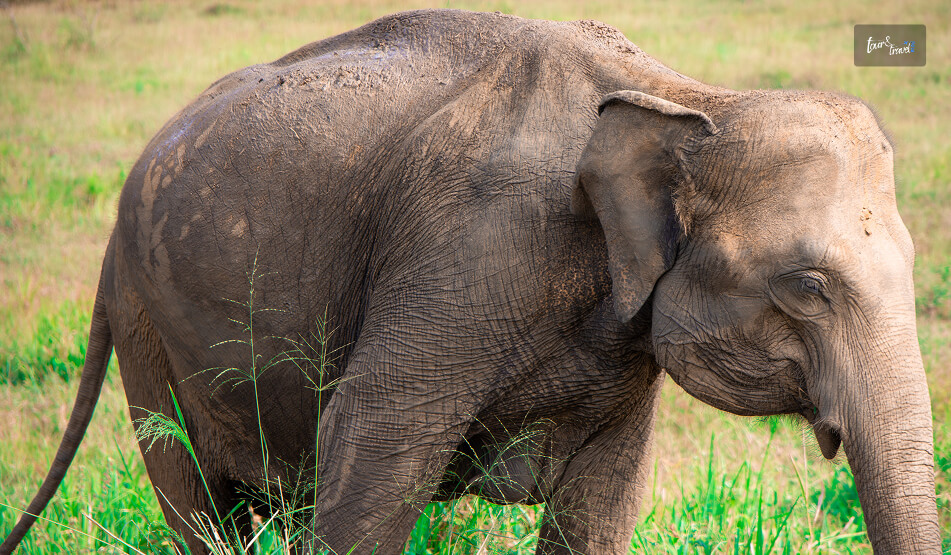
Everything in Lahugala revolves around water, grass, and elephants, and on the afternoon I visited, all three came together in a way I still think about.

A Quick Introduction To Lahugala National Park

Quick Introduction To Lahugala National Park

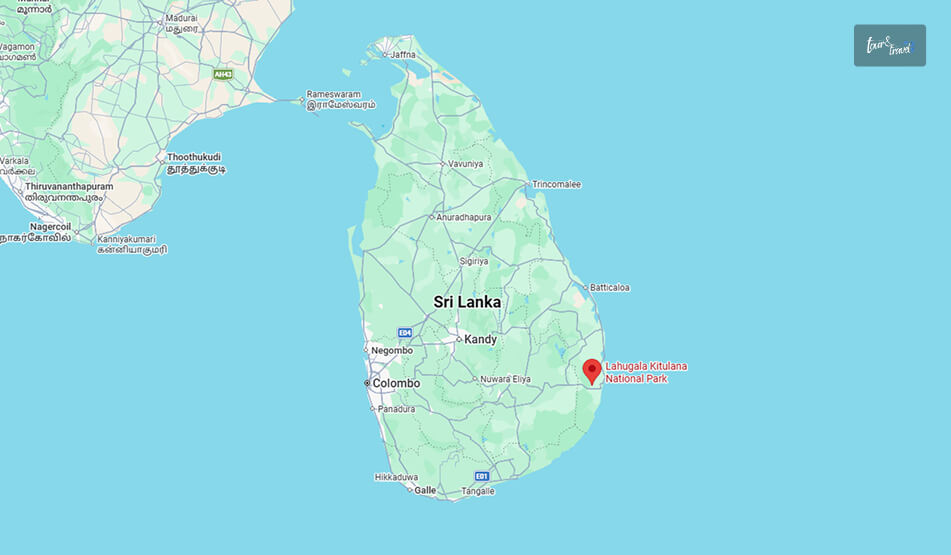
Lahugala Kitulana National Park is in the eastern province of Sri Lanka, and it is roughly 16 Km inland from Arugam Bay. 

It is also just off the Pottuvil–Monaragala road, which actually cuts through the park’s southeastern edge.

This park began its journey as a wildlife sanctuary in July 1966. Then, on 31st October 1980, it had an upgrade as a national park. 

Furthermore, the ecology of the park revolves around the three ancient tanks, Lahugala, Kitulana, and Senagamuwa.

These tanks eventually drain into the Heda Oya River.

Nevertheless, have a look at the quick snapshot below before you plan a visit to Lahugala National Park. 

DetailInformation
LocationEastern Province, near Pottuvil and Arugam Bay
AreaApproximately 15.4 sq km
EstablishedSanctuary in 1966National park status on 31 Oct 1980
Key featureThree Interconnected TanksLahugalaKitulanaSenagamuwa
Famous forElephant gatherings around Lahugala tank, especially in the dry season
Nearest townPottuvil (approx. 16 km)Arugam Bay (approx. 16–18 km)
Best seasonYear-roundElephant sightings are strongest July–September

How To Reach Lahugala? 

How To Reach Lahugala

You do not need to plan a standalone trip for Lahugala National Park. 

Like most travelers, I reached Lahugala from Arugam Bay. The tuk-tuk price was LKR 3000, and it took around 45 minutes. 

Furthermore, the distance between Colombo and Lahugala is around 378 kilometers. So, if you are traveling from Colombo, choose Ella or Monaragala as your overnight stop. 

Attempting the national park from Colombo will be an overly ambitious plan. 

FromApprox. DistanceApproximate Drive Time
Arugam Bay16–18 kmAround 30- 45 Minutes
Pottuvil16 km20–25 minutes
Monaragala45 km1 hour
Colombo378 km6–7 hours

The A4 Highway from Pottuvil to Monaragala runs directly alongside and briefly through the park. So, you do not even need a dedicated safari transfer to see part of Lahugala. 

So, you can see a major section of the tank and grassland from the main road. 

However, if you want to explore the interior tracks or the tank edges, you will need a park-registered tracker and jeep. 

My Safari Experience At Lahugala National Park

My Safari Experience At Lahugala National Park

It was around 3:30 PM when I reached Lahugala. From the locals, I already knew that it was the ideal window for the classic dawn safari here. 

The heat is at its peak in the afternoon, and that is what pushes elephants toward the tanks. 

So, in the late afternoon, you will find them near the tanks. 

The Elephants Of Lahugala Tank

The Lahugala Tank supports a thick growth of Sacciolepis interrupta, a wetland grass elephants seem to genuinely love. 

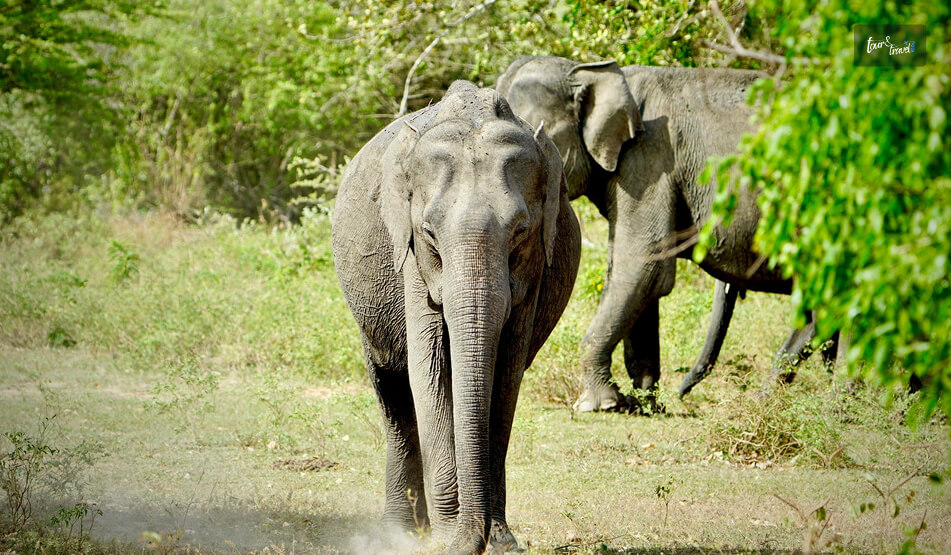
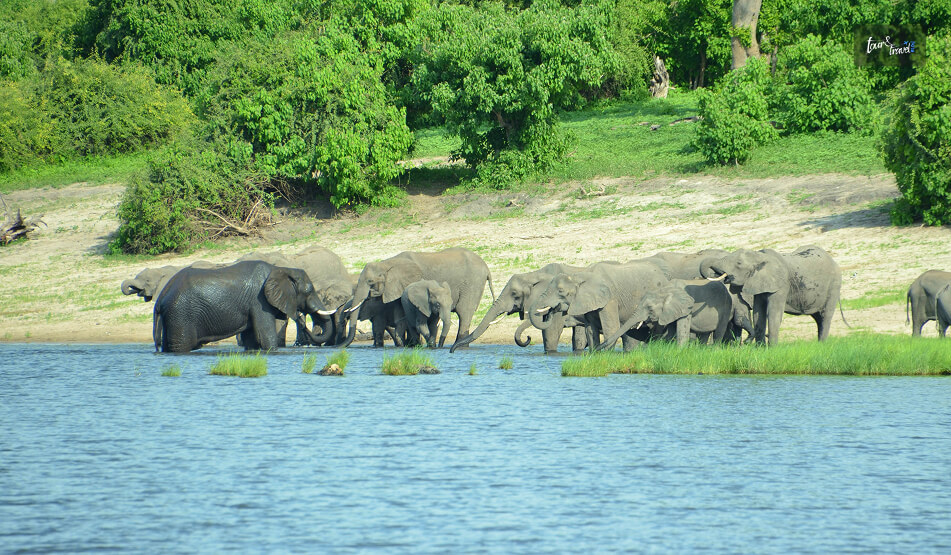
I saw herds gathering along the tank margins to graze on it. 

The herds I came across had a decent strength of 20 to 30 elephants. However, the guide told me that during the peak season, there can be around 100 elephants in a herd. 

Also, one thing I want to share here. The largest herd I spotted in the park was nowhere near the known gathering spots. 

I saw them across the far bank and in the shallows. 

Overall, barring the famous gathering of Minneriya, this was the largest elephant encounter I had in Sri Lanka. 

I loved the elephant watching experience here because of how unhurried it felt. 

No other jeeps were jostling for position, and there was no radio chatter about a sighting three tracks over. 

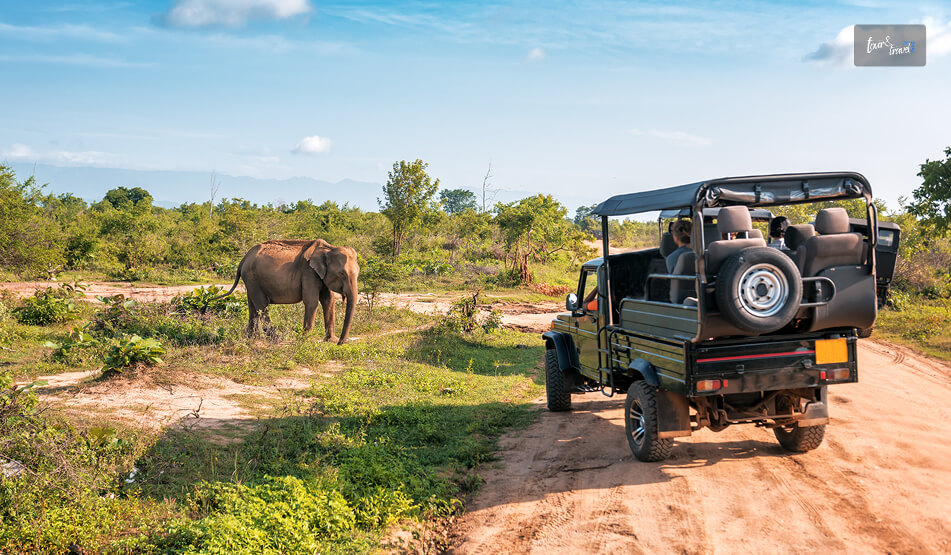
My tracker cut the engine near the tank edge, and we simply sat and watched calves wade in, and adults strip grass with their trunks for close to forty minutes.

Birdlife Along The Tanks

The three tanks of Lahugala made it an exciting spot for bird watching. The park especially stands out with its population of waterbirds. 

I picked out painted storks, several egret species, cormorants, and a pair of white-bellied sea eagles working the thermals above the water.

Because the park is so rarely crowded, birds tend to stay closer and longer than they would somewhere busier.

Sloth Bears And Other Wildlife

In the park, I saw spotted or axis deer, sloth bears, along with mugger crocodiles and freshwater turtles. 

However, to be honest, sloth bears are elusive, and you can spot them by luck. 

They are shy. So, even if you cannot see them, know that they are present in the park. 

What Is The Best Time To Visit Lahugala National Park?

What Is The Best Time To Visit Lahugala National Park

Lahugala National Park is a year-round destination. 

However, if you are in the park especially for elephant gatherings, dry months are the best time to spot them. 

During the dry months of July to September, elephant sightings become frequent, with the water levels dropping elsewhere and the gigantic creatures gathering around the tanks. 

Also, you must avoid the northeast monsoon period from October to January. The tanks are full in these months, and the elephants disperse into the surrounding forest, making sightings far less predictable.

Entrance Fees And Permits


Category

Approximate Cost (2026)

Foreign Adult (12+)

USD 12

Foreign Child (6–12 Years)

USD 6

Foreign Children under 6 Years 

Free

SAARC Nationals
USD 10 for AdultsUSD 5 for Children between 6 and 12 YearsFree for Children below 6 Years

Locals 
Adults: LKR 60Children from 6 to 12 Years: LKR 30Children below 6 Years: FreeStudents: LKR 20

Vehicle Entry Ticket

LKR 300

Foreign Group Fee Per Vehicle

USD 10

A Half-Day Lahugala Itinerary

Because Lahugala is small, it is easy to pair with either Arugam Bay’s beaches or a longer Kumana National Park excursion. Here is roughly how I had structured the afternoon based on my own visit.

TimeActivity
2:30 PMDepart Arugam Bay 
3:00 PMArrive at Lahugala entrance, collect tracker
3:30–4:45 PMSafari loop around Lahugala tank, elephant and bird watching
4:45–5 PMStop at the old Magul Maha Vihara ruins near the park boundary
5:15 PMReturn to Arugam Bay in time for sunset

Tips From My Visit

Tips From My Visit

A few practical notes I will pass on.

Go in the late afternoon rather than dawn, since Lahugala’s elephant activity peaks as the heat pushes them toward water.

Bring binoculars, as the tank is wide and animals often graze on the far bank.

Do not expect the density of jeeps you will find in Yala National Park. This is one of the few parks in Sri Lanka where a wildlife sighting still feels unhurried and private.

Nearby Places To Explore

Lahugala sits at the crossroads of Sri Lanka’s east coast and its deep south, which makes it easy to fold into a longer itinerary. 

If you are basing yourself in Arugam Bay, it pairs naturally with a Kumana National Park safari for a more thorough wildlife day. 

Travellers heading further south along the coast often continue on toward Pasikudah or Nilaveli for beach time.

Again, those coming from the cultural triangle sometimes route through Mullaitivu or Vavuniya on the way east.

Share on Social Media

Sibashree is a travel, culture, and leisure writer who has been writing since the age of 12 and professionally since 2014. With more than a decade of travel writing experience and journeys across India and several parts of the world, she brings a deeply personal and thoughtful perspective to her work. A student of English Literature and Mass Communication, Sibashree has always viewed travel as more than movement — for her, it has been a way of understanding people, cultures, and herself. Her passion for spiritual exploration has also led her to many unusual and meaningful destinations over the years. Outside of writing, Sibashree enjoys watching European cinema, reading about global politics, and reflecting on the stories hidden within everyday places.

Leave a Reply

Your email address will not be published. Required fields are marked *

title-img Related

READ MORE Mannar

Mannar, Sri Lanka: The Island I Almost Skipped

BY  Sibashree Jul 10, 2026

Many unexpected things happened during my trip to Sri Lanka. For example, I did not expect what I felt at the Dambulla Royal Cave Temple.  Similarly, there are places like Puttalam. Puttalam stands out with its ancient history, wildlife, coconut plantation, and ideal ambiance for stargazing.  However, of course, Puttalam is not as celebrated as the cultural richness of Kandy or the thrill of a Kandy to Ella train ride. It is more like a hidden gem.  Now, talking about hidden gems, Mannar is another destination I almost missed.  I am glad that I did not ultimately, as in recent times, it has become the land where women are fighting for the protection of the bodies and land impacted by industrialization, bypassing their consent.  In this article, I will share my experience in Mannar, and of course, why women in this coastal village are putting up such a strong fight.  However, I will begin with why I almost missed it. This Is Why I Almost Missed Mannar Mannar is not a usual or bucket-list destination when planning a trip to Sri Lanka. So, it was not originally on my list even after multiple visits to the country.  For the first time, Jaffna and its Tamil culture were my priority.  Also, for the next time, it was quite a predictable loop with Ella for the hills, Kandy for the temples, and Mirissa for the beaches.  Again, while Mannar kept popping up as a suggestion, most forums described it as "connected by a causeway, has some baobab trees, not much else."  So, I never had Mannar on my mind.  However, when I visited Sri Lanka for the third time, my focus was more on historical exploration in the country that is so connected to the country I come from, India.  So, I was staying in Anuradhapura, and Adeesha, the guesthouse owner, told me about Mannar.  He said, “Mannar is where Sri Lanka forgets it's an island for a while. The wind never stops, and neither do the birds." This description stayed with me. And in three days, I took to the Medawachchiya-Talaimannar Highway for a road trip to Mannar.  The distance was around 119 km, and it took around 2 hours and 17 minutes.  Initially, I thought that it was a mistake as I saw the landscape flattening out into salt pans and scrub.  However, I had not!  Mannar Reminded Me Of Art Of Slow Travel: We All Know It But Often Forget  I planned a half-day detour and ended up staying two nights, and even that felt like less.  What I appreciated most was how little the island tried to perform for visitors. You don’t have a polished tour script to follow. Also, from the causeway moment to standing on the spot where two countries meet, you will not notice the crowd for photo ops.  And do you know what you have as your companions here?  Just baobabs older than most nations, donkeys that own the road, flamingos that don't care if you're watching, and a stretch of water that people once believed connected two entire countries! So, Mannar is more than worth being beyond an afterthought when you are planning a trip to Sri Lanka.  I certainly did not expect a forgotten causeway town to end up as one of my favorite stops in the entire country, but that's exactly what happened. Here are more details about my days in Mannar, from the causeway moment to visiting the historical fort.  1. The Causeway Moment There's a specific moment on the drive-in that I still think about.  I left the palm-fringed road of the mainland behind, and the land narrowed into a causeway with water pressing in on both sides.  I rolled the window down, and I instantly felt the gush of wind on my face.  My driver, Aslam, laughed and said I should get used to it.  Talaimannar, further west, is considered one of the windiest points in the country, which is exactly why it's become a magnet for kite-surfers. Crossing that causeway felt like flipping a switch. The dense, wet green of the rest of the island gave way to something drier, flatter, and quieter.  I hadn't expected Sri Lanka to have a landscape like this, and it was closer in spirit to the Deccan scrublands than to a tropical postcard. 2. First Impressions Of Mannar Town Mannar town itself is unhurried in a way that took me a day to appreciate.  My first afternoon, I wandered past fishing boats pulled up on the shore, nets drying in loose piles. I also spotted a handful of tea shops where conversations paused just long enough for someone to glance at the obvious outsider before returning to their card game.  Nobody tried to sell me anything. It was the first place in Sri Lanka where I felt like a guest rather than a customer. 3. Meeting The Giant Of Pallimunai I was not prepared for the first baobab tree I spotted in Mannar. Seeing it for real is a different experience than seeing the photos.  The barrel-shaped trunk was wider than a small room, and the branches moved upward.  Furthermore, it had a thick and wrinkled grey bark, which gave it the name of the “Elephant Tree” from the locals.  However, the most famous one among the baobab trees in Mannar is the one in the village of Pallimunai.  It has a history of 600 to 800 years.  Furthermore, it was fascinating to think that baobabs are native to Africa and Madagascar, not South Asia. Common sayings are that the Arab traders carried the seeds here centuries ago, possibly using the leaves as camel fodder during the long sea crossings. The seeds eventually took root in Mannar's dry soil. I sat under that tree for a good twenty minutes, and a local teenager on a bicycle stopped to chat, half in English and half in gestures.  He told me his grandfather used to tell him the tree was older than any building on the island. Looking up at it, I believed him completely. Things To Know About The Baobab Trees In Mannar Mannar has around thirty baobab trees scattered across the district.  All of them are not as gigantic as you expect them to be. However, even the smaller ones along back roads and behind houses will grab your attention with their unique silhouette.  4. The Donkeys Of Mannar The feral donkeys are a part of Mannar’s wildlife identity.  They come from the animals the Arab merchant brought generations ago.  When I reached Mannar, I spotted them wandering freely across the island. They were unbothered by traffic or tourists. Even I watched one calmly block an entire lane of road near the causeway, chewing grass with the unhurried confidence of something that knows it has the right of way. Aslam just waited it out, grinning. "This is Mannar traffic," he said. 5. Flamingos At Vankalai My visit to the Vankalai Sanctuary and the nearby wetland was one of the highlights of my trip to Mannar.  I spotted flamingos, and they looked unreal for the first few minutes. I have never been so up close to these majestic birds.  Furthermore, I spotted a flock lift off a shallow lagoon at dusk, and it was dusk. So, they were catching the last orange light for the day.  Everything around me paused for a while.  6. Adam's Bridge And Talaimannar: Standing Where Two Countries Almost Touch The furthest point of my trip was Talaimannar.  It was right at the western tip of the island, where a chain of limestone shoals, the Adam's Bridge, stretches out toward Rameswaram in India.  In Hindu tradition, this is the causeway said to have been built by Rama's army in the Ramayana. Furthermore, geologically, it is a natural formation due to sedimentation and shifting sea levels over thousands of years. The Moment… I was standing on the shoreline, and the wind hammered at my jacket.  I squinted toward the horizon and tried to make out India. Certainly, I could not.  Now, being from the land of spirituality, the myth was quite fascinating. However, the practical history seemed more tantalizing.  It was one of the busiest pearl-trading points in ancient times, and it was famous even in Rome.  7. The Fort That Changed Hands Three Times On the way back, I stopped at Mannar Fort, a low, weathered structure sitting near the causeway.  The Portuguese built it in 1560, and then the Dutch took over until they surrendered to the British. Compared to the grandeur of the Galle Fort or the Sigiriya Rock Fortress, it is a small, crumbling monument to how many empires passed through this one unassuming stretch of coastline.  There wasn't a ticket booth or a gift shop. The caretaker nodded me through, and I wandered the ramparts alone, looking out over the water as the light started to fade. My Two Days In Mannar: The Itinerary  Here is my two-day slow travel itinerary in Mannar. Day 1: Causeway, Town, And Giants Time ActivityMorningThe Road Trip to MannarLate MorningThe Causeway MomentEarly AfternoonCheck-in and Town ExplorationLate AfternoonThe Giant of PallimunaiEveningMannar "Traffic" and Dinner Day 2: Ancient Connections, Wildlife, And Heritage TimeActivityMorningJourney to TalaimannarMid-DayAdam's Bridge ExperienceAfternoonVisiting the Fort of Three EmpiresDuskSpotting Flamingos at Vankalai Sanctuary That’s it from my days in Mannar. However, I want to conclude with a brief discussion on how women in Mannar are fighting for their bodies and soil.  Konniyan Kudiyirippu: A Mannar Village Where Women Fight For Their Bodies And Soil  Konniyan Kudiyirippu is a small coastal village on the southern edge of Mannar. Here, the lives of the women revolve around the soil and palmyrah. However, the setting up of a windmill here without consent has ruined their lives by poisoning the water and flooding the land.  That is not all! A mining company is eyeing this village.  I was reading about this news on eathjournalism.net, and there, a 32-year-old woman and a kindergarten teacher from the village, Vashingtina, mentioned,  “We use everything from nature to earn an income.” So, due to the industrialization without consent, the village economy based on nature is about to get ruined.  The women of this village are putting up a fight against this and the violation of “the right to free, prior and informed consent.” So, come and visit Mannar to see how the women here are fighting one of the biggest battles of mankind, saving the environment vs. industrialization.

READ MORE things to do in Hakone

What Are The Things To Do In Hakone? Know The Top Activities In 2026

BY  Sibashree Mar 31, 2026

The thing is, everyone said "Do 'The Loop'" when I told them about Hakone.  You know the train, cable car, ropeway, and pirate ship circuit.  However, after a few days wandering those forested, winding trails through the volcanic hills, I saw what the crowd missed.  The real magic isn't in the itinerary.  It's in the quiet moments like washing cash in a waterfall, or soaking feet by a Shiba Inu.  It is hard to ignore how deeply those small things connect to the place.  If you've got more than a day or just want to break free from tourist traffic, step off the path. That's where Hakone lives. And here are the things to do in Hakone. What Are The Things To Do In Hakone?  Hakone is the place that defines TheLowDownUnder Travel philosophy. Rush the day, and you miss the magic.  So, without going for ticking a bucket list, here are the things to do in Hakone that offer an immersive experience. 1. Visiting The Open Air Art Museum: A Playground For The Soul This was the one event I'd been hoping for, and it didn't fall short.  Picture 70,000 square meters of green space packed with over 100 huge sculptures. Some of them are traditional Henry Moore bronzes, and others are wild, experimental setups like a giant head with "living hair" grown from plants.  I found a figure lying on its back in the grass at one point.  After weeks in Tokyo's busy streets, that moment felt like a personal hit.  The museum includes a Picasso Pavilion holding 300 pieces.  I don't really dig Picasso much and only skimmed it, but if you're into cubism, you'll be thrilled.  It is open every day of the year, and there is no schedule to worry about.  Try it if you want to walk around without carrying anything heavy. 2. Playing Football With A Furry Friend Soaking feet in mineral water, quiet, simple, real.  The Hakonenomori Footbath isn't on the map like most spots.  It's tucked into a private garden behind a house, hidden from sight.  Google Maps calls it a footbath, but that's not what it really is.  You pay a small amount and get to dip your feet in spring water with a clean towel provided.  Dogs are welcome with no rules, no fuss.  I showed up just as Monaka, a shiba Inu, hesitated over the edge.  Her owners nudged her gently with their hands and voices.  She stayed still, paws raised, like she didn't know where to go.  That moment stopped me in my tracks. If you don't like being naked at an onsen, this feels safe and low-key. 3. The Art of "Ma": Finding The Perfect Onsen But Ma, the pause, is central in Japan. Hakone is where you feel it most.  The Loop can be done in a day from Tokyo, but you miss the real soak.  I stayed at Mount View Hakone. It was cheap but had great facilities.  Public baths were indoors and out.  The highlight was booking a private onsen for solo use.  Tattoos still draw caution in Japan. If you've got ink, go private.  Tenzan Onsen in Hakone-Yumoto is known for being tattoo-friendly, though rules are tight, usually just one inked person per group. 4. Washing Away Your Financial Woes Who doesn't crave wealth on a break?  I stepped off the train at Tonosawa Station and spotted the Fukazawa Zeniaria Benzaiten Shrine right there on the platform.  It's small, tiny even, so glance, and you'll miss it.  The thing is, locals follow a real tradition. They bring a ladle, drop yen in, then rinse it in the mini waterfall.  The legend goes that whatever money you wash and spend later comes back to you, bigger.  I haven't seen my account blow up yet. Still, the ritual feels oddly peaceful. Hard to ignore how quiet everything is. 5. My Absolute Favorite: The Hundreds Of Faces At Choan-ji I really don't know what the rest of the world is doing. This place should be in every guide, as Choan-ji Shrine is just amazing.  The area comprises hundreds of small stone statues of monks, and each one of them has a unique facial expression, laughing, angry, or even a surprised one.  Wandering through the moss-covered statues, I got lost in the silence for a whole hour.  By 5 PM, there were only two more visitors around. It was like a really peaceful place.  Pro Tip: Use insect repellent! The mosquitoes here are as loyal to the shrine as the monks are. 6.  Enjoy The Magic Of The Local Bus This may sound strange, but amongst my top three experiences, one was just traveling by bus.  Though the Hakone Tozan train is famous, it is usually crowded beyond capacity.  I chose to take a bus from Hakone-Yumoto to the ropeway.  For half an hour, the bus ride gave me dozens of gorgeous, twisting mountain scenes which I wouldn't have been able to see from the train.  It was in this bus trip that something glittering blinked at me through the windows. A group of trees glistened like they were covered in thousands of small diamonds.  Then, I signaled to the driver and got out at the stop door without hesitation. Also, to my great surprise, I was standing in front of the Venetian Glass Museum. 7.  Visit The Glass Trees And Blue Beer The Venetian Glass Museum (or Hakone Glass-no-Mori) looks like something Disney would have created if they relocated to Italy.  There are bushes with glass flowers and "Crystal Trees" that sparkle brightly in the sunlight.  It is enchanting, glamorous, and exceedingly informative at the same time.  In case you have extra time, I also suggest the Pola Museum of Art. If you do make it to the Pola Museum, don't just stay inside looking at the Impressionist canvases.   Step out the back door onto their Nature Trail.  It is a quiet wooden boardwalk woven through a dense, silent beech forest, dotted with subtle sculptures hidden among the moss and leaves.   It beautifully mirrors the Open-Air Museum but without the crowds. It's just you, the birds, and art melting into the wild.  You must also visit the Narukawa Art Museum. Moreover, the cafe here features a wonderful "Mount Fuji" view, and their famous blue beer comes in a Fuji-shaped glass. 8. Live The Dreams Of Anime Fans And The Wine-Bathers If you're into Evangelion, Hakone is your Mecca (after all, it's the location for Tokyo-3).  At the station, you can spot the themed vending machines as well as the EVA-Ya store.  Also, if you are with your friends, don't do what I did and miss out on Yunessun.  It's an Onsen theme park where you can wear a swimsuit and even take a bath in red wine or coffee.  This time, I was alone and felt a little shy about wine-bathing solo, but next time it is definitely at the top of my list. 9. The 400-Year-Old Time Capsule: Amazake Chaya  While everyone else is hunting down modern, neon-lit cafes, do yourself a huge favor and head to the old Tokaido highway.   There sits a thatch-roofed tea house that has been run by the exact same family for 13 generations.  They serve warm, naturally sweet, non-alcoholic fermented rice wine (amazake) and pounded mochi toasted over glowing charcoal.   The air smells heavily of woodsmoke, centuries of history, and absolute stillness. It is the absolute definition of hitting the brakes on a hectic itinerary.  Getting To Hakone From Tokyo And What These Experiences Cost  Having discussed the top attractions in Hakone, it is now important to find out how you can reach Hakone from Tokyo.   Reaching Hakone  The Odakyu Romancecar from Shinjuku Station is the most direct option, reaching Hakone-Yumoto in about 85 minutes.   The Hakone Freepass, sold by Odakyu, covers the round trip plus unlimited use of the local train, cable car, ropeway, and pirate ship that make up "The Loo.”  It is worth buying even if, as this guide suggests, you spend more time off the Loop than on it.  What These Stops Actually Cost  Experience  Approximate Cost  Hakone Open-Air Art Museum entry   1,600 JPY (adult)  Hakone-nomori Footbath   Small fee, typically under 500 JPY  Private onsen at a ryokan (per session)   2,000-4,000 JPY  Hakone Glass-no-Mori (Venetian Glass Museum)  1,800 JPY (Adult)   Yunessun Onsen theme park (wine/coffee baths)   2,500-3,500 JPY  Hakone Freepass (2-day, from Shinjuku)  Around 6,100 JPY   None of these need to be booked ahead outside of peak autumn-foliage weekends, which makes Hakone an easy place to wander into rather than plan around, exactly the spirit this guide is going for. Read Also: What To Do In Shinjuku As A First Time Traveler? 10+ Attractions You Cannot Miss In 2026 Is The Japan Rail Pass Worth It In 2026? Should I Buy Or Avoid It As A Conscious Tourist? Cherry Blossom Kyoto Japan: 2026 Season And The Top Viewing Spots

READ MORE Wadduwa

Wadduwa, Sri Lanka: A Quiet Stretch Of Coast Worth Slowing Down For

BY  Sibashree Aug 21, 2026

Wadduwa is very close to Colombo, just 35 kilometers south. You reach it in less than an hour’s drive down the Galle Road or the Southern Expressway.  However, it is easy to miss Wadduwa on the way to Bentota or Hikkaduwa.  It is true that Wadduwa does not have a single big attraction. Still, the fishing boats going out at dawn, coconut palms leaning over empty sand, and an unhurried rhythm make it different from built-up beach towns further south.  Wadduwa At A Glance  LocationWestern Province, Kalutara District, southwest coast of Sri LankaDistance from Colombo35 KmDistance from the airport50 km from Bandaranaike International AirportKnown ForQuiet BeachesAyurvedic Wellness ResortsFishing Village CultureBest Time to VisitNovember to April (Dry Season, Calmer Seas)Getting AroundTuk-tukTaxiCoastal Train LineBusIdeal ForCouplesWellness TravelersTravelers Looking for a Low-Key Base Near ColomboNearby TownsKalutara (10–15 Minutes)Bentota (45 Minutes)Panadura (20 Minutes) How To Reach Wadduwa? Wadduwa is well-connected by bus, train, and private transport options. However, since the distance from Colombo is just around 35 km, traveling by a private taxi is the best option. By Taxi Traveling from Colombo City Center to Wadduwa via the Galle Road is a journey of around 40-50 minutes.  The private taxi charged me around LKR 7500.  However, if you are traveling directly from the airport, the travel time will be around 1.5 hours, and the cost will be close to LKR 12000. Here, you need to keep one thing in mind regarding the charges. During negotiations, cross-check whether the toll charges for the Southern Expressway (E01) are included in the fare or not.  By Train If you are a budget traveler and want to enjoy the view of the southern coast, a train ride is a more suitable option.  The distance between the Colombo Fort Railway Station and Wadduwa Railway Station by train is just 32.47 km.  Trains on this route are available from 4:20 AM to 9:36 PM at regular intervals on a daily basis. Also, the travel time is around 50 minutes.  The ticket prices for this train ride are LKR 80, LKR 200, and LKR 350 for 3rd class, 2nd class, and 1st class tickets, respectively (Source: https://www.railway.gov.lk/).  This is the best option if you are traveling solo or do not have much luggage with you.  By Bus You can travel from Colombo to Wadduwa by bus also. You can catch the route number 100/2 bus or any bus going to Galle or Matara from the Central Bus Stop in Colombo Fort.  The travel time is around 50-60 minutes, and the ticket price is just around LKR 150. However, if you want to travel in an AC bus, the ticket price will be approximately LKR 250. What Are The Top Attractions In Wadduwa?  Wadduwa does not have bucket-list destinations. However, all it takes is hiring a tuk-tuk, which will cost around LKR 150 to 400 for short rides.  It will take you to the serene beach, Richmond Castle, and Kalutara Bodhiya. You can even visit the Kaluwamodara Bridge and the beautiful Kalu River. Also, Wadduwa is known for its wellness tourism. You can indulge in the magic of Ayurvedic treatment here.  1. The Beach I started exploring Wadduwa with the beach as the starting point. It is a sheer contrast to Mirissa or Unawatuna if you are expecting high drama.  The sand here is soft and golden, and the water is calm.  Also, the coconut trees line the shore in a way that feels more like a working coastal town than a resort strip. Watching The Fishermen At Dawn At The Beach During my stay in Wadduwa, I used to wake up very early. It was just to observe the fishermen at work at dawn.  They used to push the brightly painted boats into the surf. They also checked and mended their nets.  There were no tourists in sight, proving once again that Wadduwa is a fishing community first and a holiday destination second. Swimming And Conditions The calm waters of Wadduwa make it a safe destination for swimming. However, like the other southern coastal destinations, the waters here also face occasional rip currents.  Wadduwa is also famous for coconut plantations.  These plantations back up right against the shoreline in places. That greenery is part of what makes the beach feel less commercialized than some of its neighbors. 2. Ayurveda And Slowing Down Ayurvedic wellness tourism is the biggest attraction in Wadduwa. It has a number of resorts that have reputations specifically around traditional Sri Lankan healing practices. You can opt for the following wellness practices in Wadduwa.  Herbal Oil Massage Steam Treatments Detox Programs I am not usually one for spa itineraries. However, I gave in for an afternoon and came away understanding the appeal. The cost of steam treatments and herbal oil massage came to around LKR 6000.  It is a genuinely different kind of beach holiday, oriented around rest rather than activity, and Wadduwa has quietly become one of the country's go-to spots for it. 3. Richmond Castle And Kalutara Bodhiya After an Ayurvedic massage and complete rejuvenation, I took a short trip to neighboring Kalutara.  It was just a 20-minute drive along the coast. I visited Richmond Castle and Kalutara Bodhiya there.  Richmond Castle Richmond Castle is an early-1900s mansion built for a local Mudaliyar (a headman title from the colonial era). It is an impressive 42-acre property blending colonial architecture with signature Sri Lankan styles.  The entry fee to the castle is LKR 100 for local adults, and as a foreigner, I had to pay LKR 500.  The entry fee may seem higher, considering it does not match the grandeur of a European castle.  However, given that all the proceeds go toward funding local schoolboys' education, you will not mind paying the same.  The entry fee for the local schoolchildren to the castle is also very low, and it is just LKR 10.  Guides are available on-site and can walk you through the history in about forty minutes to an hour, and the grounds are open daily from 8 AM to 4 PM. Kalutara Bodhiya Kalutara Bodhiya, a major Buddhist temple and stupa, sits on the top of the river mouth.  Along with its religious significance, Kalutara Bodhiya stands out with its striking structure.  The hollow dagoba lets you walk inside and look up at painted panels depicting scenes from Buddhist scripture. This is something you see at every temple in Sri Lanka. I have shared the details of visiting the Kalutara Bodhiya in my guide on the historic coastal town of Kalutara.  4. Bridges, Rivers, And A Slower Kind Of Sightseeing The Kalu River is the lifeline of Wadduwa and Kalutara. Furthermore, the Kaluwamodara Bridge connects the northern and southern parts of Kalutara across the Kalu River. The bridge has an impressive arch design, and you can notice it while taking a tuk-tuk ride.  However, I opted for a scenic boat ride of 90 minutes for LKR 3500.  The short boat ride along the Kalutara River one afternoon wove through mangrove patches.  I also got a look at local fishing life from the water rather than the shore.  It is a quieter, more low-key version of the river safaris you will find further south in Bentota, and I actually preferred it for that reason. Fewer boats, more birdlife, no rush! Day Trips From Wadduwa Thanks to its central location on the western coast, Wadduwa is the ideal base for exploring the nearby coastal towns.  You can plan the following day trips from Wadduwa.  Bentota About 45 minutes south, Bentota offers river safaris, water sports, and garden estates. Brief Garden The landscaped estate created by Sri Lankan artist Bevis Bawa is a worthwhile detour if you have any interest in tropical garden design or local art history. Dehiwala Zoo One of the older zoos in Asia, around 26 kilometers north, Dehiwala Zoo is an easy option if you are traveling with kids. Pahiyangala For something further afield, this prehistoric archaeological site near Yatagampitiya is about 40 kilometers from Kalutara. It appeals if you are curious about Sri Lanka's deeper human history rather than its colonial-era one. Pahiyangala, or the Fa-Hiden Caves, has been home to prehistoric human beings around 37000 years ago, as backed by archaeological evidence.  Such a fascinating site, the caves offer free entry, and they remain open for visitors from 6 AM to 6 PM.  However, you need to climb a staircase for around 20 minutes to reach the caves.  Food And Water Sports Beyond the beach and the temples, Wadduwa gave me some of my simplest, best meals of the trip, and enough on-water options to fill an afternoon if lounging isn't quite your speed. Eating in Wadduwa Eating in Wadduwa leans heavily, unsurprisingly, toward seafood. The fresh catch sold right off the boats in the morning turns into curries and grilled fish by evening at the small local restaurants scattered along the coast road.  On The Water For anyone wanting more than sunbathing, the calm-but-active waters here support jet skiing, windsurfing, and light surfing. All of these felt more accessible and less crowded than the equivalent setups in Bentota or Hikkaduwa.  Here is a breakdown of the estimated costs for taking part in different watersports in Wadduwa. WatersportsEstimated Cost (LKR)Jet Skiing8000-12000Banana Boat Ride5000-7000Tube Ride6000-8000Windsurfing / Wakeboarding10000-15000 I am mentioning all the charges here based on what the local organizers quoted me. The prices can change for your next trip.  Wadduwa is not a surf town in the way those places are, but if you just want to get out on the water without booking weeks in advance, Wadduwa makes it easy. What Is The Best Time To Visit Wadduwa? Like most of the western coast, Wadduwa is best visited between November and April, when the weather is dry and the seas are calmer. This is also when the Ayurvedic resorts tend to be fullest. So, it is worth booking ahead if that's part of your plan.  The town holds a warm, tropical climate year-round, but the shoulder and monsoon months bring rougher water and less predictable weather. A Simple 2-Day Wadduwa Itinerary DaysActivitiesDay 1, Beach and WellnessMorningArriveSettle inEarly walk on Wadduwa Beach to catch the fishermen heading out. MiddayRelax by the beach or pool.Light seafood lunch at a local restaurantAfternoonAyurvedic spa treatment at your resortEveningSunset on the beach, dinner of fresh grilled fish.Day 2, Kalutara and the RiverMorningDrive to Kalutara (~20 min) to visit Richmond Castle.Midday:Kalutara Bodhiya TempleLunch nearbyAfternoon: Kalutara River boat tour through the mangrovesEveningReturn to Wadduwa, water sports session (jet ski or windsurfing) if conditions allow. If you have a third day, use it for a half-day trip to Bentota for river safaris and garden estates, or Brief Garden if you would rather stay closer. Slowing Down At Wadduwa  Wadduwa is one of the best-kept secrets of Sri Lanka in the truest sense. Just 35 km away from Colombo, it is a place to slow down and be a part of a livelihood based on fishing.  Also, it is an important base for Kalutara and Bentota day trips due to its accessible location.  Still, Wadduwa is quieter and on its own. So, the mornings on the beach never felt like they belonged to anyone but the fishermen and me.