
Lahugala National Park: A Quiet Corner Of Sri Lanka’s Wild East

I was quite content at Arugam Bay for a week of surfing, and I had Kumana penciled in as one of my big wildlife detours. 

I had heard about Lahugala, but most guides or locals I met mentioned it in passing. 

It was more like, “Oh, that little park on the way to Pottuvil, you’ll drive past it anyway.

However, an elderly guesthouse owner told me not to skip it. I listened to him.

Otherwise, I would have missed the most understated, elephant-dense pockets of wilderness. 

It was not like anything I had visited in Sri Lanka. Also, the best part was that I had it almost entirely to myself. 

The park neither can nor tries to compete with Yala National Park or Wilpattu in scale or star power. 

It is 5.4 square kilometres of flat, tank-fed scrubland in the Eastern Province, and that smallness is precisely the point.

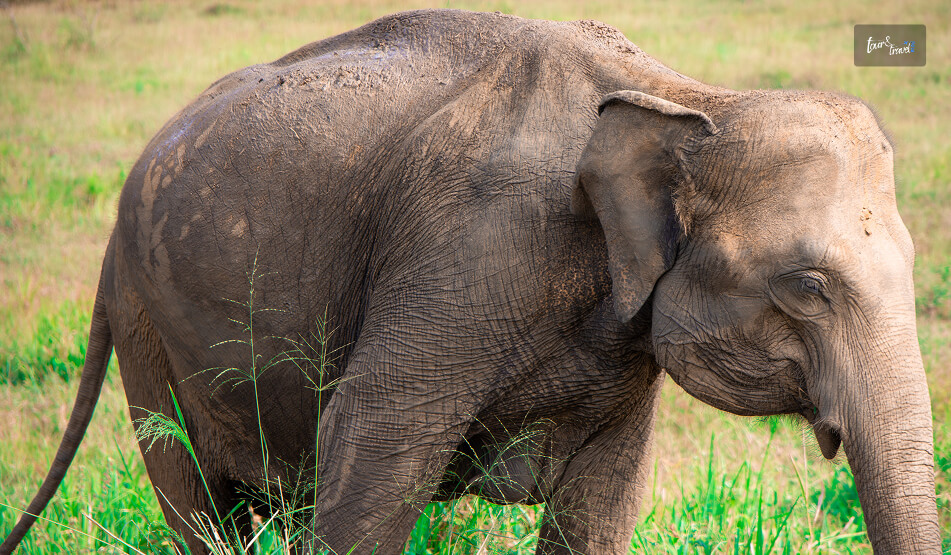
Everything in Lahugala revolves around water, grass, and elephants, and on the afternoon I visited, all three came together in a way I still think about.

A Quick Introduction To Lahugala National Park

Quick Introduction To Lahugala National Park

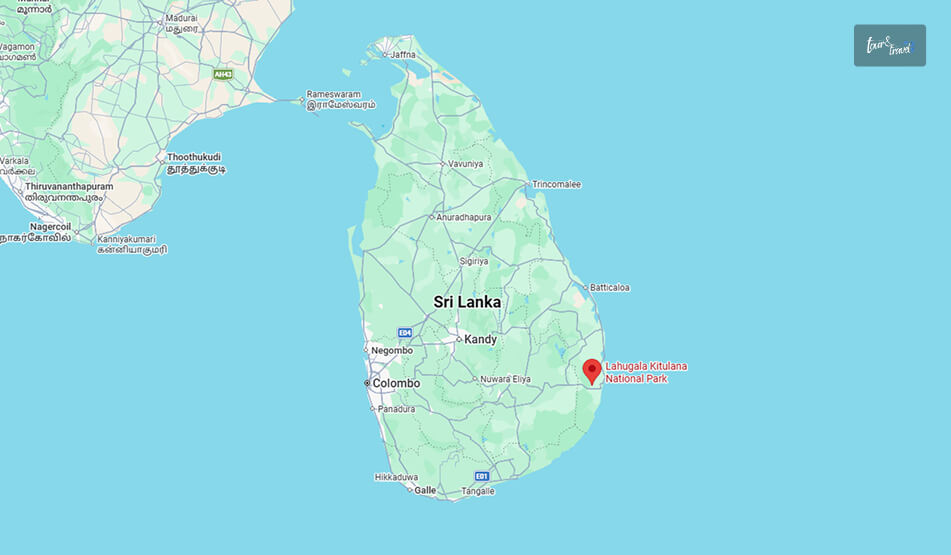
Lahugala Kitulana National Park is in the eastern province of Sri Lanka, and it is roughly 16 Km inland from Arugam Bay. 

It is also just off the Pottuvil–Monaragala road, which actually cuts through the park’s southeastern edge.

This park began its journey as a wildlife sanctuary in July 1966. Then, on 31st October 1980, it had an upgrade as a national park. 

Furthermore, the ecology of the park revolves around the three ancient tanks, Lahugala, Kitulana, and Senagamuwa.

These tanks eventually drain into the Heda Oya River.

Nevertheless, have a look at the quick snapshot below before you plan a visit to Lahugala National Park. 

DetailInformation
LocationEastern Province, near Pottuvil and Arugam Bay
AreaApproximately 15.4 sq km
EstablishedSanctuary in 1966National park status on 31 Oct 1980
Key featureThree Interconnected TanksLahugalaKitulanaSenagamuwa
Famous forElephant gatherings around Lahugala tank, especially in the dry season
Nearest townPottuvil (approx. 16 km)Arugam Bay (approx. 16–18 km)
Best seasonYear-roundElephant sightings are strongest July–September

How To Reach Lahugala? 

How To Reach Lahugala

You do not need to plan a standalone trip for Lahugala National Park. 

Like most travelers, I reached Lahugala from Arugam Bay. The tuk-tuk price was LKR 3000, and it took around 45 minutes. 

Furthermore, the distance between Colombo and Lahugala is around 378 kilometers. So, if you are traveling from Colombo, choose Ella or Monaragala as your overnight stop. 

Attempting the national park from Colombo will be an overly ambitious plan. 

FromApprox. DistanceApproximate Drive Time
Arugam Bay16–18 kmAround 30- 45 Minutes
Pottuvil16 km20–25 minutes
Monaragala45 km1 hour
Colombo378 km6–7 hours

The A4 Highway from Pottuvil to Monaragala runs directly alongside and briefly through the park. So, you do not even need a dedicated safari transfer to see part of Lahugala. 

So, you can see a major section of the tank and grassland from the main road. 

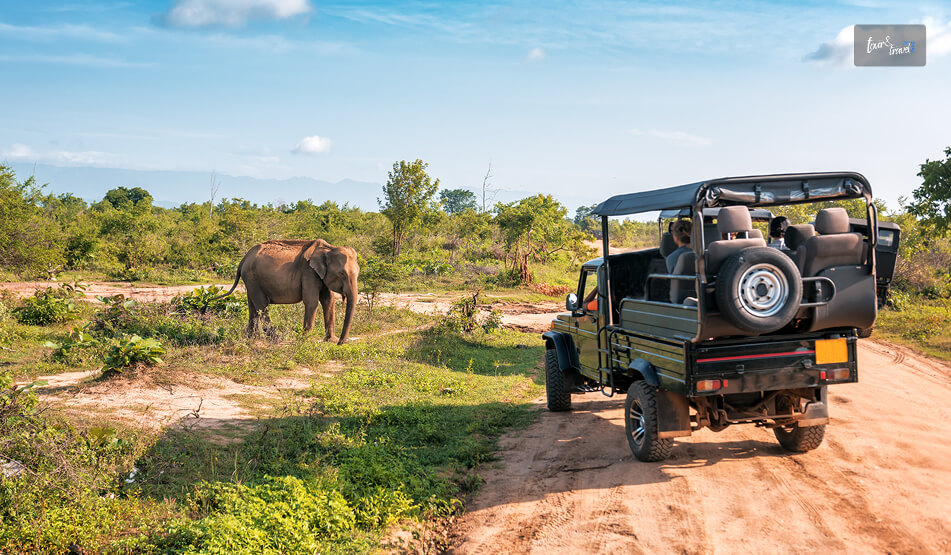
However, if you want to explore the interior tracks or the tank edges, you will need a park-registered tracker and jeep. 

My Safari Experience At Lahugala National Park

My Safari Experience At Lahugala National Park

It was around 3:30 PM when I reached Lahugala. From the locals, I already knew that it was the ideal window for the classic dawn safari here. 

The heat is at its peak in the afternoon, and that is what pushes elephants toward the tanks. 

So, in the late afternoon, you will find them near the tanks. 

The Elephants Of Lahugala Tank

The Lahugala Tank supports a thick growth of Sacciolepis interrupta, a wetland grass elephants seem to genuinely love. 

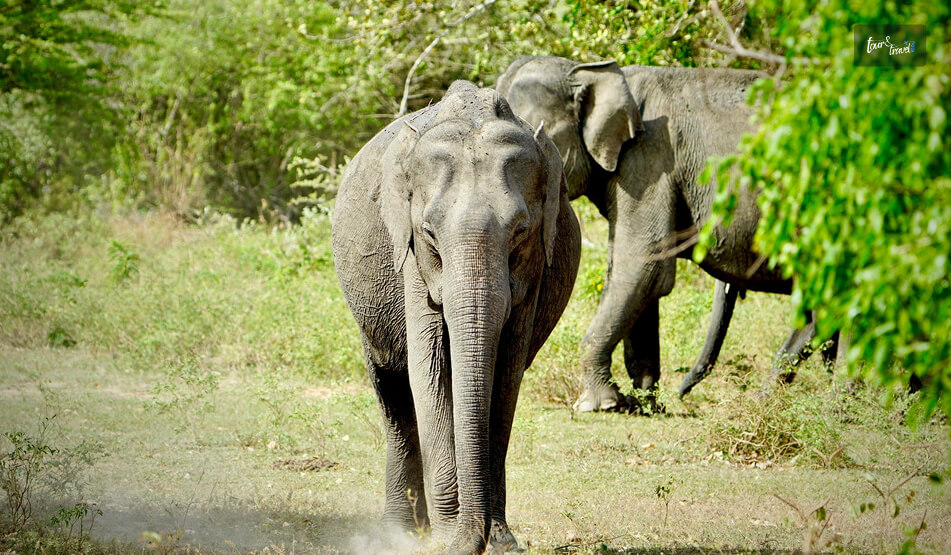
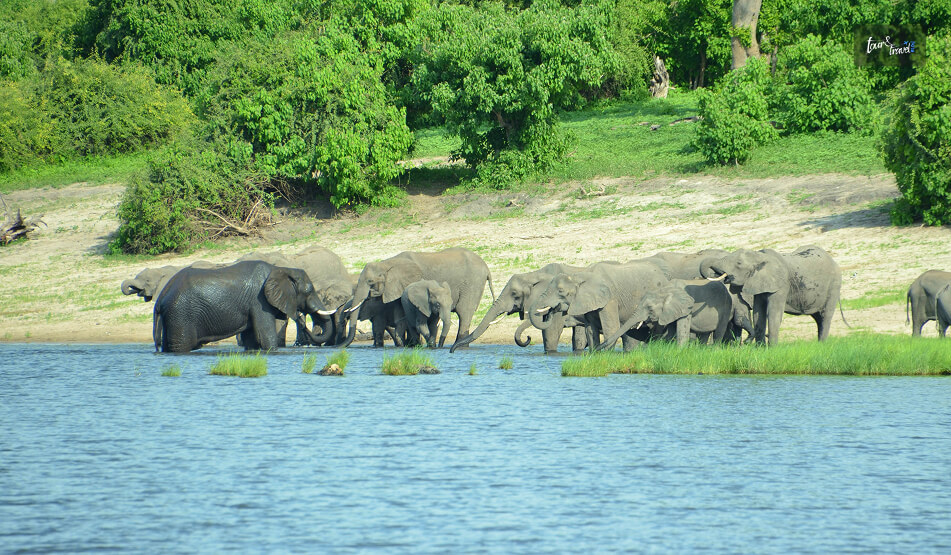
I saw herds gathering along the tank margins to graze on it. 

The herds I came across had a decent strength of 20 to 30 elephants. However, the guide told me that during the peak season, there can be around 100 elephants in a herd. 

Also, one thing I want to share here. The largest herd I spotted in the park was nowhere near the known gathering spots. 

I saw them across the far bank and in the shallows. 

Overall, barring the famous gathering of Minneriya, this was the largest elephant encounter I had in Sri Lanka. 

I loved the elephant watching experience here because of how unhurried it felt. 

No other jeeps were jostling for position, and there was no radio chatter about a sighting three tracks over. 

My tracker cut the engine near the tank edge, and we simply sat and watched calves wade in, and adults strip grass with their trunks for close to forty minutes.

Birdlife Along The Tanks

The three tanks of Lahugala made it an exciting spot for bird watching. The park especially stands out with its population of waterbirds. 

I picked out painted storks, several egret species, cormorants, and a pair of white-bellied sea eagles working the thermals above the water.

Because the park is so rarely crowded, birds tend to stay closer and longer than they would somewhere busier.

Sloth Bears And Other Wildlife

In the park, I saw spotted or axis deer, sloth bears, along with mugger crocodiles and freshwater turtles. 

However, to be honest, sloth bears are elusive, and you can spot them by luck. 

They are shy. So, even if you cannot see them, know that they are present in the park. 

What Is The Best Time To Visit Lahugala National Park?

What Is The Best Time To Visit Lahugala National Park

Lahugala National Park is a year-round destination. 

However, if you are in the park especially for elephant gatherings, dry months are the best time to spot them. 

During the dry months of July to September, elephant sightings become frequent, with the water levels dropping elsewhere and the gigantic creatures gathering around the tanks. 

Also, you must avoid the northeast monsoon period from October to January. The tanks are full in these months, and the elephants disperse into the surrounding forest, making sightings far less predictable.

Entrance Fees And Permits


Category

Approximate Cost (2026)

Foreign Adult (12+)

USD 12

Foreign Child (6–12 Years)

USD 6

Foreign Children under 6 Years 

Free

SAARC Nationals
USD 10 for AdultsUSD 5 for Children between 6 and 12 YearsFree for Children below 6 Years

Locals 
Adults: LKR 60Children from 6 to 12 Years: LKR 30Children below 6 Years: FreeStudents: LKR 20

Vehicle Entry Ticket

LKR 300

Foreign Group Fee Per Vehicle

USD 10

A Half-Day Lahugala Itinerary

Because Lahugala is small, it is easy to pair with either Arugam Bay’s beaches or a longer Kumana National Park excursion. Here is roughly how I had structured the afternoon based on my own visit.

TimeActivity
2:30 PMDepart Arugam Bay 
3:00 PMArrive at Lahugala entrance, collect tracker
3:30–4:45 PMSafari loop around Lahugala tank, elephant and bird watching
4:45–5 PMStop at the old Magul Maha Vihara ruins near the park boundary
5:15 PMReturn to Arugam Bay in time for sunset

Tips From My Visit

Tips From My Visit

A few practical notes I will pass on.

Go in the late afternoon rather than dawn, since Lahugala’s elephant activity peaks as the heat pushes them toward water.

Bring binoculars, as the tank is wide and animals often graze on the far bank.

Do not expect the density of jeeps you will find in Yala National Park. This is one of the few parks in Sri Lanka where a wildlife sighting still feels unhurried and private.

Nearby Places To Explore

Lahugala sits at the crossroads of Sri Lanka’s east coast and its deep south, which makes it easy to fold into a longer itinerary. 

If you are basing yourself in Arugam Bay, it pairs naturally with a Kumana National Park safari for a more thorough wildlife day. 

Travellers heading further south along the coast often continue on toward Pasikudah or Nilaveli for beach time.

Again, those coming from the cultural triangle sometimes route through Mullaitivu or Vavuniya on the way east.

Share on Social Media

Sibashree is a travel, culture, and leisure writer who has been writing since the age of 12 and professionally since 2014. With more than a decade of travel writing experience and journeys across India and several parts of the world, she brings a deeply personal and thoughtful perspective to her work. A student of English Literature and Mass Communication, Sibashree has always viewed travel as more than movement — for her, it has been a way of understanding people, cultures, and herself. Her passion for spiritual exploration has also led her to many unusual and meaningful destinations over the years. Outside of writing, Sibashree enjoys watching European cinema, reading about global politics, and reflecting on the stories hidden within everyday places.

Leave a Reply

Your email address will not be published. Required fields are marked *

title-img Related

READ MORE things to do in nara

What Are The Things To Do In Nara? How To Plan A Two-Day Trip?

BY  Sibashree Mar 31, 2026

A trip to Nara was long overdue, and as the first permanent capital of the country, it is a must-visit.  Furthermore, this Japanese capital, before 794 AD (then Kyoto became the capital), has many UNESCO World Heritage Sites.  The Todai-ji Temple is the most famous among these 8 UNESCO World Heritage Sites. You will find one of the largest Buddha statues in the country here, and the statue is made of bronze.  Of course, the deer roaming in the city are beautiful, and you feel like getting transported to a bygone era.  It reminded me of one of the most famous literary works in our country, Shakuntalam Abhigyan, an immortal love story between King Dushyanta and Shakuntala, written by Kalidasa in Sanskrit.  Also, this is a place that will ask you to come back, and most people plan a day trip to experience its historical charm and natural beauty.  But, smitten by its beauty, I chose a 2-day trip, and here is the list of things to do in Nara. Also, I will discuss how I can get to Nara.  How To Reach Nara?  Nara is easily accessible from Kyoto, which is also famous for its history and cherry blossom season.  You can also visit Nara from the Osaka prefecture. So, overall, a visit to Nara can fit well into your itinerary of visiting the Kansai region of Japan.   Also, the robust railway system of Japan makes it easy and budget-friendly to visit Nara. A Japan Railway Regional Pass will be the best for traveling across Nara, Kyoto, Osaka, and Kobe, and the entire Kansai Region.  Also, when in Osaka, don’t forget to explore the street food stalls and have the best Osaka food, including Mochis and seafood delicacies.  Here is how you can travel from Kyoto to Nara. 1. Traveling From Kyoto To Nara Through The JR Nara Line You will get an express train or a local train from Kyoto to Nara every hour.  Furthermore, if you opt for the Miyakoji Rapid Service on this line, you will reach Nara within 45 minutes, and the ticket price will be 720 JPY.  Also, the local train services, with the same ticket price, will take about 70 minutes.  Once you reach the JR Nara station, you will get buses to the Nara Park and other top attractions in Nara.  2. Take The Kintetsu Railway To Reach Nara From Kyoto This is the most convenient way to reach Nara from Kintetsu Railway Station.  The train journey is the fastest, and the journey takes about 35 minutes by the express trains, and the ticket price is 1280 JPY.  Also, the regular trains take about 45 minutes to complete the journey. The ticket price is 760 JPY.  3. How To Reach Nara From Osaka The introduction mentions Osaka as an alternative base for a Nara trip, but the route details that follow only cover getting there from Kyoto.  Since a fair number of travelers base themselves in Osaka instead, here is how that leg compares. 4. JR Yamatoji Line vs. Kintetsu Nara Line RouteDeparture StationDurationTicket PriceJR Yamatoji Line (Rapid Service)JR Namba or Osaka StationAbout 45-50 minutes570 JPYKintetsu Nara Line (Limited Express)Kintetsu Namba StationAbout 35 minutes1,150 JPYKintetsu Nara Line (Regular/Rapid)Kintetsu Namba StationAbout 40-45 minutes680 JPY The Kintetsu Nara Line is the faster and more direct option from central Osaka.  It will drop you at Kintetsu-Nara Station, which sits closer to Nara Park than the JR station does.  If you are holding a Japan Rail Pass or a Kansai-wide JR pass, the Yamatoji Line is the better value even though the ride takes slightly longer.  Either way, both routes run frequently enough that there's no need to book ahead outside of major holidays. What Are The Things To Do In Nara?  From a visit to the Nara Park to exploring Heijo Palace and the temples, there are many things to do in Nara.  Here are the things I did during my 2-day stay.  1. Day 1 In Nara: Exploring The Nara Park  With deer passing by, Nara Park, the home to the main attractions in Nara, is a place you cannot simply miss.  The park is free to enter, and it remains open for 24 hours.  However, many attractions in the park close after 5 PM. So, you have to be early when visiting it.  Also, here are the attractions you will come across in the Nara Park, along with the deer passing by.  Recently, the number of deer in the park has gone up to a record high. However, the tourists bringing unapproved food for the deer remain a concern during Nara Park visits.  You can only feed them shika senbei, the approved crackers for deer. Also, these adorable creatures are revered as sacred. So, you have to be respectful in your behavior.  • Kasuga Taisha One of the UNESCO World Heritage Sites in Nara, Kasuga Taisha, takes us back to the Nara Period from 710 to 794 AD.  It is the most revered shrine among the Fujiwara clan as the tutelary shrine.  Furthermore, the main attraction of the shrine is the “Hall of Lanterns.” There, I saw many bronze lanterns illuminating the darkness.  During the special festivals, Setsubun Mantoro in February and Chugen Mantoro in August, all these lanterns are lit.  Moreover, you will find a cider tree in the inner shrine, and it is 1000 years old.  • Mt. Wakakusa I took the back road from Kasuga Taisha on the way to the Todai-Ji temple.  I came across many small shrines there. However, the highlight was Mt. Wakakusa.  This hill between the two shrines has a height of 350 meters. Also, on the 4th Saturday of January, it becomes the venue for the Wakakusa Yamayaki celebration.  People burn dead grass on the slopes, and this is a ritual that has been celebrated since the 18th century.  • Todai-Ji Todai-Ji is another UNESCO World Heritage Site, and one of the “Historic Monuments of Ancient Nara.” It was built in 752 AD, and it was the head of all the temples in the province. It even had a strong influence on the royal family.  In fact, with Todai-Ji being the seat of control even in the royal decisions, the emperor decided to move the capital to Nagaoka in 784 AD.  However, the main attraction of the Todai-Ji Temple is the massive Buddha statue, or Daibutsu.   A depiction of Dainichi Nyorai,  it represents the primordial Buddha in the orthodox East Asian Buddhist philosophy.  You will also find two similarly sized Bodhisattva statues here.  However, the temple and statues you see today were burned down, and they were rebuilt during the Edo period (1603–1868).  2. Things To Do In Nara: Day 2 I visited the Heijo Palace and many other temples of Nara on day 2.  • Visiting The Heijo Palace  When Nara was the capital, the Heijo Palace was the seat of power for the chrysanthemum throne.  It had a dimension of 1 kilometer, considering the other palaces and architecture of that time.  However, the remains of this UNESCO World Heritage Site in Nara are now at the Toshodai-ji Temple, nearby.  However, since the 1950s, archaeologists have been studying the remains of the Heijo Palace, and this has evoked further public interest.  That is why you can now see many placards there and read about the history and legacy of the site.  Moreover, the audience hall and two other parts of the palace were rebuilt. The restoration of the largest part, the audience hall, happened in 2010.  It was an ode to the 1300th anniversary of Nara as the capital of Japan.  • Toshodai-Ji As I have mentioned, the Toshodai-ji Temple has the remains of the Heijo Palace.  This temple dates back at least a millennium. Ganji, a Chinese monk, built this temple in 759 AD.  Monk Ganji brought Buddhism to Japan, and the Toshodai-Ji today is a UNESCO World Heritage Site.  • Yakushi-Ji It is a UNESCO World Heritage Site, and people here worship Lord Buddha as Yakushi Nyorai or the Medicine Buddha.  The dual main halls here have unique architecture, and each has a dedicated 3-story pagoda.  • Horyu-ji  Horyu-Ji is older than most temples in the Nara region, and Prince Shotoku founded it in 607.  Furthermore, this UNESCO World Heritage Site stands out with its wooden edifices, which are some of the oldest in Japan. This time, I missed many attractions such as Asuka, Omiwa Shrine, and Mount Yoshino. Some day for sure!  And till then, Sayōnara, guys! Also, if you can extend your trip, you can plan a visit to the Archaeological Institute of Kashihara.  It is around 24 km from Nara, and this museum in Kashihara City showcases the evolution of Japanese Civilization.  Here, you will find exhibits from the Jomon, Yayoi, and Muromachi periods. In addition, there have been sites of major excavations, such as the Takamatsuka Tomb. These sites are beyond the repositories of the country's history. They also help to connect to the spiritual heritage of the country. 

READ MORE demodara railway loop

Demodara Railway Loop: Know The Routes, Train Time, Ticket Price, And More 

BY  Sibashree Apr 22, 2026

Demodara Railway Loop, nestled in the mountains near Ella, Sri Lanka, is one of the most iconic rail routes in the world.  Furthermore, you will get the most amazing views of the Nine Arch Bridge and the train plying through it from the Demodara Railway Loop.  Also, since 2024, this beautiful railway loop has been protected under the New Heritage Management Program.  Moreover, opening on 21st March, 1921, this railway loop has been celebrating more than 100 years of heritage and history.  So, here is a brief account of my beautiful train ride in the Demodara railway loop.  Why Is The Demodara Loop Famous?  Between Ella and Uduwara stations, Demodara is a beautiful railway station in the Uva Province of Sri Lanka.  While extending the railway line to Badulla, the authorities faced a serious challenge due to the steep altitude.  Furthermore, it is famous as the only railway station in the world to be built in a tunnel (Tunnel 42) through which the train passes.  Moreover, this loop, with a length of 441 feet, passes through a 360-degree loop, offering the most amazing views of the surroundings.  Also, it is interesting to know that the design of the Demodara Railway Loop was originally inspired by a Kanyan turban. Then, British and Ceylonese engineers put up the structure. Devapura Jayasena Wimalasurendra was the engineer who conceptualized the idea.  In addition, if you miss the train from Ella to Demodara, you can also enjoy a 9 km hike. The hike continues through tea estates, and then you will meet the iconic Nine Arch Bridge on the way.   Then, you can take a train back from Demodara to Ella. However, I fortunately got to board the trains both times.  A Train Ride In The Demodara Railway Loop  Unlike the Kandy-Ella train ride, a train ride in the Demodara Railway Loop was peaceful.  Also, you could relax even after you saw the train coming out of the tunnel and ascending. It moves very slowly through the loop.  As the train was almost empty and as Sri Lanka demands everything the Travel LowDownUnder philosophy teaches you, I boarded a 3rd class compartment.  I was happy as there was nobody to stop me from peeping through the doors on both sides of the train, and soaking in the beauty of the surrounding lush tea estates.  Also, it was amazing to enjoy a train ride across the iconic Nine Arch Bridge. Moreover, when the train was passing through the Nine Arch Bridge, I could see locals, especially children, standing and waving from the banks of the railway lines.  Overall, it was a comfortable and delightful experience! Insider Tip: When you are traveling from Ella to Demodara, stand near the window or gate on the left side in the direction the train is moving.  From there, you will get amazing views of the Nine Arch Bridge.  Train Time And Ticket Price On The Demodara Railway Loop  If you are traveling from Ella, you will get two trains to the Demodara Railway Loop. So, here are the details of the train timings and ticket prices (Source: Sri Lankan Railways).  Train NameDepartureArrivalTicket Price (LKR)11005 Special 1005 -Ambewela - Badulla 09:30 - 12:1611:25 AM11:40 AM- AC Saloon Car: 2500- Second Class Reserved Seats: 1700- Third Class Reserved Seats: 120011015 Special 1015 -Ambewela - Badulla 15:00 - 17:464:55 PM5:10 PM- AC Saloon Car: 2500- Second Class Reserved Seats: 1700- Third Class Reserved Seats: 1200 Why Is This Iconic Ride In The Demodara Railway Loop Worth It?  Beyond an engineering marvel, the Demodara Railway Loop is an example of historical railway innovation.  Furthermore, when riding in a quiet train carriage, you can enjoy the uninterrupted views of the surrounding mountains and valleys.  Also, this train ride allows you to pass over the Nine Arch Bridge, one of the iconic heritage sites of Sri Lanka.  Moreover, as I was traveling solo, I experienced the joy, spontaneity, and independence backed by the quiet experience. If You Want To Walk From Ella To Demodara  I got to know about the Demodara Railway Loop at the Kadugannawa Railway Museum. It was raining for a few days in Ella, and seriously, I needed to do something to get out of the lull.  So, I decided to take a train ride from Ella to Demodara through the Demodara Railway Loop.  I got the train. However, if you miss the train,” go for a 9 km walk through the countryside and tea-covered hills.  The tea shops, nearby hills, and occasional spotting of peacocks in the bush will keep you entertained.  Moreover, as you descend from Demodara to Ella, you will get sweeping views of paddy fields.

READ MORE Nilaveli Beach

Nilaveli Beach: Four Kilometers Of Sand And Not Much Else

BY  Sibashree Jul 27, 2026

There is a particular kind of quiet that settles over a beach town when you cannot think of a proper definition for it.  Nilaveli Beach has it. Still, it is one of the 13 beaches in Sri Lanka that Lonely Planet has highlighted as the best coastal escapes in January 2026.  This recognition once again solidifies the position of Sri Lanka as an international tropical destination.  Do you want to know more about Nilaveli Beach? Here, I will discuss my first experience in this coastal town, how to reach there, and how I spent my time here.  My First Impression Of Nilaveli Beach  I arrived at Nilaveli Beach in the late afternoon. The beach looked magical with the golden light.  Also, instead of traffic horns or music, the rhythmic slap of fishermen pulling in nets a few hundred meters down the shore was the first sound to reach my ears.  This sound had set the right tone for all the experiences that followed at Nilaveli Beach.  How I Reached Nilaveli Beach? Nilaveli is on the northeastern coast of Sri Lanka. It is also 16 kilometers north of Trincomalee.  Furthermore, the distance between Nilaveli and Colombo is around 264 kilometers. So, it is a journey of approximately 6 hours by road.  However, you can also fly to the small domestic airport of Trincomalee. Tuk-tuks and local buses run the short hop between Trincomalee town and Nilaveli itself without much fuss. Nevertheless, I made the trip overland after finishing up in Kalpitiya on the northwest coast.  I cut across through the interior, and I would recommend that route if you want to enjoy a longer east-coast itinerary.  Taking the route also puts you within easy striking distance of Mannar if you are willing to backtrack a little.  Nilaveli Beach: It Has An Older Résumé Than You Can Guess Nilaveli is different from many other beaches on the east coast as it has been in the tourism business since the 1970s.  Then, it had a couple of beachfront hotels, and those were quite popular among the tourists making their way to this part of the country.  However, that tourism scene got interrupted by the rampage of the Civil War for two decades.  The Civil War shaped so much of what I saw further north in Kilinochchi and Mullaitivu. However, it emptied the coastline here.  After the war ended in 2009, Nilaveli Beach has been very cautious in its attempt to return to form.  It did not have the resort boom like Pasikudah further south. However, that has been a blessing in disguise as fewer beach clubs have ensured longer silences and more space.  What Is So Magical About Nilaveli?  The Nilaveli Beach itself is the main attraction with pale and soft sand running for kilometers.  Furthermore, the gentle shallow gradient made it safe for swimming, and it offered enough space. So, even after a decent crowd strength, it did not feel crowded.  I walked a good stretch of it one morning before the heat set in and passed maybe a dozen people the entire way. You can just sit offshore and unwind. However, I chose to explore more.  What I Did At Nilaveli? I took a boat ride to the Pigeon Island National Park, one of the few marine national parks in the country.  It has an extensive coral reef, the home to over 100 species of corals, 300 species of fish, turtles, and blacktip reef sharks.   Snorkeling At Nilaveli Beach  I booked a morning snorkeling trip and spent a couple of hours drifting over coral gardens, watching for the blacktip reef sharks the island is known for. They were small and shy! I also spotted some green turtles.  Here, let me share some important details and how we can be responsible in our behavior here.  The reef is not as pristine as it used to be decades ago. After the 2009 tsunami impact and to minimize the traffic impact, the government has capped daily numbers and started rehabilitation work. So, if you have snorkeling plans, especially in the peak seasons from May to October, you need to book your slot in advance. A Trip To Trincomalee, Just Down The Road  I allocated one day for myself away from the sand to explore Trincomalee proper.  Fort Frederick was built by the Portuguese and later expanded by the Dutch and British. It sits on a headland with genuinely dramatic views out over the harbor. The harbor is further one of the finest in the world. Inside the fort grounds, the Koneshwaram Temple was the highlight for me. Furthermore, you can visit the Kanniya hot springs and the Uppuveli Beach too. Nilaveli Beach wins with its honesty, and the reef here is really vibrant.  Pasikudah is Sri Lanka's east coast dressed up for a resort brochure. Nilaveli is a humble coastal hub with its history and marine diversity.