
Gal Oya National Park, Sri Lanka: A Place Where I Saw Elephants From Boats

I visited the Gal Oya National Park in 2022, and after a few months of being back in my country, I got a call from my friend in Sri Lanka

It was December, and he shared the news published on the Daily Mirror Online, which mentioned the threats of illegal mining to the flora and fauna of the national park. 

I felt numb, as this was not the Gal Oya National Park I visited. Even if Sri Lanka has icons such as the Yala National Park, for me Gal Oya offered the most remarkable encounters with elephants. 

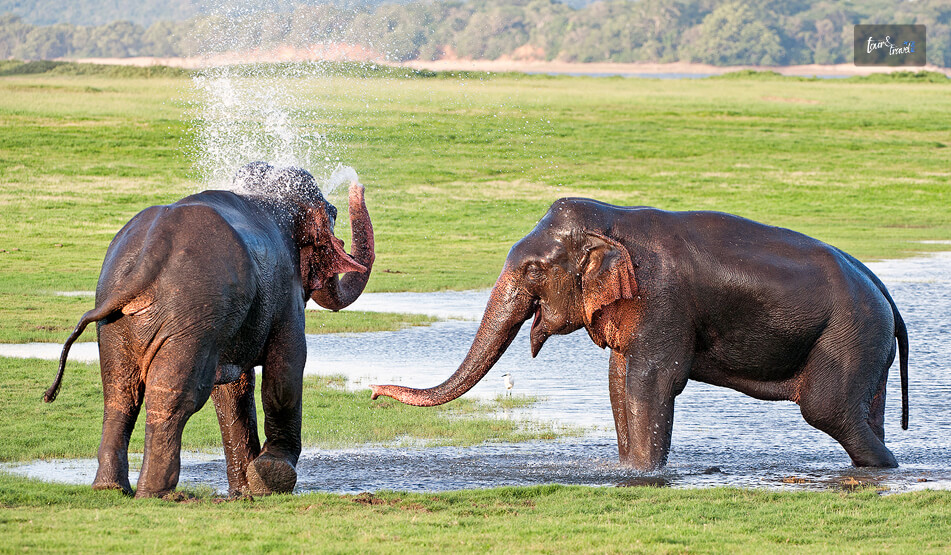
For the first time, I did a safari from a boat, drifting quietly across open water while a herd of elephants waded between islands ahead of us.

There was no engine noise to spook them, no queue of vehicles, just the reservoir, the herd, and the sound of water.

It felt more like a secret that Sri Lanka preserves so dearly, not a national park. 

Gal Oya National Park At A Glance

DetailInformation
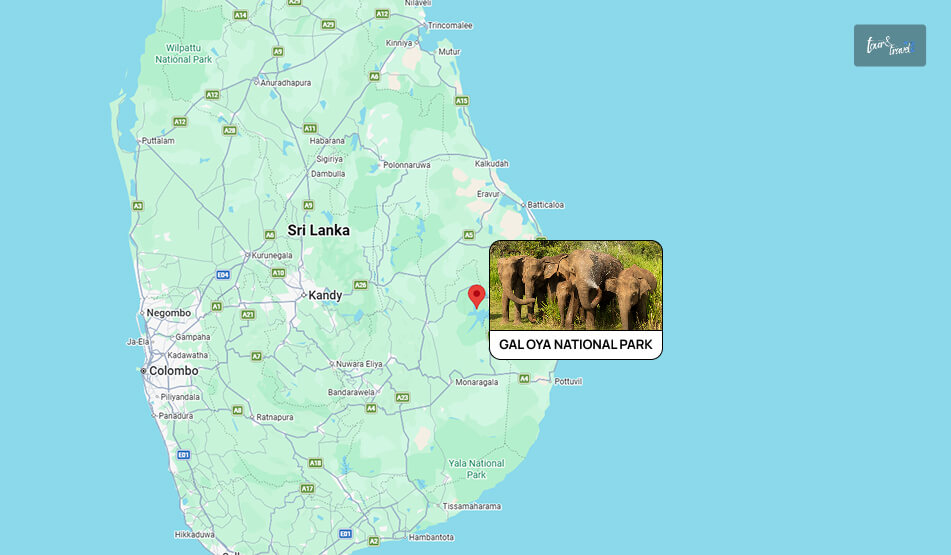
LocationAmpara District, Eastern Province, Sri Lanka
Established1954
AreaApproximately 25,900 Hectares
CentrepieceSenanayake Samudraya, the Largest Reservoir in Sri Lanka
Known forBoat Safaris and Elephants Swimming between Islands
Wildlife32 Recorded Mammal Species, including Elephants, Leopards, and Sloth Bears150+ Bird Species
Best time to visitDry Season, Roughly May to September
Distance from ColomboAround 300 KM,  Roughly 6 Hours by Road

A Reservoir-Built Park With A History Tied To Irrigation

The history of the Gal Oya National Park goes back to 1954. It was built to protect the Senanayake Samudraya.

This newly constructed reservoir, the largest in Sri Lanka, was part of a major post-independence irrigation scheme in the dry zone of Sri Lanka. 

The scale of the reservoir made my boat ride in the park all the more fascinating. It is just open water with forests around. 

So, the jeeps on the dusty tracks are replaced by the boats on the serene water. 

The landscape around the reservoir was more varied than I expected from a dry-zone park.

Forested Hills!

Savannah Grassland!

Also, there were rocky outcrops that locals call turtleback formations. 

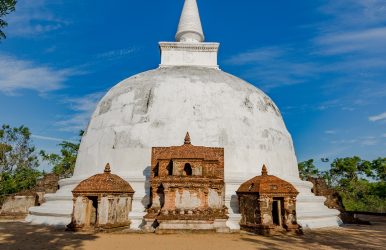
Moreover, low grasslands all sit within the park’s boundaries, alongside historical sites like the Digha Vapi Dagoba and the Henebedde cave.

Wildlife And The Swimming Elephants

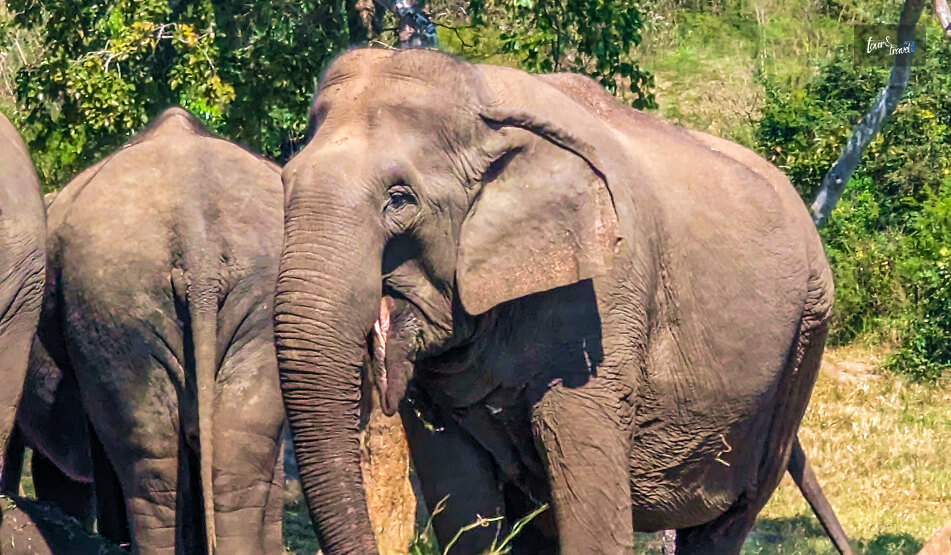
The most fascinating experience in Gal Oya was watching wild elephants swimming between the reservoir’s islands. 

They were moving in search of fresh grazing as water levels dropped in the dry season. 

Beyond elephants, the park has around 32 mammal species, including:

  • Leopards
  • Sloth Bears
  • Grey Langurs
  • Endemic Toque Macaque.

Also, the park, though not as fascinating as Bundala, has more than 150 species of birds. I could spot the following ones.

  • Painted Storks
  • Ospreys
  • Endemics like the red-faced Malkoha and Sri Lanka spurfowl.

I could also spot crocodiles and water monitors along the reservoir’s edges.

How To Reach Gal Oya National Park?

How To Reach Gal Oya National Park

You can take a drive from Colombo to reach Gal Oya National Park via Ampara. The distance is around 300 km, and the journey takes around 6 hours by road. 

However, staying in Ampara Town as the base or finding a lodge close to the park’s boat safari jetty is a more reasonable move. 

Also, Gal Oya National Park is a natural inland detour from the east-coast surf town, Arugam Bay, roughly 2 to 2.5 hours away.

Again, if you are traveling from Kandy, it is 4-5 hours by road via Mahiyangana. So, Gal Oya is a workable stop on a route heading toward the east coast.

Gal Oya Entrance And Boat Safari Costs (2026)

Gal Oya Entrance And Boat Safari Costs

On top of the park entrance fee, the boat safari itself is typically arranged and priced separately, usually through your lodge or a licensed operator.

Remember that access to the reservoir’s boats isn’t managed the same way jeep permits are at other parks.

Also, the boat safari costs around LKR 6000 to LKR 8000. 


Category

Approximate Cost (2026)

Foreign Adult (12+)

USD 12

Foreign Child (6–12 Years)

USD 6

Foreign Children under 6 Years 

Free

SAARC Nationals

USD 10 for AdultsUSD 5 for Children between 6 and 12 YearsFree for Children below 6 Years

Locals 

Adults: LKR 60Children from 6 to 12 Years: LKR 30Children below 6 Years: FreeStudents: LKR 20

Boat Safari

LKR 6000-8000

A One-Day Gal Oya Itinerary

A One-Day Gal Oya Itinerary

A day at Gal Oya has a different rhythm from most Sri Lankan national parks because here the safari is on a boat and not a jeep. 

Here is a structure that works well if you’re based near Ampara or the park’s eastern lodges.

TimeActivity
5:30 – 6:30 AMEarly transfer to the boat jetty on Senanayake Samudraya
6:30 – 9:30 AMMorning boat safari.
It is the best window for elephant sightings near the shoreline. 
9:30 – 10:30 AMReturn to lodge for breakfast.
10:30 AM – 12:30 PMOptional short trek or visit to the Henebedde cave/Digha Vapi Dagoba area.
12:30 – 2:30 PMLunch and rest during the hottest part of the day.
4:00 – 6:30 PMEvening boat safari for a second wildlife window and sunset over the reservoir.

What Are The Practical Tips For Visiting The Gal Oya National Park? 

  • Boats and slots are more limited than jeep availability at bigger parks.
  • Bring a hat, sunscreen, and a light waterproof layer.
  • Pack a zoom lens or good binoculars as elephant sightings are often across open water rather than at close range on a jeep track.
  • Stay two nights if you can, so you get both a morning and an evening boat safari rather than just one.
  • Combine with Arugam Bay or Ampara for a fuller east-coast itinerary.

What Is The Best Time To Visit Gal Oya National Park?

May to September, or the dry season, is the best time to visit Gal Oya National Park. 

In the dry season, the water level of the reservoir drops. So, all the animals, especially the elephants, concentrate near the remaining islands and water. 

Thus, the sight of swimming elephants is more common in this national park than anywhere else in Sri Lanka. 

This season is also ideal for birdwatching in Sri Lanka, as migratory and resident species settle around the shrinking waterline.

Share on Social Media

Sibashree is a travel, culture, and leisure writer who has been writing since the age of 12 and professionally since 2014. With more than a decade of travel writing experience and journeys across India and several parts of the world, she brings a deeply personal and thoughtful perspective to her work. A student of English Literature and Mass Communication, Sibashree has always viewed travel as more than movement — for her, it has been a way of understanding people, cultures, and herself. Her passion for spiritual exploration has also led her to many unusual and meaningful destinations over the years. Outside of writing, Sibashree enjoys watching European cinema, reading about global politics, and reflecting on the stories hidden within everyday places.

Leave a Reply

Your email address will not be published. Required fields are marked *

title-img Related

READ MORE Sri Lanka economy 2026

Sri Lanka Economy 2026 Hits A Different Milestone: The Tourism Sector Is Simultaneously Chasing A “Value Over Volume” 

BY  Sibashree Jul 16, 2026

A Quick ViewAfter the July 2026 reclassification of the World Bank, Sri Lanka has become an upper-middle-income economy. The reclassification has happened as a result of a 5% GDP rebound driven by tourism, industry, and finance, three years after its 2022 debt default.Especially tourism has hit record arrivals in 2025 (2.36 million), though revenue and per-visitor spending still trail 2018 levels.Also, authorities are targeting $4 billion in 2026 tourism revenue through a "value over volume" strategy.However, the recovery narrative remains complicated with IMF debt-risk warnings, inflation, and a Middle East crisis.  A Story of Recovery!  This is what the World Bank has called the upgrade of the Sri Lankan economy in 2026. Overcoming the deep economic crisis in 2022, it is now an upper-middle-income economy.  But what does it mean for the tourism landscape of the island country? After traveling to Sri Lanka many times, I am curious to know whether it indicates rebranding and a paradigm shift. The answer is a thumping YES, and tourism has been a major force behind the economic expansion of 5% (GDP Growth) in Sri Lanka in 2025.  So, here is a deep dive into how Sri Lanka economy 2026 is going to impact the country’s tourism.  What The World Bank Classification Of Sri Lanka Economy 2026 Actually Measures World Bank moved Sri Lanka from lower-middle to upper-middle income on July 1, 2026, based on 2025 GNI per capita data, alongside Jordan, the Philippines, Vietnam, and Micronesia. The upper-middle band runs roughly $4,516–$14,005 GNI per capita, and Sri Lanka crossed the threshold narrowly with a GNI of $4,670 in 2025. So, there are two takeaways from the reclassification.  First of all, "upper-middle income" is a technical designation. It does not describe the household living standards.  Secondly, there has been a lot of overstatement about the reclassification. However, as mentioned, Sri Lanka has just crossed the threshold.  It is not a transformation, and the country could plausibly sit near the boundary for several classification cycles depending on GNI growth, exchange-rate movements, and population changes. Again, the World Bank has used the Atlas method, which smooths out exchange-rate volatility.  In this method, the World Bank has divided economics into four bands. Low-Income Lower-Middle Income Upper-Middle Income High Income This recent update has covered 218 economies and will remain the reference classification until June 30, 2027. So, while it is a significant marker for a country that was rationing fuel, running double-digit inflation, and defaulting on its external debt just four years earlier, the economic story has more layers to it.  Sri Lanka Is Not A First-Time Entrant To This Category  There is a third aspect to talk about when we discuss the reclassification of the Sri Lankan economy.  Sri Lanka has not moved to this level for the first time. It used to enjoy the same status before 2022, after which the crisis knocked the economy back down to lower-middle income.  So, this is like regaining a previously lost ground instead of achieving a brand new milestone.  Also, there are the practical consequences of this upgrade.  It plays a role in determining a country's eligibility for concessional financing and development assistance, meaning Sri Lanka's terms of access to certain low-cost loans may shift as a result of the upgrade. The Recovery Story Behind The Upgrade  The story behind the reclassification of Sri Lanka economy 2026 is different from that of Vietnam or the Philippines.  The World Bank itself clarifies that Vietnam's upgrade reflects a decade of export-led expansion.  On the other hand, the Philippines reflects broad-based growth across nearly every sector. However, the reclassification of the Sri Lankan economy is a resilient narrative following a severe crisis.  The numbers vouch for this claim.  Just three years back, in 2022, the country faced a crisis that almost brought it to the brink of collapse.  However, in 2025, the real GDP expands by 5%. Industrial activities alongside growth in the financial and tourism sectors have propelled this growth.  Also, the crisis in 2022 is worth remembering as it was the first sovereign default of the country in its post-independence history.  It happened due to a foreign exchange collapse that led to fuel and medicine shortages nationwide. The IMF Stepped In The International Monetary Fund (IMF) offered an Extended Fund Facility program in March 2023.  At that time, the country's foreign reserves were $1.9 billion, and the LKR had lost half of its value.  Furthermore, in a recent press release published on 27th May 2026, the IMF has confirmed that it has “...completed the combined Fifth and Sixth Reviews of the Extended Fund Facility for Sri Lanka, providing the country with immediate access to SDR508 million (about US$695 million) to support economic policies and reforms” In the same press release, the IMF has again mentioned that the total program payout now stands at around $2.4 billion.  In addition, in the IMF Country Report No. 26/111, we can see that the fiscal performance of Sri Lanka has improved.  The tax revenue in 2025 reached 15.4, which was a sharp rise from the tax revenue figure of 9.9 in 2023.  In addition, the primary budget surplus exceeded 5% of GDP in 2025, ahead of program targets.  So, overall, it is a faithful macroeconomic progress. However, it does not mean absolute stability or the Sri Lankan economy being completely risk-free.  A Snapshot Of Sri Lanka’s Economy Since 2022 Here is a summary of the key changes in the economy of Sri Lanka from 2022 to 2026.  (Sources: World Bank, IMF, Sri Lanka Tourism Development Authority (SLTDA), World Bank, and Sunday Times). Indicator2022 (Crisis Low)2023202420252026World Bank income classificationLower-middle incomeLower-middle incomeLower-middle incomeLower-middle incomeUpper-middle income (from July 1)Real GDP Growth Deep contraction-2.3% Contraction (Stabilized by mid-year after the 2022 crash)5% Growth5% GrowthModerating with inflation shock mid-yearForeign reserves$1.9 billion$4.4 Billion$6.12 Billion$7 Billion (Estimated, March)$6.8 Billion (End of April)Tourist ArrivalsRecovering1.48 Million2.05 MillionA Record of 2.36 MillionA Target of 3 MillionTourism RevenueDepressed$2.0 Billion$3.17 Billion$3.2 BillionA Government Target of $4 BillionHeadline InflationVery High (Crisis)Returned to Single Digits. Averaged 16.5% annually, but dropped from a 60-70% peak down to 4% by Dec.Deflationary Period5% (Year-End)Spiked to 5.5% by May amid Energy Shock After sharing the financial summary, let’s talk about the tourism performance in 2025-26 and what the future looks like.  The Actual Tourism Scene Of Sri Lanka In 2025-26 The tourism sector of Sri Lanka had a record year in 2025.  However, when analyzing data from various sources, I found out that some structural challenges still remain, and an income reclassification cannot fix them directly.  The Gap Between Tourist Arrival And Revenue The Sri Lanka Tourism Development Authority has confirmed an arrival of 2,364,978 tourists in 2025.  It even broke the record of 2.33 million tourist arrivals in 2018.  However, a Daily FT report published on 12th January 2026 clearly mentions that, revenue-wise, the year-on-year revenue growth in 2025 was just 1.6% despite a boost of 15% in tourist arrivals.  In addition, the tourism revenue in December 2025 went down by 14.8% YoY ($ 308.6) despite a record set in tourist arrivals.  The Tourist Spending Gap  The tourist spending gap depicts the real story.  The same Daily FT report I have earlier referred to has mentioned that the average daily tourist spend fell to about $148 in 2025.  Industry analysis attributes much of this to the rapid growth of budget guesthouses and Airbnb-style listings. Amarasiri, a guesthouse owner and a friend I met during my trip to Sri Lanka, shared his opinion on this.  “Most of these offer a pricing of under $50 a night, pulling the market average down against higher-end hotels charging $125–150.”  In addition, the overall contribution of tourism to the GDP has also shrunk. It was 5% in 2018, and as of 2025, it stands at 3%.  Does The Momentum Continue In 2026?  The tourism industry of Sri Lanka had a great start in 2026. By the first quarter, the country already had over 740,000 visitors.  February was the month when the numbers peaked. As a result, the tourism authorities had set a target of 3 million arrivals and $4 billion in tourism revenue for 2026.  Furthermore, there was an explicit strategic shift toward high-value visitors rather than sheer volume.  To support that shift, the Tourism Ministry again launched an eight-month global marketing campaign in April 2026, backed by roughly $6.4 million and targeting 12 to 15 source markets. These markets included India, the UK, Germany, China, and the Middle East. However, nobody anticipated the geopolitical shock in the Middle East. It caused a fall in tourist arrivals of around 20% in March on a YoY basis.  Also, with current day-to-day proceedings, the numbers do not seem to go up before September 2026.  The same conflict pushed up fuel costs sharply, and rupee-denominated Brent crude prices rose by more than half in about ten weeks in early 2026. Again, it disrupted flight routing, given that the Middle East accounts for roughly a third of flights into Sri Lanka. Does The Income Reclassification Actually Move The Needle For Tourism? Here is an honest assessment. The reclassification of Sri Lanka economy 2026 by the World Bank is not a policy lever for a direct transformation in the tourism sector.  However, it is an intersection of the tourism and financial sectors in many concrete ways.  1. Investor And Lender Perception The reclassification as an upper-middle-income country can give positive signals in how international investors, hotel groups, and lenders assess country risk. Thus, it will improve the path for hospitality infrastructure investment. However, the reclassification does not override the more immediate signals investors watch. These signals are: Currency Stability Debt Sustainability Ratings The Trajectory of IMF Programs 2. Currency And Pricing Dynamics  A stronger and more stable rupee indicates how affordable Sri Lanka feels to foreign visitors. Furthermore, currency stability was one of the explicit achievements cited in IMF program reviews. Though 2026's energy-driven inflation spike and the accompanying rate hike show that stability is not guaranteed and can reverse quickly under external shocks. 3. Financing Terms, Not Tourist Experience The most practical effect of the classification is on Sri Lanka's access to concessional financing. The reality is that upper-middle-income countries generally face different (often less favorable) borrowing terms than lower-middle-income ones. Now, this is a huge factor in determining the ability of the government to fund tourism infrastructure, including airports, roads, and utilities in emerging destinations.  However, it is an indirect, medium-term channel rather than something a visitor booking a trip this year would notice. 4. Brand Narrative, Not Policy Change  The most immediate effect of this reclassification is reputation.  Economic recovery and upper-middle-income! Terms like this make for a more compelling destination narrative than "post-crisis" or "developing economy in distress." The tourism authority of Sri Lanka is already leaning into a comeback narrative in its 2026 marketing push. Now, the World Bank news gives that campaign an additional, credible data point to cite. What the classification does not do is directly address the structural issue tourism officials themselves have flagged. It is getting visitors to spend more per day.  That's a product mix and marketing problem. It encourages MICE travel, weddings, wellness tourism, and higher-end stays that Sri Lanka is already tackling on its own terms, income classification or not. 5. Unlocking High-Value Tourism Niches The Wellness Boom: Wealthier economies pull health-conscious travelers looking for upscale, authentic Ayurvedic and holistic medical retreats. MICE Travel Magnet: Corporate infrastructure upgrades position Colombo as a highly competitive regional hub for Meetings, Incentives, Conferences, and Exhibitions (MICE). Niche Eco-Adventures: Enhanced funding speeds up the preservation of wildlife sanctuaries and marine parks, drawing premium sustainable-travel consumers. 6. Strategic Advantages Over Competitors The economic reclassification gives Sri Lanka a strategic advantage over its competitors.  The table below explains the key areas.  Metric / AspectSri LankaIndiaBali/IndonesiaWorld Bank StatusUpper-Middle IncomeLower-Middle IncomeUpper-Middle IncomeTourism FocusHigh-end wellness and boutiqueDiverse mass and culturalHigh-volume mixed leisureFDI AppealHigh (Fresh post-crisis rebound)High (Scale-driven infrastructure)Mature / Nearing saturationPer Capita FootprintLow volume, high expenditureHigh-volume varianceSevere over-tourism pressures 7. Supply-Side Infrastructure And Service Upgrades Institutional stability triggers major foreign direct investments.  Mega ventures such as the $850 million City of Dreams integrated resort in Colombo are one of the most prominent examples of it.  Furthermore, with a rising per capita income, there is an empowerment of businesses to invest heavily in formal hospitality training. As a result, the workforce skill gaps are eliminated.  Moreover, a greater fiscal boom allows the country to fund critical tourist amenities. These include smoother highway connectivity to expanding green and renewable energy grids for eco-tourism. For example, the Global Environment Facility (GEF) and IUCN are working together to protect the central highlands of Sri Lanka.  They are working to protect the biodiversity and improve the livelihood of the people in this area.  GEF is supporting this initiative with funding of 3.5 million USD.  However, with these initiatives already ongoing, you may question what the reclassification can actually bring to the table.  Why Does The Recovery Remain Fragile? The story of revival for the economy of Sri Lanka focuses on human resilience. Now, if you think I am not giving the reclassification its due credit, I have my concern areas to justify it.  High Debt And Sustainability Risks  The IMF's own debt sustainability framework rates Sri Lanka's overall risk as high. Furthermore, Fund staff have acknowledged that even after a successful program and a near-complete debt restructuring, sustainability risks are expected to persist for years. Also, external debt can become more demanding as early as restructured bilateral and commercial debt matures alongside IMF repayments. In addition, the current IMF Program will expire in March 2027.  Thus, despite the reclassification, there is a narrow window to build reserves and sustain the reforms already made. Dependency On Official Sector Support  The return of Sri Lanka to the international capital markets is yet to happen. Furthermore, the country has not built reserves to the program's target threshold. These show how the country is dependent on official-sector support rather than standing fully on its own.  Furthermore, late 2025 and the year 2026 so far have brought two external shocks. 1. Cyclone Ditwah Struck in Late 2025 It has called for an emergency IMF financing and a supplementary government budget for relief and reconstruction. 2. Middle East conflict The Middle East conflict has caused a hike in fuel prices, problematic remittances, and disrupted flight connectivity through the first half of 2026.  Trade Policy Adding Another Layer Of Uncertainty  Sri Lankan economy also faces uncertainty due to its trade policy,  Sri Lanka is currently facing an effective US tariff rate of around 20% under Section 122 measures. Furthermore, its preferential GSP+ access to the EU market is set to expire in 2026, with authorities planning to reapply under a revised framework.  None of this directly targets tourism, but it affects the broader currency and investment environment that shapes how affordable and accessible the country feels to international travelers. So, What Does The Reclassification Actually Mean For Travelers? The Practical Takeaways  For us, the global travelers and global travel writers, the practical takeaways are more modest and specific than the headlines suggest.  Trend / Strategy ComponentKey Insights and DetailsStrategic Focus / ImpactPricing and Market PositionPrices will drift upward gradually, narrowing the gap for mid-range and upmarket properties."Value over volume" strategy, as budget travelers will see higher costs due to post-2026 inflation.Target Source MarketsCourtship of new markets (Poland, Eastern Europe) alongside traditional ones (India, UK, Germany).Diversifying and expanding future arrivals growth.Growth SegmentsHigh focus on MICE (Meetings, Incentives, Conferences, Exhibitions), weddings, and wellness travel.Driving higher per-visitor spend across the sector.Risk FactorsVulnerability to external events like Cyclone Ditwah and Middle East conflicts.Tourism numbers swing sharply based on geopolitical and weather risks, not just domestic policy. The actual challenge of the tourism sector remains in converting the record visitor numbers into a kind of high-value, high-spend visits that generate the expected revenue growth.  The income upgrade may support that ambition indirectly, through investor confidence and destination narrative. However, the short-term fortunes of the sector will likely be shaped far more by currency stability, fuel prices, and regional geopolitics. Also, the outcome of Sri Lanka's IMF program through its March 2027 conclusion will be a more important factor than the income bracket in which the World Bank places the country.

READ MORE things to do in sapporo

What Are The Unique Things To Do In Sapporo? Exploring The Capital Of Hokkaido  

BY  Sibashree Mar 31, 2026

If you want to explore offbeat Japan, you can surely visit Sapporo, the capital of Hokkaido Island.   Hokkaido Island,anyway, teaches the art of slow living and slow traveling.   The scenic beauty here is amazing, the winters are snowy, and the food and beer here are amazing.   Also, it is an amazing year-round destination, and the things to do in Sapporo are as diverse as they can be.   And here are the details. However, before that, let us talk about the best time to visit Sapporo.  What Is The Best Time To Visit Sapporo?   As I have mentioned, you can visit Sapporo throughout the year. However, December to February is the best time to plan a visit.   Especially, February is the month of the winter festival in Sapporo.   Moreover, April to May is the ideal time if you want to experience the Cherry Bloosm Season from the Hokkaido Shrine and Maruyama Park.   Also, the warm and humid summer months are ideal for enjoying the “beer garden events.”   In addition, from September to November, or the autumn months, are great for seeing the fall foliage, hiking, and attending the food festivals.   What Are The Most Unique Things To Do In Sapporo?   More than ticking the bucket list, in Sapporo, you need to soak in the laid-back vibe.   It is way less crowded than Osaka and Tokyo, and despite that, it has an important role to play in the tourism industry of the country.   That is why many people travel from Tokyo to Hokkaido.   1. Visiting The Parks And Gardens  As a nature lover since forever and daily walking the streets and parks of Sapporo, I have learned that Sapporo has lots of green spaces where you can enjoy nature.  The parks of Sapporo are the city's heart.   Odori Park is my usual starting point in the morning when I first walk.   This park is located in the center of downtown and is an ideal and convenient place to take a refreshing morning walk before starting your day.   On days when I want to be more active, I cycle, jog, or photograph all the amazing trees and flowers at Moerenuma Park. It is absolutely stunning how vast the area is!  You will probably find me at Maruyama Park, located next to Hokkaido Shrine, during the spring and fall months.   It’s an incredible place to see the cherry blossoms in full bloom, and it’s usually very pretty to see the fall leaves change color from green to red.   During the wintertime, it becomes a wonderful family-oriented ski resort that I simply love!  For a bit of a deeper dive, I love visiting the Hokkaido University Botanical Gardens. It’s a peaceful retreat where I can admire rare plants and learn about the indigenous Ainu culture.  2. Exploring The Galleries And Museums  Upon arriving in Sapporo, I did not take long to figure out that this is a city that has beautifully integrated its history with modernity, which is a masterclass.   I spent the first day of my trip exploring the history of the island of Hokkaido by visiting the Hokkaido Museum.  Then, I went to the Historical Village, which showed how the early infrastructure and primitive architecture were examples of the area's strength.   The Hokkaido University Museum is also a majestic place, with its enormous collection of extensive academic research and archaeological artifacts through the ages.  Of course, I couldn't resist a detour to the Sapporo Beer Museum. Learning the history of Japan’s iconic brew made that final tasting session feel well-earned.  As a fan of art, I was spoiled for choice with several locations from which I could pick my favorites.   The JR Tower Art Gallery has an impressive array of artwork, and at the Sapporo Art Park, there are some unbelievably large sculptures sitting throughout the grounds.   I was amazed at how much creativity and energy could be found in the city of Sapporo.   While looking at all the galleries, you can also plan a trip to Uji, located approximately 500 km south.   A visit to Japan would not be complete without enjoying a cup of matcha at this city's matcha capital.  3. Visiting The Shrines And Temples  Kyoto may have the most amazing shrines, but Sapporo also has some beautiful ones.   The Hookaido Shrine is the most popular among them, and you will find it just next to the Maruyama Park.   Furthermore, the Sapporo Suitengu Shrine is another place where families and pregnant women visit for a healthy baby.  Moreover, if you are a seeker and want some spiritual guidance, Joganji Temple is your place. It has the most meditative environment.  4.  Exploring The Historical Landmarks Of Sapporo  Sapporo has many historical places to visit, and you can start with the “Former Hokkaido Government Office.”   It has beautiful gardens, and with its insightful exhibitions, it offers a deep understanding of the local history.   The next place you can visit is the Sapporo TV Tower. It is an important landmark for broadcasting and tourism.   Furthermore, from the TV Tower, you can enjoy an amazing view of Odori Park and its surroundings.   The Clock Tower is another important landmark in Sapporo. It has been standing there since 1878.   However, for me, the most iconic historical landmark in the city was the Hoheikan Guest House.   This 1880 guest house in Nakajima Park had many important guests, including the royal family and important foreign guests.   In addition, for a culturally immersive experience, you can explore the Hokkaido historical village. It is like an open-air museum with distinct architecture, buildings, and Japanese townscapes.  5.  Souvenir Shopping   It’s a sin to visit Sapporo and not do some serious shopping.   Furthermore, souvenir shopping is one of the best things to do in Sapporo because of the diversity of stuff you can procure.   Firstly, the sweets here are amazing. You must try Marusei butter sandwiches and Royce chocolates.   Also, you will find skincare products made of horse oil.   In addition, you will love local crafts such as Ainu crafts and Otaru glassware.   Moreover, the best places for shopping in Sapporo are “Ario Sapporo Mall,” “Apia Mall,” “Sapporo Stellar Place Mall,” and “Tanukikoji Shopping Street.” 

READ MORE Nilaveli Beach

Nilaveli Beach: Four Kilometers Of Sand And Not Much Else

BY  Sibashree Jul 27, 2026

There is a particular kind of quiet that settles over a beach town when you cannot think of a proper definition for it.  Nilaveli Beach has it. Still, it is one of the 13 beaches in Sri Lanka that Lonely Planet has highlighted as the best coastal escapes in January 2026.  This recognition once again solidifies the position of Sri Lanka as an international tropical destination.  Do you want to know more about Nilaveli Beach? Here, I will discuss my first experience in this coastal town, how to reach there, and how I spent my time here.  My First Impression Of Nilaveli Beach  I arrived at Nilaveli Beach in the late afternoon. The beach looked magical with the golden light.  Also, instead of traffic horns or music, the rhythmic slap of fishermen pulling in nets a few hundred meters down the shore was the first sound to reach my ears.  This sound had set the right tone for all the experiences that followed at Nilaveli Beach.  How I Reached Nilaveli Beach? Nilaveli is on the northeastern coast of Sri Lanka. It is also 16 kilometers north of Trincomalee.  Furthermore, the distance between Nilaveli and Colombo is around 264 kilometers. So, it is a journey of approximately 6 hours by road.  However, you can also fly to the small domestic airport of Trincomalee. Tuk-tuks and local buses run the short hop between Trincomalee town and Nilaveli itself without much fuss. Nevertheless, I made the trip overland after finishing up in Kalpitiya on the northwest coast.  I cut across through the interior, and I would recommend that route if you want to enjoy a longer east-coast itinerary.  Taking the route also puts you within easy striking distance of Mannar if you are willing to backtrack a little.  Nilaveli Beach: It Has An Older RĂ©sumĂ© Than You Can Guess Nilaveli is different from many other beaches on the east coast as it has been in the tourism business since the 1970s.  Then, it had a couple of beachfront hotels, and those were quite popular among the tourists making their way to this part of the country.  However, that tourism scene got interrupted by the rampage of the Civil War for two decades.  The Civil War shaped so much of what I saw further north in Kilinochchi and Mullaitivu. However, it emptied the coastline here.  After the war ended in 2009, Nilaveli Beach has been very cautious in its attempt to return to form.  It did not have the resort boom like Pasikudah further south. However, that has been a blessing in disguise as fewer beach clubs have ensured longer silences and more space.  What Is So Magical About Nilaveli?  The Nilaveli Beach itself is the main attraction with pale and soft sand running for kilometers.  Furthermore, the gentle shallow gradient made it safe for swimming, and it offered enough space. So, even after a decent crowd strength, it did not feel crowded.  I walked a good stretch of it one morning before the heat set in and passed maybe a dozen people the entire way. You can just sit offshore and unwind. However, I chose to explore more.  What I Did At Nilaveli? I took a boat ride to the Pigeon Island National Park, one of the few marine national parks in the country.  It has an extensive coral reef, the home to over 100 species of corals, 300 species of fish, turtles, and blacktip reef sharks.   Snorkeling At Nilaveli Beach  I booked a morning snorkeling trip and spent a couple of hours drifting over coral gardens, watching for the blacktip reef sharks the island is known for. They were small and shy! I also spotted some green turtles.  Here, let me share some important details and how we can be responsible in our behavior here.  The reef is not as pristine as it used to be decades ago. After the 2009 tsunami impact and to minimize the traffic impact, the government has capped daily numbers and started rehabilitation work. So, if you have snorkeling plans, especially in the peak seasons from May to October, you need to book your slot in advance. A Trip To Trincomalee, Just Down The Road  I allocated one day for myself away from the sand to explore Trincomalee proper.  Fort Frederick was built by the Portuguese and later expanded by the Dutch and British. It sits on a headland with genuinely dramatic views out over the harbor. The harbor is further one of the finest in the world. Inside the fort grounds, the Koneshwaram Temple was the highlight for me. Furthermore, you can visit the Kanniya hot springs and the Uppuveli Beach too. Nilaveli Beach wins with its honesty, and the reef here is really vibrant.  Pasikudah is Sri Lanka's east coast dressed up for a resort brochure. Nilaveli is a humble coastal hub with its history and marine diversity.