

What Is Badulla Famous For? What Are The Best Places To Visit In Badulla In 2026? 

It’s great that Badulla has slowly and steadily bounced back after the rampage of Cyclone Ditwah in December 2025.

With proactive measures, the Badulla–Haputale railway line was restored in just 18 days, and it’s great that in 2026, with its iconic landmarks such as the Demodara Railway Loop remaining a serene hill-country town. 

Moreover, this serene stop on the iconic Kandy-to-Ella railway route has ancient temples, cascading waterfalls, and misty tea plantations. 

So, if you want to enjoy a place with a cooler highland climate such as Nuwara Eliya, Badulla will be the go-to place. 

In this article, I will discuss why Badulla, the capital of Sri Lanka’s Uva Province, is famous. The places to visit and more. 

However, let’s begin with its location. 

Where Is Badulla, Sri Lanka?

Badulla is in the southeastern part of the central hill country of Sri Lanka. Furthermore, it is at an elevation of 680 meters. 

So, it enjoys a misty, cool climate. In addition, the surrounding tea gardens and the Badulu Oya River make it a sought-after hill station. 

In addition, the Namunukula mountain range overlooks this hill country town as the supervising guardian. 

Moreover, it is located at a distance of around 230 km east of Colombo.

Why Is Badulla Famous?

Why Is Badulla Famous

Badulla, in the central highlands of Sri Lanka, is cherished for its unique colonial engineering. 

At the same time, it is a place where nature and history meet. However, the most significant aspect of this highland is its spiritual heritage. 

As a result, Badulla is an iconic ecotourism destination, and it is also ideal for someone who is fascinated by architecture and history. 

Scenic Wonders And Ecotourism

Cascading waterfalls and a dramatic mountain terrain dominate the landscape of Badulla. 

The Dunhinda Falls, with its height of 64 meters, is the iconic landmark that draws visitors from across the globe. 

Again, the majestic Namunukula mountain range surrounds the central highland. 

This mountain range, further, is a sanctuary for avid hikers, campers, and nature enthusiasts seeking panoramic vistas of the Uva Province.

Moreover, thanks to the geographical features, Badulla has a microclimate ideal for growing some of the world’s finest high-grown Ceylon teas. 

So, Badulla has endless green estates terracing the valley walls. 

Historic Architecture And Heritage Sites

Badulla is not just an ecotourism hotspot. It is way beyond a living museum depicting the diverse history of Sri Lanka. 

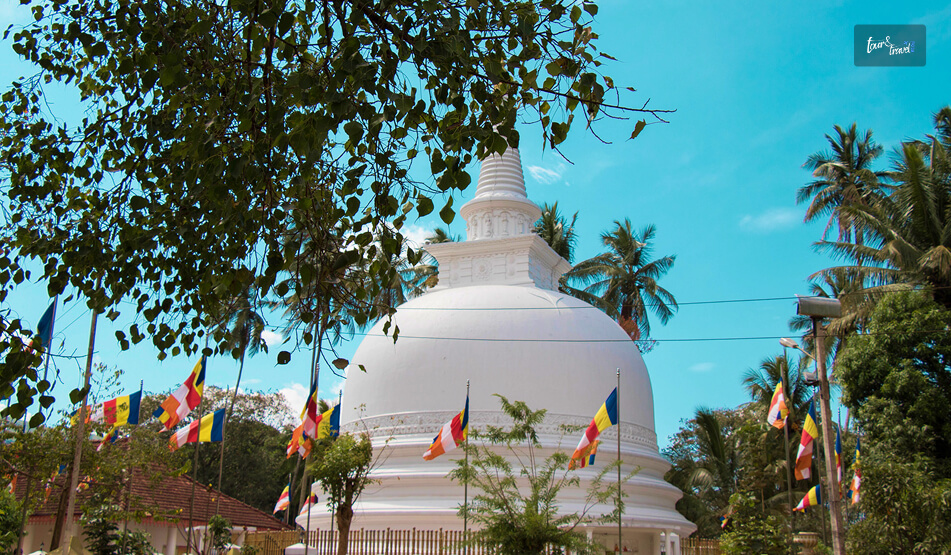
The Muthiyangana Raja Maha Vihara is at the heart of Badulla. It is an ancient temple complex, and it is sanctified by a visit from Gautama Buddha. 

So, it is a significant pilgrimage site for the Buddhists. 

Another significant architectural marvel on the site is the Bogoda Wooden Bridge. This 13th-century bridge has no metal nails. 

Again, the Demodara Nine Arch Bridge is a classic example of colonial architecture. 

This iconic stone railway viaduct stands as a testament to early 20th-century British engineering and remains a globally recognized symbol of Sri Lankan travel.

What Are The Places To Visit In Badulla?

Badulla is versatile, as I have already mentioned. 

So, I have divided the places to visit in Badulla into three main sections: the natural attractions, the spiritual and religious places, and the architectural attractions. 

Natural Attractions To Explore In Badulla 

It goes without saying that Badulla, as an iconic ecotourism hotspot, will have many natural attractions. 

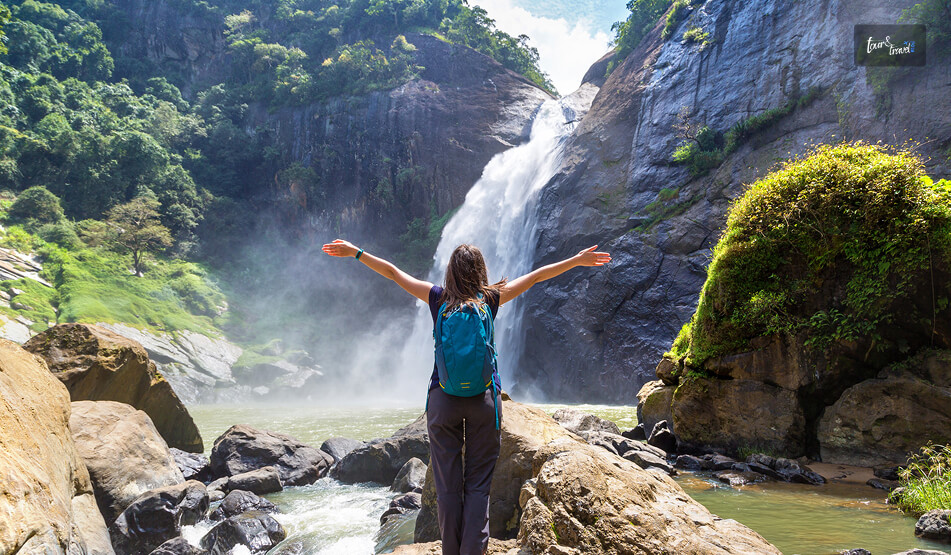
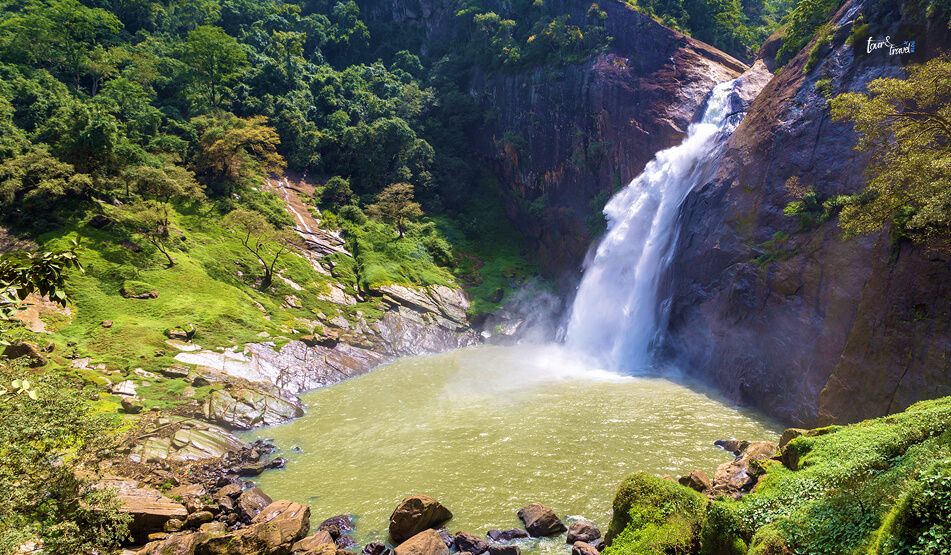
1. Dunhinda Falls

Dunhinda Falls

The Bride’s Veil Falls, or the Dunhinda Falls, is very close to Badulla Town. I could hear the roaring sound of the waterfall from a distance. 

As I followed the roar and reached the waterfall, the journey culminated in an amazing view of plunging water. 

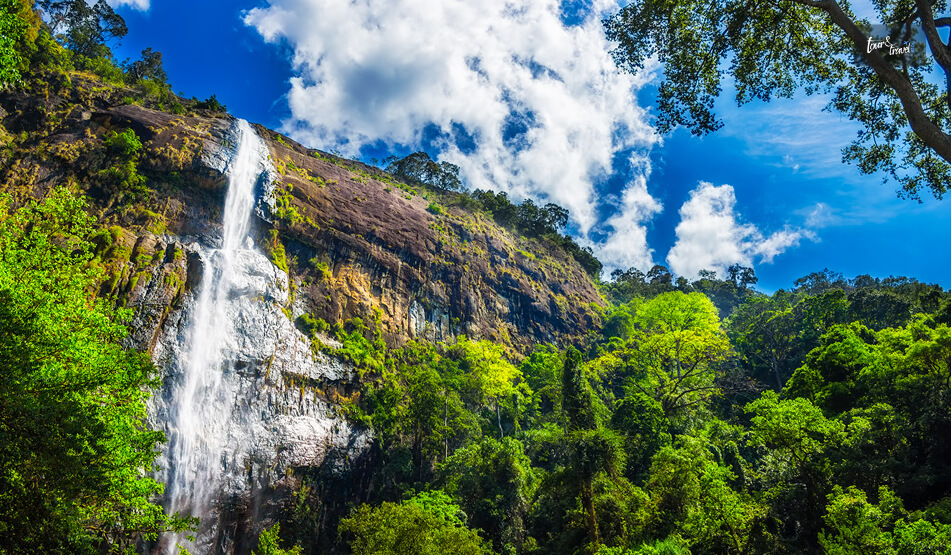
2. Diyaluma Falls

Diyaluma Falls

The second-highest waterfall in Sri Lanka, the Diyaluma Falls, stands at the end of an adventurous hike from Badulla. 

It is around 60 km away from Badulla, and the travel time is around 2 hours. 

Furthermore, the Diyaluma Falls are so beautiful that after reaching the base, I opted for an adventurous hike to the top. 

The views were incredible, and I even took a dip in the refreshing pool formed below. 

However, always listen to the local guides and check the weather updates before visiting the Diyaluma Falls. 

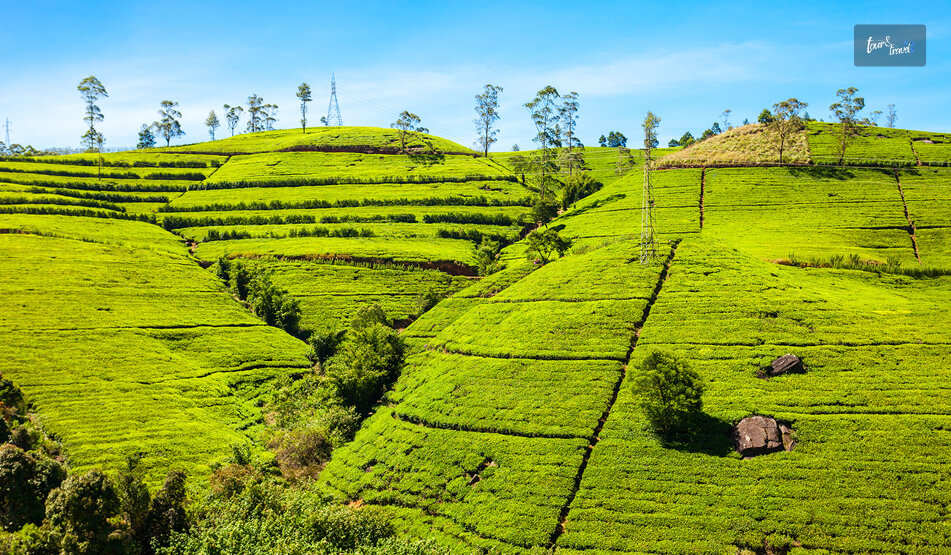
3. Tea Plantations And Viewpoints 

Tea Plantations And Viewpoints 

Badulla looks like a carpet of green with the tea plantations on the hillsides. These tea gardens do not just offer lush greenery. 

These are also great locations for learning how tea is processed and how the transformation from leaves to cup happens. 

Religious And Spiritual Places To Visit

The Muthiyangana Raja Maha Vihara and Dowa Rock Temple are two important religious landmarks in Badulla. 

Muthiyangana Raja Maha Vihara

Muthiyangana Raja Maha Vihara

You can find the mention of the Muthiyangana Raja Maha Vihara in the Mahavamsa chronicle itself. 

King Indaka, a chieftain of the Deva tribe, built this Vihara in the 5th century. However, King Devanampiyatissa transformed this structure into a formal temple complex. 

This temple is so significant as Lord Buddha visited it. 

Furthermore, the Muthiyangana Raja Maha Vihara has impressive architecture. 

The stupas and the stone structures here are the quintessence of important Buddhist sites in Sri Lanka, such as the Dambulla Royal Cave Temple and the Gal Vihara in Polonnaruwa

Dowa Rock Temple

The power of unfinished art and what it signifies! Everything is for you to interpret, and there are thousands of possibilities about why the art could not be completed. 

This is what I felt after seeing the Dowa Rock Temple. 

Carved into a giant rock face, this temple has an unfinished and giant statue of Lord Buddha. 

The scale and the intricate carvings of the temple were amazing, and they showed the mastery of the Sri Lankan artisans in the ancient age. 

You will even get a glimpse of the religious and artistic heritage of the island country. 

Architectural Marvels In Badulla 

Walking on the Bogoda Wooden Bridge is like connecting to ancient times. The air there felt very different, and it immediately transported me 400 years back. 

Furthermore, the tiled roof of the bridge is a telltale of the Sri Lankan engineering excellence in ancient times. 

Moreover, when you are in Badulla, don’t miss the spicy vegetable and meat curries and rice.

Share on Social Media

Sibashree is a travel, culture, and leisure writer who has been writing since the age of 12 and professionally since 2014. With more than a decade of travel writing experience and journeys across India and several parts of the world, she brings a deeply personal and thoughtful perspective to her work. A student of English Literature and Mass Communication, Sibashree has always viewed travel as more than movement — for her, it has been a way of understanding people, cultures, and herself. Her passion for spiritual exploration has also led her to many unusual and meaningful destinations over the years. Outside of writing, Sibashree enjoys watching European cinema, reading about global politics, and reflecting on the stories hidden within everyday places.

Leave a Reply

Your email address will not be published. Required fields are marked *

title-img Related

READ MORE chilaw

How Chilaw, Sri Lanka, Turned A Quick Stop Into Two Extra Days: Know The Fishing Town

BY  Sibashree Aug 21, 2026

Chilaw drew my attention with the smell of drying fish at the harbor. As I reached the fishing town, I heard a low chant drifting out of a Shiva temple.  Chilaw, which almost a year back had a Korea FAO Sustainable and Innovative Fisheries and Aquaculture Programme (KOFAF) to boost the shrimp aquaculture of Sri Lanka, is a fishing town first.  Then, it is a pilgrimage site and almost as an afterthought, a beach destination.  Overall, it felt so unpolished and real in a way that many famous coastal stops in Sri Lanka have lost for a long time. How To Reach Chilaw, Sri Lanka And Get Around?  Chilaw is around 52.9 km away from the Bandaranaike International Airport. By road, the journey is around 1.5 hours to 2 hours.  The town's own railway station is about 3 kilometres from the centre, with regular services connecting to Colombo along the coastal line. ModeEstimated Time From ColomboApproximate Cost (LKR)NotesCar / Taxi2 Hours8000-15000(Based on Vehicle Type)Most FlexibleEasiest Way to Combine Chilaw with Anawilundawa and Marawila in One LoopUber2 HoursUber Go Intercity: 12016Uber Sedan: Intercity: 12629UberXL Intercity: ₹16062(Source: Uber.com) Best for First-timers.Safer for Solo, Women Travelers. Train (Colombo Fort–Puttalam line)Around 2.5 to 3 HoursThird Class Tickets: 180Second Class Tickets: 400First Class Tickets: 750(Source: Sri Lankan Railways.)The Station is roughly 3 km from the Town CentreA Tuk-Tuk Covers the Last StretchBus2–2.5 Hours150-300Regular Services along the Coastal RouteIt is the Cheapest Option Once you reach Chilaw, you can move around in tuk-tuks. From the town center, you can take a short ride to the fish market and near St. Mary's Church. You can even ferry to Anawilundawa and back after a half-day trip.  However, here, I had to negotiate a lot with the drivers. You must also fix the price upfront so that they do not end up adding more to the price during the trip.  What Are The Top Attractions In Chilaw?  Chilaw does not offer a resort trip like Bentota or Hikkaduwa. It mostly has simple guesthouses as accommodations.  Also, if you want to focus on the quieter beach experience, you can stay in the larger properties in Marawila.  Still, Chilaw is not like a typical touristy or bucket-list destination, and here are the places I visited during my stay.  1. Munneswaram Temple Like the Pancha Bhoota Sthals in India, Sri Lanka also has its five ancient Ishwarams dedicated to Lord Shiva.  Munneswaram is one of them.  The temple is a complex of five temples, dedicated to Shiva, Ganesha, Ayyanayake, Kali, and, notably, a shrine to the Buddha as well.  This temple once again reminded me that the religious traditions of Sri Lanka have always been inclusive. Also, they have often overlapped with each other, rather than staying separate.  Why Is The Munneswaram Temple So Special?  The temple has a mythological association with the Ramayana. It is said that Lord Ramachandra worshipped Lord Shiva here for penance after killing Ravana, who was an ardent Shiva devotee and a Brahman.  Along with the mythological connection, the temple also stands out with its ambiance. As I entered the temple, the incense smoke rose over the Dravidian-style gopuram.  Also, there was a practiced calm even if the priests and devotees moved between the shrines.  However, the temple bustles with energy and human presence during the annual Munneswaram festival.  It is usually held in August, and the entire town seems to reorganise itself around the procession. 2. Chilaw Lagoon And The Sand Spits Chilaw picks its own rhythm from the lagoon. It is fringed by sixteen species of mangrove and reaches close to four metres at its deepest point before opening into the Indian Ocean. I took a late-afternoon boat out with a local fisherman who moonlights as a guide.  I spotted egrets lifting off the mangrove roots, and the occasional splash of a mullet. Also, with absolutely no other tourists in sight, it was the most peaceful 1 hour in Chilaw.  The lagoon isn't just scenic. It is a working fishery that supports well over a thousand families in the area, and you feel that livelihood everywhere. I saw the nets drying along the banks to the small jetties where boats are unloaded each morning.  Nearby, the Chilaw sand spits offer a quieter, more unusual landscape for birdwatchers, with shifting sandbanks that host wading birds you won't easily spot elsewhere on this coast. Regarding the charges, you have to negotiate directly with a fisherman at the jetty rather than book through a formal operator. My boat ride cost me LKR 500.   So, this is still very much an informal, word-of-mouth arrangement, and that is why there will be a lot of negotiations regarding the trip duration and the charges.  3. Anawilundawa Wetland Sanctuary If you are staying in Chilaw, do not skip a half-day trip to Anawilundawa, located between Chilaw and Puttalam.  This 1400 hectares area is a Ramsar Site, and it has three distinct ecosystems. You will find a  mangrove swamp, coastal saltwater belt, and freshwater lakes. Also, the biodiversity numbers are amazing. 150 Bord Species 20 Mammal Species 70 Types of Butterflies Moreover, half of the freshwater fish species in Sri Lanka call Anawilundawa Wetland Sanctuary their home.  I made a mistake by not taking a guide with me for the wetland visit.  A local birder pointed out species from the boat that I would have completely missed on my own, including a painted stork colony that was, frankly, worth the whole detour. If birdwatching is even a mild interest, hire a guide at the entrance.  It is inexpensive and transforms the visit. The entry is free, and the guide cost will be around LKR 1500 for two hours. Also, the sanctuary remains open from 6 AM to 6 PM.  4. Faith Along The Coast: Churches And Kovils Home to the Munneswaram Temple, Chilaw also harbors a Catholic heritage.  The St. Mary's Church in the town centre is a prominent example, and its architecture and quiet courtyard make it worth a stop even outside service hours.  A short drive away in Thalawila, St. Anne's Church draws thousands of pilgrims each July for its annual feast, one of the larger Catholic gatherings on this stretch of coast, complete with processions and all-night vigils. What struck me most, wandering between kovils, churches, and small unnamed shrines tucked down side streets, was how unremarkable this coexistence felt to the people living it. Nobody made a point of it.  It was simply how the town worked. 5. Beaches, Toddy Taverns, And The Fish Market Chilaw beaches are not the typical postcard frames you will find on the southern coast.  Silver Beach, the most prominent among them, is right in town. I loved an early evening walk there.  Also, nearby Marawila offers a longer, quieter stretch of sand if you are willing to drive twenty minutes north. For a real sense of the town, though, skip the beach and get to the Chilaw fish market before 7 AM.  It was loud, slippery underfoot, and completely unstaged. Furthermore, when the boats came in, auctioneers shouted prices, and vendors were already frying fresh catch on the spot.  I ended up having a breakfast of string hoppers and coconut sambol from a stall two feet from the water, and it remains one of the best meals of the trip. Later, I visited one small family-run toddy tavern. It served fresh fermented palm sap alongside coconut-based snacks.  It was strong, and I just took a few sips. Though it is a slice of daily Chilaw life, it is not for someone who is not used to it.  What Is The Best Time To Visit Chilaw?  Being on the west coast, Chilaw follows a different rhythm than the south or east. SeasonMonthsConditionsDry SeasonDecember–MarchSunny and low-humidity weather conditions are the best for lagoon trips and wetland walks.ShoulderApril, NovemberTransitional months offer fewer crowds, and the weather can be mixed.Southwest MonsoonMay–OctoberHeavier rain makes birdwatching and boating harder to plan around.Munneswaram FestivalUsually AugustThe town reorganises around the temple procession.So, it is worth timing a visit around. Combining Chilaw With Nearby Stops Route SegmentApprox. Driving TimeBest Known ForColombo to Chilaw2 hoursMunneswaram Temple, fish marketChilaw to Anawilundawa30 minutesWetland sanctuary, birdwatchingChilaw to Marawila20 minutesQuieter beach stretchChilaw to Puttalam45 minutesPuttalam Lagoon, salt pansPuttalam to Wilpattu National Park30–45 minutesLeopard sightings, natural "villu" lakes This makes Chilaw a natural half-day or overnight anchor for a longer west-coast loop rather than a single-purpose day trip. Why Chilaw Is Worth It Chilaw is not a destination that announces itself.  There is no single landmark that makes it onto every Sri Lanka itinerary, no beach that dominates Instagram feeds.  What it offers instead is texture. It has a working fish market, a thousand-year-old temple complex, mangrove lagoons, and a religious diversity that's lived rather than performed.  If you are the kind of traveller who would rather stumble into a real town than tick off a famous one, Chilaw is worth far more than the quick pass-through I originally planned.
READ MORE What to do in Shinjuku

What To Do In Shinjuku As A First Time Traveler? 10+ Attractions You Cannot Miss In 2026 

BY  Sibashree Mar 31, 2026

Shinjuku is a very diverse part of Tokyo with a lot of activity and some rebelliousness, but it’s completely different in style and design compared to the other areas of Tokyo.  As far as contrasts go, Shinjuku is the most contrasting area of Tokyo. You can look at commercial 3D billboards within a couple of minutes’ walk to find very old traditional garden spaces. Shinjuku Station, as the busiest train station worldwide, could be described as a crazy madman's labyrinth for a first visit.  Yet, stepping outside into the bright neon lights of the Shinjuku area exposes a bright, fascinating area to play.  To help you get started, below is a list of “What to do in Shinjuku” as a first timer.  What To Do In Shinjuku As A First Timer?  Shinjuku is a city within a city. It’s loud, it’s crowded, and it’s occasionally a little messy. However, that’s exactly what makes it the most authentic urban experience in Japan.  Here are the things if you are feeling clueless about what to do in Shinjuku.  1. Retro Vibes At Kitamura Camera Kitamura Camera isn't a store. It's a vertical museum built around film cameras.  Rows of vintage gear line the floors, including rare glass lenses and models from the 1930s.  The place hums with quiet energy, untouched by digital noise.  It's tucked into Musashino Street, a lively area where shops mix with daily life. Even pros who shoot in RAW find it worth visiting for its raw craftsmanship and calm atmosphere. 2. The Roar Of Godzilla Road You'll see the Godzilla head before you hear it.   Its massive form stretches over Toho Cinemas, like a guardpost at the entrance to Godzilla Road.  The statue is a fixture in Shinjuku, visible from most sidewalks. Also, Hotel Gracery has rooms shaped like the monster itself. The Toho building bears the giant head of Godzilla, towering over the street corner.  That image sets the tone for everything around it, the kind of visual that sticks in your memory long after you leave.  Hotel Gracery offers themed rooms that let fans step into their favorite scenes.  The area feels unfiltered! Neon signs flash at odd hours, crowds surge during rush times, and alleys smell like food carts and rainwater mixing on pavement. 3. Sky-High Views (For Free!) Most of Tokyo's observation decks are rather expensive, but the Tokyo Metropolitan Government Building provides a magnificent view of the city for exactly zero yen.  The queue is very fast at that point. On a clear day, you may be lucky enough to see the famous Mount Fuji.  Even on a cloudy day, you will still enjoy the amazing view of the city.  Insider Tip: Definitely visit the cafe on the top floor. The matcha desserts there go very well with the sunset view of the skyline. 4. The World’s Largest Projection Mapping Show It's all about timing.  If you can, leave the Metropolitan Government Building just when the Sun goes down so that you can see a projection mapping show that has entered the Guinness World Records.  A huge skyscraper's side gets turned into a screen for colorful animations.  The Pac-Man sequence, which was a throwback to the arcade game, was the highlight of architectural lighting during our visit.  It was as if the entire building was a giant glowing game of Pac-Man. 5. The Shinjuku 3D Cat Forget about Hachiko. If you come near Shinjuku Station East Exit and lift your eyes, you will spot a Giant 3D Cat.  This digital masterpiece "resides" on a curved billboard, and its antics include playful meowing and looking down at the crowd of commuters.  It is remarkably realistic and even more enchanting when it shines under the night lights. 6. The Neon Labyrinth Of Kabukicho Welcome to the largest red-light district in Japan.  Kabukicho is a sensory overload in the most enjoyable way. Moreover, it is a center of entertainment that is always alive with bars, restaurants, and the newly changed Samurai Restaurant Time (formerly the renowned Robot Restaurant).  Though it has a somewhat rough image, it is a place that anyone who wishes to see the "Blade Runner" side of Tokyo should definitely go to. 7. Sing Your Heart Out At Karaoke Kan You haven't truly felt Japanese social rhythm until you're in a private booth at Karaoke Kan.  There, you rent a high-tech room with friends instead of singing to strangers like in Western bars.  Moreover, the selection is vast, thousands of songs in English and Japanese, and it's probably the most common cultural milestone for young adults. 8. A Natural Escape: Shinjuku Gyoen National Garden When the neon lights get overwhelming, head to Shinjuku Gyoen.  It's huge, with an area of more than 100 acres, and you might spend hours wandering through traditional gardens with French, English, and Japanese influences.  Moreover, the paths change shape every few minutes. So, you'll likely lose track of time. Must Try: Muroya offers real sweets or a cute sushi set inside the garden.  This place has been going strong for generations. It's more or less certain that your parents were here too, decades back. 9. Breakfast At St. Marc Cafe St. Marc Cafe is better than chains for local flavor.  Furthermore, their ChocoCro is flaky, buttery, and tends to draw long lines.  Also, breakfast sets cost under $10 and keep people energized during long city walks. 10. Nostalgia In Omoide Yokocho (Memory Lane) Tucked away near the tracks is a narrow alleyway known as Omoide Yokocho.  Years ago, it earned the nickname "Piss Alley," but today it’s a charming, albeit cramped, destination for yakitori and beer.  Moreover, the smoke from dozens of small grills creates a nostalgic atmosphere that feels miles away from the modern skyscrapers nearby. 11. Exploring Musashino Street While walking toward the camera shops, you'll likely find yourself on Musashino Street. It’s a delightful shopping district that feels exceptionally safe and welcoming. Shopping Tip: Look for the specialized Don Quijote here. Moreover, unlike the massive, chaotic branches, this one focuses specifically on products popular with tourists, making it a "souvenir shortcut." Yoi ryokō o, guys!  Read Also: What Are The Things To Do In Jimbocho Book Town? Visit The Best Book Stores And Cafes What Are The Things To Do In Nara? How To Plan A Two-Day Trip? What Is Oshino Hakkai Famous For? How To Visit It And More

READ MORE haggala flower garden

My Morning Among The Roses: My Experience At Haggala Botanical Garden

BY  Sibashree Sep 9, 2026

When I reached the Haggala Flower Garden, the mist was sitting close to the rose beds.  It is the cool air of Nuwara Eliya that makes the roses bloom and creates a different ambiance than the Central Lowlands.  I had already spent two days wandering tea estates and colonial-era streets in the town. However, this garden ended up being the one stop I keep bringing up when people ask what surprised me most about the hill country. In this article, I will share what I saw and did at Haggala or Hakgala. I have also mentioned the practical details, including fees, timings, routes, and the best season to catch it in bloom.  A Quick Snapshot About Haggala Botanical Garden DetailInformationOfficial NameHakgala Botanical GardenLocationHakgala, near Nuwara Eliya, Central Province, Sri LankaEstablished1861, Under British Colonial RuleSizeRoughly 28 Hectares (About 70 Acres), Sri Lanka's Second-Largest Botanical GardenElevationAround 1,700 MetresManaged byDepartment of National Botanic Gardens, Sri LankaKnown forRoses, orchids, ferns, and its cool highland climateOpening Hours7.30 AM - 6.00 PMTicketing Hours 7.30 AM - 5.00 PM The Legend And History Behind Haggala Botanical Garden I knew of Haggala as “the rose garden near Nuwara Eliya.” Once I walked through it, though, I came across many signboards.  Also, the local guide shared snippets that pointed to a much longer, stranger story than that. From Cinchona Plantation To Rose Garden The garden was established in 1861 by the British. It was originally an experimental station for cinchona, the tree whose bark produces quinine, the anti-malarial drug that was essential to colonial plantation life at the time.  The focus later shifted to tea before the site was eventually converted into the ornamental botanical garden that draws visitors today.  Standing among the rose terraces, it is genuinely hard to picture rows of cinchona trees where the flowerbeds now are. The Ramayana Connection The other layer to Hakgala's history is mythological rather than colonial.  The garden has a special connection to the Ramayana, describing it as part of the pleasure gardens associated with the demon king Ravana. There is another popular version of the legend. It is the spot where Hanuman is said to have brought the Sanjeevani herb to revive Lakshmana.  I have not verified the folklore, but every local guide shares it with conviction.  What I Found Walking Through The Gardens It was the most unhurried two hours in Sri Lanka at the Haggala Botanical Garden.  These are the highlights of exploring the botanical garden.  The Rose Garden This is the section most people come for, and it is the one that stayed with me.  Terraced rose beds climb a gentle slope, and even on a visit outside peak bloom I found enough color to justify the walk up.  Locals I spoke to said mid-March through April is when the roses are genuinely at their best. The Fernery And Orchid House Past the roses, the path drops into shadier, damper terrain. It is the fernery, thick with hanging vines and the kind of quiet you only get under a heavy tree canopy.  The orchid displays nearby were smaller than what I later saw at Peradeniya, but the cooler climate here seems to suit certain varieties that don't do as well lower down. Hakgala Rock And The Nature Reserve The garden sits right at the base of Hakgala Rock, part of the wider Hakgala Nature Reserve.  I did not have time to explore the reserve itself on this trip. However, the rock face looming over the garden is a constant, dramatic backdrop while you're walking around. It is worth pausing for a photo even if you are not planning to hike further. Planning Your Visit: Fees, Timings And Getting There Visitor CategoryAdults (12+)Children (5–12)Foreign Visitors LKR 3,540LKR 1,770Local VisitorsLKR 200 LKR 30 How To Reach Hakgala The garden is about 10 kilometres from Nuwara Eliya town on the road toward Welimada and Badulla. So, I took a tuk-tuk trip from where I was staying. The tuk-tuk cost around LKR 1500. If you are combining it with Horton Plains National Park or the Pedro Tea Factory, both popular pairings, it is easy to build a single half-day loop out of Nuwara Eliya covering all three. Best Time To Visit Haggala Botanical Garden Elevation makes Haggala noticeably cooler than most of the island. That cool climate is exactly what makes the roses possible.  Here is how I would break the year down. SeasonWhat's bloomingMy takeMid-March to AprilPeak rose and orchid bloom.The single best window I would point a first-time visitor toward.May to AugustSouthwest monsoon showers likelyGreener, quieter, and the mist adds its own charm.September to NovemberDrier spells, good visibilityA dependable shoulder-season pick.December to FebruaryCool, crisp morningsChilly at this elevation, and you need to pack a light jacket. Tips From My Visit To Hakgala Flower Garden Go early. I had the rose terraces nearly to myself before 9 AM. By late morning, tour groups had filled in the main paths. Bring a light jacket even in the middle of the day. Nuwara Eliya's hill-country chill is real, and Hakgala sits even higher than the town itself. Rain can roll in quickly at this elevation. A few visitor accounts mention exploring in light rain and still finding it worthwhile, which matched my own experience with a brief afternoon shower. Set aside two to three hours if you want to walk the full garden rather than just the rose terraces. Nearby Places To Combine With Hakgala Hakgala rarely needs to be a standalone trip.  On the same day, I paired it with a walk through central Nuwara Eliya, and it would slot just as easily into a longer hill-country itinerary. Nuwara Eliya town and its colonial-era buildings Pedro Tea Factory Horton Plains National Park and World's End. You can also explore the wider Knuckles or hill-country circuit if you have more days to spare. Haggala Flower Garden Offers A Slow And Delightful Experience Haggala is not a dramatic, headline attraction the way Sigiriya or Adam's Peak is. It is a slow, cool, quietly beautiful stop and the kind of place that rewards an unhurried morning rather than a checklist visit.  If you are already spending time in Nuwara Eliya for the tea country scenery, I would treat Hakgala as close to essential.