


Where To Stay In Kandy With Family? A Practical Guide For Accommodation In Kandy

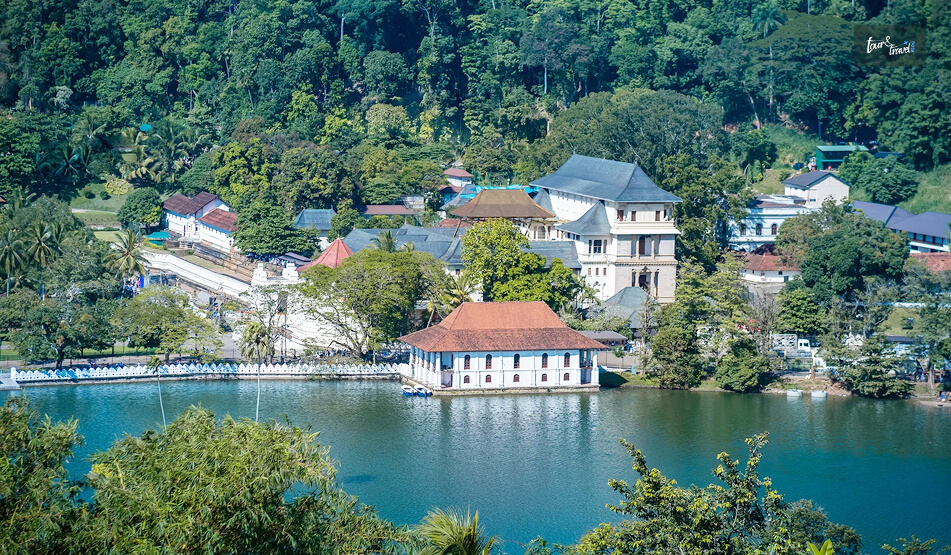
Kandy is the City of Kings in Sri Lanka, and it is undisputedly the cultural capital of Sri Lanka. 

It has amazing green hills, and the vibrant destination here serves as the spiritual heart of the island. 

Furthermore, it is home to the Temple of the Sacred Tooth Relic, the most revered Buddhist shrine in Sri Lanka. It has a sacred tooth portion of Lord Buddha. 

Along with this cultural richness and its spiritual vibe, Kandy also stands out with a sensory experience of delightful chaos. 

It has bustling markets, aromatic local eateries, and historical colonial architecture, and of course, the picturesque Kandy Lake. 

So, naturally, Kandy was a major stop on my trip to Sri Lanka. Finding the right accommodation here is crucial to enjoying the endless things to do in Kandy

The right accommodation helps you to soak in the tranquil beauty of the hill country and the high energy of the city together. 

So, here is a guide on where to stay in Kandy. 

Where To Stay In Kandy? An Overview Of Kandy Hotel 

Before I discuss the specific neighborhoods to stay in Kandy, let me share a quick overview of the best accommodation options.

CategoryAccommodation Choice
Best Luxury StayW15 Hanthana Estate
Best Mid-Range StayHeritage Boutique 
Best Budget StayHelga’s Folly
How to Get AroundWalking and Local Tuk-Tuks
Best Time to Visit KandyJanuary to April (Dry Season)

What Are The Best Places To Stay In Kandy? (Know The Best Areas)

What Are The Best Places To Stay In Kandy (Know The Best Areas)

Kandy has a mountainous terrain and winding roads. The accommodations here are spread across distinct zones. 

So, you have to choose a locality that will help in shaping your experience. 

Downtown Kandy Area

If you want to immerse yourself in the authentic pulse of Kandy, you must find an accommodation in Downtown Kandy. 

You can listen to the cacophony of sights and sounds. It has British colonial facades mixed with bustling commercial markets. 

Pros and cons of finding a place to stay in Downtown Kandy. 

ProsCons
– Kandy allows you to explore the Tooth Relic, Kandy Lake, and traditional Kandyan dance halls.
– Furthermore, the central train and bus stations in Kandy make exploring various parts of the country enjoyable. 
– Loud
– Congested
– Hectic

The best place to stay in Kandy is Heritage Boutique. 

The Kandy Hills 

High above the valley floor, the Kandy Hills offer an escape from the chaos of Kandy Downtown. 

It has misty mornings, sweeping forest views, and cool breezes. Furthermore, it has the most premium boutique hotels. 

ProsCons
– Quiet
– Peaceful
– Scenic
– Perfect for Unwinding
– Steep Terrain
– Dependency on Tuk-Tuks for Transit 

W15 Hanthana Estate, Helga’s Folly, 36 Bed & Breakfast are the best recommendations for accommodations in the Kandy Hill area. 

Kandy Lake Area

Kandy Lake is an ideal middle ground in Kandy. It offers a peaceful buffer zone with quick access to the historic core of the cultural hub of Kandy. 

ProsCons
– Scenic Walking Paths
– Close to the Central Sights and Major Shrines. 
– Properties Close to the Lake Get Filled up Quickly. 

The Ru Boutique Hotel is one of the best places to stay in the Kandy Lake area. 

Northern Kandy Area

Northern Kandy stretches toward the banks of the Mahaweli River. 

The Mahaweli River is the longest waterway of Sri Lanka, and Northern Kandy is an affluent and sprawling neighborhood of Kandy. 

Moreover, here are the pros and cons of finding an accommodation in Northern Kandy. 

ProsCons
– Home to expansive, high-end resorts.
– It offers you insights into the way of slow living in Kandy. 
– Visually Isolated from the Town. 

Taru Villas Kandy and Mahaweli Reach are some of the best accommodations in Northern Kandy. 

What Are The Best Places To Stay In Kandy? (Know The Accommodations) 

What Are The Best Places To Stay In Kandy (Know The Accommodations) 

Here are some of the best places to stay in Kandy when you are visiting with your family. 

1. Helga’s Folly: The Most Budget-Friendly Accommodation

Helga’s Folly won my heart instantly with its whimsical Sri Lankan artwork.

It has been the childhood home of high-society owner Helga de Silva Blow Perera. 

Furthermore, it has hosted the names such as Mahatma Gandhi and Gregory Peck. 

The garden here looks like a dreamscape. However, the actual amazement awaits in the interior. 

It has 35 rooms where you will find family portraits, vivid murals, and dripping candles. 

Overall, this accommodation is intriguing, and I loved it for its aesthetics and its unhinged nature. 

W15 Hanthana Estate Kandy: The Best Luxury Accommodation In Kandy

W15 Hanthana Estate is on a historic tea plantation in the Hanthana Hills. It has nine bedrooms and unmatched colonial luxury. 

Furthermore, the meticulous restoration work here has also made the accommodation score quite high on amenities. 

Also, if you choose to stay here, you will get a personal butler to attend to your requirements. 

Moreover, it has perfectly manicured lawns, and from here, you can enjoy amazing views of the Knuckles Range. 

In addition, it offers the ultimate vintage experience in which you can enjoy a ride in an open-top vintage Land Rover Defender and explore the rugged hillside. 

Heritage Boutique: The Best Mid-Range Stay In Kandy 

You can take a short walk from the Temple of the Sacred Tooth Relic to reach Heritage Boutique. 

It has four stately and royally themed rooms. Furthermore, this accommodation focuses highly on personalized experiences. 

So, it is the ultimate accommodation in urban areas. 

Practical Tips For Your Trip To Kandy

If you want to make the most of your time in Kandy, the cultural capital of Sri Lanka, keep these practical things in mind. 

The most beautiful mode of transport from Colombo Fort to Kandy is via train. 

Once you reach the city, you can take a tuk-tuk or use local ride-hailing apps to explore different areas. 

Furthermore, cover your shoulders and knees when visiting the Temple of the Tooth Relic.

You will also need to remove your shoes before entering the temple complex.

Overall, be respectful to the cultural heritage and Buddhist traditions of Kandy to enjoy a seamless experience.

Share on Social Media

Sibashree is a travel, culture, and leisure writer who has been writing since the age of 12 and professionally since 2014. With more than a decade of travel writing experience and journeys across India and several parts of the world, she brings a deeply personal and thoughtful perspective to her work. A student of English Literature and Mass Communication, Sibashree has always viewed travel as more than movement — for her, it has been a way of understanding people, cultures, and herself. Her passion for spiritual exploration has also led her to many unusual and meaningful destinations over the years. Outside of writing, Sibashree enjoys watching European cinema, reading about global politics, and reflecting on the stories hidden within everyday places.

Leave a Reply

Your email address will not be published. Required fields are marked *

title-img Related

READ MORE Habarana

Why Is Habarana Beyond Just A Gateway To The Cultural Triangle Of Sri Lanka?

BY  Sibashree Apr 27, 2026

Search for Habarana on Google, and in 9 out of 10 cases, it will show that Habarana in North-Central Sri Lanka is the base for visiting the cultural triangle of Sri Lanka.  However, Habarana in the district of Anuradhapura in itself is a perfect blend of adventure, culture, and nature.  So, if you want to set your cultural itinerary in Sri Lanka right, Habarana will be at the epicenter. In this article, I will talk about the things to do in Sri Lanka from Habarana. I will also discuss the top attractions in this beautiful tourist town with a population of 5000.  Where Is Habarana?  Habarana in Anuradhapura District is around 180 km away from Colombo, the capital of Sri Lanka.  Located in the north-east of Colombo, it is also just 30 minutes away by road from the Sigiriya Rock Fortress, a UNESCO World Heritage Site, and its neighbor, Pidurangala Rock.  How To Reach Habarana?  The most convenient way to reach Habarna is to take a bus or train from Trincomalee.  I, of course, as always, opted for a train ride after a visit to the Uppuveli Beach and exploring the other things to do in Trincomalee.  Getting To Habarana On A Train  The Habarana Railway Station is on the Colombo to Trincomalee Railway Line. I took a night train from Trincomalee (Night Mail, Trincomalee → Colombo Fort).  This train runs daily and departs the Trincomalee Station at 7 PM and reaches Habarana at 9:30 PM.  I bought a second-class ticket, and it cost me 800 LKR. The third-class tickets will cost around LKR 600.  Getting To Habarana On A Bus  From Trincomalee to Habarana, it is a bus ride of little over 2 hours. The ticket price was INR 300 when I last enquired.  You will get different buses run by the Sri Lanka Transport Board and many private buses.  However, considering the scorching Sun of Sri Lanka, a bus ride is difficult in the daytime, and the Trincomalee to Habarana route remains crowded. Why Is Habarana The Base For A Cultural Exploration In Sri Lanka?  Habarana has a beautiful lake by the name of Habarana Lake. It is a tranquil water body with lush greenery around.  It is a beautiful place for birdwatching. Furthermore, you can also spot monkeys and elephants here.  When you are in Habarana, you can start your day with a stroll along the lake. Then, you can plan a day trip to the following places.  1. The Sacred City Of Anuradhapura  Distance from Habarana: 59 Kms The Sacred City of Anuradhapura is a UNESCO World Heritage Site. It was the religious and cultural capital of Sri Lanka for 1300 years.  However, it was massively impacted due to the invasion in 993 AD.  The main stupas in this sacred complex are the Abhayagiri Vihara Stupa, Jethawanaramaya Stupa, the third-largest man-made structure, and the most sacred Ruwanwelisaya Stupa.  2. Kaudulla National Park  Distance from Habarana: 28 Kms If you want to spot elephants in Sri Lanka, you have to visit the Kaudulla National Park.  However, the Kaudulla National Park is not just about the safaris or spotting the wildlife. During my visit, I found it truly living up to its reputation for animal welfare.  It is one of the places I visited where elephants are not chained.  3. Hurulu Eco Park  Distance from Habarana: 3.4 Kms The Hurulu Eco Park is the closest destination to visit from Habarana if you want to experience the wildlife of Sri Lanka.  Elephants passing between the Minneriya National Park and the Kaudulla National Park use Hurulu Eco Park as an important corridor.  Moreover, the topography of the Hurulu Eco Park is a good mix of plains, rocks, and evergreen jungle.  4. Dambulla Royal Cave Temple Distance from Habarana: 25 Kms The Dambulla Royal Cave Temples are fascinating, and being a two-million-year-old place of Buddhist worship is something extraordinary.  The more amazing thing is that the temples are well-preserved, and people still worship Lord Buddha in these temples.  Spanning an area of 2100 square meters, these cave temples have 157 statues of Lord Buddha and other important figures of Buddhism.  However, among all these statues, the reclining statue of Lord Buddha in the 1st cave will remain etched in my memory forever.  5. Ritigala Forest Monastery Distance from Habarana: 21 Kms The Ritigala Forest Monastery has its historical roots in the 1st century BCE. During that time, Buddhist monks settled here.  Over time, this monastery became an important site for the powerful Pansukulika Sect, which enjoyed the highest form of glory during the 9th to 11th centuries.  However, it was destroyed by Chola invasions in the 10th-12th centuries.  The Ritigala Forest Monastery has a long history of discovery and restoration, too. Moreover, it has a connection with the great Hindu epic, the Ramayana.  In addition, the Ritigala Mountain is home to more than 417 species of medicinal plants and a rich biodiversity. 6. Sigiriya Rock Fortress  Distance from Habarana: 30 Kms The Sigiriya Rock, a UNESCO World Heritage Site, is primarily a site of a Buddhist monastery from the 3rd to 1st century BCE. However, there are also legends about this rock fortress being the Golden Palace of Ravana.  Nevertheless, the Buddhist monastery in the Sigiriya Rock rose to importance when Anuradhapura became the capital of Sri Lanka. 7. Pidurangala Rock Distance from Habarana: 30 Kms Many tourists make the mistake of considering Pidurangala Rock as a trekking point that offers a better view of the Sigiriya Rock.  However, along with being a neighbor of Sigiriya Rock, it also has a history of Buddhism associated with it, and the history is 2 millennia old.  After Kashyapa made the Sigiriya Rock the center of power, the monks shifted from there and started residing in the Pidurangala Rock.  It also received royal patronage for its development and for making adequate accommodations for the monks here.  8. The Ruins Of Polonnaruwa Distance from Habarana: 47.5 Kms The ruins of Polonnaruwa are a part of the cultural triangle of Sri Lanka. Polonnaruwa was a growing religious and commercial center of Sri Lanka for over 800 years.  During the Sinhalese and Chola kingdoms and for three centuries, it was the capital of the country.  Today, the Ancient City of Polonnaruwa has the ruins of the Royal Palace, the Sacred Quadrangle, the central dagoba, Shiva Devale, Pabalu Vehera, Rankot Vihara, the dagaba Kiri Vihara, and many other ruins and architecture.  Also, the Buddha sculptures in different dagobas or stupas of the complex were mesmerizing.  9. Minneriya National Park  Distance from Habarana: 5.8 Kms Minneriya National Park has a lush landscape, and along with elephants, it is also home to diverse wildlife such as sloth bears, leopards, and different bird species.  The annual gathering of elephants is the most fascinating incident of the Minneriya National Park. It indicates an event where hundreds of elephants have a meeting, or they gather around the Minneriya Tank.  Habarana: Beyond The Gateway To The Cultural Triangle Of Sri Lanka   Although most people think of Habarana as being nothing more than a bus stop for those heading to Sigiriya or Polonnaruwa, it actually turned out to be the best surprise during my trip to Sri Lanka.  The only reason to stay in Habarana is how convenient the location is.  However, staying there provided me with an experience that you couldn’t reproduce in the more touristy areas of the island, which is the natural beauty of the area. A Place For The Gentle Giants The highlight of my time spent in Habarana was the fact that I was so close to Minneriya and Kaudulla National Parks.  I didn’t just see elephants. I witnessed what is known as the "Gathering."  Also, I observed hundreds of wild elephants gathered around one of the ancient reservoirs while driving around in an open-top jeep.  This is due to it being located in the middle of these two migratory areas.  While we still had wildlife encounters in the more touristy areas, they didn’t have the same natural feel or take the same amount of effort as they did while driving around in Habarana. Authentic Village Immersion In addition to going on safari, I spent a morning enjoying the lifestyle of the people living on the shores of a local lake.  I took a traditional horse-drawn carriage to the lake and paddled across the lake in a canoe.  I shared a meal of rice and spicy sambol with a family in their mud hut that was about as authentic as you could get.  This was far more than just a stopping point, and it was an example of the hospitality of the Sri Lankan people and the slow lifestyle that became my takeaways. Where To Stay In Habarana?  If you're looking for accommodations in Habarana, you're sure to find something that meets your budget, with options ranging from "basic backpacker" to "boujie boutique" accommodations.  For a "calm little oasis," Dudley's Nature Resort is a great option, and it is located 15 minutes away from the main strip of Habarana. Furthermore, the resort is set in a lush jungle environment and includes a pool and breakfast served in the garden.  Moreover, if you are looking to be in a social environment, Roy's Villa Hostel is close by and has an incredible communal atmosphere. Where To Eat In Habarana?  For authentic local flavors, Dewata Villa is a must-visit for its legendary "Rice & Curry" spread.  If you're looking for a quick, budget-friendly bite, Cinnamon Lodge offers great snacks, while the main street is lined with "Short Eat" bakeries for spicy pastries.  For a more social evening, head to Roy’s Villa nearby for delicious communal dinners and great vibes.
READ MORE things to do in galle

What Are The Things To Do In Galle Fort, Sri Lanka? Exploring A UNESCO Heritage Site

BY  Sibashree Mar 24, 2026

Galle has been my ideal dreamy, sepia-toned travel destination located on the southwestern coast of Sri Lanka.  Moreover, the city’s stunningly beautiful old fortified peninsula reaches defiantly out into the Indian Ocean and boasts many crumbling colonial-style buildings, narrow cobblestone streets, and swaying palm trees.  However, the true magic of Galle comes from taking it slowly.  Hi, in today’s blog, I will talk about the things to do in Galle Fort. However, I will begin with why a visit to the Galle Fort is worth it and how to get there.  Why Visit Galle Fort? A UNESCO World Heritage Site And The Fortress That Defied Time “Founded in the 16th century by the Portuguese, Galle reached the height of its development in the 18th century, before the arrival of the British.  It is the best example of a fortified city built by Europeans in South and South-East Asia, showing the interaction between European architectural styles and South Asian traditions.” • UNESCO World Heritage Convention.  The trading post was once impenetrable, and the rampart walls kept the invaders at bay.  However, centuries later, during the 2004 Tsunami, the same stone walls that stood against cannons also protected the people from the ocean.  Thus, the Galle Fort remained intact even though the surrounding coastline was devastated. Today, it stands as a UNESCO World Heritage Site for being a unique example of a fortified city.  How To Reach The Galle Fort? You can easily reach the Galle Fort from Colombo or down the coast.  From Colombo  You can take a train from Colombo Fort, and after a three-hour journey and amazing ocean views, you will reach Galle.  However, currently, this route is being reconstructed. So, you can take a Highway AC bus from the Makumbura Station.  Furthermore, it is a 2-hour journey through the Expressway.  From Mirissa Or Weligama If you’re already beach-hopping the south coast, you can just hop on any local bus headed toward Matara or Galle.  It’s cheap, frequent, and gives you a real taste of local life, and that’s amazing as a follower of TheLowDownUnder Travel philosophy.  Also, from my days in Jaffna to the things to do in Kandy, I have always ditched comfort and the obvious for a more authentic experience.  What Are The Things To Do In Galle Fort, Sri Lanka?  When talking about the things to do in Galle Fort, you have to think beyond the tourist checklist.  Furthermore, Galle is a place of contrasts! You have the rugged, salt-sprayed stone of the ramparts on one hand, and on the other hand, you have the most polished boutique shops.  So, Galle is beyond your usual Instagram photo op.  And one of the best things to do in Galle is to understand how the fortress and the neighborhood have survived empires and natural disasters.  Moreover, in Galle, you become a part of the history as you watch the sunset from an ancient bastion or sip cold beer at a wine bar on a cobblestone street.  Also, you will see an extension of all these in my detailed account of two days in Galle Fort.  Day 1: Getting Lost In The Living Museum Walks, exploring the architecture, culture, and the much hyped sunset experience! These were the things to do in Galle Fort on day one.  Morning: The Rampart Walk Walking is the best way to begin your exploration of Galle Fort. It is small and, therefore, a great destination for pedestrians.  In the morning, I climbed to the top of the stone ramparts and walked the entire way around the edge of the Fort, obtaining a 360-degree view of Galle. I saw the sparkling, turquoise ocean to one side and the red tiled roofs of the original buildings of the town on the other. On your walking tour, look for the famous Galle Clock Tower and the historic Galle Lighthouse, which is probably the most photographed place in all of Sri Lanka.  The whitewashed lighthouse is stunning against the clear blue sky, but I found that the late afternoon light gives it that soft, golden color that makes the palm tree shadows cast perfectly across the grass. Afternoon: Culture And Architecture After you’ve finished exploring the upper level of the walls, it’s time to explore the narrow alleyways of the city.  Throughout the streets, you are going to notice something extremely wonderful. You will see the cultural and ethnic diversity and the same inclusive culture of Sri Lanka, prominent through the iconic Ambuluwawa Tower in Colombo.   In just a matter of blocks, I was able to visit the Dutch Reform Church, All Saints Anglican Church, Meeran Mosque, and Sri Sudharmalaya Buddhist Temple.  All these places serve as a testament to the many different people who have influenced the development of Sri Lanka over many hundreds of years. If the heat of the sun becomes unbearable, I recommend that you check out either the Historical Mansion Museum or the Maritime Museum.  Both of these museums are in beautifully restored colonial structures and provide visitors with great artifacts dating back to Sri Lanka’s colonial period. Evening: The Sunset Ritual When the sun is going down, I suggest that you make your way to the western walls of the fort.  At Flag Rock Bastion, you will find the locals performing their “cliff jumping” tourism attraction.  You will have the opportunity to see how far they will go into the crashing waves.  If you would rather have a quieter spot to watch the sunset, I would recommend that you go to Triton Bastion.  I spent an hour there on the grassy ramparts watching as the sky slowly burned with bright oranges. What a way to see Mother Nature's fireworks show. Day 2: Boutiques, Buffets, And Beaches Day 2 was more relaxed as I shopped, gorged on grand feasts, and explored the beaches.  Morning: The Shopping Mecca Galle is now Sri Lanka's shopping capital. Pedlar Street is the epicenter of the boutique shops, from where you can collect elegant souvenirs.  A few of my personal favorites are in the table below.  Places to Visit for ShoppingThings to BuyStick No BillsVintage-Style PostersThe Tea Room by Evergreen GroupBuy Tea in BulkOld Dutch HospitalThis former colonial hospital is now a chic shopping and dining precinct. It’s the perfect place to grab a coffee and browse. Lunch: A Local Feast After the spicy food in Jaffna, the food in Gelle was comforting. So, trying the Coconut Sambal is one of the best things to do in Galle.  You will get the curries with chicken and vegan-friendly options here. Also, to beat the midday Sun, have some homemade ginger beer or treat yourself to a scoop at Isle of Gelato.  Moreover, don’t forget to try the cashew caramel at Isle of Gelato.  Afternoon: Beyond The Walls As the Sun starts getting softer, you can explore the surrounding coast. Also, if you want to extend your coastal hunt, head to Dewata Beach.  Here, you will find many beginners and professionals surfing the waves.  Furthermore, if you want to just relax, take a tuk-tuk ride to the Jungle Beach in Unawatuna. It is a small sandy cove with lush greenery. 

READ MORE Horton Plains

Horton Plains National Park: Why Is Walking To The Edge of Sri Lanka Worth The 3 AM Alarm?

BY  Sibashree Aug 21, 2026

It was still pitch dark when I left Nuwara Eliya. I was wrapped in every layer I had. It was a bit weird, and I felt overpacked considering Sri Lanka spends most of the year in a state of tropical sweat.  After an hour and a half, I was standing at the entrance gate of Horton Plains National Park. My breath was fogging, and I realized that it was actually Cold and not the Sri Lankan cold you would usually expect.  On a high plateau in the Central Highlands, the Horton Plains National Park sits at an elevation of more than 2100 meters.  Unlike most of the Sri Lankan landscape I have explored, the Horton Plains National Park does not have rice paddies, palm trees, and the lowland heat haze.  In fact, it looked like the Scottish Highlands with gnarled cloud forest, windswept grassland, and silence broken by birdsong.  So, overall, it looked like a contradiction in the middle of a tropical island country.  Horton Plains: A Plateau With A History Horton Plains stands out with an ecological and historical weight. This weight is more than the windswept image it has.  Long before it became a popular hiking destination, it was famous as a colonial retreat, and in July 2010, it became a UNESCO-listed ecosystem as part of the Central Highlands of Sri Lanka.  From Maha Eliya Thenna To National Park Horton Plains was earlier known as Maha Eliya Thenna before it became a national park.  Maha Eliya Thenna means “The Great Open Plain.” During British Rule, it was renamed after Sir Robert Wilmot-Horton. He was a governor of Ceylon. Also, during that time, the highlands became a retreat for planters escaping the heat of the lowlands. Until 1969, the Horton Plains was not formally protected. Then, it became a wildlife sanctuary.  Finally, in 1988, it got the full designation as a national park.  Then came 2010, when Horton Plains got the UNESCO designation along with the Peak Wilderness Protected Area (home to Adam's Peak) and the Knuckles Mountain Range. Together, these three protected areas form what conservationists describe as one of the island's most important biodiversity hotspots, sheltering species found nowhere else on Earth. Why The Ecosystem Matters Sri Lanka, being a party to the Convention on Biological Diversity, submitted the “Sixth Annual Report” in 2019.  I am quoting the content of the report as highlighted by the Daily Mirror Online here.  “The Peak Wilderness Sanctuary, Horton Plains, and the surrounding protected and unprotected areas containing small wet-zone forests possess the highest levels of endemic plant and animal diversity in Sri Lanka.” The Horton Plains National Park is also the source of the three major rivers in Sri Lanka. Mahawell Kelani Walawe.  Moreover, as an important ecological region, it was the first national park in the island country to ban single-use plastics.  So, when you are about to enter the national park, the rangers check the bags at the entrance. You have to leave the water bottles (if you are carrying water in single-use plastic ones) and snack packets before entering it.  The Walk Itself Recently, there have been talks about the reopening of the Nonpareil Estate and Nagrak to Horton Plains route.  After failed attempts in 2015, and 2020, this recent request in August 2026 has been submitted by the tourism hotel operators.  The Development Committee meeting has also discussed this matter and Gayani Renuka, the Divisional Secretary of Imbulpe, has presented it before Dr. Dhammika Patabendi, the Minister of Environment.  However, there are uncertainties about reopening this route for better accessibility because of environmental concerns and the pristine nature of the Horton Plains.  So, if you go for a trek now, you have to pass through three distinct moments strung along one loop trail.  Each loop has a distinct character.  The Main Loop The distance of the main trail is around 9 to 9.5 kilometers. At an easy, photo-stopping pace, you can cover the loop in 3 to 4 hours.  There is no steep elevation gain. So, technically, it is not a difficult trek to complete. Also, the route is well-maintained and well-marked.  However, the elevation adds to the challenges of trekking. Add to that the cold, unfamiliar to most parts of Sri Lanka!  You can complete the loop clockwise like most hikers. Thus, you will reach Little World's End first and then World's End.  Next, you will find the Baker's Falls on the return leg. Walking it this way means you catch the two main viewpoints while the sky still has a chance of being clear. Little World's End About 3.5 kilometres in, this is the warm-up act. The Little World’s End is a cliff edge with a drop of around 270 metres.  It is less dramatic than what comes next, but on a clear morning you can see the patchwork of tea estates and village rooftops laid out far below. It is often far less crowded than its famous neighbour. World's End Roughly 4 kilometres from the start, this is the reason everyone makes the pre-dawn drive.  It is a sheer escarpment that drops somewhere between 870 and 880 metres, depending on which source you believe. Also, there is genuinely nothing gentle about it.  A low metal railing marks the edge in places, but a fair stretch of it has nothing but exposed rock and open air. So it is worth keeping a firm grip on children and a healthy respect for the drop yourself.  On a clear day, the view stretches all the way to the south coast, nearly 100 kilometres away.  The feeling, standing at nearly 2,000 metres above sea level, is inexplicable.  I got lucky with about ten clear minutes before the mist rolled back in, and it was enough to understand why people set their alarms for 3 AM to be here. Baker's Falls Baker’s Falls is an important landmark on the way back, and you will find it after completing a hike of 7.5 kilometers.  The waterfall is modest, but its beauty is unmatched. Moss-covered boulders and cloud forest thick with ferns frame this 20-meter waterfall.  I wanted a closer look at this beautiful fall. So, I took a short flight of stone steps leading down to the base.  Longer Routes For The Ambitious If you have more time and stamina, longer routes branch off toward Kirigalpotta, Sri Lanka's second-highest peak, and Thotupola Kanda, the third-highest, along with a section of the long-distance Pekoe Trail that now runs through part of the park.  These require permits and, in most cases, a guide, but they are a genuine option if the main loop leaves you wanting more. When To Visit The Horton Plains National Park? The gates of the Horton Plains National Park open at 6 AM. By 9:30 or 10 AM, the mist in the national park rolls in and swallows the views.  I came across one highland lodge owner online. He runs a "Highland Trek" experience out of Nuwara Eliya. He said, “It is not just the sunrise if you reach the Horton Plains National Park by 6 AM. Reaching early also helps you to beat the cloud that builds through the morning.”  Time Of Year Choose December to March if you want to know about the best time to visit the Horton Plains National Park.  The park stretch is the driest and clearest during these months.  However, being the best time, this window also brings heavy crowds on weekends and local holidays.  April through September brings more mist and drizzle, and while the views become less reliable, the trail is also quieter.  Several travellers I found comparing notes online argued that a misty, moody Horton Plains has its own appeal. It is just a different trip than the postcard version. Wildlife, Without The Big Cat Guarantee The Sambar Deer is the poster animal of the Horton Plains National Park. I could spot them easily.  If you especially visit the park early in the morning, you will find these adorable creatures grazing in the open grassland.  Furthermore, if you are a bird-watcher, you will find endemics like the Sri Lanka whistling thrush and the yellow-eared bulbul.  Other birds you will find here are: Scaly-Breasted Munia Sri Lanka Whistling Thrush Sri Lanka Spurfowl Horton Plains is also, on paper, a leopard territory with the Sri Lankan leopard as the apex predator here. However, sightings are exceptionally rare, and I would not build a trip around the hope of one. Most guides are refreshingly honest about this rather than overselling it. Instead, expect wildlife such as Fishing Cat, Grizzled Giant Squirrel, and Wild Boar here.  If you are here to spot reptiles, watch out for the black-cheek lizard, Boie’s rough-sided snake, and the horned lizard.  The Nelu Bloom: A Once-In-A-Generation Sight The flowering of the Nelu is one of the main highlights of the Horton Plains National Park. This flower of a genus of shrubs in the highlands does not bloom every year.  In fact, these flowers bloom once every 12 years.  When these flowers bloom, the entire hillsides turn a soft purple-blue almost overnight. You must have seen these photographs on Instagram.  Sample Itinerary Most visitors do Horton Plains as a single early-morning excursion, but there are a few ways to structure the day depending on your fitness, time, and onward travel plans. Half-Day Trip From Nuwara Eliya To Horton Plains National Park TimeActivity3:30–4:00 AMWake up, dress in layers, depart Nuwara Eliya.5:00–5:30 AMArrive at Horton Plains entrance, buy tickets, bag check.6:00 AMGate opens, begin the loop (clockwise).6:00–7:00 AMWalk to Little World's End (3.5 km).7:00–7:45 AMReach World's End, main viewpoint stop.7:45–9:00 AMContinue on the loop to Baker's Falls, a short detour to the base.9:00–10:00 AMFinish the loop back to the car park.10:00–11:30 AMDrive back to Nuwara Eliya and have breakfast en route or in town,  Extended Day Trip (With Kirigalpotta Or Thotupola Kanda) TimeActivity3:30–4:00 AMDepart Nuwara Eliya.5:30–6:00 AMArrive and buy extended tickets and permits for an extended trail if required.6:00–10:00 AMMain LoopLittle World's EndWorld's EndBaker's Falls.10:00 AM–1:00 PMExtended Trail Kirigalpotta or Thotupola Kanda with a guide.1:00–2:00 PMReturn to car parkDrive back3:00 PM onwardLate lunch in Nuwara Eliya and relax Moreover, instead of making a return to Nuwara Eliya, you can continue your journey to beautiful Ella.  Tentative Cost Breakdown Costs vary depending on how you get there and whether you hire a guide, but here's a realistic breakdown to budget against. Entrance Fees ItemApproximate CostForeign adult, day visitUSD 25 per personForeign childUSD 12Sri Lankan national, day visitLKR 150 for AdultsLKR 75 for ChildrenLKR 20 for Local Students with Valid IDVehicle entryLKR 250-1000 for VehiclesDrive/Guide Fee: Overnight/extended permit (for longer trails)Around LKR 2400 for a Campsite of 12 People. Tickets are generally sold only at the entrance, not online. So budget extra queueing time in peak season (December–March, weekends). Transport From Nuwara Eliya OptionApproximate CostPrivate car, round trip with 3-hour waitLKR 5000 to LKR 13000Tuk-tuk, round tripLKR 1500-2000Organised half-day tour (driver + guide)LKR 6000 Per PersonFull-day customisable tuk-tuk/car tour (Horton Plains + extras)LKR 10000 for the vehicle/group Other Costs To Budget For ItemApproximate CostLocal guide (optional, for main loop)LKR 600Guide for extended trails (Kirigalpotta/Thotupola)LKR 700Breakfast/snacks in Nuwara Eliya after the hikeLKR 300-400 Per PersonTips for driver (customary but not obligatory)Around LKR 200  Rough Total, Per Person For a solo or paired traveler doing the standard half-day loop with a shared private car, all-in costs typically will start from around LKR 15000.  What People Are Actually Saying About The Horton Plains National Park Beyond the official descriptions, recent traveller reviews and hiking forums paint a fuller, more candid picture of what to actually expect. The Praise I have checked the recent traveler reviews and hiking forums for recent updates on the Horton Plains trek, as it has been almost 2 years since I have been there.  I have got a pretty consistent and useful picture of the park beyond the marketing photos.  People consistently describe the loop as peaceful, scenic, and surprisingly quiet once you are past the entrance area, with several remarking that they barely saw another hiker on the trail itself despite a busy car park.  The cool climate and the drama of World's End come up again and again as the highlight, and more than one reviewer said the steep entrance fee for foreign visitors was worth it for the experience alone. The Complaints The complaints cluster around two things.  First, Value For Money At The Gate Several visitors felt the facilities, particularly the restrooms, didn't match what they were paying. They especially compared the facilities with well-maintained remote parks elsewhere in the world.  Second, Logistics Getting to the park without a private vehicle or organised transport is genuinely difficult, and a few forum threads mention drivers or ticket-side "tips" being expected in ways that caught first-time visitors off guard.  My own advice, echoing what I saw repeated often: Agree on a return fare with your driver before you set off. Keep small notes handy at the gate. Treat the fee as the cost of one of the more unusual landscapes in South Asia rather than comparing it to lowland attraction pricing. Also, there are concerns about the vulnerability of the Horton Plains National Park. It is disappointing that I did not find many travelers talking about it.  The Vulnerabilities  “Many visitors to the Horton Plains NP come here when they are on holiday in Nuwara Eliya and that is the loud and boisterous behaviour they bring here as well, creating much havoc in this sensitive area.” These are the words of Sankha Wanniatchi, an author, photographer and leopard researcher. He shared his views with The Sunday Times regarding the “Clarion Call to Protect Vulnerable Horton Plains NP.” The researcher has also urged the Sri Lankan authorities to refer to Yellowstone National Park for implementing strict regulations in the Horton Plains National Park.  His suggestions include relocating the entry gate to the national park, as the stretch between the Pattipola Railway Station and the entry gate is ripe with wildlife activities.  An overspeeding car killing a young sambar in the stretch has strengthened his claim.  Moreover, there are suspicions of poaching activities, with loud sounds of gunshots being heard outside the boundary lines.  Practical Notes For Your Own Visit A short checklist of the logistics worth locking down before you leave your hotel. Getting There Horton Plains is roughly 32 kilometres, about 1.5 hours by road, from Nuwara Eliya, which is the most common base.  A hired car or tuk-tuk with waiting time is the standard arrangement. Public transport options are limited and awkward for the early departure time you will want.  What To Bring Carry layers, a light rain jacket, sturdy closed shoes, and cash for the entrance and any incidentals.  There is no phone signal inside the park, which, once you adjust to it, becomes part of the appeal. Was It Worth The 3 AM Alarm? Genuinely, yes. Horton Plains is not trying to be the rest of Sri Lanka, and that is exactly what makes it worth the detour from the hill country's tea estates and waterfalls.  It is cold, it is a little inconvenient to reach, and the view you are chasing is entirely at the mercy of the weather. However, standing at the edge of an 880-metre drop with the whole southern half of the island somewhere beneath the mist is not an experience you get anywhere else on this coastline.  Set the alarm. Bring the jacket you think you won't need. It is worth it.