

What Are The Things To Do In Mirissa? Unusual Activities You Must Not Miss Here

How many places have you been to where you can see peacocks and the mischievous chipmunks everywhere you look? 

This is Mirissa for you! One of the quietest beach towns in Sri Lanka.  

Also, if surfing at Hiriketiya Beach was a lot of fun, you can plan a one-hour drive to Mirissa for whale watching.  

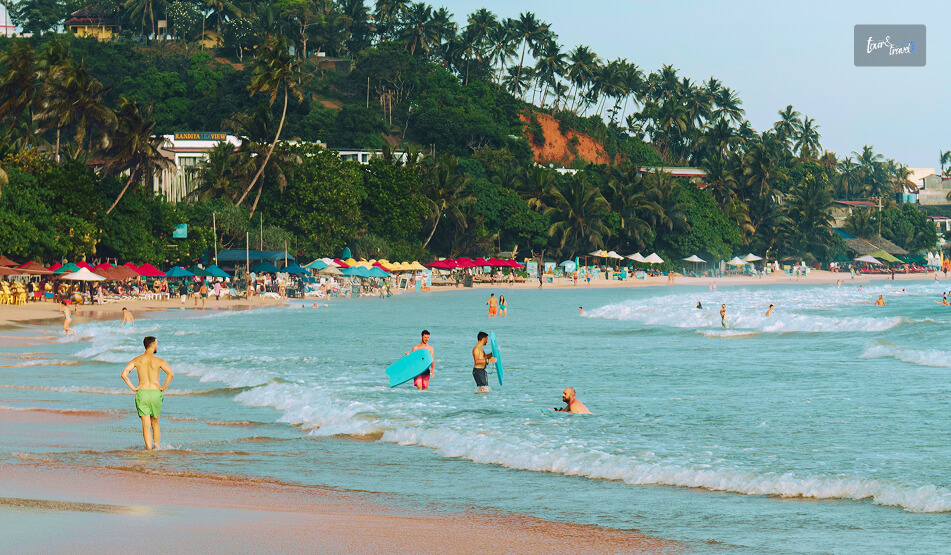
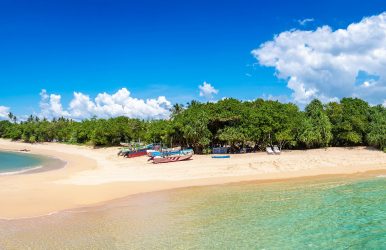
Mirissa has the turquoise Mirissa Beach, the Instagram-favorite coconut tree hill, the secret beach, the parrot rock, and many other natural attractions.  

Also, this quaint beach town is the ideal place to attend a cooking class, enjoy a happening nightlife, and indulge in a relaxing spa experience.   

Furthermore, whale watching and surfing with turtles are some of the most exciting things to do in Mirissa.  

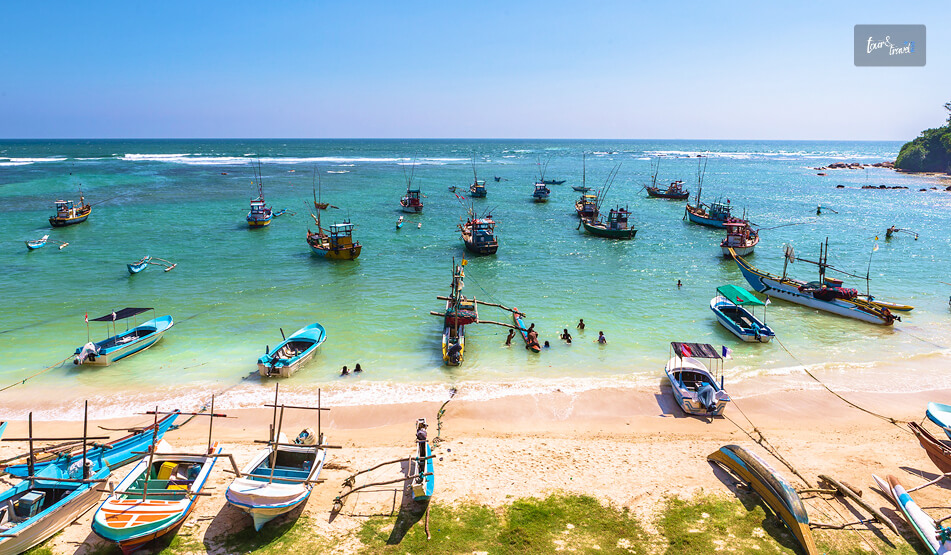
And once you are done exploring Mirissa Beach, you can take a short tuk-tuk ride to Weligama Beach, which is a beginner-friendly surfing destination.  

Here is more about why I loved the Mirissa Beach and town.  

What Are The Things To Do In Mirissa?  

Mirissa was still an emerging destination when I last visited Sri Lanka. Then, it was a welcome break from surfing at Ahangama or Hiriketiya simply because it was less crowded.  

However, thanks to Instagram now and especially due to the popularity of Coconut Hill, it is not a hidden gem anymore.  

Nevertheless, don’t miss these activities when you are in Mirissa.  

1. Spending A Relaxing Time At Mirissa Beach   

Spending A Relaxing Time At Mirissa Beach

I am not a diver, but I saw a couple renting gear on the beach for diving and spotting turtles. I talked to them as they came out. It was nice talking to Liam and Saoirse.  

I am quoting what Saorise shared, 

The water here is calm, and you just need to go down very little to find the turtles swimming.  

Next, we are going to try Weligma Beach.”  

Nevertheless, for me, Mirrissa Beach was impressive due to its laid-back charm. Like Delft Island in Jaffna, Mirrissa Beach also appeared to be an ideal destination for backpackers.  

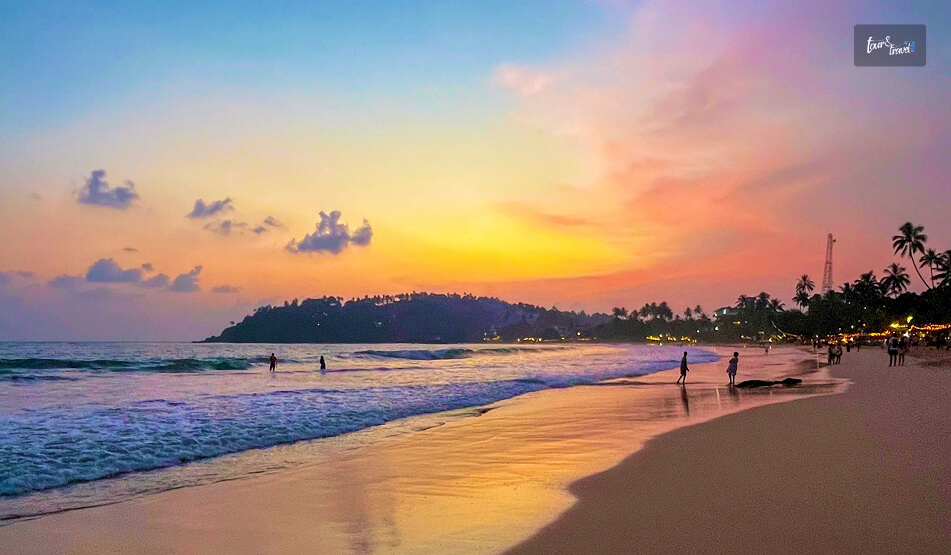
It was sunset time, and as the sky started turning the darkest red, the cafes around the beach came to life.  

I took a stroll toward the Parrot Rock and climbed it to see how the Sun is going to sleep in the ocean. 

If you are not planning to see the sunset here, you can take a 40-minute tuk-tuk ride to Kudawella Beach. There, you will see the Hummanaya blowhole, the second-largest in the world.  

2. Enjoying Solitude At Secret Beach 

Solitude! This is what I enjoyed at the Secret Beach. It is secluded and does complete justice to its name.  

Furthermore, this is a beautiful beach where the sea and the jungle blend.  

Also, this beach has shining golden sands, and the palm trees are so well aligned that they look symmetrical.  

In addition, I enjoyed sunbathing, swimming, and watching the sunset at Secret Beach.  

Now, comes to how I reached the Secret Beach from Mirissa Beach. I took a short tuk-tuk ride for 15 minutes from Mirissa Beach, and it cost me around LKR 300.  

From the spot, you will have to hike for around 200 meters to reach the beach.  

Also, no one talks about the cliff behind the Secret Beach. I had to just take a short walk, taking the left side path from the beach to reach the cliff.  

You can enjoy a 360-degree view of the ocean from the cliff top.  

3. Whale Watching 

Visiting Mirissa Beach during sunset time was worth it.  

I returned the next morning for the whale-watching tour to start. The tour started at 6 AM, and it was a 4-hour tour. The cost was ₹1948 or around 6500 LKR.  

Early morning is the best time for whale spotting at Mirissa Beach, as the water starts getting choppy as the hours pass.  

Furthermore, November to April is the best time for blue whale spotting here, and March and April are the peak months.  

Also, on my tour, along with the blue whales, I also spotted humpback whales, turtles, and dolphins.  

4. Watching Sunset From The Parrot Rock 

Watching Sunset From The Parrot Rock

As I mentioned earlier, Parrot Rock offered the best sunset viewing point on Mirissa Beach.  

This rock island is just a 5-minute walk from the main beach. However, I had to wade through water to find the base of the staircase leading to the top of the Parrot Rock.  

During high tide, the water can be knee-deep. So, here you will need some local guidance regarding when to cross the water.  

So, be careful and carry a small bag and only the things you need if you want to climb up the Parrot Rock.  

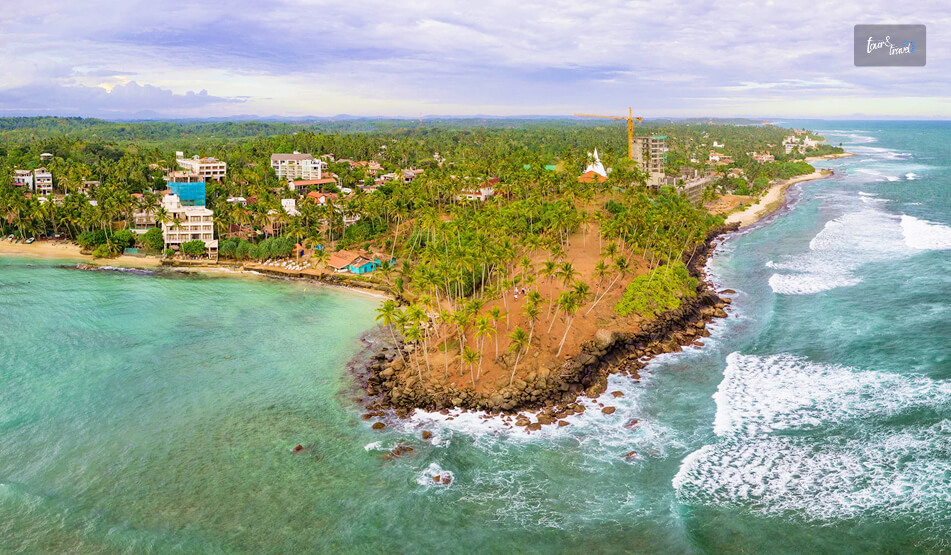
5. Exploring The Cocount Tree Hill  

Exploring The Cocount Tree Hill

Now, this Coconut Tree Hill is a rage on Instagram and somehow overhyped.  

However, the tangerine soil and the series of trees here look picturesque, and the views from here are amazing. 

Before I got to the top of the Coconut Hill, I enjoyed a swing ride just below.  

I visited it very early in the morning. The plan was to see the sunrise from the Coconut Tree Hill and then start the whale tour.  

Furthermore, the hike was easy, and it was almost a no-sweat climb.  

6. Enjoying Sunset Drinks, Bites, And Beats 

Mirissa has a really cool nightlife. However, I found the cafes here a little overpriced. Instead, I found a place to relax and watch over the activities on the beach after sunset hours.  

After watching the sunset from the Parrot Rock, I was planning a return for the day, and then I found Petti Petti.  

It has an elevated infinity pool, which is magical. You can even relax sitting in the comfortable beanbags and sip the most refreshing cocktail. 

Petti Petti remains open from 8 AM to 10:30 PM every day.  

7. Surfing At Weligama Beach 

Surfing At Weligama Beach

Surfing at Mirissa Beach is not a pleasant experience. So, it is always better to take a bus ride for 15 minutes to Weligama Beach. 

With a sandy bottom and gentle waves, it is a beginner-friendly place for surfing. I surfed with the AMA Surf School there, and the cost was around ₹7000, and the surfing tour was for 1 hour and 15 minutes.  

8. Enjoying The Cafe Vibe In Mirissa 

Mirrissa has some amazing cafes, but they are still overhyped if you compare them with the craze on Instagram.  

Nevertheless, I loved Aloha Coffee Gallery, which is very close to the Main Street of Merissa.  

I had a French Press coffee and toasts there. Also, I found many young professionals working there, and the Wi-Fi connection was pretty good.  

I found that the place was quite popular among youngsters and digital nomads.  

9. Spotting The Turtles  

Now, many people tell you that Turtle Beach is the best place to spot turtles in Mirissa, and it’s a lie.  

When I reached it at around 10 AM, the beach was already crowded, and naturally, the water was murky.  

I could spot two turtles, but they looked stressed and in a hurry to hide.  

Then, a local told me about a place that was a walk of around 10 minutes west of the beach. There is a Roti shop nearby, in the name of DewMini Roti Shop.  

That was indeed a great place for seeing turtles, as there were no boats and only a few locals hanging around.  

Again, from there, I took a local bus to Polhena Beach, and the ticket price was ₹30. There, the reefs were shallow, and thus these reefs and the turtles were easily visible. 

10. Visiting A Tortoise Hatchery  

I love turtles. So, when I got to know about the Kosgoda Sea Turtle Conservation Project, I decided to take a drive for 2 hours and visit it.  

This conservation center is, in fact, closer to Galle, and there, I saw Hawksbill turtles, Olive Ridley turtles, and loggerhead turtles.  

Many injured or disabled turtles stay in this conservation center, and you will even find baby turtles that are just 3-days old.  

The conservation center also has a program in which you can release the baby turtles into the ocean water. 

Behind the conservation center is a hatchery. There, all the eggs are kept buried for hatching. The conservation center buys these eggs from local fishermen who collect the eggs so that poachers do not take them or predators do not eat them.  

The conservation center remains open from 8:30 AM to 6 PM, and the entry fee is LKR 1000.

Share on Social Media

Sibashree is a travel, culture, and leisure writer who has been writing since the age of 12 and professionally since 2014. With more than a decade of travel writing experience and journeys across India and several parts of the world, she brings a deeply personal and thoughtful perspective to her work. A student of English Literature and Mass Communication, Sibashree has always viewed travel as more than movement — for her, it has been a way of understanding people, cultures, and herself. Her passion for spiritual exploration has also led her to many unusual and meaningful destinations over the years. Outside of writing, Sibashree enjoys watching European cinema, reading about global politics, and reflecting on the stories hidden within everyday places.

Leave a Reply

Your email address will not be published. Required fields are marked *

title-img Related

READ MORE ratnapura

What Is Ratnapura Famous For? Know The Best Places To Visit In Ratnapura 

BY  Sibashree Jun 30, 2026

I wanted to begin this article with details about how the air in Ratnapura is different from the air in Colombo.  However, the recent news about the Ratnapura air quality index (AQI) made me stop for a while. The presence of the main air pollutant PM2.5 in the quantity of 11 µg/m³ in the air is actually 2.5 times higher than the World Health Organization (WHO) standard.  When I read the news, I could not match it with the heavy air of Ratnapura, constantly laden with the scent of wet earth, crushed tea leaves, and the electric promise of an impending downpour. Also, when I first stepped off the bus onto the rain-slicked tarmac of this valley town, wrapped tight by the jagged peaks of the Sabaragamuwa Province, I felt an immediate shift in energy. So, my experience of Ratnapura will always remain soaked in wet soil and very intimate.  Ratnapura: The Story Behind The Name Ratnapura gets its name from the Sanskrit words Ratna (Gem) and Pura (Town). So, literally, the name of the town means the “City of Gems.” It is fascinating how the region has been unearthing unbelievable wealth out of the mud. These gemstones include: Cat’s Eyes Deep Cornflower Blue Ceylon Sapphires Fiery Rubies Alexandrites Still, the glitz of neon lights has not touched Ratnapura. Everywhere you go, you will notice the rugged humility typical of a working class community.  Also, as a traveler, getting my boots caked in mud was a way more rewarding experience for me than walking on a pristine resort floor.  In the next section, I will describe in detail why Ratnapura is so famous and the best places to visit in the City of Gem.  What Are The Best Places To Visit In Ratnapura?  Located in the Sabaragamuwa province, Ratnapura is not just the Gem Capital of Sri Lanka. It is a rich depository of the fossils of extinct elephants and rhinoceroses from the prehistoric age.  Furthermore, it is the gateway to Adam’s Peak, and it is home to the spiritually significant Maha Saman Devalaya.  It is the shrine of Lord Saman, the presiding deity of the region.  Moreover, as a high-rainfall wet zone of Sri Lanka, it is also famous for its waterfalls and ecotourism.  1. Sinharaja Forest Reserve As I entered the forest reserve, for the first 20 minutes, my boots were in the mud.  It is a UNESCO World Heritage Site and it is special as it is one of the last remaining virgin rainforests on Earth.  Even in mid-noon, you will experience the thrill of the emerald twilight in the forest reserve as the canopy grows very dense. The canopy swallows the midday Sun.  Nuwan, a local guide, accompanied me through the forest reserve.  Within an hour, he silently pointed into the dense brush where a purple-faced langur monkey sat watching us with an expression of mild amusement.  We spotted giant squirrels leaping across tree crests and listened to the distinct, symphonic calls of over 130 bird species.  Keep a bottle of saltwater or a stick of soap handy, though, because the forest floor crawls with overzealous leeches who consider trekkers a moving buffet. 2. Udawalawe National Park The Udawalawe National Park, with its sweeping grasslands and skeletal trees, offered a lot of drama.  All these create a stark contrast against the distant highlands. Furthermore, the park is as thrilling as the African savannah for wildlife viewing.  I was on an open-top jeep safari, and our driver had cut the engine near a large watering hole. Then, within minutes, I could spot a large herd of wild Sri Lankan elephants emerging from the scrub.  Those were moments of absolute silence as three matriarchs gently guided a tiny, clumsy calf into the water, spraying mud to shield its skin from the Sun. Along with the elephants, I could also see glimpses of water buffaloes tracking us with heavy gazes and water monitor lizards sliding into the reeds. And the most fascinating part? I could spot a solitary, brief shadow that our driver swore was a Sri Lankan leopard. 3. Bopath Ella Falls Bopath Ella Falls was a short drive from the city center in Kuruwita.  The water flows through a narrow gap at the top and cascades down a stepped rock face, widening out into a shape that perfectly mimics the sacred Bo leaf (Ficus religiosa)  Furthermore, a dense forest surrounds the pool at the bottom. I was a little tired, and I sat on a slick rock and sipped fresh king coconut water bought from a roadside vendor.  He shared a fascinating local folklore with me.  “The old people say the pool is haunted," he murmured, looking at the churning white water. "They believe a great ancient treasure trove lies buried underneath, guarded by spirits." 4. Adam’s Peak (Sri Pada) Climbing Adam’s Peak from the Ratnapura Side is a strenuous job, and the path is known as the “King’s Way.” It is an act of sheer endurance.  The northern route from Nallathanniya is shorter and more popular. However, you cannot deny the allure of this southern trail which climbs over 7,300 feet via thousands of uneven, ancient stone steps. I started climbing the Adam’s Peak under a blanket of stars, my calves burning instantly. The closer I got to the top, the trails got steeper.  Furthermore, as the Sun broke over the horizon, its rays cast a perfect, triangular shadow of the mountain across the misty lowlands below.  The overall ambiance was deeply spiritual, and from pilgrims to adventure lovers, everyone can experience the shift of energy here.  5. Kitulgala  If you want to complement the tranquil ambiance of Ratnapura with something more vibrant, you can head to Kitulgala.  This small tone is home to a wet-zone rainforest that sees two monsoons a year. It holds fame not only for its raw beauty but also as the filming location for the 1957 classic The Bridge on the River Kwai. Furthermore, Kitulgala is the adventure capital of the region. I threw myself into white-water rafting down the churning Kelani River, gripping the paddle tightly as our raft slammed through technical, white-capped rapids. Moreover, if you want to stay in the land, you can enjoy bird-watching, canyoning, and the rides of natural rock slides in the jungle.  6. Maha Saman Devalaya Stepping into the tranquil grounds of the Maha Saman Devalaya was a humbling experience.  It is the spiritual heart of Ratnapura, and Sumana Saman, the presiding deity here, watches over the sacred mountain and the surrounding gem valleys. Furthermore, according to a legend, a royal court minister built this temple after a successful gemming expedition.  Though it carries deep historical Hindu influences, it functions today primarily as a serene place of Buddhist worship, framed by beautiful white Kandyan-style arches. 7. Bambarakanda Waterfalls The Bambarakanda Waterfalls stand at an amazing height of 790 feet, and it is the tallest waterfall in Sri Lanka.  I reached this waterfall after a steep hike through whispering pine forests. So, I did not feel the humidity and heat of the lower valleys here.  The cliff face is regularly shrouded in thick, rolling mountain mist, giving the entire landscape an ethereal quality.  Standing at the rocky base of the falls, looking up as the water plummeted from the clouds, I let the cool spray drench my face. It was the perfect antidote to days of humid trekking. 8. The Gem Mines You cannot leave Ratnapura without visiting a gem mine. I bunked the commercial showrooms and walked out into the surrounding paddy fields to see a traditional, artisanal pit mine.  I saw the miners digging deep, narrow shafts into the mud, reinforcing the walls with logs and fern leaves. They haul up baskets of illam (gem-bearing gravel) using simple wooden pulleys, then wash the dirt away in nearby streams.  A seasoned miner let me watch over his shoulder as he swirled a woven basket in the water, revealing a translucent, rough pebble of purple-blue sapphire.  It was an unfiltered look at the hard, manual labor behind the world's most glamorous stones. 9. Batadombalena If you are a history enthusiast, Batadombalena is a must visit for you.  This ancient rock cave and archeological site, hidden deep within the foothills, contains evidence of the prehistoric Balangoda Man (Homo sapiens balangodensis), dating back over 30,000 years. I hiked up to the cave, walking through rubber plantations and dense thickets.  Furthermore, this cave has excavation trenches where stone tools and charred animal bones were uncovered.  10. National Museum Of Ratnapura The National Museum of Ratnapura is inside the Ehelepola Walauwa, which is a historic colonial mansion.  Here, I became familiar with the natural history of the valley. Also, I spent an hour marveling at prehistoric fossils of hippopotamuses, rhinoceroses, and elephants excavated directly from the local gem pits.  It also holds an incredible collection of traditional weapons, ancient jewelry, and an educational breakdown of the region's complex geology. My 3-Day Ratnapura Itinerary DaysThe Time of the DayActivities/Places to Visit Key Highlights and TipsDay 1MorningMaha Saman DevalayaStart early to beat the heat, enjoy the crisp air, and listen to peaceful morning chants.AfternoonBatadombalena Caves and Bopath Ella FallsHike up to explore prehistoric cave history, then enjoy a picnic lunch by the unique heart-shaped waterfall.EveningCentral Clock Tower Street MarketWander the central streets to watch local merchants rapidly trading rough gemstones right on the pavement.Day 2MorningSinharaja Forest ReserveEnter via Kudawa or Pitadeniya gates by 7:00 AM for the best chances of spotting active wildlife and rare birds. AfternoonUdawalawe National Park SafariHead south and hire a 4x4 jeep for a 3:00 PM safari to see elephants gathering by the water reservoirs.Day 3MorningActive Gem Mine TourCoordinate with a local guide to visit a working mine; remember to tip the miners generously for their time.AfternoonNational Museum of RatnapuraHead back into the city to view ancient fossils of extinct animals that once roamed the valley.EveningLocal Culinary DiningWind down at a local eatery with traditional red rice, jackfruit curry, pol sambol, and sweet kithul jaggery. Ratnapura: Muddy, Chaotic, And Magical  Ratnapura is not the place where you will find curated beauty. It can be wet, muddy, and chaotic.  However, if you don’t mind smelling the coffee, you will experience the magic it offers.  The magic of the smile of a miner hauling up mud and the primeval silence of Sinharaja!  Also, it is not the place where you will just pass through for the sapphires.  Moreover, I would love to come back for the wild, untamed spirit and mist of the waterfalls.  Read Also: Why Is Puttalam Sri Lanka Famous? What Are The Things To Do In Puttalam? What Is Batticaloa Famous For? Know The Best Things To Do In This Eastern Town Of Sri Lanka What Is The Yala National Park Safari Price? Why Is It One Of The Top Things To Do In Sri Lanka?
READ MORE things to do in Hakone

What Are The Things To Do In Hakone? Know The Top Activities In 2026

BY  Sibashree Mar 31, 2026

The thing is, everyone said "Do 'The Loop'" when I told them about Hakone.  You know the train, cable car, ropeway, and pirate ship circuit.  However, after a few days wandering those forested, winding trails through the volcanic hills, I saw what the crowd missed.  The real magic isn't in the itinerary.  It's in the quiet moments like washing cash in a waterfall, or soaking feet by a Shiba Inu.  It is hard to ignore how deeply those small things connect to the place.  If you've got more than a day or just want to break free from tourist traffic, step off the path. That's where Hakone lives. And here are the things to do in Hakone. What Are The Things To Do In Hakone?  Hakone is the place that defines TheLowDownUnder Travel philosophy. Rush the day, and you miss the magic.  So, without going for ticking a bucket list, here are the things to do in Hakone that offer an immersive experience. 1. Visiting The Open Air Art Museum: A Playground For The Soul This was the one event I'd been hoping for, and it didn't fall short.  Picture 70,000 square meters of green space packed with over 100 huge sculptures. Some of them are traditional Henry Moore bronzes, and others are wild, experimental setups like a giant head with "living hair" grown from plants.  I found a figure lying on its back in the grass at one point.  After weeks in Tokyo's busy streets, that moment felt like a personal hit.  The museum includes a Picasso Pavilion holding 300 pieces.  I don't really dig Picasso much and only skimmed it, but if you're into cubism, you'll be thrilled.  It is open every day of the year, and there is no schedule to worry about.  Try it if you want to walk around without carrying anything heavy. 2. Playing Football With A Furry Friend Soaking feet in mineral water, quiet, simple, real.  The Hakonenomori Footbath isn't on the map like most spots.  It's tucked into a private garden behind a house, hidden from sight.  Google Maps calls it a footbath, but that's not what it really is.  You pay a small amount and get to dip your feet in spring water with a clean towel provided.  Dogs are welcome with no rules, no fuss.  I showed up just as Monaka, a shiba Inu, hesitated over the edge.  Her owners nudged her gently with their hands and voices.  She stayed still, paws raised, like she didn't know where to go.  That moment stopped me in my tracks. If you don't like being naked at an onsen, this feels safe and low-key. 3. The Art of "Ma": Finding The Perfect Onsen But Ma, the pause, is central in Japan. Hakone is where you feel it most.  The Loop can be done in a day from Tokyo, but you miss the real soak.  I stayed at Mount View Hakone. It was cheap but had great facilities.  Public baths were indoors and out.  The highlight was booking a private onsen for solo use.  Tattoos still draw caution in Japan. If you've got ink, go private.  Tenzan Onsen in Hakone-Yumoto is known for being tattoo-friendly, though rules are tight, usually just one inked person per group. 4. Washing Away Your Financial Woes Who doesn't crave wealth on a break?  I stepped off the train at Tonosawa Station and spotted the Fukazawa Zeniaria Benzaiten Shrine right there on the platform.  It's small, tiny even, so glance, and you'll miss it.  The thing is, locals follow a real tradition. They bring a ladle, drop yen in, then rinse it in the mini waterfall.  The legend goes that whatever money you wash and spend later comes back to you, bigger.  I haven't seen my account blow up yet. Still, the ritual feels oddly peaceful. Hard to ignore how quiet everything is. 5. My Absolute Favorite: The Hundreds Of Faces At Choan-ji I really don't know what the rest of the world is doing. This place should be in every guide, as Choan-ji Shrine is just amazing.  The area comprises hundreds of small stone statues of monks, and each one of them has a unique facial expression, laughing, angry, or even a surprised one.  Wandering through the moss-covered statues, I got lost in the silence for a whole hour.  By 5 PM, there were only two more visitors around. It was like a really peaceful place.  Pro Tip: Use insect repellent! The mosquitoes here are as loyal to the shrine as the monks are. 6.  Enjoy The Magic Of The Local Bus This may sound strange, but amongst my top three experiences, one was just traveling by bus.  Though the Hakone Tozan train is famous, it is usually crowded beyond capacity.  I chose to take a bus from Hakone-Yumoto to the ropeway.  For half an hour, the bus ride gave me dozens of gorgeous, twisting mountain scenes which I wouldn't have been able to see from the train.  It was in this bus trip that something glittering blinked at me through the windows. A group of trees glistened like they were covered in thousands of small diamonds.  Then, I signaled to the driver and got out at the stop door without hesitation. Also, to my great surprise, I was standing in front of the Venetian Glass Museum. 7.  Visit The Glass Trees And Blue Beer The Venetian Glass Museum (or Hakone Glass-no-Mori) looks like something Disney would have created if they relocated to Italy.  There are bushes with glass flowers and "Crystal Trees" that sparkle brightly in the sunlight.  It is enchanting, glamorous, and exceedingly informative at the same time.  In case you have extra time, I also suggest the Pola Museum of Art. If you do make it to the Pola Museum, don't just stay inside looking at the Impressionist canvases.   Step out the back door onto their Nature Trail.  It is a quiet wooden boardwalk woven through a dense, silent beech forest, dotted with subtle sculptures hidden among the moss and leaves.   It beautifully mirrors the Open-Air Museum but without the crowds. It's just you, the birds, and art melting into the wild.  You must also visit the Narukawa Art Museum. Moreover, the cafe here features a wonderful "Mount Fuji" view, and their famous blue beer comes in a Fuji-shaped glass. 8. Live The Dreams Of Anime Fans And The Wine-Bathers If you're into Evangelion, Hakone is your Mecca (after all, it's the location for Tokyo-3).  At the station, you can spot the themed vending machines as well as the EVA-Ya store.  Also, if you are with your friends, don't do what I did and miss out on Yunessun.  It's an Onsen theme park where you can wear a swimsuit and even take a bath in red wine or coffee.  This time, I was alone and felt a little shy about wine-bathing solo, but next time it is definitely at the top of my list. 9. The 400-Year-Old Time Capsule: Amazake Chaya  While everyone else is hunting down modern, neon-lit cafes, do yourself a huge favor and head to the old Tokaido highway.   There sits a thatch-roofed tea house that has been run by the exact same family for 13 generations.  They serve warm, naturally sweet, non-alcoholic fermented rice wine (amazake) and pounded mochi toasted over glowing charcoal.   The air smells heavily of woodsmoke, centuries of history, and absolute stillness. It is the absolute definition of hitting the brakes on a hectic itinerary.  Getting To Hakone From Tokyo And What These Experiences Cost  Having discussed the top attractions in Hakone, it is now important to find out how you can reach Hakone from Tokyo.   Reaching Hakone  The Odakyu Romancecar from Shinjuku Station is the most direct option, reaching Hakone-Yumoto in about 85 minutes.   The Hakone Freepass, sold by Odakyu, covers the round trip plus unlimited use of the local train, cable car, ropeway, and pirate ship that make up "The Loo.”  It is worth buying even if, as this guide suggests, you spend more time off the Loop than on it.  What These Stops Actually Cost  Experience  Approximate Cost  Hakone Open-Air Art Museum entry   1,600 JPY (adult)  Hakone-nomori Footbath   Small fee, typically under 500 JPY  Private onsen at a ryokan (per session)   2,000-4,000 JPY  Hakone Glass-no-Mori (Venetian Glass Museum)  1,800 JPY (Adult)   Yunessun Onsen theme park (wine/coffee baths)   2,500-3,500 JPY  Hakone Freepass (2-day, from Shinjuku)  Around 6,100 JPY   None of these need to be booked ahead outside of peak autumn-foliage weekends, which makes Hakone an easy place to wander into rather than plan around, exactly the spirit this guide is going for. Read Also: What To Do In Shinjuku As A First Time Traveler? 10+ Attractions You Cannot Miss In 2026 Is The Japan Rail Pass Worth It In 2026? Should I Buy Or Avoid It As A Conscious Tourist? Cherry Blossom Kyoto Japan: 2026 Season And The Top Viewing Spots

READ MORE Midigama Beach

Where Is Midigama Beach? What Are Best Surfing Spots And Other Things To Do?

BY  Sibashree May 4, 2026

Once you cross the massive bay of Weligama, you will find many hidden beaches and coves on the south-western coast.  There is a stretch that goes through small inlets and has beautiful golden sands. These inlets with coconut palms are called Midigama collectively.  While Midigama will win your heart with its quaint beauty at first glance, it is more popular as a surfing spot for intermediates.  It is no less than a treasure hunt with unexplored reefs and secret waves.  Moreover, the surf spots of the Midigama Beach, such as Lazy Left or Ahangama, are diverse and unique in the experience they offer.  However, a local professional surfer confided that the Coconuts are the best surfing spot if you already have some skills.  Hi, are you planning a trip to Midigama Beach anytime soon? Read this blog to know about the location, surfing sports, and more about this beautiful beach.  Where Is Midigama Beach?  The cluster of beaches, known as the Midigama Beach, is between Weligama and Ahangama, a popular beach town and surfing spot.  Furthermore, the beach spans an area of 6 kilometers, including the clusters of inlets.  The best and most budget-friendly way to reach Midigama. It is a train ride of around 3 hours and 15 minutes, and the ticket cost me around Rs. 240.  I took the train from Colombo Fort at 6:15 PM and reached Midigama at 9:25 PM, and the ticket price was Rs 550 for the second class.  Where To Surf On Midigama Beach? I have already shared that the surfing spots in Midigama are diverse. So, the size, the type of breaks, and the surfing style will be different from one surfing location to another.   So, here are the surfing spots everyone loves.  1. Ahangama Ahangama, on the northwest of Midigama, has been a popular surfing hub for the last few years.  It has many surf camps and bars, and its reef breaks are excellent for beginners and mid-level surfers.  Kabalana Beach is the best place to start your surfing expedition here.  2. Ram’s Right  Ram’s Right is the toughest surf break in the region, and you really need to make a quick surfing start.  Furthermore, the barrel sections make it fascinating. Also, you really need to look out for sea urchins here.  3. The Combination Of Lazy Right And Lazy Left  These two offer secure reef brakes, and Lazy Left is slightly harder to surf than Lazy Right.  So, Lazy Right is more suitable for beginners. Here, a surfer can enjoy cruisy rides where the surf breaks over a deep reef.  4. Plantations  It is very close to Weligama, and it is an ideal surfing spot for intermediates.  The entry point is an opening in the rock by the Plantation Surf Inn.  Furthermore, the reef here is deep, and surfing usually continues in the right direction and a few lefts.  5. Coconuts  Coconuts is the place where you will enjoy the classic Sri Lankan reef surfing experience.  Here, you can surf right and left, and the breaks are on both ends of the beach.  However, the east end of the beach is choppier.  6. Weligama Once you are done surfing at Coconuts, you can take a short tuk-tuk ride to Weligama.  Furthermore, with a sandy bottom, it is an ideal surfing destination for beginners.  What Are The Places To Visit Near Midigama Beach?  If you are done surfing, you can explore the historic Galle Fort and the hedonistic Mirissa Beach.  1. Mirissa Beach Mirissa Beach turns into the most Hedonistic place in Sri Lanka in the evening.  The bars here offer amazing happy hour offers. So, you will find the cheapest chilled beer in Sri Lanka here.  2. Galle Fort Galle Fort, a UNESCO World Heritage Site, is just 25 km away from Midigama Beach.  It is one of the best examples of a European fortified city in South and South-East Asia.  Enjoy climbing up the rampart and having a walk from one corner to another, admire the architecture, and enjoy the 360-degree view of Galle.  Watching the sunset from the top of the fort is also a magical experience.  What Is The Best Time For Surfing In Midigama Beach?  Like all other beaches on the southern coast of Sri Lanka, November to April is the best time to visit Midigama Beach.  Regular storms and high rainfall are the main forces hitting the beach in this season.  Furthermore, when you are planning to surf in Midigama beach, pick early morning or late evening as the time as the winds pick up speed later in the day.  Where To Eat In Midigama Beach?  The main beach of Midigama and the place near the Coconuts have many cool eating places.  Contrary to Ahangama, the Midigama Beach exudes a hipster energy.  If you are looking for a local experience where you will also get some cultural insights, you can visit Sandaru Restaurant.  It is a family-run restaurant, and here you can eat kottu, rice, curry, and other local delicacies.  Another excellent place for trying local delicacies here is the Shirani Home Made Rice & Curry near the Coconut Beach.  Here, you will find the best rice-vegetable combos.  Where To Stay For Surfing At Midigama Beach?  You can stay at the really cool hostels near the Lazy Left if you want to surf at Midigama Beach.  However, if you are traveling with family and you are looking for comfort, Naomi Beach Hotel, the best surfing hotel in Sri Lanka, will be your ideal choice.  It has a stunning infinity pool, and the on-site bar is perfect for chilling after a surfing session.  Moreover, it is close to the Coconuts, for me, the best surfing spot in Midigama Beach.  Also, Surfing Wombats is another place to stay in Midigama for surfing. I can stay here simply because of the pizza they serve.  Furthermore, it is a short walk from the Lazy Left and Lazy Right surfing spots.  Also, if you want to be a part of the surfing camps in Midigama Beach, you must take a tuk-tuk to Weligama, and you will find many reputable surfing camps there.