Where Is Kudawella Beach? What To Do In Kudawella Beach For Beginners?

Very close to the Hiriketiya Beach, Kudawella Beach is a pristine, small, and beginner-friendly beach for surfers. 

However, even if you are not a surfer, you can visit this hidden gem to find the turtle nests and the surrounding mangroves. 

Also, at Kudawella Beach, you can enjoy the beauty of the Indian Ocean or just laze around on the sand. 

Here is more about this beautiful, sickle-shaped beach on the southern coast of Sri Lanka. 

Where Is Kudawella Beach? How To Reach Kudawella Beach

As I have mentioned, Kudawella Beach is on the southern coast of Sri Lanka, and it stretches from west to east. 

Furthermore, the beach is around 10 km away from Dickwella, the closest major town to the beach. 

Moreover, if you are already visiting the Hiriketiya Beach, you can just take a 10-minute tuk-tuk ride to reach the Kudawella Beach. 

The most popular way to reach the Kudawella Beach is to take a direct car or taxi from Colombo, which is at a distance of around 160 km. 

The journey by road will take close to 5 hours, and the taxi fare will be over 30000 LKR. 

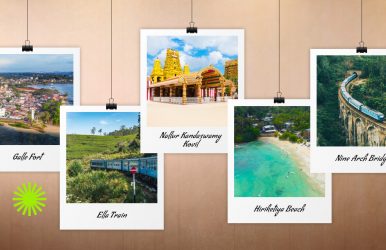
However, I was already in Ella and had a day after visiting the iconic Nine Arch Bridge and exploring all the other top attractions in Ella

So, I took a bus from Ella to Galle. The bus #31 was moderately crowded, and I was enjoying the local experience. 

That bus from Ella to Kudawella Beach took around 6 hours, and the ticket price was LKR 350. 

What Are The Things To Do In Kudawella Beach? 

Kudawella Beach is a place that offers you the ultimate flexibility. 

Yes, there are a few hotspots when you are on the beach. However, you can spend your entire day without doing anything. 

Moreover, it is a delightful place for amateur surfers. 

Still, here are a few things to do in Kudawella Beach, along with surfing and chilling. 

1. A Walk To The Hummanaya Blow Hole

I loved walking to the Hummanaya Blow Hole on the eastern side of the Kudawella Beach. However, to see the water shooting up, you have to reach the viewing point at the top of a cliff. 

The cliff also has a safety barrier. 

It is the only blowhole in Sri Lanka and the second-largest in the world, shooting the water at a height of 25-30 meters when the water forcibly enters a narrow cavern. 

I saw the blowing taking place at least 5-6 times during the short moment I halted there. The water shoots up as the sea movement builds pressure in the tunnels in the rock. 

2. A Walk To The Nilwella Beach

If you want even a more idyllic retreat, you can visit the Nilwella Beach from the Kudawella Beach. 

This beach has blonde sand, and the waves here are gentle. 

Moreover, I loved walking across the beach to reach a rocky island. The rocky island had many palm trees and pandanus trees. 

There was also a hiking trail, and as I advanced, I found many little coves and unique geographical shapes. 

3. Kayaking Around Mawella Lagoon

Mawella Lagoon was pretty, and the water was covered by beautiful lily flowers. 

Furthermore, there are many hotel rooms and massage rooms near the lake where you can chill or enjoy a relaxing massage session. 

However, just behind the Kudawella Beach, this lagoon is also ideal for kayaking around. 

It cost me around 8000 LKR, and I spotted many birds such as storks, beeaters, and kingfishers there. 

I heard that sometimes you can also spot crocodiles here. 

Kudawella Beach: The Best Spot For Surfing For Beginners 

As I have mentioned, Kudawella Beach is a beginner-friendly surfing spot. 

Unlike Hiriketiya, you will not find outer waves here. You can only surf here at the beach break, which is further on the inside of the bay. 

So, it is safer than Hiriketiya Beach. 

In fact, even in the dry season from November to March, the waves seldom reach a height of more than 4 feet. 

However, you have to be watchful of the few rocks in the water. Having said that, during the dry season or the peak surfing season, the water of the Indian Ocean is crystal clear. 

So, you will be able to see the rocks clearly. 

Moreover, on the Kudawella Beach, there are two surf rentals. However, when I visited, there was a longer queue in front of the Saranga at Kudawella Surf School, and its surfboard-shaped signboard also looked pretty cool. 

What Is The Best Time To Visit Kudawella Beach? 

November to March, or the dry season, is the best time to visit the Kudawella Beach. 

Long hours of sunshine make these months ideal for beach activities. However, there can be sudden rainfalls. So, you have to carry your rain gear. 

However, the wet season from March to August, despite having fewer crowds, is not ideal as there can be harsh storms and heavy rainfall. 

Where To Stay Near The Kudawella Beach? 

When I visited Kudawella Beach, it was still very pristine, and thus it is a quintessential beach on the southwestern coast of Sri Lanka. 

You will find only a few hotels here. 

Also, if you want to find an accommodation here, you can stay on the beachfront or in hotels near the lagoon. 

Here are some of the places where you can stay. 

Sisi Place

The Sisi Place is on the hilltop at the west end of the beach. It is the most budget-friendly option here with clean and comfy rooms. 

Simply Peace 

Choose Simply Peace if you are looking for a luxury accommodation near the lagoon. 

It is a beautiful pool where you can relax. Furthermore, it has a garden where you can enjoy birdwatching. 

Calma

I loved the pastries and coffee at the on-site cafe of Calma. With a sand front, it exudes a quintessential Balinese bungalow aesthetic. 

Moreover, you can take a short tuk-tuk ride from Kudawella Beach to Hiriketiya Beach. There, you will find more diverse accommodation options, including Airbnbs.

Share on Social Media

Sibashree is a travel, culture, and leisure writer who has been writing since the age of 12 and professionally since 2014. With more than a decade of travel writing experience and journeys across India and several parts of the world, she brings a deeply personal and thoughtful perspective to her work. A student of English Literature and Mass Communication, Sibashree has always viewed travel as more than movement — for her, it has been a way of understanding people, cultures, and herself. Her passion for spiritual exploration has also led her to many unusual and meaningful destinations over the years. Outside of writing, Sibashree enjoys watching European cinema, reading about global politics, and reflecting on the stories hidden within everyday places.

Leave a Reply

Your email address will not be published. Required fields are marked *

title-img Related

READ MORE Dickwella Beach

Why Is Dickwella Beach Surfing, Turtles, Nightlife And Other Activities Worth It?

BY  Sibashree May 26, 2026

If your itinerary of things to do in Sri Lanka is focused on Southern adventures, Dickwella Beach is a must-visit.  Also, like the Tangalle Beach, it is a place that is less touristy. However, Dickwella Beach is not just a place to relax, and Dickwella surfing is a sought-after experience for backpackers and adventure lovers.  In this article, I will talk about the location of Dickwella Beach, how to reach it, turtle watching, surfing, and other fun activities at Dickwella Beach.  Where Is Dickwella Beach? How To Reach It?  Though the Hiriketiya Beach is a more popular alternative, the Dickwella Beach in Matara is a delightful coastal getaway.  It is between the towns of Matara and Tangalle in Southern Sri Lanka. Once you reach Hiriketiya Beach, you will easily get buses or tuk-tuks to Dickwella Beach.  I took a tuk-tuk from Matara to Dickwella Beach, and it cost me around LKR 2000.  What Are The Things To Do At Dickwella Beach?  From a peaceful swimming experience in the Indian Ocean to surfing along the waves of the Hiriketiya Bay, Dickwella Beach is a place to have coastal fun without much noise or rushing around.  Also, spot the turtles, visit the Wewurukannala Vihara Temple, and enjoy every experience awaiting you.  1. Relaxing At Dickwella Beach With sandbars and natural reefs, Dickwella Beach is a peaceful place where you can unwind.  Furthermore, the protection of sandbars and natural reefs makes the water here safe for swimming. So, it is a family-friendly beach with turquoise water and long stretches of golden sand.  Moreover, here, you will find local fishermen enjoying a boat ride in their traditional boats, and also don’t forget to enjoy a king coconut drink when you are on the beach.  2. Dickwella Beach Surfing  Dickwella beach surfing is difficult because of its rocky obstacles. The nearby Hiriketiya Bay is a safer and more powerful choice for surfing.  The beach break in the center of the Hiriketiya Beach is ideal for beginners and intermediates. It has gentle and rolling waves.  On the other hand, the reef break on the left side of the bay is ideal for advanced surfers. Here, the wave can swell up to 8 feet, and the water rolls over shallow coral reefs.  December to April is the best time for surfing in Dickwella Beach.  3. Visiting The Hummanaya Blowhole I had mentioned the Hummanaya Blowhole when talking about the Kudawella Beach. It is the largest and only natural blowhole in Sri Lanka and the second largest in the world.  In Kudawella fishing village, this blowhole looks like a natural water fountain that pushes the water 30 meters upward, and at the same time, it makes a fascinating “Hoo” sound, and eruptions are quite powerful.  4. Spotting Turtles  I just took a five-minute tuk-tuk ride to reach Turtle Point Bathigama from Dickwella Beach. This sheltered bay is the haven of green turtles, which frequent the shallow, calm waters to graze on sea moss.  Furthermore, the conservation rangers here offer ethical snorkeling tours so that you can spot the adorable turtles without any harm to their nests.  November to April is the best time for spotting turtles here.  Along with the Turtle Point Bathigama, another fascinating place for finding the sea turtles is the Polhena Beach. It is at a distance of 20 km from Dickwella Beach.  5. Visiting The Wewurukannala Vihara Temple Sri Lanka is a place that impresses you with its Buddhist wonders at every nook. Similarly, if you are in Dickwella Beach, you must not miss a visit to the Wewurukannala Vihara.  I just took a short drive from Dickwella to reach the Wewurukannala Vihara Temple. It is home to the tallest Buddha Statue in a seated position.  The towering 50-foot statue humbles you. Furthermore, the temple complex has various sections, and before I could see the statue, I had to undergo the Tunnel of Hell.  Here, you will see giant models that depict the consequences of deviating from the path of righteousness.  Moreover, the temple walls show wonderful illustrations that depict the stories of Buddhism and Buddha’s life.  These illustrations are also the flagbearers of the rich artistic tradition of Sri Lanka. 6. Snorkeling  Dickwella Beach, with its protected water, offers the safest and most ethical environment for snorkeling.  If you are a diver or snorkeler, you will especially love the Pehambiya area, which is on the western side of Dickwella Beach.  This is an excellent spot for snorkeling, as you will find many vibrant marine animals along with colorful fish in their natural habitat.  Moreover, October to April is the best time for snorkeling in Dickwella Beach.  You can either bring your own snorkeling gear or rent it locally to get under the water and explore the most vibrant coral reef.  7. Swinging Over The Ocean  Sri Lanka is a rage on social media, and as the Dalawella Beach has its Instagram-favorite swing, you will also find a swing at Dickwella Beach.  The swing here suspends from a coconut tree, and you can enjoy a ride in it to enjoy the most amazing views of the water from above.  You will feel like a bird as the ocean breeze caresses your hair.  Also, sunset is the best time to enjoy a ride in this swing, with stretches of sand and greenery around, which allows you to take the most Instagram-worthy shots.  8. Having The Best Seafood  Like Ahangama or other fishing towns in Sri Lanka, Dickwella also has a strong fishing community.  The fishermen here catch fresh fish, seafood, and especially, you will get amazing prawns here. The fresh prawns taste heavenly with local spices and flavors.  You can have this spicy prawn dish at the nearby Dickwella Resort & Spa. Or, for a more authentic experience, you can explore the street food stalls in the Dickwella Market.  The Dickwella Market is most happening on Sundays as the air is filled with rich aromas of spices and flavors.  Ending The Day At Dickwella Beach With The Ultimate Nighttime Experience  The nightlife of Dickwella Beach is intimate. The beachside lounging experience here is relaxing, where you can cherish a cocktail and live music.  Smoke & Bitters is the most high-profile open-air bar in Dickwella. Its creative cocktails are acclaimed internationally, and don’t miss its Sri-Lankan-inspired Tapas.

READ MORE things to do in arugam bay

What Are The Things To Do In Arugam Bay? Know Why A Visit To Arugam Bay Is Worth It

BY  Sibashree May 29, 2026

Golden sands, world-class surf breaks, and a distinct bohemian charm!  All these make Arugam Bay, another southeastern coastal gem of Sri Lanka, stand out.  This sleepy fishing village wakes up with the swelling of the ocean. Also, the destination creates an expert balance between a high-energy aquatic sports culture and a deeply relaxing and off-the-beaten-path atmosphere.  You can even be an experienced longboarder ready to ride an iconic right-hand point break. You are also an enthusiast of slow travel, looking to explore ancient temples in the jungle or pristine national parks.  Arugam Bay offers an unforgettable tropical escape for all types of travelers.  Moreover, since Arugam Bay is not as busy as the traditional central southwestern travel loop of Sri Lanka, it still has a raw and authentic identity.  So, in this article, I will discuss the things to do in Arugam Bay and my experience there.  What Are The Things To Do In Arugam Bay?  Arugam Bay is not the usual idyllic coastal getaway you are looking for.  From being an adventure hub for surfers across all expertise levels to climbing the Elephant Rock and hiking to the Ancient Kudumbigala Monastery, it is a versatile destination for backpackers, solo travelers, and families.  1. Learn To Surf The Legendary East Coast Waves  The local coastline is home to a happening surf community, and the dotting crescent bays offer optimal wave conditions for every tier of experience.  Moreover, as I walked through the main street, I found an abundance of surf shops offering professional instruction and gear rental.  Surfing For Beginners At Arugam Bay  If you are a beginner, you have to stick to the main crescent of Arugam Bay Beach.  Furthermore, the sandy bottom here is incredibly forgiving. So, if you are a beginner, you can pay 2,000 to 3,500 LKR to a local instructor for a 1.5-hour lesson.    Moreover, the board rentals are highly economical, and you have to pay around 400 to 800 LKR for a board rental for a day.  If You Are An Intermediate Or Advanced Surfer  You can take a short tuk-tuk ride north to Pottuvil Point or Whiskey Point.  Furthermore, if you are seeking maximum power, you must visit the Main Point or venture south to the secluded A-frame waves at Peanut Frame.  2. Relaxing At Arugam Bay Beach The central beachfront of Arugam Bay is one of the most beautiful shorelines in Sri Lanka.  The golden sand and leaning coconut palms welcome you to relax at the end of a multi-day itinerary.  Enjoy a fresh king coconut, lay out a towel, or rent a dedicated sunbed from popular beachside establishments like Friends Indeed or the Upali Beach Resort. Moreover, you can enjoy a refreshing swim, and if you don’t want to navigate around surfboard traffic, you can walk to the right-hand side of the bay. 3. Watching The Sunset From The Elephant Rock  Elephant Rock is the best location to watch the sunset in Arugam Bay. I just took a short drive for 20 minutes from the town to reach this massive natural rock formation.  This rock formation stands at the end of the unpaved track where the jungle meets the sea.  The Climb  After reaching the trail, I had to take a steep 10-minute walk to reach the top of the Elephant Rock.  From the top of the rock, you will enjoy a 360-degree view of the wild coastline and watch surfers in action. Wildlife Precautions  At the base of the rock, there is a tidal lagoon, and it is a known habitat of wild crocodiles.  So, you must not wade into this water.  Moreover, elephants roam through this corridor during twilight frequently. So, you must come down from the rock and depart the place before darkness.  Cost  A tuk-tuk ride from Elephant Rock to Arugam Bay costs between LKR 800 and 1000. 4. Hiking To The Ancient Kudumbigala Monastery  The Kudumbigala Monastery is located at a distance of around 30 kilometers from Arugam Bay. This monastery was built in 246 BC during the reign of King Devanampiyatissa. This was a sweeping rock monastery, which was a sanctuary for the Buddhist monks who wanted to retreat from urban centers.  The site is expansive, and here, you will see around 200 ancient caves beneath monolithic boulders.  I trekked up a series of carved stone stairs through dense jungle canopy to reach the summit.  There stands the Belumgala Stupa, the only surviving cylindrical stupa of Sri Lanka. Moreover, from here, you can enjoy an uninterrupted view of the Kumana National Park's emerald forests extending all the way to the Indian Ocean. However, this area is a wild animal migration path. So, you have to exercise caution or hire an experienced local driver while exploring the area.  5. Wilderness Safari In Kumana National Park If you are done exploring the southwestern reserves, you can head to Yala East or the Kumana National Park.  Very close to the south of Arugam Bay, it offers an intimate environment for a wilderness safari as it receives a low volume of tourist jeeps.  Furthermore, this national park stands out as the sanctuary of many migratory birds, which mostly visit between April and July.  Also, on a usual 3-hour drive in the morning or afternoon, you will spot wild Sri Lankan elephants roaming the marshes, mugger crocodiles, wild boars, golden jackals, and, if fortune favors you, an elusive leopard.  Moreover, the national park remains open from 6 AM to 6 PM, and you can easily arrange private 4x4 game drives through experienced local services like Arugambay Agenda or Budget Arugam Bay Tours & Safari on the main strip. 6. Marveling At The Seaside Muhudu Maha Viharaya Stupa The Muhudu Maha Viharaya is amidst the sand dunes of Pottuvil Beach. It is a fascinating historic site, and it is known as the “Temple of the Ocean.”  Moreover, the history of the stupa goes back 2000 years, and this peaceful white stupa has many statues. 7. A Peaceful Pottuvil Lagoon Safari  If you want a non-motorized, tranquil experience, you must take a boat ride through the Pottuvil Lagoon's mangroves, operated by local fishermen. Moreover, this is an amazing activity to spot wildlife such as elephants, water buffalo, and monitor lizards up close.  You must join a local community-based tour of 2 hours here. The tour will cost 2,000 LKR ($6 USD) per person. Read Also: What Are The Places To Visit In Matara? A Southern Sri Lankan Commercial Hub With Dutch Colonial Heritage What Are The Best Places To See In The Sacred City Of Anuradhapura, Sri Lanka? Why Is Habarana Beyond Just A Gateway To The Cultural Triangle Of Sri Lanka?

READ MORE how to get from colombo to galle

How To Get From Colombo To Galle: Know The Best Options For Traveling The Distance 

BY  Sibashree Jun 6, 2026

The historical Galle Fort, a UNESCO World Heritage Site, is going to play an important role in the tourism growth of Sri Lanka in 2026.  Its colonial-era landmarks, such as the Groote Kerk, the Dutch reformed church or the Galle Clock Tower, the living heritage, and the rich maritime history make Galle Fort such a prominent landmark in the landscape of cultural tourism in Sri Lanka.  It is also easily accessible from the Bandaranaike International Airport in Colombo, at a distance of around 153 km.  Various bus routes between Colombo and Galle, and the train connectivity ensure a smooth journey.  Here are more details about how to get from Colombo to Galle.  How To Get From Colombo To Galle? Know The Transport Options The best way to get from Colombo to Galle is to enjoy a scenic train ride. However, if you miss the train, you can also opt for a local bus ride.  Also, if the budget is not a constraint, you can book a ride from a ride-hailing app or book a cab to travel the distance by road.  Here, I will decode the train, bus, and private transfer journeys along with details such as the travel duration, ticket pricing, and amenities.  Moreover, the journeys in buses and local trains offer distinct cultural experiences, as I have mentioned in my Kandy to Ella train journey blog.  1. How To Get From Colombo To Galle By Train?  To get from Colombo to Galle, you can plan a coastal train ride.  Here, the railway track runs along the palm-fringed coasts for most of the journey.  Moreover, the ocean waters here will crash just meters away from your open window.  So, overall, it is, in no way, a mundane commute experience. You are going to have an experience of a lifetime.  You can have a look at the table below to know about the train timings. (Source: Sri Lanka Railways).  Departure From Colombo FortAvailableArrival In Galle 6:17 AM Saturdays, Sundays, and Holidays 8:32 AM6:50 AMEveryday9:29 AM8:35 AMEveryday10:49 AM10:30 AMEveryday12:49 PM2:40 PMEveryday4:57 PM3:50 PMEveryday5:57 PM4:47 PMEveryday7:04 PM5:32 PMMonday to Friday (Except Holidays)8:25 PM5:31 PMSaturdays, Sundays, and Holidays 8:05 PM5:51 PMEveryday9:29 PM6:16 PMExcept Saturdays and Sundays8:40 PM7:30 PMEveryday11:10 PM The trains have second-class and third-class sections.  The ticket price for the second-class commute is LKR 500, and for the third-class commute it is LKR 240.  How To Book The Tickets To Get From Colombo To Galle By Train?  You can book the ticket from Colombo to Galle online (reserved) or offline (unreserved).  If you are traveling between December and April, it is the peak season for a trip to Sri Lanka. So, you must book the tickets at least 32 days in advance from the Sri Lanka Railways online seat reservation portal.  However, in the off-season, you will get the tickets a few days before.  In addition, you can book a train ticket from the local counter at the Colombo Fort Railway Station.   2. The Colombo To Galle Express Bus: Speed And Comfort If you want a more comfortable journey to get from Colombo to Galle without spending much money, you can try the bus routes.  Express Highway Bus (EX01) Duration: 2 hours to 2.5 hours Route The bus travels through the Southern Expressway (E01).  Moreover, if you choose this route, you will be able to bypass every coastal traffic, and you will reach faster than the coastal route buses. Traveling Experience The buses are usually fast and relatively smooth.  Additionally, the buses are very comfortable, usually air-conditioned, and have comfortable cushioned seats.  Moreover, the journey through this route is through the highway, which means that you will not be able to see any ocean views. Where To Catch The Bus From These buses depart from the Makumbura Multimodal Center or the Colombo Bastian Mawatha Bus Terminal.  Additionally, these buses are frequent you will be able to catch a bus every 20 minutes to 30 minutes. Coastal Route Bus (Route 02) Duration: 3 hours to 4 hours Route Buses of this route pass through the coastline, giving you an amazing coastal view.  These buses pass through some magnificent towns like Mount Lavinia, Wadduwa, and Hikkaduwa, which enhance the beauty of the journey. Traveling These buses will provide you with an authentic and local Sri Lankan ride.  Sometimes the ride can also be chaotic but enjoyable. Moreover, if you choose these buses, be prepared for a bold and rapid ride.  These bus rides are often characterized by a stop-and-go rhythm because of their sudden bursts of speed.  Furthermore, these bus rides are enjoyable with loud, crowded, and vibrant locals hopping on and off, and street vendors selling snacks.  Finally, the most amazing part of this bus ride is the spectacular views of coconut palms and the Indian Ocean. You can also jump off and go around the beach towns along the way. Where To Catch The Bus From  You can catch these buses from the Central Bus Stand near the Colombo Fort Railway Station. Some Tips For Your Ride Here are some other details you need to know if you want to get from Colombo to Galle.  Ticket Prices These buses are very affordable. The ticket prices depend on whether you take a local non-AC bus or an AC highway bus. The ticket prices usually range between LKR 300 and LKR 1000. Luggage You usually won't find a cargo hold on coastal buses. In such situations, you will need to keep your backpack on your lap or squeeze it into overhead racks. Music And Noise If you have never been on a Sri Lankan bus, this is going to be a light-and-sound journey for you.  Public buses in Sri Lanka are known for their lively atmosphere, featuring Sri Lankan pop music and colorful interiors, which you can enjoy throughout the journey. Private Transfers And Taxis: Seamless Door-To-Door Service Suppose you are traveling with family or small children.  Or, if you are part of a group where everyone is carrying heavy luggage, you can choose a private transfer.  Also, a private transfer can be of two types.  Taking A Private Taxi  A private taxi will pick you up from the Bandaranaike International Airport or your hotel in Colombo and drop you off outside your accommodation inside the Galle Fort ramparts.  You will enjoy the ride through the Southern Expressway.  A private taxi ride on this route will take between 1.5 and 2 hours.  However, the charges will be really high as a standard sedan will cost between LKR 15000 and 20000.  Using Ride-Hailing Apps If you are traveling to Sri Lanka for the first time, you can avoid negotiating with unpredictable street drivers.  You can book a cab using local ride-hailing apps such as PickMe. It is the premier local Sri Lankan ride-hailing platform. Furthermore, you can also use Uber to operate reliably and extensively throughout the Colombo metropolitan area.  The price range for these cabs from Colombo Fort to Galle is between LKR 8000 and 12000.