
What Are The Places To Visit In Matara? A Southern Sri Lankan Commercial Hub With Dutch Colonial Heritage

Matara, the second-largest city in southern Sri Lanka, is an important gateway to Dickwella Beach, Hiriketiya Beach, or Talalla Beach.  

However, beyond that, Matara is a place where the Dutch colonial heritage meets vibrant culture. 

Now, talking about this part of Sri Lanka, places such as Mirissa or Galle get more prominence. 

However, as I have also mentioned on my blog on Talalla Beach, Matara felt more intimate. 

First of all, it was not tourist-heavy, and it is yet to get out of its shell of a hidden gem. Secondly, from beaches to historical landmarks and spiritual retreats, you will find everything in and around Matara. 

So, in this blog, I will talk about the places to visit in Matara in detail. 

What Are The Best Places To Visit In Matara? 

Matara is now gearing up for the Sri Buddha Year 2570 State Vesak Festival on 27th May 2026.  

It will take place at the Midellawala Ancient Temple premises at Thihagoda in Matara. 

The program involves a week-long celebration and will continue till 2nd June, 2026. 

From moral teaching to spiritual learning and sessions on environmental conservation, this week will be significant for the people of Matara and the followers of Buddhism in the country. 

Nevertheless, if you are in Matara, do not forget to visit these places. 

1. Polhena Beach: Swim, Snorkel, And Relax

Polhena Beach impresses at first sight with its calm water. The water here is shallow, making it one of the most family-friendly beaches in Sri Lanka. 

Furthermore, the protected coral reef here makes it ideal for snorkeling, even for beginners. 

When you snorkel or swim here, you can find many species of reef fish. I could even spot a few sea turtles here as I walked a few meters from the shore. 

Above all, Polhena Beach is a great place to unwind. Also, watching the sunset here was a wonderful experience, with the sky changing colors and those colors reflecting in the water. 

2. Matara Fort: A Must-Visit For A History Buff 

Matara Fort A Must-Visit For A History Buff

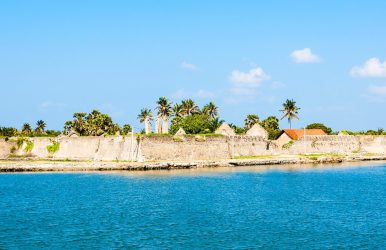
If you are fascinated by the colonial history of Sri Lanka, Matara Fort is a must-visit. 

You know, the Galle Fort is iconic. However, the Matara Fort also has a history of Portuguese and Dutch colonialism in this part of the world. 

The Portuguese built this fort, and later in the 17th century, the Dutch reinforced it. 

Furthermore, the best part of the Matara Fort is how it still has an active presence in the daily life of the town. 

There are schools, government offices, and shops inside the wall. Moreover, when I reached, I heard the noise of local boys who were playing cricket inside the fort. 

I started talking to them, from Sangakkara to the rising P Nissanka, we covered a lot of players from the country in our discussion. 

It was a fun interaction. Now, talking about cricket has been one of the most important things to do in Sri Lanka for me. 

Again, as I walked through the fort, I visited the old Dutch church, which was built in 1706. Moreover, from the Matara Fort, I enjoyed amazing views of the Indian Ocean. 

Being a public district, the fort does not have an entry fee, and you can enjoy a walk anytime you want. 

3. Paravi Duwa Temple: One Of The Best Spiritual Places To Visit In Matara 

Paravi Duwa Temple One Of The Best Spiritual Places To Visit In Matara

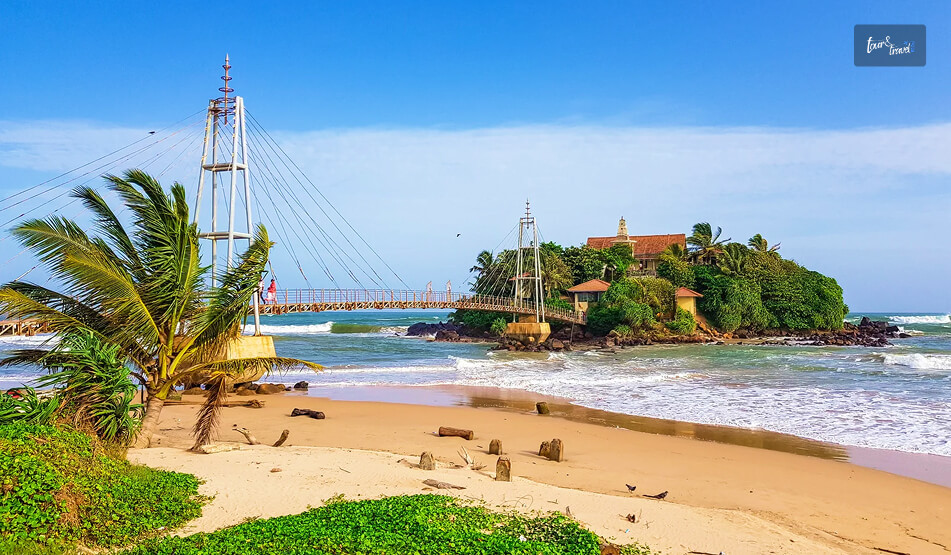
The floating temple, or the Paravi Duwa Temple, is on a small island called Pigeon Island or Paravi Duwa. 

You have to walk through the footbridge connecting the mainland and the island.

If Matara Fort offers you an insight into the region’s history, this floating temple is all about serenity. 

The temple has many stunning Buddha statues and a golden Stupa. However, the most fascinating thing is the replica of the footprint on Adam’s Peak. 

Furthermore, here, you will enjoy a stunning coastal backdrop.  

The temple remains open from 6 AM to 6 PM, and it is best if you walk through the bridge during the sunrise. 

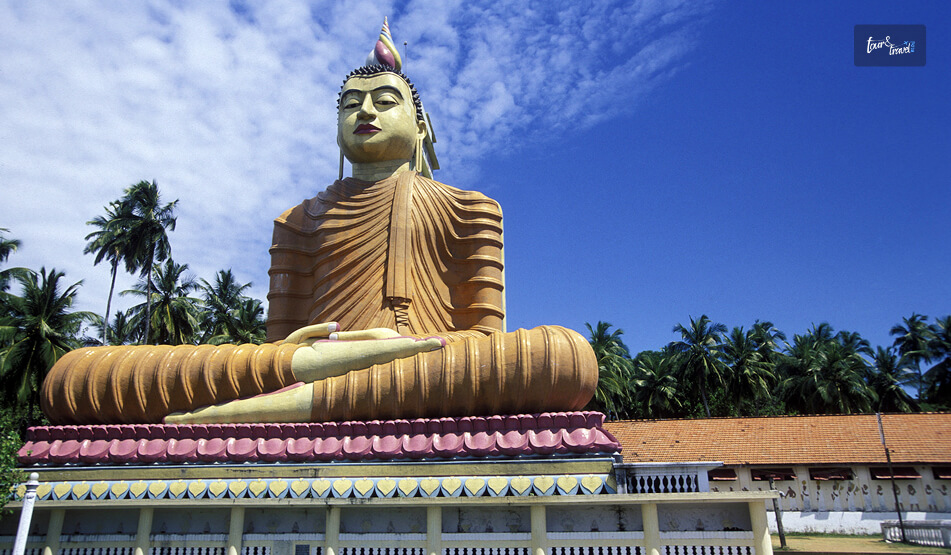
4. Weherahena Temple: A Proud Example Of Modern Buddhist Architecture 

Weherahena Temple A Proud Example Of Modern Buddhist Architecture

On the east side of Matara, the Weherahena Temple has the biggest seated Buddha Statue of Sri Lanka. 

The statue is 39 meters tall, and here you will find an underground tunnel. 

Now, walking through the tunnel was a fascinating experience. There, you will see more than 200 murals about the life of Lord Buddha. 

Moreover, the tunnel remains open from 6 AM to 8 PM. 

5. Star Fort: A Dutch Colonial Heritage 

The Star Fort, close to the Matara Fort, originally went by the name of Redoute Van Eck. 

It is a hidden gem in Matara, but the architecture here is equally fascinating. 

Furthermore, the fort gets its name from its unique six-pointed star shape. Built in 1765, the fort had a strategic position to prevent attacks from the land. 

The Matara Fort, however, was more instrumental in protecting against attacks from the sea. 

Also, you must not miss a visit to the Star Fort museum, which offers insights into the Dutch colonial history of Sri Lanka. 

The fort remains open from 9 AM to 4 PM, and I had to pay an entry fee of around ₹100. 

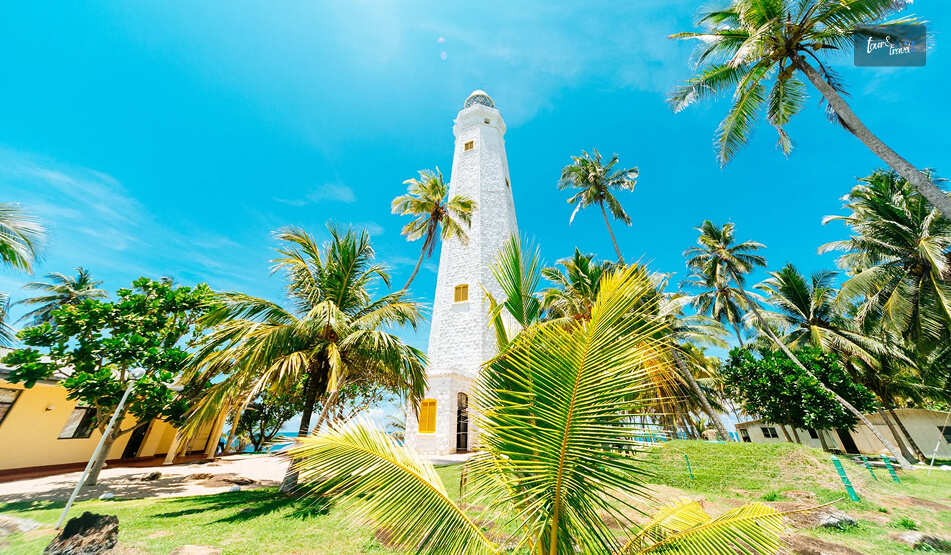
6. Dondra Head Lighthouse: Sri Lanka’s Southernmost Part 

Dondra Head Lighthouse Sri Lanka’s Southernmost Part

I took a short tuk-tuk ride from Matara to Dondra, the southernmost part of Sri Lanka. 

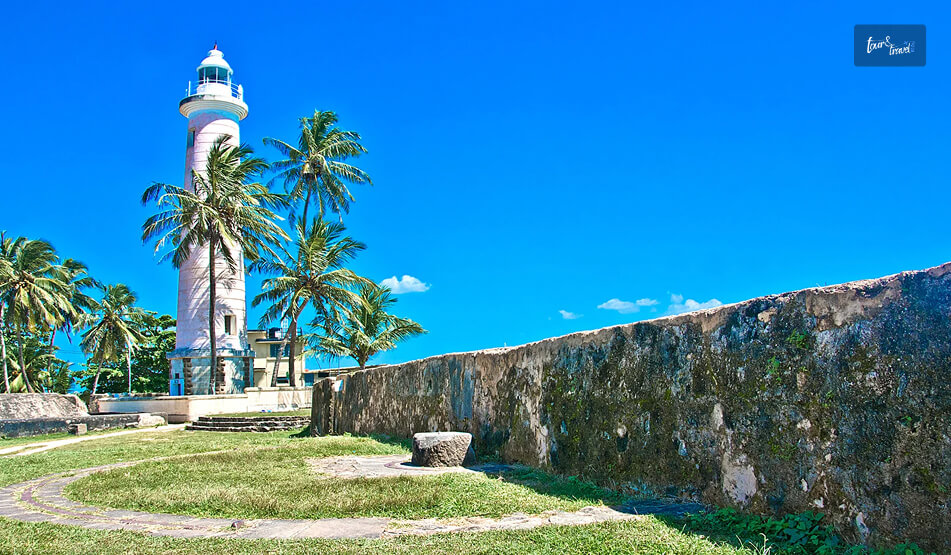
The Dondra Light House, with a height of 49 meters, is the tallest lighthouse in the country, and this 1889 fort offers an amazing view of the Indian Ocean. 

However, they did not allow the visitors to climb up the lighthouse. So, instead, you can enjoy a coastal walk and take the best snaps for your socials. 

7. Matara Local Markets: Offering Insights About Local Culture And Flavors 

I always believe that to know a place, you have to explore its local markets. The Matara local market smells of handicrafts, tropical fruits, and spices. 

Moreover, here, you will enjoy prawn fritters or isso wade and pol sambol, even kottu roti, the authentic delicacies of Sri Lanka. 

Furthermore, despite the language barrier, the crowd there was so friendly and knowing I am from India, some of them even shared how they feel the solidarity. 

So, the next time you are in Matara, don’t just treat it as a stopover for the popular southern Sri Lankan beaches. 

Try to soak in the history, culture, and spiritual vibe of this beautiful coastal town.

Share on Social Media

Meet Sibashree Bhattacharya, a travel enthusiast who has a decade-long experience in transcending virtual barriers with her words! Her deep love for travel is apparent from her travel escapades to the mountain, often taking her readers on a journey, her words acting as Portkey! Fun fact: Sibashree loves to dive deep into the history of the places she is about to visit, making her travels even more wholesome. If you were wondering how her articles are not short of time travel, this answers it!

Leave a Reply

Your email address will not be published. Required fields are marked *

title-img Related

READ MORE cherry blossom kyoto japan

Cherry Blossom Kyoto Japan: 2026 Season And The Top Viewing Spots 

BY  Sibashree Mar 27, 2026

The cherry blossom season has arrived in Japan. The Japan Meteorological Agency has announced the arrival of the most coveted season in the country on 19th March, 2026.  The somei-yoshino tree of the Yasukuni Shrine had more than 60 blossoms open then, and that prompted the announcement.  So, the recent warm weather has caused the arrival of the cherry blossom season earlier than last year.  However, the season of cherry blossom in Kyoto arrived a few days later on 23rd March, 2026. So, currently, the fervor around the cherry blossom Kyoto Japan is at its peak.  With the country now becoming irresistible with the blooms taking over the parks and roads, here is more about the cherry blossom season in Kyoto and the best viewing points.  When Is The Cherry Blossom Kyoto Season? Timing a trip to the cherry blossom Kyoto season or to see Sakura is a crucial exercise. The beauty and charm of these flowers are fleeting.  So, the when part of it is equally important as the where part.  Check out the table below for an idea about when the cherry blossom season arrives in Kyoto and how it progresses.  Cherry Blossom Season Months Budding and Blooming of Cherry Blossoms Kaika or the First Blossoms Late March Early April Mankai or Full Blooms by 7th AprilMid-AprilPetals Start to Fall and Create Petal Carpets Everywhere However, like 2026, the season can arrive early or even a little late.  The variation happens because the present temperature impacts the budding and blossoming of flowers.  If the weather is warmer, the flowers will blossom earlier than the average season. On the other hand, if there is a cold snap, the flowers will arrive late.  However, Kyoto has an advantage in this regard thanks to its diverse microclimates. Also, it boasts different cherry blossom tree varieties spread across different elevations.  So, even if you miss the cherry blossom scene at any of the shrines in Kyoto, you may find the flowers at any other place.  What Are The Places To See Cherry Blossom In Kyoto? Kyoto and all of Japan celebrate the cherry blossom season. It is enriching to witness such a deep bond between the people there and nature.  They love clicking pictures of flowers, picnicking under the trees, and just soaking in the happiness and beauty the flowers bring.  However, if you want to experience the best of the cherry blossom scene, you need to know about the places with the best views.  1. The Philosopher’s Walk (Tetsugaku-No-Michi) The Philosopher’s Walk is a canal-side stone walkway winding its way along the base of Hikoshiyama (Eastern Mountain Range). I began my day here.  The name has significance, and legend has it that Professor Kitaro Nishida of Kyoto University (an early 20th-century philosopher) walked this route daily for meditative purposes. Thus, it’s now known as the “Philosopher’s Walk.”  When I first set foot on the Philosopher’s Walk, I could see why he was always walking there each day.  The entire length of the pathway is lined with hundreds of cherry trees leaning above the water, creating a ceiling of pale pink blooms.  I found myself continually distracted while walking to the shop, eat, or visit the small shrines draped throughout the landscape.  Even with hundreds of people visiting this site daily, I felt as if I were walking alone, contemplating life.  There is nothing that compares to the silence created by having cherry blossoms fall off branches and drift gently down into the slow-moving canal below.  I felt as if I had achieved a moment of peace, not as a tourist but rather as an individual taking time out of their busy lives to think quietly, like all the others on the path. 2. Maruyama Park (Maruyama-Kōen) The Philosopher's Walk is for reflection, and Maruyama Park is the place to be to party!  The number of people in the park and how electric the atmosphere felt, I have to believe it is the most popular place to view blossoms in all of Kyoto.  It serves as a hub of hanami (flower-viewing) culture within the city. A huge, famous weeping cherry tree serves as the main attraction of the park.  Seeing the tree in person was an overwhelming experience for me because its branches seemed to flow downwards like water from a fountain.  The portion of the park that surrounded the tree became a festival site.  I saw blue tarps lying all over the park, and the universal sign of hanami gatherings with friends and family, eating, drinking, and just being together under the flowers.  The edge of the park had many food stalls offering various foods like yakitori and sweet dango. 3. Shimbashi Street (Shirakawa-Dori) Later, as I headed to find Shimbashi Street in the Gion neighborhood, my guidebook boldly said that Shimbashi was the “most beautiful street in Asia.” When you first step into Shimbashi, you feel the essence of Kyoto’s refined beauty throughout the street.  Cherry trees line the street and form a thick canopy above the walkways, and beside the traditional wooden buildings, streams flow gently through the area.  Many of the wooden buildings along the way hold exclusive ryotei (expensive) restaurants, and the whole atmosphere feels as if it were pulled from a time before us.  The most exciting thing for me was the ‘parade’ of kimonos that I observed as I strolled.  Locals and couples routinely have their picture taken in a kimono (professional photo), and the vibrant colours of the silk kimono against the soft pastel cherry blossom trees made a beautiful visual transition from the past to the present.  I ended up discovering a small bistro at the end of Shimbashi Street that had cherry blossoms providing a tunnel effect above.  Eating lunch (al fresco) under the blooming tunnel while watching the many young couples walk past in traditional clothing was certainly the highlight of my time in the city.  It was both romantic and timeless and contained an ideal balance between the two. 4. To-ji Temple With the sunlight fading, I headed to the To-ji Temple.  The To-ji Temple is known for its five-story pagoda, which has the tallest wooden tower in Japan. However, what I was more excited to see was the massive, beautiful, weeping cherry tree. A trip to To-ji Temple in the evening is highly recommended.  They flood the entire grounds with bright white flood lights when it gets dark outside.  The weeping cherry tree illuminated with pink lighting is stunning against the night sky and the outline of the ancient pagoda.  Also, the weeping cherry took up most of the memory on my camera.  I spent a fair amount of time walking around the grounds. There are many other cherry blossom trees around the grounds that also have the same beautiful effect from the lights at night as well. They take on an almost ghostly, pearl-like quality that you can only get from external lighting at night. 5. Kiyomizu-Dera Temple No visit to Kyoto would be complete without going to see the Roji temple, aka the "Pure Water Temple."  However, viewing it in cherry blossom season looks like such a different experience from what I saw.  The main hall has a huge terrace about 97 feet long, which is one of the best places I found to view it. As I looked down from this height, I could see all across the surface of the mountain, where there were many different types of cherry trees blooming or not blooming along the slopes.  The pink blossoms (the cherry trees' flowers) create a nice light-coloured contrast with the dark, weathered wood of the temple architecture.  When I walked down the ramp toward the exit, I noticed there were more clusters of trees planted near the pond at the end of the flower field.  I saw the reflection of trees on the surface of the pond.  The temple complex is enormous, and the scale of the cherry tree blossoms in this area is impressive.  6. Arashiyama Last, I traveled to the far west side of the city to Arashiyama. It is about 8 km from downtown and is a really refreshing and beautiful area filled with nature. While standing just north of the Togetsu and looking up at the mountain beside me, I could see a dense tapestry of hundreds of cherry trees interlaced with evergreen trees. They made a perfect background for the Hozu River below me, with its many small boats full of people renting out their time to experience the beauty of the flowers from the water's side.  I was envious that I had not scheduled more time to experience this part of Japan.  I also thought that this (the hills full of flowers) was very similar to the Yoshino slopes.  On my way out of the area, I stopped at the Tenryū- ji Temple. I saw some incredibly large, mature cherry trees. These, along with the well-kept Zen gardens, appeared to be glowing against each other. Walking through Kyoto in the spring taught me that the cherry blossom isn't just a flower. It’s a vibe that settles over the entire city.  Is Osaka Or Kyoto Better For Seeing Cherry Blossom?  It’s difficult to pick a favorite between Osaka and Kyoto for the cherry blossom season. The vibes are very different.  While Kyoto has these iconic spots for seeing cherry blossoms, Osaka also has the Osaka Castle Park.  Furthermore, the scene in Kyoto is more traditional with temples, historical atmosphere, and the weeping cherry trees.  On the other hand, Osaka is more about picnics and exploring amazing food stalls.  However, Osaka is less crowded than Kyoto in the cherry blossom season. That is one advantage.  Also, Osaka is less expensive than Kyoto.  So, if you want less crowd and you are on a budget travel, Osaka will be your go-to place. Read Also: Is The Japan Rail Pass Worth It In 2026? Should I Buy Or Avoid It As A Conscious Tourist? What Are The Best Day Trips From Tokyo? Most Popular Ones You Will Love Is an Mt Fuji Day Trip From Tokyo Worth It? How To Plan It?

READ MORE Diyaluma Waterfall

Diyaluma Waterfall, Sri Lanka: The Eternal Memoir Of Love (Location, Hiking, And More)

BY  Sibashree Mar 16, 2026

After visiting the Nine Arch Bridge and the iconic blue trains, my next stop was the Diyaluma Waterfall, at a distance of around 45 km.  Now, Sri Lanka is full of hidden gems. Along with the Ritigala Forest Monastery, this waterfall has also offered me a slice of offbeat Sri Lanka.  Furthermore, the Diyaluma Waterfall, with a height of 220 meters, is the second-tallest waterfall in Sri Lanka, and it has many natural infinity pools.  If those were not reasons enough, Diyaluma Waterfall is irresistible for the local tragic love story associated with it. Also, it is a place of great ecological importance.  Moreover, the journey from Ella to Poonagala and the trek further offer an equally unforgettable experience.  Here are more details about visiting the Diyaluma Waterfall, its location, transport options, history, hiking experience, and more.  Where Is Diyaluma Waterfall?  The Diyaluma Waterfall is on the Colombo-Badulla highway in the Badulla district of Sri Lanka.  Koslanda, around 6 km west, is the closest town to the Diyaluma Waterfall.  Furthermore, it is located at a distance of around 30 km from Ella. Also, the waterfall is located about 196 km away from Kandy, the cultural hub of central Sri Lanka.  Moreover, the Kirindi Oya River has formed this waterfall. This river starts flowing near Bandarawela and flows across the central part of Sri Lanka.  How To Reach The Diyaluma Falls, Sri Lanka?  Tuk-tuks are easily available from Ella to Poonagala. Further, from the Poonagala village at the top, you have to do a short hike to reach the Diyaluma Falls.  However, you can also hike from Koslanda. This is a bottom-to-top hike and way more difficult than the top-to-bottom hike from Poonagala.  Also, the tuk-tuk to the Poonagala village cost me LKR 4000.  Moreover, remember that you have to inform your tuk-tuk driver that you need to go to the upper Diyaluma Falls and trek down from there. 1. Hiking From Poongala To Diyaluma Falls  Carry an offline map when hiking from Poongala to the Diyaluma Falls as the network is inconsistent here.  Furthermore, you must take your tuk-tuk driver as a guide or a different local guide for the hike.  My trek to the falls started from the Makaldenya Junction, and I walked for around 30 minutes to reach the Upper Diyaluma Waterfall.  The path is even, and that is why you need to wear proper hiking shoes with a good grip. Also, long and dry grasses cover the entire route.  You will find all the infinity pools here, and taking a bath is a must, considering the heat and strain of walking downhill.  Then, I took a walk of around 10 minutes to reach the Lower Diyaluma Fall. From there, you can see water falling into the valley from a height of 220 meters.  Also, this is the moment you realize the meaning of the Diyaluma Waterfalls. The name is a combination of Diya and Haluma.  Moreover, the name means the “liquid light” or a “rapid flow of water.”  2. Hiking From Koslanda To Diyaluma Falls  The hike from Koslanda is difficult. However, it offers an amazing view of the waterfall from the Diyaluma Falls Bridge below.  Furthermore, the hike takes around 20 to 30 minutes, and on this hiking route, you will find many snacks and coconut shops.  What Are The Things To Do At Diyaluma Falls?  To enjoy hiking and other activities at the Diyaluma Falls, you have to arrive a little early. The waterfalls are open from 6 AM to 5 PM.  Then, you can enjoy a bath in the infinity pools, relax on the rocks, or talk to the locals. In fact, I got to know about the history of this waterfall when talking to a local hiker.  1. Swimming In The Natural Infinity Pools Of The Diyaluma Waterfall On the edge of the main Diyaluma Waterfall, you will find the main natural infinity pool. Also, you will find many other natural infinity pools formed by the Upper Diyaluma Waterfall.  However, you must check with the locals and take enough precautions before getting into the water.  2. Relaxing On The Surrounding Rocks It may not sound very appealing to you. However, for me, who always cherishes TheLowDownUnder Travel experiences, it is a great thing to experience.  Sitting on a rock and seeing streaks of water gushing from a height of 220 meters. You don’t get to see these scenes often, right? Also, don’t forget to bring a towel if you want to sit on the rocks and relax.  3. Talking To The Locals  I come from a country where cricket is the religion. Sri Lanka also has a celebrated cricket team and has produced legends such as Sanath Jayasuriya, Kumar Sangakkara, Muttiah Muralitharan, and Arjuna Ranatunga.  So, it was great fun talking about cricket.  Then, a local guy shared the history of the Diyaluma Waterfall and the tragic love story associated with it. The History Of The Diyaluma Waterfall  A king once fell in love with a lady. However, she was from a lower caste, and the societal norms did not allow them to get married. So, they fled. Unfortunately, people against it chased them down, and the lady fell into the waterfall and died.  Safety Norms To Follow While Visiting The Diyaluma Falls  No set rule exists for the visitors to the Diyaluma Falls, and that is probably the most concerning matter.  The tourist inflow here is high, and most of them are adrenaline junkie.  So, stand on the edge and swim in the infinity pools, but with caution. Moreover, avoid visiting the waterfall in the monsoon season, from September to early December.  Even if you hike in these months, do not swim in the waterfall.  Overall, the Diyaluma Waterfall remains the symbol of the grandeur of nature, and the myths associated with it make it more intriguing.  So, if you are in Sri Lanka, don’t miss a hike to this waterfall, which is also at the epicenter of a unique ecosystem.  Moreover, enjoy the serenity and spirituality in the air.

READ MORE ahangama

Ahangama: Why Is It More Than Just Another Beach Town In Sri Lanka? 

BY  Sibashree Apr 7, 2026

If you could only cover the beaches in Sri Lanka, you would know how Sri Lanka, despite being a smaller country, carries the spirit of the subcontinent, “Unity in Diversity.”  If the beaches in Jaffna were a lesson to understand the livelihood of the local fishermen, the Hiriketiya Beach, with its unique horseshoe shape, has been a surfer’s delight.  Now, I am going to talk about Ahangama, another popular beach town in Sri Lanka, famous for its cool vibe and surfer breaks.  Earlier, it was known for its 19th-century Buddhist temple and the art of stilt fishing. However,  this beach town, in the southern coast of Sri Lanka, is now also known as a lifestyle destination.  The likes of Condé Nast Traveller are backing its charm as a cool fishing town.  Also, today, you may even ditch the best hotels in Galle, one of the major cities near the beach, thanks to the cafes such as The KIP, Marshmello Cafe or La Cafe Bistro.  Nevertheless, while surfing is Ahangama’s claim to fame and the budding food scene is the most happening thing right now, here are more things you can plan here.  What Are The Things To Do In Ahangama? Ahangama is now emerging as a really cool place, as, despite being a beach town in Sri Lanka, it has the right amenities for digital nomads.  While the surf and beaches offer the right dose of relaxation and the diverse communities offer the most eclectic experience, it also boasts many air-conditioned co-working and co-living spaces.  In fact, despite Galle getting more attention, if you are planning to try things to do in Galle, Ahangama, around 20 km away, will be a better base due to the presence of cool hotels, good food, and cafes.  Nevertheless, it is not just about breaking the waves.  Here are tons of other things to do in Ahangama. 1. Hitting The Surf The reef breaks of Ahangama are the best for intermediate and advanced surfers. The waves on the south coast are world-class.  Kabalana Beach itself is a great place to start your surfing expedition in Ahangama. Furthermore, you will easily get board rentals for around 800 LKR, and the sessions usually cost around 4000 LKR.  You can also surf near the Kabalana Rock, Sticks Surf Break, Rams Right, and Midigama.  2. Some Adventure At The Lamana Skatepark Lamana Skatepark is one of the best places if you want to experience the party scene in Ahangama.  Local skaters hit the bowl here daily. However, the live bands and the DJ music add some spunk to the air.  3. Swimming With The Turtles Dalawella Beach, a short tuk-tuk ride from Ahangama, is the place where you can swim with giant sea turtles.  Here, meeting the sea turtles was a different experience from how I saw them at the Sea Turtles Conservation Centre near Mount Lavinia Beach.  Also, some of the turtles here were around 50 years old, and they weighed around 200 kgs.  You can rent a snorkeling mask for around 300 LKR. However, stay away from feeding these turtles,  4. Safari At The Udawalawe National Park If nothing else, I will remember Sri Lanka for the endless and most delightful encounters with elephants.  I had mentioned spotting the elephants at the Udawalawe National Park as one of the best things to do in Ella.  However, as Ella is just 58 km away from Ahangama, you can also plan a safari if the latter is your base.  Along with the baby and mother elephants, you will also love spotting peacocks, monkeys, and buffalo here.  Moreover, when you are in Ella, don’t miss the iconic train ride on the Nine Arch Bridge.  5. Climbing Devil’s Rock With jungle walkways and eerie rock formations, the Devil’s Rock feels like a piece of Jurassic Park in Sri Lanka.  You will find this group of scary rocks as you go east from Ahangama and stop just before Midigama.  However, the only catch is that you will have to swim through the water with a medium current and during the low tide to reach Devil’s Rock.  The hike is also quite strenuous. So, it may not be the best thing to do in Ahangama if you are not a pro swimmer or fit hiker.  6. Scuba Diving In Unawatuna You have done diving in Raja Ampat, the Maldives, or Bali. However, scuba diving in Unawatuna is something different.  While you cannot expect the grandeur of these diving sites at Unawatuna, you can definitely find the Lord Nelson Shipwreck, exotic micro critters, coral reefs, and more in the water, at a temperature of around 20 degrees Celsius.  You can reach Unawatuna by taking a drive for just 15 minutes from Ahangama.     7. Cruising To Ying Yang Shack The term “hidden gems” has become so cliché these days! However, places like Ying Yang Shack can still keep the magic of the phrase alive.  Here, you literally take a ride in a handmade boat, and our boatman confided that he had made this boat with his brother.  I, along with the other riders to the Ying Yang Shack, had a chilled beer in my hand as our boatman cruised through the water and talked about the lush greenery.  I also spotted a monitor lizard and majestic eagles.  Then came the sunset, and our boatman started singing, and his voice echoed as the bats and birds filled the red sky.  The day ended well as his family made the most delicious and spicy BBQ meal for us. Where Is Ahangama? Ahangama is located in the Galle District of Southern Sri Lanka. It is located between Unawatuna and Midigama.  Furthermore, this surfing and swimming paradise is located at a distance of around 3 hours from Colombo.  How To Reach Ahangama? The Bandaranaike International Airport is the closest to Ahangama. The distance is around 143 km, and that can be covered by a car in around 3 hours.  Furthermore, you can take a train from the Colombo Fort Station and take a train to Ahangama via Galle.  In addition, you can take a tuk-tuk ride from Midigama or Weligama to reach Ahangama. Why Is Ahangama More Than Just A Beach Town In Sri Lanka?  The elite food scene and the amenities for digital nomads make it more than just a beach town in Sri Lanka.  With brunch spots such as Black Honey and dining spaces such as Coco Kitchen, it can now beat Galle for trying local and fusion cuisines in Sri Lanka.  Moreover, it offers a steady 30-80 Mbps internet connection, and the cafes and air-conditioned coworking spaces here have the infrastructure to support the lifestyle of digital nomads.  Ahangama: Frequently Asked Questions (FAQs)  Here are the frequently asked questions and answers about Ahangama Beach Town. 1. Is Ahangama Better Than Mirissa?  It is hard to pick a favorite between Ahangama and Mirissa. Ahangama is famous for its surfing breaks and a laid-back vibe. On the other hand, Mirissa has a classic beach vibe, and it is more famous for whale watching.  2. Should I Stay In Ahangama Or Weligama? Ahangama is your go-to place if you want to enjoy a boho-chic vibe during a beach holiday. On the other hand, Weligama is more of a hub for surfers who are beginning their journey.Also, despite a happening nightlife, Ahangama is a quieter retreat at night as compared to Weligama.  3. What Is The Ahangama To Mirissa Distance?  The distance between Ahangama and Mirissa is around 16 km. The travel time to cover the distance is around 32 minutes by road. However, you can also take a train from Ahangama to Mirissa and travel the distance in 19 minutes.