
What Are The Things To Do In Hakone? Know The Top Activities In 2026

The thing is, everyone said “Do ‘The Loop'” when I told them about Hakone. 

You know the train, cable car, ropeway, and pirate ship circuit. 

However, after a few days wandering those forested, winding trails through the volcanic hills, I saw what the crowd missed. 

The real magic isn’t in the itinerary. 

It’s in the quiet moments like washing cash in a waterfall, or soaking feet by a Shiba Inu. 

It is hard to ignore how deeply those small things connect to the place. 

If you’ve got more than a day or just want to break free from tourist traffic, step off the path. That’s where Hakone lives.

And here are the things to do in Hakone.

What Are The Things To Do In Hakone? 

What Are The Things To Do In Hakone

Hakone is the place that defines TheLowDownUnder Travel philosophy. Rush the day, and you miss the magic. 

So, without going for ticking a bucket list, here are the things to do in Hakone that offer an immersive experience.

1. Visiting The Open Air Art Museum: A Playground For The Soul

Visiting The Open Air Art Museum A Playground For The Soul

This was the one event I’d been hoping for, and it didn’t fall short. 

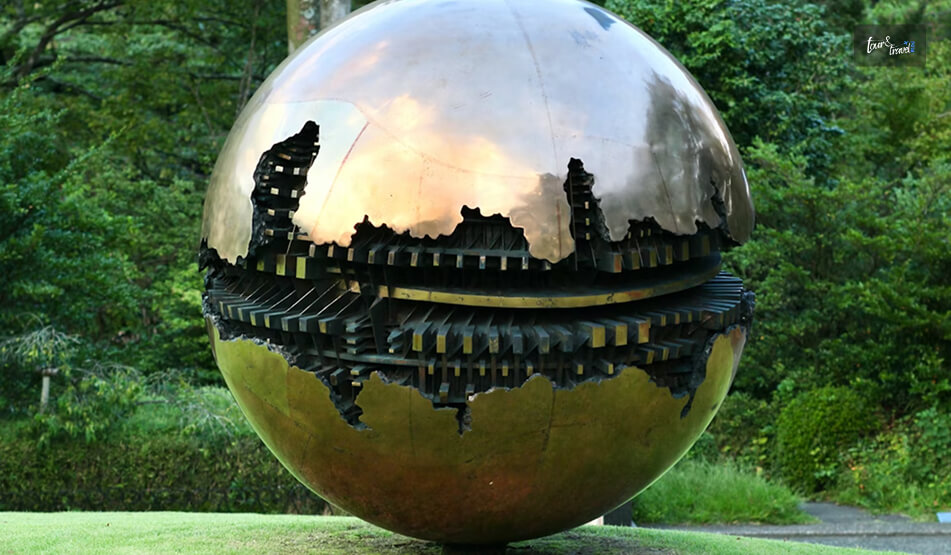
Picture 70,000 square meters of green space packed with over 100 huge sculptures.

Some of them are traditional Henry Moore bronzes, and others are wild, experimental setups like a giant head with “living hair” grown from plants. 

I found a figure lying on its back in the grass at one point. 

After weeks in Tokyo’s busy streets, that moment felt like a personal hit. 

The museum includes a Picasso Pavilion holding 300 pieces. 

I don’t really dig Picasso much and only skimmed it, but if you’re into cubism, you’ll be thrilled. 

It is open every day of the year, and there is no schedule to worry about. 

Try it if you want to walk around without carrying anything heavy.

2. Playing Football With A Furry Friend

Soaking feet in mineral water, quiet, simple, real. 

The Hakonenomori Footbath isn’t on the map like most spots. 

It’s tucked into a private garden behind a house, hidden from sight. 

Google Maps calls it a footbath, but that’s not what it really is. 

You pay a small amount and get to dip your feet in spring water with a clean towel provided. 

Dogs are welcome with no rules, no fuss. 

I showed up just as Monaka, a shiba Inu, hesitated over the edge. 

Her owners nudged her gently with their hands and voices. 

She stayed still, paws raised, like she didn’t know where to go. 

That moment stopped me in my tracks. If you don’t like being naked at an onsen, this feels safe and low-key.

3. The Art of “Ma”: Finding The Perfect Onsen

But Ma, the pause, is central in Japan. Hakone is where you feel it most. 

The Loop can be done in a day from Tokyo, but you miss the real soak. 

I stayed at Mount View Hakone. It was cheap but had great facilities. 

Public baths were indoors and out. 

The highlight was booking a private onsen for solo use. 

Tattoos still draw caution in Japan. If you’ve got ink, go private. 

Tenzan Onsen in Hakone-Yumoto is known for being tattoo-friendly, though rules are tight, usually just one inked person per group.

4. Washing Away Your Financial Woes

Who doesn’t crave wealth on a break? 

I stepped off the train at Tonosawa Station and spotted the Fukazawa Zeniaria Benzaiten Shrine right there on the platform. 

It’s small, tiny even, so glance, and you’ll miss it. 

The thing is, locals follow a real tradition.

They bring a ladle, drop yen in, then rinse it in the mini waterfall. 

The legend goes that whatever money you wash and spend later comes back to you, bigger. 

I haven’t seen my account blow up yet. Still, the ritual feels oddly peaceful. Hard to ignore how quiet everything is.

5. My Absolute Favorite: The Hundreds Of Faces At Choan-ji

I really don’t know what the rest of the world is doing.

This place should be in every guide, as Choan-ji Shrine is just amazing. 

The area comprises hundreds of small stone statues of monks, and each one of them has a unique facial expression, laughing, angry, or even a surprised one. 

Wandering through the moss-covered statues, I got lost in the silence for a whole hour. 

By 5 PM, there were only two more visitors around. It was like a really peaceful place. 

Pro Tip: Use insect repellent! The mosquitoes here are as loyal to the shrine as the monks are.

6.  Enjoy The Magic Of The Local Bus

This may sound strange, but amongst my top three experiences, one was just traveling by bus. 

Though the Hakone Tozan train is famous, it is usually crowded beyond capacity. 

I chose to take a bus from Hakone-Yumoto to the ropeway. 

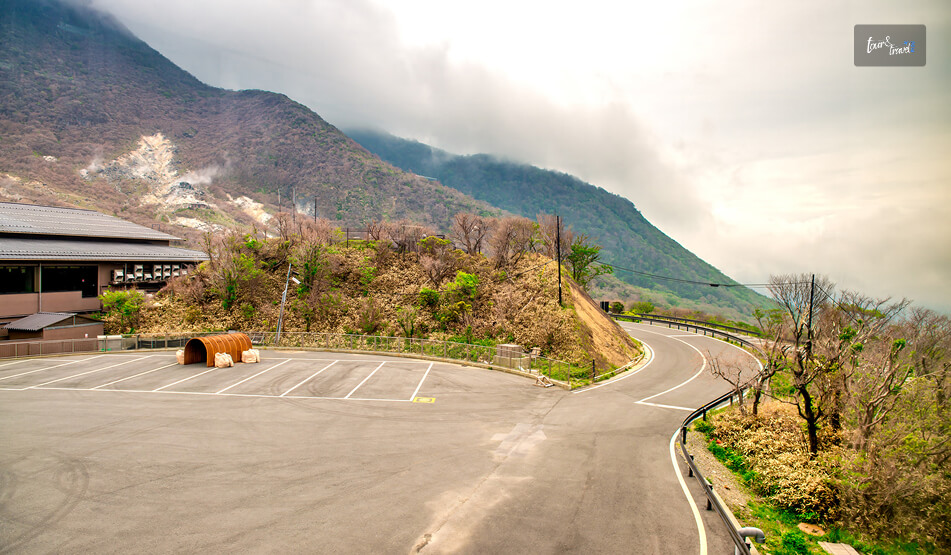
For half an hour, the bus ride gave me dozens of gorgeous, twisting mountain scenes which I wouldn’t have been able to see from the train. 

It was in this bus trip that something glittering blinked at me through the windows. A group of trees glistened like they were covered in thousands of small diamonds. 

Then, I signaled to the driver and got out at the stop door without hesitation. Also, to my great surprise, I was standing in front of the Venetian Glass Museum.

7.  Visit The Glass Trees And Blue Beer

The Venetian Glass Museum (or Hakone Glass-no-Mori) looks like something Disney would have created if they relocated to Italy. 

There are bushes with glass flowers and “Crystal Trees” that sparkle brightly in the sunlight. 

It is enchanting, glamorous, and exceedingly informative at the same time. 

In case you have extra time, I also suggest the Pola Museum of Art.

You must also visit the Narukawa Art Museum.

Moreover, the cafe here features a wonderful “Mount Fuji” view, and their famous blue beer comes in a Fuji-shaped glass.

8. Live The Dreams Of Anime Fans And The Wine-Bathers

If you’re into Evangelion, Hakone is your Mecca (after all, it’s the location for Tokyo-3). 

At the station, you can spot the themed vending machines as well as the EVA-Ya store. 

Also, if you are with your friends, don’t do what I did and miss out on Yunessun. 

It’s an Onsen theme park where you can wear a swimsuit and even take a bath in red wine or coffee. 

This time, I was alone and felt a little shy about wine-bathing solo, but next time it is definitely at the top of my list.

Read Also:

Share on Social Media

Meet Sibashree Bhattacharya, a travel enthusiast who has a decade-long experience in transcending virtual barriers with her words! Her deep love for travel is apparent from her travel escapades to the mountain, often taking her readers on a journey, her words acting as Portkey! Fun fact: Sibashree loves to dive deep into the history of the places she is about to visit, making her travels even more wholesome. If you were wondering how her articles are not short of time travel, this answers it!

Leave a Reply

Your email address will not be published. Required fields are marked *

title-img Related

READ MORE talalla beach

Where Is Talalla Beach? Know The Top Attractions And The Best Time To Visit 

BY  Sibashree May 4, 2026

The southern shores of Sri Lanka have many amazing beaches stretching from Tangalle to Dondra Head, or the southernmost tip of the country.  Talalla Beach is one of them, and it has sea vines, golden sands, and sleepy hotels lining the coast.  Furthermore, if you are a fan of the TheLowDownUnder Travel philosophy, Talalla is the perfect pick.  Again, if you are visiting the Hiriketiya Beach or the Kudawella Beach, the Talalla Beach is just a short tuk-tuk ride away.  Moreover, it is a peaceful place to see the turtles hatching and surf.  Here is more about the things to do in Talalla Beach, the nearby attractions, and other details. Where Is Talalla Beach?  Talalla Beach is just 6.5 km away from the Dondra Head, the southernmost part of Sri Lanka.  Also, it is between Dickwella and Matara towns.  You can, of course, take a taxi from Colombo to reach Talalla Beach after a journey of 3.5 hours.  However, if you are also traveling on a budget like me, you can take a train from Colombo to Matara, and then you can take a tuk-tuk ride from there. It costs around LKR 1500.  Also, from Matara, you will get a local bus to Talalla Beach, and the ticket price will be LKR 50.  Nevertheless, I was already at the Kudawella Beach, which is around 7 km away. So, I boarded a tuk-tuk, and it charged me 500 LKR. Surfing And More: What Are The Things To Do At Talalla Beach?  Now, many travel guides claim that surfing is one of the best things to do in Talalla Beach. However, the reality is that Talalla Beach is not a surfing spot.  Still, if you are visiting Talalla Beach, you will find many surfing breaks or spots on the southern coast of Sri Lanka nearby.  1. Surfing Near Talalla Beach  Starting from the west to the east, these are some places to surf near the Talalla Beach.  Madiha  The left and right reefs at Madiha are one of the most challenging breaks in the southern coast of Sri Lanka. Early morning is the best time for surfing here. SK Town  SK Town is around 20 minutes away from Talalla Beach.  However, SK Town is still an emerging place for beginners and intermediate surfers.  The A-frame peaks here are powerful, and you will find a sandy bottom.  Dawn and late evening sessions are the best times for surfing in SK Town. Hiriketiya Hiriketiya is the most prominent place for surfing near Talalla Beach. You can do a surf camp here and explore the semi-hollow and fast left-hand break.  However, Hiriketiya is touristy, and that can be a problem for surfers.  Kudawella  If you have never tried surfing before, you must visit the Kudawella Beach.  The beach has its own break, and it is even more protected than Hiriketiya.  2. Watching Turtle Hatching From Mount Lavinia to Uppuveli Beach in Trincomalee, the beaches in Sri Lanka are famous for turtles.  However, at Talalla Beach, I had the unique experience of seeing turtles hatching from their eggs.  The small turtles break the egg shells and come out. Then, they immediately crawl toward the sea.  Furthermore, if you visit the beach at night, you can see turtles laying eggs.  3. Visiting The Lace Factory Now, the lace factory is not a tourist attraction in Talalla Beach. I luckily came to know about it from a local.  It was just a walk of 5 minutes from the beach, and the artwork I saw inside the factory was fascinating.  It was a great cultural experience seeing the locals preserving the traditional art form of the country.  4. Yoga Sessions The Talalla Beach Resort has a Yoga Shala.  If you are an early morning person, you can attend a Yoga session here and rejuvenate your mind and body.  5. Getting An Ayurvedic Massage  Like Southern India, Sri Lanka also has a tradition of Ayurvedic treatments.  You can avail yourself of some relaxing ayurvedic therapies and massages at the Taltalla beach houses. What Are The Places To Visit Near Talalla Beach?  You can combine your time at Talalla Beach with a fascinating wildlife experience, enjoying town life at Matara, and a delightful swimming experience at the Seethagalla natural seawater pool.  1. Udawalawe National Park Spotting elephants in the Udawalawe National Park is one of the best things to do in Ella.  Despite a distance of 161 km, a trip to Udawalawe National Park from Talalla Beach is worth it.  You just cannot miss the early morning safari here and spot the baby elephants and their mothers.  2. Matara  I loved Galle Fort. However, to me, Matara, at a distance of around 44 km, felt more intimate.  I enjoyed the cheerful voices and the sound of the balls getting struck when the youngsters were playing cricket inside the old fort.  Furthemore, I visited the Mid Mountain Tea & Spices here and collected some local brews as souvenirs.  3. Seethagalla Natural Seawater Pool The Seethagalla Beach is to the east of the Talalla Beach. It has sand with black patches and coconut trees.  Furthermore, this rugged cove has a tidal pool. It was a lovely swimming experience.  Where Is The Best Time To Visit The Talalla Beach?  The dry season, from November to March, is an ideal time to plan a trip to Talalla Beach.  These months offer the best wave conditions for swimming and surfing. Especially November to early January is the best window for surfing.  However, the temperature in these months ranges between 32 and 37 degrees Celsius. Moreover, the high humidity in the air makes it stuffy sometimes.  In addition, there can be sudden downpours.  Also, in a day, early mornings and late evenings are the best times for surfing as the winds are the weakest.  Moreover, if you are in Sri Lanka in April onward, you must look further east. Arugam Bay, especially, is a delightful location for surfing on the eastern coast of Sri Lanka in the wet season.   Where To Stay Near The Talalla Beach? Talalla Beach has limited accommodation options. However, the Talalla Sunshine Beach is a delightful option with 10 beautiful rooms and an uninterrupted view of the sea.  Also, it is just a few steps away from the beach. So, you can even walk to the beach at night for a serene experience.  Another popular option here is the Talalla Resort, which also functions as a retreat center and has spa and yoga facilities.

READ MORE things to do in japan

What Are The Things To Do In Japan? Know Why Gen Z Travelers Love Japan The Most  

BY  Sibashree Apr 7, 2026

Japan is now approaching Golden Week, and everyone will have their own list of things to do in Japan.  From 29th April to 6th May, Japan will have the most colorful parades and horse races. This Golden Week celebration is important to hail the rich culture of Japan. And it is this rich culture and a distinct sensory experience that make Japan a favorite among young people, especially Gen Z travelers.  Also, on the Berkshire Hathaway Travel Protection list, Japan has been consecutively securing the 9th position as the safest country in the world for the last 2 years.  Nevertheless, as I was saying, the things to do in Japan that make the country a favorite place to visit are not the same as the run-of-the-mill lists you see on the internet.  So, here, I have tried to keep it honest, based on the places I have visited and tried to decode in respect to those places why Japan is the France of the 21st century.  What Are The Things To Do In Japan?  Japan slowly grows on you. It’s not nuclear power; it has one of the largest domestic energy products (around 40% according to the International Energy Agency).  On the contrary, as Joseph Nye, a political scientist at Harvard, has pointed out, it is the soft power that has helped Japan to emerge as an idea, mode of entertainment, or aesthetics.  Can you call a sushi just Japanese these days? Or, a bowl of ramen? All these are very much present in our daily lives.  So, while exploring authentic local cuisine remains one of the best things to do in Japan, here are more activities you cannot miss.  Also, you can check whether Japan is expensive to visit or not, and the entire cost breakdown. 1. Visiting The Japanese Shrines The Japanese shrines practice the local Shinto religion of Japan. Furthermore, these shrines are places for worshipping Kami, the spirit of nature.  These shrines can be easily identified by the Torii gates. Furthermore, once you enter the Torii gates, you will find the worship hall and the inner sanctum.  Moreover, the most popular Japanese shrines are the Fushimi Inari Shrine in Kyoto, Meiji Shrine in Tokyo, Toshogu Shrine in Nikko, and Itsukushima Shrine in Miyajima.  2. Exploring The Japanese Temples Buddhism and the rise and fall of various sects across centuries have shaped the famous Japanese temples.  Furthermore, these temples are defined by architectural features such as pagodas, lecture halls, bellfries, and cemeteries.  While Todai-ji Temple in Nara remains the most popular temple to visit in Japan, the other temples to visit in Japan are the Senso-Ji Temple in Kyoto, Sanbutsu-Ji Temple in Misasa, Daisho-In Temple in Miyajima, etc.  3. Experiencing Shinjuku Shinjuku was very different from the other parts of Japan I visited. It offered an eclectic fusion of retro vibes and high-tech experiences.  Especially, thanks to the Godzilla Road, exploring Shinjuku is one of the best things to do in Japan if you are traveling with kids.  Along with the roar of Godzilla at the Godzilla Road, the Shinjuku 3D Cat near the Shinjuku Station East Exit is another major attraction for kids here.  Read more about what to do in Shinjuku.  4.  Enjoying The Ultimate Dark Academia Fan Moment At Jimbocho Book Town Uttered with an equal respect as the “Kaifeng and China book towns,” the Jimbocho Book Town is the ultimate place to visit for Dark Academia fans in Japan.  This town started booming when many law schools were established here in the late 19th century and early 20th century.  Today, it has more than 400 book stores, selling vernacular and foreign-language books.  Furthermore, every year, this book town holds the Aozora Kohon Ichiba or the Kanda Used Book Festival from Late October to early November. It is an attraction for book lovers around the globe. 5. Enjoying The Cherry Blossom Season In Kyoto If you want to experience romance in Japan, you have to be present during the cherry blossom season in Kyoto.  The Philosopher’s Walk is the most popular place to experience the cherry blossom scene here. If you are done soaking in the meditative vibe here, you can next head to the Shimbashi Street.  It is the most beautiful street in Asia.  The Kiyomizu-Dera Temple and Maruyama Park are other amazing places to see cherry blossoms in Kyoto.  6. Trying Osaka Food Osaka Food now represents Japanese cuisine worldwide, and it has left Tokyo behind in this regard. Thus, it fully justifies its nickname of “Japan’s Kitchen.”  Furthermore, Dotonbori is the epicenter of the best Osaka food and street stalls.  Takoyaki, Daifuku Mochi, Okonomiyaki, and the staples, Sushi and Ramen, are some of the must-try items here.  7. Visiting Oshino Hakkai Sensory seeking is one of the biggest reasons why young travelers seek Japan, and there has been a 1300% surge in the bookings of young and Gen Z travelers from 2019, according to a report by American Express.  Furthermore, the Instagrammable places in Japan, such as Oshino Hakkai, have played a major role in satisfying this sensory quest.  Now, as I have mentioned in my Oshino Hakkai guide, it is a place I got to know about from Instagram.  You can see the snow-capped peaks of Mount Fuji from Oshino Hakkai, and the eight sacred ponds here were the highlights of my Tokyo to Mount Fuji day trip.  Furthermore, the Wakuike Pond is one of these eight ponds, and its water was carried to space in the Space Shuttle Challenger in 1983 to conduct an experiment on snowmaking in space.  8. Planning A Two-Day Trip To Nara Do you know why Japan attracts anxious young travelers? It kind of strikes a balance. How?  When places in Japan feel like the future, think of Tokyo or the speed of the bullet trains. Some parts of the country bring back the order of the past.  One such place is Nara, the first permanent capital of Japan and home to 8 UNESCO World Heritage Sites. The Todai-ji Temple is the most famous among them.  Before Kyoto became the country’s capital in 794 AD, it served as the seat of power.  Along with the Todai-Ji Temple, you must also visit Kasuga Taisha, Mt. Wakakusa, and the Heijo Palace in Nara.  Read my complete guide on things to do in Nara to understand why you cannot miss a 2-day trip here.  9. Visiting Hokkaido Beach And Sapporo The Hokkaido Beach is in Western Japan, and it looks straight out from the works of Hakura Murakami.  It’s surreal to see the coexistence of the snow-capped peaks and dunes, and it’s only possible in Hokkaido.  Along with the Hokkaido Beach, Sapporo, the capital of Hokkaido, also stands out with its green parks and shrines like the Sapporo Suitengu Shrine.  So, when you are next in Japan, plan a Tokyo to Hokkaido trip.  10. Visiting Hakone  The things to do in Hakone are all about soaking in the quiet moments that are most powerful.  I am glad that I did not follow the usual loop, including the train, cable car, and ship circuit.  If the Open Air Art Museum with 100 sculptures is the highlight of my Hakone visit, the Choan-ji Shrine, with small stone statues of monks, is what will stay with me forever.  Also, another fun part here was washing my money at the Fukazawa Zeniaria Benzaiten Shrine.  I have not got a bigger return yet, but there is no harm in believing in a custom that locals have been following for so many years.  Moreover, if you are in Hakone, don’t forget to take a bath in the Onsen or hot springs. Furthermore, you can relive history by taking a ride on the Hakone Tozan Railway here. So, it is no wonder that visiting Hakone is one of the best day trips from Tokyo you can plan.

READ MORE Japanese temple

What Is The Best Japanese Temple To Visit? A Temple Tour In Japan 

BY  Sibashree Mar 31, 2026

The scent of that first Japanese temple I visited, full of damp cedar, ancient dust, and high-quality incense, immediately slowed my pulse.  The architecture felt magnetic, heavy with history that seemed to settle into your bones.  Furthermore, these temples aren't just buildings. They've stood for centuries,  and are a part of Japan's cultural fabric.  Moreover, the connection between nature and devotion isn't just symbolic here, and it's real.  Also, every temple holds stories passed down through generations.  A single stone path or carved gate can carry centuries of meaning. You don't just walk past them. You feel their presence. How Buddhism Shaped The Island And Each Japanese Temple  Buddhism started in India, the land I come from. Then it moved through China and Korea before reaching Japan in the 6th century.  Now, the first official step came when King Seong of Baekje sent Sutras and a Buddha image to Emperor Kinmei.  1. The Rise Of Sects  Over time, new sects poured in from China, changing how Buddhism looked here.  Saicho brought the Tendai sect in 805.  Kukai, later called Kobo Daishi, founded the Shingon sect in 806.  Then, Zen arrived in 1191, and it shifted Japanese art, tea traditions, and samurai life.  Now, Buddhism shares space with Shinto, the local religion.  So, the two coexist side by side without conflict.  Though it's not perfect, that's how things work now. The Architectural Layout Of A Japanese Temple  Once you enter a Japanese temple, you will find the main hall or Hondo. Furthermore, the table below explains the other key features of a Japanese temple. Features of a Japanese TempleDetails PagodasThese have three to five stories. Furthermore, these are the repositories of the sacred relics. Lecture HallsMonks study and teach here. BelfriesThese house massive bronze bells that are rung during the New Year.CemeteriesOften located on the grounds, these emphasize the Buddhist focus on the afterlife and ancestors. What Is The Best Japanese Temple?  I cannot pick a favorite when it comes to choosing the best Japanese temple. However, these are the ones I loved visiting.  1. Kinkaku-ji (The Golden Pavilion), Kyoto Kyoto is not just famous for its cherry blossom season. It also has the Golden Pavilion.  This is the "poster child" of Kyoto, and for good reason.  Two levels of this Zen temple have a covering of gold leaf.  Seeing its glittering reflection in the "Mirror Pond" is one of those travel moments that actually lives up to the hype.  It was originally built as a retirement villa for a Shogun, which is why it has a slightly "king-of-the-hill" air. 2. Todai-ji Temple, Nara A visit to the Todai-Ji Temple is one of the best things to do in Nara.  Standing in front of the great Buddha Hall (Daibutsuden) makes you feel incredibly small.  The structure was once the largest wooden building ever built, and even now, at two-thirds its original size, it still stands with quiet power.  Inside, a 16-meter-tall bronze Buddha dominates the space, and it was cast in 752. 3. Senso-Ji Temple, Tokyo  As Tokyo's oldest temple, Senso-ji pulses with color and movement.  Daytime visits pull you into a sea of people.  After dark, though, the scene shifts entirely.  Vermilion walls glow warmly under lanterns, the air settles, and the five-story pagoda rises softly against the sky. That night view became my favorite moment in four days in Japan. 4. Sanbutsu-Ji Temple, Misasa Here is a temple for the daring ones.  To get a glimpse of the inner hall, Nageiredo, I had to do a really challenging hike up Mount Mitoku.  The hall can be seen right on the cliff's face, supported on stilts over a dangerous drop.  Whenever I looked at it, I kept asking myself how 8th-century monks could have built it without falling off the mountain. Besides, this "National Treasure" might even have to stand the comparison to a scene in an Indiana Jones movie.  5. Tenry-Ji Temple, Kyoto  This temple is right in the heart of the Arashiyama district and is also famous for its garden.  The landscaped grounds of the 14th century surround the central pond walkways.  It was cherry blossom season when I dropped by, and the view of the weeping cherry trees against the forested mountain is a picture I still take out whenever I am stressed. 6. Kongobu-Ji Temple, Koyasan For a deeply immersive experience, head to Mount Koya.  Kongobu-ji, the main temple of Shingon Buddhism, houses the largest rock garden in Japan.  The granite rocks have been carefully arranged to depict dragons arising from a sea of clouds. It's an excellent venue for peaceful meditation. 7. To-Ji Temple, Kyoto While there are other things to see in To-ji, its five-story pagoda is the main draw.  At 57 meters high, it is not only the tallest in Japan but also a city landmark.  Plus, when it is lit up at night in spring, it appears like a golden light rising from amidst the cherry trees. What Are The Best Offbeat Japanese Temples?  Aside from the well-known "Golden" and "Great Buddha" temples, there are also sites that allow you to connect more closely with nature and pilgrimage traditions.  It is at these places that I experienced the most "human" contacts, observing pilgrims dressed in white robes or witnessing monks conducting their daily rituals. 1. Daisho-In Temple, Miyajima While most tourists to Miyajima are attracted by the floating torii gate, Daisho-in, situated at the base of Mount Misen, is the island's true spirit.  The most memorable feature? The 500 Rakan figures. Each one has an entirely different face. So, some are laughing, some are grumpy, and some look like they're whispering a secret. 2. Seiganto-Ji Temple, Nachisan There is probably no other place on the Kumano Kodo pilgrimage that has been as pictured as this one.  You have a vivid red pagoda in the front, and Nachi Falls is the highest waterfall in Japan, thundering down in the background.  It is a wonderful site where the noise of the water and the quietness of the temple together form an ideal spiritual harmony. 3. Zenko-Ji Temple, Nagano The temple sits in Nagano, a town that grew around it.  This is where Japan first received a Buddhist statue.  Though the statue itself isn't visible, you can walk into a pitch-black tunnel under the altar.  The goal? Try to touch the "Key to paradise. " It's creepy, but there's something real about it. A genuine cultural moment. 4. Horyu-Ji Temple, Nara Located just outside Nara, this site holds the oldest wooden buildings still standing.  These structures date back to 607. Standing in them feels like stepping into Japan's earliest days. History lives in the wood and silence of the halls. How To Visit A Japanese Temple Like A Local?  Visiting A Japanese temple is not just about seeing but also experiencing it.  One way to do this is through politeness, talking softly, and following a few simple etiquettes.  You will find a large incense burner (Jokoro) at the temple entrance.  A common practice is to fan yourself with the smoke, as it is said to have medicinal effects. 1. Getting In And Praying You'll most likely have to take off your shoes before going into a building (make sure you have stylish socks! ).  Once inside, you can go up to the altar, put a small coin in the donation box, and silently make a respectful gesture.  In contrast to a Shinto shrine, at a Buddhist temple, you shouldn't clap.  Only a silent bow with hands in the prayer position is the right way to show reverence.  2. Taking Photos In A Japanese Temple  Generally, temples are okay with you taking photos in the outdoor areas.  However, you cannot take photos inside the main worship halls where the statues are.  Also, personally, I feel that when I put my camera away and spend five minutes just sitting on the tatami mats in silence, what I get is a more vivid "picture" than any photo could ever represent. Read Also: What Are The Best Japanese Shrines To Visit? Celebrating Nature Spirits And Inherent Spirituality Is The Japan Rail Pass Worth It In 2026? Should I Buy Or Avoid It As A Conscious Tourist? What Are The Unique Things To Do In Sapporo? Exploring The Capital Of Hokkaido