
What To Do In Shinjuku As A First Time Traveler? 10+ Attractions You Cannot Miss In 2026 

Shinjuku is a very diverse part of Tokyo with a lot of activity and some rebelliousness, but it’s completely different in style and design compared to the other areas of Tokyo. 

As far as contrasts go, Shinjuku is the most contrasting area of Tokyo.

You can look at commercial 3D billboards within a couple of minutes’ walk to find very old traditional garden spaces.

Shinjuku Station, as the busiest train station worldwide, could be described as a crazy madman’s labyrinth for a first visit. 

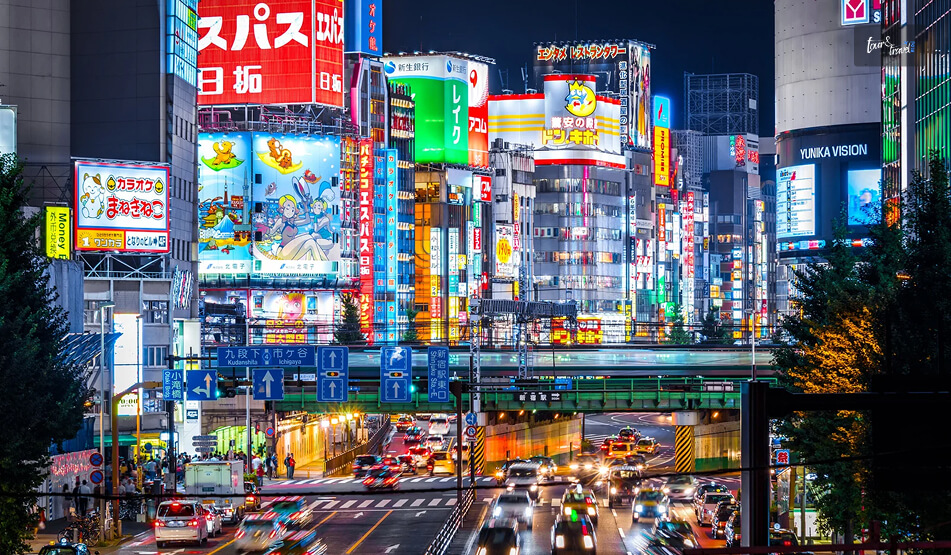
Yet, stepping outside into the bright neon lights of the Shinjuku area exposes a bright, fascinating area to play. 

To help you get started, below is a list of “What to do in Shinjuku” as a first timer. 

What To Do In Shinjuku As A First Timer? 

What To Do In Shinjuku As A First Timer

Shinjuku is a city within a city. It’s loud, it’s crowded, and it’s occasionally a little messy.

However, that’s exactly what makes it the most authentic urban experience in Japan. 

Here are the things if you are feeling clueless about what to do in Shinjuku. 

1. Retro Vibes At Kitamura Camera

Kitamura Camera isn’t a store. It’s a vertical museum built around film cameras. 

Rows of vintage gear line the floors, including rare glass lenses and models from the 1930s. 

The place hums with quiet energy, untouched by digital noise. 

It’s tucked into Musashino Street, a lively area where shops mix with daily life. Even pros who shoot in RAW find it worth visiting for its raw craftsmanship and calm atmosphere.

2. The Roar Of Godzilla Road

The Roar Of Godzilla Road

You’ll see the Godzilla head before you hear it.  

Its massive form stretches over Toho Cinemas, like a guardpost at the entrance to Godzilla Road. 

The statue is a fixture in Shinjuku, visible from most sidewalks. Also, Hotel Gracery has rooms shaped like the monster itself.

The Toho building bears the giant head of Godzilla, towering over the street corner. 

That image sets the tone for everything around it, the kind of visual that sticks in your memory long after you leave. 

Hotel Gracery offers themed rooms that let fans step into their favorite scenes. 

The area feels unfiltered! Neon signs flash at odd hours, crowds surge during rush times, and alleys smell like food carts and rainwater mixing on pavement.

3. Sky-High Views (For Free!)

Most of Tokyo’s observation decks are rather expensive, but the Tokyo Metropolitan Government Building provides a magnificent view of the city for exactly zero yen. 

The queue is very fast at that point. On a clear day, you may be lucky enough to see the famous Mount Fuji. 

Even on a cloudy day, you will still enjoy the amazing view of the city. 

Insider Tip: Definitely visit the cafe on the top floor. The matcha desserts there go very well with the sunset view of the skyline.

4. The World’s Largest Projection Mapping Show

It’s all about timing. 

If you can, leave the Metropolitan Government Building just when the Sun goes down so that you can see a projection mapping show that has entered the Guinness World Records. 

A huge skyscraper’s side gets turned into a screen for colorful animations. 

The Pac-Man sequence, which was a throwback to the arcade game, was the highlight of architectural lighting during our visit. 

It was as if the entire building was a giant glowing game of Pac-Man.

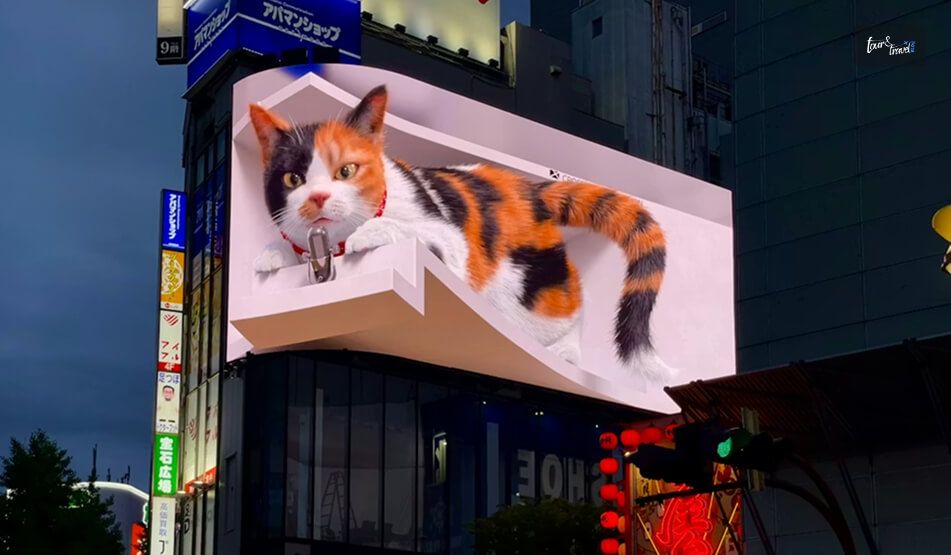
5. The Shinjuku 3D Cat

The Shinjuku 3D Cat

Forget about Hachiko. If you come near Shinjuku Station East Exit and lift your eyes, you will spot a Giant 3D Cat. 

This digital masterpiece “resides” on a curved billboard, and its antics include playful meowing and looking down at the crowd of commuters. 

It is remarkably realistic and even more enchanting when it shines under the night lights.

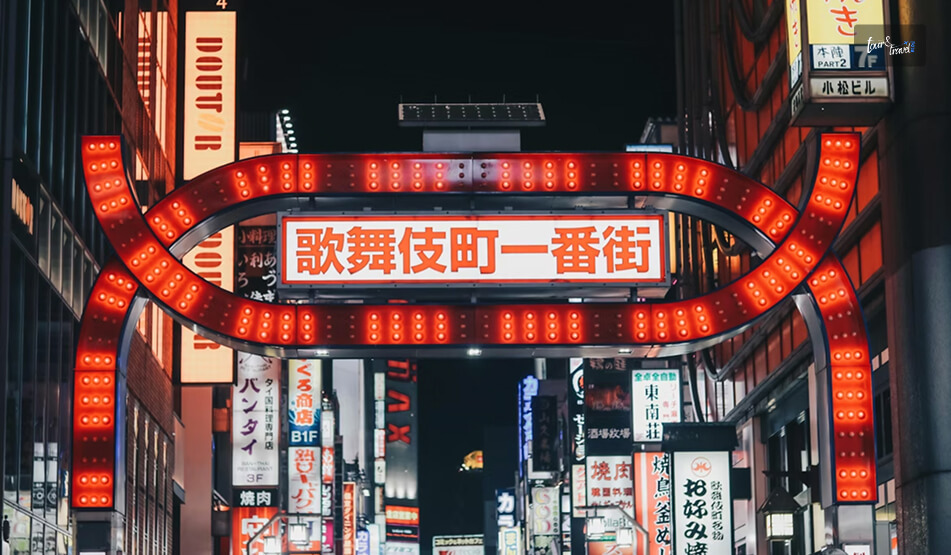
6. The Neon Labyrinth Of Kabukicho

The Neon Labyrinth Of Kabukicho

Welcome to the largest red-light district in Japan. 

Kabukicho is a sensory overload in the most enjoyable way.

Moreover, it is a center of entertainment that is always alive with bars, restaurants, and the newly changed Samurai Restaurant Time (formerly the renowned Robot Restaurant). 

Though it has a somewhat rough image, it is a place that anyone who wishes to see the “Blade Runner” side of Tokyo should definitely go to.

7. Sing Your Heart Out At Karaoke Kan

You haven’t truly felt Japanese social rhythm until you’re in a private booth at Karaoke Kan. 

There, you rent a high-tech room with friends instead of singing to strangers like in Western bars. 

Moreover, the selection is vast, thousands of songs in English and Japanese, and it’s probably the most common cultural milestone for young adults.

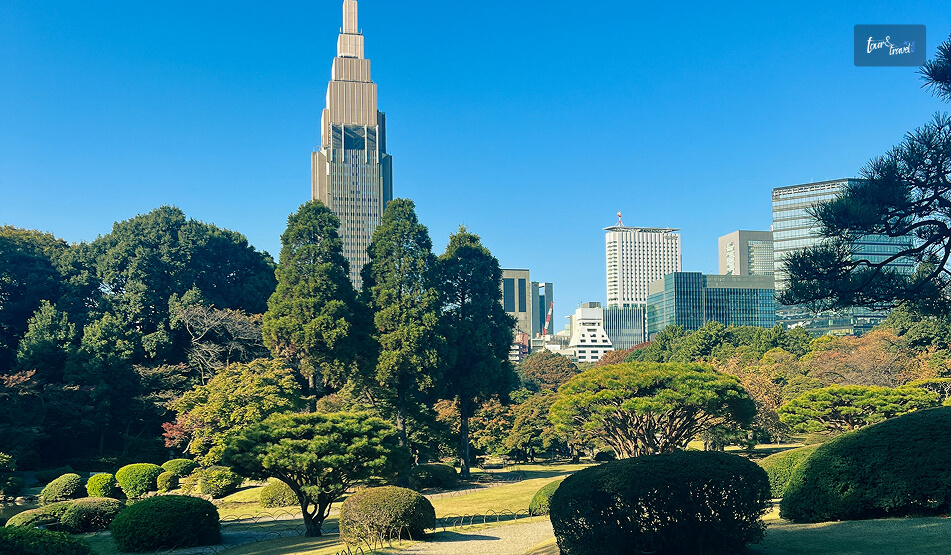
8. A Natural Escape: Shinjuku Gyoen National Garden

A Natural Escape Shinjuku Gyoen National Garden

When the neon lights get overwhelming, head to Shinjuku Gyoen. 

It’s huge, with an area of more than 100 acres, and you might spend hours wandering through traditional gardens with French, English, and Japanese influences. 

Moreover, the paths change shape every few minutes. So, you’ll likely lose track of time.

Must Try: Muroya offers real sweets or a cute sushi set inside the garden

This place has been going strong for generations. It’s more or less certain that your parents were here too, decades back.

9. Breakfast At St. Marc Cafe

St. Marc Cafe is better than chains for local flavor. 

Furthermore, their ChocoCro is flaky, buttery, and tends to draw long lines. 

Also, breakfast sets cost under $10 and keep people energized during long city walks.

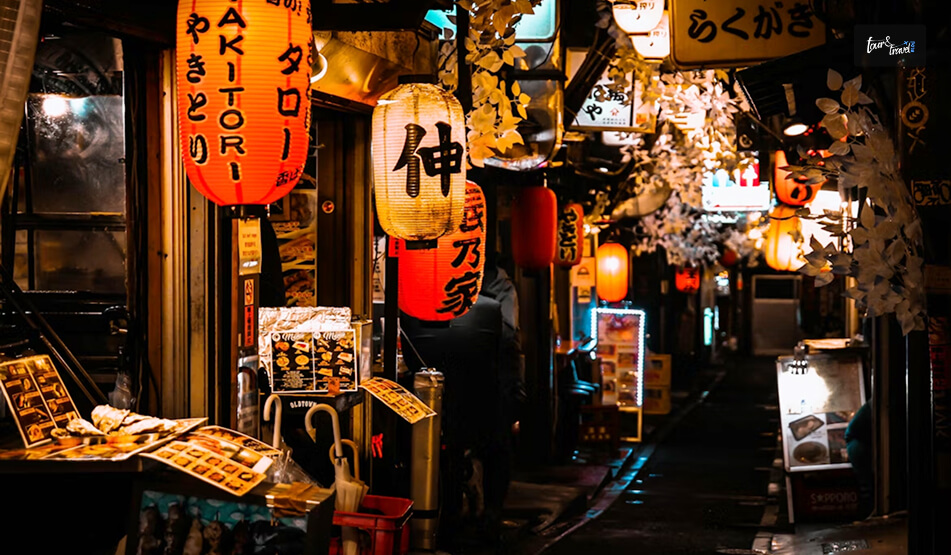
10. Nostalgia In Omoide Yokocho (Memory Lane)

Nostalgia In Omoide Yokocho (Memory Lane)

Tucked away near the tracks is a narrow alleyway known as Omoide Yokocho. 

Years ago, it earned the nickname “Piss Alley,” but today it’s a charming, albeit cramped, destination for yakitori and beer. 

Moreover, the smoke from dozens of small grills creates a nostalgic atmosphere that feels miles away from the modern skyscrapers nearby.

11. Exploring Musashino Street

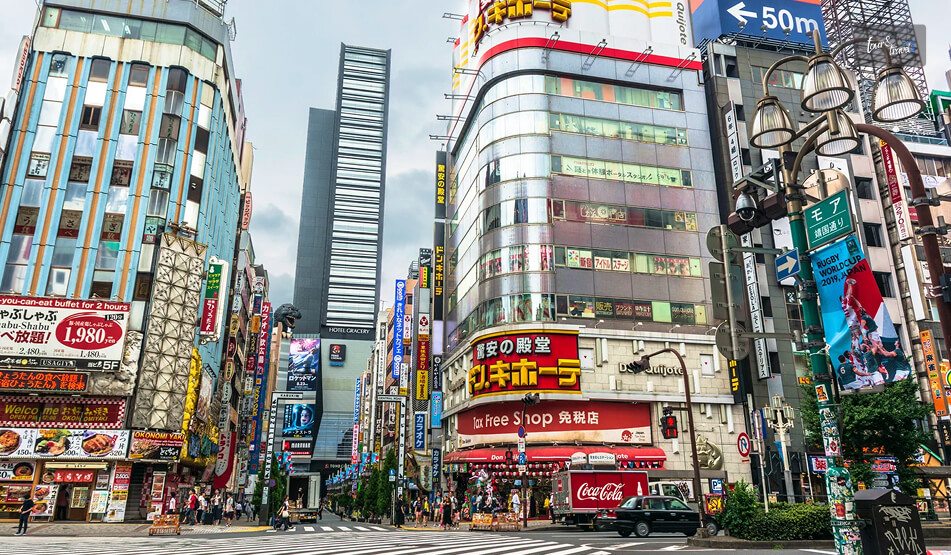
While walking toward the camera shops, you’ll likely find yourself on Musashino Street. It’s a delightful shopping district that feels exceptionally safe and welcoming.

Shopping Tip: Look for the specialized Don Quijote here. Moreover, unlike the massive, chaotic branches, this one focuses specifically on products popular with tourists, making it a “souvenir shortcut.”

Yoi ryokō o, guys! 

Read Also:

Share on Social Media

Meet Sibashree Bhattacharya, a travel enthusiast who has a decade-long experience in transcending virtual barriers with her words! Her deep love for travel is apparent from her travel escapades to the mountain, often taking her readers on a journey, her words acting as Portkey! Fun fact: Sibashree loves to dive deep into the history of the places she is about to visit, making her travels even more wholesome. If you were wondering how her articles are not short of time travel, this answers it!

Leave a Reply

Your email address will not be published. Required fields are marked *

title-img Related

READ MORE Japanese temple

What Is The Best Japanese Temple To Visit? A Temple Tour In Japan 

BY  Sibashree Mar 31, 2026

The scent of that first Japanese temple I visited, full of damp cedar, ancient dust, and high-quality incense, immediately slowed my pulse.  The architecture felt magnetic, heavy with history that seemed to settle into your bones.  Furthermore, these temples aren't just buildings. They've stood for centuries,  and are a part of Japan's cultural fabric.  Moreover, the connection between nature and devotion isn't just symbolic here, and it's real.  Also, every temple holds stories passed down through generations.  A single stone path or carved gate can carry centuries of meaning. You don't just walk past them. You feel their presence. How Buddhism Shaped The Island And Each Japanese Temple  Buddhism started in India, the land I come from. Then it moved through China and Korea before reaching Japan in the 6th century.  Now, the first official step came when King Seong of Baekje sent Sutras and a Buddha image to Emperor Kinmei.  1. The Rise Of Sects  Over time, new sects poured in from China, changing how Buddhism looked here.  Saicho brought the Tendai sect in 805.  Kukai, later called Kobo Daishi, founded the Shingon sect in 806.  Then, Zen arrived in 1191, and it shifted Japanese art, tea traditions, and samurai life.  Now, Buddhism shares space with Shinto, the local religion.  So, the two coexist side by side without conflict.  Though it's not perfect, that's how things work now. The Architectural Layout Of A Japanese Temple  Once you enter a Japanese temple, you will find the main hall or Hondo. Furthermore, the table below explains the other key features of a Japanese temple. Features of a Japanese TempleDetails PagodasThese have three to five stories. Furthermore, these are the repositories of the sacred relics. Lecture HallsMonks study and teach here. BelfriesThese house massive bronze bells that are rung during the New Year.CemeteriesOften located on the grounds, these emphasize the Buddhist focus on the afterlife and ancestors. What Is The Best Japanese Temple?  I cannot pick a favorite when it comes to choosing the best Japanese temple. However, these are the ones I loved visiting.  1. Kinkaku-ji (The Golden Pavilion), Kyoto Kyoto is not just famous for its cherry blossom season. It also has the Golden Pavilion.  This is the "poster child" of Kyoto, and for good reason.  Two levels of this Zen temple have a covering of gold leaf.  Seeing its glittering reflection in the "Mirror Pond" is one of those travel moments that actually lives up to the hype.  It was originally built as a retirement villa for a Shogun, which is why it has a slightly "king-of-the-hill" air. 2. Todai-ji Temple, Nara A visit to the Todai-Ji Temple is one of the best things to do in Nara.  Standing in front of the great Buddha Hall (Daibutsuden) makes you feel incredibly small.  The structure was once the largest wooden building ever built, and even now, at two-thirds its original size, it still stands with quiet power.  Inside, a 16-meter-tall bronze Buddha dominates the space, and it was cast in 752. 3. Senso-Ji Temple, Tokyo  As Tokyo's oldest temple, Senso-ji pulses with color and movement.  Daytime visits pull you into a sea of people.  After dark, though, the scene shifts entirely.  Vermilion walls glow warmly under lanterns, the air settles, and the five-story pagoda rises softly against the sky. That night view became my favorite moment in four days in Japan. 4. Sanbutsu-Ji Temple, Misasa Here is a temple for the daring ones.  To get a glimpse of the inner hall, Nageiredo, I had to do a really challenging hike up Mount Mitoku.  The hall can be seen right on the cliff's face, supported on stilts over a dangerous drop.  Whenever I looked at it, I kept asking myself how 8th-century monks could have built it without falling off the mountain. Besides, this "National Treasure" might even have to stand the comparison to a scene in an Indiana Jones movie.  5. Tenry-Ji Temple, Kyoto  This temple is right in the heart of the Arashiyama district and is also famous for its garden.  The landscaped grounds of the 14th century surround the central pond walkways.  It was cherry blossom season when I dropped by, and the view of the weeping cherry trees against the forested mountain is a picture I still take out whenever I am stressed. 6. Kongobu-Ji Temple, Koyasan For a deeply immersive experience, head to Mount Koya.  Kongobu-ji, the main temple of Shingon Buddhism, houses the largest rock garden in Japan.  The granite rocks have been carefully arranged to depict dragons arising from a sea of clouds. It's an excellent venue for peaceful meditation. 7. To-Ji Temple, Kyoto While there are other things to see in To-ji, its five-story pagoda is the main draw.  At 57 meters high, it is not only the tallest in Japan but also a city landmark.  Plus, when it is lit up at night in spring, it appears like a golden light rising from amidst the cherry trees. What Are The Best Offbeat Japanese Temples?  Aside from the well-known "Golden" and "Great Buddha" temples, there are also sites that allow you to connect more closely with nature and pilgrimage traditions.  It is at these places that I experienced the most "human" contacts, observing pilgrims dressed in white robes or witnessing monks conducting their daily rituals. 1. Daisho-In Temple, Miyajima While most tourists to Miyajima are attracted by the floating torii gate, Daisho-in, situated at the base of Mount Misen, is the island's true spirit.  The most memorable feature? The 500 Rakan figures. Each one has an entirely different face. So, some are laughing, some are grumpy, and some look like they're whispering a secret. 2. Seiganto-Ji Temple, Nachisan There is probably no other place on the Kumano Kodo pilgrimage that has been as pictured as this one.  You have a vivid red pagoda in the front, and Nachi Falls is the highest waterfall in Japan, thundering down in the background.  It is a wonderful site where the noise of the water and the quietness of the temple together form an ideal spiritual harmony. 3. Zenko-Ji Temple, Nagano The temple sits in Nagano, a town that grew around it.  This is where Japan first received a Buddhist statue.  Though the statue itself isn't visible, you can walk into a pitch-black tunnel under the altar.  The goal? Try to touch the "Key to paradise. " It's creepy, but there's something real about it. A genuine cultural moment. 4. Horyu-Ji Temple, Nara Located just outside Nara, this site holds the oldest wooden buildings still standing.  These structures date back to 607. Standing in them feels like stepping into Japan's earliest days. History lives in the wood and silence of the halls. How To Visit A Japanese Temple Like A Local?  Visiting A Japanese temple is not just about seeing but also experiencing it.  One way to do this is through politeness, talking softly, and following a few simple etiquettes.  You will find a large incense burner (Jokoro) at the temple entrance.  A common practice is to fan yourself with the smoke, as it is said to have medicinal effects. 1. Getting In And Praying You'll most likely have to take off your shoes before going into a building (make sure you have stylish socks! ).  Once inside, you can go up to the altar, put a small coin in the donation box, and silently make a respectful gesture.  In contrast to a Shinto shrine, at a Buddhist temple, you shouldn't clap.  Only a silent bow with hands in the prayer position is the right way to show reverence.  2. Taking Photos In A Japanese Temple  Generally, temples are okay with you taking photos in the outdoor areas.  However, you cannot take photos inside the main worship halls where the statues are.  Also, personally, I feel that when I put my camera away and spend five minutes just sitting on the tatami mats in silence, what I get is a more vivid "picture" than any photo could ever represent. Read Also: What Are The Best Japanese Shrines To Visit? Celebrating Nature Spirits And Inherent Spirituality Is The Japan Rail Pass Worth It In 2026? Should I Buy Or Avoid It As A Conscious Tourist? What Are The Unique Things To Do In Sapporo? Exploring The Capital Of Hokkaido

READ MORE cherry blossom kyoto japan

Cherry Blossom Kyoto Japan: 2026 Season And The Top Viewing Spots 

BY  Sibashree Mar 27, 2026

The cherry blossom season has arrived in Japan. The Japan Meteorological Agency has announced the arrival of the most coveted season in the country on 19th March, 2026.  The somei-yoshino tree of the Yasukuni Shrine had more than 60 blossoms open then, and that prompted the announcement.  So, the recent warm weather has caused the arrival of the cherry blossom season earlier than last year.  However, the season of cherry blossom in Kyoto arrived a few days later on 23rd March, 2026. So, currently, the fervor around the cherry blossom Kyoto Japan is at its peak.  With the country now becoming irresistible with the blooms taking over the parks and roads, here is more about the cherry blossom season in Kyoto and the best viewing points.  When Is The Cherry Blossom Kyoto Season? Timing a trip to the cherry blossom Kyoto season or to see Sakura is a crucial exercise. The beauty and charm of these flowers are fleeting.  So, the when part of it is equally important as the where part.  Check out the table below for an idea about when the cherry blossom season arrives in Kyoto and how it progresses.  Cherry Blossom Season Months Budding and Blooming of Cherry Blossoms Kaika or the First Blossoms Late March Early April Mankai or Full Blooms by 7th AprilMid-AprilPetals Start to Fall and Create Petal Carpets Everywhere However, like 2026, the season can arrive early or even a little late.  The variation happens because the present temperature impacts the budding and blossoming of flowers.  If the weather is warmer, the flowers will blossom earlier than the average season. On the other hand, if there is a cold snap, the flowers will arrive late.  However, Kyoto has an advantage in this regard thanks to its diverse microclimates. Also, it boasts different cherry blossom tree varieties spread across different elevations.  So, even if you miss the cherry blossom scene at any of the shrines in Kyoto, you may find the flowers at any other place.  What Are The Places To See Cherry Blossom In Kyoto? Kyoto and all of Japan celebrate the cherry blossom season. It is enriching to witness such a deep bond between the people there and nature.  They love clicking pictures of flowers, picnicking under the trees, and just soaking in the happiness and beauty the flowers bring.  However, if you want to experience the best of the cherry blossom scene, you need to know about the places with the best views.  1. The Philosopher’s Walk (Tetsugaku-No-Michi) The Philosopher’s Walk is a canal-side stone walkway winding its way along the base of Hikoshiyama (Eastern Mountain Range). I began my day here.  The name has significance, and legend has it that Professor Kitaro Nishida of Kyoto University (an early 20th-century philosopher) walked this route daily for meditative purposes. Thus, it’s now known as the “Philosopher’s Walk.”  When I first set foot on the Philosopher’s Walk, I could see why he was always walking there each day.  The entire length of the pathway is lined with hundreds of cherry trees leaning above the water, creating a ceiling of pale pink blooms.  I found myself continually distracted while walking to the shop, eat, or visit the small shrines draped throughout the landscape.  Even with hundreds of people visiting this site daily, I felt as if I were walking alone, contemplating life.  There is nothing that compares to the silence created by having cherry blossoms fall off branches and drift gently down into the slow-moving canal below.  I felt as if I had achieved a moment of peace, not as a tourist but rather as an individual taking time out of their busy lives to think quietly, like all the others on the path. 2. Maruyama Park (Maruyama-Kōen) The Philosopher's Walk is for reflection, and Maruyama Park is the place to be to party!  The number of people in the park and how electric the atmosphere felt, I have to believe it is the most popular place to view blossoms in all of Kyoto.  It serves as a hub of hanami (flower-viewing) culture within the city. A huge, famous weeping cherry tree serves as the main attraction of the park.  Seeing the tree in person was an overwhelming experience for me because its branches seemed to flow downwards like water from a fountain.  The portion of the park that surrounded the tree became a festival site.  I saw blue tarps lying all over the park, and the universal sign of hanami gatherings with friends and family, eating, drinking, and just being together under the flowers.  The edge of the park had many food stalls offering various foods like yakitori and sweet dango. 3. Shimbashi Street (Shirakawa-Dori) Later, as I headed to find Shimbashi Street in the Gion neighborhood, my guidebook boldly said that Shimbashi was the “most beautiful street in Asia.” When you first step into Shimbashi, you feel the essence of Kyoto’s refined beauty throughout the street.  Cherry trees line the street and form a thick canopy above the walkways, and beside the traditional wooden buildings, streams flow gently through the area.  Many of the wooden buildings along the way hold exclusive ryotei (expensive) restaurants, and the whole atmosphere feels as if it were pulled from a time before us.  The most exciting thing for me was the ‘parade’ of kimonos that I observed as I strolled.  Locals and couples routinely have their picture taken in a kimono (professional photo), and the vibrant colours of the silk kimono against the soft pastel cherry blossom trees made a beautiful visual transition from the past to the present.  I ended up discovering a small bistro at the end of Shimbashi Street that had cherry blossoms providing a tunnel effect above.  Eating lunch (al fresco) under the blooming tunnel while watching the many young couples walk past in traditional clothing was certainly the highlight of my time in the city.  It was both romantic and timeless and contained an ideal balance between the two. 4. To-ji Temple With the sunlight fading, I headed to the To-ji Temple.  The To-ji Temple is known for its five-story pagoda, which has the tallest wooden tower in Japan. However, what I was more excited to see was the massive, beautiful, weeping cherry tree. A trip to To-ji Temple in the evening is highly recommended.  They flood the entire grounds with bright white flood lights when it gets dark outside.  The weeping cherry tree illuminated with pink lighting is stunning against the night sky and the outline of the ancient pagoda.  Also, the weeping cherry took up most of the memory on my camera.  I spent a fair amount of time walking around the grounds. There are many other cherry blossom trees around the grounds that also have the same beautiful effect from the lights at night as well. They take on an almost ghostly, pearl-like quality that you can only get from external lighting at night. 5. Kiyomizu-Dera Temple No visit to Kyoto would be complete without going to see the Roji temple, aka the "Pure Water Temple."  However, viewing it in cherry blossom season looks like such a different experience from what I saw.  The main hall has a huge terrace about 97 feet long, which is one of the best places I found to view it. As I looked down from this height, I could see all across the surface of the mountain, where there were many different types of cherry trees blooming or not blooming along the slopes.  The pink blossoms (the cherry trees' flowers) create a nice light-coloured contrast with the dark, weathered wood of the temple architecture.  When I walked down the ramp toward the exit, I noticed there were more clusters of trees planted near the pond at the end of the flower field.  I saw the reflection of trees on the surface of the pond.  The temple complex is enormous, and the scale of the cherry tree blossoms in this area is impressive.  6. Arashiyama Last, I traveled to the far west side of the city to Arashiyama. It is about 8 km from downtown and is a really refreshing and beautiful area filled with nature. While standing just north of the Togetsu and looking up at the mountain beside me, I could see a dense tapestry of hundreds of cherry trees interlaced with evergreen trees. They made a perfect background for the Hozu River below me, with its many small boats full of people renting out their time to experience the beauty of the flowers from the water's side.  I was envious that I had not scheduled more time to experience this part of Japan.  I also thought that this (the hills full of flowers) was very similar to the Yoshino slopes.  On my way out of the area, I stopped at the Tenryū- ji Temple. I saw some incredibly large, mature cherry trees. These, along with the well-kept Zen gardens, appeared to be glowing against each other. Walking through Kyoto in the spring taught me that the cherry blossom isn't just a flower. It’s a vibe that settles over the entire city.  Is Osaka Or Kyoto Better For Seeing Cherry Blossom?  It’s difficult to pick a favorite between Osaka and Kyoto for the cherry blossom season. The vibes are very different.  While Kyoto has these iconic spots for seeing cherry blossoms, Osaka also has the Osaka Castle Park.  Furthermore, the scene in Kyoto is more traditional with temples, historical atmosphere, and the weeping cherry trees.  On the other hand, Osaka is more about picnics and exploring amazing food stalls.  However, Osaka is less crowded than Kyoto in the cherry blossom season. That is one advantage.  Also, Osaka is less expensive than Kyoto.  So, if you want less crowd and you are on a budget travel, Osaka will be your go-to place. Read Also: Is The Japan Rail Pass Worth It In 2026? Should I Buy Or Avoid It As A Conscious Tourist? What Are The Best Day Trips From Tokyo? Most Popular Ones You Will Love Is an Mt Fuji Day Trip From Tokyo Worth It? How To Plan It?

READ MORE Is Japan Rail Pass worth it

Is The Japan Rail Pass Worth It In 2026? Should I Buy Or Avoid It As A Conscious Tourist? 

BY  Sibashree Mar 25, 2026

The Shinkansen, or the Japanese Bullet Train, brought a revolution in the transportation system in the 1960s.  It was the need of the hour, considering the rapid growth in the economy. Also, it is an icon of the technological prowess and wealth of Japan.  These days, we have Vande Bharat in India, and no doubt the services and punctuality of these trains are spotless.  However, contrary to popular beliefs, they are never the same.  Why so?  To understand this, you need to take a ride in the Japanese Bullet Train.  However, is Japan Rail Pass worth it for the short and long rides in the Japanese Bullet Train?  In today’s blog, I will discuss its benefits and disadvantages in detail.  Is Japan Rail Pass Worth It?  Japan Rail Pass is a physical pass for train rides. It is only for tourists.  With this pass, you can enjoy unlimited train rides across Japan. Also, these passes include bullet train rides for a specific time span.  Japan Rail Pass Cost Check out the table below to understand the validity period and prices of the Japan Rail Pass.  Japan Rail Pass ValidityOrdinary Japan Rail Pass Cost Green Japan Rail Pass Cost7 Days PassAdult: 70,000 YENChildren: 35,000 YENAdult: 50,000 YENChildren: 25,000 YEN14 Days PassAdult: 110000 YENChildren: 55000 YENAdult: 80000 YENChildren: 40000 YEN21 Days PassAdult: 140000 YENChildren: 70000 YENAdult: 100000 YENChildren: 50000 YEN All ticket prices are sourced from the Japanrailpass.net. Also, remember that children mean kids below 12 years old.  From 12 years onward, they are considered adults.  Is The Japan Rail Pass Worth It? (Considering The Cost)  If you think that buying a Japan Rail Pass would hurt your wallet, you are making a mistake.  Yes, the Japan Rail Pass is expensive, especially if you are buying a Green Japan Rail Pass.  Still, if you want to try individual rides, the cost will be even higher. For example, a single trip to Nara from Tokyo costs 14500 YEN.  A really smart way to decide whether the Japan Rail Pass is worth it or not is to use a Japan Rail Pass Calculator.  Enter the departure and arrival points, check the ticket price for individual rides, and add them. Then, compare the total Japan Rail Pass cost to decide whether you need to buy it or not.  Also, consider the flexibility the Japan Rail Pass offers.  With a Rail Pass, you can complete as many rides as you want within the validity period. Also, there is no rush to buy a ticket every time you board a train.  Is Japan Rail Pass Worth It For Every Train?  The Japan Rail Pass does not cover every train service in Japan. However, it covers most train services.  Check out the details in the box.  Services Covered by Japan Rail PassServices That Japan Rail Pass Does Not Cover - Most Bullet Trains- Express Trains- Local Trains- The Narita Express, Running to Tokyo City from Narita Airport- Tokyo Monorail to and From the Haneda Airport - Joyful Trains in Japan- Bullet Trains Except Mizuho and Nozomi- The Metro Service in Tokyo and Other Cities- The Ferry Service Of Yakushima Where To Buy A Japan Rail Pass From?  You can buy the Japan Rail Pass from an authorized agent based in your country. Sometimes, these passes are available at the Osaka or Tokyo Railway stations or Haneda and Narita airports.  However, these passes are available for a limited time, and they charge around 10-20% extra charges.  Furthermore, upon reaching Japan, you can even buy the pass online at JRailPass.com. You can expect a delivery of the physical pass within 3-5 business days based on your location.  How To Take The First Ride With The Japan Rail Pass?  You have to get your Japan Rail Pass stamped before using it. You have to choose the JR Counter entry at any local and bullet railway station to pass through and board the train.  The JR Officer will check your passport and the JR Pass before stamping it.  From the next ride onward, you just need to show your JR Pass.  Activating your JR Pass at the railway station is always a better idea, as you can activate it only when you need it.  Usually, when you activate the pass at the airport, a day or two is wasted from the validity period, as the city metro services do not accept those passes.  Is Japan Rail Pass Worth It? Frequently Asked Questions (FAQs)  Here are the frequently asked questions and answers about whether the Japan Railway Pass is worth it or not.  1. Which Rail Pass Is The Best For Japan? The best Rail Pass for Japan will depend on your itinerary in Japan. For example, if you need to travel nationwide, you can choose a National Rail Pass for 7 to 21 days.On the other hand, Regional JR Passes are the best if you are focusing on specific regions such as Hokkaido or Kansai. 2. Can I Buy Japan Rail Pass From India? Yes, you can buy a Japan Rail Pass from India. In fact, it is a smart move to buy your Japan Rail Pass from an authorized agent in your country before starting the trip. At the Japanese Airports, buying the JR Pass can cost you 20-30% more. TBi Travels and Klook are some of the authorized services from which you can purchase the JR Pass online. When you buy the pass online from an authorized agent, you will receive an exchange order or a voucher via courier. You have to exchange that at the airport to collect the physical pass.  3. Can I Get Bento Boxes On The Trains In Japan? You can get Bento boxes at any railway station in Japan before boarding the train. You will also find vegan-friendly options for the bento boxes. However, you have to be very mindful about how you dispose of those bento boxes. You can throw them in the trash bins in the train, or after alighting from the train, you can dispose of them in the waste box at the station. You will not find trash cans frequently in Japan. So, you may have to carry them home if you do not dispose of them in time.  Read Also: Are You Planning A Trip To Osaka? This Is Your Quintessential Guide Festivals Of Light And Color: Experiencing Japan’s Vibrant Matsuri Is Japan Really An Expensive Place? Have A look