


The BEST Things To Do In Indiana Dunes National Park In 2025!

Jan 30, 2025

Last Updated on: Nov 24, 2025

Travel Guides

Indiana Dunes National Park At A Glance

  • Location: 1100 North Mineral Springs Road, Porter, IN 46304
  • Visitor Center Contact Number: 219 395-1882
  • Hours Open: 6 AM to 11 PM
  • Time Required: 1 Full Day
  • Fees: $15-25 (Standard Pass), $45 (Annual Pass), and Free-$80 (America the Beautiful Pass, including Senior Passes)
  • Area: More than 15000 acres
  • Designation: National Lakeshore (1966) and National Park (15th February 2019)
  • Famous For: Being the birthplace of American ecology, Housing 30% of the rare, endangered, threatened, and special concern plants of Indiana
  • Best Time to Visit: April and May and Late September to October
  • Best Way to Reach: Take the South Shore Train, having multiple stops in the park

Unique Things Do In Indiana Dunes National Park | Plan Your Day Activities 

Unique Things Do In Indiana Dunes National Park

Indiana Dunes National Park is a year-round attraction. So, every season offers the visitors something unique to do. 

Let’s explore what wonders await at this national park, rich in biodiversity.

1. Swimming And Beach Activities

Many of the recreational things to do in Indiana Dunes National Park center around the miles of beaches in the park. The southern tip of Michigan and the beaches there are ideal for swimming and various beach activities. 

Beaches In Indiana Dunes National Park

Porter BeachWest BeachDunbar BeachKemil BeachCentral Avenue BeachLake View BeachMount Baldy Beach

Even if you don’t want to take part in adventurous activities, you can just enjoy a sunrise or sunset stroll along the beaches. 

2. Biking

You can bike through the 37 miles trail of the Indiana Dunes National Park and explore the dunes, historical spots, and wildlife of the park. 

Further, the park has gravel and paved biking trails at various distances. So, you can choose a trail according to your level of expertise. 

Biking Trails In Indiana Dunes National Park

Dunes Kankakee Bike TrailCalumet Bike TrailPrairie Duneland Bike TrailPorter Brickyard Bike TrailOak Savannah Bike TrailMarquette Bike Trail

3. Geocaching

Geocaching is one of the most unique things to do in Indiana Dunes National Park. This treasure hunt game is played by geocachers. 

These geocachers have to collect geocaches or hidden containers. So, if you are a geocacher or a participant in the game, you will have a smartphone with a free geocaching app and a GPS device. 

Further, at Indiana Dunes National Park, you will be able to do four types of geocaching. You can try traditional or the most traditional geocaching at Chellberg Farm. 

You can even try EarthCaching at Kemil Beach, Mount Baldy, and West Beach. Moreover, other types of geocaching in the park are Lab Caches at Portage Lakefront and Riverwalk and Virtual Caching at A Century of Progress Historic District. 

4. Bird Watching

Bird Watching

The park, nestled on the southern tip of Lake Michigan, attracts a lot of migrating birds. It is especially delightful with the sounds of the migrating songbirds in autumn. 

So, you can be a beginner or an avid birdwatcher. You will be able to spot waterfowl or other wetland birds easily.

Moreover, this park hosts the Indiana Dunes Birding Festival on the 3rd weekend of May. This is a four-day event, and the more than a dozen birdwatching spots in the park are amazing. 

5. Camping

Camping is one of the best things to do in Indiana Dunes National Park if you want to explore the park at your own pace. 

Moreover, the park campground has 66 campsites for tents and 53 RV sites. The campground here does not have electric hookup facilities. 

Furthermore, campsites 15, 30, 41, and 55 are wheelchair accessible. However, camping facilities in the park are seasonal, and for the winter season, the camping ground will remain closed till 31st March. 

Moreover, the camping fee per night at the park is $25.

6. Hiking

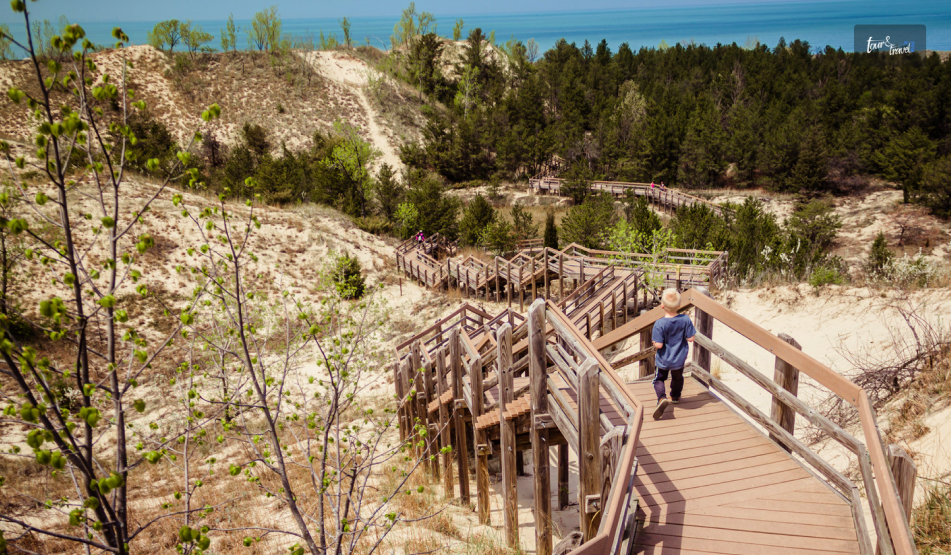
You can explore the dunes of the park, rare plants, and diverse species of birds and animals by hiking. Further, many trails take you to the historic places in the park.

For example, you can hike through the Bailly Homestead Trail and enjoy the presence of oak, maple, basswood, and beech trees. 

You can even hike to the Chellberg Farm, Mnoke Prairie Trails, and Little Calumet River.

Overall, the park has 15 trails with varying difficulty levels. So, irrespective of your expertise, you can choose the one most suitable for you. Moreover, the trails can take you from 20 minutes to 4 hours to conquer.

Some moderate trails in the park are Calumet Dunes Trail, Cowles Bog Trail, Dune Ridge Trail, etc.

Furthermore, West Beach Trails and Mount Baldy Beach Trail are some of the toughest hiking trails for you to complete in the park.

7. Visiting Historic Sites

Exploring the historic sites is one of the most meaningful things to do in Indiana Dunes National Park. Did you know that the park has more than 60 historic sites?

The most important landmarks of the park are Chellberg Farm, Good Fellow Youth Camp, and Bailly Homestead. Moreover, you can visit the Cypress Log Cabin, House of Tomorrow, Florida Tropical House, and many other 1933 World’s Fair Century of Progress Homes.

8. Stargazing

Despite being very close to the urban area. Indiana Dunes National Park is a hotspot for stargazing. The lakeshores of the park, especially, create an ideal ambiance for getting lost in celestial activities. 

Furthermore, the sky over the footprint of Lake Michigan is darker, creating a deeper sense of intrigue. Kemil Beach is the best place in the national park for stargazing. Also, it is the “7th designated International Dark Sky Community.” 

9. Horseback Riding

You can enjoy horseback riding in the park along the Glenwood Dunes trail. The trailhead is on Brummitt Road, Chesterton and it is the only equestrian trail in the Indiana Dunes National Park.

Further, the trail remains open from 16th March to 14th December. 

Moreover, you can opt for the best guided tours in the park. Every year, the park offers over 500 guided tours. So, you can get in touch with the park’s visitor center before planning a day out.

See you there!

Also read

Share on Social Media

Meet Sibashree Bhattacharya, a travel enthusiast who has a decade-long experience in transcending virtual barriers with her words! Her deep love for travel is apparent from her travel escapades to the mountain, often taking her readers on a journey, her words acting as Portkey! Fun fact: Sibashree loves to dive deep into the history of the places she is about to visit, making her travels even more wholesome. If you were wondering how her articles are not short of time travel, this answers it!

Leave a Reply

Your email address will not be published. Required fields are marked *

title-img Related

READ MORE things to do in leicester

Exploring The Heart Of England: Things To Do In Leicester

BY  Abdul Aziz Nov 24, 2023

Leicester is a vibrant city with a wide range of attractions, including vibrant festivals, medieval sites, contemporary museums, and art galleries. Leicester, one of the oldest cities in England, was founded by the Romans. It also has one of the most diverse cultures in the nation, which is apparent at practically every turn. In this article, we will guide you through the beauty and attractions of Leicester. We will let you in on all the exciting things to do in Leicester. Stay tuned. Things To Do In Leicester: An Overview There is a fascinating assortment of attractions in Leicester's downtown that are all accessible on foot. Explore the bustling retail district surrounding Leicester Cathedral, a medieval structure. There is an interesting archaeological find close to the cathedral. In 2012, the skeleton of King Richard III was discovered here. Discover more about the excavation, the king's life, and his death by taking a tour of the King Richard III Visitor Center, which has been constructed around the site. Take a ghost tour at the Guildhall, which is reputed to be the most haunted structure in the city. Visit numerous free museums to learn more about Leicester's past. Visit Roman and Iron Age sites at the Jewry Hall Museum. At Newarke Houses Museum, experience life in Leicester during the 20th century. Visit Belgrave Hall Museum and Gardens to witness a reconstruction of Victorian customs. Visit the New Walk Museum and Art Gallery to see 20th-century artwork, dinosaur exhibits, and Egyptian relics. Take a stroll through the lovely Abbey Park along the Grand Union Canal. Enjoy a picnic on the well-kept lawns, or take a paddle boat rental out on the lake to explore the area. Examine the remnants of Cavendish House and Leicester Abbe- two historic structures. All The Things You Can Do Explore interactive exhibits at the National Space Centre to learn about solar system science, astronomy, and British space missions. See films with a space theme at the planetarium of the center. Leicester's festivals, food, and architecture all reflect the city's multiculturalism. Go to the Guru Nanak Gurdwara temple, which houses a Sikh cultural museum. Visit the Jain Center to learn about the ancient religion of Jainism. Walk along the Golden Mile on Belgrade Road to see a variety of Indian restaurants, jewelers, and sari shops. Participate in the vibrant Hindu holidays of Holi and Diwali. Things To Do In Leicester Leicester, a thriving metropolis in the East Midlands, offers a unique combination of history, culture, and captivating tourist destinations. Here are all the things you can do in Leicester. 1. King Richard III Visitor Centre: A Dramatic Royal Attraction The remains of King Richard III were found beneath a Leicester parking lot by researchers in 2012, which was an amazing find. The king who lost the Battle of Bosworth in 1485, made famous by Shakespeare (who painted him in an unfavorable light), is now housed in a royal setting where guests can learn everything there is to know about his life and times. The Visitor Centre provides a unique window into England's unstable past and one of its most controversial rulers, with tales of murder and war. 2. Leicester Cathedral: A Fitting Royal Burial Site Visit the Richard III Visitor Center first, then proceed to the Cathedral to see one of England's most exquisite churches. The fabled king was reburied there in 2015. Highlights are the 13 bells in the tower that ring on Thursday evenings and Sunday mornings (along with the king's tomb, of course), the somber East Window honoring the dead of World War I, and the stone statues of saints crowning the Vaughan Porch. 3. National Space Centre: An Out Of This World Attraction Unlike long-dead kings, the National Space Centre, located in the northern part of the city by the River Soar, offers something entirely different. Explore the universe's origins, take a trip across Venus, live in an International Space Station module, or just gaze up at the 42-meter-tall Rocket Tower, home to the Thor Able rocket, all at the UK's premier space museum. Young or old aspiring astronauts will love this place because it caters to their needs with lots of interactive exhibits and even allows them to try on space suits. 4. New Walk Museum And Art Gallery: See Some Fantastic Fossils Situated slightly to the south of the city center, the New Walk Museum and Art Gallery has been home to an impressive array of artistic and scientific displays since its founding in 1849. It is home to one of the best natural history collections in the world, which includes fully restored plesiosaur skeletons and some of the oldest fossils ever discovered. In addition, there is an amazing collection of German Expressionist artwork and four eerie Egyptian mummies. With free entry, it's an inexpensive but must-see Leicester attraction. 5. Newarke Houses Museum: Bringing Leicester's History To Life The quirky, interesting, and enjoyable Newark Houses Museum of Leicester's history is located a few hundred meters to the south of the Cathedral. Learn about legendary figures such as Daniel Lambert, who was once the largest man in Britain, view an enthralling collection of toys dating back to the Tudor era, and get a firsthand look at life in the trenches of World War I, where local soldiers fought and frequently lost their lives. This family-friendly museum is an interesting way to learn about the history of the city and makes a nice addition to the Richard III exhibits. 6. Haymarket Memorial Clock Tower You will definitely come upon this unusual clock tower as you stroll through Leicester's downtown. One of the most recognizable sites in the city, the Haymarket Memorial Clock Tower has long been a well-liked gathering spot for locals. It was initially constructed in 1868 to relieve traffic congestion on the location of a former hay and straw market. It's worth stopping by since it's an interesting sight in Leicester. 7. St Nicholas Church As the oldest house of worship in the city, St Nicholas Church is one of the many churches in Leicester that you can visit and, therefore, one of my favorites. There is evidence of Roman architecture on the site, and parts of the church date back more than a century. One of the biggest remaining Roman buildings in the nation, the Jewry Wall is a 2nd century AD Roman wall located directly behind the church. Sadly, it was closed for renovations when I visited, but I've heard it's a must-see attraction in Leicester. Wrapping Up Being one of the oldest cities in England with a history spanning over two millennia, Leicester offers a plethora of unique activities to keep you occupied for a few days at the very least. Like many tourists, Leicester draws tourists primarily with the news of King Richard III's remains that came into discovery. You will love to learn that the city has a lot more to offer and that visiting them would increase your appreciation of the place. If you have thoughts to share or questions to ask, please leave a comment below. We would love to hear from you! Read Also: Unforgettable Island Adventures: Things To Do In Tenerife Brighton Bliss: Crafting Your Perfect Coastal Getaway Itinerary Hidden Gems: Unearthing The Best Things To Do In Nottingham

READ MORE travel ideas

Budget-Friendly Travel Ideas in Australia You Did Not Know About

BY  Mashum Feb 26, 2019

The cost-of-living caps the fantastic landscape and culture that Australia has to offer and explore.  For many tourists and Australians, it is much cheaper to travel abroad and explore other countries. However, traveling around Australia is incredible and can cost you minimal amounts if you are aware of the budget-friendly travel ideas in Australia.  So, before you plan a trip to Australia, learn the art of sticking to a budget. Budget-Friendly Travel Ideas in Australia The cost of traveling should never be a constraint if you want to explore the beautiful land of Australia. Let’s head straight to the most practical and budget-friendly travel ideas in Australia. 1. Stay In Hostels This tip is more relevant to Australia even though it applies to all parts of the world. Most hotels in Australia are costly, mainly if you are operating on a budget. If you wish to have a less luxurious sleep, you will save a lot of money.  2. Camp You can even try camping if you want to be more adventurous. It will help you save a lot of money. The cheapest way to explore Australia is by getting around and camping at different campsites.  There are several free camping spots around Australia, although there will be areas where you will need to pay for your campsite. Even then, the fees may be as little as $5 per person. You will get access to showers and toilets, which aren’t always available on the open road. 3. Prepare Your Meals Even if you decide to eat in a fast-food joint in Australia, it will not give you much change from $10. Besides, you can bring havoc to your body by substituting main meals with fries and burgers.  Make sure that you are getting food that will support healthy living. You can achieve this objective by preparing your food. It is much cheaper than relying on ready-made food.  Most parks in Australia provide public BBQ facilities free of charge. All you need to do is buy some veggies or meat from the local supermarket and get some grilling.  If grilling every day is not your thing, make good use of the available kitchens in the hostels. Use them to prepare your meals. You will realize a significant difference in your bank account.  4. Purchase Your Booze Bottle-O Bottle-O refers to the liquor shop or bottle shop. This store sells alcohol at a lower price than the ordinary bars. You will get affordable liquor deals in this place. Most budget drinkers like to go for the Goon, which is a cheap boxed wine.  5. Use A Private Vehicle to Commute  In Australia, you must get around by car if you want to explore the country. You can do it either by purchasing a vehicle temporarily or hiring a car for your travels. However, these two options can be slightly expensive.  You can use comparison sites such as Car Rental Buddy or Car Hire Choice to find and compare vehicles. Alternatively, you can opt for campervan hire from Camper Champ. You will not fail to get a cheap deal when it comes to commuting in Australia. 6. Travel On Greyhound Bus Most backpackers like to use this option as their preferred means of transport. It is among the cheapest modes of transportation in Australia.  You can get a travel pass for approximately $500. It will allow you to hop off and on as many times as you would like. It is an excellent way to view the fantastic scenery of Australia. The good news is that you will not spend so much on these journeys.  7. Participate In Homestays or Couch Surfing Accommodation in Australia is expensive, even for backpackers. So, if you want to explore Australia cheaply, take advantage of staying at homestays or even Couch-surfing in people’s homes. It will help you get free accommodation in exchange for cultural learning and community interaction. 8. Purchase A Campervan This option is best if you are traveling as a group. It will help you to spit the gas among yourselves. Driving via Australia is exciting, but you can still make your trip more enjoyable.  One way is to purchase a campervan in Cairns and then drive down to Melbourne or the other way around. Even though driving is more expensive than flying, you will stop anywhere you wish. Besides, if you have a big campervan, you can still use it for accommodation.  9. Have Fun by Participating in Active Hobbies Australians (particularly in the north) are known for their outdoor lifestyle. Therefore, you can join them and have a lot of fun outdoors. You will not spend lots of money when you pursue your hobby.  You can try scuba diving, snorkeling, skiing, bungy jumping, and a lot more, thanks to its vivid landscape and coexistence of various geologies. 10. Spend Most of Your Time with Nature Australia has so much when it comes to natural beauty, and this offers a free experience. You can get into the botanical gardens in Melbourne for free. Also, you will not pay anything to visit the beach.  You can also hike via the Royal National Park or Sydney’s Blue Mountains. You will not spend even a single cent when interacting with nature.  11. Hiking  There are several scenic walking trails in Australia that you can explore. Do you want to hike along the Australian coastline and admire the beaches? Or do you want to hike up mountains to get a view of the Australian landscape? You will be able to find an abundance of exciting hiking trails for your adventure. You will get excellent hiking opportunities at no cost in Australia.  12. Check out the Galleries and Museums Unlike the rest of the world, the galleries and museums of Australia are free to get in. Therefore, if you are tired of the outdoor experience and want to get a feel for the culture, museums are your best bet.  The best place to start is the National Gallery of Victoria. You can also try out the Art Gallery of New South Wales. Both locations will give you fantastic opportunities to tour Australia at budget-friendly rates.  13. Cycling In some cities, there are cycling initiatives that you can take advantage of while visiting Australia. In Brisbane, it is possible to cycle for up to half an hour for free using their city hire bike scheme. There are several cycling trails that you can also explore around the city. 14. Swimming At the Beach  Australia boasts thousands of kilometers of coastline where you can go swimming and enjoy yourself at the beach. Whether you decide to stop in a major city like the Gold Coast or head to a quieter town such as Airlie Beach, there will be an option for you. 15. Fishing  If you can get yourself some fishing rods, you can go fishing at a local creek, dam, river, or beach. 16. Barbecues One thing that is unanimous with all Australians is their love for an excellent outdoor grill. Having a barbecue meal with your travel group is also one of the most budget-friendly travel ideas in Australia. You can head to the supermarket and buy a loaf of bread and sausages for a tonner. You will enjoy a barbecue in the company of friends. Conclusion  These are just a few of the budget-friendly travel ideas in Australia. You don’t have to break the bank to have a good time. There are plenty of things to see and do in Australia. You must be open to the different experiences the region has to offer. From Kangaroo Island to the Barossa Valley, Australia has scenic beauty that you can soak in without burning a hole in your pocket. So, make a budget and stick to it to have a happy and hearty journey!

READ MORE Raja Ampat diving season tips

Raja Ampat Diving Season Tips: When To Go For Mantas, Whales, And Sunshine? 

BY  Sibashree Dec 29, 2025

Timing is not just a tip to remember for divers in Raja Ampat. A change of season and the difference? It’s as big as having a glass boat ride to a Manta cleaning station and a bumpy trek through monsoon winds.   Known as the "Last Paradise," Raja Ampat sits at the heart of the Coral Triangle. Here, the seasons do not just mean the weather. The seasons also dictate the challenges the waters will throw at you and the giants you will meet.   In this guide on Raja Ampat diving season tips, I will start with a short answer about the diving seasons and then give you the details.   The Short Answer: Peak Vs. Off-Peak Season For Diving In Raja Ampat   Feature Peak Season (October – April) Off-Peak Season (May – September) Sea Conditions Calm, glassy water Choppy in the South, calm in the North Visibility Excellent (15m–30m) Variable (can be lower near islands) Marine Life Manta Rays, Whale Sharks, and Dolphins Resident Reef Life, Macro, "Walking" Sharks Crowds High (Book 12-18 months early) Low (Peaceful dive sites) Price Premium Potential discounts (10-20% off)  Have you already booked your dates? Check our guide on Raja Ampat diving trips for a detailed itinerary planning.   The Two Main Seasons Of Diving In Raja Ampat: A Detailed Breakdown  The character and conditions of the dive sites in Raja Ampat change in dry and wet seasons.   The Dry Season (October to April) The Wet Season (May – September)  • Low Winds  • Calm Water  • Ultimate Raja Ampat Liveaboard Season  • Ideal for Spotting Reef and Oceanic Mantas • High Southern Winds  • Misool Becomes Inaccessible  • Dampier Strait is Accessible  • Ideal for Spotting Snapper and Barracuda  Raja Ampat Marine Life Calendar  For you, the best diving season in Raja Ampat Indonesia depends on the kind of marine animal you want to encounter. Here, I will give you details about the Oceanic and Reef Manta Ray season, the whale and dolphin migration season, and the season for walking sharks and macro life.   1. Manta Ray Season (Oceanic Vs. Reef)  December to March is the best season for spotting these marine animals.   Manta Sandy cleaning station is great for Reef Manta sightings. Magic Mountain in Misool is one of the sites where you will find Oceanic and Reef Mantas together.   Furthermore, Dr. Setyawan, in a report published by Conservation International on 9th October 2024, has shared some interesting facts about the Reef Mantas. He mentioned that   “...reef manta rays can travel hundreds of kilometres, and there aren’t any obvious barriers to movement between these three regions in Raja Ampat.”  2. The Whale And Dolphin Migration (November – December)  You will find Pilot Whales and different dolphin species in the deep channels of the Dampier Strait in November and December.   3. Walking Sharks & Macro Life (Year-Round)  The endemic Walking Sharks, or Raja Ampat Epaulette Sharks, are visible in the water year-round. Night dives are the best to watch these marine creatures in action.   You will also spot the Pygmy Seahorses and Nudibranchs across all seasons.   Regional Differences: The Misool Vs Dampier Strait Season  Let’s check out the regional differences in Raja Ampat across seasons. 1. Dampier Strait (North/Central)  Sheltered by large islands, the Dampier Strait offers safe diving conditions even when the wind is high.  So, you can dive here safely in all seasons.   2. Misool (South)  Thanks to the southern monsoon, crossing Misool is dangerous in the wet season. The frotier is wilder than the north and central zones.   Raja Ampat Diving Season Tips For Liveaboard Vs. Resort  There is no "bad" time to visit Raja Ampat, only the "wrong" region for the season. If you want Mantas and luxury liveaboards, aim for January. If you want solitude and budget-friendly resort stays, June in the Dampier Strait is a hidden gem.  1. The Komodo Switch And The liveaboard Season   In May, about 80% of the liveaboard fleet sails west to Komodo National Park to follow the dry weather. If you want a luxury boat experience, you must visit Raja Ampat between October and April.  2. Choose Diving Resorts For Off-Peak Season Diving   If you are traveling in the summer, between June and August, you must choose the land-based resorts in the Dampier Strait. These resorts offer stability, and you can take shorter boat rides to reach the dive sites. Enjoy the low-season pricing.   What Are The Expert Tips For the Raja Ampat Diving Season?  You cannot fear the rain when you are diving in Raja Ampat. Also, the consistent temperature of the water in Raja Ampat makes diving possible, especially in the Dampier Strait sites.  Here are some other things to remember if you are diving in Raja Ampat.   Expert Tips What It Means Don't Fear the Rain It is a rainforest; it rains even in the dry season. The fish don't mind, and you're already wet.  The "Green Water" is Good Lower visibility often means plankton, and dense plankton is the "dinner bell" for Manta Rays. Book Christmas Early This is the busiest window, and some boats sell out 2 years in advance.  Currents and Moons For the most intense fish action, book your trip during the New or Full Moon.  Surface Intervals Use sun protection in the dry season and bring a windbreaker for the wet season boat rides.  Water Temp is Constant It stays 28 to 30 degrees Celsius all year. A 3mm wetsuit is plenty.  Check Boat Locations Ensure your preferred boat hasn't already moved to Komodo for the summer. Flight Reliability Pad your travel schedule in July/August, as wind can delay small island hops or ferries.  Raja Ampat Diving Season Tips For Photographers: The Lens Guide  Seasons  Ideal Lens What to Capture  October to April Wide Angle • Perfect for Capturing Mantas  • Sweeping Schools of Fish  Split Shots with Blue Skies  May to September Macro Lens • Fluctuating Visibility  • Perfect to Focus on Pygmy Seahorses, Blue-ringed Octopus, and Ornate Ghost Pipefish.  Late April and Early October (The Shoulder Season Secret) Macro Lens  • These are Sweet Spots, and You Get to Frame the Calm Transition of the Marine Animals.   • Still, the Crowd of the Big 5 is Not Intense as the December and January Holidays.   Raja Ampat Diving Season Tips: Frequently Asked Questions (FAQs)  Here are the frequently asked questions and answers about the Raja Ampat diving season tips.   1. What Is The Absolute Best Month To Dive Raja Ampat?  January is the absolute best or the prime month to dive in Raja Ampat. You get peak visibility, around 25 to 30 meters in the water, and it is the ideal month to spot Reef and Oceanic Mantas due to plankton increases.  Furthermore, all the regions, the south, the central, and the north, remain accessible this month.   2. Can I Dive Raja Ampat In August? Yes, you can dive in Raja Ampat in August. In fact, August is a great month if you want to explore Cape Kri and Blue Magic without the crowd. However, if you are diving in Raja Ampat in August, stick to the sites in Waigeo, Gam, and Mansuar and along the Dampier Strait in the North and Central zones. 3. When Is The Best Time For Whale Sharks In Raja Ampat? October to April is the best time to see Whale Sharks in Raja Ampat. You can find them in Misool and the Dampier Strait sites. However, for a better and more certain visibility of Whale Sharks, you must visit Triton Bay, south of Raja Ampat. The Full Moon Nights are ideal for spotting Whale Sharks.  4. Is The Wet Season Cheaper In Raja Ampat? Yes, the wet season is cheaper in Raja Ampat as it is the off-peak season for diving. In the diving resorts, mostly concentrated around the Dampier Strait Region, you will get a discount of around 10-15%. There is also a hefty discount on the diving packages. On the other hand, the liveaboards will offer around 20-30% discount in the wet season.  5. What Is The Water Temperature Like Year-round In Raja Ampat? The year-round water temperature in Raja Ampat is around 28 to 30 degrees Celsius. One of the best things about diving in Raja Ampat is the incredibly stable, bathtub-warm water. Because the archipelago is located just one degree from the equator, you won't experience the dramatic temperature drops or "thermoclines" found in other parts of Indonesia, like Komodo or Bali.  6. Do I Need A Dry Suit Or A Thick Wetsuit In The Off-season? No, you don’t need a dry suit or thick wetsuit to dive in Raja Ampat, even in the off-season. It is because the temperature of the waters here hovers around 28 to 30 degrees Celsius throughout the year. A 3mm thick wetsuit is enough if you are doing deep diving. It ensures that your body does not lose temperature rapidly. It also protects you from the irritants in the water and helps in buoyancy. 7. Does Visibility Change With The Seasons In Raja Ampat? Yes, visibility changes with the seasons in Raja Ampat. However, remember that having clear water does not mean the ideal condition for spotting the marine life in Raja Ampat. In the dry season, from October to April, the visibility is around 15 to 30 meters. Still, from December to March, nutrient-rich currents flood the archipelago. This creates "green" or "particulate" water. While this might frustrate wide-angle photographers looking for a pure blue background, it is the "dinner bell" for Manta Rays and Whale Sharks.Furthermore, during the wet season, from May to September, the visibility is 10 to 20 meters. However, this is an ideal time for many photographers as the water is clearer due to the lack of plankton blooms. 8. When Do The Liveaboards Move To Komodo? The famous Indonesian Switch, or the transition of liveaboards to and from Komodo, happens twice a year. In April and May, the peak diving season in Raja Ampat approaches its end. So, 80% of the liveaboards in Raja Ampat move toward the Komodo National Park. These liveaboards often pass through the Banda Sea and the Forgotten Island, where you can spot hammerhead sharks in late April and May. Again, these liveaboards return in September and October as Komodo starts getting heavy rainfall, but the water of Raja Ampat becomes still. On the way, you can spot deep-sea pinnacles and incredible whale shark encounters in Triton Bay or the Banda Sea.  9. Is It Safe To Visit Raja Ampat During The Monsoon? Yes, the rainy season does not mean a complete shutdown for tourists to Raja Ampat. In fact, the central zone (Dampier Strait) and areas such as Waigeo/Gam remain quite accessible even in high winds due to the protection of huge land masses. However, the diving sites in the southern zone of Misool are risky in these months.  10. When Is The Best Time For Underwater Photography In Raja Ampat? The best time for underwater photography in Raja Ampat will depend on the kind of backdrop you want. The waters of Raja Ampat always amaze you with an impressive marine life. October to November is the time for the best all-round photography experience. You will get calm seas, returning Mantas, and massive schools of baitfish. Great for wide-angle and split shots. Also, for a truly unique photographic subject, aim for the Full Moons in October and November. This is when the reefs often experience mass coral spawning. It is a spectacular nighttime event that turns the water into a "snow globe" of biological activity.Again, January and February are ideal for framing the Manta action. Plankton blooms can create "green" water, but offer world-class Manta displays. These are the months for macro specialists. The months of March and April offer peak visibility. You will now find the clearest water of the year (30m+). Ideal for large reefscapes and blue backgrounds.Finally, June to September is ideal for shooting the empty reef and macros in action.