

Exploring the Geothermal Wonders of Lassen Volcanic National Park

Aug 20, 2024

Last Updated on: Jun 30, 2026

Travel Blog

Lassen Volcanic National Park gets its name from the Lassen Peak, an active volcano in the southernmost Cascade Range. Even today, the Lassen Peak has hot springs and you will find fumaroles coming out of the peak’s mouth. These are also signs of volcanic activities in the volcanic mountains.

Further, this national park houses all four types of volcanoes: plug domes, cinder cones, composites, and shields. These volcanoes make this national park a chosen destination for geologists and volcano enthusiasts.

The presence of these volcanoes has also added unique hydrothermal features to this park. You will find vibrant hot springs, steam vents making hissing sounds, and mud pots with bubbling water here. 

Here, I present a brief overview of the geothermal wonders of the park. I will also talk about the park’s camping provisions. 

Geothermal Areas In Lassen Volcanic National Park

Geothermal Areas In Lassen Volcanic National Park

The Lassen Volcanic National Park had 418,978 visitors in 2023, and we can say that its hydrothermal features are a major factor in crowd-pulling here. Snow falling on the park highlands and rainwater keep feeding the geothermal systems.

Under the Lassen Peak, there is a molten or hot rock body. This hot rock body makes the water warm once it reaches underground. When the water becomes hot, you see the water boiling in the geothermal pools and mud pots.

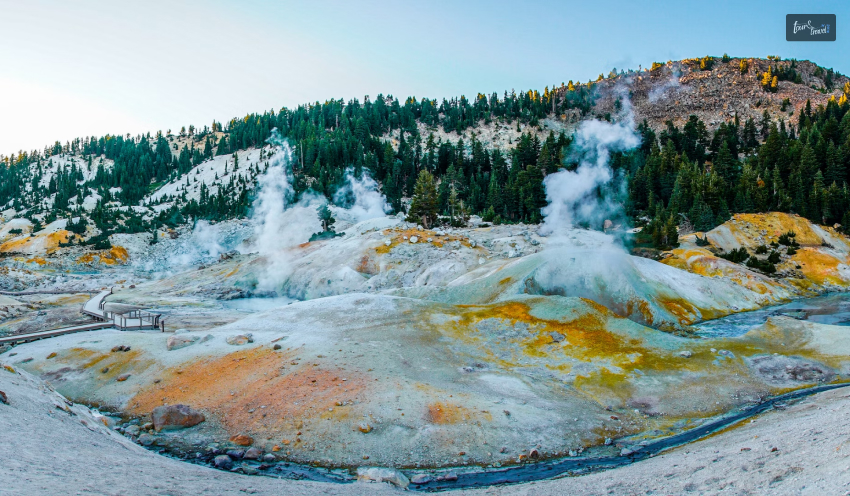
As the temperature of the water rises, it gets transformed into fumaroles. Fumaroles exude from various cracks in the earth. In Lassen Volcanic National Park, you will observe fumaroles at Sulphur Works, Devils Kitchen, and Bumpass Hell. 

Little Hot Springs Valley

You can have a look at the Little Hot Springs Valley from Lassen Peak (the largest plug demo volcano in the world) and other mountains lining it.  

Further, various seasonal creeks drain into this valley, feeding the geothermal water. If you overlook the valley from the mountain peaks in the summer, you will see many wildflowers smiling. In particular, grass and the wildflower vegetation across the East Sulphur Creek edge is quite dense, thanks to various hypothermal activities.

You can also look at the Little Hot Springs Valley from a pullout, just one mile away on the south. The view from this pullout is scenic, with lush green slopes before your eyes. If you look at the slopes with binoculars, you will find black bears roaming around. 

Bumpass Hell

As you walk 7 miles from the southwest entrance of the park, you will find a parking area on the park highway. Here, you will find the trail to Bumpass Hell. With a 3-mile hiking trail(round trip), Bumpass Hell is the largest geothermal area in the park.

You can only hike the Bumpass Hell trail in autumn and summer. It remains closed during spring and winter. The temperature of the geothermal water in the Bumpass Hell area can reach up to 322 degrees. 

The elevation of this trail is 8,000 feet. However, because of its moderate difficulty level, you will find many visitors here on weekends.

The water in this hydrothermal area is emerald green or blue in color. Further, the minerals in the water stain the rocks and soil in yellow and orange shades. 

Sulphur Works

Sulphur Works

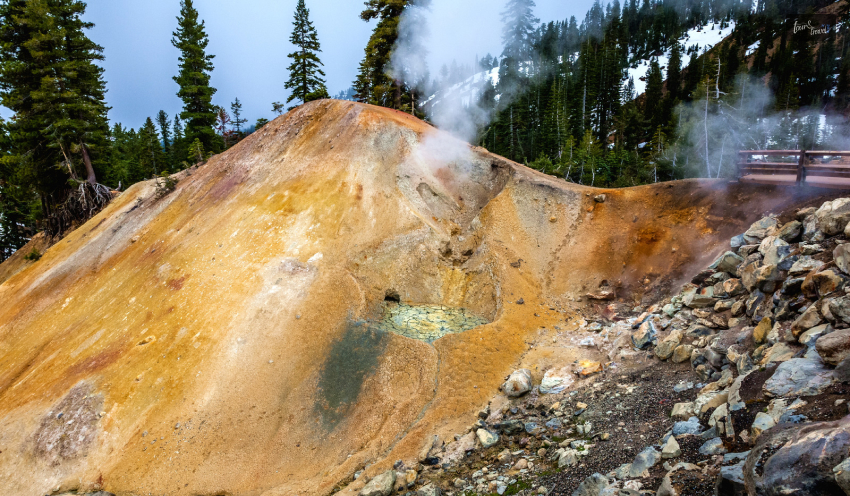
It can’t get easier than hiking to Sulphur Works if you want to explore the geothermal wonders of Lassen Volcanic National Park. Here, you can see how volcanic activities have created the most interesting geology with shifting new and ancient grounds. 

The landscape here experiences regular updates because of geothermal activities and natural activities like erosion. Also, thanks to the volcanic activities, you will encounter colorful rocks, steam vents, and the most pungent sulphuric smell here.

Sulphur Works is important in the Lassen Volcanic National Park history, and it was earlier known as Supan’s Sulphur Works. Mathias B. Supan, a pioneer of the American West, used to extract minerals from the ground here in the mid-19th century. 

The hydrothermal area of Sulphur Works is interesting as it is located at the center of a wide basin. Brokeoff Mountain, Mount Conard, Pilot Pinnacle, and Mount Diller surround this basin. According to geologists, these mountains are eroded formations or remains of Mount Tehama or Brokeoff Volcano.

Boiling Springs Lake

Boiling Springs Lake

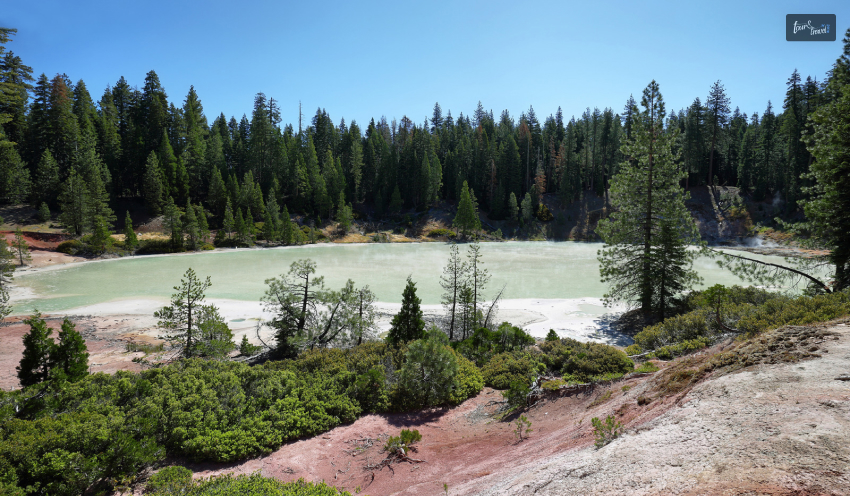
A trail starting from the Warner Valley trailhead will take you to the Boiling Springs Lake, filled with hot and bubbling water. The temperature of the water in this lake is 125 degrees. 

You will also find steam vents and mud pots on the shore. The mud pots on the southeastern shore of the lake demand a special mention. 

As you continue on the Boiling Springs Lake trail, you will see colorful wildflowers. The vegetation of Douglas-fir, sugar pine, incense-cedar, white pine, and ponderosa pine will soothe your eyes here.

This trail is also a birder’s paradise and one of the best places in the park to observe birds. 

Devils Kitchen

This hike, starting from the Warner Valley Trailhead, is moderate, and it will take you to an area filled with boiling pools, mud pots, and steam vents. You can call Devils Kitchen a 

Cauldron.

The piled-up cracked red and yellow stones here give this place a colorful appearance. These colorful stones show deposits of various minerals found in volcanic eruptions. The Cauldron will keep making hissing, belching, and plopping sounds, and the unique odor filling the air creates the perfect ambiance of a natural kitchen.

Something is definitely cooking in this kitchen! 

Terminal Geyser

Start hiking from the Warner Valley Trailhead to reach Terminal Geyser. It is a steam vent showcasing the active volcanic activities in the park. 

Unlike a geyser, it does not erupt hot water periodically, and it’s actually a fumarole. Even if you can’t see the steam, you will smell a sulfuric odor, and there will be a billowing cloud. 

Cold Boiling Lake

You can start trekking from Kings Creek Picnic Area to reach the Cold Boiling Lake. The road to the Cold Boiling Lake is almost flat, and the landscape has further descent to the Crumbaugh Lake. 

You can see some small gas bubbles near the shore of the Cold Boiling Lake. So, it is known as a dying geothermal wonder of the park. 

The Cold Boiling Lake and its shores look the best if you pay a visit in the morning after a night of snowfall. 

Pilot Pinnacle

Pilot Pinnacle is a remains of volcanic composites. You will find it along the ridges of Mt. Diller and Brokeoff Mountain. You can look at this area filled with mud pots, pools, and steam vents from Park Road. 

Lassen Volcanic National Park Camping

Lassen Volcanic National Park Camping

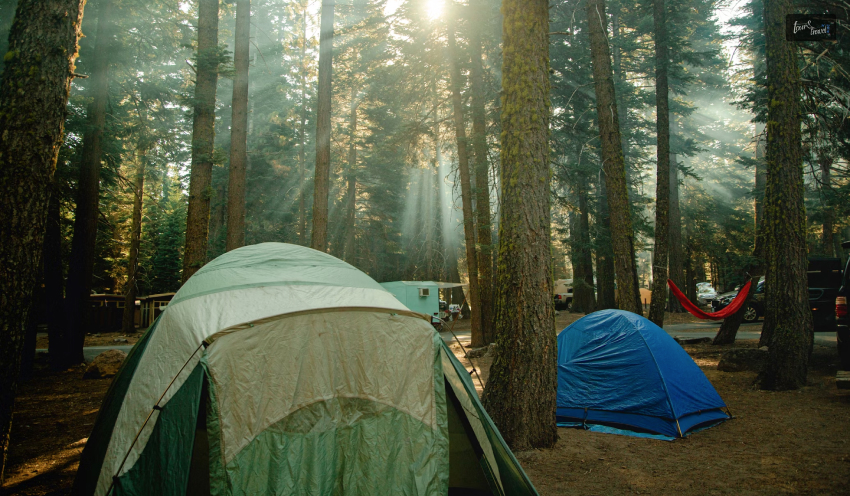
Lassen Volcanic National Park has seven campgrounds. However, only four campgrounds are available this year. The Dixie Fire 2021 recovery process will keep the three other campgrounds closed in 2024. 

The campgrounds open this year are Butte Lake, Summit Lake, Southwest Campground (Southwest Parking), and Manzanita Lake. 

Closed campgrounds are Juniper Lake, Warner Valley, and Southwest Campground (Walk-in campground). 

Most campsites in the park are available at this national park on a reservation basis. You can make the reservation between June and September. You can make your reservation at recreation or call the park authority at 1-877-444-6777. 

Final Words 

The Lassen Volcanic National Park is a hub of scenic beauty, active volcanoes, and various geothermal features. Active volcanism and weather forces, like rain and erosion, have given this park a rich geological landscape that goes back thousands of years.

With the magnificent Lassen Peak towering over the park, the hydrothermal areas are surrounded by forests and green meadows. So, various species of animals, birds, and insects reside around these geothermal areas. 

So, if you are a volcano enthusiast, a wildlife lover, or a hiker, pack your bags, plan a trip to this national park, and share your experience once you come back. 

Lassen Volcanic National Park FAQs 

What Lives In Lassen Volcanic National Park?

Home to around “300 species of vertebrates,” Lassen Volcanic National Park has many mammals, birds, amphibians, reptiles and fish. The park has three ecological zones where you can encounter rich wildlife. 

  • Mammals: Black bear, Sierra Nevada red fox, mountain lion, America pika, snowshoe hare, Douglas’s squirrel, mule deer
  • Birds: Steller’s Jay, Clark’s nutcracker, Anna’s hummingbird, woodpeckers, round-legged hawks, etc. 
  • Amphibians: Pacific tree frog, long-toed salamander, western toad
  • Reptiles: Sagebrush lizards, northern lizards, alligator lizards, western terrestrial garter snake, rubber boa, Northern Pacific rattlesnake, etc. 
  • Fish: Rainbow trout, Lahontan Redside, speckled dace, etc.

Along with these animals, you will also find the most beautiful  California Tortoiseshell butterflies, spiders, and other insects in the park. The total number of invertebrate species living here is 350. 

What Is The Closest Town To The Lassen Volcanic National Park?

Chester is the closest town to the Lassen Volcanic National Park. You can take a 40-minute drive from the southwest entrance of the park. You can relax at the eateries at Chester, and you will find some decent lodging options here. 

Who Died In Lassen Volcanic National Park? 

Tommy Botell, a 9-year-old boy, died in an accident in the Lassen Volcanic National Park on 18th March 2010. His elder sister, Katrina, a 13-year-old girl, was severely injured in the same accident. 

The mishap took place at the Lassen Peak Trail. 

Also read

Share on Social Media

Sibashree is a travel, culture, and leisure writer who has been writing since the age of 12 and professionally since 2014. With more than a decade of travel writing experience and journeys across India and several parts of the world, she brings a deeply personal and thoughtful perspective to her work. A student of English Literature and Mass Communication, Sibashree has always viewed travel as more than movement — for her, it has been a way of understanding people, cultures, and herself. Her passion for spiritual exploration has also led her to many unusual and meaningful destinations over the years. Outside of writing, Sibashree enjoys watching European cinema, reading about global politics, and reflecting on the stories hidden within everyday places.

Leave a Reply

Your email address will not be published. Required fields are marked *

title-img Related

READ MORE Thekkady Tourist Places

What Are The Thekkady Tourist Places To Visit? Know The Itinerary While Traveling With Family

BY  Sibashree Aug 24, 2026

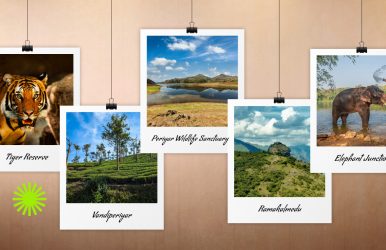
Thekkady may not have the best tourist season in 2026 due to the fall in the water level of the Periyar Lake. Still, it remains a classic Kerala experience with its unpredictable and untamed nature and wildlife. My day in Periyar started with an unexpected encounter with a majestic elephant. I was in the Periyar Wildlife Sanctuary, focusing my binoculars to get a glimpse of the wildlife. It was dawn, and the elephant seemed to appear from nowhere, evading the mist. This is how Thekkady catches you off guard. However, it is not just the Periyar Wildlife Sanctuary and Tiger Reserve. The Thekkady tourist places also include spice plantations, cultural centers, and some important places of religious and spiritual significance. Furthermore, the Thekkady resorts with private pool promise unmatched comfort for visitors who want a fusion of natural abundance and luxury. These focus on ecotourism and visibly function as extensions of the wild and untamed nature of Thekkady. It is no wonder that Thekkady had 757017 domestic visitors and 79736 foreign visitors in 2025. This data is from the Kerala Tourist Visits Statistics – 2025. Do you also want an immersive journey into Thekkady? I will talk about the tourist places, location, transport options, and a tentative itinerary. Where Is Thekkady? Thekkady is in the Idukki district of Kerala and close to the Tamil Nadu Border. Located in the Cardamom Hills of the Western Ghats, Thekkady is at the edge of the Periyar Tiger Reserve. Kumily, around 4 km away, is the nearest town, and most visitors choose to find accommodation in this town. Furthermore, with an elevation ranging between 700 and 1800 meters, Thekkady enjoys easy road connectivity to more famous tourism destinations such as Munnar, Kochi, Madurai, and Kottayam. Also, it is located at a distance of around 204 km from Thiruvananthapuram, the state capital. How To Reach Thekkady? The nearest airport to Thekkady is Madurai, which is located at a distance of around 136 KM. Also, the nearest railway station is Kottayam, and the distance is around 110 KM. From both places, you have to reach Thekkady by road. Madurai To Thekkady From the airport, you can book a private taxi to reach Thekkady within 3.5 to 4 hours. The charges will be around ₹3500-₹7500. You can also board the Kerala State Road Transport Corporation (KSRTC) buses from the M.G.R. Bus Stand to Kumily, which is just 5 minutes away from Thekkady. The travel time in these buses is around 3 hours and 20 minutes, and the ticket price is ₹154. Moreover, you can check the redBus platform for more such bus options. From Kottayam To Thekkady You can book a private car or taxi from Kottayam to Thekkady. The charges will be around ₹2600 to ₹4000. From Kottayam, you can also board KSRTC buses running from Ernakulam or Fort Kochi to Thekkady. The journey takes around 3 hours and 30 minutes, and the ticket price will be between ₹150 and ₹300. Moreover, along with Kottayam and Madurai, many urban areas in Kerala, such as Kochi, have excellent road connectivity with Thekkady. What Are The Thekkady Tourist Places? The Thekkady tourist places are eclectic, offering a mix of wildlife, spiritual, and off-beat trekking experiences. Moreover, there are cultural places and tea factories. So, here, I have presented them in different categories. Nature And Wildlife Attractions While the Periyar Wildlife Sanctuary is at the epicenter of the wildlife experience in Thekkady, you can also visit the Elephant Junction. Here are more Thekkady tourist places for nature and wildlife exploration. 1. Periyar Wildlife Sanctuary And Tiger Reserve In 2022, Periyar Tiger Reserve won the title of the best-managed tiger reserve among the 54 reserves in the country. This is a community-based ecotourism project. Also, it is home to Bengal Tigers, Indian Elephants, leopards, gaur, barking deer, mouse deer, and many other mammals. The sanctuary remains open from 6 AM to 7 PM. The entry fee to the national park is ₹45 for Indian adults and ₹15 for Indian children. For foreigners, the charges are ₹500 (adults) and ₹180 (children), respectively. 2. Elephant Junction Elephant Junction is the place to get up-close and personal with elephants in Thekkady. I am never in for the rides or the logging activities, as I know how these can literally ruin the lives of the adorable creatures. However, I enjoyed feeding them and watching them when they were taking a bath in the nearby stream. The safari park remains open from 8 AM to 6 PM, and the packages start from ₹700. 3. Chellarkovil At a height of around 1200 meters above sea level, with a beautiful landscape and waterfall, it is an important ecotourism hub. Due to the ecotourism project here, you will come across many huts, medicinal plants, and pathways. Moreover, from the God’s Own Balcony of the Chellarkovil Watchtower, you can enjoy a bird’s-eye view of the neighboring Theni and Kamabam. 4. Vandiperiyar At a distance of around 18 km from Thekkady, Vandiperiyar is a scenic hill and spice town in the Idukki district of Kerala. The beautiful Periyar River forms the lush landscape here, and it is also home to the Government Agriculture Farm and Flower Garden. This farm and flower garden feature a rich collection of roses, orchids, and anthuriums. Moreover, it has tea, coffee, and pepper plantations in abundance. Also Check: Natural Wonder: Top 11 Best Landscape Places In The World. Thekkady Tourist Places Offering Religious And Spiritual Experience The religious or spiritual vibe of Thekkady is not limited to designated temples. You will find the hidden and the most significant gems in a plantation town or at the top of a hill. 1. Ramakalmedu There is one famous saying about Ramakalmedu. It is the place where “the wind never stops.” However, around 40 km away from Thekkady, this mountain peak gets its name from the mythological legend of Lord Rama setting his foot on this rock. Also, once you reach the summit, you will find the Kuravan and Kurathy statues, the biggest in Kerala and inspired by local legends. It is a peaceful area, offering sweeping views of the Cumbum and Bodi villages on the eastern slopes of the Western Ghats. 2. Kurisumala Kurisumala, the tallest peak in Thekkady, means the “Mountain of the Cross.” This is a pilgrimage for Christians, who climb uphill with a cross. At the top, there is a peaceful monastery. Also, on the eastern side of this Kurisumala, stands Muruganmala. It has a Murugan temple, constructed by cutting a rock. 3. Mangala Devi Temple I reached the Mangala Devi Temple after a trek of around 11 km through the forest. Kannaki, the protagonist of the Tamil epic Silapathikaram, is the presiding deity in this 100-year-old temple. After facing betrayal at this place, she transformed into a divine figure and blessed all the locals here. Thus, she became famous as Mangala Devi, or the deity who brings blessings. Unfortunately, the temple was closed when I visited it, and it only opens during the annual Chithrapournami festival. 4. Peermede Peermede, around 44 km away from Thekkady, is a plantation town. However, I visited it after knowing it was named after a Sufi Saint, Peer Mohammed. The town still has the mausoleum of the saint and the summer palace of the Royal Family of Travancore. After visiting these historical and spiritual places, you can also explore the rubber, cardamom, and tea plantations here. Also, for some more adventure, you can trek to Kuttikanam or Thrissanku Hills. How Many Days Are Enough To Visit Thekkady Tourist Places? Plan Your Itinerary Three to four days are enough to visit Thekkady tourist places. Here is an itinerary you can follow for a comfortable, rush-free experience. DaysFocusLocationsDay 1Wildlife and Town•Periyar Tiger Reserve  •Elephant Junction ChellarkovilDay 2PlantationsVandiperiyar RamakalmeduDay 3Peaks and HeritageKurisumala and Muruganmala Peermede So, when are you planning a trip to Thekkady? Remember that October to March is the best time to visit this hill town. Read Also: What Are The Best Family Vacation Spots In The World? Here Are Our Favorites What Are The Things To Do In Unawatuna With Family? Ultimate Guide to Your Next Family Vacation in Israel

READ MORE best time to visit Andaman

Best Time To Visit Andaman – Andaman Guide Of 2023

BY  Sibashree Nov 17, 2022

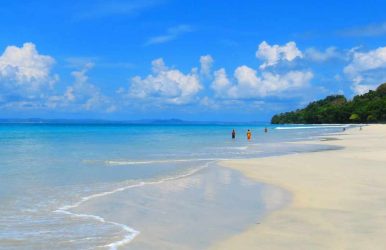
Weather Conditions in AndamanAPRIL - JUNEJULY - SEPTEMBEROCTOBER - MARCHTemperature24°c - 37°c 22°c - 35°c20°c - 30°cSeasonSummerMonsoonWinter 2022 is almost ready to bid us adieu. A new year is less than two months away, and there’s no reason why you shouldn’t start planning your trips for 2023. And the first place to check out in the new year (if you trust us even a teeny tiny bit) is Andaman - because the best time to visit Andaman is approaching, and you must not miss out on this golden opportunity! Today, we will only talk about visiting this island state in the Indian Ocean. Keep reading to find out all that you need to know about traveling to Andaman! Journey Across The Indian Ocean: Best Time To Visit Andaman! Thanks to warm temperatures and little rain, the best time to visit Andaman is anytime between October and May. Although the picturesque archipelago undergoes moderate weather throughout the whole year, it is best that you plan a trip during these months for a memorable experience. At the same time, you must remember that there are so many other people thinking along the same lines. As a result, it is safe to say that this time of the year also happens to be the busiest time for the island state. But whenever you decide to visit this sunny island, it’s best to avoid the same during Monsoon. The high tides, incessant rains, and strong wind all add up to create an environment that can hinder your touring experience - so why take the risk? Yes, the islands are perfect for water sports, beach excursions, and plenty of sightseeing due to their warm weather, more or less throughout the year. But naturally, there are advantages and disadvantages of visiting the islands in different seasons. So without wasting any time, let’s check out a comprehensive guide for traveling to Andamans at different seasons - scroll down to find out all that you need to know! Exploring Andamans In Winter (October - March): To be honest, Andaman does not really experience a proper winter season. If you have ever traveled to Bengaluru or Vishakhapatnam, then you will be able to understand the climate type prevalent on these islands. The mildly humid, pleasant weather is ideal for tourists to relax - the turquoise water of the vast ocean reflects shades of blue, contrasted by the white sands, and the blue sky only makes these islands worth a visit during this season. Andamans In Winter The winter season makes the destination a picturesque location perfect for couples on honeymoon, families, and other elderly people. The best part? Neither the location is sultry nor is it sweaty - so you can just grab some cocktails and unwind inside the shacks against an aesthetic backdrop. Exploring Andamans In Summer (April - June): While seeking the best time to visit Andaman and Nicobar islands, you can always consider Summer for planning a trip to these beautiful groups of islands. Let us tell you why! With absolutely no rainfall, the weather is ideal for sightseeing, water sports, or just relaxing by the beach. The season usually begins in January and goes on till the end of April. Since this is the time for a summer vacation in the academic sector, the season collides heavily with a busy tourist season comprising mostly families with children. Moreover, you can also try out all the different watersports during this time.  In this context, let’s check out a few details related to visiting Andamans in Summer. Temperature And Weather: During Summer, the Andaman Islands experience an average temperature that ranges between 25 degrees to 32 degrees. With a mean relative humidity of about 80%, Summer is perhaps the most popular time to travel to these beautiful islands and cross off a few travel goals from that bucket list of yours.  Moreover, during this season, the weather is quite calm. You can even try out different watersports such as parasailing, jet skiing, snorkeling, and scuba diving.  Why Should You Visit Andamans During Summer? Stop googling ‘Andaman Nicobar best time to visit’ and instead keep reading to find out why Summer is one of the best reasons to visit this group of islands. Summer in Andaman is all about the warm ambiance, the glowing environment, and the vibrant crowd. If you love beaches, then you will get to witness the pristine destination, and that too in all its summer glory. Who hasn’t seen those aesthetic pictures of Andaman in magazines, social media platforms, and even blogs? We are talking about those photographs with the boats anchored on the sandy shores with beautiful turquoise waters in the backdrop. It’s the idea of travel photos with a few hammocks tied to several coconut trees, all standing tall, facing the limitless ocean. Summer is also about festivities, and Andaman surely rises to the occasion. If you do end up finding Summer as the best time to visit Andaman, then don’t miss out on festivals like The Island Tourism festival (a 14-day festival celebrating the traditions and cultures of the region), The SubashMela (an event for celebrating Subash Chandra Bose’s birthday), and The Block Mela (an event for celebrating the diverse cultures, and local lifestyles). Things To Remember Before Visiting Andaman In Summer: Since the weather in Andaman during Summer is calm, you do not need to let that paranoia worry you. Simply pack everything you will need and lose yourself in this beautiful paradise - this is, after all, the best time to visit Andaman! Here’s what you need to keep in mind! Since you will be traveling to tropical climates, you will dehydrate fast. As a result, it is best that you carry plenty of adequate water and stay hydrated. Don’t forget to carry your deodorants, hats, sunglasses, and sunscreens as protection against the hot Sun. Also, make sure you are traveling light with beach clothes and some flip-flops. Exploring Andamans In Monsoon (July - September): As we mentioned early on, Monsoon is definitely not the best time to visit Andaman, as compared to the other two seasons. In case you had no idea, the islands receive rain not once but twice from monsoon - once from the Southwest Monsoon and the other time from Northeast Monsoon. You don’t need to type ‘Andaman and Nicobar islands best time to visit’ on Google to find out that monsoon is not your ideal weather for traveling to Andamans. But in case you hate crowds and don’t mind some rain, and a little adventure, then we don’t see any reason why you can visit these islands during monsoon. So let’s check out all the details you need for planning a trip to Andaman during Monsoon. Temperature And Weather: Monsoon in Andaman is characterized by incessant rains and high tidal waves. In fact, the temperatures easily range between 22 degrees Celsius to 30 degrees Celsius, making this an ideal season for both hot chocolate and different citrus-based beverages. Moreover, Andaman is relatively dull during Monsoon. Thanks to all the rough rainfall and tropical storms that last for nearly 180 days yearly, the islands experience a reduction in tourist influx. People are seeking unique experiences and planning to let loose from their mundane routines. You will actually find a lot of time for self-exploration and rejuvenation - if you are trying to find some solitude on your trips, then you should visit Andaman during Monsoon. Why Should You Visit Andamans During Monsoon? You should totally visit the Andaman Islands during monsoon for some much-needed solitude, bliss, and silence. It doesn't matter whether you want to go solo or with your friends, the ambiance during this season will help you self-explore and introspect without unnecessary interruptions - this is the ideal time to get lost right in the middle of nothing! Things To Remember Before Visiting Andaman In Monsoon: Since monsoon is not the best time to visit Andaman for a majority of tourists, it is highly unlikely that water sports are available during this season. Moreover, the large waves and unpredictable winds further make watersports unsafe. In fact, the season makes the islands pretty isolated from tourists, so much so that hotels give away rooms at huge discount prices. But keep in mind that all ferry operations might get disrupted frequently due to the rough waves - however, the beauty of spending a monsoon in Andaman during this time is forever memorable. It’s not risky to travel to Andaman during this time of the year, but if you have this perfect touristy vacation in mind, then you might just be disappointed. Here’s what you must keep in mind! Don’t forget to carry your umbrellas, power banks, torch lights, munchies, mosquito repellants, raincoats, and windcheaters. If the rain stops you from stepping out for food, you can always count on your munchies. Make sure you are not carrying any expensive gadgets and cameras during this time. Frequently Asked Questions (FAQs): Check out the most frequently asked questions about finding the best time to visit Andaman. 1. Which Month Is Best For The Andaman Trip? The best time to visit the Andaman Islands is anytime from October to May. This is because the weather during this time is pleasant and ideal for water sports, sightseeing, and even beach excursions. Similarly, monsoons are not usually recommended for traveling to these islands due to unpredictable rains, storms, and waves. 2. What Is The Famous Food Of Andaman? The basic diet of people residing in Andaman comprises coconuts, spices, rice, and plenty of seafood. Moreover, since Andaman is made up of islands, the destination happens to be a seafood paradise - from lobsters and fresh prawns to crabs, there’s so much to try out here. Don’t miss out on Red Snapper, an all-time favorite. 3. What Type Of Clothes To Wear In Andaman? Ans: You can carry the following clothing essentials on your trip to Andamans,➊ Sunglasses, ➋ Hats, ➌ Cotton clothing,➍ Bathing suits,➎ Comfortable Shoes,➏ Smart Casuals,➐ Sleeping Attires, and➑ Poncho/Raincoat. In Search Of The Deep Blue: Andaman Calling! So you know the best time to visit Andaman - you no longer need to type search for ‘Andaman best time to visit’ or related material! Then what are you waiting for? Pack your bags today, and start on your trip soon - after all, the islands are so beautiful there’s no way not to add this destination to your bucket list. In the meantime, don’t forget to share your thoughts and moments from your Andaman trip if you have already visited these islands in the comments below. You may also like: The Comeback Of Death Valley National Park Lake? Will It Stay?

READ MORE Amsterdam Travel Guide

Amsterdam Travel Guide: Everything You Need To Know Before You Visit

BY  Sibashree Apr 7, 2026

Amsterdam, the capital of the Netherlands, is most famous for its 17th-century canal ring, a UNESCO World Heritage Site.  Furthermore, the Netherlands has been consistently one of the happiest countries in the world, with the current position of 7th in the World Happiness Report 2025.  The vibrant neighborhoods of Amsterdam play an important role to play in sustaining the position of the city. And it is no wonder that Amsterdam is one of the best family vacation spots in the world.  The city also has a cycling culture that goes well with sustainable and eco-friendly travel. In addition, the world-class museums here make it a hotspot for cultural and art connoisseurs around the world.  However, what's more fascinating is the Sustainable Visitor Economy Strategy taken by the city in 2025 on the occasion of celebrating its 750th birthday.  It is not just about the numbers or the millions of visitors coming to the city every year. It is also about understanding the tourism trends and having a rational and balanced approach to tourism growth.  So, as Amsterdam acts sincerely to maintain and grow its tourism landscape, I want to discuss why the city is special, the places to visit, the food, local transport, and more in this Amsterdam travel guide.  What Is Amsterdam Best Known For? You know what can be the best things to do in Amsterdam? For me, it is always about unfolding the layered history of the city beyond its postcard charm.  The history of the city goes back to the 12th century, and then it was a peat bog at the mouth of the Amstel River.  Then, the city rose so much that during the Dutch Golden Age of the 17th century, it became one of the wealthiest cities in the world.  Today, the legacy of the era continues with more than 1,000 bridges, over 90 islands, and hundreds of narrow merchant houses tilting at improbable angles above the water.  Furthermore, its network of canals and the legendary museums such as the Rijksmuseum, the Van Gogh Museum, and the Anne Frank House put it at the epicenter of historical and cultural tourism in the country.  Along with these top attractions, Amsterdam also stands out with its contrasts. Along with the masterclass and classics, you will also find blocks with edgy street art in the stately museums of the city.  Furthermore, you will find traditional brown cafés next to world-famous coffee shops and tulip stalls crowd markets that also sell antiques and vinyl records.  So, Amsterdam is always a city and a capital that deserves more than a weekend.  What Are The Places To Visit In Amsterdam? Top Attractions In Amsterdam Amsterdam is eclectic in nature. So, it offers you the right fusion of historical and cultural experiences along with charming neighborhoods.  These are the places to visit in Amsterdam that you cannot miss.  1. The Rijksmuseum: The National Treasure Of The Netherlands  With a permanent display of 8000 works, the Rijksmuseum is the largest art and history museum in the Netherlands.  Here, you will find Rembrandt's The Night Watch and Vermeer's The Milkmaid, among the collection of more than one million objects.  Furthermore, the Dutch Golden Age silver, Delftware ceramics, and dollhouses are equally extraordinary.  Practical Tip: Book tickets online at least two weeks in advance. Entry costs €22.50 for adults; children under 18 enter free. The museum gardens are free and open year-round. 2. Anne Frank House: A Profound Historical Experience The Anne Frank House on Prinsengracht is one of the most emotionally powerful sites in Europe.  The secret annex where Anne Frank and her family hid from Nazi persecution for more than two years has been preserved almost exactly as it was.  Visitor numbers are strictly managed, and thus only 1 million tickets are sold per year. So, you will have to book the tickets months in advance.  3. Van Gogh Museum In the Van Gogh Museum, you will find the largest collection of the master's paintings and drawings.  You will find around 200 paintings and 500 drawings by Van Gogh.  Furthermore, there is a chronological layout of the permanent collection. So, it is a great place to study the development of the artist from his dark Dutch period to the blazing canvases of Arles and Saint-Rémy. 4. Jordaan Neighborhood It has a dense grid of narrow streets and canals lined with independent galleries, vintage boutiques, antique shops, and hidden courtyards (hofjes).  The neighborhood grew as a working-class quarter in the 17th century and has since transformed into one of the city's most desirable addresses. Do not miss: the Westerkerk tower (climb it for panoramic views), the Noordermarkt on Saturday mornings (organic food and antiques), and the Pianola Museum on Westerstraat. 5. Keukenhof Gardens Keukenhof, located 35 km south of Amsterdam near Lisse, is the world's largest flower garden. It has 32 hectares of tulips, daffodils, and hyacinths planted in seasonal patterns.  It opens annually from late March to mid-May. Entry is €22 for adults; shuttle buses run from Schiphol Airport and Amsterdam's Centraal Station. 6. The Canal Ring (Grachtengordel) Amsterdam's UNESCO-listed canal ring consists of four main canals. Singel Herengracht Keizersgracht Prinsengracht Amsterdam Travel Guide On Local Transport Amsterdam is one of the most walkable and cyclable cities in Europe.  The city center is compact (most major attractions are within a 3 km radius of Centraal Station), and an excellent public transport network of trams, buses, metro lines, and ferries covers the rest. Main Transport Options Cycling: Amsterdam has over 500 km of dedicated cycle paths. Bike rental runs approximately €12-€15 per day from shops near Centraal Station. Trams: GVB trams cover the city center with frequency every 5-10 minutes. An OV-chipkaart (tap-in/tap-out card) is the most economical option. Ferry: Free ferries cross the IJ waterway from behind Centraal Station to Amsterdam Noord every few minutes. Metro: Useful mainly for the Noord/Zuid line connecting Centraal Station to De Pijp and Amsterdam Zuidoost. How Do Groups Get Around Amsterdam? For groups of 8 or more people, coordinating individually on trams or rented bicycles quickly becomes impractical.  A dedicated minibus hire in Amsterdam with a professional driver solves the logistics entirely. This is particularly valuable for corporate incentive groups, school trips, wedding parties, and multi-day sightseeing programs. An Amsterdam Travel Guide On The Neighborhoods: Where To Stay And Explore Along with the Jordaan Neighborhood, these are the neighborhoods you will love.  1. Centrum (City Center) The Centrum is home to the canal ring, Dam Square, the Flower Market, and the Red Light District. 2. Amsterdam Noord Formerly industrial, Noord has become the city's creative hub, home to the EYE Film Museum, NDSM Wharf (a former shipyard turned arts complex), and some of Amsterdam's best new restaurants.  Reach it by the free ferry from behind Centraal Station. 3. Oud-West A residential neighborhood with tree-lined streets, the Vondelpark (Amsterdam's equivalent of Central Park), and Leidseplein's bar and theater district.  It is a solid choice for travelers on a mid-range budget. Amsterdam Food: What To Eat And Where Once, people in Amsterdam only ate stamppot, or a kind of mashed potato stew.  However, the city has come a long way and has now become one of the most exciting food destinations in Europe.  So, when you are in Amsterdam, you must try these essential delicacies.  1. Stroopwafel It is a thin caramel-filled waffle. You will find many market stalls selling it warm.  Furthermore, the best way to have it is to place it over a cup of hot chocolate or coffee for 1-2 minutes. Then, the caramel inside the waffle melts down, and you have the desired gooey experience.  2. Herring (Haring) You will love the raw and salt-cured herring served with onions and pickles.  The Dutch eat it by tilting the head back and lowering the fish whole. Try it at Volendammer Vishandel on Spui. 3. Bitterballen These are deep-fried ragout balls served in brown cafés as a bar snack.  Furthermore, these are crispy outside and molten inside. 4. Indonesian Rijsttafel It is a colonial-era "rice table" consisting of 15-30 small Indonesian dishes served with steamed rice.  Amsterdam has excellent Indonesian restaurants thanks to its colonial history; try Blauw on Amstelveenseweg. 5. Cheese Dutch Gouda and Edam are available everywhere, but seek out aged (belegen or oud) varieties at specialist cheese shops like De Kaaskamer in the Jordaan. A Practical Amsterdam Travel Guide: Keep These Things In Mind So, are you planning a trip to Amsterdam? Keep these practical tips in mind.  1. Do You Need A Visa To Visit Amsterdam? The Netherlands is a member of the Schengen Area. So, if you are an EU citizen, you do not need a visa to visit Amsterdam.  Furthermore, if you are from the UK, USA, Canada, or Australia, you can visit for up to 90 days within any 180-day period without a visa under the Schengen rules.  Moreover, from 2025 onward, non-EU citizens who do not need a visa will need to apply for ETIAS (European Travel Information and Authorisation System) authorization before travel. The fee is €7. 2. What Currency Is Used In Amsterdam? The Netherlands uses the Euro (€). Furthermore, Amsterdam is known for its cashless or contactless payment methods.  Furthermore, you will find many ATMs in the city.  However, you must avoid exchanging your currency at the bureaus in tourist areas to avoid high fees. 3. Is Amsterdam Safe For Tourists? The Netherlands has secured the 14th position among 163 countries in the Global Peace Index 2025.  So, Amsterdam, the capital city, is of course safe for tourists.  However, pickpocketing, especially around Centraal Station, in crowded trams, and on the Damrak, remains a concern.  Furthermore, you must behave responsibly when exploring the Red Light District. There is heavy policing in the area, and you must respect local regulations and avoid taking photographs of the sex workers.  Moreover, abide by the following key rules for your safety in Amsterdam.  You must cycle through only dedicated cycle lanes.  You can have cannabis in licensed coffee shops. However, it is illegal to have cannabis in public spaces.  Also, remember that you will have to pay toeristenbelasting, or a tourist tax of €3 per person per night, plus a 7% surcharge, with your accommodation bills.  Amsterdam Travel Guide: Frequently Asked Questions (FAQs) Here are the frequently asked questions and answers related to the Amsterdam travel guide.  1. What Is The Best Way To Get From Schiphol Airport To Amsterdam City Center? The fastest way to get from Schiphol Airport to Amsterdam City Center is to take a direct train to Amsterdam Centraal.You will get the train every 10-15 minutes, and the travel time is around 17 minutes. Also, the train ticket fare is €5.50 with an OV-chipkaart. Furthermore, you can even book a taxi that takes around 20-40 minutes based on the traffic, and the ticket price is around 35 to 50 Euros. Moreover, for groups arriving together, a pre-booked private transfer is often the most cost-effective door-to-door option. 2. Is Amsterdam Worth Visiting In Winter? Yes, you can visit Amsterdam during the winter months of December to February. In fact, due to fewer crowds and low temperatures, these months are ideal for exploring the top attractions such as the Rijksmuseum.However, remember that the winter temperature in Amsterdam hovers around 0 to 10 degrees Celsius. 3. What Day Trips Are Possible From Amsterdam? Amsterdam is an excellent base for day trips. The most popular include:• Haarlem (20 min by train): Charming medieval city with the Frans Hals Museum and a lively Saturday market.• Delft (1 hr by train): Famous for blue-and-white Delftware pottery and the birthplace of Vermeer.• Zaanse Schans (20 min by train): Open-air museum village with working windmills, traditional Dutch houses, and a clog factory.• Keukenhof (35 km by car or bus, spring only): The world's largest tulip garden. 4. Can You Drink Tap Water In Amsterdam? Yes, you can drink tap water in Amsterdam. The tap water in the city is one of the cleanest and best-tasting in Europe.Furthermore, the tap water in the city is sourced from dune water and then filtered through sand and treated without heavy chlorination. 5. How Many Days Are Enough In Amsterdam? The days you spend in Amsterdam will depend on the attractions you want to see.For example, if you are in Amsterdam for 2 days, you can see the Rijksmuseum and Anne Frank House, take a canal cruise, and explore the Jordaan neighborhood.Furthermore, if you are in Amsterdam for 3-4 days, you can add the Van Gogh Museum, a day trip to Keukenhof (spring) or Haarlem, and exploring De Pijp and Noord to your itinerary.Moreover, if you are in Amsterdam for 5-7 days, you can consider day trips to Delft, The Hague, or Zaanse Schans (the iconic windmill village, 20 minutes north of Amsterdam).