



Welcome To Biscayne National Park: Enjoy Kayaking and Canoeing At This Watery Wonder

Jul 10, 2024

Last Updated on: Jun 12, 2025

Travel Blog

If you are in Florida and want to give it all for your active pursuits, your path must lead to the Biscayne National Park.

With the third longest coral reef, the watery wonderland is a beautiful coexistence of wildlife, water trails, hiking spots, and life under the water.  

Also, did you know that as you visited Florida’s Biscayne National Park, you made a little contribution to the local and national economy? The National Park Service says,  

The South Florida national parks, comprised of Big Cypress National Preserve, Biscayne National Park, Dry Tortugas National Park, and Everglades National Park, were collectively visited by 2.9 million people who spent $242.5 million and supported over 3,250 jobs in South Florida. The cumulative benefit to the South Florida economy was over $352 million.”  

So, is the allure palpable enough? Are you already invested in the wildlife, islands, water sports, and the urge to do a little good for the local community?

Pack your bags and set in! Meanwhile, let me do all the legwork and make all the plans to join you at the park.  

Things To Know About Biscayne National Park 

Biscayne National Park 

Before I share the details about the kayaking and canoeing fun at the Biscayne National Park, I want to present a brief overview of the park.  

A visit to this park is truly a one-of-a-kind experience, and it’s like a microcosm of the universe with the falling together of land and water ecosystems.  

It’s time to know the park at a glance before you plan a visit.  

Biscayne National Park (Things To Know)  
Best Time to Visit  Late November to April  
Address 9700 SW 328th Street, Sir Lancelot Jones Way, Homestead, FL 33033  
Operating Hours  7:00 AM–5:30 PM, 7 days a week (except holidays) 
Size 172,971 acres 
Coral Reef Length  72,000 acres of the northernmost range of the Florida Reef 
Number of Visitors (in 2023) 571,242  
Entrance Fee None 
Phone 305 230-1144 
Alerts & Conditions  Updated regularly  
Safety Concerns Mosquitoes and occasional storms 
Nearby Accommodation Facilities You can stay in tents and make the most of your camping experience. The camping spot is available on a first-come, first-served basis.  

Otherwise, you can drive west for half an hour and find hotel chains in Homestead. 

I know you can’t wait to have a slice of the national park ripe with outdoor adventure. So, let’s delve deeper into the water and have some kayaking fun and more!  

Kayaking, Canoeing, And More! Exploring The Watery Wonderland Of The Biscayne National Park  

Kayaking, Canoeing, And More! Exploring The Watery Wonderland Of The Biscayne National Park  

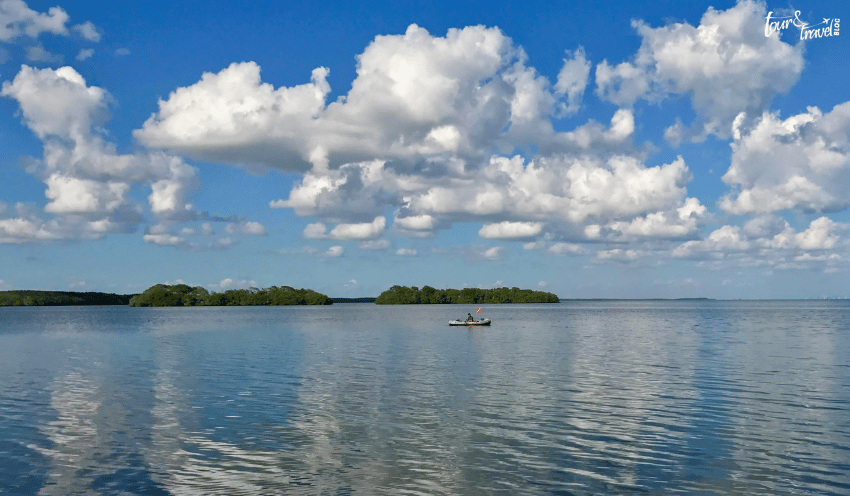
95% of the Biscayne National Park has water. So, water activities and exploring the water ecosystem are the most amazing things about the place.  

You can go canoeing on the open water across the coastal line and reach the stretches of mangroves. Further, you can explore the artificial islands by canoeing and kayaking.  

However, to have the most amazing canoeing experience and paddle with the current, you must get a tide table for the visitor center first.  

So, let’s start paddling and kayaking! 

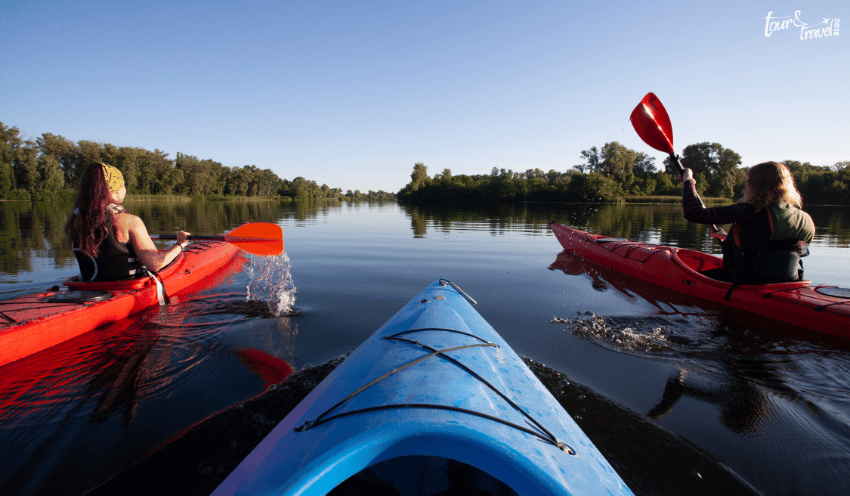
Jones Lagoon Eco-Adventure Clear Water Paddling 

Fee: $109 

Age Limit: 12+ for Shared Trips 

Duration: 3.5 Hours 

Get surrounded by the most amazing marine life during this clear water paddling trip. You will meet the sea turtles, Roseate Spoonbills, and baby sharks on your trip.  

Kayakers also love the Jones Family Historic District and Lagoon because of its historic importance. It features on the National Register of Historic Places

The Jones Family Historic District consists of Porgy Key and Totten Key. The Jones family stayed there during the 1800s and started growing limes and pineapples.  

Also, in the early 20th century, they sold their property stretching over a whopping 277 acres and became millionaires. It was a rare incident then in this part of the world for an African American to have this fortune.  

Debris Cleanups with Guided Jones Lagoon Paddle 

Debris Cleanups with Guided Jones Lagoon Paddle

Fee: $50 

Age Limit: 12+ 

Duration: 6 Hours 

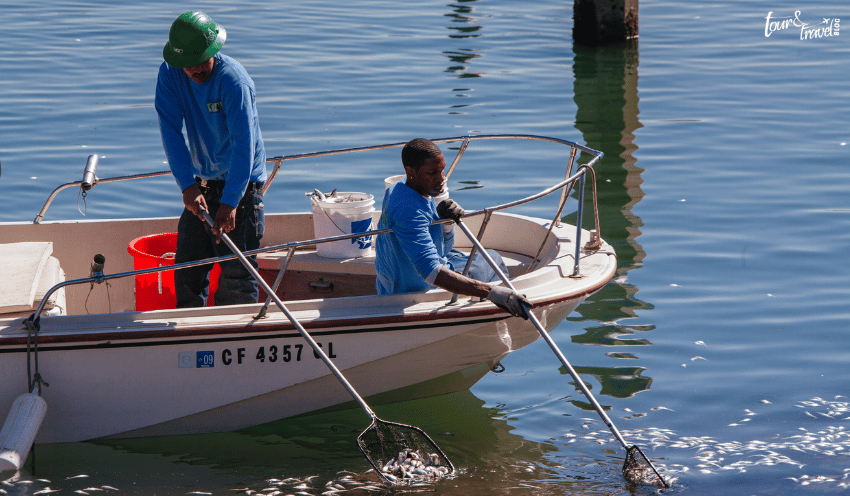
How about enjoying the beauty and diversity of Biscayne National Park and contributing to its conservation simultaneously?  

This debris cleanup and Jones Lagoon paddle trip involves cleaning the debris across the mangrove coastal line and enjoying a relaxing paddle through Jones Lagoon. 

At the end of the trip, you will return to the Dante Fascell Visitor Center and unload the debris.  

Kayak the Mangroves 

Kayak the Mangroves 

Fee: $39 

Age Limit: 6+ for Shared Trips 

Duration: 1.5 Hours 

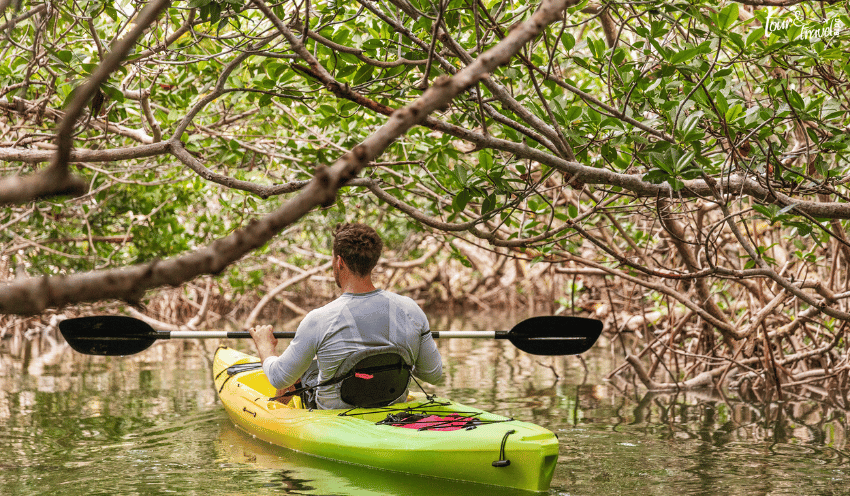
The mangrove stretch at Biscayne National Park is home to many animals. It is also one of the longest bordering mangrove stretches on the left of the eastern shoreline of the United States.  

So, it’s time to meet the tree crabs, fish, animals, and snakes residing in the mangroves. The best part of this tour is that it is partially guided.  

The naturalist will guide you for the first half an hour, and from there, you can paddle on your own and take charge of how you want to enjoy the trip.  

Sail, Paddle, And Snorkel At Biscayne National Park 

Sail, Paddle, And Snorkel At Biscayne National Park 

Fee: $209 

Age Limit: 8+ for Shared Trips 

Duration: 6 Hours 

This trip involves exploring through the mangrove forest, kayaking, and snorkeling. The trip starts from the Dante Fascell Visitor Center in Homestead.  

Snorkel and Paddle 

Snorkel and Paddle 

Fee: $209 

Age Limit: 12+ for Shared Trips 

Duration: 6 Hours 

This snorkel and paddle trip at Biscayne National Park is the best to experience aquatic diversity. The rays, dolphins, and sea turtles  await to welcome you to their lives. Further, an encounter with the coral reef is going to be the best experience you can think of.  

Also, if you are a birder, you cannot just miss the Roseate Spoonbills while padding. The mangrove forests stretching through the route once again speak of the biodiversity present in the park. 

Your guide on the Captain of the National Park will explain the nature of the inhabitants, how they coexist, and the history of the place. It’s the best chef’s kiss you can expect on a trip.  

Kayaking Through The Seagrasses of Stiltsville 

Kayaking Through The Seagrasses of Stiltsville 

Fee: $109 

Age Limit: 12+ 

Duration: 3 Hours 

Must-Have: Prior Kayaking Experience 

As you paddle through the water, the Stiltsville houses on the seagrass banks will be your roadmap to history. This ride is also about the most delightful encounter with the wildlife at Biscayne National Park.  

You will even learn why these seagrass banks are important for the ecosystem of the national park. Do you have this thing for everything quaint? The sunken barge on this route stands as a remarkable piece of eulogy.  

For the trip, you will start from Coconut Grove and  kayak to the bay to start paddling.  

You Can’t Miss The Third Longest Coral Reef At The Biscayne National Park

Biscayne National Park promises you a kaleidoscopic experience with the third-longest coral reef in the world. The living coral reef, with its rhythmic movements and embrace of the pork fish and nurse sharks, presents an unforgettable visual experience. The soft corals in the reef dance to the current and create movements.  

It’s mesmerizing to know how the polyps make the most beautiful structures by collecting calcium from seawater.

In some parts, the coral reef looks like the most vivacious flowers, and in other parts, it will appear like elk antlers or mountains.  

On and around the reef, you will also come across the following creatures: 

  • Sea fans 
  • Sea whips 
  • Bright sponges 
  • Christmas tree worms 
  • Fish, shrimps, crabs (They visit to eat the algae gathered on the coral reef.) 

Overall, it’s a rainbow of colors with red, purple, orange, and green dominating the spectrum.  

How To Visit Biscayne National Park? 

How To Visit Biscayne National Park? 

You can visit the Dante Fascell Visitor Center of the Biscayne National Park from the US Highway 1 (from north and south) or the Florida Turnpike (from north).  

Reaching The Biscayne National Park From North 

From Florida Turnpike 

  1. First, choose exit 6. 
  1. Then, reach the exit ramp and take a left turn to continue moving south to SW 328th Street.  
  1. Now, take a left turn on the 328th Street. 
  1. Further, drive for four miles to reach the end of the road. 
  1. Find the park entrance on your left. 

From The US Highway 1 

You have to drive south toward Homestead, take SW 137th Avenue, and turn left. You will reach SW 328th Street after a five-mile drive. From here, you will have to take a left turn and drive for four miles. Once you get to the end of the road, you will find the park entrance on your left.  

Reaching The Biscayne National Park From South 

You can reach the Biscayne National Park from US Highway 1 while traveling from the south.  

Then, drive north and reach Homestead. There, you take a right turn on SW 344th Street. Further, continue for four miles until the road near the Homestead Speedway takes a northern turn.  

Next, reach the SW 328th Street and head east. Now, you will have to drive for four miles to reach the end of the road. The entrance of the Biscayne National Park will be on your left.  

Fun Facts About The Biscayne National Park  

  • The series of sandy, low-lying, and small islands here are known as keys. 
  • Eliott Key is the largest key or island in the Biscayne National Park. 
  • Boca Chita Key is the most popular island here. Also, it is known for its 65-foot lighthouse constructed in the 1930s.  

See You There! 

Biscayne National Park is a destination that will spoil you with choices. The kayaking and canoeing activities are there, and you can also take a deep dive to have a one-on-one with the fascinating marine life.  

If you want more outdoor pursuits in the water, you can try swimming and fishing.  

Further, the park does not disappoint wildlife lovers and tourists who love exploring history. The Jones Family Historic District at the park features on the National Register of Historic Places.  

Also, the dolphins, birds, turtles, and fish are there to offer you the most amazing wildlife experience.  

And the list is endless! The things to do and see at the Biscayne National Park! So, let’s quickly wrap up my guide and plan a visit to the park. See you there soon!  

Biscayne National Park FAQ 

What Is Biscayne National Park? 

Biscayne National Park in Florida is one of the most visited National Parks in America. It is known for its diverse ecosystem and historical importance. Further, it has the third-largest coral reef in the world.  

How Do I Access Biscayne National Park? 

You can reach Biscayne National Park through US Highway 1 or the Florida Turnpike if you are driving from the north. If you are traveling from the south, you will have to take US Highway 1. 

What Activities Can I Do at Biscayne National Park? 

At Biscayne National Park, your outdoor pursuits are going to be endless. You can enjoy the following activities. 

  • Snorkeling 
  • Diving  
  • Kayaking 
  • Paddling  
  • Exploring the mangroves 
  • Visiting coral reefs 

The park also offers opportunities to experience the best marine life by observing manatees, sea turtles, and various marine creatures. 

What Landmarks Can Be Found In Biscayne National Park? 

Biscayne National Park has the following landmarks. 

  • Maritime Heritage Trail 
  • Stiltsville 
  • Living Coral exhibit at the Dante Fascell Visitor Center 

Is There Scuba Diving At Biscayne National Park? 

Yes, you can do scuba diving in clear waters at Biscayne National Park. You will  encounter coral reefs, vibrant marine life, and shipwrecks while scuba diving.  

When Did Biscayne National Park Become A National Park? 

In 1968, Biscayne National Park was established as a national monument. Years later, in 1980, it got the designation of a National Park.  

Also read

Share on Social Media

Sibashree is a travel, culture, and leisure writer who has been writing since the age of 12 and professionally since 2014. With more than a decade of travel writing experience and journeys across India and several parts of the world, she brings a deeply personal and thoughtful perspective to her work. A student of English Literature and Mass Communication, Sibashree has always viewed travel as more than movement — for her, it has been a way of understanding people, cultures, and herself. Her passion for spiritual exploration has also led her to many unusual and meaningful destinations over the years. Outside of writing, Sibashree enjoys watching European cinema, reading about global politics, and reflecting on the stories hidden within everyday places.

Leave a Reply

Your email address will not be published. Required fields are marked *

title-img Related

READ MORE card-img

Visit Joshua Tree National Park To Hike And Explore The Best Trails

BY  Sibashree Aug 20, 2024

Joshua Tree National Park, named after the crooked Joshua trees, is known for its endless hiking trails and desert ecosystems of the lower Colorado Desert and the Mojave Desert.  Further, the Joshua Tree is one of the few national parks in the USA to offer equally amazing daytime and nighttime experiences.  The geology of Joshua Tree is “interesting.” You will find Arch Rock and many other fascinating rock formations in the park. Wind power, erosion, and different weather forces have created many other spectacularly-formed rocks and other sculptures.  Hiking is the best way to cherish the beauty and splendor of this national park to the fullest. So, let’s know the tales from the trails!  Best Hiking Trails in Joshua Tree National Park Joshua Tree had an impressive 3,270,404 visitors in 2023, and hiking is one of the most popular activities in this park. Home to some of the best hikes in the USA, Joshua Tree also has many trails for kids and beginners.  Further, you can explore various short walking routes and nature trails like Bajada, Oasis of Mara, and Barker Dam in this park.  Here, I have curated some amazing hiking trails in the park across various difficulty levels.  Joshua Tree Hikes (Easy) The easy hiking trails in Joshua Tree are accessible in all seasons. To make the most of your hiking expeditions, you must start by 9 am in the morning.  Cholla Cactus Garden The Cholla Cactus Garden trek is easy, and even kids can explore it. It will take just 15 minutes to get completed. You will find the trailhead 20 miles north of Cottonwood Visitor Center. As you can guess from its name, the trail is named after the growing cholla cacti found in abundance here. Wear full-length clothes and closed-toe shoes and follow the trail to avoid getting hurt by the cactus thorns.  Discovery Trail You can start hiking this trail from the Skull Rock parking area. This easy hike will take you around 30 to 40 minutes. Catch a glimpse of the desert washes and boulders throughout the route.  Skull Rock  View this post on Instagram A post shared by Joshua Tree National Park (@joshuatreenps) Start hiking this trail early in the morning from the Jumbo Rocks Campground. You can even take the trailhead from the Skull Rock parking area, which is east of the Jumbo Rocks Campground. Skull Rock is one of the many unique rock formations you will see in the park, and it’s the highlight of this trekking route.  You can cover the trekking route within just one or two hours. A night-time view of the Skull Rock can offer you the perfect Halloween experience!  Moderate Hiking Trails Like the Channel Islands National Park and the Death Valley National Park, the Joshua Tree also has many moderate hiking trails. Here is a brief overview of some of the most amazing moderate Joshua Tree hiking trails.  Hi-View  The Hi-View trail, starting from the Northwest of Black Rock Campground, will require you to hike for at least an hour. However, based on the weather conditions, you may also need to walk for more than 1 hour and 45 minutes.  Once you reach the top of the steep ridges, you can enjoy a panoramic view of the entire park. Further, the iconic Joshua trees are found in the steeper sections of this trail.  If you feel tired in the course of your trekking, you can catch some rest on the benches across the park.  Mastodon Peak The Mastodon Peak trail starts from the Cottonwood Spring parking area, and here, you will experience an elevation change of 175 feet. To reach the granite mountain peak, you will have to pass through a rugged terrain.  You can complete the entire trek within 1.5 to 3 hours.  Split Rock Loop The Split Rock picnic area is the starting point for hiking this trail of 2.5 miles. You can complete the trek within two and a half hours. However, if you are a seasoned hiker, you can complete the safe route within 1 and a half hours.  On a spur trail of the Split Rock Loop, you will find a rock formation that looks like the profile of a human face. It is called the Face Rock.  Pine City  Go to the end of the Desert Queen Mine Road to find the trailhead of Pine City. The dense vegetation of junipers and pinyon makes this 4 miles long trail picturesque. It will take around 3 hours to complete the hike.  Strenuous Hiking Trails  These strenuous trails are not suitable for summer hiking. You can try conquering them in autumn and spring.  California Riding and Hiking Trail Stretching over 36.6 miles, the California Riding and Hiking Trail is a two-day long hike. If the weather conditions are unpleasant, the total duration of the hike can stretch up to three days.  As you hike the route from Black Rock Canyon to the park’s North Entrance, the amazing landscape of the Mojave Desert will charm you.  Ryan Mountain Hiking to the summit of Ryan Mountain is one of the most popular activities to do in Joshua Tree National Park. The trekking route has an elevation of 1,050 feet, and it stretches over 3 miles.  Despite being strenuous, this trail can be hiked in 2.5 hours. So, it is one of the most popular hiking trails in the park.  Willow Hole At the end of the Willow Hole trail, you will find the amazing willow trees. You can start hiking from the Boy Scout Trailhead located inside the park at the South end.  The sandy washes, Joshua tree vegetation, and famous boulder landscape make the trail amazing.  Short Walks And Nature Trails In Joshua Tree National Park View this post on Instagram A post shared by Joshua Tree National Park (@joshuatreenps) The short walks and nature trails of Joshua Tree are available for year-long hiking. These trails also have wheelchair facilities, offering the most inclusive experience to visitors.  It’s time to be familiar with some of these amazing nature walk trails.  Oasis of Mara (Oasis of Mara is the only trail in Joshua Tree that allows dogs. So, hiking this trail is surely one of the best things to do in Joshua Tree as a pet lover.)  Arch Rock Barker Dam Ryan Ranch  Bajada  Among these short walks and nature hiking trails, Cottonwood Spring is the shortest. You can finish the trail within just 10 minutes. Enjoy the view of cottonwood trees as you take a walk to the fan palm oasis.  Integratron: The Wonder Of The Joshua Tree National Park  Facts to Know Integratron is four stories high.Its diameter is 55 feet.It’s a 16-sided metal-free building.The construction technique used in it is called joinery.No nails or screws are used in the construction.It is made of non-ferromagnetic materials. George Van Tassel said that Nikola Tesla’s writings influenced the structure of Integratron.  The western half of the Joshua Tree National Park is on the Mojave Desert’s southern tip. UFOlogist George Van Tassel built “a time machine for basic research on rejuvenation, anti-gravity, and time travel” in the Mojave Desert in the 1950s.  This is a place where visitors are offered sound therapy that is believed to have the power to rejuvenate living tissues in human beings.  From the time it was built, this place has attracted reporters, visitors, artists, and spiritual minds.  George Van Tasse chose the Mojave Desert for building Integratron as, according to him, this place had a connection to the Great Pyramids in Giza. The proximity to magnetic vortices was another reason for choosing the site.  Final Words: Schedule Your Hike Right   March to May and October to November are the two best seasons for hiking in Joshua Tree. The park remains open throughout the year. However, the scorching and dry summer makes hiking impossible on many moderate and strenuous trails.  During summer, the daytime temperature of the park reaches around 100 degrees F, and the temperature falls to 75 degrees F at night.  Further, if you visit the park between March and May, you will see the wildflowers blooming. Also, in April, you can celebrate the National Park Week here.  In October, there are important events in the park, such as the Joshua Tree Music Festival and Pioneer Days. The temperature is also pleasant in the fall season, recording an average temperature of 80 degrees F and 50 degrees F at day and night. So, plan your visit to Joshua Tree right and share your travel stories with us as you return with the most amazing hiking experience.  Joshua Tree National Park FAQs  Is It Safe To Visit Joshua Tree At Night? Yes, it is safe to visit Joshua Tree at night. In fact, stargazing is one of the most popular activities in this national park. The roads in the park are marked, and there is strict patrolling on all roads.  However, this desert park is an important preservation hub for vulnerable ecosystems. Also, there are snakes and scorpions in the park.  So, camp in the park or explore it at night as a responsible visitor. It is safer to restrict your movements near the campsites at night.  Is Joshua Tree Worth Seeing? Yes, Joshua Tree is worth seeing, as you can hike through the California Riding and Hiking Trail, Pine City, Bajada, and many other amazing trails. As you explore these routes, you will come across a wide variety of flora and fauna.  Further, the Joshua Tree is an important preservation and conservation center for fragile ecosystems. In addition, this is a place where stargazing is an ultimate immersive experience. Other highlights of your trip to this national park will be exploring the Penguin Rock, Arch Rock, and other iconic rock formations. Moreover, indulge in a sound bath at the Integratron. Built by UFOlogist George Van Tassel, this dome-shaped place offers sound therapy that promises to rejuvenate living human cell tissues.  Can You Sleep Inside Joshua Tree?  Yes, you can sleep inside Joshua Tree, as there are nine campgrounds inside the park. The Hidden Valley, Belle, and White Tank campsites are available on a first-come, first-serve basis. However, White Tank and Belle campsites can remain temporarily closed during summer.  For the India Cove, Ryan, Cottonwood, Jumbo Rocks, and Black Rock campsites, you will need to make a prior booking.  In addition, you can try backcountry camping and consider putting up a tent in the campsites outside the park.  Remember, there are no restaurants and modern lodging facilities inside the park.  Can You See Milky Way From Joshua Tree? The International Dark-Sky Association, or IDA, has identified Joshua Tree as an International Dark Sky Park. You can get the best view of the Milky Way here.  Joshua Tree also has the darkest nights in Southern California. So, you will get to see the passing meteors, stars, and planets from this national park.  Stargazing from any part of the park is an amazing experience. However, there are also four designated stargazing spots in the park. These are: Quail Springs parking lot Hidden Valley parking lot Cap Rock parking lot Ryan Mountain parking lot Further, you can put up tents at one of the nine camping grounds, and among them, the Cottonwood Campground demands a special mention. Also read Why Include Whale Watching In Your LA Itinerary. Traveling On A Budget: Tips For Affordable Adventures. Be Soothed And Meet History At Hot Springs National Park.

READ MORE skiplagged

Skiplagged Review- Login, Services And Travel Experiences

BY  Mashum May 16, 2023

Skiplagged is a legitimate way to reduce the costs of flight bookings. By booking a hidden city ticket, a person can save hundreds of dollars off the price of a single ticket for a flight. Even though useful, it has its fair share of controversies as well. Read this article to find out more information on skiplagged! Get Familiarized With Skiplagging Skiplagging refers to the general practice of booking a trip where the stopover is set as the destination where the traveler originally plans to travel. They use a "point A to point B" form of phrasing where a passenger would book a ticket that would take them from "point A to point C" instead, with a stopover at point B. Whereas the actual destination of the passenger is point “B”, and they leave the airport as the plane land in point “B”, leaving their seat empty from point “B” to point “C" portion of the journey. Tip: Is skiplagged legit? Well, it certainly is legit, but many airlines have opposed the services they provide and even tried to incorporate strict measures to counter them. It is just as good as Kiwi Flights. One-Way Endeavour skiplagged.com It is very important to keep in mind that skiplagging won't work if the traveler wants to travel with checked luggages. After all the checked luggage is tagged to go through to the final destination (point C). If someone still tries it, then there would be severe consequences as the airline would then have to offload the checked baggage after coming to the realization that the boarding pass wasn't scanned for the second half of the journey. Additionally, this practice would actually work on a one-way flight. That is only because an airline would definitely cancel the return tickets for the traveler after it realizes that they never did complete the first portion of their journey. Controversies Airlines absolutely hate this practice of booking skiplagged flights and have also tried to shut it down. This is why the United Airlines and Orbitz teamed up to sue skiplagged back in 2014. After which, they lost their legal battle against Skiplagged. Then the airlines turned their attention to punishing the passengers for even engaging in this practice by certain rules and regulations. Skiplagged Interface To use their services, one can head over to their site skiplagged or even download the skiplagged app. The tagline of their website states “ Ridiculous Travel Deals That You Won’t Find Anywhere Else”. The interface of their website is very easy to navigate. One needs to create an account to get started with using their services. There are four options available to select from (situated at the top of their site) - skiplagged flight, Hotels, Rewards, and Cars. They have also been featured in BBC, CNN, Buzzfeed, The New Yorker and many other famous publications. Benefits Of Using Skiplagging Here are a few loopholes that Skiplagged has uncovered and that can save travelers a significant amount of money. 1. Virtual Interlining Fares The search engine of Skiplagged also shows the VI or Virtual Interline fares. These are the fares that are known to combine all the flights between the airlines that are known to not have a direct relationship. For such instances, the traveler needs to check back in between the various carriers. While in some cases, especially for international flights, the savings could be of thousands of dollars. 2. Unique One-Way Flight Combos Skiplagged has a very sophisticated and powerful flight search engine that is always searching for unique one-way combinations that travelers could use to book and get a great final price for a round-trip flight. The other travel sites, either are not able to package these one-way flights together due to the limitations that are imposed on them from the airlines. Or it could be that these flights are using very old technology which are full of limitations. 3. Hidden-City Flights Under this particular loophole, a user books a flight to the destination city that is actually the airline's layover city. For instance, a user might try flying from Austin to Boston, and all of the flight prices would show as $500. However, there could be an Austin to New York flight with a layover in Boston for $200. In this case, the traveler can get out in Boston, saving themselves $300. It is to be noted, though, that one can't check a bag. Skiplagged Reviews Here are a few skiplagged reviews left by people who have used their services: Your site is easy for me to navigate and my history with "Skiplagged" has always been pleasant with the least bit of problems. – Pierpont Geer Skipped lagged just saved me 300$ on a trip that was originally 480… goddamn i didn’t believe it would be this crazy – Jay Leyva Just because you have money to spend doesn't mean you have to. Skip lag is always help me find the best flights at the best prices! They are always my first go to. – Shantael C. Rates are way better than booking directly, even with added protection... easy booking process... just so simple!! Well Done Team Skiplagged!! – Nik Bali You guys are a reminder to me that it pays to check the availability and price of a flight several times. Also, your website and prompts couldn't be clear, convenient or easy. Now, I'm going to book 2 more additional flights, and I hope it's just as easy and reasonable. Thanks! – Mike To Wrap It Up! If you are thinking of using their services, then by all means, go ahead, as they are 100% legit. But you do need to keep in mind that the services they offer are opposed by most airlines. Hence, you would need to counter-check the guidelines of the airline that you are going to book at. That was all for information regarding skiplagging and its benefits. Thank you for reading up till here. I hope you found the information useful. Let me know in the comments your thoughts on the same. Read Also: Everything About Breeze Airways: Breeze Airways Reviews, Features, And More! Using Flightscanner To Find Cheap Flights In 2023? All That You Need To Know! The Ultimate Guide To Finding Cheap Flights To Chicago Using Google Flights Aainflight Review- Login, Services And Travel Experiences

READ MORE national parks in new mexico

Best 10 National Parks In New Mexico To Visit In 2024!

BY  Ankita Jun 26, 2023

Are you searching for the best national parks in New Mexico? If your answer is yes, then you have reached the right place. There are many breathtaking vistas in New Mexico. It is in the Southwest region of the United States, yet tourists generally ignore them. The state is also home to the Rocky Mountains, and the Rio Grande. It is a variety of vivid canyons, cliffs, and caves in addition to its stunning but harsh desert landscape. If you are planning to visit the state, you need to check out some of the best national parks that are located in New Mexico. If you don't know which one to begin with, you might just find his blog to be of help. Keep reading this article till the end to learn more… Top 10 Must-Visit National Parks In New Mexico In 2024! You can tour the magnificent archaeological sites that the Ancestral Puebloans left behind at several locations. It provides a fascinating look into the cultures and individuals who have influenced the state. They are protected as a component of the nation's parks and monuments. With so many facets and breathtaking beauty on display, New Mexico more than lives up to its moniker as the "Land of Enchantment." And what better way to explore them than the national parks in New Mexico! Here are the best national parks in New Mexico that you need to visit at least once in your life. If not in the year 2023! 1. Aztec Ruins National Monument The captivating Aztec Ruins National Monument, which is next to the little city of the same name, is tucked away in the state's northwest. It has been guarding the ruins and remains of a fascinating prehistoric pueblo, thought to have been constructed about a thousand years ago, since 1923. This magnificent archaeological monument has over 400 rooms to explore, with its Great Kiva unquestionably the standout. American settlers mistakenly credited it to the Aztecs. Visitors can enter a duplicate that has been meticulously recreated in order to see the real ruin's glorious stonework. You can also view it as it was in its prime. The museum at the National Monument is definitely worth visiting. Especially if you want to learn more about the history and culture of the Ancestral Puebloans. There are lots of eye-catching exhibits and artifacts there. 2. Carlsbad Caverns National Park Carlsbad Caverns National Park comes in second on the list of the top national parks in New Mexico. The fascinating Carlsbad Caverns National Park is located in the southeast of the state, not far from Texas. It is a remarkable location with more than 119 caves, the greatest and most impressive of which is Carlsbad Cavern, its show cave. Although the state of New Mexico is breathtaking from the outside, Carlsbad Caverns National Park is home to at least one subsurface natural wonder. Carlsbad is far from anything else in New Mexico. It is situated on the border with Texas, is well worth the trip. The Big Room is a natural chamber that is 4,000 feet long, 625 feet wide, and 255 feet high. It is the third-largest cave chamber in North America and the seventh-largest in the world. Carlsbad is covered in limestone that an old coral reef deposited. Intricate and enormous, Carlsbad is home to tens of thousands of rare cave formations. It includes stalagmites, stalactites, cave pearls, flowstones, cave crystals, and underground lakes. Visitors have the option of taking a ranger-led expedition into one of the less popular caverns. They can also explore the well-lit tunnels on their own. The half-day Hall of the White Giant and Spider Cave trips are not for the claustrophobic. But the King's Palace and Left Hand Cave tours are appropriate for kids and beginners. The closest established campsite is in Guadalupe National Park, which lies across the Texas state line. Camping is permitted in the park's wilderness. 3. El Malpais National Monument The state's westernmost national monument, El Malpais, is where a sizable volcanic field may be found. It is situated in a remote but breathtaking area just off Interstate 40 and is full of cinder cones, lava flows, and rock formations. Its barren, devastated, and lava-scarred areas, which are a part of the Zuni-Bandera volcanic field, seem to continue on forever; the most recent flow occurred there about 3000 years ago. There are several amazing lava tubes for visitors to explore, some of which are home to shimmering ice caverns, tucked away among the isolated and rocky remnants. El Malpais' immensely varied volcanic scenery provides solitary pursuits, leisure, and adventure. Unbelievable geological phenomena like lava flows, cinder cones, lava tube tunnels, and sandstone bluffs are just a few to explore. People have been adjusting to and living in this unique terrain for decades, despite what some may perceive as a barren setting. 4. El Camino Real de Tierra Adentro National Historic Trail In all of the United States of America and Mexico, El Camino Real de Tierra Adentro is revered as a historic path for trade and cultural exchange. Trade and travel along this path influenced the settlement and growth of the larger Southwest and changed the lives of individuals and communities. In addition to helping to break down barriers between cultures and improve the lives of those who live along El Camino Real de Tierra Adentro, the designation of this route as an international historic trail honors the connections and interactions that have existed between American Indian, Mexican, Black, Spanish, and other European cultures both historically and currently. The aims of El Camino Real de Tierra Adentro were varied. Many of its users participated in the lengthy mission of the Spanish empire to convert American Indians to Christianity. However, the road was home to a wide variety of personalities; those traveling north included settlers, priests, and newly appointed officials; those traveling south included retiring officials, friars, traders, enslaved Indians, prisoners of war, and convicts. The path was also a key route for trade, serving as a conduit for the exchange of products and knowledge. Each of the thirty-two waggons in a typical caravan along the road was pulled by eight mules and could hold around 4,000 pounds of freight. Most caravans also carried other livestock like cattle, lambs, goats, burros, and poultry. The freight included private goods, correspondence, mission supplies, and royal decrees. Between El Paso, Texas, and Santa Fe, New Mexico, the El Camino Real de Tierra Adentro National Historic Trail stretches for 404 miles; the historic trail continues all the way to Mexico City. Along the entire length of the trail into Mexico, there are museums, historic sites, churches, and remnants of the old trail. 5. Fort Union National Monument The territorial-style adobe remains of the greatest 19th-century military fort in the area are exposed to the wind. There is a broad valley of short grass prairie among the swales of the Santa Fe Trail. Fort Union served as a catalyst for political and cultural change in New Mexico and the Southwest for forty years. It happened from 1851 to 1891, whether those changes were wanted or not. North of Watrous in Mora County, New Mexico, is where you'll find Fort Union National Monument, a part of the US National Park Service. On June 28, 1954, the national monument was established. The site includes the remains of the third fort as well as the second of three forts that were built there starting in 1851. A network of ruts from the Mountain and Cimarron Branches of the previous Santa Fe Trail is also discernible. From a self-guided tour and a much interpretive trail where the guides take the visitors through the fort, to a short 0.5-mile walk with a special focus on some parts of the fort, the tourists can have it all here! The Fort Union National Monument opens at 08:00 a.m. in morning and stays open till eight in the night. You can visit this place on Saturdays and Sundays. 6. Bandelier National Monument Another of the region's top archaeological sites, the magnificent Bandelier National Monument, is located not far from Santa Fe. It is located on the Jerez Mountain slopes and has a tonne of amazing wilderness, as well as various Ancestral Puebloan sites scattered throughout its picturesque surroundings. It was established in 1916 and now preserves some of the state's most stunning, reachable, and substantial cliff homes. Visitors can explore caves, kivas, and ceremonial structures utilized by the Ancestral Puebloans for generations in Frijoles Canyon's magnificent peach-colored surroundings. There are Petroglyphs and rock art too. Even though it is the most well-known and picturesque location in the park, there are many more amazing things to see across the national monument, with delightful wildlife, landscape, and views everywhere you look. It also boasts a fantastic museum that displays ancient artifacts and finds from archaeology. 7. Chaco Culture National Historical Park Northwest New Mexico is home to the fascinating Chaco Culture National Historical Park, one of the most significant and magnificent pre-Columbian cultural sites in the whole United States. It is one of the best national parks in New Mexico. Its expansive site, located within the Navajo Nation, safeguards a large number of historically significant pueblos. Pueblo Bonita, built between AD 900 and 1100 from pieces of sandstone that have skillful placement. It was once the hub of Puebloan culture and trade. The ruins of several "great houses," and other smaller structures are there all across the starkly gorgeous Chaco Canyon. Many of these are aligned with the sun's and moon's light and shadow patterns. In the wake of a protracted drought in 1130, everyone left their homes. A network of old roads known as the Chacoan Roads connects the Chaco Culture National Historical Park to a number of formerly prosperous desert settlements. After visiting Chaco, go 75 miles north to the Aztec Ruins National Monument. It is a first-come, first-served campground at the end of a 21-mile dead-end dirt road. Here you will see another magnificent grand house and a recreated underground ritual space called a kiva. The backdrop is equally stunning as the extensive archaeological sites, which are fascinating to investigate. The barren desert steppe has enormous mesas and stunning buttes. Visit the museum at the site before leaving. Learn all there is to know about the Ancestral Puebloans who once lived in the dry area. 8. El Morro National Monument Imagine how refreshing it would be to reach water after days of sand-filled journey. El Morro (the headland) was a well-liked camping area for hundreds of years. This is because of a dependable waterhole concealed in the base of a sandstone bluff. Over 2,000 signatures, dates, notes, and petroglyphs are here from prehistoric Puebloans, Spanish, and American travelers. Make a pit stop at the El Morro National Monument while traveling. Two paths are there at El Morro National Monument. To select the path that's best for you, stop by the visitor center and speak with a ranger. The tourist center is where all routes start and end. Only when the visitor center is open can visitors access the trails of El Morro National Monument?. It is necessary to start hiking the Headland Trail by 3:00 PM. Before 4:00 pm, hikers who want to complete the Inscription Loop must start. Let me give you some advice if you intend to visit the El Morro national park and want to know what to do there. On the Headland Trail, you can go hiking. The Inscription Loop is part of this 2-mile track, which also leads to the top of the El Morro bluff. With a 224-foot elevation climb, the course is somewhat challenging. You can trek the Inscription Loop by taking a shorter trail. You can walk the half-mile trek to the pool You will pass through hundreds of Spanish and American inscriptions and ancient petroglyphs. The looping, half-mile asphalt trail is wheelchair accessible with some help. If you only have an hour or so to spend at the park, this is a fantastic option. It must begin at 4:00 p.m. at the latest. 9. Manhattan Project National Monument The Manhattan Project was a groundbreaking, top-secret government initiative during World War II that saw the United States race to create and use the first atomic weapons before Nazi Germany. One of the most significant historical moments of the 20th century was the American employment of these weapons against Japan in August 1945. The project gave birth to the nuclear era and left behind profound impacts, still felt today. Three key places across the nation served as the birthplace of the Manhattan Project: Hanford, Washington; Los Alamos; and Oak Ridge, Tennessee. The villages created to house the Manhattan Project personnel were private businesses and enterprises under contract with the project. Every community transformed into a hub of activity with theaters, shops, schools, hospitals, parks, and community gathering spaces. The population of Oak Ridge had increased to roughly 75,000 by 1945. Richland, a Hanford Site bedroom suburb, witnessed an increase in population to 15,000, while Los Alamos had an increase to 6,000. 10. Kasha-Katuwe Tent Rocks National Monument Less than an hour south of Santa Fe, Tent Rocks offers slot canyons, strangely beautiful rock formations, and breathtaking views—everything you could desire in a desert hike. Before opening up beneath the 100-foot conical hoodoos that give this national monument its name, the three-mile trail's first half winds through a slot canyon so narrow you can touch the walls on both sides. From there, the trail switches back up to the top of the mesa for a commanding view of the Jemez Mountains and the Rio Grande River Valley. In the Keresan language, Kasha-Katuwe translates to "white cliffs." The people of Cochiti Pueblo speak it, which also co-manages the monument. An eruption gave birth to the volcanic tuff that formed the white cliffs, hoodoos, and Slot Canyon. Tent Rocks does not allow camping and the route is only open during the day, although the Cochiti Lake recreation area is close by and has built campsites. It makes for a wonderful day excursion because it is a short drive from old Santa Fe. Wrapping It Up! In case you were searching for the best national parks in New Mexico, I hope that this log has been of much help to you. If there are any other queries related to the same, feel free to let me know. All that you need to do is scroll down till you reach the bottom of the page, then leave your comments and queries in the box below, And I will be there to answer them all for you! Read Also: Top 12 Montana National Parks You Must Visit In 2023! A Guide To National Parks In Georgia – Latest Guide Top 10 National Parks In Oregon That You Need To Explore 7 Best National Parks In Ohio You Should Know Before Going