



7 Benefits Of Staying At A Beach Hotel

Nov 15, 2023

Last Updated on: Sep 1, 2025

Travel Guides

Taking a vacation by the ocean is a relaxing and rejuvenating experience. However, simply visiting the beach for a day leaves little opportunity to truly unwind.

Opting to stay at a beach hotel allows fully immersing in the coastal atmosphere. Quality accommodations near the surf provide an ideal home base for exploring the area.

Checkout Seven Prime Advantages Of Staying At A Beach Hotel

Here are 7 key advantages to booking a room right on the sand.

Staying At A Beach Hotel

1. Ultimate Convenience And Access To The Water

Staying steps from the ocean at a beach hotel like Princess Bayside Beach Hotel ensures the greatest ease and flexibility. Waking up to stunning views and walking right outside to enjoy activities is unmatched. Guests can slip down to the shore whenever inspiration strikes without needing transport. Concierges also offer beach chairs, towels, and other amenities for maximum relaxation. Simply step out the door for a morning swim or easy sunset stroll.

2. All Inclusive Meals And Activities

Many beach hotels provide all-inclusive packages covering dining, drinks, and water sports. Options save guests money versus paying out of pocket each time. Families appreciate scheduled kids’ programs too. All-day access means never having to leave for meals or miss storm-watching from cozy indoor areas. Some properties even hold cooking classes, live music, and cultural presentations enhancing the experience. Packages ensure making the most of every beach moment.

3. Exceptional Service And Amenities

High-end beachfront resorts understand vacationers desire premier customer service and nice touches. The attentive staff takes care of every need from laundry to beach equipment delivery. Most five-star properties offer top-tier dining, pools, spas, fitness centers, and entertainment. Special requests get addressed promptly. Luxurious beds, bath products, and indoor/outdoor spaces pamper guests relaxing in style right at the shoreline.

4. Picturesque Natural Surroundings

Spending days immersed in stunning ocean vistas and natural coastal beauty recharges the soul. Waking to the sunrise sparkling on waves or watching seabirds soar relaxes the mind. Exploring rock pools, dunes, and coastal trails offers adventures. Strolling along pristine sands offers unique seascapes, landscapes, and wildlife glimpses impossible anywhere else. Gentle ocean sounds lull guests to peaceful slumbers every night in these special environments.

5. Convenience For Beaches, Activities, And Local Exploration

Well-located beach hotels provide the perfect launch point for fun. Walking or short drives access many area attractions versus long commutes. Guests easily zip between surfing lessons, whale-watching trips, shopping, and sightseeing on a whim. Concierges offer area expertise too. Centrally situated properties allow leisurely days focusing on the beach or active touring at nearby parks, fishing charters, and cultural sites.

Related: A Guide To Traverse City Beach – 10 Best Beaches To Explore

6. Families Appreciate Kid-Friendly Amenities

Beach vacations with children require certain comforts. Top resorts meet needs with kids’ pools, clubs, game rooms, and more. Parents rest easy knowing children stay busy and safe. Spacious suites let families spread out comfortably. All food service, babysitting, and activity coordination means relaxation even with young visitors. Being right on the sand also provides instant family entertainment together whenever schedules permit.

7. Romance And Celebrations

Couples and groups seeking an idyllic backdrop choose beach hotels for sentimental trips. Private in-room jets and whirlpool tubs coupled with stunning ocean panoramas set an intimate mood. Many feature top-rated restaurants perfect for romantic dinners overlooking the surf. Resorts also cater weddings, vow renewals, anniversaries, and other special occasions magnificently. Guests build lasting memories in these dream coastal settings.

Read Also:

Share on Social Media

Abdul Aziz Mondol is a professional blogger who is having a colossal interest in writing blogs and other jones of calligraphies. In terms of his professional commitments, he loves to share content related to business, finance, technology, and the gaming niche.

Leave a Reply

Your email address will not be published. Required fields are marked *

title-img Related

READ MORE card-img

Welcome To The Pecos National Historical Park: The Land Of The First American Revolution

BY  Sibashree Sep 12, 2024

I stood before the remnants of the South Pueblo walls, looking over the Mission Church on an autumn day last year. Looking at the archaeological site and standing below the blue fall sky, I was transported to the time of the American Revolution.  Further, I could hear the noise of a bustling trade fair with people from the Pecos Pueblo community doing business. However, the historical importance of the park is much beyond its association with the American Revolution. It is also related to the Civil War in New Mexico and the Independence of Mexico.  So, with centuries of human history etched in every corner, the Pecos National Historical Park is an intersection of past tales and nature. To be honest, The Pecos Pueblo and Santa Fe Trail were the biggest highlights for me when I was at the national park.  Therefore, my ode to the park will start with brief accounts of these places. Then, I will talk about the Glorieta Pass, again a site of historical importance in the park. Finally, you will have a quick look at the park's wildlife.  Pecos National Historical Park: A Land Of Historic Wars And Revolutions  The history of human lives in the Pecos National Historical Park goes back to the Preceramic Period or the 11,500 B.C.E. - 600 C.E. However, the Pecos Pueblo site in the park became a prominent place in the history of the American Revolution in the Early Colonial and Pre-Revolt era.  Spanish people started interacting with the Pueblo people. Further, thanks to the Franciscan Missions, the Spanish rule wanted to have command over the economic life and beliefs of the Pueblo people.  Thus, the first seeds of the American Revolution were sown. To combat the oppression of the Spanish people, the Pueblo Revolt took place on 10th August 1680. As a result, the Spanish Government and Franciscan Friars were expelled from the southwest under the leadership of  Po’pay from Ohkay Owengeh. The Spanish Mission Church, built in 1625, was also destroyed in the revolt of 1680.  However, in 1692, the Spanish People further reclaimed the Pecos Pueblo and many other pueblos. Finally, the Pueblo people declined in numbers in 1700. Before, during, and after the first American Revolution, The Pecos Pueblo emerged as an important location with significant events around it!  Further, around 200 years later (1821-1846 C.E.), another site in the park, the  Santa Fe Trail, witnessed travelers, settlers, and everyone else passing through it. The trail was opened in 1821 after Mexico gained its independence from Spain.  The remains of Pecos Pueblo stood there! By the 1830s, the migration of the Pubelo people was complete, and everyone had shifted to the Pueblo of Jemez and continued their traditions.  Moreover, in 1862, there was the “Battle of Glorieta Pass.” On 26th March 1862, this battle between the Union forces and Confederates occurred at a 700 feet elevation.  The Pecos Pueblo Site Today  https://www.instagram.com/p/Cto5MWnS5Oa/ The rise of the Pecos Pueblo site occurred between 1350 C.E. and 1838 C.E. The Pueblo site had two units, the north and south, and could accommodate around 2000 people. Further, it had 1000 rooms. Therefore, Pecos Pueblo thrived as a busy trading center with trade fairs involving people from Rio Grande Pueblos, Plains Nations, the Gulf of Mexico, and the Pacific Coast. The flint arrowheads and shells found here explain the expansive stretch of the route.  Nevertheless, with time, Pecos Pueblo became instrumental in eliminating Spanish oppression and rule. Still, a drop in the trade, Comanche attacks, and diseases deserted Pecos Pueblo. By 1838 C.E., the last resident of the Pueblo had left and joined the Pueblo of Jemez.  Today, the site stands as a relic from the past. However, it is still equally important for archaeologists and historians.  The Santa Fe Trail  Do you know what the Santa Fe Trail marker near Kozlowski's Trading Post says? It says,  Santa Fe Trail 1822-1879 Marked by the daughters of the American Revolution and the Territory of Nex Mexico.  With the independence of New Mexico and the western territories becoming an annexure to New Mexico, the Santa Fe Trail became the route or passage to the westward movement. Naturalists, journalists, travelers, aspirants, traders, and others took this passage as part of the American expansion. Colonel Henry Inman’s “Stories of the Old Santa Fe Trail,” published in 1881, describes the trail well. If you are a history buff, you must read this book well before visiting the Santa Fe Trail today!  “Kozlowski’s Stage Stop and Trading Post” is the highlight of this trail. You can spend some time here to visualize travelers from the past catching some rest after a long journey through the trail. When on the trail, you can explore the remains of the Pueblo and the Mission Church. You can even consider taking a guided tour of the Forked Lightning Ranch.  Glorieta Pass Battlefield Trail  https://www.instagram.com/p/B9xRKctnb3M/ Important Details About the Glorieta Pass Battle1. Reason for Conflict: Union forces and Confederates wanted to control the Glorieta Pass Route through the Sangre de Cristo mountains and the main supply center (Fort Union) for the passage of soldiers and supplies. 2. Contenders: The Confederates, with volunteers from Texas and under the leadership of General Shipley and the Union forces led by Colonel Canby, and soldiers from Fort Union, New Mexico, and Colorado. 3. Battle Begins: March 26, 18624. Reinforcements: 27th March, 18625. Battle Resumes: 28th March, 18626. Battle Ends: 29th March, 18627. Casualty: Death of 375 People 8. Consequence: The Union forces defeat the Confederates as they fail to ruin the Fort Union. Further, the Union forces maintain complete control over Southwest America.  The Glorieta Battlefield Trail is a popular hiking destination today in Pecos National Historical Park. It is a roundtrip loop, and you will have to cover a distance of 2.25 miles to complete your expedition. Further, the unpaved or graveled hiking route makes it moderately difficult for the hikers. In addition, there is an elevation gain of 152 meters.  You have to drive for around 7.5 miles from the main visitor center of the park. You will need to collect a gate code from the visitor center, which is your access code, to open the locked gate in front of the trail.  As you walk through the forest trail, you get to know more about the Civil War in New Mexico. Many infographics are installed throughout the trail, telling you tales from the past. In addition, there are wayside signs and 14 trail markers to explain the history of the battle on this pass in detail.  More About Hiking The Glorieta Pass Battlefield Trail  Time: Around 1 hour Refreshments (Hikers’ Favorites): Pecos Burger at El Maria Bonita (With a lot of meat and a smoky green chilly flavor!) and Chips and Salsa, of course! The Trail Guide you collect from the visitor center already keeps you hooked on the site's history. Indeed, this trail is less about hiking and more about flipping through the pages of the American Civil War in Mexico.  Let’s Hear It From Other Visitors To The Park  “Really nice park. Easy to find and it is free! Inside the visitor center, they had a really great exhibit that followed the pecos overtime. It was super informative and brought a lot more meaning to the actual park. After looking around the exhibit, you can take the trail up and around the park and church. It's amazing that the walls are still there. The view around the park is also beautiful. We spent about 2 hours here.” - Isabelle M. “I really enjoyed this park. My husband didn't care for it but I think it's really amazing what is still here. He thinks it's all recreation and I can't say if it is or not but I know the current Pecos people don't see it that way. It's pretty awesome that it's free to visit and the visitors center has a little museum that's also free! The trail starts near the restrooms. We accidentally started it from the end. But who cares. We saw everything and I recommend checking it out. Native people history is really cool.” - Lydia G. Exploring Wildlife At The Pecos National Historical Park https://www.instagram.com/p/CA-hAl8nrUW/ This historical national park is a hub of wildlife with a 6,500-acre expansion of forests, rivers, grasslands, and streams. The table below enlists the species that call the Pecos National Historical Park their home.  MammalsElk of Northern New MexicoColorado Chipmunk DeerRock SquirrelBirds*Steller’s JayMountain BluebirdBald EagleFish and AmphibiansRio Grande ChubLongnose DaceRainbow TroutBrown TroutNew Mexico Spadefoot ToadWoodhouse ToadTiger SalamanderPlains Leopard FrogReptilesShort-horned LizardNew Mexico Whiptail LizardBull SnakesGarter SnakesPrairie Rattlesnakes You will find the Prairie rattlesnakes along the trails. So, please exercise caution and inform the ranger if you come across one on your way.  A Quick Glance At Some Important Information About Pecos National Historical Park You must quickly look at the important information available about Pecos National Historical Park before you set in. Location: San Miguel County, New Mexico Established: 28th June, 1965 Area: 27 km² Highest Landscape: Truchas Peak, 3990 Meter Visitor Center: Pecos National Historical Park Visitor Center How to Reach: Via State Road 63  Entry Fee: Free Best Time to Visit: Autumn (Early September to Mid October) Also read Why Include Whale Watching In Your LA Itinerary. From Cocktails To Kickflips: Must-Try Activities In San Diego. Kootenay National Park Or The Land Of Ice And Fire (Experiencing Nature’s Game Of Contrasts)

READ MORE most dangerous cities in california

Crime and Caution: Navigating the Dark Side of California’s Cities

BY  Abdul Aziz Dec 23, 2023

A tour of Los Angeles will include a walk through a large, palm tree-lined cemetery. Tributes to Hollywood's dark past can be found lurking among the city's soiled streets, well-kept lawns, and dusty canyons. These include long-abandoned mansions and the famous Hollywood sign. The City by the Bay, San Francisco, is a tourist haven. San Francisco attracts nearly 15 million tourists a year with attractions like Fisherman's Wharf, Alcatraz tours, the Golden Gate Bridge, and Haight Ashbury. But this new American city is not without its dark side. It has a history of kidnapping, fraud, terrorism, assassinations, and serial killings. Here is a short dissection of the most dangerous cities in California. We are also including a few of the most well-known crimes committed in various parts of the state. Most Dangerous Cities In California The list below comprises the incorporated municipalities of California with some of the highest crime rates. These cities have a population of 50,000 at best. Here are the most dangerous cities in California: Stockton San Bernardino Oakland Compton Richmond Lancaster Vallejo Modesto Victorville Huntington Park Criminal History Of California America is a land of dreams for the biggest chunk of the global population. California is a hub of technological and social zenith. No one expects it to hold out on dark secrets and scandals. According to the FBI, the most dangerous cities in California have a lot of twisted history. Here are some of them. The Assassinations of Harvey Milk and George Muscone, San Francisco City Hall The newly appointed class of city supervisors in 1978 was the most diverse in the history of San Francisco. Dan White, a staunch conservative and former police officer and firefighter, and Harvey Milk, the freshmen supervisor and gay activist, were the two men in this class. Even though Milk and White had different political and lifestyle philosophies, they developed a cordial working relationship. But this relationship quickly turned deadly and hostile. With ten extra bullets and a.38 caliber handgun, Dan White entered City Hall on November 27, 1978, intending to confront Mayor Muscone face-to-face. Muscone shot him after he once more rejected to be reinstated. When White realized how much Harvey Milk had contributed to the incident, he went to his office and brutally murdered Milk. On that day, Dan White admitted to the crimes. The strategy employed by White's defense team during the trial was nearly as well-known as the crimes done. The "Twinkie defense" contended that White's extreme sugar and carbohydrate intake before the crime caused his mental instability. The narrative concludes where it started: after receiving his sentence, White went back to San Francisco and committed suicide. The Kidnapping of Patty Hearst, Hibernia Bank The Symbionese Liberation Army (SLA) kidnapped 19-year-old Patty Hearst from her family's condo on February 4, 1974. Patty is the great-granddaughter of business tycoon George Hearst and the granddaughter of publishing mogul William Randolph Hearst. She and multiple other SLA members later pilfered a Hibernia Bank branch. Patty, brandishing an M-1 carbine, declared her membership in the SLA. A single innocent person lost their life, and the SLA fled with more than $10,000. Although Patty and her friends managed to get away, the FBI quickly found them. In 1976, Hearst went on trial. Attorneys for Patty contended that she developed Stockholm syndrome—a psychological reaction in which she started to feel sorry for her captors—out of fear for her life. Despite being found guilty, President Carter commuted her sentence in 1979. President Clinton fully pardoned Patty Hearst in 2001. Hearst continues to insist that she was brainwashed and that her crimes were those of a victim of the SLA's mental manipulation. Golden Dragon Massacre, Imperial Palace The Imperial Palace restaurant, formerly known as the Golden Dragon, is located in the center of San Francisco's Chinatown. One of the worst nights in San Francisco's history took place in this restaurant under this name. The organized crime networks that dominated Chinatown's underground market gave rise to two competing teenage gangs: the Wah Ching and the Joe Boys. The Golden Dragon presented the Joe Boys with a chance to assassinate the Wah Ching leaders. Eleven innocent people were hurt, and five innocent people died; neither gang member was hurt. The Washington Street restaurant is still marred by the aftermath of this tragic night. Three of the five Joe Boys members who were detained, found guilty, and sentenced to prison are still incarcerated. The Asian gang task force of the San Francisco police department was established because of the massacre. The Imperial Palace is still operational and offers delicious dim sum. USS Hornet A moored aircraft carrier at the Alameda Naval Base is among the world's most haunted ships—not a pirate ship sailing the high seas. Commencing in 1943, the eighth USS Hornet engaged in numerous combat missions throughout the Pacific. Over 300 people died on board during her 27 years of active duty, many of them from suicide. Although the ship is not in operation at the moment, both the crew and guests have paranormal stories about things moving, doors opening on their own, toilets flushing, and even spectral sailors prowling the decks. The Zodiac Killer The San Francisco area was the scene of one of the most well-known unsolved crimes in history. This crime scene single-handedly made every corner of the state dangerous. About 40 miles northeast of the city, on Lake Herman Road in Benicia, California, the infamous killing spree started. David Faraday and Betty Lou Jensen, two high school students, were discovered dead next to their parked car on December 20, 1968. No witnesses were present. Darlene Ferrin and Michael Mageau were shot dead by an unidentified assailant in Vallejo, California, on July 4, 1969. Mageau lived, but Ferrin perished from her wounds. From a pay phone, the gunman called the police, boasting about his crime with pride. Three local newspapers received letters in their offices on August 1, 1969. The Zodiac Killer would become well-known for his trademark symbol, which was signed by all of the letters, which came from the same source, and all claimed to be the murderer. The murderer insisted on having his letters made public. That year on September 27, two more people came under attack. Zodiac moved his murderous rampage from Napa into the City of San Francisco on October 11, 1969. And Zodiac pulled over his taxi driver at the Presidio Heights intersection of Cherry and Washington Streets. Zodiac eluded capture by the police even inside the city. Zodiac persisted in his letter-writing campaign to the San Francisco media for almost ten years. There were many boasts and threats in each letter, but not all of them came to pass. He said he had killed seventeen people in one of his final letters. This killer's identity is still a mystery, and the crime is still unsolved. Wrapping Up The Hollywood sign, which once read Hollywoodland, is where aspiring starlet Peg Entwistle leaped to her death in 1932. (It's said that her ghost roams the trails in nearby Griffith Park.) Los Angeles feels somber, maybe because so many people come here with high hopes, and the city is hesitant to welcome every new face. The brief career of Ms. Entwistle as a siren and her premature passing at the age of 24 serve as a symbol of the peculiar contrast of the city: it is dazzling yet sinister, alluring yet menacing. There's dirt and secrets in the graveyard just beneath the shiny surface. If you know where to look, you can see the duality of glitter in the dark everywhere in the city, from Compton to Hollywood. Thankfully, a whole industry of tourism deals in the gritty side of the city for those who are interested in noir. If you have thoughts to share or questions to ask about the most dangerous cities in California, please leave a comment below. We would love to hear from you!. Read Also: Heatwaves And Adventure: Traveling To The World’s Hottest Destination From Sunrise To Sunset: A Day’s Itinerary For Exploring Benidorm Hidden Gems: Unearthing The Best Things To Do In Nottingham

READ MORE things to do in bath

Historic City, Timeless Charm: Exploring The Best Things To Do In Bath

BY  Abdul Aziz Nov 21, 2023

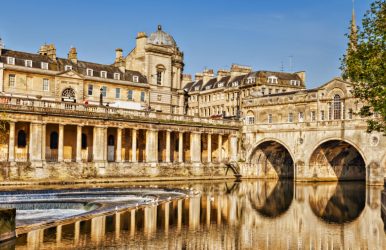
Bath is a charming city known for its rich history, breathtaking Georgian architecture, and cultural significance.   It is located in Somerset, England, in undulating hills.  The Jane Austen Museum is a must-visit location for fans of the well-loved English novelist among its numerous attractions.   Entering Bath is like entering a time capsule that transports visitors to a bygone age.   It served as the inspiration for Jane Austen's classic novels.  Bath greets you with an air of sophistication and charm from the moment you arrive.   A visual feast is the city's well-maintained Georgian architecture.   It is distinguished by Bath stone with a honey tint.   Bath boasts some of the most stunning architectural structures, including the Pulteney Bridge that spans the River Avon.   The majestic crescent-shaped terrace known as the Royal Crescent adds to the charm.  The dynamic and eclectic atmosphere of the city is created by the abundance of unique businesses, charming tearooms, and galleries of art.   They line the cobblestone streets beautifully.   Bath's attraction is enhanced by its thermal springs, which have drawn tourists for centuries.   A well-preserved set of ancient Roman bathing and convivial structures, the Roman Baths provide insight into the city's history.  We will now dive in to find things to do in Bath in this article. Overview: What Are The Things To Do In Bath? travel-assets.com Wander Bath's picturesque cobblestone streets, where gorgeous honey-colored houses recreate the sophistication of the Georgian era.   One of the things to do in Bath is to transport yourself to scenes straight out of Bridgerton.   Admire the famous Bath Abbey, a magnificent example of Gothic design, and discover the ancient Roman Baths.   They allow you to experience both Roman engineering and the world of public bathing in the past.  Bath's distinctive fusion of wellness, culture, and history ensures an amazing trip that is going to leave you feeling revived and fascinated by this part of the South West. Cuisine bathchronicle.co.uk Bath's eating and drinking scene offers a culinary adventure that pleases a wide range of palates with a fascinating blend of history and innovation.   The city is home to a variety of restaurants, ranging from chic bistros and fine dining venues to cozy tearooms and old-world taverns.   Seasonal and local ingredients are the main focus, helping to create tasty recipes that pay homage to English heritage.   They also draw inspiration from around the world.  The city's markets, such as the Bath Farmers Market, include fresh vegetables, gourmet foods, and handcrafted goods.   Bath's food scene offers a delicious experience for any palate. Whether you're looking for a modern elegance or a historic ambiance, Bath has it all.  Savor traditional afternoon teas offered with scones and clotted cream, a mainstay of the South West of England.   Or enjoy hearty pies and platters of cheeses produced locally. Bath's pubs are welcoming gathering spots for people to catch up and enjoy ales and ciders.  Culture campervantours.com Bath's charm reaches far beyond its urban boundaries, revealing a mosaic of charming cities and towns that beg to be discovered.   From a market town tucked away in the Mendip Hills, which provides a bohemian vibe, artisanal markets, and an artistic vibe!  Alternatively, head to Wells, dubbed “England's smallest city,” which will take you through its magnificent medieval streets and cathedral.   With their distinct charms, these neighboring gems weave a tale that echoes Bath's own history and attraction.   Also, it beckons you to set out on an adventure through the center of the English countryside. Jane Austen: A Bath Essential A trip to the Jane Austen Museum is a voyage into the author's universe for voracious readers and Austen fans.   It is one of the mandatory things to do in Bath.   The museum is housed in the townhouse where Jane Austen lived from 1801 to 1806.   It is located at 40 Gay Street. Also, entering the building transports you to the Regency era.   Here you may fully immerse yourself in Jane Austen's everyday existence and literary legacy.  A selection of relics, manuscripts, and private items that shed light on Austen's life and creative output is on display at the museum.   The rooms where she wrote some of her most famous books, including “Pride and Prejudice” and “Emma,” and lived are open for you to tour.   The exhibits provide a physical link to the well-known author, showcasing everything from her writing station to her stunning jewels.  In order to give visitors a true taste of Austen's world, the museum regularly hosts unique events and seminars, such as Regency tea soirees and costume dress-up sessions.   They offer a fun way to get close to Austen's characters and learn more about the prevalent social mores.  One of the main themes of Austen's works was Bath.   Also, several of her writings, including “Northanger Abbey” and “Persuasion,” were set in the city.   You may walk in the footsteps of Jane Austen's characters as you stroll through Bath, seeing locations like the Pump Room, the Assembly Rooms, and the magnificent Bath Abbey.  Read More: Discovering London’s Hidden Gems: Best Places To Visit In London All Things Austen: Regency Era In Austen's day, the Pump Room, an exquisite 18th-century social hub, was a center of social life.   Even now, guests can partake in a small meal or a cup of tea while admiring the surroundings.   Austen's elaborate dance scenes take inspiration from social events.   The Assembly Rooms, with its beautiful ballrooms, offer an insight into these festivities.  The majestic ancient church known as Bath Abbey serves as a reminder of the religious legacy of the city.   There is awe and reverence in it because of its magnificent architecture and high ceilings.   These sacred walls provided a place of refuge and contemplation for many Austen characters, giving her works a spiritual undertone.  For readers, Bath has a plethora of literary ties, along with the Jane Austen Museum.   You will find a vast collection of scholarly books and rare editions of Jane Austen at the Bath Central Library.   One can find literary jewels at bookshops such as Topping & Company Booksellers and Mr. B's Emporium of Reading Delights.  Discovering the life and writings of one of England's most renowned writers by visiting Bath and the Jane Austen Museum is an engrossing trip through time.   Both fans of Jane Austen and history buffs will find Bath's ageless charm fascinating. Also, the museum offers an immersive experience.   So, lose yourself in Jane Austen's world, and stroll along the cobblestone streets.   Take in the wonders of architecture, and allow Bath to envelop you in its enchantment.   So, explore this fascinating city to learn about the spirit of Regency England and Jane Austen's lasting influence. Best Time To Visit Bath And Getting Around Bath rewards a bit of timing.   Because so much of its appeal is outdoors, wandering the Royal Crescent, sitting in the Abbey churchyard, strolling along the Avon. When you go changes the experience almost as much as what you see.  Seasonal Weather And Crowds  Late spring (May) and early autumn (September) are the sweet spot for a Bath visit.   Temperatures sit in a comfortable mild range.  Also, during these windows, the gardens around the Royal Crescent and Royal Victoria Park are at their best.  Furthermore, it is way more relaxed than the peak summer coach-tour crowds.   Summer (June to August) brings the warmest weather and the longest daylight hours.  So, it is ideal for exploring on foot, but also the heaviest footfall at the Roman Baths and Jane Austen Museum.   Booking timed-entry tickets a few days ahead is worth doing during this stretch.   Winter is quieter and atmospheric, especially with the Bath Christmas Market taking over the streets around the Abbey in late November and December.  However, some attractions run shorter hours. The Baths are also busy with holiday visitors.  Getting Around Once You Are In Bath  Bath's compact city centre is best explored on foot.  From the Roman Baths to the Jane Austen Museum to The Lanes-style shopping streets, everything sits within a 15-20 minute walk of the Abbey.   That said, the city is on hills.  So, comfortable shoes matter more here than in flatter English towns.   For day trips to Wells or the Mendip Hills market towns mentioned above, the First Bus network covers most routes from the central bus station.  On the other hand, a rental car gives more flexibility for reaching smaller villages.   If you are arriving from outside the region, Bath Spa railway station sits a short walk from the center.  It has frequent direct trains from London Paddington (around 90 minutes) and Bristol (about 15 minutes). So, a car is unnecessary if you are focusing on Bath. How To Reach Bath? Bath is easily accessible by air via Bristol Airport due to its close proximity to the city.   It is about 45 minutes away by car or an hour away by public transportation.   Similarly, it takes two hours to get to London Heathrow Airport by vehicle or public transportation.  Also, if you have thoughts to share or questions to ask about things to do in Bath, please leave a comment below. We would love to hear from you!  Read Also: Coastal Bliss: Top Things To Do In Bournemouth Island Paradise Unveiled: Best Time To Visit The Philippines Vietnam Vistas: A Seasonal Guide To Crafting Your Vietnamese Adventure