

Car Safety Tips for Traveling with Puppies and Small Dogs

Jul 16, 2025

Last Updated on: May 19, 2026

Travel Blog

If you have a pup or a small dog breed, traveling with them proves an astounding experience. Although it may become overwhelming at first, with some additional planning, the process becomes seamless to help your furry companion make a transition. 

Puppies or small dog breeds like the Teacup Morkies or Teacup Maltese require more attention than larger breeds. It is recommended to prepare right while choosing to travel with your pup, along with considering the proper safety measures to make the trip enjoyable. 

In our post today, we are going to share a couple of handy tips to travel with a puppy and having a safe journey on the road. A couple of tweaks can help make your pup have the best traveling experience. 

The Importance of Car Safety for Small Dogs and Puppies

Whenever you are planning to move across the country with a dog, the safety of your furry companion is extremely important. Similar to humans, even pets get injured during sudden stops, collisions, or sudden movements while driving. 

Consequently, making use of the right kind of car safety equipment can assist in preventing any possible injuries while offering a soothing experience for your pup.

Small dog breeds are prone to risks in the car, and considering their sizes, traveling without any restraints often exposes them to possible hazards. 

Specifically, puppies are often cautious and get distracted, which is why securing them proves important. Using a seat carrier can help ensure their overall safety while preventing them from distracting you from driving. 

Tips to Travel with a Puppy in a Car

If you are planning to travel with a puppy, here are some tips that might help you make the journey smooth.

Tips to Travel with a Puppy in a Car

Choose the Right Crate or Carrier

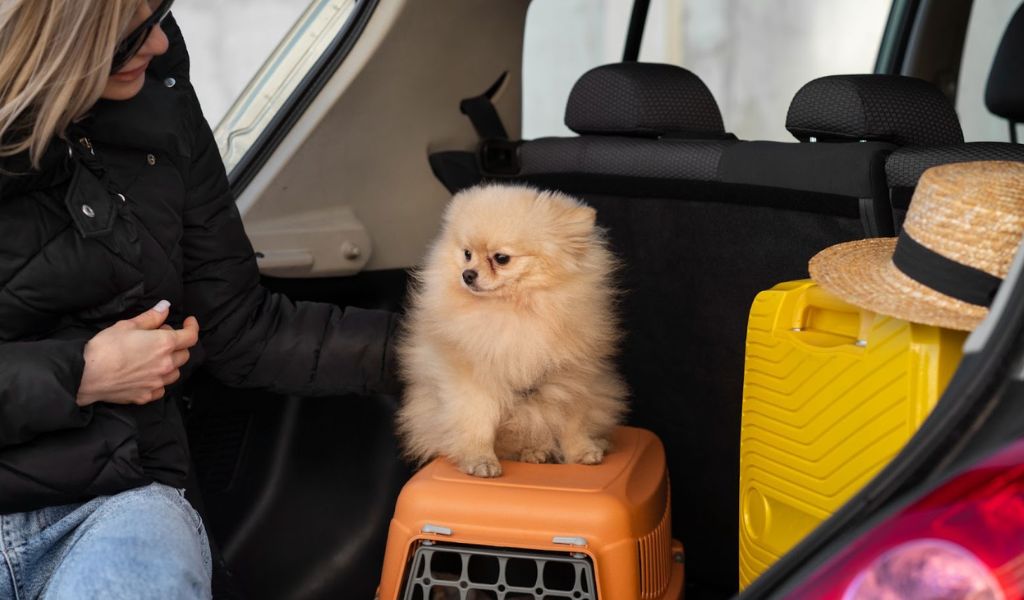
For the safety of everyone, always have a sturdy dog car seat carrier during the trip. You have to always keep them safe when you are driving with them. They might try to leap on you when you are driving, which can cause a mishap.

But not all carriers will work the same for your furry companion. You need to bring one in which your pup feels comfortable. 

For the majority of the part, it relies on your puppy’s size. If you have a Teacup Morkie, you can take them in a crate because of their small size. They are 6 to 8 inches tall and will lie down comfortably inside the crate.

However, make sure the crate never overheats and is well ventilated. The carrier should also be secured enough so that it doesn’t suddenly break out while you drive.

Train Your Puppy

Before you travel to a pet-friendly destination, ensure that your pup is desensitized to the car. Some puppies or small dogs will stay comfortable in the car right from the second they are in it, while others often need a lot of time to warm up to the whole travel idea. 

Either way, ensure that you take your pup on a couple of car rides to make the trip more comfortable.

Ensure that you take your pups on short trips. For example, you can head out to the road or even the local park. Ensure that your puppy associates the car with positive experiences. 

Teaching them a couple of basic commands, such as “sit,” proves beneficial for car rides, even when your puppy is traveling in a carrier. One of the fun facts about Maltese puppies is that they are extremely trainable, which makes the process of traveling with them appear seamless.

Get Your Pup Used To Riding In A Car Before A Long Trip 

The very first road trip with your pup proves an overwhelming experience, especially with the new smells, sounds, and entirely strange space. 

It is essential to get them accustomed to riding in your car for short trips before heading out for longer ones, ensuring your pup is prepared to hit the road.

Start the process by introducing your pup to the car whenever it is stationary. Ensure they allow them to head out inside, explore, and adapt themselves in your home. 

Also, ensure to take your pup on short trips right around the neighborhood to get your pup used to being inside a moving vehicle. 

Eventually, start increasing the entire drive time while encouraging your pup at each step of the way. Make it a fun-filled activity to be in their car. 

It ensures that your pup is adapting well to the car rides, preventing them from getting car or motion sickness. Nothing would turn worse compared to driving for hours as a sick pup, and the car might start smelling like doggy puke.

Restrain Your Dog In The Car 

Not keeping your dog restrained while in the car might lead to severe safety concerns. A distracted puppy jumping all around the car will make the trip uncomfortable for you and your co-passengers. 

However, if you happen to encounter a mishap, even a smaller fender-bender, it can lead to disastrous consequences.

You can do this with the help of a dog car harness or a dog seat belt. Both are made mainly for dogs, so you don’t need to improvise and use a general seat belt. On the other hand, you can bring along a dog carrier big enough for your puppy to stay in comfortably. 

If you plan to use a harness or seat belt when you travel with a puppy, introduce it to your pup before the trip. This way, it won’t be a new experience during the travel time.

Monitor Your Pup For Signs Of Distress 

Irrespective of the amount of practice or training your pup has, as it is still a baby, the actual travel appears stressful. It is essential to watch out for distressful signs in your pup. 

Your puppy often gets distressed for different reasons, like motion sickness. It can also be that your pup or small dog is stressed in new spaces. 

When their anxiety is persistent, ensure taking a break to prevent your pup from getting traumatized by the travels and ending up avoiding them.

Limit Food And Water During Travel

You need to keep your pup hydrated at all times; however, ensure that they get proper potty breaks. Puppies often have smaller bladders and fail to hold their pee for a longer time. 

Younger pups, those less than four months old, can hold their pee for about two to three hours at a time. Moreover, older small dogs can hold their pee for about four to six hours. So, manage your breaks accordingly.

Try feeding them for a couple of hours right before heading out for the trip. They might feel uneasy answering the call of nature in strange places, especially if they are traveling for the first time. 

An empty belly would reduce car sickness, which is a real concern for several dogs, mainly the smaller or younger ones. If your pup is prone to motion sickness, this tip is sure to help keep them comfortable on the trip.

Take Loads Of Breaks 

As you would like to stretch your legs while on longer journeys, even your puppy will enjoy their breaks. If you wish to travel with your pup, then it is important to make frequent stops to stretch out. Also, getting out of the car is essential. 

Your puppy starts enjoying the freedom of being outside, even if it is for a short time. It is advised to offer your pup water out of the car, but you should hold the food till reaching the destination. Drinking water and feeding right out of the car will make your pup less sick.

Never Leave Your Puppy Alone in the Car

The car’s inside can get quite hot while you are in the park or the parking lot, mainly with the windows rolled up. It is never safe to leave your pup in the car while you run down the chores. 

Getting this done would lead to heat strokes and even fatalities. During midday, the car might get hot and stuffy. So, never leave them alone in the car, even if it is for a few minutes. If you absolutely have to, park in the shade and always leave a window slightly open.

Have Up-To-Date ID

Ensure that your dog is carrying a name tag on their collar. Moreover, include the contact details while double-checking that it is attached securely to their collar. Furthermore, ensure that they have a microchip with the contact details, which are updated. 

The dogs are often more likely to get lost while traveling since they are in new places with loads of new distractions. If they do this, there’s a chance they’ll get lost. However, this ID tag will make it easier to contact you.

Make It Safe For Them

Taking your pup or small dog on road trips proves tough and requires a couple of steps to ensure the safety of your furry companion. It is difficult to travel with a puppy if you do not make the right preparations.

A quality crate or carrier is the ideal way to safeguard your pup. You can secure it with seat belts so that it does not rock or tip while you drive. 

Several of them come with pads and will even safeguard your seats from accidents. So, extend your adventures while your pup adapts well inside the car!

Also Read: Best Pet Friendly Hotels Near Me In Florida City – Reviewed

Share on Social Media

Barsha Bhattacharya builds stories for a living and seeks mountains for everything else. An English major and remote content strategist, she travels every month, structuring her life around movement rather than routine. Her journeys are rooted in mountaineering and rock climbing, with a deep preference for tents over hotels and cold mornings over comfort. Barsha believes the mountains demand clarity, patience, and presence - the same qualities that shape her work. For her, travel is not an escape but immersion: long routes, rough terrain, and nights under open skies where the line between work and wilderness disappears.

Leave a Reply

Your email address will not be published. Required fields are marked *

title-img Related

READ MORE family vacation planning

The Overthinker’s Guide To Getting Ready For A Family Vacation

BY  Sibashree Sep 18, 2025

Why does prepping for a family vacation feel like bracing for a storm? One moment you're picturing peaceful views, the next you're buried in packing spreadsheets and panic over airport snacks.  For overthinkers, trip planning can feel more like a stress test than a getaway. With school calendars, rising travel costs, and lingering travel anxiety from recent years, even a simple trip starts to feel complicated.  Still, with screen fatigue on the rise and more families choosing road trips over flights, places like Pigeon Forge, Tennessee, are becoming top picks for affordable, family-friendly escapes.  In this blog, we will share practical tips, small insights, and brutally honest truths to help overthinkers prepare for a family vacation without losing their minds. The Ultimate Family Vacation Planning Guide For An Overthinker  Do you need to see all the attractions of a place you are traveling to? NO. Do you have to care about everyone’s travel styles and choices? YES, but not at the cost of ruining the trip and making it all about doing this and that! So, while you need proper planning, you also need to leave some room for spontaneity.  1. Build The Itinerary, Then Burn Half Of It There’s nothing wrong with having a schedule. It helps manage expectations. But no itinerary has ever survived contact with a toddler meltdown or unexpected road construction. Make peace with flexibility. If you're heading somewhere with a mix of outdoor and indoor activities, like the Smoky Mountains region, you’ll want options.  Maybe the kids want to explore a nature trail, but get bored five minutes in. Or the weather flips, and your plans for a waterfall hike turn into a game of “how fast can we Google indoor fun.” This is where having a Smoky Mountains attraction like TopJump Trampoline & Extreme Arena on your list makes all the difference.  Located near all the main action, it gives kids a chance to bounce, climb, and burn energy while you sit, breathe, and wonder why you packed so many granola bars. It’s one of those rare spots that keeps the whole crew happy without anyone whining, “I’m bored.” 2. Stop Trying To Pack For Every Possible Future You are not a psychic. You cannot predict if your child will suddenly become allergic to sunscreen in Utah or develop a deep emotional need for a specific stuffed dinosaur you didn’t bring. Accept it. The sooner you do, the easier packing becomes. Overthinkers love to prepare for worst-case scenarios. This is why your suitcase has three backup chargers, two first-aid kits, and six pairs of socks per person.  But there’s a difference between being prepared and being controlled by the fear of inconvenience. Ask yourself this: Is this an actual need, or just a fear-based “what if”? If it's the latter, skip it. Focus on the basics. Clothes for the climate. Toiletries. Important medications. A few snacks that won’t melt into sticky crime scenes in your car seats.  That’s it. Stores exist in other places. You don’t have to bring your entire medicine cabinet just to feel okay about leaving the house. 3. Plan For Togetherness, But Not Constantly This is a family vacation, not a hostage situation. You do not need to spend every single second together. In fact, you shouldn’t. Overthinking parents often want the trip to “make up” for lost time. We pile in together for every meal, every outing, every moment.  But this is a fast track to tension. Let kids pick one activity without adult input. Let one parent sleep in while the other takes the early risers to breakfast. Your vacation doesn’t become less meaningful just because you took 90 minutes apart. Sometimes, the best memories come from those unstructured moments, like your partner getting too competitive in mini golf. Or your teen discovering they actually don’t hate breakfast food. The magic is in the mess, not the perfect plan. 4. Let Go Of Social Media Expectations You know what doesn't help overthinking? Trying to make everything look “Instagram-worthy.” Planning your family vacation like it’s a content shoot for a lifestyle brand only adds pressure. Spoiler alert: real life doesn’t come with a filter. Your photos might include crooked smiles, messy hair, or a popsicle that dripped on someone’s shirt five seconds in. That’s fine. You’re not building a brand. You’re building memories. Social media is fun, but it shouldn’t be the measuring stick for how well your trip is going. Also, if you’re filming every moment, you’re not in the moment. Take a few pictures, then put the phone down. Let your brain take the pictures for once. 5. The Food Doesn’t Need To Be Perfect Unless you’re traveling with a chef, the meals will be... fine. You will probably eat one amazing dinner, one very average lunch, and one breakfast that everyone talks about for the wrong reasons. Stop aiming for gourmet. Aim for edible and easy. Grocery stores are your friend. So are diners who don’t mind crayons on the floor. Lowering your food standards might be the most freeing thing you do. If your kid only eats fries and bread for three days, they’ll live. If the restaurant takes too long and you end up microwaving mac and cheese at the hotel, that’s okay. Travel is about shared experience, not Michelin stars. Overthinking Is Just Caring In Disguise: So, It’s Okay During Family Vacation Planning Let’s be honest. The reason you overthink is that you care. You want this to be good. You want your kids to remember this trip fondly. Moreover, you want your partner to be relaxed, and for the family to feel connected. There’s nothing wrong with that. But the caring doesn’t need to translate into anxiety. Trust that you’ve done enough. The plan will adapt. That the memories will come, not because everything went “perfectly,” but because you were all there together, trying. So pack the extra underwear, sure. But also pack some grace. For your family. For the weather. And, for the unexpected. And most of all, for yourself. Family vacations aren’t about escaping your real life. They’re about making space for the parts of life that get squeezed out in the daily rush. Laughter. Quiet. Curiosity. That weird energy kids get when they sleep in unfamiliar beds. The chance to look around and think, this is different, and that’s good. And if it all goes sideways? If the weather turns, or the reservations get canceled, or someone barfs in the rental car? It’s still a story. One that your family will retell, probably at Thanksgiving, and probably with exaggerated sound effects. Overthinkers, take heart. You don’t need to control the vacation to enjoy it. Just show up, pack a sense of humor, and leave room for the unexpected. That’s where the real adventure is. Read Also: Family Things To Do In Logansport Indiana: Everything You Must Know Thanksgiving Road Trips With Kids: Tips For A Fun And Safe Journey A Guide To Planning Your First Family Ski Trip

READ MORE mountains of kenya

The Major Mountains Of Kenya: Location, Altitude, & Why You Should Visit Them! 

BY  Sibashree Aug 11, 2023

Want to learn more about the mountains of Kenya? A geographically and topographically diverse country, the Republic of Kenya has beautiful mountains that are more than just a geographical feature! Please read this article to learn about the features of the mountains, their cultural significance, as well as their beauty. There are almost 3888 mountains, out of which 3856 are named mountains. Mount Kenya is the highest peak of all these mountains, with an elevation of 5199 meters. It is one of the second-highest mountains in Africa and is considered a UNESCO World Heritage Site. Kenya is located in the eastern part of Africa, more towards the southern horn of Africa, with diverse geographical features ranging from towering alpine peaks to mangrove swamps. The mountains' beauty adds to the country's natural features, making it a perfect place to visit! Explore The Beauty Of The Mountains Of Kenya! As a country with a topographical contrast, Kenya is located in the eastern section of Africa. The equator crosses the country across Nanyuki, Maseno, and Timboroa. These features highlight Kenya as a stunning destination that many wish to visit! Being a topographically diverse country where the forests offer diverse wildlife, it is perfect to visit if you love taking safaris. There are also coasts and grasslands, making the location more diverse. The nation is also highly agricultural, with diverse produce, including vegetables, fruits, and animals, even though the location is remote and can be difficult for regular travel. An African safari holiday is a dream for every hodophile, and Kenya offers the perfect backdrop. With spectacular wildlife, astounding landscapes, and a melting pot of culture, Kenya ranks at the top of the travel list of everyone! Moreover, the beautiful mountains play an important role in making Kenya a fascinating place! The country borders nations such as South Sudan, Ethiopia, Tanzania, Uganda, and Somalia. So want to know more about the up-warped giants of the earth? Read along! 1. What Makes Kenya’s Mountains Unique In Africa?  Kenya’s mountains are unique due to:  Equatorial location with alpine conditions  Rare plant species  Combination of glaciers and savannah landscapes  Strong cultural significance  Few places in the world offer such dramatic ecological contrasts.  2. Are Kenya’s Mountains Culturally Significant?  Absolutely. Many Kenyan communities consider mountains sacred:  Mount Kenya is sacred to the Kikuyu people, who believe it is the dwelling place of their god, Ngai.  Mountains often feature in local folklore, rituals, and traditions  This cultural importance adds depth beyond their physical beauty. Highest Mountains Of Kenya The total area of Kenya is 586,000 square kilometers, with high-rising regions such as high plateaus, mountains, arid deserts, and low-lying coastal areas, including islands and coral reefs. 7 freshwater and salt lakes are creating the Great Rift Valley cutting the country in half! Kenya has two of the tallest mountains on the continent. There are several other mountains, most inactive or extinct volcanoes. The landscape is diversified, yet the mountains are as beautiful as ever! Read more on some of the noteworthy mountains in Kenya. Mount Kenya The highest mountain in Kenya is Mount Kenya, located in the center of Kenya, approximately 100 miles northeast of the Capital, Nairobi. The mountain has several summits. Nelion, Lenana, and Batian are some. Bastian is the highest, with 17,058 feet, indicating the mountain's peak. The mountain formed about 3.5 million years ago. A well-known tourist destination, the Mount Kenya National Park surrounds Mount Kenya at the base. You can see elephants, buffalo, as well as colobus monkeys in the park. You can trek the mountain's peak of Lenana Summit as it is feasible without any mountaineering expertise. The rock kente is only available on Mount Kenya as well as the Antarctic, situated at the South Pole. The Spiritual Connection Of Mount Kenya Riuki is found on Mount Kenya, which in a spiritual context is considered the symbolization of the throne of God. Riuki is regarded as the pathfinder by the Gikuyu medicine men. They also believe it therapeutic as they put pebbles at risk as seers. The history of Mount Kenya is interconnected with the Egyptians, Jews, and Ethiopians. Mount Kenya is called Ta-Neteru by the Egyptians, which means the abode of the gods. The God Hapi or lotus, the gods of the Nile Floods, lived on the mountain. The farming communities that settled in Egypt in 7000 BC before the inundation of the Nile corresponded with "Isis," the heliacal rising of the star. It was after the water from the Nile flooding receded, leading to rich dark silt across the Central African countries and highlands. The land is called "Kemet," which is fertile land ready for planting. They consider the lands around Mount Kenya as one of the fertile lands. It also believed that the goddess Isis hid her son, her husband Horus, to raise him from the dead. They say the mountain has medical properties, and the locals consider it amazing. They pray to the mountains for protection and safety. Communities such as Maasai and Samburu are semi-nomadic people who use the northland of the mountain as a paying ground. Mount Elgon The second tallest peak in Kenya is Mount Elgon, located on the country's western side, closer to the Kenya-Uganda border. The mountain has distinguishing characteristics, such as having one of the largest volcanic craters. The top of the mountain is a flat-topped plateau made of basalt. The total height of the mountain is 13,852 feet, with lava tube tunnels across the mountain. Elephants and buffaloes often visit the lava tube tunnels. A national park surrounding Mount Elgon also has rhinos, eagles, leopards, and duikers. Mount Longonot Mount Longonot is an inactive volcano that last erupted in the 1860s but is not completely extinct. The height of the mountain is 9108 feet, and the mountain's slopes are filled with ridges. Mount Longonot is a mountain in Kenya. A park nearby has plenty of wildlife, such as zebras and giraffes. The mountain is situated approximately 60 kilometers northwest of Nairobi. Travelers can visit the park by car, and the base of Mount Longonot has a lot of forest, even around the top crater. Compared to many stony mountains, this one is thickly wooded across the slopes and the summits. Satima Mount Satima is also "Ol Donyo Satima," which roughly translates to "Mountain of the bull calf." It is one of the Kenya mountains! It is the highest mountain across the Aberdare range, with a height of 13,127 feet, and is located on the northern side of the mountain range. The mountain has tussock grass and rocks in some areas and rainforests. There are bamboo forests and Moorland across a section of the mountain. The mountain has a collection of 150 species of plants, such as Podo and Cedar. The mountain is part of the water catchment area for both the Sasumua and Ndakaini dams. The two dams for Nairobi City are the primary source of water. Kinangop Kinangop is a dormant volcano in the Great Rift Valley and the west of the Kinangop Plateau. It is also situated in the Aberdares, with extensive bamboo forests across the mountain in the lower portion. The height of the mountain is 12815 feet. Moreover, the higher sections of the mountain are covered with tussock grass. The top of the mountain is rocky with open moorlands. The top of the mountain is quite chilly and turns freezing at night. Ngiro Mount Ngiro is located in the northern region of Kenya, with a height of 9344 feet. The mountain is part of the Great Rift Valley to the west overlooking the Suguta Valley. The upper slopes have forests, while the mountains is popular for cultivating bees. The mountain falls under the territory of the Samburu people, while the Lmasula phratry performs bee cultivation. The clan claims exclusive rights to the water and the land. Several other mountains and hills are situated in the nation, creating an exciting place for vacationing. If you are a hiking person, Kenya is the perfect place to visit as there are several advantages. There are enough mountains in Kenya for you to go hiking, as well as trails. It is a perfect spot to share holidays as well as weekends with your hiking partners. Some of the tallest mountains are situated in East Kenya. Kulal The mountain Kulal is identified as a biosphere reserve with lava fields, and the origin of the mountain is a volcano. The moisture in the biosphere leads to rain as well as mist, providing hydrological services to the people in northern Kenya. The mountain is located in the middle of East Africa, with steep slopes while deep canyons go across the mountain. It is also one of the driest places in Africa. There are forests across the mountain, a habitat for black rhinoceroses and elephants. Marsabit Mount Marsabit is surrounded by Mt. Marsabit National Park and Reserve, with a height of 1703 meters above sea level. The mountain has many craters, while the hills around it highlight the mountain. Across the mountain are many low-lying arid plains with elliptical shapes 70 km long on the northeast-southwest as well as 45 km wide on the northeast-southwest. The mountain comprises weathered lava flow. Mogila Mogila is one of the mountains of Kenya with a height of 1698 meters. A local relief of 300 meters, steep slopes, and a small summit area characterize the mountain. Moreover, it is located in the Turkana, creating the Great Dividing Range. Namanga Hills The mountain is in the southern part of Kenya. It is located on the borders of Tanzania, with the highest point being 2548 meters. The Great Rift Valley has four peaks: Suswa, Paka, Namarunu, and Menengai. The hills have a collection of hyenas, zebras, ostriches, as well as Antelopes. Cultural Relations Of The Mountains Of Kenya According to the Kikuyu tribe, they say the local Kikuyu god, N'gai resides at the summit of Mount Kenya. Mount Kenya is one such place that the local cultures worship. They consider these mountains the home of spirits as well as gods. Mount Kenya is a spiritual mountain, as the local communities think of it as the residence of God. Ethiopians also consider it the home of God and revered in its presence. The belief gains further confirmation because of the snow at the top of the mountain. The mountain is very close to the equator. Hence, it is quite surprising that there is snowfall at the top. There are thick forests around the mountain, and initially, the military dug the woods to flush the Maumau freedom fighters. According to the traditional version of Mount Kenya in Kikuyu, a star fell on the ground with a bang and formed the mountain. The mountain has volcanic ashes and oozing magma which forms the Kenyte. Mount Longonot has its Masai name, "Oloonong'ot," meaning "mountain with many spurs." The mountains are important as well as are traditional sites for worship by the local populations. Some vow in the mountain's name, while some send prayers based on cultural traditions. Both visitors and the natives join in collaborative activities such as mountain climbing and hiking. What Are The Major Mountains In Kenya?  Kenya is home to several notable mountains, the most famous being Mount Kenya, Mount Elgon, and the Aberdare Range. Among these, Mount Kenya is the highest and most iconic mountain in the country.   Other important highland areas include the Mau Escarpment, Cherangani Hills, and Ngong Hills, which contribute significantly to Kenya’s geography, climate, and biodiversity.  What Is Mount Kenya And Why Is It Famous?  Mount Kenya is the highest mountain in Kenya and the second-highest peak in Africa, standing at approximately 5,199 meters (17,057 feet) above sea level.   It is famous for its dramatic peaks, permanent glaciers (though shrinking), alpine vegetation zones, and spiritual significance to local communities.  Mount Kenya is also a UNESCO World Heritage Site, recognized for its unique ecosystems, scenic beauty, and ecological importance.  Are Kenya’s Mountains Safe For Tourists?  Yes, Kenya’s mountain regions are generally safe for tourists, especially within national parks and guided groups. Safety improves with:  Proper planning  Licensed guides  Weather awareness  Altitude acclimatization  Like all outdoor adventures, caution and preparation are key.  What Are The Main Peaks Of Mount Kenya?  Mount Kenya has three primary peaks:  Batian (5,199 m) – The highest and technically most challenging peak  Nelion (5,188 m) – Slightly lower, also requiring technical climbing skills  Point Lenana (4,985 m) – The most accessible peak, popular with trekkers  Point Lenana is often climbed by hikers without technical mountaineering experience, making it the most visited summit.  What Is The Aberdare Range?  The Aberdare Range is a mountain range located in central Kenya, north of Nairobi. Unlike Mount Kenya and Mount Elgon, it is not volcanic but consists of folded mountains.  The Aberdares are known for:  Dense forests  Moorlands  Waterfalls  Wildlife, including elephants and leopards  The range forms part of the Aberdare National Park, a key conservation area. Are The Mountains Of Kenya A Cult? The high places in Kenya, especially mountains with snow caps, high mountain ranges, and island mountains, are cults. There are psychological roots of the communities who believe that mountains act as a heavenly ladder. Besides the spiritual connection for the community, mountains are also helpful natural elements for humans as they bring rain, while they also have volcanoes. Volcanoes have a fiery side to them, representing the element of earth. According to the myths based on the world's origin, mountains are the first natural element from ancient water. The indigenous people believe mountains are a great phenomenon of the earth, symbolizing cosmic connection. The local communities consider the mountains as shrines or altars for the Gods and worship them. For example, people in Africa often blame an earth deity when there is an earthquake. They also consider snakes to be culprits, a belief that their cult teaches in the cultural practices of Africa. FAQs   Here are some frequently asked questions and answers about the mountains of Kenya.  1. Is Mount Kenya A Volcano?  Yes, Mount Kenya is an extinct stratovolcano. It was formed millions of years ago through volcanic activity.  Over time, erosion removed much of the volcanic cone, leaving behind the rugged peaks seen today. Although extinct, the mountain still plays a critical role in water catchment and climate regulation in the region.  2. Are The Mountains Of Kenya Suitable For Hiking And Trekking?  Yes, Kenya’s mountains offer excellent opportunities for hiking, trekking, and mountaineering, catering to various skill levels: • Beginner to intermediate hikers: Point Lenana (Mount Kenya), Aberdare trails • Experienced climbers: Batian and Nelion peaks • Leisure trekkers: Mount Elgon’s gentle slopes Guides are recommended, especially for high-altitude or protected areas.  3. What Is The Best Time To Visit The Mountains Of Kenya?  The best time to visit Kenya’s mountains is during the dry seasons: • January to March • July to October These months offer clearer skies, better trail conditions, and safer climbing environments. The rainy seasons (April–June and November) can make trails slippery and challenging. 4. What Types Of Vegetation Are Found On Kenya’s Mountains?  Kenya’s mountains feature distinct vegetation zones based on altitude: • Lower slopes: Forests and farmland • Mid-altitude: Bamboo forests and montane forests • Higher zones: Moorlands, giant lobelias, and senecios • Upper alpine zone: Sparse vegetation, rock, and ice This vertical diversity makes Kenya’s mountains biologically rich. 5. Are Kenya’s Mountains Important For Wildlife?  Yes, the mountains of Kenya are vital wildlife habitats. Species commonly found include: • Elephants and buffaloes (lower slopes) • Leopards and hyenas • Rare bird species • Endemic plants and insects Protected areas like Mount Kenya National Park and Aberdare National Park help conserve this biodiversity.  6. How Difficult Is It To Climb Mount Kenya?  Climbing Mount Kenya varies in difficulty depending on the peak: • Point Lenana: Moderate difficulty; suitable for fit hikers • Batian and Nelion: Technical climbs requiring mountaineering skills, ropes, and guides Acclimatization is essential due to altitude. 7. Do I Need A Guide To Climb Kenya’s Mountains?  While not always legally required, hiring a licensed local guide is strongly recommended. Guides provide: • Navigation assistance • Safety support • Local knowledge • Emergency preparedness For technical climbs, guides are essential. 8. Can Beginners Hike In The Mountains Of Kenya?  Yes. Many routes are suitable for beginners, particularly: • Lower Mount Kenya trails • Aberdare forest hikes • Mount Elgon trekking paths Basic fitness and preparation are usually sufficient.  Conclusion Did you notice something unique about the mountains of Kenya? Most of these mountains have physical features giving an Alpine appearance. There are many ridges across the mountains, giving it a ragged nature. So now you know about the beauty of the mountains, especially when it comes to the cultural aspect of it. People worshiping mountains is one tradition that integrates respect and protection of the natural elements. People from different cultures in Kenya believe in spirituality and offer prayers to the mountains. Let us know in the comments below if you see any culture where people worship mountains too!

READ MORE closest international airport to Gatlinburg TN

What Is The Closest International Airport To Gatlinburg, TN | An Airport Travel Guide

BY  Sibashree Jan 22, 2025

McGhee-Tyson Airport in Knoxville is the closest international airport to Gatlinburg, TN. It offers general, commercial, and military aviation services. Further, six airlines operate here, and they have flight services to as many as 25 destinations.  The airport is equipped with the following modern-day amenities. Free Wi-Fi Power Plug-In Sports SmartCart Service Animal Relief Area Lactation Station ATMs Food & Retail Information Booth Free Phone & Wait Parking Classic Shoe Shine Customer Service Furthermore, the airport promotes the artwork of regional artists in its Art in the Airport Exhibit section on the right of the TSA Security checkpoint. Moreover, the airport is compliant with ADA or the American Disability Act.  So you will get wheelchair assistance at the airport, and for the same, you must contact customer service at (865) 342-3180. Where Is The Closest International Airport To Gatlinburg, TN? The Closest International Airport To Gatlinburg, TN, McGhee-Tyson Airport is located at a 12 miles distance from downtown Knoxville. The airport is south of downtown. Further, the distance between the McGhee-Tyson Airport and Gatlinburg is 40 miles.  It is a premium air service connecting East Tennessee to other parts of the world. Its complete address is 2055 Alcoa Highway, Alcoa, TN 37701.  Need A Ride At The Closest International Airport To Gatlinburg, TN? McGhee-Tyson Airport has dedicated car rental counters. These counters are near the baggage claim of the airport terminal building’s lower level.  You will get taxis, hotel shuttles, charters, car rentals, and ride shares from these counters. Uber and Lyft offer ride-share services here.  Further, the car rental companies include: Alamo (Reservation: 1 (800) 342-3210) Avis (Reservation: 1 (800) 342-3210) Budget (Reservation: 1 (800) 342-3210) Enterprise (Reservation: 1 (800) 342-3210) Dollar Car Rental (Reservation: 1 (800) 342-3210) Car Rental Payless (Reservation: 1 (800) 342-3210) National (Reservation: 1 (800) 342-3210) Hertz (Reservation: 1 (800) 342-3210) Moreover, the taxi services here are Sunday Taxi ((865) 518-1223), Tennessee Transportation ((865) 242-9719), and Discount Taxi ((865) 317-0554).  In addition, Fairfield Inn & Suites ((865) 409-5950), Hilton Knoxville Airport ((865) 970-4300), etc., are some hotel shuttle services available at the airport.  Economic Importance Of The Closest International Airport To Gatlinburg, TN McGhee-Tyson Airport, the closest international airport to Gatlinburg, TN, is crucial for local tourism and the entire tourism scenario of East Tennessee. It keeps Gatlinburg and East Tennessee connected to other states of the USA and the rest of the world.  Further, this airport has a significant economic impact on East Tennessee. At least 2,700 people work here, and the annual benefit of the airport is around $1 billion. Moreover, it indirectly supports the local economy through commercial aviation services.  In addition, there are several tourist attractions near McGhee-Tyson Airport. You can visit them to learn more about East Tennessee. Places To Visit Near McGhee-Tyson Airport Along with being the closest international airport to Gatlinburg, TN, McGhee-Tyson Airport is also near a lot of tourist places.  So, if you are planning a day out, you can visit the following places.  1. Bicentennial Greenbelt Park Address: 122 McCammon Ave, Maryville Distance from McGhee-Tyson Airport: 6.3 Kms The Bicentennial Greenbelt Park will be your go-to place if you want to explore Maryville-Alcoa Greenway. In the heart of downtown Maryville, this park is an oasis of tranquility. This park has wide-open areas and benches to sit and talk with your friends. Further, this park houses the Greenbelt Lake Loop and Maryville-Alcoa Greenway. 2. Louisville Mercantile Address: 2940 Topside Road, Louisville Contact Number: 8657243195 Hours Open: 10 AM to 5 PM (Monday-Friday). 10 AM to 4 PM (Saturday), Sunday Closed Distance from McGhee-Tyson Airport: Around 3.3 Kms If shopping is the therapy you need and you are near the closest international airport to Gatlinburg, TN, you must visit Louisville Mercantile.  Here, you can buy the best jams, jellies, gift items, and recycled paper. 3. Lakeshore Park Address: 5930 Lyons View Pike, Knoxville Contact Number: +1 865-215-1722 Hours Open: 6 AM to 10 PM Distance from McGhee-Tyson Airport: Around 12 Kms Lakeshore Park, with the tagline “It’s Your Park,” is a go-to spot for a family day out. Here, you can enjoy the tranquility of a marshland with more than 1000 trees and birds chirping around.  Further, it has many sports and fitness facilities like baseball, practice lawns, soccer grounds and fitness centers. Very soon, the park is going to have pickleball and basketball amenities.  However, the best activity here is taking a walk down the miles of trails here. You can get the best view of the Great Smoky Mountains and the Tennessee River from here.  Moreover, you can take your furry friends on a walk at Lakeshore Park. Having said that, you have to ensure that your pet is on the leash and you are leaving no trace behind after their walk.  4. Maryville Farmers Market Address: 306 E Broadway Avenue, Maryville Contact Number: +1 865-268-9614 Hours Open: 8:30 AM to 11:30 AM Distance from McGhee-Tyson Airport: Around 7 Kms With the concept of farm-to-table cuisine becoming more popular, places like the Maryville Farmers Market are growing in importance. Here, the producers, or the farmers, grow crops, vegetables, and other produce, bringing those straight to you.  It is a great initiative to boost sales and improve the livelihood of local farmers. Further, it helps to throw light on the agricultural traditions of Tennessee through a direct farmer and consumer relationship.  Moreover, when you get fresh produce from the farmers, the essentials have better nutritional value, flavors, and taste. 5. Capitol Theatre Address: 127 W Broadway Avenue, Maryville Contact Number: +1 865-980-1966 Hours Open: 1-9 PM (Monday to Thursday), 1-10 PM (Friday-Saturday), Sunday Closed Distance from McGhee-Tyson Airport: 6.6 Kms Capitol Theatre, near the closest international airport to Gatlinburg, TN, is a premium entertainment spot in Maryville. The history of this place goes back to 1934. Further, it was completely renovated in 2008. The ambiance here exudes the quintessential old Hollywood vibe. Moreover, it is used as a venue for corporate events, weddings, and other celebrations today.  Are you looking for more attractions near the McGhee-Tyson Airport? Visit the Blount County Historical Museum, Brackins Blues Club, Resurrected Relics, etc.  Also read Top 10 Most Popular Paraguay Food That You Must Try. Top 13+ Famous Wonders Of India That You Must Visit. Top Tips For Motorbike Rental In Phuket – A Guide To Exploring The Island On Two Wheels.