

The Hiking Trails In Saguaro National Park Are Calling! Pack Your Bags

Aug 12, 2024

Last Updated on: Jul 3, 2025

Travel Guides

Saguaro National Park has a massive footfall every year thanks to its delightful trails, mountains, and endless species of cacti. Despite being a favorite of hikers and equestrians, this park is also a delightful destination for family trips

Further, exuding the essence of the Sonoran Desert, Saguaro National Park in Arizona is also home to creatures like the Gila monster, mountain lions, desert dogs, and coatis

So, are you planning a vacation between October and April? Pack your bags and visit the trails and desert land in Saguaro National Park. 

Know The Best Trails In Saguaro National Park

The Saguaro National Park is divided into two sections, east and west. The east side has the more intriguing trails, whereas the trails in the west offer the most amazing scenic beauty. 

Along with desert and mountain trails, you will also be able to go for short walks and explore the natural trails filled with cacti and saguaros

So, let’s know the trails in the Rincon Mountain District in the east and Tucson Mountain District in the west. 

Best Hikes In Saguaro National Park East (Rincon Mountain District)

Best Hikes In Saguaro National Park East

If you want to experience the pristine beauty of Saguaro National Park, your road must lead to the east. This side of the park has fewer tourists and old vegetation of cacti and saguaros.

Also, are you an early bird? You can enjoy the best Sunrise view from the Saguaro Eastern trails

Hope Camp and Ridgeview Trail

Distance: 2 miles

This trail is famous for the best views of the Rincon Peak and has an elevation of 400 feet. Toward the end of the trail, all your strain will be gone as you discover vibrant wildflowers and beautiful panoramic views. 

As the trail ends at the top, the Box Canyon will appear before your eyes. If you are in the park during the wet season, the view of the waterfalls will give you the most fulfilling experience. 

Freeman Homestead Trail

Distance: 1 mile

An old homestead foundation, large saguaros, and a desert wash are the highlights of Freeman Homestead Trail. 

You can call this a “home in the desert,” and it is related to plant life and history. This Saguaro National Park East trail is one of the favorites of youngsters. 

Loma Verde Loop

Distance: 3.8 miles

The Loma Verde Loop comes with a 60-feet elevation. The presence of mature mesquite trees along the trail gives the space a gothic vibe. 

Here, you will cross a seasonal wash and climb onto bajada (Spanish), a gravel land at the mountain base. 

Next, you will have to cross the Loma Verde Mine and continue through the Pink Hill Trail. Wait a while and keep hiking in a minor spur trail, offering a mesmerizing view of the cactus vegetation. 

Further, take a right turn on the Pink Hill Trail and also take a right turn on the Squeeze Pen Trail. Finally, take a left on the Loma Verde Trail to head back to the trailhead. 

As you can see, a lot of twists and turns await throughout the loop. So, keep a topographical map handy. 

Garwood Dam and Wildhorse Tank

Distance: 6.4 miles

Garwood Trail is one of the best routes for you if you have come to the park to see cacti. As you take the steep section of the trail, you will visit Garwood Dam, built by Nelson Garwood. 

Continue your journey through the switchbacks until you reach a ridge with the most amazing views. 

Further, as you cross the ridge, you will find Wildhorse Trail. Turn right and take a steep of 0.3 miles to reach the Wildhorse Tank. 

Tanque Verde Ridge Trail 

Tanque Verde Ridge Trail is one of the most strenuous hiking routes in this National Park because the distance and elevation of the trail keep varying. The highest point in the trail is the Tanque Verde Peak, which is 7049 feet high. 

However, as you advance through the route, you will get to see the most exciting views. Further, when you reach the top of the ridge, you will find many other ranges in the north, south, and west. The Tucson Basin also becomes visible from the ridge top.

In addition, don’t forget to take snaps of “the Dome,” a “crested saguaro,” and the unique views. 

Best Trails In Saguaro National Park West (Tucson Mountain District)

Best Trails In Saguaro National Park West

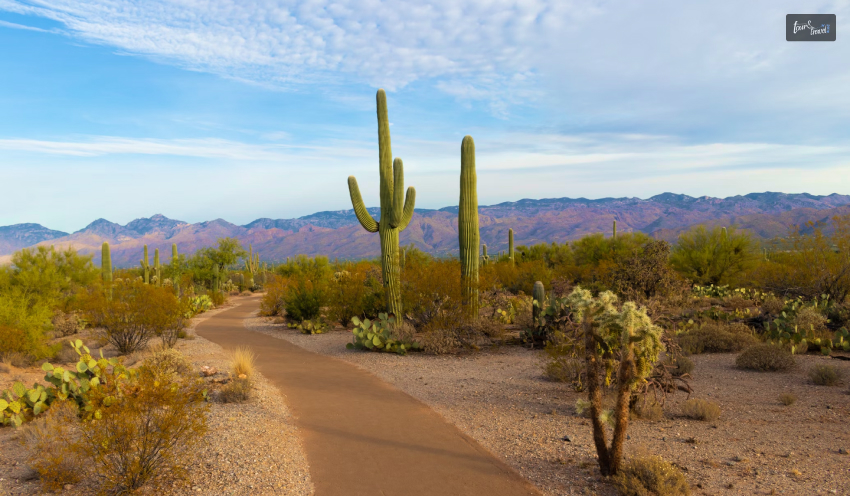
Tuscan Mountain District has the largest cacti in the USA. This large saguaro is acknowledged as the universal symbol of the American West. 

Hike through the trails in the west to meet a variety of cacti and the most amazing Sunset views. 

King Canyon Trail

Distance: 3.5 miles

The King Canyon Trail ascends to the Hugh Norris Trail. Watch out for the stair-step-like rock formations in the wash bottom. 

Hugh Norris Trail 

Distance: 4.9 miles

Hugh Norris Trail is the most delightful among other trails in the park. It leads to the Wasson Peak, the highest spot in the Saguaro National Park. 

Along with scenic beauty, the rocks of various formations will grab your attention throughout the trail. 

Sendero Esperanza Trail

Distance: 3.2 miles

Sendero Esperanza Trail hiking is a little arduous thanks to the constant ascends and descends. However, it is one of the most beautiful trails in the park. 

Cam-Boh Trail

Distance: 2.7 miles 

Cam-Boh Trail works as a connection between the eastern and western trails of Tucson Mountain District. Further, it is a favorite of hikers for its connectivity to many hiking loops.

You can also enjoy a horse ride through the trail. 

Ringtail Trail

Distance: 1 mile

Ringtail Trail connects you to many other trails on the eastern side of the Tucson Mountain District. The trail can get moderately steep. 

Sweetwater Trail

Distance: 3.4 miles 

If you want to visit the Wasson Peak from the east of the Tucson Mountains, you will have to take the Sweetwater Trail. 

The trail starts at  El Camino del Cerro Road’s western end. 

Cactus Wren Trail 

Distance: 1.5 miles 

This one-way trail stretches to the Signal Hill Picnic Area, a favorite of localities for family trips. You can start your journey from the “Sandario Road and Rudasill Road” corner. 

You will see many desert washes on the trail. 

Short Walks And Nature Trails In Tucson Mountain District

The short walks and nature trails of the national park will make you familiar with the local ecosystem. Get ready to explore the following trails replete with various cacti. 

  • Cactus Garden Trail – 100 yards
  • Desert Discovery Trail – 0.5 miles
  • Valley View Overlook Trail – 0.8 miles
  • Signal Hill Petroglyphs Trail – 0.5 miles

Organpipe Cactus, Pink Hedgehog, and Claret Cup Cactus are some of the most popular cacti species found across these trails. 

Final Words 

Saguaro National Park had more than 1 million (1,010,906) visitors in 2023. The easy trails with the best scenic views and the diversity of cacti here consistently attract visitors to this park. In the last five years, the park has welcomed more than a million visitors three times. 

Perri Spreiser, the district ranger for interpretation at Saguaro’s Rincon Mountain District, has rightly said, “We are no longer a small park.” 

The increasing popularity of the park has left a positive impact on the local community. They are proud of the park and ensure that everything is quiet and serene in the park. The park owes much of its popularity to the pristineness of its beauty. The local community does not want to ruin it.

Do you want to explore beautiful desert trails, and are you a cacti-enthusiast? It’s time to pack your back and take a drive to the land of saguaros. Or have you already been to this wonderful national park that was designated in 1994? Don’t forget to share your experience with us. 

Saguaro National Park FAQS 

Is Saguaro National Park Worth Seeing?

Yes, Saguaro National Park is worth seeing, as you can see the most amazing cactus and saguaros here. The place has a distinct rugged charm with flat desert and rocky mountains. 

You can hike through the trails and enjoy the most beautiful Sunset views in the park. 

How Many Trails Are In Saguaro National Park?

Saguaro National Park has as many as 78 trails spreading across 200 miles. A combination of flat deserts and rocky mountains, Saguaro National Park, is a great place for hiking with family and beginners. 

What Is The Most Scenic Trail In Saguaro National Park?

Hugh Norris trail leading to the Wasson Peak, the highest point of the Tucson Mountains District of Saguaro National Park, is the most scenic trail. 

You have to travel through a dense forest, and as you advance toward the peak, you will find a rocky landscape. You can enjoy an expansive view of the Sonoran Desert as you explore through this trail. 

Opuntia, echinocereus, and barrel cacti are the most amazing cactuses found on this trail. 

What Is The Best Place To See Sunset In Saguaro National Park?

Saguaro National Park West is the best place to see the Sunset. You can enjoy the most beautiful view from Gates Pass, which is at the western end of Speedway Boulevard. 

In Saguaro National Park East District, the Sunset looks most beautiful as you explore the  Tanque Verde Ridge trail. Javelina Rocks pull-out is another great spot to watch Sunset in the East District. 

How To Spend One Day In Saguaro National Park West?

A day in Saguaro National Park West will be filled with activities. Camping and hiking are the most adventurous activities here to explore. 

The Tucson Mountain District is on the west side, and your trip to the west starts with the Red Hills Visitor Center. The west side of the national park has many cacti and large saguaros. 

Also read

Share on Social Media

Meet Sibashree Bhattacharya, a travel enthusiast who has a decade-long experience in transcending virtual barriers with her words! Her deep love for travel is apparent from her travel escapades to the mountain, often taking her readers on a journey, her words acting as Portkey! Fun fact: Sibashree loves to dive deep into the history of the places she is about to visit, making her travels even more wholesome. If you were wondering how her articles are not short of time travel, this answers it!

Leave a Reply

Your email address will not be published. Required fields are marked *

title-img Related

READ MORE Great Barrier Island travel tips

What Are The Best Great Barrier Island Travel Tips? Exploring New Zealand Sustainably 

BY  Sibashree Oct 22, 2025

“Let’s go somewhere quiet,” he said! And being so elated that he was finally making a travel plan, I couldn't realize that he meant off-the-grid, solar-powered, rainwater-shower kind of quiet somewhere remote in New Zealand.  It was the Great Barrier Island, and it turned out to be the breather spot for me, where you just relax and connect.  With everything green, solar power, and local people considering themselves guardians of the land, the Great Barrier Island in New Zealand shows why sustainability is more than a buzzword.  Furthermore, the conservation law governs 2/3rd of the Great Barrier Island. So, it is saved from development and commercialization. The result? In 2017, it became one of the 13 remote areas and the first island in the world to be recognized as a Dark Sky Sanctuary.  Known as Te Motu o Aotea in the Maori language, it has also attracted people who move or travel to this part of New Zealand for a slow and meaningful way of living/traveling. And you won’t believe that it’s just a 30 to 40-minute flight from Auckland. You can even take the daily ferry to the island.  So, getting there is easy, and you can move around easily thanks to the e-bikes, cars, taxis, and shuttles available. However, remaining respectful to the traditions and rich Maori heritage in the island is a challenge.  Here, I will discuss sustainable travel tips for Great Barrier Island, provide a brief overview of the island, highlight the best activities, explain how to get there, and more. Where Is The Great Barrier Island, New Zealand?  The Great Barrier Island is located in the Hauraki Gulf, around 100 kilometers northeast of Auckland. You will get flights and ferries from Auckland.  Furthermore, if you are traveling from Wellington or Christchurch, you will first reach Auckland and then take a flight to the Great Barrier Island. An Overview Of Aotea, Great Barrier Island, New Zealand The Great Barrier Island is a pristine part of New Zealand, with Māori tribes as the original inhabitants. The Maori tribes gave it the name of Aotea, meaning “White Clouds.”  Today, a pristine paradise located off the northeastern coast of New Zealand, the Great Barrier Island, is known for its rugged landscapes, rich biodiversity, and deep cultural heritage. It has diverse geological features such as rugged mountains, beaches, and forests.  So, no wonder it is rich in biodiversity. With an area of 285 square kilometers, this island is home to dense native bush, manuka and kanuka trees, and coastal flora that thrive in its subtropical climate. Also, you will spot pāteke (brown teal), kākā (parrot), and the endangered black petrel here.  And how can I forget the thundering flapping of kererū wings over our tents?  Lesser-Known Facts About Great Barrier Island: Off-The-Grid Living  Sustainable living is a choice on the Great Barrier Island. So, from the Aotea Arts & History Village to being run by solar power, there are a lot of things that make the Great Barrier Island stand out.  Rare Facts and Sustainable PracticesDetailsOperated off the national power grid• Reliance on solar power• Rainwater harvesting• Composting toilets Minimalism and community reliance• No banks• No ATMs• No large supermarkets• Barter systems• Small general storesFirst Island in the world to become a Dark Sky Sanctuary• Least light-polluted• Clearest sky ideal for stargazingNo public rubbish bins• Pack in and pack out waste policy.• Banning of single-use cups• Mug libraries in cafes for takeaway drinksAncient Māori settlement sites• Archaeological sites such as pā fortifications, middens, and stone working areas, dating back 700-800 years. • Strong Māori connectionHome to the rare Chevron Skink• The only known habitat of the Chevron SkinkChevron Skink is one of the rarest and largest lizards of New Zealand. • Only found on the Great Barrier and Little Barrier IslandsForgotten Wharf at Blind Bay• A hidden historical site that once served as a key point for shipping kauri logs and suppliesShoal Bay Pottery’s Trust-Based Payment System• Buy handmade potteries and mugs, and just drop the money in a box.• This practice celebrates the community spirit of the island. Dual Coastline Personality• The East Coast has wild surf beaches like Awana and Medlands.• The West Coast is dotted with calm, sheltered coves ideal for diving and kayaking.Aotea Arts & History Village• Colonial cottages transformed into galleries and museums. • Explore historical artefacts, crafts, and more at the museums and galleries.  Great Barrier Island Travel Tips: How To Reach There? There are four ways to travel to the Great Barrier Island. You can take a flight, a ferry, or opt for a flight+boat experience. Also, you can opt for chartered flight services.  1. How To Reach The Great Barrier Island By Flight? From Auckland: You can take a flight from Auckland to the Great Barrier Island. Barrier Air operates three to four flights daily. The flight departs from the Auckland Domestic Terminal and flies to the Claris Airport near the center of the island. For adults, a return ticket costs $396, and for a one-way trip, it is $208. For children aged 2 to 12 years, a return ticket will cost $383, and a one-way ticket is priced at $198.  From Northshore: The ticket price for adults for a Northshore to the Great Barrier Island flight costs $406 (round trip) and $213 (one-way trip). For children, the ticket price of a round trip is $388, and a one-way ticket is $205.  From Whitianga & Tauranga Sunair Aviation operates these flights to the Great Barrier Island. For adults, the one-way ticket is $290, and the ticket price for a round trip is $580.  For children aged 2 to 11 years, it is $210 for a one-way trip and $420 for a return.  2. How To Reach The Great Barrier Island By Ferry? You will get a Sealink ferry from Auckland's Wynyard Wharf to Tryphena, the southernmost part of the Great Barrier Island. The ferries run daily in the summer and three times a week in the winter.  This 4.5-hour journey is stunning, with dolphins, orcas, and whales making their appearances. The ticket prices range between $75.50 and $169 based on the age or category of the traveler and the season.  Also, these ferries carry freight to the island, charging between $459 and $1028. 3. Traveling To The Great Barrier Island By Flight And Ferry It is the best travel combination to travel to and from the Great Barrier Island. Take a flight one way and return from the island by ferry.  How To Move Around The Great Barrier Island?  Car rentals, roof-top tent cars, e-bikes, taxis, and shuttles are the transportation modes to move around the Great Barrier Island. Mode of TransportPrice Details Car Rentals• $60-110 Per DayRoof Top Tent Car Rentals• $185/Night (Minimum booking for 2 Days)E-Bikes• $20/Hours• $75 for a Full Day• Contact: +64 (0) 22 344 0645Taxis and Shuttles • Wagon Taxis• 12 or 20 Seater Vans• Charges: $35 to $145 Moreover, like us, you can also book a shuttle or taxi service to Good Heavens Dark Sky in Medlands Beach. We reached Medlands Beach just before sunset, and we camped near the dunes.  We padded down the beach barefoot, and the Sun going down the hills spread the last rays of the light on the water, vanished like the most treasured secret.  With silence prevailing, it felt like sheer magic, and we waited with bated breath for the stargazing moments.  How To Explore Aotea Great Barrier Island New Zealand Sustainably: Know The Best Activities  From hiking to stargazing, the activities on the Great Barrier Island are diverse. Here is a brief overview.  1. Hiking The Aotea Track View this post on Instagram A post shared by Gus || NZ Hiking (@wanderinggus) It is the most challenging activity on the Great Barrier Island. The trekking route passes through the historic Kauri dam sites, amazing views, and forests.  The route takes you to the highest peak of Mount Hobson, Hirakimata. You will get a panoramic view of the surroundings after reaching the highest point.  2. Exploring Kaitoke Hot Springs View this post on Instagram A post shared by Aotea Great Barrier Island (@greatbarrierislandofficial) Hiking to the Kaitoke Hot Springs was fun. We reach the hot springs after a short walk through the native bush.  The pools beside the Kaitoke Stream are ideal for swimming and relaxing.  3. Stargazing With Good Heavens I have already mentioned that the Great Barrier Island is an international Dark Sky Sanctuary. We loved the guided tour with Good Heavens as they provided us with laser pointers and telescopes.  It was great fun exploring the Southern celestial sphere and listening to the Māori and Greek stellar mythology. 4. Visiting Glenfern Sanctuary View this post on Instagram A post shared by Anna Sephton (@anna_sephton_) This sanctuary in Port FitzRoy is famous as the home for native species in a predator-free environment. I loved spotting rare native birds like the Kākā and Pateke (Brown Teal). 5. Kayaking In Whangaparapara Harbour The untouched coastline looked beautiful as we went kayaking in the Whangaparapara Harbour. Further, we visited the historic old Whaling Station.  And the highlight of the trip? Spotting dolphins.  6. Snorkeling At Medlands Beach Medlands is more ideal for surfing. However, when the water and weather are calm, it becomes a haven for snorkeling enthusiasts.  The underwaters here are rich in subtropical marine species.  7. Surfing At Awana Bay View this post on Instagram A post shared by Jack Simkin (@jacksimkin_) Surrounded by a long and golden sand beach, Awana on the eastern coast of the Great Barrier Island is a popular surfing spot.  The consistent breaks here make it ideal for surfers of all expertise levels.  8. Birdwatching Native Species Rich in biodiversity, the Great Barrier Island is home to many rare and native birds of New Zealand.  In the forests, wetlands, and coastal areas, you can spot Kākā, Black Petrel, and Pateke (Brown Teal).  9. Camping At Harataonga Bay View this post on Instagram A post shared by MOJA (@mojaonthemove) Harataonga Bay offers one of the most fulfilling camping experiences in the Great Barrier Island. It is on the northeastern coast of the island.  The Harataonga coastal walkway is beautiful, and you can use it as the base for swimming, relaxing, and other water activities.  10. Fishing In Tryphena Harbour View this post on Instagram A post shared by Territory Boys (@territory.boys) It’s a Snapper! The Tryphena Harbour is a popular hub for recreational fishing. The Hauraki Gulf waters, especially, are rich in marine life.  You can catch the fish from a rock or a wharf. Also, you can book a fishing charter boat.  11. Mountain Biking Trails Palmers Track Lookout is a popular biking trail on the Great Barrier Island. We loved the drive to Windy Canyon on the first day, and on the second day, we went for a short walk to the Palmers Track Lookout. However, this route to the Palmers Track Lookout is quite challenging for bikers, as the rock faces are very steep.  12. Visiting Local Art Galleries The Aotea Community Gallery was an eye opener for us, showing the rich heritage and art scene of the island. In fact, the entire Aotea Arts & History Village is a delight for art enthusiasts.  The gallery hosts regular exhibitions and workshops, showcasing and teaching arts and crafts, which are important for the lifestyle of the island. You can even collect the souvenirs from the local gift shops.  This art village is another example of how the people on the Great Barrier Island are sincere about preserving their local heritage. The Aotea Arts and History Village gained its current status and name in 2023. However, the journey began way back in 2001 when it was first registered as the Aotea Community Artz Charitable Trust in October.  So, in October 2026, it will complete its 25th year.  13. Enjoying Local Cuisine View this post on Instagram A post shared by Eat What You Kill (@eatwhatyoukill.co.nz) Mānuka honey was yum, and we also enjoyed the gin and craft beer here. Also, whatever we ordered, we did not give the signature fish and chips a miss during even a single meal.  14. Attending Cultural Events The local festivals and cultural events of the Great Barrier Island are a great way to get to know people here. The Wharf2Wharf sporting challenge and the FitzRoy Mussel Fest are some of the most popular cultural events here.  15. Relaxing At Secluded Beaches View this post on Instagram A post shared by anapau la (@anapau.crw) The Blind Bay beach at Okupu, North of Tryphena, is a beautiful beach on the west coast of the island. The vibe is pretty relaxed here, and I found the locals picnicking.  Furthermore, the ancient pohutukawa trees were the main attractions for me.  Gooseberry is another beach where we enjoyed a relaxing vibe. It is in the heart of the Tryphena Harbour. The purple caves between the Gooseberry Flat and the Pa Beach are a surreal sight to behold.  Great Barrier Island Travel Tips To Choose The Most Eco-Friendly Accommodation Options: Camping And Ecopods View this post on Instagram A post shared by Jacks Sanctuary (@jacks.sanctuary) Lodges, cabins, beach houses, tree houses, cottages, and more! There are diverse accommodation options on the Great Barrier Island. However, as backpackers, we chose camping.  Medlands Beach campsite by the Medlands Stream was our base for the Great Barrier Island trip. It is a well-sheltered campsite. However, booking needs to be done in advance.  Akapoua Bay campsite near the Port Fitzroy waterside, Awana Beach campsite near the Awana Surf Beach, Harataonga campsite, and Whangapoua campsite are the other popular camping grounds in the Great Barrier Island.  Moreover, Whangaparapara has Island Ecopods near the Whangaparapara Wharf and the edge of the Department of Conservation Forest Estate. These ecodpods can accommodate one to four guests, and for each extra guest, you will have to pay $25 extra.  The one sleeping pod for two guests costs $200 per night, and the two sleeping pods for four guests cost $400 per night.  Go Great Barrier Island Tourism Package With How Other Tour And Travel Companies Offering Sustainable Experiences View this post on Instagram A post shared by Aotea Great Barrier Island (@greatbarrierislandofficial) The Great Barrier Island Tourism offers many packages for every kind of travel experience. You can choose a dedicated sun and surfing package, a hiker’s package, or something suitable for adventure lovers.  There are even packages for romantic getaways, such as Alice’s Seaside Cottages, Heaven’s Above, and Medland Magic.  Furthermore, they have curated their top 10 travel packages in their Top 10 section so that you can quickly find their all-inclusive packages.  The travel packages are well within $1000 per person, and you can build your own package by selecting the number of people in your group, your accommodation, transport options, and any other special experiences like Dark Sky experience, fishing charter, etc.  Moreover, reputable tour companies such as Good Heavens, Motu Trails, and Aotea Eco Tours offer curated experiences on the island.  These companies provide guided tours, accommodation packages, and sustainable travel options. They are highly rated for their knowledgeable guides, eco-friendly practices, and personalized itineraries.  Booking through these companies ensures a hassle-free and enriching travel experience. Great Barrier Island Travel Tips For Your Next Trip The Great Barrier Island is a lot of fun. However, you have to keep this checklist and things to avoid in your mind for the most seamless experience. Things to Keep in MindThings to Avoid • Book flights or a ferry in advance• Reserve accommodations early• Arrange local transportation• Pack eco-friendly travel gear.• Confirm tour bookings• Carry health essentials• Download offline maps• Inform emergency contacts• Check weather forecasts• Respect local customs and environment.• Carry insect repellent, sunscreen, and sufficient drinking water• Not booking transportation early• Ignoring weather conditions• Overpacking non-essential items• Disregarding local regulations• Not preparing for limited connectivity.• Forgetting to carry cash• Underestimating travel time• Not researching activities• Skipping travel insurance• Neglecting sustainable travel practices Is The Great Barrier Island Travel Worth It?  View this post on Instagram A post shared by Charlotte Spratt (@charlotte.spratt) Yes, a trip to the Great Barrier Island is absolutely worth it. Sustainability, romance, heritage, and scenic appeal go hand in hand in this beautiful, remote location of New Zealand.  Furthermore, the dark sky experience here is matchless, and authorities such as Discovery Travel talk about its Dark Sky Sanctuary status and stargazing potential. Nat Geo, on the other hand, is all praises for the conservation efforts on the island and how it practices sustainability.  So, whether you’re a nature enthusiast, a cultural explorer, or a sustainability advocate, the island promises unforgettable experiences. 5-Day In Great Barrier Island: This Is How Our Itinerary Was… View this post on Instagram A post shared by Paul Michael | Travel photography (@paulmichael) Our five days on the Great Barrier Island were about digital detox. The limited network connectivity was a blessing. Also, we watched the stars every night, and we got enough time for journaling.  Nevertheless, this is how we spent our five days on the Great Barrier Island.  DaysActivities Day 1• Reaching Great Barrier Island• Lunch at My Fat Puku Café• Drive to Medlands Beach and sunset walk.• Stargazing• Tipi & Bob's Waterfront Lodge RestaurantDay 2• Breakfast• Bush walk to Kaitoke Hot Springs• Visit to Awana Beach• Lunch at Wild Rose Café• A short walk to Palmers Track LookoutRomantic private dinnerDay 3• Kayaking or paddleboarding in Tryphena• Lunch at Currach Irish Pub• Relaxing at Gooseberry Flat Beach• Drive to Windy Canyon• Sunset viewing and stargazingDay 4• Couple spa treatment• Light brunch• A visit to the Aotea Community Gallery• Exploring Port FitzRoyDay 5• Watching sunrise at Medlands or Awana Beach• Having breakfast and taking a stroll• Dip at Kaitoke Hot Springs• Swimming at Okupu Beach• Flight to Auckland Great Barrier Island Travel Tips: Frequently Asked Questions (FAQs) Here are the frequently asked questions and answers about the Great Barrier Island travel tips.  1. Why Is It Called The Great Barrier Island? Captain James Cook started an expedition from 1768 to 1771 to see how Venus transits across the Sun. On his way, he reached the New Zealand Coast and mapped the Great Barrier Island. In 1769, he mapped and named this part of the New Zealand Coast as the Great Barrier Island, as it offered protection and shelter to the Hauraki Gulf.  2. What To Pack For The Great Barrier Island? The Great Barrier Island is an off-the-grid space. So, you will not find streetlights here. So, you will have to pack a torch. Furthermore, warm clothes, a car charger for your phone, and towels are the things you need to pack for a trip to the Great Barrier Island.  3. What Is The Great Barrier Island Population? The population of the Great Barrier Island in 2023 is the latest information I have. The Census Report of 2023 says that the island had 1251 permanent residents in 2023. In 2018, the population of the island was 936. So, the journey from 936 to 1251 was a sharp 34% increase.  4. Is Driving In The Great Barrier Island Safe? Driving on the roads of the Great Barrier Island needs skill and patience. The winding roadways are often unsealed and without any central line. Furthermore, there will be horses, bikes, and pedestrians on the road. So, you will have to keep to the left while driving.  5. What Are The Emergency And Safety Contact For The Great Barrier Island? Keep these phone numbers handy if you are traveling to the Great Barrier Island. • Department of Conservation: 0800 ASK DOC (0800 275 362)• Claris Medical Centre: 09 429 0356• Auckland City Service Centre: 09 429 0258• Police, Fire or Emergencies: 111 or 429 0343However, cellphone coverage remains a concern here, especially on the eastern coast of the island.  Read Also: Interesting Facts about Australia that will surprise you! Easiest Countries To Get Citizenship In 2025: Let’s Know The Names Australia’s Best-Kept Secret: Tailored Travel Experiences In The High Country

READ MORE travel essentials for men

Gentlemen On The Go: Travel Essentials For The Modern Man 

BY  Rishab Dey Jan 3, 2024

You can't skimp on selecting the proper assortment of travel accessories for men, regardless of your level of packing expertise. It makes sense that you would want to be ready for anything that might come up. However, you should first make decisions about what should remain and what should go based on your travel destination, length of stay, and itinerary flow. Of course, there are also individual factors to consider. For example, some men might choose to travel with a garment bag, while other men are happy to stuff their clothing and toiletries into compression packing cubes. Even though it could seem like a fruitless endeavor to gather the appropriate travel accessories, we are here to help. We've sifted through our travel tests to identify the essentials that are helpful for every guy, such as luggage trackers that assist you in finding your belongings after landing in a foreign nation and travel adapters that keep your electronics charged. To find the best travel accessories that will support you on many future adventures, we are making a list of travel essentials for men. Travel Essentials For Men  If you are planning a trip and feel stumped, we have mentioned some of the most important travel essentials for men. You simply cannot miss them at any cost. This list (in no particular order) will prepare you prepared about what to pack for your trip. Headphones Even when you leave the house, you can't skip this one. If you don't encounter a bothersome whiner, what good are planes and travel? If you want to pass the time during the flight by watching TV, listening to music on your own device, or doing anything else. It's always better to have comfortable headphones of your own than the terrible headphones that airlines provide. Mens travel is incomplete without the headphones.  Shave Soap Shaving cream contributes to the total amount of liquids you are permitted to bring on travel. You'll find that each time you go on a trip, you have to purchase a new can of shaving cream, which you then have to throw out when you return. Alternatively, get a bar of travel-sized shaving soap and simply lather it up!  Battery Power  Phones are necessary, just like water. They need to be charged all the time. Your battery may drain faster while traveling because you'll be using other apps like social media and GPS, shooting more photos and videos, listening to music, and maybe watching more videos than usual. If you are worried about the life span of the battery on your phone, get a portable charger.  Valuables It is crucial to carry valuables with you when traveling, as they will undoubtedly save you from many awkward situations. Avoid putting anything valuable in your luggage. Think about your passport, wallet, camera, and phone. You should always be in the center of things. Bring a tiny purse if you would rather not keep your valuables in your pockets.  Sneakers The most visually appealing component of your ensemble is your shoes, which are also a necessity for exploring new locations. It is an accessory that you must have. Every time you visit a new place, your itinerary will determine the best shoes to wear while traveling. But choosing the right shoes is just as important as choosing the right clothes. You can choose from a variety of options, such as loafers, sneakers, travel shoes, sports shoes, etc., depending on the type.  Hand sanitizer  Towels are not as suitable or environmentally friendly as hand towels. Instead, use paper towels or tissues. It can be useful to wipe away perspiration or to pat dry your face after washing. A hand towel is among the most important items you should always carry in your bag.  Comb Traveling can be exhausting if you are stuck on an airplane for an extended period of time and don't feel refreshed. Additionally, if you want to feel clean and kept, you should brush your hair. It is also a good idea to have it in case something goes wrong with your luggage.  Wardrobe  Let's now discuss the most crucial aspect of traveling—the one you have been waiting for. How can you forget about clothes and fashion? Let's be clear. A great trip is meaningless if you can't post any eye-catching photos to brag about on Instagram. Thus, in order to rock your next trip, these are the travel essentials for men as far as clothes are concerned.  Solid Color Upper Wear When it comes to style simplicity, this is the best choice. Solid men's hoodies and other plain clothing speak to versatility. Chunky clothing isn't appropriate for every occasion. However, a basic black t-shirt can be your go-to choice for a beach walk or a party. Adding a few simple accessories and experimenting will give you a look that works for most occasions. You simply cannot bring your entire wardrobe with you when traveling, so make sure the pieces you choose are versatile. That's what you need most when traveling.  Cozy Jeans  You just cannot picture a travel bag without jeans, no matter how much you love or hate them. It is a single item that complements the atmosphere of every event. It can be difficult to choose, so go for the pair that best suits your body type, is fashionable, and works for a variety of settings. A deep blue—almost black—might be the best choice for you.  Button Downs Either in the city or the country, simple button-down shirts look great with shorts or long pants, dress shoes, or sneakers. Cotton shirts are the way to go for any situation; a button-down shirt is more adaptable than a basic t-shirt. These items are, therefore, unquestionably essentials for any traveler; a trip wouldn't be possible without them.  Styling Instruments  You simply cannot afford to miss anything when it comes to styling, smelling your best, or looking your best when you travel because it is an experience that you will cherish for the rest of your life. These are a few travel essentials for men to ensure a picture-perfect and laid-back experience.  Wrapping Up  When traveling, comfort is something you should never compromise. You need to consider what extras will contribute to a more pleasurable and seamless travel experience. Does your dopp kit have smooth, user-friendly zips, or do they clog easily? Will that pillow keep your head from dropping or keep you from slouching while flying? Ultimately, you should gather travel accessories that facilitate rather than complicate your trip. If you have thoughts to share or questions to ask about travel essentials for men, please leave a comment below. We would love to hear from you! Read Also: A Detailed Guide On Malaysia Bay – From Traveling To Outing Top 7 Places To Visit For An Asian Solo Traveler Planning A Vacation To Bali? Read This Blog!

READ MORE Gates of the Arctic National Park

Explore Human History And Wildlife With Backcountry Camping In Gates Of The Arctic National Park

BY  Sibashree Aug 12, 2024

Gates of the Arctic National Park is where the Brooks Range and the Tundra landscape come to life with wilderness and vivid topography. This national park is a place of topographical diversity with the coexistence of mountains, glaciers, rivers, lakes, and marshy lands.  A home to nomadic people for more than 13,000 years, the Gates of the Arctic is a prominent example of how human lives can be dependent on wilderness or nature. Many visitors love backpacking and trekking in this national park. Further, many stay in camps in the backcountry to experience its rich wildlife despite the challenges. Do you want to know why camping in the backcountry is worth the hardship? Does the national park have camping sites? Find the answers to all your questions in this guide.  Knowing The Gates Of The Arctic National Park (Why Camping Here Is A Great Experience) The Gates Of The Arctic National Park is a paradise for wilderness travelers. The intriguing land of Tundra, embraced by jungles, mountains, and rivers, makes camping in the backcountry worth all the effort.  Gates Of The Arctic Geography You can explore the arctic geography of this national park by trekking or by air. Tundra peaks and the Schwatka Mountains region of the Brooks Range ensure a humbling experience. You trek to Mount Igikpak, a glacier-carved peak with an 8,510-foot elevation. Another mountain to have glaciers in this region is Mount Arrigetch. Even backpacking and trekking to Mount Doonerak have a distinct charm, as the mountain is the quintessence of wilderness and unadulterated beauty.  Further, this national park has six designated wild rivers. Those are: Alatna River John River Kobuk River Noatak River North Fork of the Koyukuk River Tinayguk River Alatna and Noatak are great for canoeing. If you want more adventurous pursuits, you can try rafting in Nigu (to the north) and Kobuk (to the west).  Gates Of The Arctic Wildlife  The Gates of the Arctic is home to many mammals and birds. The Alaska Department of Fish and Game says,   “Forested southern foothills rise to limestone and granite peaks more than 7,000 feet high in this remote wilderness park. North of the peaks, clear water rivers run through glacier-carved valleys; and Tundra, covered with wildflowers during the brief northern summer, stretches toward the Arctic Ocean. Many of the nearly 500,000 member Western Arctic caribou herd migrate through the park each fall. Brown and black bear, wolf, Dall sheep, lynx, moose, wolverine, and red fox live here year-round. In the spring, the park hosts migratory birds from Europe, South America, Asia, tropical archipelagos, and the continental U.S.” Other animals found in this national park are grizzly bears, Dall sheep, and musk oxen. Among the birds, Tundra swans, common loons, and golden eagles are the most common.  Further, if you enjoy the playfulness of aquatic animals, watch out for graylings, trouts, sheefish and salmon.  Gates Of The Arctic And Human History  The Gates of the Arctic is a prominent place for archaeological research. The study and interpretations of the museum collections depict how people have been surviving in the Brooks Range for around 13000 years now.  Along with Inupiat, Nunamiut, and Athapaskan descendants, you will also find many non-native Alaskan people in this region. These people have always been dependent on fishing and hunting. The wilderness of the Gates of the Arctic is the foundation of their livelihood.  What Is The Best Camping Near Gates Of The Arctic National Park? With marshy lands and tussocks, Arctic Tundra has a vulnerable landscape and it is difficult to find a steady spot for setting up camps or tents. Also, the existence of wildlife in a remote location and dense vegetation make the space unsuitable for camping.  So, there is NO CAMPING SITE in the Gates of the Arctic National Park. There are designated areas in the backcountry for camping. However, you will have to strictly adhere to the rules and regulations of the national park when putting up a tent.  You must also attend the orientation program and be particular about the gear, food, and safety essentials to be carried.  With permission from the park authority and the National Park Service, you can set up tents near the Arctic Interagency Visitor Center in Coldfoot or around Wiseman and Bettles communities.  However, while camping in the backcountry, you will have to keep the following factors in mind.  Be respectful to the local communities like the Koyukon Athabascan Indians or Nunamiut. Their livelihood depends on the wilderness.  There are no provisions for running water, a dump station, or restrooms. Your phone network will be unavailable in this location. You have to carry all your trash back as you leave the camping site. You cannot adulterate the pristineness of the location.  If you have plans for camping in the backcountry near the Gates of the Arctic, summer is the best season. The temperature is a little moderate on these days, and sunnier days make all outdoor pursuits in the park easier for you.  Did You Know?  The Gates of the Arctic National Park is the second-largest national park in the USA. It stretches over 13,000 square miles. You can see aurora borealis from this park if you visit between November and March.  July and August are the best months to visit Gates of the Arctic National Park for hiking and backpacking.  Bob Marshall, a wilderness advocate, named this national park “Gates of the Arctic.” Final Words  Unlike popular national parks like the Biscayne National Park or the Kenai Fjords National Park, the Gates of the Arctic National Park does not have many visitors yearly. In 2023, only 11,045 tourists flocked to this place. (Source) With a diversity in topography and wildlife and an association with human history, this park has much to explore. However, the extreme trekking conditions and wilderness make it far from an easy excursion or trekking experience. Despite the absence of campgrounds in this park, you can camp in the backcountry at the designated spots in the fields. However, only an experienced backpacker should try it with proper orientation and extra safety measures. Have you ever been to this wild and intriguing national park? Do you have any camping experience in the backcountry? Don’t forget to share your experience with us!  Gates Of The Arctic National Park FAQs  Can You Camp In The Arctic National Wildlife Refuge? Only backcountry camping is possible in the Arctic National Wildlife Refuge. The absence of roads, villages, or facilities makes this area unsuitable for having designated campsites. Backpacking and hiking are the best ways to explore this vast landscape with rich wildlife and geographical interests.  Can You Stay In Gates Of The Arctic National Park? You can stay or try backcountry camping near the Gates of the Arctic National Park. Undefined terrains, wilderness, and a lack of modern amenities make it risky to put up camps in the national park. Even to camp in the backcountry, you will need the highest outdoor survival skills. The arctic ecosystem, topography, and weather conditions are different, and if you are confident enough to stay in the backcountry, plan in advance and get in touch with the Park and Preserve authorities for updates and advisories.  How Much Does It Cost To Visit The Gates Of The Arctic National Park? You don’t have to pay entry fees to visit the Gates of The Arctic National Park. However, you must attend the backcountry orientation program at any of the visitor centers.  In this way, the Gates of The Arctic National Park is different from other national parks as most of them demand an entrance fee.  How Difficult Is It To Get To The Gates Of The Arctic National Park? The Gates of the Arctic is a wilderness park. So, as you enter the park, hiking is the best way to explore. Remember, it is home to the Schwatka Mountains region of the Brooks Range and the highest peak here is Mount Igikpak with an 8,510-foot elevation.  So, exploring the national park is not going to be a cakewalk. A lack of established trails further makes hiking difficult.  Further, there are six designated rivers, including Koyukuk and Dietrich, in this national park. So, you will have to pass through multiple meandering river crossings. The water levels of these rivers keep fluctuating throughout the season. They are furious throughout the spring season. Tussocks, marshy lands and dense vegetation are other hurdles to your fast movement while trekking.  Do you want to visit the backcountry? You can take a bush plane operated by permitted pilots with knowledge of the region.  What Is Special About Gates Of The Arctic? The Gates of the Arctic is special because of its geographical uniqueness, rich wildlife, and significance in human history. The glacier-carved valleys, rivers, and ancient trails make the Gates Of The Arctic a favorite destination for backpacking and hiking. Thanks to its geographical typicalness, you will meet many animals and birds. The adorable grizzly bears will be seen feeding, and the musk oxen are another unique animal you must watch out for. If you are a birder, you will love watching the golden eagles, Tundra swans, or common loons.  Near the Nigu River or throughout the park, you will find stone fences and camping rings. These are a testament to how Inland Eskimos or Nunamiut have lived in this region for thousands of years. They survived on fishing and hunting.  In addition, as I pen this guide, I must tell you that the Gates Of The Arctic National Park is going to celebrate its 45th anniversary of designation next year. First, it became a national monument on 1st December 1978. In 1980, it became a national park and preserve. Also read Italy: Is Florence flat or hilly? Ultimate Guide to Your Next Family Vacation in Israel. The Glaciers of Wrangell-St. Elias National Park: Experience The Magnificence Of Nature.