
Planning A Trip To Ginnie Springs In Florida? All That You Need To Know!

Apr 12, 2023

Last Updated on: Sep 19, 2024

Travel Blog

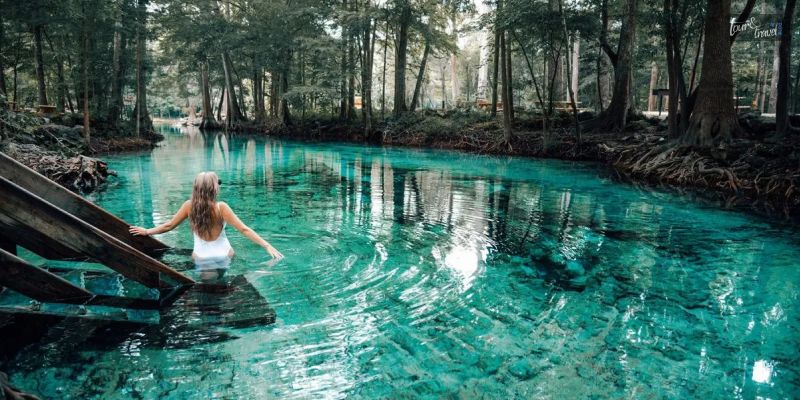
If you have never visited Ginnie Springs in Florida, then you are definitely in for a real treat. It’s literally the epitome of beauty in Florida – home to the prettiest water in the entire state, Ginnie Springs was on our bucket list for several years. If you haven’t added this to your list of best springs in the United States, then do it ASAP!

The water here is a gorgeous shade of blue, and it’s crystal clear. The entire area is quite large – enough for you to go camping and do so much more, in case you get bored of the water activities. Here’s a fun fact about Ginnie Springs – did you know that this spring actually pumps out around 80 million gallons of water every single day?

Stay tuned to find out all that you need to know about Ginnie Springs in the Sunshine State of Florida!

Exploring Ginnie Springs: All That You Need To Know About This Popular Tourist Spot!

Nope, you don’t need to google ‘Ginnie Springs Florida’ – instead, join us as we go on a tour of this popular tourist spot in Florida. It’s a simple choice, really – if you are seeking any pretty places for swimming around, taking part in different water recreation activities, or having fun this Summer, then you should definitely consider visiting Ginnie Springs!

But at the same time, it is vital to remember that Springs can get pretty busy and even crowded. After all, it is one of those only springs located in Florida where you can drink.

Naturally, this makes the spot crowded with college kids and frat boys on weekends and holidays. Since the spring is owned privately (by the Wray family), drinking is allowed, unlike other famous springs in Florida State parks or even inside the main city.

Without wasting any time, let’s get started – scroll down to find out all that you need to know about this tourist destination!

Location: Where Is Ginnie Springs Located In Florida?

Location: Where Is Ginnie Springs Located In Florida?

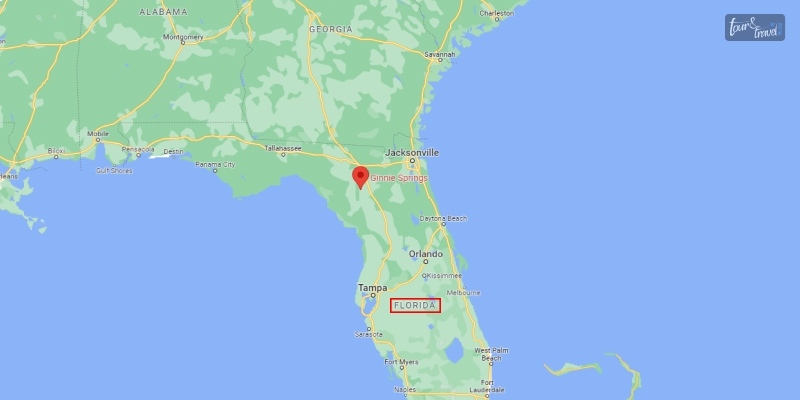
Of course, you can just type ‘Ginnie Springs outdoors LLC’ on Google and let your GPS do the magic. But if you hate traveling without doing detailed research, then let’s find out where this Springs is located in Florida.

Connected to the beautiful Santa Fe River, Ginnie Springs is situated only 6.5 miles away from High Springs. Known to be one of the most popular North Florida springs, Ginny Springs is only 48 minutes from Gainesville and about 60 minutes from the Florida-Georgia border located on 75 Highway.

You can also drive to this location from Tampa – it will take you 2 hours to drive to the location and the same time to go back.

Here’s the complete address: 7300 Ginnie Springs Road, High Springs, FL 32643

Costing: How Much Does It Cost To Plan A Trip To Ginnie Springs?

Costing: How Much Does It Cost To Plan A Trip To Ginnie Springs?

There’s literally no accurate answer when it comes to determining the exact cost of visiting the glorious Ginnie Springs! There’s so much to do here – from general admission costs to paddle boating, camping, or even diving, which comes with its own individual costing.

As compared to other affordably priced Florida springs like Rock Springs/Kelly Park, Ginny Springs is relatively more expensive. For instance, spending 15 to 20 dollars on just admission for every adult is quite steep. But then again, the beauty of the place, accompanied by all the additional facilities, makes it worth the cost.

General Admission Fees:

In general, here are the general admission fees!

  • Adults (season): 20 USD/ person
  • Adults (off-season): 15 USD/person
  • Children (5-12): 5 USD/person
  • Children (4 And Below): Free

Camping:

It is possible that you might want to explore the Springs camping options – this is precisely why we have managed to find different camping rates for you. Scroll down to find out now!

  • Adults (season): 30 USD/ person
  • Adults (off-season): 25 USD/person
  • Children (5-12): 8 USD/person
  • Children (4 And Below): Free
  • Electricity and Water on site (standard): 11 USD
  • Electricity and Water on site (for groups): 22 USD

Scuba Diving:

A trip to Ginnie Springs is incomplete if you miss out on scuba diving. But of course, there’s a separate pricing structure for the same. Scroll down to find out about the scuba diving rates.

  • Certified Full Cave Divers (or Equivalent): 24 USD/person
  • All Other Certified Divers: 32 USD/person
  • Annual Dive Pass (Cave – Cavern): 399 USD

Please Note: Scuba diving is prohibited on certain holidays or even on major weekends.

Timing: When Does Ginnie Springs Open Or Close?

Timing: When Does Ginnie Springs Open Or Close?

The timing of Ginnie Springs depends on two important factors,

  1. The season, and
  2. The day.

So, the timing can change depending on the season and even the particular weekday. Of course, if you are camping, then the springs will be open throughout the day for you. For other visitors, it entirely depends on when the sun sets – for instance, during Winter, the park closes anytime between 6 pm to 8 pm, and sometimes, even later!

Then again, it also matters whether you are visiting the Springs on a weekday or a weekend!

So if you do visit this Springs anytime soon, here’s the seasonal timing for now!

  • Monday – Thursday: 8 am to 5 pm
  • Friday – Saturday: 8 am to 7 pm
  • Sunday: 8 am to 6 pm.

Things To Do In Ginnie Springs!

It is quite nice that Ginnie Springs is one of the best places to visit for holiday! You can experience a lot, both culturally and naturally. There are beautiful small shops for art supplies, thrift shops and others.

The communities at the Ginnie Springs are quite positive and supportive towards visitors and tourists!

Follow Anderson’s Outdoor Adventures Santa Fe River Park!

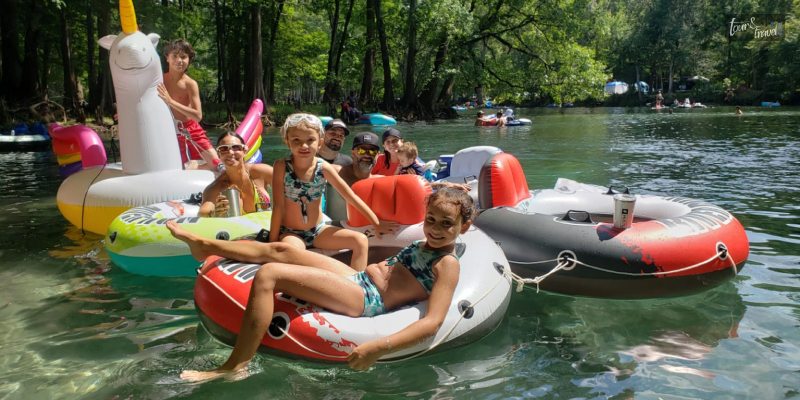
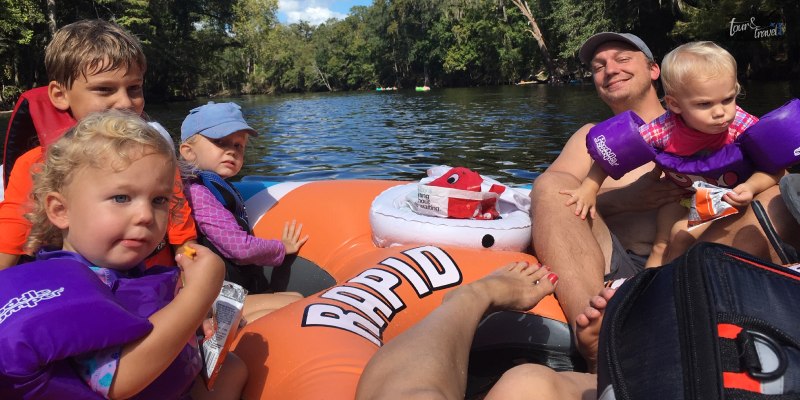
When visiting Anderson’s Outdoor Adventures Santa Fe River Park, you have 3 hours to enjoy the activities. You can rent a paddle board, tube, kayak and canoe on site for people who are in love with adventure.

The view at the Santa Fe River is so beautiful and you can perform the activities 365 days of the year! It is a great place but you can have a guided tour or take a river trip. The area is pretty close to Ginnie Springs and Blue Springs Park!

Swimming Lizard Paddle!

You go for official paddle boarding lessons at the Swimming Lizard Paddle along with getting tours and rentals. There is a beginner lesson yet there is a tour where you can get coaching sessions thus, creating comfort, stability and speed for you.

There is an eco-tour that you can take across the Santa Fe River! You will get a workout session which will help you physically and mentally, thus creating an effective outdoor activity session.

Visit O’Leno State Park!

It is a scenic view situated right across the banks of Santa Fe River. There are significant features on the park such as river swamps, sandhills, hardwood hammocks and sinkholes. The river Santa Fe travels across the park and at one point it goes underground and then re-emerges at the River Rise State Preserve.

There was a suspension bridge built spanning the river by the Civilian Conservation Corps in the 1930s. Bicycles and canoes are also available for rent and people often rent them to take a look at the wildlife across the nature trails in the park!

There are native plants that you can check out across the full facility campground which is shady for the morning trails while perfect for overnight stays!

Drink At The High Springs Brewing Company!

High Spring Brewing Company is a brewery that is family-owned! It is located in High Springs, Florida which is a historical place. They have a take on traditional beer styles so you can visit the brewery with your partner or friends to experience some of the best drinks in life.

Further, there are some activities and events that they regularly organize. So you can easily check the activities from the website and visit the local restaurants nearby!

Exploring Ginnie Springs: Reviews From Visitors

There’s no way you can actually plan a trip to a popular spot like Springs without talking to people who have already visited the place before. So today, we decided to go to two high-authority websites for guest reviews,

  1. Google (rated 4.4/5), and
  2. Tripadvisor (rated 3.5/5).

Ginnie Springs Reviews On Google:

The top Google reviews on Ginnie Springs are as follows,

1. Review By Misty “Amber” Richardson:

The springs are beautiful, the water is so clear you can see all the way to the bottom. They have inner tube kayaks and paddle boards that you can rent for the day and free life vest rentals, or you can bring your own. You can swim in the springs or float down the river to one of the pickup points. It is a great place for the whole family to spend the day or even go camping.

2. Review By Gavan Berzman:

This is one of my favorite places on earth. You’re able to camp along the river. It’s $30 for a tent site. Clean bathrooms and showers nearby. Lots of grills, picnic tables, and volleyball courts throughout. The springs are absolutely amazing. I always leave feeling like a new man.

3. Review By N Mateo:

Views were beautiful. This is a campsite with very reasonable pricing and set-ups. Amenities were great, and showers and restrooms were well maintained. Snack bar on site. The activities include snorkeling, canoes, trails, etc. Cons: quite a few closed off areas, but I will still definitely visit here again.

Ginnie Springs Reviews On Tripadvisor:

The top reviews about Ginnie Springs on Tripadvisor are as follows,

1. Review By GoPlaces202808:

Beautiful place completely ruined by obnoxious college students blaring extremely loud vulgar music throughout the campgrounds at all hours of the night. The quiet hours, which don’t even start until midnight, are only loosely enforced. The bathrooms are far too small to handle the crowds and are disgusting by evening time. The tubing exit site should be renamed Beer Can Springs since that is what is mostly seen on the bottom there.

2. Review By Jennifer H:

We went previously and had fun, but we paid $20 a person, and we brought our own tunes. There was literally trash floating past us. My daughter actually started picking up trash. I was very unhappy we would not be going back.

3. Review By Exploration577906:

Not worth your money and time. We waited 1 1/2 hours just to get in and rent a kayak. Long line, and it doesn’t even move. The security gay does a poor job managing the door, and people come in and out while you wait.

And It’s A Wrap!

And that’s a wrap on planning a visit to Ginnie Springs located in Florida. What do you think about visiting this much-loved tourist spot in the sunshine state of Florida? If you have already been here in the past, then we would definitely want to find out more about your experience – so feel free to share your thoughts and experiences about Ginnie Springs in the comments below.

Read Also:

Share on Social Media

Barsha Bhattacharya is a senior content writing executive. As a marketing enthusiast and professional for the past 4 years, writing is new to Barsha. And she is loving every bit of it. Her niches are marketing, lifestyle, wellness, travel and entertainment. Apart from writing, Barsha loves to travel, binge-watch, research conspiracy theories, Instagram and overthink.

Leave a Reply

Your email address will not be published. Required fields are marked *

title-img Related

READ MORE Travel

5 Reasons To Travel When You Retire

BY  Ankita Jan 9, 2024

In the mosaic of life, retirement marks a significant transition. While some fully embrace leisure and relaxation, others opt for a more dynamic approach—partial retirement. This innovative concept allows individuals to savor retirement benefits while engaging in meaningful activities, including travel. You can find out if partial retirement might be right for you at https://boomerbenefits.com/could-partial-retirement-be-right-for-you/. As you embark on this new chapter of life, whether fully or partially retired-here are five compelling reasons to make travel an integral part of your journey after employment. One of the most profound aspects of travel is its opportunity for cultural enrichment and continuous learning. As you step out of your comfort zone and explore diverse destinations, you encounter new traditions, cuisines, and perspectives. The world becomes your classroom, offering lessons beyond a book's pages. Whether visiting ancient historical sites, immersing yourself in local customs, or trying a dish you've never heard of, every journey becomes a lesson in cultural understanding. Travel during partial retirement allows you to fill your days with experiences that broaden your horizons and contribute to your personal growth. Strengthening Social Connections Retirement often comes with the promise of more leisure time, and what better way to spend it than by cultivating and strengthening social connections? Traveling in your retirement years provides ample opportunities to share experiences with family and friends. Whether a reunion with old friends or a multigenerational trip with family, these shared adventures create lasting memories and deepen your bonds. Additionally, travel introduces the chance to meet new people, fostering social connections with like-minded individuals who share your passion for exploration. Shared experiences and shared stories become the threads weaving the tapestry of your social connections during your partial retirement. Health and Well-being Travel is not just a feast for the soul; it can also positively impact your physical health and overall well-being. Engaging in new activities, exploring different landscapes, and staying active during travels contribute to a healthier lifestyle. Whether hiking through scenic trails, strolling along picturesque beaches, or participating in local activities, travel provides opportunities for exercise that feel like adventures rather than routines. The mental stimulation derived from navigating new environments and embracing novel experiences can also contribute to cognitive well-being. By incorporating travel into your partial retirement, you are nurturing your wanderlust and your body and mind. Rediscovering Passion and Hobbies Retirement is the ideal time to rediscover and indulge in your passions and hobbies. Whether you love art, history, nature, or adventure, there's a destination waiting to reignite your interests. From exploring art galleries in Paris to hiking the trails of Machu Picchu, travel offers many opportunities to immerse yourself in activities that bring you joy. Partial retirement allows you the flexibility to design your itinerary around your interests, ensuring that each trip becomes a personalized adventure tailored to your passions. The world becomes a canvas on which you can paint the vibrant strokes of your hobbies, rekindling the flames of enthusiasm that may have flickered in the busyness of work life. Creating Lasting Memories The essence of travel lies in the memories it creates—moments that linger long after the journey concludes. During your partial retirement, you have the luxury of time to savor and appreciate these moments. From the awe-inspiring beauty of natural wonders to the laughter shared with loved ones in a bustling market, every experience becomes a treasure. Traveling in your retirement years allows you to build a collection of memories that serve as a testament to a life well-lived. These memories enrich your personal narrative and become a source of inspiration for the generations that follow, creating a legacy woven with the threads of your adventures. Read Also: A Backpacker’s Guide: Must-Have Camping Essentials Secrets Of Forest Camping: Tips For An Unforgettable Getaway Sorting Out Christmas Vacation: 11 Best Places To Visit On Christmas This Year!

READ MORE natural drug detox

Nature’s Healing: How Camping Can Aid Drug Detoxification

BY  Sibashree Oct 22, 2025

I’ve got to say that recovering from any kind of addiction is a messy business. It’s never just about flushing things out of your system. It’s about fighting your thoughts, your habits, and all those little triggers.  Lately, I’ve noticed more people stepping outside to heal. Camping, of all things, has become one of those hidden gems in detox. Being out there, far from traffic noise and glowing screens, surrounded by trees and honest silence? It hits differently. Some even find it just as helpful as staying in a structured facility like the detox clinic. The Therapeutic Power Of Nature Have you ever stepped outside and just felt your shoulders drop? Nature does that.  Science loves to back this up, and Harvard even found that twenty minutes in fresh air can lower cortisol, the nasty stress hormone that spikes during detox. And honestly, that relief matters. Stress is like gasoline poured straight on withdrawal. When you’re camping, you can’t help but notice how calm things get. No alarms, no rush. Just breathing, listening, thinking.  It’s almost strange how fast you start noticing yourself again. For folks coming out of a storm of substance use, that reconnection to your emotions, your body, your thoughts isn’t just nice, it’s necessary. Camping Facilitates Natural Drug Detox By Improving Sleep Cycles  Camping improves your internal body clock as you are continuously exposed to the natural light cycle. So, by regulating your internal clock, you will get more sleep.  Furthermore, during camping, you remain busy with physical activities. You are hiking through trails, setting up the tent, cooking, and doing other recreational activities or survival chores. This is also crucial for improving your sleep cycle and quality.  Moreover, when camping in remote areas, you cannot use your phone, and you are also away from the daily stressors. With no pressure of deadlines and ETAs and all the chaos in your head vanishing in the thin air, you actually get a better sleep.  Community And Support There’s something wild about how people open up under the stars. I’ve seen it, how those late-night talks by a campfire, voices crackling right alongside the flames, do the magic. That’s a real connection, and it’s gold during detox. A big part of healing is not doing it alone. Most programs preach about support networks, but in the woods, that happens naturally.  You gather wood together, laugh over burnt marshmallows, and share your stories without judgment.  The National Institute on Drug Abuse even says social support can make or break recovery. Makes sense as feeling seen keeps you anchored when cravings hit or the loneliness creeps in. No clinic room can fully replace that kind of bond. Physical Activity And Mindfulness Camping gets your body moving, whether you plan it or not. You set up a tent, haul water, and climb a hill.  Little things that make you tired in a good way. That movement pumps out endorphins, which do wonders for mood, especially when detox brings anxiety or sadness along for the ride. Then there’s the quiet stuff, too. You find yourself being mindful without calling it that! Staring at a lake, flipping fish over a grill, sitting in silence until time just fades! It grounds you.  That kind of focus pulls you away from cravings and teaches you how to ride emotions instead of running from them. Funny how stillness can feel like a workout for your mind. Disconnecting From Technology Let’s be honest. We live glued to screens now. Scrolling when we’re bored, anxious, lonely, or anytime you name it. But camping forces a break.  The first few hours feel weird, almost twitchy without your phone, then a calm sets in. You start talking more, thinking more. Maybe even remembering what silence sounds like. People in recovery deal with enough mental noise already, and research shows that too much screen time can make anxiety and depression worse.  So, cutting that off, even for a weekend, resets something inside you. Suddenly, you’re aware of how addicted we all are to distraction more than anything else. Structured Activities And Goal Setting Some camping programs add a bit of structure, such as goal setting, small group reflections, maybe even creative tasks.  It’s not rigid like rehab, just guided enough to keep you focused. When done right, it helps you rebuild a sense of direction. There’s actually data from the American Psychological Association saying people who set specific, meaningful goals reach them more often.  And out there, surrounded by nature, those goals feel a bit more real. People talk about dreams they’d forgotten or things they want back in life. It’s refreshing—and it sticks. Camping: Setting The Rick Backdrop For Healing After Addiction Recovery Camping won’t magically erase struggle, but it changes the backdrop in a way that makes healing possible. It mixes nature’s quiet strength with genuine community and gentle self-discipline. It is kind of the opposite of everything that fed addiction in the first place. For many who’ve tried both, it’s a beautiful complement to formal detox options like those at the Detox Clinic.  Out there, in the dirt and sunlight, recovery starts to feel less clinical and more human again. Maybe that’s why so many find clarity under a canopy of stars instead of beneath a roof. Furthermore, camping boosts your self-sufficiency. If you are a solo backpacker, you have to dig the soil and set up the tent, light the fire, and do everything else. So, camping is a great confidence booster. You understand that you survive on your own and how strong you are.  All these help us create a positive image of ourselves in our minds. So, you don’t need to rely on any external stimulator or drugs anymore.  In addition, an inclination toward drugs arises from negative thoughts about our capabilities. Camping helps us overcome logistical and physical challenges. So, we become more confident about our abilities. 

READ MORE traveling to cuba

Why Cuba Is Worth Visiting In 2026?

BY  Sibashree Dec 4, 2025

Cuba is one of those places you think you understand from photos until you actually get there and realize you didn’t even come close. The island has this weirdly charming mix of worn-out glory and everyday warmth.  Old American cars still rumble past buildings that look like they’ve soaked up decades of stories. And 2026, honestly, feels like a sweet moment to go, open enough for travelers but not yet “over fixed” by crowds or shiny tourist shops. You still get the raw edges that make a place memorable. Also, Juan Carlos García Granda, the honorable Minister of Tourism, Cuba, spoke to the Canadian travel trade recently, and he mentioned how the country has been recovering swiftly from Hurricane Melissa.  Furthermore, with the mention of “Canadians are our most important visitors,” he said that Cuba aims to welcome one million Canadian visitors in 2026. So, the tourism scene in Cuba looks promising, speaking to the resilience and strength of the country.  It also means that despite a drop in the tourist numbers in the first nine months of 2025, Cuba expects a strong comeback in 2026. This is more crucial, considering the tourism industry is a major economic driver and employment generator in the country.  But how is traveling to Cuba in 2026 going to be special? I will talk about Cuba’s cultural richness, history, biodiversity, and more in this article.  Traveling To Cuba In 2026? Know Why It Is Worth It With the exotic rhythms of Salsa and Rumba coming from every corner, and history speaking through the roads and alleys of Old Havana, Cuba continues to impress. With 1.1 million annual visitors, it has secured the 93rd position among 202 countries ranked by the World Travel and Tourism Council.  Here are the reasons why you will plan to travel to Cuba in 2026.  1. A Living Time Capsule Walking through Havana sometimes feels like you accidentally wandered into a film set nobody bothered to shut down.  The Malecón stretches along the sea like a giant sidewalk where half the city hangs out as the sun goes down. Kids chasing each other, someone playing music too loudly, random folks fishing even when it looks like nothing’s biting! Old Havana adds another layer with its crumbling balconies, repaired facades, and the kind of street corners that seem to whisper old stories. And yes, the famous 1950s cars are absolutely real. You’ll probably end up in one before you can even think about it. Around 60,000 classic American cars still run because, years back, people had no choice but to keep fixing what they had.  Riding in one feels slightly shaky, slightly magical, like history decided to give you a lift. 2. Cultural Richness Beyond Compare Cuban culture doesn’t really let you take a break. Music is everywhere, pouring from open doors, bouncing off walls, floating down streets without any concern for volume levels.  One minute it’s rumba, then suddenly salsa, then something you can’t even name but you feel it anyway.  This isn’t a show put on for tourists; it’s just life. Buena Vista Social Club got the world’s attention years ago, but hearing a live band in a small room with wooden chairs and sweaty walls? That’s the real thing. Art pops out of unexpected places, too. You’ll see murals so bold you’ll stop walking without realizing it.  Local galleries showcase painters who already have collectors overseas. And when the Havana Biennial hits, the entire city feels like someone lifted the lid off a creative pressure cooker. 3. Natural Beauty And Biodiversity Leave the city for a bit, and Cuba changes faces fast. Varadero Beach is so long and blue that it feels almost surreal. Then you have the Valle de Viñales with its strange mogotes rising from tobacco farms where people still work the way their great-grandparents did. Cuba also protects one of the Caribbean’s largest reef systems. Jardines de la Reina is only reachable by boat and basically untouched.  Divers see sharks drifting by like they own the place (they kind of do), coral in impossible shapes, sea turtles gliding slowly like they’re late for nothing.  With around twenty percent of its waters protected, the island feels alive in a way many places don’t anymore. And for bird lovers? Heaven. There are over 350 species, including the tiny bee hummingbird, so small it looks like someone accidentally made it miniature. 4. Authentic Culinary Experiences Cuban cuisine isn’t fussy. It’s comforting in that “someone’s abuela cooked this” kind of way. Ropa vieja, congri, roasted pork—simple dishes that feel honest. Seafood shows up almost everywhere, which isn’t surprising. Paladares (those home-run restaurants) give the dining scene a more personal feel. Some places keep things old-school; others experiment. Either way, the vibe is relaxed and a little unpredictable. Coffee is strong enough to wake the dead—and sweet enough to take the edge off. And rum? People take it seriously. Distillery tours walk you through the aging process, and before you know it, you’re thinking about which bottle you can actually fit in your bag. Practical Considerations For Traveling To Cuba In 2026 Traveling to Cuba means sorting out a few basics. Most visitors need a tourist card. Americans still have those official categories to fit into, such as cultural, educational, and humanitarian. You can find Cuba visa information here to understand specific requirements by nationality. The old dual-currency system is finally gone, which makes life easier. But cash is still king since many foreign cards simply don’t function. ATMs outside the bigger cities aren’t always reliable, so planning saves you headaches. WiFi has improved a bit, but it’s still slow enough that you’ll probably give up on scrolling and look around more. Parks and hotels offer hotspots, though you might catch yourself enjoying the digital break after a day or two. Put all of this together, and 2026 becomes one of those rare windows where you can see Cuba before big tourism polishes it too much. The music, the laughter, the slightly chaotic streets, the views that sneak up on you! Cuba doesn’t fade from memory quickly. It lingers in the nicest way.