What Are The Unique Things To Do In San Marcos For Kids And Adults? (A 2027 Guide)

Feb 9, 2023

Last Updated on: Sep 26, 2026

Travel Guides

Like many visitors, I almost missed San Marcos. 

It is a stop on I-35, and it is easy to drive past it on the way between Austin and San Antonio. 

However, every time I am in Texas, I plan a day around it. 

I love the spring-fed river, the century-old cave, and the honky-tonk that launched a country legend.

So, in this article, I will talk about the things to do in San Marcos along with some other details.  

San Marcos At A Glance

DetailWhat to know
LocationRoughly 30 miles south of Austin and 40 miles north of San Antonio (San Marcos Chamber)
River temperatureAbout 72°F year-round (Visit San Marcos)
Glass-bottom boat$12 adults, $10 seniors, and $8 children 3–12
Lions Club tubing$25 per tube with unlimited shuttle 
Outlet shopping200+ stores, and they have about 14 million visitors a year.
2025 visitor spending$208.7 million, supporting about 2,600 local jobs (Visit San Marcos, May 2026).

What’s New In San Marcos And Worth Knowing For 2027?

What’s New In San Marcos And Worth Knowing

If you are planning around the springs 2027, you need to know two updates. 

The Meadows Center has scheduled maintenance closures on January 11–15, 2027, and August 18, 2027. 

Since February 2026, day parking permits bought at the kiosk carry a 10% service fee, So, you must use the AMP Park app instead.

Wonder World Cave and Adventure Park is scaling back its schedule.

Its homepage currently advertises opening on Fridays and weekends, so book a tour time before driving out.

If you like spectacle, the Texas Water Safari is worth timing a trip around.

The 260-mile canoe race begins on the second Saturday of June. In 2027, that is June 12, weather permitting. Confirm with the organizers.

Best Things To Do In San Marcos With Kids

Best Things To Do In San Marcos With Kids

Kids do best in San Marcos when the day mixes water, animals, and something a little strange. 

These are the three activities you must try with them. 

Meadows Center Glass-Bottom Boat Tour

This is the first thing I book. 

The 30-minute tour of Spring Lake shows the lakebed, plants, animals, and the springs themselves through a glass panel. 

The boats are a piece of local history, since they’ve been running since 1945. The lake is an ecological treasure. 

It holds eight federally listed endangered or threatened species. 

Grounds access is free and includes a self-guided wetlands boardwalk.

Also, the on-site aquarium has free admission. 

Note that winter hours run 9:30 a.m. to 4:00 p.m. and the last boat leaves 30 minutes before closing.

Wonder World Cave And Adventure Park

Wonder World is a ready-made family half-day. 

The guided cave tour visits the nation’s only true earthquake-formed cave. 

Above ground, you get the Anti-Gravity House, a train ride, and a petting park with deer and goats. 

However, strollers are not allowed on tours, and the cave and Anti-Gravity House are not wheelchair accessible. 

River Tubing For Beginners

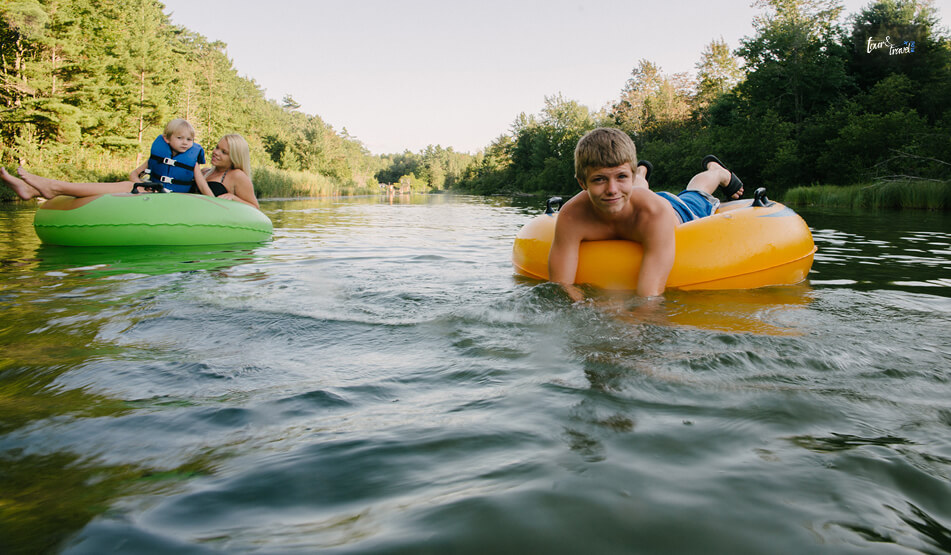
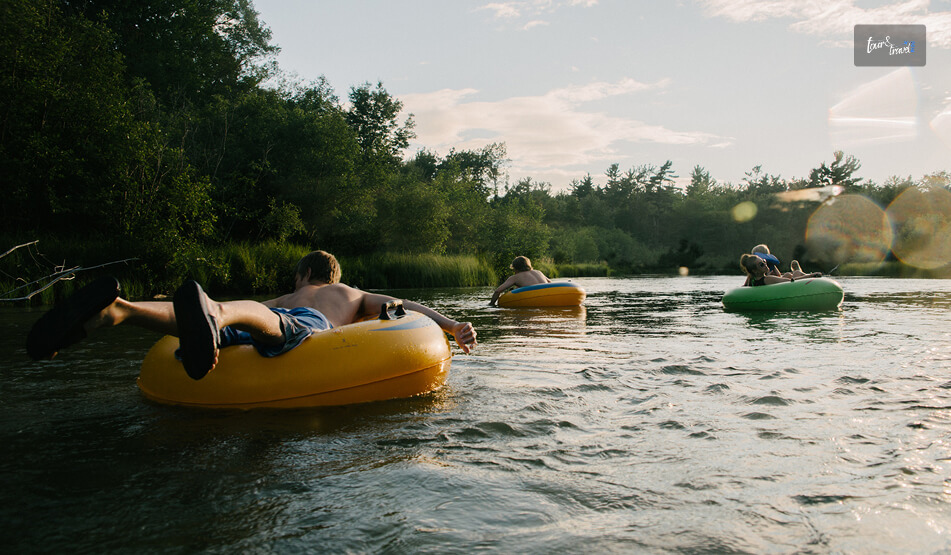
For young kids, I would pick the Lions Club float over the longer trips. 

It takes about 45 minutes to an hour, versus about three hours with Texas State Tubes or Don’s Fish Camp. Here’s how the three compare.

OutfitterCostFloat length
Lions Club Tube Rental$25/tube and $15 for shuttle if you bring your own.About 1 hour
Texas State Tubes$30 rental and $10 for ages 7–12Free for 6 and under (life jackets required)About 3 hours
Don’s Fish Camp$30, or $19 with your own tubeAbout 3 hours

Safety matters here because there are no lifeguards on duty. Put life jackets on non-swimmers.

Discovering the Mermaid Art Trail

San Marcos proudly celebrates its title as the Mermaid Capital of Texas through a whimsical, city-wide public art project. 

Keep an eye out for the Mermaid March, a trail of ten 7-foot-tall fiberglass mermaid statues scattered across the city. 

Each statue is individually hand-painted by a local artist to showcase different aspects of San Marcos’s history, culture, and environmental preservation efforts. 

It makes for a fantastic, free scavenger hunt.

It also bridges the gap between downtown shopping and the river, offering perfect photo backdrops while highlighting the community’s deep creative roots and love for its pristine waters.

Best Things To Do In San Marcos For Adults

Best Things To Do In San Marcos For Adults

Adults get the same river, plus music and shopping that make an evening out of it.

Cheatham Street Warehouse

If you love Texas music, this is the pilgrimage. Kent Finlay and Jim Cunningham opened the club in June 1974. 

George Strait’s band played its first show there on October 13, 1975. 

The venue is now overseen by country star Randy Rogers and still hosts weekly songwriter circles. I’d check the calendar and pair a show with dinner downtown.

Paddle Or Snorkel Spring Lake

For something quieter than tubing, the Meadows Center offers guided kayak and SUP tours, limited to paddlers aged 12 and up. 

Because the lake is so protected, this is among the few chances to be on the water at the springs’ source.

The Outlets

The adjacent Tanger Outlets and San Marcos Premium Outlets are consistently ranked among the state’s most popular tourist attractions. 

I go on weekday mornings to skip the crowds.

A Sample One-Day Itinerary In San Marcos

TimeActivityBest for
9:30 AMGlass-bottom boat and wetlands boardwalk.All ages
11:30 AMLunch downtownEveryone
1:00 PMLions Club river floatFamilies, first-timers
3:30 PMWonder World cave tour (check hours)Kids, geology fans
7:30 PMLive music at Cheatham Street WarehouseAdults

Tips For A Visit To San Marcos (As I Learned From Multiple Visits)

Tips For A Visit To San Marcos

You take four simple yet smart measures if you want to save money for a trip to San Marcos. 

Visit it early in the day as tubing crowds become dense by mid-morning. Also, the boats and caves are calmer before noon. 

Also, reserve ahead for Wonder World and the boats on weekends and holidays.

Furthermore, check the dates of big events such as the Water Safari and holiday weekends push up demand.

Also, budget for parking, especially if you are visiting the Meadows Center. 

Is San Marcos Worth It In 2027?

Yes, a visit to San Marcos is worth it in 2027. 

Tourism is a real economic engine here.

The 2025 visitor spending reached $208.7 million and supported about 2,600 jobs. 

The town has also earned its identity, since the Texas legislature named it the Mermaid Capital of Texas in 2021. 

So, come for the water, and stay for the music.

Share on Social Media

Sibashree is a travel, culture, and leisure writer who has been writing since the age of 12 and professionally since 2014. With more than a decade of travel writing experience and journeys across India and several parts of the world, she brings a deeply personal and thoughtful perspective to her work. A student of English Literature and Mass Communication, Sibashree has always viewed travel as more than movement — for her, it has been a way of understanding people, cultures, and herself. Her passion for spiritual exploration has also led her to many unusual and meaningful destinations over the years. Outside of writing, Sibashree enjoys watching European cinema, reading about global politics, and reflecting on the stories hidden within everyday places.

Leave a Reply

Your email address will not be published. Required fields are marked *

title-img Related

READ MORE things to do on Sunday in Paris

Parisian Sundays: Where Quiet Streets Meet Bustling Markets

BY  Sibashree Oct 7, 2025

I remember my first quiet Sunday in Paris—it caught me off guard. The whole city just… slowed down. No horns, no rush, just this calm hum underneath everything. You could actually hear the church bells bouncing off the empty streets.  It will feel a bit strange at first. You will feel like you woke up before the world did. Some of the shops will be shut, some light spilling over the rooftops, and the air will smell like freshly baked bread.  By mid-morning, the city will wake up again, but this time it will be slow. The shops will open, and you will notice people moving around, communicating with others. Things will seem slow and cozy, and you will see how these people enjoy life.  Same with Rue Mouffetard—music from nowhere, old ladies arguing over fruit, a kid tugging at his mom’s sleeve. Even Batignolles, tucked away from the usual crowd, hums with its own little rhythm.  There are various things to do on Sunday in Paris, as the major attractions might be closed. Some of the major markets and shops will not open. So, it is important that you plan something nice and simple and just enjoy life in Paris for a day. Take things slow.  Increasingly, travelers are planning their itineraries around this day of calm discovery, aided by thoughtfully designed all inclusive holidays to Paris that include cultural experiences off the beaten path, offering a deeper glimpse into authentic Parisian life. Things To Do On Sunday In Paris Lately, people have caught on to this slower Paris. Paris vacation packages even have it built in now—whole days with no schedule, just “see what happens.” I used one once, through Travelodeal maybe, and their whole pitch was to live like a local.  That sounded like marketing fluff, but honestly, they weren’t wrong. They sent me to buy bread from a tiny boulangerie, told me to sit under the sycamores at Place des Vosges, and just watch people. Simple. Beautiful. You end up seeing a side of Paris that doesn’t try to impress you—it just is. 1. Market Mornings And Fresh Finds If you can get yourself out early (I barely managed), the markets are wild in the best way. Marché Bastille is my favorite. It’s messy, loud, alive.  You will hear people arguing about prices, vendors shouting, and someone playing accordion like he is auditioning for a movie. Piles of tomatoes, a bunch of scarves, the smell of bread, everything will make you feel alive. 2. Stillness In The Streets Then everything quiets down again. Around late morning, it’s like the city decides to take a nap. Montmartre, Le Marais—they turn soft and slow. Shutters half-closed, sunlight sliding across cobblestones, the occasional bike bell echoing through an alley.  You pass an artist sketching, someone leaning on a balcony, a couple holding hands, as if time had stopped for them. It’s cinematic, honestly. On a Sunday, walking across the Seine feels like walking through someone’s dream. 3. Long Lunches, Parisian-Style Now, if there’s one thing Parisians take seriously, it’s Sunday lunch. You can’t rush it. Even if you tried, they’d probably ignore you until you relaxed.  Tables fill with families, old friends, strangers turned companions. You order steak-frites or roast chicken, maybe onion soup if you’re lucky. Bread everywhere, wine always flowing.  No one looks at their watch. Meals last hours—literally. You talk, eat, sip, pause, talk again. And dessert? You don’t skip it. Tarte Tatin, if you can find it. Or cheese. Always cheese. 4. Enjoy High Tea Enjoying a high tea in Paris is one of the best things to do on a Sunday in Paris. Most of the big hotels also offer afternoon tea even on public holidays. The Ritz Paris offers afternoon tea, which creates a sense of occasion.  Afternoon tea at Le Meurice is something you should experience at least once in your lifetime. However, you will have to book this in advance as this is quite popular. Moreover, you can try afternoon tea at Le Bristol.  This is kind of a hidden gem, and not as popular as its competitors. It is less crowded and you will be able to visit it on public holidays as well. There is no reason to be crowded, but you have to book it in advance.  5. Parks And Picnics In Full Bloom If the weather is sunny and pleasant, you need to get out. There is no point staying indoors. Visit one of the parks like Parc Monceau, Jardin du Luxembourg, and Buttes-Chaumont.  Kids enjoy the park; they chase pigeons. You will notice musicians singing by the fountains, and older couples sitting peacefully, enjoying the surroundings. All you will need is a bottle of wine, a baguette, and some cheese. Just sit around and watch life unfold around you. 6. Go Shopping Among so many things to do on Sunday in Paris, there is no way to miss out on shopping. However, make sure there are no big holidays, or the stores will be closed. The designer shops and the big brands generally keep their store open on Sundays. However, do not estimate the flea shops. The St. Ouen flea market is less crowded, and you will be able to shop easily there, and getting there is also not very difficult. It is a small site, and you will be able to browse through stuff easily, and the variety you get here is unmatched. Where Everyday Life Becomes The Highlight By evening, you realize how little you’ve done. There are so many things to do on Sunday in Paris. And somehow, that’s the magic.  Paris doesn’t need your checklist—it just wants you to slow down long enough to notice it. The soft chatter, the smell of bread, the light hitting the Seine—it all feels like a secret only you found. Walking home that night, I remember thinking: nothing spectacular happened. No grand event, no story to brag about. Yet it felt like one of those rare days you actually lived instead of rushed through. That’s a Parisian Sunday for you. Quiet. Ordinary. And absolutely unforgettable.

READ MORE can i bring makeup on a plane

Can I Bring Makeup On A Plane? – Answering The Most Asked!

BY  Mashum Jul 21, 2023

Are you traveling someplace? Still interested in the issue? Can I bring makeup on a plane? Of Course, you can, but you need to follow the restrictions established by the Transportation Security Administration (TSA). Makeup is essential for many in their personal and professional life. Similarly, when they are traveling, makeup is important for them. Hence, asking about the credibility of carrying makeup while traveling on a flight is important. It is necessary because the security check-in can be performed successfully if the makeup follows the established norms by TSA. According to the norm, the agents must see all the makeup products. Passengers, therefore, must carry makeup in a different clear bag so that there is no issue during screening. Can I Bring Makeup On A Plane? Answering The Most Asked! Makeup is really needed in our daily lives, so imagine how important it must be when you are traveling. You need to look good in those travel pictures! Therefore, pack your makeup with all the information so you are not penalized. At times, passengers are asked to dump makeup in paste, gel, lotion, liquid, or cream form leading to a waste of product and money. Makeup products in recent times have become costly; hence, losing even one product is arduous. Makeup cannot be considered as only lipstick, foundation, eyeliner, and others. It also includes toiletries, skincare, hair care, perfume, etc. The TSA rules are limited to makeup products and other care products. Tsa Rules For Carrying Makeup When traveling, stress soars because of all the norms and regulations. You must follow the rule of TSA called 3:1:1, where one quart-sized bag is allowed with 3.4 ounces or 100 ml liquid, cream, gel, or pastes. If you do not follow the TSA norms, there is a high chance of TSA agents pulling your bag and implementing more screening procedures. There are many instructions based on air travel because of the increasing risks of illegal substance smuggling and others. When discussing carrying makeup products, informing TSA agents about any products taken in large quantities is important. Organizing Makeup Bag Always carry makeup in a clear bag to carry all your makeup. It will make your traveling much easier. Try to use spacious storage bags and containers for transparent makeup products. It will keep clarity between you and the TSA agents. Try to carry makeup only as much as needed. Try to leave the redundant products behind; hence, make a plan and a list. Follow the TSA rules and accordingly carry the liquids and powders. 1. Makeup You can carry any makeup in powder or solid form in your carry-on and checked baggage without any restrictions. However, try to avoid taking powder makeup above 12 ounces. During the screening, the powder product must go in a separate pin when check-in. No restrictions are implemented by the Transportation Security Administration (TSA) concerning the quantity or the size of the product as long as it is in solid or powder form. The restrictions are implemented if the makeup products are in paste, gel, lotion, liquid, or creamy form. The first restriction is that the amount must be 3.4 ounces or less if you carry makeup in paste, gel, lotion, liquid, or creamy form in the carry-on bag. One quart-sized zip-top bag is allowed, where as many as travel-size liquids containing 3.4 ounces can be carried. For one passenger, only one zip-top bag is allowed. However, in the checked baggage, there are no restrictions on the makeup in liquid, gel, or cream. 2. Skincare For skincare, TSA has established the same 3-1-1 rule, especially because skincare is mostly in cream and liquid form, especially when skin care is carried in handbags. Products such as shampoo, lotion, makeup, and sunscreen are mostly in cream or liquid form; hence you must carry these products in a quart-size bag. A quick tip: the low humidity in airplanes is what causes dry and cracked lips while onboard. You're permitted to bring solid lip balms to take care of this. 3. Haircare For hair care products that you might carry, you must remember the 3.4 ounces rule for liquid products. The TSA agents can toss them away if you do not follow this rule. Hence, you can lose the product. Apart from that, you can use a hard shampoo and conditioner bar if you are tired of dealing with all these norms. It will help you follow the rules established by TSA without worrying about your liquid products being tossed out. 4. Bodycare In body care, products are in liquid form. Hence, the rule related to liquid must be followed. The 3.4 ounces norm for the liquid must also be observed, especially when carrying body care products. In checked luggage, you can carry anybody care products. There are no restrictions established for checked baggage. You can carry wet wipes in your handbags, hence because there are no restrictions on carrying wet wipes. 5. Nail Polish Nail Polish is a liquid and inflammable product; hence, you must be careful when carrying nail paint. The amount allowed for carrying nail polish is 100 ml or 3.4 ounces. In your carry bag, you must take a smaller container of nail polish that is less than 3.4 ounces. Be careful when carrying nail polish because airplane turbulence can lead to spillage or leakage in your bags. Nail polish also has a specific smell that can be disturbing for others. 6. Perfume Deodorant, perfume, or Cologne are also a part of makeup because it is used for physical hygiene, smelling good, and others. Considering the products, Cologne or deodorant can be in either aerosol or liquid form, at risk of being inflammable. Try to carry a travel-size bottle so that you do not face any potential issues of TSA agents dumping your products. Overall, passengers must take 3.4 ounces of perfume. Conclusion   Read this article to learn whether you can carry makeup while traveling on a plane. To answer the question, can I bring makeup on a plane? Yes, you can. We have also informed you about other makeup products, such as hair care, skincare, and perfume. Please let us know if you have ever faced any issues regarding carrying makeup products while traveling on a plane. Read Also: Everything About Breeze Airways: Breeze Airways Reviews, Features, And More! Can You Use Bluetooth On A Plane? – Know It All Here! Can You Bring A Lighter On A Plane? Know It All Here! Avelo Airlines Reviews You Were Looking For!

READ MORE Which Is Colder Minus 40°C or Minus 40°F

Minus 40°C Or Minus 40°F: What To Know Before Planning Your Next Mountain Escapade?

BY  Barsha Feb 3, 2026

Which is colder: Minus 40°C or Minus 40°F? The question appears simple, at least at a glance. But if you think about it, it does open an interesting window into the dynamic world of temperature, rather, how we tend to measure temperature.  Moreover, it also gives insight into why different people use different measurement systems across the globe.  The most fascinating part? How do these systems even relate to extreme temperatures?  The answer might actually surprise you. -40°C and -40°F are exactly equal. Yep! That’s right - it is the point of meeting for the two temperature scales.  On that note, let’s dissect and unpack why this even happens.  More importantly, what else do you need to know about the two temperature scales before you can plan your next mountain escapade.  Celsius Vs Fahrenheit: What’s The Difference? To make things super easy for you to understand, I have laid out the difference between Celsius and Fahrenheit in simple terms below: AspectsCelsiusFahrenheitOriginAnders Celsius, a Swedish astronomer, developed the Celsius scale in 1742. Daniel Gabriel Fahrenheit, a German physicist, developed the Fahrenheit scale in 1724.Definition“of or using a scale of temperature in which water freezes at 0° and boils at 100°.” (Oxford Dictionary)“of or using a scale of temperature in which water freezes at 32° and boils at 212°.” (Oxford Dictionary)Used InMost places in the world, including Europe, Australia, Africa, Asia, and most scientific work. Primarily in the United States of America and some Caribbean countries.Conversion Formula°F = (°C × 9/5) + 32°C = (°F − 32) × 5/9 So, Which Is Colder: Minus 40°C or Minus 40°F? I already answered this question in the very beginning - both are the same! It is the point at which the two scales meet.  So, if you use the conversation formula I have listed above, then: -40°C × 9/5 + 32 = -40°F Also, this is the only point where Fahrenheit and Celsius readings match.  Then, why does it confuse all of us? It is mainly because of three primary reasons, as per my understanding:  Most individuals don’t really encounter extreme weather conditions. So, they do not really come across this overlap point.  Secondly, in most countries, the education system teaches only one scale. As a result, there is little or no intuitive comparison.  Finally, Fahrenheit readings are usually larger for both outdoor and room temperatures. For example, 50°F is equivalent to 10°C. This automatically makes most individuals assume that the two scales don’t match.  Where Does It Hit -40 On Earth? Places like Greenland, Northern Canada, Siberia, and some regions of Scandinavia go down to -40 regularly during the winter months.  For example: In February 2021, temperatures dipped to -43°C in Sweden.  Siberia, Canada, and Yukon also experience these levels regularly.  In these regions, both Fahrenheit and Celsius are the same - you will shiver equally.  In this context, I have a fun fact about the coldest temperatures recorded on Earth: In 1983, Vostok Station, located in Antarctica, recorded −128.6°F (-89.2°C) (Source: Britannica)  That is literally double what you will feel at -40°. More importantly, it is a real-world reminder that extreme weather conditions and environments exist on Earth.  How Cold Does It Feel At -40°? The truth is that whether it is -40°F or -40°C, you will feel the same. And trust me, I’m not kidding - you will literally shiver!  In February 2021, I experienced -40°C in Yukon. My thermometer read -40°F, and I experienced frostbite risk within minutes. Whether it’s -40°C or -40°F, the result is the same: Your skin will freeze within minutes without the right protection.  Vehicles might not even start. Metal will stick to the skin.  Your eyelashes might freeze.  At -40°, it is dangerously cold regardless of what scale you are using.  Also, the wind is so chilly that you will shiver and can fall sick or even die without the right gear and equipment.  How -40° Feels On The Human Body? So, I can’t just keep telling you guys that it is going to be dangerously cold.  Instead, it is much better to give you all the real picture of how the human body is bound to react at sub-zero temperatures:  Temp (°F/°C)Impact On The Human Body-76°F/-60°CIt is painful to even breathe. Also, exposed body parts, including eyes, will freeze.-40°F/-40°CSkin will freeze in two minutes. Also, metal will stick to the skin. -22°F/-30°CExposed and unprotected skin, including eyelashes, will freeze in ten minutes. -4°F/-20°CNumbness begins to set in, with an increasing risk of frostbite. 14°F/-10°CThe skin begins to sting, with a risk of frostnip if exposed. 32°F/0°CBreathing becomes visibly tough. Also, fingers stiffen in a few minutes.  Even without any chilly winds, subzero temperatures are hazardous, especially if you are not prepared.  At -40°, both Fahrenheit and Celsius, there is only one brutal truth: without protection and preparation, it is dangerous and life-threatening.  Winter Hiking Hazards You Should Know About: Winter can alter any landscape radically, striking a balance between mesmerizing beauty and quirky dangers.  And while it is impossible to talk about all hazards in detail, I’ve compiled all the possible winter hiking hazards and their mitigation strategies below: Winter Hiking HazardMitigation StrategyFrostbite & HypothermiaCheck the weather, pack extra clothes, and layer well.Slip & FallUse microspikes or crampons and trekking poles.Getting LostUse a compass, maps, and a GPS. Also, try mapping your route.Fatigue & DehydrationEat frequently, stay hydrated, and pack extra food (and water).Falling Into Ice or WaterAlways test the ice and be careful while crossing icy terrains. CornicesAvoid walking under or on the edges of ridges. Equipment FailureKeep electronics warm. Also, carry gear repairs and physical maps. Tree WellsIn deep snow, avoid the base of trees. AvalanchesCheck forecasts for avalanches. Also, avoid steep terrains. Short Daylight HoursStart early, carry spare batteries, and definitely wear a headlamp. In addition, I’ve touched upon the common (but very dangerous) hiking hazards that you can come across at sub-zero temperatures in the mountains in detail: 1. Ice: Of course, you need to worry about ice! In the winter months, melt-freeze cycles turn hiking trails into slippery ice. Similarly, this can also happen on popular tourist routes where snow is compressed over a long period of time.  If you slip on these icy trails, it will lead to bruises and bumps. Moreover, a bad slip and fall can lead to serious wrist, ankle, or back injuries.  As a result, it is best to carry metal-tipped trekking poles and traction for additional stability in such conditions.  2. Avalanches: In the United States, avalanches (as per avalanche.org) kill between 25 and 30 people every winter. Moreover, the injury rates are much higher.  Most victims are ice climbers, snowmobilers, snowboarders, and backcountry skiers. However, oblivious hikers do get caught in avalanches occasionally.  The worst part? Nearly 95% of avalanches begin on slopes that are between 30 and 45 degrees in steepness.  However, the snow ends up traveling down to the flat terrain - and it even appears to be safe to an untrained eye.  As a result, it is vital to consult topo maps, check trip reports, and talk with local experts before you set out. That is your best shot at safety in the face of an avalanche.  3. Glaciers: Many of the iconic summits in the United States are guarded by glaciers.  While there are several snowfields across the western part of the United States - mostly misnamed as glaciers - you will find true glaciers mostly in the Pacific Northwest and in the far north.  Moreover, these are active glaciers that moves around, forming cracks with time. As a result, these fissures, A.K.A crevasses, lie under the snow, hidden from the human eye. Naturally, fatal falls - and unexpected ones - become a major possibility.  So, it’s best not to step out on glaciated terrain unless you have some experience in both glacier navigation and snow travel. This also includes improving your fissure-rescue skills.  4. Steep Snow: The challenge and adventure of climbing snow-covered, steep slopes is certainly thrilling.  Recently, I had the opportunity to try out snow climbing, and while it was thrilling, I can’t overstate the importance of safety and experience.  It’s so much more technical than it appears visually - if you slip even once, you can slide down the steep slope. Also, you have to know: How can you assess the snow conditions around you? Use crampons.  Take a fall with the help of an ice axe.  Additionally, it is best to be familiar with avalanches and safety first. Because a majority of snow climbs will require you to cross terrain prone to avalanches.  What To Know Before Planning Your Next Mountain Escapade? 9 Tips That Can Keep You Safe! Safety in weather extremes, especially in the mountains, requires careful preparation, specialized equipment, and a constant awareness of your body’s condition.  Moreover, the combination of high winds, rapid changes in weather, and freezing temperatures leads to life-threatening conditions. And that too in minutes.  This includes the risk of both frostbite and hypothermia. Moreover, preparing for freezing temperatures is incomplete without strict layering, high-calorie nutrition, and waterproof gear. And still it’s not enough - surprised? Well, don’t be! Instead, scroll down for the internet’s most comprehensive list to prepare for survival in freezing temperatures in the mountains. 1. Stay Hydrated: Problem: Dehydration is very common in freezing temperatures, much like hotter regions with arid weather conditions.  How? The cold weather conditions can easily suppress thirst. But the dry air in the mountains and high levels of physical activity will make your body dehydrated - and this will happen faster than you can possibly imagine.  Moreover, dehydration can lead to dizziness, fatigue, and headaches.  Solution: As a result, you should try carrying a thermos with herbal teas (like chamomile, tulsi, or ginger) or just warm water with lemon and honey. These can hydrate you, keep you warm from the inside, and boost immunity.  Also, on this note, avoid caffeine or any caffeinated drinks since they will dehydrate you faster.   2. Nourish Yourself: Problem: Your body will burn a lot of calories to stay warm in freezing temperatures.  As a result, even if you think that a bowl of hot Maggi seems like an appealing meal for the mountains, it is crucial to balance comfort and nutrition.  Solution: So, you should focus on energy-dense and high-calorie food items like seeds, whole grains, and roasted nuts to ensure high energy levels in the body.  Moreover, you can consider adding warming ingredients to your food. Ingredients like turmeric, garlic, and ginger can fight cold and improve digestion.  Also, if you do end up eating a steaming bowl, then add boiled eggs or vegetables for a healthy, protein-packed version.  On that note, here’s a list of things you can eat: Beef jerky.  Trail mix. Nuts. Milk chocolate. Pretzels or chips. Cheese and deli meat. Tortillas or crackers. Pizza slices. Pumpkin or banana bread. Peanut butter sandwiches. 3. Protect Your Lips And Skin From Dryness: Problem: Cold and dry air is not good for the skin - it strips the skin of moisture. And this in turn leads to dry hands, irritated skin, and cracked lips.  This is highly uncomfortable and causes skin damage if you don’t address it within minutes.  Solution: As a result, always use a moisturizer that is thick and nourishing before stepping out. Moreover, while doing so, focus on different areas like your face, neck, and hands, which are prone to getting exposed.  Also, do not forget to apply lip balm on your lips - and ensure the lip balm comes with SPF for protection against the UV rays of the sun and the cold, both of which are strong at high altitudes.  In addition, eat food items that have a high percentage of omega-3s. This includes flaxseeds and walnuts, both of which are perfect for hydrating your skin from within.  4. Stay Active For Proper Blood Circulation: Problem: When you are absolutely stationary in freezing temperatures, your blood circulation will slow down. This, in turn, makes you feel colder.  Solution: The only solution here is not to sit in the same spot for too long.  So, try out light activities such as walking, stretching, or even a few squats to ensure proper blood circulation. Also, it feels good to do light physical activities after a long day of trekking.  5. Take Care Of Your Altitude Sickness: Problem: At high altitudes, you can expect oxygen levels to fluctuate and drop. This, in turn, can cause fatigue, nausea, or dizziness.  Solution: You should give enough time to your body - that way, your body will be able to adjust. As a result, it is best to take it easy on day 1.  Moreover, drink lots of water and eat food items that are rich in antioxidants. This includes berries, nuts, and fresh fruits. That way, your body will be able to fight the stress and pressure of altitude.  If you are feeling unwell at any point, don’t push too hard. Rest is very important.  6. Support Your Body’s Immune System: Problem: The blend of altitude and cold weather can easily weaken your body’s immune system. This, in turn, will make you prone to illnesses.  Solution: Incorporate food items that are rich in Vitamin C, like amla or oranges, in your daily diet in the mountains to boost your body’s immune system.  Moreover, warm soups are also great - but ensure these have vegetables, lentils, or even chicken stock. Why? Because it offers warmth, hydration, and nourishment together.  Also, ensure you can sleep well - a good sleep cycle will recharge your body.  7. Look After Your Feet: Problem: Remember that cold or wet can lead to chilblains, frostbite, and lots of discomfort. Solution: Invest in insulated and waterproof boots. Moreover, you can consider wearing thick woollen socks to ensure your feet are dry and warm.  Also, don’t forget to carry an additional pair of dry socks - that way you can change socks if your feet feel too damp. In addition, you can try massaging your feet with a nice, warm balm. Why? It will prevent dryness and improve circulation.  8. Breathe Smartly For Avoiding Cold-Air Effects: Problem: If you directly breathe in icy, cold air, then it will irritate your lungs.  Trust me on this one! It has happened to me. And then you will start coughing. Some people also feel a tightness in their chests.  Solution: When you start feeling chilly, try to breathe through your nose and avoid doing it through your mouth. This will keep you warm, moisturizing the air even before it can reach your lungs. Also, this will help you to keep respiratory problems at bay.  9. Prioritize Mental Wellness: Problem: The beautiful solitude of the mountains can be very peaceful. However, at times it can get very overwhelming. As a result, staying healthy mentally is just as crucial as looking after yourself physically.  Solution: Take some time for yourself so that you can practice mindfulness - and while doing so, don’t forget to appreciate the beauty around you.  Moreover, you can consider carrying a journal for jotting down your reflections and thoughts.  Also, it is healthy to count on your group to stay connected. Why? Sharing experiences together can motivate everyone and lift spirits.