





 Related
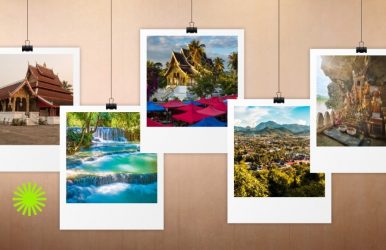
Luang Prabang Travel Guide: Why I Loved It? (Activities, Attractions, History, Itinerary, And More)
BY Sibashree Oct 21, 2025
2022 had taken me to the less frequented Luang Prabang in Northern Laos. Now, thanks to the place I call home, I have heard many stories about the Mekong River, and it has always been on my bucket list. So, a trip to Luang Prabang was a dream-come-true moment for me. Three years passed by, and today, before writing this Luang Prabang travel guide, I was researching updates about this UNESCO World Heritage Site. I found out that in the Smart Travel Asia Best in Travel Poll 2025, it has been voted as one of the best vacation destinations in Asia. Furthermore, it has won third place in the Destination Management category of the 2025 Green Destinations Top 100 Story Awards at ITB Berlin. It is a recognition of how Luang Prabang follows a sustainable tourism practice. So, the Tour and Travel World data looks very convincing about the arrival of 3,061,928 international tourists to Luang Prabang in the first eight months of 2025, recording a 15 percent clear growth YoY. Nevertheless, beyond the numbers and accolades, Luang Prabang remains in my heart as a beautiful story that I will share in this Tour and Travel Blog. Luang Prabang Location And Geography: An Overview Luang Prabang is on a peninsula at the confluence of the Mekong and Nam Khan rivers. It is designated as a UNESCO World Heritage Site for being an “outstanding example of the fusion of traditional architecture and Lao urban structures with those built by the European colonial authorities in the 19th and 20th centuries.” Here are the important geographical data and statistics about Luang Prabang. Rivers• Nam Khan and MekongPopulation• 47378 (Source: World Population Review)Primary Ethnic Group• The Kmhmu or KhmuMountains• Phou Nang, Phou ThaoForests• Luang Prabang Montane Rain Forests EcoregionDry Season• November to AprilWet Season • May to OctoberAverage Annual Rainfall • 1,600 MM (Source: North-Vietnam.com)Average Humidity• 70% (Source: North-Vietnam.com)Waterfalls• Kuang Si, Phu Fa WaterfallNatural Vulnerabilities• Landslides• Floods• DraughtsSpecial Geographical Feature• Mount Phousi, a Central High Hill with an Altitude of 150 MetersArea• 16,875 Square KilometersNatural Vegetation• Oak• Beech• Dipterocarpus• Bamboo• Laurel How To Reach Luang Prabang? I took a flight to the Luang Prabang International Airport (LPQ) via Bangkok. You can also take a connecting flight from Singapore. As the main gateway to the town, LPQ gets flights from the Suvarnabhumi and Don Mueang airports in Bangkok, Siem Reap, Hanoi, and Chiang Mai. After reaching the airport, I took a tuk-tuk to reach the town center. It cost me around $5 per person. What Is The History Of Luang Prabang? The legends and stories about Luang Prabang never end, and I can attest to that. Every time I visited a Vietnamese coffee shop or talked to my homestay owner, a new story came up. Here are the key facts about the history of Luang Prabang. The archaeological evidences suggest that the history of inhabitation in Luang Prabang goes back to 8000 B.C. The city was initially known as Muang Sua, and by 1357, it was renamed as Maung Xieng. Further, in the 14th century, Luang Prabang was home to the first Lao Kingdom, Lane Xang, built by King Fa Ngum. After the city got a new name, it received a Phra Bang, or a golden image of Lord Buddha, from the Khmer monarchy. Thus, it got its current name, Luang Prabang. Luang Prabang served as the ancient capital of Lane Xang till 1560. After that, King Setthathirath shifted the capital to Vientiane. During the rule of King Surigna Vongsa (late 17th century), Luang Prabang had its first interactions with the Western emissaries. In 1694, after the demise of King Surigna Vongsa, Lane Xang was divided into three parts: Luang Prabang, Champasak, and Vientiane. In the 19th century, the city witnessed much destruction by the black flag pundits. Major restoration work by King Sisavang Vong took place during the span of 1904 and 1959. It is said that Lord Buddha used to rest here on his pilgrimage route, smiling to indicate the future prosperity of the city. Major Attractions in Luang Prabang, Laos In the recent annual Lighted Boat Festival, Luang Prabang grabbed all the limelight with its beautifully crafted boat and lighting, celebrating the 30th anniversary of its designation as a UNESCO World Heritage Site. Along with the Old Town, these are other major attractions in Luang Prabang. 1. Kuang Si Falls I reached the Kuang Si Falls after visiting the Tat Kuang Si Bear Rescue Centre. The layered pools are the most amazing features of Kuang Si Falls. After swimming in the pools, I took a walk along the bridge for stunning photos. The entry fee to Kuang Si Falls is around 60,000 KIP. 2. Mount Phousi Trekking to Mount Phousi was not as difficult as I thought. I wanted to take it a little slow and reach the top of Mount Phousi in less than an hour. The steps were not that steep. The entry fee was 20,000 KIP, and it was almost sunset when I reached the Golden Stupa at the top of Mount Phousi. The red lights falling on the Golden Stupa looked magical, and the panoramic view was beautiful. 3. Royal Palace Museum Timing: 8 AM -11:30 AM and 1:30 PM to 4 PM The Royal Palace Museum stands as a testament to the opulence and royal grandeur of Laos in the pre-Communist era. Among the artefacts, the Phra Bang Buddha statue is the main attraction. The former royal residence also stands out because of its fusion of Laotian and French architecture. 4. Wat Xieng Thong Hours Open: 8 AM to 5 PM Entry Fee: 30.000 Kip/Person Built in 1560, Wat Xieng Thong is one of the most revered temples in Laos. Setthatirath built this temple, and I loved the glass murals here. 5. Pak Ou Caves To explore more Luang Prabang temples, I reached Pak Ou Village. The tuk-tuk ride to the caves costs around 400000 KIP, and I reached the caves after a long boat ride. The journey was beautiful. The temples and Pak Ou caves with statues of Lord Buddha are the highlights of my Luang Prabang trip. The entry fee was 20000 KIP. 6. Luang Prabang Night Market Hours: 5 PM to 10 PM The Luang Prabang Night Market was a real surprise. Honestly, I did not expect this much fun. Hundreds of vendors were selling clothes, handicrafts, ornaments, ceramics, tea, and coffee. I bought some textiles, bags, and ceramics. One thing - you have to be at the A game of your negotiation. Some vendors are really pushy. 7. Tad Sae Waterfall Hours: 8 AM to 7 PM Tickets: 15000 Kip for Locals and 30000 KIP for Foreigners (Free for Children below 8 Years) While Kuang Si is a more popular choice, it is bigger. However, I loved the Tad Sae Waterfall more. It is more relaxing, and for me, the nearby elephant park was an added attraction. One of the best Luang Prabang waterfalls, Tad Sae Waterfall, is layered with crisscrossing decks. 8. Traditional Arts and Ethnology Centre Hours: 8 AM to 5 PM (Monday Closed) Entry Fee: Fee for Locals, 25000 KIP for Foreigners View this post on Instagram A post shared by TAEC Museum | Shop | Cafe (@taeclaos) The board on the wall of the Traditional Arts and Ethnology Center sums up what experience you can expect here. You can combine your Mount Phousi trek with this Ethnology Centre visit. It was a brilliant curation of more than 600 artefacts from over 20 ethnic groups in Laos. 9. Wat Mai Suwannaphumaham Hours Open: 8 AM to 5 PM Tickets: 10.000 Kip/Person Wat Mai Suwannaphumaham is one of the closest temples to the city center. It was built in 1796, and a major restoration work took place in 1821 under the leadership of King Manthathourath. The temple has beautiful murals and sculptures on the wall, along with the golden statue of Lord Buddha. 10. Alms Giving Ceremony Some activities in Luang Prabang are free but priceless in terms of experience and learning. Giving alms to monks is a part of the social and religious practice of the place I belong to. Furthermore, giving alms to monks is like sharing your resources with the community. I reached near the Joma Bakery Cafe on the Sakkalaine Road to take part in this ceremony. The monks were happy with whatever they received. However, due to cultural differences, many tourists do not understand the significance or the courtesy of giving alms. 11. Ock Pop Tok Living Crafts Centre View this post on Instagram A post shared by Ock Pop Tok (@ockpoptok) Just around 2 km from the Night Market, Ock Pop Tok Living Crafts Centre is a place to learn about traditional Laoian textiles and craftsmanship. I took the free tuk-tuk ride from the Night Market to this crafts center. Tuk-tuk services are available from 8 AM to 8 PM. 12. Phosi Market Hours: 7 AM to 5 PM View this post on Instagram A post shared by Mas El Mundo (@the_slowtraveller) Phosi Market is the biggest market in Luang Prabang, and the air here is heavy with the whiff of fresh produce and spices. I talked to the local vegetable gardeners here and bought some local spices. Honestly, exploring the local markets is one of the best things to do in Luang Prabang Laos for solo travelers. 13. UXO Lao Visitor Center Hours Open: Monday to Friday - 8 AM to 11:30 PM and 1 PM to 7 PM Entry: Free View this post on Instagram A post shared by Raja Ray (@raja.ray) I took a 15-minute walk from the City Center to reach the UXO Lao Visitor Center. The center tells you that Laos has been the most heavily bombed nation, according to a per capita calculation. Some of the bombs have not exploded, and they remain on the earth. They continue to create human casualties. The documentary I saw here was heart-wrenching, and the survivor stories gave me goosebumps. 14. Whisky Village View this post on Instagram A post shared by LUCA CURTI GIALDINO (@lukectfd) I reached Whisky village in search of the authentic Lao rice whisky. The settlement of Whisky Village or Ban Xang Hai is quaint. Almost every bottle has an encapsulated reptile. I finally could not muster the courage to buy a bottle. Instead, I collected some silk textiles with intricate weavework. Is Luang Prabang For Every Traveler? Who Will Love It The Most? Luang Prabang is more suitable for solo travelers and couples. Having immersive cultural and spiritual experiences with museum and temple visits is one of the best things to do in Luang Prabang Laos for solo travelers. I thoroughly enjoyed it as a solo traveler, be it a visit to Wat Xieng Thong or exploring the markets. Furthermore, Luang Prabang celebrates romance like quiet luxury. A sunset cruise on the mighty Mekong River or a bath in the turquoise pools of Kuang Si Falls are some of the most romantic things to do in Luang Prabang, Laos. However, Luang Prabang is versatile in terms of the types of travelers it caters to. Most importantly, it teaches the art of slow and meaningful tourism in which you build connections and garner experiences that last a lifetime. Here is a quick breakdown of different places in Luang Prabang catering to different types of travelers. Types of TravelersPlaces to Visit in Luang PrabangHistory Buffs• Wat Xieng Thong• Old Quarter• Wat Mai Suwannaphumaham• Wat Visounnarath• Pak Ou CavesNature Lover• Mount Phousi• The Mekong River• The Forest AreaWildlife Enthusiast• Luang Prabang Wildlife Sanctuary• Elephant Village Sanctuary• MandaLao Elephant Conservation:• Manifa Elephant CampBackpackers and Budget Travelers• Tad Sae Waterfalls• Kuang Si FallsCulture and Local Life Experience• Luang Prabang Old Quarter• Luang Prabang Night Market However, beyond everything, Luang Prabang continues to be the spiritual heart of Laos. Luang Prabang And A Unique Spiritual Experience A BBC report suggests that Luang Prabang has the highest per capita monk population of anywhere else in the world. However, the Buddhist heritage of the city is impacted by the rapid surge of tourists after the opening of the Laos-China Railway in 2021. The significant customs, such as alms giving, have now become more commercialized, losing their community and spiritual experience. To combat this commercialization, Anat Khamphew and many other former monks are setting up tour guiding companies such as Spirit of Laos and Orange Robe Tours. These companies will help establish an authentic experience where significant spots and devotional symbols are not turned into backdrops for selfies and Instagram photos, and where monks do not receive leftovers and junk food as alms. It’s all about traveling the monk’s way. Budget And Expenses For The Luang Prabang Trip I was traveling solo, and the expense was around $30–$50 or 6,52,832.40 to 10,88,054.00 Laotian Kip per day. The entry fees are a little higher, considering the local currency. My daily expenses included: Hostel Charge: $20 Per Night (Mid-range hotels available at around $50-80 per day) Food: $5-10 Travel: $5 Entry Fee: $5 What Is The Best Time To Visit Luang Prabang? November to February is the best season to visit Luang Prabang. Just after the October rainfall ends, the city enjoys clear weather conditions with mild temperatures. So, it is the ideal time to explore the outdoor things to do in Luang Prabang, Laos. Luang Prabang experiences heavy rainfall from June to October, and March to June is stuffy and hot. Here is a breakdown of temperatures in Luang Prabang by month. (Source: National Oceanic and Atmospheric Administration, NOAA). MonthsHighest Temperature (Degree Celsius)Lowest Temperature(Degree Celsius)January2814February3216March3419April3522May3524June3424July3324August3224September3323October3221November3018Decemeber2815 Luang Prabang Food And Customs I Loved Furthermore, food in Luang Prabang is fresh and wholesome, just as the city is. I fell in love with \(Mok\) \(Pa\), which is fish steamed and cooked in banana leaves. I also tried \(Laap\), a national Laotian dish, and I chose the version with minced meat. Furthermore, I lost count of the coconut cakes I had in Luang Prabang. It was subtle, sweet, and hearty. The markets are the best place to explore the local specialties of Luang Prabang. However, the food scene of the city came alive after sunset. Also, I was quite happy with the experience of the places I ate, such as the Tamarind Restaurant and Bouang Asian Eatery. Luang Prabang’s culture is deeply rooted in Theravada Buddhism. The daily alms-giving ceremony at dawn is a sacred tradition. Locals wear traditional Lao sinh and celebrate festivals like Pi Mai (Lao New Year) and the Festival of Lights. You have to dress modestly, remove shoes before entering temples, and respect local customs. Luang Prabang Travel Guide: The Dos And Don’ts Here is a detailed checklist of the things to do and things to avoid in Luang Prabang. Have a look at the table below. Checklist for Traveling to Luang Prabang, LaosMistakes to Avoid When Traveling to Luang Prabang, Laos• You will need a valid passport and a Laos visa (eVisa or visa on arrival).• Get your money converted to local currency (Lao Kip) or USD.• Have travel insurance and keep the documents handy.• Dress modestly for temple visits. Use a reusable water bottle. • Wear sunscreen and insect repellent.• Choose comfortable walking shoes.• Carry a rain poncho or umbrella (especially in the wet season).• Buy a local SIM card and have an offline map when exploring the city and beyond. • Be respectful toward local customs such as alms giving. • Check the license of the driver for scooter rentals, as incidents of scooter accidents are common. • Negotiate and agree upon the fare before the tuk-tuk ride starts. • Visiting during the burning season (March–April) due to poor air quality• Arriving without USD for visa fees• Overestimating travel time between attractions• Not booking transport in advance during holidays.• Visiting over-crowded areas, petty thefts are common. My 5-Day Travel Itinerary In Luang Prabang I stayed in Luang Prabang for 5 days. The best thing about Luang Prabang is that it will not push you to rush. So, my five-day stay here was one of the most relaxed experiences I had. Here is what I did on those five days. DaysItineraryDay 1: Arrival and Cultural Experience• Reaching the Luang Prabang International Airport• Checking into my hostel• Evening walk in the city center• Having authentic Laotian food at Tamarind Restaurant• Exploring the Night Market Day 2: Temple Visits and Spiritual Immersion• Alms Giving ceremony at sunrise• Breakfast Saffron Coffee• Visiting Wat Xieng Thong, Wat Mai Suwannaphumaham, and the Royal Palace Museum• Lunch at Bouang Asian Eatery• Climbing Mount Phousi for sunset viewsDay 3: Nature and Adventure• Day trip to Kuang Si Falls, visiting the Bear Rescue Center, and swimming in the turquoise pools. • Lunch at Kuang Si Butterfly Park Café• Back to the town and enjoying a sunset cruise on the Mekong River. • Dinner at Utopia BarI chose Utopia Bar as it is great for solo travelers. The live music and yoga sessions were the highlight. Day 4: Exploring Culture and Craft• Visiting the Traditional Arts and Ethnology Centre• Visiting the Ock Pop Tok Living Crafts Centre and taking a weaving class• Lunch at Coconut Garden• Afternoon visit to Phosi Market• Cooking class at Tamarind Cooking School in the eveningDay 5: Offbeat Exploration and Departure• Half-day boat trip to Pak Ou Caves• Whisky Village en route• Lunch on the boat• Last-minute shopping at Night Market• Departure from Luang Prabang International Airport Tips For A Seamless Travel Experience In Luang Prabang Stay near the night market for easy access to food and shopping. Join a walking tour to meet fellow travelers and learn local history. Rent a scooter or join a shared tuk-tuk to Kuang Si Falls. Cultural workshops are great for solo bonding and learning. Book an airport transfer in advance to avoid last-minute stress. Is Luang Prabang Worth A Visit? Luang Prabang is definitely worth a visit, and its charm as a spiritual hub is matchless. It’s like that quiet afternoon of an autumn when you see the golden light of the Sun caressing your windows and floors. Furthemore, it is a blend of natural attractions, wildlife, religious centers, cultural heritage, markets, and a vibrant food scene. The UNESCO World Heritage site is also a friendly and affordable place to be for solo travelers. There is a reason why National Geographic praises its spiritual ambiance and well-preserved heritage, or Discovery Travel emphasizes its cultural richness, eco-tours, and artisan tours. Moreover, it epitomizes the tourism slogan of Laos, “Simply Beautiful!” It is the place where you have to experience and not just travel. Luang Prabang Travel Guide: Frequently Asked Questions (FAQs) Here are the frequently asked questions and answers about the Luang Prabang travel guide. 1. What Cultural Events Or Festivals Happen In Luang Prabang? Boun Pi Mai Lao, or the Lao New Year, is the biggest festival in Luang Prabang. It takes place around mid-April. Boun Suang Huea, or the Boat Racing Festival, in September, and Boun Lai Heua Fai, or the Festival of Lights in October, are also celebrated with great pomp. Furthermore, November is the month of the That Luang Festival at the That Luang Stupa. It is celebrated with a trade fair and religious ceremonies. 2. Is 2 Days Enough In Luang Prabang? While you can cover some important landmarks of Luang Prabang in two days, I think that you will need at least 2-3 days more to immerse yourself in the local cultural and spiritual experience.However, if you are in Luang Prabang for two days, you can explore the City Center, the National Museum, the Royal Palace, and the temples near the City Center on day 1. On day 2, you can plan a trip to the Pak Ou Caves and Kuang Si Falls. 3. When To Avoid Luang Prabang? Late February to April is the time to avoid visiting Luang Prabang. Extreme heat and stuffy weather make the days uncomfortable for outdoor exploration. June to October is another season to avoid due to heavy rainfalls and calamities such as landslides. Read Also: A Comprehensive Guide To The Main Types Of Asian Food That You Can Find In Singapore Sunrise Spots in Vietnam: Top Places to Catch the Best Morning Views 5 Must-Visit Places In Thailand: Should I Go To Phuket Or Krabi?


Hello. Thank you for always good blog.
Wonderful, what a websitе it is! This blog provides useful information tο us, keep it ᥙp.