

Kiri Vehera, Polonnaruwa: Walking Around Sri Lanka’s Best-Preserved Milk Stupa

I got a glimpse of the Kiri Vehera through a gap in the trees. 

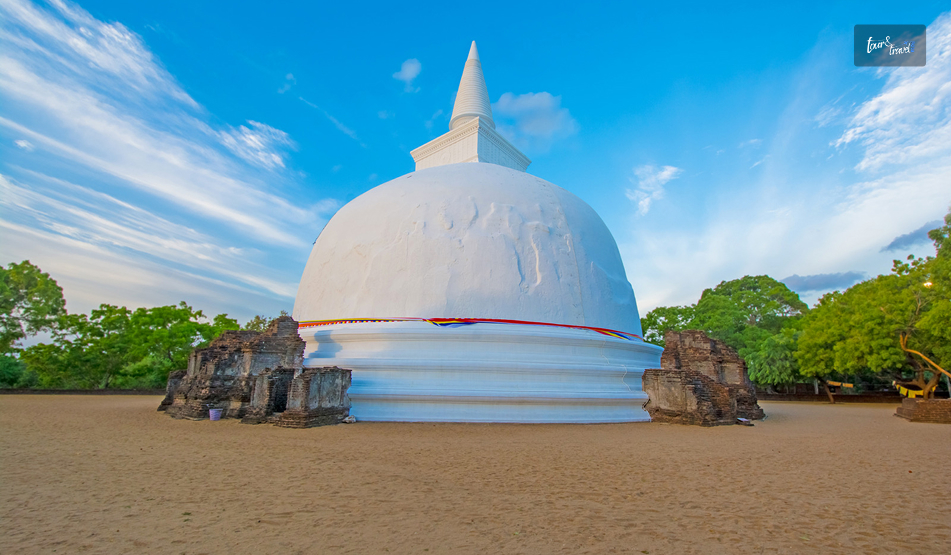
It was milky white, and even early in the morning, it looked the brightest among the surrounding ruins. 

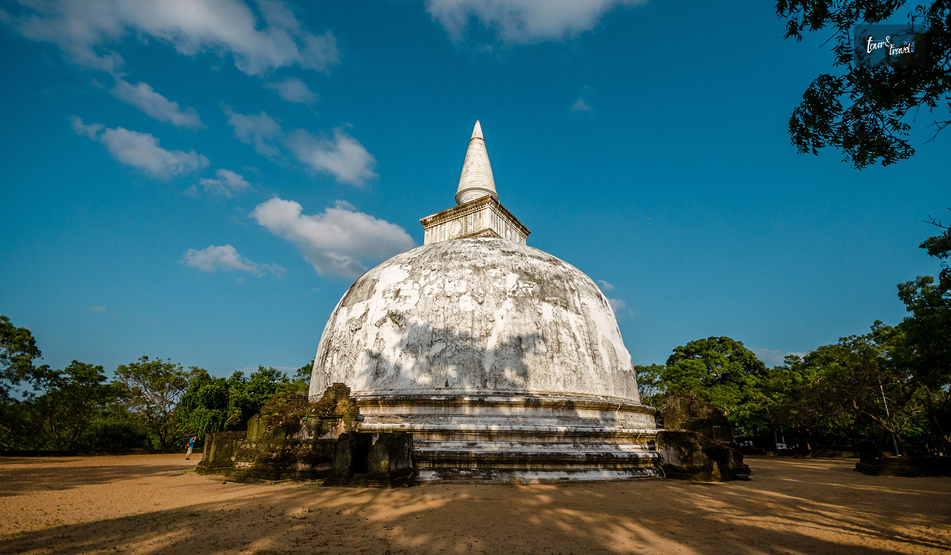
Also, it is fascinating that the stupa is one of the few in Sri Lanka to have its original structure even after around 900 years. 

Locals say that when the stupa was discovered amidst the jungle, its chunam, or lime coating,g was still intact. 

Thus, it got its name as Kiri Vehera, or Milk White Stupa. 

Furthermore, along with being the best-preserved stupa, it is also a classic example of Bubulakara, or the bubble-shaped form of stupa. 

Kiri Vehera At A Glance

DetailFact
Meaning“Milk Stupa”It was originally called Rupavati Chetiya.
BuilderQueen Subhadda, consort of Parakramabahu I (1153–1186)She was also known as Bhaddavati.
TypeBubbulakara (bubble-shaped) stupa on three receding terraces
HeightAround 24 meters for the damaged stupa. 
Base diameterAbout 26.8 meters
TerraceAbout 57.6 meters
RankSecond-largest stupa at Polonnaruwa
StatusStill an active place of worship
Entry FeeIncluded in the $25 Polonnaruwa ticket. 
Hours7 AM to 5:30 PM

My Walk Around The Milk Stupa

Kiri Vehera, Polonnaruwa: Walking Around Sri Lanka’s Best-Preserved Milk Stupa

Kiri Vehera is just north of Lankathilaka.

I just took a short walk over after the image house to reach this stupa. 

First Impressions Of The White Dome

As I have mentioned, the white plaster of the dome glowed against the blue sky. 

It has the simplest design with very little ornamentation. 

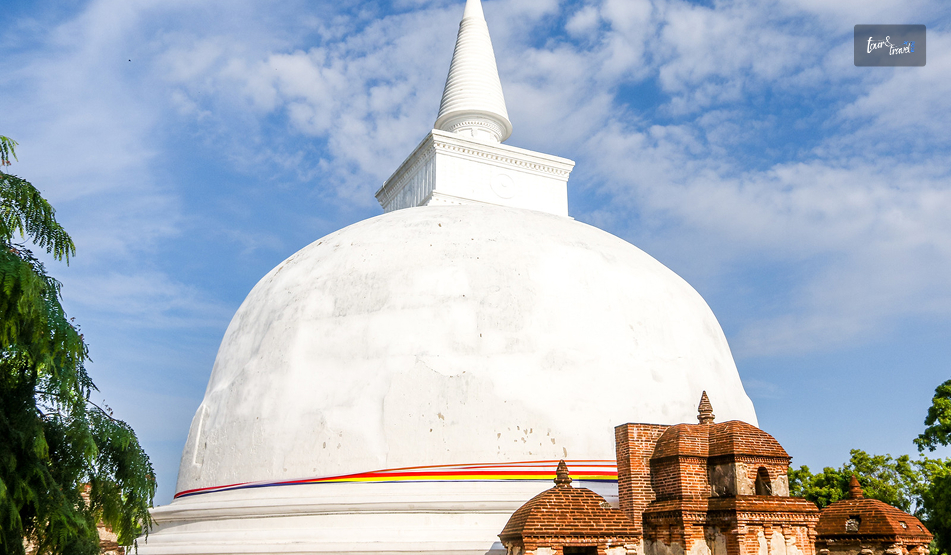
Polonnaruwa’s builders kept this design deliberately simple. Small subsidiary stupas dot the platform, and the scale felt human rather than overwhelming.

The Devatā Carvings Most People Miss

Don’t miss a close look at devatā-koṭuva. 

It has the most unusual carvings of deities, and these are uncommon for a stupa. 

This drum-like structure has carvings of eight divine figures in a folded-hand posture. It looks like they are worshipping Lord Buddha. 

Circling The Stupa With Respect

I saw devotees visiting the stupa and offering flowers.

They lit oil lamps and walked around the stupa as part of their prayer rituals.

Also, you have to keep your shoes outside the brick fence. 

History And Architecture

Kiri Vehera, Polonnaruwa: Walking Around Sri Lanka’s Best-Preserved Milk Stupa

The stupa dates to the reign of Parakramabahu I.

Furthermore, it is part of the king’s vision to build a large monastic university, Alahana Pirivena. 

Also, the building programme of the king helped reshape Polonnaruwa.

Queen Bhaddavati And The Rupavati Chetiya

The Mahavamsa credits the building of this stupa to Queen Bhaddavati. 

As a woman, I appreciated the fact that the best-preserved monument in the ancient city is a queen’s commission, not a king’s.

The Terraces And Dimensions 

The architectural design of the monument features a stupa positioned directly in the center of an expansive square terrace, with each side stretching roughly 57.6 meters (189 feet). 

The main dome spans a diameter of 26.8 meters (88 feet) at its base. 

From the ground up to its fractured spire, the entire monument reaches an approximate height of 24 meters (80 feet).

Supporting the core structure are three stepped basal terraces, traditionally called pesavas. 

Standing between 0.9 and 1.2 meters (3 to 4 feet) high, these tiers likely functioned as pathways for devotional walking rituals (circumambulation) or as ledges for leaving flowers. 

This design element directly mirrors ancient Indian architecture seen at historic sites like Sanchi.

Sitting atop the dome is the hatareskotuva (a square tee) built from solid brick, measuring about 7.4 meters (24 feet 4 inches) wide and 3.7 meters (12 feet) tall. 

Resting directly above this square section is the devata-kotuva (the enclosure of the deities), a rounded drum that is 2.9 meters (9 feet 6 inches) wide and 2.3 meters (7 feet 8 inches) high. 

This circular tier is decorated with carvings of eight gods shown praying with their hands joined in deep respect. 

The final crowning element is the kota (spire), which extends upward for another 7 meters (23 feet), though fragments of the spire have eroded away over the centuries.

The Relic Chambers And The Interior Of The Stupa

In the early 1900s, British archaeologist H. C. P. Bell conducted systematic excavations that offered a rare glimpse into the inner architecture of the stupa. 

During his investigation, Bell uncovered a winding, 25-foot (7.6-meter) tunnel carved out centuries earlier by grave robbers targeting the structure’s sacred treasures. 

After clearing out this passageway, his team discovered two upper relic chambers that had unfortunately already been broken into and stripped of their valuables.

The first looted chamber spanned roughly 11 feet 2 inches (3.4 meters) wide.

It originally housed structural foundations meant to secure a yantragala (a traditional stone reliquary).

It also had a sacred Mahameru stone, which serves as a symbolic representation of the cosmic mountain.

Crucially, a third, lower chamber escaped destruction. 

Because the historical looters had not dug deep enough, this final vault remained perfectly sealed and intact. 

Out of preservation and respect, Bell’s archaeological team made the deliberate decision to leave this third chamber unopened.

Why The Plaster Survived

When the jungle was cleared after roughly 700 years of neglect, the lime plaster was in near-perfect condition. 

Engineers describe these plasters as closer to lime-concrete than ordinary stucco. 

That waterproof skin explains why brick has not crumbled here as it has elsewhere.

Kiri Vehera Vs Rankot Vehera: Two Ways To Read A Stupa

Kiri Vehera, Polonnaruwa: Walking Around Sri Lanka’s Best-Preserved Milk Stupa

I compared Polonnaruwa’s two great stupas on the same day.

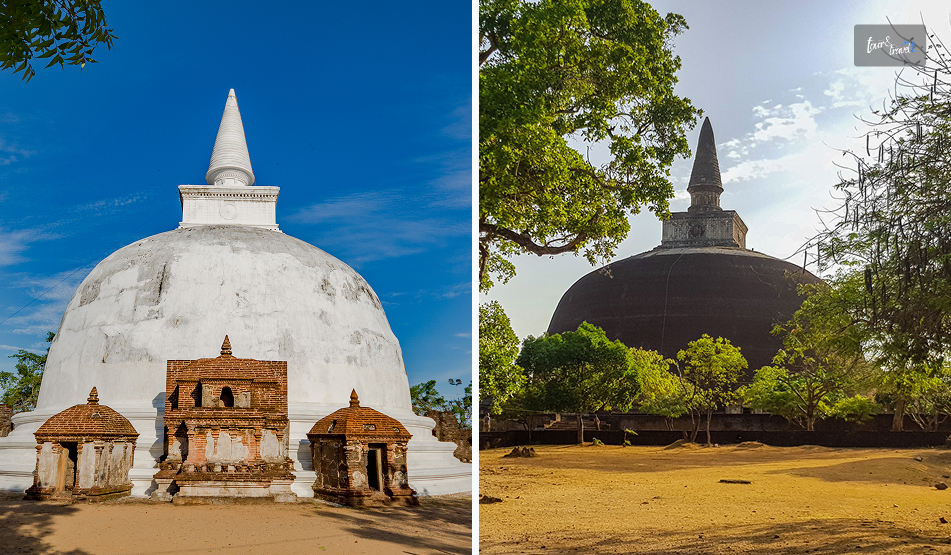
Each of them has a different mood. Rankot is impressive because of its size, while Kiri Vehera impresses by its survival.

FeatureKiri VeheraRankot Vehera
BuilderQueen Bhaddavati (12th century)King Nissanka Malla (1187–1196)
HeightAbout 24 Meters54 Meters
SurfaceOriginal lime plaster largely intactExposed brick, like most stupas of its era.
Best forPreservation and quiet worshipSheer scale

How I Would Fit It Into A Day

Kiri Vehera, Polonnaruwa: Walking Around Sri Lanka’s Best-Preserved Milk Stupa

I spent about 45 minutes here, then moved on to Gal Vihara before the midday heat. 

Also, it is a short walk from Lankathilaka and offers the strongest contrast in appearance.

The image house is a ruin, and the Buddha statue there is headless. However, this stupa has had the same structure since the time of its foundation. 

Photography Tips

With its human scale, Kiri Vehera is a favorite of photo enthusiasts. 

However, if you are visiting the stupa mid-day, the mid-day glare will bounce off the white plaster. 

On the other hand, morning and late afternoon, with softer light, are better times of the day for photography. 

Also, never take selfies posing back to the stupa, as it is disrespectful, and the guides will stop you if you even try to do that. 

Why Kiri Vehera Matters Today

The ruins of the Anuradhapura Sacred City and other remains of Polonnaruwa raise a question.

What did these monuments look like when they were finished? 

Kiri Vehera is the only monument to offer an answer to this. 

Also, as a living worship shrine, it is a site that allows you to slow down. 

So, if you are rushing past it on the way to Gal Vihara, you will miss the quiet centre of the northern complex.

Share on Social Media

Sibashree is a travel, culture, and leisure writer who has been writing since the age of 12 and professionally since 2014. With more than a decade of travel writing experience and journeys across India and several parts of the world, she brings a deeply personal and thoughtful perspective to her work. A student of English Literature and Mass Communication, Sibashree has always viewed travel as more than movement — for her, it has been a way of understanding people, cultures, and herself. Her passion for spiritual exploration has also led her to many unusual and meaningful destinations over the years. Outside of writing, Sibashree enjoys watching European cinema, reading about global politics, and reflecting on the stories hidden within everyday places.

Leave a Reply

Your email address will not be published. Required fields are marked *

title-img Related

READ MORE Gal Oya National Park

Gal Oya National Park, Sri Lanka: A Place Where I Saw Elephants From Boats

BY  Sibashree Sep 7, 2026

I visited the Gal Oya National Park in 2022, and after a few months of being back in my country, I got a call from my friend in Sri Lanka.  It was December, and he shared the news published on the Daily Mirror Online, which mentioned the threats of illegal mining to the flora and fauna of the national park.  I felt numb, as this was not the Gal Oya National Park I visited. Even if Sri Lanka has icons such as the Yala National Park, for me Gal Oya offered the most remarkable encounters with elephants.  For the first time, I did a safari from a boat, drifting quietly across open water while a herd of elephants waded between islands ahead of us. There was no engine noise to spook them, no queue of vehicles, just the reservoir, the herd, and the sound of water. It felt more like a secret that Sri Lanka preserves so dearly, not a national park.  Gal Oya National Park At A Glance DetailInformationLocationAmpara District, Eastern Province, Sri LankaEstablished1954AreaApproximately 25,900 HectaresCentrepieceSenanayake Samudraya, the Largest Reservoir in Sri LankaKnown forBoat Safaris and Elephants Swimming between IslandsWildlife32 Recorded Mammal Species, including Elephants, Leopards, and Sloth Bears150+ Bird SpeciesBest time to visitDry Season, Roughly May to SeptemberDistance from ColomboAround 300 KM,  Roughly 6 Hours by Road A Reservoir-Built Park With A History Tied To Irrigation The history of the Gal Oya National Park goes back to 1954. It was built to protect the Senanayake Samudraya. This newly constructed reservoir, the largest in Sri Lanka, was part of a major post-independence irrigation scheme in the dry zone of Sri Lanka.  The scale of the reservoir made my boat ride in the park all the more fascinating. It is just open water with forests around.  So, the jeeps on the dusty tracks are replaced by the boats on the serene water.  The landscape around the reservoir was more varied than I expected from a dry-zone park. Forested Hills! Savannah Grassland! Also, there were rocky outcrops that locals call turtleback formations.  Moreover, low grasslands all sit within the park's boundaries, alongside historical sites like the Digha Vapi Dagoba and the Henebedde cave. Wildlife And The Swimming Elephants The most fascinating experience in Gal Oya was watching wild elephants swimming between the reservoir’s islands.  They were moving in search of fresh grazing as water levels dropped in the dry season.  Beyond elephants, the park has around 32 mammal species, including: Leopards Sloth Bears Grey Langurs Endemic Toque Macaque. Also, the park, though not as fascinating as Bundala, has more than 150 species of birds. I could spot the following ones. Painted Storks Ospreys Endemics like the red-faced Malkoha and Sri Lanka spurfowl. I could also spot crocodiles and water monitors along the reservoir's edges. How To Reach Gal Oya National Park? You can take a drive from Colombo to reach Gal Oya National Park via Ampara. The distance is around 300 km, and the journey takes around 6 hours by road.  However, staying in Ampara Town as the base or finding a lodge close to the park’s boat safari jetty is a more reasonable move.  Also, Gal Oya National Park is a natural inland detour from the east-coast surf town, Arugam Bay, roughly 2 to 2.5 hours away. Again, if you are traveling from Kandy, it is 4-5 hours by road via Mahiyangana. So, Gal Oya is a workable stop on a route heading toward the east coast. Gal Oya Entrance And Boat Safari Costs (2026) On top of the park entrance fee, the boat safari itself is typically arranged and priced separately, usually through your lodge or a licensed operator. Remember that access to the reservoir's boats isn't managed the same way jeep permits are at other parks. Also, the boat safari costs around LKR 6000 to LKR 8000.  CategoryApproximate Cost (2026)Foreign Adult (12+)USD 12Foreign Child (6–12 Years)USD 6Foreign Children under 6 Years FreeSAARC NationalsUSD 10 for AdultsUSD 5 for Children between 6 and 12 YearsFree for Children below 6 YearsLocals Adults: LKR 60Children from 6 to 12 Years: LKR 30Children below 6 Years: FreeStudents: LKR 20Boat SafariLKR 6000-8000 A One-Day Gal Oya Itinerary A day at Gal Oya has a different rhythm from most Sri Lankan national parks because here the safari is on a boat and not a jeep.  Here is a structure that works well if you're based near Ampara or the park's eastern lodges. TimeActivity5:30 - 6:30 AMEarly transfer to the boat jetty on Senanayake Samudraya6:30 - 9:30 AMMorning boat safari.It is the best window for elephant sightings near the shoreline. 9:30 - 10:30 AMReturn to lodge for breakfast.10:30 AM - 12:30 PMOptional short trek or visit to the Henebedde cave/Digha Vapi Dagoba area.12:30 - 2:30 PMLunch and rest during the hottest part of the day.4:00 - 6:30 PMEvening boat safari for a second wildlife window and sunset over the reservoir. What Are The Practical Tips For Visiting The Gal Oya National Park?  Boats and slots are more limited than jeep availability at bigger parks. Bring a hat, sunscreen, and a light waterproof layer. Pack a zoom lens or good binoculars as elephant sightings are often across open water rather than at close range on a jeep track. Stay two nights if you can, so you get both a morning and an evening boat safari rather than just one. Combine with Arugam Bay or Ampara for a fuller east-coast itinerary. What Is The Best Time To Visit Gal Oya National Park? May to September, or the dry season, is the best time to visit Gal Oya National Park.  In the dry season, the water level of the reservoir drops. So, all the animals, especially the elephants, concentrate near the remaining islands and water.  Thus, the sight of swimming elephants is more common in this national park than anywhere else in Sri Lanka.  This season is also ideal for birdwatching in Sri Lanka, as migratory and resident species settle around the shrinking waterline.
READ MORE haggala flower garden

My Morning Among The Roses: My Experience At Haggala Botanical Garden

BY  Sibashree Sep 9, 2026

When I reached the Haggala Flower Garden, the mist was sitting close to the rose beds.  It is the cool air of Nuwara Eliya that makes the roses bloom and creates a different ambiance than the Central Lowlands.  I had already spent two days wandering tea estates and colonial-era streets in the town. However, this garden ended up being the one stop I keep bringing up when people ask what surprised me most about the hill country. In this article, I will share what I saw and did at Haggala or Hakgala. I have also mentioned the practical details, including fees, timings, routes, and the best season to catch it in bloom.  A Quick Snapshot About Haggala Botanical Garden DetailInformationOfficial NameHakgala Botanical GardenLocationHakgala, near Nuwara Eliya, Central Province, Sri LankaEstablished1861, Under British Colonial RuleSizeRoughly 28 Hectares (About 70 Acres), Sri Lanka's Second-Largest Botanical GardenElevationAround 1,700 MetresManaged byDepartment of National Botanic Gardens, Sri LankaKnown forRoses, orchids, ferns, and its cool highland climateOpening Hours7.30 AM - 6.00 PMTicketing Hours 7.30 AM - 5.00 PM The Legend And History Behind Haggala Botanical Garden I knew of Haggala as “the rose garden near Nuwara Eliya.” Once I walked through it, though, I came across many signboards.  Also, the local guide shared snippets that pointed to a much longer, stranger story than that. From Cinchona Plantation To Rose Garden The garden was established in 1861 by the British. It was originally an experimental station for cinchona, the tree whose bark produces quinine, the anti-malarial drug that was essential to colonial plantation life at the time.  The focus later shifted to tea before the site was eventually converted into the ornamental botanical garden that draws visitors today.  Standing among the rose terraces, it is genuinely hard to picture rows of cinchona trees where the flowerbeds now are. The Ramayana Connection The other layer to Hakgala's history is mythological rather than colonial.  The garden has a special connection to the Ramayana, describing it as part of the pleasure gardens associated with the demon king Ravana. There is another popular version of the legend. It is the spot where Hanuman is said to have brought the Sanjeevani herb to revive Lakshmana.  I have not verified the folklore, but every local guide shares it with conviction.  What I Found Walking Through The Gardens It was the most unhurried two hours in Sri Lanka at the Haggala Botanical Garden.  These are the highlights of exploring the botanical garden.  The Rose Garden This is the section most people come for, and it is the one that stayed with me.  Terraced rose beds climb a gentle slope, and even on a visit outside peak bloom I found enough color to justify the walk up.  Locals I spoke to said mid-March through April is when the roses are genuinely at their best. The Fernery And Orchid House Past the roses, the path drops into shadier, damper terrain. It is the fernery, thick with hanging vines and the kind of quiet you only get under a heavy tree canopy.  The orchid displays nearby were smaller than what I later saw at Peradeniya, but the cooler climate here seems to suit certain varieties that don't do as well lower down. Hakgala Rock And The Nature Reserve The garden sits right at the base of Hakgala Rock, part of the wider Hakgala Nature Reserve.  I did not have time to explore the reserve itself on this trip. However, the rock face looming over the garden is a constant, dramatic backdrop while you're walking around. It is worth pausing for a photo even if you are not planning to hike further. Planning Your Visit: Fees, Timings And Getting There Visitor CategoryAdults (12+)Children (5–12)Foreign Visitors LKR 3,540LKR 1,770Local VisitorsLKR 200 LKR 30 How To Reach Hakgala The garden is about 10 kilometres from Nuwara Eliya town on the road toward Welimada and Badulla. So, I took a tuk-tuk trip from where I was staying. The tuk-tuk cost around LKR 1500. If you are combining it with Horton Plains National Park or the Pedro Tea Factory, both popular pairings, it is easy to build a single half-day loop out of Nuwara Eliya covering all three. Best Time To Visit Haggala Botanical Garden Elevation makes Haggala noticeably cooler than most of the island. That cool climate is exactly what makes the roses possible.  Here is how I would break the year down. SeasonWhat's bloomingMy takeMid-March to AprilPeak rose and orchid bloom.The single best window I would point a first-time visitor toward.May to AugustSouthwest monsoon showers likelyGreener, quieter, and the mist adds its own charm.September to NovemberDrier spells, good visibilityA dependable shoulder-season pick.December to FebruaryCool, crisp morningsChilly at this elevation, and you need to pack a light jacket. Tips From My Visit To Hakgala Flower Garden Go early. I had the rose terraces nearly to myself before 9 AM. By late morning, tour groups had filled in the main paths. Bring a light jacket even in the middle of the day. Nuwara Eliya's hill-country chill is real, and Hakgala sits even higher than the town itself. Rain can roll in quickly at this elevation. A few visitor accounts mention exploring in light rain and still finding it worthwhile, which matched my own experience with a brief afternoon shower. Set aside two to three hours if you want to walk the full garden rather than just the rose terraces. Nearby Places To Combine With Hakgala Hakgala rarely needs to be a standalone trip.  On the same day, I paired it with a walk through central Nuwara Eliya, and it would slot just as easily into a longer hill-country itinerary. Nuwara Eliya town and its colonial-era buildings Pedro Tea Factory Horton Plains National Park and World's End. You can also explore the wider Knuckles or hill-country circuit if you have more days to spare. Haggala Flower Garden Offers A Slow And Delightful Experience Haggala is not a dramatic, headline attraction the way Sigiriya or Adam's Peak is. It is a slow, cool, quietly beautiful stop and the kind of place that rewards an unhurried morning rather than a checklist visit.  If you are already spending time in Nuwara Eliya for the tea country scenery, I would treat Hakgala as close to essential.

READ MORE Luang Prabang food tour

What Is The Best Luang Prabang Food Tour? (With A Luang Prabang Food Tour Itinerary)

BY  Sibashree Nov 4, 2025

I was having sticky rice with steamed hot freshwater fish cooked in banana leaves at Tamarind Restaurant. I took the first bite, and I closed my eyes. It was a moment to cherish, to feel! The taste was similar yet distinctly different from what I usually have at home. Sticky rice is the soul of Lao cuisine, and it is related to community sentiment, as every village has its own rice field. And the fish was a game of perfect balance, and the spiciness was just right to titillate the taste buds, but not overpowering.  Furthermore, as I explored the villages and went a little way away from the town center, I found food cooked in bamboo hollows. Another important aspect of Lao cuisine is the art of fermentation.  From sun-dried fish and meat to fermented vegetables and salted lime, a Luang Prabang food tour is an experience curated with love. Also, to cherish the authentic flavors of Laos, you have to try the street food here. It is not Vietnamese, not Thai, but simply Laotian.  I will talk about these street food delicacies shortly. However, before that, let’s find out what makes the food in Luang Prabang Special.  Cooking Techniques And Ingredients That Make Food In Luang Prabang Special  Food in Luang Prabang and Laos stands out for its distinctive techniques and ingredients. Check out the table below for a brief understanding. Techniques/IngredientsUse in Luang Prabang FoodFermentation• Key to Local Laos Flavors• Used in Pickled Vegetables, Soy, and Fish SauceGrilling• Grilling over Charcoal Gives the Fish or Meat a Distinct FlavorHerbsCommon Herbs Used Are:• Mint• Lemongrass• Coriander• Kaffir Lime• GalangalSticky Rice Steaming• Rice is Cooked in Bamboo Baskets over Boiling Water.  What Is The Best Street Food In Luang Prabang Laos?  Have you tried something as “interesting” as a honeycomb cooked and charred in banana leaves? I have. And the smell of charcoal and honeycomb got blended with the whiff of lemongrass and grilled fish.  This is what my senses caught first as the tuk-tuk dropped me at the morning market in Luang Prabang. Another thing I found special about the morning market was the presence of women in large numbers. Most vendors were women.  I saw a lady whose face looked like a painting with all the creases, but her smile was all about silent resilience. I went to her stall and ordered a bowl of khao soi. It was bliss with the right amount of pork, herbs, and tomatoes.  The sky was still pale pink, and I saw monks in saffron robes pass quietly, collecting alms. My breakfast moment suddenly became about discovering everyday spirituality in the rhythm of food. I felt that breakfast is not just food for the people here. It is about gratitude, humility, and connecting to the origin.  Now, my stories of Luang Prabang will never end. It is like the silent river that flows and does its magic by touching the lives along its route. So, let me share with you brief details about the best street food in Luang Prabang that you cannot miss. 1. Khao Soi Luang Prabang Everyone loves Khao Soi in Luang Prabang. This pork soup with fermented soy and tomatoes is the perfect breakfast delicacy here.  2. Lao Sausage (Sai Oua) It is a pork sausage delicacy. In these sausages, the pork meat is infused with lemongrass, galangal, and herbs.  3. Sticky Rice (Khao Niew) You cannot imagine a complete Lao meal without sticky rice. I love to have sticky rice with fish.  4. Grilled Mekong Fish In Luang Prabang, they use fresh river fish to make this dish. They marinate the fish using local herbs and grill it on charcoal for a distinct flavor.  But do you know why grilled fish in Luang Prabang tastes even better? Mr. Somchai, a Mekong fish griller, said, “We catch fish at dawn and grill them by sunset. No freezer, just fire.” 5. Coconut Pancakes (Khanom Krok) The coconut pancakes are also the most unique in flavor. It has a crispy outer layer, which is complemented by the creaminess inside.  These pancakes are served with spring onions.  6. Papaya Salad (Tam Mak Hoong) If you love the pungency of fermented fish, this crunchy salad will be your instant favorite. The raw papayas used in the salad give the dish the right crunch.  Furthermore, the fermented fish sauce and the use of lemon add the right balance of flavors to the salad.  7. Larb (Laap) Larb is a comfort food. It is a salad with minced meat, lime, mint, and rice powder. It has the right balance of salty, sour, and spicy flavors.  Moreover, it is the national dish of Laos and a common staple in everyday food and festivals.  8. Jaew Bong Jaew Bong is more like a condiment or a side served with dishes like fried seaweed. It is a smoky chilli paste with strong flavors of garlic and buffalo skin.  9. Fried Seaweed (Khai Paen) I liked the umami flavors of the fried seaweed, or Khai Paen here. It was served with roasted sesame seeds, which added just the right amount of nutty balance to the dish.  Also, the fried seaweed dish came with Jaew Bong. 10. Spring Rolls Spring rolls are my favorite, and I love the ones with fish stuffing the most. So, at Luang Prabang, a hub of freshwater fish, I had to try these spring rolls.  I had the fried ones with the vermicelli, giving the outer layer the right amount of crunch.  11. Banana Roti Traditionally, a banana roti is a flatbread with banana slices and a condensed milk topping. The bread's crispiness balances the banana filling's moisture.  The banana rotis are also served with chocolate syrup and sugar. I even tried the ones with an egg filling. 12. Grilled Chicken Skewers Now, the grilled chicken skewers here are different, mostly because of the prominent presence of lemongrass. And honestly, the amount of lemongrass used was a bit too much for my taste.  However, it’s the way the locals love it.  13. Lao Coffee Lao coffee, for me, was like a dessert I could have every day and not get bored with. It is rich and sweet as it uses condensed milk.  However, the use of condensed milk does not overpower the strong aroma of coffee. 14. Fruit Shakes The food stalls in Luang Prabang have some amazing fruit shakes. I loved the dragon fruit shakes here the most. However, mango and pineapple shakes are also easily available.  15. Rice Cakes With Coconut If the morning market treated me with the best khao soi, the night market treated me with the best rice cakes with coconut.  The Sun dipped, and the night market became alive with gold and red lanterns adorning the stalls. I could smell a mix of chili smoke, coconut milk, and sticky rice roasting on bamboo skewers. At a stall, I was sitting on a wooden bench with the locals. I was waiting for my vegetarian buffet with stir-fried greens, bamboo shoots, and pumpkin curry to be served. Suddenly, the lady vendor of the stall smiled and nodded, and handed me a few rice cakes with coconut.  The dessert was as delightful as the night air in Luang Prabang, and despite many requests, the lady did not take any money for the rice cakes. Rather, we started having conversations and shared a laugh. Some soft Lao music was being played in the distance. So, my dinner moment at the night market became an act of bonding.  Almost one year later, I read an article about the distinct nature of food in Laos in the South China Morning Post. I could relate to what Saeng Douangdara, a Lao-American chef based in Los Angeles, said,  “For Lao people, food holds a central place. It serves as a unifying force that brings people together.”  Overall, I think the way people approach food here stems from the fact that it is a Buddhist land. It’s all about gratitude and mindful consumption.  How To Take The Best Food Tours In Luang Prabang? (Some Ideas To Explore) My local guide and the tuk-tuk drivers completely curated my food exploration journey in Luang Prabang. I became friends with Seng, a local tuk-tuk driver. He said,  “The best food isn’t in restaurants—it’s in the alleyways. Follow the locals.” My morning food tour in Luang Prabang to the market became all the more special by participating in the alms-giving ceremony.  You have to experience the profound meaning behind the restraint and silence of the entire experience to understand why it is spiritually elevating. Also, the night market has a charm of its own, and the morning and night markets both need to be explored on foot.  However, if you want a more luxurious tour, you can opt for something like Marriott Bonvoy Tours and Activities. Professional food guides conduct these tours, and the tour includes more than 15 tastings. It is a mobile tour with many spots around the Old City. Furthermore, Asia Tours conducts a food tour in Luang Prabang with organic farm visits and learning to cook from a local chef. Also, Thrillophilia conducts a tour with a street food walk, cultural storytelling, and exploring vegetarian-friendly options.  Street Food Map And Walking Route In Luang Prabang If you ask me, I will tell you to keep the Luang Prabang food tour spontaneous, and you must listen to your local guide.  However, you can also follow this simple walking route map for a Luang Prabang food tour.  Taking a tuk-tuk or a walk to the Morning Market near Wat Mai Heading to Ban Phanluang for grilled fish stalls Exploring the night market at Sisavangvong Road Trying local drinks and Lao Tapas at Utopia Bar Morning Vs. Evening Market Guide Luang Prabang Here is a brief comparison between the morning and night markets in Luang Prabang. CriteriaMorning MarketNight MarketTiming• Opens at 5:30 AM• Starts around 5:00 PMBest for• Fresh Produce• Herbs• Breakfast Items• Grilled Meat• Souvenirs• DessertsMust Try Items• Khao Soi• Sticky Rice• Coconut Pancakes• Lao Sausage• Banana Roti• Grilled Fish A 2-Day Luang Prabang Food Tour Itinerary  Making an itinerary for a food tour is difficult, as you cannot rush it. The idea is not to consume as much as you can. It’s about cherishing the flavors, the cultural content, the bonding, the tradition, and the people behind it.  Still, here is a 2-day itinerary for the Luang Prabang food tour.  DaysActivitiesDay 1• Exploring the morning market at Phousi Road and participating in the alms-giving ceremony• Having coffee at Le Banneton• Lunch and cooking class at Tamarind Restaurant• Exploring the Night Market Food AlleyDay 2• Mekong Breakfast Cruise• Dara Market Visit• Lunch at Khaiphaen Restaurant• Visiting Whisky Village and trying Lao Lao Whisky• Dinner at Manda de Laos Luang Prabang Food And Buddhist Rituals  The Tak Bat Ceremony, or the alms-giving ceremony, makes the food tour in Luang Prabang associated with Buddhist rituals. Monks are offered fruits and sticky rice at dawn.  Furthermore, food becomes the core of community celebration during festivals such as Pi Mai Lao or Lao New Year. In these festivals, the local people prepare food for monks.  In addition, food tour organizers such as A Chef’s Tour organize a Luang Prabang Food Tour, including a Monk Blessing Ceremony. Vegetarian Options In Luang Prabang Food  The vegetarian food options in Luang Prabang are many due to its Buddhist roots. You just have to say “Bor Sai Nyam” or “No Meat” to vendors to get vegetarian food.  Here are the alternatives or vegetarian versions for the popular staples in Luang Prabang.  Common FoodVegetarian AlternativeLarb• Options with mushrooms and tofu are available. Papaya Salad• Request not to use fish sauce in the dressingSpring Rolls• Use veg fillingsFruit Shakes• Avoid dairy products in the fruit shakes Sticky rice, the staple item in Luang Prabang food, is already a vegan item. You can have it with any veg side or fried seaweed without the chilli and buffalo skin paste.  Estimated Food Prices In Luang Prabang  The budget of your food tour will depend on the places you eat. For example, the same dish bought from a street stall will cost at least 10000 LAK when you eat at a top-grade restaurant.  Furthermore, some delicacies such as the coconut pancakes or coconut rice cakes may not be available at all restaurants.  DishStreet Stall PriceRestaurant PriceKhao Soi10,000 LAK (\$0.50)30,000 LAK (\$1.50)Lao Sausage15,000 LAK (\$0.75)40,000 LAK (\$2.00)Grilled Fish25,000 LAK (\$1)60,000 LAK (\$3.00)Larb25,000 LAK (\$1.25)70,000 LAK (\$3.50) Things To Keep In Mind For A Delightful Luang Prabang Food Tour Arrive at the morning market before 6 AM to talk to the local vendors and have freshly made coconut pancakes, steamed sticky rice, and khao soi. Arriving before the crowd helps you have authentic conversations with the local vendors.  You must follow where the locals are heading. A smart tip: Find the food stalls in the alleys near the temples. You will often notice long queues in front of those shops.  Also, most street foods cost between 5,000 and 20,000 LAK. So, carry small change.  Make sure that the vendor at the food stall you visit is wearing gloves and uses clean utensils.   Keep your behavior respectful while taking part in an alms-giving ceremony or food tours blessed by monks.  Luang Prabang Food Tour: Frequently Asked Questions (FAQs) Here are the frequently asked questions and answers about the Luang Prabang food tour.  1. What Is The Most Famous Street Food In Luang Prabang? Khao Soi, or the pork noodle soup, is the most famous street food in Luang Prabang. It is a popular breakfast item. However, it is a wholesome dish with pork, tomatoes, and subtle flavors. Unlike traditional Thai Khao Soi, the Luang Prabang Khao Soi does not use coconut-based curry. Instead, it has fermented soybean paste.  2. Is Street Food Safe In Luang Prabang? Yes, street food is safe in Luang Prabang. However, you have to visit food stalls that locals frequent. Also, drink bottled water. Most importantly, when trying local liquors at the Whisky Village or local stalls, take your guide's suggestions.  3. Can I Join A Food Tour As A Vegetarian? Yes, you can join a food tour as a vegetarian. You can always replace the minced pork or fish in spring roll stuffing or choose tofu and mushrooms in larb. Just mention Bor Sai Nyam or no meat to the vendor. In addition, you can customize the spice level in your food with adjustments in spice level or ingredients.