
Bundala National Park: Sri Lanka’s Quiet Wetland Where Flamingos Outnumber The Tourists

The only coastal reserve in Sri Lanka and a Ramsar Site, the Bundala National Park welcomes you to a different world.  

So, when I entered the national park, the first thing I noticed was neither an elephant nor a crocodile. In fact, it was not a flamingo.  

It was absolute silence! The calls of a lagoon full of birds broke the silence, and it was a stark contrast to Yala National Park and its busy life.  

The main entrance of Yala National Park is barely one hour away from Bundala. Also, both share much of the same dry-zone wildlife.  

Still, Bundala is one of the least visited national parks in the South.  

As a Ramsar-listed wetland of international importance, Bundala is built around a chain of shallow brackish lagoons.  

That explains why it draws one of the largest concentrations of migratory birds anywhere in Sri Lanka.  

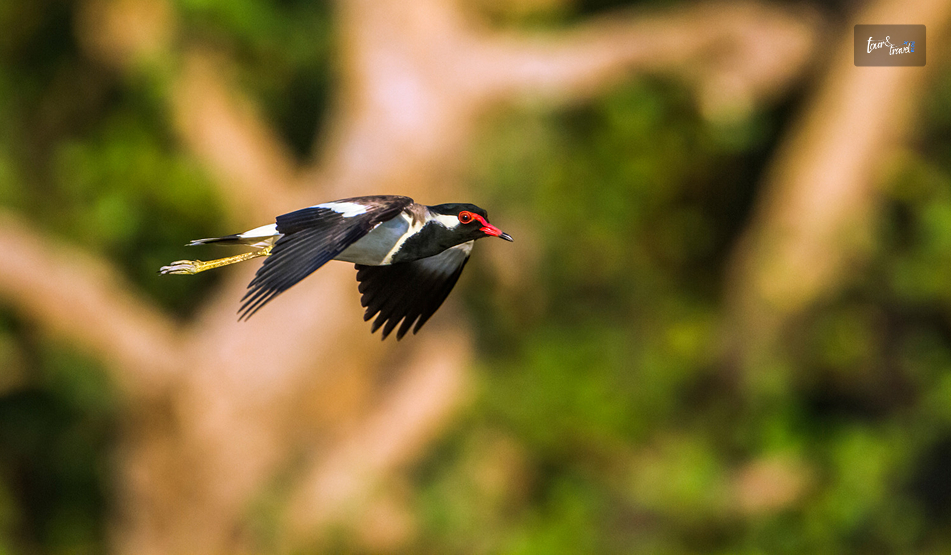
Also, I was fortunate enough to visit Bundala during the northern winter. I met the elegant greater flamingos wading through pink-tinged water at sunrise.  

Nevertheless, irrespective of the time of your visit, you can spot elephants, and crocodiles.  

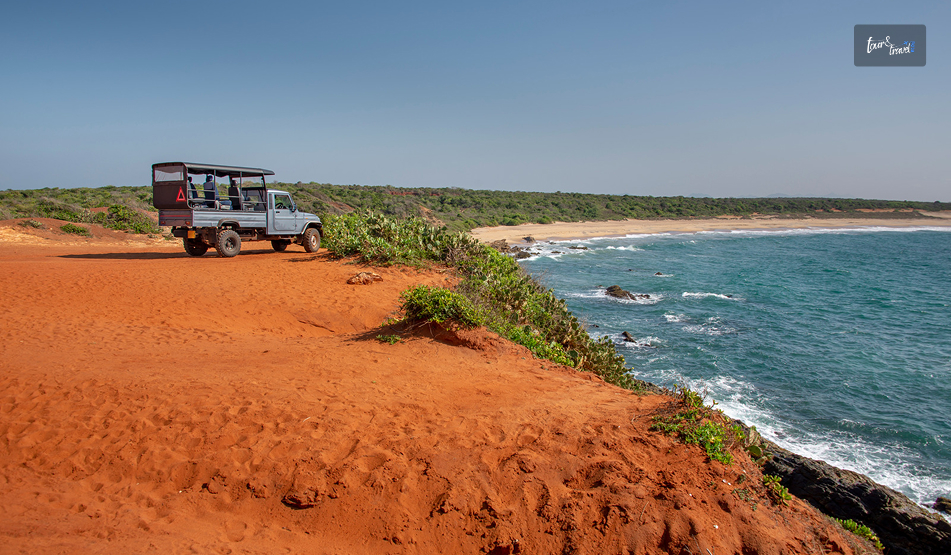
You will also find a coastline of dunes and scrub forest. 

National Park Of Bundala At A Glance 

Detail Information 
Location Southern Province, Sri Lanka, between Hambantota and Tissamaharama 
Nearest town Hambantota (About 15-20 km) 
Area Approximately 6,216 Hectares 
Designation National Park (1993). Ramsar Wetland of International Importance (1990) UNESCO Biosphere Reserve (2005) 
Landscape Five Shallow Brackish/Saline Lagoons Sand Dunes Scrub Jungle Coastal Habitat 
Known for Migratory and Resident Birds (200+ Species), including Greater Flamingos Elephants Crocodiles 
Best time to visit November to March for Peak Migratory Birdlife Year-Round for Elephants and Resident Species 
Distance from Colombo Around 245 KM Roughly 4-4.5 Hours by Road 

Bundala National Park: A Wetland With A Bigger Reputation Than Its Size Suggests

Bundala National Park: Sri Lanka’s Quiet Wetland Where Flamingos Outnumber The Tourists

Bundala became a designated national park in 1993. However, the story of its conservation goes earlier.  

It was already a Ramsar Site in 1990, and it was the first in the country to get this recognition. Again, in 2005, it became a part of a UNESCO Man and the Biosphere Reserve.  

The lagoons here are a critical stopover on the Central Asian Flyway. The migration route that brings birds from as far as Siberia and the Rann of Kutch down to the Indian Ocean coast every winter. 

I loved the park more because it has a very humble demeanor and there is no single headline animal.  

It rewards patience. 

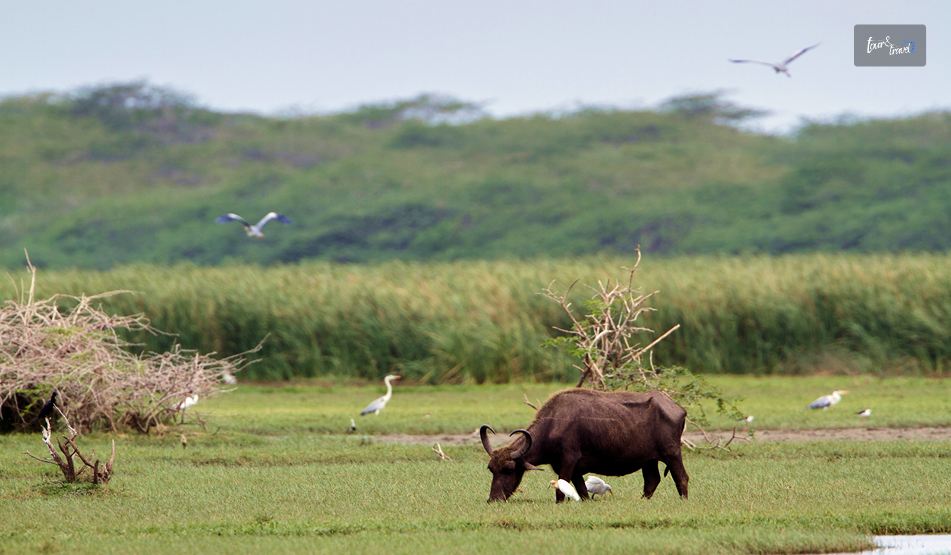
I spotted a crocodile motionless at a lagoon’s edge, a family of elephants moving through the scrub in the middle distance, and always, everywhere, birds. 

Wildlife And Birdlife In Bundala National Park 

Bundala National Park transforms into a wonderland for birdwatchers between November and March.  

Greater flamingos are the main attraction out of the 200 species of birds recorded here.  

Most of them are migratory birds, and they arrive between November and March.  

During my visit to the park, the flocks of flamingos were so huge that they turned almost the entire lagoon area pink.   

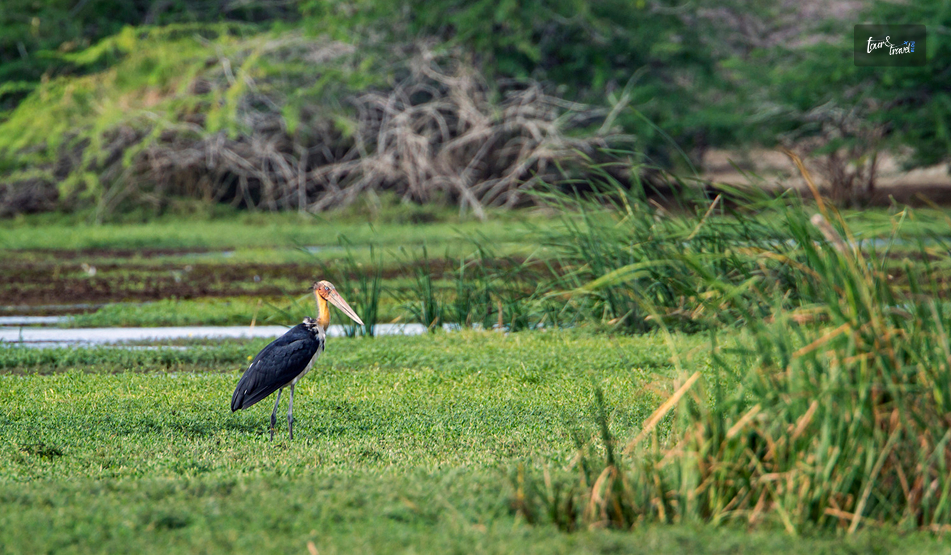
Our guide also drew our attention to painted storks, pelicans, spoonbills, various species of stork and egret, and a healthy population of raptors. 

Furthermore, the park holds a resident elephant population, estimated at several dozen individuals. 

Moreover, it has saltwater and mugger crocodiles in the lagoons, and smaller numbers of leopards, spotted deer, wild boar, and jackals.  

How To Reach Bundala National Park?

Bundala National Park: Sri Lanka’s Quiet Wetland Where Flamingos Outnumber The Tourists

You can reach the Bundala National Park from Colombo via the Southern Expressway to Hambantota or the Sooriyawewa exit.  

Then local roads will lead you to the park entrance. The overall journey from Colombo by road is around 4 to 4.5 hours, depending on the gate you are visiting and the exact timing.  

Again, Bundala National Park is an easy add-on to a visit to Yala National Park. The main entrance of Bundala is 20-25 km from Tissamaharama, making it a natural pairing for anyone already doing a Yala safari circuit. 

Moreover, Hambantota, around 15-20 km away from Bundala National Park, is the closest town.  

So, Hambantota, with its beaches and port area, will be your base if you want a combination of coastal experience and wildlife.  

Bundala Entrance Fees (2026) 

 Category   Approximate Cost (2026)  
 Foreign Adult (12+)   USD 12 
 Foreign Child (6–12 Years)   USD 6 
 Foreign Children under 6 Years    Free 
 SAARC Nationals USD 10 for Adults USD 5 for Children between 6 and 12 Years Free for Children below 6 Years   
 Locals   Adults: LKR 60 Children from 6 to 12 Years: LKR 30 Children below 6 Years: Free Students: LKR 20  
 Vehicle Entry Ticket   LKR 300  
 Foreign Group Fee Per Vehicle   USD 10 

A One-Day Bundala Itinerary

Bundala National Park: Sri Lanka’s Quiet Wetland Where Flamingos Outnumber The Tourists

Bundala works well as a half-day or full-day safari, and it also slots neatly into a longer south-coast loop that includes Yala, Tissamaharama, and the beaches around Hambantota.  

Here is how you can structure a single day focused on the park itself. 

Time Activity 
5:30 – 6:00 AM Departure from Tissamaharama or Hambantota. 
6:00 – 9:30 AM Morning safari through the lagoon circuits. 
9:30 – 10:30 AM Break near the lagoons or at a nearby guesthouse for breakfast. 
10:30 AM – 12:30 PM Continue the drive toward the coastal dune and scrub sections for elephants and crocodiles. 
12:30 – 2:00 PM Exit the park, lunch in Hambantota or Tissamaharama. 
Afternoon (optional) Combine with a Hambantota lighthouse or salt pan visit, or head onward to Yala/Kataragama. 

What Is The Best Time To Visit Bundala National Park?

Bundala National Park: Sri Lanka’s Quiet Wetland Where Flamingos Outnumber The Tourists

November to March is the best season to visit Bundala National Park if you want to spot Greater Flamingos and other birds.  

Flamingos gather in the highest numbers from December to February.  

However, Bundala is home to elephants, crocodiles, and resident birdlife across all seasons. 

Practical Tips For A Visit 

  • Go early. Gates typically open around 6 AM, and the first two hours offer the best light and the least heat-shy wildlife activity. 
  • Bring binoculars if birdwatching is a priority. Much of the action happens across open water at a distance. 
  • Sun protection matters here more than in forested parks as Bundala’s lagoons and dunes offer little shade. 
  • Pair it with Yala or Tissamaharama to make the most of the drive down. 

Nearby Attractions 

Bundala sits within easy reach of several other south-coast highlights, making it easy to build into a wider itinerary rather than a standalone day trip.  

Yala National Park and the temple town of Kataragama are both close by, and the beaches and salt pans around Hambantota make for a relaxed way to close out the day.

Share on Social Media

Sibashree is a travel, culture, and leisure writer who has been writing since the age of 12 and professionally since 2014. With more than a decade of travel writing experience and journeys across India and several parts of the world, she brings a deeply personal and thoughtful perspective to her work. A student of English Literature and Mass Communication, Sibashree has always viewed travel as more than movement — for her, it has been a way of understanding people, cultures, and herself. Her passion for spiritual exploration has also led her to many unusual and meaningful destinations over the years. Outside of writing, Sibashree enjoys watching European cinema, reading about global politics, and reflecting on the stories hidden within everyday places.

Leave a Reply

Your email address will not be published. Required fields are marked *

title-img Related

READ MORE Ravana Falls

Ravana Falls, Ella: Location, How To Reach, Things To Do, Practical Tips And More

BY  Sibashree Aug 22, 2026

I met Ravana Falls on the way from Ella to Wellaway.  I pulled up on a tuk-tuk and found a wide and tiered curtain of water falling down on an oval rock face.  Ravana Falls is not the tallest or most powerful waterfall you will see in Sri Lanka. However, the mythological significance and its easy accessibility from Ella make it a must-visit.  Some Quick Facts About Ravana Falls, Ella FactsDetailsOfficial NameRavana Falls (Ravana Ella)LocationElla, Badulla District, Central Highlands, Sri LankaHeight25 MetersWaterfall TypeA Three-Tier CascadeWater SourceKirindi Oya (River System)Mythological LinkThe RamayanaAccessibilityRoadside Viewpoint with No Trekking RequiredBest Time to VisitOctober to January for Maximum Water VolumeEntry FeeFree Where Is Ravana Falls Located?  The Ravana Falls shows its prowess along the Ella–Wellawaya road (the A23). It is around 6 to 8 km south of the beautiful Ella Town.  Also, it is close to the 12th–13th mile markers in the Badulla District. At an elevation of around 1050 meters, this waterfall drops around 25 meters, and it is one of the widest in Sri Lanka.  Furthermore, this waterfall within the compact Ella Wildlife Sanctuary is at the epicenter of an ecosystem with birds and small mammals. Overall, it is amidst a landscape typical of the mid-elevation forests of Sri Lanka.  How To Reach Ravana Falls A tuk-tuk ride from central Ella to Ravana Falls takes around 10-15 minutes. You can also take a taxi ride.  As you proceed toward Wellawaya along A23, you will see this waterfall from the roadside.  Public buses also run along this route, and drivers are used to being asked for a drop-off here. Moreover, you can reach the Ravana Falls from Bandarawela. You can reach the waterfall by traveling around 10 km toward Wellawaya from Kubalwela Junction on the Badulla–Bandarawela road. Ravana Falls And The Legend Of King Ravana  The most intriguing thing about the legend of Ravana Falls is that every guide will give you a different version.  However, the most popular is that King Ravana, the demon king from the Ramayana, hid Goddess Sita in a cave behind this waterfall after abducting her and bringing her back to Lanka.  The waterfall is also close to the Ravana Ella Cave, which is perched on a cliff face about 11 km from Bandarawela. The archaeological evidence in the area has proven the presence of older human habitation. So, myth aside, it has been an important location for human habitation for a long time.  What To Do At Ravana Falls? The best vantage point for this waterfall is the road and the small bridge nearby. If you want to go closer to the base, you will have to walk down a little.  As you reach the base, you can climb over some of the rocks.  Here, you have to be very careful as these rocks are very slippery irrespective of the season.  Furthermore, for a proper look at the multi-tier cascade, I waded in the lower pools.  However, I could not climb higher up the falls toward the upper cascades as that route is now restricted due to past accidents.  So, I had to stick to the lower areas.  Moreover, I spotted many troops of wild monkeys near the waterfall. So, be careful about what you carry and be respectful to them.  Other Nearby Places You Can Visit With Ravana Falls  After exploring Ravana Falls, you can come back to Ella and find some of the photographed attractions in Sri Lanka. Visit the Nine Arch Bridge, Ella Rock, and Little Adam's Peak. Once again, due to the proximity to Ella, Ravana Falls fits naturally into a half-day loop rather than requiring a dedicated trip. Moreover, just two hours away, the Horton Plains National Park awaits with a completely different high-altitude landscape.  Practical Travel Tips For Visiting Ravana Falls Ravana Falls is one of the best places to visit in Sri Lanka for budget travelers as it offers free entry.  You must wear shoes with good grip if you have plans of climbing over the rocks near the base. Once again, avoid the temptation to go beyond the marked and accessible sections.  A Quick Note On Safety Follow the restrictions seriously, and there is no need to push barriers for a better photo, risking your safety.  Like the other waterfalls in Sri Lanka, Ravana Falls should also be visited with prior local advice.  Only a local guide will be able to help you find out the safer pool.  Where To Stay Near Ravana Falls? Ella town is the obvious base, and it is small enough that nowhere is more than a short tuk-tuk ride from the falls.  Guesthouses and small boutique hotels line the roads toward Passara and Wellawaya. Many of these guesthouses offer valley or mountain views. Also, the range of options runs from simple backpacker stays to higher-end villas overlooking the tea country.  Photography Tips The falls face a direction that catches strong midday light.  That light tends to wash out the detail in the water and flatten the surrounding greenery, so early morning or late afternoon visits give noticeably better results.  A polarizing filter helps cut glare off the wet rock if you are shooting with a proper camera, and a slower shutter speed, even just a fraction of a second, brings out the silky texture the falls are known for during wetter months.  Because the waterfall is visible and photographable straight from the road, it's also one of the easier hill-country shots to get without carrying gear down a long trail. Best Time To Visit Ravana Falls Ravana Falls changes character dramatically with the seasons.  During the wetter months, the water is said to resemble an areca flower with drooping petals as it spreads across the rock face. It is genuinely one of the more striking waterfall shapes I have seen in Sri Lanka.  In the dry season, the flow drops off considerably, and the falls can look thin by comparison.  December to April tends to bring more reliable water levels alongside decent weather for the rest of an Ella itinerary. So it is a reasonable window if you want to see the falls at something close to their best.

READ MORE Wasgamuwa National Park

Wasgamuwa National Park: My Search For Sri Lanka’s Quietest Elephant Safari

BY  Sibashree Sep 4, 2026

Before I reached the Wasgamuwa National Park, I had already completed the classic Sri Lankan safari.   In Yala National Park, the jeeps were queued, and when a leopard was spotted, all the vehicles were boxed around it.   The chaos was such that I almost forgot I was in the wilderness.   However, Wasgamuwa was the antidote I did not know I needed.  Our jeep drove in through the Handungamuwa entrance on a grey, humid morning, half-expecting another crowded circuit, and instead spent four hours without seeing another jeep.   That is Wasgamuwa's whole pitch!  You will find the same elephants, sloth bears, and dry-zone forest you would find in  Sri Lanka's headline parks, minus the traffic jam.  Quick Facts: Wasgamuwa National Park  Detail Information  Location Matale and Polonnaruwa Districts, Central/North Central Sri Lanka   Distance from Colombo   225 km (via Kandy–Hasalaka–Wilgamuwa Route)  Area   37,062 Hectares  Declared   7 August 1984 (Strict Nature Reserve since 1938)  Main Entrances   Handungamuwa Gate Kalundawa Gate  Park Hours  6:00 AM to 6:00 PM Daily Ticket Counter Hours  6:00 AM to 4:00 PM Known for Wild Elephant Herds Sri Lanka's Densest Sloth Bear Population  Nearest Towns  Polonnaruwa (10 Km) Hasalaka Wilgamuwa   How To Reach The Wasgamuwa National Park? The location of Wasgamuwa National Park is a little reclusive, for lack of a better word.   It is neither part of the hill country nor is it included in the cultural triangle. So, often, it is left out of usual Sri Lanka trip itineraries.   However, this national park is accessible from Colombo, Kandy, Sigiriya, Dambulla and Polonnaruwa.   So, you can plan a cultural trip combined with a wildlife experience by including the Wasgamuwa National Park in your bucket list.   From Colombo  The most straightforward route runs via Kandy on the A1, then the A26 towards Mahiyangana.   At Hasalaka, you turn off onto the Wilgamuwa road and follow it through to the park.   Budget five to six hours for the roughly 225 km drive, longer if you get stuck in Kandy's town traffic, which you almost certainly will around midday.  From Kandy, Sigiriya, And Dambulla  If you are already based in the Cultural Triangle, Wasgamuwa is a far more manageable side trip.  From Kandy, it is about 50 km northeast via Hasalaka and Wilgamuwa. So, it is just around a 90-minute drive from the Colombo slog.   On the other hand, Sigiriya Rock and the Dambulla Royal Cave Temple are around two hours away by road, and the route passes through Naula and Elahera.   So, as I did, you can tack a Wasgamuwa morning safari onto a Sigiriya stay rather than treating it as its own base.  The Expenses  A private car rental or taxi fare from Colombo to the Wasgamuwa National Park will cost you LKR 15000 onward.   So, the best option is to travel from Colombo to Kandy, stay there, and travel to the Wasgamuwa National Park from there.   To know more details about how to travel from Colombo to Kandy, you can check my guide.   From Sigiriya or the Dambulla Royal Cave, a public vehicle to this national park will cost you around LKR 10000.   From Polonnaruwa  Polonnaruwa is the closest major town, just 10 km from the park's northern boundary.  The  Wilgamuwa "Japan Bridge" gives easy access from the Mahaweli System C area.  Despite the short distance, the taxi fare from Polonnaruwa to Wasgamuwa is quite high. It will be around LKR 7000.   Also, for the jeep safari inside the national park, the cost will be around LKR 7500 to LKR 10000.   Entrance Fees And Permits   Category   Approximate Cost (2026)   Foreign Adult (12+)   USD 12  Foreign Child (6–12 Years)   USD 6  Foreign Children under 6 Years    Free  SAARC Nationals USD 10 for Adults USD 5 for Children between 6 and 12 Years Free for Children below 6 Years    Locals   Adults: LKR 60 Children from 6 to 12 Years: LKR 30 Children below 6 Years: Free Students: LKR 20   Vehicle Entry Ticket   LKR 300   Foreign Group Fee Per Vehicle   USD 10  What Is The Best Time To Visit Wasgamuwa National Park? You will have to decide the best time to visit the park based on the kind of experience you want.   For Elephant Herds   Wasgamuwa has a different timing for spotting the elephants than Minneriya.   During the dry months (roughly June to September), much of Wasgamuwa's elephant population actually migrates north toward Minneriya and Kaudulla in search of water, which is where you will find those spectacular 200-strong herds.   So, if you want to spot the elephants, November to May is when more of them stay resident within Wasgamuwa itself, following the Mahaweli River corridor that forms the park's eastern boundary.  Weather And General Visiting  The dry season from June to September offers comfortable safari conditions.  The thinner vegetation makes it easy to spot sloth bears and leopards.   October to January brings the northeast monsoon, when the park can turn muddy, and some interior tracks become difficult to navigate.  What To See Inside The Park? The park offers the most wonderful fusion of wildlife and history.   Wildlife  Wasgamuwa gets all the hype for its elephants. However, it also has sloth bears and leopards.  In fact, many surveys suggest that sloth bear density in this park is highest in Sri Lanka.   Also, some accounts suggest the park's own name derives from "walas" (sloth bear) and "gamuwa" (wood). So, it is literally the forest of the sloth bears.   Along with these three, you can even spot purple-faced langurs, wild boar, sambar, spotted deer, and water buffalo here.  Moreover,  in the park's pools and waterways reside water monitors, mugger and estuarine crocodiles, and pythons.   Birdlife is understated but real.  I counted painted storks, white ibis, and several raptors circling over the grasslands in a single morning.  Ancient Ruins Within The Park  Long before it was a protected area, this land carried Anuradhapura- and Polonnaruwa-era settlement.  I saw dagobas, an ancient canal system, and reservoir remains scattered through the jungle, well away from the standard vehicle tracks.  Moreover, the area between the park and the Mahaweli River has a link to a battlefield from the Dutugemunu–Elara conflict of the 2nd century BCE.  However, I could not visit most of the sites because I did not have the required special permission. Also, these are not part of the regular safari visits.   Safari Timings And Practicalities  Feature Half-Day Morning Half-Day Evening Full-Day Safari Timing 5:30 AM – 6:30 AM Start 2:30 PM / 3:00 PM – 6:00 PM Full day (split by picnic break) Duration 3 – 4 hours 3 – 4 hours All day Coverage Area Main tracks near Handungamuwa Gate Main tracks near Handungamuwa Gate Mahaweli riverbank sections Jeep Cost (LKR) 7,500 – 10,000 7,500 – 10,000 15,000 – 20,000 Wildlife Focus General park wildlife General park wildlife Reliable elephant sightings Hotel Pickup 30–60 mins early (if less than 5 km from gate) Varies by hotel proximity 30–60 mins early (if less than 5 km from gate)  A Sample One-Day Wasgamuwa Itinerary   Time   Activity  5:00 AM   Depart accommodation (Kandy base)  6:00–6:30 AM   Arrive at Handungamuwa Gate, complete entry formalities  6:30–10:00 AM   Morning Safari including Riverine Forest and Grassland Tracks  10:00–10:30 AM   Picnic/Tea Break Near Mahaweli Riverbank  10:30–11:30 AM   Continue Safari toward Interior Water Holes  11:30 AM   Exit Park and Return to Base  3:00–6:00 PM   Evening Safari Session with a Separate Entry  Wasgamuwa does not have the wall-to-wall wildlife density of Yala or the spectacle of Minneriya's Gathering.   However, you will get a quiet forest to explore for several hours. Also, the elephants and sloth bears here are never performing for the tourists or camera lenses.   So, I would pair it with a Cultural Triangle any day for the best value safari experience in the country. 

READ MORE Batticaloa

What Is Batticaloa Famous For? Know The Best Things To Do In This Eastern Town Of Sri Lanka 

BY  Sibashree Jun 24, 2026

The first time I reached Batticaloa, a quaint town in eastern Sri Lanka, I did not expect to experience the slow but steady flame of human protest.  It was 9 AM in the morning, and I noticed a small group of people gathering near the Kallady Bridge. They held up placards written on old sarees, torn clothes, and newspapers.  In a single line, they walked for around 2 kilometers peacefully and ended their walk at the Gandhi Park.  Known as the Batticaloa Justice Walk, this has been continuing since 12th May 2022, the next day after the GotaGoGama (GGG) protest site faced the attack of mobs, followed by the resignation of the Prime Minister Mahinda Rajapaksa.  This protest walk has been a movement demanding a fundamental change, and the participants demand accountability for the people who disappeared during the period of conflict.  While this protest walk won me over, as I come from the land of Satyagraha and a long history of protests for political, social, and humanitarian reasons, I felt more eager to know the town and explore the top attractions.  What Is The Location Of Batticaloa Town? The Batticaloa Town, the administrative capital of the Batticaloa district, is in the eastern province of Sri Lanka.  This coastal town on a flat island is surrounded by a large lagoon and the Indian Ocean.  Pasikudah, a popular beach destination of Sri Lanka, is just 35 km northwest of Batticaloa Town. Also, Trincomalee is the nearest major city to Batticaloa, and it is located 111 km south of Trincomalee.  How To Reach Batticaloa?  The Batticaloa Town is easy to reach as it is well-connected to Colombo by road, train, and air.  By Train  It has the Batticaloa Railway Station, which receives direct express trains such as Meenagaya from the Colombo Fort Railway Station.  The 6075 Batticaloa Special is the fastest train between these two stations. It left Colombo Fort at 3:15 PM and reached Batticaloa at 9:52 PM. Also, the third-class ticket price was LKR 1400.  By Bus Regular bus services are available from the Bastian Mawatha Bus Terminal in Colombo to Batticaloa. Based on the traffic, the journey will take 6 to 7 hours. The ticket price is around LKR 1500. From this bus stop, you will also get buses to the cultural capital, Kandy, and the Tamil hub in Sri Lanka, Jaffna.  Furthermore, the Batticaloa International Airport (BTC) in SLAF Batticaloa is the main hub for regional air and chartered flights connectivity.  The travel time by air is around 1 hour and 15 minutes, and the ticket price will be around LKR 20000.  Transport Within Batticaloa You will get tuk-tuks for local transportation in this coastal town, and based on the distance covered, the charges will be between LKR 150 and LKR 400.  Also, if you want, you can rent a tuk-tuk for the entire day at a negotiated price.  What Is Batticaloa Famous For?  History, colonial heritage, and spirituality merge in the small town of Batticaloa.  So, next time you are in Sri Lanka, you must plan a visit to Batticaloa. Also, these are the top attractions in Batticaloa.  Top Historical And Cultural Attractions In Batticaloa  Batticaloa is a coastal town rich in colonial history and unique cultural landscapes.  These landmark attractions showcase the area's diverse heritage, ranging from ancient fortifications to cultural museums. 1. Batticaloa Gate This historic monument marks the official landing site where early British colonial officials first arrived in the region.  It features a grand statue of Mahatma Gandhi and serves as a peaceful, picturesque viewpoint overlooking the tranquil lagoon. 2. Batticaloa Fort Originally built by the Portuguese in 1628, this structure was later captured and expanded by the Dutch and British forces.  The well-preserved fort is surrounded by a scenic moat and currently houses local government administrative offices. 3. Batticaloa Lighthouse Standing 28 meters tall, this iconic red-and-white beacon was constructed by the British in 1913 to guide ships safely into the harbor.  Visitors flock to this coastal spot to enjoy panoramic views where the lagoon meets the Indian Ocean. 4. Kattankudy Heritage Museum This specialized cultural museum documents the rich, centuries-old history and unique traditions of the Muslim community in Sri Lanka.  It displays fascinating life-sized exhibits, traditional crafts, ancient weapons, and historical trade artifacts. The museum remains open from 9 AM to 4 PM Monday to Thursday, and it remains open till 7 PM on weekends. The ticket price is LKR 100 for local adult visitors, LKR 50 for local children, and LKR 500 for foreign visitors.  Top Religious And Spiritual Places In Batticaloa Batticaloa, despite being a small coastal town, has the inclusive religious nature of Sri Lanka.  1. St Mary's Cathedral St Mary's Cathedral is a 200 year old catholic church in Batticaloa, and despite being located in the middle of the town, it is a very quiet place.  It has a vibrant blue color, and its architecture exudes a quintessential colonial style you will find in Sri Lanka.  2. Hindu Temples  Like Jaffna Hindu temples, the temples in Batticaloa are also an extension of the local Tamil culture and religious beliefs.  Here are the temples that you cannot miss in Batticaloa. Temple NameMain DeityLocationSignificanceMajor Festival TimeSri Mamangeswarar Temple (Mamangapillayar)Lord Shiva and Lord Ganesha3 Km from the Town CenterAssociated with the Ramayana (Prince Rama worshiped here)10 Days of Festivity in July/AugustKokkadicholai Thaanthonreeswarar TempleLord Shiva15 km southwest of Batticaloa TownIt has a Swayambhu or self-manifested Shiva lingam. SeptemberSri Pathirakali Amman TempleGoddess KaliPeriya UraniKnown for its vibrant ceremonies and festivalsMahotsavam, a 15-Day Festival in March, and NavratriAnaipanthy Sri Sithy Vigneswarar ThevalayamLord GaneshaHeart of Batticaloa town (Pulliyanthivu)Popular community templeDailySri Sithira Velayutha Swamy KoyilLord MuruganPulliyantivuPopular community templeDaily Natural Attractions In Batticaloa A serene coastal town, Batticaloa, has beautiful beaches and a beautiful lagoon.  1. Kallady Beach Kallady Beach is less trodden, and it still bears the signs of the devastation by the 2004 tsunami.  Due to fewer crowds, the beach with golden sands is an ideal place to relax. Also, it looks surreal during dusk.  2. Kalkudah And Passikudah Around 35 km north of Batticaloa, you will find the Kalkudah cliff. The twin bay shorelines of Kalkudah and Passikudah are located on either side of the cliff.  An ocean reef protects the twin bay from harsh monsoon winds. So, these are ideal spots for bathing, windsurfing, sailing, and water skiing.  3. Batticaloa Lagoon A boat ride in Batticaloa Lagoon is a must, and during the boat ride, you can explore the Buffalo Island, Bone Island, and Puliayantheevu Island. Also, I loved my time in the fishermen's boats.  Architectural Wonders In Batticaloa  The architectural attractions in Batticaloa show deep colonial and indigenous influence.  1. Kallady Bridge  The Kallady Bridge, crossing the Batticaloa Lagoon, connects Kallady with Batticaloa town.  Also known as the Lady Manning Bridge, it is more famous for a local myth.  Deep under the Batticaloa Lagoon, aquatic life produces rhythmic, humming, or musical vibrations that can sometimes be heard echoing into the night.  The best time to listen to the vibration is between April and September, especially on full moon nights.  Also, the trick is to take a boat ride and reach under the Kallady Bridge. Then, you need to plunge the oar vertically into the lagoon water and keep the dry end of the oar close to your ears to listen to the vibrations.  2. Unnichchai Tank I rented a bicycle for LKR 800 in Batticaloa. I came across the Unnichchai Tank as I proceeded toward the lagoon from Batticaloa.  The entire route is scenic with low forest extending over the serene lagoon.  Furthermore, the Unnichchai Tank is an important landmark as it supplies the water for the entire area.  Also, its modern concrete architecture emulates the ancient stone structure of the tank. The modern version of the tank was built in 1919, and it supplies irrigation water for 6,200 hectares of farmland.  What Are The Things To Do In Batticaloa? Batticaloa is a small town. However, the things to do in Batticaloa are diverse, from temple and museum visits to boat and bicycle rides.  So, here I am presenting a 4-day itinerary in Barricaloa for you. Day 1: Colonial History And Sunset Views Time of the DayAttractionKey HighlightsActivityMorningBatticaloa Fort1628 Portuguese fortifications and scenic moat wallsExplore colonial buildings and walk the historic ramparts.Mid-DayBatticaloa Gate and Town CenterIconic British landing monument and Mahatma Gandhi statueVisit the monument and stop for a traditional Sri Lankan rice and curry lunch.Late AfternoonBatticaloa Lighthouse1913 British beacon where the lagoon meets the seaEnjoy panoramic coastal views and take photographs of the landmark.Evening Kallady BeachGolden sands and the historic Kallady BridgeRelax by the ocean and learn about the legendary "singing fish" folklore. Day 2: Cultural Heritage And Sacred Temples Time of the DayAttractionKey HighlightsActivityMorningSri Mamangeswarar TempleAncient site linked to the RamayanaPerform morning prayers and soak in the spiritual vibeLate MorningKattankudy Heritage MuseumTravel south from the town centerExplore exhibits, traditional crafts, and Muslim community history.AfternoonTown ExplorationPulliyantivu district templesVisit Anaipanthy Sri Sithy Vigneswarar and Sri Sithira Velayutha Swamy Koyil.EveningLagoon Boat RideLagoon Park AreaHire a local boat for a relaxing sunset cruise on calm waters. Day 3: Spiritual Journey And Southern Coast  Take a scenic drive across the lagoon and move southwest to visit the Kokkadicholai Thaanthonreeswarar Temple.  It is one of the oldest and most revered Shaivaite temples in Sri Lanka, and it has a Swayambhu Shiva Lingam.  In the afternoon, visit the Sri Pathirakali Amman Temple in Periya Urani.  Then, head to the Pasikudah Beach in the late afternoon. It has crystal clear turquoise waters and calm waves.  Day 4: Nature And Hidden Gems Visit the Unnichchai Tank in the morning. The ambiance surrounding this massive irrigation reservoir is peaceful, and it is an ideal destination for birdwatching.  Do some souvenir shopping in the afternoon. Explore the local markets to buy traditional handloom textiles, palmyra palm handicrafts, and local snacks like Aluwa. Where To Stay In Batticaloa? The Batticaloa Municipal Council has many listed accommodations if you want to stay in this coastal town.  The most affordable option among them is the Vishna Guest in Batticaloa Town. The tariff per night will be around 3500 LKR, and you can contact them at +94 71 658 8779.  Also, Sunrise Villa Batticaloa in Kattankudy is another delightful option, despite being a little expensive. The tariff will be around LKR 11000 per night, and the contact number is  +94 76 890 1234.  Important Phone Numbers You Must Keep Handy  When you are in Batticaloa, you must keep the following phone numbers handy. Contact the Batticaloa Police Station at +94 65 2224422. Also, you can reach out to the Batticaloa Teaching Hospital at +94 65 222 2261.  Falling In Love With The Resilient Spirit Of Batticaloa Batticaloa is beyond a coastal town with sun-drenched beaches, colonial remnants, and architectural landmarks. It is a town where history is actively lived. Furthermore, the quiet dignity of people here complements the serene beauty of the landscape.  Also, on one hand, you can listen to the haunting, melodic mysteries echoing beneath the Kallady Bridge here.  On the other hand, the unyielding footsteps of the Batticaloa Justice Walk at Gandhi Park, this coastal enclave, leave an indelible mark on anyone who visits. Overall, it reminded me that travel is not just about visiting places. It is about connecting with the enduring human spirit that defines them.