

Sinharaja Forest Reserve: Inside Sri Lanka’s Last Rainforest

I had been warned about the leeches before I ever booked a guide for Sinharaja. 

Within twenty minutes of entering the forest, I understood why everyone mentions them first.  

They are a minor, manageable nuisance. High socks and a quick check every so often took care of it. 

However, they are also the forest’s way of telling you have left the manicured, dry-zone version of Sri Lanka behind. 

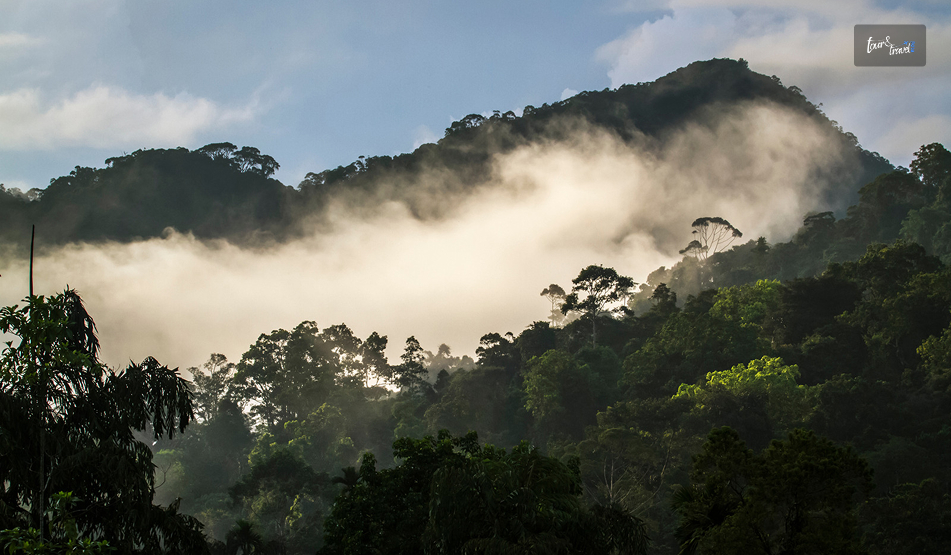
Sinharaja is wet, dense, and alive in a way none of the country’s safari parks are. 

Also, it doesn’t take long inside the canopy to understand why UNESCO calls it the island’s last viable stretch of primary tropical rainforest. 

The name means ‘Lion Kingdom’ in Sinhalese.  

Also, the forest earned its UNESCO World Heritage status in 1988, a decade after it was declared a National Heritage Wilderness Area in 1978 in response to government-sanctioned clear-felling.  

Conservationists and the March for Conservation movement pushed to stop the logging. What is left today, around 8,864 hectares in the country’s south-west wet zone, is the reason Sri Lanka still has a rainforest at all. 

Sinharaja Forest At A Glance 

Location South-West Wet Zone Spanning Sabaragamuwa and Southern Provinces 
Area About 8,864 Hectares 
UNESCO Status World Heritage Site since 1988 
Main Entrances Kudawa (North) Pitadeniya Deniyaya (South) Morningside 
Entry Fee Roughly LKR 2,700 (USD 15) Per Person Guide Charges Often Included in Tour Rates 
Best Time to Visit January to April August to September 
Known For 26 of Sri Lanka’s Endemic Bird Species 60%+ Endemic Tree Cover 
Guide Required?  Yes, Mandatory in the Core Zone 

Entry and guide fees are adjusted periodically. So, check current rates before you travel. 

Two Ways In: Kudawa Or Deniyaya

Sinharaja Forest Reserve: Inside Sri Lanka’s Last Rainforest

Sinharaja has several access points, and which one you choose shapes the whole trip.  

Kudawa 

Kudawa, on the northern side, is the most established entrance. It is home to the Rainforest Research Centre and the easiest place to arrange a local guide on short notice. 

It is the default choice for most first-time visitors.  

Deniyaya 

It is on the southern side, sits closer to Galle and the south coast, making it the more convenient option if you are combining Sinharaja with a beach stay rather than approaching from the hill country.  

There are also quieter entrances at Weddagala and Lankagama, better suited to serious birders who’d rather skip the more-visited trails entirely. 

I went in through Kudawa, mainly because I was routing down from Ratnapura, and found it well organised. 

A small visitor centre, a board of registered guides, and a clear sense that the rangers here take the guide requirement seriously.  

That is not a formality to skip. The trail network inside the core zone isn’t signposted, and entering without an assigned guide is not allowed. 

Finding A Guide Worth Having 

Arrive early by 6:30 or 7 AM if you can to get first pick of guides rather than waiting around mid-morning for whoever’s free.  

The good ones carry field notebooks, know individual bird calls from memory, and can tell you at a glance which species is endemic and which is not. 

It matters a lot in a forest where a large share of what you are looking at exists nowhere else.  

Tipping is customary and separate from the guide fee. A 500–1,000 LKR per person for a thorough half-day is a reasonable benchmark. 

What You Will Actually See

Sinharaja Forest Reserve: Inside Sri Lanka’s Last Rainforest

Sinharaja’s reputation rests heavily on its birdlife, and for good reason.  

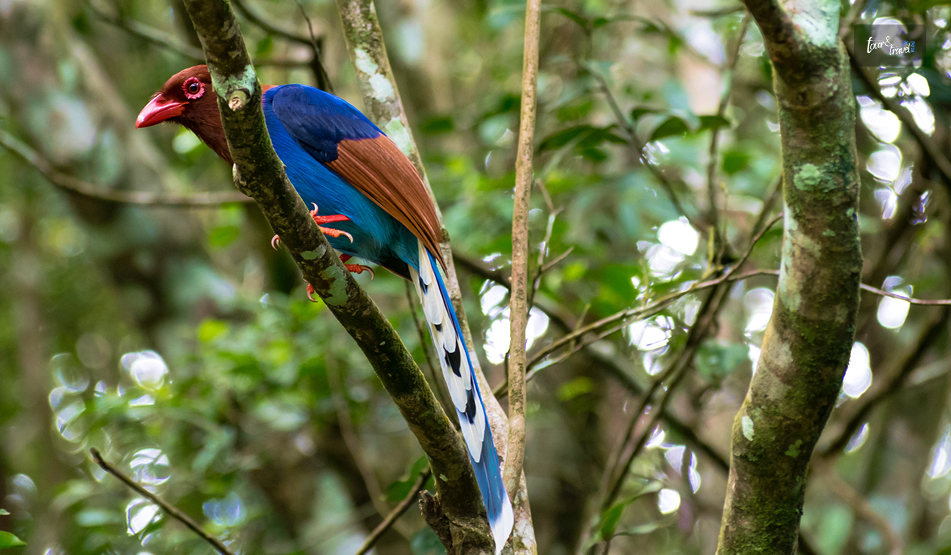
Close to 20 of Sri Lanka’s endemic bird species live here. The species include Sri Lanka blue magpie, red-faced malkoha, green-billed coucal, and ashy-headed laughingthrush.  

The real spectacle is not a single rare sighting, but the mixed-species feeding flocks locals call ‘bird waves.’  

A sudden, chattering rush of a dozen or more species moving through the canopy together.  

My guide seemed to time our walk around finding one, and when it happened, it was worth the wait. 

Mammals  

Mammals are a different story.  

Leopards and Indian elephants both live in Sinharaja, along with the endemic purple-faced langur. 

However, the dense canopy and thick undergrowth make sightings genuinely rare. 

So, don’t plan your visit around seeing one.  

Endemic Plants  

What you will see, reliably, is an extraordinary concentration of endemic plant life. 

Over 60% of the tree species in the core zone exist nowhere else on Earth, alongside rare amphibians, reptiles, and insects that make Sinharaja one of the world’s recognised biodiversity hotspots. 

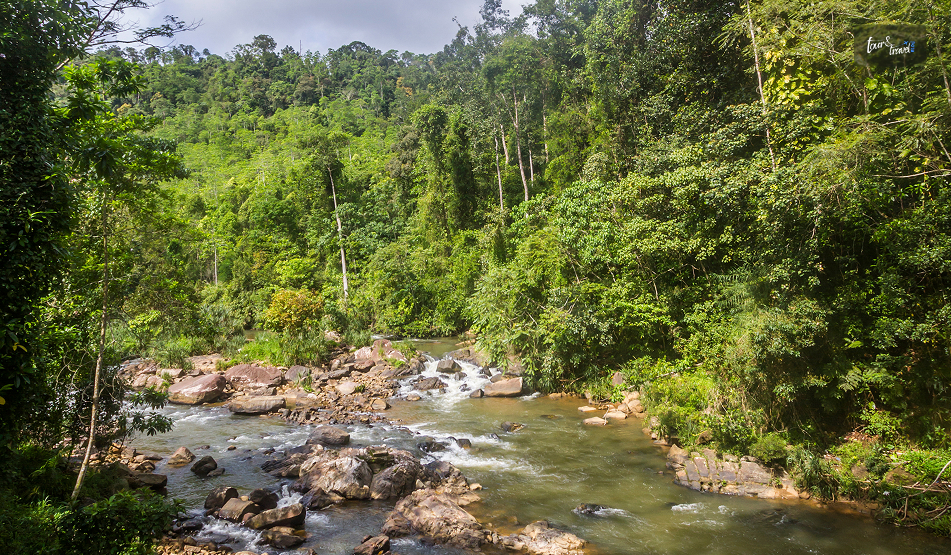
Streams and small waterfalls cut through the forest at several points, and they are some of the best rest stops on a longer walk. 

Slippery rocks and mossy banks rather than anything manicured, but a welcome place to sit with the sound of water after an hour of humidity and undergrowth. 

Not Untouched, But Genuinely Wild 

It is worth knowing that Sinharaja is not pristine wilderness in the strictest sense. 

Selective logging continued until the 1970s, and buffer zone villages still use parts of the surrounding land.  

But the core zone has regenerated substantially, and walking into it, the canopy closes overhead within minutes in a way that immediately feels different from anywhere else I visited in Sri Lanka.  

It is less a technicality than a reminder of how close the country came to losing this forest entirely. 

That is why the conservation fight over it in the 1970s still shapes its management today. 

Practical Tips For Visiting Sinharaja Forest Reserve

Sinharaja Forest Reserve: Inside Sri Lanka’s Last Rainforest

Here are the things you need to keep in mind about what to carry, how to reach Sinharaja Forest Reserve, and the duration of your time here.  

What To Wear And Bring 

Bring leech socks (available cheaply near the entrances) or high boots tucked into trousers, a light rain jacket regardless of season, binoculars if birding is any part of your interest, and a reusable water bottle.  

The humidity is constant, so pack lighter layers than you’d expect for a ‘forest’ hike. 

How Long To Plan For 

A guided walk typically runs two to five hours depending on your pace and chosen trail. A standard loop from Kudawa is often around three hours.  

If you are serious about birding, build in a full morning. The best activity clusters between roughly 6:30 and 10 AM, after which the forest quiets down and the heat picks up. 

Getting There 

The nearest major towns are Ratnapura and Galle. Neither entrance has access to direct public transport. 

So a hired vehicle or pre-arranged tour is the practical option.  

Several south-coast-based tours run day trips from Galle, Bentota, and Hikkaduwa if you would rather not organise transport yourself. 

Where This Fits In A Sri Lanka Itinerary 

Sinharaja pairs naturally with a hill country or south coast loop. You can visit it either as a detour from Ratnapura’s gem country or as a rainforest counterpoint to a beach-heavy stretch of the south.  

It is a full-day commitment once you factor in travel, entry, and the walk itself. So, I would avoid trying to squeeze it in alongside another major activity on the same day.

Share on Social Media

Sibashree is a travel, culture, and leisure writer who has been writing since the age of 12 and professionally since 2014. With more than a decade of travel writing experience and journeys across India and several parts of the world, she brings a deeply personal and thoughtful perspective to her work. A student of English Literature and Mass Communication, Sibashree has always viewed travel as more than movement — for her, it has been a way of understanding people, cultures, and herself. Her passion for spiritual exploration has also led her to many unusual and meaningful destinations over the years. Outside of writing, Sibashree enjoys watching European cinema, reading about global politics, and reflecting on the stories hidden within everyday places.

Leave a Reply

Your email address will not be published. Required fields are marked *

title-img Related

READ MORE cherry blossom kyoto japan

Cherry Blossom Kyoto Japan: 2026 Season And The Top Viewing Spots 

BY  Sibashree Mar 27, 2026

The cherry blossom season has arrived in Japan. The Japan Meteorological Agency has announced the arrival of the most coveted season in the country on 19th March, 2026.  The somei-yoshino tree of the Yasukuni Shrine had more than 60 blossoms open then, and that prompted the announcement.  So, the recent warm weather has caused the arrival of the cherry blossom season earlier than last year.  However, the season of cherry blossom in Kyoto arrived a few days later on 23rd March, 2026. So, currently, the fervor around the cherry blossom Kyoto Japan is at its peak.  With the country now becoming irresistible with the blooms taking over the parks and roads, here is more about the cherry blossom season in Kyoto and the best viewing points.  When Is The Cherry Blossom Kyoto Season? Timing a trip to the cherry blossom Kyoto season or to see Sakura is a crucial exercise. The beauty and charm of these flowers are fleeting.  So, the when part of it is equally important as the where part.  Check out the table below for an idea about when the cherry blossom season arrives in Kyoto and how it progresses.  Cherry Blossom Season Months Budding and Blooming of Cherry Blossoms Kaika or the First Blossoms Late March Early April Mankai or Full Blooms by 7th AprilMid-AprilPetals Start to Fall and Create Petal Carpets Everywhere However, like 2026, the season can arrive early or even a little late.  The variation happens because the present temperature impacts the budding and blossoming of flowers.  If the weather is warmer, the flowers will blossom earlier than the average season. On the other hand, if there is a cold snap, the flowers will arrive late.  However, Kyoto has an advantage in this regard thanks to its diverse microclimates. Also, it boasts different cherry blossom tree varieties spread across different elevations.  So, even if you miss the cherry blossom scene at any of the shrines in Kyoto, you may find the flowers at any other place.  What Are The Places To See Cherry Blossom In Kyoto? Kyoto and all of Japan celebrate the cherry blossom season. It is enriching to witness such a deep bond between the people there and nature.  They love clicking pictures of flowers, picnicking under the trees, and just soaking in the happiness and beauty the flowers bring.  However, if you want to experience the best of the cherry blossom scene, you need to know about the places with the best views.  1. The Philosopher’s Walk (Tetsugaku-No-Michi) The Philosopher’s Walk is a canal-side stone walkway winding its way along the base of Hikoshiyama (Eastern Mountain Range). I began my day here.  The name has significance, and legend has it that Professor Kitaro Nishida of Kyoto University (an early 20th-century philosopher) walked this route daily for meditative purposes. Thus, it’s now known as the “Philosopher’s Walk.”  When I first set foot on the Philosopher’s Walk, I could see why he was always walking there each day.  The entire length of the pathway is lined with hundreds of cherry trees leaning above the water, creating a ceiling of pale pink blooms.  I found myself continually distracted while walking to the shop, eat, or visit the small shrines draped throughout the landscape.  Even with hundreds of people visiting this site daily, I felt as if I were walking alone, contemplating life.  There is nothing that compares to the silence created by having cherry blossoms fall off branches and drift gently down into the slow-moving canal below.  I felt as if I had achieved a moment of peace, not as a tourist but rather as an individual taking time out of their busy lives to think quietly, like all the others on the path. 2. Maruyama Park (Maruyama-Kōen) The Philosopher's Walk is for reflection, and Maruyama Park is the place to be to party!  The number of people in the park and how electric the atmosphere felt, I have to believe it is the most popular place to view blossoms in all of Kyoto.  It serves as a hub of hanami (flower-viewing) culture within the city. A huge, famous weeping cherry tree serves as the main attraction of the park.  Seeing the tree in person was an overwhelming experience for me because its branches seemed to flow downwards like water from a fountain.  The portion of the park that surrounded the tree became a festival site.  I saw blue tarps lying all over the park, and the universal sign of hanami gatherings with friends and family, eating, drinking, and just being together under the flowers.  The edge of the park had many food stalls offering various foods like yakitori and sweet dango. 3. Shimbashi Street (Shirakawa-Dori) Later, as I headed to find Shimbashi Street in the Gion neighborhood, my guidebook boldly said that Shimbashi was the “most beautiful street in Asia.” When you first step into Shimbashi, you feel the essence of Kyoto’s refined beauty throughout the street.  Cherry trees line the street and form a thick canopy above the walkways, and beside the traditional wooden buildings, streams flow gently through the area.  Many of the wooden buildings along the way hold exclusive ryotei (expensive) restaurants, and the whole atmosphere feels as if it were pulled from a time before us.  The most exciting thing for me was the ‘parade’ of kimonos that I observed as I strolled.  Locals and couples routinely have their picture taken in a kimono (professional photo), and the vibrant colours of the silk kimono against the soft pastel cherry blossom trees made a beautiful visual transition from the past to the present.  I ended up discovering a small bistro at the end of Shimbashi Street that had cherry blossoms providing a tunnel effect above.  Eating lunch (al fresco) under the blooming tunnel while watching the many young couples walk past in traditional clothing was certainly the highlight of my time in the city.  It was both romantic and timeless and contained an ideal balance between the two. 4. To-ji Temple With the sunlight fading, I headed to the To-ji Temple.  The To-ji Temple is known for its five-story pagoda, which has the tallest wooden tower in Japan. However, what I was more excited to see was the massive, beautiful, weeping cherry tree. A trip to To-ji Temple in the evening is highly recommended.  They flood the entire grounds with bright white flood lights when it gets dark outside.  The weeping cherry tree illuminated with pink lighting is stunning against the night sky and the outline of the ancient pagoda.  Also, the weeping cherry took up most of the memory on my camera.  I spent a fair amount of time walking around the grounds. There are many other cherry blossom trees around the grounds that also have the same beautiful effect from the lights at night as well. They take on an almost ghostly, pearl-like quality that you can only get from external lighting at night. 5. Kiyomizu-Dera Temple No visit to Kyoto would be complete without going to see the Roji temple, aka the "Pure Water Temple."  However, viewing it in cherry blossom season looks like such a different experience from what I saw.  The main hall has a huge terrace about 97 feet long, which is one of the best places I found to view it. As I looked down from this height, I could see all across the surface of the mountain, where there were many different types of cherry trees blooming or not blooming along the slopes.  The pink blossoms (the cherry trees' flowers) create a nice light-coloured contrast with the dark, weathered wood of the temple architecture.  When I walked down the ramp toward the exit, I noticed there were more clusters of trees planted near the pond at the end of the flower field.  I saw the reflection of trees on the surface of the pond.  The temple complex is enormous, and the scale of the cherry tree blossoms in this area is impressive.  6. Arashiyama Last, I traveled to the far west side of the city to Arashiyama. It is about 8 km from downtown and is a really refreshing and beautiful area filled with nature. While standing just north of the Togetsu and looking up at the mountain beside me, I could see a dense tapestry of hundreds of cherry trees interlaced with evergreen trees. They made a perfect background for the Hozu River below me, with its many small boats full of people renting out their time to experience the beauty of the flowers from the water's side.  I was envious that I had not scheduled more time to experience this part of Japan.  I also thought that this (the hills full of flowers) was very similar to the Yoshino slopes.  On my way out of the area, I stopped at the Tenryū- ji Temple. I saw some incredibly large, mature cherry trees. These, along with the well-kept Zen gardens, appeared to be glowing against each other. Walking through Kyoto in the spring taught me that the cherry blossom isn't just a flower. It’s a vibe that settles over the entire city.  Is Osaka Or Kyoto Better For Seeing Cherry Blossom?  It’s difficult to pick a favorite between Osaka and Kyoto for the cherry blossom season. The vibes are very different.  While Kyoto has these iconic spots for seeing cherry blossoms, Osaka also has the Osaka Castle Park.  Furthermore, the scene in Kyoto is more traditional with temples, historical atmosphere, and the weeping cherry trees.  On the other hand, Osaka is more about picnics and exploring amazing food stalls.  However, Osaka is less crowded than Kyoto in the cherry blossom season. That is one advantage.  Also, Osaka is less expensive than Kyoto.  So, if you want less crowd and you are on a budget travel, Osaka will be your go-to place. Read Also: Is The Japan Rail Pass Worth It In 2026? Should I Buy Or Avoid It As A Conscious Tourist? What Are The Best Day Trips From Tokyo? Most Popular Ones You Will Love Is an Mt Fuji Day Trip From Tokyo Worth It? How To Plan It?
READ MORE Polonnaruwa

What Are The Best Things To Do In Polonnaruwa? [Ultimate Travel Guide]

BY  Sibashree Jun 3, 2026

Polonnaruwa is filled with ancient structures, shrines, and temples. So, it draws the attention of people who are interested in visiting a place of great historical importance. In this article, I will give you some important tips and talk about the places, sites, and the history of the place that drew my attention. A Brief History Of Polonnaruwa Before getting into other details, we should take a look at the history of the place. Furthermore, knowing the history of Polonnaruwa will make the trip more interesting. Polonnaruwa was the second major capital of Sri Lanka, which came to prominence after the destruction of Anuradhapura in 993 AD. Moreover, it was the most important commercial and religious center of that time. Polonnaruwa reached its golden age in the 12th century under King Parakramabahu I.  The Chola Period (10th Century To 11th Century) The South Indian Chola dynasty conquered the ancient capital of Anuradhapura and made Polonnaruwa their new capital. Moreover, they renamed the city Jananathamangalam and built several Brahmanical monuments like the Siva Devale temple. Furthermore, the Cholas chose Polonnaruwa over Anuradhapura as the capital because it was positioned strategically in the heart of Sri Lanka. Additionally, the position of the city also gave them protection against the rebellion of the Ruhunu Sinhalese kingdom. Sinhalese Golden Age (11th Century To 12th Century) The strategically positioned capital couldn't stay protected from the Sinhalese. Eventually, in 1070, the Sinhalese King Vijayabahu I defeated the Cholas and restored Sinhalese rule. He also kept Polonnaruwa as the capital of the Sinhalese kingdom. The city reached its highest glory under his successors: King Parakramabahu 1 (1153 to 1186): King Parakramabahu 1 is often called the Great. He turned the city into a beautiful garden city during his rule. Additionally, he built Vaijayanta Pasada (Royal Palace) and intricate temples like the Lankatilaka Temple. Moreover, he built a massive 25-square-kilometer artificial lake known as Parakrama Samudra to secure water for his people. King Nissanka Malla (1187 to 1196): King Nissanka Malla also tried to match his predecessors' construction projects. In trying to do so, he ended up bankrupting the kingdom. Decline And Rediscovery (13th Century Onwards) There were several invasions and turmoils going on because of which the city’s resources and administrative system collapsed in the early 13th century.  The capital moved to the southwestern side of the island, and gradually, the jungle spread through Polonnaruwa. Finally, archeologists rediscovered the ruins of Polonnaruwa in 1860, and the forgotten city stands as a UNESCO World Heritage Site. Places To Visit In Polonnaruwa Polonnaruwa is a place of historical significance. The ancient structures, shrines, and temples draw the attention of visitors.  What amazed me was the well-preserved ancient remains. Moreover, I feel that a bicycle is an amazing option for traveling through the city. Places I found most amazing in Polonnaruwa are: The Gal Vihara The Gal Vihara is four giant Buddha statues, which are carved out of a large granite gneiss rock. The images consist of a large seated figure, another smaller seated figure inside an artificial cavern, a standing figure, and a reclining figure. Additionally, King Parakramabahu I fashioned this rock structure in the 12th century. Moreover, there is a story regarding this rock structure, which is one of the four statues, that isn't actually Buddha. Many people say that it is one of his grieving apprentices. The Polonnaruwa Vatadage Remaining unnoticed for several centuries, the excavation of Polonnaruwa Vatadage started in 1903. Many people believe that Parakramabahu 1 built this place to hold the relic of the tooth of Buddha. Moreover, another group of people believes that King Nissanka Malla built this place to hold the alms bowl used by Buddha. Additionally, the structure has two stone platforms decorated with stone carvings. You can enter the lower platform through a single entrance, which is facing the north. You can enter the second platform through four doorways facing four cardinal points. Hatadage Hatadage is another place that I found very fascinating. This place is found next to the Vatadage. This place holds a historical importance for tourists. Hatadage is located in the ancient city of Polonnaruwa. According to historians, King Nissanka Malla built this place. Moreover, Nissanka Malla built this place as a shrine to keep the relic of the tooth of the Buddha. Furthermore, many people say that the place holds sixty relics. I found this place very fascinating to visit. The Lankatilaka Temple The Lankatilaka Temple is another interesting place to visit. The temple is located on Panhalgala Rock in Udunuwara. Moreover, King Bhuvanekabahu 4 constructed this temple. Additionally, the temple has beautiful stonework, rock inscriptions in both Sinhala and Tamil, and a striking dragon arch. The walls of the temple reach 17 meters in height and have a large statue of Buddha. Furthermore, the design of the stairways of the temple drew my attention. Every step of the stairway is only 10 centimeters wide. So, it is difficult to climb. Moreover, with such short steps, the only way to climb down is sideways. While climbing down this manner, you won't be able to turn your back towards the statue of Buddha, which is also considered disrespectful. Rankoth Vehera Stupa The Rankoth Vehera Stupa is the largest stupa in the ancient city of Polonnaruwa. King Nissanka Malla built it. The fascinating part of the stupa is that it is built entirely of brick, and it is set upon a large square terrace. When you walk around the stupa, you will get to know how big it is. How To Go Around Polonnaruwa? There are several ways to go around Polonnaruwa. The two most convenient ways are: Bicycle According to me, the best way to see Polonnaruwa is by bicycle. Moreover, there are many ruins spread out throughout Polonnaruwa, and a bicycle will let you move freely from one place to another. Furthermore, there are many hotels and shops in Polonnaruwa from where you can rent a bicycle. Finally, renting a bicycle will make your trip convenient and budget-friendly. Tuk Tuk  Tuk-tuk is also a good option for going around in Polonnaruwa. Moreover, hiring a tuk tuk will also provide you with a driver as a guide, which is very amazing to see the ancient city. Furthermore, you should choose a tuk-tuk if you are in a hurry. Though I prefer renting a bicycle. How To Reach Polonnaruwa? I will give a few routes for Polonnaruwa with cost and travel time. You can choose the convenient one for you. From Sigiriya To Polonnaruwa Bus: Sigiriya – Inamaluwa – Polonnaruwa – Kaduruwela | After a short tuk-tuk journey from Sigiriya to Inamaluwa, jump on the bus to Kaduruwela. Cost: Tuk-tuk from Sigiriya to Inamaluwa 500 LKR, ($2.8) | Bus from Inamaluwa to Polonnaruwa 200 LKR, ($1) per person Travel time: 1.5 hours From Dambulla To Polonnaruwa Bus: Dambulla – Polonnaruwa – Kaduruwela | Take a direct bus that heads for Kaduruwela from the Dambulla Main bus stop. The bus leaves every 20-30 minutes starting from 7 am. Cost:  Bus from Dambulla to Kaduruwela – 220 LKR ($1) per person Travel time: 1.5 to 2 hours From Trincomalee To Polonnaruwa Bus: Trincomalee – Habarana – Polonnaruwa | A quite difficult journey. From Trincomalee, take a bus heading for Dambulla or Colombo. Tip: Before entering, ask if the bus driver stops in Habarana and if there is a connection to Polonnaruwa. Generally, you’ll find buses that stop in Polonnaruwa at the Habarana Junction. Cost: Bus from Trincomalee to Habarana – 120 LKR, ($0.70) | Bus from Habarana to Polonnaruwa – 80 LKR, ($0,50) Travel time: 4 hours From Colombo To Polonnaruwa Train: Colombo Fort – Polonnaruwa | A rough journey that is packed and heads out to the east coast of Sri Lanka. Personally, I recommend visiting Kandy and Sigiriya in between. Cost: 2nd class: 350 LKR ($2) per person, 3rd class: 200 LKR ($1) per person Travel time: 6.5 hours What To Eat In Polonnaruwa? In Polonnaruwa, you should always go for authentic Sri Lankan rice and curry. I will mention some of the best dishes according to my choice: Traditional Rice And Curry There are many places in Polonnaruwa where you can get an authentic Sri Lankan platter or buffet. In this platter, you will get 10 to 30 freshly made vegetable and meat curries. Moreover, this will be served on a lotus leaf. String Hoppers String hoppers are a breakfast and dinner dish. It is made of steamed rice flour noodles. Additionally, they serve it with spicy coconut sambal (Pol Sambol) and dal (Lentil) curry. Polos (Young Jackfruit) Curry It is a green jackfruit curry. It is cooked slowly and looks like meat. Additionally, they cook it with regional spices, which enhance the taste of the dish. Where To Eat In Polonnaruwa There are some places you can go to get high-quality, authentic Sri Lankan food. I will share some places that I liked. Jaga Food It is a good place you can go to have your Sri Lankan buffet prepared in a traditional clay pot. Moreover, this is a place with an excellent outdoor seating arrangement. Priyamali Gedara It serves authentic, high-quality local home-cooked curries. Tree Hut Restaurant I found this place amazing because of its blend of traditional local dishes with Chinese-inspired options.

READ MORE Kalutara

Why Is Kalutara So Famous? Know The Best Things To Do In This Historic Coastal Town 

BY  Sibashree Jul 8, 2026

Visit Kalutara if you are not already smitten by the whiff of fresh tea and cinnamon together; you must visit Kalutara.  The Kalu Ganga river, the fertile tropical soil, and the proximity to the Indian Ocean have made the region ideal for the cultivation of tea, rubber, and cinnamon since British rule.  So, when I reached Kalutara, I saw women wearing colorful sarees plucking fresh tea leaves and storing them in the hessian sacks hanging on their backs.  Furthermore, the iconic Richmond Castle, at a short distance from the Kautara City, and many architectural features here are remnants of colonial heritage in this historical town.  In this article, I will talk about the location of Kalutara, how to travel to it, why it is so famous, the things to do, and more. I will also share my experience filled with the visuals of cinnamon peelers and rubber tappers and the salty fragrance of the Indian Ocean.  Where Is Kalutara?  At a distance of around 42 kilometers from Colombo, the capital of Sri Lanka, Kalutara is on the western coast of Sri Lanka.  You reach this coastal town after a drive of 1 to 1.5 hours from Colombo.  Furthermore, Kalutara is the gateway to popular beach towns like Galle and Bentota.  Kalutara is most revered for the Kalutara Bodhiya Stupa, and the sweet purple mangosteen fruits here are another signature of the coastal town.  How To Reach Kalutara?  The journey to Kalutara from Colombo on the southern railway line is one of the most beautiful train journeys in Sri Lanka.  Furthermore, you will get public and private buses for the journey, and you can even book a private vehicle for the transit.  Here are more details about the transport options.  1. Colombo To Kalutara By Train You will get many trains from Colombo Fort to Galle, Kalutara South, and Matara. Trains are available throughout the day and from as early as 5:39 AM.  Furthermore, the last train for the day to Kalutara departs Colombo Fort at 9:36 PM. Also, the travel time is between 48 minutes and 1 hour and 20 minutes.  In addition, the ticket price for travel in a third-class coach is LKR 480.  2. By Bus  Public, private, and air-conditioned buses are available from Colombo to Kalutara. These buses run on the Galle Road.  These buses take around 3 hours and 30 minutes, and the ticket price is approximately LKR 600. 3. By Private Transport  The short distance between Colombo Fort and Kalutara is ideal for travel by car. The travel time will be around an hour, and the cost will be between LKR 3500 and LKR 4500.  You can either take the Galle Road for the commute or the Southern Expressway ( E01) as a faster alternative.  4. Moving Around In Kalutara  Kalutara is very much walkable, or you can take a tuk-tuk to move around. Furthermore, you can rent a bike or bicycle for a day to explore the coastal town at your own pace.  The rental charge will be around LKR 2500 to 3500 per day, and the rental agency will help you with the local driving license or other permit you need.  Why Is Kalutara So Famous?  The city of mangosteen and home to the Gangatilaka Vihara, the only hollow Buddhist Stupa in the world, Kalutara awaits with an air that is heavy with history, spirituality, and the stories of the bonding between humans and nature.  I have been to the Dambulla Royal Cave Temple and the Gal Vihara in Polonnaruwa. Kalutara felt like an extension of my visits to those places.  1. The Gangatilaka Vihara My jaw dropped as I stepped out of the humid coastal air and into the echoing, cool interior of the Gangatilaka Vihara.  The massive dome soared above me, and I found the inner walls covered in 74 intricate, vibrant murals depicting the life of the Buddha. Also, as I was inside the Gangatilaka Vihara, the traffic on the busy Galle Road got transformed into a soft hum, and the air was filled with the gentle chanting of pilgrims clad in white. 2. The Secrets Of The Sacred Tree I left the giant stupa and found the Kalutara Bodhiya just across the road. I felt the high energy instantly and was staring at the massive, ancient Bodhi tree.  A friendly local devotee named Anura noticed me, and she confirmed the facts I had read. This tree grew from one of the original 32 saplings of the Jaya Sri Maha Bodhi in Anuradhapura, linking it back over two millennia. Also, as I sat close to the tree, I found drivers stopping their vehicles in the middle of the bustling highway, stepping out just long enough to drop a few coins into a donation box for a blessing before driving on. Then, I performed the common ritual by pouring a small clay pot of water over the sacred roots.  The sheer energy of hundreds of people whispering prayers in unison under the rustling leaves gave me goosebumps. 3. The Magnificence Of A Coastal Castle  Kalutara is also about colonial opulence. This castle is on a 42-acre estate, and it was built in 1896.  This feels like a grand British manor house dropped straight into a Sri Lankan spice forest. As I walked through the grand banquet hall, I was amazed by the blend of Indian and British architecture.  The caretaker pointed out the intricate timber work, bragging that the wood had been imported all the way from Burma.  Standing on the sweeping balconies, looking over the sprawling grounds, it was easy to picture the extravagant, high-society parties that once took place here during the height of the rubber boom. Sunsets, Straw Hats, And Purple Fruit The natural geography of Kalutara also makes it stand out. The Calido Beach, especially, is magical in the late afternoon.  This is a narrow spit of land where the freshwater Kalu Ganga (Black River) runs parallel to the crashing saltwater waves of the Indian Ocean. Then, I sat on the sand and watched the local fishermen battling the currents where the river meets the sea, the sky turning a brilliant shade of bruised purple. On my way back, I stopped at a roadside stall where an elderly artisan was weaving palm leaves into a vibrant sun hat. Remember that Kalutara is Sri Lanka's "basket capital," and watching her fingers fly was hypnotizing. Also, before I left the stall, she handed me a magosteen and a dark purple fruit.  I cracked open the thick, leathery rind to reveal snowy, delicate segments.  The taste was an explosive mix of sweet and tangy, a perfect edible summary of Kalutara itself: bright, surprising, and utterly unforgettable. What Are The Other Things To Do In Kalutara? Along with the iconic landmarks that make Kalutara famous, some other attractions and activities await you in Kalutara.  1. Finding An Escape In The Brief Garden The Brief Garden was the former residence of Brevis Bawa, one of the most iconic architects of Sri Lanka.  It stands out with its artistic beauty, and that artistry blends well with the rich flora and fauna and fascinating sculptures.  I enjoyed a stroll in this delightful garden.  While walking through the hidden alleys and nooks, I enjoyed every bit of the artistic ambiance.  2. Going For A Guided Hike In The Sinharaja Forest Reserve The Sinharaja Forest Reserve is a UNESCO World Heritage Site. UNESCO designated this as a heritage site in 1998.  About the forest reserve, the UNESCO World Heritage Convention further mentioned,  “More than 60% of the trees are endemic and many of them are considered rare.  There is much endemic wildlife, especially birds, but the reserve is also home to over 50% of Sri Lanka's endemic species of mammals and butterflies, as well as many kinds of insects, reptiles and rare amphibians.” Moreover, the forest reserve has more than 450 species of trees. It even has hidden waterfalls forming clear streams. I could even spot the most vibrant tree orchids.  The nature trails here are well-maintained, and the hiking experience becomes all the more delightful with the chirping of the birds.  So, if you are planning a trip to Sri Lanka and want the best wildlife experience, you must add the Sinharaja Forest Reserve to your itinerary, along with the Yala National Park, Delhiwala Zoo, etc.  3. Spotting The Nesting Turtles At Kosgoda Turtle Hatchery The Kosgoda Sea Turtle Conservation Project, founded by Dudley Perera, is located approximately 27.7 kilometers south of Kalutara along the Galle Road (A2). It took around 40 minutes for me to reach the spot on a bike.  This project has been dedicated to monitoring the sea turtles here for three decades. They work to preserve these endangered animals and want to spread awareness about them.  The remarkable hatchery here focuses on collecting and rescuing eggs and storing them in a haven.  Furthermore, after the eggs are hatched, the turtles are only released into the ocean when they can fight the predators.  4. Trying The Spicy Local Cuisine  Kalutara has a rich history of spice trading. So, as expected, Kalutara has a culinary culture worth exploring.  Furthermore, every dish stands out with a perfect balance of zest, sweetness, and spice. Rice and curry, freshwater fish baked in banana leaves with coconut, tamarind, and mustard paste are some of the best dishes to try.  5. Exploring The Handunugoda Tea Plantation Do you want to extend your travel plans in the Handunugoda Tea Plantation a little? Then, you can travel for around 1 hour and 30 minutes and reach the Handunugoda village.  This tea plantation is famous for producing the “Virgin White Tea.”  Moreover, you can take a guided tour of the tea plantation and see the tea pluckers in action.  A Trip To Kalutara: Know The Perfect Itinerary  Two to three days are enough if you want to have an immersive experience in Kalutara. So, here is a 3-day itinerary for you.  DaysTimeActivityKey Highlights and Cultural InsightsDay 1MorningVisiting the Gangatilaka ViharaThe only hollow Buddha Stupa in the world. Late MorningKalutara Bodhiya and Sacred TreeThis tree grew from one of the original 32 saplings of the Jaya Sri Maha Bodhi in Anuradhapura. LunchTrying Spicy Local CuisineEnjoy a traditional rice and curry lunch. Taste local freshwater fish baked in banana leaves with coconut, tamarind, and mustard paste.AfternoonVisiting Richmond CastleExplore this grand 1896 Edwardian mansion built on a 42-acre estate. Marvel at the blend of Indian and British architecture and the Burmese timber work.Late AfternoonVisiting Calido Beach and Watching Palm WeavingWalk the narrow coastal spit where the Kalu Ganga meets the sea. Watch artisans weave vibrant straw hats from palm leaves and sample fresh, sweet mangosteens.Day 2MorningVisiting the Brief Garden by Bevis BawaTake a stroll through the former residence of iconic architect Bevis Bawa. Explore hidden alleys, rich flora, and fascinating sculptures blended into nature.AfternoonLearning Experience at Kosgoda Sea Turtle HatcheryTake a 40-minute ride south along Galle Road to Dudley Perera's conservation project. See how endangered sea turtle eggs are rescued, incubated, and safely released.EveningSunset and Coastal RelaxingHead back up the coast to Kalutara for a quiet seaside evening, taking in the purple-hued sunset away from the busier commercial beach crowds.Day 3Full Day (Option A)Hiking in the Sinharaja Forest ReserveEmbark on a guided nature trek through this UNESCO World Heritage Site. Spot endemic birds, rare butterflies, wild orchids, and hidden forest waterfalls.Full Day (Option B)A Visit to the Handunugoda Tea PlantationTravel 1.5 hours south to visit the famous home of "Virgin White Tea." Take a guided estate tour, see tea pluckers in action, and learn about the delicate processing. From modest homestays to luxury hotels and resorts such as Avani Kalutara, Kalutara has diverse modes of accommodation.  These will cost around LKR 5000 to 50000 per person per night.