
Maduru Oya National Park: A Quiet Corner Of Wild Sri Lanka

Everyone mentions elephants when talking about Maduru Oya. However, for me, it was different, though they were everywhere around me.  

It was the silence that grabbed my attention first.  

The week with crowded safari queues at Minneriya and Kaudulla was hectic. So, when I reached the Maduru Oya National Park, it felt like stepping into an empty room from a busy street.  

There was no convoy of jeeps kicking up dust or radio chatter between drivers racing to the same sighting. 

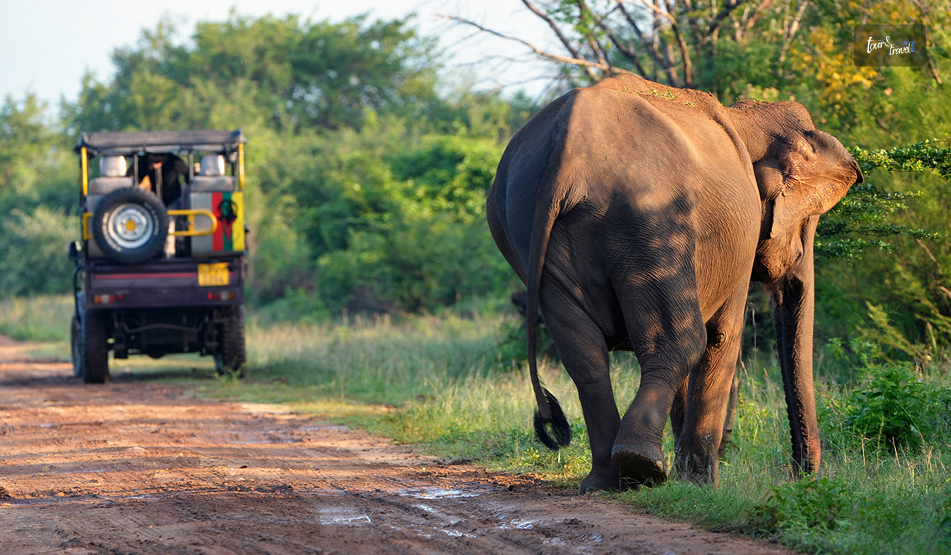
Just tall grass, a wide blue reservoir, and the low rumble of our jeep’s engine! 

Maduru Oya is in the dry zone of Sri Lanka, and it is around 314 kilometers from Colombo. Furthermore, it stretches over Polonnaruwa, Badulla, and Ampara districts. 

It became a national park in 1983 as part of the Mahaweli Development Programme.  

The Programme aimed to protect the catchment area of the Maduru Oya reservoir and four other tanks that feed the region’s irrigation network. 

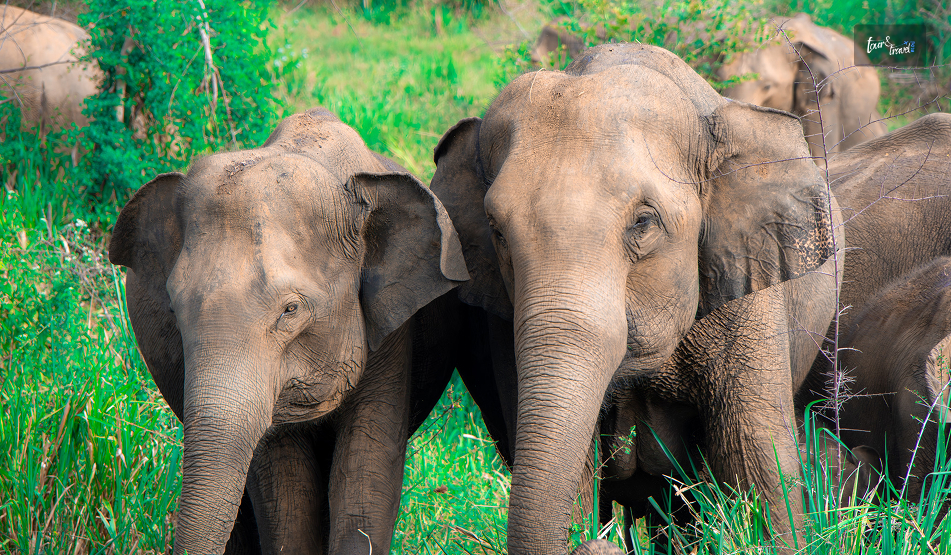
However, you do not remember all these details once you are inside the national park. You have your eyes set on a herd of elephants wading through the shallows with the reservoir stretching out behind them. 

Maduru Oya At A Glance 

Location Polonnaruwa, Badulla and Ampara districts, dry zone  
Distance from Colombo About 314 km (roughly 5–6 hours by road)  
Area 58,850 hectares  
Declared a national park 9 November 1983  
Best time to visit March to September (dry season, better water-point sightings)  
Known for Elephant herds, Vedda heritage, ancient Buddhist ruins  
Nearest hub Kuda Sigiriya / Mahiyanganaya area  
Hours 6 AM to 6 PM (The Ticket Counter Gets Closed at 4 PM.)  

Why Maduru Oya Doesn’t Feel Like Sri Lanka’s Other Parks

Maduru Oya National Park: A Quiet Corner Of Wild Sri Lanka

Fifteen percent of Maduru Oya is water, and 85% is landmass. This ratio shapes the characteristics of the park.  

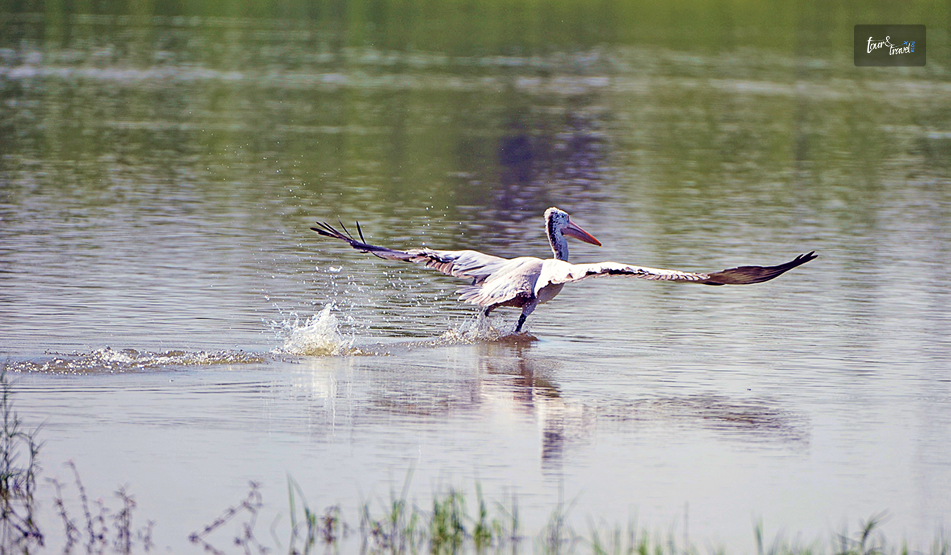
The reservoir and its surrounding wetlands draw the following birds and animals. 

  • Grey Pelicans 
  • Sea Eagles 
  • Painted Storks 
  • Elephants 

Also, the mix of open grassland, scrub, and water made every drive here feel more layered than the flatter areas.  

Furthermore, you will notice patches of tall secondary grass across the park due to the shifting of cultivation over the decades.  

Our guide kept reminding us that these are the places where elephants like to disappear. It happened twice or thrice! 

We spotted an entire herd of six or seven animals, and suddenly they were gone.   

The park’s boundaries lie in the low hills stretching from the Lunugala ridges. 

Also, to the southwest, a rocky mountain range spreads across roughly eight kilometres, giving the drive some visual relief from the flat dry-zone plains most visitors associate with Sri Lanka’s east. 

Wildlife: Elephants First, Everything Else After 

Maduru Oya is famous for its elephant population. Herds of elephants here are really large, and once you pass the tall grass, you will get long and easy-to-watch stretches without the sight of another vehicle.  

Along with elephants, you will also find the following wildlife here. 

  • Leopards 
  • Sloth Bears 
  • Sambar 
  • Spotted Deer 
  • Wild Boar 
  • Wild Buffalo 
  • Toque Macaques 
  • Purple-Faced Leaf Monkeys 

Moreover, if you are on a night-adjacent drive, you can spot nocturnal slender loris here.  

Reptile sightings are common too, with water monitors and the occasional mugger crocodile sunning near the reservoir’s edge. 

A Delight For Birders  

Birders have plenty to work with here, as close to a hundred species of birds call it home. Some species commonly spotted here are: 

  • Woolly-Necked Stork 
  • Openbill 
  • Painted Stork 
  • Racket-Tailed Drongo 
  • Sri Lanka Junglefowl 
  • Yellow-Fronted Barbet 
  • Spurfowl 

My trip has been mammal-heavy so far. So, Maduru Oya was a good place to slow down and let the birdlife catch up. 

Ruins The Safari Jeep Doesn’t Usually Stop For 

Maduru Oya also surprised me with the amount of history it stores inside.  

It has a scattering of ancient Buddhist ruins, shrines, hermitages, statues, and dagobas concentrated around areas like Henanigala, Kudawella, Gurukumbura, Uluketangoda, and Weerapokuna. 

Some of the Brahmi rock inscriptions here date back to the 1st to 3rd centuries BC. 

Also, an ancient sluice gate uncovered during construction of the Maduru Oya Dam is believed to date to around the 6th century BC.  

Most standard safari drives skim past these. 

If ruins interest you, mention it to your guide or driver before you set out, since a slightly different route can take you closer to them. 

The Vedda Community  

The park also sits within Vedda country.  

Sri Lanka’s indigenous Vedda community, believed by tradition to descend from King Vijaya and Queen Kuweni, live in and around the reserve. 

Some tours can arrange a respectful visit to learn about their way of life. I would treat this the way I would treat any community visit. 

Go through a reputable operator, and let the encounter be led by the community rather than treated as a photo stop. 

Planning Your Visit To Maduru Oya

Maduru Oya National Park: A Quiet Corner Of Wild Sri Lanka

Mahiyanganaya, Polonnaruwa, or the Kuda Sigiriya area are the common base areas for a visit to Maduru Oya.  

So, the park can easily fit into your itinerary as a side trip if you are already covering the Cultural Triangle.  

There is no public transport into the park itself. So, you will need a hired vehicle or a pre-arranged safari jeep. 

Most tour operators based in Habarana, Sigiriya, or Polonnaruwa can put together a half- or full-day excursion. 

Safaris And Costs 

Maduru Oya National Park: A Quiet Corner Of Wild Sri Lanka

A half-day safari jeep, roughly four hours, typically runs somewhere in the LKR 7,500–10,000 range. 

However, this varies by operator and season and rarely includes the park’s own entrance fee, which you pay separately at the gate.  

It is worth booking your jeep a day or two ahead during the dry season, when demand picks up.  

I would also second the advice I heard from more than one local guide. 

Go with a small group. Maduru Oya rewards patience and quiet, and a crowded jeep makes both harder to come by. 

Entry Fee 

Entry Fee and Charges to the Park How Much To Pay 
 Local Adults   LKR 60  
Local Children (6-12 years)  LKR 30 
Local Student  LKR 20 
Local Children (below 6 years)  Free 
Local Group Fee (per vehicle)  LKR 400 
Foreign Adults  USD 12 
Foreign Children (6-12 years)  USD 6 
 Adults from Foreign SAARC Countries    USD 10  
Children from Foreign SAARC Countries (6-12 years) USD 5 
SAARC Country Children (below 6 years)  Free of Cost 
Foreign SAARC Visitor Group Fee (per vehicle)   USD 10   
Taxes on Total Cost  18%  
Entrance Fee per vehicle LKR 300 

What Is The Best Time To Visit Maduru Oya National Park?

Maduru Oya National Park: A Quiet Corner Of Wild Sri Lanka

March through September is the sweet spot to visit Maduru Oya National Park.  

It is the dry season when wildlife concentrates around the designated water points of the park. So, sightings are more predictable.  

Early morning drives are cooler and calmer, and as with most Sri Lankan parks, the animals are noticeably more active before the heat of midday sets in. 

Where Does Maduru Oya National Park Fit In A Sri Lanka Itinerary?

Maduru Oya is not a park I would build an entire trip around. 

However, it is an excellent addition if you are already in the Cultural Triangle and want a safari experience without the crowds of Yala or Minneriya.  

Pair it with Polonnaruwa’s ruins in the morning and a Maduru Oya drive in the late afternoon, or use it as a quiet counterpoint after the more chaotic parks further south.

Share on Social Media

Sibashree is a travel, culture, and leisure writer who has been writing since the age of 12 and professionally since 2014. With more than a decade of travel writing experience and journeys across India and several parts of the world, she brings a deeply personal and thoughtful perspective to her work. A student of English Literature and Mass Communication, Sibashree has always viewed travel as more than movement — for her, it has been a way of understanding people, cultures, and herself. Her passion for spiritual exploration has also led her to many unusual and meaningful destinations over the years. Outside of writing, Sibashree enjoys watching European cinema, reading about global politics, and reflecting on the stories hidden within everyday places.

Leave a Reply

Your email address will not be published. Required fields are marked *

title-img Related

READ MORE Kurunegala

Why Is Kurunegala Famous? What Are The Best Tourist Places In Kurunegala? 

BY  Sibashree Jul 9, 2026

Kurunegala has recently been in the news due to infrastructure development. The cabinet meeting granted the construction of stage 1 of phase 4 of the Central Expressway Project.  It will connect Kurunegala and Dambulla, which is famous for the iconic Dambulla Royal Cave Temple.  The Road Development Authority (RDA) has further confirmed that the extension work will start in November 2026.  However, Kurunegala has always been a melting pot for the cultural hub of Kandy, Puttalam, Negombo and the country’s capital, Colombo.  Also, as the capital of the northwestern province, it holds massive strategic and political importance.  Where Is Kurunegala?  Kurunegala is in the north-western interior of Sri Lanka.  As the capital of the Kurunegala District and the North-Western Province, it also functions as a major transportation hub.  Furthermore, it is around 94 kilometers northeast of the country’s capital, Colombo. In addition, the distance between Kandy and Kurunegala is just 42 km.  How To Reach Kurunegala? While traveling from Colombo, Kandy is the gateway to reach Kurunegala. I took a bus from the Kandy Goods Shed Bus Stand.  Buses run regularly from Kandy to Kurunegala, or route 602, and the journey via Katugastota-Kurunegala Road (A10) takes around 1.5 to 2 hours.  I traveled in a regular bus, and the ticket price was LKR 200. Semi-luxury, luxury, and super-luxury bus options are also available on this route, and the ticket prices will be between LKR 350 and LKR 600.  Why Is Kurunegala Famous? Ancient Royal History! Majestic Geology!  An Agricultural Powerhouse!  These are the three main reasons behind Kurunegala’s prominent position in the tourism landscape of Sri Lanka.  The Capital Of Ancient Kingdoms From the late 13th to the early 14th century, Kurunegala was the royal Capital of Sri Lanka.  It was known as Hasthishaila-pura earlier, and under the rule of kings like Buwanekabahu II and Parakramabahu IV, it safeguarded the Sacred Tooth Relic of the Buddha. Also, including the Yapahuwa rock fortress, the silver cave temple of Ridi Viharaya, and the ancient ruins of Panduwasnuwara, the city has many historic ruins and citadels.  The City Of Animal Rocks A ring of eight massive ancient granite outcrops encircles Kurunegala. These granite outcrops, suddenly rising from the plains, look surreal.  Furthermore, my guide told me a fascinating folklore about these outcrops.  “Kurunegala once faced a severe drought. Then, a witch turned water-guzzling animals into stone. In fact, some of these rocks are famously named after the animals their silhouettes resemble.” For example, Athugala looks like an elephant, Ibbagala looks like the back of a tortoise, and Andagala resembles an eel.  The Heart Of The Coconut Triangle Kurunegala, like Kalutara, is famous for rubber estates. It also has endless coconut plantations.  In fact, it is located inside the “Coconut Triangle" of Sri Lanka. So, overall, it is a prominent commercial hub for agricultural production.  Moreover, it is the cradle of Selyn, Sri Lanka’s only fair-trade guaranteed handloom company. So, it is also a critical center for preserving the island's traditional textile heritage. What Are The Places To Visit In Kurunegala?  Kurunegala offers the ultimate off-the-beaten-path experience in Sri Lanka.  For me, the most fascinating places to visit here are the ancient rocks and the spiritual landmarks.  While these connect you to history, the scenic waterways and modern sanctuaries allow you to unwind and soak in the local vibe.  1. Athugala Rock Temple  Athugala dominates the skyline of Kurunegala.  This outcrop has a height of 325 meters, and it gets its name from its uncanny resemblance to a giant, crouching elephant (Atha meaning elephant and Gala meaning rock). Furthermore, once I reached the summit, I found a magnificent Buddha statue of 88 feet in height.  You can take a car ride to reach the summit. However, I preferred a trek through the stone steps.  Fortunately, I reached the summit at sunset. So, the experience was magical.  2. Ridi Vihariya Or The Silver Temple  Ridi Viharaya connects us to the 2nd century BCE. This ancient cave temple is around 20 kilometers away from the main town in Rideegama.  King Dutugemunu discovered a rich vein of silver ore here. Then he used the silver ore to finance the construction of the famous Ruwanweli Maha Seya in Anuradhapura. Furthermore, Ridi Vihariya is hidden by rocky cliffs and forest cover. Also, it is home to a magnificent reclining Buddha statue, Kandyan-era frescoes, and ivory carvings.  3. Yapahuwa Rock Fortress The Yapahuwa Rock Fortress is often compared to the Sigiriya Rock Fortress.  Yapahuwa was the capital of Sri Lanka under King Bhuvanekabahu I in the late 13th century.  Furthermore, the temple is constructed against a sheer, 200-meter-high granite rock that juts dramatically out of the surrounding jungle. Moreover, it has a highly ornamental staircase. Stone lions and intricate carvings adorn the path.  What is more fascinating than these steps, which once led to the royal palace and the Temple of the Sacred Tooth Relic? 4. Panduwasnuwara Ancient City Panduwasnuwara, which served as a temporary capital in the 12th century, is a dramatic ruin site. It has a well-defined citadel surrounded by protective moats and thick ramparts. Furthermore, inside the citadel, there are the foundations of a two-tiered royal palace, complete with ancient latrines and footings for wooden pillars. However, the Ektem Maligaya, or the perfectly circular tower, was the most fascinating feature of the Panduwasnuwara ancient city.  Local folklore links it to romantic legends of hidden princesses, while historians believe it was used by King Parakramabahu for swearing-in allegiance rituals. 5. Kurunegala Lake (Rantalia Tank) Kurunegala Lake is the ultimate place to unwind after a busy day. It is at the foot of the animal rocks.  I loved walking along the well-paved path hugging the banks. You can also do a pedal-boat ride on the lake.  Furthermore, you can just relax sitting in the nearby restaurants and trying authentic Sri Lankan cuisine.  6. Arankele Forest Hermitage Arankele is a meditation retreat. It was originally built for austere Buddhist monks, and with untouched jungle, it still exudes a strong spiritual vibe.  As I walked through the stone-paved paths, I came across the ancient Padhanagharas or meditation halls, sun-dappled ponds, cave dwellings, and Jantagharas or the houses for hot water baths.  The hermitage is covered by a dense canopy, keeping it quiet and cool, and here, you will only listen to distant bird calls and the rustle of leaves. Where To Stay In Kurunegala?  Kurunegala offers accommodation options that cater perfectly to both city-center conveniences and quiet countryside getaways. In Kurunegala, you can choose your accommodation based on the kind of experience you want.  Here, you will find options that cater perfectly to both city-center conveniences and quiet countryside getaways. City Hotels And Business Stays If you want to stay close to the city, Kandyan Reach Hotel is an excellent option.  It has comfortable rooms, an outdoor swimming pool, and proximity to major transport lines.  Also, it is a mid-range choice for travelers exploring the downtown rocks. Nature Resorts And Luxury Estates If you love tranquility, you can choose the eco-lodges in the surrounding districts or the heritage properties inside the coconut plantations.  For example, the Coco Forest Resort offers an excellent farm-stay experience.
READ MORE Dalawella Beach

Want To Swim With Turtles And Surf At Dalawella Beach? Know The Timings, Entrance Fee, And More

BY  Sibashree Apr 27, 2026

Dalawella Beach is the best beach for families in Sri Lanka in 2026.  It’s not me, and Lonely Planet has conferred this title to Dalawella Beach, which is just south of the Unawatuna resort town.  Furthermore, it is just 20 km from Galle and less than 8 km from Galle Fort, a UNESCO World Heritage Site.  On the same list, the Hiriketiya Beach has become the best beach for amenities, the Mirissa Beach has been chosen as the best beach for whale watching, and Unawatuna Beach has been selected as the best beach overall.  You can take a tuk-tuk from Unawatuna and reach this beautiful beach within 10 minutes. Furthermore, it is a 2-hour journey by road.  Taxis to Dalawella Beach are also available from Galle.  While easy accessibility remains a plus for the beach on the southern coast of Sri Lanka, it stands out because of its rope swing attached to a leaning palm tree. This swing is also called the Dalawella Swing.  Moreover, Dalawella Beach or Wijaya Beach has a sheltered natural pool, formed by a reef and adorable turtles.  So, what are the things to do and the top attractions at this beach? Let’s discuss this in detail in this blog.  How To Reach Dalawella Beach?  As I have said already, you can easily take a tuk-tuk from Unawatuna and reach Dalawella Beach within 10 minutes.  I paid LKR 200 as the tuk-tuk price and got off at the Dream Cabana Hotel. Here, you will find the palm tree that has the famous Dalawella Swing.  You will also get buses from Unawatuna to Dalawella every 15-20 minutes, and the ticket price is LKR 50.  Why Is Dalawella Beach A Must-Visit? (Things To Do In Dalawella Beach) Sri Lanka has the best of many things. It has the famous Buddhist sites, such as the Dambulla Royal Cave Temple, or the Sacred City of Anuradhapura.  These are high-energy places and are soaked in spiritual fervor.  On the other hand, the coastal gateways such as the Uppuveli Beach in Trincomalee or Ahangama Beach Town, offer you the ideal places to relax and unwind.  The Dalawella Beach near Unawatuna is, of course, a nice addition to this list of beaches in Sri Lanka.  While relaxing and enjoying a laid-back vibe is the best thing to do when you are at Dalawella Beach, here are some other activities you must try.  1. Swing Over The Water  The palm tree swing is the top attraction at Dalawella Beach. This swing is attached to the leaning palm tree in front of the Dream Cabana hotel.  You can enjoy this swing ride over the water and have the most amazing experience. A hit on Instragram, this is the perfect spot for photography or making reels at Dalawella Beach.  The cost of taking this swing is LKR 500, which I have seen many travel guides mentioning as the entry fee.  However, entry to Dalawella Beach is free.  2. Watch The Sunset From The Wijaya Rock You will find the Wijaya Rock if you walk a few hundred meters from the Wijaya Rock. The standalone rock comes out of the sand and reaches out into the ocean.  There is a palm tree right beside the rock. So, the overall setup is very Insta-worthy, especially during the hours of sunrise and sunset.  3. Swim With Turtles  Turtles are a major attraction on the Sri Lankan beaches.  Be it the beaches in Jaffna or the Sea Turtles Conservation Centre near Mount Lavinia Beach, these adorable creatures add more delight to the beach experience.  At Dalawella Beach also, I spotted some turtles, and swimming by them in the lagoon was relaxing.  So, you don’t need to snorkel to meet them.  Furthermore, if you don’t want to swim in the water, you can watch them from the top of the Wijiya Rock or use a drone camera to capture their beauty.  4. Surfing Near The Frog Rock  Dalawella Beach is not the best option if you want to enjoy surfing in Sri Lanka. However, it is not the worst either.  You will find the iconic Frog Rock at the end of Dalawella Beach. The natural formation of this boulder makes it look like a frog.  However, the water here is quite shallow, and the reef is a major challenge. So, you will mostly find locals surfing in this area.  Moreover, Dalawella Beach has some delightful cafes and restaurants. You can enjoy seafood and chilled beer here and enjoy amazing sunset views.  What Are The Other Beaches To Visit Near The Dalawella Beach?  As I have mentioned, Dalawella Beach is not that great as a surfing destination, and it does not have a surfing break.  So, you can try nearby beach options such as Ahangama, Kabalana, or Koggala.  The best among them is, of course, Ahangama, and you can easily reach this beach town by a tuk-tuk, and it takes just 20 minutes.  Ahangama is the best because it has around fifteen surf breaks along a few kilometers of the coast.  The Kabalana Beach, around 15 km away from Dalawella Beach, is also a popular surfing destination and has the best A-frame in Sri Lanka.  However, if you want a more peaceful experience at a remote place, you can try Koggala. It is just 10 minutes away, but it can be a little dumpy.  Where To Stay If You Want To Surf At Dalawella Beach?  You will find many hotels to stay at Dalawella dotting the beach. However, it is always better to take a tuk-tuk ride or a short walk to find better options.  For example, the Rockside Cabanas Hotel is the most popular accommodation, and it is within walking distance of the beach. It is also very close to the turtle lagoon.  You can also plan a stay at the Horizon Hill Top Villa. Take a tuk-tuk to reach this hotel in two minutes from the beach.  It serves an amazing breakfast, and it has a lovely pool in the jungle.  What Is The Best Time To Visit Dalawella Beach?  Dalawella Beach remains open 24x7. However, 6 AM to 7 PM is the best time to visit the beach in a day.  Season-wise, December to March or the dry season, is the best time to visit Dalwella Beach.  Moderate temperature with an average of 31-32 degrees Celsius, long sunshine hours, and calm waves make this season ideal for regular tourists and surfers.  Moreover, these months are the best for spotting turtles here. 

READ MORE Mt Fuji day trip from Tokyo

Is an Mt Fuji Day Trip From Tokyo Worth It? How To Plan It? 

BY  Sibashree Mar 26, 2026

Planning a day trip from Tokyo? Mount Fuji is the most obvious destination for such a trip.  But do you know how to travel for a Mt Fuji day trip from Tokyo and why it is so special?  Let’s find all the details in this blog.  Why Is A Mt Fuji Day Trip From Tokyo Special? Is It Overhyped? The volcanic mountain, Mount Fuji, is a UNESCO World Heritage Site. Furthermore, the Fuji Five Lakes area in Kawaguchiko offers amazing scenic views.  Though a rewarding day trip, these days it is often overhyped by Instagram and other social media platforms.  In most of the pictures, you will find a half-snowy Mount Fuji with its stunning landscape.  However, you have to remember that Mount Fuji is also called the “Shy Mountain.” True to its name, it is only visible around 70-80 days in a year.  That is why it is very important to plan the Mt Fuji day trip from Tokyo at the right time.  Do you think the summer months are the best for visiting Mount Fuji? You are making a mistake.  In fact, the summer months are the most humid and the rainiest in Japan.  So, clouds and mist make Mount Fuji rarely visible. Thus, winter months, which are also drier, are the best for a Mt Fuji day trip from Tokyo.  Climbing And Touring Mt Fuji: Which One Is Better?  If you are planning to climb Mount Fuji, you will need at least 2 days for the trip from Tokyo.  However, if you want to take a tour of the mountain from the surroundings, it can be completed comfortably in a day.  So, here is a comparison of climbing Mt Fuji vs. taking a tour of Mount Fuji.  1. Climbing Up Mount Fuji  A sunrise trek to Mount Fuji is very popular, and you will find multiple stations on the trek route.  Furthermore, climbing up the mountain is no easy task, and it takes 5 to 10 hours to complete this high-altitude trek.  Though the Yoshida Trail, among the four trails leading to the summit, is beginner-friendly, you still need training, proper gear, and preparation to complete the trek.  2. Taking A Tour Of Mount Fuji  This is the usual option for regular tourists. You will visit the Fuji Five Lakes and beautiful villages on the way.  Also, if the weather conditions are good, you will get a good view of Mount Fuji.  How To Travel For A Mt Fuji Day Trip From Tokyo?  Yes, you can take a car on rent for a Mt Fuji day trip from Tokyo. However, Japan is famous for its trains.  It also has a well-managed bus network.  So, for a local experience and budget-friendly travel, these are the best options you can opt for.  1. Mt Fuji Day Trip From Tokyo By Train Japan Railway (JR) has a limited express train service called the Fuji Excursion Train. The train runs between the Shinjuku Station and the Kawaguchiko stations and the Mount Fuji Station is between them. The Shinjuku Station is at a distance of about 5 km from Tokyo City.  The train ride takes about 1 hour and 54 minutes, and the ticket price is ¥600 for adults and 400 for children.  Check out the timings of trains from Shinjuku Station and Kawaguchiko, and when they reach the Mount Fuji Station.  I have enlisted the timings for the weekdays. Train timings differ on weekends and holidays (Source: Fujikyu Railway).  Table 1: Train From Shinjuku Railway Station To Mt Fuji  DepartureArrival 7:30 AM9:23 AM8:30 AM10:21 AM9:30 AM11:23 AM10:30 AM12:19 PM11:34 AM1:25 PM Table 2: Train From Kawaguchiko Railway Station To Mt Fuji DepartureArrival 2:08 PM2:16 PM2:58 PM3:06 PM3:39 PM3:47 PM4:48 PM4:56 PM5:41 PM5:49 PM You can directly book the train ticket from the online reservation service of the Japan East Railway. You can also buy a Japan Railway Pass for similar excursions.  Mt Fuji Day Trip From Tokyo By Bus You can also plan a Mt Fuji day trip from Tokyo by bus. Take the Mt. Fuji Highway Bus from the Shinjuku bus stop and get off at the Mount Fuji 5th Station.  Also, the travel time is about 2 hours and 25 minutes.  Furthermore, the ticket price is 3800 JPY for adults and 1900 JPY.  Moreover, you can book the ticket online from Highway-buses.jp.  How To Explore Mount Fuji? You can explore Mount Fuji in a car. However, it is super expensive and costs up to JPY 15000-20000 JPY a day.  Furthermore, if you are planning to drive in Japan, you will need a 1949 International Driving Permit (IDP) as an international tourist.  Overall, it is a lot of hassle.  So, you can choose the bus services available in Mount Fuji to travel in and around the area.  1. Fujikyu Or Omnibuses You can book the Fujikyu Omnibus sightseeing pass for 1 day or 2 days. The pass for 1 day costs 1500 JPY, and for two days, it costs 2000 JPY.  Moreover, these bus services operate in three lines: the Red Line, Blue Line, and Green Line.  So, check your itinerary first and the places you want to explore before boarding a bus.  2. Climbers Bus Are you planning to climb up Mount Fuji? Then, you can plan to take this bus service. However, many of these services are seasonal, and here are the details.  Moreover, these buses depart from the 5th Station and circle the mountain.  Climber Bus RouteLineSeasonal Availability Fuji Subaru Line 5th StationM-LineEverydaySubhasiri 5th Station Q-LineSummer SeasonGotemba New 5th StationZ-LineSummer SeasonFujinomiya 5th StationL-LineSummer Season 3. Bus-Boat Kaba This is a special bus service on water. You can board the bus-boat Kaba and cruise through Lake Yamanaka.  Furthermore, in usual seasons, the ticket price is 3800 JPY for adults, 1900 JPY for children, and 500 JPY for infants. Prices can further go up in the peak tourist season.  Moreover, on weekdays, the bus boat services will run from 11:30 AM, 1:10 PM, 14:00 PM, and 15:40 PM from 1st April, 2026.  On weekends, there are additional services (along with the usual times) at 9:50 AM, 12:20 PM, 2:50 PM, and 4:30 PM.  Moreover, from April to September, there is a bus service at 5:20 PM on weekends.  5. Local Route Bus  You will get buses departing from Mt Fuji and Kawaguchiko Stations to Fujinomiya, Shin-Fuji Station, Kofu, Isawa Onsen, Mishima, and Gotemba.  What Is The Best Time To Plan A Mt Fuji Day Trip From Tokyo? The winter months are ideal for visiting Mount Fuji. Dry weather conditions and a lack of humidity in the air make it ideal for visiting Mount Fuji. Furthermore, spring and autumn months are ideal for a Mt Fuji day trip from Tokyo. These months coincide with the cherry blossom season in Japan and the autumn foliage. Read Also: Tokyo To Hokkaido Distance: Know About Various Modes Of Transportation Are You Planning A Trip To Osaka? This Is Your Quintessential Guide Best Places To Travel Around The World And To See Flowers