

St. Clair Waterfall, Nuwara Eliya: Chasing The Little Niagara Of Sri Lanka

I almost missed St. Clair’s Falls during my first interaction with it. 

I was content and still in the vibe of the winding drive through the tea country, and I was half-asleep while on the Hatton–Talawakele Road.  

Fortunately, my driver slowed down and pointed left.  

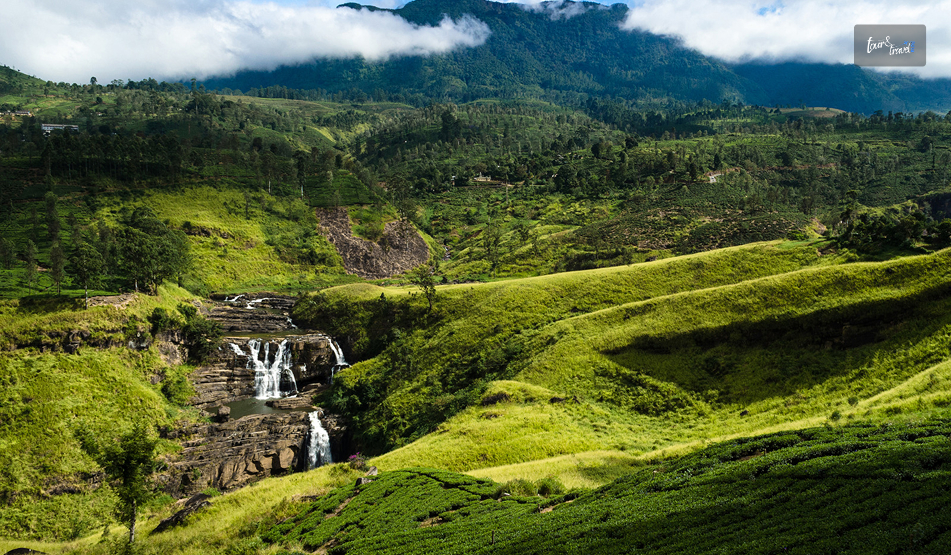
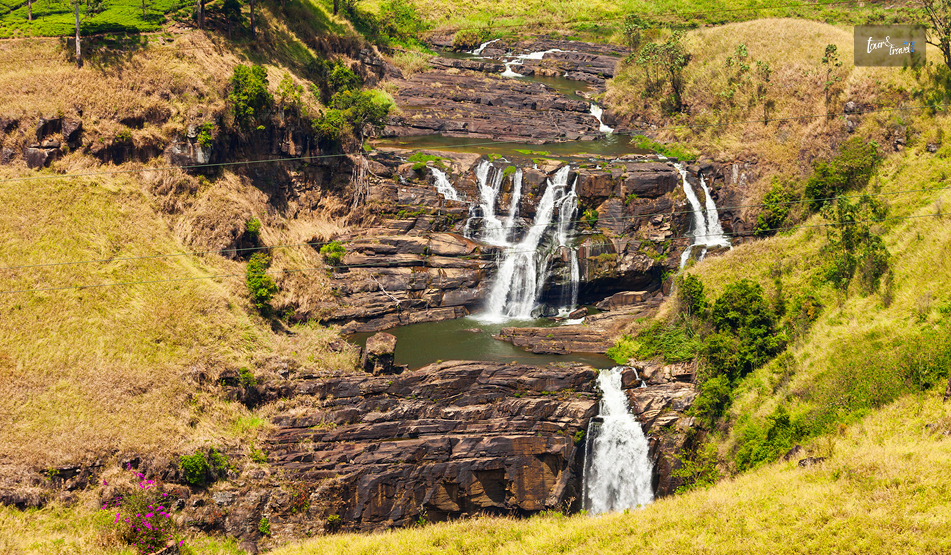
Suddenly, a wide curtain of white water spilling out of the hills between two tea estates was in front of my eyes.  

It was so close to the road that I did not even have to get out of the car for the first look.  

Of course, I got out of the car a few minutes later and got close to the widest waterfall in the country.  

St. Clair’s Falls: Quick Facts  

Detail Information 
Height About 80 Meters (260 ft) for the Main Fall (Maha Ella)  The Lower Fall (Kuda Ella) is About 50 Meters.  
Width  3 KM West of Talawakele, Nuwara Eliya District, Central Province 
River Kotmale Oya, a Tributary of the Mahaweli River 
Entry Fee Free, Viewable from Roadside 
Opening Hours Open 24 Hours Daylight Hours are Best for Visibility. 
Nickname The “Little Niagara of Sri Lanka” 
Location 3 KM West of Talawakele, Nuwara Eliya District, Central Province 

What Makes St. Clair’s Falls Worth The Stop

St. Clair Waterfall, Nuwara Eliya: Chasing The Little Niagara Of Sri Lanka

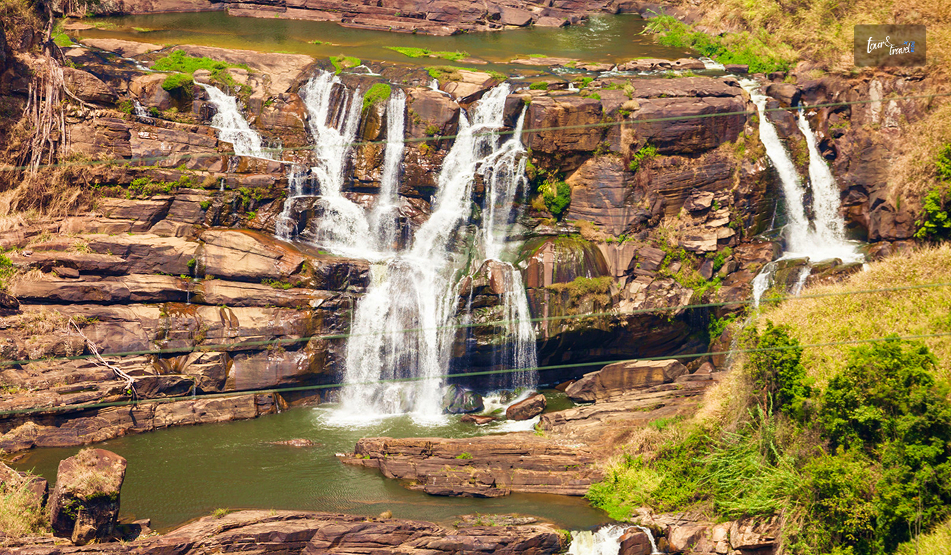
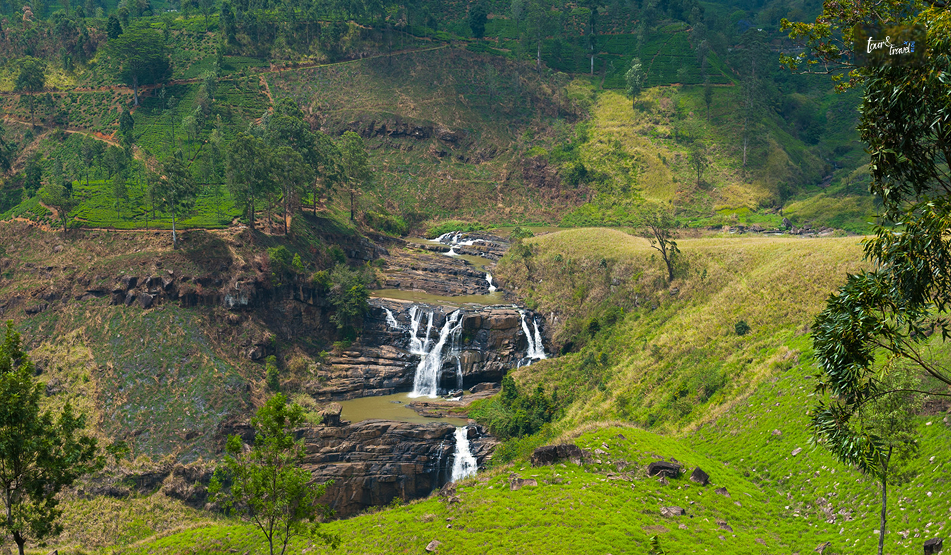
St. Clair’s is actually two falls in one.  

The upper, larger cascade is called Maha Ella (“the Greater Fall”) in Sinhala. 

Just below it, feeding almost directly into the same pool, is Kuda Ella (“the Lesser Fall”).  

The water spreads out over three rocky outcrops before dropping, which is what gives it that broad, curtain-like shape rather than a single narrow jet. 

Also, this is why it earned the Little Niagara nickname, even if the comparison is more about drama than actual scale. 

What struck me most was not the height, but it was the setting.  

Tea bushes run right up to the edge of the gorge on both sides. 

Depending on the time of day, the whole valley can be wrapped in a thin layer of mist that makes the falls look like they are pouring out of the clouds.  

There is a small lookout point just off the road, and if you’re willing to walk a little further along a trail through the St. Clair estate. 

You can get closer for a better angle, though the main pool below is difficult to reach and swimming is not advisable. 

Nearby Attraction: Devon Falls And The Rest Of Talawakele

St. Clair Waterfall, Nuwara Eliya: Chasing The Little Niagara Of Sri Lanka

St. Clair’s isn’t a solo attraction. 

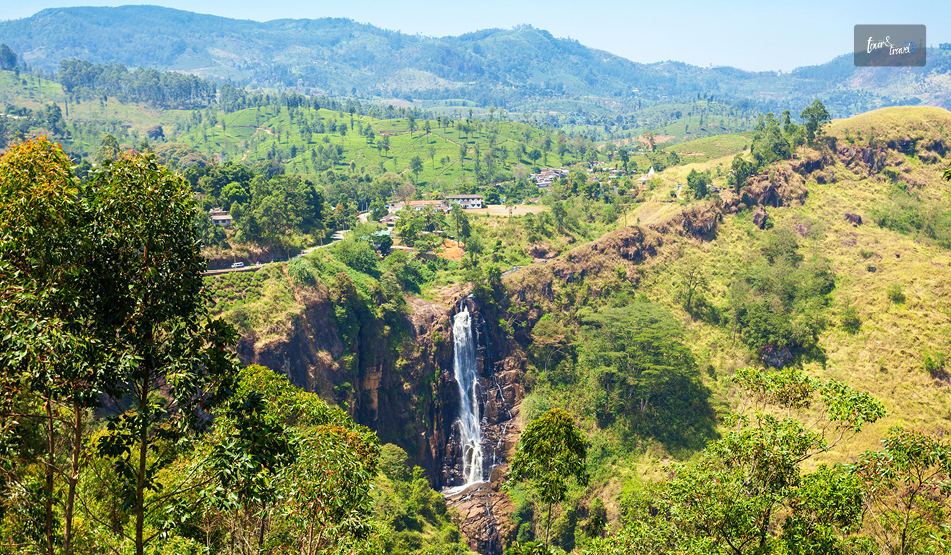
Devon Falls is only a few kilometres east along the same road, and the two are almost always visited together.  

There are also several tea factories in the area, including estates that offer factory tours and tastings, which pair naturally with a waterfall stop since you are already surrounded by the source of Ceylon tea. 

A One-Day Itinerary: St. Clair’s, Devon, And Talawakele

St. Clair Waterfall, Nuwara Eliya: Chasing The Little Niagara Of Sri Lanka

If you only have a single day to explore this stretch of the hill country, here’s how I’d structure it, starting from Nuwara Eliya

Time Stops Notes 
8:00 AM Depart Nuwara Eliya Head out early to beat both traffic and the midday mist.  
9:00 AM St. Clair’s Falls Roadside viewpoint plus a short walk to a closer vantage point.  
10:15 AM Tea factory visit Several estates near Talawakele offer short tours and tastings.  
11:30 AM Devon Falls A few kilometres east, view from the roadside platform  
12:30 PM Lunch in Talawakele Small local eateries serve rice and curry along the main road  
2:00 PM Return to Nuwara Eliya Or continue on toward Hatton if heading to Adam’s Peak  

Where St. Clair’s Falls Is And How To Get There

St. Clair Waterfall, Nuwara Eliya: Chasing The Little Niagara Of Sri Lanka

St. Clair’s Falls sits in the Nuwara Eliya District, about 3 kilometres west of the town of Talawakele, right along the Hatton–Talawakele road (the A7).  

It is formed by the Kotmale Oya, a tributary of the Mahaweli River, and takes its name from the St. Clair Tea Estate that the river runs through. 

From Nuwara Eliya 

If you are based in Nuwara Eliya, the falls are around 25–30 kilometres away, roughly 45 minutes to an hour by car or tuk-tuk along the A7 towards Hatton.  

This is the easiest approach if you’re already exploring the hill country. 

From Kandy Or Colombo 

Coming from Kandy, the route runs through Gampola and Nawalapitiya before joining the Hatton road. 

It is a journey of about 2 to 2.5 hours depending on traffic.  

From Colombo, it is closer to 4–4.5 hours via Avissawella and Hatton. So most visitors combine it with an overnight stop in Nuwara Eliya or Hatton rather than a day trip. 

By Train 

This is my favourite way in.  

The upcountry railway line to Badulla passes close to the falls near Talawakele. 

The ride itself, through tea bushes rolling past the window, mist drifting through the valleys. It is worth the trip on its own. From Talawakele station, a short tuk-tuk ride gets you to the viewpoint. 

Best Time To Visit St. Clair’s Falls

St. Clair Waterfall, Nuwara Eliya: Chasing The Little Niagara Of Sri Lanka
Season Months What to Expect 
Wet season May – September Highest water volume, most dramatic flow, but heavier mist and rain  
Dry season December – March Clearer skies and better visibility, though the flow is gentler  
Shoulder months April, October–November Mixed conditions. So, it is worth checking recent weather before you go.  

I went in early February and had a clear, sunny view of both tiers with almost no one else around. If your priority is photos rather than sheer water volume, the dry season is the better bet. 

Practical Tips To Visit St. Clair’s Falls 

  • Wear closed shoes if you plan to walk any of the estate trails — the paths can be muddy, especially after rain. 
  • There is no dedicated parking lot, so cars typically pull over along the roadside; be mindful of traffic on the A7. 
  • A small museum near the viewpoint has some background on the falls and the tea estate if you want context before or after. 
  • Bring a light jacket. The elevation here sits close to 1,200 m, so it’s noticeably cooler than the coast even at midday. 

Driving away from St. Clair’s, I kept twisting around in my seat for one more look. 

It is not the tallest waterfall in Sri Lanka, and it is not hidden away at the end of a long trek. However, that accessibility is exactly what makes it worth building a hill-country day around.

Share on Social Media

Sibashree is a travel, culture, and leisure writer who has been writing since the age of 12 and professionally since 2014. With more than a decade of travel writing experience and journeys across India and several parts of the world, she brings a deeply personal and thoughtful perspective to her work. A student of English Literature and Mass Communication, Sibashree has always viewed travel as more than movement — for her, it has been a way of understanding people, cultures, and herself. Her passion for spiritual exploration has also led her to many unusual and meaningful destinations over the years. Outside of writing, Sibashree enjoys watching European cinema, reading about global politics, and reflecting on the stories hidden within everyday places.

Leave a Reply

Your email address will not be published. Required fields are marked *

title-img Related

READ MORE bambarakanda

Bambarakanda Falls: A Trek To The Tallest Waterfall In Sri Lanka, Location And Everything You Must Know

BY  Sibashree Aug 27, 2026

Most waterfalls in Sri Lanka announce themselves with a roar from half a kilometer away. However, Bambarakanda Falls was different.   It has a thin water flow, and as it drops far, I could only hear the sound of the waterfall when I was standing directly under it.   However, it is the tallest in the country, and I could not find the top even after craning my neck all the way back.   The Story Behind The Name Of The Bambarakanda Falls The name comes from Bambara. In the Sinhalese language, Bambara means wasps.  The rock face around the falls was once a prominent colony of wasps.   However, before the waterfall became known as Bambarakanda,  it was called Bambarakele Falls and Dultota Falls.   What struck me more than the etymology was how quiet the setting is compared to its size and fame.  This is not a waterfall with restaurants and gift shops crowding the base, just pine forest, a rough access road, and the sound of falling water.  Where Is Bambarakanda Falls? Bambarakanda Falls is close to the small town of Kalupahana in the Badulla District. It is also near the boundary of the Horton Plains National Park.   Kuda Oya, a modest stream, is the source of this waterfall.   However, it transforms into the most dramatic tributary the moment it reaches the cliff edge above Kalupahana and drops in a single, thin, horsetail plunge.   Furthermore, this waterfall is around 200 km away from Colombo. The distance between Bambarakanda Waterfall and Belihuloya is just 18 km.   So, Bambarakanda Falls easily fits into the itinerary if you are in the Central Highlands of Sri Lanka or on the Ella–Haputale–Horton Plains corridor.   How To Reach Bambarakanda Falls? Bambarakanda is easily accessible from Colombo by road and train. Here are the details.   From Colombo By Road  The most common route is Colombo to Ratnapura to Belihuloya to Kalupahana, following the A4 highway toward Beragala.   At Kalupahana Junction, a signposted turn-off leads onto a narrower road that runs for roughly 5 km through Weerakoongama's pine and tea plantations before reaching the parking area.   The final stretch is rough enough in places that not every car will manage it comfortably.  So a tuk-tuk from the junction is a popular last-mile option if you're not driving a higher-clearance vehicle.  By Train And Bus  If you're relying on public transport, the nearest useful rail stop is Ohiya.  From Ohiya, you will still need a taxi or tuk-tuk to cover the remaining distance.   Buses running the Colombo–Badulla A4 route will drop you at Kalupahana Junction, where three-wheelers wait to ferry visitors up the access road for a small fixed fare.  The Trek To The Base  From the parking area, I had to take a flight of steps to reach the base of the waterfall. The flight took around 10-15 minutes.   It was an easy trek as I passed through a pine forest. Also, compared to places such as Sinharaja, the leeches were way fewer in number throughout the route.   However, with the pine needles scattered on the ground, it was a bit slippery. So, you need to wear proper walking or trekking shoes.   As I reached the base of the waterfall, I found a shallow pool, perfect for wading. Also, if you want to remain dry and want to appreciate the scale of the waterfall, you can watch the waterfall from the concrete viewing platform.   Climbing To The Top: The Devil's Staircase  If you want more adventure, you can take the steep trail nicknamed the Devil's Staircase, winding up the mountainside to the crest of the falls.  Remember that this stretch, leading to the top, is a proper hiking route. It is not like strolling anyway!  The elevation here is several hundred meters through pine and mixed forest. So, even if the weather is a little bad, you must not attempt this.   The reward at the top is a small natural infinity pool and a miniature waterfall feeding into the main drop, along with sweeping views down the valley toward the eastern plains.   A short trek from the base also leads to Lanka Ella, a smaller waterfall nearby whose shape is sometimes said to resemble the outline of Sri Lanka itself.  What Is The Best Time To Visit The Bambarakanda Falls? Honestly, the guides on the best time to visit Bambarakanda Falls are mostly confusing.   Some sources say that March to May is the ideal time for a visit to this waterfall. Indeed, going for a trek is safest in this season, as the flow is modest and the trails are less slippery.   However, if you want to see the most dramatic version of the waterfall, May to September is the ideal window.   I am someone who is always in for the later window. Visiting shortly after rain gave me a fuller view of the fall, and it was the most photogenic.   A dry spell, on the other hand, makes the waterfall look thinner.   What Are The Attractions Near Bambarakanda Waterfalls? Some of the best-known sights of the Sri Lankan Central Highlands are very close to Bambarakanda Waterfalls.  Horton Plains National Park and World's End are a scenic drive away. Haputale, with its cooler climate, tea estates, and views toward the southern coast on a clear day.  Haputale further makes a good overnight base. Also, if you are continuing along the A4, Belihuloya offers river-adjacent guesthouses and a much gentler pace than the falls themselves.  Practical Travel Tips  If you are planning to capture the beauty of the waterfall, you should pack wide-angle lenses.   The waterfall is so tall that, considering how close you stand, fitting the entire cascade into one frame from the base is genuinely difficult.  Furthermore, if you are driving yourself to the waterfall, budget extra time for the access road, which is narrow, occasionally rutted, and best driven slowly regardless of your vehicle.  A Few Things I Wish I Had Known  It was a mistake on my part to underestimate the remoteness of the final stretch of the road.  The stretch was just a few kilometers off the main A4 Highway. Still, once I quickly reached the pine forest, there was no phone signal for the majority of the route leading to the base.   Furthermore, you will have to bring cash, as digital payments or cards are not accepted at the entrance or along the trail.  Also, barring the odd roadside stall near the junction, you will not find much food.   Moreover, if you are on the Devil's Staircase climb to the crest, go early in the day. Clouds tend to roll in by early afternoon and can turn a rewarding view into a very damp anticlimax.  Where To Stay Near Bambarakanda Falls  You will not find real accommodation facilities right at the falls.   As convenient options, you can base yourself in Haputale or Belihuloya. You can reach both locations within 30-40 minutes by car from Bambarakanda.   Haputale sits higher up and cooler, with a scattering of small guesthouses and a couple of well-regarded boutique stays that make a good stop if you are also planning to see World's End at Horton Plains the next morning.   Belihuloya, down in the valley, has a handful of riverside guesthouses that suit travelers who'd rather relax by moving water than climb toward it after a long day on the road.   Either option works as a base for a half-day dedicated to Bambarakanda, with enough flexibility to add Horton Plains or a tea-estate walk without much extra driving.
READ MORE places to visit in Matara

What Are The Places To Visit In Matara? A Southern Sri Lankan Commercial Hub With Dutch Colonial Heritage

BY  Sibashree May 4, 2026

Matara, the second-largest city in southern Sri Lanka, is an important gateway to Dickwella Beach, Hiriketiya Beach, or Talalla Beach.   However, beyond that, Matara is a place where the Dutch colonial heritage meets vibrant culture.  Now, talking about this part of Sri Lanka, places such as Mirissa or Galle get more prominence.  However, as I have also mentioned on my blog on Talalla Beach, Matara felt more intimate.  First of all, it was not tourist-heavy, and it is yet to get out of its shell of a hidden gem. Secondly, from beaches to historical landmarks and spiritual retreats, you will find everything in and around Matara.  So, in this blog, I will talk about the places to visit in Matara in detail.  What Are The Best Places To Visit In Matara?  Matara is now gearing up for the Sri Buddha Year 2570 State Vesak Festival on 27th May 2026.   It will take place at the Midellawala Ancient Temple premises at Thihagoda in Matara.  The program involves a week-long celebration and will continue till 2nd June, 2026.  From moral teaching to spiritual learning and sessions on environmental conservation, this week will be significant for the people of Matara and the followers of Buddhism in the country.  Nevertheless, if you are in Matara, do not forget to visit these places.  1. Polhena Beach: Swim, Snorkel, And Relax Polhena Beach impresses at first sight with its calm water. The water here is shallow, making it one of the most family-friendly beaches in Sri Lanka.  Furthermore, the protected coral reef here makes it ideal for snorkeling, even for beginners.  When you snorkel or swim here, you can find many species of reef fish. I could even spot a few sea turtles here as I walked a few meters from the shore.  Above all, Polhena Beach is a great place to unwind. Also, watching the sunset here was a wonderful experience, with the sky changing colors and those colors reflecting in the water.  2. Matara Fort: A Must-Visit For A History Buff  If you are fascinated by the colonial history of Sri Lanka, Matara Fort is a must-visit.  You know, the Galle Fort is iconic. However, the Matara Fort also has a history of Portuguese and Dutch colonialism in this part of the world.  The Portuguese built this fort, and later in the 17th century, the Dutch reinforced it.  Furthermore, the best part of the Matara Fort is how it still has an active presence in the daily life of the town.  There are schools, government offices, and shops inside the wall. Moreover, when I reached, I heard the noise of local boys who were playing cricket inside the fort.  I started talking to them, from Sangakkara to the rising P Nissanka, we covered a lot of players from the country in our discussion.  It was a fun interaction. Now, talking about cricket has been one of the most important things to do in Sri Lanka for me.  Again, as I walked through the fort, I visited the old Dutch church, which was built in 1706. Moreover, from the Matara Fort, I enjoyed amazing views of the Indian Ocean.  Being a public district, the fort does not have an entry fee, and you can enjoy a walk anytime you want.  3. Paravi Duwa Temple: One Of The Best Spiritual Places To Visit In Matara  The floating temple, or the Paravi Duwa Temple, is on a small island called Pigeon Island or Paravi Duwa.  You have to walk through the footbridge connecting the mainland and the island. If Matara Fort offers you an insight into the region’s history, this floating temple is all about serenity.  The temple has many stunning Buddha statues and a golden Stupa. However, the most fascinating thing is the replica of the footprint on Adam’s Peak.  Furthermore, here, you will enjoy a stunning coastal backdrop.   The temple remains open from 6 AM to 6 PM, and it is best if you walk through the bridge during the sunrise.  4. Weherahena Temple: A Proud Example Of Modern Buddhist Architecture  On the east side of Matara, the Weherahena Temple has the biggest seated Buddha Statue of Sri Lanka.  The statue is 39 meters tall, and here you will find an underground tunnel.  Now, walking through the tunnel was a fascinating experience. There, you will see more than 200 murals about the life of Lord Buddha.  Moreover, the tunnel remains open from 6 AM to 8 PM.  5. Star Fort: A Dutch Colonial Heritage  The Star Fort, close to the Matara Fort, originally went by the name of Redoute Van Eck.  It is a hidden gem in Matara, but the architecture here is equally fascinating.  Furthermore, the fort gets its name from its unique six-pointed star shape. Built in 1765, the fort had a strategic position to prevent attacks from the land.  The Matara Fort, however, was more instrumental in protecting against attacks from the sea.  Also, you must not miss a visit to the Star Fort museum, which offers insights into the Dutch colonial history of Sri Lanka.  The fort remains open from 9 AM to 4 PM, and I had to pay an entry fee of around ₹100.  6. Dondra Head Lighthouse: Sri Lanka’s Southernmost Part  I took a short tuk-tuk ride from Matara to Dondra, the southernmost part of Sri Lanka.  The Dondra Light House, with a height of 49 meters, is the tallest lighthouse in the country, and this 1889 fort offers an amazing view of the Indian Ocean.  However, they did not allow the visitors to climb up the lighthouse. So, instead, you can enjoy a coastal walk and take the best snaps for your socials.  7. Matara Local Markets: Offering Insights About Local Culture And Flavors  I always believe that to know a place, you have to explore its local markets. The Matara local market smells of handicrafts, tropical fruits, and spices.  Moreover, here, you will enjoy prawn fritters or isso wade and pol sambol, even kottu roti, the authentic delicacies of Sri Lanka.  Furthermore, despite the language barrier, the crowd there was so friendly and knowing I am from India, some of them even shared how they feel the solidarity.  So, the next time you are in Matara, don’t just treat it as a stopover for the popular southern Sri Lankan beaches.  Try to soak in the history, culture, and spiritual vibe of this beautiful coastal town.

READ MORE dikwella

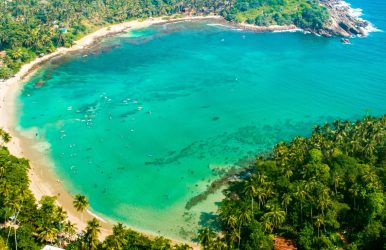
Dikwella, Sri Lanka: The South Coast Town That Asks You To Slow Down 

BY  Sibashree Jul 28, 2026

On the bus route hugging Sri Lanka's south coast, Dikwella sat as a shadow to two more prominent names in Sri Lankan Tourism, Tangalle and Mirissa.  Mirissa stood out with its whale-watching boats and rooftop bars. Tangalle, on the other hand, showed its glossy resort strips.  However, Dikwella waited quietly with just a busy street, a fish market, and a few guesthouses.  Furthermore, the stretch of coastline of Dikwella unfolded quietly on either side of town.  I was looking for that quietness exactly, and that is why I ended up spending three nights there.  In this article, I will share my experience in Dikwella Beach, how to reach there, the things to do, and more! Where Is Dikwella? How To Reach It?  Dikwella or Dickwella is in the southern province of Sri Lanka.  Between Tangalle and Matara, this coastal town is also closer to the Galle–Mirissa corridor. So, Dikwella is accessible.  However, the thing is that it is usually far enough off the main tourist script. So, to me, Dikwella felt like a place where locals lived and not a backdrop built for visitors. If you are already exploring the south coast, Dikwella is a short hop from nearby towns. It is just about twenty minutes from Matara, fifteen from Mirissa, and only ten minutes or so from Tangalle.  Local buses run this route constantly, and the ticket prices are very low, though a tuk-tuk is more comfortable if you're carrying luggage. If you are traveling from Colombo, you will have to drive for around three and a half to four hours down the Southern Expressway to reach Dikwella.  The road exits near Matara and continues along the coastal road.  However, I took the Colombo Fort to Matara train and then a short tuk-tuk ride to Dikwella.  The train takes longer. However, the time you spend on the train journey here is more than worth it as it is one of the most beautiful railway routes in Sri Lanka.  It hugs the coastline for long stretches south of Galle.  Colombo Fort To Matara Train  There are many daily and weekly trains running between the Colombo Fort and Matara railway stations.  I took the 8050 Express train. It runs daily.  It departed the Colombo Fort Station at 6:50 AM, and I reached Matara at 10:15 AM. I was traveling in a 3rd class compartment, and the ticket price was LKR 300.  The second class tickets cost LKR 600.  From Matara, I took a tuk-tuk that charged me LKR 2500.  Getting Around Dikwella  You can hire a tuk-tuk to explore Dikwella and visit the nearby attractions such as the temple and the blowhole.  The rental cost is around LKR 3000 to LKR 4000.  However, I rented a scooter. It was more affordable, costing me LKR 1000 a day, and it gave me more flexibility to explore the smaller lanes and beaches nearby. What Are The Things To Do In Dikwella (The Best Is That You Do Nothing) Dikwella is the place that allows you to enjoy the joy of just existing.  So, even if you are an introvert like me, you will find the place comfortable for getting knocked over by a wave or simply waiting for the water to wash your feet.  Nevertheless, exploring the Blue Beach, a visit to Hiriketiya, a ride to the Hoo-maniya Blowhole, and a visit to the Wewurukannala Vihara are the to-do things in Dikwella. Being At The Blue Beach And The Double Bay  Dikwella Beach or Dickwella Beach has become the Blue Beach thanks to the locals and the nearby hotel owners.  It is a double bay formation just west of town, where two curved stretches of sand meet at a narrow rocky point. Due to the shape of the bay, the open-ocean swell gets broken up. So, the water inside remains calmer than most beaches along this stretch of coast. So, if you are visiting alone or with family, this is a more comfortable space for swimming.  I saw palm trees leaning out over the sand at angles that look almost too deliberate, like a photograph. Furthermore, in the late afternoon, the light turned the water somewhere between turquoise and navy.  I spent one whole evening doing nothing but sitting on the sand with a king coconut, watching fishermen haul in nets a little further down the beach. It was not a dramatic sunset by postcard standards. It was better, honestly, because there were maybe a dozen other people on the entire beach to share it with. 2. A Visit To Hiriketiya After soaking in the silence of Dikwella, Hiriketiya was my next stop to feel the pulse of the area.  Technically part of the greater Dikwella area, Hiriketiya has become one of the fastest-growing spots on Sri Lanka's south coast in recent years. It is a near-perfect horseshoe-shaped bay that has turned into a magnet for surfers, yoga retreats, and a rotating cast of digital nomads working from beachfront cafĂ©s. The bay itself is small. While the small bay offers intimacy, a lack of space can also make it feel very crowded with a surge in the number of visitors.  I rented a board for a couple of hours one morning, and it cost me LKR 500. Even as an amateur, the gentle, consistent waves here made it one of the friendlier places I have tried to learn surfing.  The scenario, however, entirely changed by the evening. The beanbags outside the restaurants were occupied, and people were busy gorging on the best seafood and wood-fired pizza.  It felt like a stark contrast to how quiet Dikwella felt.  3. A Visit To The Hoo-Maniya Blowhole I took a scooter ride toward Kudawella and reached Hummanaya, or Hoo-maniya blowhole.  It was like a narrow rock chimney with incoming waves getting forced up through a submerged cavern and bursting out at the top in a sudden plume of spray.  The water here makes a low rumbling sound that gives the blowhole its onomatopoeic name. Despite being the only natural blowhole in Sri Lanka and one of the largest in the world, the Hoo-Maniya Blowhole is unpredictable.  Some eruptions are a modest fizzle, others send spray shooting dramatically into the air, and the difference comes down entirely to the sea conditions that day. The locals told me that the blowhole is the most powerful during the southwest monsoon.  During the monsoon months, rougher seas force water through the cavern with more pressure. As a foreign visitor, I had to pay 500 LKR as the entry fee. For locals, however, the entry fee was 50 LKR for adults and LKR 20 for children.  The parking charges were LKR 50 to LKR 100.  There is a proper viewing platform from which you can cherish the unique geology of the place.  4. Visiting The Wewurukannala Vihara And Its Giant Buddha I took a scooty ride for about twenty minutes inland from Dikwella, and on the road toward Beliatta, I found a Buddhist temple appearing over the treeline.  It was Wewurukannala Vihara, home to the largest seated Buddha statue in Sri Lanka.  The statue rose around 50 meters, dominating the skyline of an otherwise low, palm-covered landscape. The temple complex itself is older and more layered than the giant statue suggests at first glance.  Parts of it date back to the 18th century, built during the reign of King Rajadhi Rajasinha, with a smaller, more traditional Buddha image worked into the original structure. Walking through the complex, I passed from that older, quieter section into the base of the giant statue.  Along the way, most visitors passed through a strange, slightly unsettling tunnel of painted dioramas depicting Buddhist concepts of karma and consequence.  Where To Stay In Dikwella?  You can decide where to stay in Dikwella based on the experience you want.  Close to the town center and the Budget, there is a good mix of budget guesthouses and a couple of larger beachfront resorts. While the budget guesthouses were more suitable for me, the larger beachfront resorts were for travelers who wanted easy beach access without the buzz. However, if you want a little buzz and the pulse of the area, Hiriketiya will be a more suitable choice.  The prices of guest houses here are higher. Also, the energy shifts toward boutique guesthouses, surf hostels, and design-forward small hotels aimed at the surf-and-yoga crowd. I split my stay between the two, a couple of nights in a simple guesthouse near Blue Beach for the quiet mornings, then a night in Hiriketiya just to experience the contrast. The stays near Blue Beach cost me LKR 1800 per night, and in Hiriketiya, it was around LKR 6000 per night. What To Eat In Dikwella?  Dikwella does not promise a huge restaurant scene. It has not come out of its shell of a working fishing town yet.  The daily catch showed up on almost every dish I had.  Some of my best meals were the simplest, including grilled fish, coconut sambal, and rice and curry from small local spots along the main road. Furthermore, the cost of food in Dikwella was a fraction of similar meals' cost in Mirissa or Unawatuna. For a livelier and more elaborate food scene, you can visit Hiriketiya. It has cafĂ©s and restaurants aimed squarely at the international crowd. So, there you will find smoothie bowls, wood-fired pizza, and fresh pasta alongside Sri Lankan staples. Overall, I cherished the contrast of eating a rustic curry in Dikwella town one night and a plate of pasta overlooking the surf in Hiriketiya the next. Things To Remember If You Are Visiting Dikwella  December to April, or the dry season, is the best time to visit Dikwella.  You will enjoy the calmest ambiance and nature for swimming in these months.  However, if you specifically want to see the Hoo-maniya blowhole at its most dramatic, aim for the southwest monsoon months instead, around May to September. Also, two to three days are enough if you want to experience the best of Dikwella. You can visit the Blue Beach and the Vihara in one day.  On the next day, you can visit Hiriketiya and the blowhole and try surfing. Then, leave a spare day if you just want to do nothing. So, Is Dikwella Worth Visiting? During my trip to Sri Lanka, especially when exploring the southern coast, Dikwella was my favorite spot as it allowed me to slow down and be myself.  Dikwella does not have an ancient fortress or a famous surf competition. It does not have a five-star strip or a world-class resort.  In fact, it is still very much a working fishing town that has not been built around tourism.  Dickwella Beach is beautiful because it is not overrun. Also, the nearby attractions such as the booming blowhole and a giant Buddha allow you to spend a couple of unhurried days. So, if your south coast itinerary has room for one detour off the Mirissa–Tangalle highlight reel, make it this one.