
What Are The Things To Do In Jimbocho Book Town? Visit The Best Book Stores And Cafes 

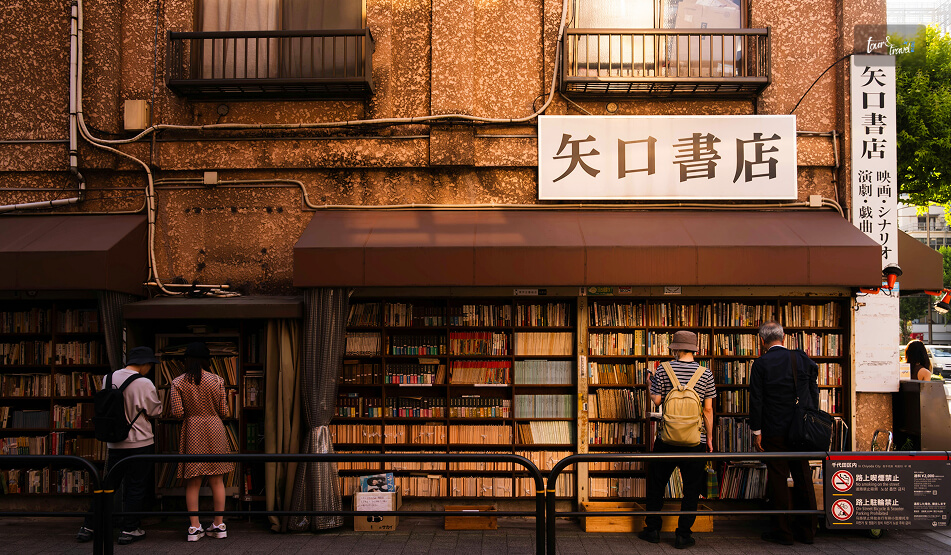
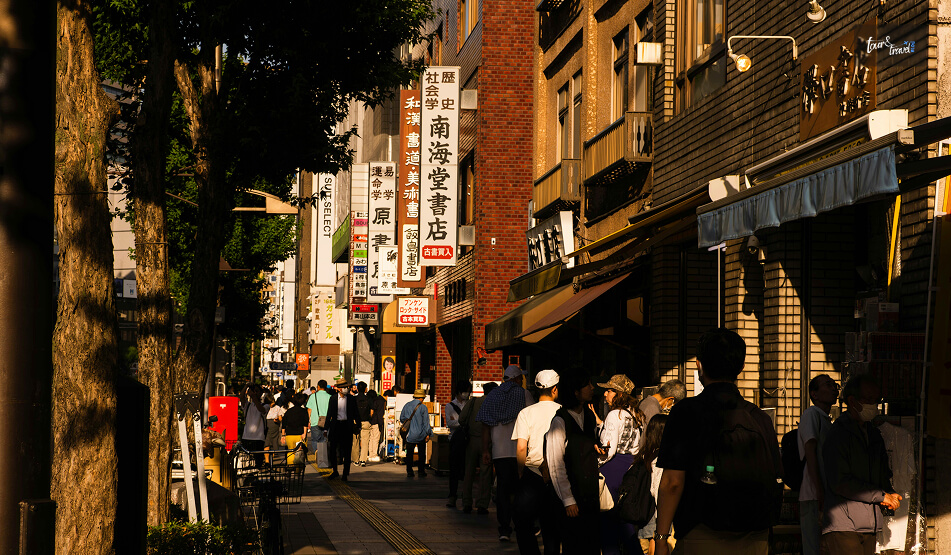
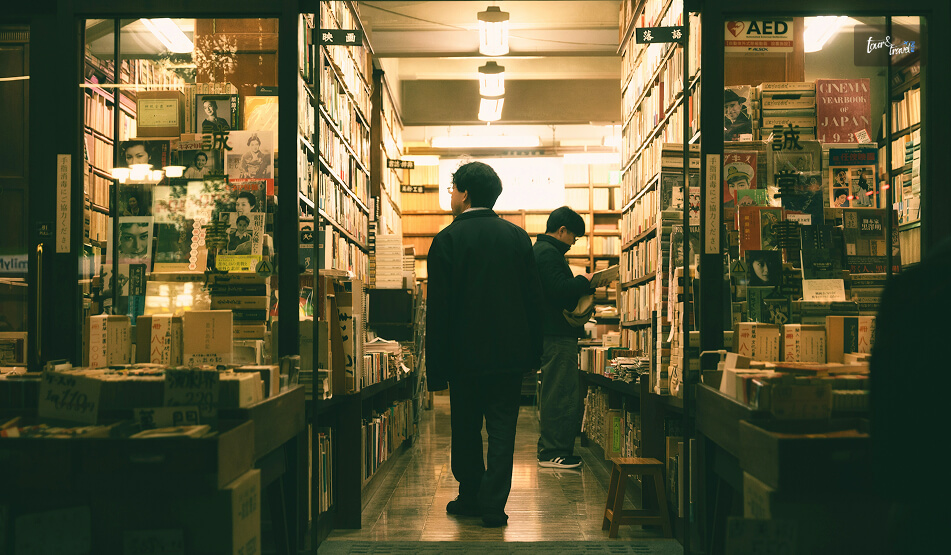
Jimbocho Book Town is a massive book district or book town with more than 400 book stores. 

It is one of the oldest and biggest in the world and is often uttered with respect equal to the Kaifeng and China book towns. 

Also, it is a great place for dark academia fans, students, and readers, as they will find most of the second-hand books in Japan here. 

Furthermore, it’s not just about the love for the book and the “intellectual” aspect of it. 

Time Out has named it the best neighborhood in the world in 2025. 

But do you know about the best book stores and cafes in the Jimbocho Book Town? Here is a detailed list. 

However, let’s talk about the history, accessibility, and the best things to do in this book town. 

Jimbocho Book Town: A Neighborhood That Survived World War II

Jimbocho Book Town_ A Neighborhood That Survived World War II

The Kanda-Jinbōchō area started getting many law schools in the late 19th century and early 20th century, and this is how the book town came. 

Many bookshops opened then, and students of the law schools often sold their old books to these shops at a cheaper rate. Thus, this concept of second-hand books came. 

New students used to buy these books because they were cheaper. 

Furthermore, it is nothing short of a miracle that this book town survived the bombing and destruction during World War II. 

Jimbocho started flourishing as a book town once World War II was over, and today, it is the most fascinating place for bibliophiles. 

Furthermore, Shūeisha (Jump Manga Magazines), Iwanami, and many other leading publication houses have their headquarters in the Jimbocho Book Town. 

Moreover, the curry restaurants and cafes here have been hosting the most famous authors for the longest time. 

I must mention Ladrio in this context. It was built in 1949 as the reading room of a bookstop. It was also the first place that brought Viennese coffee to Japan. 

Now, it was more than an elevation in the texture and flavor. The whipped cream helped to keep the coffee warm for longer as the intellectuals here took part in debates and hot discussions. 

How To Reach The Jimbocho Book Town? 

How To Reach The Jimbocho Book Town

The central location of Jimbocho in Tokyo makes it easy to visit. You can take a ride on the Subway network to make this commute. 

Reach Jimbocho Book Town By Subway 

The nearest subway station is the Jimbocho Station. You will take the subway to the station on the following lines. 

  • Toei Mita Line
  • Tokyo Metro Hanzomon Line
  • And, Toei Shinjuku Line

Moreover, once you reach the subway station and exit from A5 or A6, you can find the book stores along Yasukuni-dori. 

Reach Jimbocho Book Town From Shinjuku And Shibuya

The journey through the Toei Shinjuku Line from Shinjuku Station is the easiest way to reach the Jimbocho Book Town. It does not need any transfer. 

Furthermore, the travel time is about 15 minutes. 

On the other hand, from Shibuya Station, you can take a ride through the Tokyo Metro Hanzomon Line to reach Jimbocho Station within 20 minutes.

Reach Jimbocho Book Town From Tokyo Station

From Tokyo Station, you have to take a Rapid ride on the R Chuo Line and reach Kanda Station. 

Then, you have to reach the Toei Mita Line or the Toei Shinjuku Line to complete the journey in 5 minutes.

Shopping For Old And Rare Books And Magazines: The Best Thing To Do In Jimbocho Book Town 

From antiquarian books and documents to specialized books and first editions, you will find all the books in the Hakusan-dori and Yasukuni-dori intersections of the Jimbocho Book Town. 

Starting from the Meiji Era(1868-1912) to today, it has been a book town par excellence. 

Furthermore, the Aozora Kohon Ichiba, or the annual Kanda Used Book Festival, draws book lovers across the globe to the Jimbocho Book Town.  

This festival is held in late October or early November, and it was celebrated from October 24th to November 3rd in 2025.  

What Are The Book Stores You Must Visit In The Jimbocho Book Town? 

What Are The Book Stores You Must Visit In The Jimbocho Book Town

Do you think that the Jimbocho Book Town only has Japanese books? You will get books in various languages in the book stores here. 

Here are the book stores you must visit. 

1. Kitazawa Book Store 

The Kitazawa Book Store is the best book store to find English books and classics in the Jimbocho Book Town. 

It started in 1902 and has thus completed more than 125 years in serving as a beacon of Western literature connoisseurs in Jimbocho Book Town. 

You will mostly find foreign and humanities-related books here. 

2. Magnif Zinebocho

Magnif Zinebocho is a paradise for readers and lovers of retro magazines. You will mostly find lifestyle and fashion magazines from the last few decades here. 

Though it mostly sells Japanese retro magazines, you will also find magazines that overcome language barriers. 

Furthermore, the Mondrian artwork on the bookstore’s facade is really impressive, and you will find retro magazines such as Olive and Relax.

3. Books Tokyodo

Built in 1890, Books Tokyodo is one of the oldest book stores in the Jimbocho Book Town. Here, you will find books of different genres from the bygone eras and modern times. 

Furthermore, it is one of the book stores that has helped to create a community of book lovers, and that is the most cherished thing about it. 

4. Komiyana Tokyo

The history of Komiyana Tokyo goes back to 1939. It is a dedicated 4-story building with each floor offering distinct attractions to book and art lovers. 

You will find here books on history, Japanese art, Western art, and fashion. 

Furthermore, it has the widest collection of photo books, and most of them are by the original photographers or painters. 

Also, watch out for the weekend “Garage Sale” behind the shop. 

You never know when you can find a diamond. 

5. Bohemian’s Guild 

The Bohemian’s Guild is a great place to find vintage books on visual art and design. 

Furthermore, the bookstore has been there since the Taisho era (1912-1926).

The first floor of the store has all the books and a warm lighting that, along with the brown wooden floor, creates an inviting atmosphere. 

Furthermore, on the second floor, the book gallery allows you to explore the lithographs, paints and prints.  

What Are The Best Cafes To Visit In The Jimbocho Book Town? 

Kissaten, or the coffee house culture of Japan, is unique. The best cafes in the Jimbocho Book Town allow you to get familiar with that. 

Furthermore, the cafes here celebrate the history and origin of the book town. So, here are my favorites.

1. Sabouru

With an origin in 1955,  Sabouru stands out with its unique Showa-era charm and nostalgic vibe. 

You must try the cream soda here, and it is available in seven colors. They also make an excellent strawberry juice smoothie. 

Moreover, the adjacent Sabouru 2 is a popular place here to have classic “Japanese Napolitan Spaghetti.” 

2. Milonga Nuova

Built in 1953, Milonga Nuova is a paradise for Tango lovers. 

Furthermore, the charcoal-roasted coffee here hits different, and that is often accompanied by the signature desserts. 

Moreover, you will find more than 30 varieties of imported beers here. 

Along with these cafes, Jimbocho Book Town also has various curry restaurants. From Mandala to Bondy, these restaurants celebrate the tradition started in the Meiji era. 

The book lovers found it very convenient to eat curry with one hand while the other hand was busy holding the book or flipping the pages. 

Read Also:

Share on Social Media

Meet Sibashree Bhattacharya, a travel enthusiast who has a decade-long experience in transcending virtual barriers with her words! Her deep love for travel is apparent from her travel escapades to the mountain, often taking her readers on a journey, her words acting as Portkey! Fun fact: Sibashree loves to dive deep into the history of the places she is about to visit, making her travels even more wholesome. If you were wondering how her articles are not short of time travel, this answers it!

Leave a Reply

Your email address will not be published. Required fields are marked *

title-img Related

READ MORE National Railway Museum, Kadugannawa

My Day At National Railway Museum, Kadugannawa: Timings, Entry Fee, Exhibits And More

BY  Sibashree May 5, 2026

I forgot to mention one thing when I shared my experience of a train ride in the Demodara railway loop. This is a lesser-known loop, and I got to know about it from the National Railway Museum, Kadugannawa.  This museum is at a distance of just 15.1 km from Kandy. Today, it has many old machines, carriages, equipment, and locomotives.  Though everyone will have a visit to the National Railway Museum, Kadugannawa, in their itinerary of the things to do in Sri Lanka, I enjoyed my day there.  So, in this blog, I will talk about my experience at the National Railway Museum, Kadugannawan, its entry fee, timings, exhibits, and how it was opened at an opportune moment.  National Railway Museum, Kadugannawa: Quick Facts Opening Date27th December, 2014 Opening Hours 9 AM to 4 PM (Only closed on Poya Day)Ticket Price - For Sri Lankan Adults: Rs. 50- Foreign Adults: Rs. 500- Children: Rs. 20- Children in School Uniform: Rs. 10  Why Was The National Railway Museum, Kadugannawa, Opened?  The National Railway Museum, Kadugannawa, was opened on 27th December, 2014, on the occasion of the 150th year of railway operations in Sri Lanka.  The first train of the Ceylon Railway ran from Colombo Terminus station to Ambepussa. The Duke of Brabant of Belgium was a passenger on this train.  On the occasion of the museum inauguration, a Memorial Stamp was also released. Furthermore, as souvenirs, there were a memorial DVD and a coffee table book.  Moreover, a Replica Steam Train ran from Colombo Fort to Kadugannawa, and it had special invitees as passengers.  It was a thoughtful move to commemorate the first train operation 150 years ago.  How To Reach The National Railway Museum, Kadugannawa? You can reach the National Railway Museum, Kadugannawa, with a short train ride from Kandy.  However, if you miss the train, you can also take a bus. However, I don’t recommend a bus ride from Kandy to Kadugannawa because the bus ride through the Royal Botanic Gardens takes around 45 minutes to 1 hour.  Also, the bus is very crowded, and you will find every type of food vendor there.  Nevertheless, if you still want a bus ride, the ticket price will be 120 LKR (Around 36 Rs.) for a person.  Kandy To Kadugannawa Train Ride  I love train rides, and even if the queue for the third-class ticket was long, I enjoyed the entire experience.  Nevertheless, I took the Kandy to Polgahawela train that departed from the Kandy Station at 2:15 PM and reached the Kadugannawa Station at 2:55 PM.  The train halts at the Kadugannawa station for 1 minute. So, stand near the gate and be a little fast when alighting from the train.  I got a 3rd class ticket, and the ticket price was Rs. 40. What Are The Things To See At The National Railway Museum, Kadugannawa?  The Kadugannawa Railway Museum is very close to the Kadugannawa Railway Station. It is a small space, and it includes a platform and 2 outside areas.  Furthermore, it is spread over a train shed.  I sat in a vintage train carriage at the museum, and it cost me around Rs. 296. The carriage also had an attendant who showed me the museum. The Exhibits And Demonstrations I Loved  I especially loved the demonstration of the efficient token system that ensures that trains do not run into each other on the single-track mountain railway lines of Sri Lanka.  Furthermore, I found a massive model railway inside the museum. It shows the entire Sri Lankan railway network.  It was fascinating, and it highlighted the Nine Arch Bridge and how the train covers the spiral Demodara loop.  I also had a lot of fun getting in and out of the steam locomotives, carriages, and old engines at the museum.  Moreover, I saw a 10-minute-long video describing the railway network of Sri Lanka.  Overall, I spent around an hour at the museum and ended my time there with a cup of coffee at the in-house coffee shop. The coffee shop itself is inside a carriage.  The best things about the National Railway Museum, Kadugannawa, were that very few visitors were there.  So, as a curious soul and someone very fascinated by trains (my home is very close to a railway track), I had a gala time.  What Are The Other Places To Visit In Kadugannawa?  Kadugannawa, a short distance away from Kandy, is a serene place with many historical and cultural attractions.  So, once you have completed exploring the top attractions in Kandy and the National Railway Museum, Kadugannawa, you can visit these places.  1. Balana Fort  Balana Fort is located between Kadugannawa and Kandy.  Also, close to the Alagalla Mountain Range, its strategic position helped to protect the kingdom of Kandy from external attacks.  2. Captain Dawson Tower  The Captain Dawson Tower is at Kadugannawa Pass, and it is very close to the first modern expressway of Sri Lanka, the Colombo Kandy Road.  The construction of this expressway began under the supervision of Captain William Francis Dawson in 1820. So, this tower remembers and respects the contribution of Captain William Francis Dawson. Moreover, it was built in 1832.  3. Lion’s Mouth Rock, Kadugannawa It is an overhanging rock that you can find between the Balana and Kadugannawa railway stations.  The natural formation of the rock resembles a lion’s mouth.  Furthermore, when the train passes through the bend, there is a steep descent. So, the feeling of a drop makes the experience all the more thrilling.  4. Kadugannawa Rock View  If you are traveling from Colombo to Kandy or exploring the best attractions in Kadugannawa, the Kadugannawa Rock View is a place to relax.  The place is serene, and it offers amazing views of the lush surroundings. Furthermore, there are a few small shops on the way.  You can buy some souvenirs from these shops, and you will spot a lot of monkeys here.  Moreover, it was sunset time when I reached this viewpoint, and the experience was surreal.

READ MORE day trips from Tokyo

What Are The Best Day Trips From Tokyo? Most Popular Ones You Will Love 

BY  Sibashree Mar 26, 2026

If you are like me, your first trip to Japan probably started off in Tokyo, surrounded by bright neon lights and an astounding number of people moving around to get from place to place. Tokyo is a logical starting point because of the many inexpensive daily flights that arrive, as well as its efficient public transportation, making it very easy to get around and communicate with those whom you meet there, because they speak some English. But let me tell you a little secret I learned from spending two different trips to Japan over the course of three weeks. Although I had fun in Tokyo, I’m definitely not a big progressive city person. The real beauty and the heart of Japan are found away from the chaos of Tokyo. The true essence of Japan can be experienced at its best in either the peaceful mountains high above the sea or in the salty air along the coast of Japan. So if you are planning on staying in Tokyo for more than three days, do yourself a favor and venture outside of the city limits.  These are my favorite day trips from Tokyo. You can travel to each of these destinations within 1 to 2 hours. What Are The Best Day Trips From Tokyo?  Tokyo is an incredible gateway. However, Japan’s true magic is often found in the places where the skyscrapers disappear.  Whether you want the spray of the ocean in Kamakura or the mountain air of Hakone, I promise that leaving the city for just a day will change how you see the country. From Mount Fuji to Kyoto, the Soul of Japan, the day trips from Tokyo are as diverse as they can be.  Here is a detailed account of my experience in those places.  1. Mount Fuji And Kawaguchiko: The Icon Travel Time: 2 Hours  How to Reach There: Highway buses from Shinjuku or Shibuya (~¥1,250–¥2,000 one way). If I can only recommend one escape, it will be Kawaguchiko, a town located right at the foot of Mt. Fuji.  "Shy" Fuji hides behind a curtain of clouds and can be quite elusive. While I visited, Fuji showed off for me on several occasions. I spent an entire day in this beautiful town, but would recommend an overnight stay at one of the many traditional ryokans situated on the lake if possible. There, you will notice the the juxtaposition of Fuji's reflection on Lake Kawaguchi at sunrise will be a once-in-a-lifetime experience. Highlights From My Visit Climbing the 398 steps of Chureito Pagoda was strenuous. However, the meditation-like calm through the forest made it worthwhile. I was fortunate enough to see the iconic site of the Red Pagoda with Mt. Fuji as a backdrop, as the clouds rolled in and covered the summit of Fuji. Hōtō noodles are a local specialty and are made up of thick, flat noodles cooked in a Japanese miso broth. Eating them will feel like a warm hug! So, don’t forget to try it.  2. Nikko: A Place Of Mist And Masterpieces Travel Time: 2 Hours How to Get There: Tobu Railway from Asakusa to Tobu-Nikko Station. When you visit Nikko, you will see all that it has to offer in the stunning, misty forests and cedar trees. Moreover, the detailed and ornate shrines seem to be jewelry boxes.    Insider Tip:  Arrive before 9 am at Lake Chuzenji to witness how the morning light creates an incredibly peaceful scene on the water.  If you arrive later than 9 am, visit the Toshogu Shrine first, which is where Shogun Tokugawa Ieyasu is buried and features the famous three monkeys, "See no evil, hear no evil, speak no evil". Many people come to see Kegon Falls, but it can be crowded due to the high tourist volume.  Unless you arrive at dawn, I would recommend skipping Kegon Falls and enjoying the calm waters of the lake instead. 3. The Coastal Soul Of Japan: Kamakura Travel Time: 1 hour How to Get There: JR Yokosuka Line from Tokyo Station (¥940 one way). Kamakura is also popular as the "Kyoto of the East," and I can see why.  Although it is an hour from Tokyo, when you are there, you will be surrounded by the smell of salt and incense from the temples instead of exhaust from busy streets. Be sure to see the Great Buddha (Daibutsu) at Kotoku-in.  This is a large bronze hollow statue located outside.  Standing there, surrounded by trees and soft sea light, I felt a sense of peace and tranquility.  After visiting the Great Buddha, I walked to Yuigahama Beach to watch the surfers and the sunset before enjoying a meal of sukiyaki or shabu-shabu. 4. Hakone: A Breath of Mountain Air Travel Time: 2 Hours How to Get There: Odakyu “Romancecar” from Shinjuku. I recommend the Hakone Free Pass. Tokyo is the pulse of Japanese culture, and it is in Hakone where you'll find peace after the city's frenzied pace. Hakone is a beautiful blend of modern and ancient.  The first stop for my visit was at the Hakone Open-Air Museum, where I walked among sculptures created by some of the most famous artists in the world, surrounded by natural beauty all around me.  Then, I took the Hakone Ropeway across the Owakudani Valley.  It is an active volcanic area where steam rises out of the ground, creating a picture of a living canvas.  On clear days, you may see Mt. Fuji as well.  The day was capped off with a boat ride on Lake Ashi aboard a vessel that resembled a "pirate ship."  I was hesitant about it being cheesy, but the sights were gorgeous. 5. The Easy Escape To Yokohama  Travel Time: 30 Minutes How to get there: JR Tokaido or Keihin-Tohoku Line from Tokyo Station (¥480). When I need to relax from the chaos of Tokyo, I tend to go to Yokohama.  Yokohama is the 2nd largest city in Japan. However, it has a much more relaxing atmosphere due to the harbor.  I enjoy taking a stroll along Minato Mirai, which is another word for "harbor view," while enjoying the ocean breeze.  For something "quirky", I went to the Cup Noodles Museum to create my own cup of noodles and to learn about the history of Nissin Food Products.  However, the highlight was visiting China Town, which is the largest in Japan.  My recommendation is to arrive at China Town around 4:00 or 5:00 PM.  It will be early enough to beat the dinner rush and late enough to see the entrance of all the glow from the lanterns.  Take a bag of roasted chestnuts and enjoy the view of the skyline from the water while riding on the Cosmo Clock 21 Ferris Wheel. 6. A Trip Back In Time To Kawagoe Travel Time: 1 Hour How to get there: Tobu Tojo Line from Ikebukuro or JR from Shinjuku. If you want a taste of the Edo period without trekking all the way to Kyoto, go to Kawagoe.  It’s a walkable town full of clay-walled warehouses and wooden merchant houses. When I arrived at 8 AM, I heard the Toki no Kane (Bell of Time) tolling in the stillness of the morning.  I went back 200 years in time.  If you have time to go to Candy Alley, everything is made from sweet potatoes, cakes, chips, and even ice cream!  I know it sounds strange, but I assure you that it is really good! 7. Kyoto: The Soul Of Japan Travel Time: 2 Hours (by Shinkansen) How to get there: Tokaido Shinkansen from Tokyo Station (¥13,320 one way). I usually tell people to stay at least two days in Kyoto, but if a day trip is all you can manage, do it. It is expensive, but it is worth every yen. To appreciate Kyoto fully, you should focus on finding peace and serenity rather than simply marking off temples from a to-do list.  Instead of fighting the crowds at the bamboo groves, I found my peace by sitting in the wonderful gardens of Kennin-Ji Temple and breathing the incense they burned there. 8. Enoshima: Islands And Icons  Travel Time: 2 Hours How to get there: Odakyu Line from Shinjuku to Katase-Enoshima Station. Enoshima is where Japan’s coastal charm meets its spiritual side.  It’s a small island with a bridge and shrines dedicated to the goddess of the sea. Prepare to take many steps as you make your way to Iwaya Caves on the opposite end of the island.  The sound of waves'll surround you as you leave the noise of the city behind.  Furthermore, inside the caves, it’s a different world! After you leave the caves and head back, stop at a vendor and buy some grilled fish or seafood so you can enjoy the smoky aroma of the grilled fish while walking through Enoshima Island. 9. Chichibu: Mountains And Moss Travel Time: 2 Hours How to Get There: Seibu Line from Ikebukuro to Seibu-Chichibu Station. Chichibu is an outdoorsy place if you love the outdoors!  It's got mountains and has a strong cultural heritage.  If your timing is right in the spring, Hitsujiyama Park gets huge patches of pink and white moss phlox in bloom. This area has deliciously filling meals, including miso potatoes and waraji katsu (a pork cutlet that’s named after a straw sandal because of how large it is). 10. Karuizawa: The Alpine Retreat Travel Time: 1 Hour How to get there: Hokuriku Shinkansen from Tokyo Station. Finally, there is Karuizawa. This is where Tokyo’s elite found an escape from the summer heat, and it still feels incredibly sophisticated. Renting a bicycle is one of the best ways to experience this area.  I spent my first morning biking through beautiful pine tree forests until I arrived at Kumoba Pond. The pond has such calm water that it feels like looking into a huge mirror!  In the winter, it turns into a beautiful, snowy retreat perfect for relaxing after spending several days in the city.  Read Also: Is The Japan Rail Pass Worth It In 2026? Should I Buy Or Avoid It As A Conscious Tourist? What Are The Things To Do In Oahu For Free? A Guide For Budget Travelers Festivals Of Light And Color: Experiencing Japan’s Vibrant Matsuri

READ MORE Is Japan Rail Pass worth it

Is The Japan Rail Pass Worth It In 2026? Should I Buy Or Avoid It As A Conscious Tourist? 

BY  Sibashree Mar 25, 2026

The Shinkansen, or the Japanese Bullet Train, brought a revolution in the transportation system in the 1960s.  It was the need of the hour, considering the rapid growth in the economy. Also, it is an icon of the technological prowess and wealth of Japan.  These days, we have Vande Bharat in India, and no doubt the services and punctuality of these trains are spotless.  However, contrary to popular beliefs, they are never the same.  Why so?  To understand this, you need to take a ride in the Japanese Bullet Train.  However, is Japan Rail Pass worth it for the short and long rides in the Japanese Bullet Train?  In today’s blog, I will discuss its benefits and disadvantages in detail.  Is Japan Rail Pass Worth It?  Japan Rail Pass is a physical pass for train rides. It is only for tourists.  With this pass, you can enjoy unlimited train rides across Japan. Also, these passes include bullet train rides for a specific time span.  Japan Rail Pass Cost Check out the table below to understand the validity period and prices of the Japan Rail Pass.  Japan Rail Pass ValidityOrdinary Japan Rail Pass Cost Green Japan Rail Pass Cost7 Days PassAdult: 70,000 YENChildren: 35,000 YENAdult: 50,000 YENChildren: 25,000 YEN14 Days PassAdult: 110000 YENChildren: 55000 YENAdult: 80000 YENChildren: 40000 YEN21 Days PassAdult: 140000 YENChildren: 70000 YENAdult: 100000 YENChildren: 50000 YEN All ticket prices are sourced from the Japanrailpass.net. Also, remember that children mean kids below 12 years old.  From 12 years onward, they are considered adults.  Is The Japan Rail Pass Worth It? (Considering The Cost)  If you think that buying a Japan Rail Pass would hurt your wallet, you are making a mistake.  Yes, the Japan Rail Pass is expensive, especially if you are buying a Green Japan Rail Pass.  Still, if you want to try individual rides, the cost will be even higher. For example, a single trip to Nara from Tokyo costs 14500 YEN.  A really smart way to decide whether the Japan Rail Pass is worth it or not is to use a Japan Rail Pass Calculator.  Enter the departure and arrival points, check the ticket price for individual rides, and add them. Then, compare the total Japan Rail Pass cost to decide whether you need to buy it or not.  Also, consider the flexibility the Japan Rail Pass offers.  With a Rail Pass, you can complete as many rides as you want within the validity period. Also, there is no rush to buy a ticket every time you board a train.  Is Japan Rail Pass Worth It For Every Train?  The Japan Rail Pass does not cover every train service in Japan. However, it covers most train services.  Check out the details in the box.  Services Covered by Japan Rail PassServices That Japan Rail Pass Does Not Cover - Most Bullet Trains- Express Trains- Local Trains- The Narita Express, Running to Tokyo City from Narita Airport- Tokyo Monorail to and From the Haneda Airport - Joyful Trains in Japan- Bullet Trains Except Mizuho and Nozomi- The Metro Service in Tokyo and Other Cities- The Ferry Service Of Yakushima Where To Buy A Japan Rail Pass From?  You can buy the Japan Rail Pass from an authorized agent based in your country. Sometimes, these passes are available at the Osaka or Tokyo Railway stations or Haneda and Narita airports.  However, these passes are available for a limited time, and they charge around 10-20% extra charges.  Furthermore, upon reaching Japan, you can even buy the pass online at JRailPass.com. You can expect a delivery of the physical pass within 3-5 business days based on your location.  How To Take The First Ride With The Japan Rail Pass?  You have to get your Japan Rail Pass stamped before using it. You have to choose the JR Counter entry at any local and bullet railway station to pass through and board the train.  The JR Officer will check your passport and the JR Pass before stamping it.  From the next ride onward, you just need to show your JR Pass.  Activating your JR Pass at the railway station is always a better idea, as you can activate it only when you need it.  Usually, when you activate the pass at the airport, a day or two is wasted from the validity period, as the city metro services do not accept those passes.  Is Japan Rail Pass Worth It? Frequently Asked Questions (FAQs)  Here are the frequently asked questions and answers about whether the Japan Railway Pass is worth it or not.  1. Which Rail Pass Is The Best For Japan? The best Rail Pass for Japan will depend on your itinerary in Japan. For example, if you need to travel nationwide, you can choose a National Rail Pass for 7 to 21 days.On the other hand, Regional JR Passes are the best if you are focusing on specific regions such as Hokkaido or Kansai. 2. Can I Buy Japan Rail Pass From India? Yes, you can buy a Japan Rail Pass from India. In fact, it is a smart move to buy your Japan Rail Pass from an authorized agent in your country before starting the trip. At the Japanese Airports, buying the JR Pass can cost you 20-30% more. TBi Travels and Klook are some of the authorized services from which you can purchase the JR Pass online. When you buy the pass online from an authorized agent, you will receive an exchange order or a voucher via courier. You have to exchange that at the airport to collect the physical pass.  3. Can I Get Bento Boxes On The Trains In Japan? You can get Bento boxes at any railway station in Japan before boarding the train. You will also find vegan-friendly options for the bento boxes. However, you have to be very mindful about how you dispose of those bento boxes. You can throw them in the trash bins in the train, or after alighting from the train, you can dispose of them in the waste box at the station. You will not find trash cans frequently in Japan. So, you may have to carry them home if you do not dispose of them in time.  Read Also: Are You Planning A Trip To Osaka? This Is Your Quintessential Guide Festivals Of Light And Color: Experiencing Japan’s Vibrant Matsuri Is Japan Really An Expensive Place? Have A look