


Margaritaville Palm Springs Reviews: Is It Ideal For A Family Vacation? 

Mar 23, 2026

Last Updated on: May 18, 2026

Travel Blog

A vast expanse of dry and shimmering heat lies in front of you, the Coachella Valley. 

The jagged peaks of the San Jacinto Mountains tower over you like ancient sentinels, reigning over the desert landscape. 

As you pull into the driveway of your home at the north end of Palm Springs, you will see typical desert décor: mid-century modern simplicity, a desert plant known as “desert sage.”

You may also find some Southern California old-time Hollywood glam. 

However, upon your arrival, you don’t see a cactus garden or anything close to one. The things we are habituated to seeing at the Treasure Island Beach or the Laguna Beach in Southern California

Instead, you will be greeted with a 13-foot-long blue flip-flop located at the entrance lobby area, where the faint but delicious fragrance of coconut lime & ocean salt is present in the atmosphere.

In 2020, the famous Riviera Resort (known as the ‘playground’ of Frank Sinatra and other members of what is referred to as “The Rat Pack”) was totally renovated. 

Moreover, it has since opened as the first Margaritaville location on the west side of America.

But do you know what is more special about this 24-acre island oasis? It shows a fascinating hybrid. 

It is an excellent fusion of the chic architectural bones of 1950s California and the “no-shoes, no-problem” philosophy of Jimmy Buffett.

However, here the question is whether it is for families? I will unfold all the details in this Margaritaville Resort Palm Springs review. 

Let’s start with a dive into the history, though!

How A Storied Past Meets A Salty Future At Margaritaville Palm Springs

This hotel has existed since 1959, when it was known for being upscale and accommodating celebrities like Frank Sinatra and Dean Martin. 

Through time, the renovations at Margaritaville kept the structure’s famous “spokes on a wheel” layout with six buildings for guest rooms radiating from an entrance lobby.

However, it transformed the previous dark and dreary spaces into light and bright environments.

Furthermore, with regards to what’s in style these days, it’s bright, open, and downright happy. 

Also, the lobby doesn’t feel like a typical hotel lobby. It feels like an upscale beach house. 

Moreover, there are whimsical seating areas around the lobby and many nautical elements incorporated into the design of the space. 

The arrangements help parents know right away that they can sit back and relax because their children can act like children in this space.

Margaritaville Resort Palm Springs Reviews: The Hotels, Rooms, Food And Family-Friendliness 

Margaritaville Resort Palm Springs Reviews The Hotels, Rooms, Food And Family Friendliness

So, does a stay at the Margaritaville Resort Palm Springs feel great on a family vacation? Or, does the luxury here translate into comfort? Let’s find out! 

1. The Layout Of The Hotel: Navigating The Oasis

The resort features a large amount of grounds (24 acres of beautifully landscaped area) to be enjoyed by guests. 

While the property size may seem large upon arrival, it is actually one of the resort’s greatest assets as well. 

Moreover, the resort buildings are separated across a large area and provide each guest with enough privacy and room to be away from a typical hotel tower.

• The Central Hub

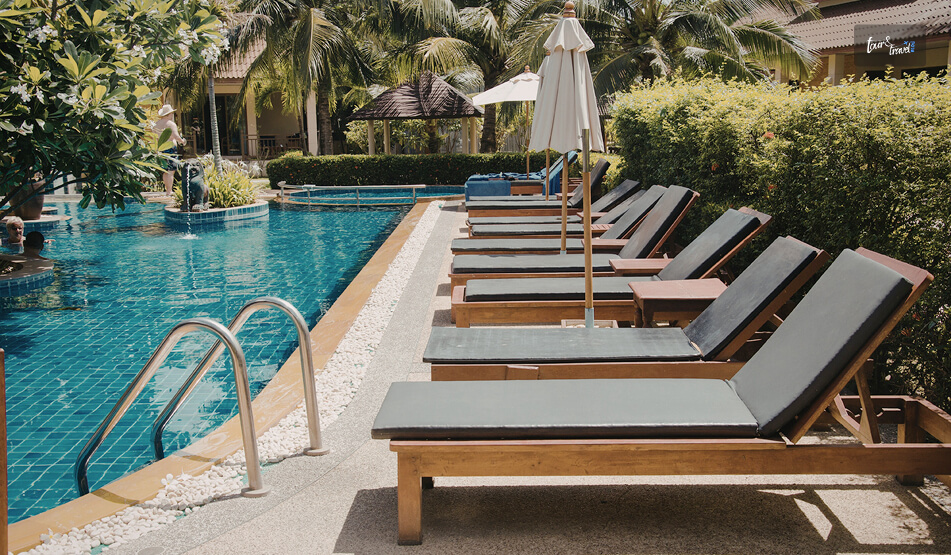
The resort’s heart is the central hub where the 5 o’Clock Somewhere Bar sits surrounded by fire pits, lounge chairs, and the main pool. 

• Quiet Corners

Beyond the central pool, there are large open outdoor spaces and private gardens, as well as places to escape the music, people, and hustle of the resort.

• The Spa At St. Somewhere

Palm Springs’ largest resort spa has everything you need for relaxation away from your kids. 

Encompassing 11,000 sq ft net of the highest level of service and comfort, there is something for everyone. 

Moreover, you will walk away as if you were in St. Barts after 1 week of goodness with our “Parrot Head” (the place you want to be) pedicure to deep-tissue massage.

2. The Rooms At Margaritaville Palm Springs

The resort is a vibrant retreat developed for ultimate relaxation. 

The spaces showcase examples of the ‘coastal-meets-desert’ chic interior by incorporating high-end island decor and furnishings. 

Furthermore, the resort has 398 guest rooms and suites for its customers and offers a vibrant retreat developed for ultimate relaxation.

The accommodation has a range of modern and thoughtful features, including the following. 

  • Free Wi-Fi
  • Smart TV
  • Professional Hair Dryer
  • Coffee and Tea Service
  • Mini Fridge

Multiple Room Options For Families 

Rooms are available in a variety of sizes and designs. 

Standard options have king beds and sleeper sofas. Most rooms come with a balcony. 

Families can also opt for rooms containing two king beds. 

This offers a greater amount of room and comfort when compared to a standard double queen room. 

Most rooms come with a balcony to enjoy the beautiful views of the San Jacinto mountains or an energetic patio for those wanting to relax.

3. Dining At Margaritaville Palm Springs

A Margaritaville experience wouldn’t be complete without its food offerings. The resort features several unique dining choices to suit various tastes and budgets.  

• Come Monday Café

Situated near the lobby, this venue is perfect for breakfast, lunch, and dinner, providing a laid-back atmosphere with a lovely outdoor patio.  

• JWB Grill

For a more sophisticated dinner, JWB (named in honor of James William Buffett) offers an elegant menu in a stylish environment.  

• Joe Merchant’s Coffee & Provisions

This is the ideal place for a quick bite. Whether you need a caffeine boost, a breakfast sandwich, or a salad to enjoy by the pool, this spot is convenient and a bit easier on the wallet.  

• 5 o’Clock Somewhere Bar

The perfect poolside hangout serving chips, salsa, burgers, and, of course, their famous margaritas.

What Works For Families At Margaritaville Palm Springs? 

What Works For Families At Margaritaville Palm Springs

Margaritaville stands out in several areas that simplify life for parents. It is great for a family trip for the following reasons.  

• The Double King Room

While most hotels provide two queen beds, which can feel cramped for a family of four, Margaritaville offers accommodations with two king-size beds. 

Also, this significantly improves sleep quality and personal space.  

• Poolside Convenience

The attentive staff allows you to order lunch and frozen drinks right from your lounge chair. 

This means you won’t need to drag wet, hungry kids back to your room or into a formal dining area for a midday bite to eat.  

• Built-in Entertainment

The resort fee covers free bike rentals, making it easy to explore the serene, breezy streets of the nearby neighborhood, along with complimentary high-speed internet for those unavoidable evening tablet sessions.

• The Evening Atmosphere

As night falls over the mountains, the resort transforms. 

Fire pits are ignited, and the outdoor patios turn into “enchanting” spaces adorned with lanterns hanging from the trees. 

Moreover, it creates a sophisticated vibe for adults while remaining completely welcoming for kids.

What Does Not Work For Families At Margaritaville Palm Springs?

For me, the first inconvenience at the resort started with the talk. The building we were assigned to was quite a long walk from the pool. 

Furthermore, during weekends, with the crowd surge, it was a bit difficult for my kids. 

What Are The Places To Visit Near Margaritaville Palm Springs?

Beyond the 24-acre sanctuary, these are the places you can visit. 

  • The Living Desert Zoo & Gardens
  • The Children’s Discovery Museum of the Desert
  • Indian Canyons

Furthermore, don’t forget a ride in the Palm Springs Aerial Tramway up to the top of Mount San Jacinto.

Share on Social Media

Meet Sibashree Bhattacharya, a travel enthusiast who has a decade-long experience in transcending virtual barriers with her words! Her deep love for travel is apparent from her travel escapades to the mountain, often taking her readers on a journey, her words acting as Portkey! Fun fact: Sibashree loves to dive deep into the history of the places she is about to visit, making her travels even more wholesome. If you were wondering how her articles are not short of time travel, this answers it!

Leave a Reply

Your email address will not be published. Required fields are marked *

title-img Related

READ MORE Is Machu Picchu closing

Is Machu Picchu Closing? Is Overtourism Ruining Its Credibility As The Wonder Of The World? 

BY  Sibashree May 23, 2023

No, Machu Picchu is not closing in 2026. However, the Inca Trail leading to the Machu Picchu citadel was closed from the 31st January to 1st March 2026.  The Machu Picchu Archaeological Park Management confirmed that the scheduled maintenance is due to conservation and maintenance work.  It’s great to know that the Park Management is doing the maintenance and conservation work in compliance with regulations of the “Sustainable Tourism Use of the Inca Trail Network.”  However, overtourism remains a concern, and that has impacted Machu Picchu’s credibility as one of the Seven Wonders of the World, big time!  Social conflicts and limited conservation initiatives have been the other two reasons that have affected Machu Picchu’s position as a Wonder of the World.  The New7Wonders project organized the event of announcing the New Seven Wonders of the World in 2027.  The same organization shared a Facebook post on 15th September 2025, and the post said,  “The designation implies a shared commitment to the conservation and responsible management of the site, as well as the implementation of international preservation and management standards.”  So, the onus is on the important decision makers of the country to maintain or ruin its reputation as the wonder of the world.  Hi, in today’s blog, I will talk about why there is so much buzz about “Is Machu Pichu is closing?” I will also give you an idea about why Machu Picchu is struggling to maintain its status.  Why Is Machu Picchu Closing? The Official Statement Of Machu Picchu On The Temporary Closure  The official statement from the Machu Picchu Archaeological Park mentioned that the temporary closure of Machu Picchu from the 31st January to 1st March happened because of the maintenance of the walls.  Furthermore, other activities included in the conservation work were: Vegetation Clearance Repairing the Stone Paving Maintenance of the Retaining Walls Maintenance of Ramps, Bridges, and Railings.  Also, maintenance and repair work will go on in the drainage system, floor treatments, and campsite areas.  Cesar Medina, the Chief of Machu Picchu Archaeological Park, also said in an interview with Andina, “In some sections, we will also carry out rock scaling to prevent possible rockfalls.” The National Service for Natural Areas Protected by the State (SERNANP) will use geomesh or stabilize the slopes to prevent rockfall and landslides, especially in the monsoon season.  Why Is The World Wonder Status At Stake For Machu Picchu?  While New7Wonders shared its concern and demanded an active endeavor and strategic transformation from the decision makers, the ministers, and authorities said that there has been no change in the status of the UNESCO World Heritage Site.  However, as of 2026, Machu Picchu is facing massive challenges with tourism bottlenecks. The locals have blocked the railway lines, and they demand changes in the monopoly of function by the bus operator, Consettur.  Furthermore, the protests in late 2025 showed how the evacuation of 1,400 tourists happened.  Despite the attempts of Peru’s Ministry of Commerce and Tourism and tourism associations, and occasional withdrawal of protests, disruptions still continue.  In fact, as recently as 28th January 2026, Lima, Peru, saw Gen Z protestors demanding the closure of many tourist attractions, including the Government Palace, Plaza de Armas, and the historic center.  All the unrest now reminds us of the political upheaval where more than 60 protestors died.  Now, these protests look like recent developments. However, it is a cumulative outburst of years of overtourism, irregular practices of ticket selling, and complacency about the preservation of the heritage site.  Things To Remember Before Visiting Machu Picchu  So, is Machu Picchu closing? No. Do we need to be more careful when going to Machu Picchu now? Yes.  So, here are a few things to remember before visiting Machu Picchu: 1. Select The Best Train Option When you are heading towards Aguas Calientes, you can choose from three trains – Vistadome, Expedition, and the Belmond  Hiram Bingham train. The Expedition train is a standard type of train that features large windows. The Vistadome train is a more refined version, and it has large panoramic windows so that you can enjoy the scenic landscapes. The Bingham train is the most luxurious and has facilities like brunch and lunch. They also have an open-air roof in their wagon. 2. Use Restrooms Before You Enter One thing to know before visiting Machu Picchu is that there are actually no restrooms inside.  This is why you should use the restrooms before entering the premises of Machu Picchu.  After you have passed the entrance of the premises, you can no longer leave the premises and then re-enter. 3. There’s A Fixed Route When on the guided route of the ruins of Machu Picchu, you will, by default, have to follow a fixed route.  Which means that you can only walk in a single direction.  It is certainly not possible to go back and visit one of the previously-visited spots.  This regulation was actually introduced to bring more order to the Machu Picchu tours. 4. Remember To Carry The Correct Equipment If you visit Machu Picchu, you need to make sure that you consider your backpack. It should be of regular size.  You have to adhere to certain parameters of a backpack to get entrance to the premises of Machu Picchu. Exciting Facts About Machu Picchu Here is a list of some of the exciting facts about Machu Picchu: 1. It Is One Of The Best Conserved Inca Cities  Most of the cities built by the Inca civilization were also destroyed during the Spanish conquest.  Machu Picchu is one such attraction that was in a hidden location.  The Spanish explorers did not find it at that time. This makes it one of the best conserved Inca cities and a true archaeological gem. 2. It Was Originally An Astronomical Observatory Machu Picchu was originally an astronomical observatory.  It has a sacred Intihuatana stone known to indicate the two equinoxes accurately.  Twice a year, the Sun hits the rock directly and casts no shadow. 3. Hiram Bingham Discovered The Site In 1911 Machu Picchu was only known in a local manner until the professor of Yale, Hiram Bingham, again discovered the site in the year 1911.  His book “The Lost City Of Incas” was actually based on his findings. 4. A UNESCO World Heritage Site  Situated more than 7000 ft. above sea level in the Andes.  It also symbolizes the Incan Empire, which goes back to 1450 AD.  The site was actually designated as a UNESCO World Heritage Site in 1983.  It was also named one of the Modern 7 Wonders of the World in 2007. Read Also: Annapurna Base Camp Vs. Ghorepani Poon Hill: Should You Go All The Way? What Are The Things To Do In Hakone? Know The Top Activities In 2026 5 Luxury Destinations In Europe That Blend Comfort And Culture

READ MORE maritime travel crew retention

Why Crew Retention Is Becoming a Critical Issue For Shipowners

BY  Sibashree Mar 10, 2026

Shipowners and maritime operators are increasingly facing a serious challenge that threatens operational stability and crew retention. Crew retention is similar to any form of employee retention. So, it means retaining the crew members or workers who have been working within the fleet for a long time.  Unfortunately, the turnover rates in the maritime industry have shot up suddenly. The factors that have prompted people to leave the profession entirely are: Long Contracts Time Away from Family Regulatory Pressures Competition from Shore-Based Roles  So, finding skilled maritime professionals was already a challenge in the expanding shipping industry. Now, it is a different HR concern to retain the crew members for longer.  Furthermore, crew retention is something of strategic importance because it has a direct impact on the following factors.  Vessel Performance Safety Operational Costs Long-Term Profitability Hi, in today’s blog, I will discuss why crew retention is such a challenging aspect in the maritime and cruising industries today. I will also discuss the ways to address it.  How Is Crew Retention Measured? You can measure the crew retention rate using the following metrics.  · Percentage of crew returning after contract completion · Average employment length with a company · Turnover rates across vessel fleets · Rehire rates for officers and senior crew When shipping companies ensure a strong retention rate, the workforce becomes stable.  Why Is Maritime Travel Crew Retention So Important? The maritime travel crew works in isolated environments. So, the following elements become important for safe operations.  Teamwork Trust Experience Also, you will make a mistake if you consider the vessel crew just as a group of employees. They are all part of a tightly coordinated team with the following responsibilities.  Navigation Cargo Safety Emergency Response Engineering Reliability So, crew retention becomes very crucial. Moreover, when the crew retention rate is higher, a maritime crew company can enjoy the following benefits.  1. Operational Consistency When a crew member is working in a crew company for a long time, they can understand the following aspects better.  Company Policies Safety Management Systems Operational Expectations Thus, they can eliminate or minimize mistakes and improve operational efficiency.  2. Stronger Safety Culture Returning seafarers are more familiar with emergency procedures and risk management practices. 3. Faster Vessel Turnaround Times An experienced crew can handle port operations and cargo management more efficiently. 4. Improved Morale Onboard Crew members who have been working together for a long time will trust each other better. Thus, their efficiency will be higher in managing under-pressure or bottleneck situations.  Moreover, if the retention rate of your company is higher, you will have a stronger reputation among seafarers. As a result, it will be easier for you to attract highly-skilled candidates.  Efficient shipping operations are essential for global trade networks.  For example, complex international cargo routes such as those discussed in this guide to container shipment in Hawaii demonstrate how maritime logistics relies heavily on skilled professionals who can operate vessels safely and efficiently across long distances. Rising Crew Turnover In The Maritime Industry Over the past decade, several trends have contributed to rising turnover rates among seafarers. 1. Changing Workforce Expectations Younger generations who want to work in the maritime travel industry have different expectations from their jobs.  Unlike the previous generations, they look for: Work-Life Balance Career Progression Mental Wellbeing Hence, they will not sign for anything related to working for extended periods.  2. Increased Competition For Talent Many seafarers, especially those who struggle to deal with the extended working hours of a maritime crew, often get into land-based maritime roles.  Their roles include: Port Operations Ship Management Marine Surveying Logistics Coordination. Moreover, these roles often offer more predictable schedules and family stability. As a result, experienced officers and engineers are frequently leaving vessels earlier in their careers. 3. Regulatory And Operational Pressures According to the International Maritime Organization’s seafarer welfare resources, improving working conditions and supporting seafarer wellbeing has become a priority across the global maritime sector. So, the regulatory frameworks for modern vessel operations are very crucial. Furthermore, these frameworks ensure safety, environmental compliance, and operational reporting.  Now, following the compliance is also a lot of work for the crew members. Often, the fatigue of following the compliance surpasses the actual reason for safety and sustainability. The True Cost Of Poor Crew Retention For Shipowners High crew turnover can create significant operational and financial challenges for shipowners. 1. Recruitment Costs When the turnover rate is high, you will have to hire new crew frequently. Now, hiring crew members involves the following costs.  Agency Fees Recruitment Processes Background Checks Administrative Onboarding So, all these costs shoot up when a maritime travel company has to hire its crew members frequently due to a poor retention rate. 2. Training And Familiarisation Every new team member will need training in the following areas.  Vessel Systems Company Safety Procedures Operational Workflows Moreover, when a crew member is learning these things, the productivity will be lower. Also, as they are not familiar with the entire scenario, the chances of mistakes will be higher.  3. Disruption To Team Dynamics A vessel crew operates as a tightly coordinated unit. High turnover can disrupt teamwork, communication, and operational rhythm. Moreover, stable crews often develop efficient routines and strong professional relationships. Constant personnel changes can undermine this cohesion. 4. Increased Safety Risks Inexperienced or unfamiliar crew members may take longer to respond to emergencies or unusual situations. So, this can increase the likelihood of operational incidents. Moreover, organisations such as the International Transport Workers’ Federation Seafarers’ Section have highlighted the importance of stable crews for maintaining high safety standards across the global shipping industry. Maritime Travel Crew Retention: Frequently Asked Questions (FAQs) Here are the frequently asked questions and answers about the maritime travel crew retention. 1. How Does Crew Retention Affect Shipowners’ Costs? Crew retention directly impacts the operational expenses. If your crew members are staying with you for longer, you will have to spend less money on recruitment, onboarding, and training. Furthermore, a stable crew ensures better operational efficiency.  2. Can Technology Improve Maritime Crew Retention? Yes, you can use technology to improve maritime crew retention. The use of technology can alleviate administrative workloads, improve communication with families, and offer better onboard connectivity. Furthermore, you can take help from crew management platforms so that shipping companies can track training, performance, and career development opportunities. Overall, when you use these tools, the crew members feel more connected to the employer.  3. Is Crew Retention Linked To Vessel Safety And Performance? Absolutely. Experienced crews who have worked together before are generally more effective during routine operations and emergencies. Moreover, they understand vessel systems, safety procedures, and company protocols. Also, high retention leads to stronger teamwork, faster decision-making, and improved safety outcomes across the fleet.

READ MORE one week San Diego itinerary

San Diego In One Week: The Perfect Holiday Itinerary

BY  Sibashree Sep 26, 2025

San Diego’s funny, and it feels like two vacations in one. You can be lazy by the beach and still find yourself hiking or grabbing tacos in some little neighborhood later.  The city’s chill, but not boring, which is kind of rare. If you’ve got a week, you can hit a mix of spots without running yourself ragged. And yeah, there’s always that random “Oh wow, I didn’t plan this, but it’s awesome” moment. So here’s a one week San Diego. It’s beaches, food, history, and a bit of hiking! All of these await you.  You don’t need to follow a very strict plan. However, having a basic plan always helps. What Is The Best One Week San Diego Itinerary?  Terminal 1 of the San Diego International Airport has just undergone a rejuvenation. The transformation has cost a whopping 3 billion US dollars, and the improvements show how the city is committed to serving its guests better. It perfectly blends smart designs, comfort, and technology.  Naturally, the current rejuvenation of Terminal 1 will be a milestone in boosting tourism to the city, which is otherwise fighting a downturn in the tourism sector in 2025. We can see the echo of the same in the words of Kerri Kapich, the COO of the San Diego Tourism Authority.  Kerri’s statement issued in May 2025 stated, “We are starting to see a slowdown. That is obviously a concern to all of us working in travel and tourism since we are the second-largest traded economy here in San Diego." Nevertheless, despite the not-so-great numbers, San Diego will never disappoint you with its beautiful beaches and marine life.  So, here is the one week San Diego itinerary for you.  Day 1: Beaches And The Waterfront The beaches and oceanfront are, of course, at the epicenter of the tourism scene of San Diego. Furthermore, these beaches are crucial for the city to adhere to sustainable and green tourism practices.  La Jolla Cove – Sea lions everywhere (they’re loud and hilarious). The water’s clear, cliffs are super photogenic, and if you’ve got snorkel gear, bring it. Sometimes they rope off parts during sea lion season, but you can still get close enough for a look.  The mornings here are calm, and it usually gets busy in the afternoon.  Mission Beach + Boardwalk – Classic scene. Long stretch of sand, bikes, rollerbladers, dudes juggling, all of it. It’s noisy in a good way. Sunset Cliffs – Come here at the end of the day. The cliffs are dramatic, like movie-scene dramatic. If the tide’s low, you can mess around in tide pools. Local tip: Parking near La Jolla can be a headache. So, reach early.  Day 2: Balboa Park And Downtown Energy Balboa Park is like San Diego showing off with its gardens, museums, and old Spanish-style buildings. Gardens – Some are free (always nice). The Botanical Building has plants everywhere, and the Alcazar Garden feels like a tiled postcard. Museums – Pick your flavor. Art, science, natural history! There are literally 17 of them. You won’t see it all, and that’s fine. Gaslamp Quarter – At night, the downtown buzz kicks in. Rooftop bars, restaurants, live music.  Local tip: Many museums offer free entry on Tuesdays. So, explore the official museum websites.  Day 3: Old Town And Classic Mexican Flavors If you want history with tacos (and who doesn’t), Old Town’s the move. Historic Park – Adobe houses, blacksmith demos, street performers! It’s half museum, half fair. Café Coyote – Fresh tortillas, large plates, and a fun vibe make Café Coyote a must-visit. Shops – Skip fridge magnets and choose handmade pottery, woven stuff, and jewelry, instead. Local tip: Late afternoon is the mariachi time, and it is super festive.  Day 4: Hiking And Outdoor Escapes Beaches are cool, but don’t skip the trails. San Diego has legit nature spots. Torrey Pines – Wild trees, epic ocean views, trails that make you stop mid-step just to gawk. Check closures before you go. Cowles Mountain – Moderate climb, great views from the top. You’ll feel like you earned your tacos. Mission Trails Park – Huge, less touristy. Lots of trails, chill atmosphere. Old Mission Dam is a simple stroll. Local tip: Sunrise hikes. Cooler, quieter, better. Day 5: San Diego Bay And A Boat Tour Different vibe today—see the city from the water. USS Midway – Enormous. Even just standing outside, you’ll be like, wow. Seaport Village – Cute, a little touristy, but good for wandering and snacks. San Diego Boat Tour – A harbor cruise is an affordable way to see the city from the water. You will pass under the Coronado Bridge, glide by the naval base, and take in the skyline from a fresh angle.  Some tours even spot dolphins along the way. If you want a more relaxing San Diego Bay tour with a fun island vibe, Tiki Time Bay Tours is one of the best choices. Their tiki-style boats create a laid-back atmosphere that is perfect for unwinding on the water. Local tip: Evening cruises can be cheaper. Plus, lights on the water are underrated. Day 6: Neighborhoods And Local Life This day’s all about vibes. Little Italy – You will find food everywhere, including good coffee, murals, and a farmers' market if you’re lucky. North Park – The North Park is artsy with craft beer and the vintage shops being the main attractions. Explore North Park in the afternoon. Ocean Beach – It is very chill and exudes a hippie-surfer energy. End with tacos by the pier. Day 7: Scenic Drives And A Relaxed Farewell Enjoy the last day of your trip in San Diego. You don’t need to do too much planning.  Pacific Coast Highway – Drive north, stop whenever the view makes you. (It’ll be often.) Coronado Island – Wide beach, fancy hotel, little cafes! It’s postcard-perfect but relaxed. Sunset Picnic – Grab snacks and sit on a blanket at Sunset Cliffs or Coronado. End the trip slowly and soak in the moments. Local tip: Locals picnic at the beach all the time. Join in. Wrapping Up Your San Diego Week Seven days later, you get why people rave about this place. You’ve seen beaches, trails, food spots, historic stuff, and neighborhoods, all with that laid-back SoCal vibe.  And the thing is that you didn’t even cover it all. Which just means that there’s more waiting when you come back. Read Also: What Is South Of France? What Will Be The Perfect South Of France Itinerary? What Are The Unique Things To Do In Santo Domingo, Dominican Republic? Unique Things To Do In Tuscany: What Is A Must-See In Tuscany?