
Dehiwala Zoo In Sri Lanka: A Favorite Spot For Animal Lovers Since 1936 

The National Zoological Gardens of Sri Lanka, or Dehiwala Zoo, is one of the first zoos in Asia. 

So, if you have enjoyed the Kaudulla National Park safari, you will also love a visit to the Dehiwala Zoo. 

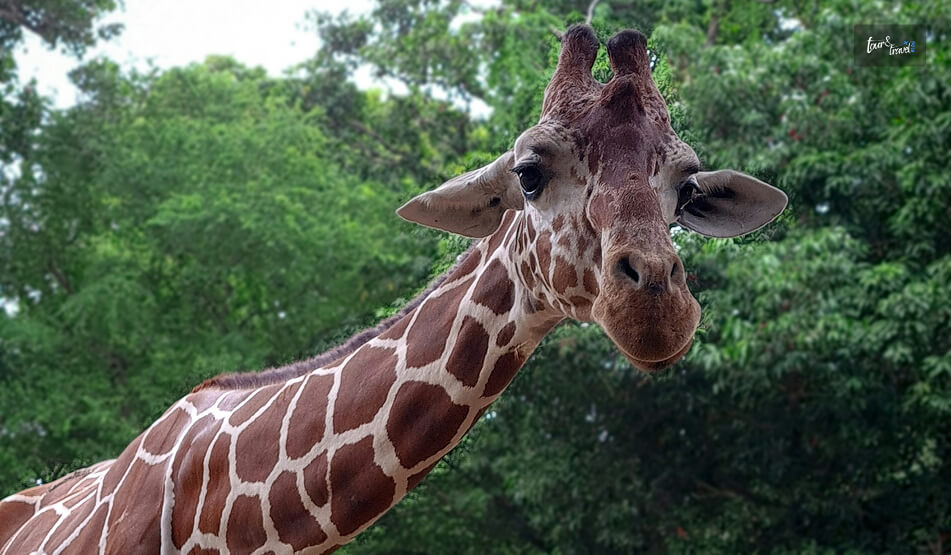
This zoo has an area of 26 acres, and it is home to more than 2000 animals. Furthermore, you will find fountains, orchids, and peaceful lakes here.

Moreover, it offers a unique Night Safari experience. On this night safari, you can spot the mysterious nocturnal animals. 

In addition, you can join the educational workshops here to learn about wildlife conservation. 

So, come and have a thrilling wildlife experience at Dehiwala Zoo. However, before I talk about its location, how to travel, things to do, and the best time to travel, here is a quick look at the essential details. 

Dehiwala Zoo In Colombo: Quick Info 

Address120 Galvihara Road, Dehiwala-Mount Lavinia, Sri Lanka
Timings8:30 AM to 6 PM
Ticket– LKR 100 for Local Adults
– LKR 2,500 for Foreigners
Facilities– Souvenir Shops
– Restaurants
– Boat Rides
– Icecream Stalls
– Zoo Aquarium
– Butterfly Garden Pony Rides
– Elephant Rides
– Flowers
– Fountains

How To Reach Dehiwala Zoo? 

Dehiwala Zoo is well accessible by air, train, bus, taxi, and ride-hailing apps. While the easiest option is to take a taxi or private car, traveling by bus is the cheapest way. 

1. By Air

Dehiwala Zoo is just 40 km away from the Bandaranaike International Airport. 

Furthermore, you will easily get a ride-hailing service or a taxi to reach the Dehiwala Zoo within 45 minutes. 

2. By Train

The Dehiwala Railway Station is the closest to the zoo. So, if you are traveling from the north, you have to take a train from Colombo Fort Station to Dehiwala Railway Station. 

Also, if you are traveling from the south, you can stop at Mount Lavinia Railway Station. The beautiful Mount Lavinia Beach is just 1.4 km away from the railway station. 

Tuk-tuks are available from both these railway stations, and the train ticket price will be between 40 and 100 LKR. 

3. By Taxis Or Ride-Hailing Apps

The easiest way to reach Dehiwala Zoo is to take a ride-hailing service or a taxi. Uber and PickMe are the main ride-hailing services here. 

You can book vans, tuk-tuks, or cabs using these apps. 

Furthermore, the travel cost in this way is between 1700 and 2400 LKR. 

4. By Bus 

You will get buses to Dehiwala Zoo throughout the day. You can take bus 176, 100, and 101. 

Furthermore, the ticket prices are between 30 and 50 LKR. 

What Are The Best Things To Do At Dehiwala Zoo? 

What Are The Best Things To Do At Dehiwala Zoo

From watching the elephant performance to taking a ride in the zoo train, the activities in the zoo are diverse and ideal for tourists of all age groups. 

However, for me, the most delightful part was watching the elephants in action.

Here is more about the things to do at Dehiwala Zoo. 

1. Watching The Animal Shows 

Located on the Anagarika Dharmapala Mawatha, Dehiwala Zoo has monkeys, animals, fish, birds, reptiles, and other animals. 

The zoo further hosts animal shows. 

So, you will love seeing an elephant dancing or a seal playing with a ball. 

2. A Walk Through The Zoo

The zoological garden has a reptile house, aviary, aquarium, and butterfly garden. So, you can take a walk through the garden. 

The zoological garden area also has a dedicated botanical garden. 

However, if you don’t want to walk much, you can take a ride on the zoo train. 

3. Learn About The Flora And Fauna Present Here 

If you want to know about the animals and plants here, you have to take a guided tour. Furthermore, you can learn about the flora and fauna and the rich history of the zoo from the Educational Center. 

Moreover, the zoological garden has an animal hospital. You will find veterinary doctors and caregivers at work there. 

4. Take A Part In The Night Safari 

The zoo has a dedicated Leopard Trail for night safaris. You can watch the nocturnal animals in action during the safari. 

Furthermore, you can arrange a picnic or explore the local Dehiwala Market. Furthermore, if you want a spiritual experience, visit the Bellanwila Rajamaha Viharaya. 

If you want to explore more Buddhist places of importance in Sri Lanka, you can visit the Ritigala Forest Monastery and Sigiriya Rock

What is the Best Time to Visit Dehiwala Zoo In Sri Lanka?

December to April is the best time to visit Dehiwala Zoo. This is the dry season and hence is ideal for outdoor exploration and wildlife spotting. 

However, it is also the peak season. So, plan a visit early in the day and avoid weekends. 

Furthermore, May to November is the wet season in the garden, and the zoo looks lush and green. However, the animals can be less active in these months. 

Things To Keep In Mind For Visiting The Dehiwala Zoo In Sri Lanka

Irrespective of the season of your visit, you have to keep the following things in mind. 

You have to wear comfortable footwear with a good grip as you have to walk a lot through the zoo. 

Furthermore, you have to be respectful to the animals and follow the rules of the zoo.

Is A Trip To Dehiwala Zoo Worth The Experience? 

Yes, Dehiwala Zoo is a place worth visiting because you don’t just spot animals here, but learn about their livelihood and nature. 

Furthermore, this is one of the oldest zoos in Asia and was built in 1936. 

However, the zoo authority must be more focused on the preservation of the zoo, as the last time I visited, certain things drew my attention. 

Seeing the animals here, the night safari, and the performances by animals have become more like a curriculum, and they show a lack of infrastructure. 

So, you may feel sometimes disappointed if you are planning to visit the zoo to see a performance of the animals. 

Still, many people visit this zoo because of its heritage. 

Share on Social Media

Sibashree is a travel, culture, and leisure writer who has been writing since the age of 12 and professionally since 2014. With more than a decade of travel writing experience and journeys across India and several parts of the world, she brings a deeply personal and thoughtful perspective to her work. A student of English Literature and Mass Communication, Sibashree has always viewed travel as more than movement — for her, it has been a way of understanding people, cultures, and herself. Her passion for spiritual exploration has also led her to many unusual and meaningful destinations over the years. Outside of writing, Sibashree enjoys watching European cinema, reading about global politics, and reflecting on the stories hidden within everyday places.

Leave a Reply

Your email address will not be published. Required fields are marked *

title-img Related

READ MORE Diyaluma Waterfall

Diyaluma Waterfall, Sri Lanka: The Eternal Memoir Of Love (Location, Hiking, And More)

BY  Sibashree Mar 16, 2026

After visiting the Nine Arch Bridge and the iconic blue trains, my next stop was the Diyaluma Waterfall, at a distance of around 45 km.  Now, Sri Lanka is full of hidden gems. Along with the Ritigala Forest Monastery, this waterfall has also offered me a slice of offbeat Sri Lanka.  Furthermore, the Diyaluma Waterfall, with a height of 220 meters, is the second-tallest waterfall in Sri Lanka, and it has many natural infinity pools.  If those were not reasons enough, Diyaluma Waterfall is irresistible for the local tragic love story associated with it. Also, it is a place of great ecological importance.  Moreover, the journey from Ella to Poonagala and the trek further offer an equally unforgettable experience.  Here are more details about visiting the Diyaluma Waterfall, its location, transport options, history, hiking experience, and more.  Where Is Diyaluma Waterfall?  The Diyaluma Waterfall is on the Colombo-Badulla highway in the Badulla district of Sri Lanka.  Koslanda, around 6 km west, is the closest town to the Diyaluma Waterfall.  Furthermore, it is located at a distance of around 30 km from Ella. Also, the waterfall is located about 196 km away from Kandy, the cultural hub of central Sri Lanka.  Moreover, the Kirindi Oya River has formed this waterfall. This river starts flowing near Bandarawela and flows across the central part of Sri Lanka.  How To Reach The Diyaluma Falls, Sri Lanka?  Tuk-tuks are easily available from Ella to Poonagala. Further, from the Poonagala village at the top, you have to do a short hike to reach the Diyaluma Falls.  However, you can also hike from Koslanda. This is a bottom-to-top hike and way more difficult than the top-to-bottom hike from Poonagala.  Also, the tuk-tuk to the Poonagala village cost me LKR 4000.  Moreover, remember that you have to inform your tuk-tuk driver that you need to go to the upper Diyaluma Falls and trek down from there. 1. Hiking From Poongala To Diyaluma Falls  Carry an offline map when hiking from Poongala to the Diyaluma Falls as the network is inconsistent here.  Furthermore, you must take your tuk-tuk driver as a guide or a different local guide for the hike.  My trek to the falls started from the Makaldenya Junction, and I walked for around 30 minutes to reach the Upper Diyaluma Waterfall.  The path is even, and that is why you need to wear proper hiking shoes with a good grip. Also, long and dry grasses cover the entire route.  You will find all the infinity pools here, and taking a bath is a must, considering the heat and strain of walking downhill.  Then, I took a walk of around 10 minutes to reach the Lower Diyaluma Fall. From there, you can see water falling into the valley from a height of 220 meters.  Also, this is the moment you realize the meaning of the Diyaluma Waterfalls. The name is a combination of Diya and Haluma.  Moreover, the name means the “liquid light” or a “rapid flow of water.”  2. Hiking From Koslanda To Diyaluma Falls  The hike from Koslanda is difficult. However, it offers an amazing view of the waterfall from the Diyaluma Falls Bridge below.  Furthermore, the hike takes around 20 to 30 minutes, and on this hiking route, you will find many snacks and coconut shops.  What Are The Things To Do At Diyaluma Falls?  To enjoy hiking and other activities at the Diyaluma Falls, you have to arrive a little early. The waterfalls are open from 6 AM to 5 PM.  Then, you can enjoy a bath in the infinity pools, relax on the rocks, or talk to the locals. In fact, I got to know about the history of this waterfall when talking to a local hiker.  1. Swimming In The Natural Infinity Pools Of The Diyaluma Waterfall On the edge of the main Diyaluma Waterfall, you will find the main natural infinity pool. Also, you will find many other natural infinity pools formed by the Upper Diyaluma Waterfall.  However, you must check with the locals and take enough precautions before getting into the water.  2. Relaxing On The Surrounding Rocks It may not sound very appealing to you. However, for me, who always cherishes TheLowDownUnder Travel experiences, it is a great thing to experience.  Sitting on a rock and seeing streaks of water gushing from a height of 220 meters. You don’t get to see these scenes often, right? Also, don’t forget to bring a towel if you want to sit on the rocks and relax.  3. Talking To The Locals  I come from a country where cricket is the religion. Sri Lanka also has a celebrated cricket team and has produced legends such as Sanath Jayasuriya, Kumar Sangakkara, Muttiah Muralitharan, and Arjuna Ranatunga.  So, it was great fun talking about cricket.  Then, a local guy shared the history of the Diyaluma Waterfall and the tragic love story associated with it. The History Of The Diyaluma Waterfall  A king once fell in love with a lady. However, she was from a lower caste, and the societal norms did not allow them to get married. So, they fled. Unfortunately, people against it chased them down, and the lady fell into the waterfall and died.  Safety Norms To Follow While Visiting The Diyaluma Falls  No set rule exists for the visitors to the Diyaluma Falls, and that is probably the most concerning matter.  The tourist inflow here is high, and most of them are adrenaline junkie.  So, stand on the edge and swim in the infinity pools, but with caution. Moreover, avoid visiting the waterfall in the monsoon season, from September to early December.  Even if you hike in these months, do not swim in the waterfall.  Overall, the Diyaluma Waterfall remains the symbol of the grandeur of nature, and the myths associated with it make it more intriguing.  So, if you are in Sri Lanka, don’t miss a hike to this waterfall, which is also at the epicenter of a unique ecosystem.  Moreover, enjoy the serenity and spirituality in the air.

READ MORE Kalpitiya

Kalpitiya, Sri Lanka: The Sandbar Where The Wind Runs The Show

BY  Sibashree Jul 22, 2026

Mullaitivu left me quiet with the heavy history of the Sri Lankan Civil War.  And Kalpitiya was another surprise during my trip to Sri Lanka. Kalpitiya is a kitesurfing town, and in fact, Kalpitiya has been an important spot to boost tourism in Sri Lanka for the last 15 years with its kitesurfing adventures.  Furthermore, in September 2025, Kalpitiya saw its longest kitesurfing adventure, “a nearly 200-kilometre journey from Anawasala point in Kalpitiya to Talaimannar.”  Surfers from Sri Lanka, Italy and Germany took part in this surfing adventure. Also, Sara Johanna Berg, while speaking to The Sunday Times, said,  “This water sport is spectacular, not only to practice but also to watch. However, it requires proper training and guidance.” Sara also mentioned that with this event, she expected more participation from the Sri Lankan surfers.  Nevertheless, Kalpitiya was more than a wind-scoured sandbar with a fort. It is also home to a distinct fishing culture. And yes, you will see many dolphins, probably the calmest in Kalpitiya.  Here is what I did during my three days in Kalpitiya. This stretch of the northwest coast deserves more than a footnote in a Sri Lanka itinerary. Kalpitiya Took Me By Surprise From The Moment The Journey Started Kalpitiya is around 165 to 170 kilometers north of Colombo. A drive takes around three and a half hours.  It is a peninsula in the Puttalam District and is located around 50 kilometers north of Puttalam Town.  Furthermore, squeezed between the Puttalam Lagoon and the open Indian Ocean, Kalpitiya is a place famous for wind, kites, and dolphins.  However, the journey from Colombo to Kalpitiya was no less “interesting.”  Past Puttalam, the road narrowed, and the land on either side turned into salt pans, catching the light in long silver-white sheets. My driver this time was Nimal, and he slowed down so I could photograph a row of old windmills turning lazily near the salterns. Every detail on the way felt more like rural Netherlands than tropical Sri Lanka. Nimal said,  "This whole peninsula used to belong to traders.” Then, he pointed toward the lagoon side and said, "Arabs, then the Portuguese, then the Dutch. Everyone wanted this exact strip of sand." The Places To Visit In Kalpitiya  What Nimal said made more sense to me when I reached Kalpitiya Fort, the main historical attraction in Kalpitiya.  It was a fort that guarded a Cinnamon route. Here are more details about the fort.  Kalpitiya Fort: Embodying The Portuguese And Dutch History The Portuguese had laid the foundations of the Kalpitiya Fort earlier, and the Dutch built the fort on it between 1667 and 1676.  It sits on the narrow point where the Puttalam Lagoon meets the sea.  The walls of the fort are around four meters in height, and these are made of coral and limestone quarried from the surrounding coast. Also, the single entrance to the fort faces the lagoon. Furthermore, the belfry and the pediment topping the entrance make it look like a church.   However, this resemblance is not an accident. The local accounts say that the Dutch built the entrance in that style to placate the Kandyan king who had granted them the land. It was at a time when the fort's real purpose was military and commercial rather than religious.  A Guard To The Puttalam Lagoon The Kalpitiya Fort guarded the entrance to Puttalam Lagoon. The Dutch used the lagoon as a corridor to move cinnamon, areca nuts, and pearls toward Colombo. They had even dug a canal through Negombo for the purpose. However, today, the fort functions as the navy base of Sri Lanka. If you want to visit this fort, you will have to carry your original passport as it is still an active military site.  A young naval officer volunteered to show me around, and as I walked the bastions, the fort looked out over the lagoon on one side and the ocean on the other. The two bodies of water were separated by a strip of land I could have walked across in under ten minutes. Kudawa Beach: The Line Between Two Seas From the fort, I took a short ride to Kudawa Beach.  It is the main stretch of sand in Kalpitiya, and here a narrow sandbar visibly divides the turquoise ocean from the murkier, nutrient-rich lagoon.  I arrived at the beach close to sunset, and without exaggerating a bit, it was the single sundowner spot I found anywhere on this Sri Lanka trip.  There were no large resorts crowding the shorelines. However, there are around 30 kitesurfing schools around the coastlines and lagoons.  Also, there are small eco-resorts, and a handful of fishing huts with nets strung out to dry.  At the beach, a fisherman mending his net nearby told me, half in English and half through gestures, that the wind here "never really stops between May and October."  I had to agree with him, as even if I stood still, my shirt kept snapping against my back.  What Are The Things To Do In Kalpitiya?  I had a wonderful time chasing the dolphins and trying to learn kitesurfing. Here is more about the best things to do in Kalpitiya.  1. Chasing Dolphins Before Sunrise Dolphin watching is the best experience to have in Kalpitiya.  Our boat left from the lagoon, and it charged LKR 4000 per head.  It was just after sunrise. So, the sea was at its calmest. The boat headed out toward the Bar Reef area, where we spotted the spinner dolphins. I tried to keep a count, and it was close to sixty.  Our guide told me that spinner dolphins are regular in this region between November and April. He mentioned spotting the "super-pods" of over a thousand dolphins during peak months.  The dolphins did not perform tricks for us, and they simply existed around the boat. They spun, leaped, and occasionally arrowed straight toward the hull before diving under at the last second. Our boat operator mentioned that between December and April, this area also has sperm whales and sometimes migrating blue whales.  Each time a pod appeared, our boat operator cut the engine. Thus, the boat drifted rather than chasing them.  He said it was a “standard practice” among the more responsible operators working the Bar Reef, one of Sri Lanka's largest reef systems at roughly 307 square kilometers. 2. Learning To Kitesurf (I Failed At It) Kalpitiya's lagoon side is shallow and flat almost by design, which is exactly why it has built its reputation as one of the best beginner-friendly kitesurfing spots in Asia.  However, I was not a natural.  My instructor, a wiry local guy named Dinesh who has been teaching on this lagoon for years, kept the lesson simple. "Control the kite first. The board comes later," he said, which is probably decent life advice too. However, I barely made it. So, you must not trust the term “beginner-friendly” completely.  What Is The Best Season For Kitesurfing In Kalpitiya?  Kalpitiya has two kitesurfing seasons.  The southwest monsoon, from May to October, brings strong, consistent wind for most of the day. So, it is for professionals and veterans.  On the other hand, the northeast monsoon, from December to March, is gentler and generally considered the better window for first-timers. I went in the second season. Still, I spent most of the first hour eating sand.  3. Exploring The Places Near Kalpitiya  Wilpattu National Park, the largest national park in Sri Lanka, is close to Kalpitiya. It is a drive of about 2 hours.  The Wilpattu National Park is also famous for having a dense population of leopards. If you want to stretch the trip a little, you can visit the national park and plan a day safari.  Moreover, the peninsula itself is scattered with fourteen small islands, some inhabited by fishing families, some given over entirely to mangroves and birdlife. You can even explore these islands for a meaningful cultural experience. How I Spent Three Days In Kalpitiya: The Itinerary  DaysTimeActivityDay 1MorningDrive from Colombo via Puttalam, Salt Pans and WindmillsAfternoonVisiting the Kalpitiya Dutch FortEveningSunset at Kudawa BeachDay 2Early Morning Dolphin Watching Boat Trip Near Bar ReefAfternoonRelaxing by the LagoonEveningTrying Fresh Seafood by the BeachDay 3Early MorningKitesurfing LessonLate MorningDay trip toward Wilpattu National ParkAfternoon Island-hopping by Boat, Mangroves and Birdlife Kalpitiya: A Coastline That Is Still Deciding What It Wants To Be  Kalpitiya never tries to be Galle or Mirissa Beach. This is where it wins hearts.  With its patchy hot water, basic rooms, and winds, it is as unpolished as Nimal warned me to be.  But between a 350-year-old fort, a reef full of dolphins, and a lagoon that has quietly become one of the best kitesurfing classrooms in Asia, Kalpitiya gave me more range in three days than most single-purpose beach towns manage in a week. If you are the kind of traveler who wants your itinerary to include a little bit of history, a little bit of wildlife, and a lot of wind in your hair, I would put this stretch of the northwest coast near the top of your list.

READ MORE Hello Kitty Shinkansen

Is Hello Kitty Shinkansen Discontinued? Looking Back At Everything This Iconic Bullet Train Offered

BY  Sibashree Apr 18, 2026

Yes, Hello Kitty Shinkansen is going to get discontinued in Japan. Now, during my last trip to Japan, a ride in this themed bullet train was surely my pookie moment.  It was an experience of a lifetime when I tried the best Osaka food and boarded the Hello Kitty Shinkansen train for a day trip to Kobe, Himeji, Okayama, Kurashiki, and Hiroshima.  However, JR West has decided to stop the operations of the Hello Kitty Shinkansen from 17th May 2026.  Now, it’s sad for everyone who loves Japanese culture. If the Japanese shrines and temples are the telltale of its history, religion, and society, the Hello Kitty Shinkansen has been a poster of the pop culture.  So, in this article, I will discuss how the beautiful 8-year-old journey of the Hello Kitty Shinkansen is going to come to an end, and what you can expect in the few days left until the last date of operation.  Hello Kitty Shinkansen: An Iconic Symbol Of Japanese Railway Branding  Hello Kitty Shinkasen started running on the Sanyō Shinkansen line on 30th June, 2018. It used to run from Shin-Osaka to Hakata (Fukuoka).  Furthermore, during this 8-year run, this themed bullet train has successfully served its purpose of reviving tourism in Japan.  Moreover, the Hello Kitty Shinkasen used 500-series bullet trains and featured the signature white-and-pink colors.  Also, the exterior was adorned with bows, the signature of Hello Kitty.  However, for the train, the bow represented a link between the cities on the route covered.  The Decor Which Made The Hello Kitty Shinkansen So Special Out of eight cars of the Hello Kitty Shinkansen, the decor of the first two cars was based on the theme.  Furthermore, the Hello Plaza in Car 1 was dedicated to exhibitions. It had exhibits dedicated to the cities crossed on the route.  Moreover, you could shop for souvenirs at the Hello Plaza.  Again, the second carriage, “KAWAII! ROOM,” was decorated in the style of Hello Kitty. The chairs, the wall art, and the ceiling were done accordingly.  Moreover, there was a photo area.  The rest of the carriage was like a normal bullet train, with subtle hints of the Hello Kitty theme.  Also, a unique melody was used for the announcement.  How Is The Farewell Event Of Hello Kitty Shinkansen Being Planned?  JR West is going to plan a series of commemorative events to bid farewell to this iconic bullet train.  As a passenger, you can leave a message on the board reserved for sharing memories. Furthermore, you can get stickers and limited edition souvenirs in the memory of the train.  Moreover, you can collect special merchandise from the Kyoto Railway Museum and specific JR West Stores. You will even find them online.  Having said that, there is still a month left for the Hello Kitty Shinkansen to get discontinued. So, let’s have a quick look at the operation days, timetable, and passes.  Hello Kitty Shinkansen Passes And Tickets You can ride the Hello Kitty Shinkansen with the Japan Rail Pass and other tickets. So, check out some of the pass options here.  1. JR-WEST All Area Pass You can buy this single pass to explore Sanyo, Hokuriku, Hakata, and other unexplored parts of western Japan.  Furthermore, it has a validity of 7 days.  Also, the pass price for adults is 26000 Yen, and for children, it is 1300 Yen. Moreover, it is free for children from 1 to 5 years.  This is the most recommended pass for riding the Hello Kitty Shinkansen.  2. Kansai - Hiroshima Area Pass With this Kansai to Hiroshima Pass, you can enjoy unlimited rides between these two locations.  It will also include a ride on the JR West Miyajima Ferry to Miyajima Island.  Moreover, the 5-day pass for Kansai - Hiroshima will cost 17000 Yen for adults and 8500 Yen for children.  3. Hiroshima-Yamaguchi Area Pass With this pass, you can enjoy an unlimited ride between Fukuoka and Yamaguchi. This pass is valid for 5 days, and for adults, it costs 15000 Yen, and for children, it is 7500 Yen.  Moreover, there are the Kansai-Wide Area Pass, Kansai-Hokuriku Area Pass, SANYO-SHINKANSEN One-way Ticket, and Okayama-Hiroshima-Yamaguchi Area Pass.  Hello Kitty Shinkansen Days Of Operation And Timetable  Hello Kitty Shikashen will now run every day. You can book the trains from https://www.klook.com/japan-rail/ or the West Japan Railway Company’s website.  Also, there are two trains, Kodama No. 942 and Kodama No. 949, running from Hakata to Shin-Osaka and Shin-Osaka to Hakata, respectively.  1. Time Table Of Kodama No. 942 (Hakata To Shin-Osaka) StationTiming Hakata7:04 AMKokura 7:22 AMShin-Shimonosheki 7:31 AMAsa7:43 AMShin-Yamaguchi7:53 AMTokuyama8:12 AMShin-Iwakuni8:25 AMHiroshima8:40 AMHigashihiroshima8:53 AMMihara9:12 AMShin-Onomichi9:18 AMFukuyama9:31 AMShin-Kurashiki9:45 AMOkayama10:09 AMAioi10:35 AMHimeji10:48 AMNishi-Akashi11:02 AMShin-Kobe11:12 AMShin-Osaka11:25 AM 2. Time Table Of Kodama No. 948 (Shin-Osaka To Hakata) StationTiming Shin-Osaka11:37 AMShin-Kobe11:50 AMNishi-Akashi12:01 PMHimeji12:15 PMAioi12:27 PMOkayama12:50 PMShin-Kurashiki1:02 PMFukuyama1:16 PMShin-Onomichi1:28 PMMihara1:41 PMHigashihiroshima1:56 PMHiroshima2:08 PMShin-Iwakuni2:29 PMTokuyama2:42 PMShin-Yamaguchi2:58 PMAsa3:11 PMShin-Shimonosheki 3:24 PMKokura 3:34 PMHakata3:51 PM There have always been high demands for the Hello Kitty Shinkansen. So, hurry a little if you want to experience a ride in the days remaining.  Moreover, train timings can change under unusual scenarios. So, always check the timing with local authorities before booking your tickets. What Are The Places To Visit On The Hello Kitty Shinkansen Route?  There are many stations on the Hello Kitty Bullet Train route. However, you cannot miss these places on the route.  1. Kobe I loved the Nunobiki Ropeway, which was very close to the Kobe Shinkansen station. The ropeway took me on a ride over the Nunobiki Waterfall and the beautiful Kobe Herb Garden.  It dropped us at the Observation Park, and as the name suggests, it offers amazing views of the city.  However, you can even take a local train to the city.  2. Himeji The Himeji Castle is one of the twelve original castles in Japan. It was built in 1609.  Also known as the White Heron Castle, it is the largest in Japan and is a UNESCO World Heritage Site.  3. Okayama The Korakeun Garden in Okayama is beautiful. Furthermore, the Kibutsu shrine, a little far away from the town, stands out with its amazing “timber-framed corridor.” Also, don’t forget a visit to the Okayama Castle, the main tower of which was completed in 1597.  4. Kurashiki The Bikan Historical Quarter is the main attraction of Kurashiki. Once you reach Kurashiki on the bullet train, you will get off and take a local train to reach the historical center.  It is also a pretty and quaint town. So, it is ideal for relaxation.  5. Hiroshima Hiroshima is one of the historic places to visit in Japan. The Atomic Bomb Dome and the Peace Museum here remind you of the futility of war.  The Future Of Themed Bullet Trains In Japan  As a tourist or a cultural enthusiast, you may think that the discontinuation of the Hello Kitty Shinkansen has put the future of the themed bullet trains in Japan at stake.  However, that is not the case.  Japan has just got a new theme-based bullet train called Super Mario Shinkansen in 2025. Also, JR Kyushu runs this train in Kyushu.  As the name says, Super Mario Shinkansen has pictures of the main characters, Mario and Luigi. Also, it shows how Japan still believes in using themed trains as powerful tools of regional tourism promotion among children and youngsters.