
After exploring the Tamil culture and the Hindu temples of Jaffna, it was time to visit an ancient and secluded Buddhist meditation retreat in Sri Lanka.
It has stone ruins from the 1st century BC, and it was once home to the Pamsukulika Sect of monks, who were known for their meditation-based and secluded lives in the forest.
Moreover, the Ritigala Forest Monastery has an association with the stories of the Ramayana. Also, this monastery is inside the Ritigala Forest Reserve. So, it is a place where history, spirituality, and wildlife await you.
Hi, in today’s blog, I will talk about how I climbed up the stone steps to reach the Ritigala Monastery in Sri Lanka, the history, legends, and the main attractions of visiting the ancient monastery today.
I will also talk about the transportation options.
Where Is Ritigala Forest Monastery?
Sri Lanka maybe one of the cheapest places to travel in the world. However, its natural beauty and the cultural and historical richness are matchless. The Ritigala Forest Monastery is one of the hidden gems in Sri Lanka.
The Ritigala monastery is located across the mountain of Ritigala. The mountain of Ritigala is the highest mountain in the dry northern region of Sri Lanka.
It is close to Harbarana, which is again the epicenter of the cultural triangle, the Sigiriya Rock Fortress, Dambulla Cave Temple, and Polonnaruwa. It is also the gateway to many wildlife safaris in Sri Lanka.
The distance between Harbarana and the Ritigara mountain is around 21 km. Other important locations near the mountain are Anuradhapura, which is at a distance of 42 km, and Sigiriya, at a distance of 32 km.
Furthermore, the Ritigala Forest Monastery is inside the Ritigala Strict Nature Reserve.
However, remember one thing. As I mentioned in my Jaffna, Sri Lanka, travel guide, you have to rely on the locals when you are exploring the cultural landmarks or a secluded place like the Ritigala Forest Monastery.
You cannot trust Google Maps completely for locating the Ritigara mountains and monastery.
How To Reach The Ritigala Forest Monastery?
Harbarana was the base for my road trip to the Ritigara mountain and trekking further.
1. Reaching Harbarana From The Bandaranaike International Airport (CMB)
I took a flight to the Bandaranaike International Airport (CMB). The distance between the Bandaranaike International Airport (CMB) and Habarana is around 151 km.
You can take a car rental for the entire journey. However, being a fan of the LowDownUnder Travel, I chose a different path.
After reaching the Bandaranaike International Airport, I took a taxi to Gampaha and then took a train to Harbarana. The ticket cost me around INR 400, and the travel time was around 4 hours and 40 minutes.
The Sri Lankan Railways runs two trains daily from Gampaha to Habarana.
Other airports close to Harbarana are Sigiriya Airport (18 minutes), Kandy Airport (2 hours), and Trincomalee (1 hour and 36 minutes).
2. From Harbarana To The Ritigara Mountain
From Harbarana, I took a taxi to reach Ritigara. It cost around INR 420, and the travel time was around 35-40 minutes.
You can also reserve a car or tuk-tuk to take you to the mountains, wait for you at the entrance gate, and take you back home when you are done trekking. In such cases, the reserve cost will be around INR 1000-1200.
The route from Harbarana to Ritigara was beautiful. My cab driver pointed out the local farming practices and the land on the way.
It was a fulfilling experience, and as Jaffna has a unique food scene based on its local agricultural practices, the food habits of this northern-central region of Sri Lanka. Red rice, jackfruit curry, and river fish are the staples here.
Also, my driver told me to keep my eyes open to spot elephants. However, I was not lucky enough to spot my favorite animal. I noticed some fresh dung in the road, though.
Furthermore, when the car came off the main road, the ride became a little bumpy. The route from here to the Ritigara mountain was a combination of dirt tracks and semi-paved roads.
Finally, I reached the entrance of Ritigara and purchased my ticket. The ticket cost me around INR 450, and I even got a guide for INR 1200.
What Is The History Of Ritigala Forest Monastery?
The history of the Ritigala Forest Monastery goes back to the 1st century BC. You will find here more than 70 rock caves, the 9th-century meditation spots of the “Pansukulika” monks, and unadorned stone pathways.
Here is a brief historical timeline of the Ritigala Forest Monastery.
1. Establishment Of The Ritigara Forest Site For Monks
Buddhist monks came here and started living in the sacred mountains in the 1st century BC. There were more than 70 caves where monks started meditating in solitude.
Even today, there are many rock inscriptions from which we can learn about how many patrons helped to build and maintain the site, which was home to monks who left the luxury of monasteries and used to meditate in the caves.
2. Receiving Royal Patronage
This site received adequate royal patronage, and from the inscriptions, we especially get to know about King Pandukabhaya.
He founded Anuradhapura and built a reservoir at the base of the mountain for the hermits here in the 4th century BC.
3. Building Of The Pansukulika Sect Monastery
King Sena I built the Ritigara Monastery in 833, and it was meant for the Pansukulikas or monks in rag robes.
These monks practiced the highest form of asceticism, and they were on a mission to revive the simple teachings of Lord Buddha.
4. The Decline Of The Pansukulika Sect And The Monastery
From the 9th to the 11th century, the Ritigala Forest Monastery and the Pansukulika Sect of monks enjoyed immense glory.
However, with increasing donations and the monks getting inclined toward what they earlier rejected, the core philosophy of the sect was lost.
Two rival sub-sects were formed within the Pansukulika Sect. Finally, King Vijayabahu I confiscated their extensive holdings in 1070-1110 CE as a part of a Buddhist monastic reform.
5. Abandonment And Discovery Of The Ancient Monastery
Despite the royal patronage, the Ritigara Forest Monastery was abandoned around the 10th to 12th centuries due to the Chola invasions.
It was an unprotected ruin until James Mantell, the British colonial surveyor, saw the ruins while climbing up the mountain.
Then, he drew the attention of H.C.P. Bell, the first Archaeological Commissioner of Ceylon. He understood the historical and religious importance of the place and expanded it extensively in 1893.
Finally, in 1941, the 1528 hectares of the forest area, including the ruins, were designated as a Strict Nature Reserve.
Today, the conservation efforts strike a balance between the ecological and archaeological preservation of the monastery and the site.
Design And Engineering Of The Ritigala Forest Monastery: The Incredible Ruin
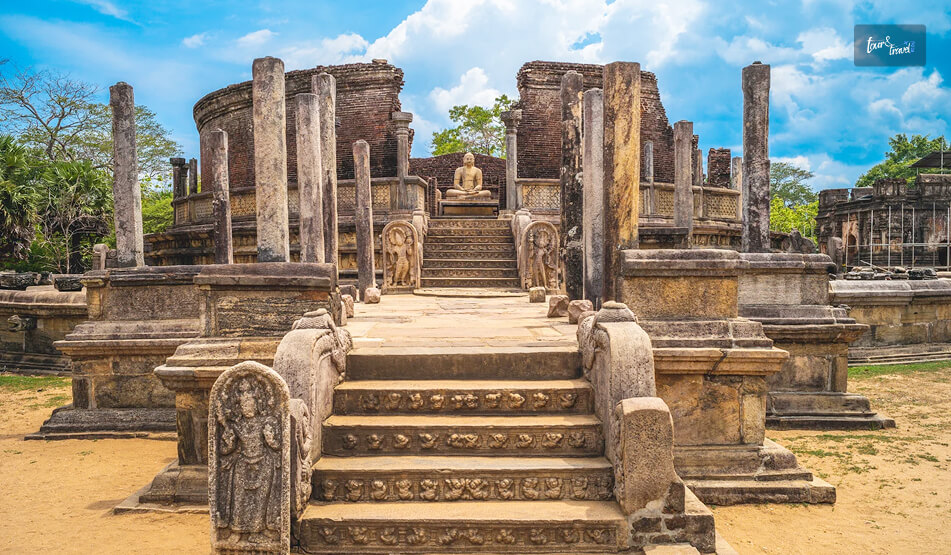
The monastery does not look like the traditional stupas. Here, you will find interconnected stones, paved pathways, and stone bridges.
Furthermore, there are bathing areas like the famous Banda Pokuna.
The most unique thing about the Ritigara Monastery is that here you will not find any Bodhi Tree or any Buddha statue.
It is a place where you can walk, meditate, and contemplate.
You may call it a failed attempt to revive the radical simplicity of Buddhism, but for every seeker, it will always be a place to introspect and connect to a higher energy.
I had goosebumps the moment I entered the monastery. Let’s delve deeper into the unique architecture of the monastery.
1. The Padhanaghara And Stone Pathways
The ruins of the Ritigala Forest Monastery cover an area of around 120 acres. You will see around 50 distinct meditation houses or Padhanaghara in the area.
Inside each meditation house, you will find two raised platforms in the east-west direction, and those were made of stone. A small maot surrounded the platforms, and a small stone bridge connected the platforms.
Probably, these structures were used for some rituals or meditation purposes.
Interlinking stone pathways connect these meditation houses. These pathways are 1.5 meters in width, and the width is consistent as the pathways ascend the slope. These pathways also have circular intersections.
2. Water Management System,
The water management system in Ritigala Forest Monastery was sophisticated. Banda Pokuna and Kumbuk Wewa, these twin ponds were carved from rocks.
Furthermore, I found a large stone trough in the courtyard, which was used for cooking food.
Also, I saw the ruins of the monastery hospital and stone mortars, which were used to grind and prepare herbal medicines.
Moreover, the monastery did not have any residential complex. The monks lived and meditated in the caves.
However, there were urinal stones, which were the only amenities or the luxury the monks enjoyed in this austere setup.
What Is The Legend Of The Ritigala Forest Monastery?
The Ritigala mountain has a connection to the Hindu mythology, the Ramayana. Attacked by Ravana, Lakshama, the brother of Lord Ramachandra, became unconscious on the battlefield.
Lord Hanuman, on Lord Rama’s command, went to fetch a life-saving medicinal herb from the Dronagiri. However, he forgot the name of the herb and carried the entire mountain on his shoulder.
When he was crossing the Palk Strait, five segments of the mountain fell from his grasp. The biggest fragment fell on the site of the Ritigara Mountain.
Now, you may not believe the legend of the Ritigala Mountain. However, the presence of various medicinal plants in the mountains keeps the myth alive.
Moreover, among the 417 species of plants here, around 96 varieties are for medicinal purposes. Moreover, the northern peaks have names such as the Wannati-kanda and Aushada-kanda.
Climbing To The Ritigala Forest Monastery In Sri Lanka
Climbing up to the Ritigara Forest Monastery was a free-flowing experience. There are many things to see, but more to feel.
Here is how I explored the ruins.
1. The Bathing Pond
As I left the ticket counter behind, I found the first ruin. I took the stone steps to visit a massive bathing area.
You have to be careful with the steps here, as they are cracks and have overgrown tree roots.
Large trees have grown in the bathing area now. However, you can still understand its massive scale.
2. A Winding Stone Path And Ruins Of The Monastery
The winding stone pathway took me through various ruins, and they stood like the blueprints from a bygone era.
The most striking one among them was the ruins of the hospital. It still had a sunken bath and grinding stones for preparing medicines.
As I climbed up, I found the meditation platforms, big multi-chambered rooms, and urinals.
3. The Large Pavilion With Columns
I found a large pavilion here with big columns. However, the more intriguing was the Big Tree behind the ruin.
It is so massive that its ground roots have created a labyrinth. The road seems to fizzle out at this stage. However, my gut instinct said that there is something more.
4. The Hidden Ruin
My guide was not happy with me for continuing further. As I headed down, after the initial disappointment of landing on the forest floor, I found another ruin.
There was a stone bridge, and it took me to a promontory with a square structure. It was the ruins of the library that had many precious manuscripts.
The view from the promontory was amazing.
It is a shame that most trekkers miss it, as the signs are not adequate and often hidden in the overgrown bushes. Furthermore, most of them are only in the Sinhalese language, which only locals can read.
However, I used the absence of signboards to my advantage.
Practical Tips For A Visit To The Ritigara Forest Monastery
If you are traveling with your partner or in a group, you must reserve a tuk-tuk or car to bring you back. You may not get a passing traffic. I took the risk as it was a solo adventure.
You have to carry snacks and water. Wear sunscreen and carry insect repellents.
You will find a toilet at the entrance of the ruins. I did not use it. So, I am not sure about the condition or the amenities available.
Here are the frequently asked questions and answers about the Ritigala Forest Monastery.
1. How Much Time Is Needed At Ritigala?
Trekking the Ritigala Forest Monastery is going to take around 2 hours. So, overall, you will at least need 3 hours in Ritigala. Trekking up the route is easy. However, walking through the cracked stone steps can be challenging. Also, signboards are scarce and incomprehensible on the route. So, you must take a local guide.
2. Where To Stay Near The Ritigala Forest Monastery?
I stayed at Habarana, and the name of my hostel was The Lake Breeze. The tariff for the hostel was around INR 2000. The amenities were basic, with fans, Wi-Fi, and mosquito nets.
3. Is Taking A Tour Of Ritigala Forest Monastery Worth It?
Yes, taking a tour of the Ritigala Forest Monastery is absolutely worth it. Here, you will find the ruins of the 1st century BC, and it is great for anyone with a keen interest in the history and evolution of Buddhism. Furthermore, the ambiance of the ruins is introspective and meditative. Moreover, you can easily reserve a car or tuk-tuk to reach the base of the Ritigara Mountain and then start your trek for 1.5 to 2 hours.
Meet Sibashree Bhattacharya, a travel enthusiast who has a decade-long experience in transcending virtual barriers with her words! Her deep love for travel is apparent from her travel escapades to the mountain, often taking her readers on a journey, her words acting as Portkey! Fun fact: Sibashree loves to dive deep into the history of the places she is about to visit, making her travels even more wholesome. If you were wondering how her articles are not short of time travel, this answers it!
For those who love venturing off the beaten path to experience the wonders that Mother Nature has to offer, your success and your safety in enjoying your next adventure will depend on the essentials you pack to carry with you.
While enjoying the wind and sun or exploring a new destination can be exciting, gratifying, and even relaxing, these emotions can quickly turn into worry, fear, and exhaustion if you’re unprepared. Selecting what is essential to your well-being on the move can be challenging, whether planning a six-month, six-day, or six-hour adventure, mainly if you have limited packing space. Planning is the key to your success.
Phone
It’s impossible nowadays to even think of going somewhere without your smartphone. You don’t want to leave home without yours. Consider including a universal travel adapter depending on your destination and acquiring a local SIM card to remain connected in the event of an emergency or if you want to enjoy a bit of entertainment while on the go.
Portable Charger
While a charger and power bank may be among your best options if you’ll be off the grid for a while, carrying an extra battery is one of the top tips to follow when adventuring. A spare battery can be beneficial, especially for your phone as well as a camera or laptop, if you bring these along. Lots of things can go wrong, and the unexpected is always to be expected. You may become lost, need help, contact your family, or request medical assistance, and your phone may be your only lifeline to civilization. Pack that extra battery.
Maps
If you travel to a remote location, a phone or the internet may not be viable tools. Include physical maps, a GPS device, or even a basic compass among your adventure essentials to keep you on track.
Water And Snacks
Snacks like nuts and seeds, granola bars, or chocolate, along with a variety of pop tart flavors, can help maintain energy levels, and hydration is essential to general health and well-being. Reusable water bottles or boxed water aid in preventing dehydration and protect the environment as well. If you are refilling your water bottle, include water disinfection tablets. Carry extra snacks if you are embarking on an active trip.
First Aid Kit
Traveling can be an exhilarating experience, but especially when selecting a natural destination, bumps, bruises, bites, and scrapes are to be expected. A fall, unwelcome insect, thorny vegetation, or an upset stomach can leave you miserable and, in some cases, susceptible to infection.
A compact first aid kit with band-aids, gauze, tape, antiseptic cream or wipes, painkillers, antihistamine pills, eyewash, ibuprofen, a small pair of scissors, tweezers, hand sanitizer, and even some electrolyte tablets needs to be among your travel gear.
Consider packing some bug spray, moisturizer, and sunscreen if the climate warrants them, and don’t forget prescription medicines and a copy of prescriptions, just in case. A pair of protective sunglasses and a hat will complete your protective gear.
Eco-Friendly Essentials
If traveling off the beaten path, consider bringing reusable items such as cutlery sets, plates, containers, and a reusable shopping bag. A portable knife or pocket multi-tool is an excellent item to carry. If you’re traveling by plane, place it in checked luggage. Use solid hygiene products like soap or shampoo that require less space in your backpack or suitcase and are environment-friendly.
Don’t forget a towel, toothbrush, toothpaste, nail clippers, and glasses if you wear them. A small sewing kit with needles may prove handy, too.
Toilet Paper Roll
A toilet paper roll may not seem obvious, but depending on where you are headed, you’ll be happy you thought to bring a roll along. Some cultures will not use toilet paper; wilderness destinations can be challenging when nature calls. Add in some tissues and wet wipes if you don’t have a place to wash up.
Flashlight/Torch
A flashlight is an essential tool to always have on hand. You don’t want to wander about in the darkness in a location you are unfamiliar with, especially should you lose track of time or your way. Flashlight torches and headlamps will reduce the risk of getting lost as well as bodily harm because you’ll be able to see where you are heading. Bring along an extra set of batteries and a lighter or matches, just in case.
Comfortable Shoes And Clothing
If you plan on walking a lot or hiking, comfortable footwear can make or break your overall experience. Plan for local weather conditions as well. You may be better prepared with waterproof shoes or boots. Don’t forget the proper type of socks, especially in colder climates.
Choose the correct type of clothing, such as swimwear, goggles, and flip-flops for a warm beach destination, breathable fabrics for the tropics, or heavier clothing for winter climates. Waterproof instruments may be called for if you’re visiting rainy locations. You may want an extra blanket or two as well.
Portable Shelter
If the wilderness is your final destination, portable emergency shelters are suitable to carry along. Reflective thermal shelters can be packed or attached to your backpack.
Don’t Forget Your Documents!
Regardless of where you are headed, you’ll need your documents. Necessary papers might include a driver’s license, vehicle registration, proof of insurance, passport, and perhaps a visa. Carry photocopies of these documents in a separate location in the event of loss or theft. Prepare a mix of credit cards and local currency, as not all places may accept your plastic, and use a money belt or anti-theft bag if possible.
Final Considerations
Finally, bring a lock to keep your things safe during hostel visits or overnight train trips. If you use a backpack, have a rain cover so your items don’t become drenched in a downpour. Include a whistle among your packed essentials. You never know when you may need to call for help or fend off a critter!
Read Also:
A First-Hand Experience Of Taking A Red Eye Flight!
The Ultimate Guide To Finding Cheap Flights To Chicago Using Google Flights
Momondo Flights: Should You Try This Platform For Booking Flights In 2023?
Tulum, with its versatility, remains one of the top attractions in Mexico. It has well-preserved Mayan ruins overlooking the Caribbean Sea.
Furthermore, it nurtures a hippie lifestyle with boutique eco resorts and trendy beach clubs.
It also offers the right fusion of relaxation and adventure with its natural sinkholes or cenotes. Moreover, it has a vibrant nightlife, and you can even plan a 30-minute ride by road to reach Sian Ka’an Biosphere Reserve, a UNESCO World Heritage Site.
Again, from bull shark diving to kitesurfing, the adventure options in Tulum are endless. So, in today’s article, I will talk about the unique things to do in Tulum and my experience in this Pre-Columbian Mayan walled city.
What Are The Best Things To Do In Tulum?
Tulum is a place that allows you to swim with sharks and discover the ancient Mayan ruins. Furthermore, it is a popular travel destination because of its accessibility.
The last time I visited, I reached the Cancun International Airport (CUN) and then took a drive of around 2 hours to reach Tulum.
However, you can even travel to the new Tulum Airport (TQO) and then enjoy a 40 km drive to downtown.
And once you reach Tulum, you can include all these activities in your itinerary.
1. Bull Shark Diving
Have you ever dreamed of swimming with sharks and becoming one with the underwater species?
An experience like bull shark diving may make your blood freeze at first, but you’ll soon realize that it’s a thrilling yet pleasant adventure. Bull shark scuba diving is a popular underwater adventure in Riviera Maya that both tourists and locals love to enjoy.
Playa del Carmen, around 45 minutes away from Tulum, is the best place for bull shark diving.
January to February is the peak season for bull shark diving here, and you can spot from 5 to more than 15 bull sharks during this time.
You will need an Advanced Open Water certification to be a part of this bull shark diving. Also, the diving charge will be around $250-300.
Moreover, remember you chances of getting into the water and spotting sharks also depend on the present weather conditions. Also, if you are planning deeper, multi-day dives, you will need nitrox.
2. Cenote Scuba Diving
You can do cenote scuba diving in Playa de Carmen or Tulum. However, you must also note that there are more than a thousand cenotes in the Yucatan Peninsula.
Furthermore, all cenotes in Tulum are not the same. Some look like full-fledged caves, and some even like small pools.
Dive into various complex, intertwined passages connecting underground cenotes and discover the beautiful networks. Your scuba diving abilities will truly be put to the test, and you’ll experience one of the most exciting feelings ever.
In order to participate in this adventure, you’ll need a scuba diving certification. It’s worth planning ahead and obtaining the necessary licensing before your Tulum trip if you want to participate in this amazing water activity
3. Take A Kitesurfing Tour
Kitesurfing is another popular water sport that has won the hearts of many enthusiasts around the world. You can ride the waves and enjoy your time in kitesurfing paradise on a Tulum trip and hop on a safe kitesurfing experience and a private lesson with a professional instructor.
The beaches are truly awesome, and the lagoons are big and salty. The waters of the Caribbean Sea are crystal clear, which only makes the adventure even more enjoyable and magnificent. You’ll be able to ride in front of ancient Mayan ruins and discover secret virgin beaches, which are only known to the locals.
4. A Night Dive With Crocodiles
For most people, crocodiles are scary creatures that you don’t want to be near in any circumstance. However, adrenaline seekers are an interesting species that is worth exploring up close.
On a Tulum trip, you can make your dreams come true and get close to crocodiles with a night dive in the company of an instructor. Snorkel with crocodiles - one of the world’s most astonishing creatures and get to know their behavior in their natural habitat at night time.
The good news is that you can also observe other species like frogs, shads, and other animals that live in the same habitat and are awake at night. The adventure is unmatched as you can get a high dose of adrenaline, you can witness a beautiful sky full of stars, and test your senses with something completely new.
You don’t have to worry about safety as taking part in this activity with a professional team means that all protection will be provided.
5. Explore the beauty of turtles
Last but not least, there is something for those who want to get to know the beautiful underwater creatures but find crocodiles a bit too thrilling. If you’re passionate about nature and are excited to meet new species, you should certainly hop on a turtle exploration in Tulum trip.
From May to October, most of Tulum’s coastline enters the sea turtle nesting season. You can witness mother turtles gently making their way to lay their eggs after sunset. You can snorkel with turtles, get to know them in their comfort zone and embrace their beauty to the fullest.
6. Discover the Mayan ruins
And just because we shouldn’t forget that the Tulum trip is not just all about the waters, we highly recommend visiting the astonishing Mayan ruins that will take you back through time.
Tulum has a vibrant history, some of which has been preserved for travelers and locals to experience in today’s modern world. The Mayan ruins in Tulum and Coba are not just a gem to look at but also offer a great amount of cultural value and can show you how different the town was in previous years before it became a top tourist destination.
Conclusion:
Your Tulum trip could certainly become the trip of a lifetime, as long as you plan ahead and are prepared for all that you could take advantage of. We hope that this list will come in handy and will help you organize the perfect vacation to Tulum.
Read Also:
Valladolid Mexico: Exploring The City That Was Built In 1543
Wander to Beautiful Locales on the Best Caribbean Cruises!
Here is a List of Best Cruises Out of Galveston for 2025
The Parisian experience will always be a grid trend, but if you want the picturesque tranquility that all the poets write about, you must visit Southwest France.
With idyllic villages, vineyards, and mountains, this region could be perfect for your next voyage. Whether it is the medieval village, mind-blowing architecture, or finding the most romantic spot on a canal, there is something for everyone in Southwest France.
In this excerpt below, we will discuss some of the most idyllic places to visit in this region!
Places To Visit In South West France
If you want to experience the most of the French authenticity, here is the itinerary made just for you.
1. Surfing In Biarritz
Who said you cannot enjoy a nice beach in southern France? When doing it like the French do, there is a lot to do!
The chilled atmosphere from the Atlantic matched the hot summers of France. Plus, if you love surfing, this could be your next safe haven.
Some of the destinations to start your day with a fresh surf, bathing in salt water, and adrenaline are Côte des Basques and la Grande Plage. It is the tamer side of the Atlantic. Thus the tides are very much low. Great for beginner surfers.
However, if you are still not confident, you can get surfing lessons at Côte des Basques.
2. Authentic French Village Tour In Basque Country
Staying in the region of Basque, one would want to explore the beauty of a French village. After all, someone coming from the seaside might not be very interested in the waters again.
A walk through the Basque village is the picture-perfect outing for a lazy French afternoon. Red and white houses adorn the street wherever you look, just like being inside a painting.
Some of the exceptionally beautiful French towns are Sare, La Bastide Clairence, and Ainhoa.
3. Walk Through St.Emilion
Taking a stroll down the picturesque town and tasking the finest French wines is on everyone’s French bucket list. This is why taking the St.Emilion free walk tour will have all your French travel dreams in store.
Being one of UNESCO’S World Heritage Sites, this town is known for its Medieval History and red & white wine. There is something serene about a French chateau that makes us romanticize the moment.
If you are a fan of these towns, this place will give your French chills. Wine tasting in the chateaus and lots of walking through the Vineyards. Perfect for a honeymoon destination.
4. Picturesque Hiking Through Cirque De Gavarnie
Talking about walking, just the old countryside wouldn’t suffice. From the lakes to the snow-covered mountains, southwest France has it all covered.
Cirque de Gavarnie, also known as the natural amphitheater. This lush green valley is surrounded by mountains which are fabulously dressed by each season in a unique manner. If you love snow, then winter should be your season of travel.
However, if you really want to see Cirque de Gavarnie’s beauty at its finest, explore the Fall Foliage of the Autumn season. It is also home to Europe’s second-tallest waterfall. But the best part would be the road to the destination. It's a French country to its core!
5. Toulouse Tour
Filled with old French architecture, and museums for the artist inside you, the Toulouse tour is a must for a southwestern tour.
From luxury restaurants in Le Capitole (the capital) to Shopping in St Georges, you are here to fulfill your French dream.
Plus, for every cottage-core fan out there, get the best Tumbler pics with Toulhouse’s over-the-top picnic destinations.
Find Wanderlust The French Way!
Either we love to travel, or we don’t, but one thing is sure. There will always be a special wanderlust for France.
Whether it is the language, the beauty, the Parisian lifestyle, or the French chateaus, the explorer within us will want to be in such places. So, why not do so in style?
The southwest French side will drop you directly inside a Monet painting. For at least a few days, you could fulfill all your countryside old money dreams.
You know how they say the moon is bigger in the French Riviera because love surrounds it?