


What Is So Special About Pamukkale Turkey? (Waterpools, Things To Do, And More)

Pamukkale is one of the most visited regions in Turkey in 2025. With its natural beauty and historical intrigue, it welcomed 1.6 million visitors in 2025, according to a recent Travel and Tour World report. 

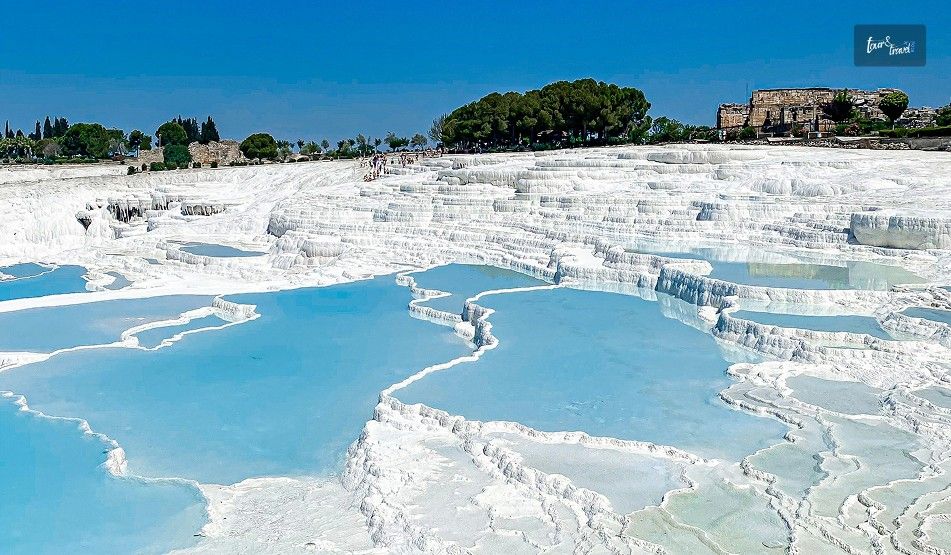
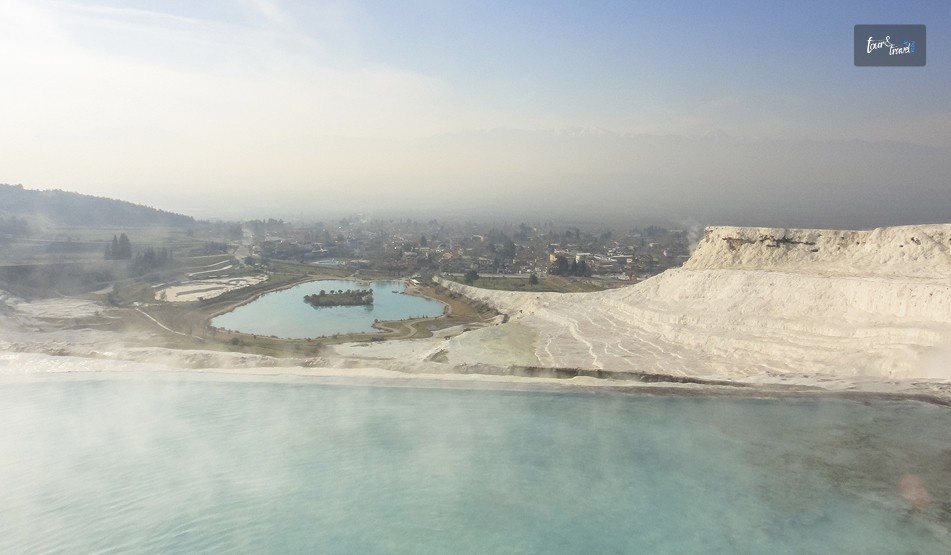
Home to the Hierapolis spa city, Pamukkale Turkey, has snow-white travertine terraces, which look dramatic against the backdrop of blue skies. Also, it is one of the most prominent destinations in Turkey to promote nature-based tourism. 

Also, resembling a winter wonderland covered with snow, Pamukkale is actually a unique landscape formed by hot spring waters in a Sun-kissed zone of Turkey. 

Where Is Pamukkale Turkey? 

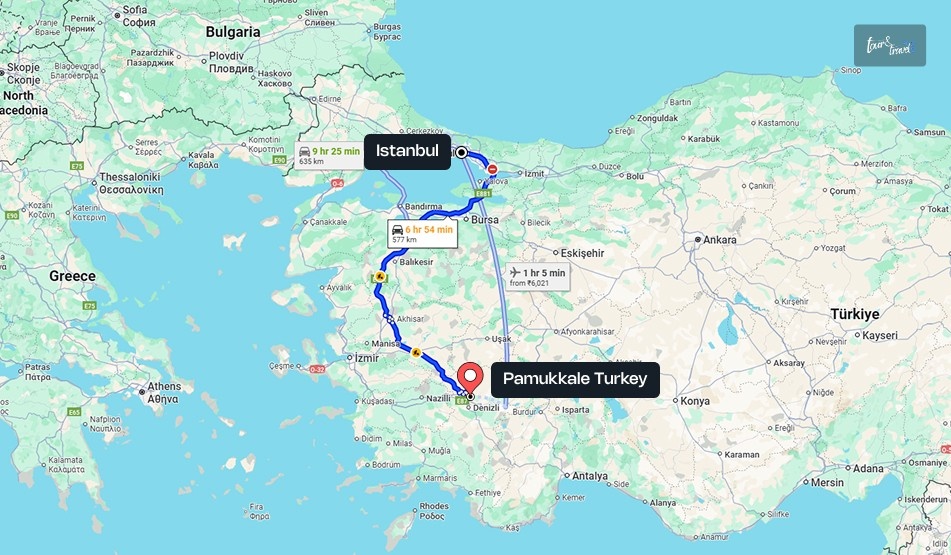
Pamukkale is in the Denizli Province of southwestern Turkey. It has Hierapolis, a UNESCO World Heritage Site and a unique landscape, including white travertine terraces.  The unique landscape is built with the carbonite mineral deposits of the hot water springs here. 

Furthermore, Pamukkale is in the Inner Aegean region of Turkey and it is in the valley of the River Menderes. 

How To Reach Pamukkale Turkey From Istanbul?

How To Reach Pamukkale Turkey From Istanbul

The distance between Pamukkale and Istanbul is close to 572 km, and based on your mode of transport, it will take between 6 hours 20 minutes and 11 hours to reach Pamukkale. 

1. Istanbul To Pamukkale Turkey By Train

You can take a train from Istanbul to Eskişehir and then board the Pamukkale Express from Eskişehir to Denizli, where Pamukkale is located. This 8-hour journey by train allows you to cherish the beauty of central Anatolia. 

Otherwise, board a train from Istanbul to Yenikapı and then a train to Pamukkale. The train will pass through stations such as Istanbul Pendik, Eskişehir, and Goncalı.

2. Istanbul To Pamukkale By Air

The Denizli-Çardak Airport (DNZ) is the nearest airport to Pamukkale. It is located at a distance of 67 km. You can take a domestic flight from Istanbul to Pamukkale and then take a shuttle or a bus to reach Pamukkale by road within 50 minutes. 

3. Istanbul To Pamukkale By Road

Companies such as Kamil Koç operate direct buses from Istanbul to Sarayköy. From Sarayköy to Pamukkale, it is a journey of less than 30 minutes by road. 

Moreover, you can take overnight buses to Pamukkale from Istanbul. 

What Is So Special About Pamukkale Turkey? 

What Is So Special About Pamukkale Turkey

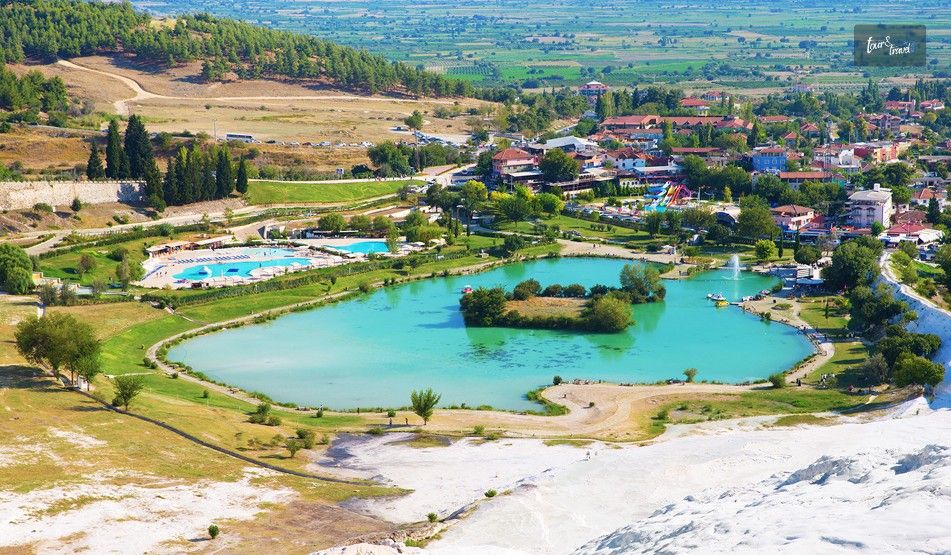
With thermal springs, white hills of cascading water, and crystal lakes, the unique landscape of Pamukkale looks stunning. Furthermore, it has Hierapolis or the “Holy City.” 

Fortunately, all these unique features of Pamukkale are mostly intact even today. Moreover, as the UNESCO World Heritage Convention says, it is a wonderful fusion of natural beauty and cultural richness. 

“The property is largely intact and includes all the attributes necessary to express its Outstanding Universal Value, based on the strong and tight integration between the natural landscape (the white travertine terraces and numerous thermal springs) and culture (the city ruins from the Greco-Roman and Byzantine period, especially the theatre and the necropolis). The boundaries of the site are adequate to reflect the site’s significance.”

– UNESCO World Heritage Convention. 

Let’s explore its unique features and landmarks. 

1. Cotton Castle Pamukkale Turkey

Cotton Castle Pamukkale Turkey

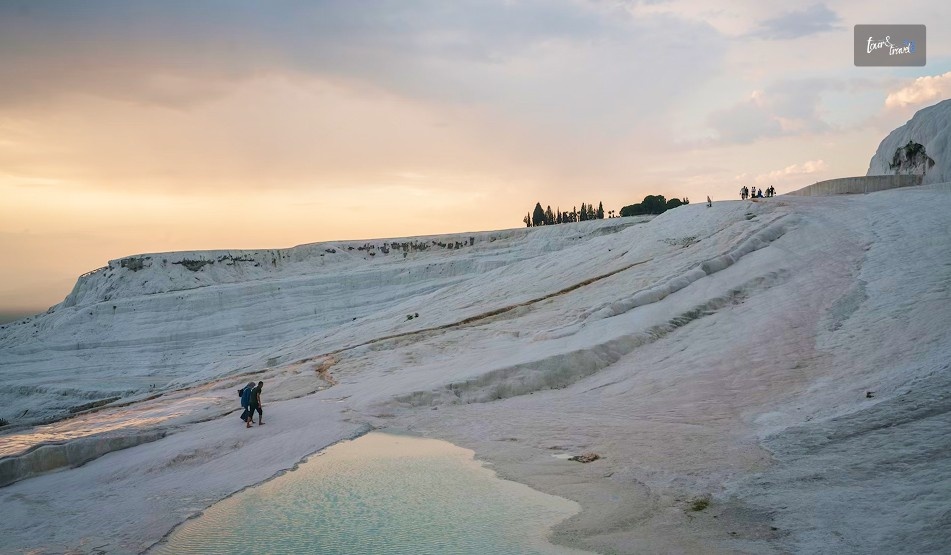
Pamukkale means cotton castle in Turkey, and the name comes from the travertine terraces, which have white formations with a cotton-like appearance. The terraces here form stepped pools, and together they look like a cascading castle of white cotton and crystals. 

But do you know how this unique landmark was formed? Western Anatolia in Turkey has the largest deposits of calcium carbonate rocks in the world. However, it is also the region where the Earth’s crust faces the maximum pull. 

Furthermore, various geothermal, seismic, and volcanic activities here create many fissures and faults. The Pamukkale plateau in the Denizli Basin is one of the main examples of this kind of geological formation. 

Here, the calcite terraces and rimstone pools fall from over a 200-meter-tall cliff. Being rich in minerals, the cascading water covers the rocks with a thick layer of white sediments. These rocks look like layers of cotton and have thus got the name Cotton Castle.  

According to NASA, the mineral deposition in this area is aged between 50000 and 600,000 years. The process started from the Pleistocene epoch, and the latest deposition here is related to the Laodikeia earthquake. 

2. The Pools Of Pamukkale Turkey

The Pools Of Pamukkale Turkey

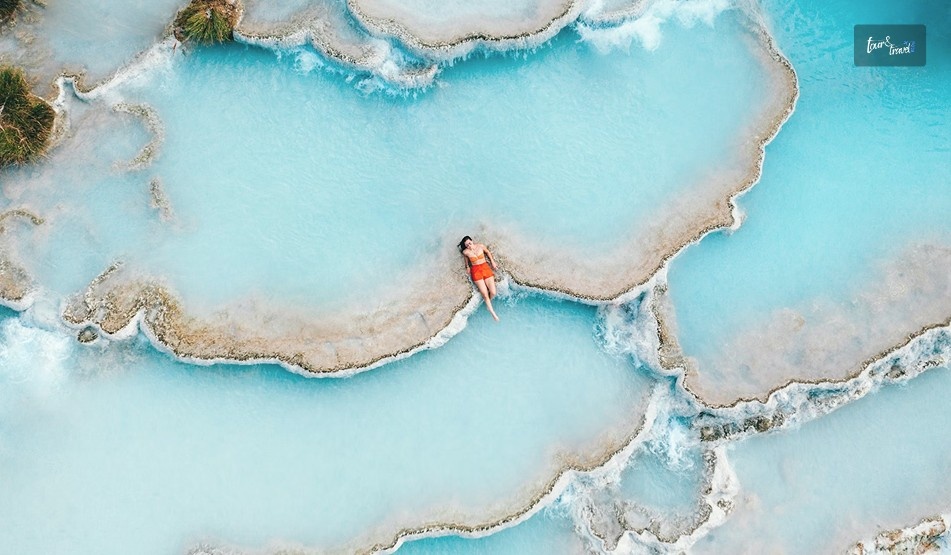
The thermal pools in the travertine terraces of Pamukkale were formed with mineral-rich hot spring water falling down the hillside and solidifying the deposits. 

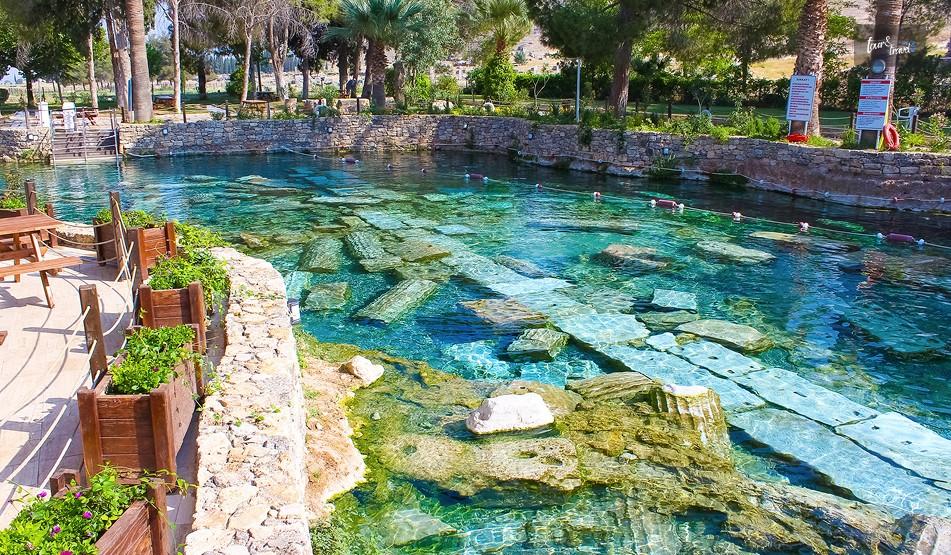
The vast Cleopatra’s Pool is probably the most prominent example when we talk about the pools of Pamukkale. The average water temperature of these pools ranges between 19 and 57 degrees Celsius. Sometimes the temperature can be as much as 100 degrees Celsius. 

3. The Hot Springs Of Pamukkale

The Hot Springs Of Pamukkale

The hot springs of Pamukkale have geothermal water, which is rich in minerals. Being mineral-rich, these waters have many therapeutic benefits.

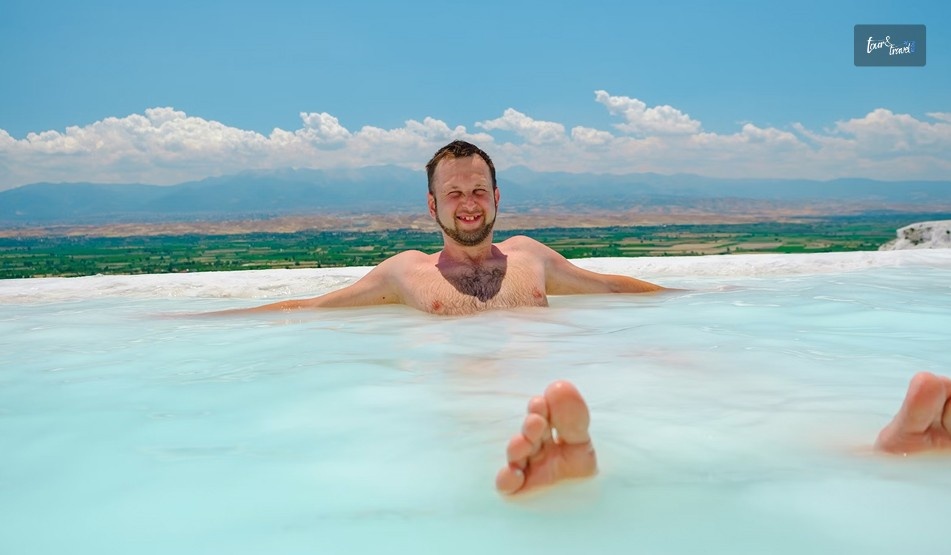
Moreover, it is a lifetime experience to swim in the geothermal pools on travertine terraces against the beautiful white walls. 

4. The Ancient Hierapolis Or The Holy City Of Pamukkale 

The Ancient Hierapolis Or The Holy City Of Pamukkale

King Antiochus II founded ancient Hierapolis in the 2nd century BCE at the top of Pamukkale. Its strategic position near the thermal rings and along the trade route made it a thriving city during the Roman Rule. 

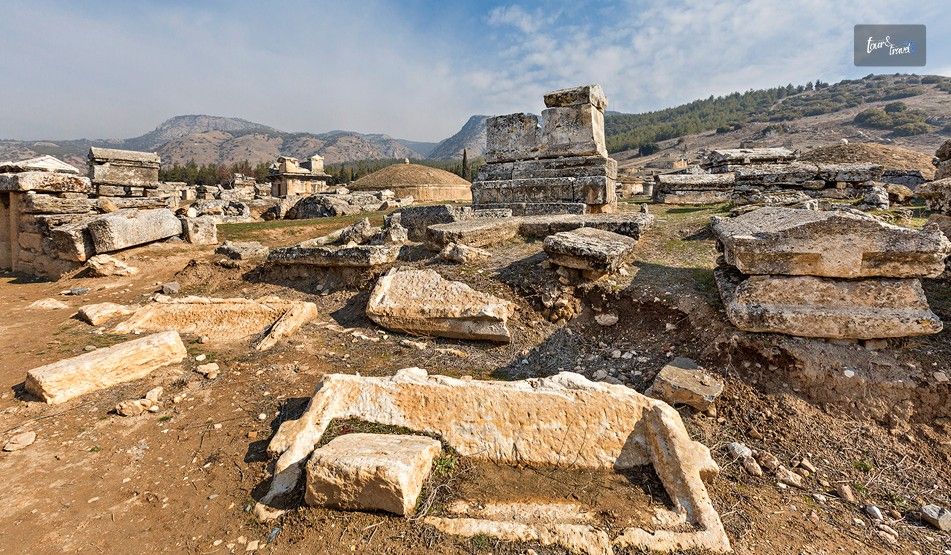
Furthermore, Hierapolis became a prominent spa and healing city, and it grew in religious and cultural significance over time. The vast necropolis, the Temple of Apollo, and the Roman theater are the telltale signs of a rich history of Hierapolis, or the Holy City of Pamukkale. 

Moreover, during the Byzantine era, Hierapolis experienced tremendous growth as a Christian hub, and it became a bishopric. In addition, the necropolis area saw many churches being built, and it became a chosen resting place for Christian martyrs. 

Finally, in 1988, UNESCO gave the combination of Hierapolis and Pamukkale the designation of a UNESCO World Heritage Site. 

5. The Gate To Hel Or Pluto’s Gate In Hierapolis

Pluto’s Gate was believed to be the gate to hell or the underworld. This prominent archaeological site was associated with Pluto, the Roman God of the dead, wealth, and the underworld. 

The scientific explanation behind this place is that geothermal activities in Pamukkale caused the release of a large amount of carbon dioxide. Thus, it became a lethal area, and the priests utilized this natural phenomenon to convince pilgrims of the place’s mystical power. 

What Are The Things To Do In Pamukkale Turkey?

As I have already mentioned, the things to do in Pamukkale are the perfect fusions of natural, cultural, and religious explorations. Try these activities here. 

1. Taking A Bath In Cleopatra’s Pool

Taking A Bath In Cleopatras Pool

Cleopatra’s Pool got its name from Queen Cleopatra taking a bath in this pool. It is surrounded by marble columns that go back 1000 years. 

This pool is just a 10-minute walk away from the main ruins of Hierapolis.

2. Exploring The Roman Theater

Exploring The Roman Theater

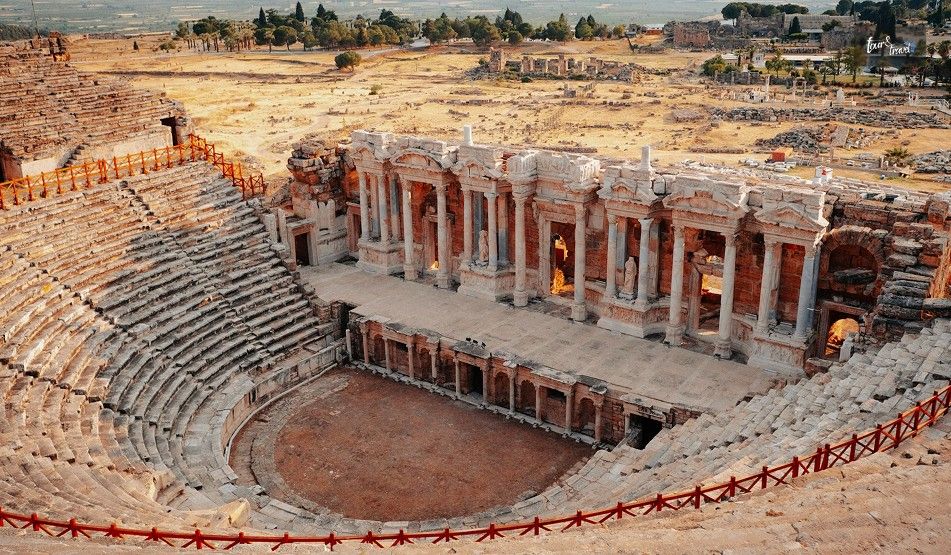
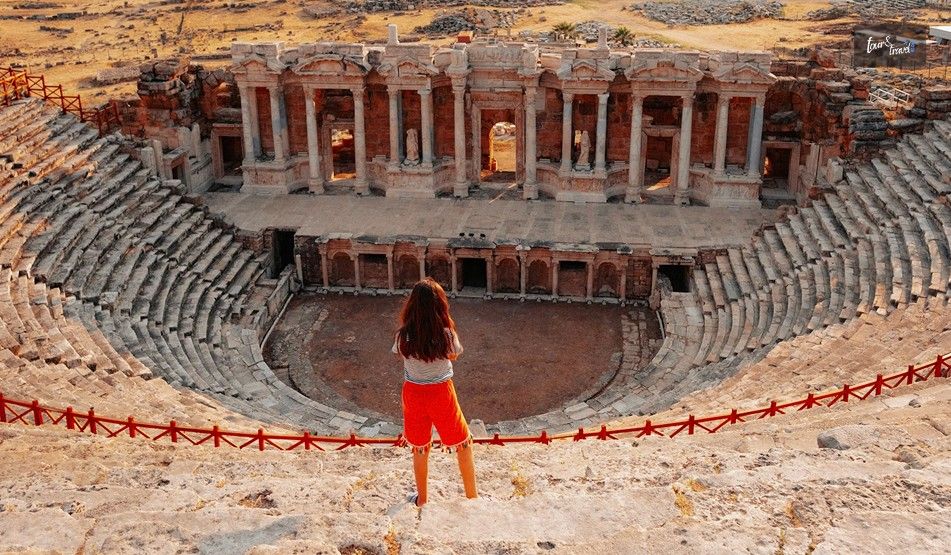
The history of the Roman Theater goes back to the 2nd century AD. It could accommodate 12,000 visitors and was the venue for theatrical performances and gladiatorial battles. 

Even today, the Roman Theater is well-maintained, and you can enjoy a panoramic view of Pamukkale from this place. 

3. Taking A Stroll Around The Necropolis

Taking A Stroll Around The Necropolis

The necropolis area of Pamukkale has tombs and family mausoleums that belong to the Byzantine, Roman, and Hellenistic periods. 

The necropolis area is like an outdoor museum where you can read the plaques and learn a lot about the people who stayed here and how they viewed life and the afterlife. 

4. Visiting The Local Villages

Visiting The Local Villages

The Pamukkale Village offers you a slice of the ultimate Turkish rural life. Try the mezes or appetizers, kebabs, and Pide or Turkish pizzas from local shops and restaurants here. 

Also, you can explore the shops here to buy ceramic items, jewelry, and textiles. 

5. Enjoying A Walk Through The Travertine Terraces

Enjoying A Walk Through The Travertine Terraces

Take a walk along the travertine terraces and experience the wonder of nature at its best. Furthermore, you can wet your feet in the warm waters of the pools here. 

However, you have to walk carefully on the surface as it can be slippery. 

Pamukkale Turkey: Frequently Asked Questions (FAQs)

Here are the frequently asked questions and answers about Pamukkale Turkey. 

1. What Is The Best Time To Visit Pamukkale Turkey?

April to June, or the spring season, and September to November, or the autumn season, are ideal times for a visit to Pamukkale. 
However, if you want to avoid the crowd, the winter months of December to March are the best options. 

2. Which City Is The Closest To Pamukkale Turkey?

Denizli is the closest city to Pamukkale. The distance between these two places is around 17 km. Today, Denizli City is a bustling hub of textile production and export. 

3. Is It Possible To Swim In Pamukkale?

Yes, swimming is allowed in the travertine pools in Pamukkale. However, there are only some designated pools, such as the Cleopatra Pool, where you can swim. 

4. Is 1 Day Enough In Pamukkale?

Yes, one day is enough to explore the Pamukkale. You can take a bath in the travertine pools, explore the ancient ruins, and visit the local villages within 5-6 hours. 

5. Which One Is Better? Cappadocia Or Pamukkale?

Cappadocia and Pamukkale both have stunning landscapes. However, Cappadocia is famous for adventurous activities, like hot air balloon rides. 
On the other hand, Pamukkale is a place for natural exploration, visiting the ancient ruins, and taking a bath in the travertine pools. 

6. What Language Is Spoken In Pamukkale?

Turkish, the official language of Turkey, is the main language in Pamukkale. However, people here also speak in English. 

7. Is Pamukkale Good For Skin?

Yes, Pamukkale is good for the skin. The presence of silica, sulfur, and calcium in the water improves the elasticity of the skin, cleanses the skin, and alleviates eczema and other skin conditions. 

8. Can I Drink Water In Pamukkale?

The water of the thermal springs and pools of Pamukkale is rich in minerals. So, it is better to avoid drinking the water from the hot springs and pools in Pamukkale. 

9. Do I Need To Pay Entry Fee To Visit Pamukkale

Yes, you will need to pay an entry fee to visit Pamukkale. Furthermore, there will be an additional fee if you want to swim in the Cleopatra Pool. 

Read Also:

Share on Social Media

Sibashree is a travel, culture, and leisure writer who has been writing since the age of 12 and professionally since 2014. With more than a decade of travel writing experience and journeys across India and several parts of the world, she brings a deeply personal and thoughtful perspective to her work. A student of English Literature and Mass Communication, Sibashree has always viewed travel as more than movement — for her, it has been a way of understanding people, cultures, and herself. Her passion for spiritual exploration has also led her to many unusual and meaningful destinations over the years. Outside of writing, Sibashree enjoys watching European cinema, reading about global politics, and reflecting on the stories hidden within everyday places.

Leave a Reply

Your email address will not be published. Required fields are marked *

title-img Related

READ MORE card-img

Aotea Great Barrier Island Wildlife: The Ultimate Tours & Spotting Guide (New Zealand)

BY  Sibashree Nov 12, 2025

There are three instances I clearly remember from our trip to the Great Barrier Island, New Zealand. The best thing about the Great Barrier Island wildlife tours is that they begin even before you board the ferry.  Here, I will start with some fun moments we had while exploring the wildlife of Great Barrier Island. Then, I will gradually discuss the details. So, let’s examine the rugged, predator-free paradise in New Zealand's Hauraki Gulf.  My Great Barrier Island Wildlife Tours: Some Stories That Have Stayed With Me With around 60% of the Great Barrier Island being a conservation area, the Aotea Great Barrier Island in New Zealand shines with sustainability certificates. It also shows sincere commitment to preserving the indigenous flora and the rare and endemic fauna of the island.  1. The Biosecurity Check  We were about to board the ferry to the Great Barrier Island. The Auckland Regional Council and the Ministry for Primary Industries (MPI) people did thorough biosecurity checks of our bags. Also, we had to clean our boots. Thus, they make visitors part of the island's conservation effort.  This check is mandatory, and this is the reason the pāteke and kākā are thriving on the island. 2. The Dark Sky Sanctuary And The Great Barrier Island Wildlife Tours  Great Barrier Island’s designation as a Dark Sky Sanctuary has enhanced the wildlife tour experiences. We went out to see the Milky Way at night, and we stood quietly and listened to the sound of silence.  Suddenly, we were startled by the more-pork cry of the Ruru birds. Also, we saw the black petrels, or Tākoketai, coming back to their burrows.  3. Did I See A Chevron Skink? Did I Not? See, the Chevron Skink also feels like a mythical species. These nocturnal species are the masters of camouflage. So, honestly, we did not see them with our naked eyes.  However, we could listen to the squeaks and grunts of the Chevron Skinks. It was thrilling knowing that we were walking through their only habitat in the world, which is protected by sanctuaries like Glenfern.  Why Is Aotea Great Barrier Island A Paradise For Wildlife Tours?  Afar, a US-based travel media brand, has named Aotea Great Barrier Island one of the top 25 off-the-beaten-track destinations in the world.  Aotea, Great Barrier Island in the Hauraki Gulf, is a designated dark sky sanctuary. So, it is ideal for spotting and listening to the nocturnal birds and animals.  Furthermore, the Department of Conservation (DOC) maintains 60% conservation land on Aotea Great Barrier Island. As a result, it is the island of Firsts" and "Lasts.” It means that the island has birds such as North Island kākā and pāteke (brown teal), which are found nowhere else in the world.  In addition, the "Predator-Free" Secret of the Island is truly special. In the absence of stoats, possums, weasels, or deer, the rare and endemic species here have been able to thrive.  Along with all these endeavors, the Great Barrier Island has been successful in community-led conservation efforts. Thus, it has maintained biodiversity and species protection. Here are the details.  1. Aotea Great Barrier Island Environmental Trust “The principle activities of the Trust are in protecting, enhancing, developing and maintaining habitats for New Zealand native and endemic species on Aotea Great Barrier Island, with a particular focus on pest management…” Founded in 2002, this trust has been an advocate for conservation policies. Also, it has coordinated many conservation efforts and earned funding for local conservation projects.  2. Aotea Conservation Park  The conservation park covers a 2,000-hectare area. It has walking tracks, DOC huts, and campsites. All these make the island an ideal destination for exploring the wildlife.  3. Marine Conservation  The Aotea Great Barrier Environmental Trust’s Tai Timu Tai Pari” or “Sea Change” initiative aims to protect the marine ecosystem of the Hauraki Gulf. Furthermore, the Department of Conservation (DOC) has proposed to build a large marine conservation area in the northeast corner of the island.  In addition, beach clean-ups and educational programs have been effective local endeavors to preserve the marine life of the island.  4. Biodiversity And Species Protection  The island is a critical nesting ground for the black petrels. The Department of Conservation takes care of the nesting ground.  Furthermore, around 60% of the pāteke population in New Zealand is present on the Great Barrier Island. These birds are frequently spotted in places such as Kaitoke Wetlands.  You can visit the Kaitoke Wetlands just before dusk. Park at the end of the road, walk the flat boardwalk, and wait quietly by the main pond. You will almost certainly see and hear the rare pāteke (brown teal) as they come out to feed. Chevron skink, 13 different types of lizards, banded rail, and North Island Kaka are some other native species here. What Are The Must-See Wildlife Attractions On The Aotea Great Barrier Island In New Zealand?  The Glenfern Sanctuary, Aotea Track, Kaitoke Hot Springs, and the coastal areas are ideal for spotting the unique and rich wildlife.  1. The Pāteke (Brown Teal) Pāteke is one of the rarest ducks in the world. The Great Barrier Island is a stronghold for these ducks, and you will find them in the Kaitoke Wetlands.  The Department of Conservation and Predator Free NZ Trust are two important bodies taking care of the conservation efforts to protect these birds. Habitat management and predator control are two main elements of protecting the Pāteke birds.  Now, you understand why biosecurity is so crucial for these adorable ducks on the Great Barrier Island.  2. The Black Petrel (Takoketai) This seabird breeds only on the Great Barrier and Little Barrier islands. They nest in burrows high in the mountains. The Glenfern Sanctuary protects a key colony of these birds.  However, the main breeding colony on Aotea is at Mount Hobson/Hirakimata. According to the Department of Conservation, around 900-1000 pairs of birds stay there.  These birds are featured on the IUCN Red List as a vulnerable species. Furthermore, they are identified as “Nationally Vulnerable” in New Zealand.  Moreover, there has been a conservation monitoring going on since 1995 to assess the population of these birds and how they are declining.  3. The Chevron Skink (Niho Taniwha) This large, rare lizard is found only on the Great Barrier and Little Barrier. It is almost like a mythical animal, and spotting it is very unlikely.  However, they mostly stay in the Stream-side forests. It is listed as nationally vulnerable by the Threat Classification System of the Department of Conservation.  The sightings of these lizards are so important that DOC asks you to report to the local office or call +64 9 429 0044 whenever you spot one.  4. The North Island Kākā It is a large, intelligent, and noisy native parrot. It is famous for the loud "screech" and "chatter. I saw a few of them high in the forest canopy along the Mt Hobson track.  The Glenfern Sanctuary is another spot where you will find these parrots. The Great Barrier Island is an important habitat for these birds as it offers a predator-free environment.  5. Dolphins And Marine Life Aotea’s location on the edge of the Hauraki Gulf Marine Park, the national park of the sea, makes it rich in marine life. The Hauraki Gulf and the Great Barrier Island were both formed due to massive volcanic activity at the end of the Ice Age.  In 1769, James Cook named the island because of how it protected the Hauraki Gulf.  The water of the Hauraki Gulf Marine Park has 22 species of marine mammals. Bottlenose and common dolphins are often seen from the ferry or playing in bays like Okupu (Blind Bay) and Whangaparapara Harbour. You may even spot Bryde's whales there.  Furthermore, seabirds are important members of the Marine Park. Black petrels are, of course, the most common among them.  Coastal camping is the best outdoor experience if you want to explore the marine life of the Great Barrier Island, New Zealand. Here are some popular coastal campsites.  Akapoua Bay Campsite Near Port Fitzroy, Ideal for Spotting Pohutukawa Trees and Fishing Awana Beach Campsite, Ideal for Surfers Harataonga Campsite, Great for Swimming and Snorkeling Medlands Beach Campsite, Surfing and Picnic Spot  The Green Campsite at Whangaparapara Harbour, Ideal for a Serene Walk and as a Secluded Retreat Whangapoua Campsite, a Popular Surf-Break.  A Guide To Aotea Great Barrier Island Wildlife Tours: Species, Sanctuaries, And Different Types Of Wildlife Tours  During the wildlife tours, our primary concern was how to spot native birds on Great Barrier Island. Little did we know that we would hear them before actually seeing them flapping their wings.  We heard the screeching call of kākā as we were hiking through the Mount Hobson Track. Then, we saw a cloud of birds passing over our heads.  Nevertheless, it’s not just about the birds. Aotea, Great Barrier Island in New Zealand, is home to endless endemic species.  1. Specialist Day Tours & Sanctuary Visits The Glenfern Sanctuary of the Great Barrier Island is a haven for endangered and rare species. It is an 83-acre regional park. Also, it functions as the “gateway to the 240-hectare Kotuku Peninsula of the north-west coastline of the Great Barrier Island.” Furthermore, the Glenfern Sanctuary Trust is committed to the preservation of the endangered flora and fauna and their habitats. As you walk through the 2km loop track through native bush, you can spot the birds and native species.  The black petrels and the ancient Kauri trees are the biggest highlights of this tour. The sanctuary remains open 7 days a week and from sunrise to sunset.  Moreover, you must hike through the Sanctuary and Loop Track to explore nature, wildlife, and the unique local culture.  Sanctuary And Loop Track The Glefern Loop Track is one of the easiest Great Barrier Island hiking tracks. Here, you will have to walk along the Aotea stream and through the remnants of an ancient native bush.  The bush is protected by the Queen Elizabeth II National Trust of New Zealand, and it is rich in birdlife. So, here, you will spot black petrels, Kaka, and Pāteke.  You can contact the regional office at 09 4290 091 to know about the further details.  2. The All-Inclusive Multi-Day Guided Walk If you want a more immersive wildlife experience, you must choose the all-inclusive multi-day guided walks. MoaTours and Go Great Barrier Island Tourism are two such services taking care of your accommodation, food, expert guides, and transport.  They focus on the best tracks, like the Aotea Track, Mt Hobson, and Kaitoke Wetlands. Furthermore, the guides are flora and fauna experts. For example, you can try the “Let’s Go Wild,” “The Aotea Track” package of the Great Barrier Island. Two of the main highlights of this tour are the wetlands and the unique wildlife.  It is a 3-day hiking experience, and the charge per person (adults) will be $541 (Standard Route) or $596 (The Windy Canyon Route).  MoaTours, on the other hand, organizes a 5-day Great Barrier Island small group tour. This tour covers areas such as the Medlands Beach and Tryphena Harbour. The charges will be $4,390 NZD for solo travelers and $3,890 NZD for twin travelers.  3. Self-Guided Great Barrier Island Wildlife Tours  The self-guided tours to explore the wildlife of the Great Barrier Island are ideal for an independent traveler. For example, you can go for the Glefern Sanctuary self-guided walks and learn about the biodiversity of the sanctuary.  You can contact Steve, the manager of the sanctuary, at 0210826670 to be a part of these tours.  Furthermore, you can create your own Great Barrier Island wildlife tours. So, plan a visit to the Kaitoke Wetlands, Mt Hobson (Hirakimata) Track, Medlands Beach & Onetangi, and Windy Canyon.  How To Spot Native Birds On Great Barrier Island? A DIY Guide For Wildlife Tours  I have already mentioned the Glefern Sanctuary self-guided walks. Along with that, you can visit any of these areas for a perfect wildlife exploration on the Great Barrier Island.  1. Kaitoke Wetlands The Glefern Sanctuary offers a guided tour to the Kaitoke Hot Springs, located on the Mount Hobson Track. You can access the track from the Whangaparapara Road.  Furthermore, you will find a series of geothermal pools on the Kaitoke Hot Springs track. This area, maintained by the Department of Conservation (DoC), is a treasure hub for native birds.  Here, we had to walk through an easy boardwalk and gravel road to encounter pāteke and spotless crakes. And thanks to the new Kai swing bridge here, the route has now become wheelchair and buggy accessible.  Even when we were swimming in the geothermal pools, we could listen to the calls of the pātekes.  2. Mt Hobson (Hirakimata) Track The Peach Tree Track to Mount Hobson is the best route for spotting native birds and the wildlife of the Great Barrier Island. The route passes through regenerating forests, and these forests are home to a lot of native bird species, such as: Kākā Tūī: Tomtit (Miromiro) North Island Robin (Pītoitoi) Black Petrel (Takoketai) You can spot these birds in the dense native bush. Also, you can see them in large numbers near the high slopes and close to the summit. In addition, the 360-degree view of the island is a bonus you will love to count on.  3. Medlands Beach & Onetangi Medlands Beach and Onetangi are famous for coastal and nearshore wildlife like the paradise shelducks and little blue penguins.  Furthermore, wekas are common in these locations, and these are chosen as the reintroduction programs of the North Island brown kiwi.  4. Windy Canyon On the Windy Canyon hiking route, you will find conservation centers such as Kiwi Park Queenstown. Here, you will find native species such as tuatara and Kiwi.  Furthermore, throughout the route, you will listen to the buzzing cicadas.  The Best Tips For Spotting The Birds On The Great Barrier Island  Dawn and dusk are the best hours of the day for spotting birds on the Great Barrier Island. “Dawn Chorus” is a real experience on the Great Barrier Island.  Once you reach the spot, be patient and wait quietly, as patience is a virtue for birdwatching.  Keep your ears open. You'll hear the tūī's "click-whirr-gurgle" and the kākā's "screech" before you see them. Going nocturnal is a great trick for watching the native birds of the Great Barrier Island. That is why being a Dark Sky Sanctuary is crucial for the Aotea Great Barrier Island.  Carry a red-light torch and be alert for the "more-pork" call of the Ruru to spot the birds in the dark.  Talk to the staff of the hotel or the owner of the homestay you are staying in. They will have the best local tips about birdwatching on the Great Barrier Island.  How To Plan The Great Barrier Island Wildlife Tours?  There are three main aspects of planning Great Barrier Island wildlife tours. 1. How To Reach The Great Barrier Island? You can take a Barrier Air flight from Auckland to reach the Great Barrier Island in 45 minutes. You can even take the SeaLink ferry and complete a journey of 4.5 hours to reach the Great Barrier Island.  2. How To Move Around The Great Barrier Island? Renting a car or a bike is the most convenient option to move around the island. Furthermore, kayaking is an excellent way to explore the bays, caves, and diverse marine life of the island.  3. What Is The Best Time To Visit The Great Barrier Island Wildlife? From September to November, or the spring season, is the ideal time to visit the wildlife of Great Barrier Island. This is the nesting season for most birds on the island.  So, these months are the best for listening to the chorus of the dawn and the dusk.  Being A Responsible Tourist To Protect The Wildlife Of The Great Barrier Island Biosecurity is the most important aspect of the Great Barrier Island wildlife tours. The wildlife of the island is thriving as it is maintained as a sanctuary. So, by cooperating with the biosecurity checks at the DoC-approved facilities and cleaning stations, we have to be a part of the conservation effort.  The 3C policy of the biosecurity checks on the Great Barrier Island is: Check Clean Check We have to check our bags, gear, and shoes for pests (rats, mice, insects) and seeds before they leave the mainland.  Your Great Barrier Adventure Awaits The Aotea Great Barrier Island is a nature lover’s dream. Here, every nook awaits a surprise with the native birds and their playful chirps. Furthermore, the Glenfern Sanctuary, Mount Hobson Track, and the wetlands are a stronghold for rare and endemic birds and animals.  So, the birds are calling. Are you ready to answer? 
READ MORE Event Equipment Hire

Event Equipment Hire: What Exactly Are The Benefits In Australia

BY  Sibashree Aug 16, 2023

When hosting any business or personal gathering, securing the right event equipment is key to creating an unforgettable experience people will talk about for years. We all want to deliver a major wow factor, but buying everything outright requires a massive financial investment. Because most large events are one-off occasions, spending a fortune to purchase these items permanently simply does not make financial sense. What Are Event Equipment All About?  However, there is an alternative: event equipment hire in Perth. This allows you to have all of the latest event equipment for you to use, and you are only paying the cost to hire and not to buy. This leaves more money to spend on food for your guests, beverages, and anything else that comes to mind. These equipment hire specialists will bring everything to your location and even set it up for you. Here are some of the benefits of using event equipment hire in Australia. Event Equipment Hire: What Are The Benefits? Everyone wants to make their events in life special.  You do not have two opportunities. So you can't afford to do it badly.  But events like corporate parties or office events are big challenges, and you have to look at hundreds of things.  You may not be able to manage them on your own. So it is always better to get help from professionals. They are experts in their own fields. This section covers the benefits of hiring an event equipment service provider.  It saves time & money - These are the two things everyone wants to save here in Australia. If you have an important event to organize, like a wedding followed by a honeymoon, you need a simple solution. Being able to hire all the equipment you need is exactly what you want. Having it all delivered to one place at one time makes the process even better. Hiring all this equipment is surprisingly affordable, and you can hire everything you need, from tables and chairs to plates, linen, and even napkins. It is so convenient - There's nothing easier than talking to your equipment hire provider and having everything delivered to your location. They will set up all of the tables and chairs for you and even a dance floor if you don’t want to. Many important events run out of ice, and this is something that won’t happen to you because your event equipment hire company can provide you with an ice machine as well. Avoiding Unnecessary Types Of Event Equipment You may have observed that marriage ceremonies are big events in an individual's life. You need a lot of equipment to manage the ceremony. But if you decide to buy it all, it would be foolish. You can not buy so many chairs and tables for the gala event. It would be utter foolishness if you were looking to grab them. Events of this scale involve many items; you don’t need them after the ceremony is over. Variety Of Event Equipment One reason you need party rental assistance is the variety. Rental services offer options that suit your budget and convenience. Moreover, event rental services often offer better service because you've given them business. They can also use their expertise to recommend the perfect floor plan for your event. Bigger Discounts  When you rent many items from a rental service, you can get discounts on bulk rentals.  Event rental services are quite competitive, and you can get the best service at a competitive cost. Yes, how can you undermine the discounts? You can surely get quality products and quality service, and that too at heavy discounts. Additional Services Party rental companies have their own networks. Every event has its own nitty-gritty.  You may not get everything from one company. But you don't have to worry too much. Your event rental service will use its network to source items it doesn't have. You don't have to stress. Environment-Friendly Services This is the age of sustainability. It indicates that the stakeholders of this society will use the things sourced from renewable or green. Rental services use products made from natural materials, not disposable plastic. Getting these services from a rental company means you and nature share a win-win situation. It takes away the stress. Organizing any important event can be a lot of work. If your boss has put all the responsibility on your shoulders, handle it like a pro and turn to your event equipment hire company. This gives you the perfect opportunity to impress your boss and colleagues, as all required equipment arrives on time and in full. Stress is one of the major issues in today's life that keeps an individual from reaching their ultimate goal. Putting The Discussion To A Close It isn’t just catering equipment that your event hire specialist can provide for you. If you want to keep the kids occupied, they may also have a photo booth to rent. They may even have a bouncy castle and can organize a band for you. Read Also : 10 Useful Malayalam Words and Phrases to Learn before Traveling to Kerala 4 Tips for First-time Travelers to Bali

READ MORE Pigeon Forge

Top 7 Outdoor Adventures In Pigeon Forge You Can’t-Miss

BY  Ankita Nov 29, 2023

Nestled amid stunning Appalachian Mountain landscapes, Pigeon Forge provides endless options for adrenaline-filled outdoor recreation beyond notable music venues and dinner shows. From outdoor snow tubing to towering ziplines, this destination proves ideal for thrill-seekers craving gorgeous panoramic settings across adventures. Here Are Seven Best Outdoor Adventures In Pigeon Forge You Can't Miss The area offers outdoor activities for all interests, skill levels, and ages beyond regional tourist draws. This comprehensive guide showcases seven exciting outdoor pursuits enticing any visitor to deeply experience Pigeon Forge’s admirable natural splendor legacy from new awe-inspiring angles. 1. Pigeon Forge Snow: Year-Round Indoor Snow Tubing In the heart of Pigeon Forge lies a unique attraction that promises year-round winter fun: Pigeon Forge Snow. This one-of-a-kind facility brings the excitement of snow tubing indoors, allowing visitors to enjoy the thrill of sliding down snowy slopes regardless of the season. The magic of this place is in its ability to maintain a winter wonderland atmosphere all year, offering an excellent escape from the summer heat or a winter adventure without the chill. What sets Pigeon Forge Snow apart is its climate-controlled environment and suitability for all ages, making it an ideal destination for family outings or even a snow tubing birthday party. Imagine celebrating a special day whizzing down snow-covered lanes, followed by laughter-filled snowball fights, without worrying about weather conditions. This venue merges the joy of snow sports with the convenience of an indoor setting, ensuring every visit is filled with memorable and exhilarating experiences. 2. Hiking in the Great Smoky Mountains The crowned jewel of Pigeon Forge’s wealth of outdoor adventure options is undoubtedly the magnificent Great Smoky Mountains National Park, covering over 500,000 protected acres filled with rugged Appalachian Mountain landscapes and terrain. Choose from over 800 miles of diverse scenic trails spanning tranquil lush rainforests, panoramic mountain peaks, and breathtaking roaring waterfalls perfect for hikers of every age and skill level. Both casual travelers and avid peak baggers find plenty of hiking adventure in the park. Classic routes like the Laurel Falls Trail, Abrams Falls, and a walk to historic Cades Cove showcase stunning nature payoffs available after just a few miles. Meanwhile, fitness die-hards can challenge stamina by hiking 16 long miles roundtrip to summit impressive Mount LeConte's towering 6,593 feet. Wandering through this environmentally rich biodiverse wonderland area never disappoints in terms of sweeping views. From plentiful wildlife sightings across fields to stumbling upon hidden wildflower meadows, the diversity continues impressing visitors for decades and decades to come through well-maintained trails. 3. Ziplining Adventures For high-flying thrills, experience Pigeon Forge's gorgeous vistas alongside steep vertical descents across the thick verdant tree canopies with area ziplining adventures. Strap securely into climbing harnesses and helmets to safely soar down elevated steel lines, allowing you to masterfully navigate multiple adrenaline-pumping ziplines showcasing glorious Smoky Mountain forest, river, and ravine landscapes 2,000 feet up through breathtaking unobstructed panoramic angles. Between ziplines, elevated sky bridges transport you effortlessly between courses across jaw-dropping scenic platforms surrounded by mountainous valleys as expert guides share fascinating details about the ecology and terrain. The result feels daring yet comfortably smooth under the assurance of trained climbing professionals dedicated fully to maximizing your rich environmental views and exhilarating emotive sensations sliding with regulated speeds. 4. White Water Rafting on the Pigeon River For those bold, adventurous souls still seeking extra extreme outdoor thrills during their Pigeon Forge getaway, consider facing 12 miles of rowdy swelling Class III and Class IV rapids by signing up to tackle rafting daily expeditions along the winding Pigeon River! Groups of 6 to 12 participants paddle inflatable rafts as teams work together across the gorgeous river terrain, bobbing and weaving between spectacular boulder outlooks and stunning Blue Ridge Mountain backdrops. This water activity lets you dive right into the action, witnessing East Tennessee's natural majestic mountain waters from engaging new low-altitude angles. While providing a thrilling ride, reputable rafting tour companies like Raft One employ only the most experienced, fun-loving guides to man the paddling commands and expertly steer rafts straight through the most challenging rapids and tight passages along the cliffs safely with their knowledge of the river. 5. Horseback Riding For travelers desiring more gentle and intimate interaction experiencing Pigeon Forge’s exquisite wilderness independently, saddle up for a delightful afternoon escaping into the forests and countryside by horseback. Various local outfitters offer visitors guided horseback riding exploration trips winding at calming paces through sun-dappled alpine forests, verdant meadows, and the sprawling foothills of the glorious Smoky Mountains to feel completely transported, experiencing iconic Appalachian nature at smooth equestrian speeds. From beginner-friendly wilderness rides in secluded oak woodlands like those gently offered by Blanton Forest Horseback Rides to hour-long weekend Smoky Mountain guided tours better suited for intermediate-level riders and equestrians, Pigeon Forge stables like Five Oaks Ranch provide quintessential smoky mountain vacations centered on 40+ years respectfully showcasing the region's spectacular environmental legacy and local horsemanship at its finest. Related: Exploring Pigeon Forge As A Weekend Getaway 6. Mountain Coaster Rides A uniquely exhilarating alternative to traditional rollercoasters, round up your family or circle of friends visiting Pigeon Forge to experience tackling the staggering 4,000-foot precipitous near vertical elevation drop racing straight down alongside rocky scarps and beautiful streams aboard the impossibly fun mountain monster thrill coaster located directly within town limits. Riders feel intensified coaster forces directly by manually “driving” individual coaster cars completely independently, personally controlling faster acceleration speeds or braking cautiously through each sharp turn's plunging dips, numerous 360° corkscrews, and countless free-falling camelback moments all dictated by your selected adrenaline-chasing comfort across 3,500 cumulative thrilling feet of gravity-driven monorail track hovering through the dense forest. Mountain coasters like this bring many nonstop grins across most age groups and orientations. 7. Dollywood Lastly, no extensive guide of quintessential iconic attractions found within Pigeon Forge itself feels entirely complete without discussing the enormously popular thrilling theme park Dollywood located just minutes from downtown. People travel incredibly far distances just to experience their award-winning outdoor rides like Tennessee Tornado, Mystery Mine, and Dragonflies rollercoasters, deliberately designed masterfully to whip riders daringly through the authentic towering Smokies themselves! With additional shows, art demonstrations and concerts continually happening routinely across the park, even long waits next to various roller coasters continue rousing fun and local connections. Neighboring water park Dollywood’s Splash Country provides necessary summer heat relief while continuing friendly Appalachian-themed thrills through numerous towering slippery slides slicing through refreshing waterfalls. Combined, both flagship Dollywood parks offer families and outdoor thrill-seekers nearly endless amounts of entertainment possibilities fully immersed just steps away from the gorgeous natural forests and wilderness that have characterized the signature Smoky Mountain region since the frontier days. It's no wonder crowds return happy year after year! Conclusion In conclusion, Pigeon Forge and the surrounding vista-rich Appalachian Mountain landscapes deliver unlimited options supporting active thrill-seeking and challenging outdoor recreation rivaling any major global destination. From tranquil wildflower-lined hiking trails to daring whitewater rafting expeditions navigating Class 4 rapids, this eastern Tennessee vacation hub offers exhilarating excursions featuring renowned southern hospitality. Ultimately, balancing these physically demanding adventures with equal amounts of relaxing downtime, enjoying stellar comfort foods, regional arts and crafts demonstrations, plus live music performances, all reflecting local cultures and traditions. Pigeon Forge continues growing into the ideal quintessential family outdoor vacation destination that visitors return to faithfully enjoy year after year as annual traditions, always finding new hidden gems and welcoming surprises along the way. Start planning your own Smoky Mountain adventures exploring untamed wilderness now while basking in expedient modern conveniences! Read Also: Your Guide To The Perfect Pigeon Forge Vacation 6 Tips For Experiencing The Best Of Pigeon Forge 4 Tips To Enjoy A Comfortable Stay In Pigeon Forge