




Everglades National Park: The UNESCO Heritage Site With Its Quiet Beauty

Jul 12, 2024

Last Updated on: May 18, 2026

Travel Blog

A river of grass flowing imperceptibly from the hinterland into the sea.” That’s Everglades National Park, a paradise exuding the most pristine and tranquil vibe. 

You know, you always don’t need something out-of-the-box to have an ever-lasting impression. The spiritual ones know that being present in the moment and soaking the energy can be the most fulfilling experience. 

Similarly, Everglades National Park does not need snowclad mountains or glaciers to draw millions of visitors annually. A diverse ecosystem and the conservation of natural lives here thrive amidst the National Park’s quiet hub

President Harry S Truman rightly pointed out, “Here is land, tranquil in its quiet beauty, serving not as the source of water, but as the last receiver of it. To its natural abundance we owe the spectacular plant and animal life that distinguishes this place from all others in our country.” (Source)

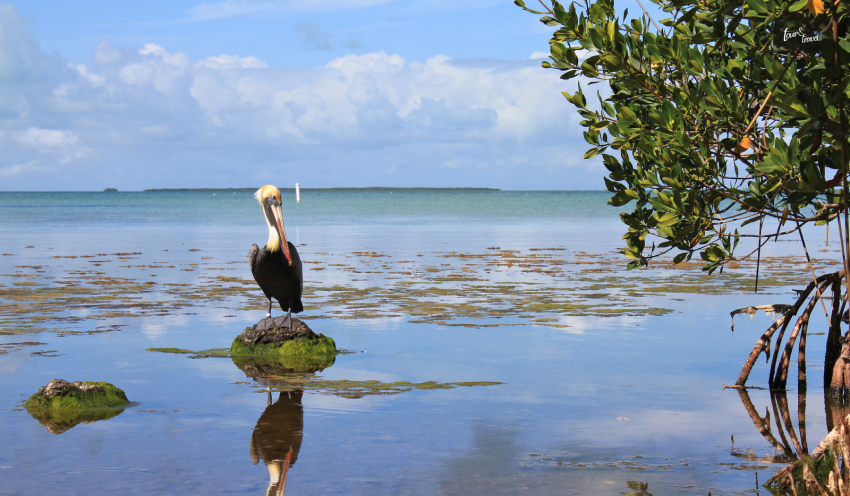
So, if you are heading to Florida and want the most immersive experience, plan a trip to Everglades National Park, a swampland just outside Miami. You will have sea turtles, alligators, manatees, Roseate spoonbills, and fish to welcome you. 

Everglades National Park: Know The UNESCO World Heritage Site

Everglades National Park

In the Brief Synthesis of Everglades National Park and its outstanding universal value, the UNESCO World Heritage Convention says, 

Everglades National Park is the largest designated sub-tropical wilderness reserve on the North American continent.

Its juncture at the interface of temperate and sub-tropical America, fresh and brackish water, shallow bays and deeper coastal waters creates a complex of habitats supporting a high diversity of flora and fauna.

It contains the largest mangrove ecosystem in the Western Hemisphere, the largest continuous stand of sawgrass prairie and the most significant breeding ground for wading birds in North America.

There are many other interesting factors adding to the outstanding value of this place. Let’s have a look at them.

  • The Everglades has limestone substrate, which is one of the most active modern carbonate sedimentation areas.
  • It is home to more than 400 species of birds.
  • It is a major migration corridor for birds.
  • Around 20 threatened, endangered, or rare species live in the Everglades.

The Everglades was inscribed as a UNESCO World Heritage Site in 1979. Today, various federal, global, local, and tribal governments manage the Everglades, and they work in agreement to restore the sanctity of the place. 

An Encounter With The Most Fascinating Wildlife At Everglades National Park 

Most Fascinating Wildlife At Everglades National Park 

Spanning across 1.5 million acres over Florida’s southern part, Everglades National Park attracted 1,155,193 visitors in 2022 and 810,189 in 2023. Diverse wildlife is the major crowd-puller for this park. 

About the Everglades, the UNESCO World Heritage Convention says,

The mixture of subtropical and temperate wildlife species is found nowhere else in the United States.”

Animals You Will Encounter At Everglades National Park
AmphibiansSouthern leopard frog
Florida cricket frog
Eastern narrow-mouth toad
Pig frog
BirdsRoseate spoonbill
Black-bellied whistling-duck
Eurasian Wigeon
American Wigeon
InsectsArachnids
Mosquitoes
Biting flies
Centipedes
ReptilesLizards
Snakes
American alligators
American crocodiles
MammalsShort-finned pilot whale
Atlantic bottlenosed dolphin
White-tailed deer
West Indian manatees

The biodiversity of the Everglades is very crucial for Flordia’s ecological benefits. The Comprehensive Everglades Restoration Plan has been there since 2000 to restore the ecosystem of the National Park. 

** The table does not furnish exhaustive details of the animals found in the Everglades. Only a few species are mentioned. 

What’s More At Everglades National Park? 

What’s More At Everglades National Park? 

Along with having an encounter with the most diverse wildlife, you can take part in boating, camping, and guided tours at the Everglades. Let’s make the most of it. 

Enjoy Guided Tours & Other Services

Enjoy Guided Tours & Other Services

You cannot help falling in love with the following guided tours at the Everglades.

  • Shark Valley Tram Tour
  • Everglades Institue Tours
  • Permitted Tour Guides

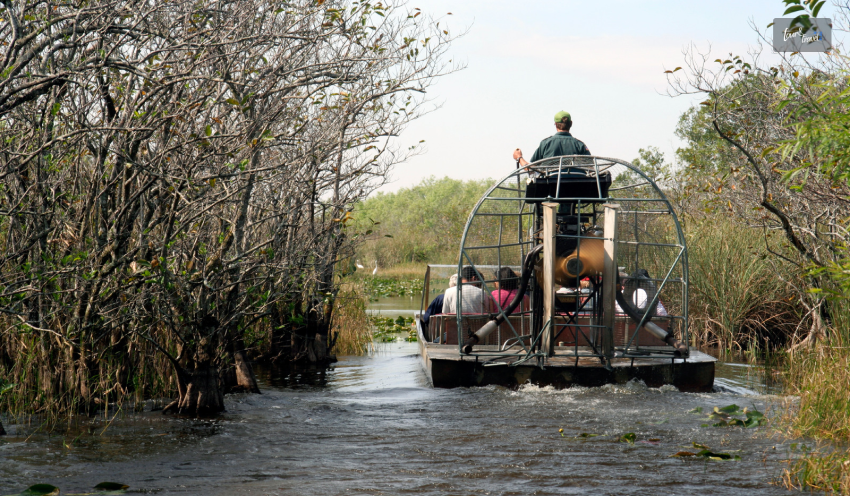
You can also take airboat tours to Coopertown, Everglades Safari Park, and Gator Park

Are you in for boating tours? Go for Backcountry boat tours, Florida Bay boat tours, and Ten Thousand Islands boat tours

Glamping Everglades Style

Glamping Everglades Style

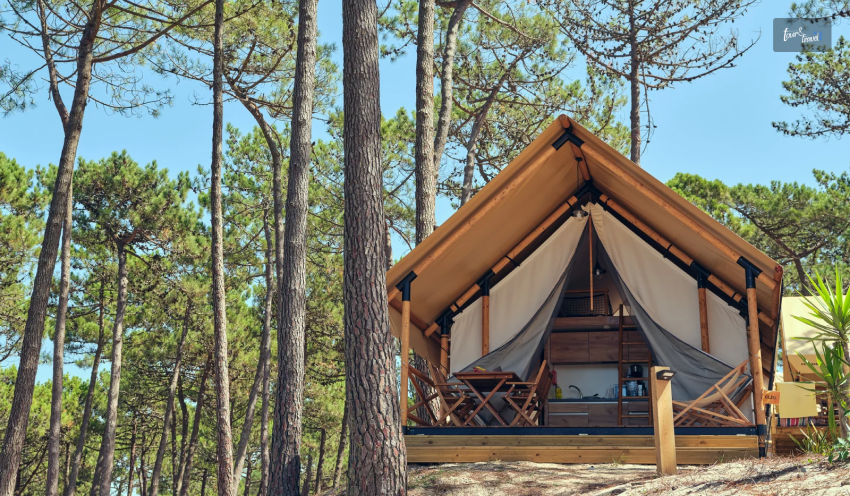
You cannot just miss “glamping Everglades style” if you visit the National Park between November and April. Enjoy the best of wildlife with modern comfort during your stay in these tents equipped with fans, electricity, and other amenities. 

Did you know that the Flamingo Eco-tents of Everglades National Park, Florida, was featured on the list of Best Glamping Spot of 2022, published by USA Today?

Glamping service here begins at $109 per night.

Enjoy A Serene Boating Experience 

Enjoy A Serene Boating Experience 

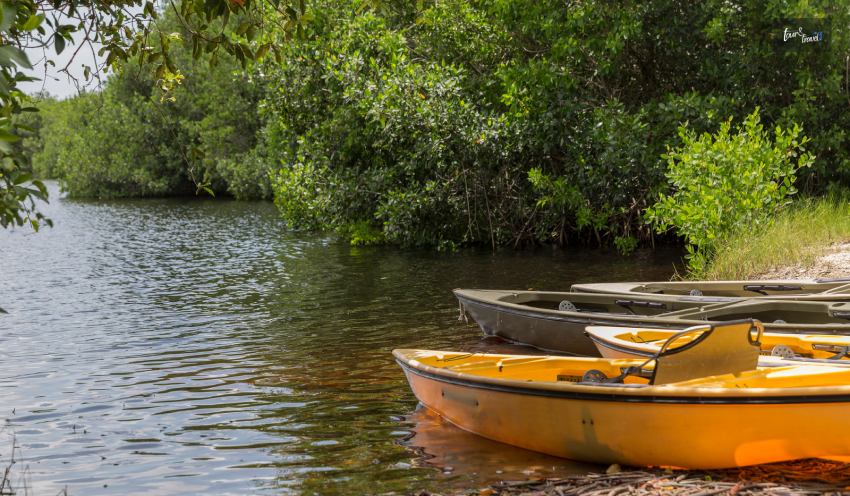
Being in the water at the Everglades will offer you the most versatile experience. As you paddle through the water, you will also meet amazing birds and fish. 

Further, when you pass through narrow channels of mud and seagrass cut through the long banks, you will surely catch a whiff of adventure.  

In addition, once you reach Ten Thousand Islands, you will be at a loss for words meeting the oyster reefs and sandbars.

If you are a fan of boating and aquatic pursuits, you can also visit other National Parks in Florida, including  Dry Tortugas National Park and Biscayne National Park.

Stay Safe At Everglades National Park

Stay Safe At Everglades National Park

Everglades National Park has well-chalked safety guidelines, including encounters with wildlife, managing your pets and children, and risks related to mosquitoes and poisonous plants. Don’t forget to check the National Park Service website to know and address safety concerns. 

Further, the park provides detailed safety guidelines regarding your visit to the park in dry and wet seasons.  

Staying Safe In Wet Season

Staying Safe In Wet Season
  • Afternoon downpours and heavy thunderstorms are common
  • Mosquito bites and the attacks of flying bees will be more
  • Weather will be hot (>100-degree F) and humid (over 90%)

Wear loose-fitting, full-sleeved/full-length clothes and remain hydrated to beat uncomfortable heat and humidity. Also, use mosquito nets or repellents to avoid mosquito and insect bites. 

Staying Safe In Dry Season 

Staying Safe In Dry Season 
  • The temperature in the dry season is around 53-77 degrees F.
  • Freezing conditions may occur occasionally.
  • Biting flies and mosquitoes will still be present in some parts of the park.

Bring a warm jacket, head nets, bug jackets, or mosquito repellents to avoid mosquito and insect bites. Also, wear lightweight and comfortable clothes to explore the place freely during the daytime. 

Are You In? 

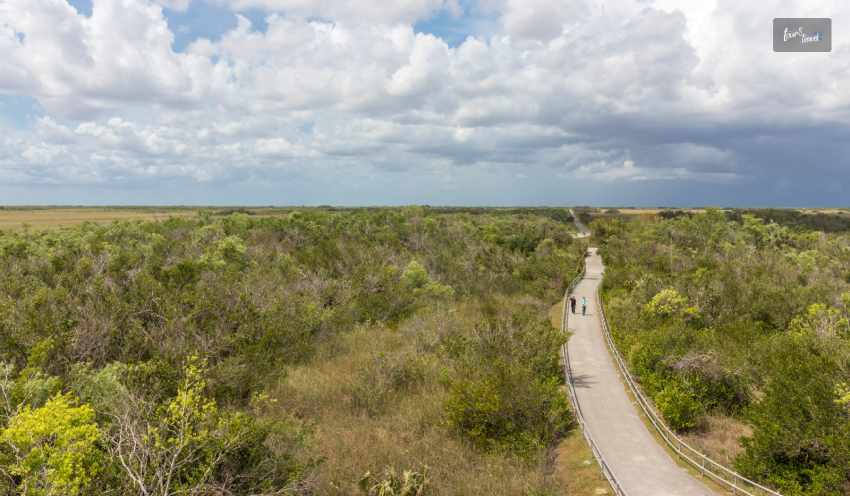
Everglades National Park, the largest subtropical wilderness, is also a UNESCO World Heritage Site. It stretches over a massive two million acres across central and south Florida. 

It’s a paradise for wildlife enthusiasts, with various species coexisting there and contributing to biodiversity. It is also a “noteworthy example of viable biological processes.”

In addition, as one of the oldest national parks in America, it was designated in 1934 by the  U.S. Congress. 

So, are you ready to surf through miles of water and witness how a tranquil wetland can emerge as the goldmine of natural vegetation and wildlife ecstasy? Pack your bag and count me in!   

Everglades National Park FAQs 

Why Is Everglades National Park So Famous?

Everglades National Park is known for its extraordinary wildlife. It is the hub of rare birds, reptiles, amphibians, mammals, sea turtles, and other aquatic animals. 

It also has Florida Panthers, one of the most endangered mammals. Further, you will meet the endangered West Indian manatee and the most adorable bottlenose dolphin.

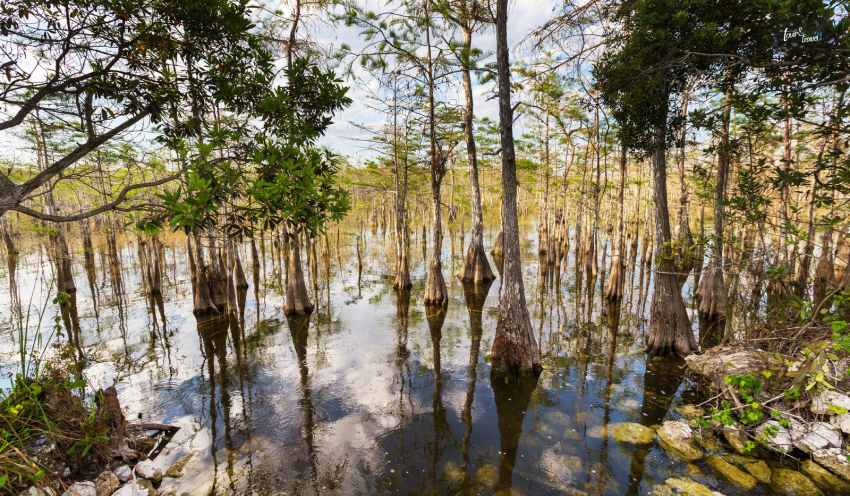
The place even has a diversity of vegetation. You will get to see sawgrass, cypress, mangrove trees, and orchids. 

Why Is It Called Everglades National Park? 

The Everglades had vast, grassy fields or glades. If you decipher the name, you will find it to be a combination of two words, “Ever” and “Glades.” Together, these two words mean open grass fields. 

What Is The Best Month To Visit Everglades National Park?

November to April, or the dry season, is the best or the safest time to visit the Everglades. The temperature at this place remains moderate in this season, and there are fewer attacks by insects and mosquitoes. 

Thanks to the lack of rainfall in Florida during this season, you can also explore the wildlife better during this period. 

Who Found The Everglades?

John Gerard de Brahm, a British surveyor, found the Everglades while mapping the Florida coasts in 1773. He called them River Glades, and it was 1823 when the name “Everglades” first appeared on the map. 

From 1851, everyone started calling it “Ever Glades.”

Is The Everglades Salt Water?

You will have fresh water and saltwater at Everglades National Park. Once you surf through the fresh water for hundreds of miles, you will reach salt water. 

Earlier, this meeting of saltwater and freshwater used to form coastal bodies with partial enclosures. These places were dynamic and had the most productive environments. 

What To Wear In The Everglades? 

You have to pick your outfits and shoes based on the season in which you are visiting the Everglades. If you are at the National Park during summer or the rainy season, you must wear full-length pants and full-sleeve shirts to avoid mosquito bites and contact with poisonous plants. Don’t forget your rain jacket and shoes or boots you wear during rainy seasons. 

In winter, you will need warm jackets, closed-toe shoes and full-length trousers. 

Also read

Share on Social Media

Sibashree is a travel, culture, and leisure writer who has been writing since the age of 12 and professionally since 2014. With more than a decade of travel writing experience and journeys across India and several parts of the world, she brings a deeply personal and thoughtful perspective to her work. A student of English Literature and Mass Communication, Sibashree has always viewed travel as more than movement — for her, it has been a way of understanding people, cultures, and herself. Her passion for spiritual exploration has also led her to many unusual and meaningful destinations over the years. Outside of writing, Sibashree enjoys watching European cinema, reading about global politics, and reflecting on the stories hidden within everyday places.

Leave a Reply

Your email address will not be published. Required fields are marked *

title-img Related

READ MORE things to do in Amsterdam

Why Amsterdam Deserves More Than A Weekend (And Where To Stay When You Go)

BY  Sibashree Mar 13, 2026

Amsterdam is one of the best family vacation spots in the world.  Well, the canals and bikes are legendary. However, you also get something that you probably did not expect.  Amsterdam teaches you the art of slow traveling and the thrill of “doing nothing” as a tourist looking for meaningful and authentic experiences.  So, as a believer of TheLowDownUnder Travel, the capital of the Netherlands became my instant favorite.  Furthermore, once you reach Amsterdam, you find out that nothing is superficial about it, and the layered history of the city keeps the intrigue alive.  Hence, you always want to come back to Amsterdam.  Hi, in today’s blog, I will talk about the things to do in Amsterdam. Also, if you are in the Dutch capital for the first time, read my guide on Amsterdam travel tips before booking your tickets.  What Are The Things To Do In Amsterdam? (Beyond Ticking The Bucket List) The Keukenhof Gardens in Amsterdam have all the credit for being one of the best places in the world to see flowers.  Furthermore, it is home to historical and cultural landmarks such as the Anne Frank House and the Van Gogh Museum.  However, the things to do in Amsterdam are not limited to exploring these places. The real thing to do here is to soak in the history, culture, and livelihood of the city.  So, this is how I experienced Amsterdam.  1. Know A City Built On Water And Ambition A UNESCO World Heritage Site, Amsterdam’s Canal Ring was engineered in the 17th century.  The 17th century was the Dutch Golden Age, and it is no wonder that Amsterdam was one of the most powerful trade hubs in the world then.  Till today, these waterways lined with tilting canal houses continue to be the backbone of daily life.  You can cycle along the banks like a local or enjoy your time in the houseboats, which bob quietly in the morning mist. These also connect the neighborhoods.  Moreover, the city is very walkable.  The city centre has a series of concentric canals radiating outward from Central Station. Also, most of the major attractions are within cycling or walking distance.  2. Explore Culture At Every Corner The Rijksmuseum is the crown jewel in the cultural landscape of the Dutch capital.  Here, you can see all the great work from the Dutch Golden Age of painting. Furthermore, it has works of Rembrandt and Vermeer.  A short walk away, the Van Gogh Museum draws visitors from across the globe, while the Stedelijk offers a strong programme of modern and contemporary art.  For something more intimate, the smaller canal house museums like Museum Van Loon or the Willet-Holthuysen give you a glimpse into how Amsterdam's merchant elite actually lived. Then there's the Anne Frank House on the Prinsengracht, a sobering and essential visit that tells one of history's most important stories within the very walls where it unfolded. Book tickets well in advance. Beyond the museums, Amsterdam rewards wandering.  The Nine Streets district is a tangle of independent boutiques, vintage shops, and coffee bars tucked between the Herengracht and the Prinsengracht.  The Jordaan neighbourhood, once a working-class area, is now one of the most charming parts of the city, full of small galleries, brown cafés, and local markets. 3. Enjoy The Food, Drink, And The Art Of Doing Nothing Dutch food has come a long way from its reputation for simplicity.  Amsterdam's restaurant scene now spans everything from Indonesian rijsttafel, a legacy of the country's colonial history, to outstanding French bistros, modern European tasting menus, and some of the best street-level snacking in Northern Europe.  Grab a fresh herring from a harbour stall, settle into a traditional brown café for a local beer, or book ahead at one of the city's many acclaimed restaurants. The café culture here is worth embracing fully.  Amsterdam's brown cafés, or bruine kroegen, are warm, unhurried spaces designed for long conversations and slow afternoons. They are as much a part of the city's identity as the canals. Where To Stay In Amsterdam? Choose Ambassade Hotel Are you looking for accommodation that feels like an extension of the city itself? Then, the Ambassade Hotel on the Herengracht is a natural choice.  1. Live The History And Enjoy The Art It is spread across 16 historic canal houses that date back to the 17th century. So, a stay here gives you the chance to be a part of the city’s history.  Also, most rooms here look over the Herengracht canal. So, you can enjoy the streetscape of the city.  Furthermore, this hotel has a rich legacy in the field of Dutch hospitality. It has been welcoming guests since 1953, and the moment you step into this hotel in Amsterdam, you get that whiff of history and feel the warmth.  Moreover, this hotel was an informal art gallery for me as it has decorations with works from the CoBrA art movement.  Artists from Copenhagen, Brussels, and Amsterdam founded this bold post-war avant-garde school. 2. Check Its Vast Collection Of Literature  This Amsterdam hotel is also famous for its connection to literature. So, it can be a favorite stay for the dark academia fans.  Furthermore, writers and intellectuals have loved gathering here since the 1980s, and it has a Library Bar housing more than 5000 books.  Moreover, each book is signed by an author who stayed here.  So, this Dutch hotel is not just a place to stay. It is a destination in itself.  3. Indulge In The Cuisine  The Brasserie Ambassade serves French-inspired cuisine seven days a week. Moreover, if you want to explore the city more deeply, you can also join the private tours offered.  These tours cover Amsterdam's art, architecture, and canal history. Choose A Stay That Gives You The Ease To Explore  Staying at The Ambassade Hotel gives you the freedom to explore the city at your own pace. It is located at Herengracht 341.  So, this hotel is located within walking distance of the major attractions in the city.  Moreover, booking directly via ambassade-hotel.nl gives you the best available rate, up to 15% lower than third-party platforms, along with seasonal offers and the possibility of a complimentary room upgrade. Overall, Amsterdam is a city that rewards travelers who take it slow and yearn for authentic experiences.  Hence, staying at a place that is imbued with the city’s character is very important for a perfect vacation.

READ MORE Travel with an Electric Bike

Travelling With Your E-Bike: How To Prepare For A Trip Or A Flight

BY  Sibashree Aug 28, 2025

Taking your e-bike on a trip sounds awesome, right? Whether you’re heading off on a cycling holiday, taking your electric bike to explore new trails, or simply bringing it along for a weekend away, travelling with your ride can open up exciting possibilities. Travellers love to travel. However, ironically, travelling causes carbon emissions. Therefore, people should ensure that they travel without harming nature. Nature lovers often stay in this dichotomy while travelling. They often fear that the toll of their travel will fall on nature. However, when you travel with an electric bike, you stay confident that no matter what happens, you will not be emitting carbon.  But, yeah… there’s a catch. Traveling with one can be a bit of a headache. Batteries, packing, weight limits, all that stuff. Still, if you plan ahead just a little, it’s not so bad.  Moreover, your bike will get there in one piece, and you’ll be ready to ride without drama. Let’s go over what actually matters. Understand The Rules Before You Go First thing—rules. Every airline, ferry, train company, you name it—they’ve all got their own take on e-bikes, especially the batteries. Lithium packs are where the real limits are. Some places want them off the bike, others only allow certain sizes.  And here’s the kicker: it changes country to country. Something fine in Spain might be banned in Canada. The only safe bet? Ask your carrier before you go. Better yet, get their answer in writing.  Saves you from awkward moments at check-in where they suddenly say “nope.” The cargo companies and other subjects subject Lithium batteries to scrutiny and regulation, as there is always a chance of these battery packs catching fire. Hence, the travellers should get everything checked in the first place, as it will prevent any sudden problems while shipping. Thus, travellers should get everything on paper while they travel with an Electric Bike. 1. Preparing Your E-Bike for Travel Think of this as a quick health check. Brakes—good? Tyres inflated? Chain oiled? Electronics behaving? If something feels off, fix it now, not halfway through your holiday. For the battery, don’t leave it full or empty—half-ish charged (30–60%) is the sweet spot. Most travel rules want it removed anyway. Moreover, strip off extras like mirrors, lights, bells… anything that sticks out. And honestly, give the bike a quick clean. Dirt might seem harmless, but some countries are strict on biosecurity. Moreover, the last thing you want is customs giving you grief over a muddy tyre. Plan out the spots for charging and halts while you travel on your bike. 2. Packing Your E-Bike Safely How you pack decides how your bike comes out on the other end. Hard-shell case? Best protection, but heavier. Soft padded bag? Lighter and easier to stash, just not quite as bombproof.  Moreover, inside, pad everything. Wrap delicate bits, lock down the bars, pedals, and wheels so nothing shifts. Tape or foam is your friend here. Don’t forget to tag it with your name and number, maybe toss on a “Fragile” sticker. Won’t guarantee gentle handling, but hey—it’s worth trying. Gentle handling at the airport has always been a super myth. However, people should ensure that they get plenty of padding to prevent their bikes from getting unnecessarily damaged.  3. Tips For Travelling By Car Or Train Road and rail are a bit easier. For cars, you’ll need a rack strong enough for e-bike weight (don’t assume a cheap one will do). If it’s exposed, cover it.  Rain, dust, and even little stones from the road can mess things up. Inside a car? Strap it down so it doesn’t bounce around. Trains… well, they’re hit or miss.  Moreover, some have bike spots, some don’t. Check before you get to the station—it’s no fun trying to squeeze an e-bike into a crowded carriage last minute. Cover your e-bike when it is exposed to a car. Moreover, you should not depend on the weather.  4. Flying With Your E-Bike Flying’s the tricky part. Airlines are strict about batteries. Big ones often aren’t allowed in checked luggage.  Sometimes you can carry it separately, sometimes you need to ship it. Either way, don’t wing it—talk to the airline weeks ahead, not days.  Pack the bike in a proper travel case, keep it under their weight limits, and protect every part. Once you land, take your time putting it back together.  Better to double-check than to find out a brake cable snapped on your first ride. 5. Extra Gear To Bring Along A few small tools can save your trip. Toss in a multitool, tyre levers, mini pump, maybe a spare tube or two.  Charger’s a must, plus an adapter if you’re heading abroad (easy to forget). A little cleaning cloth or kit helps too, especially after rainy rides.  Nothing fancy—just enough to keep things running smoothly. Moreover, ensure that the entire thing remains in control so that your trip does not get ruined just because of a missing spare. Travelling with an electric bike always demands carrying extra spares with you to ensure proper safety. 6. Common Mistakes To Avoid The stuff people forget is usually simple. Don’t leave your battery fully charged before storing—it wears it out faster.  Watch those weight limits; e-bikes aren’t light. Skip insurance? Big mistake. And honestly, the worst habit is last-minute packing.  Moreover, you rush, something gets left behind, or worse, you break something trying to jam it in. Seen it happen more than once. Remember This Before You Travel With An E-Bike  Bringing your e-bike along is worth it—you get to explore new places on your own wheels. Yeah, it takes some planning, but once you’ve done it, it feels easy.  Moreover, a bit of prep now means a smooth trip later, and you’ll roll off ready to ride instead of stressing about what survived the journey. However, travelling with an e-bike is cost-effective. Hence, the travellers leverage the liberty to go anywhere at any point in time. People should understand that they get some of the best results while travelling. Read Also: 8 Things You Need To Know About Using E-Bikes For Your Hunting Adventures Maximizing Thrill: Expert Advice On Off-Road Motorcycle Rentals

READ MORE Most Scenic Road Trips Around The World

A Guide To The Most Scenic Road Trips Around The World

BY  Barsha Sep 23, 2023

Setting out on a road trip is unquestionably thrilling as well as liberating. Nothing compares to taking to the open road with the wind in your hair and stunning scenery rushing by.    A proper guide will help you discover the best routes so you never have to stress out while on your adventurous trip. You can experience some of the most stunning scenery to make your road trip worth all the traveling efforts. Here is a list of the top six most beautiful road journeys globally to create a memorable road journey of all time. The Most Mesmerising Road Trips: The List Of The Best Here is a list of the most spectacular scenic road trips from around the world. So let's understand them here.  Pacific Coast Highway, California, USA Driving the Pacific Coast Highway from north to south keeps you within the lane closest to the water, letting you experience the most heavenly coastline view. The Pacific Coast route follows US Highway 101 in Washington, Oregon, and at the northernmost point of California. Starting in San Francisco, travel south to Los Angeles, stopping in quaint communities like Santa Cruz and Monterey.  The West Coast is also notable for its number of well-preserved historic sites that stand as vivid reminders of life on what was once the farthest frontier of a new nation, in addition to the overwhelming scale of its natural beauty. Most of these sites have yet to be torn down, built on, or even built around.  Great Ocean Road, Victoria, Australia The 243-kilometer Great Ocean Road winds past lush rainforests and beautiful beaches. It also glides by the recognizable Twelve Apostles limestone stacks as it travels down Australia's southeast coast. Look out for koalas in the treetops as well as whales breaching in the ocean as you travel from Torquay to Port Fairy. Remember to stop along the trip at the breathtaking Loch Ard Gorge and London Arch. The magnificent Great Ocean Road follows the seashore cliffs that crisscross the untamed as well as the battered Southern Ocean. The famed road's breathtaking panoramas inspire awe. It has jagged cliffs, deserted beaches, and towering bluffs flanked by vivid green countryside, Ring Road, Iceland The Ring Road, commonly known as Route 1, should be at the top of your list of things to do when visiting Iceland. Visit South Iceland, the East Fjords, North Iceland, as well as the Snaefellsnes Peninsula, among other places, to see Iceland at its best. Students studying in Europe can quickly leave their Student accommodations, plan a road trip with their new friends, and create great memories. The most incredible way to experience Iceland's most beautiful scenery is by taking the Ring Road around the island. Explore the tranquil Jökulsárlón Glacier Lagoon, take in the unearthly splendor of the Golden Circle, and unwind in the Blue Lagoon's geothermal waters. Garden Route, South Africa Stretching from Mossel Bay to Storms River, South Africa's Garden Route is a picturesque drive that showcases the country's diverse beauty. The Africa's Garden Route is a 750-kilometer-long route with lush forests, pristine beaches, and stunning landscapes. Visit the famous Tsitsikamma National Park, watch whales in Hermanus, and explore the Cango Caves in Oudtshoorn.  The Garden Route is also famous for its excellent wildlife spotting opportunities and adventurous activities such as shark cage diving and bungee jumping. The Africa's Garden Route can be a great road trip for young adult college students, and it it can also be a great reunion trip for old college friends who recently moved out of their student housing. Transfăgărășan Highway, Romania For an adrenaline-filled road trip, head to Romania and take on the mighty Transfăgărășan Highway. Marvel at the impressive Balea Lake, drive through hairpin bends and reach the highest point at the stunning Vidraru Dam.  The Fagaras Mountains, a component of the Carpathians, are crossed by the route as indicated by its name. These mountains, which separate western and southern Romania, are frequently called the Transylvanian Alps. The 90km (56 miles) long road ascents over the summits with ambition. It initially imitates a river and later just follows the ridges. Route des Grandes Alpes, France and Switzerland The genuine classic journey spans 684 kilometers (425 miles). It ascends over some of the highest as well as the most picturesque mountain passes in all of Europe. It encompasses Thonon-les-Bains on the shores of Lac Léman to Menton on the French Riviera.  As you drive from Lake Geneva to Nice, stop by iconic destinations like Chamonix, Val d'Isère, and the glamorous French Riviera. Make sure you give yourself enough time so that you may stop frequently. It is the most well-known tourist route in the French Alps, snaking through remote valleys and across high mountain passes. Conclusion The most stunning places on earth may be explored at your speed by taking a scenic road trip. So fill up the tank, gather your belongings, and get ready to embark on an exciting journey. About AmberStudent - Amber Student is one of the leading platforms of student accommodation (2016) and has served over eighty million students from around the world. It is your one-stop destination for all your needs, mainly housing needs.  The experts of ember completely assist them.  They secure housing far from your home. So look for our social platforms, Facebook as well as Instagram, and be on our journey! Read Also: The Easy Way to Travel in India 10 Useful Tips For Planning A Trip That You Will Love Why Engage Competent Tourism Companies For Executing Best Leisure Time